
Writing
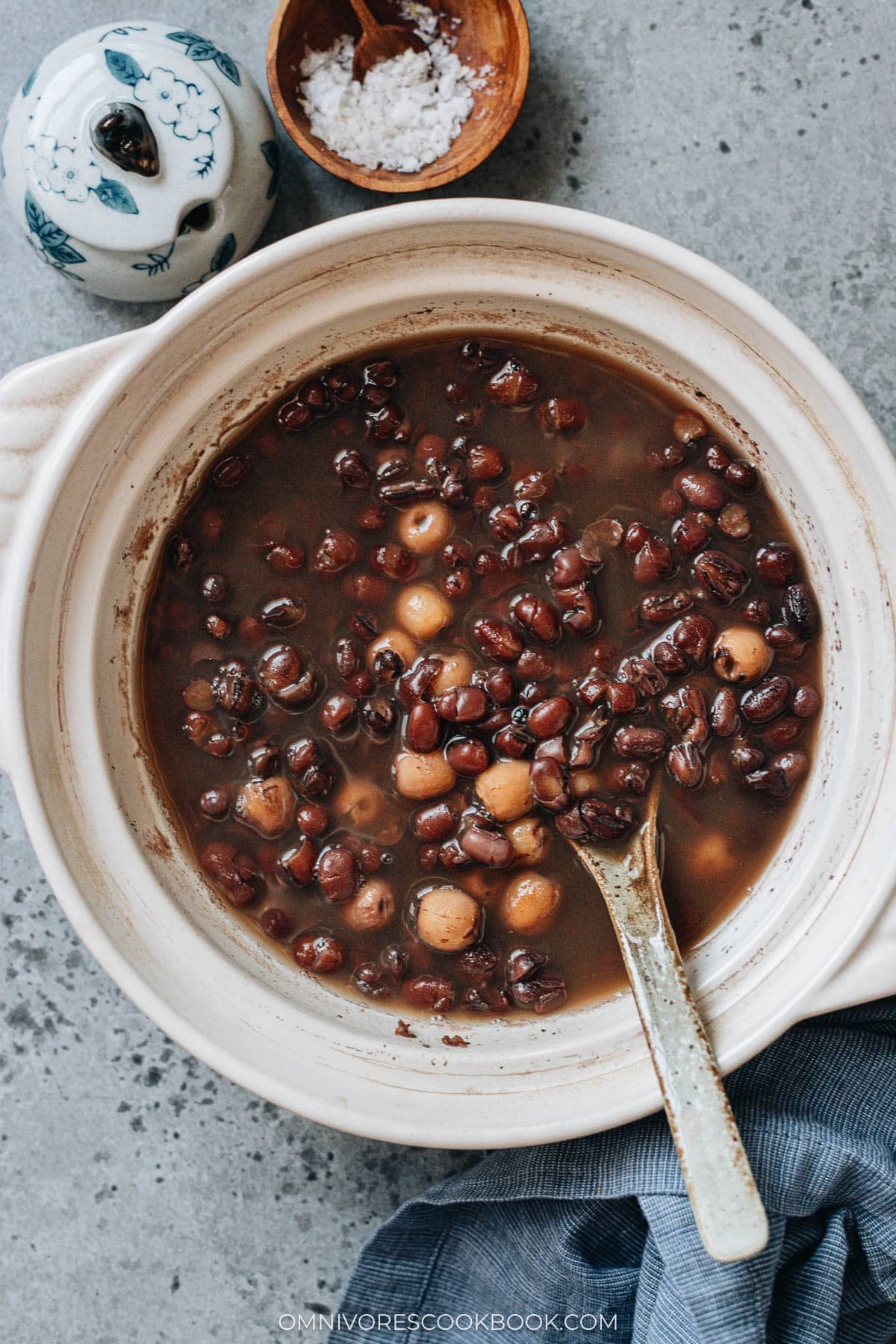
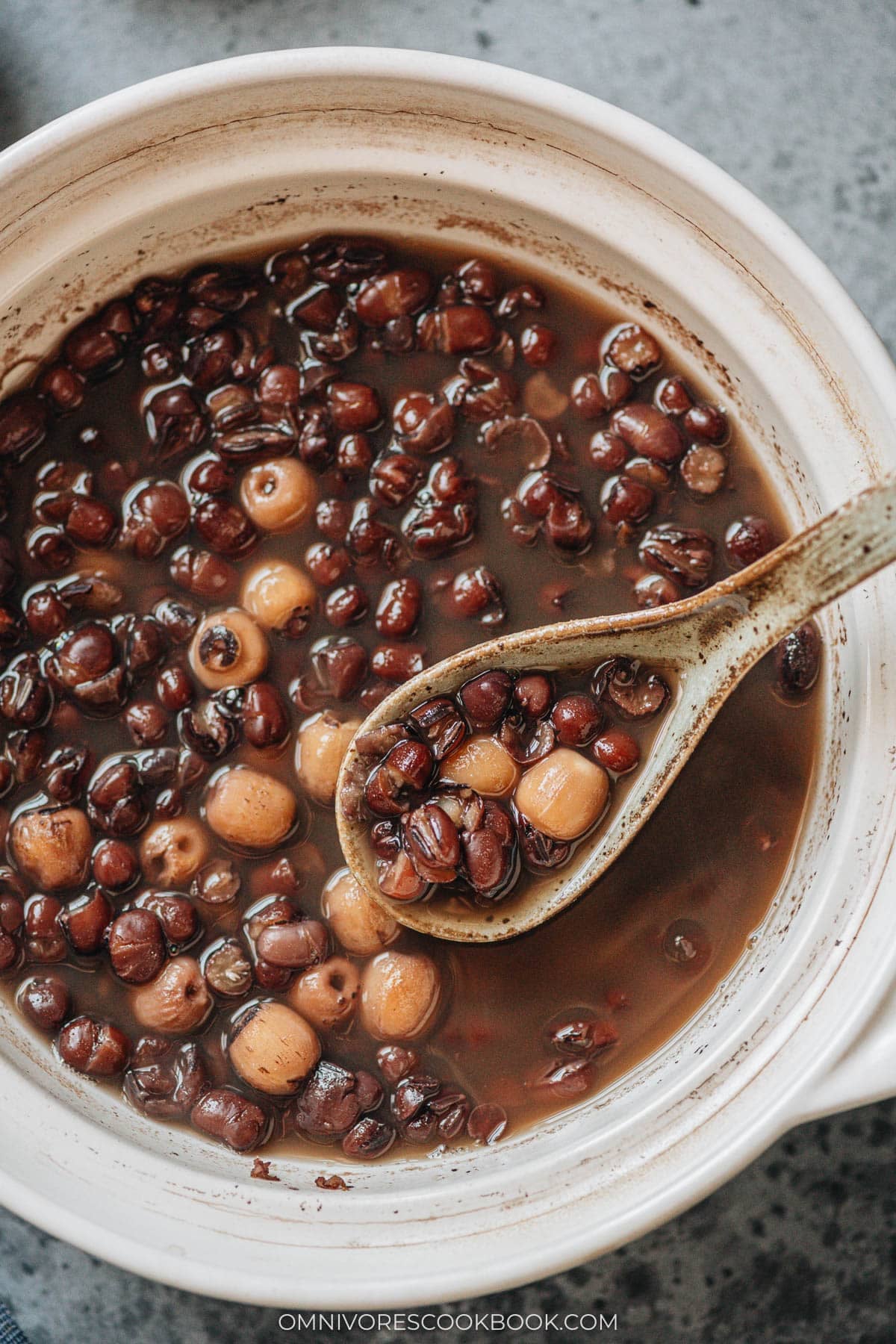
This traditional Chinese red bean soup is a comforting dessert with a delicate sweetness and a rich, satisfying texture. As the red beans simmer, some soften and break down naturally, creating a silky, lightly thickened broth while others remain whole for a pleasant bite. It’s a simple, home-style dessert that requires just a handful of ingredients and a little patience to bring out the beans’ natural sweetness and earthy flavor.
Growing up in Beijing, my mom made a version of this all summer. Hers was thin and lightly sweetened with rock sugar, and she would chill the pot and pour me a glass of the cold broth when I came home on a hot day. I redeveloped this recipe to sit closer to that memory, keeping the sweetness gentle and the broth generous.
I simmer soaked azuki beans in plenty of water until they are soft, add rock sugar and a pinch of salt near the end, and let a few beans break down to thicken the pot. Lotus seeds or raw peanuts are optional additions if I want something more substantial, and a small piece of dried tangerine peel gives the broth a nice citrus flavor.
I highly recommend you to make this red bean soup recipe the next time the weather turns, or chill it for a hot afternoon. My easy step by step directions below takes you from soaked beans to a bowl with mostly hands-off time. Enjoy it!
Ingredients
These are all the ingredients I use to male this red bean soup, and the only ingredient I will not skip is the azuki beans themselves, since everything else is there to season the pot around them.
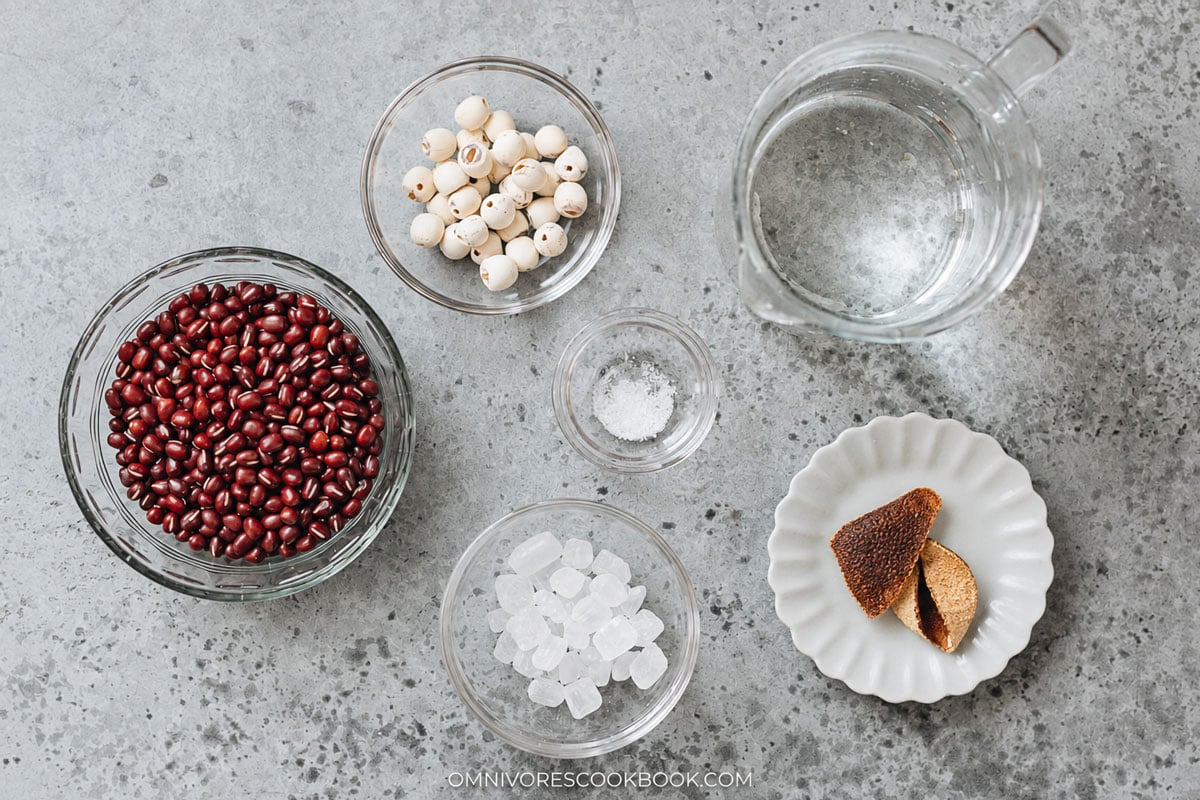
Dried azuki beans: I use dried red beans, the same azuki beans used in most Chinese sweet soups and red bean paste. I soak them overnight so they soften at the same rate and break down into a thicker broth.
Rock sugar: I sweeten the soup with rock sugar for a clean, gentle sweetness that suits a Chinese dessert, though granulated sugar works perfectly well as a substitute. I use less than most Western dessert recipes would use, because I want the beans to lead and the sweetness to stay in the background.
A pinch of salt: I add a small pinch of salt near the end, which rounds out the sweetness.
Lotus seeds or raw peanuts: These are both optional, and I use them when I want the soup more substantial. I add raw peanuts at the very start because they take longer to soften, and I stir dried lotus seeds in during the final stretch of cooking.
Dried tangerine peel: Also optional, dried tangerine peel, or chenpi (陈皮), is a traditional addition to Chinese sweet soups that I use for a subtle citrus fragrance, and it is also valued in Chinese food culture for aiding digestion. I keep the amount tiny (5g), because too much turns the broth bitter.
How to Make
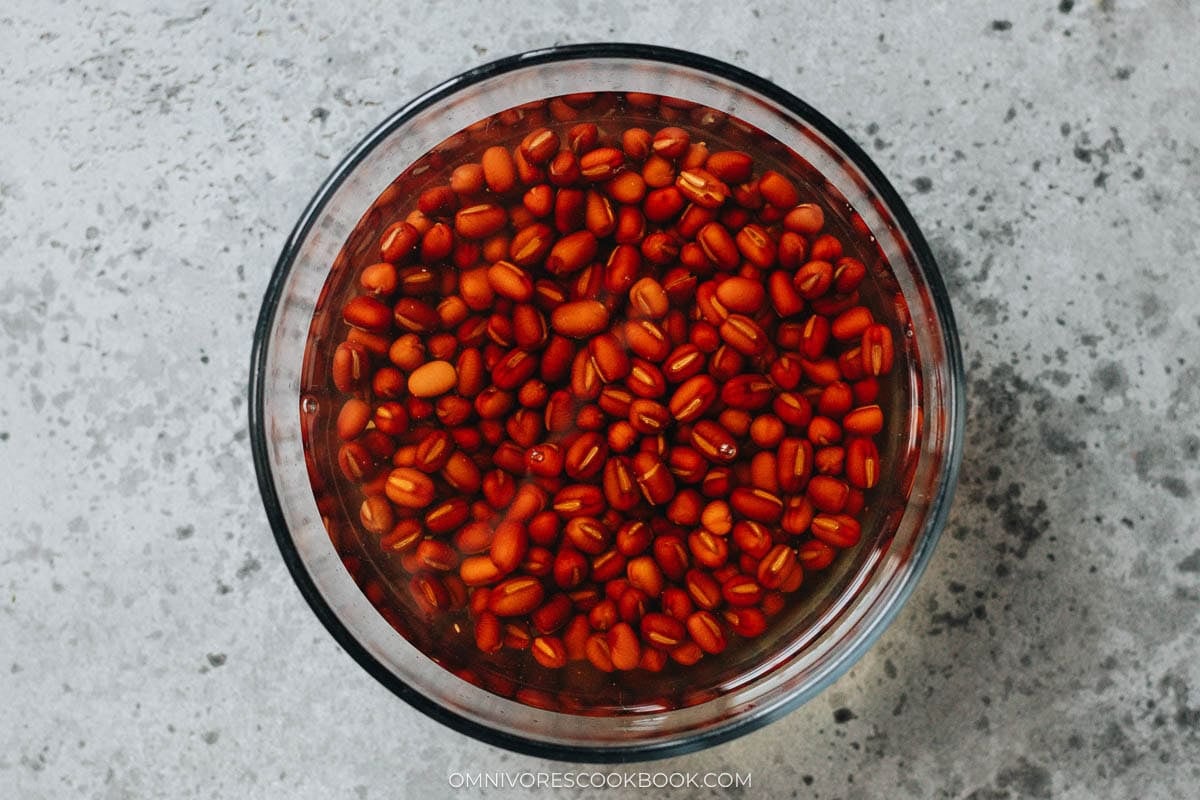
1. Soak the beans: Rinse the azuki beans under tap water and drain. Transfer them to a large bowl, cover with 3 cups of water, and soak overnight so they soften at the same rate.
2. Start the simmer: Drain the soaked beans and add them to a pot with 8 cups of water and the dried tangerine peel. If you are using raw peanuts instead of lotus seeds, add them now, then bring everything to a boil and reduce to medium-low to hold a gentle simmer.
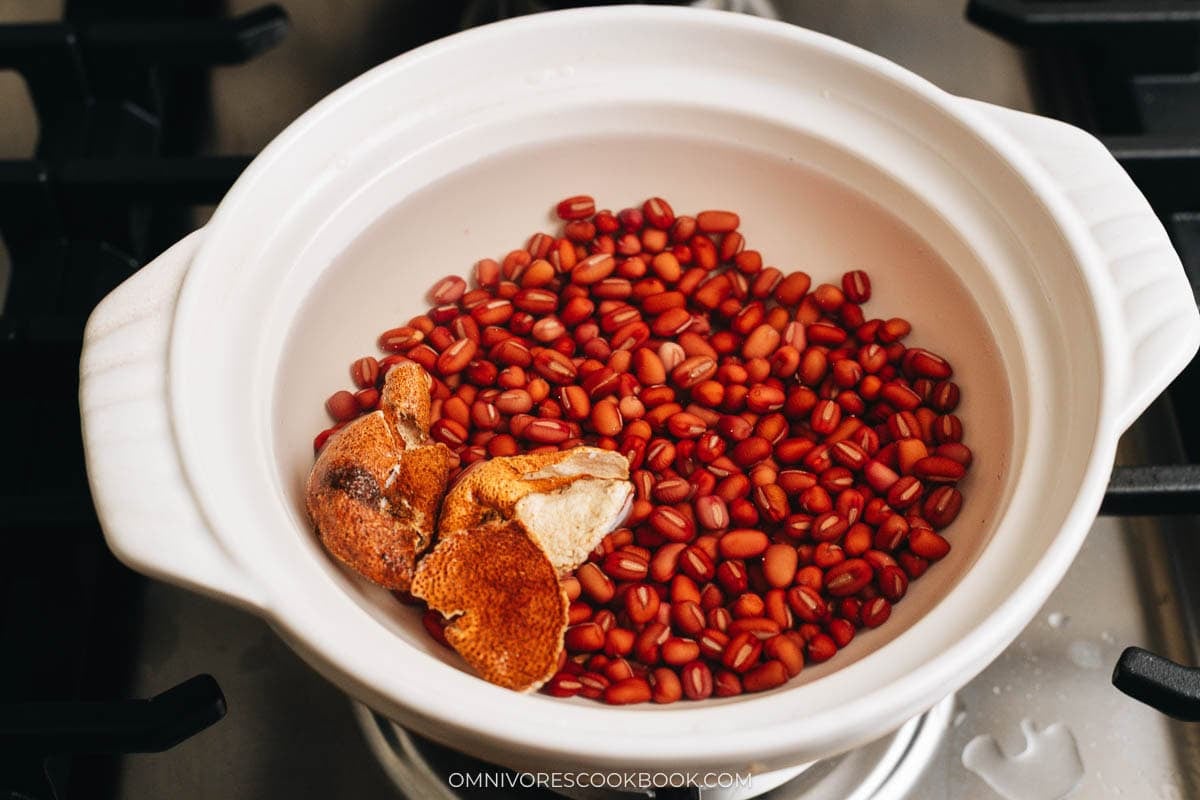
3. Simmer partially covered: Cook with the lid set partially open for 1 hour, which keeps the soup from boiling over while letting some liquid reduce. If your lid has a steam vent, you can cover the pot fully.
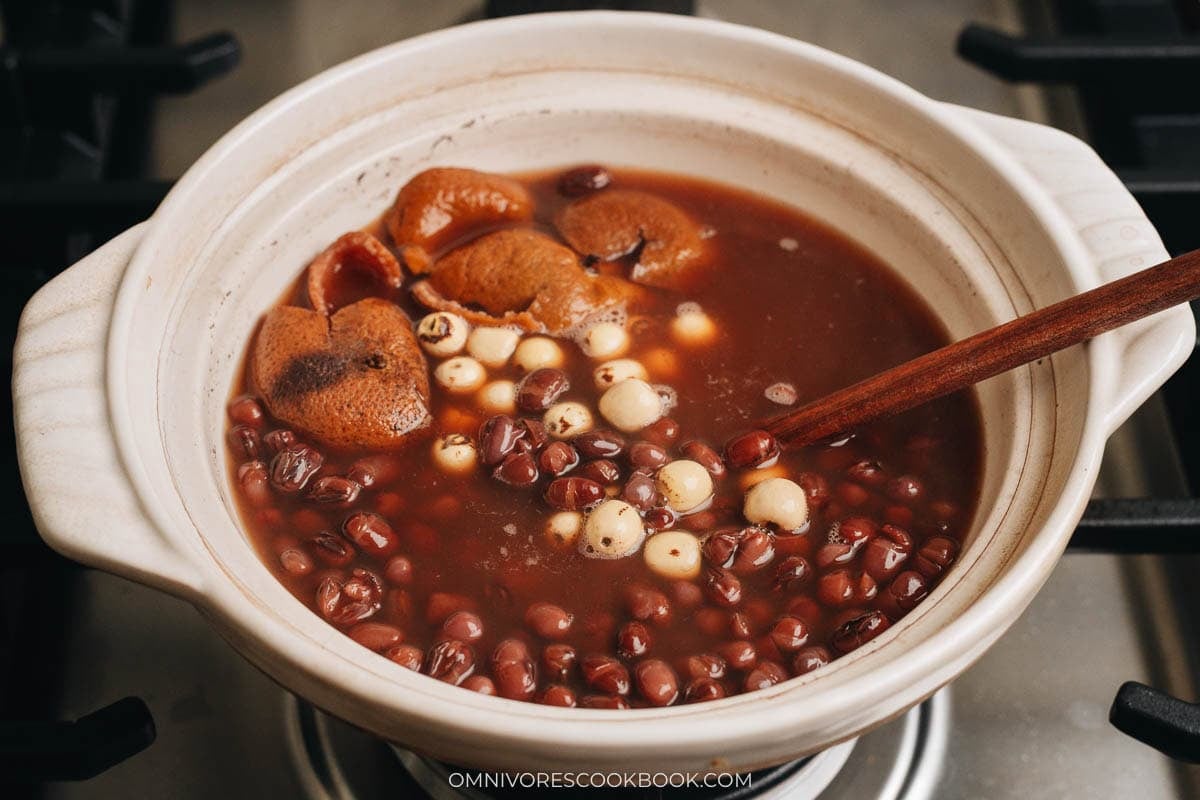
4. Add the seasoning and lotus seeds: Stir in the rock sugar, the pinch of salt, and the lotus seeds if you are using them. Simmer for another 40 minutes, stirring occasionally so the beans do not stick to the bottom, until the beans are very tender and some have started to break apart.
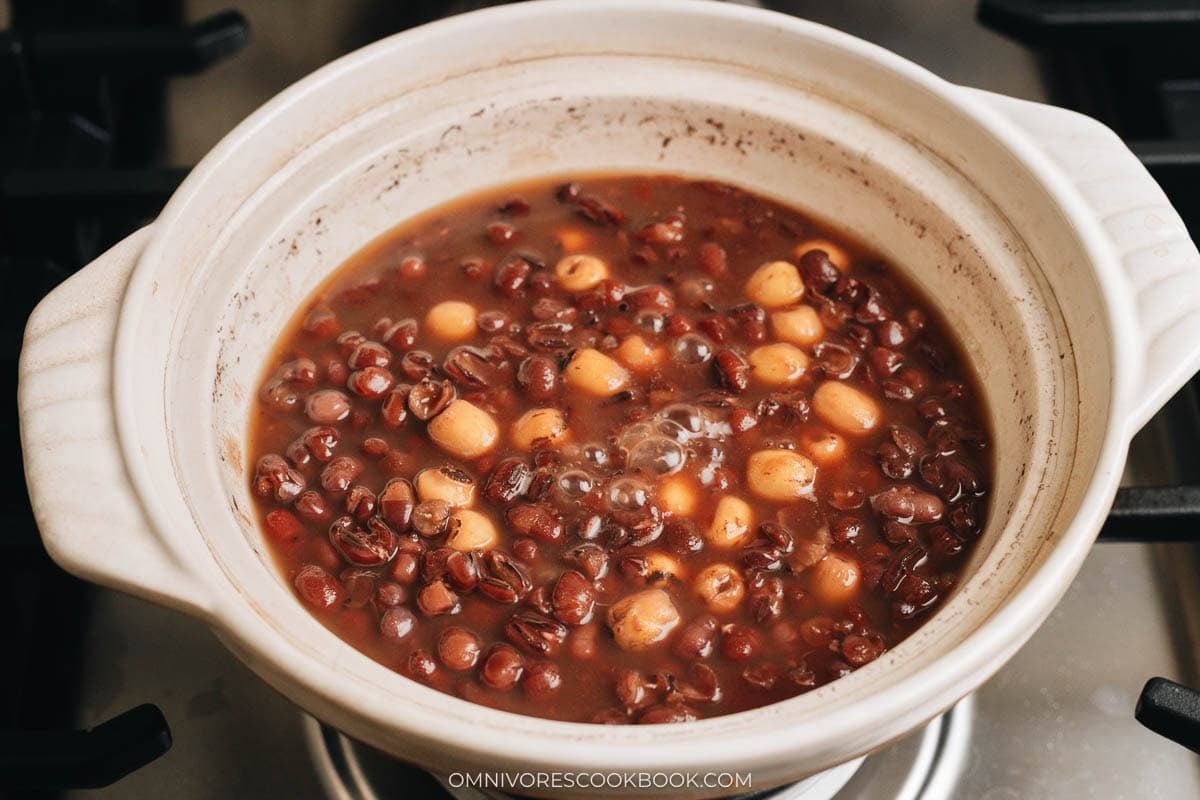
5. Taste and serve: Taste the soup and adjust the sweetness if you want it sweeter. Serve it hot, warm, or chilled.
Cooking notes
Watch the water level as it reduces: Evaporation changes with your pot and your stove, so check the soup as it simmers. If the broth gets too thick before the beans are tender, stir in a splash of hot water to loosen it back up.
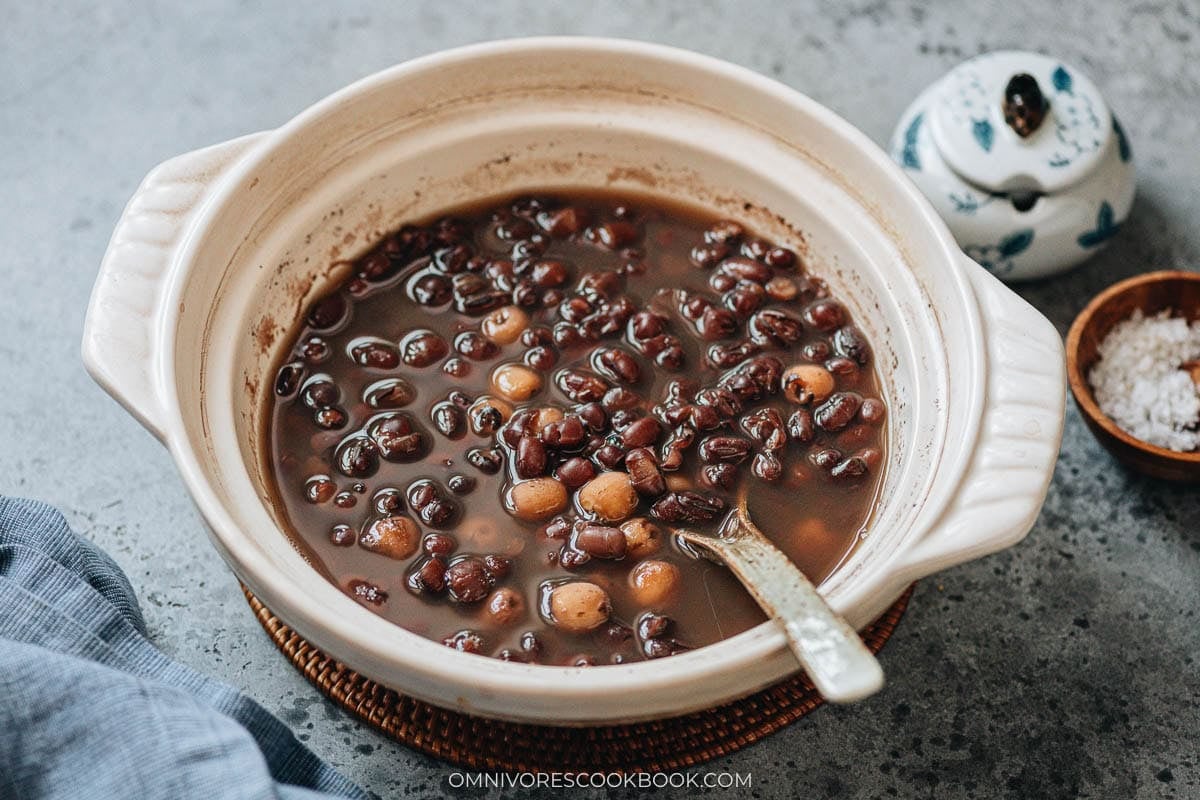
Adjust the texture to your taste: The finished soup should have a generous amount of reddish broth around the tender beans. If you like it thinner, add more hot water during cooking, and if you like it thicker, let a few more beans break down.
Add the sugar late, not early: I wait until the red beans are tender before adding the rock sugar. Adding sugar too early can slow down the softening process, and adding it at the end also makes it easier to adjust the sweetness to your liking.
Go easy on the tangerine peel: A piece about the size of a coin is plenty for a whole pot. More than that pushes the broth toward bitter instead of fragrant, so this is one place where less is genuinely better.
Use a pressure cooker when you forget to soak: If the beans never made it into water the night before, skip the soak and use an Instant Pot or pressure cooker. Combine 1 cup of red beans with 6 cups of water, cook at high pressure for 30 minutes, and let the pressure release naturally.
Serving Suggestions
I love this red bean soup as a light dessert at almost any temperature. In cold months I ladle it out hot after dinner, and in summer I chill the pot and pour the cold broth into a glass the way my mom did.
The soup thickens as it sits, because the beans keep drinking up the liquid. When I want the broth as a cooling summer drink, I strain the soup and store the beans and the broth separately.
For more desserts using red beans, check out my Stick Rice Cake with Red Bean Paste, Red Bean Bread, Red Bean Mooncake, and Red Bean Popsicles.
Frequently Ask Questions
Why are my beans still hard after a long simmer?
Old dried beans are one of the most common reasons red beans take longer to soften. Hard water can also slow down the cooking process. I recommend using fresh dried beans whenever possible and adding the sugar only after the beans have softened. If the beans are still firm, continue simmering and add more hot water as needed. Keep in mind that very old beans may never soften completely, even after extended cooking.
Do I need the lotus seeds and peanuts?
No, they are both optional. The soup is perfectly good with just red beans, sugar, and a pinch of salt, so I add them only when I want a more substantial bowl. Remember that peanuts go in at the start and lotus seeds go in near the end, since they soften at different rates.
Can I make it less sweet?
Yes, and I usually keep mine on the less-sweet side. Start with less sugar, taste near the end of cooking, and stir in more only if you want it sweeter. Because the sugar goes in late, adjusting at the finish is simple.
How to store leftover red bean soup?
Store leftover red bean soup in an airtight container in the fridge for up to 3 to 4 days. The soup will thicken as it sits because the beans continue to absorb the liquid. If I want to enjoy the broth as a light, refreshing drink, I strain out the beans and store them separately. I especially love serving the soup chilled during summer, but you can also reheat it on the stovetop, adding a splash of water to thin it out if needed.
Want to Save This Recipe?
Enter your email below & we’ll send it to your inbox. Plus get great new recipes from us every week!

Red Bean Soup (红豆汤)
Ingredients
- 1 cup dried red beans azuki beans
- 1/4 cup dried lotus seeds or raw peanuts (optional)
- 8 cups water
- 1 piece dried tangerine peel 5g (optional) (*Footnote 1)
- 1/4 cup rock sugar 50g (or granulated sugar) , or to taste
- Pinch of salt
Instructions
- Rinse the beans with tap water and drain. Transfer the red beans to a large bowl and add 3 cups of water. Soak overnight. (*Footnote 2)
- Drain the red beans and transfer them to a pot. Pour in 8 cups of water and add the tangerine peel. If using peanuts instead of lotus seeds, add them now. Bring to a boil, then reduce to medium-low heat to maintain a gentle simmer. Simmer with the pot partially covered (*Footnote 3) for 1 hour.
- Add the lotus seeds, if using, along with the sugar and salt. Simmer for another 40 minutes, stirring occasionally to prevent the beans from sticking to the bottom, until the beans are very tender and some have started to break apart.
- Taste the soup and adjust the sweetness if needed.
- Serve the soup hot or chilled.
Notes
- Dried tangerine peel, or chenpi, is a traditional addition to Chinese red bean soup. In Chinese food culture and traditional Chinese medicine, it is valued for its citrus aroma and is traditionally believed to aid digestion and balance the richness of sweet dishes. I consider it completely optional here—the red bean soup is delicious without it. If you use it, don’t be tempted to add extra, since too much tangerine peel can make the soup bitter.
- Alternatively, you can skip the soaking and use a pressure cooker (or Instant Pot) to cook the red beans. Simply combine 1 cup red beans and 6 cups of water and cook at high pressure for 30 minutes, then allow the pressure to release naturally.
- Simmer with the lid partially open to prevent the soup from boiling over. If your pot lid has a steam vent, you can fully cover the pot.
Nutrition

Did you make this recipe?
I’d love to hear how it turned out for you! Please take a moment to leave a 5-star rating ⭐️ and share your thoughts in the comments further down the page. It really helps others discover the recipe too.
susan
I don’t have Instant Pot or Pressure Cooker. Beans was soaked for few days and cooked in slow cooker over night. Beans was still hard. Is there any ways to cook the beans?
K
But are those actually stikcy rice cakes? I think they are made of normal rice flour? Because the texture is not as chewy as mochi and all those square mochi ones cost a fortune and these are more affordable
Maggie
They are rice cakes that are made from rice flour. It’s less sticky and chewier than the mochi made with glutinous rice flour.