
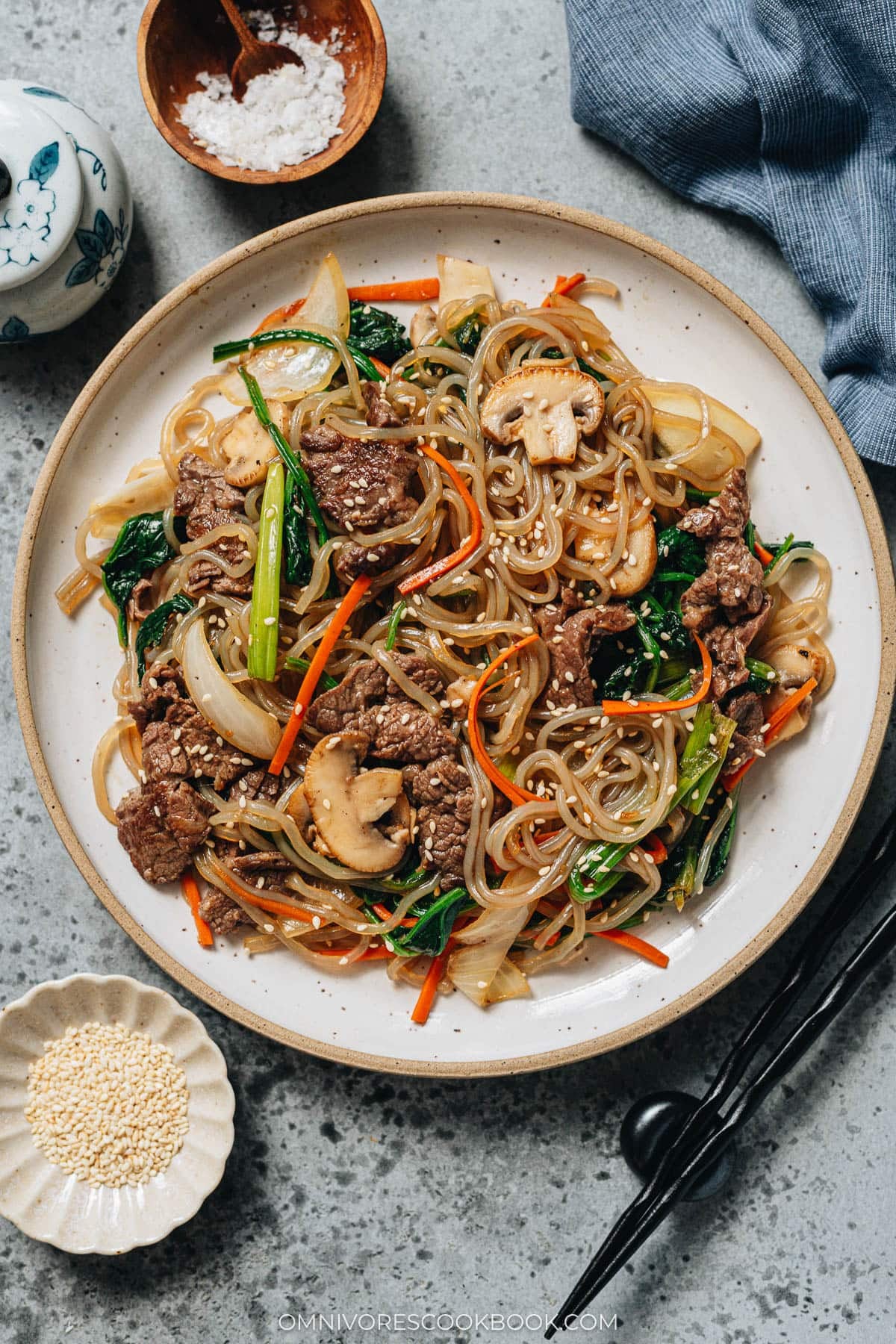
Japchae is a Korean noodle dish made with dangmyeon, the translucent noodles pressed from sweet potato starch, along with a protein and a handful of vegetables in a soy and sesame sauce. The traditional method cooks and seasons every component on its own, then folds everything together at the end so each ingredient keeps its own texture. My version keeps that same character but moves through a single pan in stages, which is how I get it done on a weeknight without a sink full of bowls.
Korean food shows up on our dinner table almost every week. My husband Thomas is American, but he was born in Korea and lived there as a baby, and he has had a taste for kimchi and Korean cooking for as long as he can remember. We keep a big jar of kimchi in the fridge at all times, and when I want something heartier I love eating a bowl of Korean army stew, but japchae is the one Thomas asks for when he wants noodles.
I start by boiling the sweet potato noodles until tender, then I sear thin slices of beef, cook the mushrooms and firmer vegetables in the same pan, wilt the spinach last, and toss it all with the noodles and sauce until the noodles drink up the seasoning. Once the noodles are boiled and the vegetables are sliced, the whole thing moves through one pan in about 30 minutes. If you have a bag of sweet potato noodles waiting like I usually do after a grocery run, this is close to my other quick hot and sour noodle soup (Suan La Fun), and my directions below will take you from raw ingredients to a full noodle dinner.
The goal of this recipe is to help you recreate the Japchae in your home kitchen with the easiest approach. If you’re looking for the most authentic and traditional method, I highly recommend you check out Maangchi’s recipe.
Ingredients
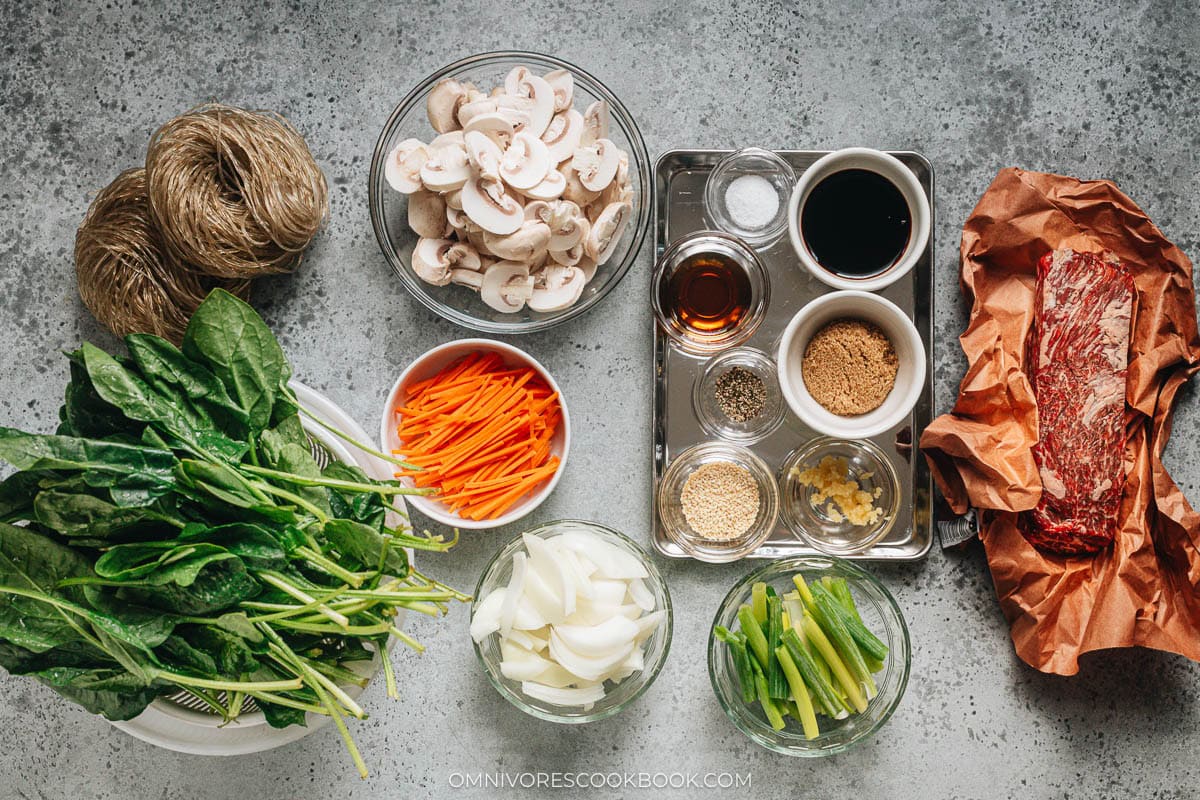
I think of japchae as a long list that is mostly vegetables and a short pantry sauce, so most of my work is slicing everything before the pan heats up. These are the ingredients I use:
One word on the protein
You can use different types of protein to make Japchae. For example, chicken breast, chicken thigh, pork loin, and shrimp are perfect ingredients for this dish. You can also use tofu or skip the protein altogether to make this dish vegan.
If you’re using meat, it’s very important to cut the slices very thin, and sear them with a very hot pan and with plenty of oil in a short period of time, to sear the meat until just done. So the meat will remain juicy.
Traditionally, japchae does not require cornstarch in the meat marinade. However, a small amount of cornstarch helps keep the meat tender during cooking and greatly improves its texture. I highly recommend using it.
Sweet potato noodles: Sweet potato noodles are a type of glass (vermicelli) noodles made from sweet potato starch. They are gluten-free by nature.
The noodles are usually sold in dried form and you’ll need to boil them (or soak them) to rehydrate before using. Once rehydrated, they have a chewy and silky texture with a very mild taste. The noodles soak up any flavor in your noodle sauce, making them perfect for making fried noodles and noodle soup dishes.
You can find sweet potato noodles in most Asian markets and also on Amazon.
The sauce: I mix soy sauce, brown sugar, toasted sesame oil, grated garlic, and black pepper, then finish with toasted sesame seeds. I keep it sweet and savory at once, and I use part of it to season the beef and the rest to coat the finished noodles.
The vegetables: I use mushrooms, carrot, yellow onion, green onion, and spinach. I count on the mushrooms for a meaty bite, the carrot and onion for a little sweetness, and the spinach for a soft fresh finish at the very end.
How to Make Japchae
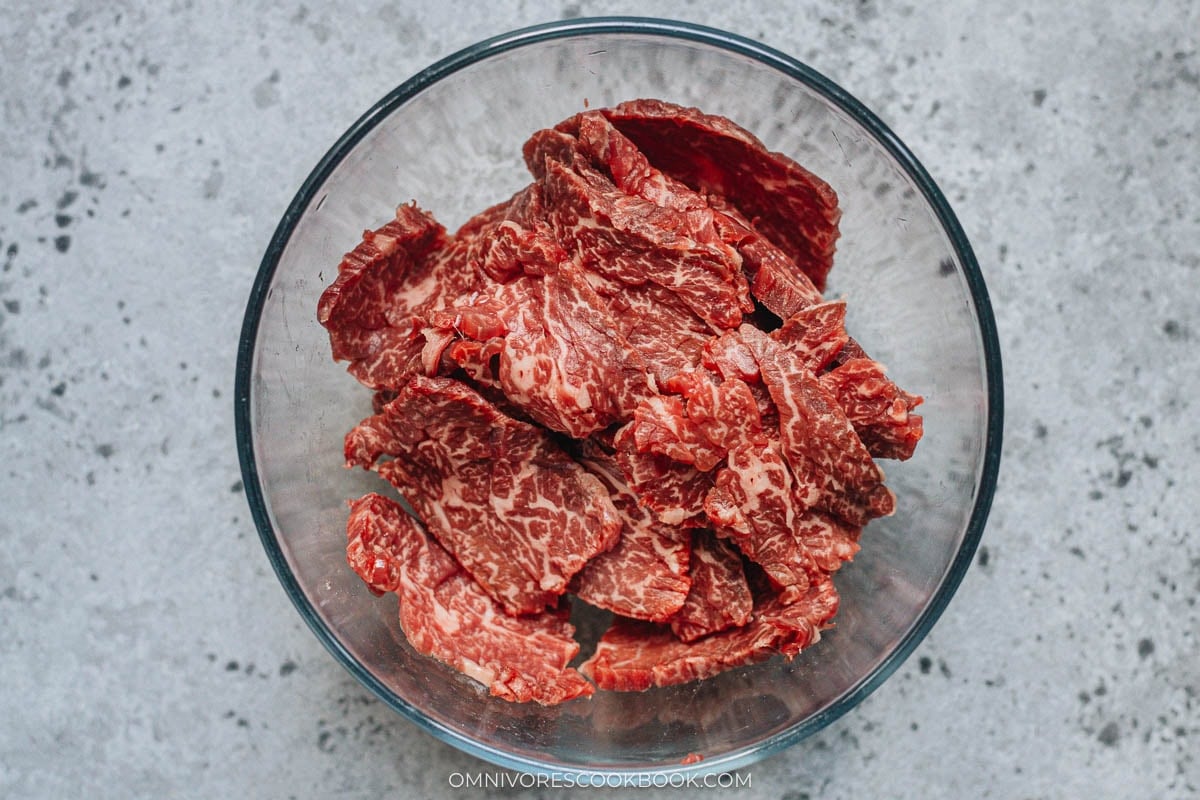
1. Slice the beef: Slice the beef against the grain into thin pieces and transfer it to a medium bowl.
2. Cook the noodles: Bring a pot of water to a boil and cook the sweet potato noodles according to the package instructions. Taste to make sure they are tender all the way through, then drain and rinse them under cool tap water to stop the cooking. Drain thoroughly and set aside.
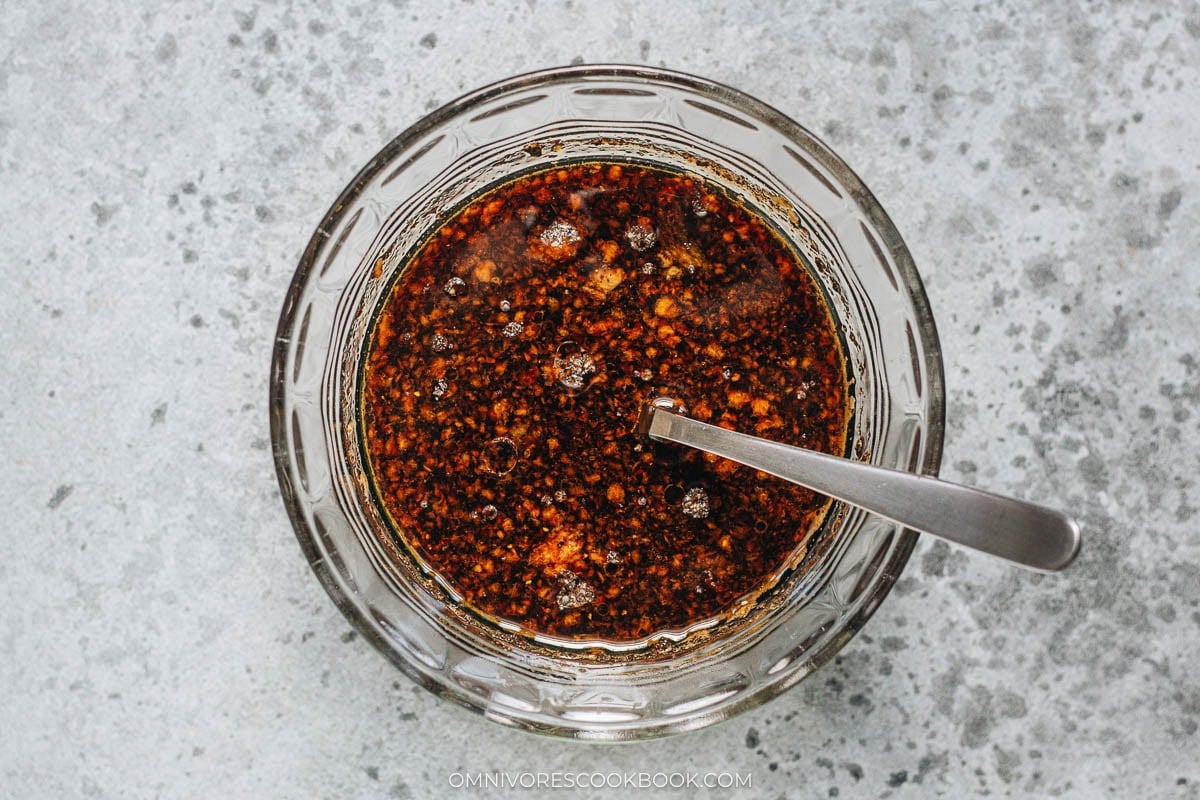
3. Mix the sauce: Stir all the sauce ingredients together in a small bowl until the sugar fully dissolves.
4. Marinate the beef: Add a spoonful of the sauce to the beef and mix with your hand to coat it in a thin layer. Coat the beef with cornstarch, if using (I highly recommend it, to keep the meat tender). Let it sit while you prep the rest.
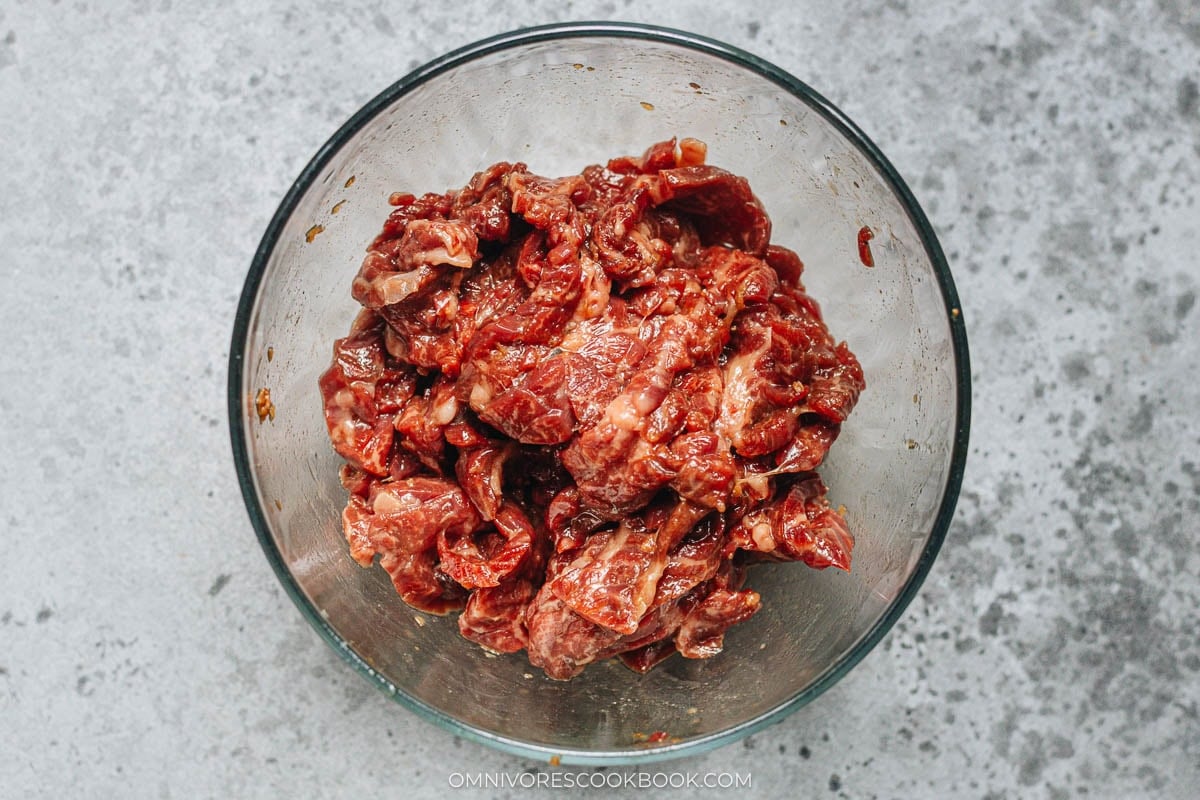
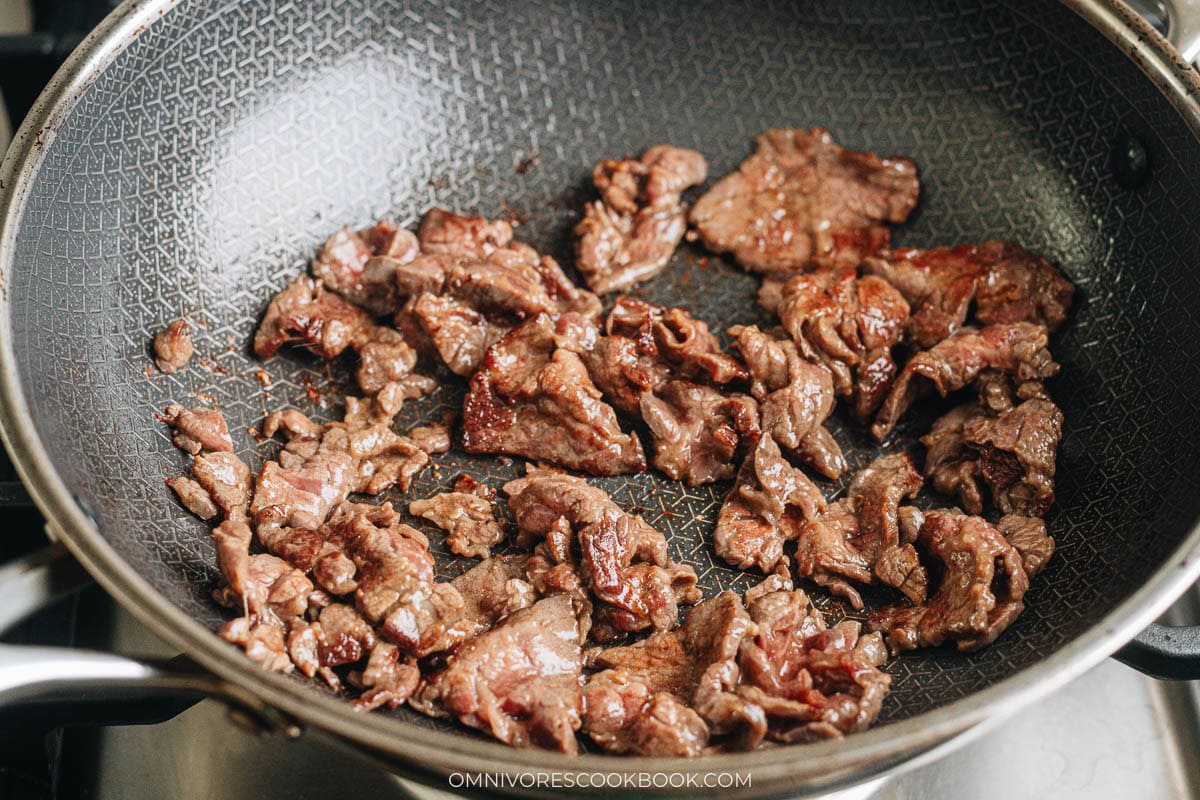
5. Sear the beef: Heat some oil in a wok or nonstick pan over medium high heat until hot. Spread the beef out with little overlap and let it cook untouched until the bottom turns golden, about 1 minute. Flip to brown the other side, then transfer to a plate.
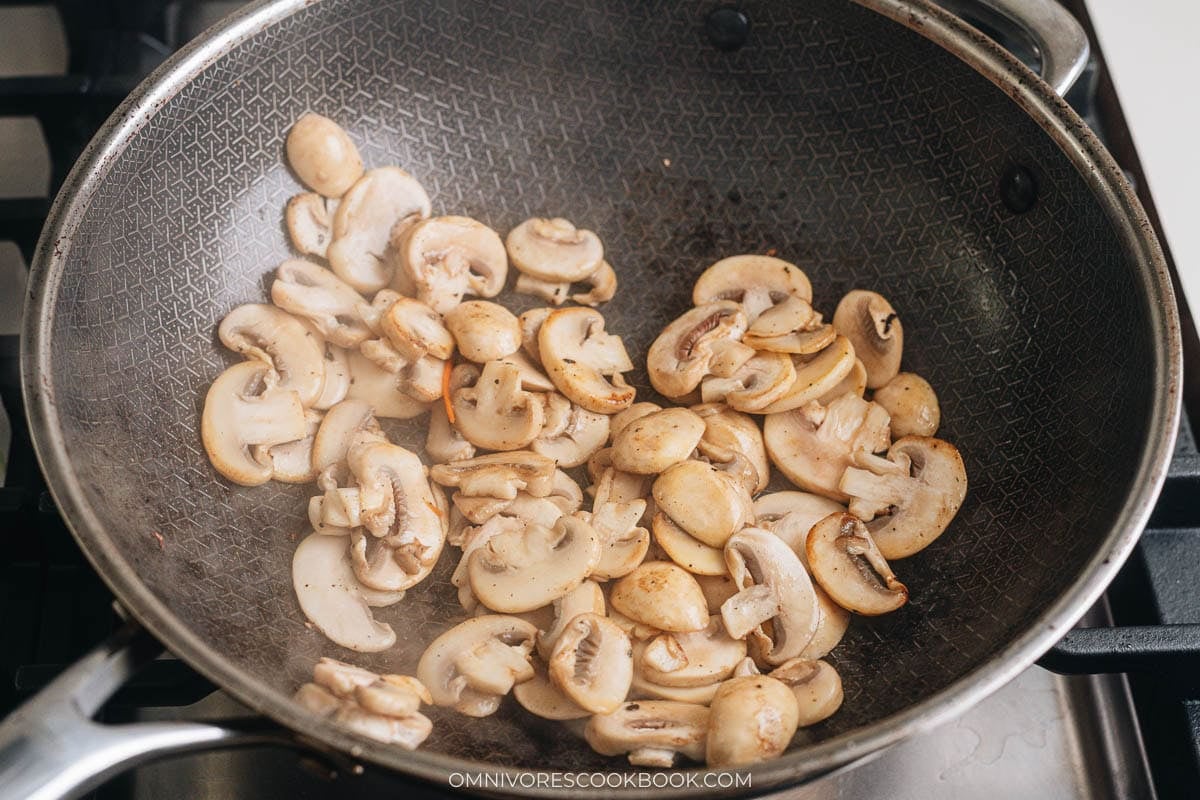
6. Cook the mushrooms: Add a little more oil to the same pan and add the mushrooms. Cook, stirring now and then, until they are seared on the surface and all liquid has evaporated. Transfer to a plate.
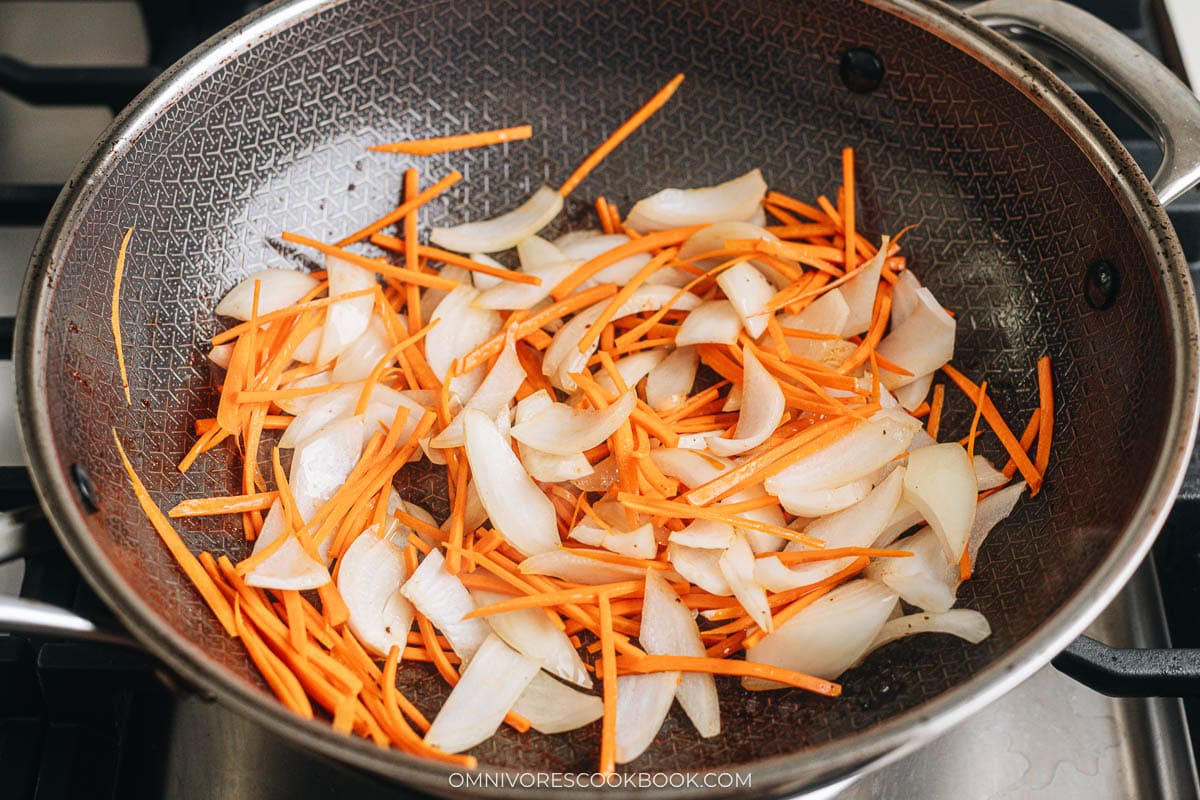
7. Cook the firm vegetables: Pour in oil, add the carrot, yellow onion, and green onion. Sprinkle with salt, stir and cook until the vegetables turn tender, then transfer them to a large bowl.
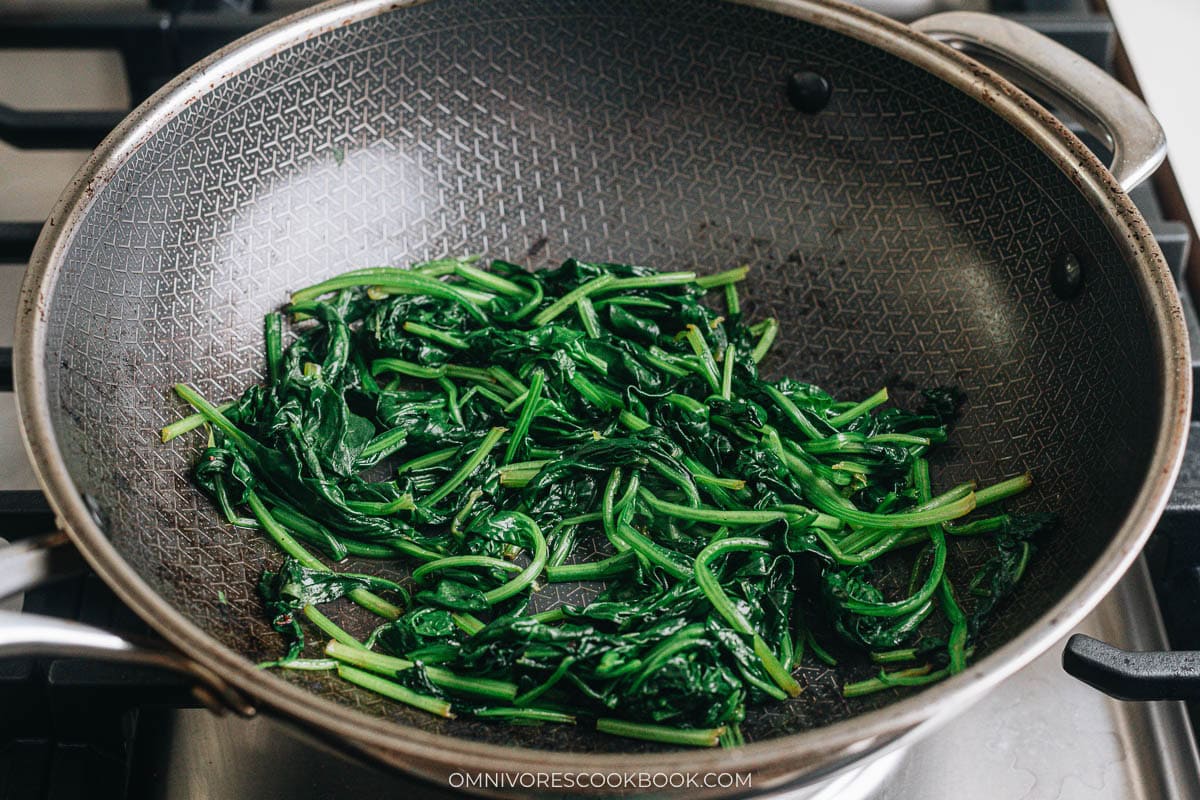
8. Wilt the spinach and toss: Add the last of the oil and the spinach to the same pan and cook until the spinach wilts. Move it to the bowl with the other vegetables.
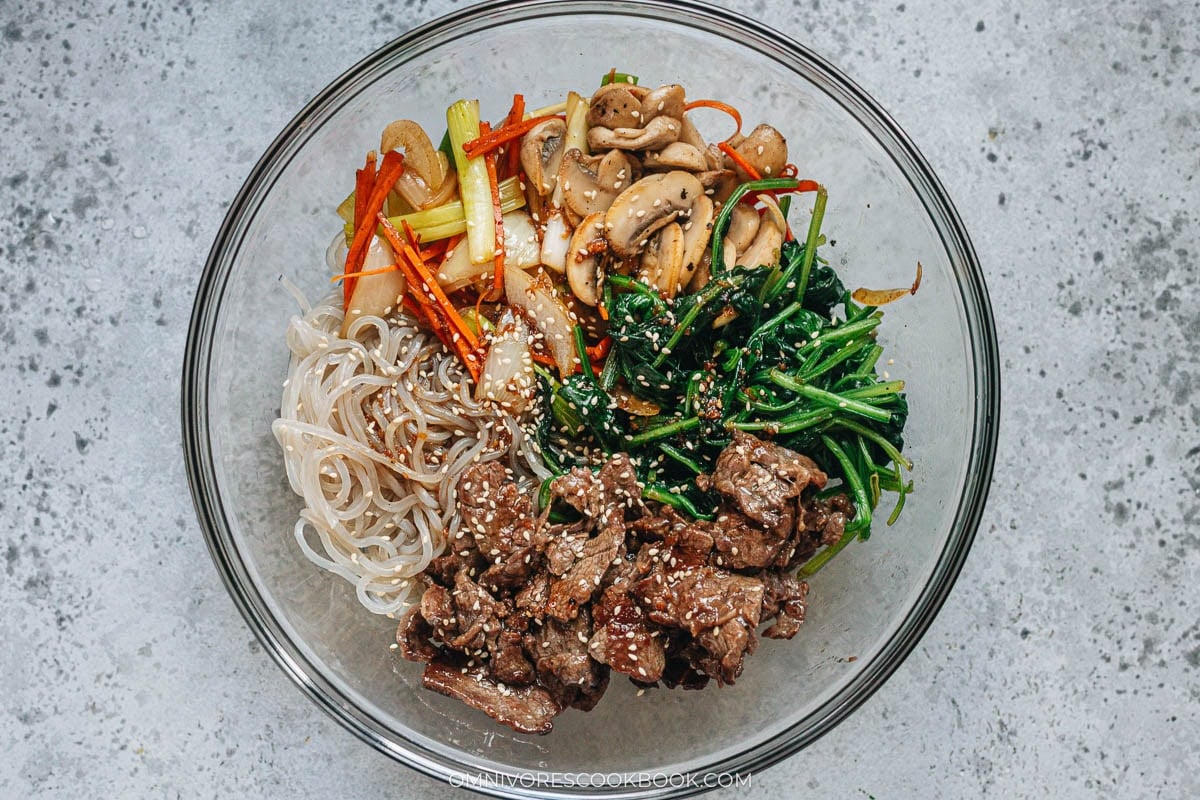
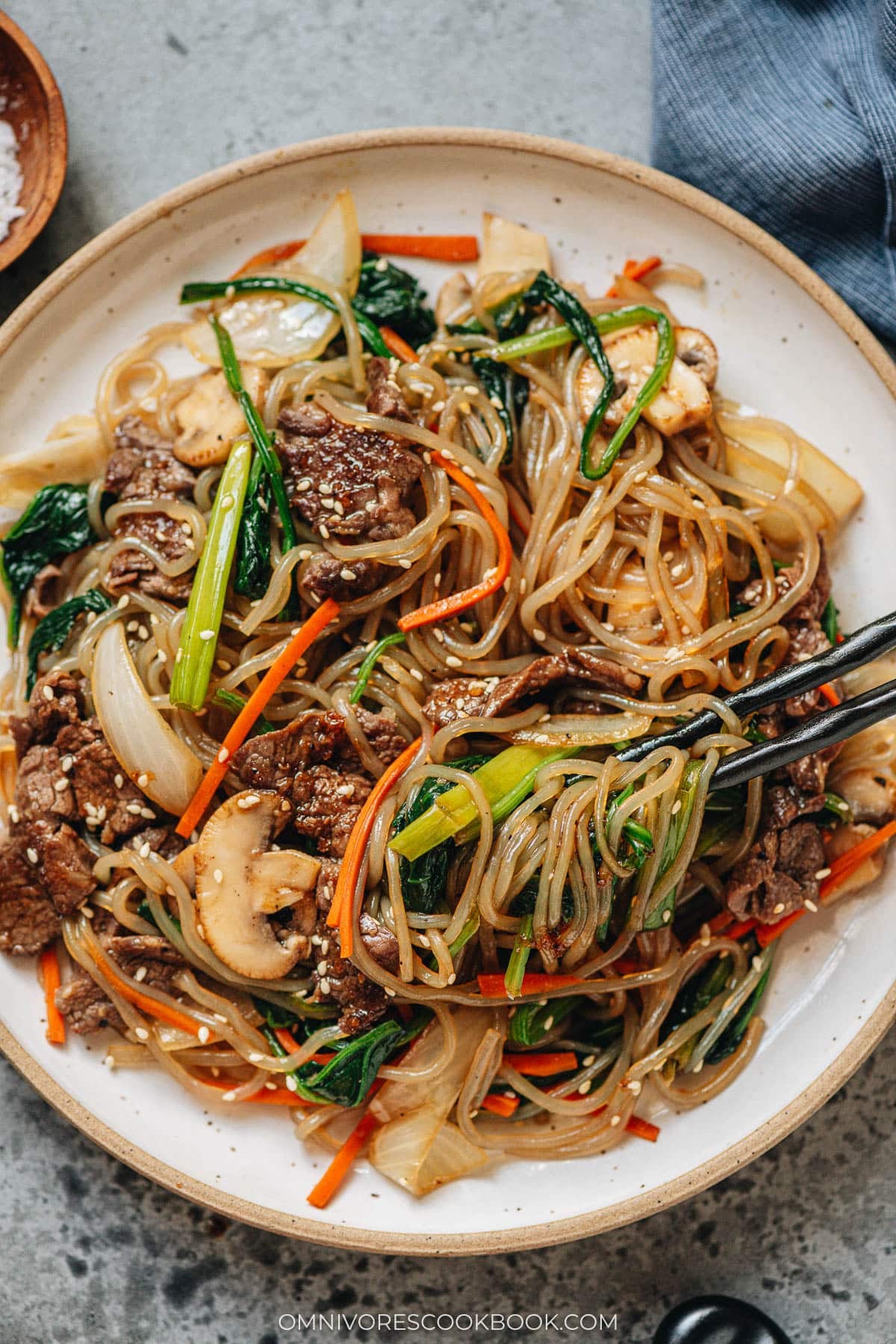
9. Assemble and serve: Add the cooked noodles, beef, and mushroom. Pour the rest of the sauce over the top, and add the sesame seeds. Toss with tongs until the sauce is absorbed. Serve Korean Sweet Potato Noodles warm as a main dish.
My Cooking Tips
Prep everything before the pan gets hot: Once the beef and vegetables start going, the cooking moves fast and there is no time to slice mid stir fry. I line up all my sliced ingredients and my sauce bowl before I turn on the heat.
Cook the vegetables separately: I cook the mushrooms, harder vegetables, and spinach separately, so they sear nicely. Crowding everything in at once steams the vegetables instead of searing them, and they lose their texture.
Keep one pan going the whole time: I do not wipe the pan between batches. The browned bits from the beef and the vegetable juices season each new addition and give the finished dish more depth.
Toss the sauce when everything is warm: The residual warmth helps dissolve the sugar and lets the noodles absorb the seasoning.
Taste the sauce before you toss: Sweet potato noodles are mild, so the sauce does most of the seasoning. I taste it in the bowl and adjust seasonings if needed.
How I Like Serving This
At home I serve japchae as the main event, straight from the mixing bowl into shallow dishes with a bowl of steamed rice on the side for whoever wants it. Thomas likes his with an extra spoon of kimchi from the jar, and I usually make a little more than we need so there is a container waiting for lunch the next day.
When we have friends come over I turn it into part of a bigger Korean spread. I set the japchae in the center next to a crisp Korean seafood pancake for something to tear and share, a bubbling pot of soft tofu stew for warmth, and a summer vegetable bibimbap so the table has a mix of textures and one dish everyone can mix their own way. With a beef noodle dish, a seafood pancake, a tofu stew, and a vegetable rice bowl, no two plates taste the same.
Frequently Ask Questions
Why did my sweet potato noodles turn out gummy or clumpy?
Sweet potato noodles clump when they cool down and sit dry, so I rinse them under cool water right after boiling and toss them with the warm sauce before they have a chance to stick together. If they firm up while you finish the vegetables, a quick toss back in the warm pan loosens them up.
Can I make japchae without beef?
Yes, this dish is easy to make vegetarian. I skip the beef and add extra mushrooms or a pan of seared firm tofu in its place, and because the sauce and vegetables do most of the work, you will not miss the meat.
Can I make japchae gluten free?
Yes. Sweet potato noodles are naturally gluten free, so the only swap you need is a gluten free soy sauce or tamari in the sauce. Check the label on your noodles to be sure they are pure sweet potato starch with no wheat added.
How long does japchae keep in the fridge and freezer?
Japchae keeps well in an airtight container in the fridge for up to 3 days, and a quick reheat in the microwave brings the noodles back to a tender chew. I do not recommend freezing it, because sweet potato noodles turn soft and lose their spring once they thaw, so this is a dish I make fresh or save for the next day or two.
Want to Save This Recipe?
Enter your email below & we’ll send it to your inbox. Plus get great new recipes from us every week!
Korean Sweet Potato Noodles (Japchae)
Ingredients
Sauce
- 1/4 cup soy sauce
- 3 tablespoons brown sugar (*Footnote 1)
- 1 tablespoon toasted sesame oil
- 2 cloves garlic , grated
- 1/4 teaspoon ground black pepper
Stir fry
- 8 oz beef flank steak (*Footnote 2)
- 1 teaspoon cornstarch (*Footnote 3)
- 6 oz dried sweet potato noodles
- 2 1/2 tablespoons peanut oil (or vegetable oil)
- 8 oz mushrooms , sliced (oyster, white, portobello, or shiitake)
- 1 carrot , sliced
- 1/2 yellow onion , sliced
- 5 green onions , chopped to 2” (4 cm) pieces
- 8 oz spinach , root removed and cut into bite-size pieces
- 1/4 teaspoon salt
- 1 tablespoon toasted sesame seeds
Instructions
- Mix all the sauce ingredients together in a small bowl. Stir to mix well.
- Slice the beef against the grain into thin pieces, about 1/8” (3 mm) thick. Transfer into a medium-sized bowl.
- Transfer 1 1/2 tablespoons of sauce into the bowl with the beef. Mix with your hand until the liquid has been absorbed. Add the cornstarch and mix again to coat well. Let marinate while preparing the rest of the ingredients.
- Bring a pot of water to a boil. Cook the dried sweet potato noodles according to the instructions on the package. Taste the noodles once done. They should be cooked through and tender, ready to serve. Immediately drain the noodles and rinse them with tap water to stop the cooking. Drain thoroughly and set aside.
- Heat 1/2 tablespoon of oil in a large wok or skillet over medium high heat until smoking. Spread the beef with minimal overlapping. Let cook without touching until the bottom turns golden brown, 1 minute or so. Flip with a spatula to cook the other side until golden brown, another minute or so. Transfer to a plate.
- Add 1 tablespoon of oil to the same pan. Add the mushrooms. Cook, stirring occasionally, until it’s browned and all the liquid has evaporated, 3 to 4 minutes. Sprinkle with salt and stir to mix again. Transfer to a plate.
- Pour in 1/2 tablespoon oil and add the carrot, yellow onion, and green onion. Stir a few times to coat well. Sprinkle with salt. Stir and cook until the veggies turn tender and cooked through. Transfer to a large bowl.
- Add the remaining 1/2 tablespoon oil and spinach into the same pan. Cook and stir until the spinach is withered. Transfer to the bowl with the rest of the cooked veggies.
- Add the cooked sweet potato noodles and beef. Pour the rest of the sauce on top. Add the sesame seeds. Toss with a pair of tongs until the sauce is absorbed. Serve as a main dish.
Notes
- Traditional japchae usually has a sweet and savory flavor, but depending on your personal taste, the sauce may be on the sweet side. If you prefer a less sweet dish, start with 2 tablespoons of sugar, taste the sauce, and add more if needed.
- You can use other proteins to cook this dish, too. For example, chicken breast, chicken thigh, pork loin, and shrimp are some great options. You can also use tofu or skip the protein altogether to make the dish vegan.
- Traditionally, japchae does not require cornstarch in the meat marinade. However, a small amount of cornstarch helps keep the meat tender during cooking and greatly improves its texture. I highly recommend using it.
Nutrition

Did you make this recipe?
I’d love to hear how it turned out for you! Please take a moment to leave a 5-star rating ⭐️ and share your thoughts in the comments further down the page. It really helps others discover the recipe too.
Kim
Really yummy recipe and the seasoning was just right! You can pretty much add any veggies you want!
Boris
It tasted great. You can also eat it lukewarm, and it reminded me of a lot of dishes I’ve had with Korean friends. I’m not entirely sure, but I think some spicy kimchi would go really well with it.
Janet
Absolutely delicious. I love try new things and bought sweet potato noodles on a whim while at an asian grocery store. Not sure what to do with them I searched recipes online and yours appealed to me the most. I didn’t have all the ingredients so made a few substitutions. Tofu instead of beef and parboiled chinese broccoli instead of spinach. My family likes a bit of heat so I added a sliced thai chilli into the sauce. I really didn’t know what to expect so was thrilled with how good it tasted. Yummy food makes me really happy. Thank you. I will be sure to make it again with the beef and other proper ingredients. I also plan to try more of your recipes.
Nysha
Very Tasty! Simple and yummy. Did use tamari rather than regular soy sauce. It was really tasty. Best recipe I have found so far.
Do with there was a suggested cooking time for the sweet potato vermicelli. My package doesn’t have directions I understand.
Diana
Amazing!! I added red bell pepper too and thought it was perfect. Making the tofu in this way is also my new favourite way.
Oma Anne
Increased to 6 servings, used the conversions, and with the exception of skillet oil, it was spot on, and DELICIOUS! I don’t see a place for a photo, or I’d post it!
Inna V
It was good!!!!
Robin
Just discovered Japchae noodles and love them. Question though- is this recipe truly 10K mg of sodium? Is that because of the soy sauce? Could I use coconut aminos in it’s place?
Maggie Zhu
Just checked my record and turned out I did a typo and entered one more “zero”! Sorry about that. The actual sodium content is 1K mg.
That being said, it mostly came from soy sauce. I wouldn’t recommend coconut aminos as a replacement because it’s too sweet and has less umami.
If you want to reduce the sodium, I personally prefer the Yamasa reduced sodium soy sauce. It tastes better than most low-sodium brands.
Brenda
I used your recipe as a guideline tweaking it to my preferences. It was delicious!! Friends as well as my son who loves to cook have asked for the recipe with my tweaks.
Lisa lu
delicious!!
Lorien Byrne
My whole family absolutely loved this recipe. My local store didn’t have sweet potato noodles so we used rice vermicelli and it was still delicious. I doubled the portions of vegetables and used beef stroganoff as well as doubled the soya sauce in the marinade/sauce. I now know that I need a julienne slicer. The carrots took ages to cut 🙂 Thank you for posting this. Will definitely be making it again.
olivia
amazing!!
Cortney
This was easy to make and delicious! The entire family loved it. I couldn’t find flank steak so I found a small ribeye that worked well.
maya
Do you recommend using dark or light soy sauce, or a blend of both?
Maggie
Hi Maya, I would use light soy sauce, or 3 tablespoons light plus 1 tablespoon dark to add a nice color to the dish.