
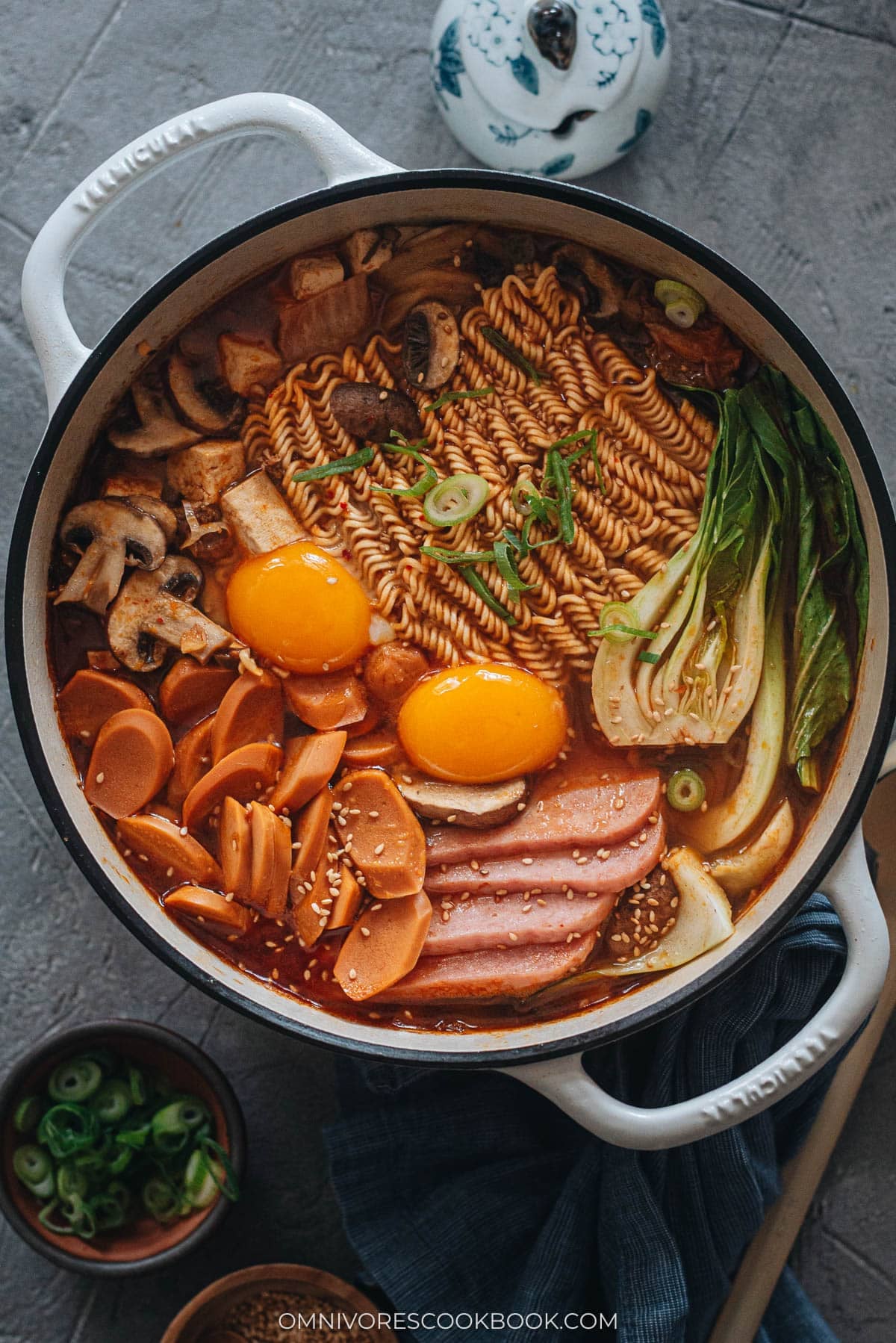
Budae jjigae (부대찌개) literally translates to army stew, a postwar Korean dish born in the years after the Korean War when home cooks stretched American military rations like Spam, hot dogs, and instant noodles into something hot and filling. Think of it as a Korean cousin to my sundubu jjigae, the Korean soft tofu stew, both made around a spicy gochujang base and both meant to bubble at the table while everyone helps themselves with a ladle. What makes budae jjigae specifically itself is the mix of Korean pantry staples like kimchi and gochujang against American canned and processed meats, all swimming in the same broth.
I learned to cook this in 2019 the same week my husband and I moved from Austin to New York, when our tiny Lower East Side apartment had no gas for the stove because of an explosion in the restaurant downstairs. We were cooking everything off a single electric pot for weeks, and budae jjigae was the dish that made it easy to feed both of us out of one pot with minimal prep. I still cook it the same way now, even in a finished kitchen, because the one-pot habit stuck.
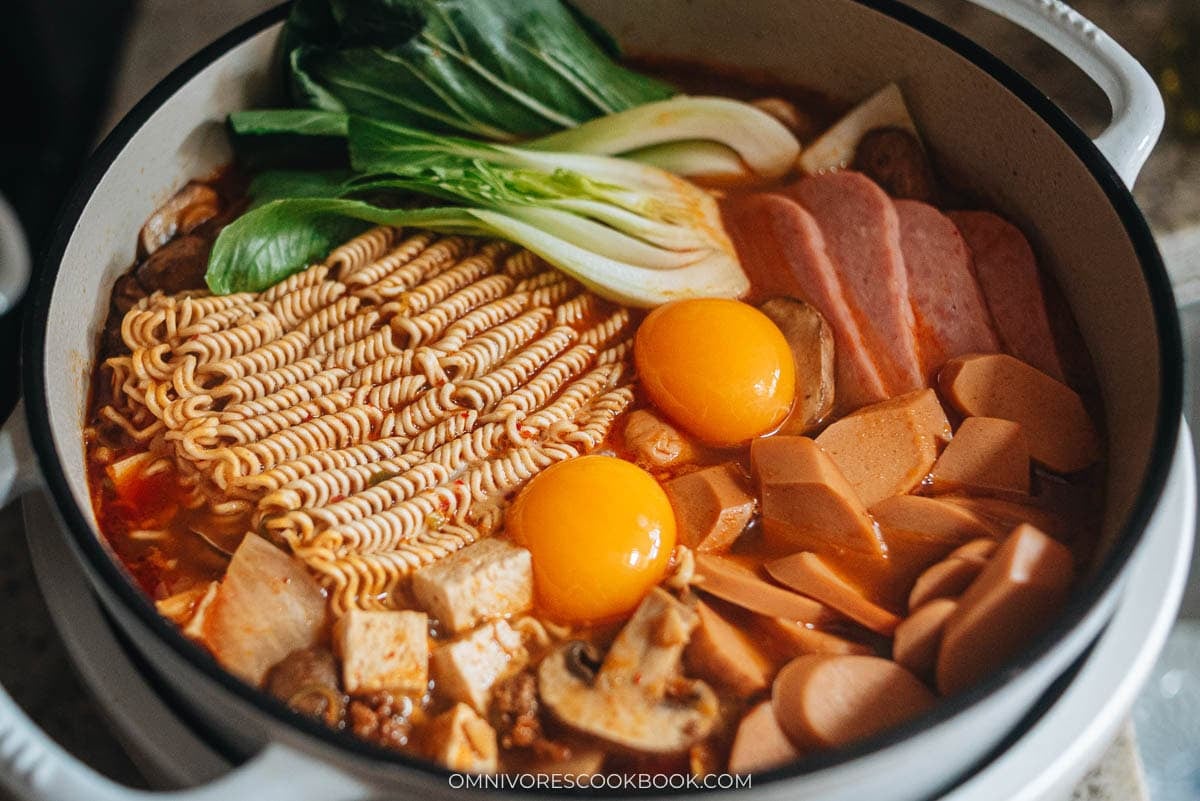
In my opinion, there is no single right recipe for budae jjigae, which is what made it perfect for that tiny apartment kitchen and still makes it perfect for a weeknight today. I saute ground beef with gochujang and kimchi, pour in chicken stock and Shaoxing wine to deglaze, then layer in tofu, mushrooms, sausage, Spam, baby bok choy, instant noodles, and eggs in order from longest to shortest cook time. That’s all there is to it. Follow my step-by-step instructions below, and you’ll have a delicious homemade soup in no time.
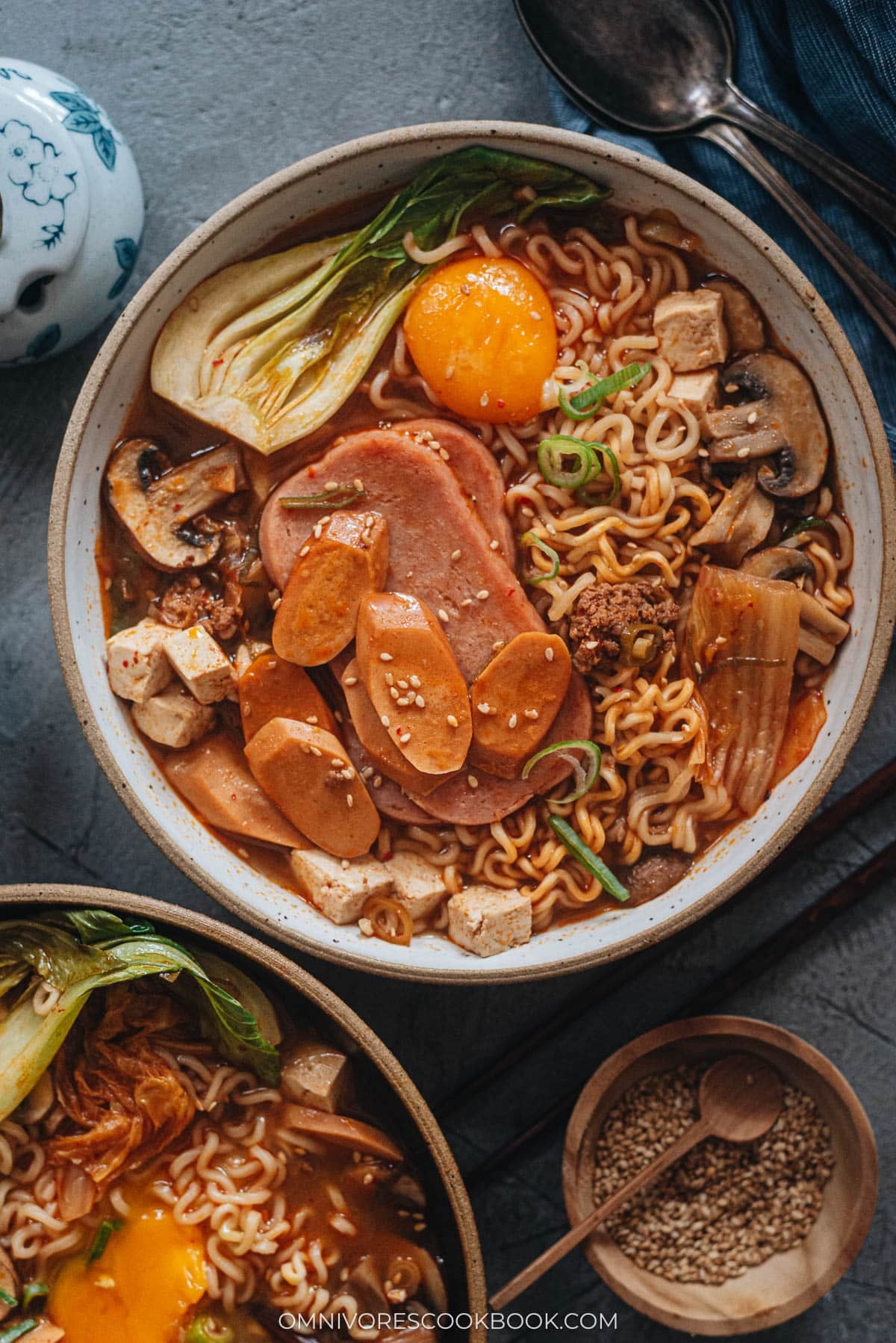
Ingredients
I love how easy it is to make this Korean Army Stew in just 30 minutes with simple ingredients that are easy to find at most grocery stores. Here is what I use:
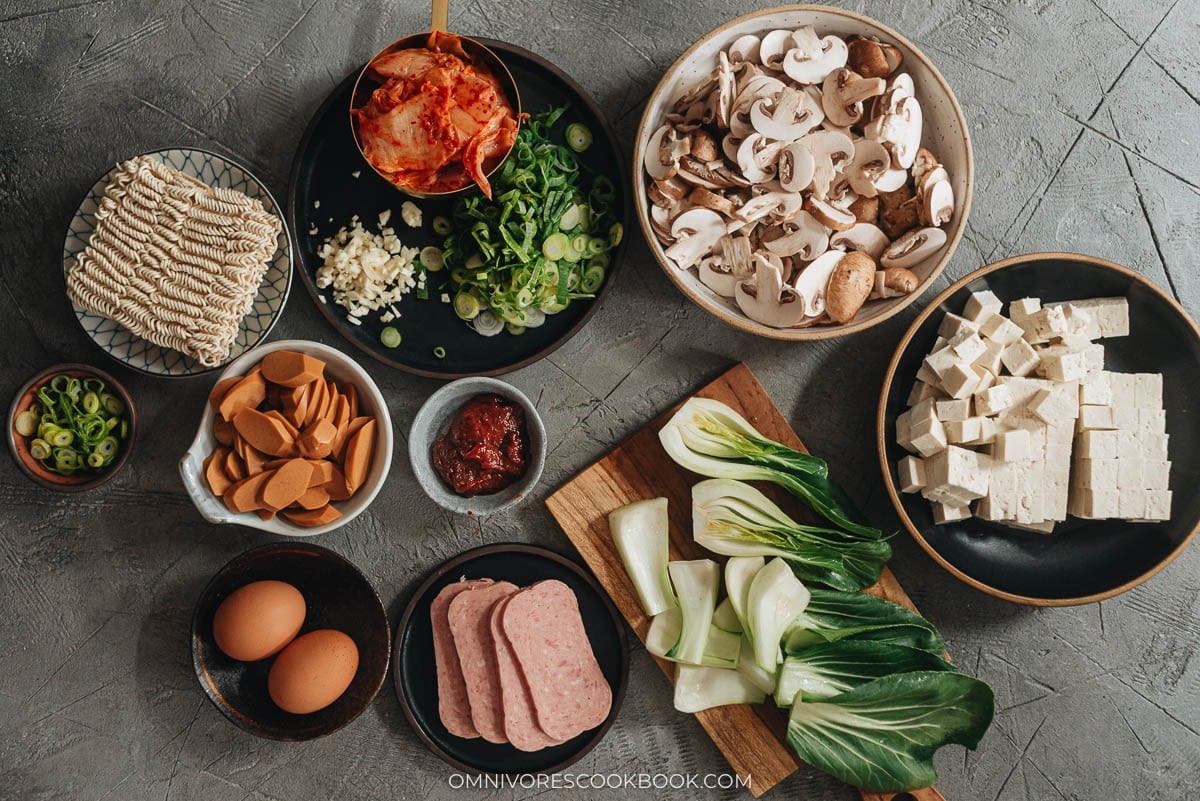
Aromatics and ground meat: Peanut oil heats up first, then ground beef goes in to brown and char lightly at the bottom of the pot. Chopped green onions and minced garlic follow, and kimchi joins them to add sour fermented depth before the broth even goes in. Ground turkey or ground chicken works the same way if you want a leaner pot.
Korean broth base: Gochujang is stirred into the aromatics, then chicken stock pours in to deglaze the pot. Rice wine, soy sauce, and a touch of sugar round out the broth.
Tofu and mushrooms: Medium tofu, cut into cubes, slides into the broth first because it takes the longest to absorb flavor. Sliced white mushrooms go in with the tofu too.
Sausage and Spam: Sliced sausage and Spam together are what give the dish its army-stew character. Pick whatever sausage you like, smoked kielbasa, hot dogs, andouille, or a spicy Italian sausage all work, and Spam covers the salty cured meat side.
Vegetables: Quartered baby bok choy is my default green. Thinly sliced napa cabbage, kale, mustard greens, spinach, or any green you have in the crisper drawer works just as well. A few dried shiitake mushrooms tossed in with the cubed tofu is highly recommended.
Noodles and egg: Instant noodles are what make this a one-bowl meal at the end. I discard the seasoning packets that come with the noodles, since the broth has enough going on already. Eggs cracked into the pot at the end and cooked covered until the whites set and the yolks stay runny finish the dish.
How to Make
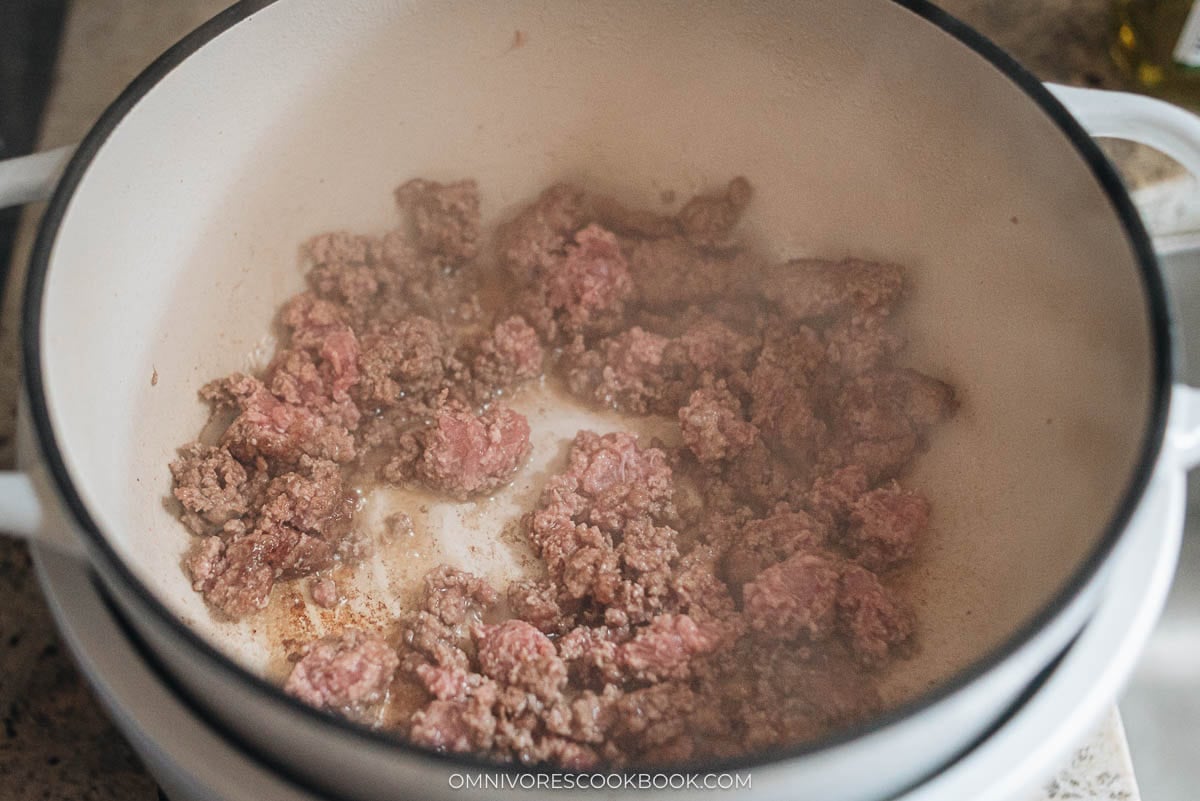
1. Brown the ground meat: Heat a tablespoon of peanut oil in a 4-quart Dutch oven or heavy pot over medium-high heat until it shimmers. Add the 1/2 pound of ground beef and break it apart with a wooden spatula. Cook for 3 to 4 minutes until the meat is mostly cooked and the surface is lightly charred for extra flavor.
2. Add aromatics and kimchi: Drop in the chopped green onions, minced garlic, and cup of kimchi. Stir and cook for 1 minute.
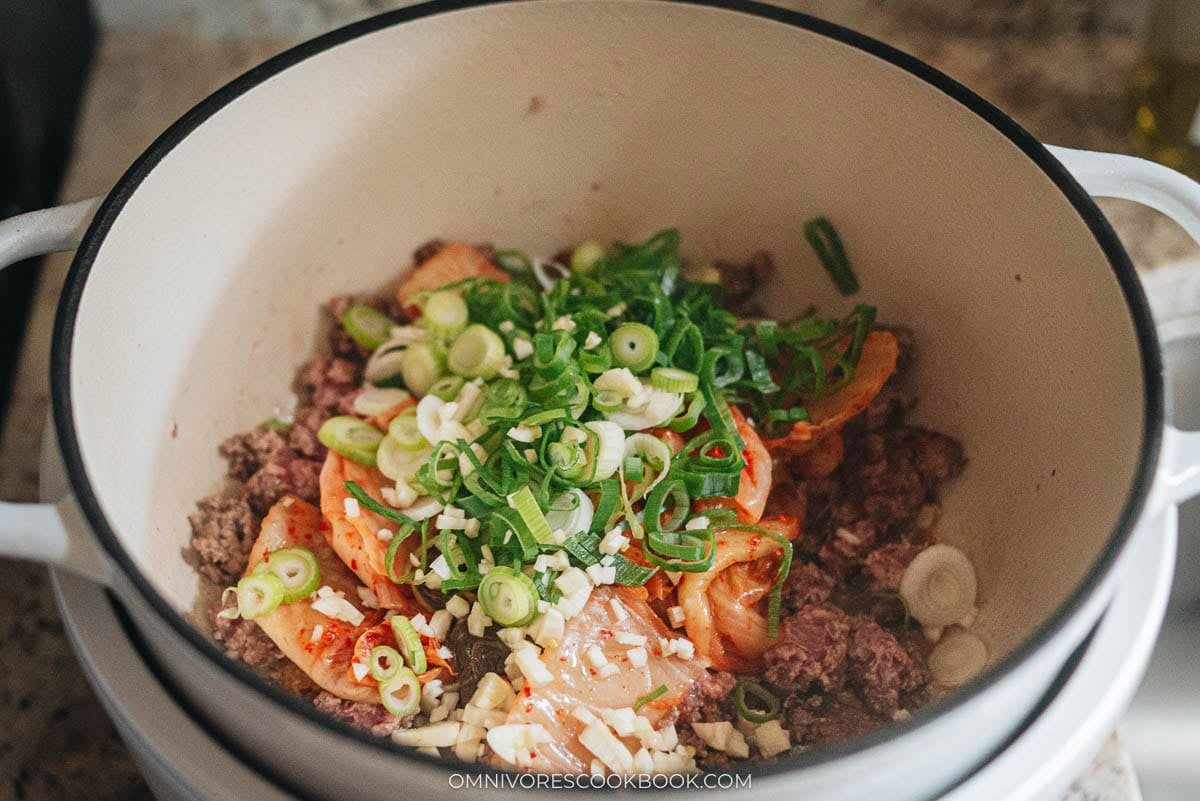
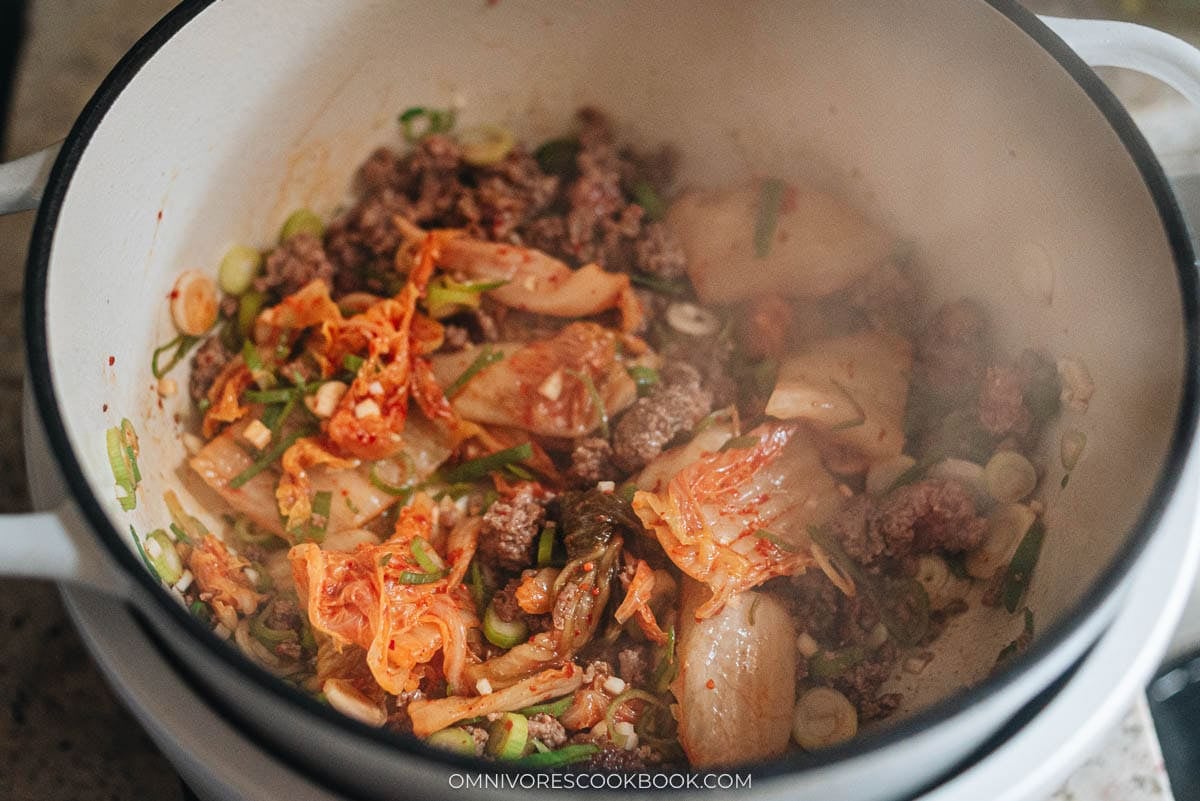
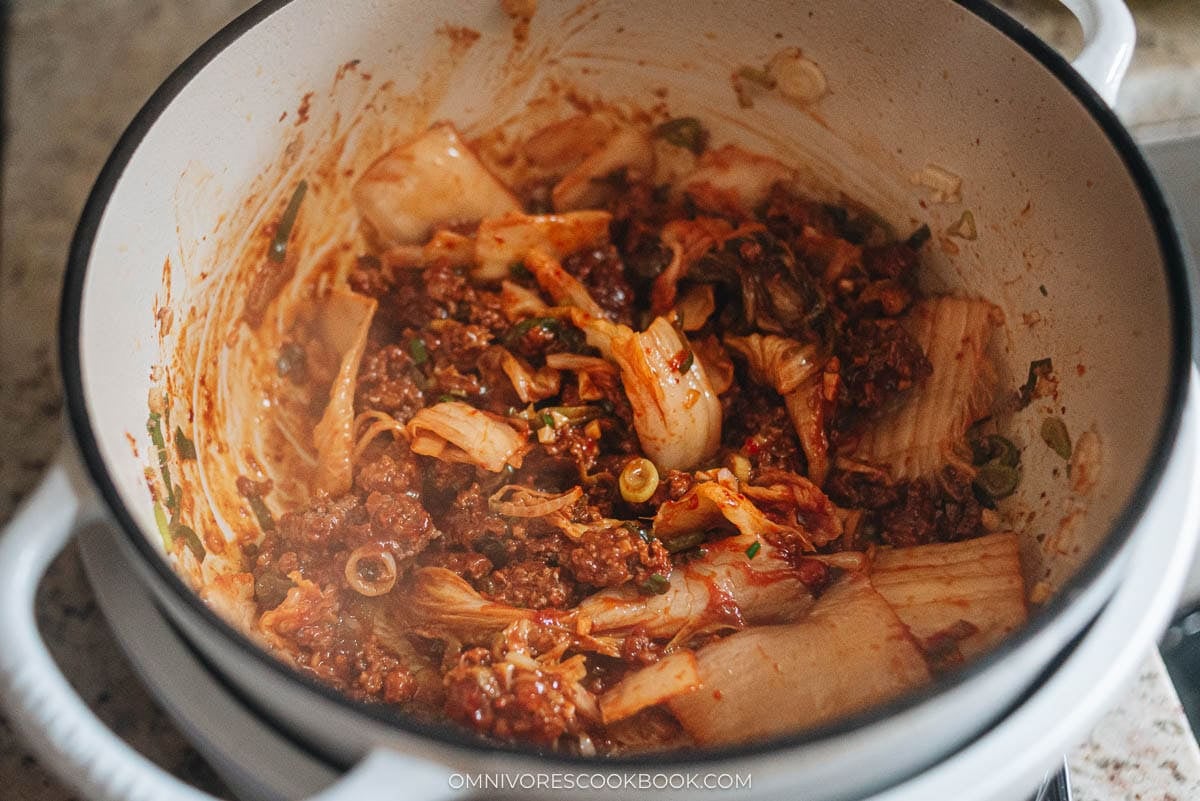
3. Bloom the gochujang: Spoon in 2 tablespoons of gochujang and stir everything together for about 30 seconds.
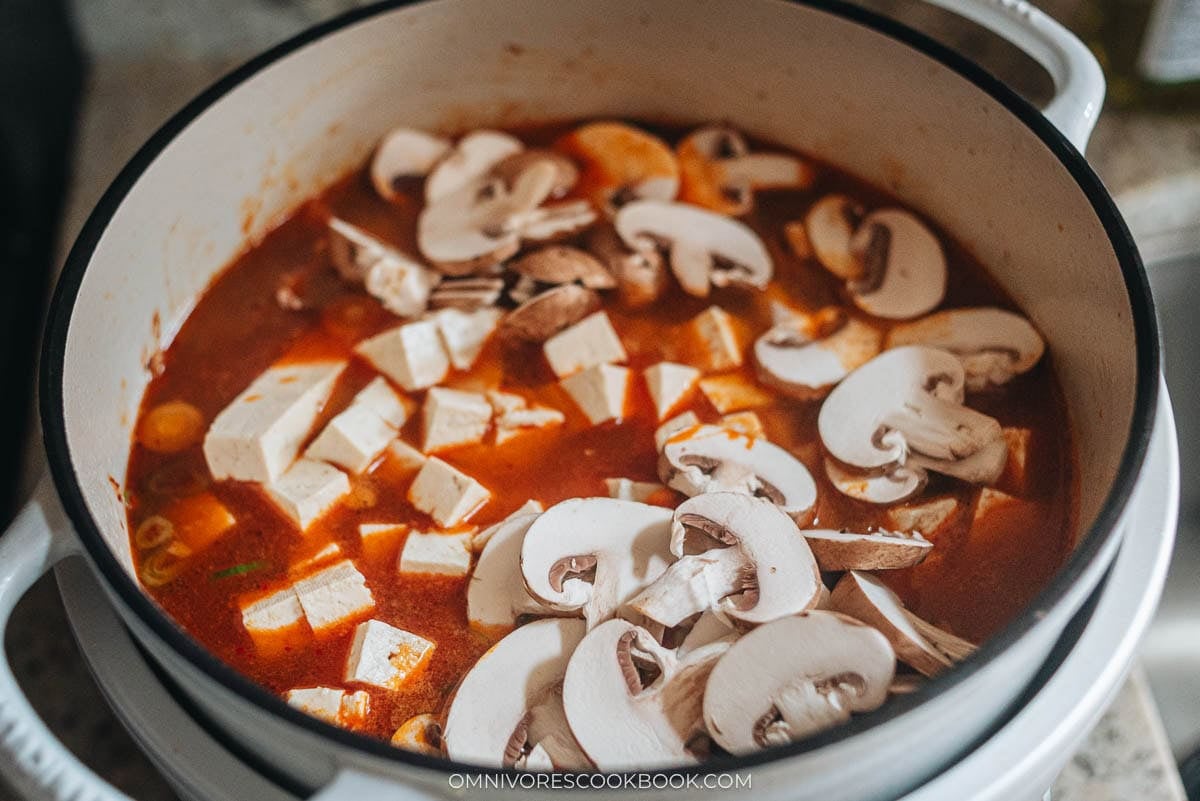
4. Build the broth: Pour in 4 cups of chicken stock and scrape the brown bits off the bottom of the pot with your spatula. Stir in the Shaoxing wine, soy sauce, and sugar, then add the cubed tofu and sliced mushrooms. Cover the pot, drop the heat to medium-low, and simmer for 5 minutes until the mushrooms are tender.
5. Add the meats: Lay the sliced sausage and Spam across the top of the broth in an even layer. Cover and simmer for another 5 minutes so the meats heat through and release their fat into the broth.
6. Finish with greens, noodles, and eggs: Add the quartered baby bok choy and arrange the instant noodles across the top, then crack the 2 eggs straight onto the surface of the broth in two spots that are not covered by noodles. Cover and cook for 3 to 4 minutes until the noodles are tender, the bok choy is bright green, and the egg whites have set with the yolks still runny.
7. Serve straight from the pot: Bring the whole Dutch oven to the table on a trivet and serve hot into deep bowls. Each bowl should pull a little of everything, the noodles, broth, meats, vegetables, and a half egg, so the dish stays balanced from first bite to last.
My Cooking Tips
Bloom the gochujang in the hot pan before the broth goes in: Stirring gochujang into a cold pot of broth leaves it tasting one note salty and thin. Letting the paste meet the hot pan for 30 seconds before the stock pours in releases the full savory red color and rounds out the heat.
Use the kimchi liquid too: When I scoop kimchi out of the jar, I bring some of the red brine with it, because that liquid is what brings the fermented sour note into the broth. Drained kimchi can leave the soup tasting less Korean than it should.
Use a Dutch oven if you have one: A heavy 4-quart Dutch oven holds the heat steadier than a thinner pot and keeps the simmer even from the first minute to the last. It is also pretty enough to bring straight to the table, which is how I serve this dish whenever I can.
Treat the recipe as a base, not a rule: This is the dish I make when the fridge needs to clear out, so I swap in whatever cured meats, vegetables, and noodles are on hand. The only things I never skip are the gochujang, the kimchi, and the instant noodles, since those three are what make the dish budae jjigae and not just any stew.
How to Serve
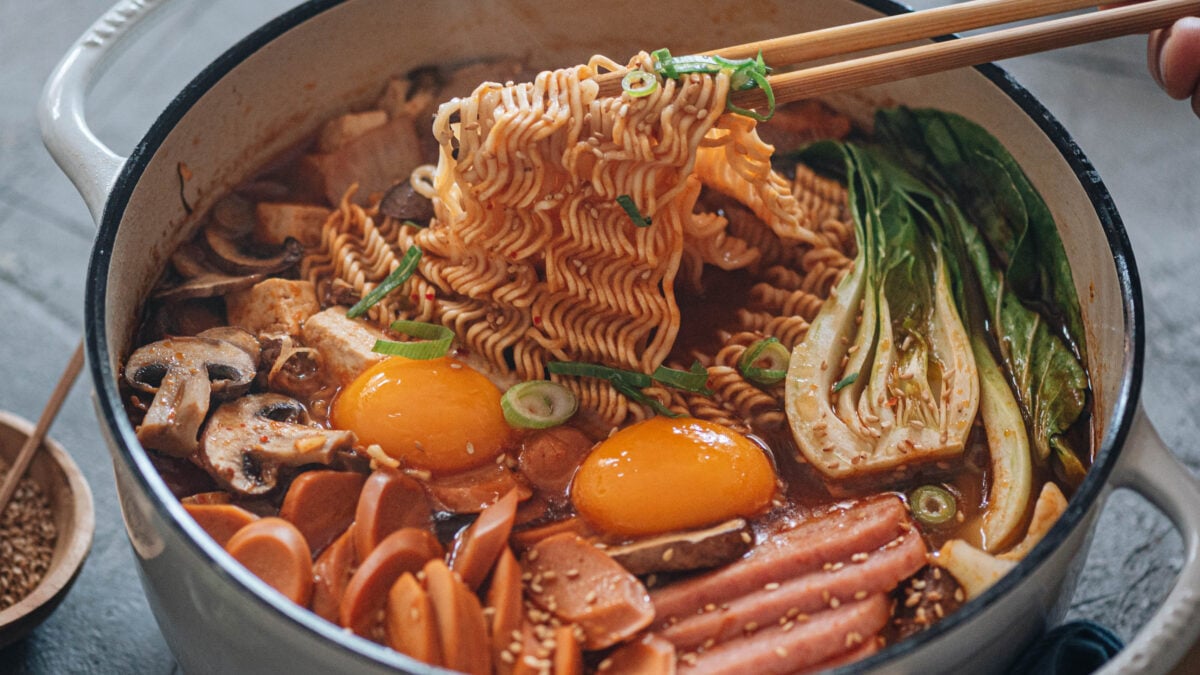
The moment this stew comes off the burner, I move the whole Dutch oven onto a trivet at the center of the table so the broth keeps bubbling between bowls. Each person ladles their own bowl with a deep ladle, scooping a little of everything from the noodles to the egg. My husband and I sit across from each other and trade bites of sausage and Spam, the way you eat a hot pot at a restaurant.
For a fuller Korean dinner when friends come over, I treat the stew as the centerpiece and add to the table more plates. I love a good stack of Korean seafood pancake and bowl of summer vegetable bibimbap on the side covers anyone who wants steamed rice rather than noodles.
Frequently Ask Questions
Can I make this vegetarian or vegan?
Yes, this is one of the most flexible Korean stews to adapt for a meatless table. Replace the ground beef with minced shiitake mushrooms and the sausage and Spam with cubes of fried tofu, tofu sheets, or bean threads, all of which absorb the broth better than plain tofu. I also swap the chicken stock for vegetable stock and the dish still tastes rich and satisfying.
Can I make budae jjigae without Spam?
Yes, and I do this when my pantry is lower or when I want a slightly less salty bowl. Sliced kielbasa, hot dogs, andouille, or any cured pork sausage brings the same character on its own without the Spam. The dish still tastes like army stew because the gochujang, kimchi, and instant noodles are what define it, not any single piece of meat.
How to store this dish?
I store the leftover stew without the noodles in a sealed container and use it up within 3 days in the fridge for the best texture. The noodles absorb broth overnight and turn soft and bloated, so I cook fresh noodles in the reheated broth instead of saving them with the rest. I do not freeze this dish, the tofu turns spongy on the thaw and the noodles do not survive at all.
Want to Save This Recipe?
Enter your email below & we’ll send it to your inbox. Plus get great new recipes from us every week!
Korean Army Stew (Budae Jjigae)
Ingredients
- 1 tablespoon peanut oil (or vegetable oil)
- 1/2 lb ground beef (ground chicken or turkey works as well
- 3 green onions , chopped
- 2 cloves garlic , minced
- 1 cup kimchi
- 2 tablespoons Gochujang spicy Korean chili paste
- 4 cups chicken stock
- 2 tablespoons dry sherry (or rice wine)
- 1 tablespoon soy sauce
- 1 tablespoon sugar
- 1 block tofu , cubed
- 1/2 lb white mushrooms , sliced
- 1/2 lb sausage of your choice and/or Spam , sliced (I used both)
- 2 heads baby bok choy , quartered (or 2 cups thinly sliced cabbage)
- 2 packs instant noodles
- 2 eggs (Optional)
Instructions
- Heat oil in a 4-quart dutch oven (or heavy pot) over medium-high heat until hot. Add the ground meat. Cook and break apart the meat with your spatula, until the meat is mostly cooked through and the surface is lightly charred.
- Add the green onions, garlic, and kimchi. Stir and cook for 1 minute.
- Add the Gochujang. Stir and cook to coat everything well, 30 seconds or so.
- Pour in the chicken stock and use your spatula to scrape the brown bits off the bottom of the pot. Add the dry sherry, soy sauce, sugar, tofu, and mushrooms. Turn to medium or medium-low heat. Simmer, covered, until the mushrooms are cooked, 5 minutes or so.
- Add the sausage and Spam. Cook for another 5 minutes.
- Add the baby bok choy, Instant noodles, and eggs. Cook covered until the noodles turn tender and the veggies are cooked.
- Serve hot as a main dish.
Nutrition

Did you make this recipe?
I’d love to hear how it turned out for you! Please take a moment to leave a 5-star rating ⭐️ and share your thoughts in the comments further down the page. It really helps others discover the recipe too.
suresh
Thanks for this useful informative blog to sharing step by step
Chris W
Hi! I’m planning to cook this, but before I do, I’m nervous about Step #3: “Add the Gochujang. Stir and cook to coat everything well, 30 minutes or so”. Do I really need to cook this for 30 minutes or is this a typo?
Thanks!
Maggie
Sorry about the typo! It should be 30 seconds. I’ll fix it right now.
Cinnamon Vogue
Totally unhealthy but I love it. OK maybe not totally. The Spam which I love is bad but the veggies are fantastic. I admit from time to time I do buy some Spam. Most people get desserts. I get SPAM. Lol. I might replace the sausage and Pasta with something better, but the idea and recipe is fabulous. Needed something different and this fits the bill. And who can say no to Kimchi. I am in.
Sue R
This is perfect for a easy meal for us too being flooded and in a small place for now . Pinning it to make soon. Thank you!
Robin Jones
I’m making this again tonight because it’s cold and rainy outside and this is simply DELICIOUS! I saw you make it on Instagram and I happened to have all the ingrediants in the fridge so I made it. I was in love with the ease and the flavor was perfect! Thank you, Maggie. Every dish of yours that I have made to date is awesome. What a great dish!