
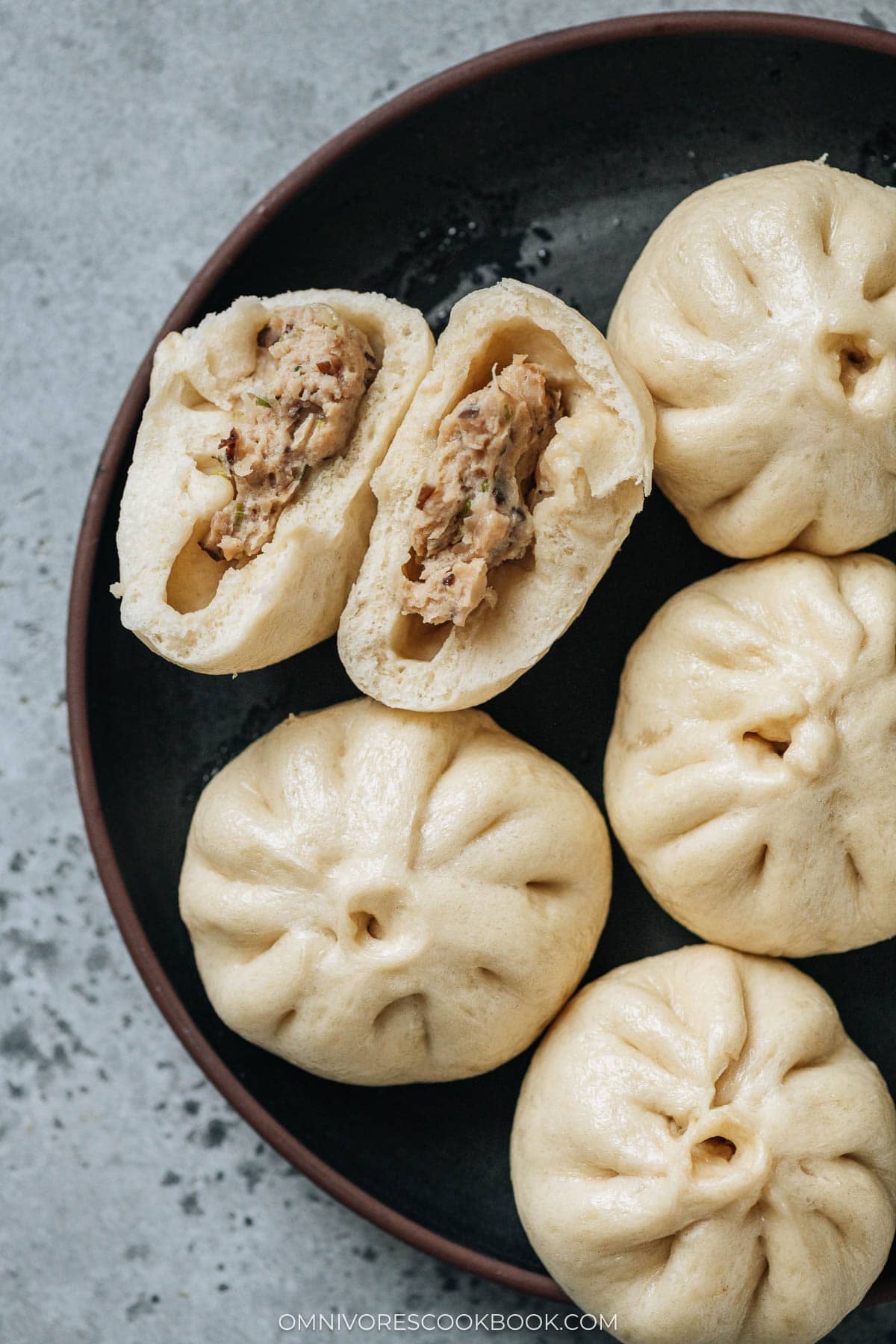
Chicken buns look very different across the regions of China. In Cantonese cooking the term usually means steamed char siu buns made with chopped cooked chicken and char siu sauce, or a chicken and mushroom bun where the diced chicken is marinated and cooked first before wrapping. The recipe I developed in this post is the Northern version, a close cousin of my steamed pork buns with chive, where the raw ground meat goes straight into the wrapper and cooks as the bun steams.
My grandma made these at home all the time when I was growing up in Beijing, and she served them with a bowl of plain congee or millet congee for breakfast, a side of simple stir fried greens at lunch, or a cucumber salad at supper. Now living in the US, I prefer to make a big batch and freeze them, so I can easily reheat and serve them. My son loves to snack on the buns after a quick reheat in the microwave. My husband and I tend to eat them slower with a small bowl of vinegar on the side, the way my grandma did.
I treat these as a weekend project that splits across 3 short stages, the dough that needs an hour of rise time, the filling that comes together in one bowl, and the wrap-pleat-steam stretch that converts the dough into 12 buns. I love the Northern version because the raw ground chicken filling is faster to mix than the Cantonese version, the meat holds together inside the wrapper without falling apart, and the result tastes so savory from the shiitake.
I recommend you to always double the recipe and freeze the extras, the recipe below holds up for a month so you can pull them out for a quick weekday breakfast. So good!
Ingredients
I work the ingredients in two parallel tracks, the dough on the counter and the filling in a mixing bowl, so the meat is resting in the fridge by the time the dough is ready for me to roll. Here is what I use:
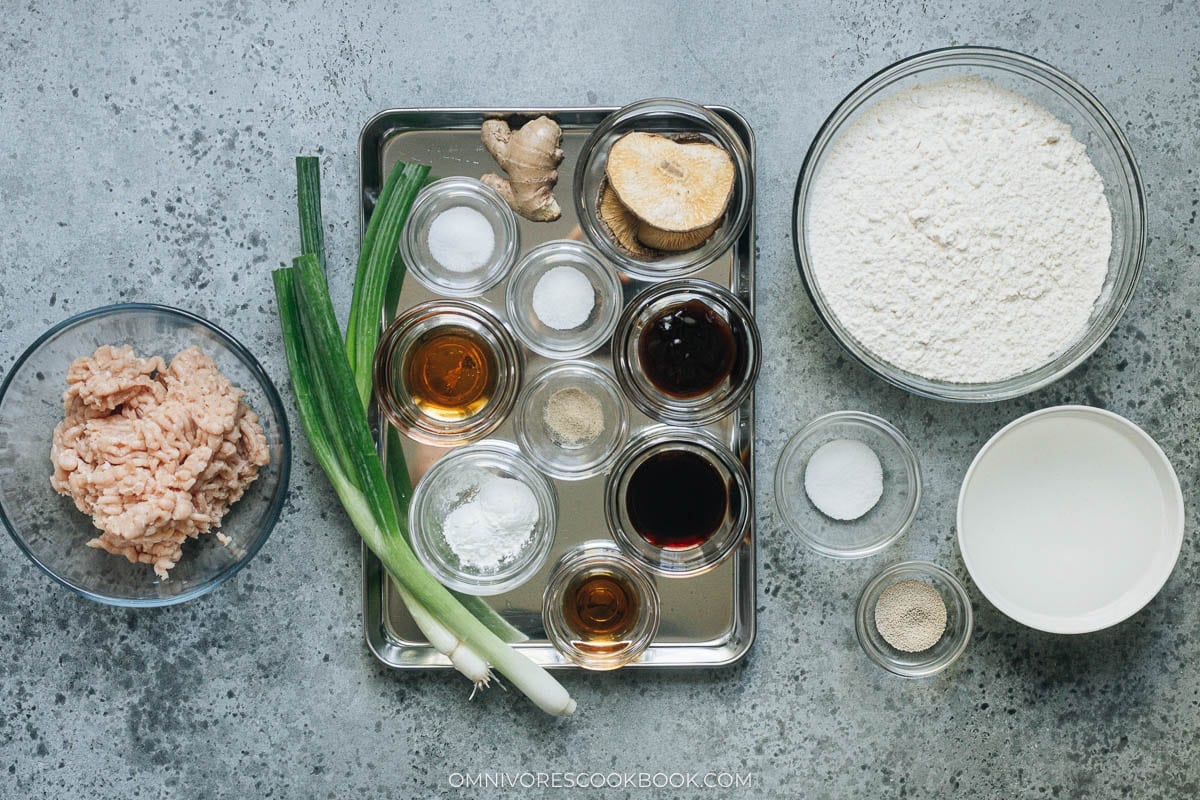
Dough: I use warm water, a small amount of sugar to feed the yeast, active dry yeast, and all-purpose flour for the wrapper. My dough is slightly firm to the touch when I have kneaded it right, and it stretches into a smooth elastic ball under my hands.
Chicken and aromatics: I mix ground chicken with minced rehydrated dried shiitake mushrooms, grated ginger, and thinly sliced scallions. The dried shiitake does the same job for me here that it does in my Northern dumpling fillings, adding a roasted forest flavor that I cannot get from fresh mushrooms.
Filling sauces: I season the meat with oyster sauce, light soy sauce, and Shaoxing wine. I add cornstarch to tighten the filling so it holds together inside the bun, and ground white pepper for a warmth that does not turn the filling spicy.
Filling finishers: I round out the seasoning with salt, sugar, and toasted sesame oil.
Dipping sauce: Chinkiang vinegar is the only thing I really need on the table. I add a splash of soy sauce when I want the dip saltier, and a spoon of chili oil when my husband is at the table and wants some heat.
How To Make
1. Activate the yeast: Heat the water in the microwave or on the stovetop until warm to the touch, about 110°F. Stir in 1 teaspoon of sugar to dissolve, sprinkle in the yeast, and let sit for 5 minutes until the surface bubbles up.
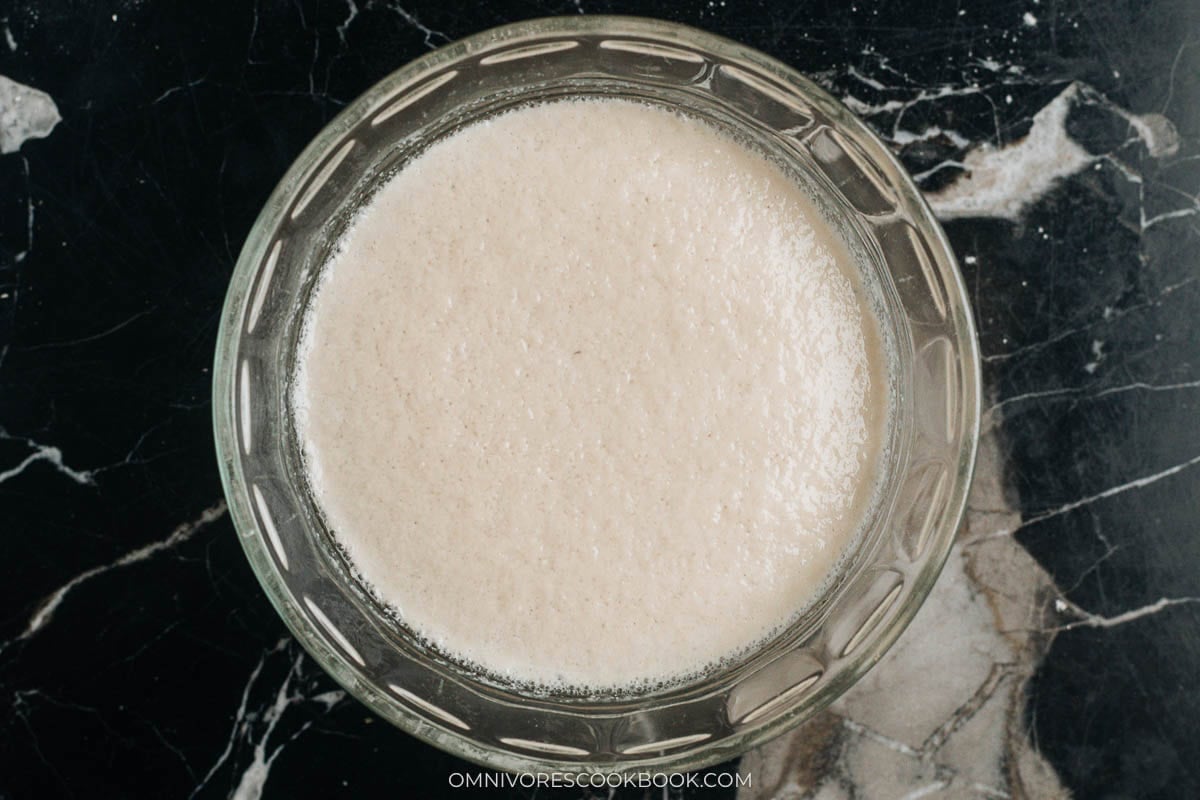
2. Knead the dough with a stand mixer: Add the flour to the mixing bowl, pour the yeast water into the center, and mix on low with the dough hook until a shaggy dough forms. Add 1 teaspoon of water at a time if any dry flour stays at the bottom, then turn the speed to medium-high and knead for 15 minutes until the dough is smooth and elastic. The dough should be slightly firm to the touch and shape into a round ball without sticking to your hands.
3. Or knead by hand: Pour the yeast water into a large mixing bowl with the flour, drizzling slowly while stirring with chopsticks in a circular motion. Once a shaggy dough forms with no dry flour left, transfer everything to a clean working surface and knead for 15 to 18 minutes until smooth and elastic, adding 1 teaspoon of water at a time if the dough stays too dry.
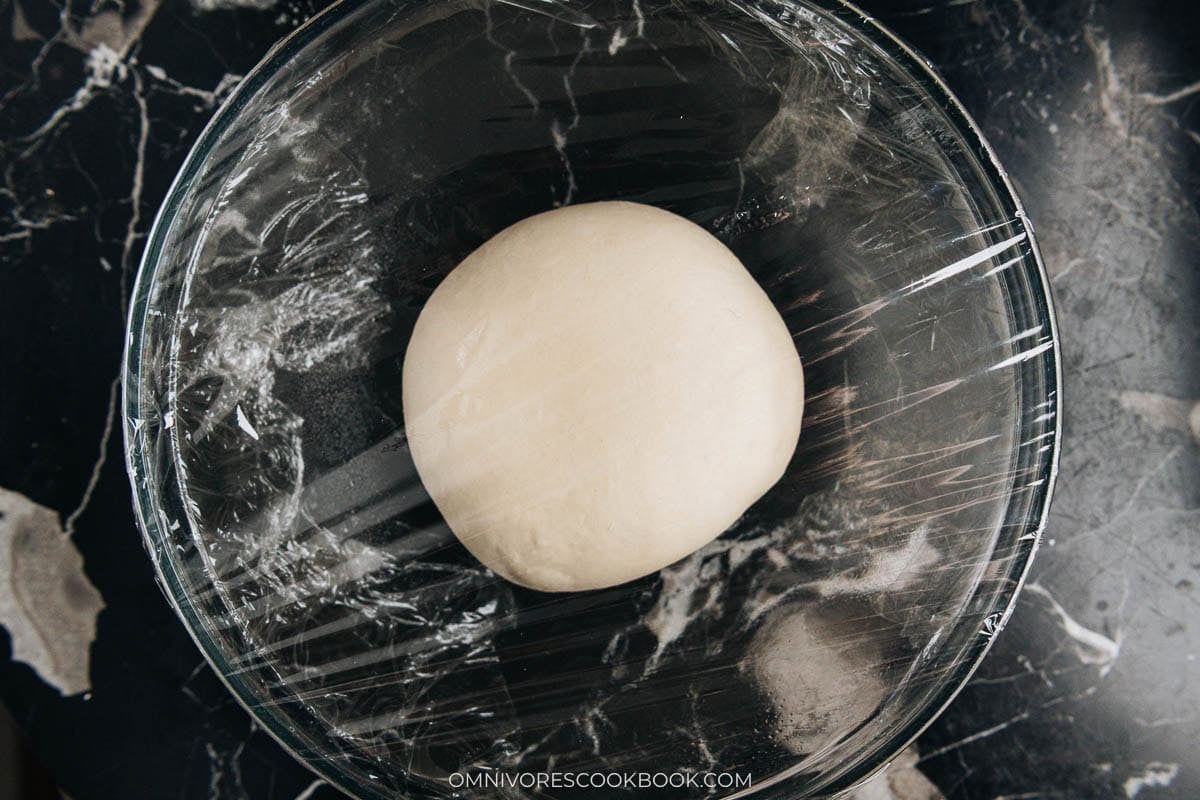
4. First rise: Cover the bowl with plastic wrap and rest the dough until it doubles in size, about 1 hour, or 45 to 90 minutes depending on heat and humidity.
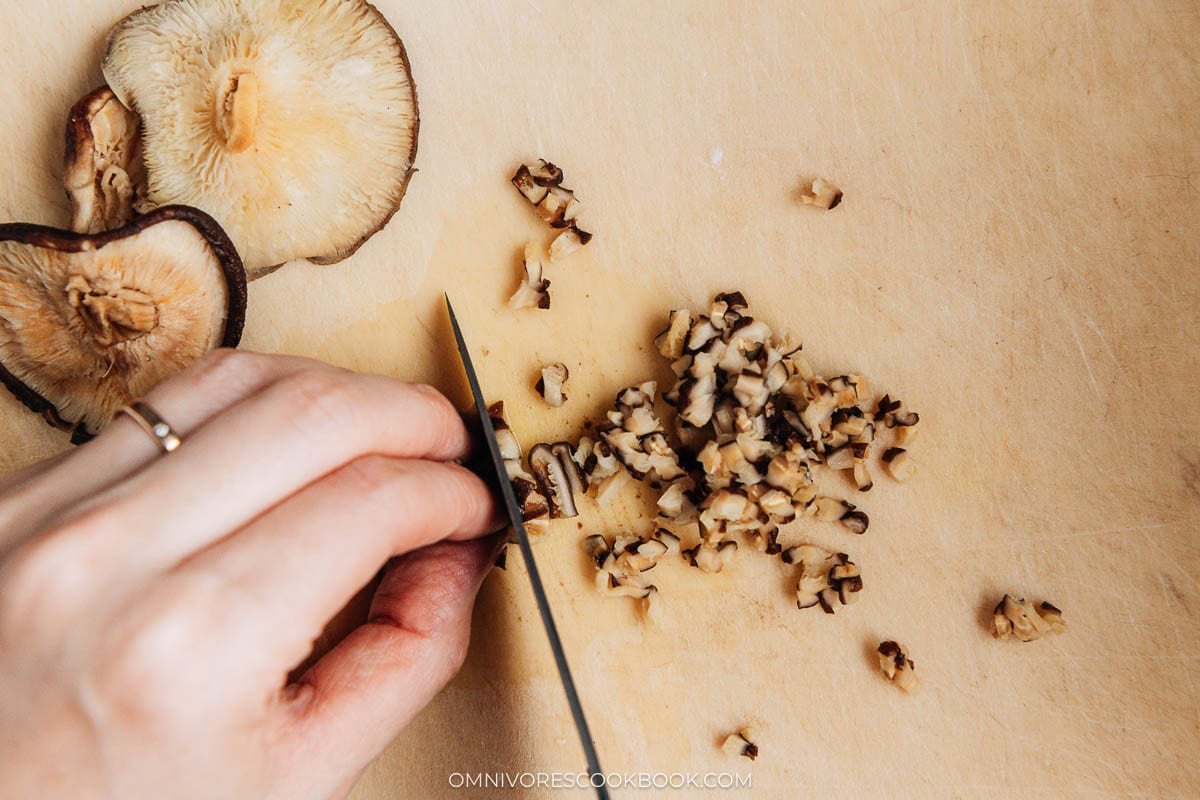
5. Rehydrate the shiitake: Soak the dried shiitake mushrooms in warm water for 15 to 20 minutes until soft. Squeeze out the water, trim and discard the tough stems, and mince the caps finely.
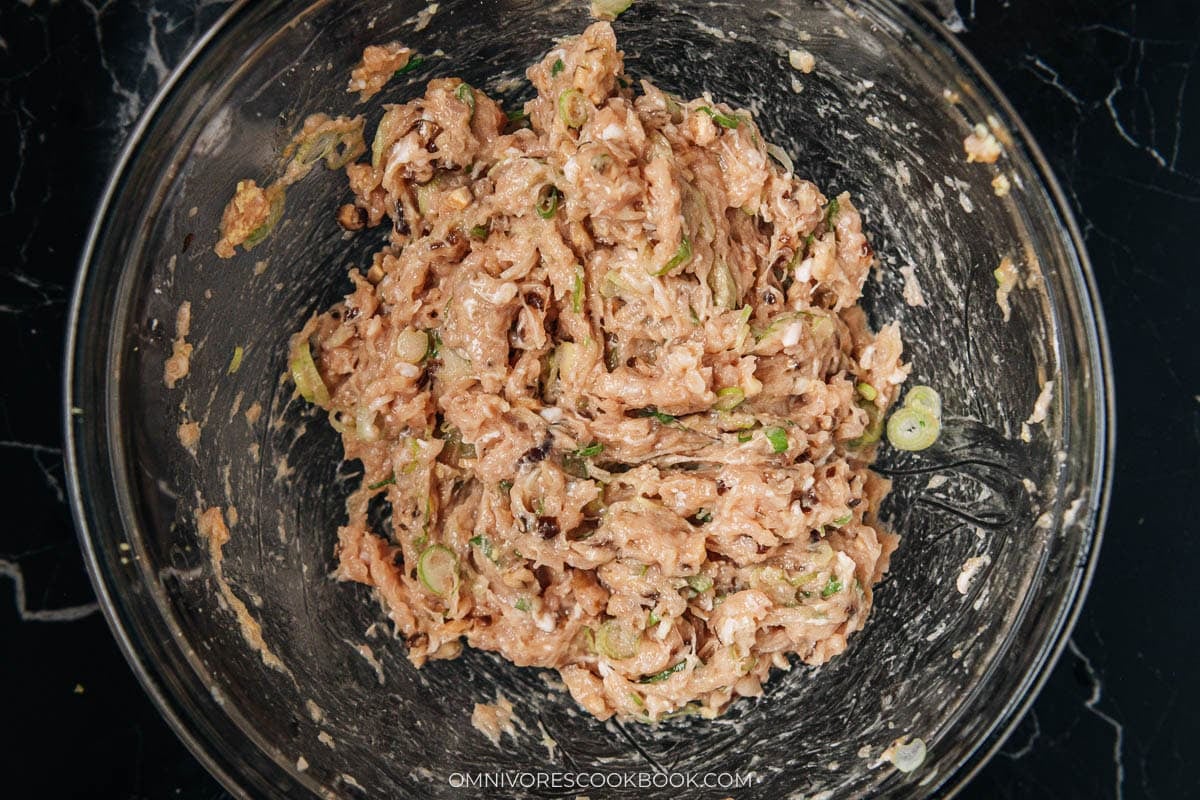
6. Mix the filling: Combine the ground chicken, minced shiitake, oyster sauce, light soy sauce, Shaoxing wine, cornstarch, grated ginger, sliced scallions, salt, sugar, and white pepper in a large bowl. Stir in one circular direction by hand or with a wooden spatula until all the liquid is absorbed and the chicken turns streaky. Drizzle in the toasted sesame oil and stir to combine. Cover the bowl with plastic wrap and refrigerate until the dough is ready.
7. Prep the steamer: Line the steamer with steamer paper, or with parchment paper cut into a circle with a few holes poked in it. Rinse a bamboo steamer with cold water before using to prevent scorching, or wrap the lid of a stainless steel steamer with a clean kitchen towel so condensation does not drip onto the buns.
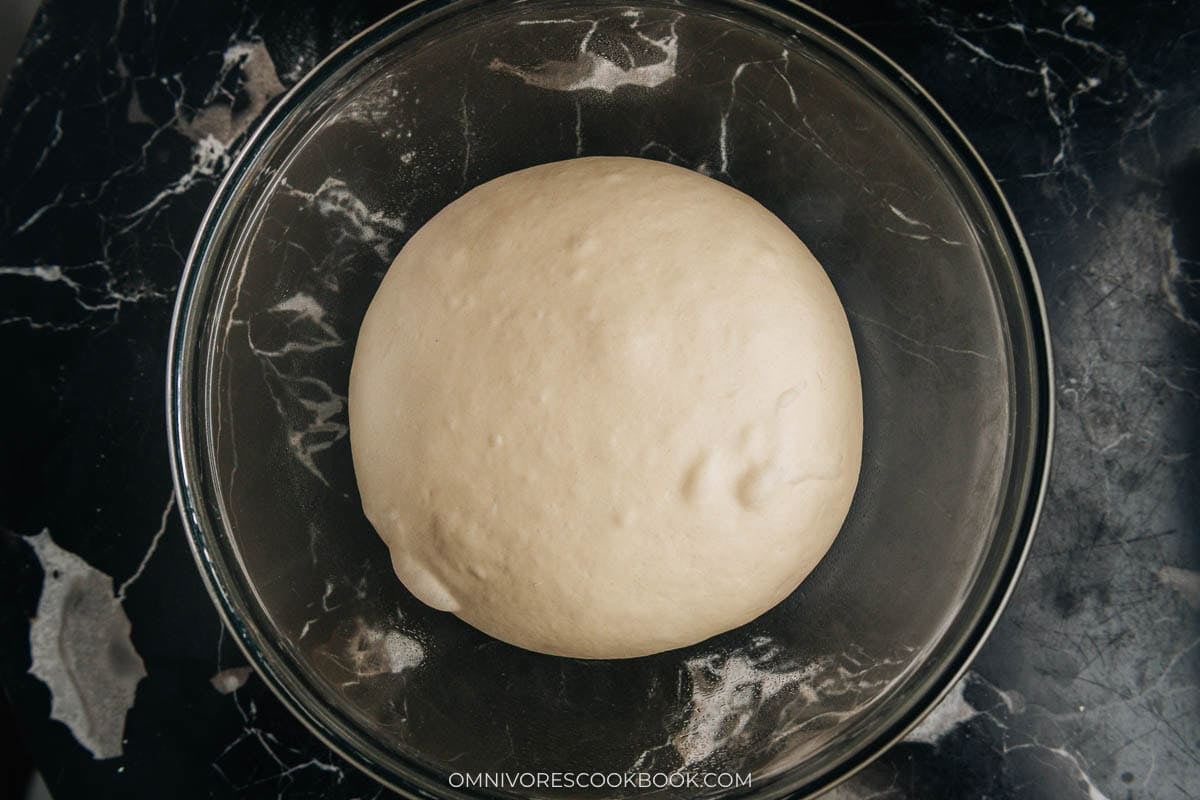
8. Punch and divide: Once the dough has doubled, punch it down with your fist and knead for 5 minutes until it returns to its original size. Divide the dough into 2 even pieces and keep one covered in the bowl with plastic wrap so it does not dry out.
9. Cut the dough: Roll the working piece into a long log and cut into 6 even pieces, about 38 grams each on a scale. Tuck each piece with your hand, knead a few more times to smooth out air bubbles, shape into a ball, and cover. Let the balls rest for 10 to 15 minutes so the dough relaxes before rolling.
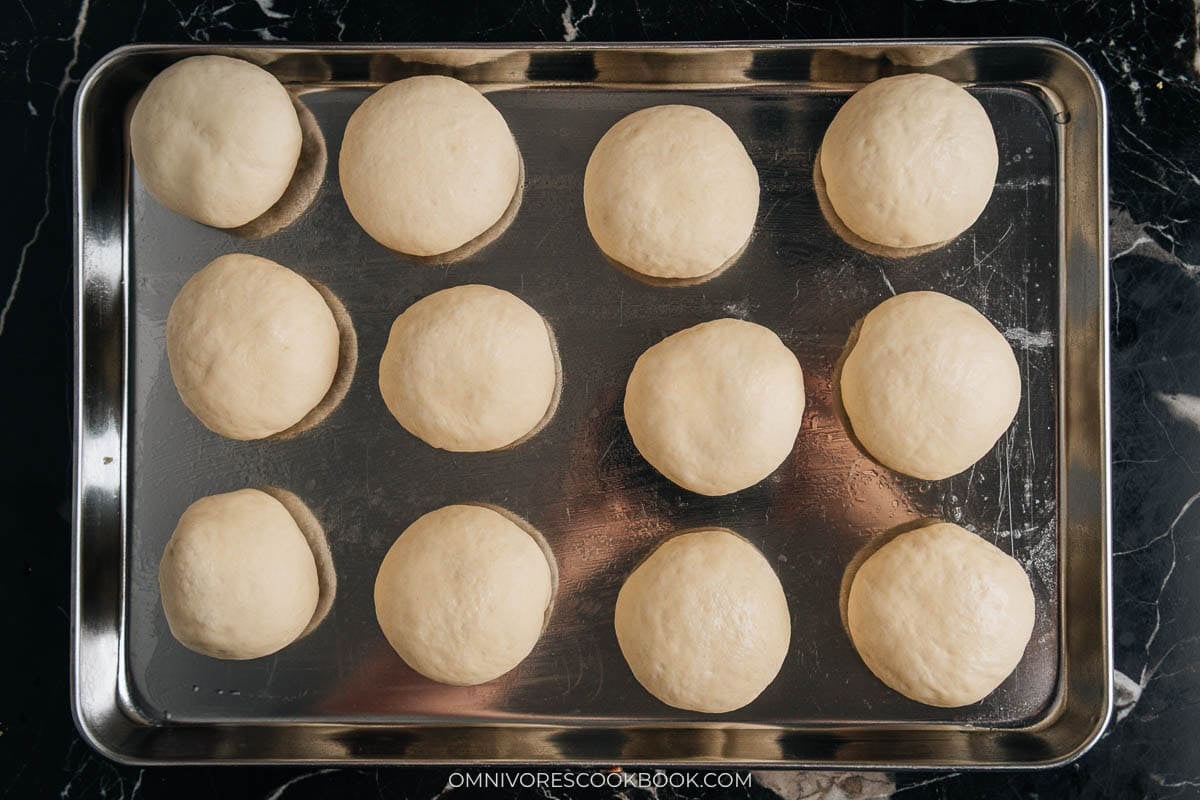
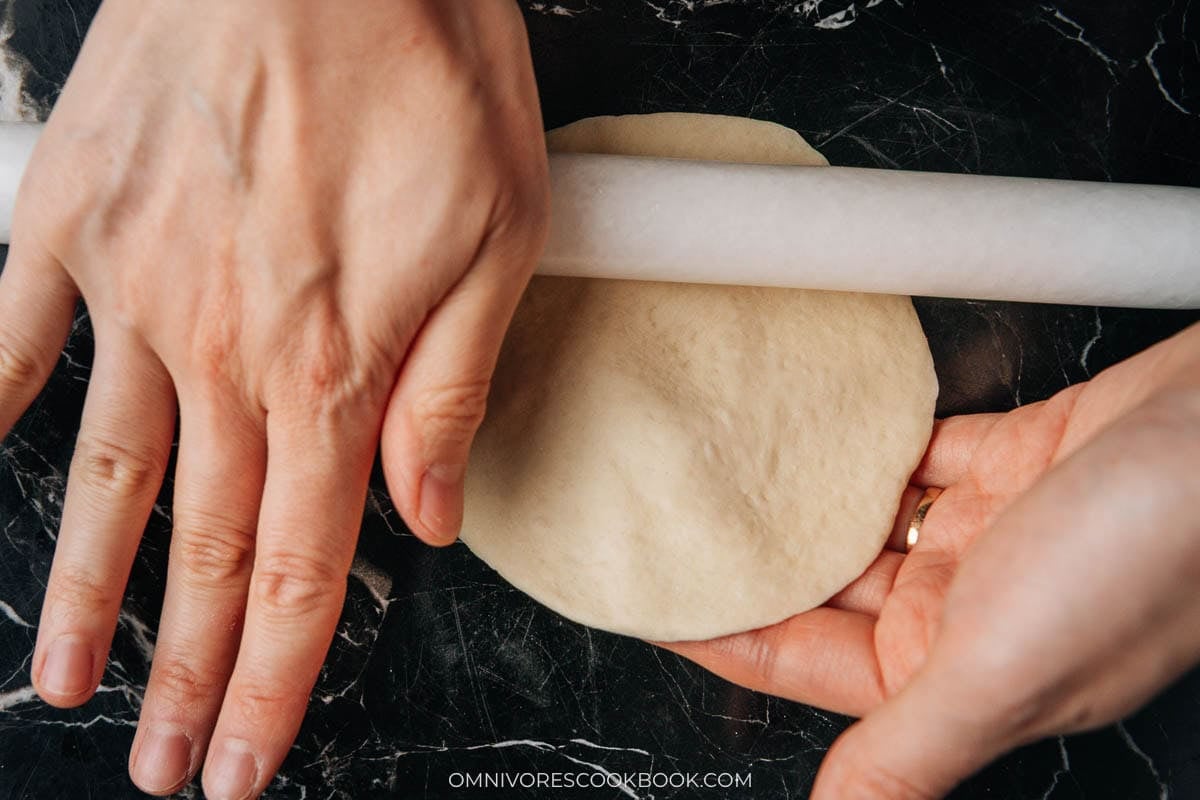
10. Roll the wrappers: Press a dough ball into a round disk with your palm and roll it out with a rolling pin, rotating as you go to keep the shape even. Focus the rolling on the edges so the center stays slightly thicker than the rim, and the finished wrapper should be about 4.5 inches across.
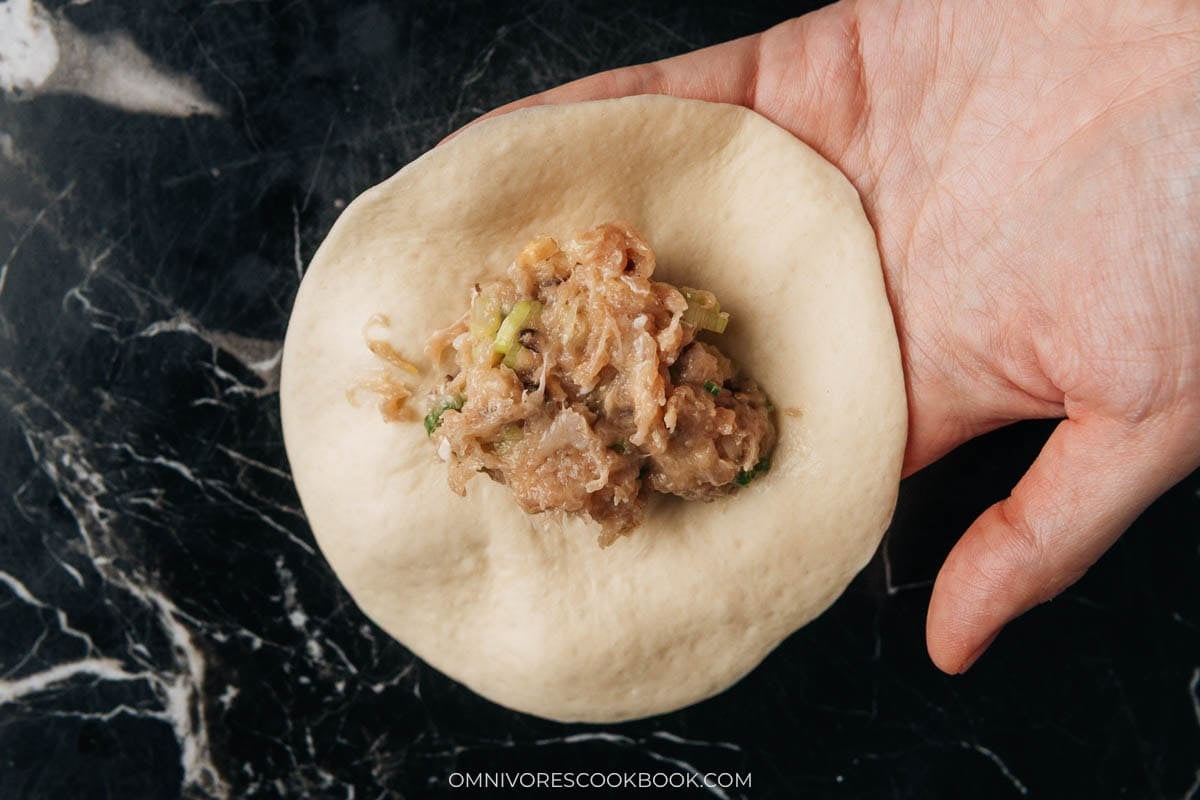
11. Wrap the buns: Place about 2 tablespoons of filling in the center of the wrapper, or as much as you can pleat.
Pinch a piece of the edge to itself, fold the adjacent edge over your finger holding the pinch, and press the folded edges together.
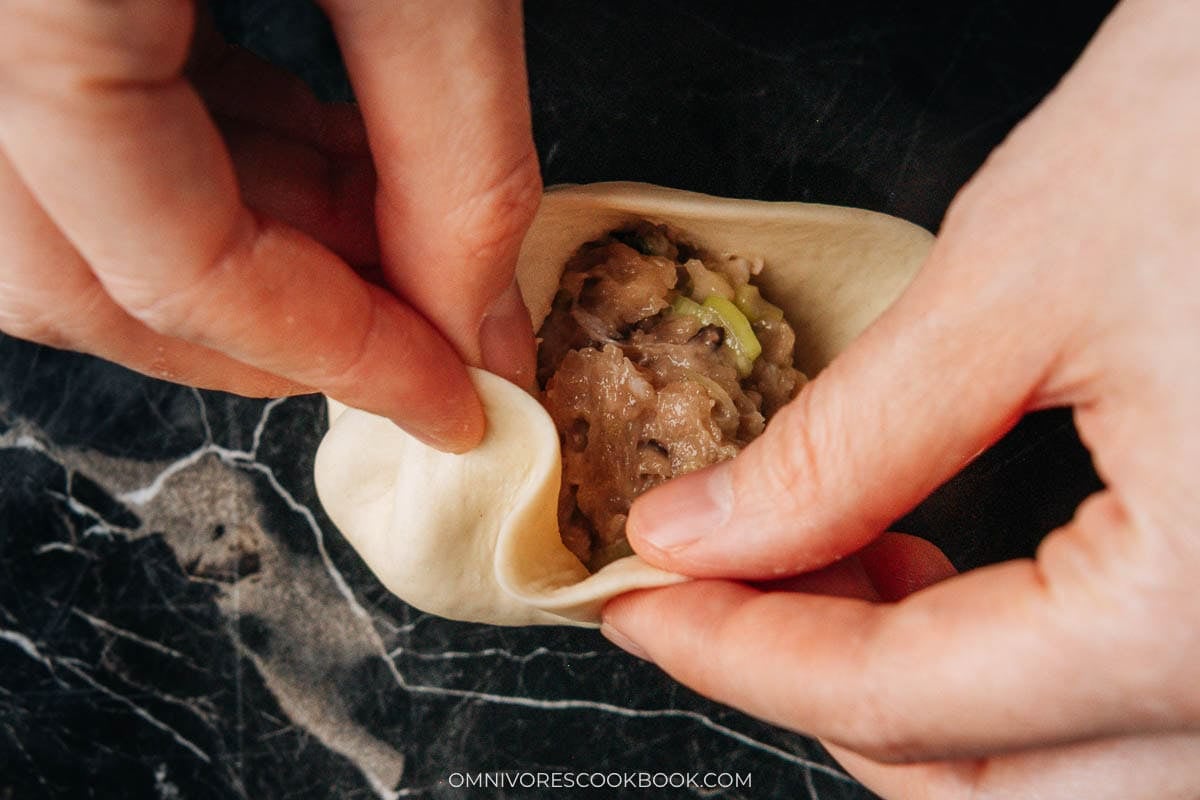
Rotate and repeat around the wrapper until all the edges are pleated, then spin and pinch the center to seal the top.
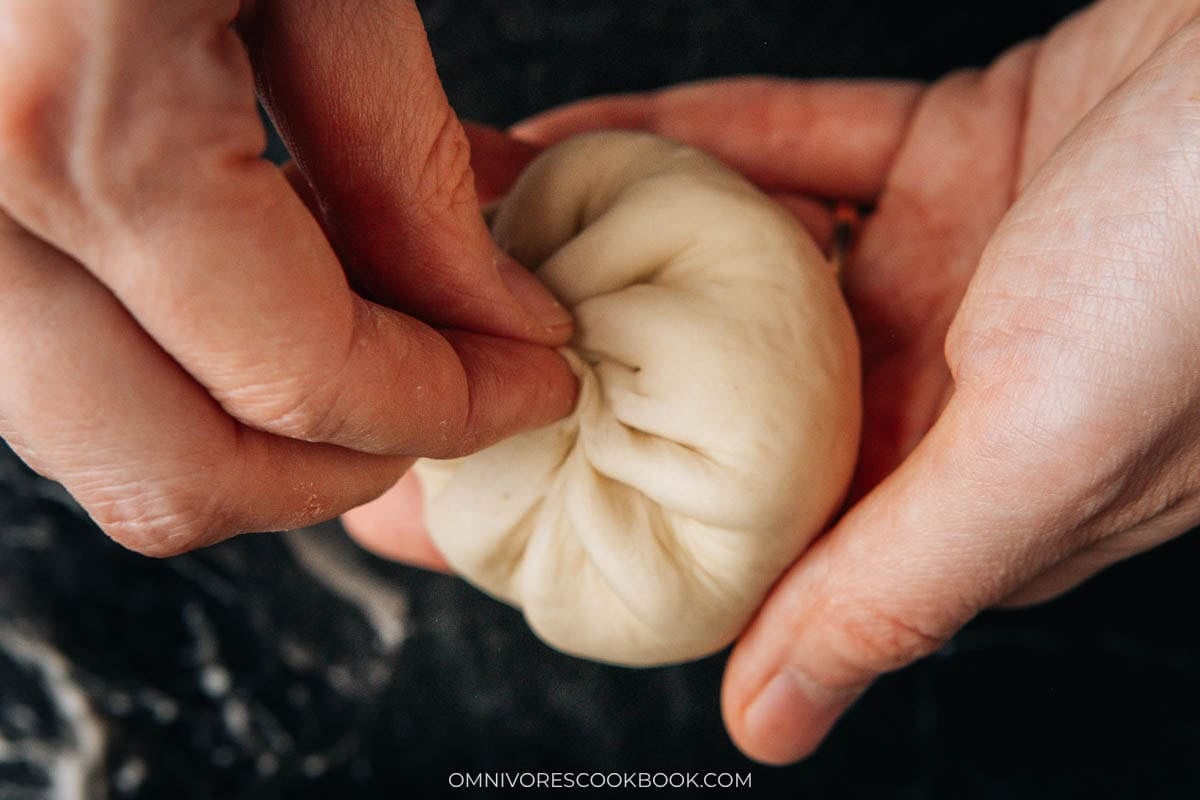
Find it difficult to shape the buns?
Shaping steamed buns definitely requires some practice to perfect. For me, I always think it’s harder than wrapping dumplings. That’s why I create a YouTube video, so you can see the process. One small tip – it’s easier to place the bun on the working surface while pleating, instead of holding the bun with one hand.
Scroll down and you will see my video below.
12. Second rise: Place the wrapped buns into the lined steamer, leaving at least 1 inch between them. Cover with plastic wrap or a damp towel and let rise for 15 minutes until slightly larger.
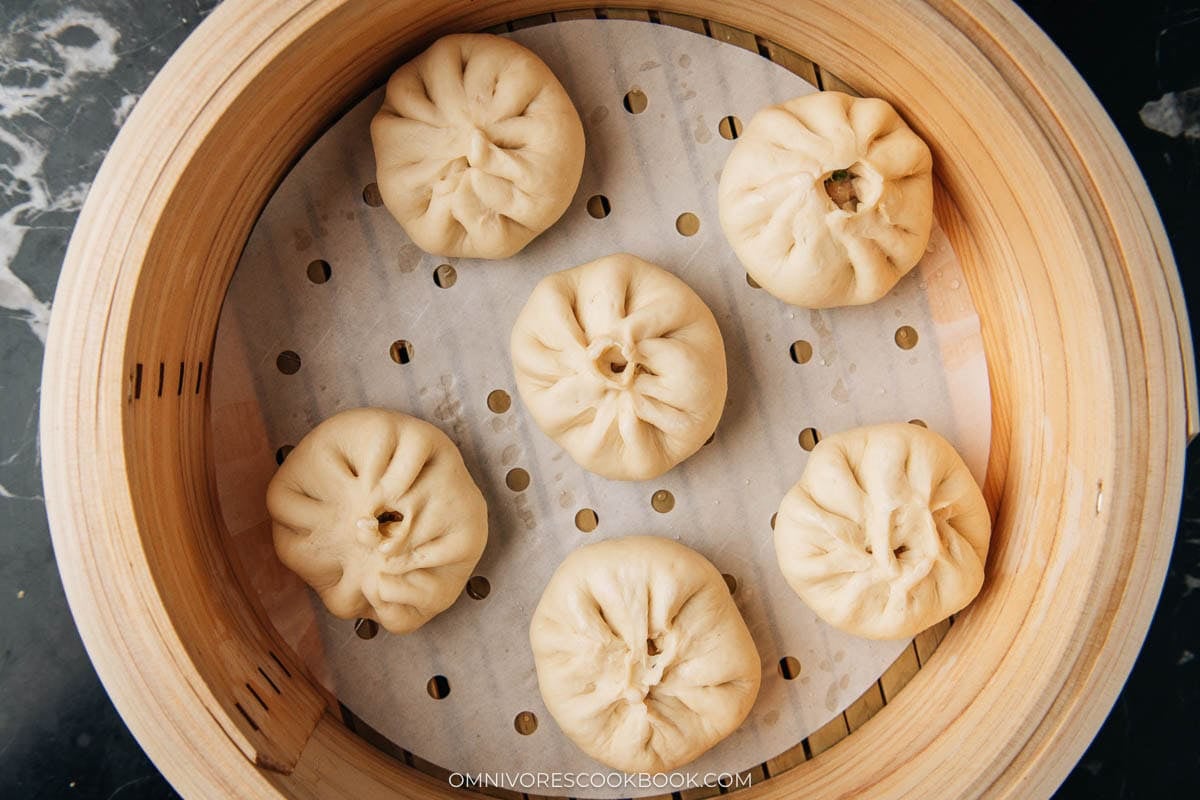
13. Steam the buns: Bring the water in the steamer pot to a boil over medium-high heat and steam the buns for 15 minutes.
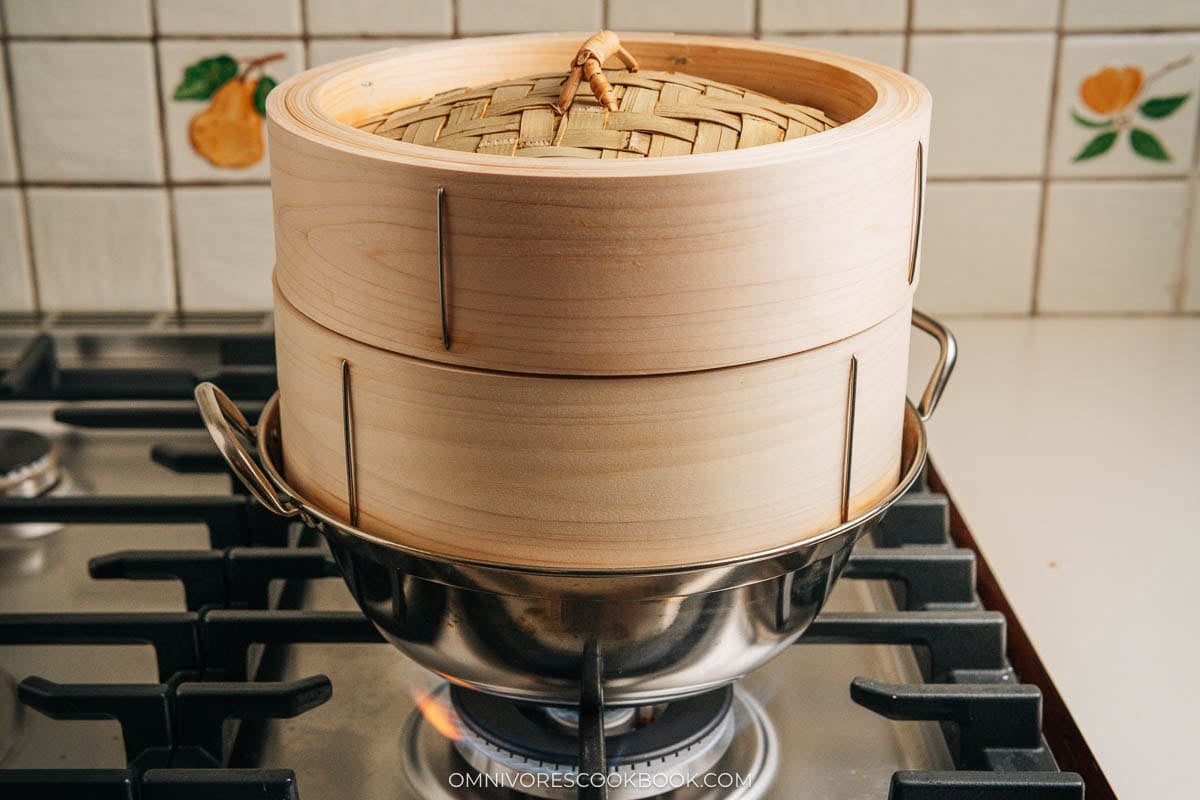
14. Rest before lifting the lid: Turn off the heat and let the buns sit covered for 2 minutes before removing the lid. This step lets the steamer reduce pressure gradually so the buns do not collapse.
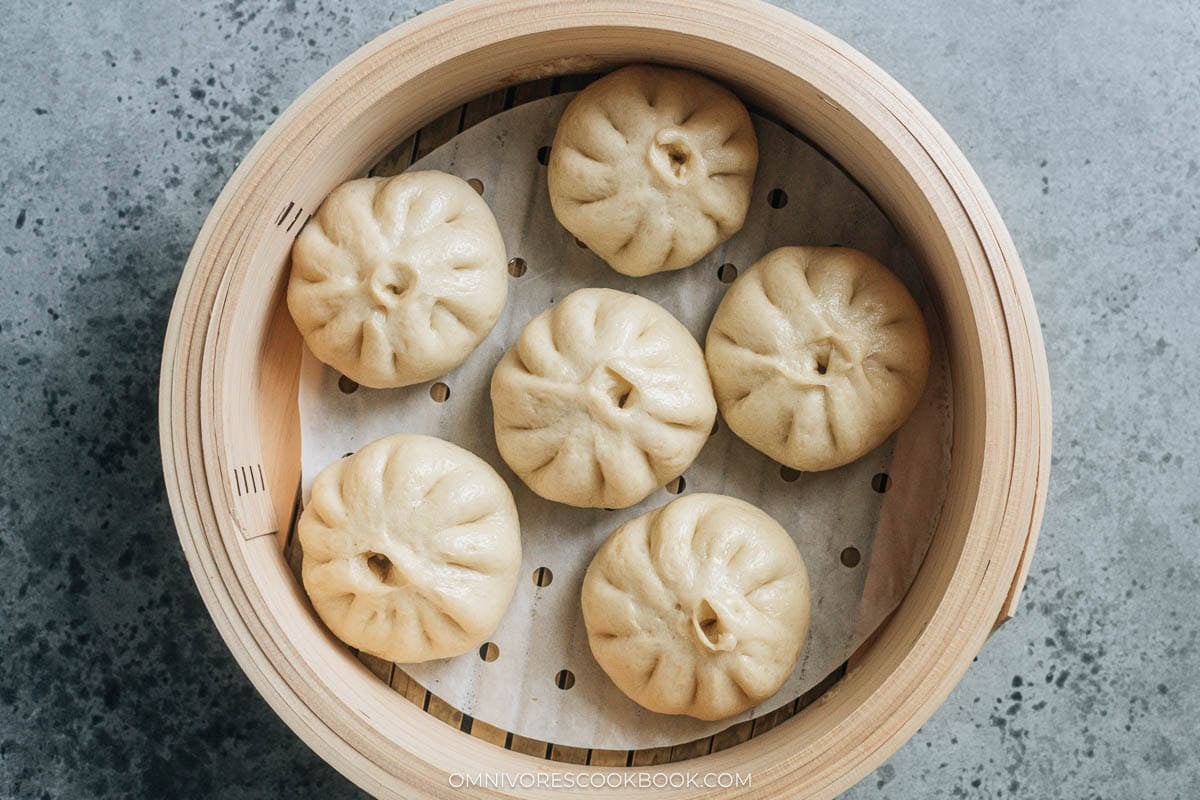
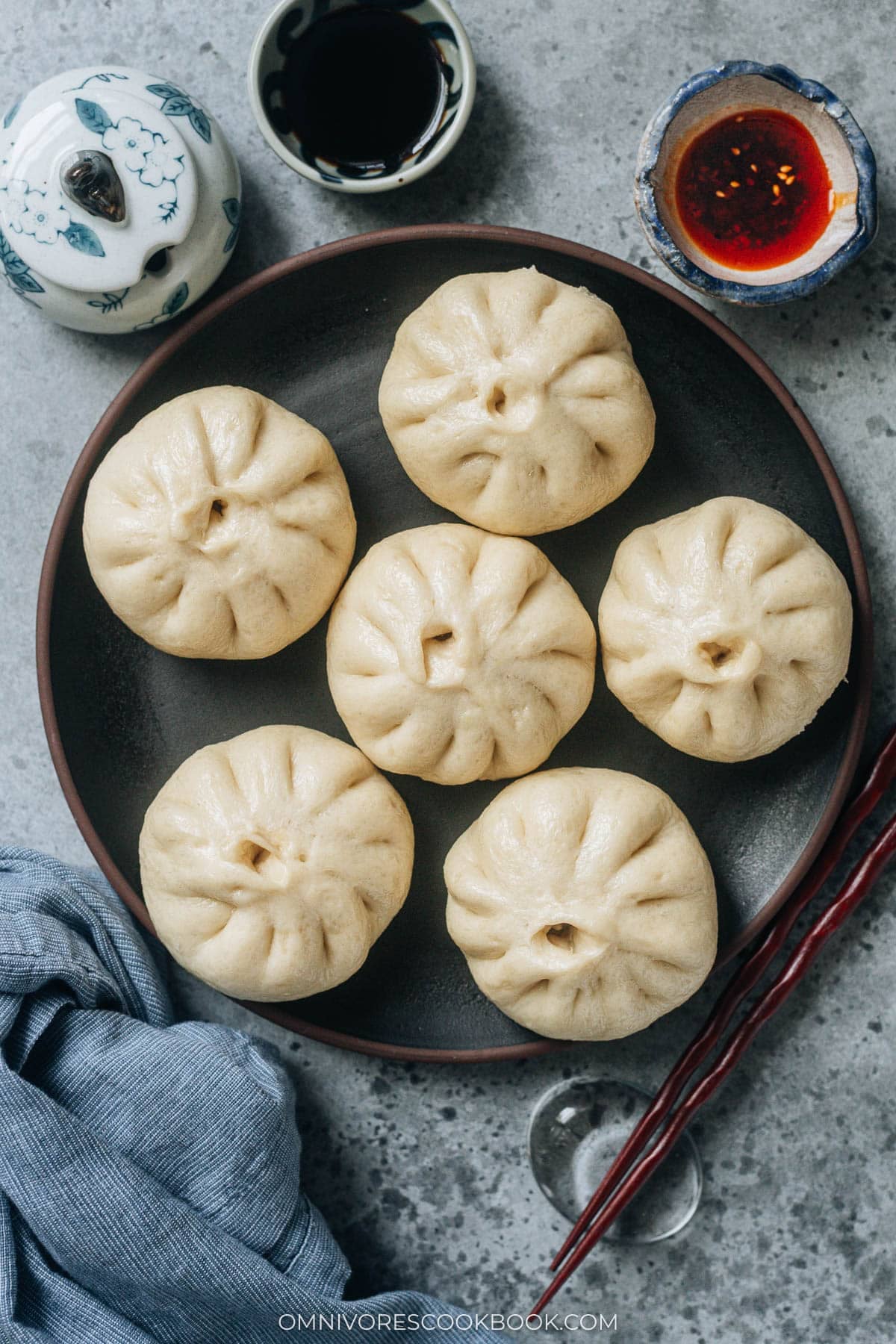
15. Serve: Plate the buns hot with a small bowl of Chinkiang vinegar for dipping. Add a splash of soy sauce for more saltiness or a spoon of chili oil for heat.
Cooking Notes
Weigh the dough pieces: If you prefer beautifully looking buns that are even in size, I highly recommend weighing the dough pieces instead of eye-balling them. I weigh each piece to about 38 grams on a scale so all 12 buns finish at the same time and the same texture.
Use white pepper, not black pepper, in the filling: Black pepper has a sharper edge that pokes through the soft steamed dough and tastes more European than Northern Chinese.
Test the first rise with the finger poke: Doubling in size is the easy visual cue, but the surer test is to press a finger about half an inch into the dough and watch what happens. If the indent springs back slowly and leaves a soft dimple, the dough is ready to punch down, and if it springs back fast and disappears, I give it another 10 to 15 minutes.
Always keep the unused dough pieces covered: The dough dry out fast and will become tough and hard to work with, if you expose it to the air for too long. I always cover up the dough pieces with plastic wrap. If the dough starts to feel dry, I cover them with damp paper towels to retain the texture.
Serving Suggestions
Hot out of the steamer is when these buns are at their best, with the wrapper pillowy and the filling juicy under the wheat. I plate 3 or 4 buns per person with a small dish of Chinkiang vinegar on the side and a couple of cold Northern breakfast staples on the table, usually a few Chinese soy sauce eggs cut in halves and a small dish of pickled daikon with carrot to cut the savory filling.
When I am building a larger weekend meal around the buns, I treat them as the carb side of a multi-dish table and pull together a bowl of Chinese fish congee as a light protein soup, plus a plate of baby bok choy stir fry for the green.
Frequently Ask Questions
Why did my buns turn out dense and gummy instead of pillowy?
The most likely cause is the first rise stopping short, the second rise getting skipped, or the steamer pressure dropping too fast at the end. I check that the dough has doubled in volume before I punch it down, give the shaped buns the full 15 minute second rise so they puff slightly before steaming, and leave the lid on for 2 minutes after the heat is off so the buns do not collapse.
What is the best way to pleat a bun if I have never done it before?
I always tell beginners to focus on using a smaller amount of filling and moving their hands slowly before worrying about how many pleats they can make. A bun with eight uneven pleats and a secure seal tastes just as good as one with eighteen perfectly formed pleats. In the beginning, sealing the bun properly is far more important than presentation.
The key is to make sure the filling is fully enclosed and that the wrapper is distributed as evenly as possible, so you don’t end up with thick, doughy spots. If pleating feels intimidating, don’t worry about it. You can simply gather the wrapper around the filling and pinch the top closed to form a smooth, round bun. In fact, some Cantonese buns, such as chicken buns, are traditionally shaped this way and have no pleats at all.
With a little practice, your pleats will naturally become neater over time, but a well-sealed bun will always matter more than perfect looks.
How long do leftover buns keep in the fridge and freezer?
Cooked buns keep in an airtight container in the fridge for 3 days and in the freezer for 1 month. I reheat the refrigerated ones in the microwave covered with damp towels to keep the buns from drying out, or reheat in the steamer until heated through. For frozen buns, you can either thaw them overnight in the fridge then reheat, or reheat the frozen buns in the steamer until heated through.
Want to Save This Recipe?
Enter your email below & we’ll send it to your inbox. Plus get great new recipes from us every week!
Watch video
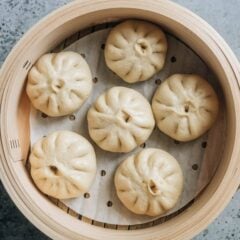
Steamed Chicken Buns (鸡肉滑鸡包)
Ingredients
Dough
- 2/3 cup water warm water
- 1 teaspoon sugar
- 1 teaspoon active dry yeast
- 2 cups all-purpose flour
Filling
- 6 dried shiitake mushrooms
- 11 oz ground chicken
- 1 tablespoon oyster sauce
- 1 tablespoon light soy sauce
- 1/2 tablespoon Shaoxing wine
- 2 teaspoon cornstarch
- 1 teaspoon grated ginger
- 2 scallions , thinly sliced
- 1 teaspoon kosher salt (or 1/2 teaspoon sea salt)
- 1/2 teaspoon sugar
- 1/8 teaspoon ground white pepper
- 1 tablespoon toasted sesame oil
Dipping sauce
- Chinkiang vinegar
- Soy sauce (Optional)
- Homemade chili oil (Optional)
Instructions
Mix the dough & 1st rise
- Heat the water in the microwave or over the stovetop until warm to the touch, about 110°F (43°C). Add the 1 teaspoon sugar to the water and stir to dissolve. Add the yeast. Let sit for 5 minutes or until the yeast is bubbling up.
- Option 1 – use a stand mixer: Add the flour into the mixing bowl and pour the water into the center. Mix on low with the dough hook until a shaggy dough forms. If there’s dry flour in the bowl after kneading for a while, add 1 teaspoon of water at a time, until there’s no dry flour left. Turn the speed to 4 and keep kneading, until the dough is smooth and elastic, 15 minutes or so. After 8 minutes, if the dough does not come together, use your hands to help gather the flour on the bottom. The dough should be slightly tough to the touch and shouldn’t stick to your hands. Shape the dough a few more times with your hands so it forms a round ball.
- Option 2 – knead by hand: Add the water into a big mixing bowl. Slowly drizzle the water with yeast into the flour while stirring with chopsticks in a circular motion. After all the water is added, mix until a shaggy dough forms. The dough flakes should be a bit firm to the touch and there should be no dry flour in the bowl. If there’s still dry flour, add 1 teaspoon of water at a time and keep mixing. Press the dough together using your hands, then transfer the dough and any flour left onto a clean working surface. Knead until a smooth and elastic ball is formed, about 15 to 18 minutes. The dough should be slightly tough to the touch and shouldn’t stick to your hands.
- Cover the mixing bowl with plastic wrap. Rest until the size doubles, about 1 hour (45 to 90 minutes depending on heat and humidity).
Prepare the filling
- Soak the dried shiitake mushrooms in warm water until turning soft, 15 to 20 minutes. Gently squeeze out the water, remove and discard the tough stems, and mince the caps.
- In a big bowl, add the chicken, minced shiitake mushrooms and the rest of the filling ingredients except for the sesame oil.
- Mix everything together in one circular direction by hand or with a wooden spatula, until all the liquid is absorbed and the chicken is streaky.
- Add the sesame oil and mix well. Cover with plastic wrap and transfer into the refrigerator until the dough is ready.
Prepare the steamer
- Use a piece of steamer paper to line the steamer. If you don’t have steamer paper, you can cut a piece of parchment paper into a circle, then cut a few holes in it.
- If you plan to use a bamboo steamer, rinse it thoroughly with cold water before using to prevent scorching.
- If you are using a stainless steel steamer, prepare a clean kitchen towel and use it between the lid and the steamer. This will prevent the condensation from dripping onto the buns and affecting their rise.
- Form the buns & 2nd rise
- Once the dough has doubled in size, punch it down with your fist. Knead with your hands until it returns to its original size, about 5 minutes.
- Divide the dough into 2 even pieces. Transfer one piece back to the bowl and cover it with plastic wrap to prevent it from drying out.
- Work on the other piece by rolling the dough into a long log. Cut the log into 6 even pieces, or 38 g per piece using a scale.
- Always cover the dough pieces with plastic wrap when you’re not working on them. For each dough piece, tuck it with your hand, knead a few more times to smooth out any air bubbles, then shape it into a ball. Place the ball on a tray and cover. Repeat with all the dough pieces. Once done, let the dough rest for 10 to 15 minutes to relax, so it will be easier to roll out.
- Press the dough into a round disk using your palm. Start to roll it out with a rolling pin. If you’re not familiar with the process, roll the dough a few times, rotate it and roll the short ends again. After a few times, start to focus on rolling out the sides so the center is thicker and the edges are thin. If you’re skillful, use one hand to rotate the dough with the other hand rolling out one end until forming a round wrapper. Once done, the wrapper should be about 4.5” (11 cm) in diameter, with a slightly thick center and thin edges.
- Place about 1.5 yo 2 tablespoons of filling (or as much you can wrap) in the center of the wrapper. Make pleats by pinching a piece of the edge to itself, then folding the adjacent edge over your finger holding the pinch, then press the folded edges together. Rotate and repeat the process until all the edges are pleated. Then spin and pinch the center together to seal the bun.
- Once done, place the buns into the lined steamer, then cover them with plastic wrap or a damp towel.
- Repeat the process until you fill the steamer, making sure you leave at least 1” (2.5 cm) between the buns. Let rise for 15 minutes, or until the size becomes a bit larger. (*Footnote 1)
Cook the buns
- Bring the water to a boil and steam the buns over medium-high heat for 15 minutes.
- Once done, turn off the heat and let sit for 2 minutes before removing the lid. (*Footnote 2)
Serve
- Serve hot with vinegar as a dipping sauce. If you want to make the dipping sauce saltier, you can add a splash of soy sauce. You can also add some chili oil to the dipping sauce if you want some spice.
- Store the leftover buns in an airtight container in the fridge for 3 days or in the freezer for 1 month.
- You can reheat the refrigerated buns in the microwave. For best results with frozen buns, heat them up in the steamer until warmed throughout.
Notes
- If using a regular steamer, you’ll probably need to cook in 2 batches because it won’t fit all the buns. You should cook the first batch immediately after resting, while you work on the second batch.
- Let the buns sit, let the steamer reduce pressure gradually, so the buns won’t collapse when you open the lid. This step is more important for stainless steel steamers, since the lid is tighter than with a bamboo steamer.
Nutrition

Did you make this recipe?
I’d love to hear how it turned out for you! Please take a moment to leave a 5-star rating ⭐️ and share your thoughts in the comments further down the page. It really helps others discover the recipe too.
Barbara
I definitely have to make these! Haven’t made bao in a long time! In the past, I made them with pork, but this chicken filling sounds great!