
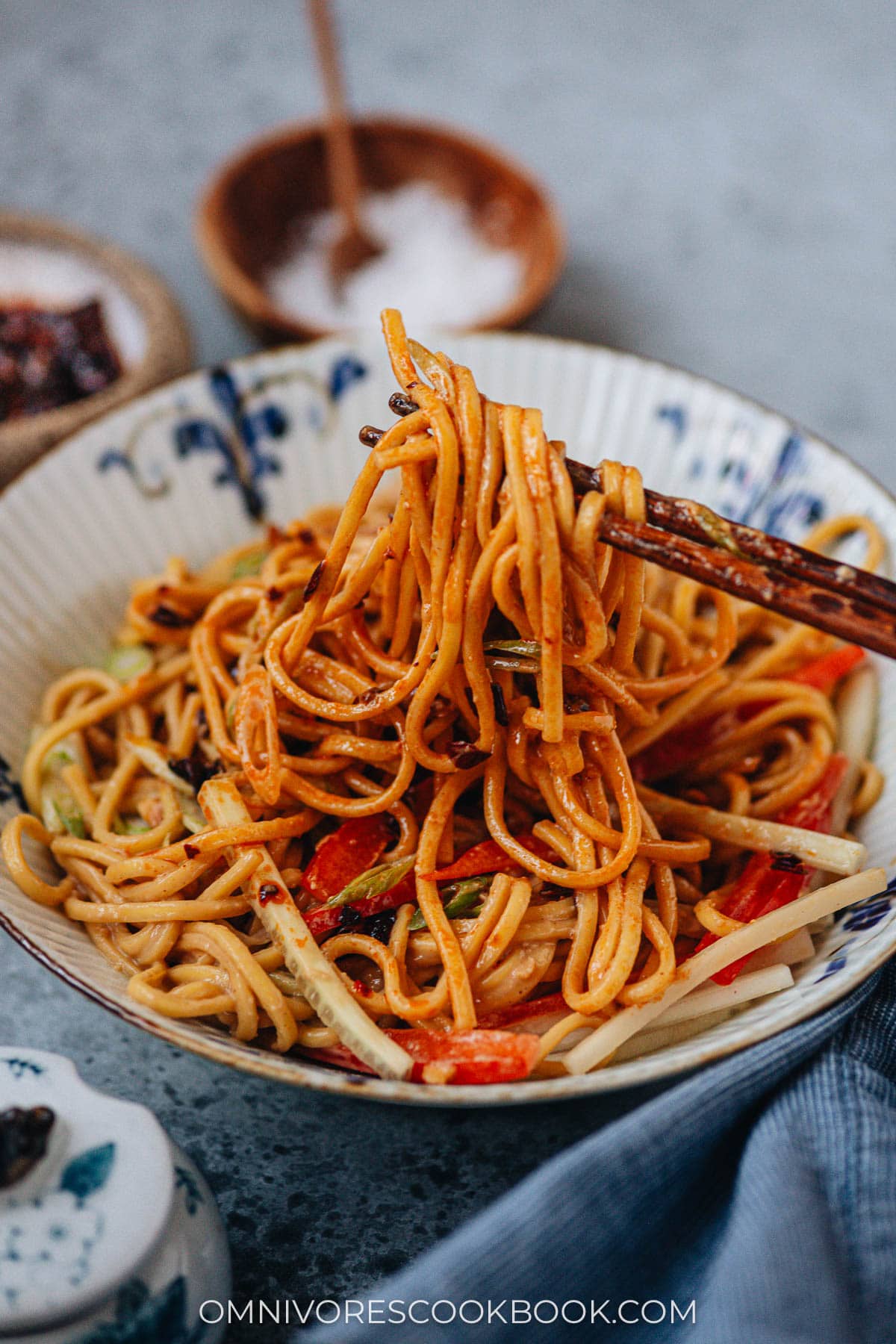
Peanut noodles are my American take on the cold sesame noodles I ate growing up in Beijing. Traditional Sichuan versions use Chinese sesame paste (芝麻酱) for a rich, toasty base, but I’ve adapted this recipe with peanut butter, which gives it a creamier texture and makes it accessible to anyone shopping at a regular grocery store.
I created this recipe out of homesickness. When I first moved to the US, I searched every store for good sesame paste and kept coming up short. One night I grabbed a jar of peanut butter and started experimenting. Now I mix it with soy sauce, fresh ginger, and garlic, toss it all together, and have a bowl of noodles on the table in 20 minutes. Super easy!
These days, I make this recipe for my husband and son whenever we want something quick and comforting after a long day. I love adding extra peanuts on top, and my husband always asks for more chili crisp. It is become one of our favorite weeknight dinners because everyone can customize their own bowl. I hope you try it with your family, and let me know how it turns out.
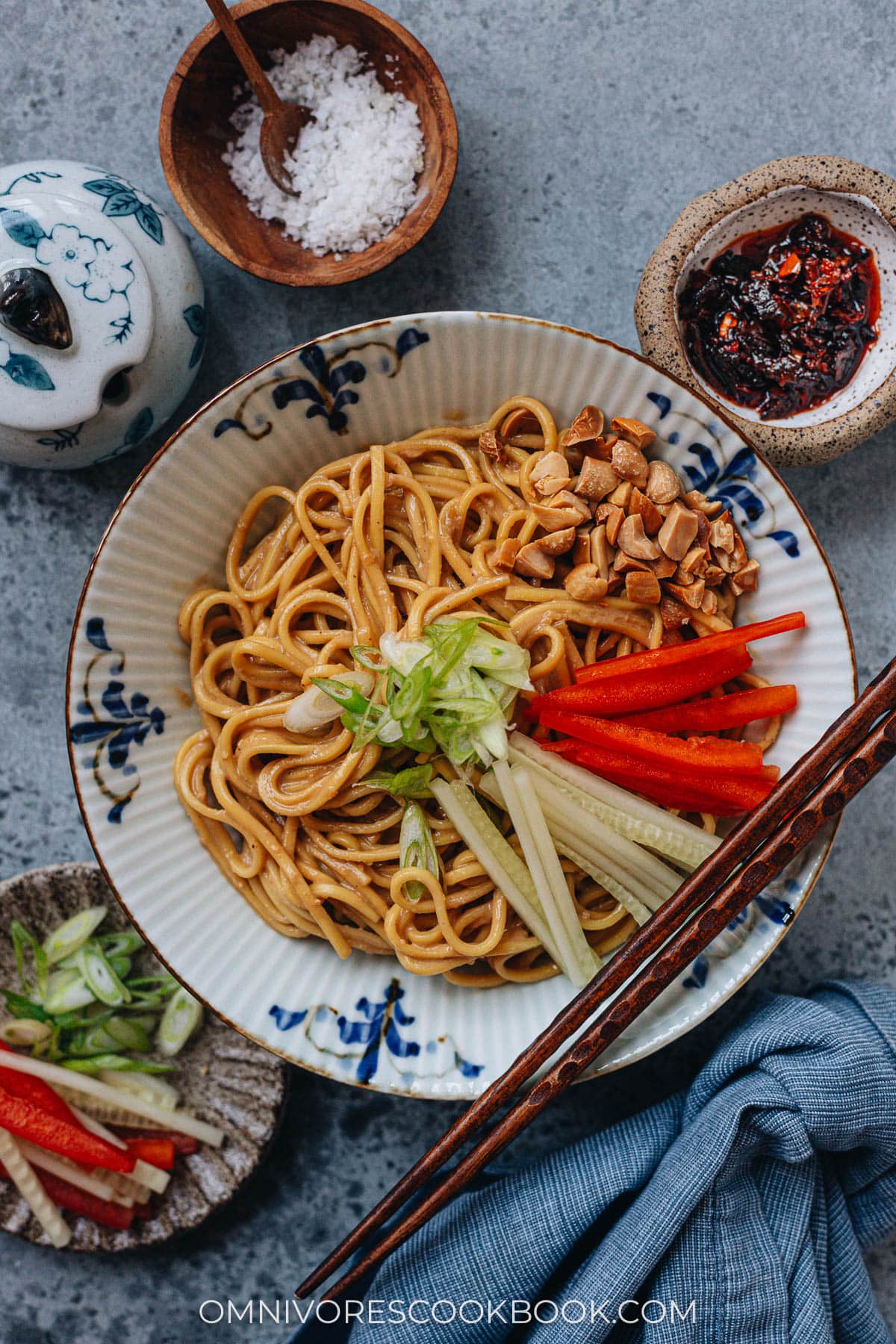
Ingredients
I divide the ingredients into two groups: the noodles and the sauce. The noodles are flexible, so I’ll walk you through your options. The sauce is where the flavor comes from, and I keep it simple with pantry staples you probably already have.
Peanut sauce
- Peanut butter: I use natural peanut butter for this recipe. Sweetened peanut butter works too, just skip the honey and adjust sweetness at the end.
- Aromatics: Fresh garlic and ginger give the sauce its savory depth. I grate both so they blend smoothly into the sauce.
- Seasonings: Soy sauce adds salt and umami, and I finish with a pinch of salt to balance everything.
- Sweetener: I use honey, but maple syrup or sugar work just as well.
- Acid: A squeeze of lemon juice brightens the sauce and keeps it from tasting flat.
- Sesame oil: Just a small amount at the end for a nutty finish.
Noodles
- Chinese alkaline noodles: When I developed this recipe, I used dried Chinese alkaline noodles, the same kind I use in my Dan Dan Noodles. They have a medium thickness and a satisfying chew, similar to ramen. Udon and somen noodles work well too.
- Rice noodles (gluten-free): For a gluten-free option, I recommend Thai rice noodles, the wide kind used in Pad Thai. They hold the sauce nicely and have a great texture.
- Low-calorie noodles: If you’re watching calories, try shirataki noodles or tofu noodles. They’re made from konjac (Japanese yam) and a whole bag is only 10 to 20 calories.
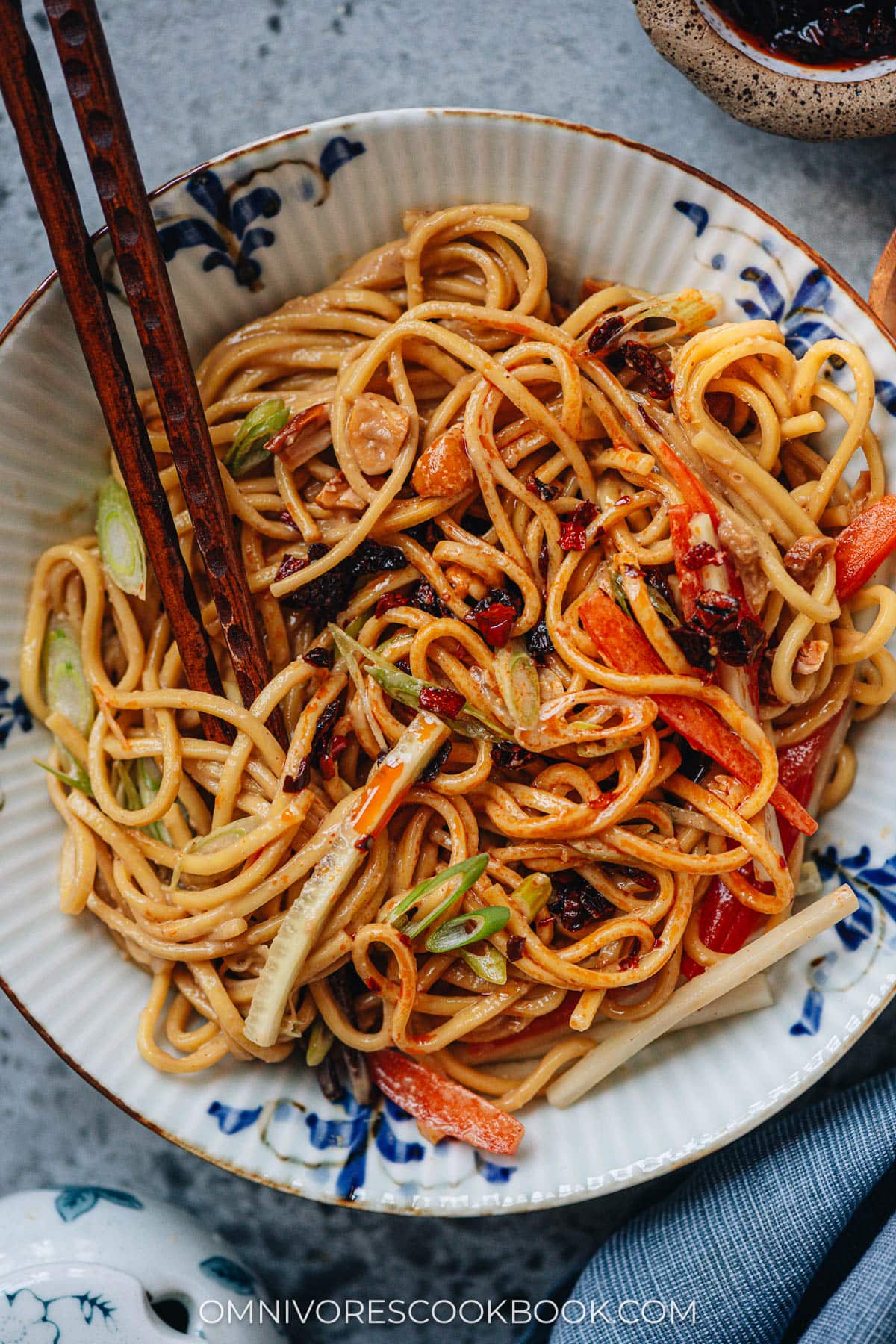
How to make
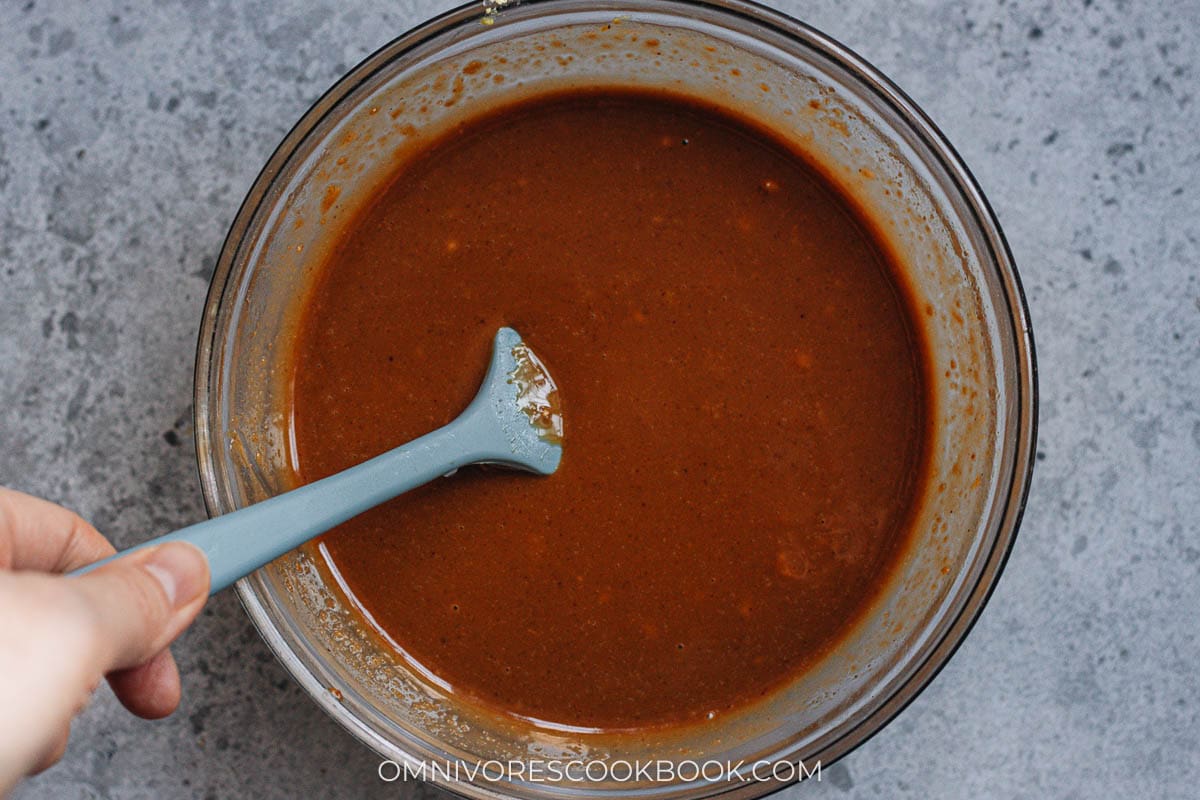
1. Mix the sauce: Add the peanut butter to a medium bowl and slowly pour in the warm water, stirring until smooth. Then add the soy sauce, honey, lemon juice, sesame oil, garlic, ginger, and salt, mixing until everything is combined.
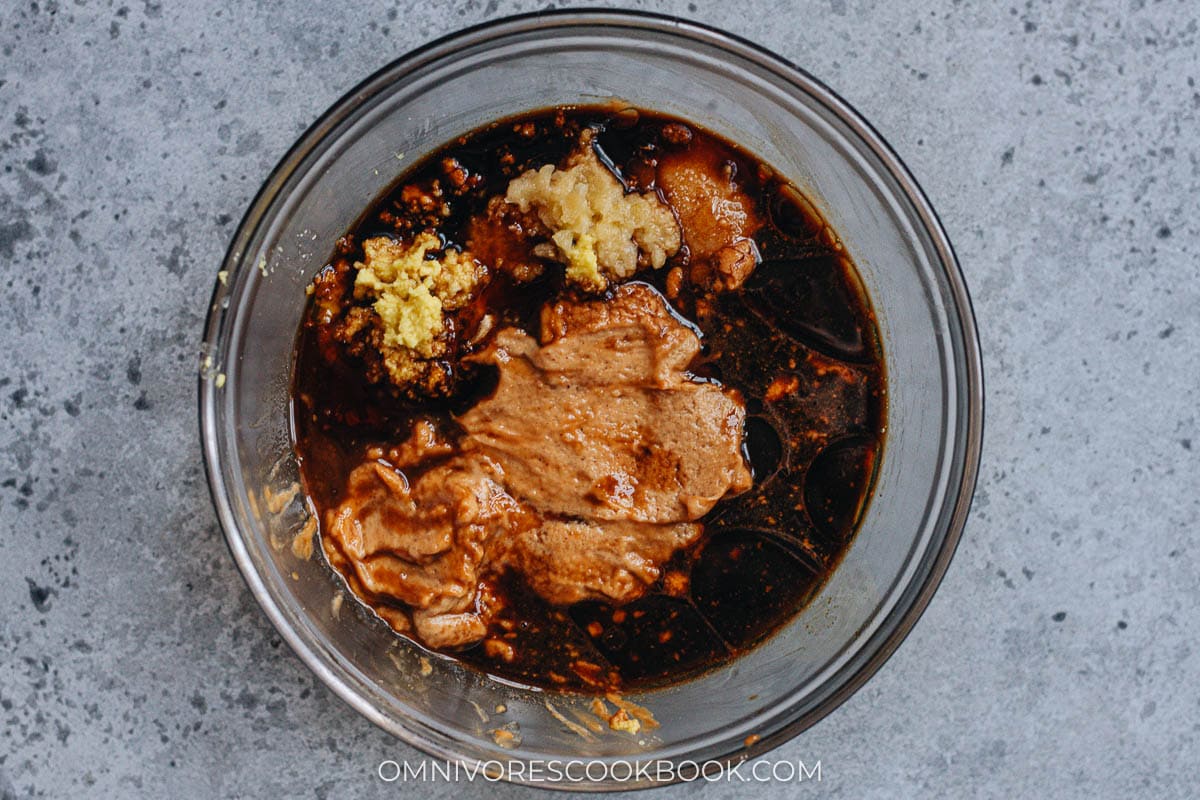
2. Check the consistency: The sauce should coat a spoon but still drip easily. If it is too thick, stir in a little more water until it reaches the right texture. Taste and adjust with more salt or soy sauce if needed.
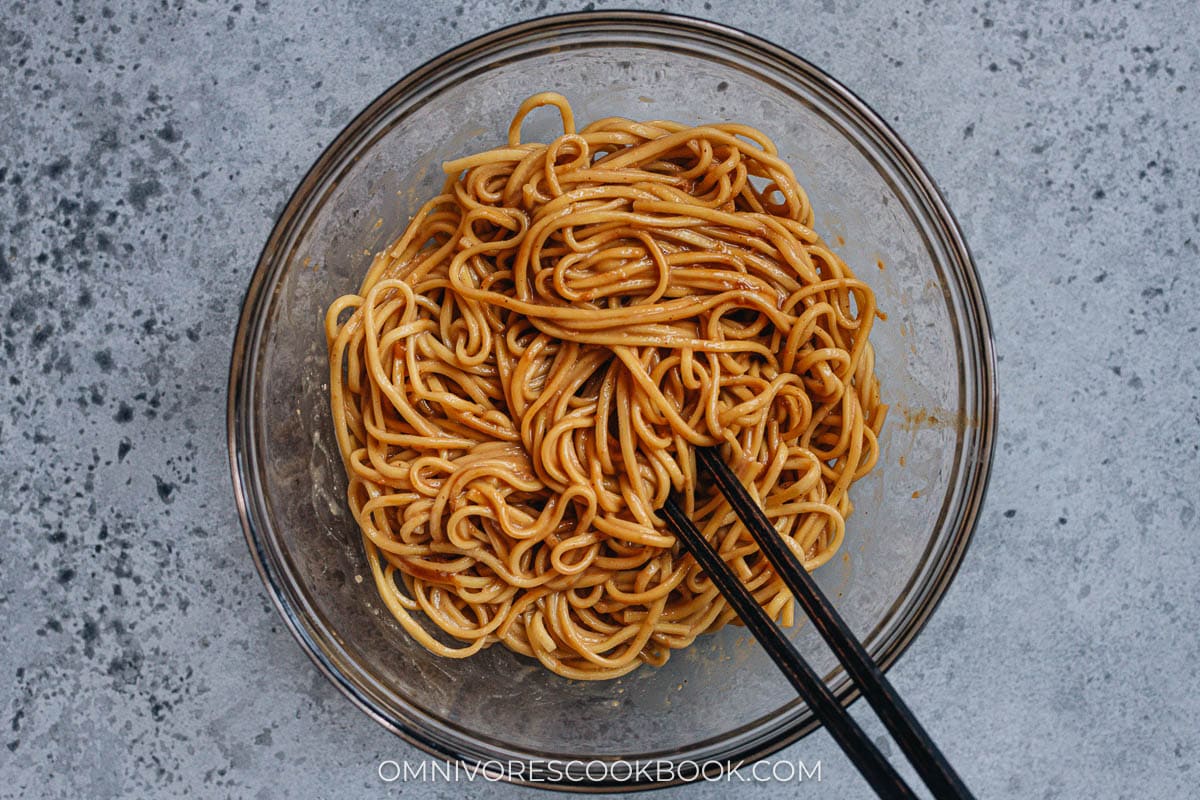
3. Cook the noodles: Bring a pot of water to a boil and cook the noodles according to the package instructions. Drain and rinse under cold water to stop the cooking, then transfer to serving bowls.
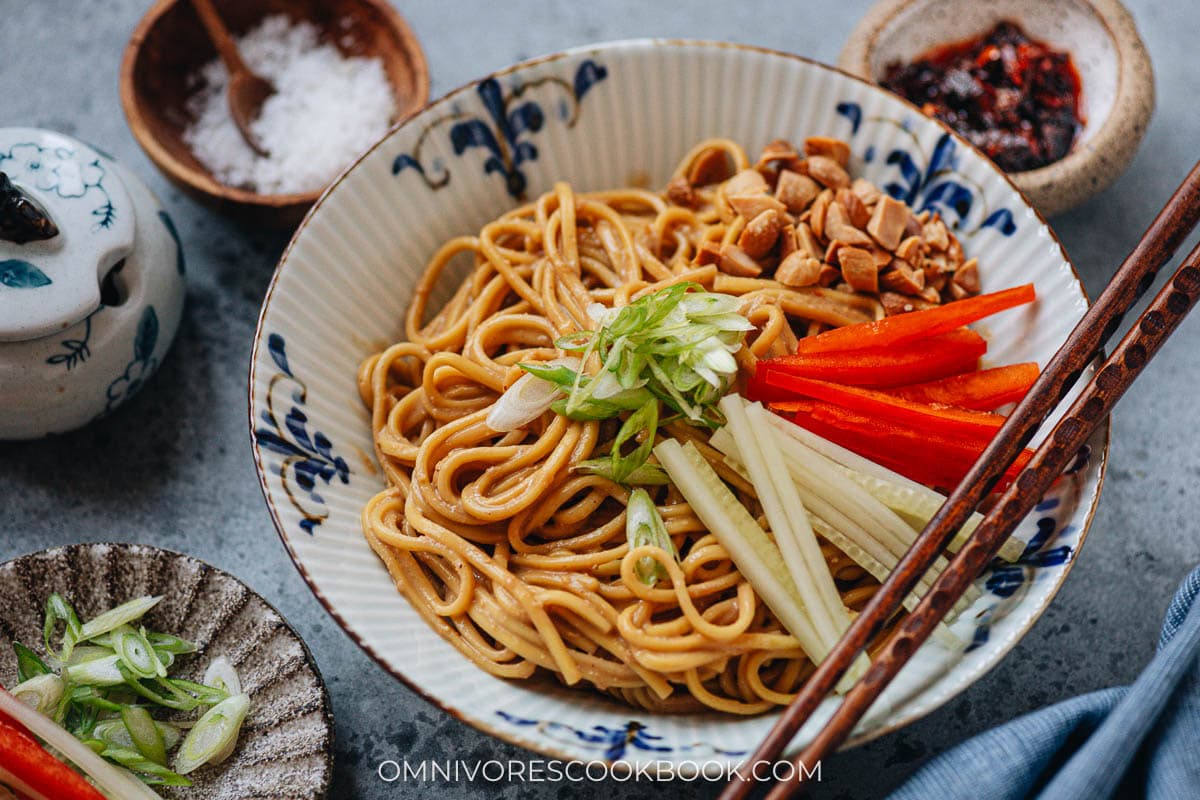
4. Serve: Spoon the sauce over the noodles or serve it on the side so everyone can mix their own. Top with sliced cucumber, chopped peanuts, and chili crisp if desired.
Cooking Tips
- The most important tip is to taste the sauce before you toss it with the noodles. The sauce should taste slightly too salty on its own because once it coats the noodles, the flavor spreads out.
- Use warm water, not cold. Cold water makes the peanut butter seize up and turn grainy. Warm water melts into it smoothly and creates a sauce that actually pours.
- Rinse your noodles after cooking. I run them under cold water to stop the cooking and wash off the starch. This keeps them from clumping and gives them a cleaner texture when you toss them with the sauce.
Serving Suggestions
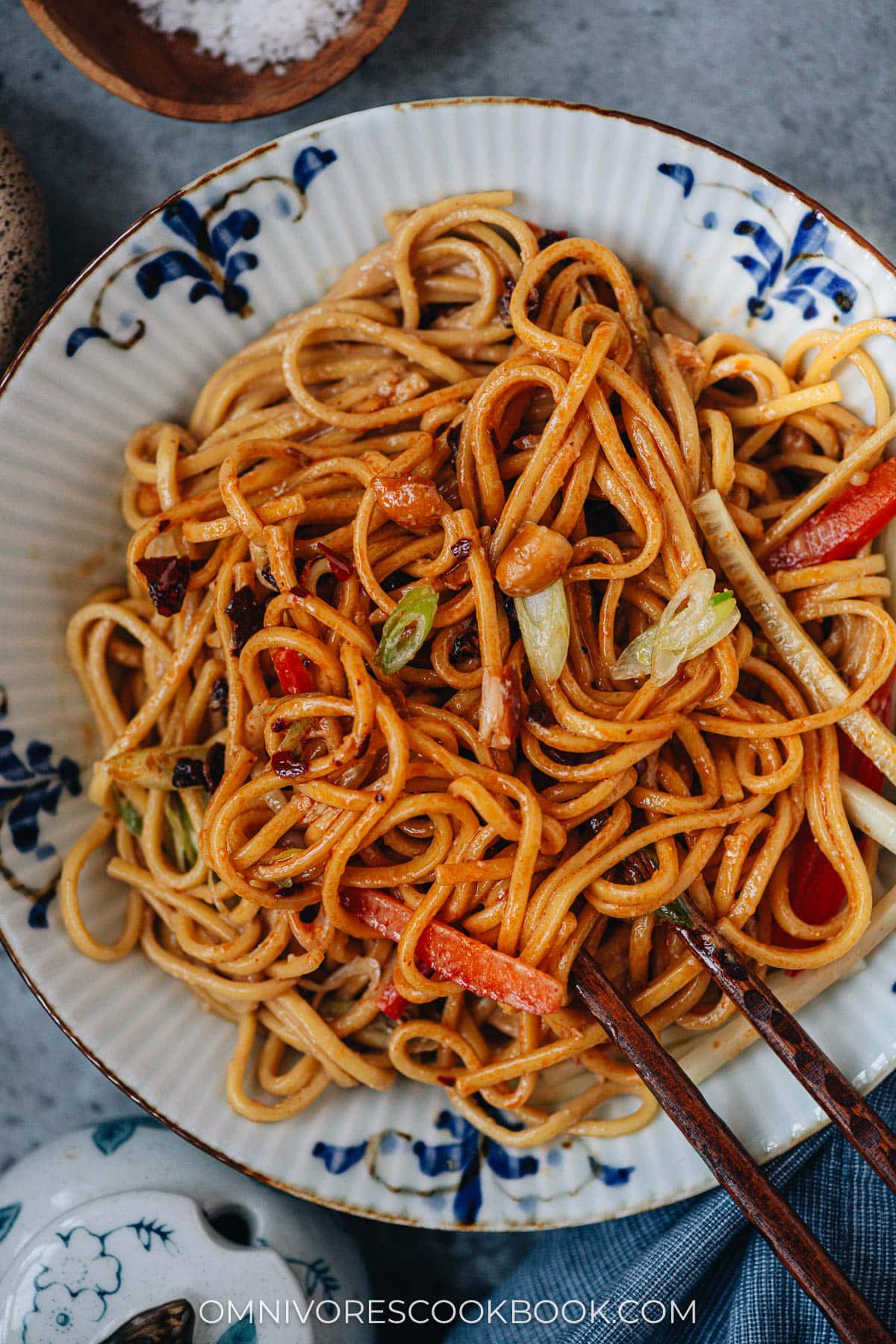
This is one of those recipes I make a dozen different ways. Some nights I eat it plain with just chili crisp on top. Other nights I pile on Chinese shredded chicken and a marinated soy sauce egg and call it dinner.
The trick when serving a crowd is to keep the sauce on the side so the noodles stay fresh. I put out Lao Gan Ma or my homemade chili oil and let everyone add as much heat as they want.
Frequently asked questions
How do I keep the sauce from getting clumpy?
I add the warm water to the peanut butter a little at a time, stirring after each pour. If you dump all the water in at once, the peanut butter seizes up and turns lumpy. Going slow keeps everything smooth.
What if my peanut butter is too thick?
Peanut butter gets drier as you get to the bottom of the jar. I start with a little extra water and stir until the sauce drips easily from a spoon. You can always add more water, but you cannot take it away.
How spicy is this dish?
The sauce itself is not spicy at all. I serve chili crisp or chili oil on the side so everyone can add their own heat. My husband likes it fiery. I keep mine mild.
Want to Save This Recipe?
Enter your email below & we’ll send it to your inbox. Plus get great new recipes from us every week!
Watch video
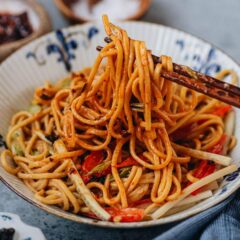
Peanut Noodles
Ingredients
- 12 oz dried noodles , or 1 lb (450 g) fresh noodles (*Footnote 1)
Sauce
- 1/2 cup natural peanut butter (*Footnote 2)
- 1/3 to 1/2 cup warm water (*Footnote 3)
- 1/4 cup soy sauce
- 2 tablespoons honey (or sugar, or maple syrup)
- 2 teaspoons lemon juice , juice from 1/2 lemon
- 1 teaspoon sesame oil
- 2 clove garlic , grated
- 2 teaspoons grated ginger
- 1 teaspoon salt
Topping options
- Lao Gan Ma Chili Crisp , or homemade chili oil (Optional)
- Cucumber (carrot and / or peppers) , cut into thin strips
- Roasted peanut , chopped (for garnish)
Instructions
- Add the peanut butter to a medium sized bowl and slowly add 2 tablespoons of water, a little at a time. Stir with a spatula until the water is fully incorporated and it forms a smooth paste.
- Add the rest of the sauce ingredients and mix well. The sauce should be able to coat a spoon but also not too thick. You can always thin the sauce by adding a bit more water. You can make the sauce ahead of time and store it in the fridge for 2 to 3 days.
- Boil noodles according to instructions. Transfer cooked noodles into a colander, rinse with tap water to stop the cooking. Drain well and transfer to small serving bowls.
- Serve the noodles with the sauce on the side with the toppings of your choice.
- To eat, assemble your own bowl with any toppings you prefer, adding a few spoonfuls of the sauce. Mix and enjoy.
Make ahead and store
- You can toss the noodles with the sauce ahead of time and store it in the fridge for 2 to 3 days. The sauce will thicken up a bit more in the fridge. You can gently warm up the noodles in the microwave, or mix the noodles with a bit of hot water to thin it out. If you plan to mix the whole batch of noodles, I would always reserve a bit of sauce and noodles without mixing everything together. Depending on the type of noodles you use, it might require a different amount of sauce to create the perfect taste. You always want to have a bit of extra noodles and sauce to adjust the flavor during the mixing process.
Notes
- The sauce in this dish is so flavorful and versatile that you can use many types of noodles and get a great result. For a traditional taste, I like to use medium thick wheat noodles that have a chewy texture. Chinese alkaline noodles and ramen noodles are great options. Use udon noodles if you prefer thick noodles, or somen noodles if you prefer thin noodles. Rice noodles work wonderfully as well for a gluten-free option.
- If you just opened your peanut butter and there’s a layer of oil on top, stir well with a large spoon to mix in the oil. This way the texture will be more consistent. Use 1/3 cup water if your peanut butter is recently opened, and use 1/2 cup water if you’re getting to the bottom of the jar (which is usually drier).
- I prefer to use natural peanut butter, but you can also use sweetened peanut butter as well. In this case, start with 1/4 cup water and add more later if needed. Skip the honey first, then taste the sauce before adding any sweeteners to adjust the taste.
Nutrition

Did you make this recipe?
I’d love to hear how it turned out for you! Please take a moment to leave a 5-star rating ⭐️ and share your thoughts in the comments further down the page. It really helps others discover the recipe too.
Paul
It appears Footnote 3 may have been accidently incorporated into Footnote 2.
Maggie Zhu
Thanks for letting me know! I just fixed the footnote number.
Helen
Best peanut sauce recipe of the many I’ve tried with a variety of noodles. I might try substituting some tahini for some peanut butter. I prefer these noodles chilled as a light summer meal.
Menolly
No matter how many serving I select on the slider, the instructions state that we have to dilute it with 2 Tbsp of water. Shouldn’t the amount of water change with the amount of servings? Thank you!
Maggie Zhu
Hi Menolly, sorry for the confusion! The instructions say adding two tablespoons of water at a time, and a total 1/3 to 1/2 cup for 4 servings. It is much easier to slowly mixing the water than adding all the water then mix. If you double the recipe (8 servings), it should be 2/3 cup to 1 cup water.
Bettina Scattino
Super lecker geschmeckt 😋 wie alles was ich bis jetzt von Dir nachgekocht habe.DANKE, für die tollen Rezepte und Erklärungen. ♥️Bei uns wird mindestens einmal die Woche ein Rezept von Dir gekocht. 🍜
Louise
Hi Maggie,
I don’t have any peanut butter in stock but I always have tahini (sesame paste). Would the quantity to use be the same? Thank you for your often life-saving recipes 🙂
Maggie Zhu
The quantity of the seasonings should stay the same. But I would start with 1/4 cup of the water, because I do noticed that they absorb water slightly different and it also depends on the brands you use. If the sauce comes out too thick, you can always add more water to dilute it later.