
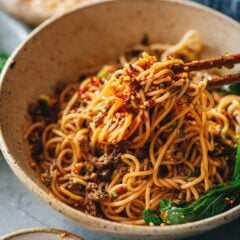
A real-deal dan dan noodle recipe that stays true to the authentic Sichuan flavor. My dan dan noodles bring together pork dry-fried with fermented black beans, a creamy Sichuan sauce built on sesame paste and chili oil, and a tangle of thin wheat noodles tossed with Sui Mi Ya Cai. This is my home cook take on the classic Sichuan street noodle bowl.
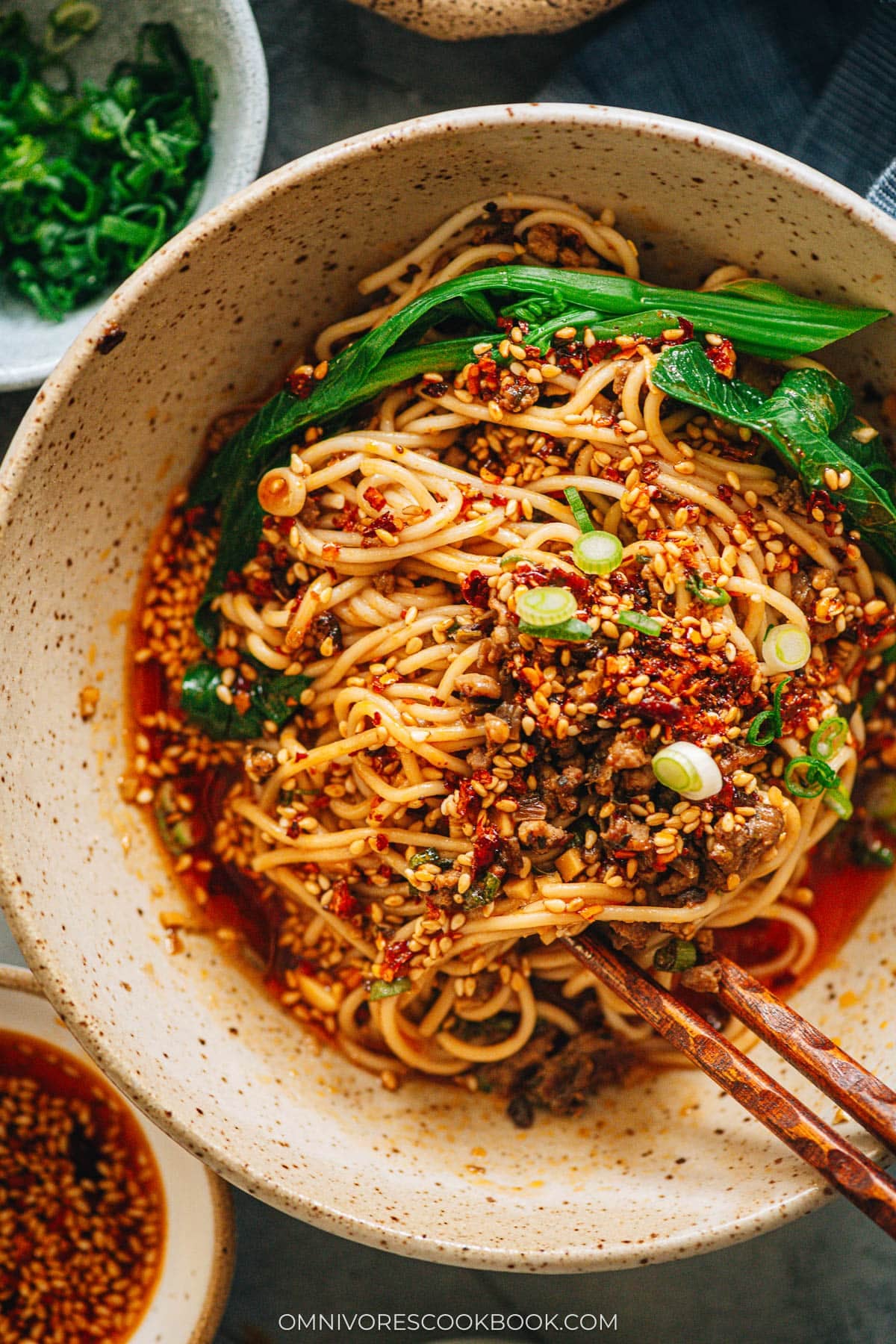
Real dan dan noodles started as a Sichuan street snack served in small bowls, with thin wheat noodles sitting in a numbing chili oil sauce under a small pile of dry-fried pork. The Westernized versions you see at most American restaurants tend to look more like pasta, with a heavier meat sauce ladled over the noodles. My approach lands at about 80 percent traditional Sichuan, with sesame paste folded in to round out the chili oil so the sauce stays creamy and balanced, which is the version I keep coming back to in my Authentic Chinese noodle recipes collection.
I have been refining this recipe since I first published it back in 2014, and the version on the blog today is my third pass at it. Each time I came back to it, I tweaked the pork seasoning or the sauce ratio until the balance lined up with the way I remember the bowls in Chengdu. It is the bowl I cook for my husband and son when we want a noisy, slurpy lunch on a weekend at home.
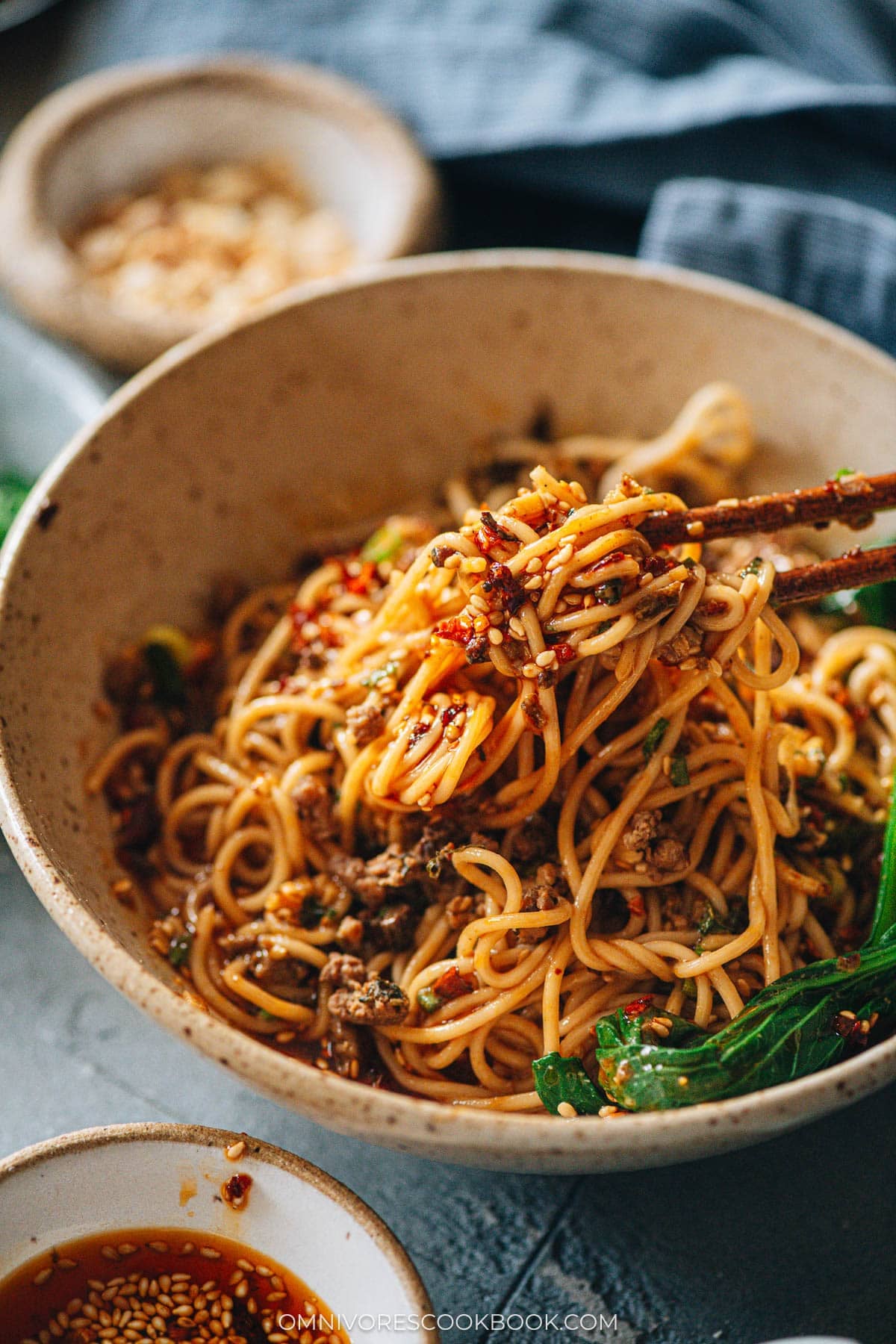
To make it, I whisk a sauce from Chinese sesame paste, light soy sauce, Chinkiang vinegar, garlic, green onion, honey, and freshly toasted Sichuan peppercorns. I dry-fry ground pork with ginger, fermented black beans, and Sui Mi Ya Cai until the meat turns a dark, almost crispy brown, then I cook the noodles and quickly blanch a handful of leafy greens in the same pot before assembling the bowls. Set everything out on the table family-style, let everyone build their own bowl with chili oil to taste, and you will see why this dish is worth all the components.
Ingredients
I split the dan dan noodles ingredients into 4 working groups so I can prep one piece at a time, sauce first and noodles last. The pantry list reads long, but most of it is whisked or chopped before the heat ever comes on.
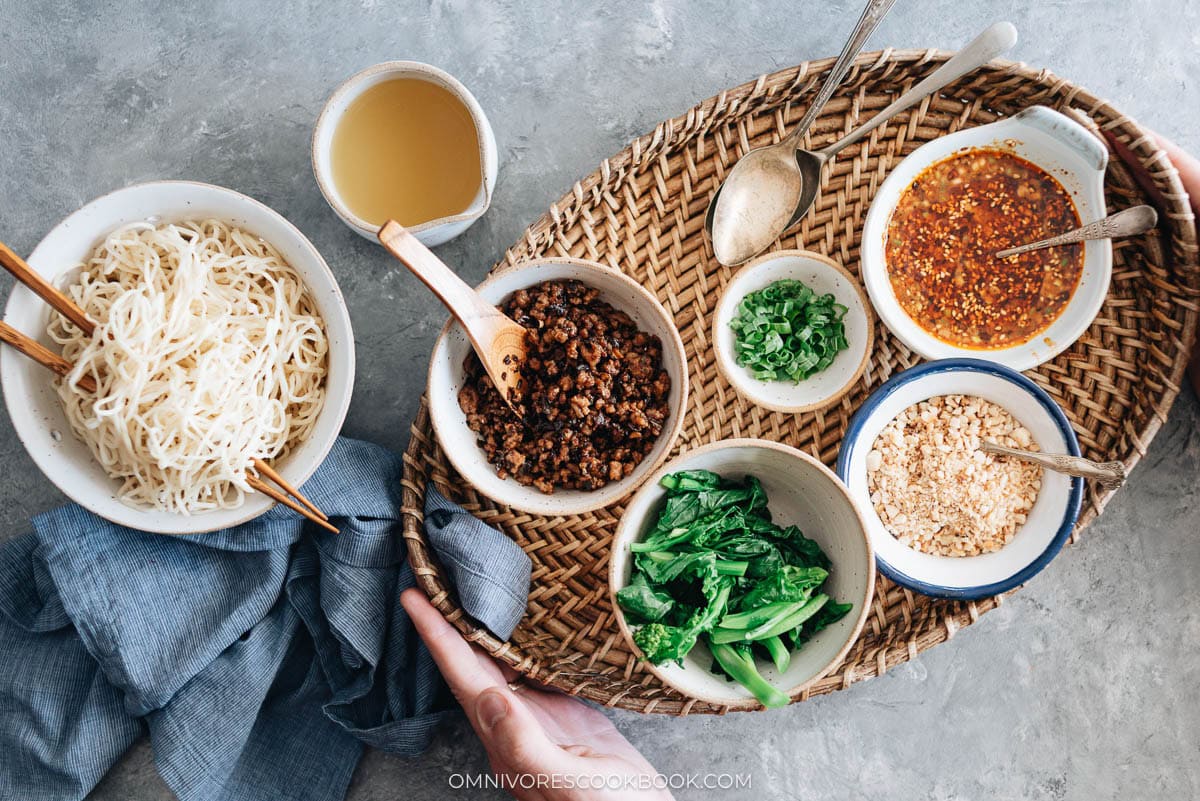
The sauce: I build the dressing on Chinese sesame paste, light soy sauce, Chinkiang vinegar, minced garlic and green onion, honey, and freshly toasted ground Sichuan peppercorn. Use a jar of sesame paste that is 100 percent sesame, not tahini, since tahini reads thin and grassy in this bowl. If Chinese sesame paste is not available, unsweetened natural peanut butter is a better alternative.
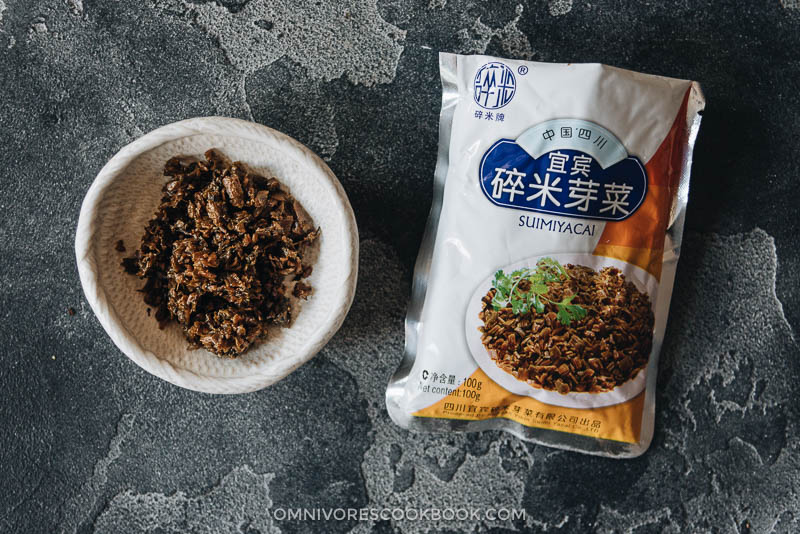
The pork topping: Ground pork is dry-fried with ginger, chopped green onion, rinsed and chopped fermented black beans, Sui Mi Ya Cai, Shaoxing wine, and a pinch of sugar. Sui Mi Ya Cai is the ingredient that makes the pork taste like real Sichuan dan dan noodles, so I keep a bag in my pantry whenever I can find it. These days, you can easily order them online if you do not live near a Chinese grocery store.
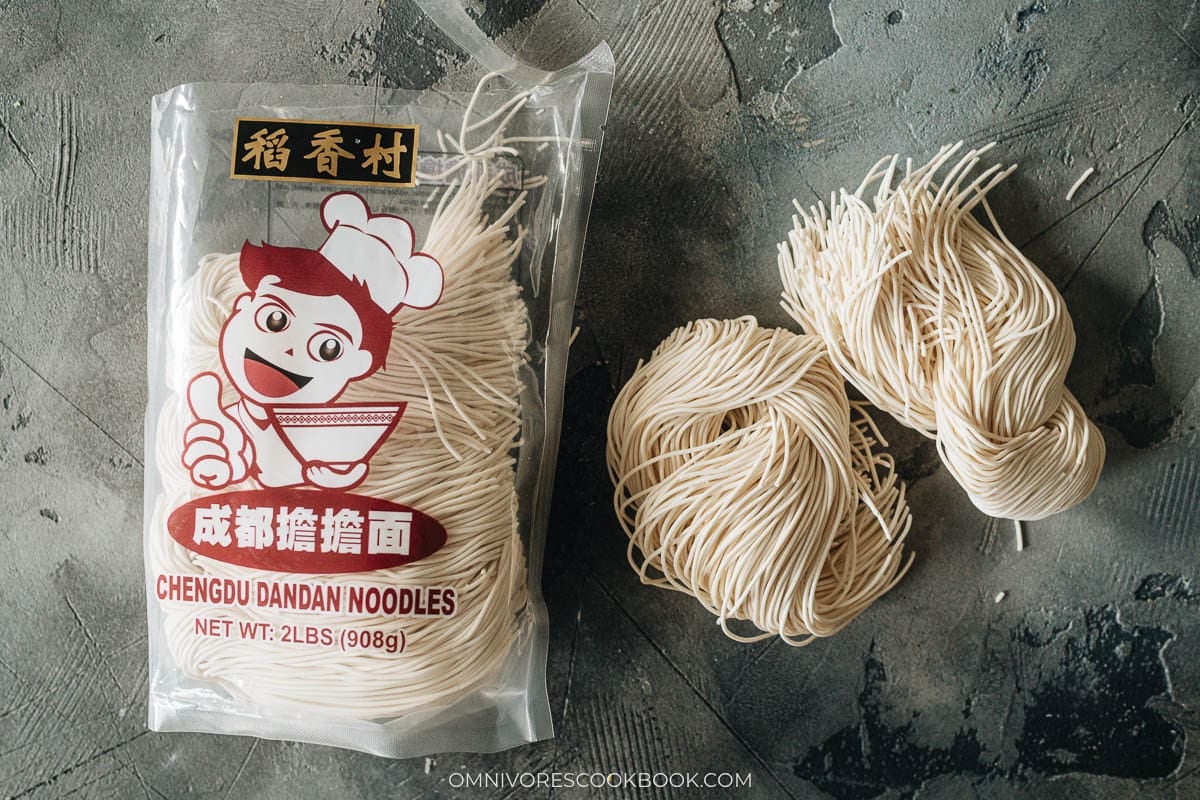
The noodles and greens: I use thin wheat noodles, ideally the semi-fresh dan dan noodles you can find in the refrigerated section of an Asian market, otherwise any thin dried wheat noodle works. For the greens, I rotate between spinach, choy sum, and baby bok choy, blanched in the same water that just cooked the noodles.
The finishing oil and crunch: Homemade chili oil goes on at the table to taste, and crushed roasted peanuts give the bowl its texture contrast. If you have time to make your own chili oil, please do, because the smokiness it carries is what makes the sauce taste like Sichuan and not a generic noodle stir fry.
How to Make
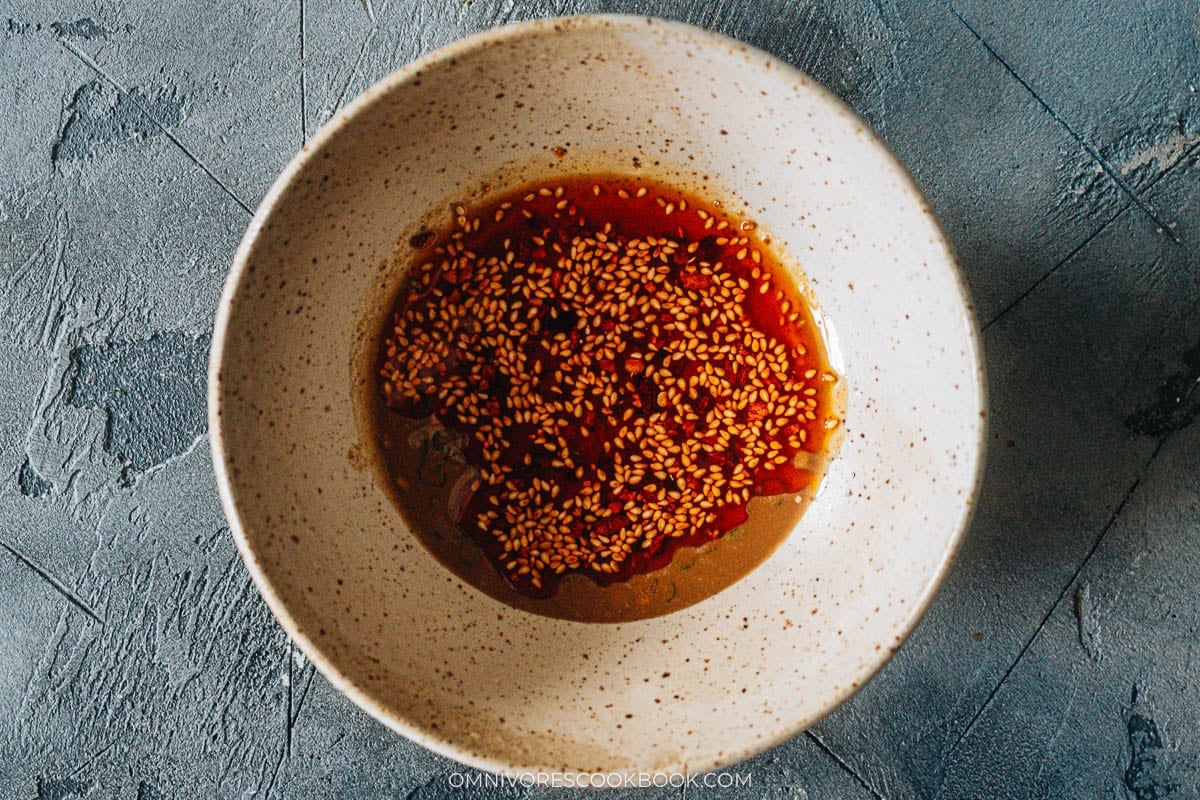
1. Mix the sauce: In a medium bowl, whisk the sesame paste and light soy sauce together until fully incorporated. Stir in the Chinkiang vinegar, then mix in the garlic, green onion, honey, and ground Sichuan peppercorns until the sauce is smooth.
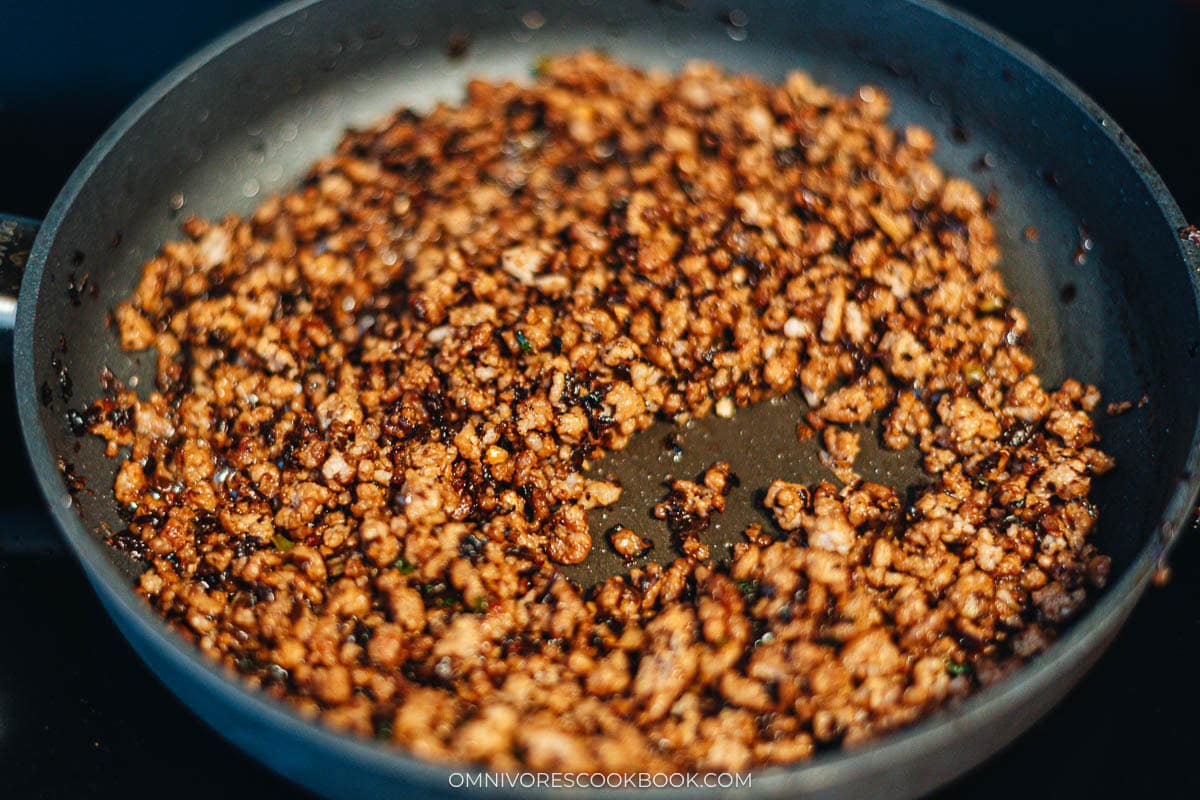
2. Brown the pork: Heat the oil in a large nonstick skillet over medium-high heat until hot. Add the ground pork and cook, stirring, until the surface is lightly browned.
3. Dry-fry the pork seasonings: Turn the heat down to medium and add the ginger, green onion, fermented black beans, Sui Mi Ya Cai, Shaoxing wine, and sugar. Cook and chop the pork into small pieces until all the liquid evaporates and the pork turns a dark brown color, then transfer to a bowl and set aside.
4. Cook the noodles: Bring a large pot of water to a boil and cook the noodles according to the package instructions.
5. Blanch the greens: Briefly blanch the leafy green vegetables in the same noodle water, drain, and set aside.
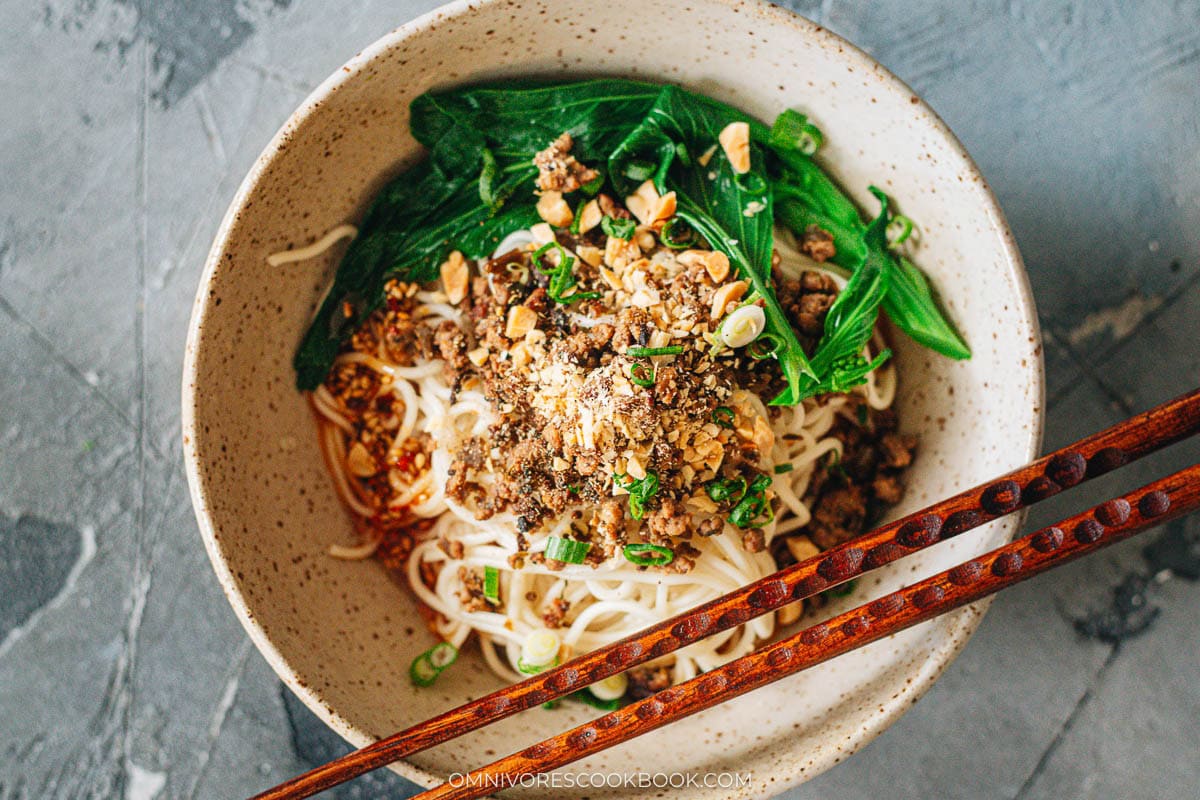
6. Assemble the bowls: For each serving, add a portion of the noodle sauce to a bowl, drizzle in chili oil to taste, and add the noodles. Top with a few spoonfuls of the cooked pork and the blanched greens, then garnish with crushed peanuts, chopped green onion, and a pinch of toasted ground Sichuan peppercorn for the numbing layer. Serve hot or cold.
My Cooking Tips
Toast the peppercorns yourself: I always toast the Sichuan peppercorns dry in a small pan and grind them right before mixing the sauce, since a fresh grind is what produces the numbing tingle on the tongue. Pre-ground peppercorns from a shaker bottle lose that quality within a few weeks of opening.
Stir the sesame paste from the bottom: Most jars sit with a layer of oil on top and a stiff paste underneath, so I stir from the bottom up before measuring. If I skip this step, the top of the jar runs thin and the bottom turns gritty.
Skip the soy sauce in the pork: I do not season the pork with soy sauce while it dry-fries, since the dark color should come from the long roast in the pan plus the fermented black beans. Adding soy too early steams the meat and you lose the slightly crispy edges that the dish depends on.
Reuse the noodle water for the greens: Once the noodles are out of the pot, I drop the leafy greens straight into the same boiling water to blanch them. The starchy water cooks the greens just fine and saves a second pot of cleanup.
Serving Suggestions
I treat dan dan noodles as the centerpiece of a Sichuan meal, not a side. I lay the bowls out on the table along with a quick vinegar cucumber pickle, a small plate of Sichuan spicy wontons in red oil when I have wonton wrappers in the freezer, and a pot of jasmine tea to cut the chili.
For a bigger weekend dinner, I scale the dan dan noodles into a smaller portion per person and pair them with Mapo Tofu over rice, Sichuan eggplant stir fry on the side, and dry fried green beans for crunch. The numbing-spicy thread runs through all 4 dishes without repeating itself, and the rice keeps everything grounded for guests who are new to Sichuan heat.
Frequently Ask Questions
How do I make this less spicy without losing the Sichuan character?
I cut the chili oil down to a small drizzle per bowl. The fermented black beans, Sui Mi Ya Cai, and freshly toasted Sichuan peppercorns inside the sauce still carry the flavor of a real Sichuan bowl, even when the heat is dialed low.
How long do leftovers keep in the fridge?
The pork topping and the sauce both hold up well in airtight containers in the fridge for about 4 days. I store them separately from any cooked noodles, since cooked noodles get sticky overnight and lose their bite, and I cook a fresh batch of noodles the day I want to eat. The pork also freezes for up to 2 months with no real change in texture, which makes this a useful meal-prep candidate for weeknight lunches.
Can you cook this without Sui Mi Ya Cai?
I can, and the bowl will still taste good, but it will not taste like Sichuan dan dan noodles. If I cannot find Sui Mi Ya Cai, I substitute finely chopped Tianjin preserved vegetable, or skip it altogether and add a touch more fermented black bean to keep the savory depth.
Want to Save This Recipe?
Enter your email below & we’ll send it to your inbox. Plus get great new recipes from us every week!
Watch video
Dan Dan Noodles (担担面)
Ingredients
Noodle sauce
- 1/3 cup Chinese sesame paste (or unsweetened natural peanut butter)
- 1/3 cup light soy sauce (or soy sauce)
- 1/4 cup Chinkiang vinegar
- 4 cloves garlic , finely minced
- 2 green onion , finely minced
- 2 tablespoons honey (or agave syrup)
- 1/2 to 1 teaspoon Sichuan peppercorns , toasted and ground (*footnote 2)
Pork topping
- 1 tablespoon peanut oil (or vegetable oil)
- 1 lb ground pork (*Footnote 3)
- 1 tablespoon minced ginger
- 2 green onions , chopped
- 1 1/2 tablespoons fermented black beans , rinsed and chopped
- 1/2 cup Sui Mi Ya Cai (Sichuan preserved mustard greens)
- 2 tablespoons Shaoxing wine (or dry sherry)
- 1/2 teaspoon sugar
To assemble
- 1/3 cup roasted peanuts , crushed
- 14 oz Dan Dan noodles (or thin wheat noodles)
- 1 small batch leafy green vegetables , roughly chopped (spinach, choy sum, baby bok choy etc.)
- Homemade chili oil , to taste (*footnote 1)
Instructions
Prepare sauce
- Whisk the sesame paste and light soy sauce together in a bowl until fully incorporated. Add the Chinkiang vinegar. Continue stirring until mixed. Then mix in the garlic, green onion, honey, and Sichuan peppercorns.
Prepare the pork topping
- Heat the oil in a large nonstick skillet over medium-high heat until hot. Add the pork. Cook and stir until the surface is lightly browned.
- Turn to medium heat. Add the ginger, green onion, fermented black beans, Sui Mi Ya Cai, cooking wine, and sugar. Cook and chop the pork into small pieces, until all the liquid has evaporated and the pork turns a dark brown color. Transfer to a bowl and set aside.
Prepare the noodles
- Cook the noodles according to instructions. Once done, transfer the noodles to a colander, rinse with cold running tap water to stop cooking, then drain again and set aside.
- In the same pot, briefly blanch the leafy green vegetables, drain, and set aside.
To assemble the noodle bowls
- For each noodle bowl, add 1/4 cup of noodle sauce to each individual serving bowl. Add the chili oil with some flakes according to your taste, from 2 to 4 tablespoons to mimic the restaurant result, or less if you prefer the dish is less spicy. Add some noodles, then top with a few spoonfuls of the cooked pork and green veggies. Garnish with peanut crumbles and chopped green onion. Sprinkle with a pinch of toasted ground Sichuan peppercorn, if you like the numbing taste. Serve at room temperature.
Notes
Nutrition

Did you make this recipe?
I’d love to hear how it turned out for you! Please take a moment to leave a 5-star rating ⭐️ and share your thoughts in the comments further down the page. It really helps others discover the recipe too.
Linda
I made two iterations of this dish–one with the more tingling effect most palpable; and the other will less.
When I was younger, I could easily eat the more piquant version; but now, I need to be more mindful of how much heat I have in my cooking. I passed the hotter version on to my son-in-law, who has an asbestos stomach!
Both versions were really so delightfully tasty. Thank you so much for this gift of your recipe!
Bill Zigrang
May 23, 2026
Maggie,
By my count this is your version #4.
P.S. The peanuts are ground, not grounded.
Bill Zigrang (your proofreading nemesis)
Maggie Zhu
I should hire you to proofreading all my blog post lol (btw my husband helps with it, but I guess he didn’t catch all of my mistakes).
I think this is version #4, but not much changes in the recipes.
Jamie Lin
Can Chinese sesame paste be replaced with tahini in this recipe? How would that affect the flavor?
Maggie Zhu
You can. Sesame paste is not the main flavor profile in this recipe and I used it to thicken the sauce and add some nutty taste. Tahini is usually made with raw or lightly toasted sesame seeds, so the flavor will be less nutty with a hint of bitterness, and a looser texture. For a closer flavor, you can use tahini plus 1 tablespoon toasted sesame oil. The sauce will be a little thinner but should taste quite close. It’s also OK to use tahini without sesame oil. As long as you use plenty of chili oil (a very good one, with chili flakes), the result should be very tasty.
Chris Maurer
Made this tonight as per recipe with fresh noodles and it was just excellent. The rest of my family is not as enthusiastic about Szechuan-level spiciness but tough luck – I’m making it again soon.
I found I had leftover pork and sesame-soy sauce for 1 pound of noodles (4 servings). Maybe cook 2lb of noodles because 1½ seems actually about right for this recipe.
Angela
Hi! I love your recipe for Dan Dan noodles and was excited to you include on your 15 Chinese freezer meal post. But I don’t any instructions for freezing. How would you suggest freezing this?
Maggie Zhu
The best way to freeze this dish is to freeze each part separately – freeze the noodles, sauce and the toppings separately. Thaw in the fridge. You can reheat the noodles by microwaving, steaming, or simply soak in hot water until hot. Heat the toppings in microwave, then assemble. Alternatively, you can always cook noodles right before serving, and only freeze the sauce and the toppings. Because freshly cooked noodles always taste better. The sauce can get a little thicker after refrigerating, and you can bring it back to the same texture by adding a little warm water.
Another way is assemble the dish and freeze, and simply heat it up in the microwave or by steaming. The sauce texture will change a little (the sauce will get a little thicker), but I think it will still taste good.
John
This is an awesome spin on the recipe. I’m the type not one in my household who likes Sichuan food, so having the sauce and topping frozen makes it easy to fix something for my wife while I defrost parts and boil noodles and greens. Thanks so much!
Max
I had to make some substitutions as I live in somewhat rural Japan and prefer not to shop online. Namely, I cross-referenced some Japanese recipes and found that 榨菜 which are widely available in Japan can be used instead of Sui Mi Ya Cai, and the grocery stores I checked didn’t have dan dan style noodles, so I just used what I could find. I halved the recipe and have a ton of ingredients left over and I will for sure be making this again, adjusting spice levels to my tastes. This is so yummy and hit the spot for spicy, sour, creamy noodles. Thank you so much for sharing this wonderful, easy recipe.
Ronald
complex, the people that I live with have a hard time with complex, this dan dan noodles resicepe was one of the best Chinese meal I have ever had,,,
J Zhang
Hi, I wanted to make this for some guests, totaling myself a woman and 4 very hungry men. They specifically only want to eat this for dinner without any other dishes. Can I really serve as the recipe suggests “6 servings” or more realistically should I double it? Based off the noodles alone it looks like a recipe for 2.5 people.
Maggie Zhu
You definitely should double the recipe. The noodles are usually served as a small appetizer. If you’re serving it as a main dish, you should prepare more.
Cindy
This is our go to recipe and a household favourite!! It’s beyond delicious!!
We always double the recipe.
Teresa HK
I am so enjoying your recipes, Maggie. Am fortunate to live in Hong Kong so easy for me to get ingredients but wonder if tahini would be a reasonable substitute for Chinese sesame paste, as I have a big jar in the fridge.
Tracey B
omg this recipe came out amazinggg!! I love it so much – seriously so full of flavor. Thank you for sharing this authentic recipe! I can’t wait to make it again
Jessi
I nailed it with this recipe. My husband ranked it the top 10 dishes I’ve ever made. Thank you, Maggie!
April Waters
Great recipe! Delicious! Easy to fomlow. I didnt have pork but I made it with tempeh creating a vegan version of Dan Dan noodles. I used the same method as for cooking pork to replicate the crispy texture. I’m excited to make the szceshuan oil. Finally someone has a recipe with all the components to make a rich and complex oil.