
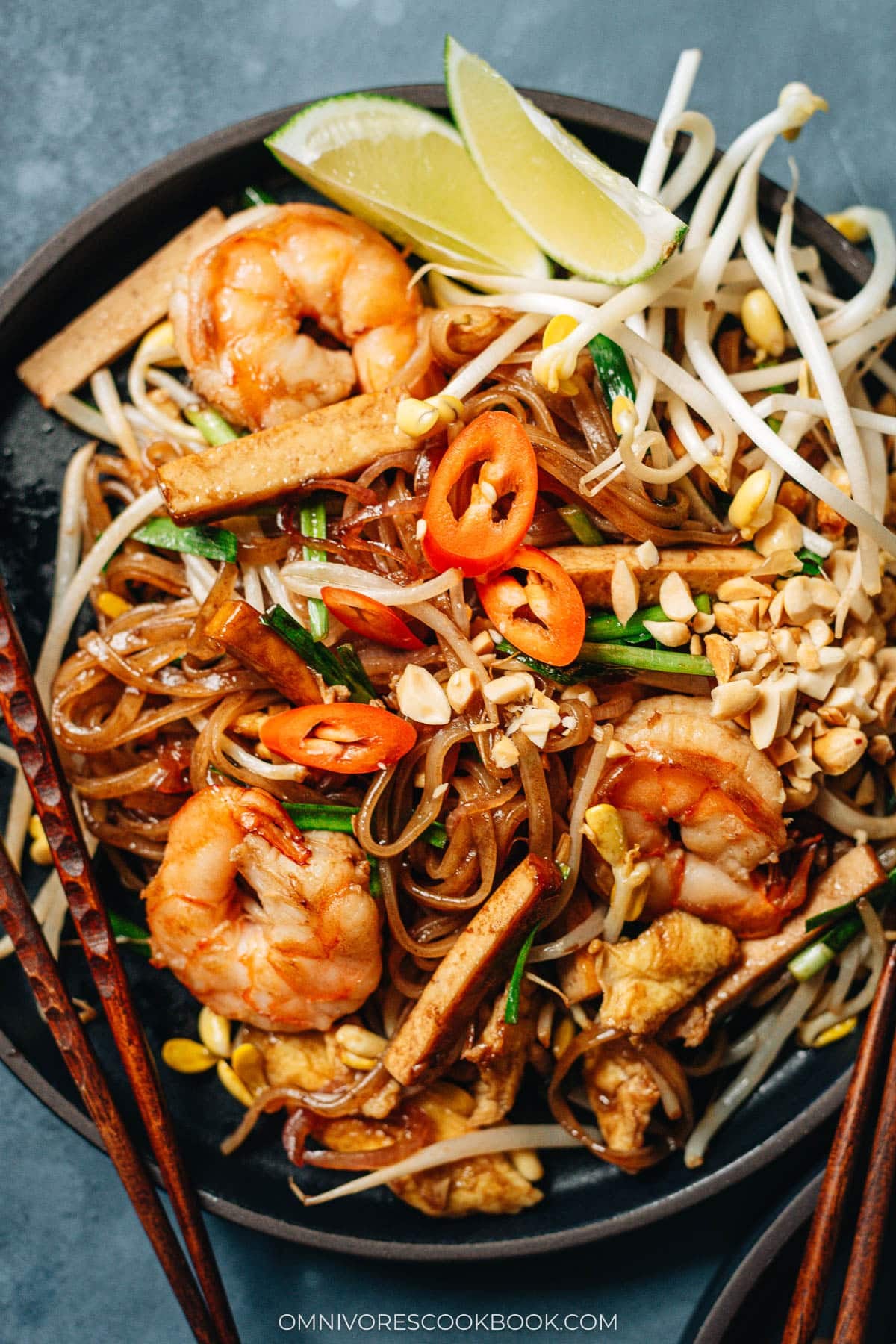
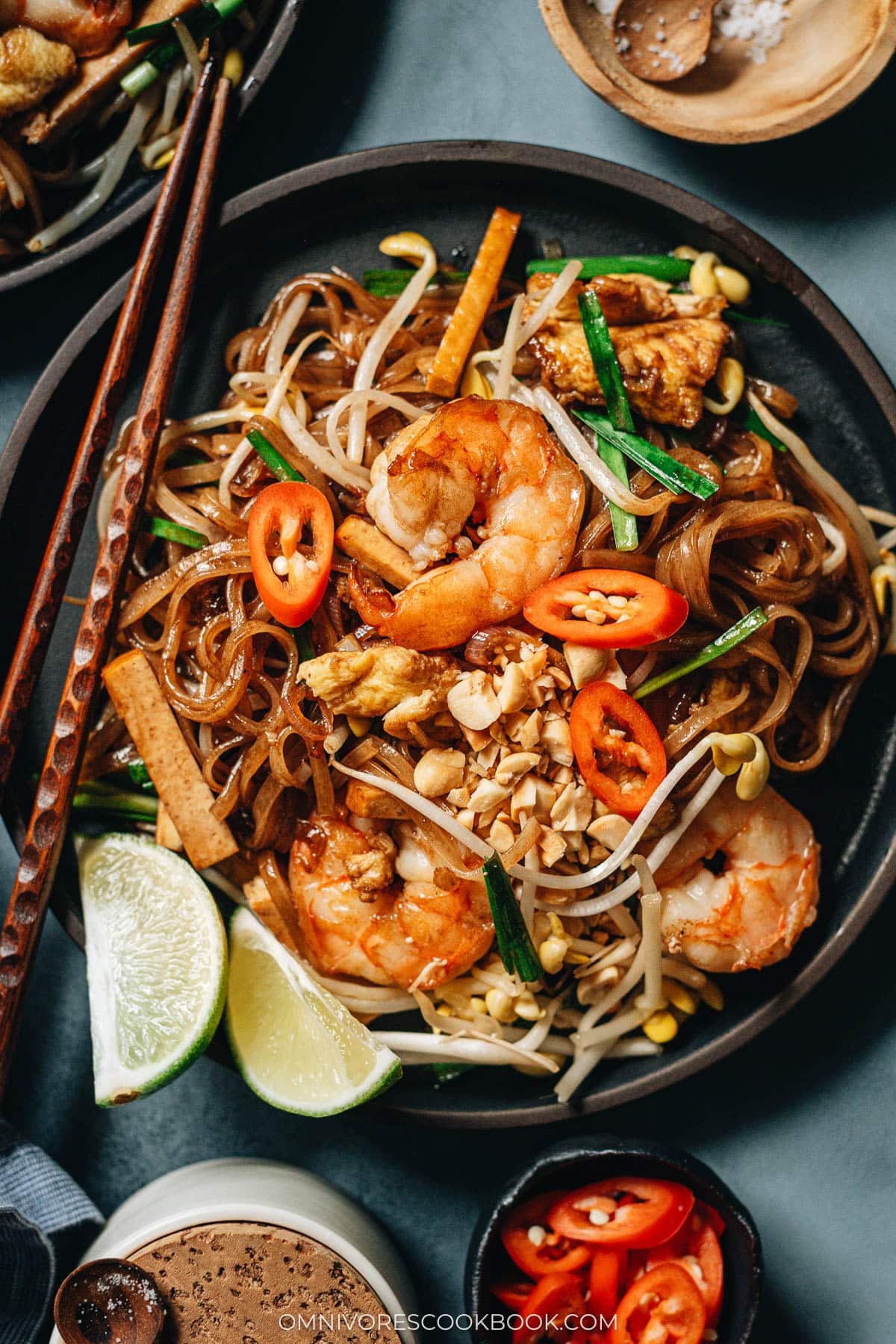
When I crave good shrimp pad thai and cannot get to a Thai restaurant, this is the recipe I cook. The tang is from real tamarind paste, not ketchup, and the shrimp and egg get pan-seared and set aside so the noodles absorb the sauce without steaming the shrimp gray. A different Thai noodle stir fry lives at my drunken noodles (pad kee mao) recipe if a wider and chewier noodle sounds better tonight.
We moved from New York City to the Hudson Valley a few years ago, and while I love the mountains and the slower pace, I miss the block of Thai and Southeast Asian restaurants that used to sit within a takeout order of our apartment. The small-town main street does great American food, but the Asian options are thin, so most of what I used to order out I now cook at home. This recipe came out of a real pad thai craving I could not fix with takeout, and I tested it enough times over one week to strip 5 years of seasoning off my carbon steel pan.
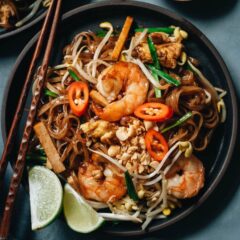
Here is how I make it; first I soak the noodles at room temperature while I mix the sauce and prep the aromatics, then I sear the shrimp and scramble the eggs in the same skillet and pull them onto a plate, next I cook the aromatics, noodles, and sauce in the same pan before everything comes back together with garlic chives, bean sprouts, crushed peanuts, and lime wedges at the end. You have to make this the next time takeout pad thai will not do, my recipe below takes you from soaked noodles to a Thai plate in 40 minutes. Yes, you read that right!
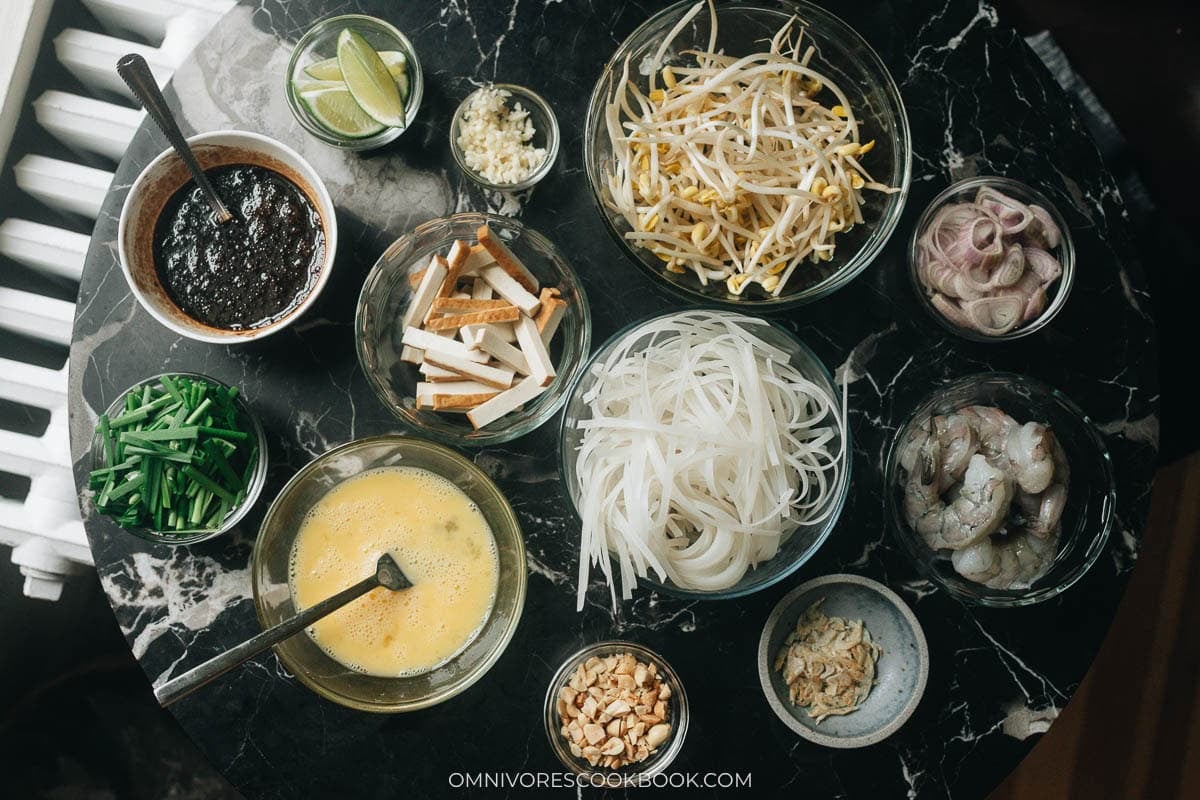
Ingredients
Most pad Thai recipes online taste sweet and heavy because the sauce is faked with ketchup. In mine, tamarind paste is the one ingredient that makes or breaks the plate. Here is the list of ingredients I use:
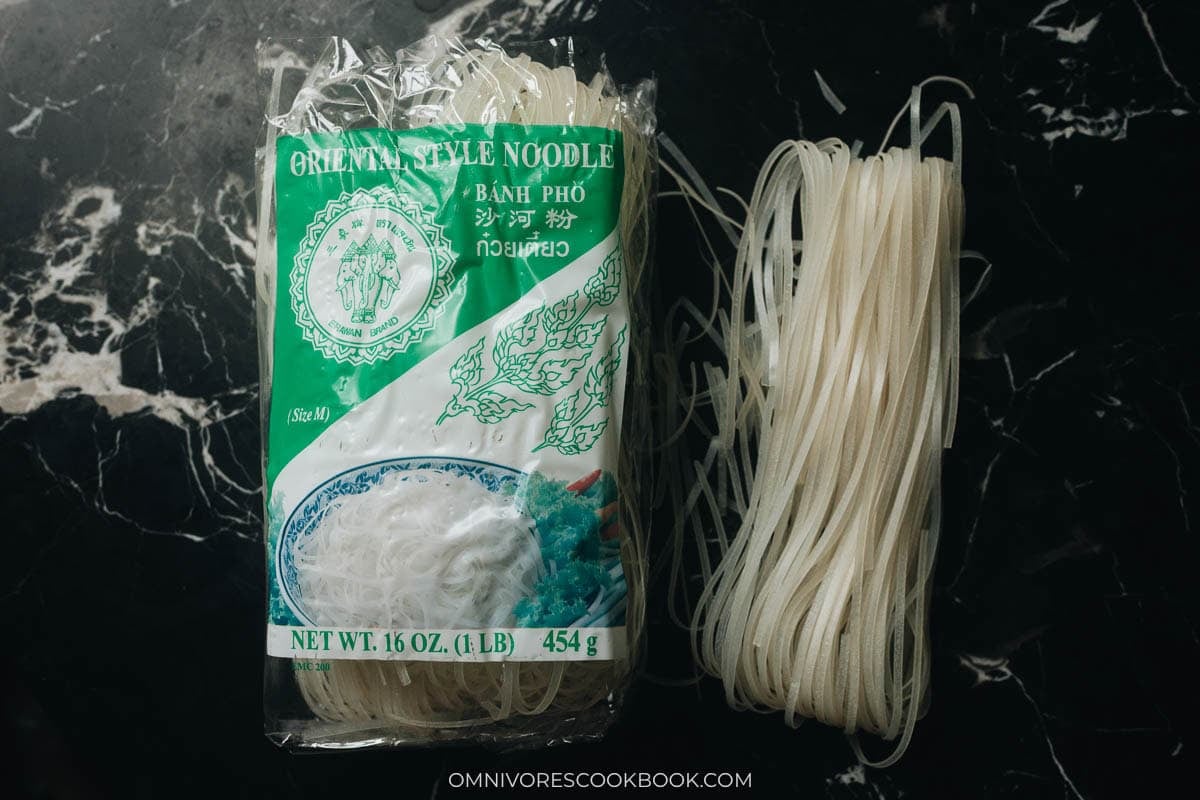
Rice noodles
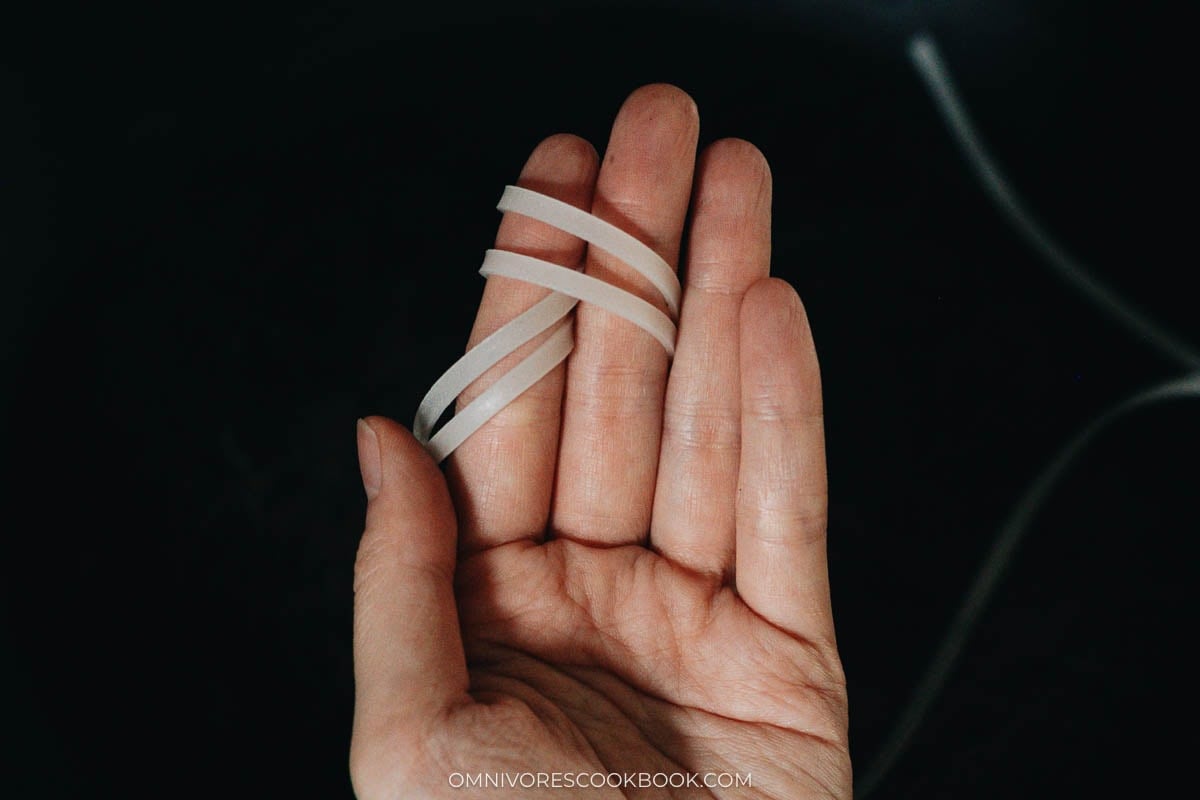
I use dried wide rice noodles about a quarter-inch across, sold in Asian markets under Thai Kitchen, A Taste of Thai, or Erawan Brand (the three-elephants label). I soak them in room-temperature water until they wrap around my finger without breaking but still bite firm, then drain and set them aside.
Pad thai sauce
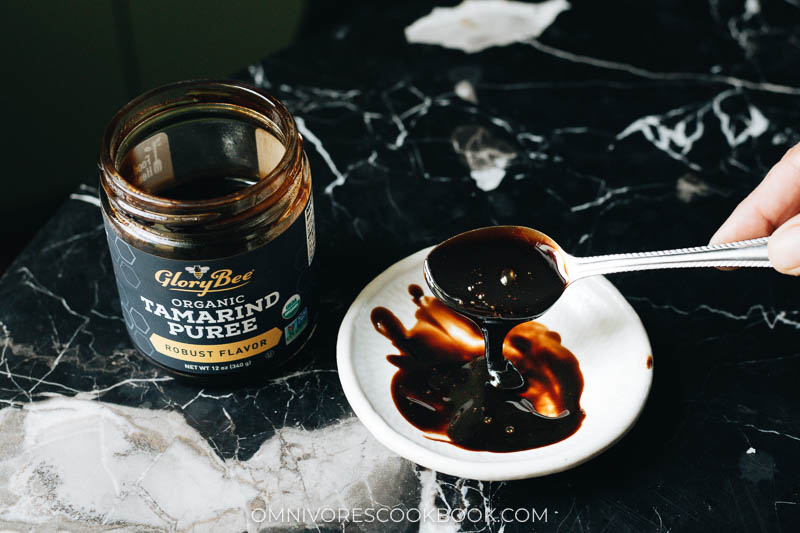
Tamarind paste is the key flavor here and gives the sauce its dark tang without any ketchup, so I do not swap it for anything else. I whisk it with brown sugar or palm sugar for a light sweetness and fish sauce for the salty savory backbone, and I stir until the sugar dissolves before it hits the pan. These days you can easily find these ingredients in a grocery store’s Asian ethnic aisle. You can also find them online.
The tofu
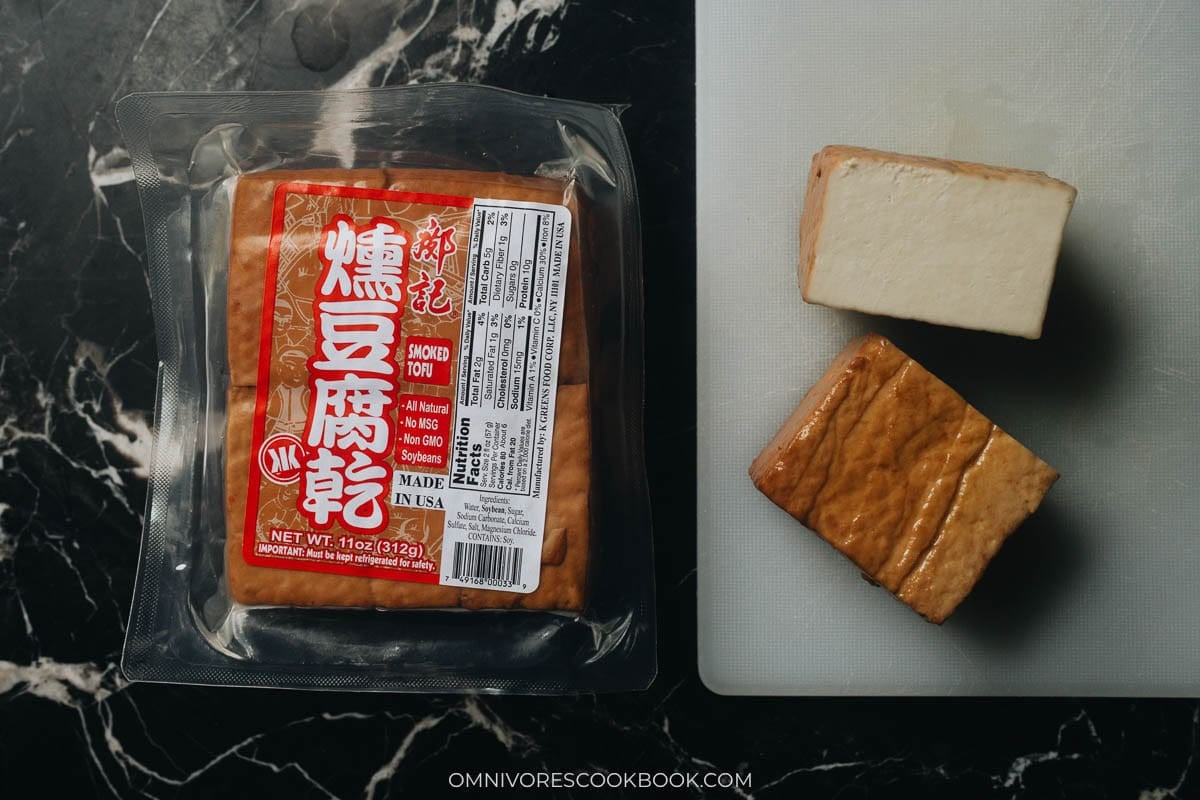
A great shrimp pad thai uses small pieces of tofu to add texture. If you’re already at an Asian market, you should grab a block of smoked tofu. Different from the regular tofu, this type of tofu is extra firm and almost impossible to break apart during a stir fry. It’s a staple in home-style Chinese cooking and we use it in stir fries because it adds a heavenly smoky flavor.
If you cannot find the smoked tofu, try to use baked tofu (many grocery stores have it) because it is firmer. The next best option is to get extra firm tofu and pan fry it until crispy before adding it to the pad thai.
You can even use deep fried tofu or aburaage (Japanese deep fried tofu puffs) although they will yield a different texture.
Dried shrimp (totally optional)
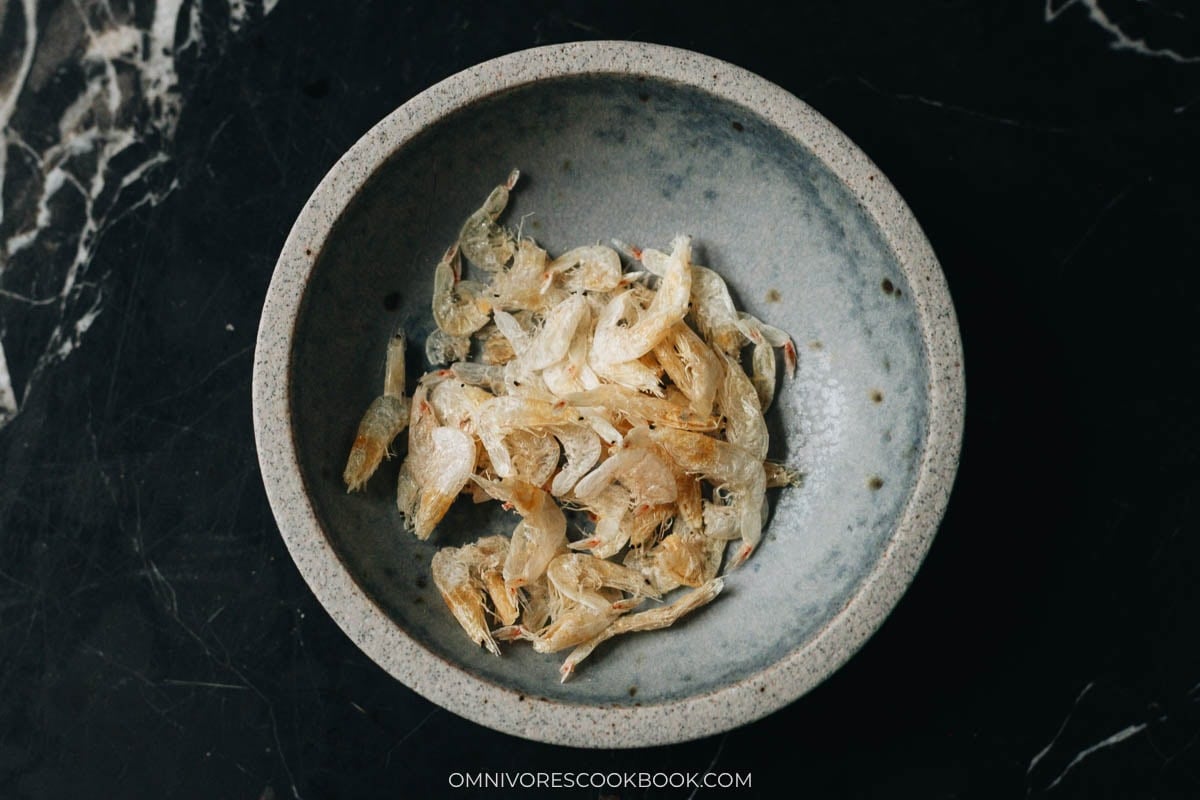
Authentic shrimp pad thai often uses small dried shrimp (also called papery shrimp) or shrimp paste to add extra seafood flavor. I like to use some in my pad thai just because I always have dried shrimp on hand. But you can totally skip them because the fish sauce in the recipe is quite pungent already.
Shrimp and egg
I use peeled and deveined medium shrimp so they cook in a fast two-sided sear and stay plump. I beat 2 eggs to a smooth mix and scramble them in the same pan right after the shrimp so both pick up the aromatic oil.
Aromatics
Minced garlic and thinly sliced shallots (or half a red onion) go into hot peanut oil for the fragrance base.
Finish and garnish
Sliced garlic chives (or green onions) and bean sprouts go in at the end so they wilt without softening past a crunch. Crushed peanuts and lime wedges come to the plate at serving for the final crunch and bright acidity.
How to Make
1. Soak the noodles: Fully submerge the dried rice noodles in room-temperature water for 30 to 40 minutes, until they are soft enough to wrap around your fingers without breaking but still firm enough to bite into. Drain and set aside.
2. Mix the sauce: Combine the tamarind paste, brown sugar, and fish sauce in a small bowl and stir until the sugar fully dissolves.
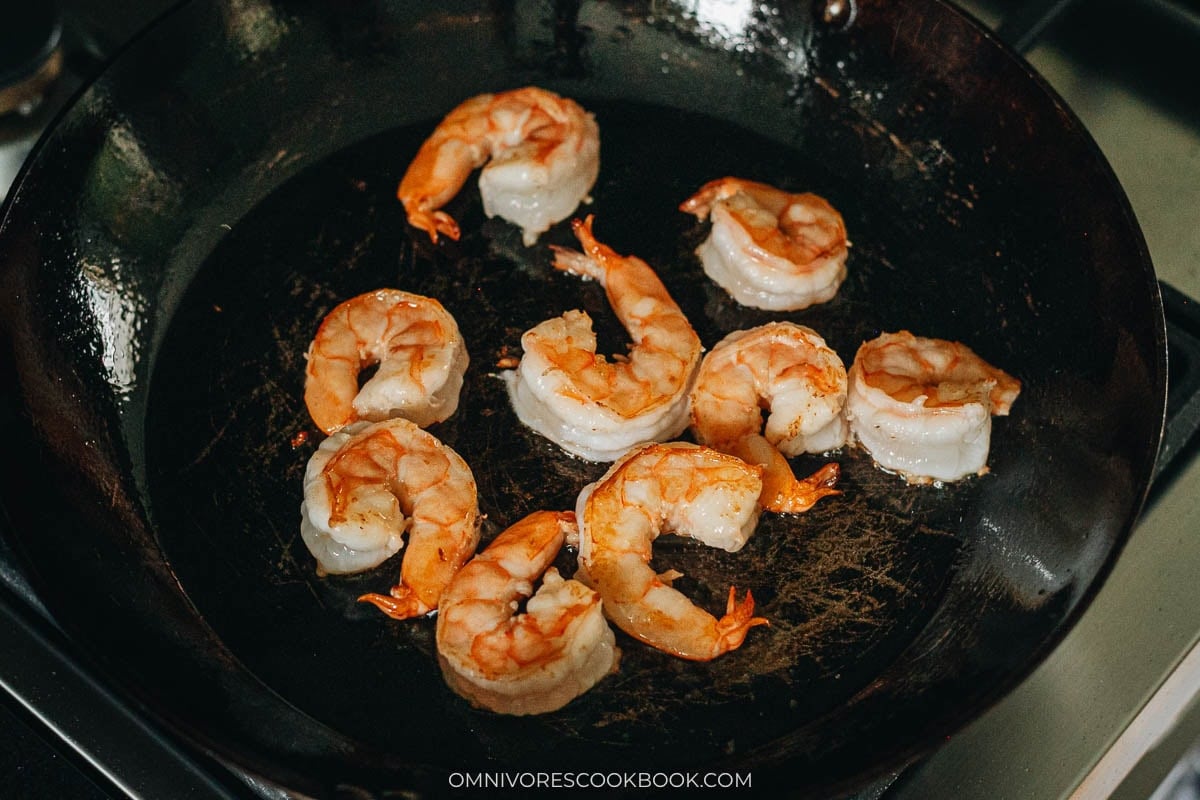
3. Sear the shrimp: Add 1 tablespoon of oil to a large 12-inch nonstick skillet over medium-high heat. Add the shrimp in a single layer without overlapping. Cook without moving until the bottoms turn golden brown, then flip and cook for 30 seconds or so until the second side is set but the inside is still slightly translucent. Transfer to a plate.
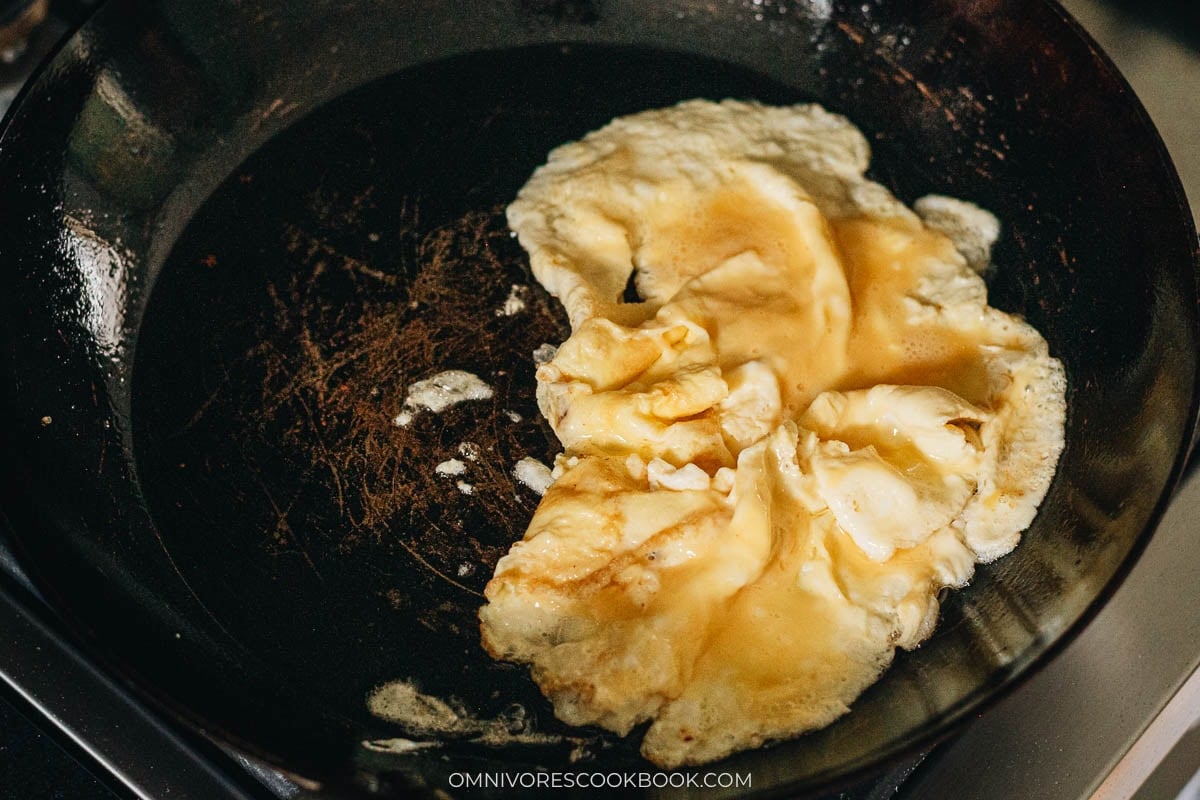
4. Scramble the eggs: Add another 1 tablespoon of oil to the same pan and pour in the beaten eggs. Let them set on the bottom, then start to scramble lightly until they are almost cooked through. Move them to the shrimp plate.
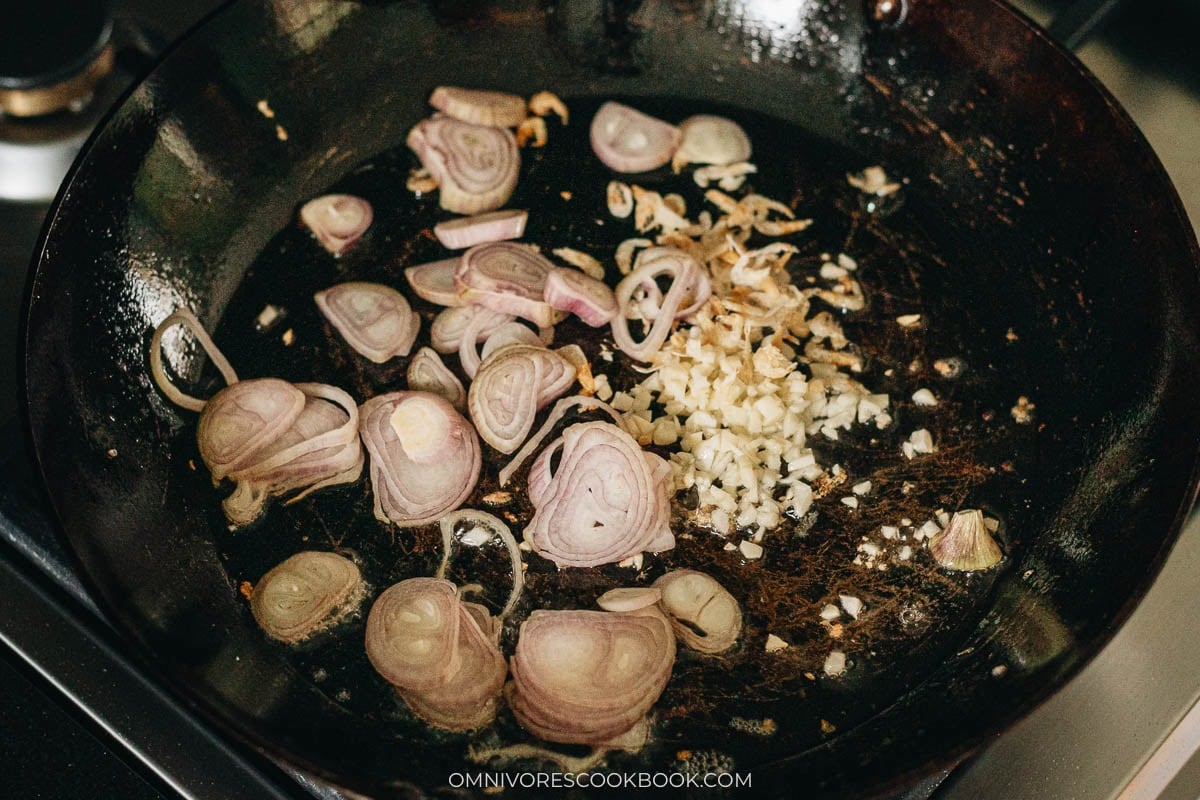
5. Cook the aromatics: Add the remaining 2 tablespoons of oil to the pan along with the garlic, shallots, and dried shrimp (if using). Cook and stir for 30 seconds until the dried shrimp turn golden and the garlic is fragrant.
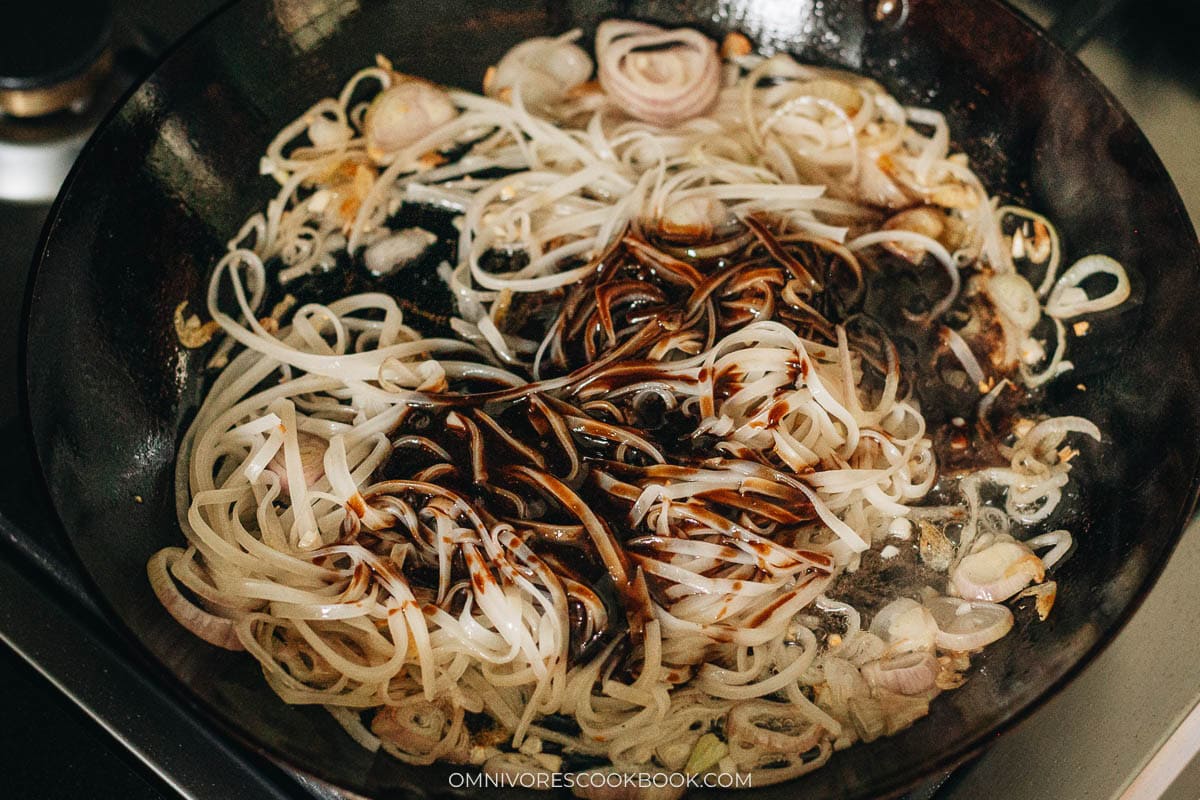
6. Toss the noodles: Add the drained noodles to the pan and stir a few times to combine with the aromatics. Pour in the sauce and toss everything for about 1 minute until the noodles are coated.
7. Add the tofu, shrimp, and egg back: Add the tofu and cook for another minute. Return the cooked shrimp and eggs to the pan and toss, using the spatula to chop the eggs into smaller pieces.
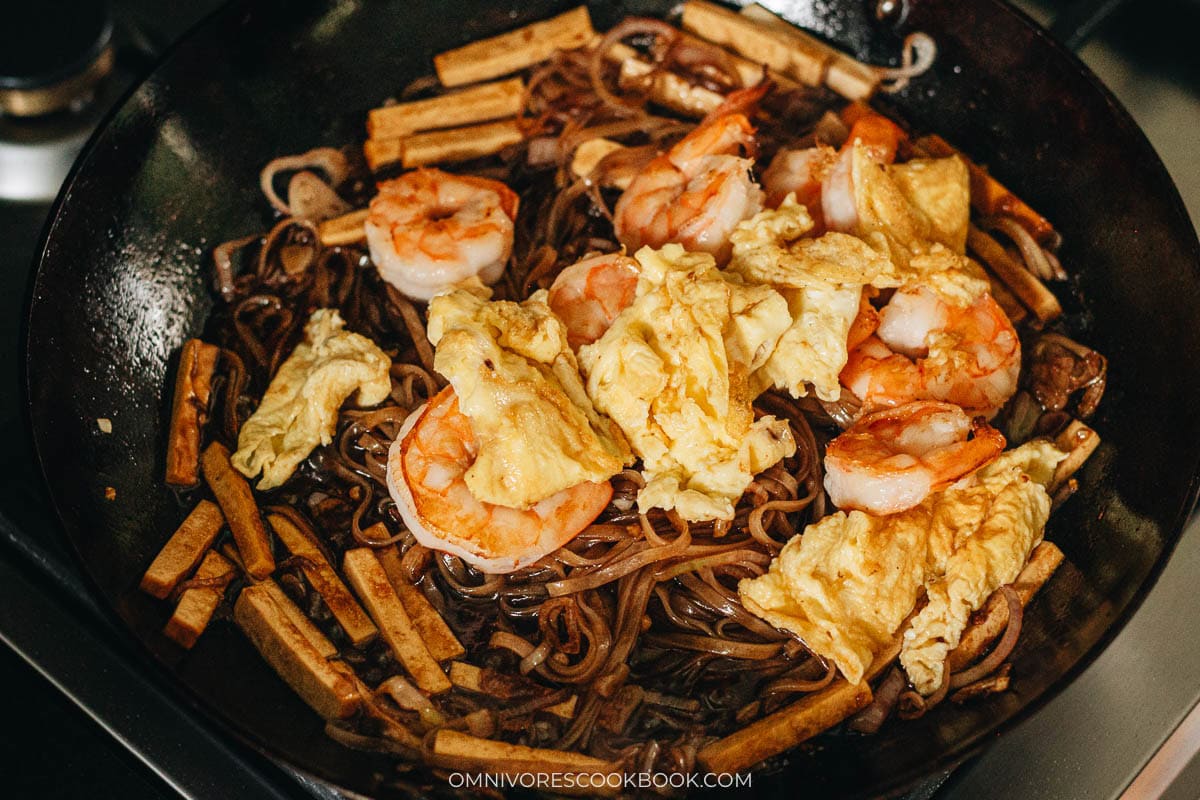
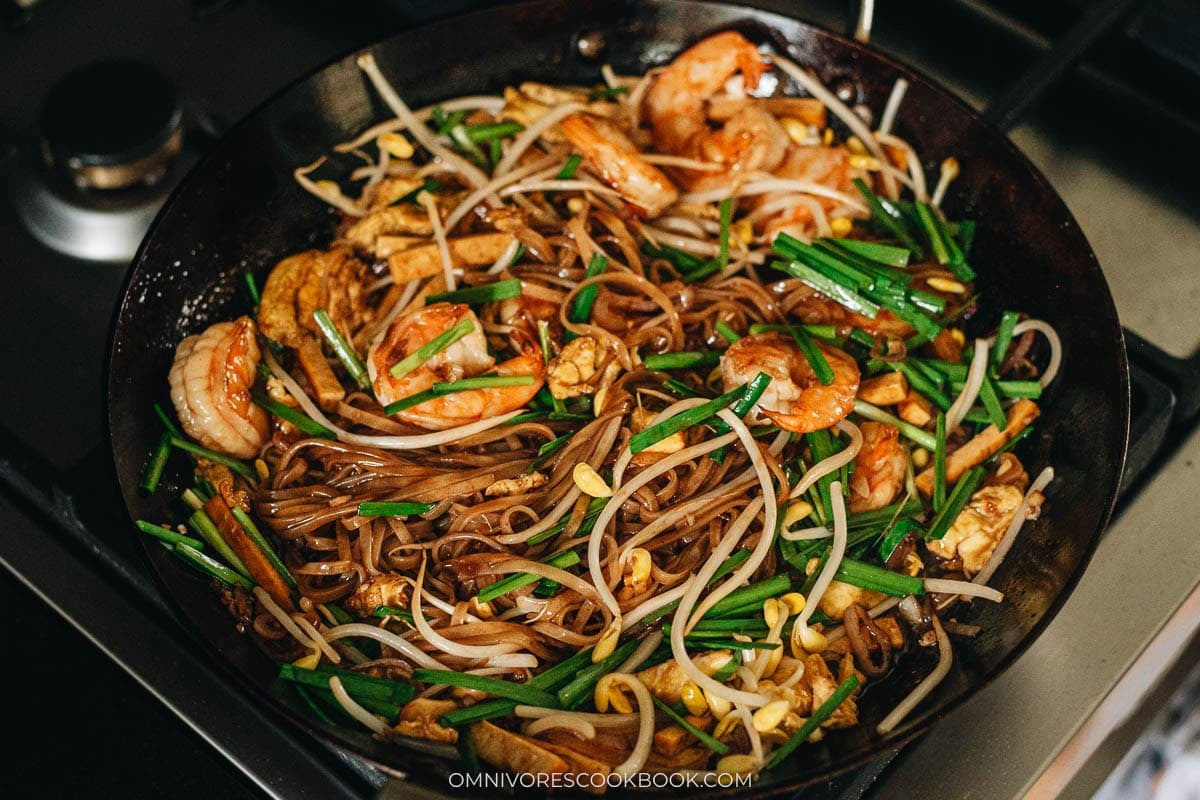
8. Finish with chives and sprouts: Add the garlic chives and bean sprouts, then toss for another 30 seconds until the vegetables just wilt. Taste a noodle. If it is still too firm, splash in a little water and toss for another 1 to 2 minutes until the texture is right.
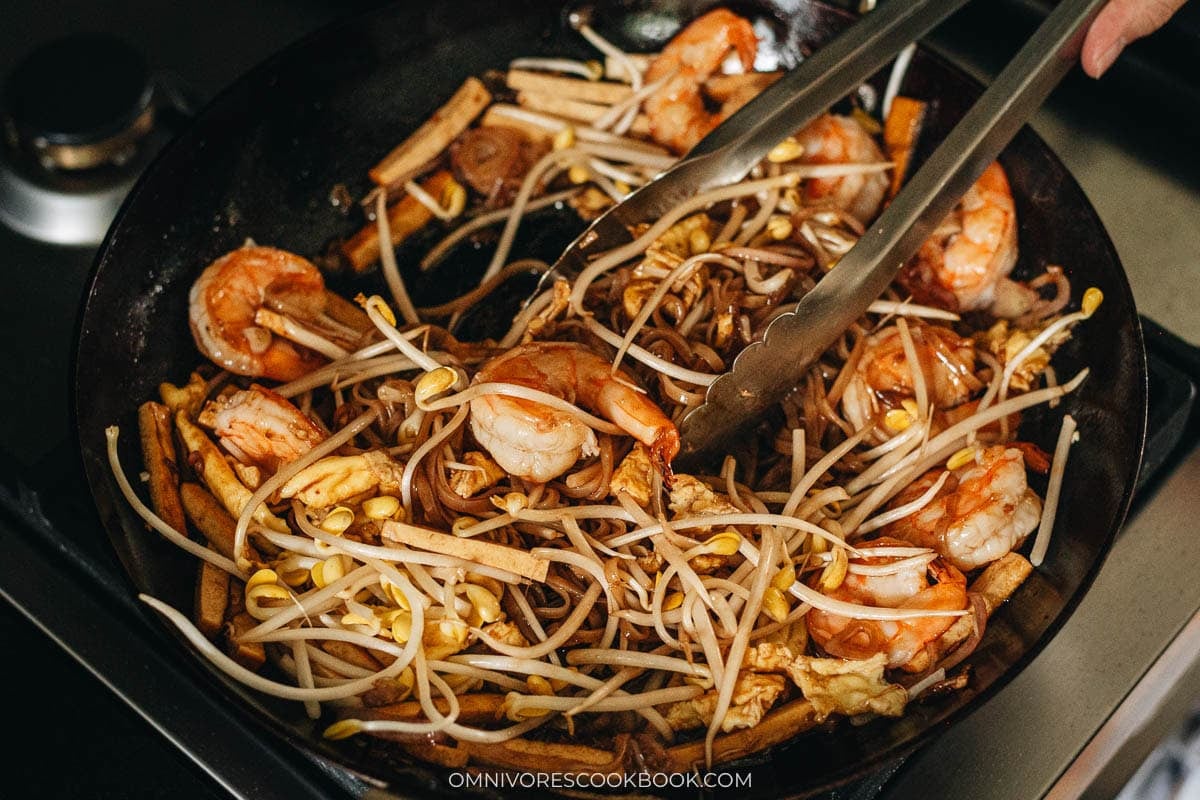
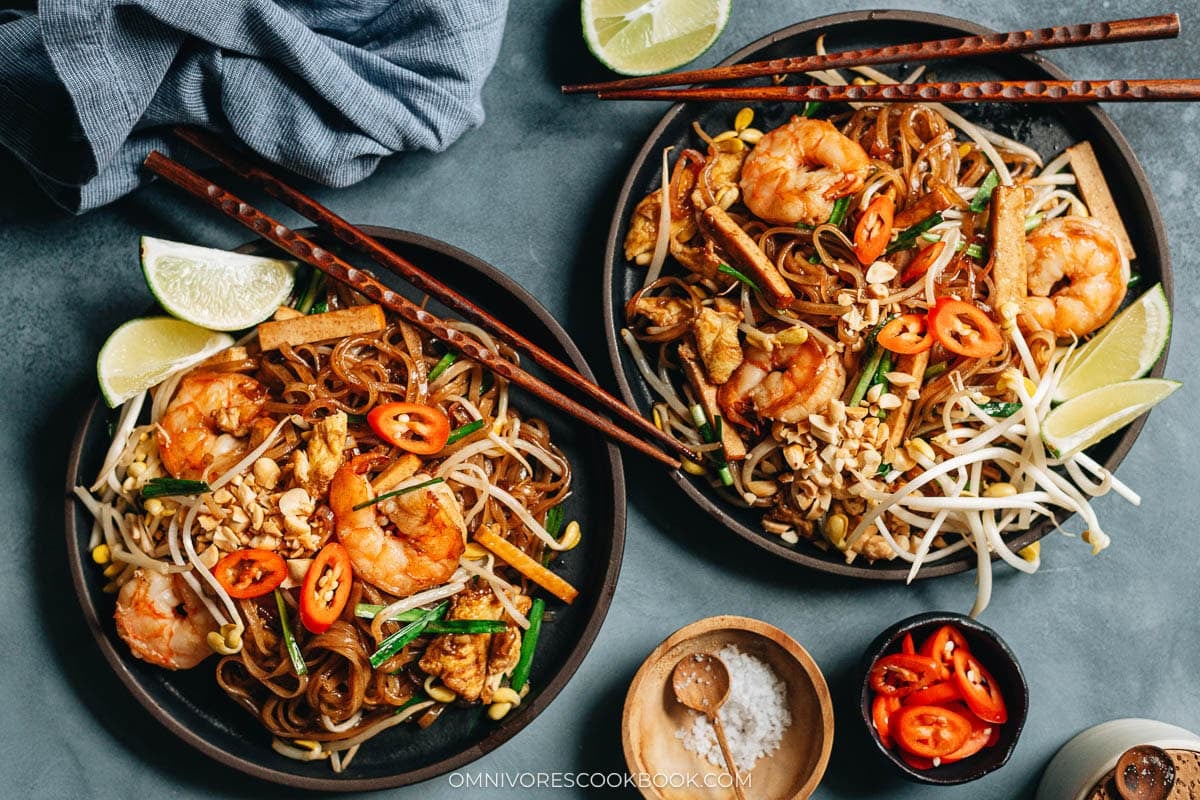
9. Garnish and serve: Plate the pad thai and top with extra bean sprouts, crushed peanuts, and lime wedges. Serve hot as a main dish.
Cooking Notes To Consider
Cold water soak, never hot: Rice noodles have very little starch structure once they get hot, so a hot-water soak pre-cooks them and by the time they meet the sauce they turn to mush. A room-temperature soak rehydrates the noodle slowly and holds its bite through the final toss in the pan.
Pull the shrimp while the middle is still translucent: Shrimp keep cooking from residual heat once they leave the pan, and a shrimp that looks fully opaque on the plate will turn rubbery by the time the noodles come together. I pull them at just set on the outside and let the residual heat plus the final toss finish the middle.
A 12-inch nonstick skillet gives me the most room: Pad thai needs surface area so the noodles touch the pan and pick up the sauce instead of steaming in a pile. A large wok or a 12-inch skillet holds a 4-serving batch in a single layer and lets the aromatics, noodles, and sauce all move around each other. A smaller pan crowds the noodles and I end up with wet gummy strands stuck to the bottom.
Five-spice smoked tofu works too: A reader once asked if the five-spice version of smoked tofu would fight the pad thai flavor. Let me tell you, It does not. The smoky flavor stays mild and the five-spice is subtle enough that the tamarind and fish sauce still run the plate.
Toss the noodles with tongs, not a stiff spatula: Rice noodles soften once they meet the sauce, and a hard spatula chops them into short pieces. Long-handled tongs pick the noodles up from underneath and toss them without breaking them. If I have to use a spatula, I fold rather than stir.
How I like Serving This
I plate shrimp pad Thai onto a wide platter with a mound of extra bean sprouts on the side and a handful of crushed peanuts scattered across the top. If I want one more thing on the table I pull a jar of spicy cucumber salad out of the fridge, or I cook a plate of Chinese broccoli with mushrooms alongside for a hot green side.
When friends come over for a Thai night I turn it into a proper meal. Pad Thai stays at the center as the main, a plate of Thai basil chicken goes down as a second protein so nobody is eating only shrimp, and I start the table with a stack of Thai fish cakes and a little bowl of sweet chili sauce for dipping. For dessert I make mango sticky rice ahead so it is chilling in the fridge when we sit down, and the sweet-coconut finish takes the meal all the way from savory to sweet like a real Thai restaurant night.
Frequently Asked Questions
Can I use fresh rice noodles instead of dried?
I do not recommend it, because the texture will be different. Traditional Pad Thai is made with dried rice noodles, which have a chewier, springier texture after soaking and cooking. Fresh rice noodles are softer and more delicate, and can easily fall apart in this dish. If using fresh noodles, do not soak them. Separate them gently, then add them toward the end of cooking and toss just until heated through and coated with the sauce. Because fresh noodles don’t absorb as much liquid as dried noodles, you may also want to reduce the sauce slightly to prevent the dish from becoming too wet.
Can I use chicken instead of shrimp?
Yes. Thinly sliced chicken breast or thighs both work well. Cook the chicken until just done, then proceed with the recipe as written. You can also substitute tofu or a combination of chicken and shrimp. I also have a chicken Pad Thai recipe for your reference.
Why did my noodles turn mushy?
This usually happens when the noodles were over-soaked or overcooked. The noodles should still have some firmness after soaking, since they continue cooking in the pan. Cooking them too long after adding the sauce can also make them soft.
Want to Save This Recipe?
Enter your email below & we’ll send it to your inbox. Plus get great new recipes from us every week!
Shrimp Pad Thai
Ingredients
Noodle
- 4 oz dried rice noodles , about 1/4” (4 cm)-wide
Sauce
- 3 tablespoons brown sugar (or palm sugar)
- 2 tablespoons tamarind puree (or tamarind paste)
- 2 tablespoons fish sauce
Stir Fry
- 4 tablespoons peanut oil (or vegetable oil)
- 8 oz peeled and deveined shrimp (10 to 12 medium-sized shrimp)
- 2 cloves garlic , minced
- 2 small shallots , sliced (or 1/2 red onion)
- 1 tablespoon dried shrimp (optional)
- 2 eggs , beaten
- 1/2 block fried tofu or baked tofu , cut to 1” (2.5 cm)-long 1/4” (5 mm)-wide pieces
- 10 garlic chives (or 5 green onions) , sliced into 1” (2.5 cm) pieces
- 2 cups bean sprouts , and extra for garnish
- 3 tablespoons peanuts , coarsely chopped
- 1 lime , sliced into wedges
Instructions
- For the noodles: Fully submerge the noodles in room temperature water for 30 to 40 minutes (*Footnote 1), until they are soft enough to wrap around your fingers without breaking apart, but soft enough that you can bite into them. Drain and set aside.
- For the sauce: Combine the sauce ingredients in a small bowl and mix until the sugar is fully dissolved.
- To cook: Add 1 tablespoon of oil to a large skillet (at least 12”) and heat over medium-high heat. Add the shrimp without overlapping. Cook without moving until the bottom turns golden brown. Turn to the other side and cook for 30 seconds or so, until that side is cooked but the inside is still translucent. Transfer to a plate and set aside.
- In the same pan add 1 tablespoon of oil and pour in the beaten eggs. Let cook without moving until the bottom sets, then start to scramble lightly, until the eggs are almost cooked. Transfer the eggs to the plate with the shrimp.
- Pour the remaining 2 tablespoons of oil, the garlic, shallots, and dried shrimp into the same pan. Cook and stir for 30 seconds, until the dried shrimp turn golden.
- Add the noodles. Stir a few times to mix everything together. Pour in the sauce. Cook and stir to mix everything well, 1 minute or so.
- Add the tofu and cook and stir for another minute. Then add the cooked shrimp and eggs back into the pan. Toss everything together and use your spatula to chop up the eggs into smaller pieces.
- Add the garlic chives and bean sprouts. Toss for another 30 seconds, until the vegetables are just wilted. Carefully taste the noodles. If they’re still too tough, add a splash of water and stir to mix well. Cook for another 1 to 2 minutes until the noodles reach your desired texture.
- Garnish with extra bean sprouts, peanuts, and some wedges of lime. Serve hot as a main dish.
Notes
- I found that it’s best to use lukewarm tap water (just a tad warmer than the coldest setting) for the noodles. The noodles will be ready in 30 to 40 minutes without being too soggy or too stiff.
Nutrition

Did you make this recipe?
I’d love to hear how it turned out for you! Please take a moment to leave a 5-star rating ⭐️ and share your thoughts in the comments further down the page. It really helps others discover the recipe too.
Beth Sivak
This was delicious! I made one sub – white miso and soy sauce for the fish sauce because I’m allergic. I also made my own tamarind paste from packaged tamarind. Lots of steps but this recipe is worth it!
Rich B
Love this recipe! It came together quickly and came out perfectly.
Peter Verbeke
1/4″ = 6 mm
mari
Making this soon! I was so excited: i thought i had the smoked tofu, but it’s 5 spice, sigh. Also, I have the NOT papery dried shrimps, can I use these here?
Maggie Zhu
You can totally skip the dried shrimp without impacting the flavor much. Also, I wouldn’t mind using the five spice smoked tofu at all. Most of the time they are just mild and smoky, which wouldn’t conflict with such a rich sauce in this dish. Happy cooking!