
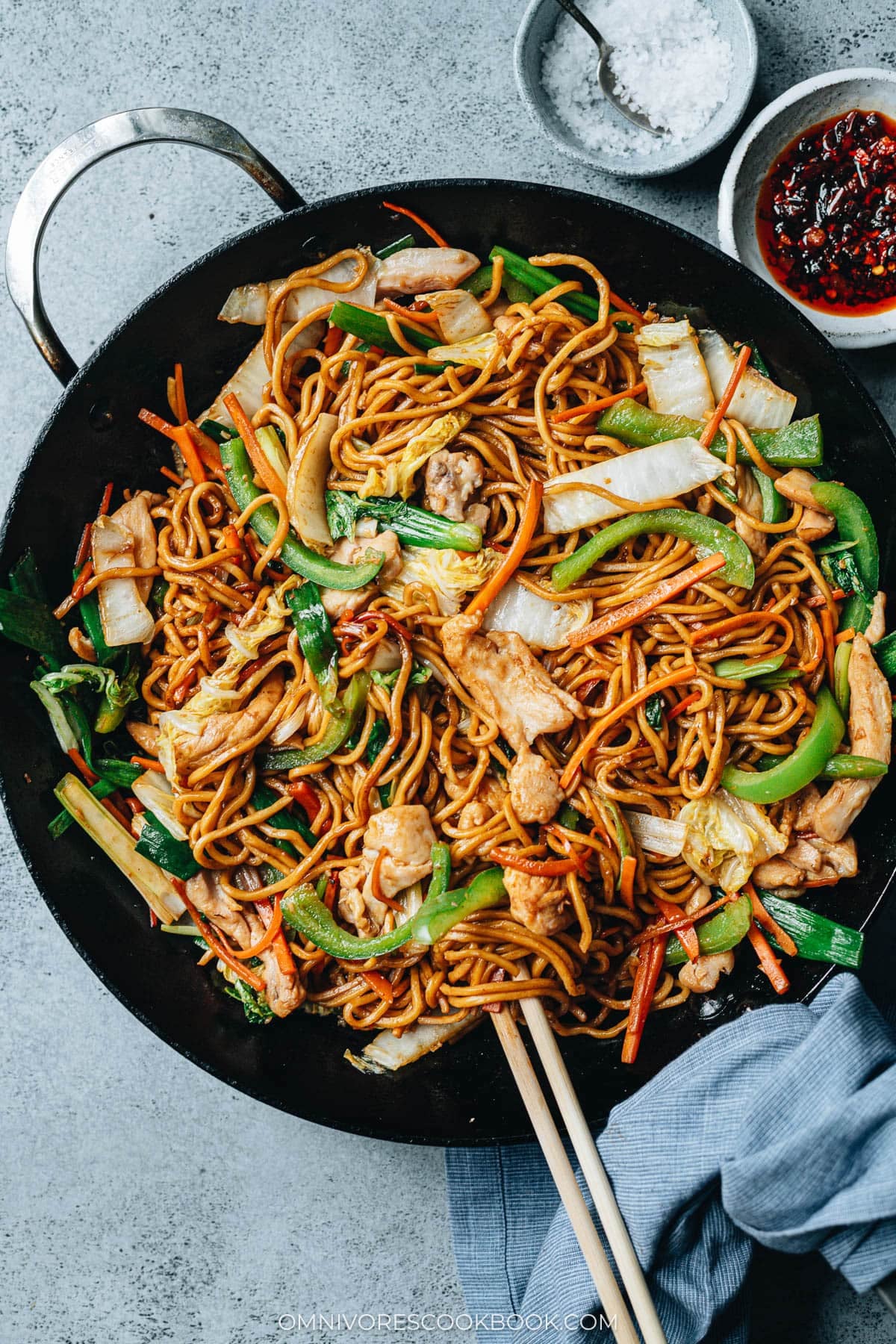
Chicken lo mein is one of those comfort foods like pizza and burgers, that you might find yourself craving on any occasion. No matter whether it’s a busy Monday night, or when you’ve just come home after a trip, or are feeling cozy and want to stay in and watch TV, you might want to reach for that small box of Chinese takeout that is loaded with flavorful noodles and tender chicken. I’m not surprised that many people associate chicken lo mein with Chinese takeout. It’s definitely one of the iconic dishes of Chinese cooking.
This might be a lot of information to take in. But trust me, if you simply follow my recipe and try this dish once, you’ll be impressed at the results. I boil the noodles, marinate the chicken, mix the sauce, and stir fry everything with napa cabbage, carrot, pepper, ginger, and garlic, so dinner moves fast once the pan is hot.
What I love most about this version is how practical it is. I do not need a wok, I can load it with plenty of vegetables, and I still get the chewy noodles and glossy brown sauce I want from a really good lo mein. I hope you like this one and happy cooking!
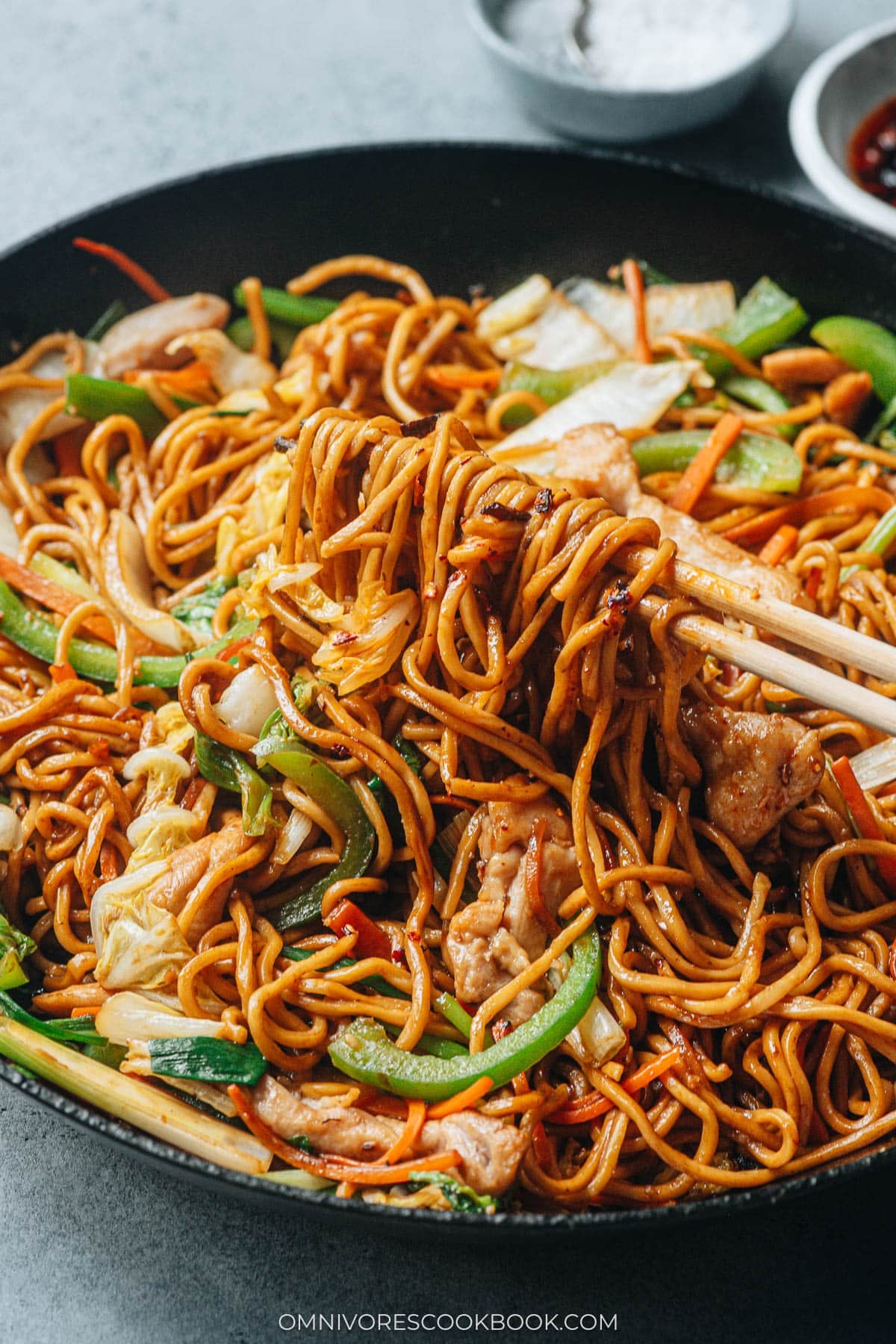
Ingredients
I love how easy it is to make this Chicken Lo Mein recipe using simple ingredients. Below I explain in details everything I use:
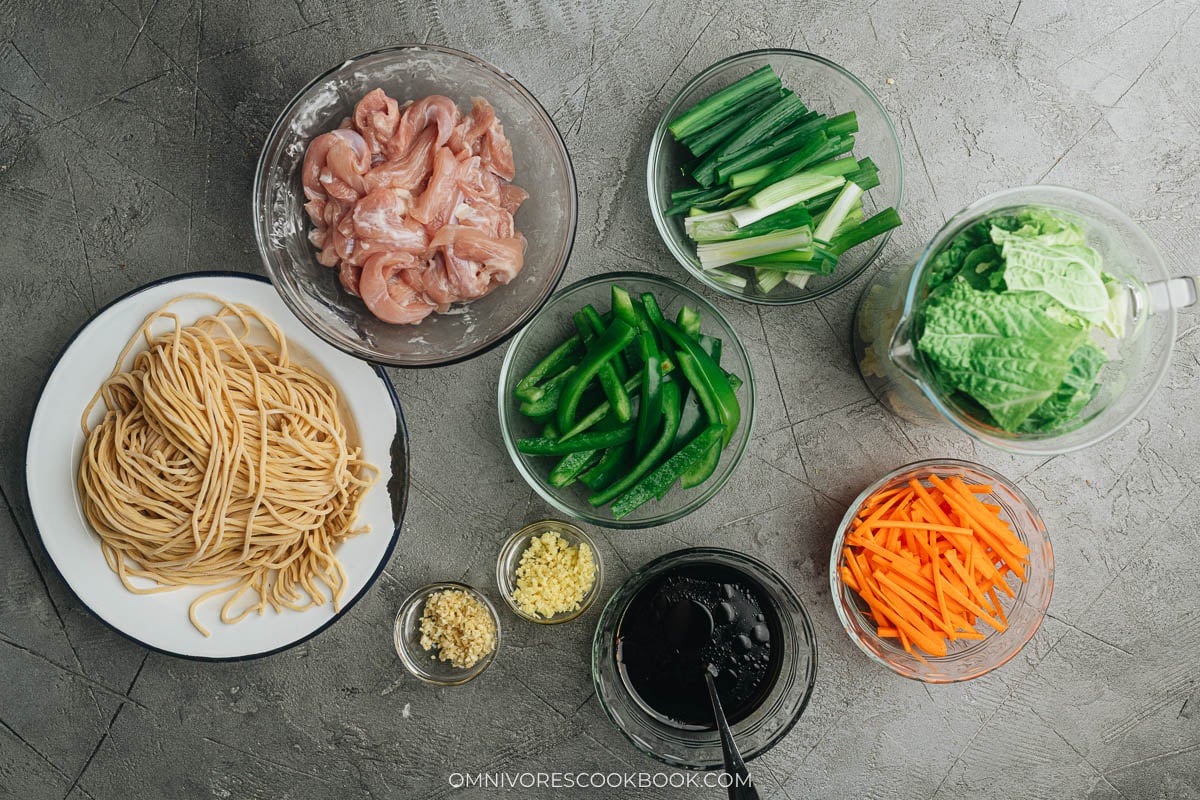
Noodles
The biggest difference between chicken chow mein and chicken lo mein is the type of noodles used. Chicken chow mein uses thin chow mein noodles that create a crunchy crispy texture once fried in oil. Lo mein uses thick egg noodles that yield a chewy texture once cooked.
The best noodles for chicken lo mein are fresh lo mein noodles. You can find them at Chinese markets or large Asian markets such as H Mart. They are usually stored in the refrigerated or freezer section.
Alternatively, I’ve found that udon noodles and thicker dried wheat noodles also work in this dish. However, I highly recommend sourcing fresh lo mein noodles if you want to replicate the restaurant experience. Unlike dried noodles, fresh lo mein noodles yield the satisfying chewy texture that is the highlight of the dish.
For the marinade
Always always marinate your chicken before cooking. It only takes a minute to prepare and 10 minutes to marinate. But it makes a big difference. Your chicken will end up juicy and more tender and bursting with flavor. The cornstarch not only tenderizes the chicken, but it also protects it from overcooking in the hot pan. It’s an important practice in Chinese cooking that I never skip.
Vegetables
I love adding tons of vegetables to my chicken lo mein, as they give the dish a delightful texture and make your meal more balanced. In this recipe I used napa cabbage, carrot and pepper. You can also replace them with other vegetables you might have on hand.
The rule of thumb is to choose vegetables that have different textures and colors.
Here are some alternative vegetables to use in chicken lo mein:
- Cabbage, baby bok choy, spinach, Chinese broccoli (to replace napa cabbage)
- Bamboo shoot, water chestnuts, hot peppers (to replace green pepper)
- Onion, zucchini, mushrooms, bean sprouts (to replace carrot)
Note, the cooking time of the different veggies varies. As a rule of thumb, hard vegetables such as carrots, water chestnuts and carrots take longer to cook (3 to 4 minutes). Spinach and bean sprouts take the shortest time to cook, as little as 1 minute.
If you’re not sure about the proper order to add the veggies, cook them individually until almost done, then add them back into the pan later on. This way, your veggies will always cook perfectly and maintain their vibrant colors.
How to Make
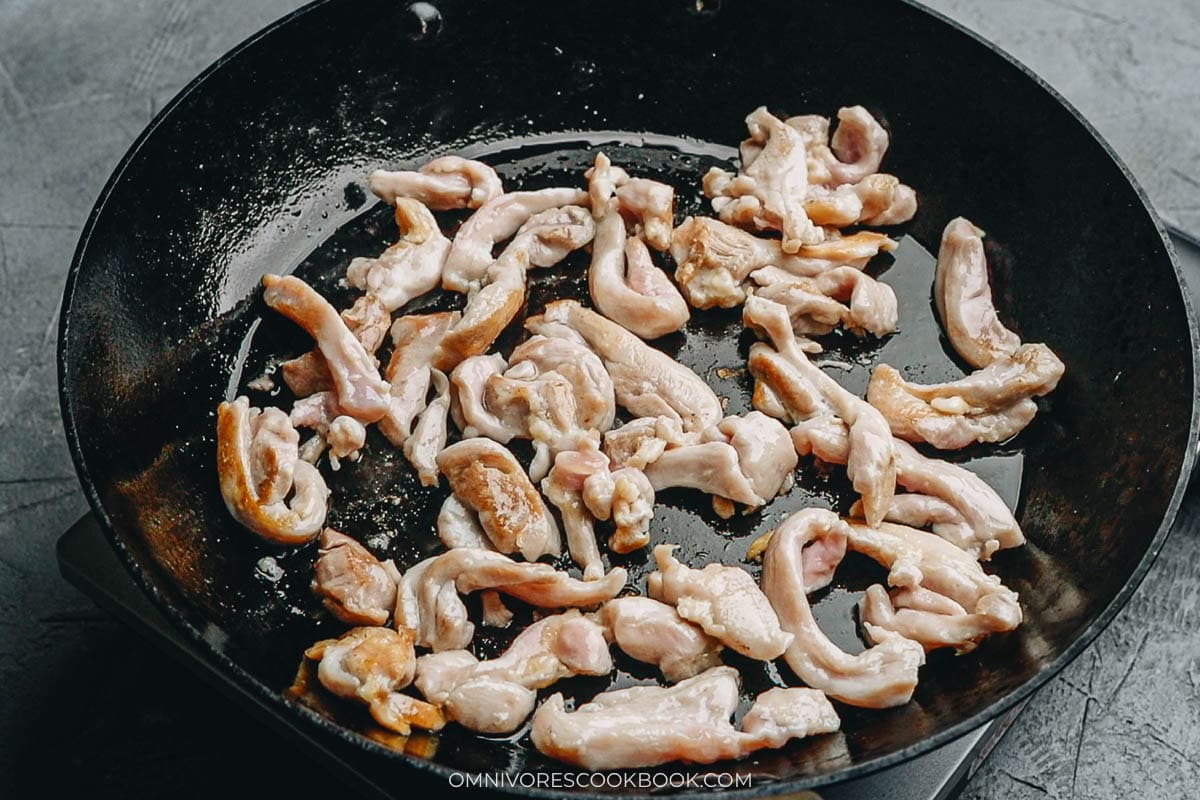
1. Cook the chicken: I heat half of the oil in a large nonstick skillet over medium high heat until hot. I spread the marinated chicken in the pan and cook it for 30 to 45 seconds without touching, until the bottom turns lightly golden. I flip it, cook the other side until just done, then transfer it to a plate.
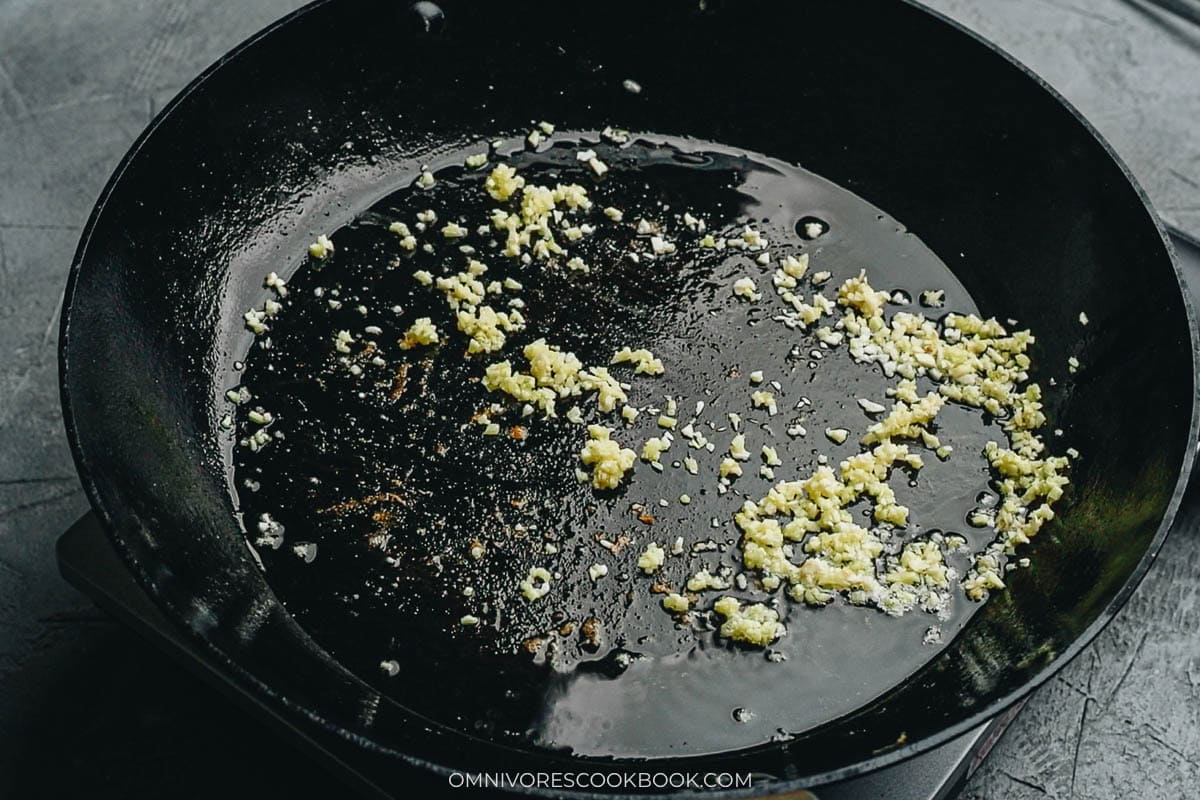
2. Cook the aromatics: I add the rest of the oil, then cook the ginger, garlic, and white part of the green onion.
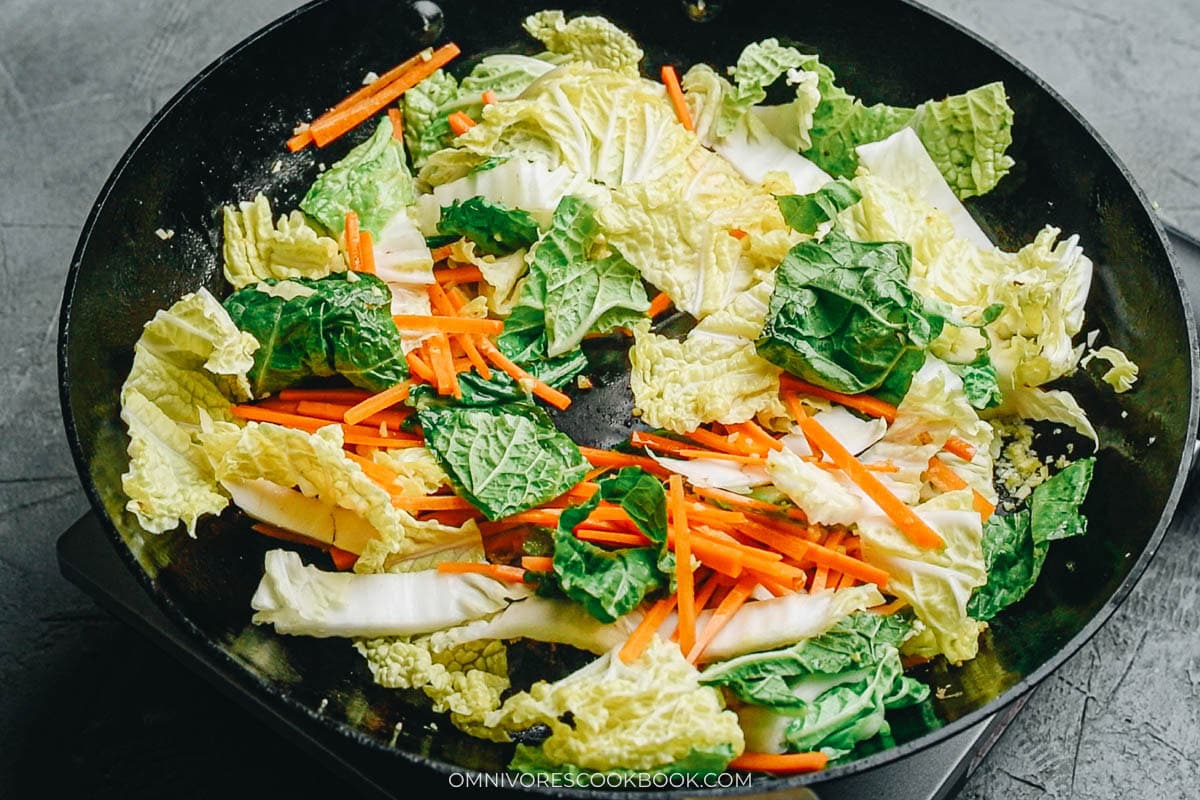
3. Add the vegetables: I add the carrot and napa cabbage and stir fry until the vegetables just start to soften.
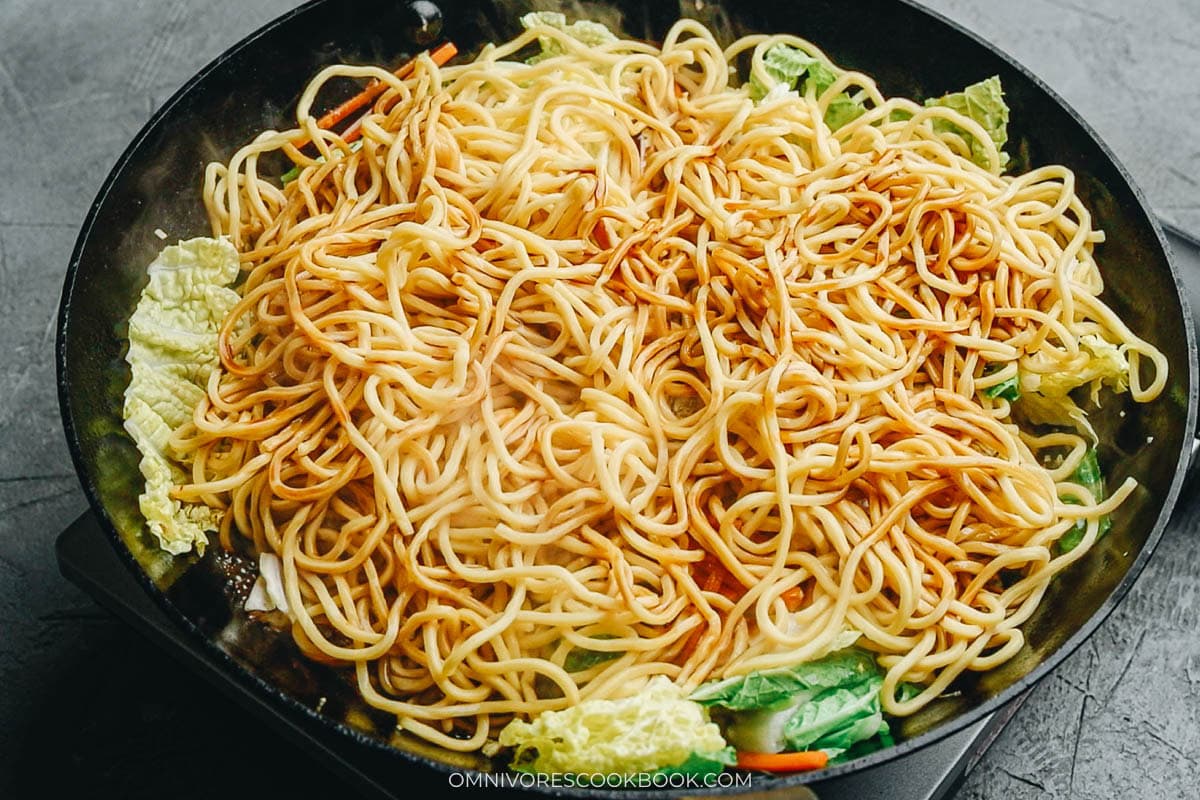
4. Add the noodles and sauce: I add the noodles and pour in the sauce. I toss a few times so everything starts mixing together.
5. Finish the lo mein: I add the bell pepper and the green part of the green onion, then toss until the sauce is absorbed.
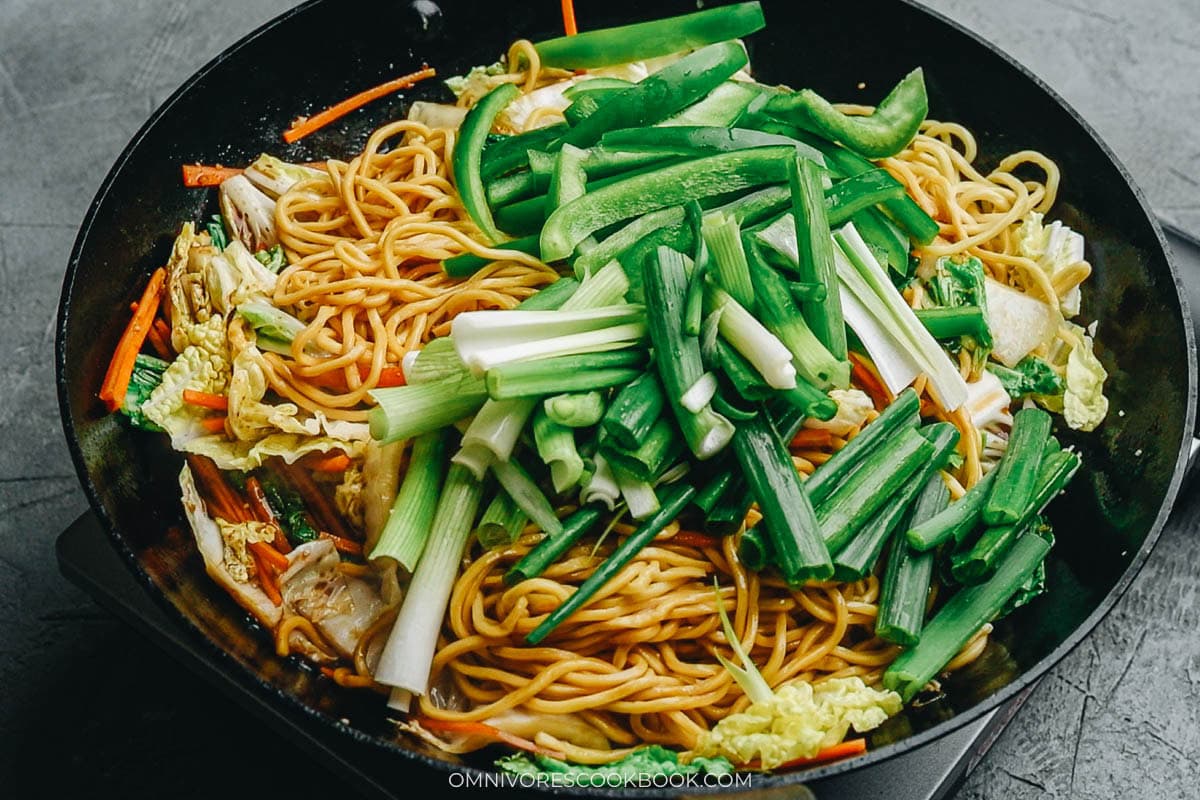
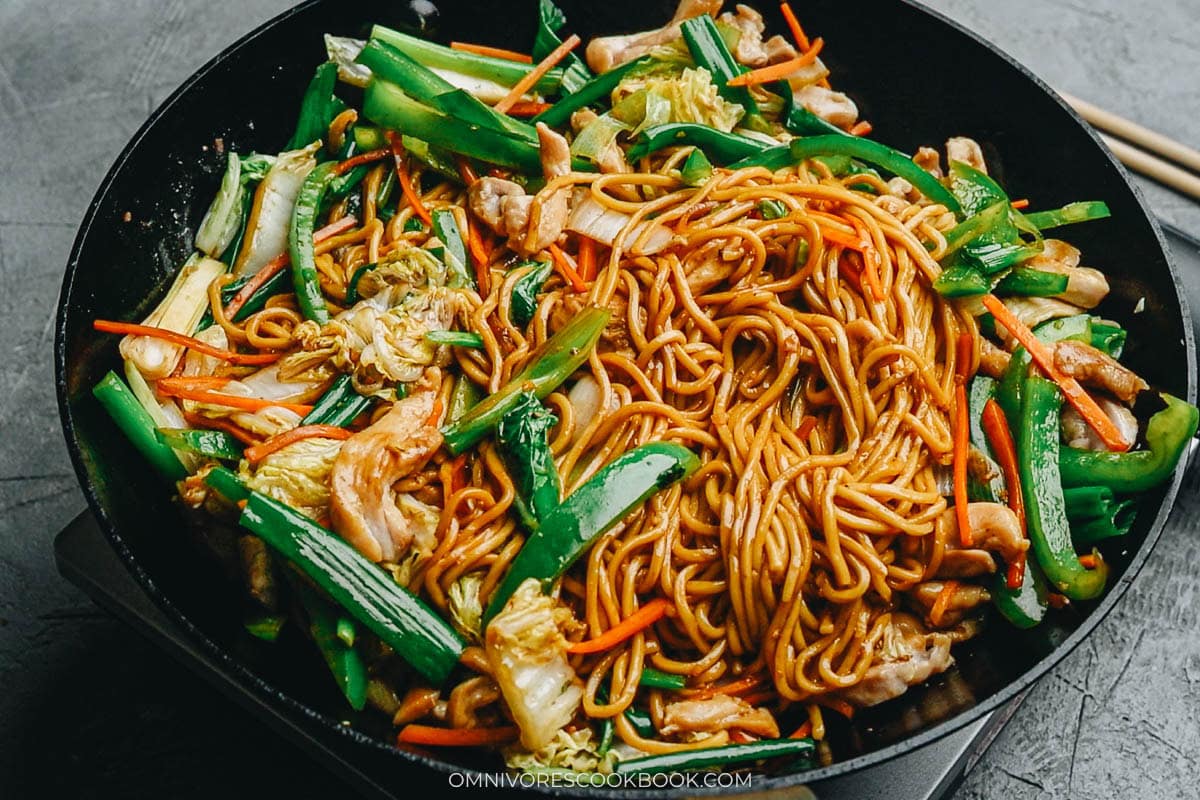
6. Serve: I return the cooked chicken to the pan, toss again, and serve it hot.
My Cooking Tips
Use fresh lo mein noodles: I really prefer them here because the chewy texture is one of the best parts of the dish.
Always marinate the chicken: I never skip this step, even when I am tired and hungry. It only takes a minute to set up, and it gives me chicken that is much juicier and more tender.
Keep the pepper a little crisp: I add the bell pepper near the end because I like the little bit of crunch it adds to the noodles. If I want softer pepper, I just move it earlier in the cooking order.
Prep everything before the pan gets hot: I like having the noodles cooked, the chicken marinated, the sauce mixed, and the vegetables chopped before I start. Lo mein moves quickly, and dinner is much easier when I do not have to stop in the middle.
Do not crowd the pan: This is one of the biggest things I watch for. If the pan gets too full, I lose the stir fry texture and everything gets a little soggy instead.
How to serve
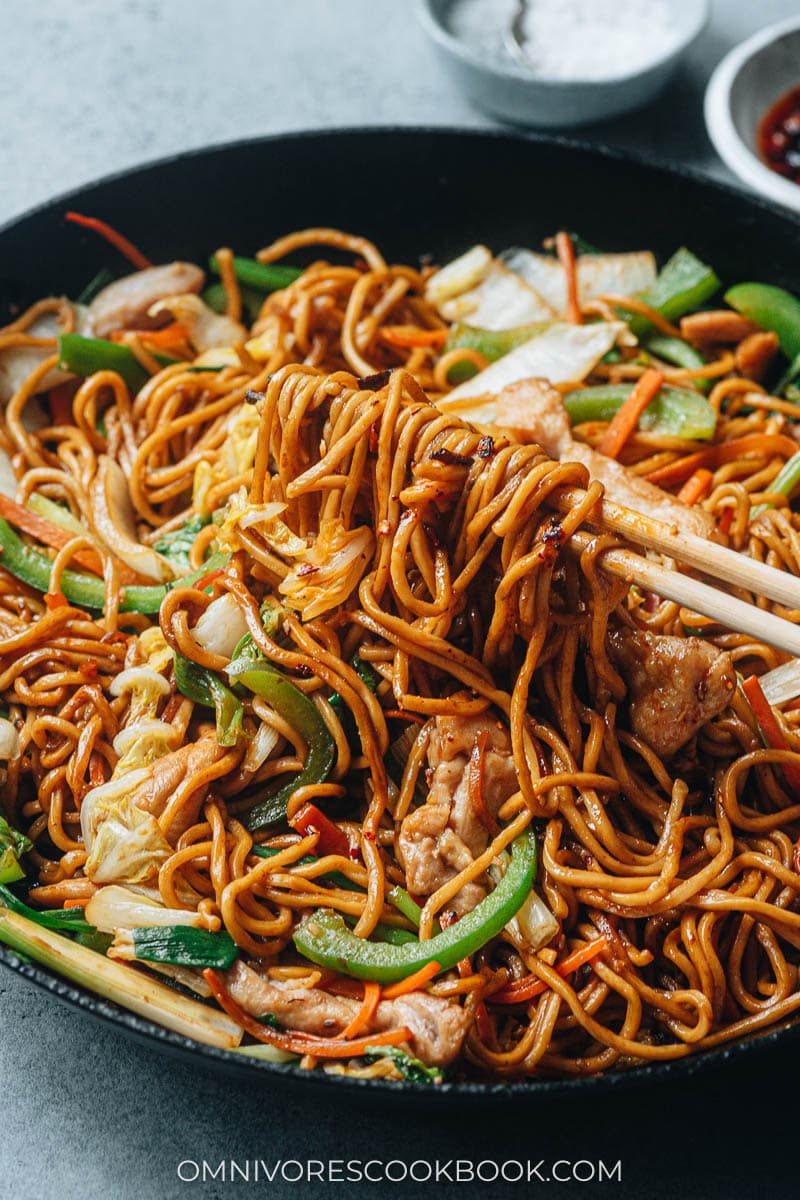
I love serving chicken lo mein as the main dish, because it already gives me noodles, protein, and vegetables all in one pan. On busy nights, I put it straight on the table and let that be dinner, because nobody in my house complains when a big plate of noodles shows up. My husband always makes a quick spicy cucumber salad on the side, and if we have leftover char siu bao from the night before, why not add those to the table too?
Frequently Ask Questions
What NOT to do when making chicken lo mein?
The biggest mistake when making lo mein is to crowd the pan with too many ingredients. When you do this, the pan will take a long time to heat up, so all your food will be steamed instead of seared. The dish will end up watery, soggy, and generally lacking in flavor.
The recipe below fills up a large 12.5” (32 cm) frying pan. If you want to tweak the recipe, make sure not to use too many ingredients that crow the pan.
Why you don’t need a wok?
I expanded on this topic in my post Wok vs. Stir Fry Pan and you can find more information there. But, long story short, you can make a delicious chicken lo mein without a wok as long as you use a lot of aromatics (fresh ginger and garlic), a great lo mein sauce, the correct type of noodles, and a pan that’s hot enough. You can achieve all of these by following my recipe below with a large nonstick skillet or a carbon steel pan. In fact, if you have an electric stove or induction stove at home, a skillet will heat up better than a wok because it has a larger contact area with your stove. I toss my noodles using a pair of tongs to prevent the ingredients from flying out of the pan.
How do I store leftovers?
I store leftovers in an airtight container in the refrigerator for up to 3 days. I like reheating them in a pan when I can, because the noodles loosen up better that way, and this recipe also makes a very good leftover lunch.
Want to Save This Recipe?
Enter your email below & we’ll send it to your inbox. Plus get great new recipes from us every week!
Watch video
Chicken Lo Mein (Restaurant Style Without A Wok)
Ingredients
- 10 oz fresh lo mein noodles (or 6 oz / 170 g dried lo mein noodles)
Marinade
- 8 oz boneless skinless chicken thigh , cut into 1/4-inch (5-mm) slices (or breast)
- 1/2 tablespoon Shaoxing wine
- 1 teaspoon cornstarch
- 1/4 teaspoon salt
Sauce
- 1/4 cup chicken broth
- 2 tablespoons oyster sauce
- 2 tablespoons Shaoxing wine (or dry sherry)
- 2 teaspoons dark soy sauce (or soy sauce) (*Footnote 1)
- 1 teaspoon sesame oil
- 2 teaspoons sugar
Stir fry
- 2 tablespoons peanut oil (or vegetable oil)
- 1 tablespoon minced ginger
- 2 cloves garlic , minced
- 4 cups chopped napa cabbage (*Footnote 2)
- 1 carrot , julienned (yield about 1 cup once cut)
- 4 green onions , cut into 2” (5 cm) long pieces, white and green divided
- 1 bell pepper , cut to thin strips (or sweet pepper)
Instructions
- If using dried noodles, boil the noodles according to package instructions minus 1 minute, until al dente. If using fresh lo mein noodles, boil for 1 minute total, until al dente. Rinse with tap water, drain, and set aside.
- Combine the chicken and all the marinade ingredients in a medium-sized bowl. Mix well and let marinate for 10 minutes.
- Whisk all the sauce ingredients together in a medium-sized bowl.
- Heat 1 tablespoon of oil in a large nonstick skillet over medium-high heat until hot. Spread the chicken in the pan. Cook for 30 to 45 seconds without touching, until the bottom turns slightly golden. Flip to cook the other side for 30 to 45 seconds, stirring occasionally, until the chicken is just cooked through. Transfer the chicken to a plate.
- Pour in the remaining 1 tablespoon of oil and the ginger, garlic and green onion white part. Add carrot and napa cabbage. Cook and stir until the veggies just start to turn soft, 1 minute or so. (*Footnote 3)
- Add the noodles and pour in the sauce. Toss a few times to mix everything.
- Add the pepper and green onion green part. Toss to mix everything together well, until the sauce is absorbed, 1 to 2 minutes. Return the cooked chicken to the pan and toss again to mix well. Transfer everything to serving plates and serve hot as a main dish.
Notes
- Dark soy sauce has a caramel taste and a thicker texture than soy sauce. It gives the dish a light sweet taste and adds a beautiful brown color to the sauce. You can use soy sauce as a replacement, but I highly recommend using dark soy sauce if you cook this dish often.
- To cut the napa cabbage, I like to slice the white part into small bite-size pieces (and into thin, even strips if the white part is extra thick), and chop the leafy part into large bite-sized pieces. So the whites and greens cook at the same speed. The greens will also shrink a lot, so I like to keep the pieces larger so they have a nice texture once cooked.
- I like to undercook my peppers and keep them extra crisp. If you prefer a tender texture, add them after you cook the napa cabbage and carrot. Give it a quick 30-second stir before adding the noodles.
Nutrition

Did you make this recipe?
I’d love to hear how it turned out for you! Please take a moment to leave a 5-star rating ⭐️ and share your thoughts in the comments further down the page. It really helps others discover the recipe too.
Nancy
Another absolutely delicious recipe from Maggie. I picked up all of the pantry recommendations, (soy sauce, oyster sauce, etc) from the very handy pantry list from a local Asian market, I’ve tried 4 different recipes so far and they all have been so great. It’s as good as take out from a reputable Chinese restaurant. Made the Chicken Lo Mein yesterday, and as I inhale the left overs for lunch today, I felt the need to share how good this was. Thank you for sharing your recipes! 🙂
Nina
Maggie, the recipe mentions adding the green onions in two different places (once with the aromatics and once with the bell pepper). Should they be divided?
Maggie Zhu
Sorry for the confusion! Yes, you should add the white part first, then finish up with the greens. I have updated the recipe to reflect the correct wording.
Nancy J
Excellent recipe! Easy to follow directions. It was authentic and delicious. I omitted the sugar and was fortunate to have all of the other ingredients…..will make it for friends next time!
Donna
Great flavor.
Happy Shan
I made this last night after realizing I had all the sauce and stir fry ingredients, and it was perfect! This is the first recipe I’ve tried from your sight, though I browse it all the time. I didn’t use chicken, I subbed in some leftover five spice pork that I had made, but otherwise I followed the recipe as written and, wow, this is going to be my new go-to lo mein recipe from now on. Simple, super fast, and so delicious that I was eating the small amount of leftovers straight out of the pan afterward. Now it’s time to work my way through all your other noodle recipes, thanks Maggie!
Mabeline Gidez
I made this for dinner and it was so good! Better than my favorite Chinese sit down restaurant. I didn’t add any peppers or cabbage. But I did add shitake mushrooms, bamboo shoots, water chestnuts, and baby corn to your recipe. I will definitely add this to my recipe list. Thank you!!!
Sal
I have made many of your recipes but commenting probably first time. Made this and it was amazing, just like take out. And I didn’t have the right cabbage and green pepper so I expect it to be even better- unbeatable. Your site is my goto for Chinese. I love the photography, the what to do and not to do and the steps. Thank you!!
Jackie
Love it! I didn’t have all the ingredients and this was still delish! I can imagine the next time when I do and it is for a family dinner for all to try!
Mely
This was really yummy only thing is I’m not into cooking with alcohol so I wanted to ask if I can substitute the shoaxing wine for something else like more chicken stock or could I simply omit the wine part?
Maggie Zhu
You can replace the wine with chicken broth. Glad to hear you like the recipe 🙂
Renaye
This was a great recipe! I did 8 servings (served 2 bowls for 3 people each and left overs for 2 bowls . I made some substitutions, I didn’t have Shaoxing Wine so I used Apple Juice and I didn’t have Oster Sauce so I used Hoisin Sauce, I went a little extra on the Hoisin & it tasted so good! I also used Ground Ginger powder (No fresh Ginger on hand) but it still tasted like some delicious take out, toasted the Cooked Lo Mein noodles on my Wok so it didn’t get mushy before adding the sauce and cooked the meat on each side for 40 seconds in a separate pan to get it charred on each side. Thank you for providing this recipe for me and my family. It’s nice to serve my family a great meal and was inexpensive too. Happy Holidays!!
Nanny Wonka
BEST RECIPE EVER! When the garlic & ginger hit the hot oil it’s intoxicating! The flavors are absolute perfection with the ideal sweet/salty balance. This was so fun to make and my house smells divine! I can’t believe such little sauce can pack such flavor !!
Yvonne
Delicious! I made this pretty much as in the recipe. I used chicken breast and shredded cabbage (leftover from your recipe for moo shu pork (yum) that I made a few days ago) and added a baby bok choy.
I’m also a fan of your Chinese Curried Chicken, which I make often. I love your recipes. Keep them coming.