
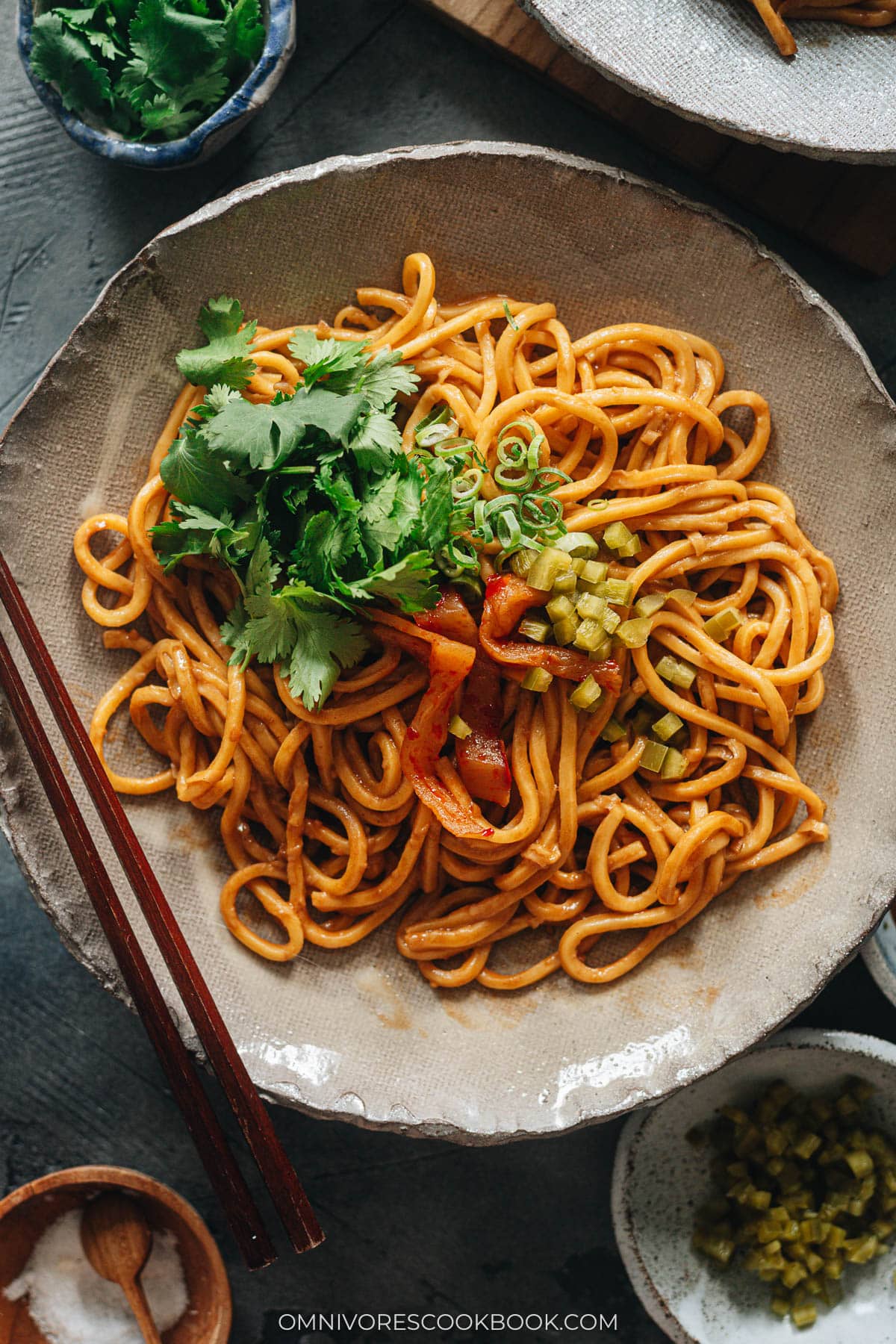
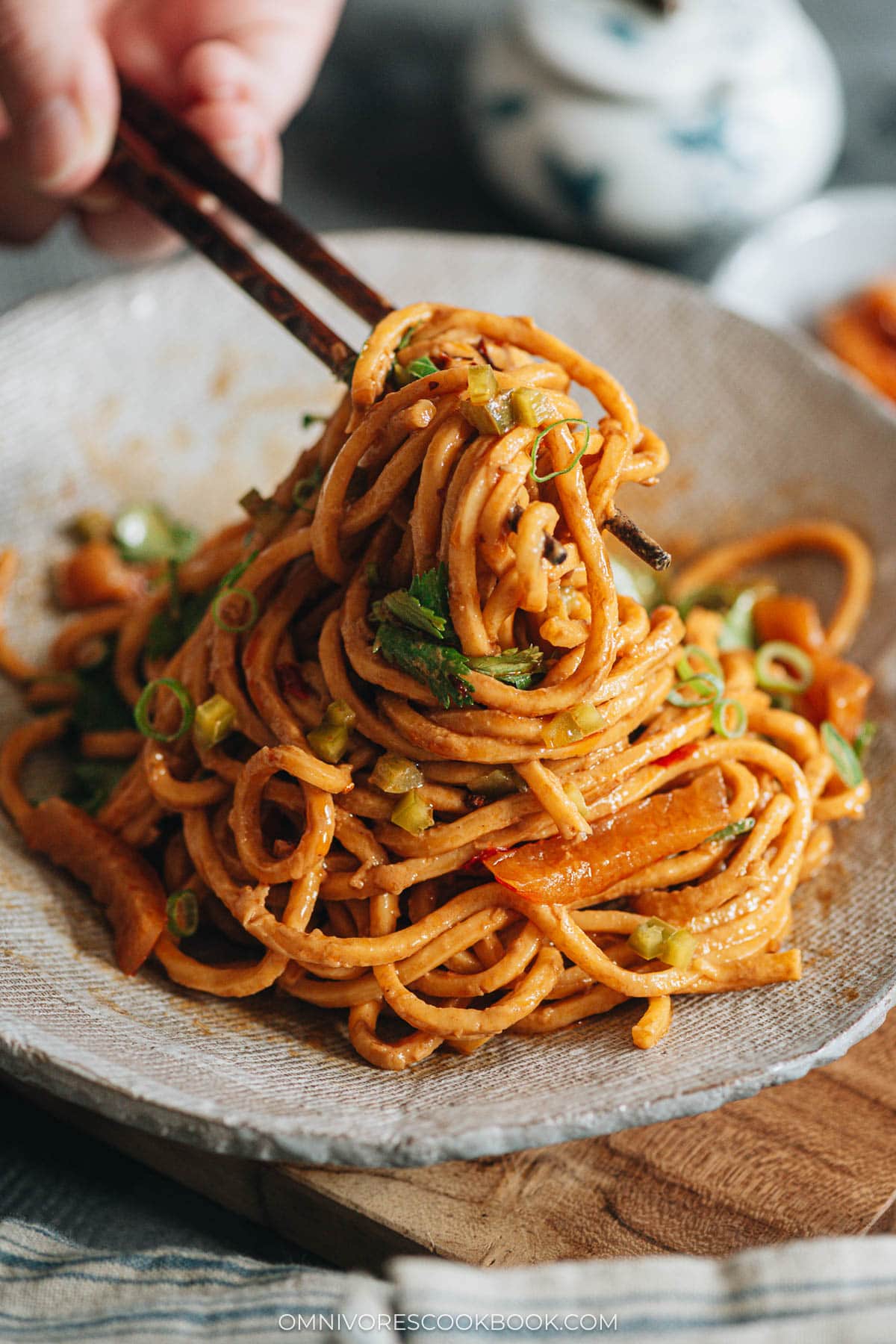
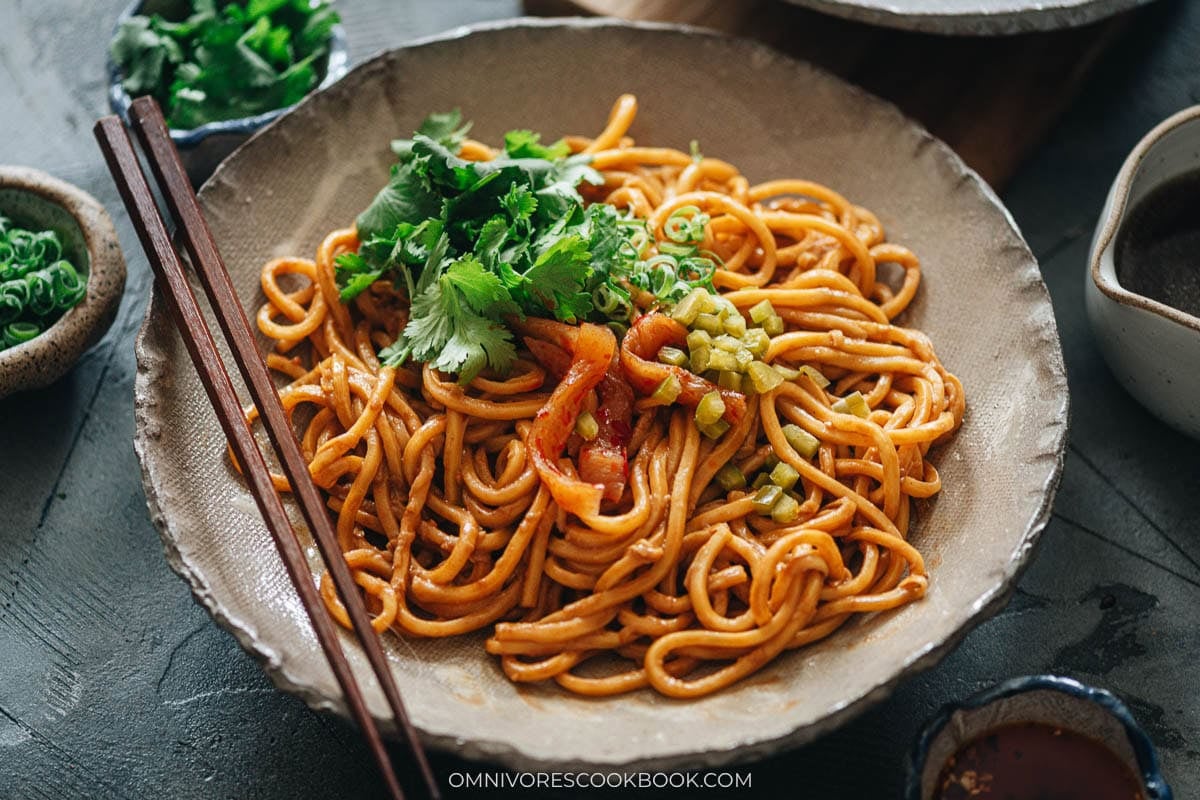
Re gan mian (热干面) is one of the 10 most famous noodle dishes in China, originally from Hubei province where street vendors serve it as a breakfast staple. The noodles are tossed in a thick sesame paste sauce and a fragrant broth loaded with warm spices, then topped with pickles and chili oil for a dish that is saucy despite the name “dry.”
I fell in love with hot dry noodles after watching vendors in Wuhan assemble bowls at lightning speed, layering sauce, broth, and pickles in seconds. Much like the way they serve Dan Dan noodles in Sichuan. I went with the brothy version for my recipe because it keeps the noodles saucy even after they cool down, and the master broth adds so much depth which I love. The best part is that I can make the sauce and broth ahead and assemble a bowl whenever I want one.
I have to admit that hot dry noodles have become a regular in my house because they are ready in just over 30 minutes and that’s a win when you are mom and running a blog at the same time. My colleagues at work started requesting them after I brought leftovers for lunch one week. So I recommend you give these hot dry noodles a try at home and discover why this dish has been a breakfast favorite across China for generations.
Ingredients
Everything comes together from a few components: the noodles, a master broth, a sesame sauce, and your choice of toppings.
Noodles
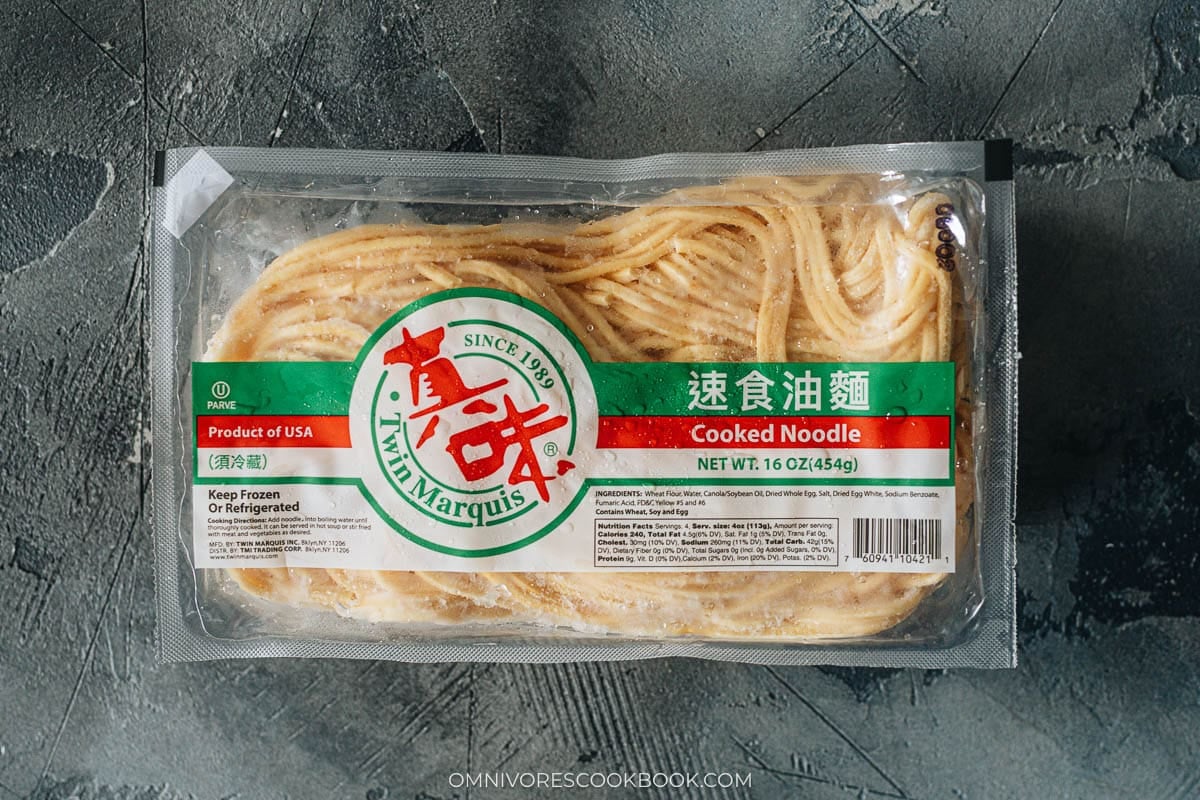
I use fresh alkaline noodles, sometimes labeled “Cooked Noodle” or You Mian (油面) at Chinese markets. If you cannot find the “Cooked Noodle”, ramen noodles are a good alternative. They are alkaline noodles in a thinner form. Whole Foods even sells fresh ramen these days, so you can skip a run to the Asian market.
I have tried using simply wheat noodle or use the thin form of my homemade hand pulled noodles, both work great too.
Toppings
Pickled radish is my favorite for crunch and spice, but pickled mustard stem or your own favorite pickles work too. Sliced green onions, cilantro, and a drizzle of homemade chili oil finish the bowl.
In the picture below, I show you my favorite pickles:
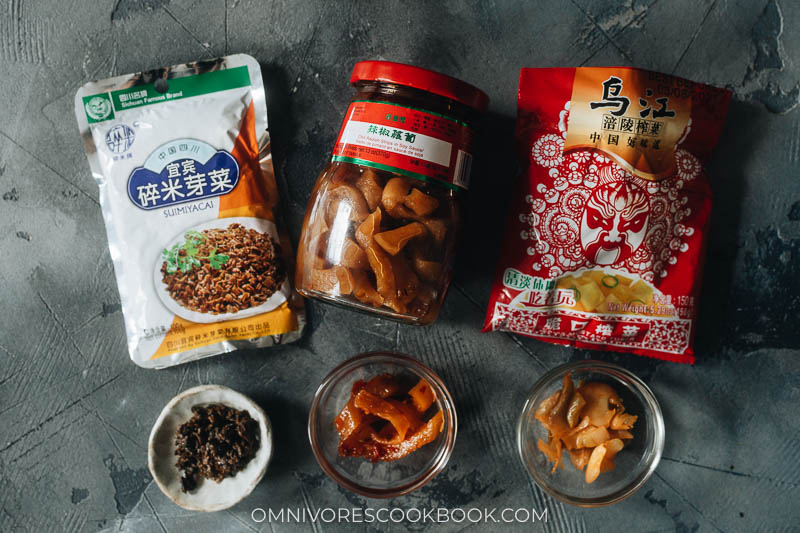
- Sui Mi Ya Cai (left): you might have it on hand if you’ve made Dan Dan noodles from my blog. It’s not the traditional pickle to use in this dish but you can use a small spoon of it to boost the flavor.
- Spicy pickled radish (middle): it’s my favorite. These radish pickles are salty, sweet, spicy, with a nice crunch. Traditionally used in hot dry noodles, I highly recommend them.
- Zha Cai (right): a common mustard stem pickle. It’s salty and sweet. Also not used in this dish traditionally but it might be easier to find.
Sesame Sauce
Chinese sesame paste is the foundation, thinned out with garlic water made by steeping minced garlic in hot water to release the fragrance without the raw bite. I mix in sesame oil, light soy sauce, dark soy sauce, Chinkiang vinegar, sugar, white pepper, and five spice powder for a rich, nutty sauce that coats every strand.
Master Broth
The broth is built from green onion whites, ginger, garlic, star anise, cloves, cinnamon, and Sichuan peppercorns sauteed in oil, then simmered with Shaoxing wine, soy sauce, sugar, and beef stock. This is the same master sauce base that appears across traditional Chinese cooking, and it adds a layer of savory depth that keeps the noodles from drying out.
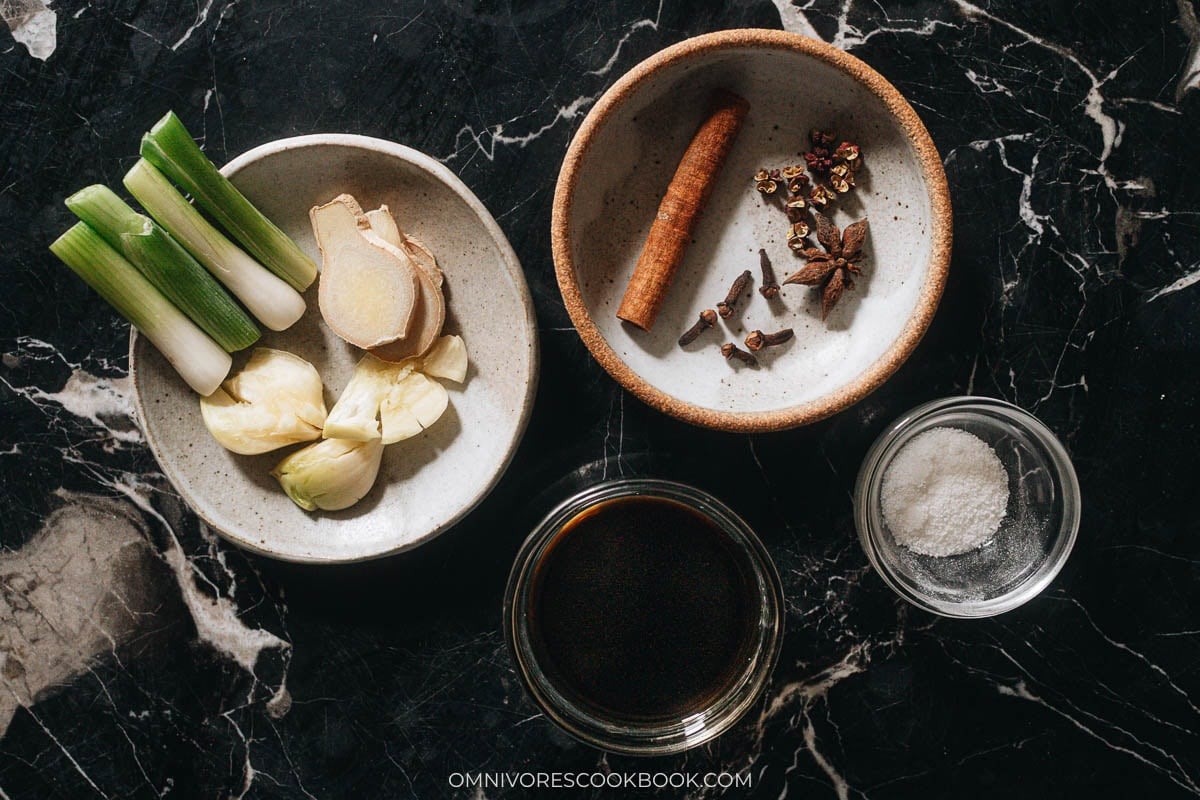
How to Make
1. Make the garlic water: Combine minced garlic and hot water in a small bowl. Set aside to steep while you prepare the broth.
2. Cook the master broth: Heat vegetable oil in a small pot over medium heat. Add the green onion whites, ginger, and garlic. Saute until fragrant, about 1 minute. Add the star anise, cloves, cinnamon, and Sichuan peppercorns and cook for another 30 seconds. Pour in the Shaoxing wine, soy sauce, sugar, and beef stock. Bring to a boil, reduce to a simmer, and cook for 10 to 15 minutes. Strain and discard the aromatics.
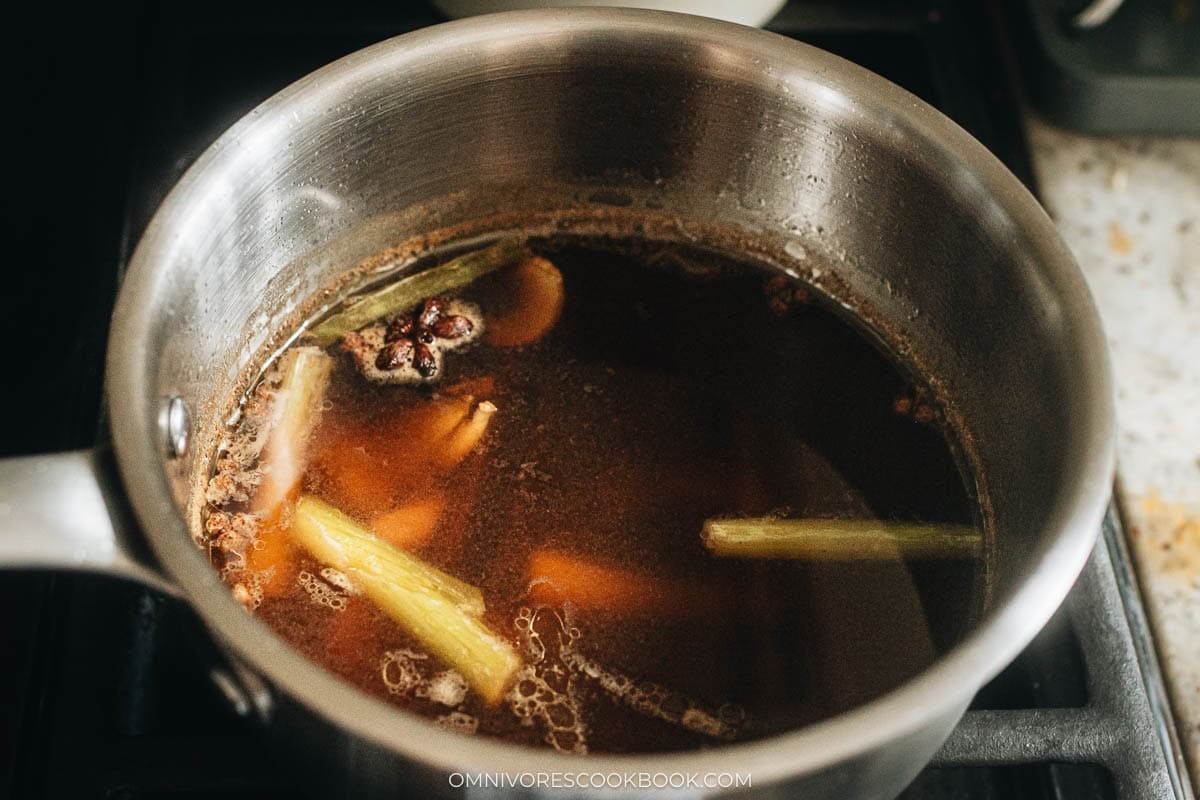
3. Mix the sesame sauce: Slowly incorporate the garlic water into the sesame paste until smooth. Add the sesame oil, light soy sauce, dark soy sauce, Chinkiang vinegar, sugar, white pepper, and five spice powder. Stir until everything is well combined.
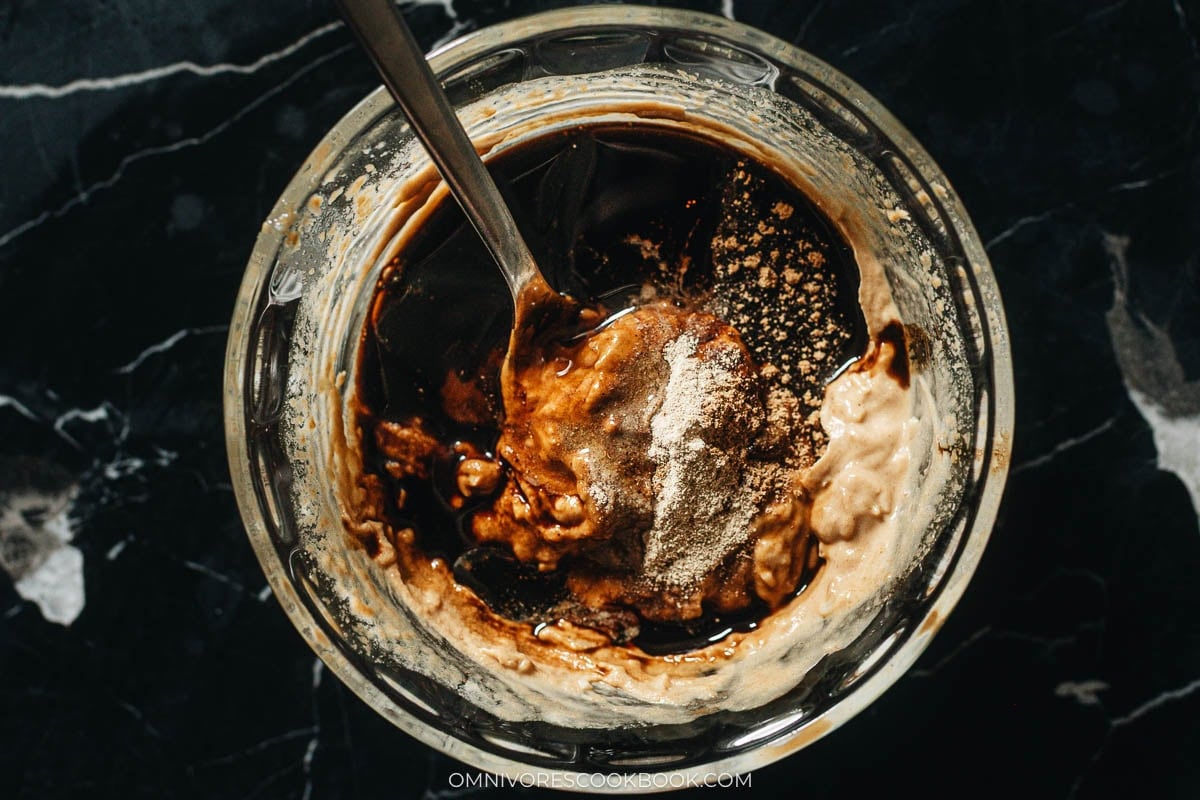
4. Prepare the noodles: Bring a pot of water to a boil. If using cooked alkaline noodles, quickly rinse them in the hot water to revive the texture, then drain. If using fresh ramen or dried wheat noodles, cook according to the package instructions and drain. Divide the noodles between 2 bowls.
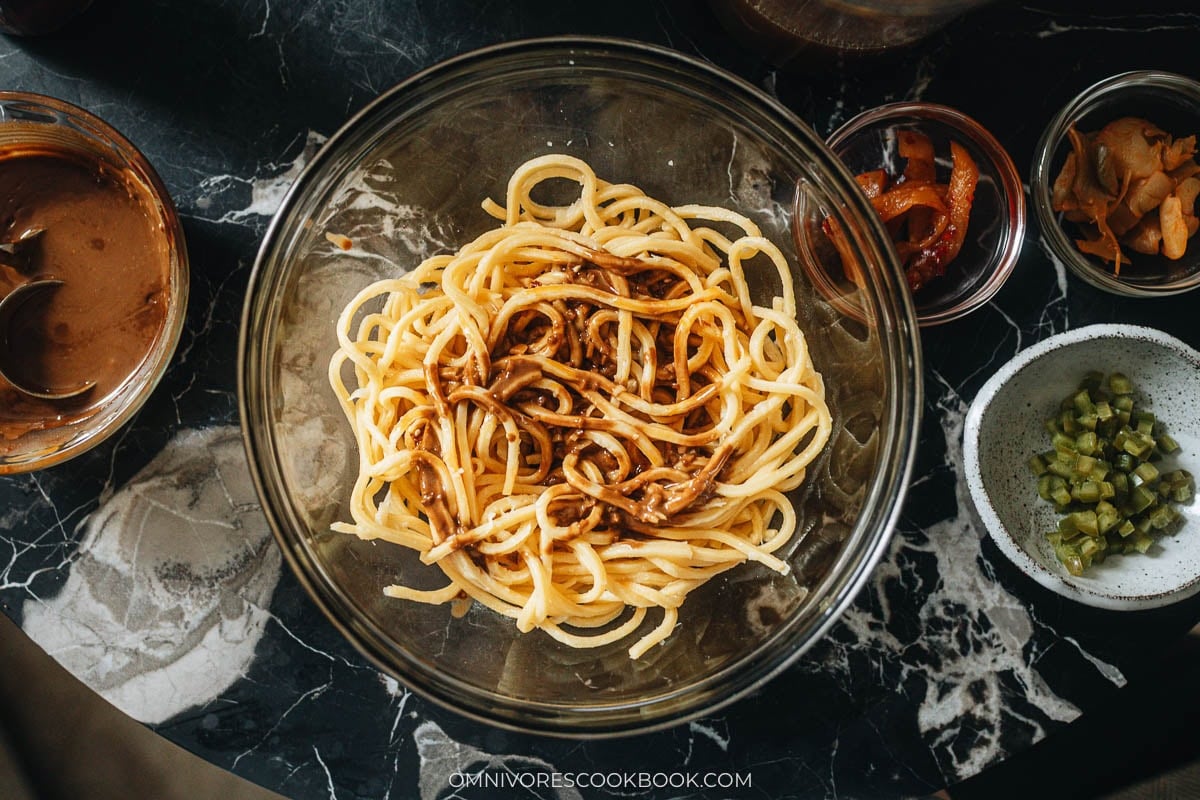
5. Assemble: Add 2 tablespoons of the master broth and 2 tablespoons of the sesame sauce to each bowl. Drizzle with chili oil if using. Top with pickled radish, sliced green onions, and cilantro. Toss everything together before eating and adjust with more sauce or broth to taste.
Expert Tips
Make the garlic water first: Steeping minced garlic in hot water releases the fragrance without the raw, pungent taste. I let it sit while I work on the broth so it has enough time to infuse.
Use Chinese sesame paste, not tahini: Chinese sesame paste is made from toasted sesame seeds and has a deeper, nuttier flavor than tahini. If I cannot find it, unsweetened natural peanut butter is a closer substitute than tahini.
Rinse cooked alkaline noodles in hot water: If I use the pre cooked You Mian noodles from the freezer, a quick rinse in boiling water revives the chewy texture. Skipping this step leaves them stiff and clumpy.
Make more broth than you need: This recipe generates extra broth on purpose. I store the leftover broth in the fridge for up to 3 days or freeze it for future noodle bowls, soups, or stir fry sauces.
Serving Suggestions
I eat these noodles hot on cold days and chilled in the summer, which is actually the traditional way in Wuhan. Some nights I keep it simple with just the sauce, broth, and pickles. Other nights I add shredded chicken or stir fry bok choy on top for a more filling meal.
When I serve this for a group, I set out the noodles, broth, sauce, and toppings separately and let my friends build their own bowl. I put out extra Chinese pickled cucumbers and pickled cabbage alongside the standard toppings so everyone can mix and match. A bowl of egg drop soup on the side rounds out the meal fantastic.
Frequently Asked Questions
What is the difference between the brothy version and the simple version?
The simple version uses only the sesame sauce and toppings. My brothy version adds a master broth made with warm spices and stock, which keeps the noodles saucy and adds more depth. I prefer the brothy version because the noodles stay good even after they cool down.
Is this dish served hot or cold?
Both. Despite the name “hot dry noodles,” it is traditionally served at room temperature or chilled in the summer. I enjoy it both ways depending on the season.
Can I make this vegan?
Use vegetable stock instead of beef stock for the broth and check that your noodles are egg free. The rest of the recipe is already plant based.
Want to Save This Recipe?
Enter your email below & we’ll send it to your inbox. Plus get great new recipes from us every week!
Watch video
Hot Dry Noodles (热干面)
Ingredients
- 10 oz fresh alkaline noodles , cooked or uncooked (or regular wheat noodles) (*Footnote 1)
- 1 tablespoon sesame oil
Broth (*Footnote 2)
- 1 teaspoon vegetable oil
- 2 green onions , just the whites (greens reserved)
- 2 slices ginger
- 2 cloves garlic , lightly smashed
- 1 star anise
- 5 cloves
- 1 cinnamon stick
- 1/4 teaspoon Sichuan peppercorns
- 2 tablespoons shaoxing wine (or dry sherry)
- 1 tablespoon light soy sauce
- 1 teaspoon sugar
- 2 cups beef stock (chicken stock, or vegetable stock)
Garlic Water:
- 2 cloves garlic , minced
- 3 tablespoons hot water
Sauce:
- 3 tablespoons Chinese sesame paste (or unsweetened natural peanut butter)
- 1 teaspoon sesame oil
- 2 teaspoons light soy sauce
- 1 teaspoon dark soy sauce
- 1 1/2 teaspoons Chinkiang vinegar
- 1 teaspoon sugar
- 1/8 teaspoon white pepper powder
- 1/8 teaspoon five spice powder
Toppings:
- 2 to 4 tablespoons homemade chili oil (Optional)
- Reserved green onion , sliced
- 1/4 cup pickled radish (or mustard greens or your favorite pickles)
- Cilantro leaves
Instructions
- Garlic water: Combine the 2 cloves of minced garlic and 3 tablespoons of hot water in a small bowl. Set aside.
- Master sauce: In a small pot, heat the vegetable oil over medium heat and add the green onion, ginger, and garlic. Saute until fragrant, about 1 minute. Add the star anise, cloves, and cinnamon, cook for another 30 seconds. Add the Shaoxing wine, soy sauce, sugar, and broth. Bring to a boil, then reduce to a simmer. Cook for 10 to 15 minutes. Strain and discard the aromatics and spices.
- Sesame sauce: Slowly incorporate the garlic water into the sesame paste until smooth. Then add the remaining sauce ingredients.
- Prepare noodles: Bring a pot of water to a boil. (1) If using the Cooked Noodle (You Mian), quickly rinse the noodles in the hot water to revive its texture and drain. (2) If using uncooked fresh ramen noodles, drizzle the sesame oil over the noodles and toss gently. Add the noodles to the boiling water and cook until al dente. (3) If using regular dried noodles, boil according to the instructions. Once done, drain the noodles and divide between 2 bowls.
- Assemble: Add 2 tablespoons of the broth, 2 tablespoons of the sesame sauce, and 1 tablespoon of chili oil (if using) to each bowl. Garnish with the green onion, preserved vegetables of your choice, and cilantro leaves.
- Toss everything together, then adjust the seasoning to taste by adding more sauce or broth. Enjoy hot or cold!
Storage
- The noodles, sauce, and broth can be prepared ahead of time and stored in the fridge separately for up to 3 days. Assemble them whenever you plan to serve.
Notes
- The correct alkaline noodles are usually labeled as “Cooked Noodle”. See the blog post above for the package picture. You can also use fresh uncooked ramen noodles, which are thinner than the Chinese alkaline noodles. Regular dried wheat noodles work too if you cannot find alkaline noodles. The texture of the noodles will be different but the taste will still be good.
- The recipe generates more broth than you need in this recipe. You can fridge or freeze them for future use.
Nutrition

Did you make this recipe?
I’d love to hear how it turned out for you! Please take a moment to leave a 5-star rating ⭐️ and share your thoughts in the comments further down the page. It really helps others discover the recipe too.
If you give this recipe a try, let us know! Leave a comment, rate it (once you’ve tried it), and take a picture and tag it @omnivorescookbook on Instagram! I’d love to see what you come up with.
Shannon
Great recipe, very delicious! I added crispy shallots and cucumber pickle.
Herman
Fair amount of work but the result is excellent, Maggie.
Fennel seeds are not in the ingredients list. I used about half a teaspoon.
Do you think that chili garlic sauce can substitute for chili oil in this recipe?
Thank you
Maggie
Glad to hear you like the recipe! Yeah I think it’s totally OK to use the chili garlic sauce instead of chili oil.
I’ll check my note and add back the fennel seeds but I think 1/2 teaspoon sounds about right.
Herman
Fair amount of work but the result is excellent., Maggie.
Fennel seeds are not in the ingredients list. I used about half a teaspoon.
Do you think that chili garlic sauce can substitute for chili oil in this recipe?
Thank you