
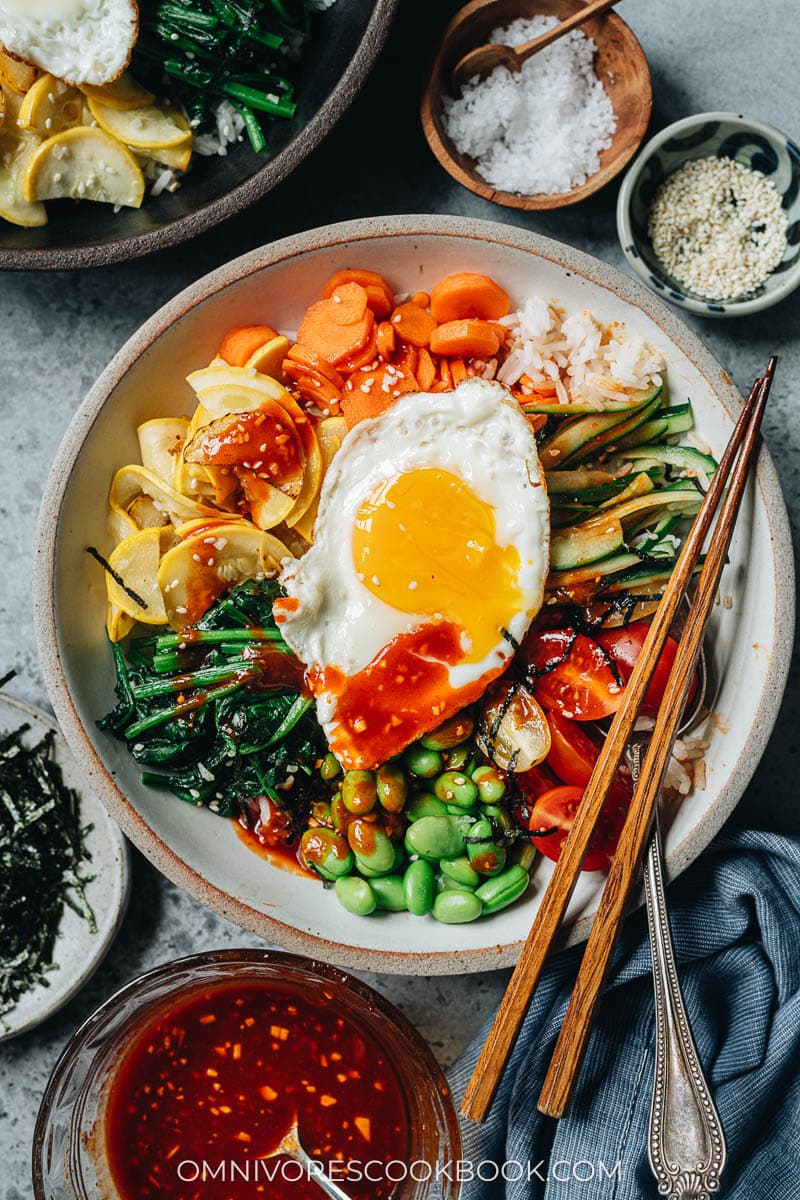
Bibimbap is one of Korea’s most iconic rice dishes, and the name literally translates to “mixed rice” because the whole point is to stir the toppings, the sauce, and the rice together at the table right before eating. The traditional dolsot version arrives in a screaming hot stone bowl that crisps the rice on the bottom into a golden crust, and the vegetables on top are usually blanched or stir-fried and seasoned separately with sesame oil, garlic, and soy.
My summer version keeps the classic seven-vegetable spirit of the dish and swaps in seasonal produce and a quick pickle shortcut. I’ve been making it almost every week this summer because it’s that good. If you enjoy Korean flavors like I do, be sure to try my kimchi fried rice and my japchae, two other weekday favorites I make on repeat.
I still remember the first time I put this bibimbap recipe together on a July night when the summer squash and cherry tomatoes were piling up on the counter and I could not bring myself to turn on a heavy stir-fry. I wanted the layered look and the gochujang sauce of a proper bibimbap without the stone bowl and without cooking 6 things separately, so I traded 3 of the sauteed vegetables for a quick rice vinegar pickle and streamlined the rest to a single skillet. It has been our summer rice bowl ever since, and the leftover pickling brine goes straight into the fridge for the next batch of cucumbers.
As a busy mom and recipe developer, I appreciate any recipe that’s both easy and nutritious. I simply heat the pickling brine and pour it over the carrot, cucumber, and tomato while I mix the gochujang sauce. Then I sauté the summer squash and spinach in the same pan, fry the eggs sunny-side up, and serve everything over a bowl of steamed jasmine rice with a sprinkle of sesame seeds and shredded seaweed. It’s that easy, and I highly recommend giving it a try and sharing it with your loved ones.
Ingredients
My summer vegetable bibimbap is packed with colorful seasonal vegetables. These are all the ingredients I use to make it:
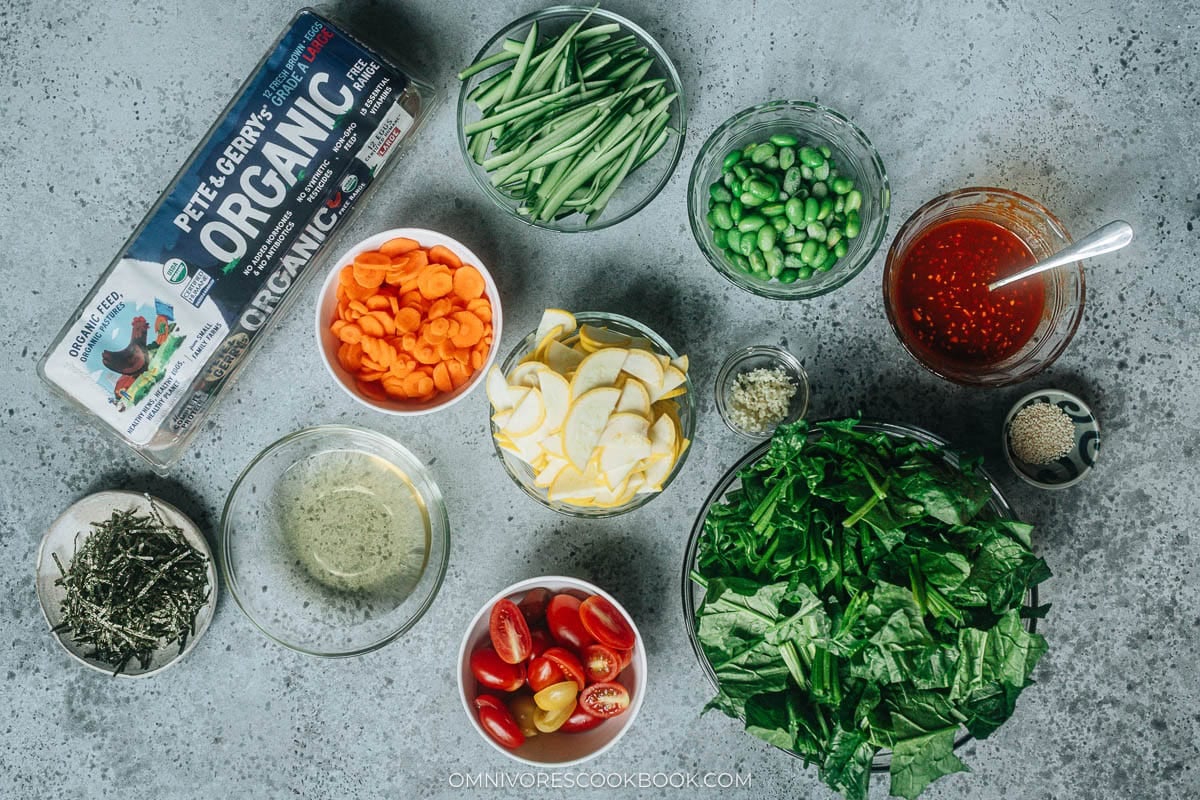
Rice: I use steamed jasmine rice for the bowls because its floral fragrance pairs great with the gochujang sauce and the vegetables.
Quick pickled vegetables: I pickle the carrot, cucumber, and cherry tomatoes in a simple rice vinegar brine with a spoonful of sugar and a pinch of salt because the acid cuts through the richness of the gochujang sauce and the sesame oil at the same time.
Sautéed vegetables: Summer squash and spinach get a quick sauté in the same pan with garlic and a little peanut oil, and I finish each with a drizzle of toasted sesame oil off the heat so the fragrance stays fresh.
Edamame: Shelled edamame goes into the bowl already boiled, and it adds a protein-rich pop of green. Frozen shelled edamame from the freezer aisle is my usual pick because it thaws in a bowl of warm water while I pickle the other vegetables, and it costs less than fresh pods in the produce section.
Eggs: I fry one sunny-side-up egg per bowl because the runny yolk is the whole textural point of a bibimbap. Over-easy works when I need a firmer yolk for a lunch box, but a wobbly sunny-side-up is what I aim for on a dinner plate.
Gochujang sauce: Gochujang, soy sauce, rice vinegar, sesame oil, maple syrup, and a clove of grated garlic go into a small bowl for the sauce, and the balance is spicy, sweet, tangy, and savory in that order. Maple syrup is my sweetener of choice, and it swaps for regular sugar without changing the texture much. Tamari steps in for soy sauce for a gluten-free version, and I check the gochujang label for wheat when I am cooking for someone with a gluten allergy.
Toppings: Toasted sesame seeds and shredded roasted seaweed go on top for the finishing crunch and the salty and nutty accent.
How to Make
1. Make the pickling brine: Combine 1/2 cup rice vinegar, 3 teaspoons sugar, and a pinch of salt in a small pot. Heat over medium heat until the brine reaches a boil and the sugar dissolves. Transfer the brine to a bowl to cool.
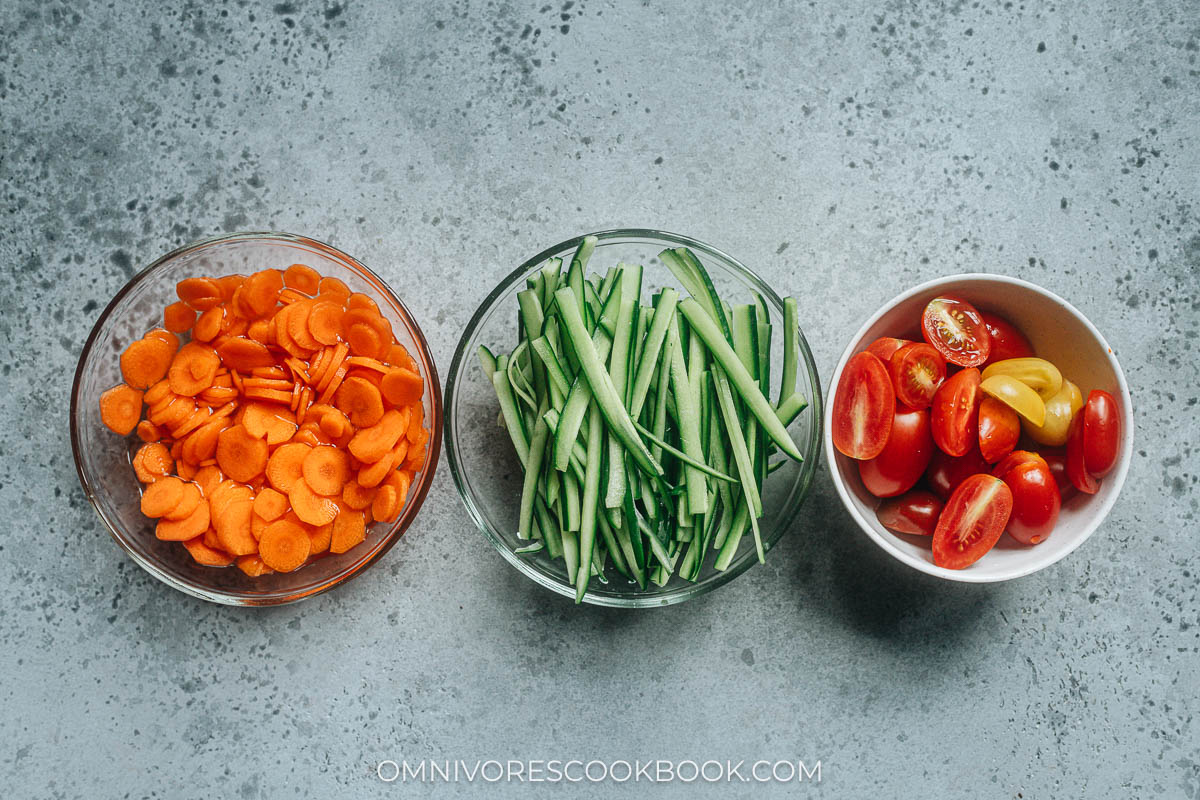
2. Pickle the vegetables: Once the brine is lukewarm, spoon 1 tablespoon over the julienned cucumber and 1 tablespoon over the halved cherry tomatoes. Pour the rest of the brine over the sliced carrot. Let all 3 marinate for 20 minutes while you prepare the rest of the ingredients.
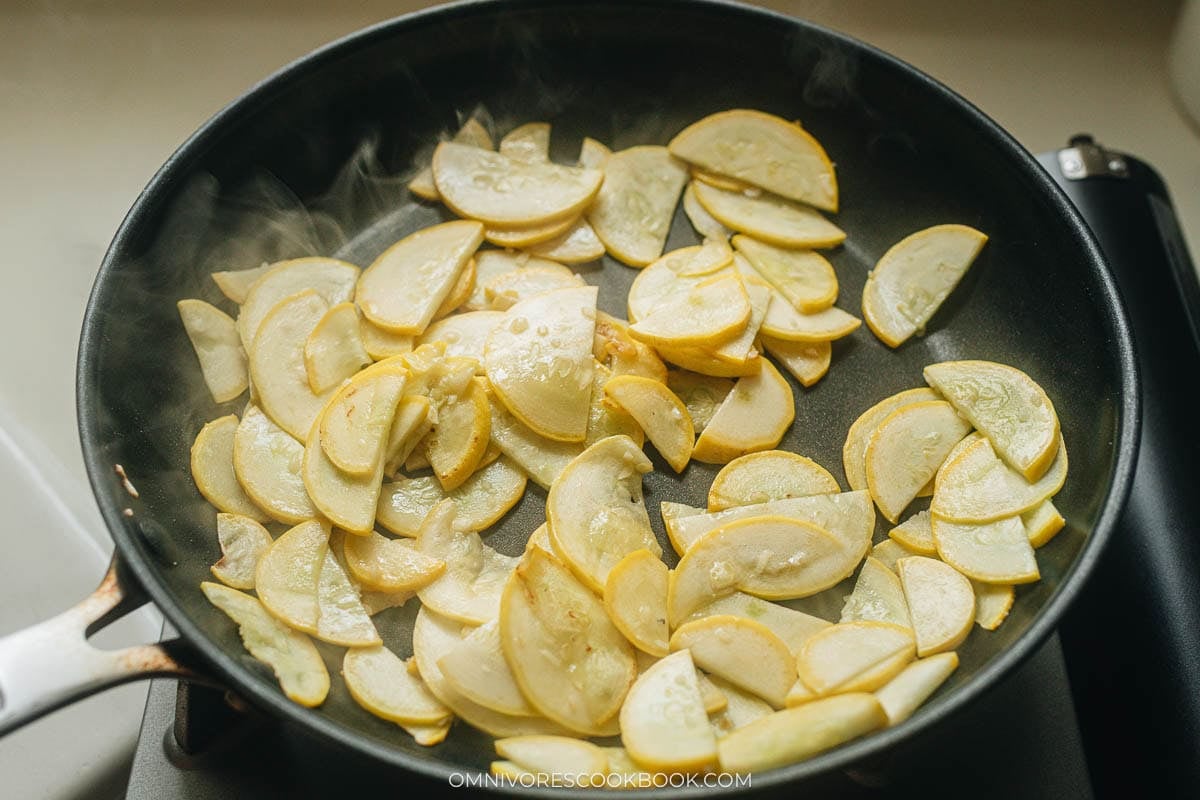
3. Cook the summer squash: Heat 1/2 tablespoon of peanut oil in a medium skillet over medium-high heat. Add half of the minced garlic and stir until fragrant. Add the sliced summer squash and 1/4 teaspoon of salt. Cook until softened, about 3 minutes. Drizzle with 1/2 teaspoon of sesame oil, mix well, and transfer to a plate.
4. Cook the spinach: Repeat the same process in the same skillet with the remaining oil, garlic, and spinach. Cook until wilted, about 2 minutes. Drizzle with the remaining sesame oil, mix well, and transfer to a plate.
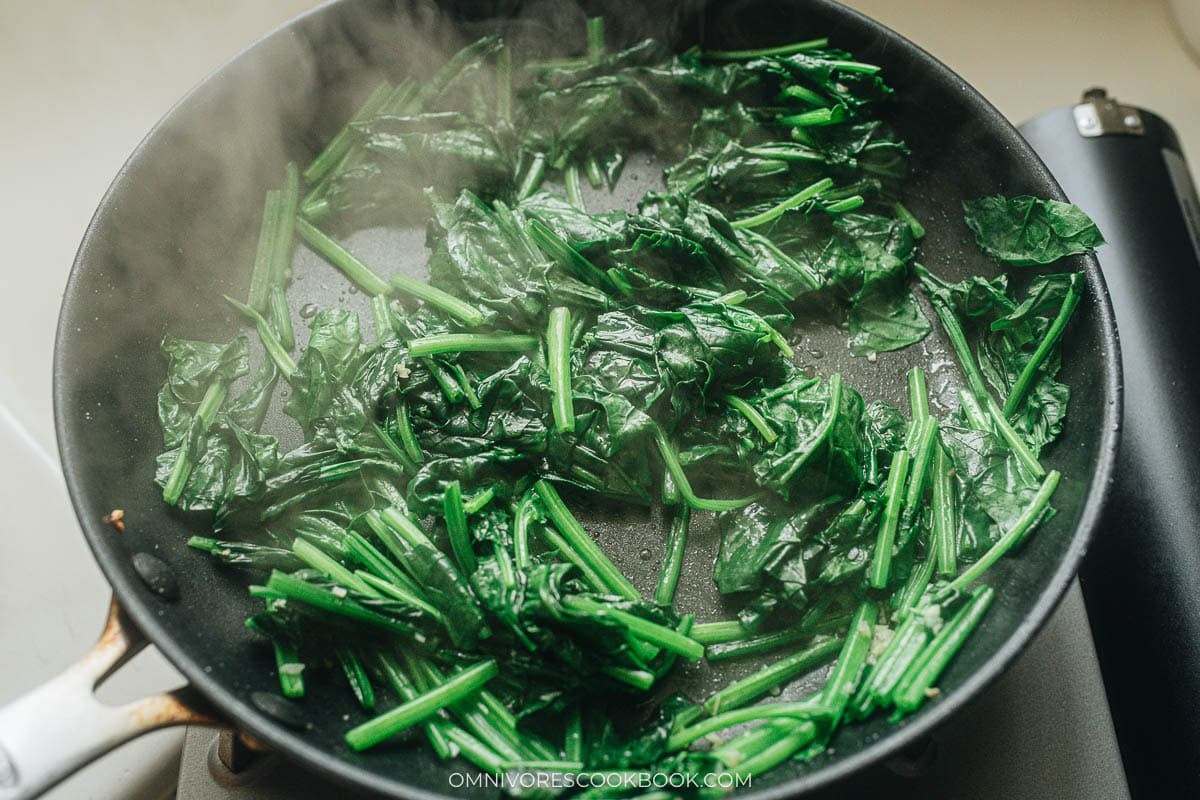
5. Fry the eggs: Add a splash of oil to the same skillet if needed and fry the eggs sunny-side up over medium heat until the whites are set and the yolks are still runny.

6. Mix the sauce: Whisk the gochujang, sesame oil, maple syrup, rice vinegar, soy sauce, and grated garlic in a small bowl until smooth.
7. Drain the carrot: Drain the pickled carrot from the brine. Leave the cucumber and tomato in their small amounts of brine for extra flavor.
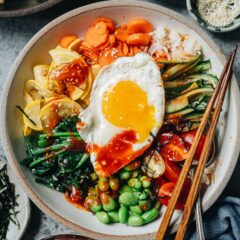
8. Assemble the bowls: Divide the steamed rice into four serving bowls. Arrange the pickled carrot, cucumber, and tomato in one section of each bowl, the sautéed summer squash and spinach in another, and the edamame in a third.
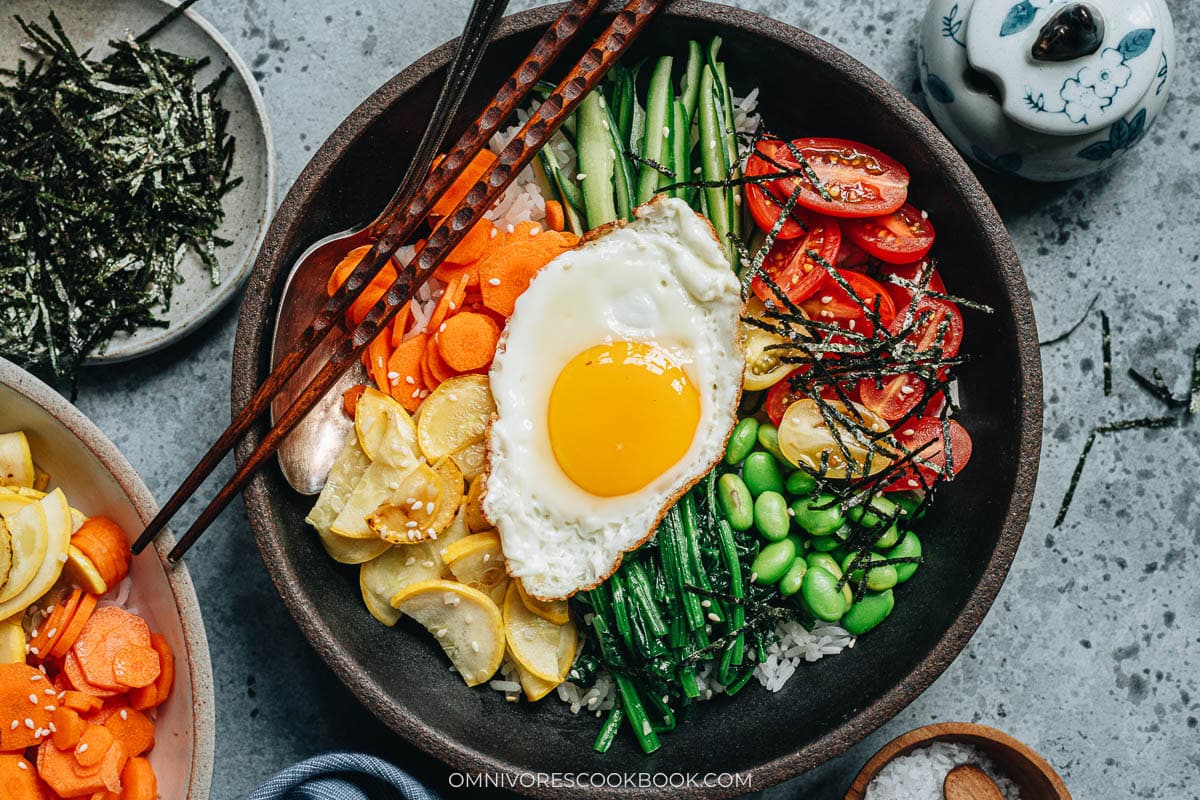
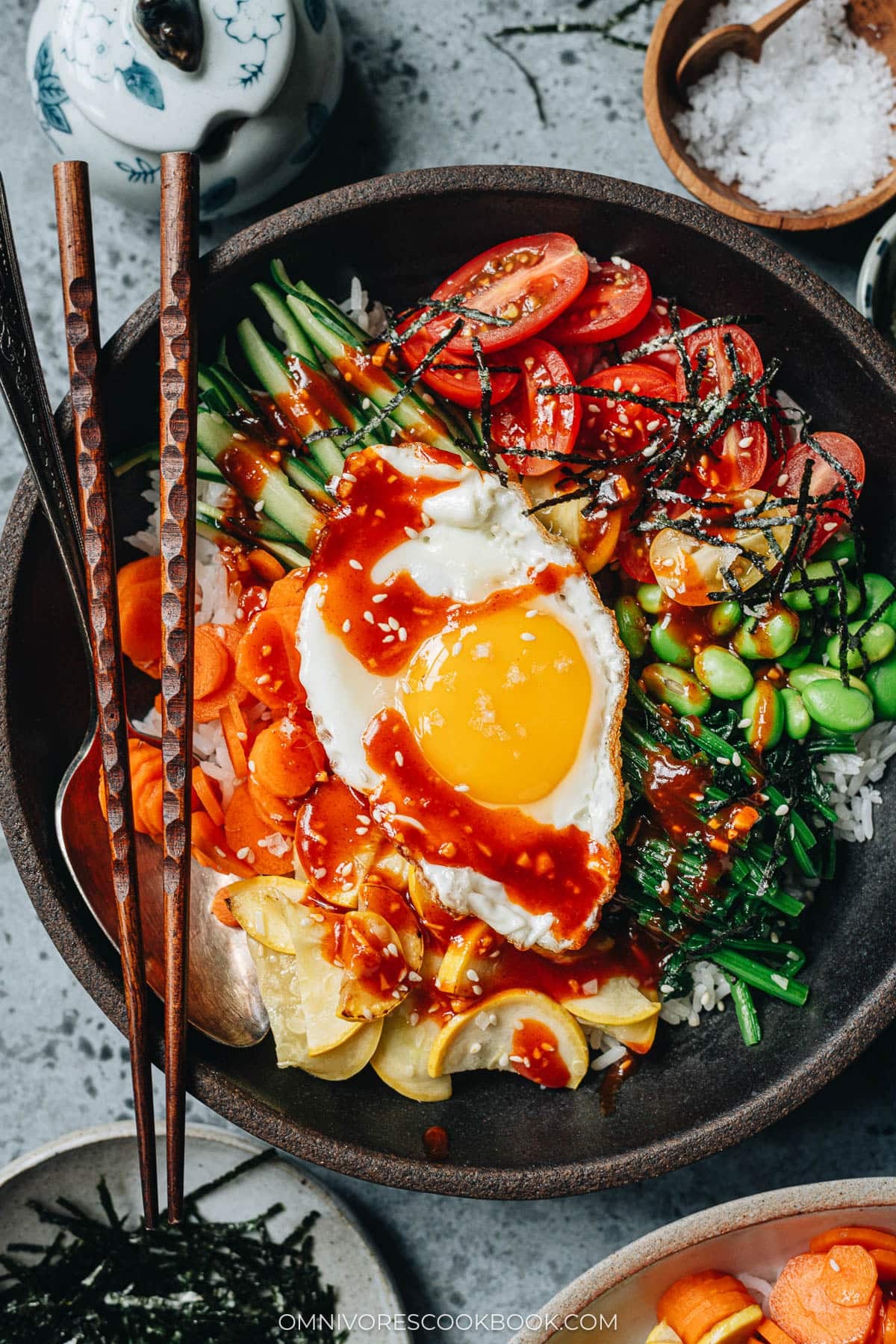
9. Top and garnish: Place a fried egg in the center of each bowl. Spoon a tablespoon of gochujang sauce over the top and sprinkle with toasted sesame seeds and shredded seaweed.
10. Serve: Bring the bowls to the table with the extra sauce on the side, and mix everything together right before eating.
Cooking Notes
Heat the pickling brine, do not use it cold: Cold vinegar takes too long to break down the raw crunch of the carrot in a 20-minute pickle, and the sugar refuses to dissolve into cold brine no matter how long I stir. Bringing the brine to a boil first is the shortcut that gets the pickles ready before the rice is done, and I pour it over the vegetables while it is still lukewarm so the pickling starts right away.
Use one skillet for both sautéed vegetables: Cooking the summer squash and the spinach one after the other in the same pan uses the same garlic-scented oil twice and cuts the cleanup in half. I transfer the squash to a plate before I add the spinach so neither vegetable overcooks.
Pat the summer squash dry after cutting: Summer squash releases a lot of water when it meets a hot pan, and if the slices go in wet they steam instead of caramelizing. I lay the half-moons on a paper towel while I cut the spinach and mince the garlic, then blot them once more before they meet the oil.
Taste the sauce and adjust the heat: Gochujang brands vary in heat and salt, and a spoonful of sauce at the table is very different from the same spoon in a small mixing bowl. I taste the sauce after it is whisked together and dial the gochujang back to 2 tablespoons if my brand is on the spicier end, or I add a splash more rice vinegar if it is too sweet.
How to Serve
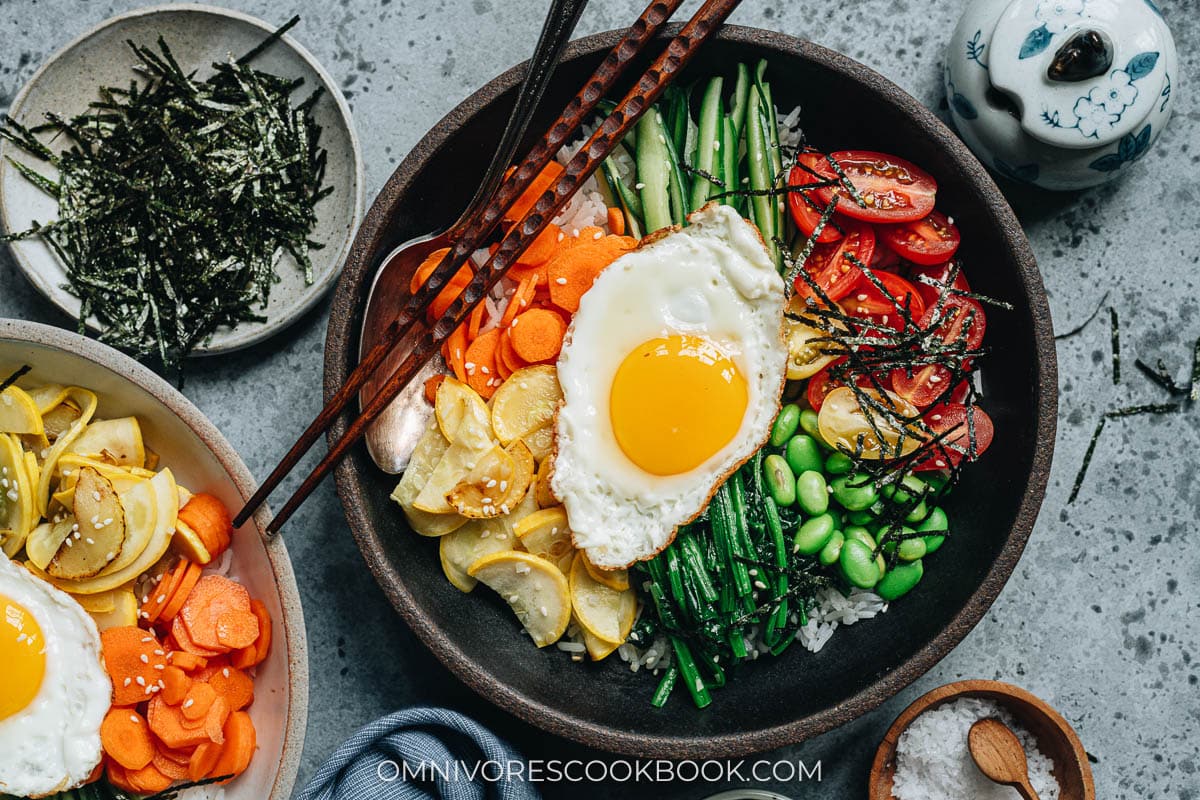
I serve these bibimbap bowls at room temperature or slightly warm because the summer version is not meant to serve screaming hot the way a dolsot bibimbap does. Each person takes a spoon or a pair of chopsticks and mixes their bowl at the table so the sunny yolk breaks over the rice and coats every grain in gochujang sauce and sesame oil. I place a small dish of extra sauce and a bottle of soy sauce or a pinch bowl of salt in case anyone wants to adjust the seasoning.
For a fuller Korean-style table, I put out a plate of Korean seafood pancake as an appetizer that shares the same soy-and-sesame flavor profile, and I might set out a bowl of sundubu jjigae as the hot dish that balances the room-temperature bibimbap on a cooler summer evening. When my relatives come over and want a heartier Korean menu, I pair the bibimbap with Korean fire chicken as the spicy centerpiece so the mild vegetable bowl has a fiery counterpart, and everyone can pick their heat level.
Frequently Asked Questions
What kind of rice works best for bibimbap?
Short-grain rice is the traditional pick because the sticky texture holds the toppings and sauce together when everything is mixed at the table, and it stays chewy under the fried egg without going mushy. Jasmine rice is my summer choice because its floral fragrance goes great with the vegetables, and long-grain jasmine grains stay separate for a fresher, less starchy texture. Brown rice steps in when I want a nuttier, more filling bowl, and I cook it a little softer than usual so the mixing at the table is easier.
How do I make this vegetable bibimbap into a fuller meal?
Adding a protein turns the bowl from a light summer dinner into a full meal, and I love adding pan-fried tofu, marinated bulgogi beef, shredded rotisserie chicken, or a spoonful of ground pork stir-fried with garlic and soy sauce. Cold-cut leftover roast chicken or a scoop of tuna also works when the fridge is picked over. I keep the protein portion small so the vegetables and rice are still the point of the bowl.
How do I store the components for later?
Each cooked vegetable and the pickled vegetables keep in separate airtight containers in the fridge for 3 days, and the gochujang sauce keeps in a small jar for 2 weeks. I do not assemble the full bowls in advance because the pickle brine soaks into the rice and the sautéed vegetables lose their fresh-cooked texture after an overnight sit. To eat leftovers, I simply steam a fresh bowl of rice, fry a fresh egg, and pull the stored toppings out of the fridge for a 10-minute lunch the next day.
Want to Save This Recipe?
Enter your email below & we’ll send it to your inbox. Plus get great new recipes from us every week!
Summer Vegetable Bibimbap
Ingredients
Pickling ingredients
- 1/2 cup rice vinegar
- 3 teaspoons sugar
- Pinch of salt
For the bowl
- 1 (4 oz) small carrot , sliced
- 1 English cucumber , seeds removed and julienned
- 1 cup boiled shelled edamame , thawed if using frozen edamame
- 1 tablespoon peanut oil (or vegetable oi)
- 2 cloves garlic , minced
- 1 (5 oz) summer squash , sliced to half-moon shape
- 1/2 lb spinach , cut to 2” (4 cm) pieces
- 1 cup cherry tomatoes , halved
- 1/2 teaspoon salt (or to taste)
- 1 teaspoon toasted sesame oil
- 3 to 4 cups steamed rice (*Footnote 1)
- 4 large eggs
- Shredded toasted seaweed (for garnish)
- Toasted sesame seeds (for garnish)
Bibimbap sauce
- 3 tablespoons gochujang
- 1 tablespoon sesame oil
- 1 1/2 tablespoons maple syrup (or sugar)
- 1 tablespoon rice vinegar
- 2 teaspoons soy sauce
- 1 clove garlic , minced
Instructions
Make the pickles
- Combine the rice vinegar, sugar, and salt in a small pot. Heat over medium heat until the brine reaches a boil. Whisk to make sure the sugar dissolves thoroughly. Once done, transfer the pickling liquid to a tupperware container or a medium-sized bowl to cool.
- Once the pickling liquid is mostly cooled (it’s fine if it’s lukewarm), transfer 1 tablespoon of the brine to the bowl of cucumber. And transfer another 1 tablespoon of the brine to the tomato. Mix well separately. Add the rest of the brine to the carrot. Let marinate for 20 minutes while preparing the rest of the ingredients.
- Once done, drain the marinating liquid from the carrots.
Prepare the vegetables and eggs
- Heat 1/2 tablespoon of the peanut oil in a medium-sized pan over medium-high heat until hot. Add half of the garlic and stir a few times to release the fragrance. Add the summer squash. Stir a few times to coat well with the oil. Add 1/4 teaspoon teaspoon of salt. Stir until softened. Drizzle with 1/2 teaspoon sesame oil. Mix well and transfer to a plate to cool.
- Cook the spinach the same way you made the summer squash.
- Fry the eggs until sunny side up or over easy, according to your preference.
Mix the sauce
- Combine all the sauce ingredients in a small bowl and stir to mix well. (*Footnote 2)
To assemble the bowl
- Divide the rice into four serving bowls. Add the vegetables, edamame, and an egg on top of each bowl. Add a spoonful of sauce and garnish with seaweed and sesame seeds. Serve with soy sauce or salt, and extra sauce on the side, in case you need to adjust the seasoning.
- To eat, mix everything together and enjoy.
Notes
- This recipe can make 3 regular servings or 4 small servings.
- If you don’t like a spicy sauce, use 2 tablespoons of gochujang instead of 3.
Nutrition

Did you make this recipe?
I’d love to hear how it turned out for you! Please take a moment to leave a 5-star rating ⭐️ and share your thoughts in the comments further down the page. It really helps others discover the recipe too.
AliceK
Beautiful and healthy! It took a little while to get all the toppings prepped, but none of it was hard. I added sliced, sauteed shiitake mushrooms and tofu. The bibimbap sauce was excellent!