
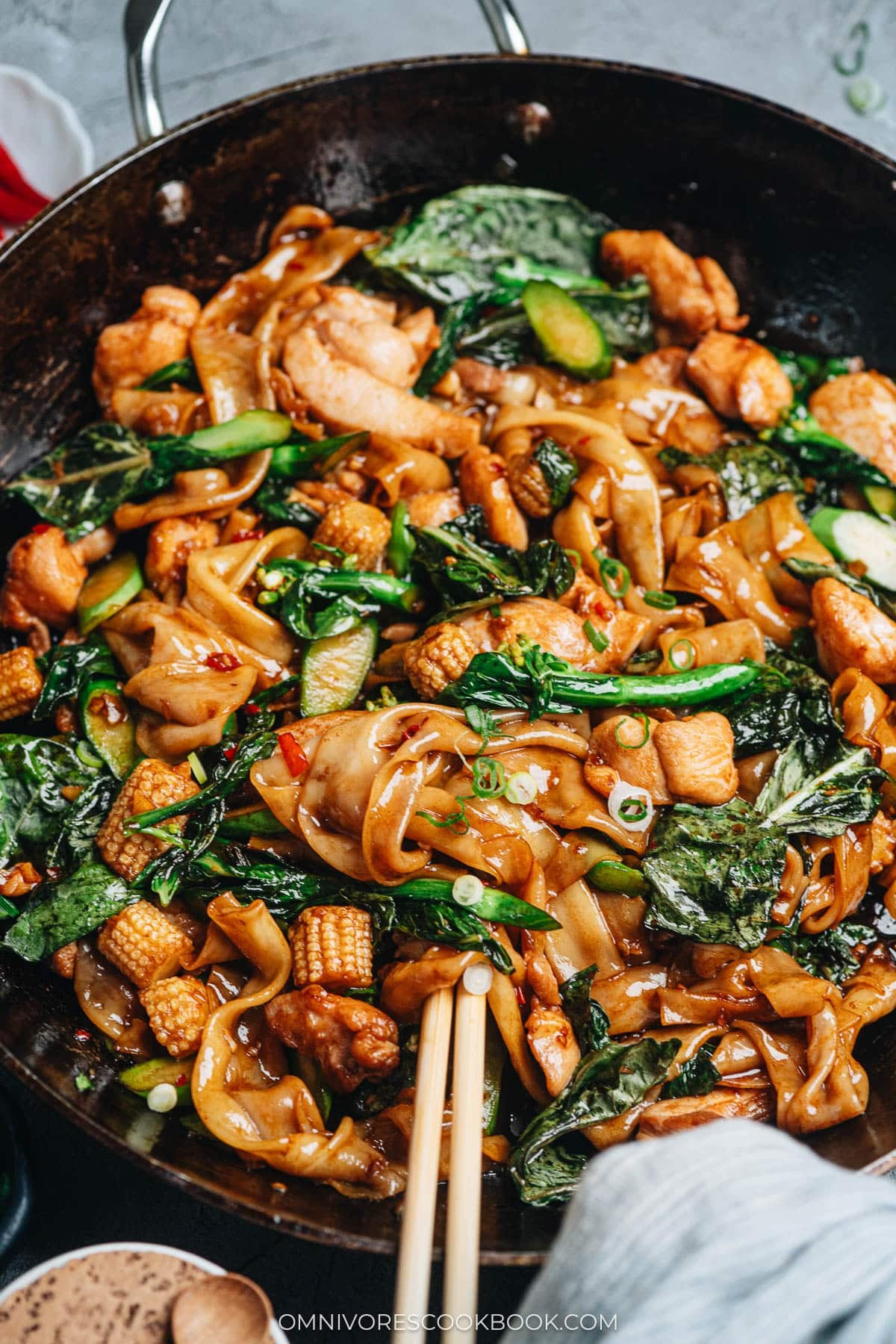
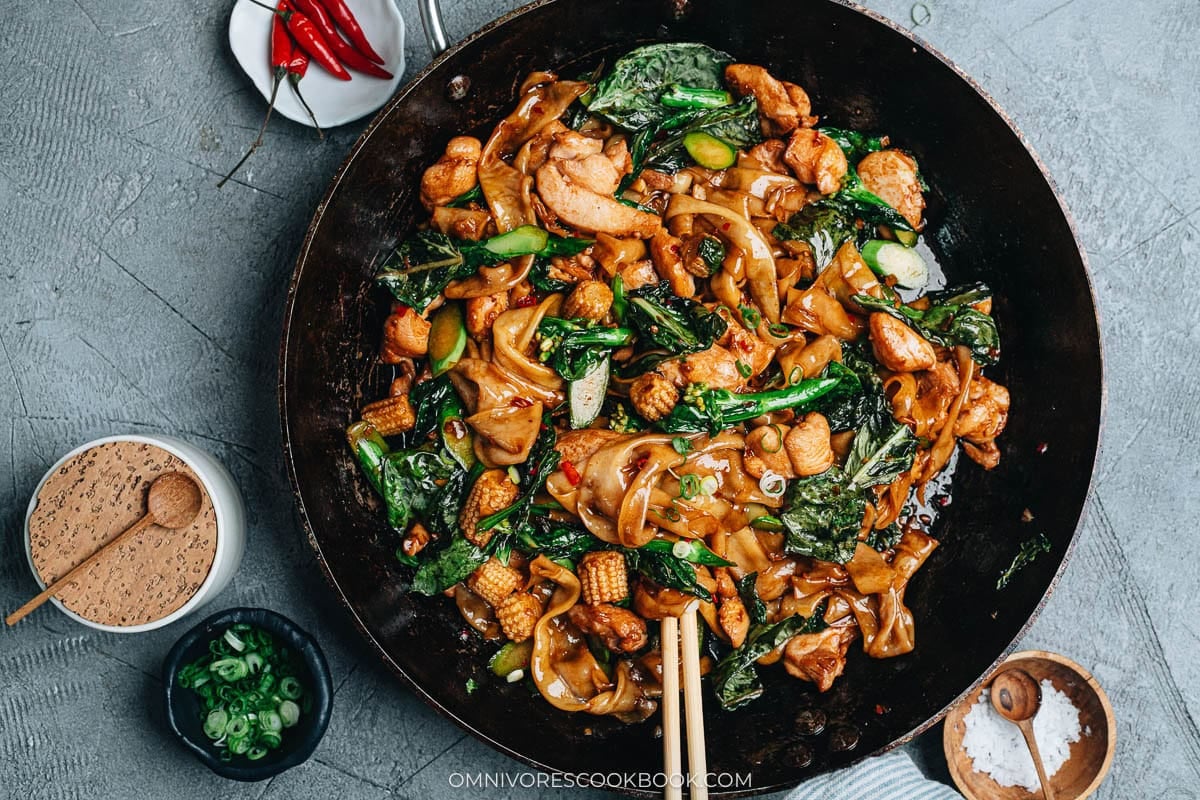
This is a Thai noodle dish brought by Chinese immigrants to Thailand. The dish is known for its wide and tender rice noodles, basil, chili, and bold sauce. What makes pad kee mao unique to me is texture of the fresh rice noodles and crisp vegetables, brought together with the mix of rich sauce and fresh basil. It’s the type of dish people crave after a night out.
You definitely do not need to be drunk to enjoy drunken noodles, ha! My husband and I love this dish on busy nights because it comes together so easily. I grind the garlic and chilis, sear the chicken, toss everything with thick rice noodles and basil, and in 15 minutes dinner is on the table.
The most interesting part, in my opinion, is how much flavor this dish packs into such a short cooking time. The noodles stay tender, the vegetables keep a little crunch, and the basil wakes up the whole pan right at the end. If you have no idea what to make tonight, please skip the Uber Eats order and make this easy recipe instead, because I promise it tastes way better than takeout.
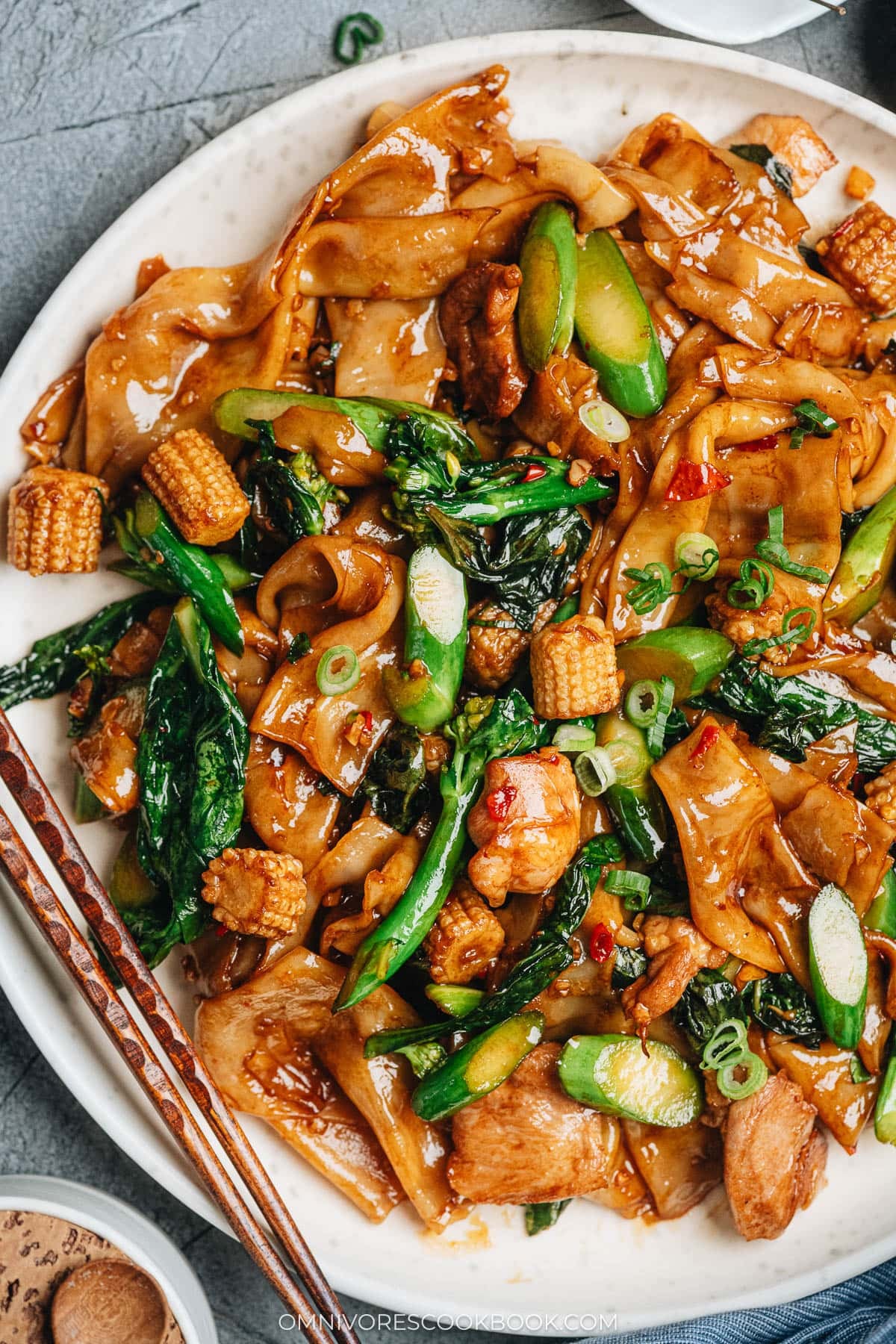
Ingredients
I love how short this ingredient list is, because each part has a very clear job. These are all the ingredients I use to make this easy drunken noodles recipe:
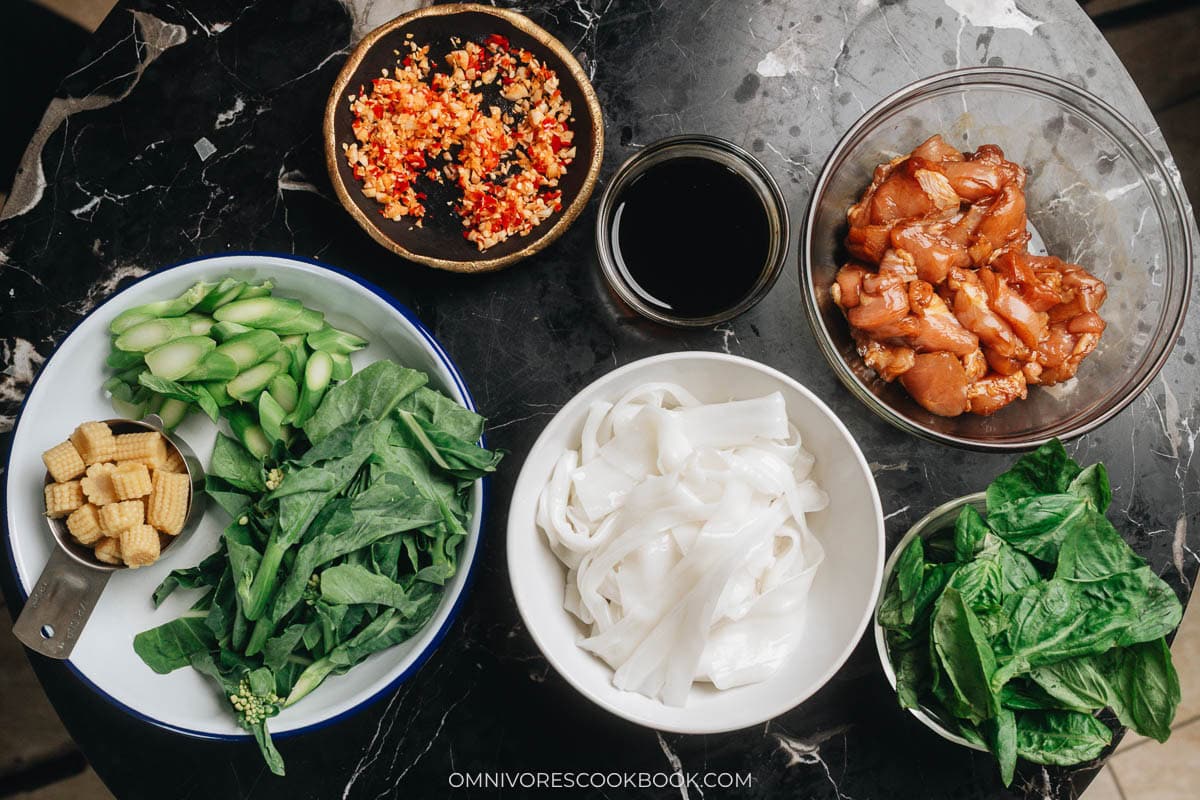
Sauce: I mix oyster sauce, light soy sauce, dark soy sauce, fish sauce, and brown sugar. This is what gives the noodles their darker color and the sweet savory balance that makes the dish so satisfying.
Protein: I use chicken thigh because it stays tender and juicy in the pan. I coat it with a little dark soy sauce, and if I want to switch things up, I use shrimp, beef, pork, tofu, or leave the protein out completely.
Stir fry: I make this stir fry with simple ingredients like garlic, Thai chili peppers, Chinese broccoli, baby corn, thick rice noodles, and basil.
Where to find fresh rice noodles
Fresh rice noodles are the key to create restaurant-style Pad Kee Mao, but I know it could be hard to source. If you’re lucky enough to live next to a Thai grocery store, you can usually find it. I also had luck to find it in Chinatown, because it’s also a noodle we frequently use in Beef Chow Fun. The noodles are often packed in a plastic bag and stored at room temperature near produce section or other fresh product section. Depending on the store, the noodles could be pre-cut or sold as un-cut rice noodle sheets, which requires cutting at home before you start making the stir fry. If you bought fresh rice noodles, store them at room temperature and use it within the day, because the texture will tough up if stored in the fridge.
If fresh noodles are not available, you can always use dried rice noodles. But note, the texture will come out quite differently.
How to Make
1. Prepare the aromatics: Pulverize the garlic and Thai chilis together using a mortar and pestle or a small food processor until finely ground.
2. Prepare the noodles: If I am using fresh rice noodle sheets, I slice them into thick strips. If I am using dried rice noodles, I rehydrate or boil them according to the package instructions.
3. Cook the aromatics: Heat the oil in a large nonstick pan over medium high heat until hot. Add the garlic and chili mixture and stir fry for about 30 seconds, until fragrant.
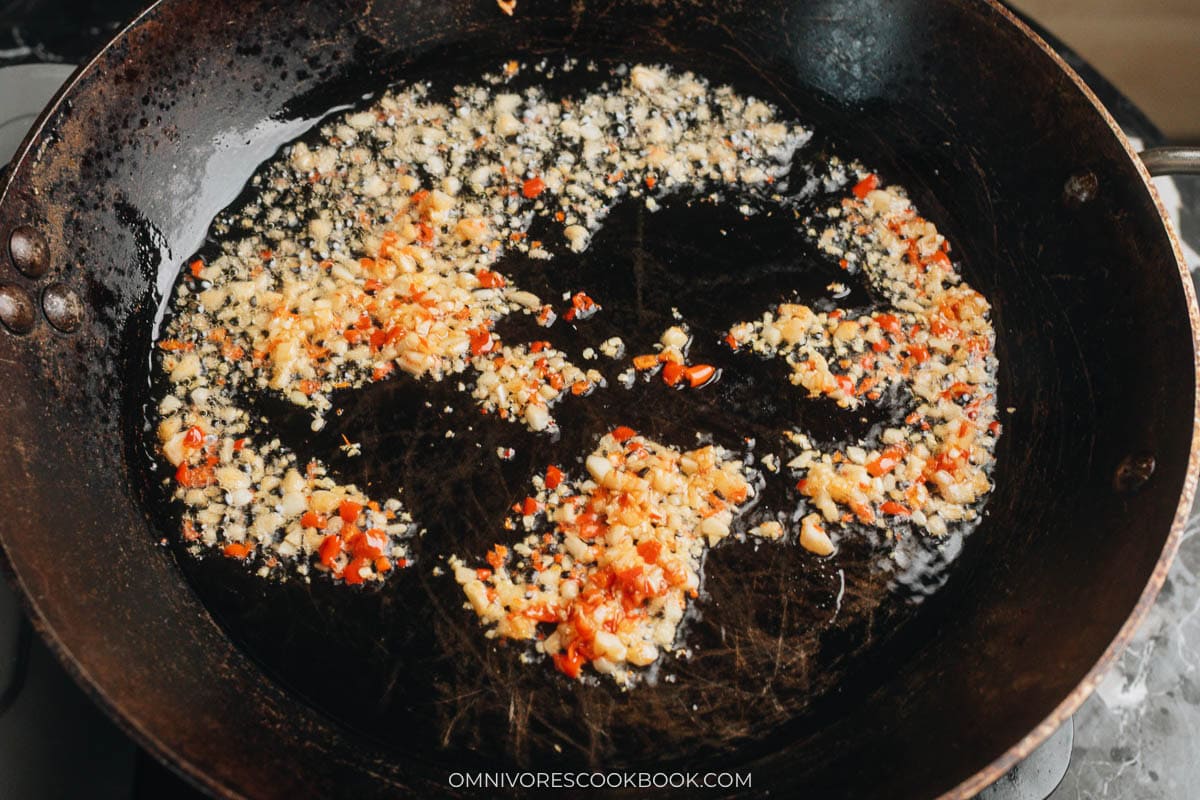
4. Cook the chicken: Spread the chicken into the pan without overlapping. Cook until the bottom is lightly browned and the top is still pink, then flip it over and stir a few times.
NOTE: If using chicken breast here, I would cook them until they are almost done and take them out. Then I add them back after I add the noodles, to prevent the chicken from over cooking.
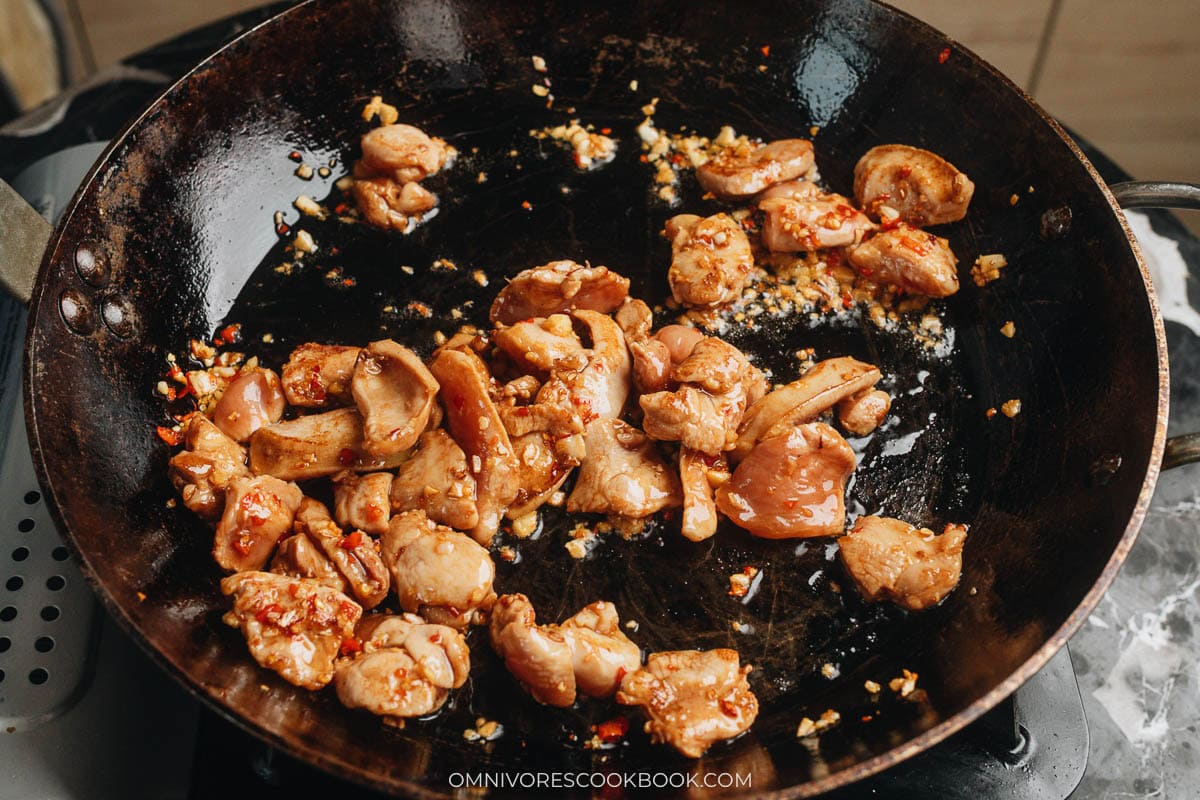
5. Add the vegetables: Add the Chinese broccoli and baby corn. Cook and stir until the chicken is no longer pink.
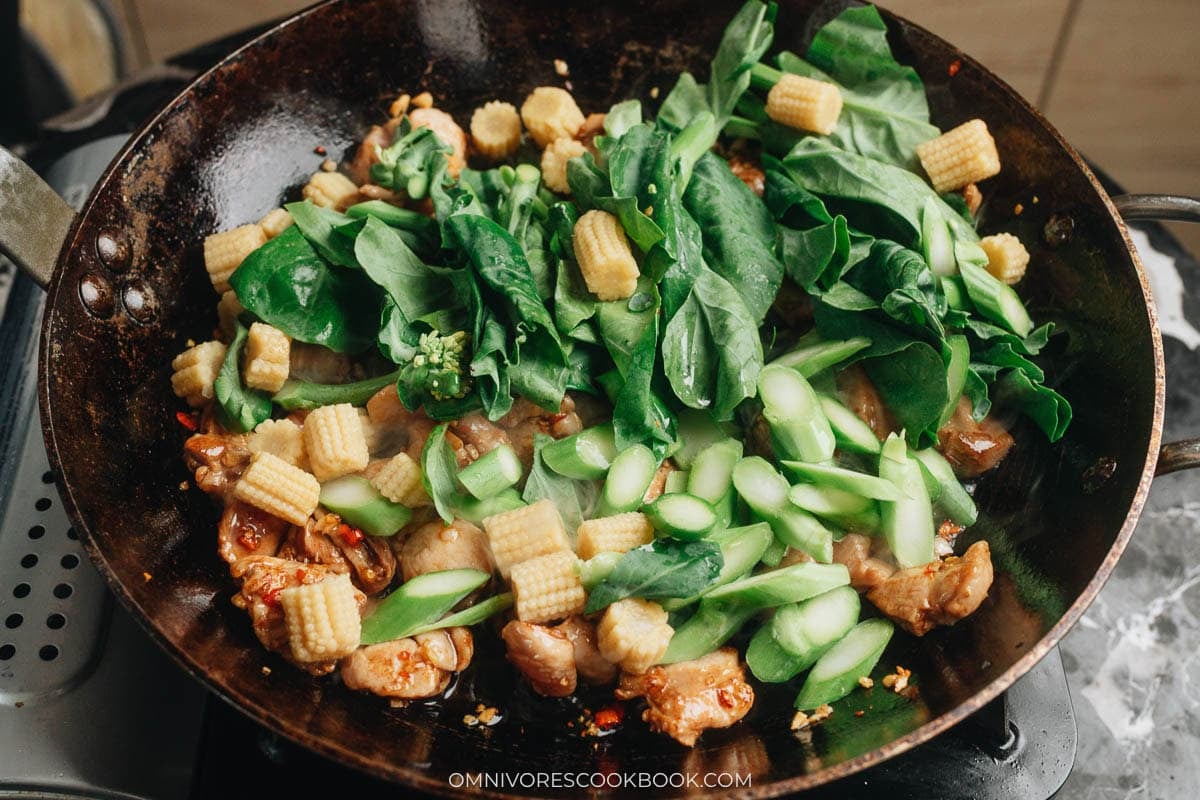
6. Add the noodles and sauce: Add the rice noodles and pour in the sauce. Use tongs to toss everything together until the noodles absorb the sauce and begin to crackle. The noodles might be very sticky, but will gradually loose up once heated up and mixed with the sauce. Toss very carefully because the noodles break and fall apart easily if you stir too them too hard.
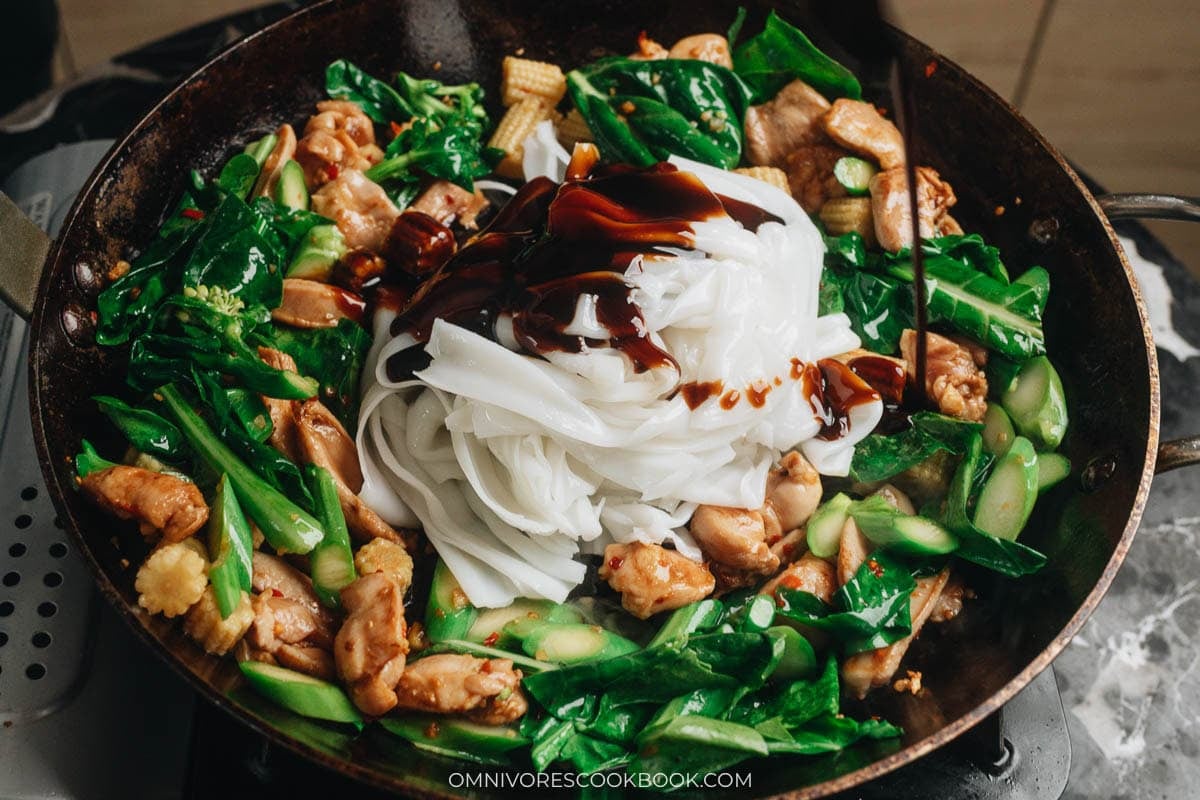
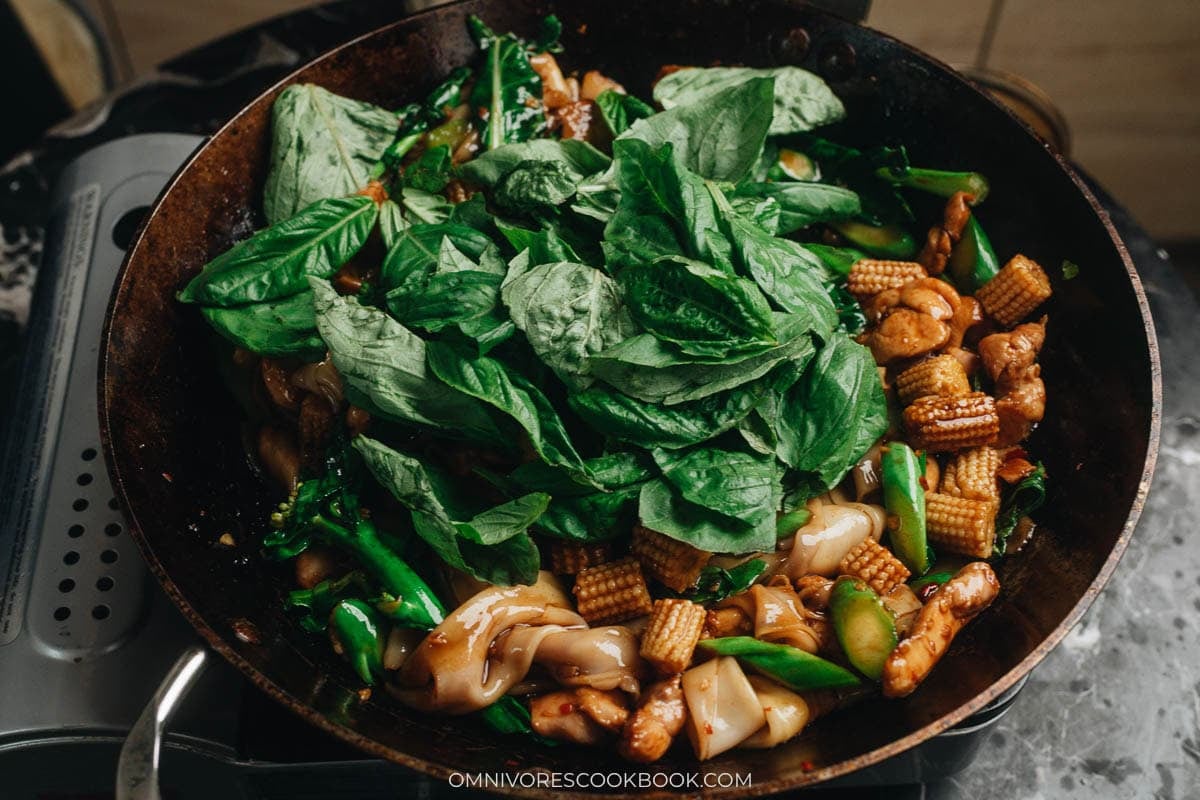
7. Finish with basil: Remove the pan from the stove and add the basil. Give everything a final toss until the basil is just wilted, then transfer to serving plates.
My Cooking Tips
Use fresh noodles if I can: I really like fresh rice noodles here because they give me the best texture and save time. When I use dried noodles, I prefer to use a wide type to recreate the texture, and make sure they are cooked just enough so they do not go soft in the pan.
Prep everything before cooking: I never start this dish until the sauce, noodles, basil, and vegetables are all ready. The stir fry moves quickly, and having everything lined up makes the whole process much easier.
Keep the chicken juicy: I do not overcook the chicken at the start. I let it brown on one side first, then flip it and finish it quickly with the vegetables so it stays tender. If you’re concerned the chicken being over cooked, you can also take them out after a quick searing, and add back along with the noodles at the end.
Slice the greens properly: If I use Chinese broccoli or broccolini, I slice the stems on an angle very thinnly so they cook faster and more evenly. This saves me from having to blanch them first.
Add the basil off the heat: I like adding the basil after I remove the pan from the stove. It wilts just enough from the residual heat and stays fresher this way.
Serving Suggestions
I typically serve these noodles as the main dish and bring the whole plate straight to the table while they are still hot. On busy nights, this is exactly the kind of dinner I am happy to make, because the noodles, chicken, and vegetables already make it satisfying on their own.
If I want to put together more of a Thai style dinner when I’m hosting, I like serving these noodles with Thai Fish Cakes (made ahead and reheat on the day of serving) or my favorite Thai Basil Chicken. You really have to try this combo. Last year, when my Thai friend came to visit me in New York, I made this meal for her, and she said it was one of the best versions she had ever had.
Frequently Ask Questions
Why are my noodles breaking apart?
This happens when the noodles are overcooked before they go into the pan or when I stir too aggressively.
When using fresh noodles, avoid rinsing them before cooking, which cause them to be soggy and overcook. If the noodles are stick together, use your hands to gently seperate the noodles before using.
If using dried noodles, I keep a close eye on dried noodles during soaking or boiling and only cook them until al dente. And once they go into the wok or skillet, I toss them with tongs instead of smashing them around with a spatula.
How spicy should drunken noodles be?
I think of drunken noodles as a dish with some real heat, but I can always adjust it depending on who I am cooking for. I use fewer Thai chilis when I want it milder, and I add more when I want the noodles to have more kick. The garlic and basil still do a lot of work, so the dish stays flavorful either way.
How do I store leftovers?
I store leftovers in an airtight container in the refrigerator for up to 3 days. I do not usually freeze this dish, because the noodles and basil lose too much of their texture after thawing, so I think it is much better fresh or from the fridge.
Want to Save This Recipe?
Enter your email below & we’ll send it to your inbox. Plus get great new recipes from us every week!
Watch video
Drunken Noodles (Pad Kee Mao)
Ingredients
Sauce:
- 2 tablespoons oyster sauce
- 2 teaspoons light soy sauce
- 2 teaspoons dark soy sauce (*Footnote 1)
- 1/2 teaspoon fish sauce
- 1 tablespoon brown sugar
Protein (Optional):
- 6 oz chicken thigh (about 1 thigh) , thinly sliced (or any protein of your choice) (*Footnote 2)
- 1/4 teaspoon dark soy sauce
Stir fry:
- 4 cloves garlic
- 3 to 5 fresh Thai chili peppers
- 1 tablespoon canola oil (or peanut oil)
- 4 stalks Chinese broccoli (or broccolini, or spinach, thin sliced at an angle)
- 1/2 cup baby corn (or water chestnuts, or any desired crisp vegetables)
- 12 oz fresh thick rice noodles (or 7 oz / 200 g) wide dried rice noodles)
- 1/2 cup basil , packed
Instructions
- Combine the sauce ingredients in a small bowl. Stir well and set aside.
- Combine chicken thigh (or the protein of your choice) with the dark soy sauce in a medium-sized bowl. Toss to coat well and set aside.
- Pulverize the garlic and chilis together in a mortar and pestle or small food processor until finely ground. (*Footnote 3)
- If using fresh rice noodle sheets, slice them into 1” (2.5 cm) thick strips. If using dried rice noodles, rehydrate or boil them according to the package instructions.
- Heat the oil in a large nonstick pan over medium-high heat until hot. Add the ground garlic and chilis and stir fry for 30 seconds, or until fragrant.
- Spread out the chicken without overlapping. Cook undisturbed until the bottom is lightly browned and the top is pink. Flip the chicken over using your spatula and quickly stir a few times.
- Add the Chinese broccoli and baby corn. Cook and stir until the chicken is no longer pink.
- Add the noodles and pour in the sauce. Use a pair of tongs to toss everything together, until the noodles have absorbed the sauce and begin to crackle. The vegetables should be cooked but remain crispy
- Remove the pan from your stove and add the basil. Give it a final toss until the basil is just wilted. Transfer to serving plates.
- Serve hot as a main dish or on the side with multiple courses.
Notes
- The dark soy sauce will add the beautiful dark brown color to the dish and a light caramel taste. You might use soy sauce to replace it, but the dish will have a much lighter color and the taste will be less rich.
- Almost any protein will work in this recipe. I highly recommend chicken thigh, shrimp, and beef (flank or loin) because they are tender and juicy. If using beef, I prefer to slightly undercook it to medium (a bit pink inside) so it’s extra tender. You can use chicken breast or pork as well, which will result in a slightly chewy texture.
- Alternatively, you can mince both together using a knife, but pulverizing will improve the end product.
Nutrition

Did you make this recipe?
I’d love to hear how it turned out for you! Please take a moment to leave a 5-star rating ⭐️ and share your thoughts in the comments further down the page. It really helps others discover the recipe too.
Sarah
is the nutrition for 2 servings or 4?
Maggie Zhu
It is nutrition for 1 of the 4 servings generated from this recipe.
Racheal Tycoles
Absolutely delicious! I’ve been making your recipes for quite some time and there is not one bad recipe that has been made.
Michelle Frasier
Better than take out from Thai restaurants. I double the sauce, delicious just the right amount of heat and savory