
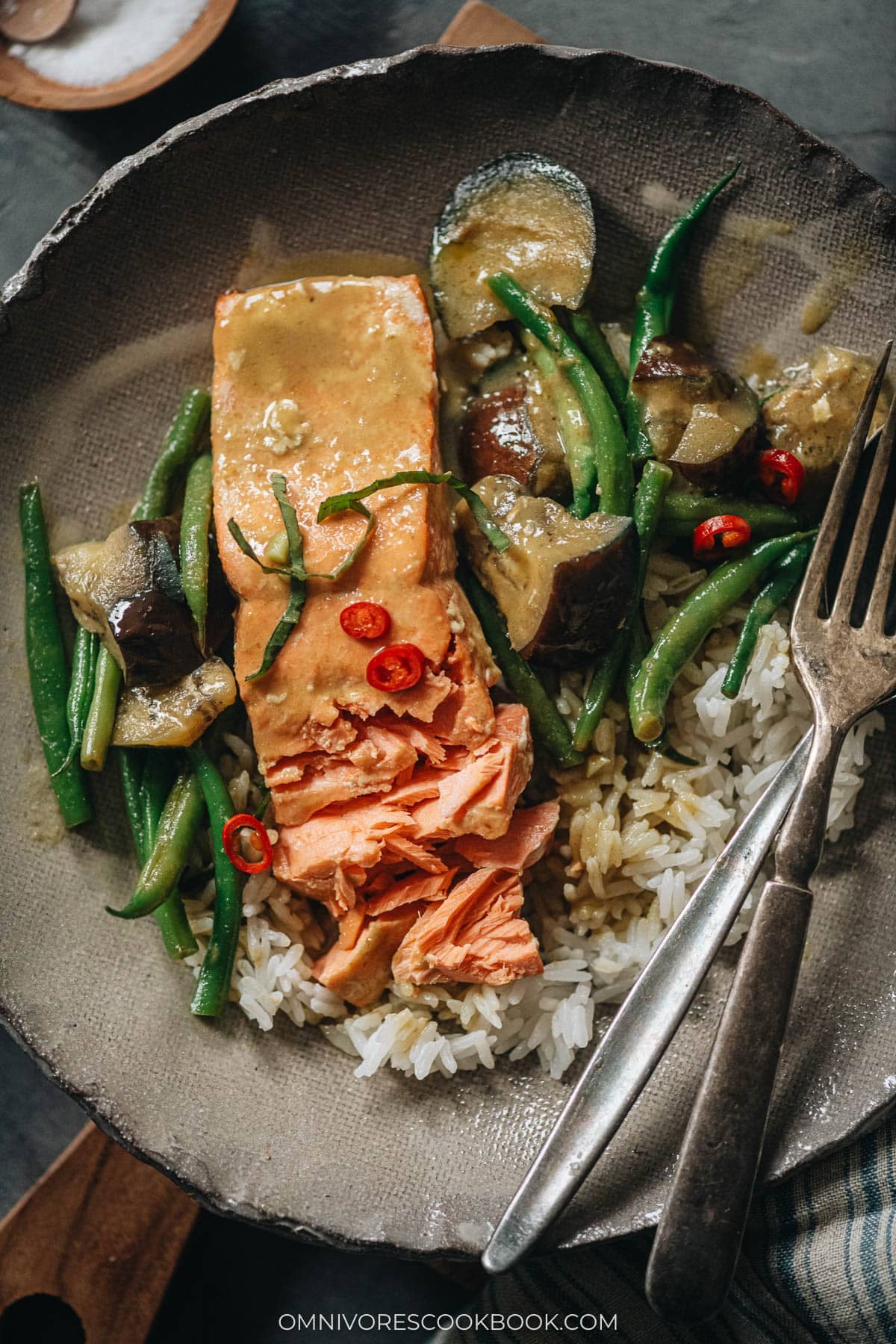
Thai green curry is one of the classic curries of central Thailand, made from a paste of green chilies, lemongrass, galangal, kaffir lime, and fresh cilantro root, then loosened with coconut milk into an aromatic sauce that tastes herbal next to the deeper reds and yellows of Indian curries. In Thailand the paste is usually pounded from scratch with a mortar and pestle, but in a home kitchen the store-bought jarred paste is what makes a 25-minute weeknight version possible. This is the Thai dinner I always make and sometimes I alternate with my Thai basil chicken and my shrimp pad Thai. Both absolutely delicious!
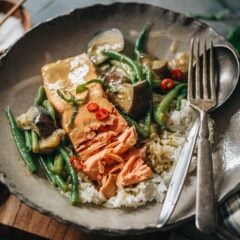
Just to give you a little story here, the first time I tested this recipe with skin-on salmon, I almost skipped the sear because the fish was going into a creamy sauce anyway, right? Well, I’m glad I didn’t because that crispy salmon skin against the creamy curry is what gives this dish such an incredible contrast in texture. I have to say, this has been on our weeknight menu a lot lately because my husband and I are quite busy, and it’s one of the fastest ways I can get salmon and vegetables on the same plate.
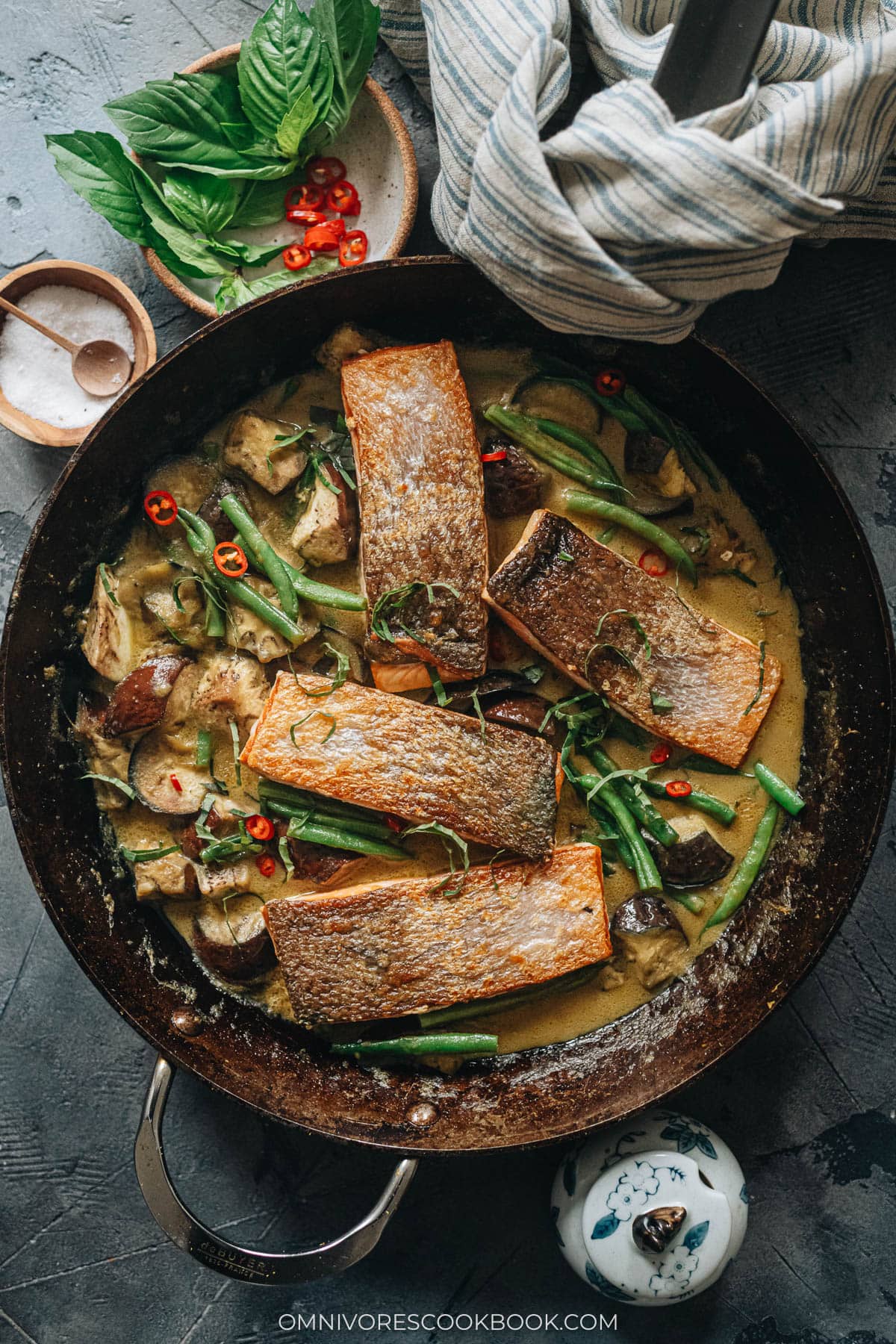
This Thai salmon coconut curry recipe pretty easy to follow, so any home cook can make it. I bloom the green curry paste in a splash of oil to open up the aromatics, pour in the coconut milk with a little chicken stock and fish sauce, simmer the vegetables in the sauce until they are just tender, sear the salmon skin-side down in a separate pan while the curry reduces, then nest the fillets skin-side up on top of the sauce so the skin stays crackly. So, if you want to impress your partner or your family with a flavorful and unique salmon diner, I highly recommend you to give this recipe a try.
Ingredients
The best part about this Thai salmon coconut curry is that most of the pantry ingredients come from the Thai staples I keep stocked once a month, and the fresh ingredients are simply salmon and two vegetables. Here is everything I use to make it:
Salmon: I buy skin-on salmon fillets, the skin protects the fillet from drying out over high heat during the sear.
Green curry paste: Thai green curry paste is the flavor foundation of the whole dish, and I use a jarred paste from the Thai section of the grocery store because it saves me the mortar-and-pestle work. Brands vary a lot in salt and heat, so I taste the sauce after it is mixed and adjust the fish sauce and sugar before the salmon goes in. Red curry paste swaps in for a warmer sauce, but the color goes from green to rust and the herbal edge from the cilantro root disappears.
Coconut milk: I go for full-fat canned coconut milk because the fat is what turns this sauce creamy, and the light version dilutes into a thin broth that tastes flat next to the curry paste. I shake the can well before I open it because the cream and the water separate on the shelf, and I want the two blended back together before they go into the pan.
Chicken stock and seasoning: I loosen the sauce with a splash of chicken stock so the curry stays saucy after it reduces around the vegetables, and I season with fish sauce for the salty umami anchor and a spoonful of sugar for the light Thai sweetness that balances the chili paste.
Green beans and Japanese eggplant: These are the two vegetables I settle on for the balance of textures, with the green beans holding a snap through the simmer and the Japanese eggplant softening into a silky bite that soaks up the sauce.
Fresh Thai basil: Thai basil is the finishing herb that gives the sauce its amazing perfume and pulls the dish into Thai territory.
How to Make
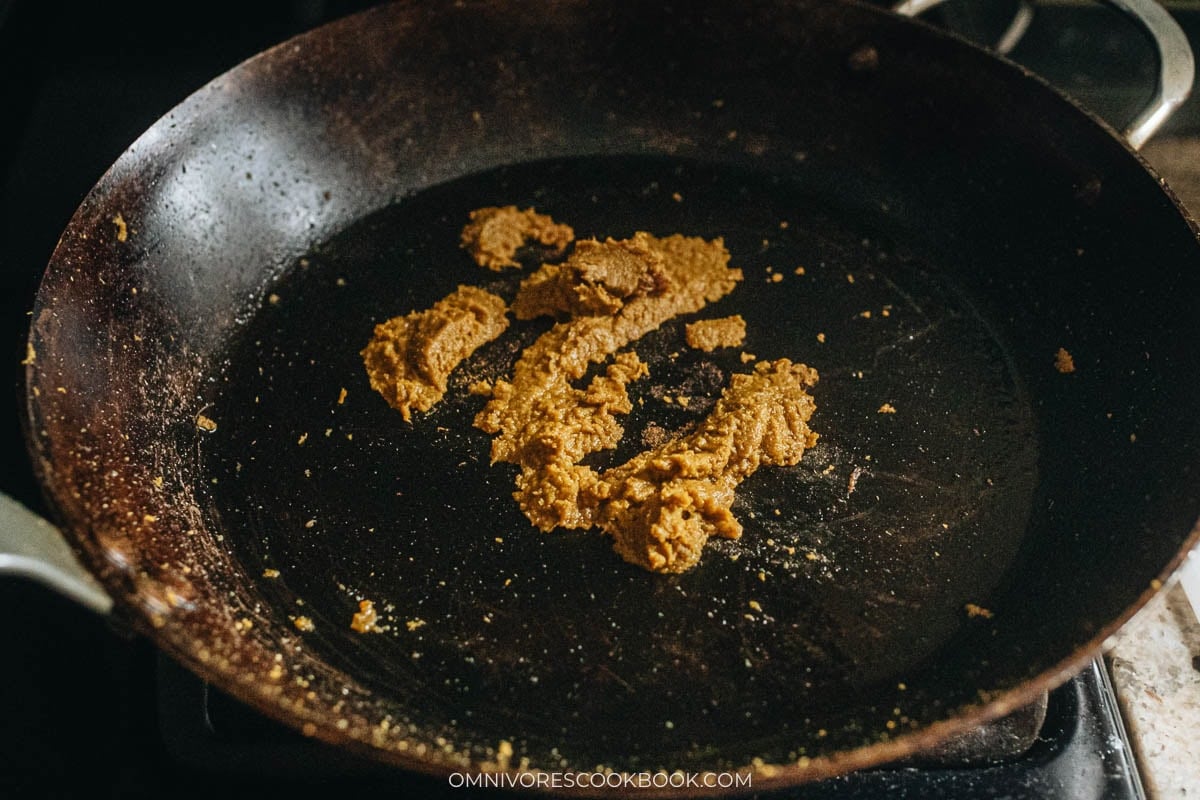
1. Bloom the curry paste: Heat 2 teaspoons of vegetable oil in a large skillet or wide saucepan over medium heat. Add the green curry paste and stir for about 1 minute until the paste is fragrant.
2. Mix the sauce: Pour in the coconut milk, chicken stock, fish sauce, and sugar. Stir to combine. Taste and adjust the fish sauce and sugar based on your curry paste brand.
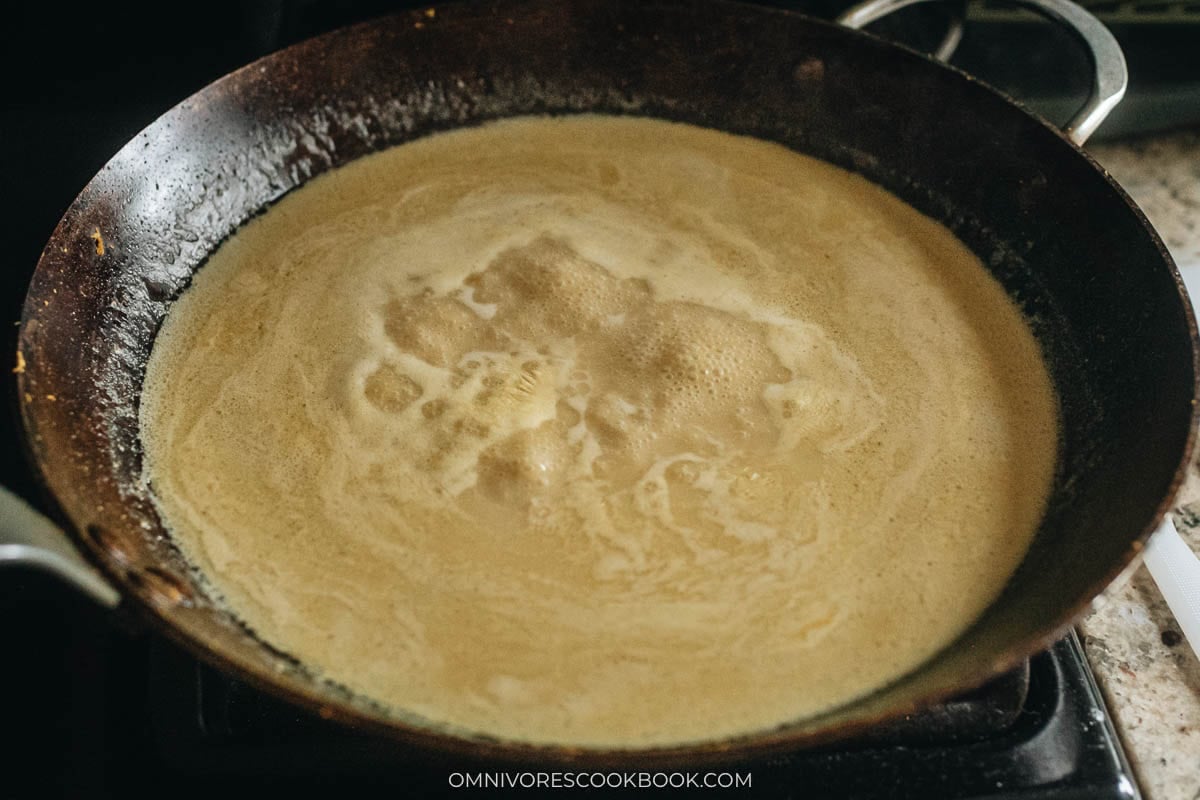
3. Simmer to thicken: Bring the sauce to a boil, then lower the heat to medium-low and simmer for about 10 minutes until the sauce is mostly thickened.
4. Season the salmon: While the sauce simmers, sprinkle a pinch of salt on both sides of the salmon fillets.
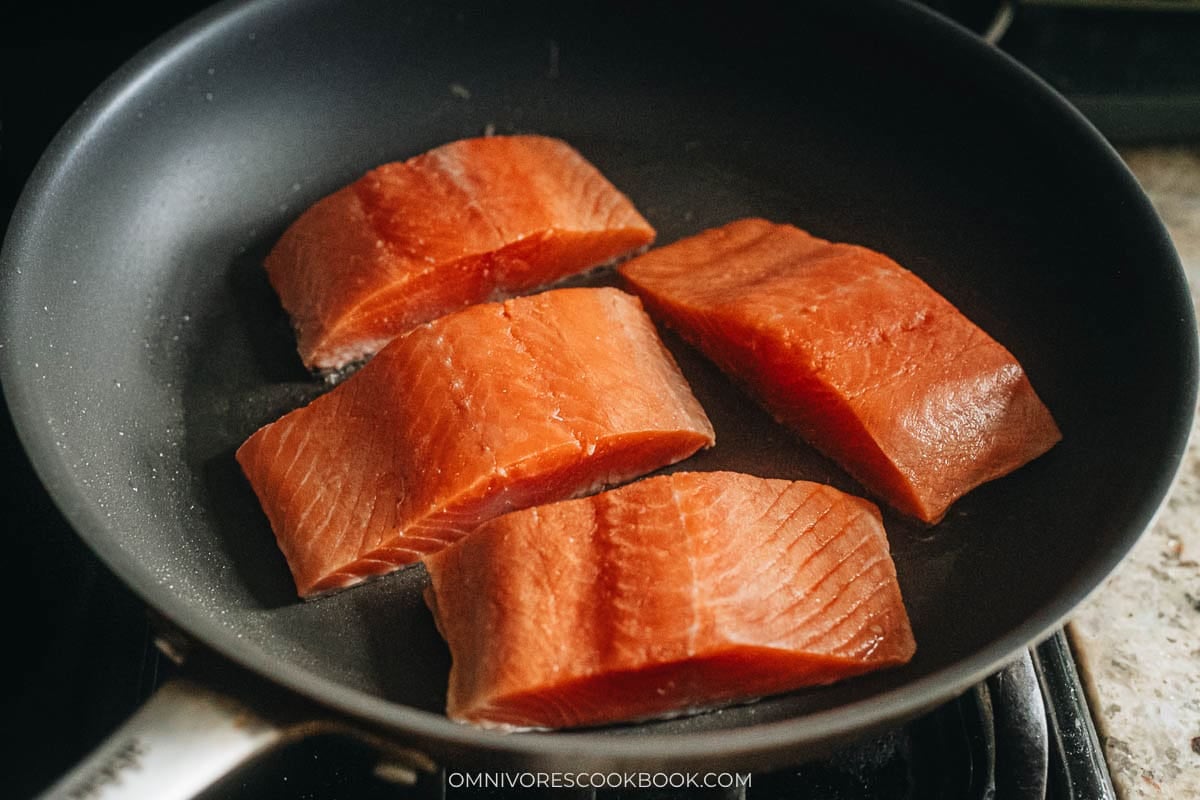
5. Sear the salmon skin: Heat 1 teaspoon of vegetable oil in a separate pan over high heat until it is just smoking. Place the salmon skin-side down in the hot pan. Sear for about 1 minute until the skin is brown and crisp. Transfer the fillets to a plate.
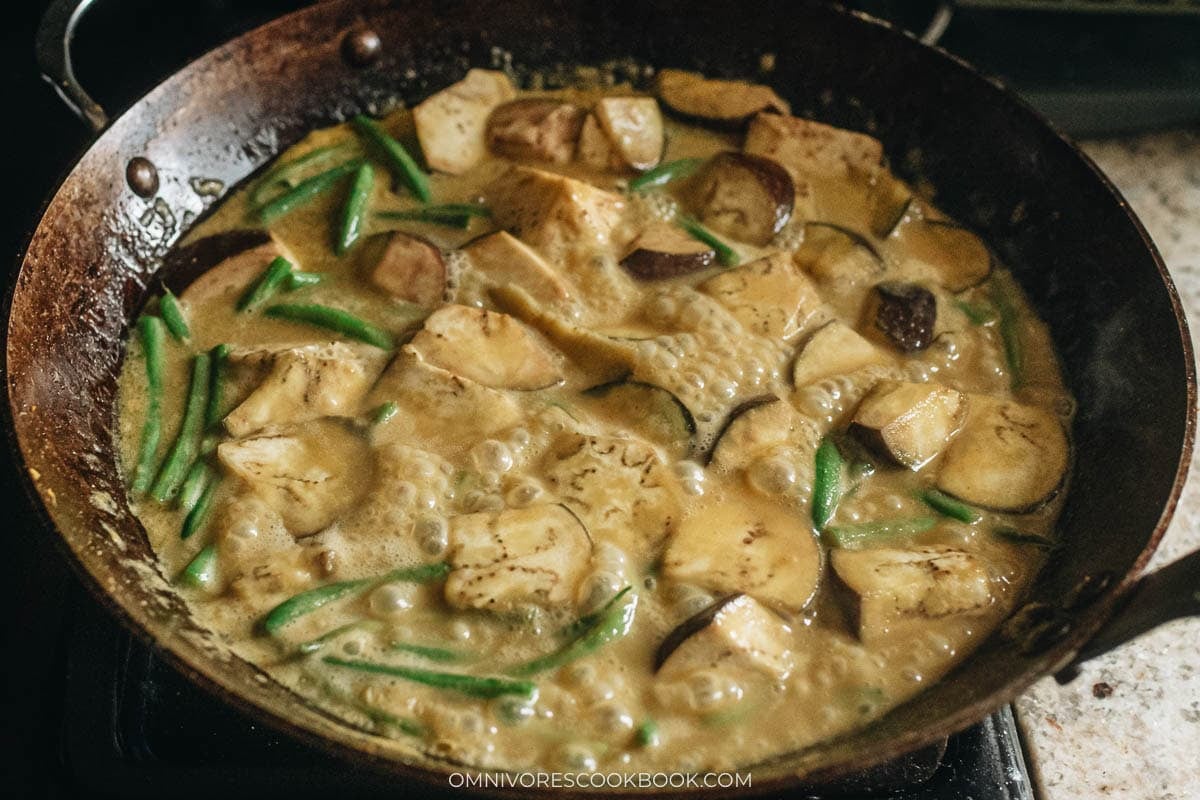
6. Add the vegetables: Stir the green beans and Japanese eggplant into the thickened sauce. Simmer for 4 minutes.
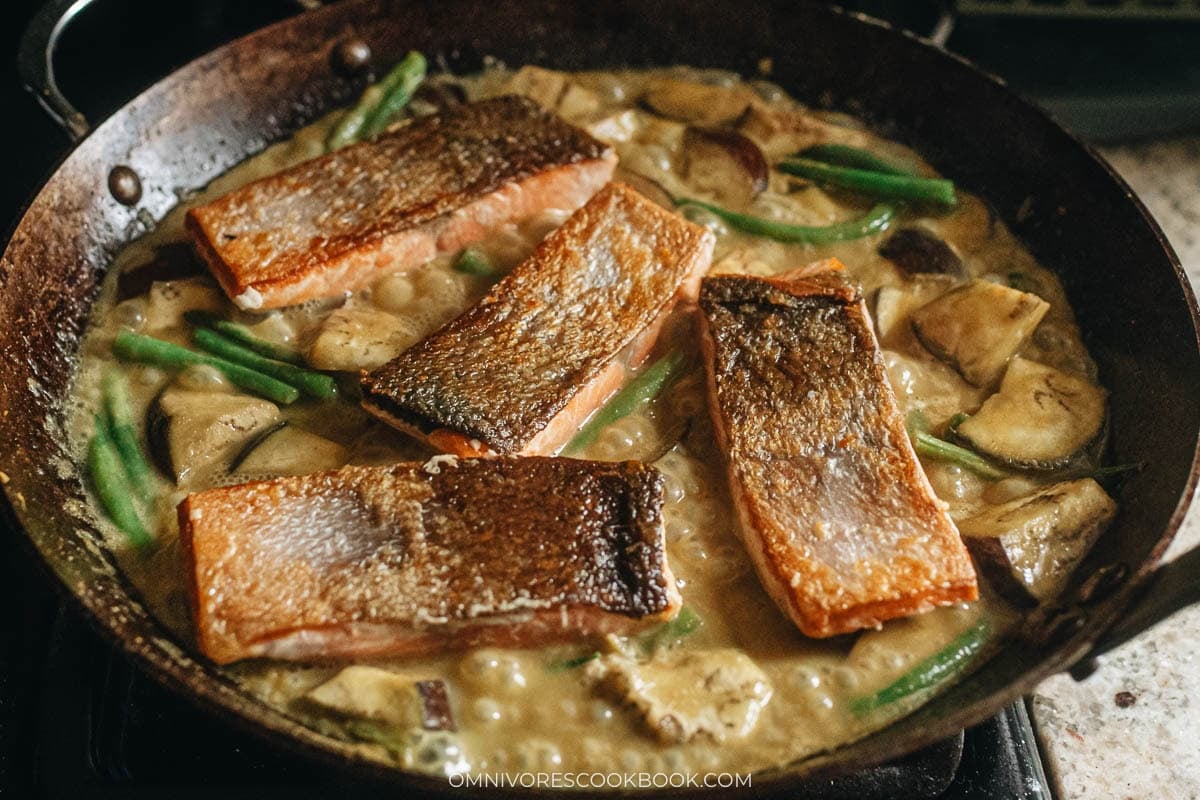
7. Nest the salmon: Arrange the vegetables into 4 wells the size of the fillets. Place the salmon skin-side up in the wells so the skin stays above the sauce.
8. Finish the salmon: Simmer for another 2 to 3 minutes until the salmon is just cooked through.
9. Add the basil: Pull the pan off the heat and stir in the fresh basil leaves.
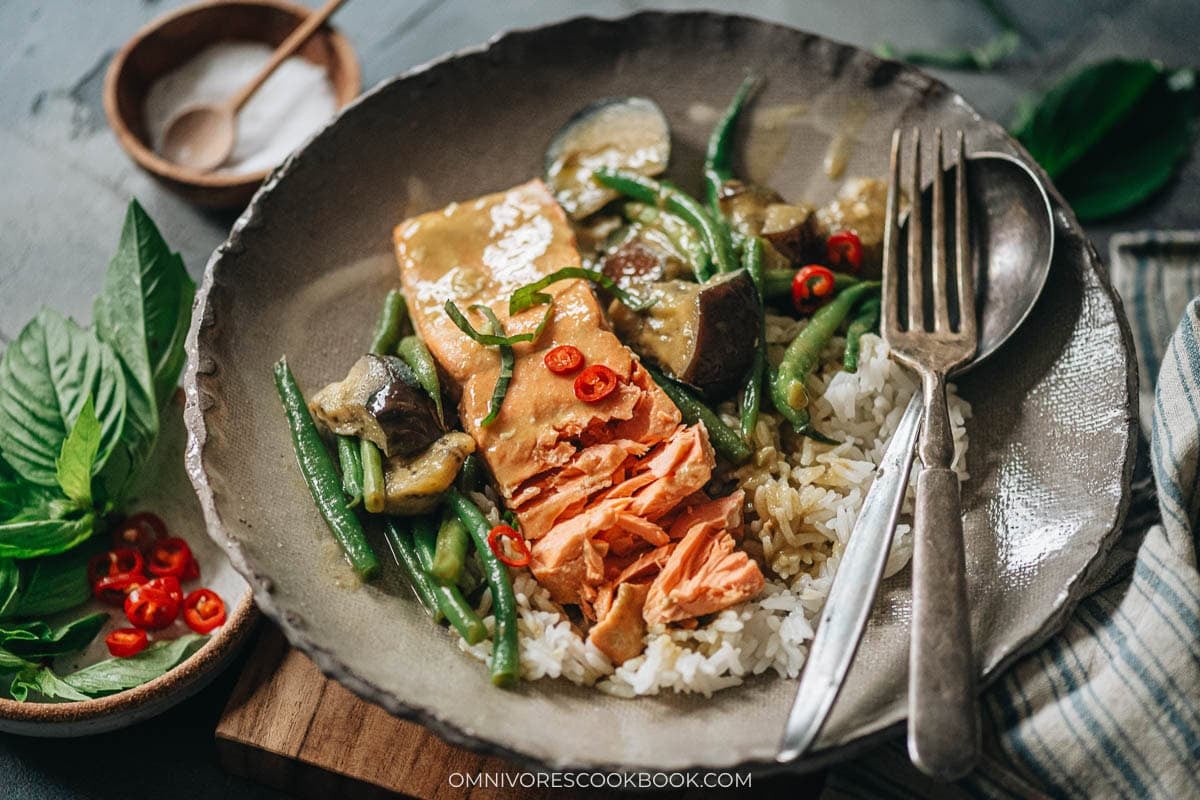
10. Serve: Spoon the curry into shallow bowls and serve over steamed jasmine rice.
My Cooking Tips
Sear the salmon skin in a separate pan, not the curry pan: The high heat needed for crackly skin will scorch the curry paste and turn the sauce bitter, and the moisture in the curry pan keeps the skin from crisping. I heat a second small skillet on a burner next to the curry pot and sear the salmon while the sauce is thickening, which uses the same 10 minutes twice.
Pat the salmon dry before the sear: Wet fish steams instead of searing, and the skin comes out limp instead of crackly. I set the fillets on a paper towel while the sauce simmers and press down lightly with another towel to pull off any surface moisture before the salt goes on.
Do not stir the salmon into the sauce: Nesting the fillets skin-side up on top of the vegetables is the whole reason the skin stays crisp through the last 2 minutes of cooking.
Taste the sauce before the salmon goes in: Every brand of green curry paste is a little different, and some are saltier or spicier than others. I dip a spoon into the sauce after it has simmered for 10 minutes and adjust the fish sauce for salt, the sugar for balance, and a splash of extra coconut milk if the paste is spicier than I want, all before the fish goes in and the seasoning is locked in.
Cut the eggplant small enough to soften in 4 minutes: Japanese eggplant softens fast, but only if it is cut into half-inch chunks. Bigger pieces are still firm when the salmon is done, and I end up with an underdone vegetable next to a fully cooked fillet.
Save the basil for the final off-heat toss: Thai basil leaves lose their perfume in under a minute of direct heat, and if they go in with the vegetables they cook into a dull, muddy green.
How I Like to Serve It
My favorite way to serve this curry is over steamed jasmine rice, this is non-negotiable in my house! Then, I ladle the vegetables and sauce around the salmon and set the fillet skin-side up in the center of the bowl. On a weeknight this is our whole dinner, and I might set out a small dish of sliced Thai chilies in fish sauce (prik nam pla) for anyone who wants extra heat at the table.
I have some Thai friends who sometimes come over for dinner, and I love treating them to a batch of Thai fish cakes for appetizer. To round out the meal, you can serve the coconut curry with pineapple fried rice, or add Thai basil chicken for a bigger spread. For something green on the side, broccoli with garlic sauce is an easy option that goes well with the rich curry.
Frequently Asked Questions
Can I use skinless salmon fillets?
Skinless salmon is a workable swap when that is what my grocery store has. I skip the sear step and slide the fillets straight into the sauce for the last 4 to 5 minutes of the simmer, which gives me a soft-poached fillet without the crispy top. The dish tastes just as good and moves faster, but the textural contrast of the crackly skin over creamy sauce is what I love about the skin-on version.
What can I use instead of Japanese eggplant?
Globe eggplant is the best substitute for Japanese eggplant because it gives the curry a similar tender, creamy texture. Cut it into bite-size pieces so it cooks through evenly. Mushrooms are another great option – their meaty, tender texture works especially well with the rich coconut curry. You can also use bell pepper, onion, or baby spinach, although they will change the texture of the finished dish. For the closest result to the original recipe, I recommend sticking with another variety of eggplant.
Can I use a different type of fish?
Yes. This curry works well with other firm, meaty fish that won’t fall apart easily as they simmer. Cod, halibut, sea bass, or cat fish are all good options. Cut the fish into large bite-size pieces and adjust the cooking time as needed depending on the thickness, usually around 4 to 5 minutes. The fish is ready when it flakes easily and is just cooked through.
Can I make this curry less spicy?
Yes. The easiest way to make the curry milder is to add more coconut milk. Start with an extra 1/4 cup and add more as needed until the spice level is right for you. The coconut milk mellows the heat while keeping the curry rich and flavorful. Since it also dilutes the seasoning slightly, taste the curry at the end and add a little more fish sauce if needed.
Want to Save This Recipe?
Enter your email below & we’ll send it to your inbox. Plus get great new recipes from us every week!
Thai Salmon Coconut Curry
Ingredients
- 1 pound salmon , skin on & cut into 4 fillets
- Pinch of salt
- 1 teaspoon vegetable oil
Curry
- 2 teaspoons vegetable oil
- 3 tablespoons green curry paste (*Footnote 1)
- 1 can (13.5 oz) coconut milk
- 1/2 cup chicken stock
- 1 tablespoon fish sauce
- 2 teaspoons sugar
- 1 cup green beans , trimmed and cut in half
- 1 small Japanese eggplant , halved & cut into half-inch chunks
- 6 basil leaves , sliced
Instructions
- In a large skillet or a wide saucepan add the 2 teaspoons of oil and heat over medium heat until warm. Add the curry paste. Cook and stir to release the fragrance, about 1 minute.
- Add the coconut milk, chicken stock, fish sauce, and sugar. Stir to combine everything. Taste the mixture and adjust the fish sauce and sugar to your preference. (*Footnote 1)
- Bring the broth to a boil, then lower the heat to medium-low to reduce it to a simmer. Cook until the curry is mostly thickened, 10 minutes.
- While the broth simmers, sprinkle a pinch of salt evenly onto both sides of the salmon. Add the remaining 1 teaspoon of oil to a separate pan over high heat until it is just smoking. Place the salmon, skin-side-down into the hot pan. Cook until the skin is brown and crisp, about a minute. Once done, transfer the salmon to a big plate and set it aside.
- Once the broth is reduced, add the green beans and eggplant. Stir to mix well. Continue to simmer for another 4 minutes.
- Arrange the vegetables to create 4 wells, about the size of the fillets. Place the cooked salmon skin-side-up in the wells. Simmer for another 2-3 minutes, until the salmon is just cooked through.
- Remove the pan from the heat and add the basil leaves. Serve hot over steamed rice as a main dish.
Notes
- Every brand of curry paste is different, so you may need to adjust the seasoning depending on the ingredients of the curry paste you are using.
Nutrition

Did you make this recipe?
I’d love to hear how it turned out for you! Please take a moment to leave a 5-star rating ⭐️ and share your thoughts in the comments further down the page. It really helps others discover the recipe too.
Malinda Donovan
Very easy to prepare and my spouse, who declared that she “does not like curry” was won over by this delicious dish!
Richard Baum
Delicious recipe. Made as written and loved it. Try to find Masri green curry paste. Makes all the difference.
Bettina Scattino
Hi,Maggie sehr leckeres Rezept,wie in Thailand.Was Bob sagt stimmt nicht,denn um Thai zu ,essen,kommt,immer etwas Zucker das hebt den Geschmack.Ich habe nur einen Teelöffel genommen.Geschmackssache!😋Dann habe,ich noch Frühlinszwiebel und,Ingwer verwendet.Als Gemüse nur Brokkoli.Den Lachs in grobe Würfel.Wie du siehst etwas abgewandel,aber die Soße mega lecker.Hab,schon viel von deinen Rezepten nachgekocht alles sehr lecker.Gruss aus Italy Bettina 🤩
Jenny
I love this recipe! A good weeekday dinner with easy prep and fast cooking.
Jennifer
Is the coconut milk unsweetened? I have a Thai basil plant flourishing in the garden and this will be the perfect recipe to use it in!!
Maggie
Hi Jennifer, yes, I used canned unsweetened coconut milk (it’s important to use coconut milk, not coconut beverage comes in a box).
Happy cooking cooking and let me know of it turns out! 🙂
Bob
My wife of over 40 years is Thai, and we both enjoyed it. However, I suggest leaving out the added sugar. That’s one thing Thai will tell you; here in the US sugar gets added to dishes that would never have it in Thailand. The American palate has become accustomed to so much sugar that without it the food may seem lacking. But there is no need for additional sugar, and leaving it out is the proper way to prepare this dish. When we go to Thai restaurants, she orders her meal without added sugar. Even chefs in Thai restaurants in the US realize that Americans crave sugar so they automatically add it. But it isn’t needed. Let the natural sweetness of the vegetables and coconut milk shine through.
Bea
So simple yet full of flavour!