
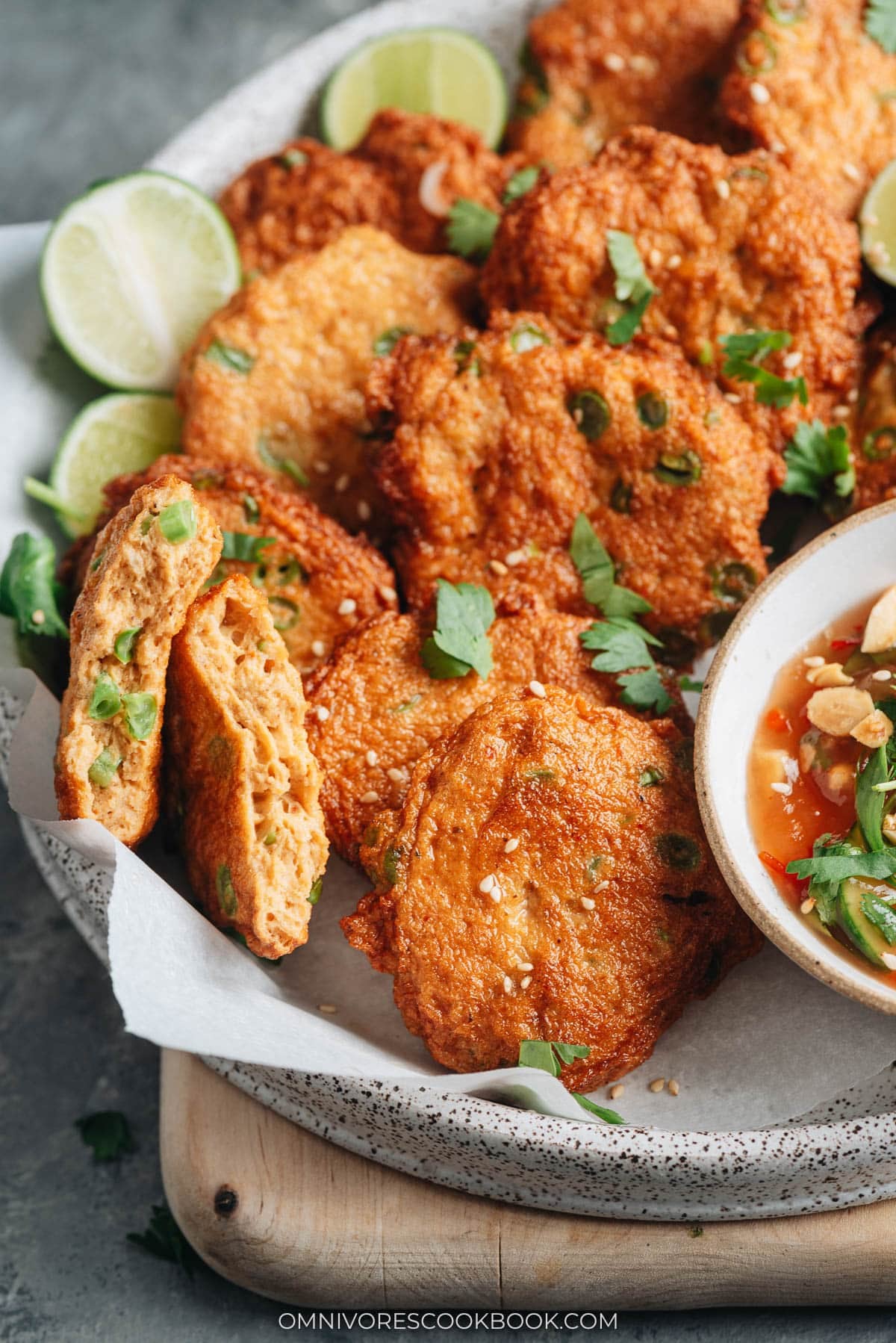
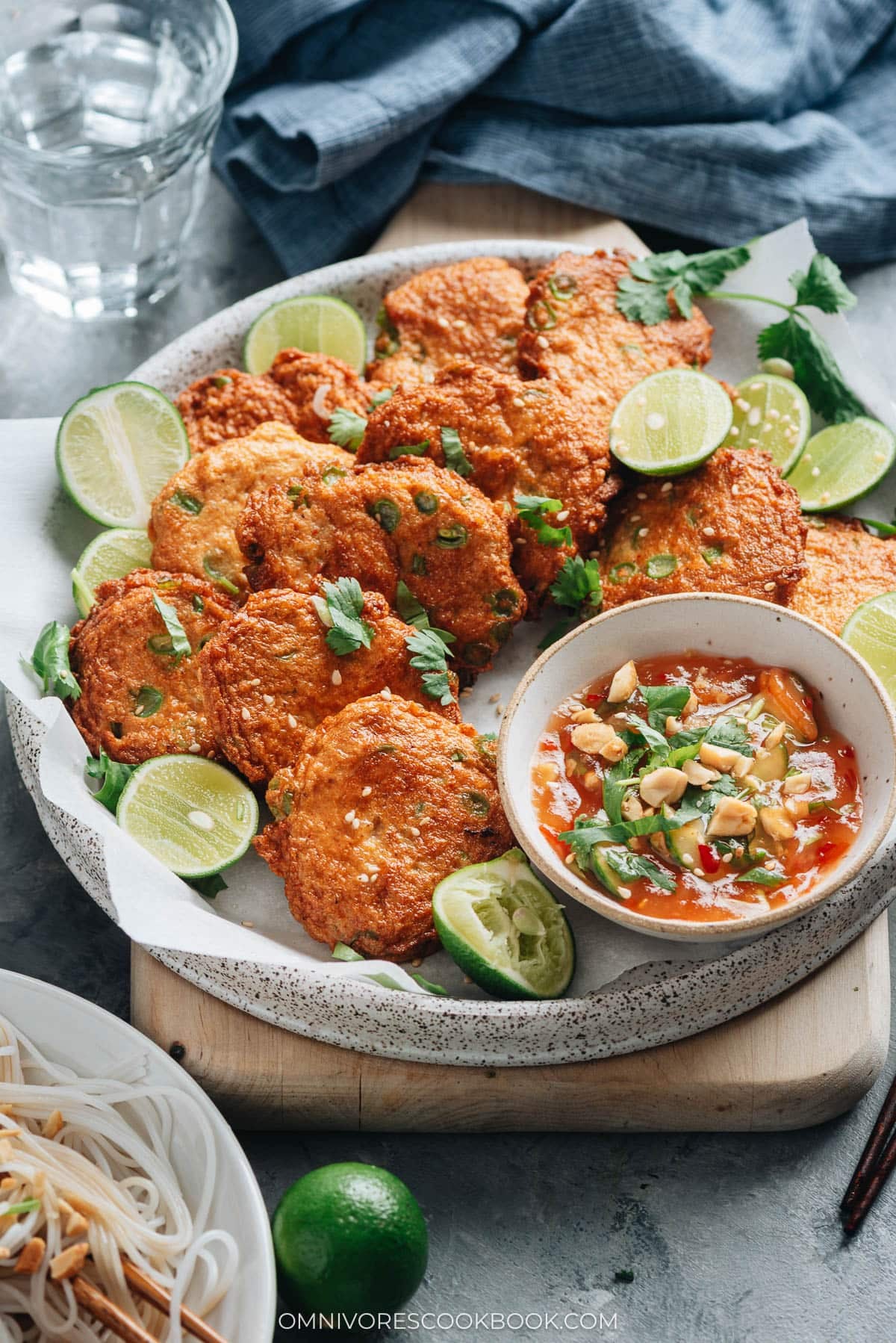
Tod Mun Pla (ทอดมันปลา), or Thai fish cake, is a Thai street food classic, the fragrant red curry fish cake you see piled high at hawker stalls in Bangkok and at Thai restaurants in the United States. Traditional versions get their famous springy bite from cooks beating the fish paste against a board with wooden sticks for half an hour, which is what gives the cakes their bouncy elastic texture against the teeth. At home I get the same thing with 2 minutes in a food processor and a couple of egg whites, which whip air into the paste the way the sticks would.
My version is adapted from Leela Punyaratabandhu’s Tod Mun Pla recipe at She Simmers and from Lucky Peach: 101 Easy Asian Recipes by Peter Meehan. Leela’s blog is where I go for any Thai recipe at home, and her trick of beating egg whites into the fish paste is what made these cakes work in my kitchen for the first time. I skipped the kaffir lime leaves I could not find at my local market, used the food processor for everything in one step, and started with whole fish fillets instead of pre-made paste so I never have to make an extra trip to the Asian market.
In just 30 minutes you can have this ready, simply pulse everything in the food processor until the paste turns sticky and bouncy, fold the sliced green beans in by hand, then heat half an inch of oil in a small deep pot and fry the cakes in batches. I recommend you to try the cakes at home with a Thai night in mind, my recipe below has every step from raw fish to the dipping sauce.
Ingredients
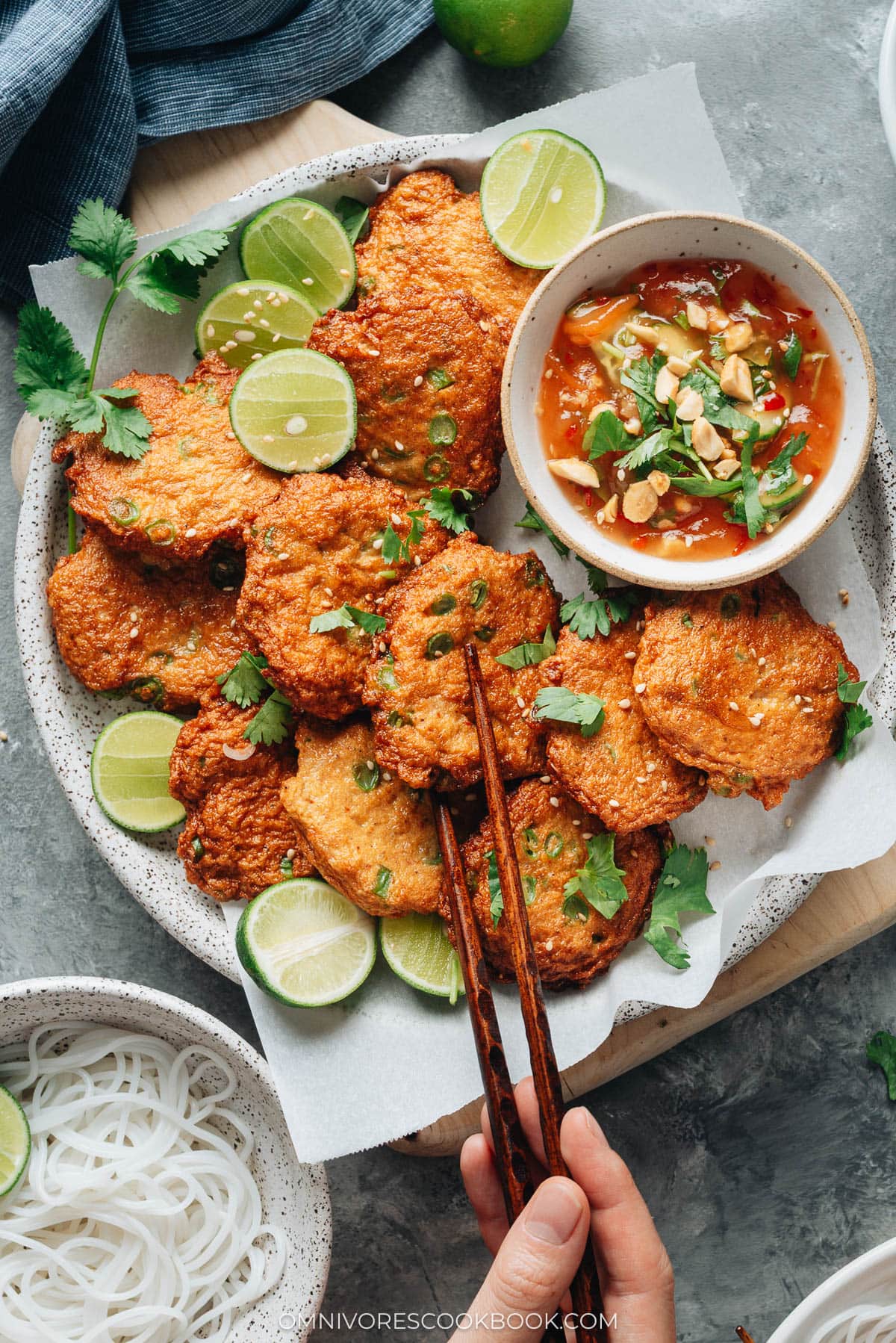
Below are all the ingredients you need to make this easy Thai Fish Cakes recipe.
Fish: I start with white fish fillet, cut into small pieces. I go for catfish first because the higher fat content gives me a richer, more tender cake, but I have also used cod, sea bass, tilapia, and flounder with good results. I choose the freshest fillets I can find at the counter, and I have made these with frozen fillets thawed overnight in the fridge with no loss of texture.
Red curry paste: I use a small jar of Thai red curry paste. The brands I keep in my pantry are Maesri and Mae Ploy from the Asian market, since both taste closer to a homemade paste than the supermarket brands.
Egg whites: I beat large egg whites into my fish paste during processing, which is what gives my cakes their famous springy bouncy texture.
Seasoning: I season the paste from the inside with fish sauce and sugar, so my cakes taste finished even before they meet the dipping sauce. When I am cooking for someone who does not like the smell of fish sauce, I swap in soy sauce and the cakes still taste good.
Green beans for texture: I fold thinly sliced green beans into my paste at the end, which is what gives the cakes their crunch and the tiny green flecks I love in the cross section. When I have Chinese long beans on hand, I use them the same way, and I have also used chopped scallions when green beans are out of season.
Frying oil: I shallow fry the cakes in vegetable oil in a small deep pot, which gives me a consistent golden crust without the cleanup of a full deep fry. When I want to skip the deep fry altogether, I switch to a large nonstick skillet with less oil and pan fry the cakes instead.
Dipping sauce: I make my dipping sauce from Thai sweet chili sauce, chopped seeded cucumber, roasted peanuts, fresh cilantro, and a splash of fish sauce stirred together right before serving.
How to Make
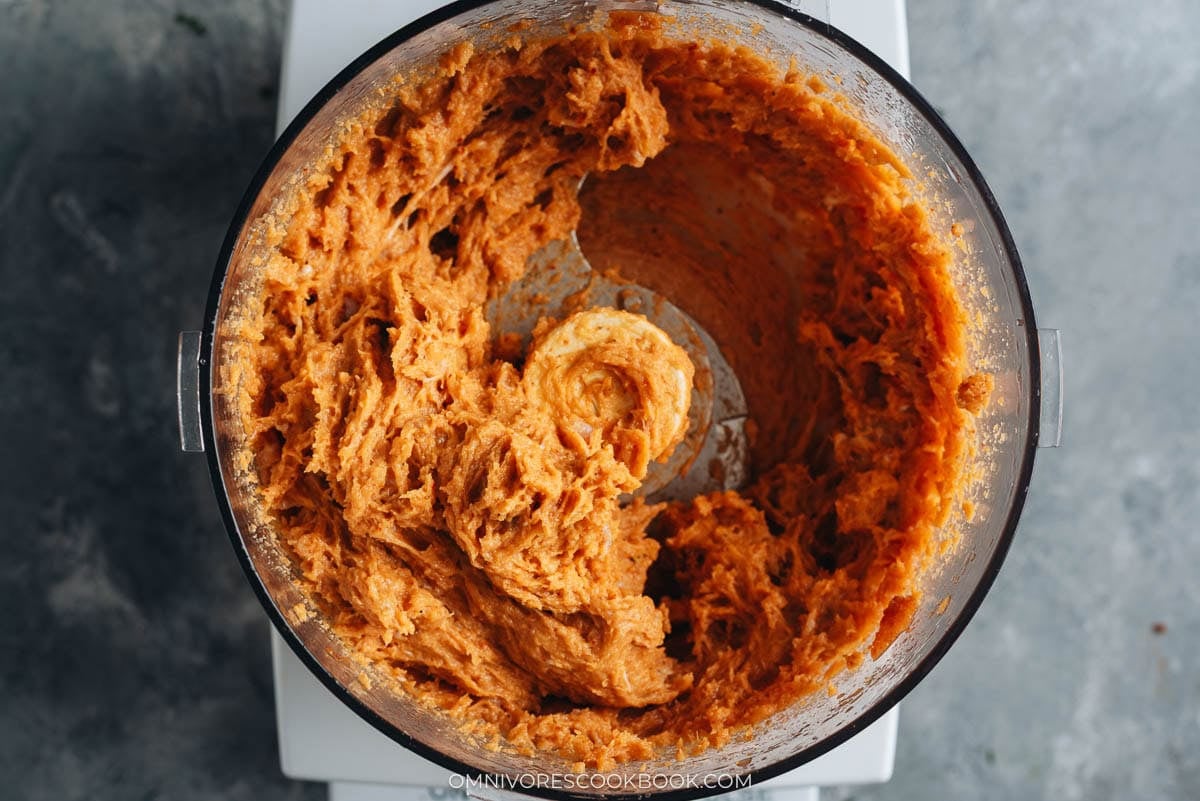
1. Build the fish paste: Add the cubed fish, red curry paste, egg whites, fish sauce, and sugar to a food processor. Pulse to combine, then run the machine for 2 minutes until the paste is smooth, thick, and sticky. Test by poking it with a spoon, it should spring back at you like a marshmallow, not slump.
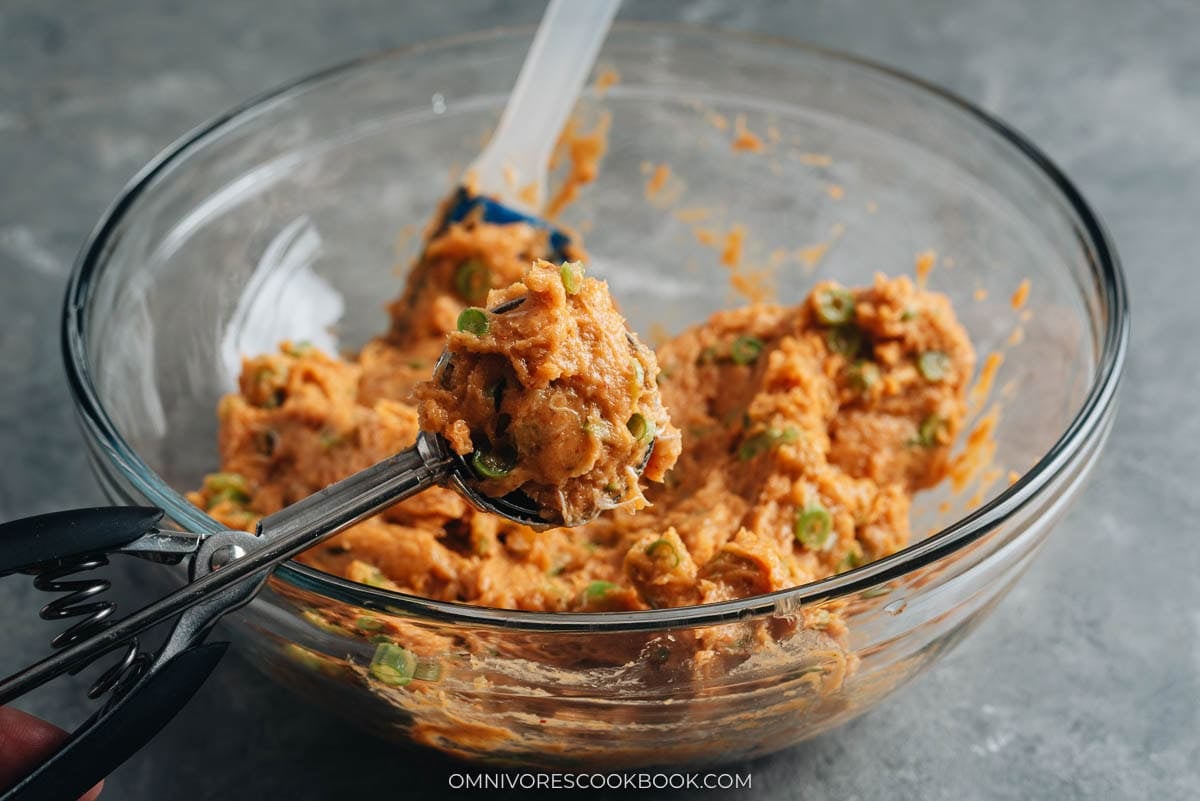
2. Fold in the green beans: Transfer the paste to a large bowl and fold the sliced green beans through with a rubber spatula. Stop as soon as they are evenly distributed, since too much folding can deflate the air you whipped into the paste.
3. Heat the oil: Pour 1/2 inch of vegetable oil into a small deep pot and set it over medium heat. Test the oil with a tiny pinch of paste, which should sizzle on contact and float to the surface within a few seconds.
4. Scoop and flatten: Drop a 2-tablespoon ball of paste from a cookie scoop onto a spatula coated in oil. Use the back of a second spatula or a large spoon to press the ball into a 1/4-inch thick disc. The oiled spatula is what keeps the paste from sticking to your tools.
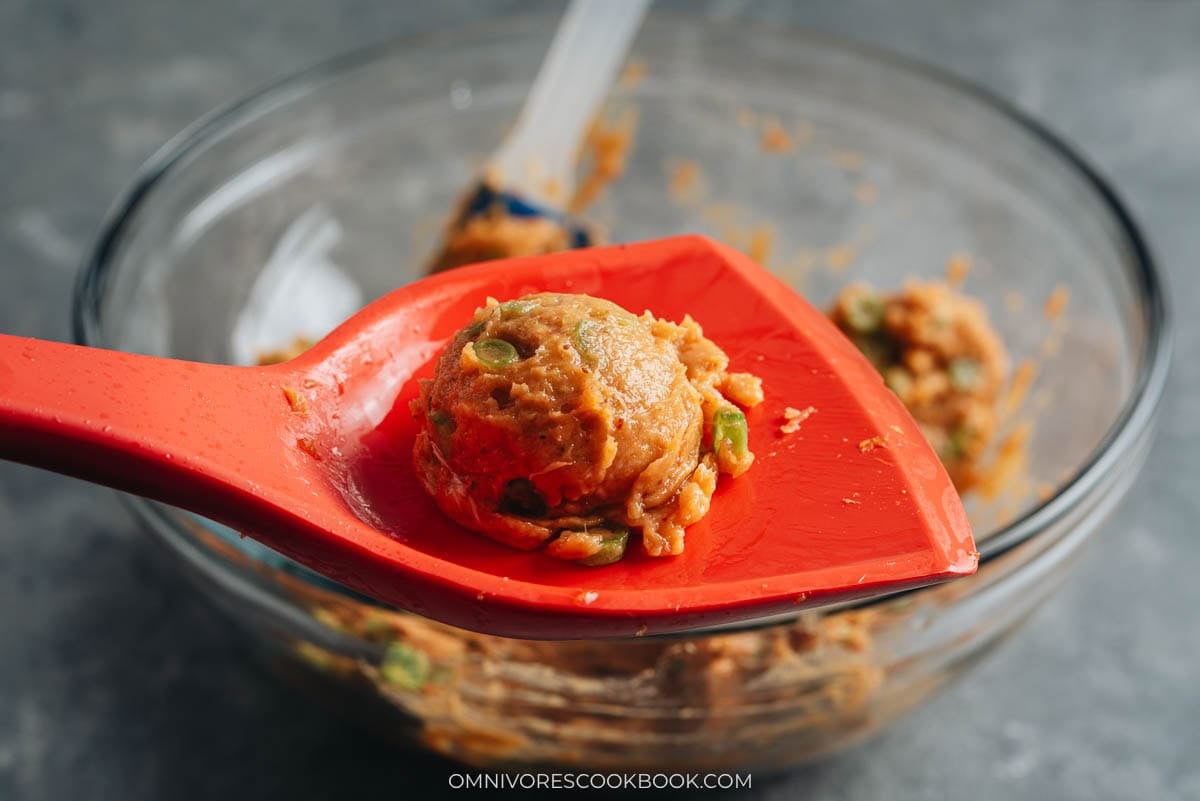
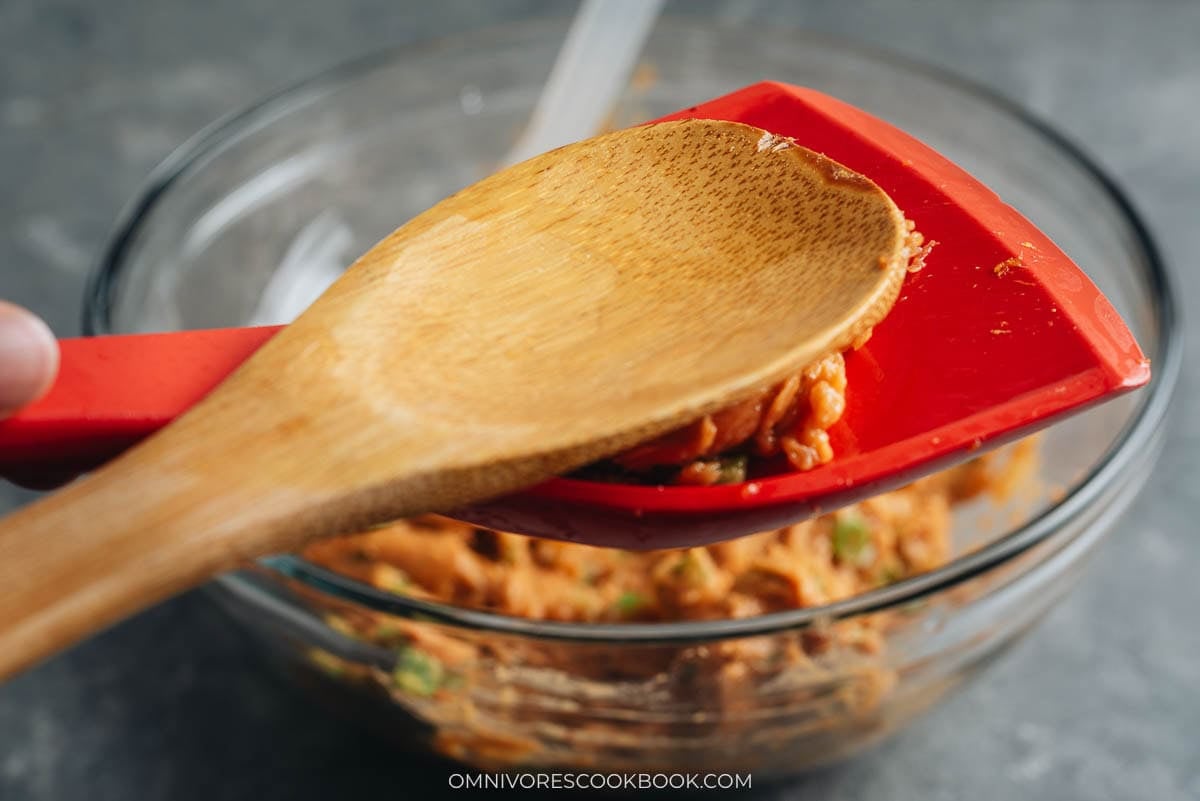
5. Fry the fish cakes: Tilt the oiled spatula and slide each cake into the hot oil one at a time. Work in batches of three at most so the oil temperature stays high and the cakes do not crowd each other. Fry the cakes until the bottom side turns golden, about 30 to 40 seconds. Flip them with a slotted spoon or chopsticks and cook the other side until it matches, another 30 seconds. The total fry time per cake is about a minute.
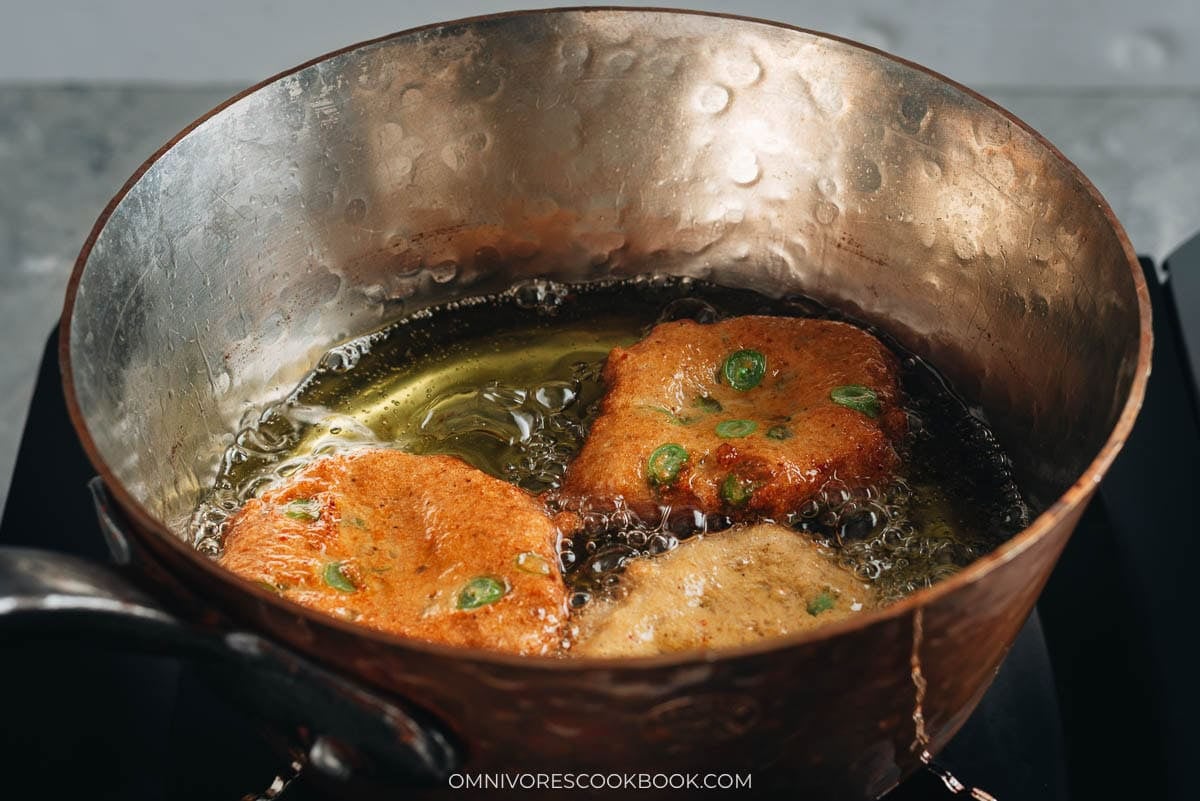
7. Drain and test doneness: Lift the cakes onto a wire rack or paper towel to drain. Poke one with a toothpick to test, the toothpick should come out clean and the cake should spring back when you tap it with your finger.
8. Mix the dipping sauce: Stir the Thai sweet chili sauce, chopped cucumber, roasted peanuts, minced cilantro, and a teaspoon of fish sauce together in a small bowl. Make this right before serving so the cucumber stays crisp.
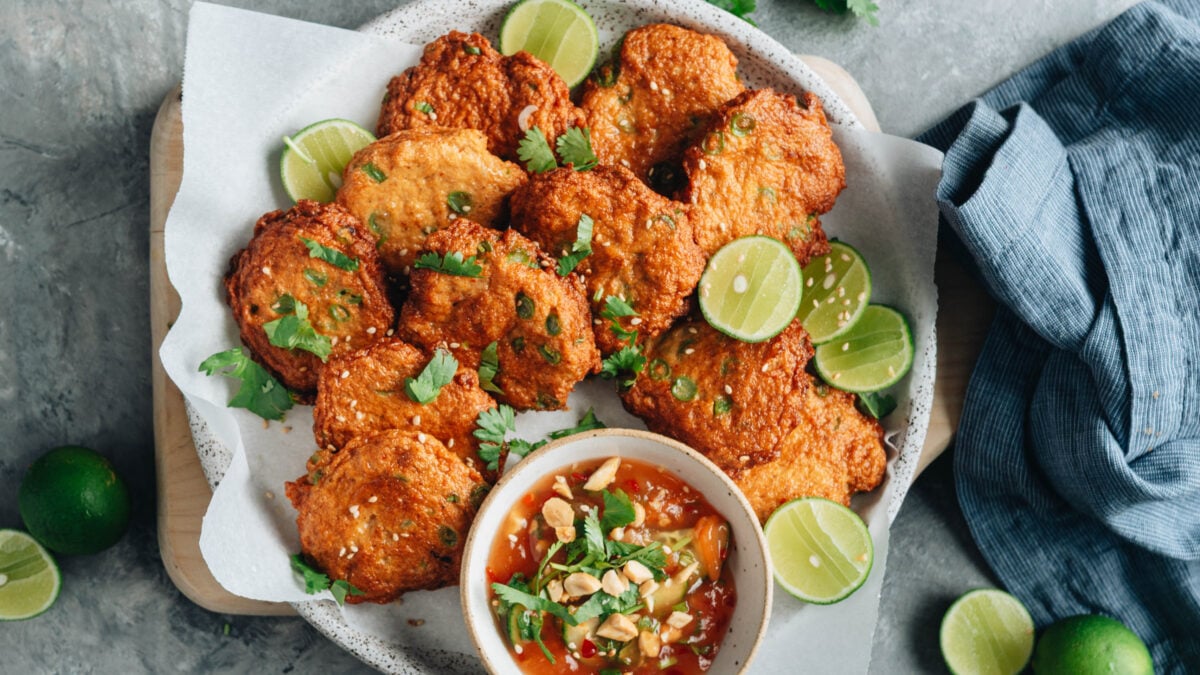
9. Plate and serve: Stack the warm fish cakes on a plate with lime wedges and the bowl of dipping sauce on the side.
My Cooking Tips
Run the food processor long enough to get a bouncy paste: Crumbly fish cakes almost always come from a paste that did not get processed enough. I run the machine for the full 2 minutes and check the paste with a spoon, which should spring back instead of slumping. If the paste still looks loose, give it another minute in the processor.
Do not refrigerate the uncooked fish paste: I tried this once thinking I could prep ahead and the fried cakes came out tough and grainy the next day. I had to put the paste back into the food processor and beat in 2 more egg whites to get the bouncy texture back. Fry the cakes the same day you mix the paste, or freeze them cooked instead.
Use a cookie scoop and an oiled spatula: Shaping fish paste with bare hands is messy and the cakes come out uneven, so I use a cookie scoop to portion the paste and an oiled spatula to flatten and slide each cake. The oil on the spatula keeps the paste from sticking, and the cookie scoop gives me consistent size cake after cake.
Adjust the heat between batches: If the cakes are turning dark brown before they cook through, drop the heat to medium-low for the next batch. If they take longer than 45 seconds to turn golden on the first side, nudge the heat up a touch. The cakes cook so fast that the oil temperature drift between batches matters.
How to Serve
I usually put them on the table hot off the stove with the cucumber peanut dipping sauce in a small bowl in the center and lime wedges on the side. I usually plate 4 or 5 cakes per person on a small platter, and we grab them with chopsticks. They’re at their best during the first 10 minutes after frying.
For a family dinner that needs more on the table, I treat the fish cakes as the seafood centerpiece of a small Thai inspired meal. A plate of Thai basil chicken adds a fragrant protein next to the cakes, and a bowl of drunken noodles or Thai pineapple fried rice covers the starch in a way the rice cakes already love.
Frequently Ask Questions
My fish cakes came out crumbly, what went wrong?
When this has happened to me, it is almost always because the paste was not processed long enough. I now run the food processor for the full 2 minutes and check that the paste springs back when I poke it, which is the texture that holds together once the cakes are fried. If the paste still looks loose, another minute in the machine and a second egg white usually fix it.
Can I make this less spicy for kids?
Yes, and I do this when I cook for a table with kids who do not eat spicy food. The Thai sweet chili sauce is not actually spicy, but the red curry paste in the fish cakes is, so I cut the curry paste from 2.6 ounces down to about half that and the cakes still taste good.
How to store leftover fish cakes?
Cooked fish cakes hold for 2 days in the fridge in a sealed container, or up to 3 months in the freezer if you want to keep a bigger batch for later. I reheat from the fridge with a quick pan fry over medium heat for about 2 minutes per side, which brings back the crispy crust without rubberizing the inside. For frozen cakes, I thaw them in the fridge overnight first and then pan fry the same way.
Want to Save This Recipe?
Enter your email below & we’ll send it to your inbox. Plus get great new recipes from us every week!

Thai Fish Cakes (Tod Mun Pla)
Ingredients
Fish Cake
- 1 pound white fish fillet , cut into 1-inch (2.5-cm) pieces (Footnote 1)
- 2.6 ounces red curry paste
- 2 large egg whites
- 1 tablespoon fish sauce (or soy sauce if you don’t like fish sauce)
- 1 tablespoon sugar
- 1 cup thinly sliced green beans (*Footnote 2) (Optional)
- Vegetable oil for frying (*Footnote 3)
- Lime wedges , for serving
Dipping sauce
- 1/2 cup Thai sweet chili sauce
- 1 Persian cucumber , seeded and small diced
- 2 tablespoons roasted peanuts , chopped
- 2 tablespoons cilantro , minced
- 1 teaspoon fish sauce
Instructions
- Fish cake:
- Combine the fish, curry paste, egg whites, fish sauce, and sugar in a food processor. Pulse a few times, to mix until it forms a smooth, thick, and sticky paste, 2 minutes or so. Once finished, poke the fish paste with a spoon. It should be firm, elastic, and springy. Transfer the fish paste into a big bowl.
- Fold the green beans into the paste using a spatula.
- Heat 1/2-inch oil in a small deep pot over medium heat until hot (*Footnote 4).
- Work on the fish cakes in batches. Use a cookie scoop to transfer a ball of 2 tablespoons of fish paste onto an oiled spatula. Then use the back of another spatula or a large spoon to flatten the ball into a 1/4-inch (1/2-cm) thick disc. Gently slide the fish cake into the pan. Fry until the bottom side turns golden, about 30 to 40 seconds. Flip and cook the other side until golden. The whole process should take about 1 minute. (*Footnote 5) To test doneness, transfer a fish cake onto a plate and poke it with a toothpick. You should feel the bouncy resistance and the toothpick should come out clean.
- Sauce
- Mix all the sauce ingredients in a small bowl right before serving.
- Serve the hot fish cake with dipping sauce as an appetizer, or serve them on top of rice or noodles as a main. Enjoy!
- You can store the cooked fish cakes in the fridge for a couple days, or in the freezer for up to 3 months. One note: do not refrigerate the uncooked fish paste. I did it once, and fried fish cakes made from day-old fish paste and it resulted in a tough and grainy texture. I had to put it back into the food processor and beat two more egg whites into it to get the texture fluffy again.
Notes
- Catfish, sea bass, cod and other types of white fish fillets will work. Try to find the freshest fillets possible. I prefer to use catfish to make this recipe, because the fish is fattier and creates a better texture.
- Authentic fish cakes use thinly sliced green beans or Chinese long beans (string beans) to add texture. You can skip this, or add a handful of chopped green onion.
- To create the best fish cakes that have a crispy golden crust and tender interior, you need to use a bit more oil, just enough to cover the fish cakes. But if you do not like frying, you can add just enough oil to cover the bottom of the pan. The surface of the fish cakes will turn darker but it will remain tasty.
- I highly recommend using a small, deep pot if you plan to fry the fish cakes. You can cook the whole batch with about 1 cup of oil (or less). The fish cakes cook very quickly in the hot oil, so you won’t be able to work on more than three cakes at a time. Alternatively, you can use a large nonstick skillet and roast the fish cakes with less oil.
- If your fish cake turns dark brown too fast, not leaving you enough time to work on shaping the next fish cake, reduce the heat to medium or medium low. If the fish cake takes too long to turn golden, increase heat slightly.
Nutrition

Did you make this recipe?
I’d love to hear how it turned out for you! Please take a moment to leave a 5-star rating ⭐️ and share your thoughts in the comments further down the page. It really helps others discover the recipe too.
The recipe was originally published in August 21, 2014 and updated in September 10, 2017. I completely changed the ingredients and cooking method. Please replace your old copy with this new version for much better results.
Evie
How many fish cakes in one serving? Thanks!
Maggie Zhu
I made this a while ago but I think it’s about 4 fish cakes per serving.
Olliburr
Great quick and tasty recipe. Made this with rockfish fillet and really enjoyed it.
J
Hello, this looks super appertising! I’m keen to do it for the kids who don’t take spicy food, should I follow the steps and just omit the chilli all together or do you suggest a substitute as the chilli paste has other ingredients inside. Thanks!! 🙏🏼
Maggie Zhu
The sweet chili sauce is actually not spicy at all. It’s mostly just taste sweet. The part that’s spicy is the red curry paste. You will need some of it so the final fish cakes will taste good. Maybe try to reduce the amount to half. The finished fish cake shouldn’t be too spicy and it will be great with the sweet sauce.
Mary
Made these today and they were easy, quick and scrumptious. Only different ingredient I used was laksa paste as did not have red curry paste in my pantry.
Eliza
Why write all the gumpf before giving the recipe? So much waffle to get to it. Who reads all the nonsense anyway? Immunity interested in your personal life and amateur writing no just want the recipe. Let’s cut the rubbish out have the recipe please.
I will tryout for recipe later today – thanks for sharing it.
Carol
Just under the recipe heading, there’s a ‘Jump to recipe’ link that takes you to the recipe and a ‘Print recipe’ link that opens just the recipe in a new tab.
Shirley
Hi, mine turned out crumbly and I used frozen cod. Please advise where could have went wrong?
Maggie
Hi Shirley, when you use a food processor to mix the paste, does it reach a consistency that is sticky and bouncy? I found out that if you don’t mix it enough, the paste won’t reach a very fine texture and will turn out crumbly.
Joe
Great recipe. I’ve also struggled with chopping fish by hand, the food processor is the way to go, good call. I treat the recipe here as a skeleton, one can build it out/tweak in various ways. For example, I used tilapia, added two whole eggs (not just whites), also added chopped green onions and cilantro with the green beans, played with the sauce ingredients, and added more red curry paste to the fish. So that was a balance of things I’ve used before, and experimenting is fine. Hard to go wrong, I think. In any case, a very good go-to recipe (now in my computer recipe book), the cakes are excellent, and ideas for presentation here are nice as well. Thanks!
Tammy
I love this recipe!! It’s so easy and SO delicious! Thanks so much for sharing, this is definitely a keeper!
Maggie
So glad to hear it Tammy! Hope you have a great day and can’t wait to hear what you cook the next 🙂
Sean Mahan
Damn, these fish cakes look so delicious! This weekend I’ll have some friends over so I’m already saving this recipe to try =)
Maggie
Sounds like a great plan! Happy cooking and let me know how the fish cakes turn out 🙂
NJ
Hi..Maggie, Will frozen tilapia work for This recipe?
If I substitute the red curry paste to Japanese curry paste(ru)
Will it work as well?
Maggie
Hi NJ, yep, you can use frozen tilapia to cook this recipe. As long as you beat in the egg white, the fish cakes will come out great with the springy texture. And I think Japanese curry paste will work just well 🙂 Happy cooking and let me know how the fish cakes turn out!
Nagi@RecipeTinEats
I love this recipe Maggie! I especially love that you’ve provided directions for how to make this without a food processor!
Christine | No Gojis No Glory
I’m a big fan of fish and love finding new ways to try it. I’ve never made fish cakes before, but these look so fantastic. I think they’d pair well served as a little side to some soup. Glad your mishap turned into something so delicious!
Maggie
A soup paring sounds great! I think it goes well with Thai soup, like tom yum kum or Tom Kha Gai. There’s crab cake, so why not fish cake! 🙂
Michelle @ The Complete Savorist
So delicate looking. High in nutrition. Can’t wait to try them.
Anna @ happycookinghealthyliving.com
Hi Maggie,
I absolutely love your blog. So glad I found you! I will let you know when I’ll try out your fishcakes or your pork buns 😉
Maggie
Hi Anna, thanks for stopping by and leaving a nice comment! Glad you like the recipes and happy cooking! 🙂
Lokness @ The Missing Lokness
Maggie, love these beautiful pictures! And that fish cakes, I totally want some! Saving the recipe for later.
Maggie
Glad you like this one! It’s a very simple recipe and I’m surprised the result turned up so good 🙂
Sadye
It WAS surprisingly simple — with two of us tag-teaming the frying duty — and we were thrilled with the result!
Viv
Can I make the day before and reheat?
Maggie Zhu
Yes you can. It will lost crispiness if you reheat using a microwave. Pan fry them with a bit oil will get a better texture.
nicole (thespicetrain.com)
I love the sound of this recipe and the photos capture it beautifully!
Maggie
Thanks Nicole! Have a great weekend 🙂
Mariana @The Candid Kitchen
Your photos are so inviting! I love this recipe, fishcakes are one of my favourites.
Maggie
Thanks Mariana! So glad you like this one 🙂
maria s
thanks for the fish ball tips! They look great, i really want to try and make them! Thanks for the step by step photos haha
I’ve just discovered your blog and i really love it! Here’s my blog if you have a chance to take a look!
http://www.happybelly.org.uk
Maggie
Hi Maria, thanks for stopping by and glad you like this one!
Thalia @ butter and brioche
i make a seriously delicious thai fish cake, definitely inspired to try this fish cake version. they look great!
Maggie
The idea of making Thai fish cake sounds so delicious! I’d definitely try to make it next time!