
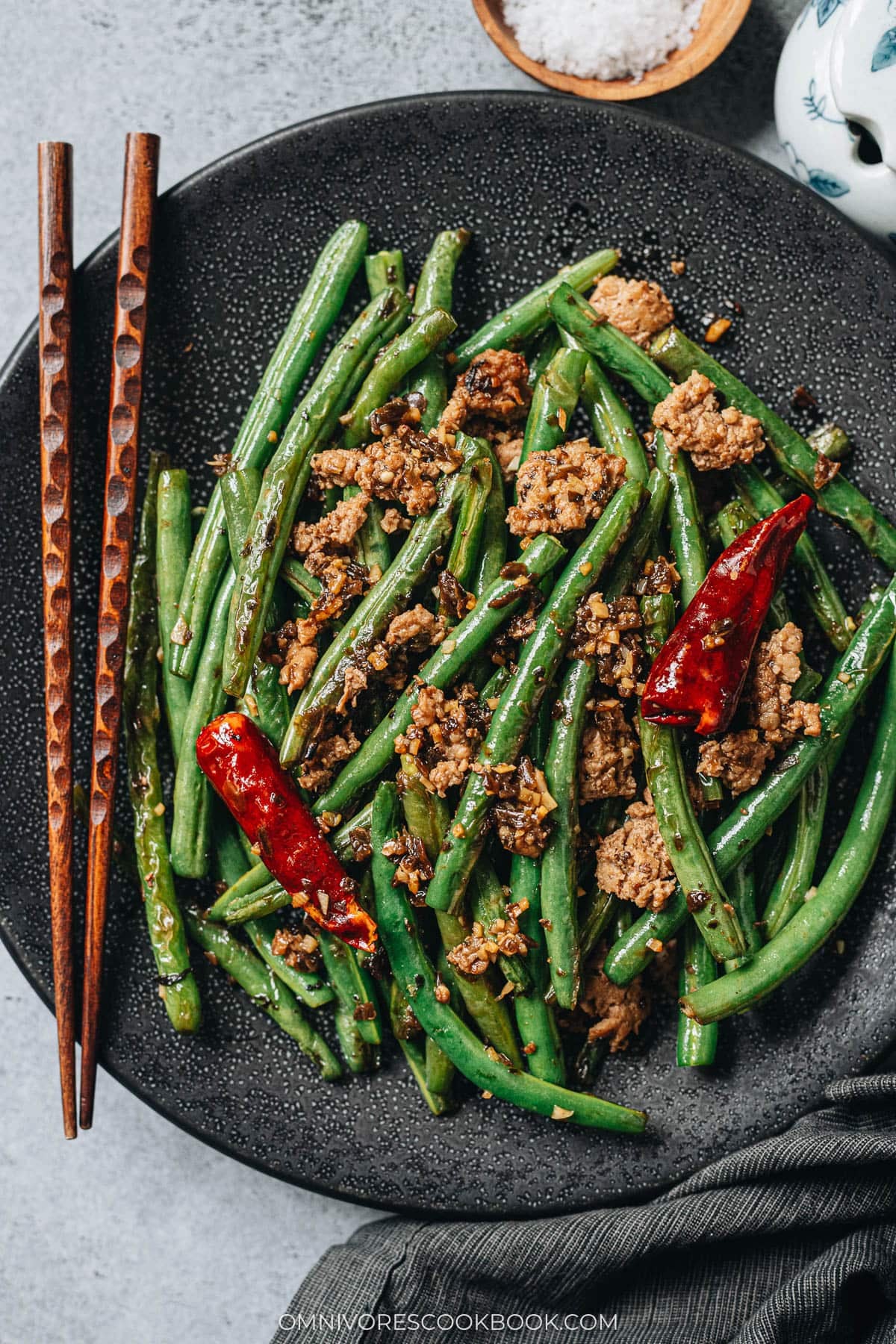
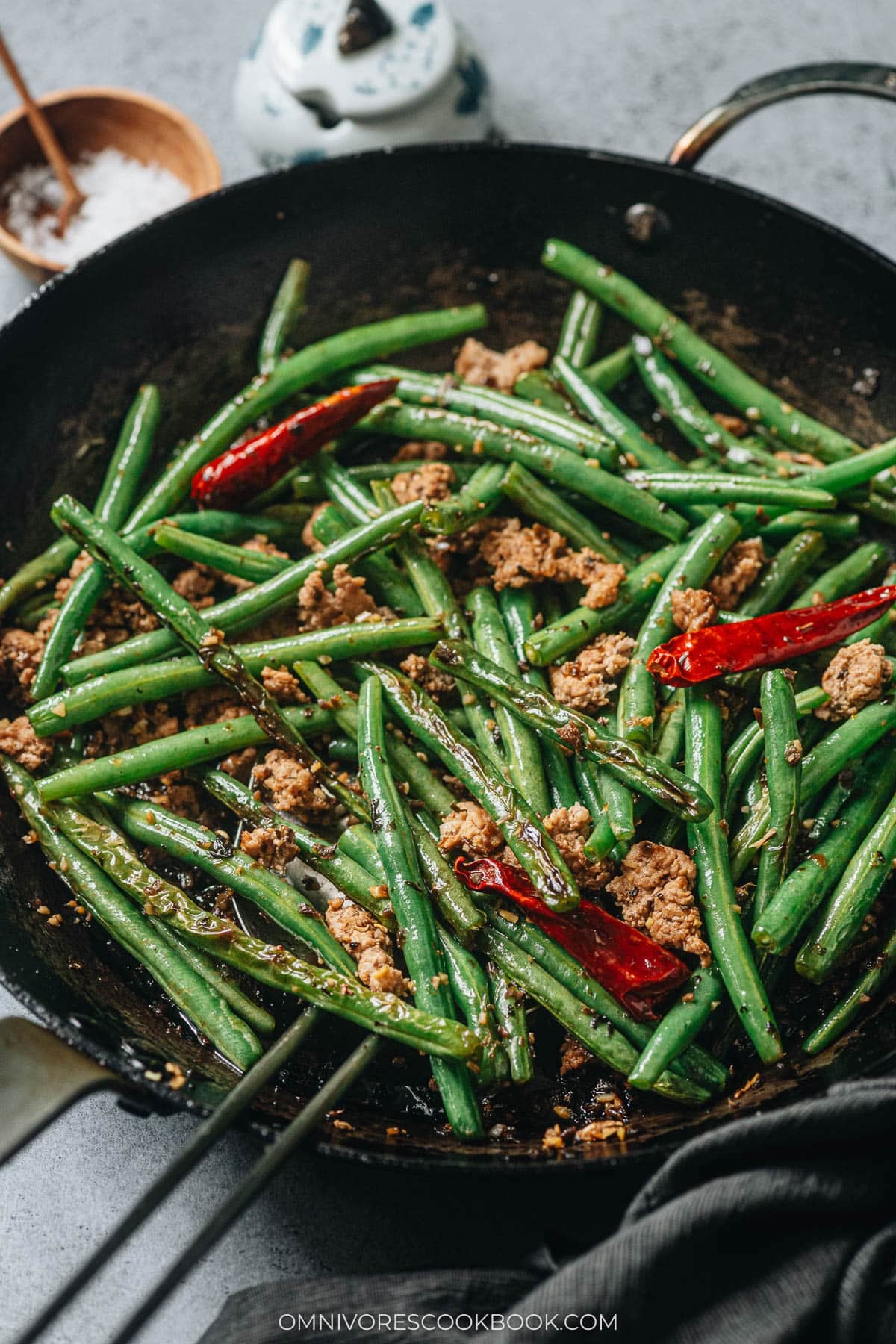
Sichuan Dry Fried Green Beans, or Gan Bian Si Ji Dou (干煸四季豆), is a classic Sichuan dish featuring blistered, lightly charred green beans tossed with ground pork, pickled mustard greens, ginger, garlic, dried chilies, and Sichuan peppercorns for a bold, savory flavor. While restaurants typically deep-fry the green beans, my recipe uses a homestyle dry-frying method that requires much less oil while still creating that delicious blistered texture.
It is one of my favorite ways to cook green beans because it gives them a heavenly texture and a rich taste that goes so well with rice, and in my opinion, it also works fantastic as a side for Asian Thanksgiving recipes including my juicy slow roasted turkey legs.
When I lived in China, I often took visiting friends and colleagues from abroad to experience authentic Sichuan food. Of course, famous dishes like mala chicken and dan dan noodles were always popular. But you know what? By the end of the meal, vegetable dishes like these dry-fried green beans and my Sichuan eggplant were usually the biggest hits! They quickly became everyone’s new favorites. If you love dishes like these, I highly recommend exploring more of my Chinese vegetable stir fry recipes.
To make this at home, I simply char the green beans first and set them aside, then cook the pork with the pickled mustard greens and Sichuan peppercorn, add the aromatics, and bring everything back together with Shaoxing wine and soy sauce. I love that I can have this dish ready in just 30 minutes, from start to finish. So, follow my step by step instructions below, and don’t forget to check out my cooking tips for the best results.
Ingredients
Two of these I buy at the Asian market, the Sui Mi Ya Cai and the Sichuan peppercorn, and the rest are staples I keep on hand for Chinese cooking. When you’re ready to cook, your table should have:
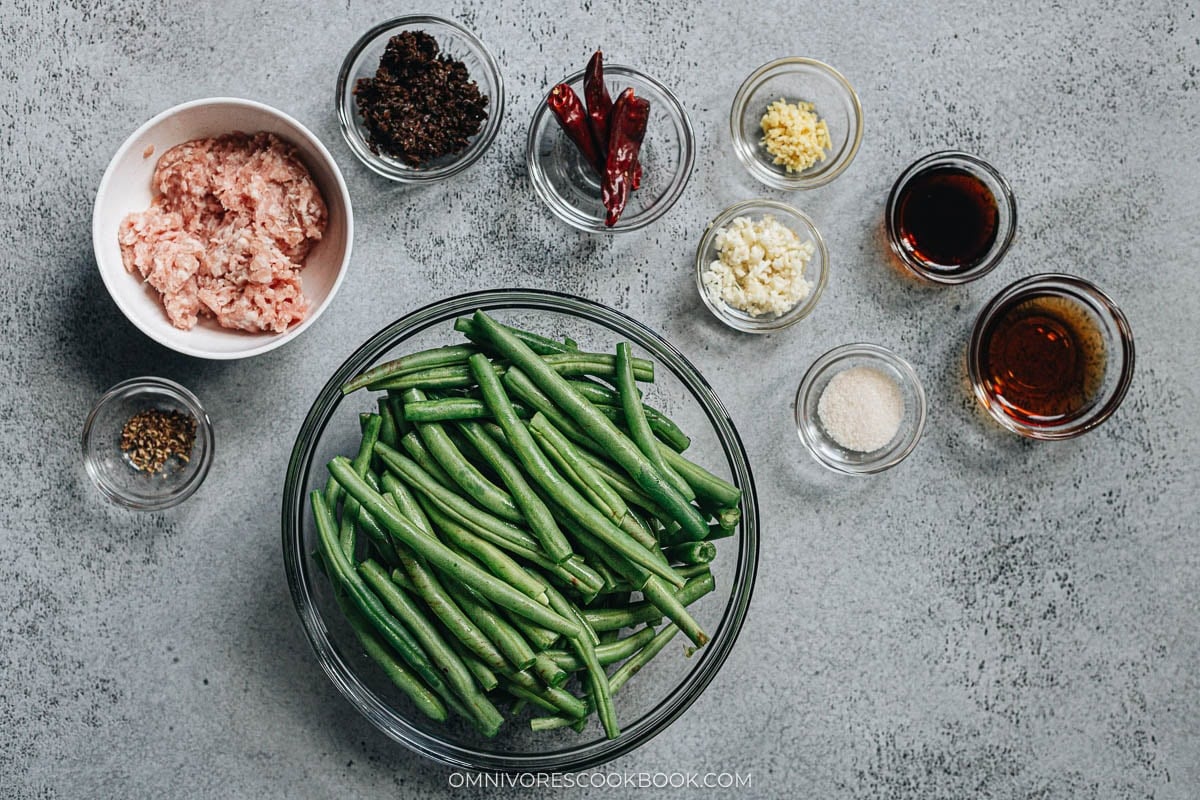
Green beans: I start with fresh green beans and snap off the tough ends.
Ground pork: I add ground pork for savory depth and a little texture alongside the beans. It is optional, but I highly recommend it, and ground chicken or ground beef works in its place.
Sichuan peppercorn: I use it ground for its citrusy, tingly character, the signature of a Sichuan plate.
Dried chili peppers: I toss in a few whole for fragrance and a touch of smokiness more than heat. For a spicier dish, I break them apart before they go into the oil.
Aromatics: Garlic and ginger go in once the pork has cooked, and I keep them moving just long enough to turn fragrant.
Sauce: I season with Shaoxing wine, light soy sauce, and a little sugar.
Sui Mi Ya Cai Gives the Dish Its Signature Restaurant-Style Flavor
Sui Mi Ya Cai (碎米芽菜), or Sichuan Sichuan fermented pickled mustard greens, is the secret ingredient that makes this dish very authentic.
The mustard greens are hand pickled, sliced, and dried. Then they are seasoned with salt and packed into ceramic pots to ferment for three to six months. After the first fermentation, they are boiled with brown sugar for eight to nine hours and then hung out to dry once more. In the final stage, these greens are sealed again with star anise, Sichuan peppercorns, and other spices, for another three to six months.
The ingredient adds sweetness and a super umami to a dish to make it irresistible.
You can find Sui Mi Ya Cai at most Chinese markets and online.
If you have Sui Mi Ya Cai it’s very easy to turn dry fried green beans into a vegan / vegetarian dish without compromising on flavor.
However, if you do not have this ingredient, I highly recommend adding ground meat to the dish to boost the flavor.
How to Make
Before we cook you need to know: What is dry frying?
Dry frying, or Gan Bian (干煸), is a Chinese cooking technique. It is somewhere between pan searing and deep frying. But it uses less oil, with a longer cooking time, to cook vegetables or meat to slightly dehydrate them, thus creating a crispy and charred surface. The texture of dry-fried vegetables is similar to that of grilled ones, with a hint of smoky flavor.
Seasonings are added after dry-frying; in this recipe, soy sauce, dried chili peppers, and Szechuan peppercorns are used. The withered surface of the green beans holds the spices well, making for an appetizing, intense, and pungent flavor without using a ton of sauce.
1. Dry the beans: Pat the green beans dry with paper towels. Any surface water will splatter in the hot pan, so take a minute to get them properly dry.
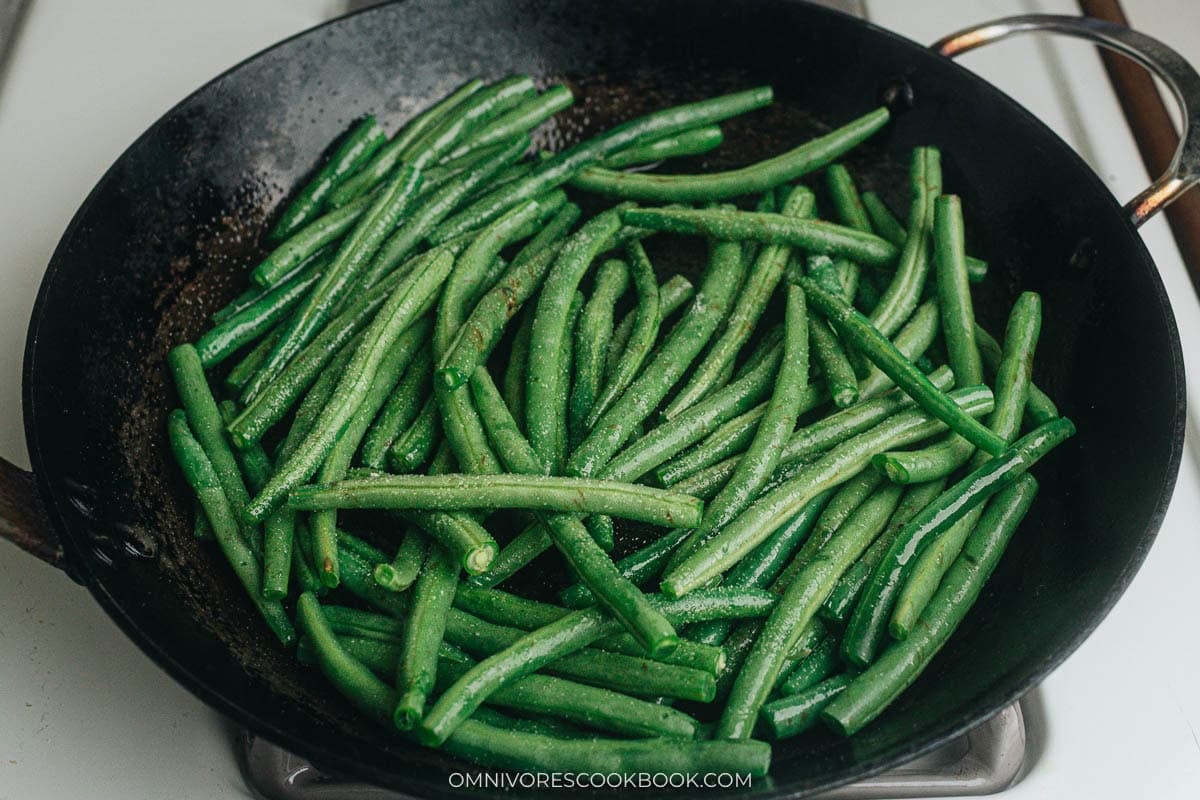
2. Char the green beans: Heat 2 tablespoons oil in a large nonstick skillet over medium-high heat until hot. Add the green beans and a pinch of salt, and stir to coat them with oil. Arrange them in a single layer so they do not overlap, and flip every 15 seconds or so.
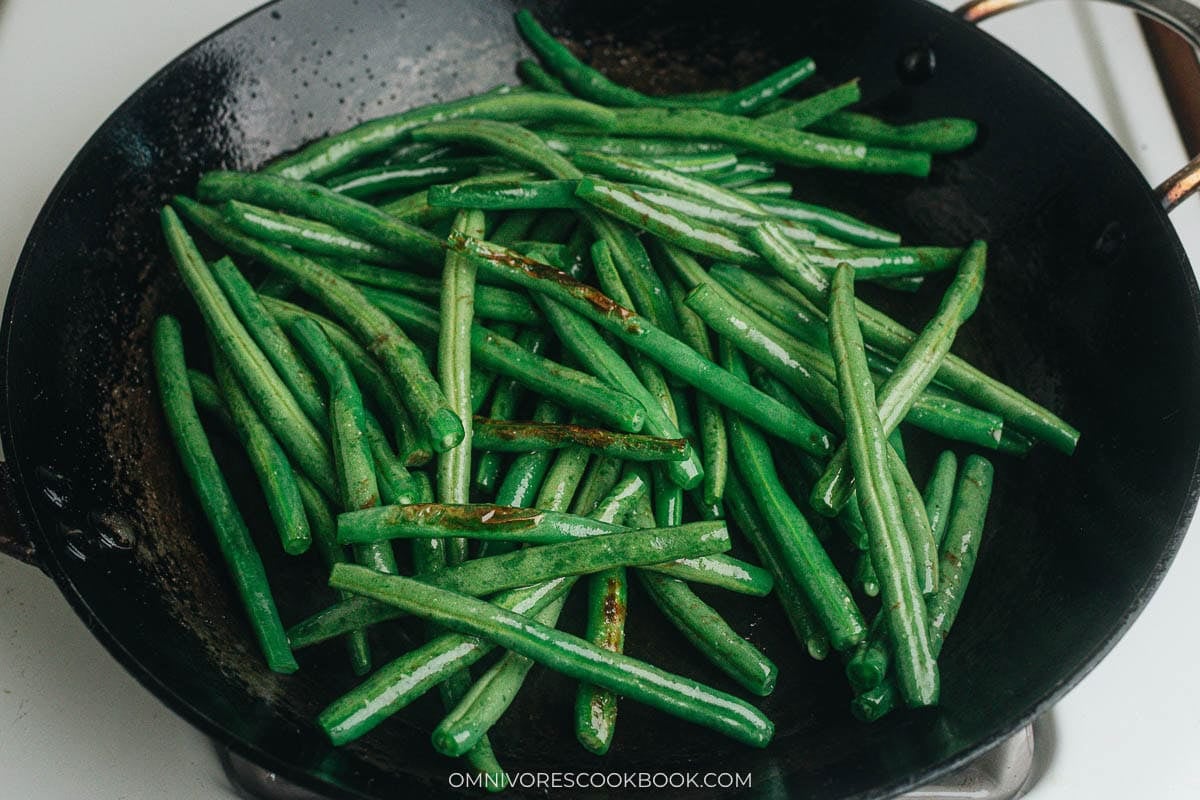
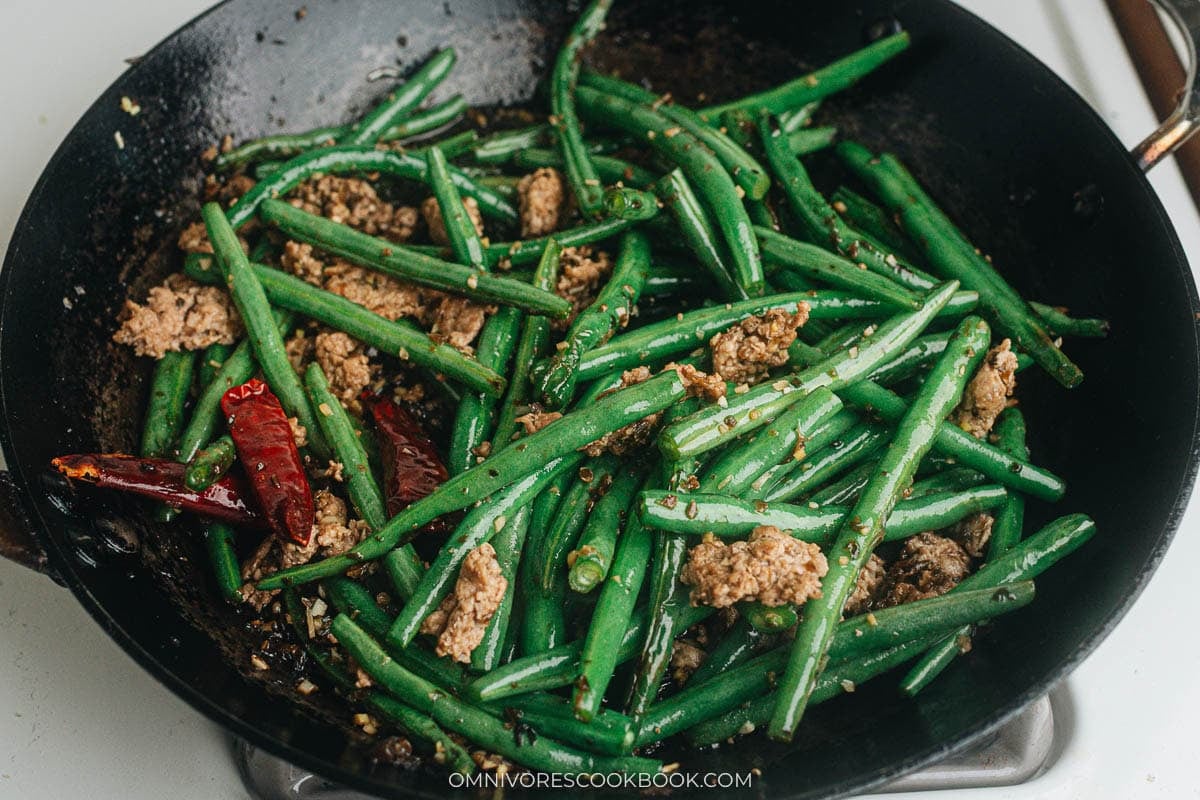
3. Cook until wrinkled: Cook and stir until some of the surface is brown and withered and the beans just start to turn soft, 6 to 8 minutes. For a softer texture, go until most of the surfaces have charred, 10 to 12 minutes. Turn to medium heat if the pan smokes too much, then transfer the beans to a plate and set aside.
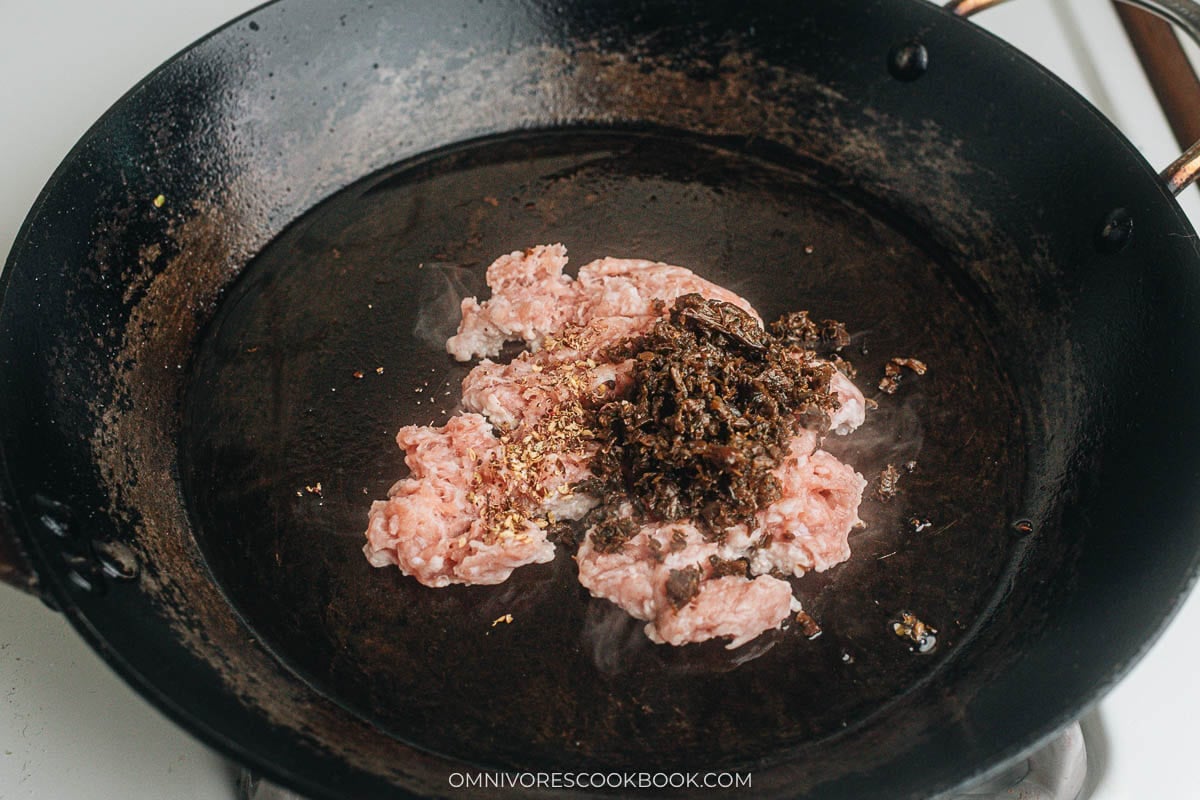
4. Cook the pork: Add the remaining 1 tablespoon oil, the ground pork, the pickled mustard greens, and the ground Sichuan peppercorn. Cook and chop the pork into small pieces while mixing it with the rest.
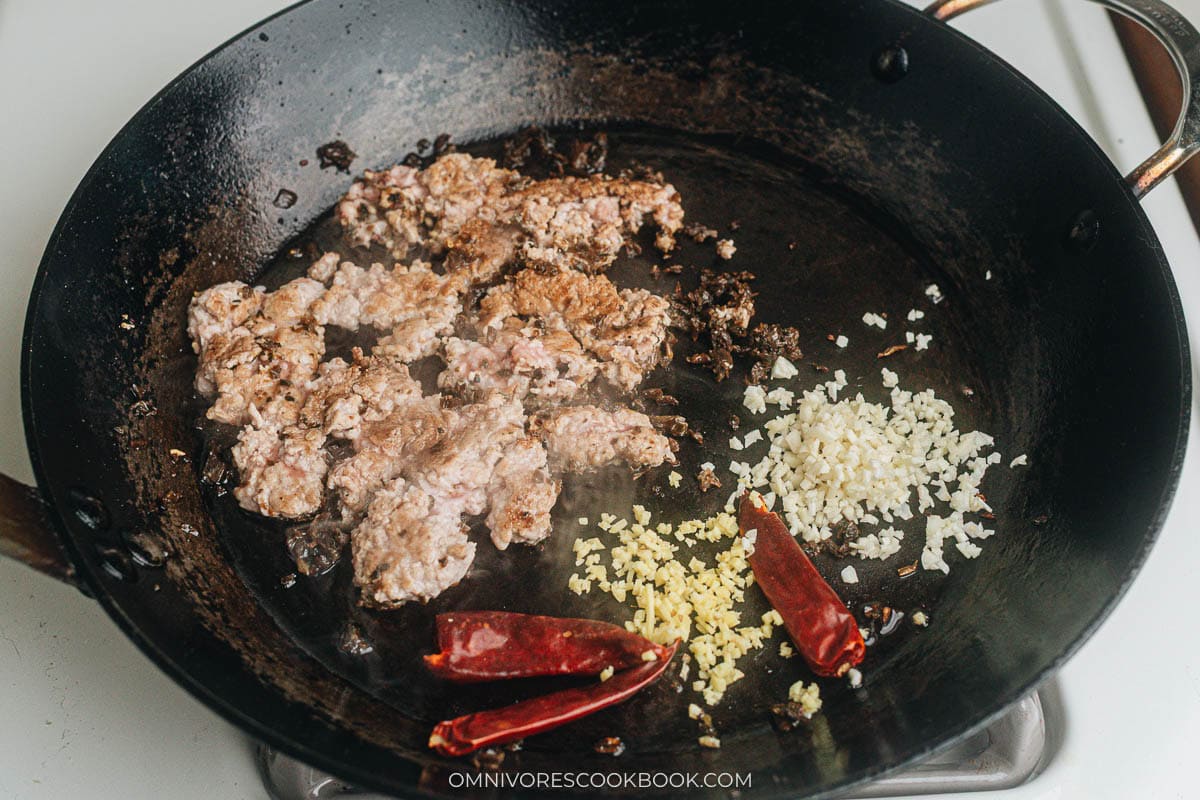
5. Add the aromatics: When the surface of the pork has cooked, add the dried chili peppers, garlic, and ginger. Stir a few seconds until fragrant.
6. Bring it together: Add the green beans back to the pan. Swirl in the Shaoxing wine, light soy sauce, and sugar, then cook and stir until the sauce is mostly absorbed, about 1 to 2 minutes.
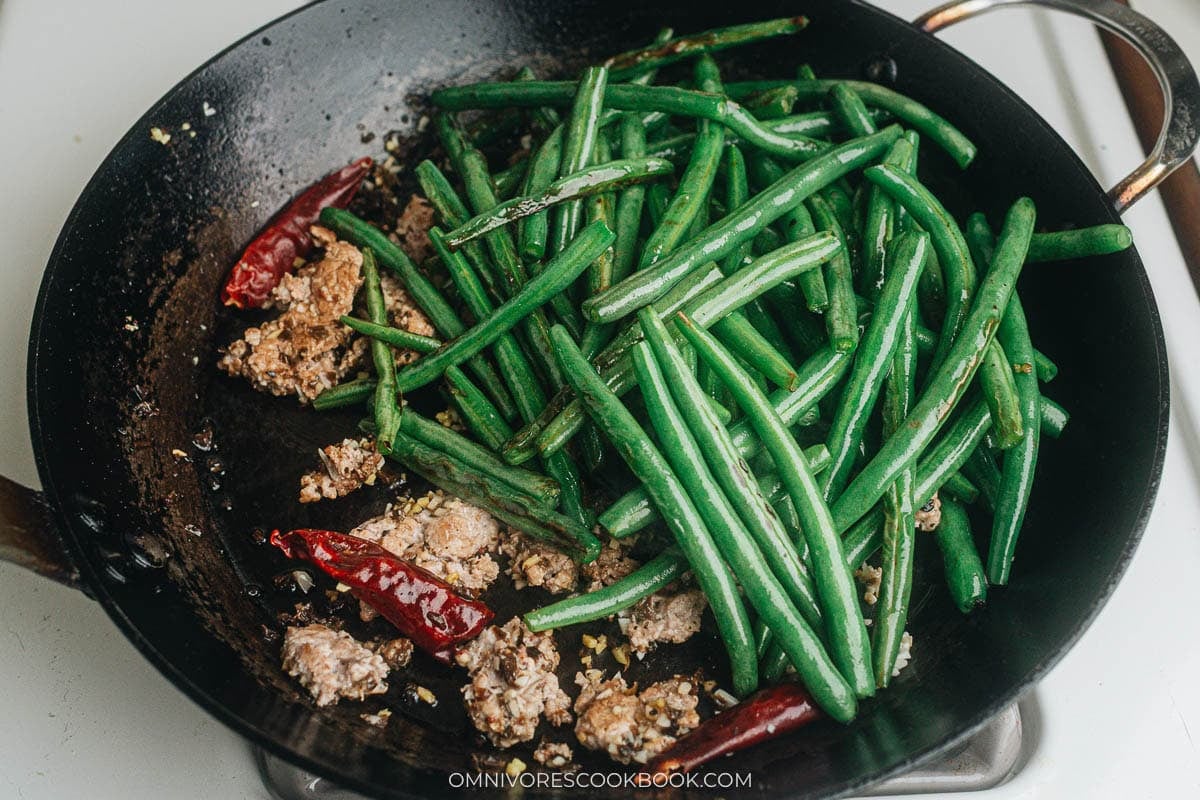
7. Taste and serve: Turn to low heat and carefully taste a green bean with a little pork. Add more salt if needed, then transfer everything to a plate and serve hot.
Important Cooking Notes
Buy the straightest beans you can: At the market I pick firm, slender beans without big bulging seeds, since those stay crisp-tender and char well. Older, lumpy beans turn leathery before the skins wrinkle.
Give the pan room: My 24″ skillet only chars one pound of beans well at a time, so on a double batch I work in two rounds. Crowd the pan and the beans steam instead of browning, and the wrinkled skins never show up.
Read the beans, not the clock: The timing shifts with your pan and heat, so I watch for brown, withered patches rather than counting minutes. Pull them at 6 to 8 minutes for a bit of snap, or push to 10 to 12 for a softer bite.
Use the mustard greens as your flavor insurance: When I am out of ground pork, the Sui Mi Ya Cai does the seasoning on its own. A little chicken bouillon, fermented black beans, or a spoon of doubanjiang will step in if I have none.
Keep the chilies whole for fragrance: Left whole, the dried chilies perfume the oil without much heat, which is how this dish is meant to taste. Breaking them open is what turns it genuinely spicy.
How to Serve
My favorite way to serve this is with a bowl of plain rice, and the browned skins make them taste far more involved than they are. Last thursday weeknight I made this and serve it with my egg fried rice and call it dinner, since the savory beans are plenty of flavor next to the mild rice.
When I have friends over for a big Sichuan-style dinner, I love serving these beans as the vegetable side dish alongside a few hearty mains. The last time I hosted, I paired them with my kung pao chicken for the sweet-tingly flavor I like, with a batch of mapo eggplant for anyone who wanted more heat.
There are so many delicious ways to serve these beans, so I encourage you to browse the main dish recipes on my blog for more inspiration.
Frequently Ask Questions
Why are my green beans soggy instead of wrinkled?
The usual reason is a crowded pan or wet beans. Pat them bone dry before cooking, keep the heat at medium-high, and arrange them in a single layer so the surface chars rather than steams.
How do I make this dish vegetarian or vegan?
The traditional version uses ground pork to add extra flavor to the vegetables. For a vegetarian alternative, you can use finely chopped rehydrated dried shiitake mushrooms, a little extra Sichuan pickled mustard greens, a spoonful of fermented black beans, or some fermented spicy bean paste if you prefer a little heat.
Can I bake the green beans instead of dry frying them?
Yes! Roasting is a great hands-off alternative that lets you cook a large batch of green beans at once. I find it especially useful during the holiday season when I’m preparing side dishes for a crowd. Toss the green beans with a generous amount of oil, spread them in a single layer on a baking sheet, and roast at 425°F (220°C) for 20 to 25 minutes, flipping halfway through, until blistered and lightly charred. Then toss them with the ground pork and seasonings in the pan. The green beans will be slightly softer than dry-fried ones, but they’ll still be delicious.
Do I need to use a wok?
Yes and no! The first step, pan-roasting the green beans, actually works better in a skillet than in a wok. A skillet provides a larger cooking surface, allowing the beans to make better contact with the heat.
Traditionally, the second step is done in a wok, where the green beans are tossed with ground pork and the remaining seasonings. However, after testing this recipe several times, I discovered that you can get equally delicious results using a skillet!
In fact, I highly recommend sticking with a skillet, especially if you have an electric stove. For more details, check out my guide on why you should stir fry with a frying pan instead of a wok.
Want to Save This Recipe?
Enter your email below & we’ll send it to your inbox. Plus get great new recipes from us every week!
Watch video
Sichuan Dry Fried Green Beans (干煸四季豆)
Ingredients
- 1 lb green beans , tough ends removed
- 2 tablespoons peanut oil (or vegetable oil)
- 4 oz ground pork (Optional but highly recommended) (*Footnote 1)
- 2 tablespoons Sichuan pickled mustard greens (Sui Mi Ya Cai) (*Footnote 2) (Optional)
- 1/4 teaspoon ground Sichuan peppercorn
- 3 dried chili peppers (*Footnote 3)
- 3 cloves garlic , minced
- 1 teaspoon minced ginger
- 2 tablespoons Shaoxing wine
- 1 tablespoon light soy sauce
- 1 teaspoon sugar
- Salt to taste
Instructions
- Pat the green beans dry with paper towels to prevent them from splattering.
- Heat 2 tablespoons vegetable oil in a large nonstick skillet over medium-high heat until hot. Add the green beans and a pinch of salt. Stir to coat well with oil. Spread the beans to prevent them from overlapping, as much as possible. Flip every 15 seconds or so. Cook and stir until some of the surface is brown and withered, and the green beans just start to turn soft, 6 to 8 minutes. If you prefer a softer texture, wait until most of the surfaces have charred, 10 to 12 minutes. Turn to medium heat if the pan starts to smoke too much. Transfer the green beans to a plate and set aside.
- Add the remaining 1 tablespoon oil, ground pork, pickled mustard greens, and the ground Sichuan peppercorns. Cook and chop the pork to separate it into small pieces, while mixing with the rest of the ingredients.
- When the surface of the pork has cooked, add the dried chili pepper, garlic, and ginger. Stir a few seconds to release the fragrance. Add back the green beans. Swirl in the Shaoxing wine, light soy sauce, and sugar. Cook and stir until the sauce is mostly absorbed, about 1 to 2 minutes.
- Turn to low heat and carefully taste a green bean with some pork. Adjust seasoning by adding more salt, if needed. Transfer everything to a plate. Serve hot as a side dish or one of the main dishes of a multi-course meal.
Notes
- The purpose of ground pork is to add flavor and texture. It helps a lot, especially when you don’t use the Sui Mi Ya Cai (pickled mustard). You can also use ground chicken or ground beef instead of pork.
If you choose to skip the ground meat, I highly recommend adding Sichuan pickled mustard greens to enhance the flavor. If you do not have Sichuan pickled mustard greens, adding a bit of chicken bouillon, or 2 tablespoons of fermented black beans, or 1 tablespoon of fermented chili bean paste (Doubanjiang) will help develop the flavor too. - Sichuan pickled mustard greens add savory and sweetness to the dish, making it extra rich. If you do not have pickled mustard greens, 2 tablespoons of fermented black beans, or 1 tablespoon of fermented chili bean paste (Doubanjiang) will work great, too.
- The dried chili peppers add a fragrance and smokiness to the dish but not much in terms of heat. If you want the dish to be a bit spicy, break apart the chili peppers before adding them.
Nutrition

Did you make this recipe?
I’d love to hear how it turned out for you! Please take a moment to leave a 5-star rating ⭐️ and share your thoughts in the comments further down the page. It really helps others discover the recipe too.
lemons
Fabulous! This was a great way to use some of the long beans from my garden. I also julienned and threw in a medium-sized potato that needed using up. Thank you for the recipe!
bill marsano
Could the beans be don e in the broiler?
Maggie Zhu
You definitely can. Actually Serious East has an article on the method and you can see the differences between each method: https://www.seriouseats.com/sichuan-dry-fried-green-bean-broiled-food-lab-recipe
In short, preheat your broiler as hot as you can, place the sheet pan close to the broiler, and broil for 2 to 5 minutes until cooked through.
Jon
Great dish! Have tried with minced pork and very tasty. Have also tried a vegan version with minced rehydrated shiitake fried in a bit of rice wine and soy instead of minced meat, and works a treat!
Audrey Williams
This was a big hit!
Finding some of the ingredients was tough in a rural community but not completely impossible. I substituted Sui Mi Ya Cai with Chili Bean Sauce, but since I didn’t know what the difference was I had to take the word of the man at the market.
Excellent dish. Thanks for offering these recipes. I look forward to making many more.
Quinn
Delicious. Didn’t have ground pork, used spicy pressed tofu, dried shiitake, diced bacon and extra pickled greens.
Corinna Totino
Easy delicious and not cloying sweet or salty. Perfect burn! Will now start following all your recipes