
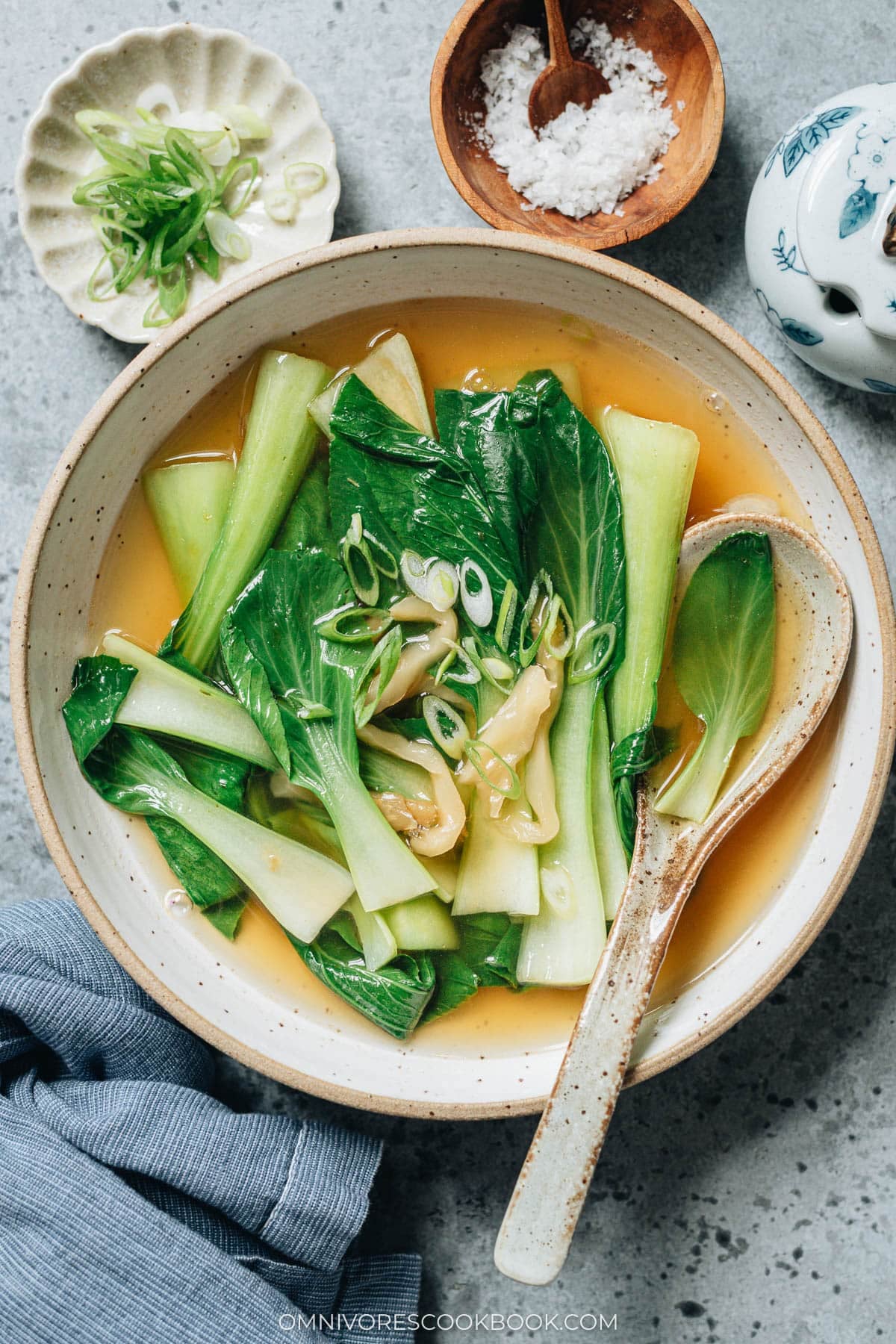
In Chinese home cooking there is a saying about a proper dinner, 三菜一汤 (san cai yi tang), 3 dishes and 1 soup, and the soup slot is typically something exactly like this one, quick and clear and made from a few pantry ingredients. What makes this bok choy soup different from a plain vegetable broth is the zha cai, a Chinese pickled mustard stem that gives the pot a salty tang and a light spice without any other seasoning. When I want a fully leafy stir fry instead, my baby bok choy stir fry is the one I cook.
I keep zha cai in a jar in the fridge specifically for soups like this one, because believe me… just a little of it transforms plain chicken broth into a flavorful Chinese soup. My friend from Shanghai taught me how she adds zha cai to almost every homemade broth to boost the flavor, and I picked up the habit as an adult when I realized how much flavor comes out of one small ingredient. On weeknights when I do not want to simmer a stock from scratch, this is the soup I make.
I make this recipe in one pot and in only 20 minutes: I bloom the zha cai, ginger, and green onion whites in sesame oil, pour in chicken stock and simmer for 3 minutes, then drop in the bok choy at the very end for a couple minutes so the greens stay tender crisp. The soup is vegan-friendly when I use vegetable broth instead of chicken, and gluten-free either way. I can’t wait for you to try this comforting and delicious Bok Choy Soup.
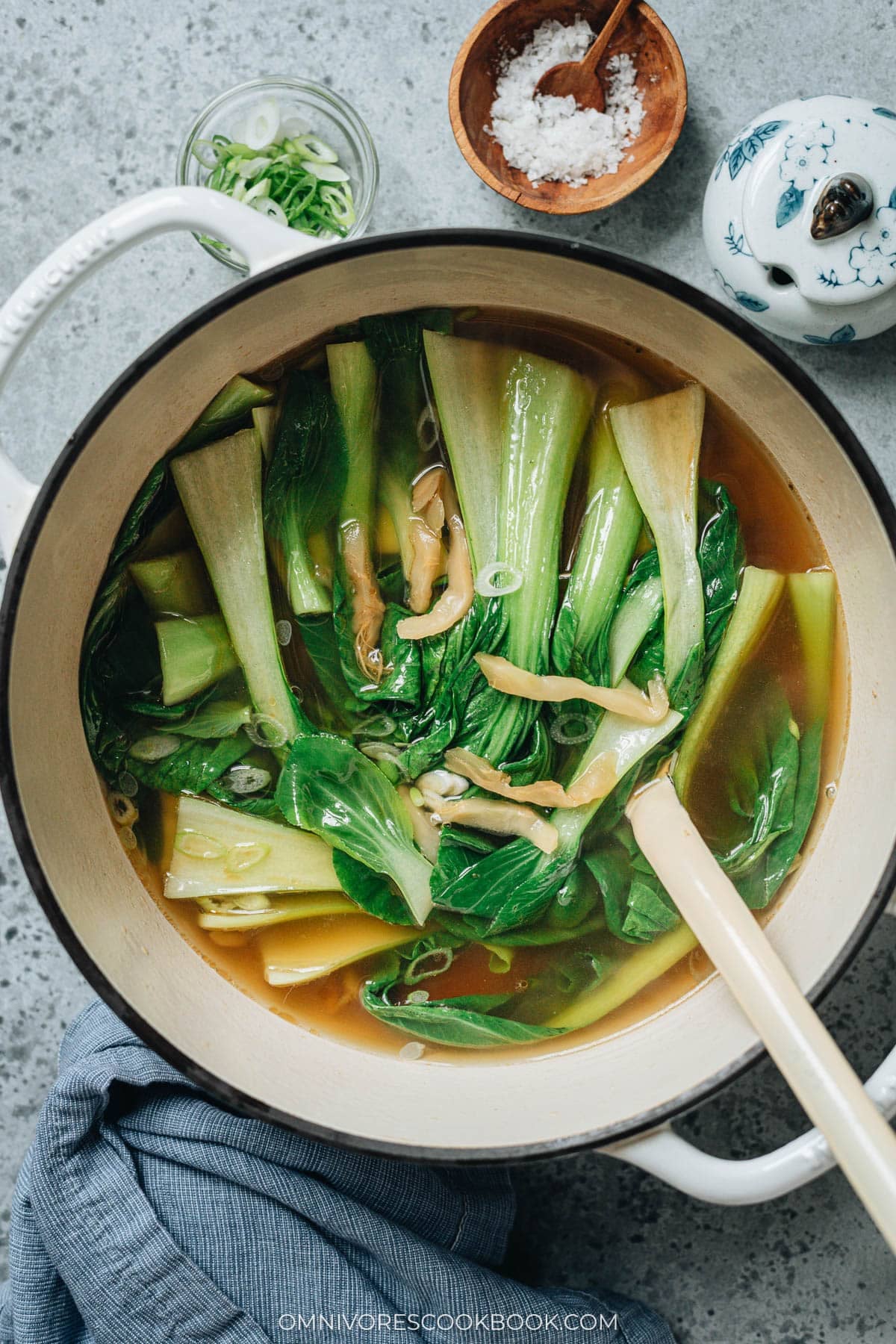
Ingredients
I keep the list to 6 things, and the flavor comes from what the ginger and zha cai do to the broth in a short simmer rather than from a long-cooked stock. Here is what I use:
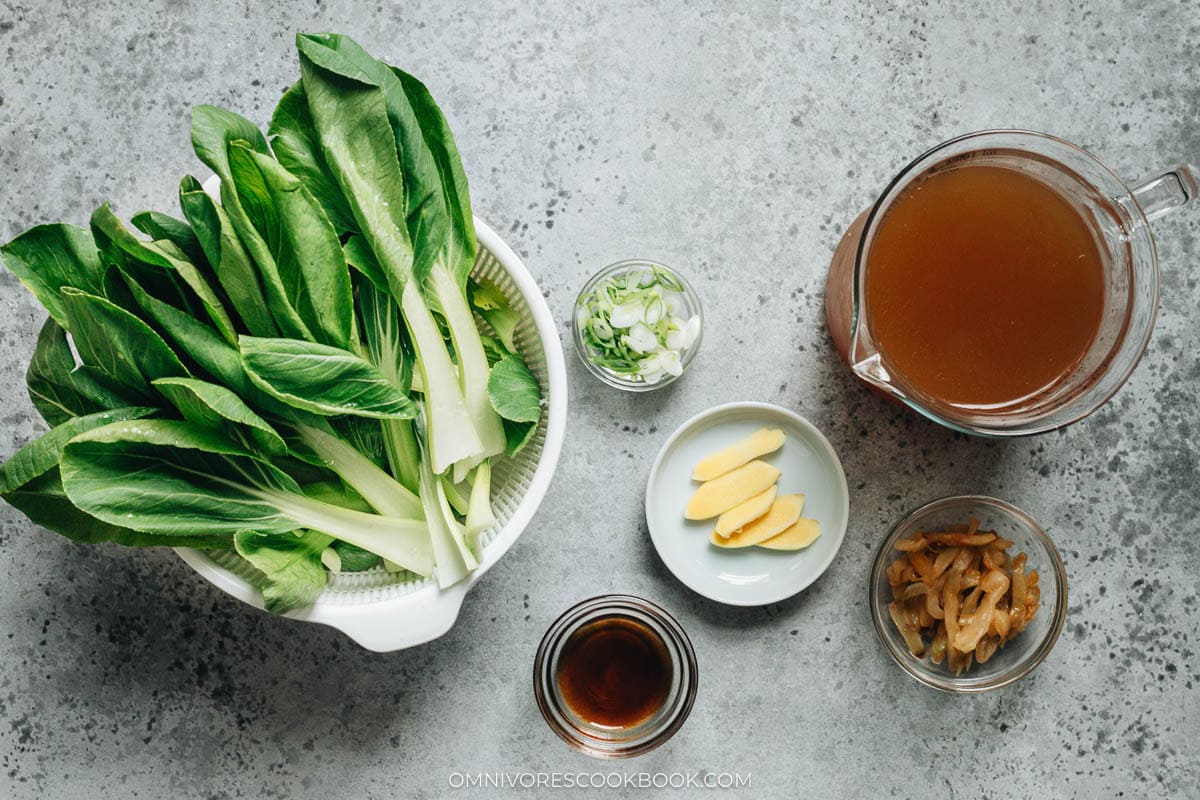
Baby bok choy: I use small heads of baby bok choy because the leaves stay tender and the stalks cook through in a short simmer without turning stringy.
Zha cai (Chinese pickled mustard stem): This is the flavor engine of the soup. Zha cai is a fermented and pickled mustard stem with a salty, tangy, slightly spicy taste, and it works like a pickle plus a stock cube in one. I find it in a small package in the pickle section of my Chinese grocery store.
Ginger: I julienne a knob of ginger so the pieces release into the broth without needing to be strained out. The ginger keeps the soup warming and cuts any raw taste from the bok choy stems.
Green onion: I slice a green onion and split the whites from the greens. The whites go in early with the ginger to bloom in the sesame oil, and the greens go in at the very end for a fresh finish.
Chicken stock: I use a good-quality chicken stock because it is the base of the soup, and I go with vegetable broth when I want the soup fully vegan. Homemade stock adds more body, but a boxed stock works fine too.
Sesame oil: I use toasted sesame oil to bloom the aromatics at the start, which gives the broth its warm nutty finish. A small extra drizzle at the end brightens the bowl right before I serve.
How to Make
1. Prep the bok choy: Trim the tough ends off each head of baby bok choy. Separate the larger outer leaves from each head, then halve the smaller cores lengthwise. Soak the bok choy in a large bowl of cold water for 5 minutes and rub the stems to loosen any grit trapped between the leaves. Rinse and drain.
2. Bloom the aromatics: Heat the sesame oil in a medium pot over medium-low heat. Add the zha cai, julienned ginger, and the white parts of the green onion. Cook, stirring occasionally, until the pot smells fragrant and the ginger just starts to brown, 3 to 5 minutes.
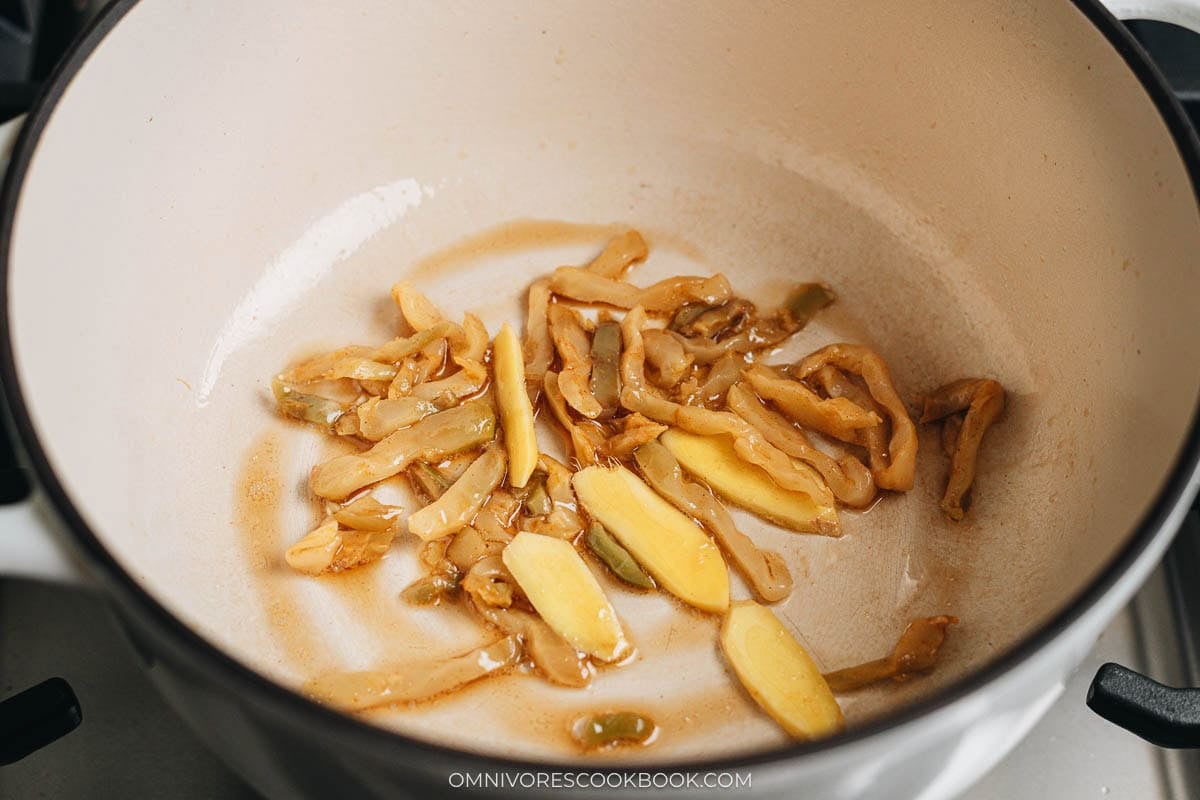
3. Simmer the broth: Pour in the chicken stock and bring the pot to a boil. Reduce the heat to a simmer and cook for 3 minutes so the ginger and zha cai infuse into the broth.
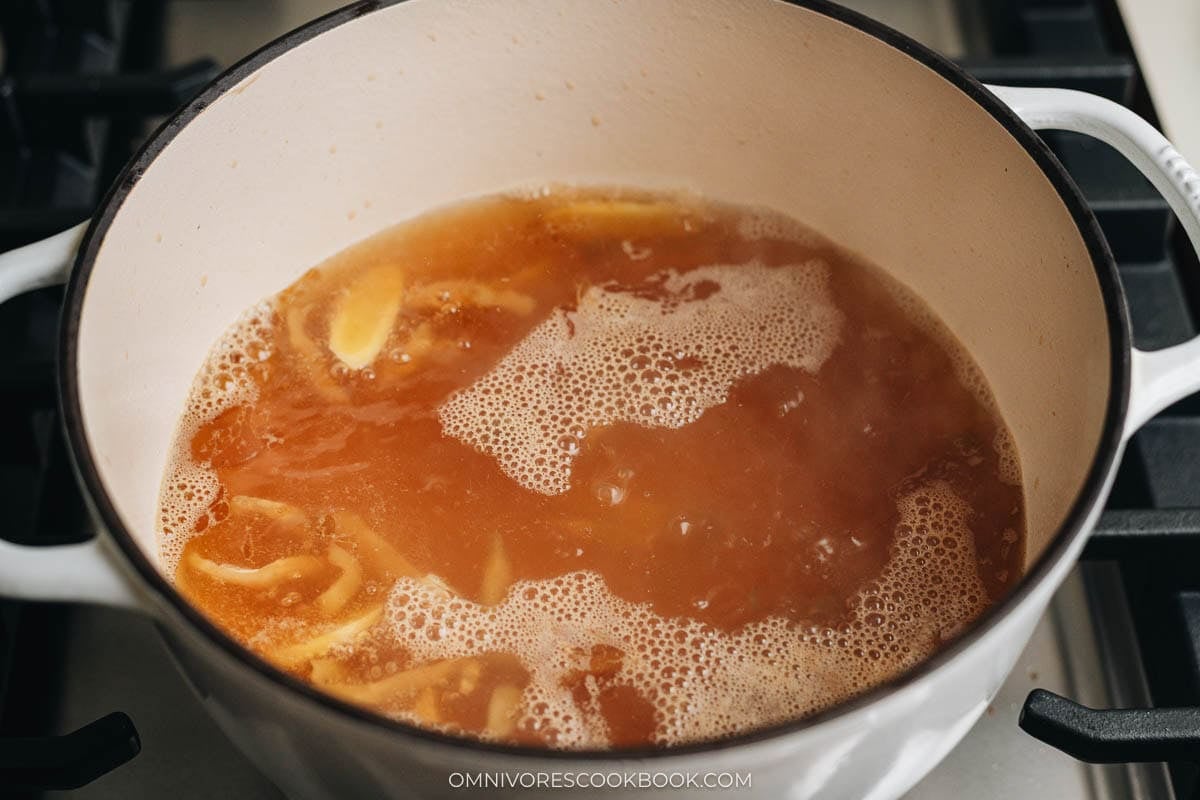
4. Cook the bok choy: Add the bok choy and return the soup to a gentle simmer. Cook until the stems are tender but still crisp, 2 to 3 minutes depending on the size.
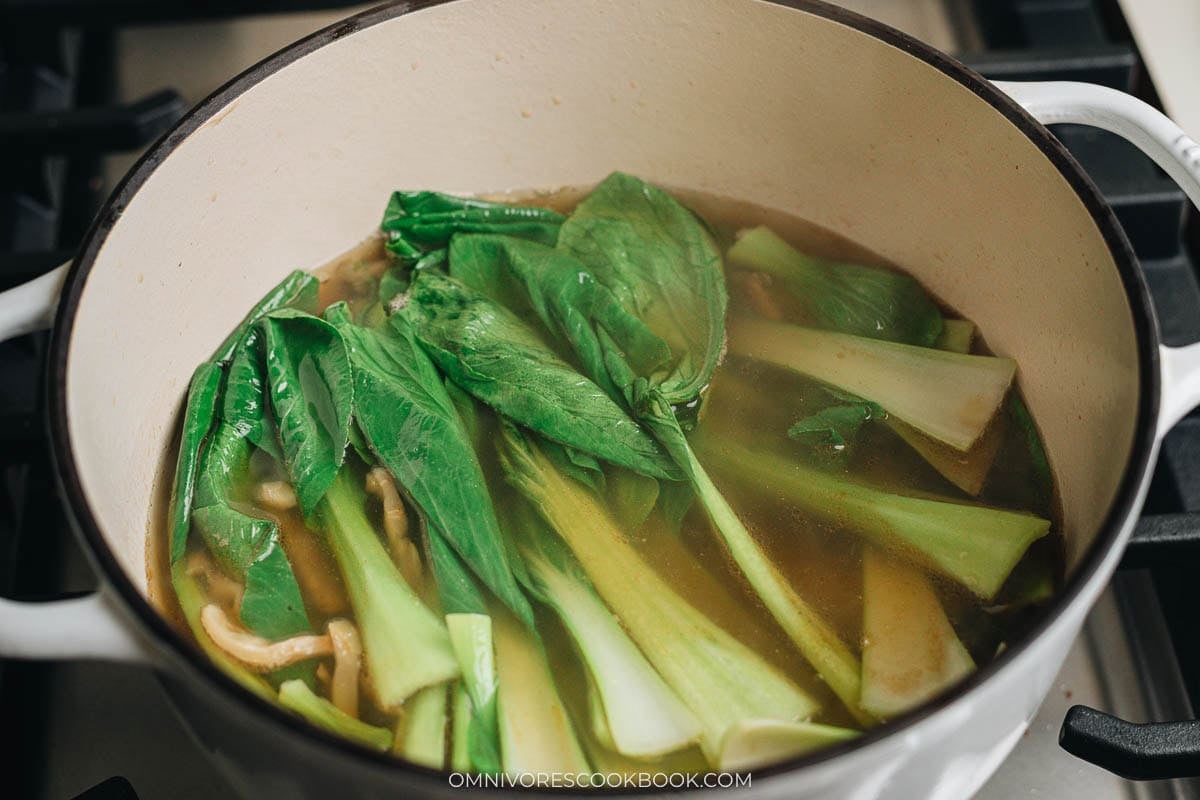
5. Finish and season: Add the green parts of the green onion. Taste the soup and adjust with a bit of chicken bouillon or mushroom powder if it needs more savory depth.
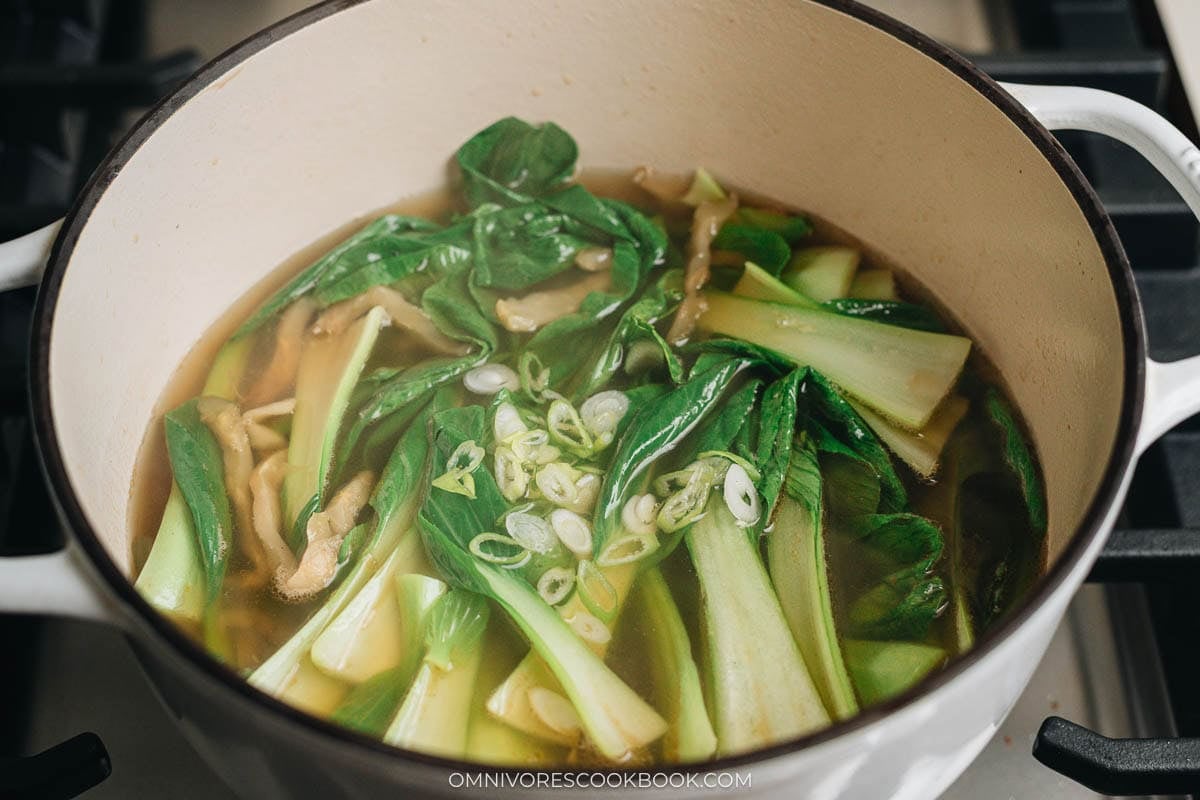
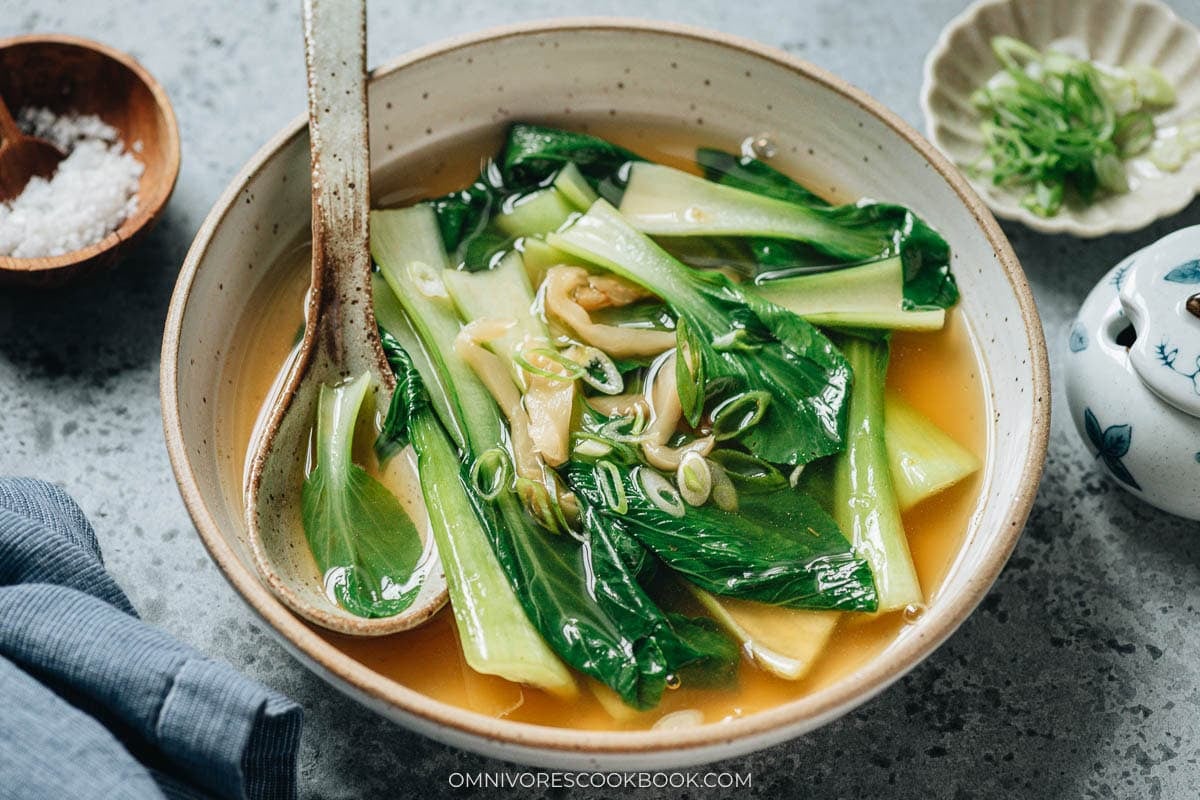
For a brighter, tangier finish: Stir in a splash of the zha cai pickling liquid. Drizzle with a little more sesame oil if you want the nutty note to pop, then serve hot.
My Cooking Tips
Slice the zha cai thin if it comes in whole stems: Some Chinese grocery stores sell zha cai as whole stems in a bag and others sell it pre-cut, and the whole-stem version needs to be sliced thin before it goes into the pot so the flavor releases in the short simmer.
Split the green onion whites from the greens: The white parts have more sulfur and take a longer cook to mellow, and the greens have the fresh finish I want to preserve. I put the whites in with the ginger at the start and hold the greens for the last 30 seconds so both parts of the same onion do their own job.
Do not overcook the bok choy: The cooking time for the bok choy will vary depending on the size of the heads. For medium-sized bok choy, 1 1/2 to 2 minutes at a gentle simmer is enough to cook the stems until tender while leaving a slight crispness and keeping the leaves bright green. If you’re using very large heads of bok choy that are longer than your hand, I prefer to slice the white stems into 1-inch (2.5 cm) pieces so they cook more evenly and are easier to eat.
Taste before I season with bouillon: The salt in this soup comes from the zha cai, the stock, and the optional bouillon, and the balance depends on which brand of each I use. I taste after the bok choy goes in and only add bouillon if the broth needs more savory backbone, because a heavy hand here can push the soup past comfort into salty.
Serving Suggestions
I ladle bowls of this soup next to a plate of steamed rice and one hot dish like kung pao chicken or a leafy Chinese broccoli with mushrooms, which is the everyday san cai yi tang setup on my table.
When I cook for my parents or friends, I turn the same soup into the middle of a bigger Chinese dinner with a plate of char siu as the second main, a bowl of Sichuan fried rice with Ya Cai, and one more vegetable side like my delicious mushroom and pepper stir fry.
Frequently Asked Questions
What can I use instead of zha cai?
Zha cai is what makes this soup taste distinctly Chinese, so I try not to skip it, and most Chinese grocery stores stock it in a small package for a couple of dollars. If you can’t find it, you can use another Chinese pickled vegetable, though the flavor will be different. If you omit it entirely, season the broth with a little extra chicken bouillon or soy sauce to make up for the missing savoriness.
Can I use regular bok choy instead of baby bok choy?
Yes, though I cut it differently to keep the cooking time short. After removing the outer leaves, I further slice the white steam into 1″ (2.5 cm) pieces and the leaves into 2″ (5 cm) pieces, so they cook evenly. If the stem is extra thick, add the stems to the pot 1 minute before the leaves so both parts finish at the same time. The finished soup has bigger bites of green than the baby bok choy version, but the flavor is the same.
Can I add protein to make it a complete meal?
Yes. Tofu, cooked shredded chicken, shrimp, fish balls, or wontons are all great additions. You can also add cooked noodles to turn it into a light noodle soup.
My soup tastes bland. How can I make it more flavorful?
The final flavor depends on both the broth and the brand of zha cai you use. Taste the soup before serving and adjust it with a pinch of salt or chicken bouillon, a little sugar to balance the soup if it’s too salty, or a splash of the zha cai pickling liquid to balance the flavors.
Want to Save This Recipe?
Enter your email below & we’ll send it to your inbox. Plus get great new recipes from us every week!
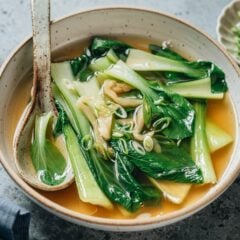
Bok Choy Soup
Ingredients
- 8 heads baby bok choy
- 1 tablespoon sesame oil
- 1/4 cup zha cai (Chinese pickled mustard plant stem) (*Footnote 1)
- 2 ” ginger , julienned
- 1 green onion , sliced
- 4 cups chicken soup (or vegetable broth)
- 1/2 teaspoon chicken bouillon (or mushroom powder), or to taste
Instructions
- Trim off the tough ends of the baby bok choy. Separate the larger outer leaves, then halve the cores lengthwise. Soak the bok choy in a large bowl of cold water for 5 minutes. Gently rub the stems to remove any dirt trapped between the leaves. Rinse well and drain.
- Heat the sesame oil in a medium pot over medium-low heat. Add the zha cai, ginger, and the white parts of the green onion. Cook, stirring occasionally, until fragrant and the ginger just begins to brown, 3 to 5 minutes.
- Pour in the chicken stock and bring to a boil. Reduce the heat to a simmer and cook for 3 minutes to infuse the broth.
- Add the bok choy and return the soup to a gentle simmer. Cook until the bok choy is tender but still crisp, 1 to 2 minutes.
- Add the green parts of the green onion. Taste the soup and adjust the seasoning with more chicken bouillon or mushroom powder if needed. If you'd like a brighter, tangier flavor, stir in a splash of the zha cai pickling liquid. Drizzle with a little more sesame oil, if desired. Serve hot.
Notes
- Depending on the brand of zha cai you buy, it comes in different sizes. If you bought the whole stems, cutting them into thin slices is the best way to release the flavor. If you bought the cut type, then you can add them directly into the soup.
- The flavor of the soup is largely determined by the type of vegetable stock and the brand of zha cai you buy. Adjust the taste at the end according to your taste.
Nutrition

Did you make this recipe?
I’d love to hear how it turned out for you! Please take a moment to leave a 5-star rating ⭐️ and share your thoughts in the comments further down the page. It really helps others discover the recipe too.
David
Very, very good! And very spicy! (Which I love but my wife does not.) This was my first exposure to zha cai. (I bought it from Amazon.) It added an exotic spiciness to the dish. I’ve already made it twice!
Ron
Great simple recipe. Made this tonight and it was surprisingly tasty for such simple ingredients.So far your recipes are simple and flavorful. I like that. My wife is Chinese I am not but I love tasty food. She thought this was a Wuxi recipe.
Curious Cook
I’m keen to try this recipe and I found the zha cai at the Asian grocer’s. I read that it is usual to prepare it by rinsing and soaking – is that required for this recipe? Thanks for your help!
Maggie Zhu
It depends on the type of zha cai you got. Usually the stuff comes in the package does not require rinsing and soaking. If you buy it from bulk, you can rinse them. But you don’t need to soak it because the salt will be released into the soup to season it. You might consider a low-sodium broth just in case the zha cai is on the saltier side.
Bad Kitty
It’s a cold, rainy, soup kind of day today, and when this recipe came up in my search, I knew this is IT. I thought I had bok choy, but forgot that I had used it all for a different meal. I substituted with a small head of napa cabbage, which worked great. I grated the ginger on a microplane, added sliced white button and baby bella mushrooms, a dash of chili oil for a nice little kick, sliced shrimp cake for some protein, and a couple tablespoons of fish sauce to taste, served over Vietnamese banh canh noodles. I loved the undertones of the ginger. What a versatile soup recipe! With my additions, it made for a very hearty, delicious, and filling soup! I will be making this often when I want to use up some veggies. It really hit the spot. Thank you!
Marlene
I know this sounds crazy but I didn’t have any zha cai but I had bought toy and really, really wanted to make some soup. So I made this recipe and used homemade pickled garlic and a bit of gojucaru. It actually came out great! I look forward to making this the “right” way next time but thank you for the inspiration.
Fawn
I just discovered your website and this was the first dish I made with my family. It was very easy and so good! Thank you for it! I also enjoyed the photos a lot, it made getting the ingredients hassle free (I actually went shopping for 3 of your meals at the same time and it was a lot easier when I had photos for everything!). I’m very excited to try more of your recipes. 🙂
Cindy
This is such an easy to make recipe. Thank you!
I’ve always wondered how some soups (and a chili oil with black soy beans) have this salty/umami flavor – and now I know! My mom has no idea about this, I dont think her father shared this type of “secret ingredient”.
I was able to find the zha cai , the exact packaging above in my asian grocer – but it listed shrimp in the ingredients. So a warning to those who are vegan – ask about ingredients. I did find one that was labeled vegetarian.
Delish!
Fawn
TY for posting this! We have a shellfish allergy in my family and are usually pretty careful but it’s nice to be warned ahead of time when we need to take extra precaution on something you wouldn’t think you would need it! So because of this post we did search and read all ingredients; we were able to find some without the shrimp, though it ended up being the whole plant (stems and leaves) but was still very good.
gloria randall
what can i use as a substitute for Chinese pickled mustard plant stem? please respond!
Maggie
Hi Gloria, this recipe needs some salty Chinese pickles to make it work. If you happen to have Sui mi ya cai (key ingredient of making dan dan noodles https://themalamarket.com/collections/all/products/yibin-suimiyacai-preserved-mustard-stem?aff=2), that will work too but you will need to use less (1 to 2 tablespoons) because it’s saltier.
Fred Rickson
Thanks for providing a photo of a product. Our large Asian food store has a staff that doesn’t speak much English, but a photo always works.