
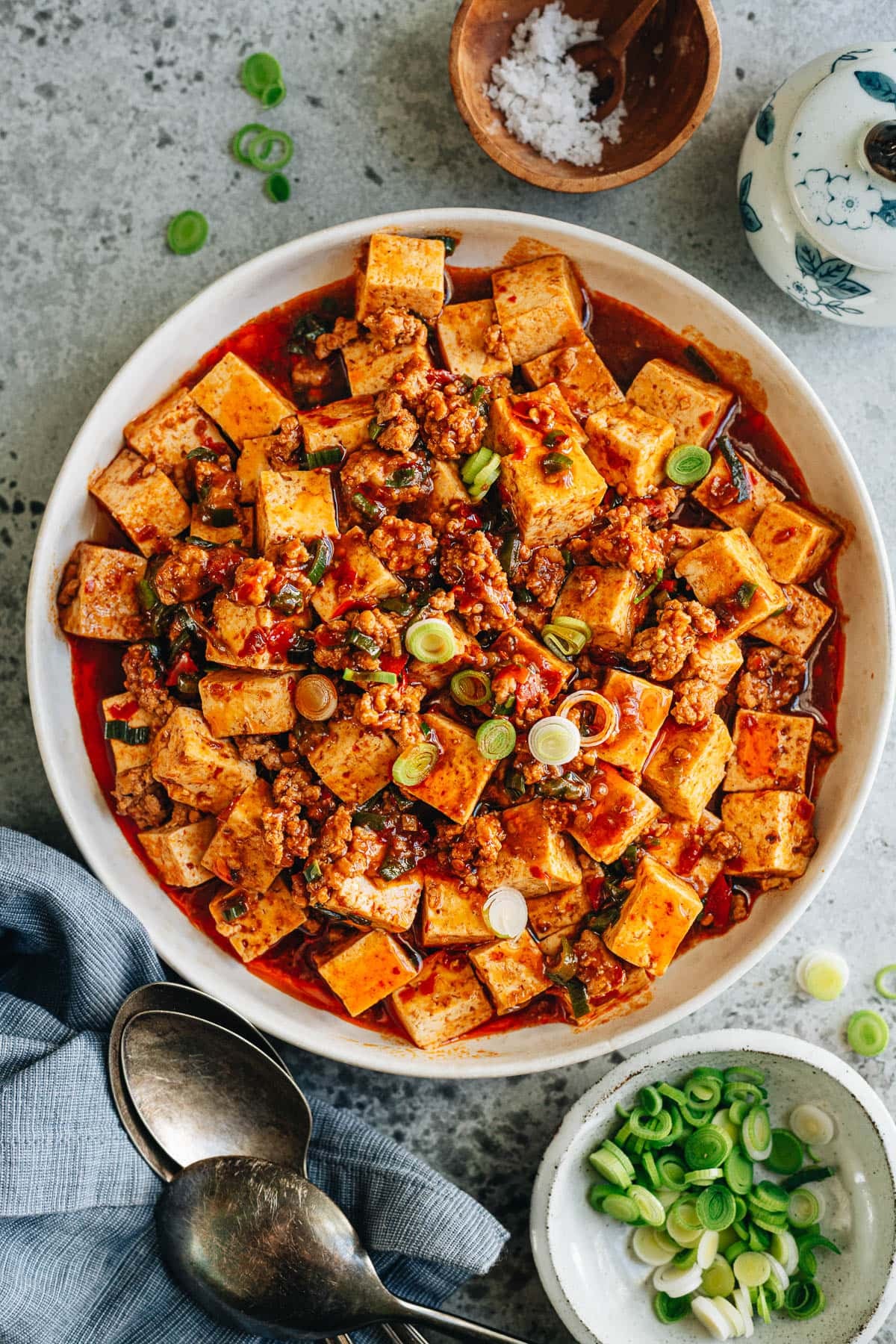
Mapo tofu (麻婆豆腐, ma po dou fu) is one of the most famous dishes to come out of Sichuan, where soft tofu simmers in a fermented chili sauce until each cube is slippery and loaded with flavor. I love that small amount of ground pork goes into the pan for savory depth, and green onion and fried Sichuan peppercorns finish the dish. This is the restaurant-style version, numbing and spicy, not a toned-down Western take.
I learned to cook this the way most Sichuan cooks do, by frying the peppercorns in oil first and letting the doubanjiang color the pork before any liquid goes in. My husband likes it hotter than I do, so I keep a jar of homemade chili oil on the table and let him add more to his own bowl. The numbing tingle from the Sichuan pepper is the part I chase every time I make it. I know you will love it too!
I’ve simplified the cooking process into three easy steps to make mapo tofu approachable, even if you’re making it for the first time. First, I fry the Sichuan peppercorns to release their aroma, then remove them before cooking the pork with doubanjiang. Next, I gently add the tofu and let everything simmer in the broth before finishing with a cornstarch slurry to thicken the sauce. The entire recipe takes just 30 minutes, including the simmering time, so much of the cooking is hands-off while the tofu absorbs all those delicious flavors.
I highly recommend giving this recipe a try the next time you’re craving authentic Sichuan heat on a busy weeknight. Feel free to adjust the spice level to your taste, and enjoy!
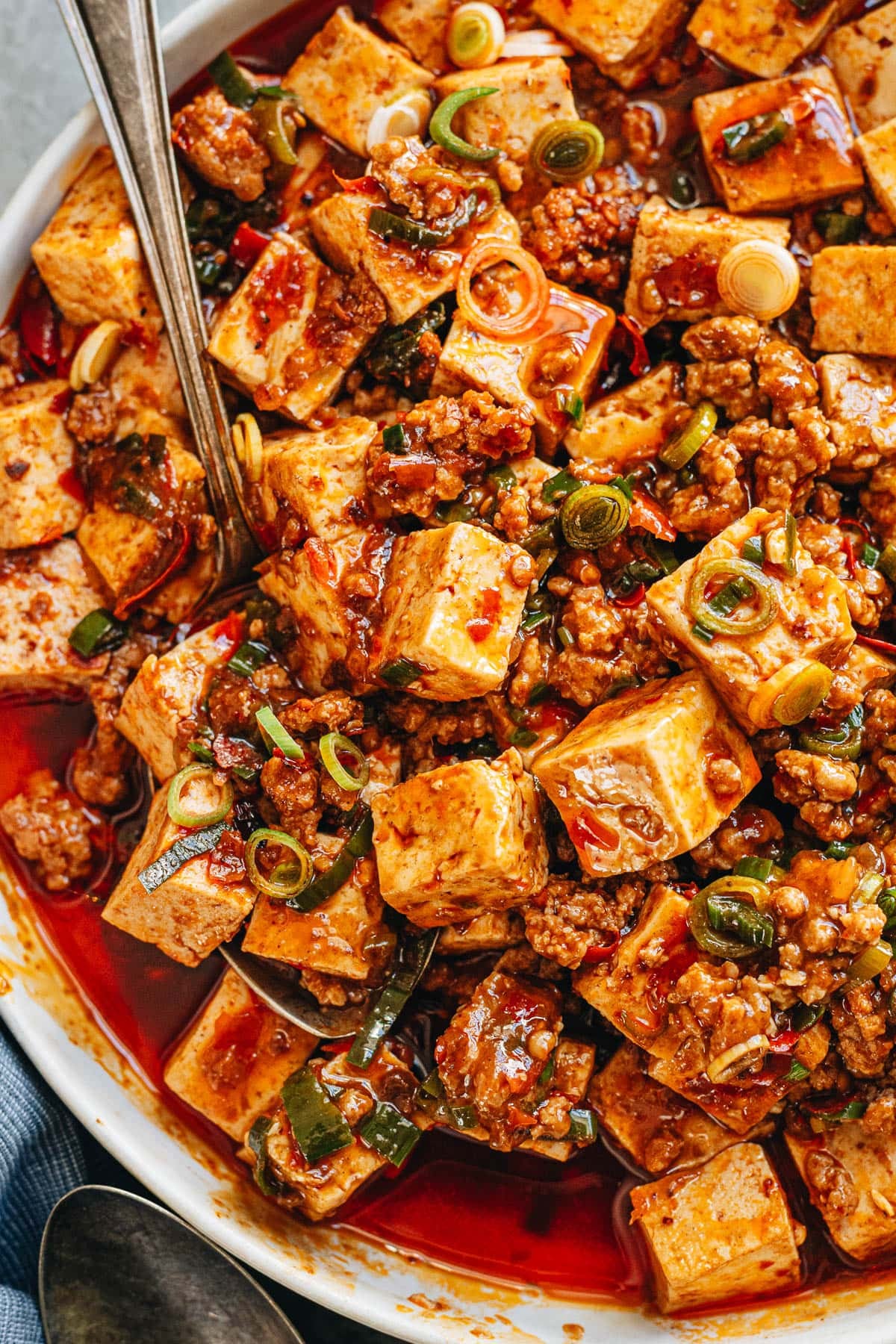
Key Ingredients
To make authentic-tasting mapo tofu, you’ll need three specialty ingredients from an Asian market, along with a handful of pantry staples. Here’s what you’ll need:
Doubanjiang: The Star Ingredient That Gives Mapo Tofu Its Signature Flavor
Doubanjiang (豆瓣酱), also known as spicy fermented bean paste, chili bean paste, chili bean sauce, or broad bean sauce, is the most crucial ingredient in mapo tofu. It has a strong, fermented, savory, salty, and spicy taste. I prefer to use Pixian doubanjiang in red oil because it gives the dish a beautiful, bright red color and is less salty than some of the thicker pastes. If you’re using this variety, you’re already halfway to making great mapo tofu. You can also purchase this brand on Amazon here.
NOTE: The salt and spice level can vary greatly depending on the Doubanjiang brand. This dish is designed to be served with rice, so it’s on the salty side. To make your dish less salty and spicy, reduce the amount of Doubanjiang to 2 tablespoons.

Sichuan Peppercorns: The Signature Numbing, Tingling Sensation
Sichuan peppercorns (花椒, hua jiao) are essential to creating the signature flavor of mapo tofu. They have a bright, citrusy aroma with a unique numbing, tingling sensation that lingers on your tongue. Unlike chili peppers, which bring heat, Sichuan peppercorns create a gentle buzzing sensation that makes the spicy flavors even more exciting. This combination of heat and numbness is what gives Sichuan cuisine its famous mala (麻辣) flavor. You can purchase Sichuan peppercorns at Asian grocery stores, but I highly recommend these premium fresh ones from The Mala Market.

Sichuan peppercorn cooking tips
There are two main ways to use Sichuan peppercorns in cooking. The first is to fry whole peppercorns in hot oil to infuse their citrusy aroma and numbing flavor into the dish. This creates a more rounded, mellow flavor without leaving whole peppercorns in the finished dish. The second is to grind the peppercorns into a fine powder and sprinkle it over the dish just before serving for a more pronounced numbing sensation.
In my mapo tofu recipe, I actually use both techniques. I fry the whole peppercorns in oil, then remove and grind them into a powder to sprinkle over the finished dish. This way, you get the infused flavor in the sauce and an extra layer of aroma from the ground peppercorns.
For a brighter, more pungent flavor, you can also grind fresh, uncooked Sichuan peppercorns and use them to finish the dish. I love the convenience of the Sichuan peppercorn grinder from The Mala Market, which makes it easy to add a little freshly ground pepper whenever you need it.
One thing to keep in mind is that very fresh Sichuan peppercorns can be quite potent. You may need only half the amount called for in the recipe, while older peppercorns gradually lose their fragrance and numbing strength.
Homemade chili oil: An Extra Layer of Heat and Aroma
The other essential ingredient is homemade chili oil (辣椒油). Freshly cooked chili oil tastes much better than store-bought and is free of additives. It only takes a few minutes to cook, and it’s really easy. If you want to purchase chili oil, make sure to find a high quality one. And it should contains chili flakes and the oil, such as this one.
Pork marinade and spice
I stir a small amount of ground pork together with Shaoxing wine, light soy sauce, and minced ginger so the meat holds its own seasoning before it meets the sauce. You can swap in ground chicken or turkey if you prefer a lighter protein. A pinch of five-spice powder adds a quiet background warmth to the sauce.
Firm vs. Soft Tofu: Different Textures for Mapo Tofu
I prefer to use firm or medium-firm tofu because it holds its shape well during simmering and is easier to handle. For a more traditional Sichuan restaurant-style mapo tofu, you can use soft tofu, which creates a delicate, silky texture. If using soft tofu, shorten the simmering time and stir very gently to prevent it from breaking apart. You may also need a little extra cornstarch slurry to thicken the sauce since the tofu won’t simmer as long.
I use chicken stock to give the sauce a richer, more savory flavor, but water works well too.
Finishing ingredients
I spoon in homemade chili oil and a little sugar to balance the salt, and I keep a cornstarch slurry ready to thicken the sauce at the end.
How to Make
1. Marinate the pork: Combine the ground meat with the Shaoxing wine, light soy sauce, and minced ginger in a small bowl. Mix well so the meat is seasoned through.
2. Mix the slurry: Stir the cornstarch with 1 tablespoon of water in a small bowl until smooth. Set it aside for the end.
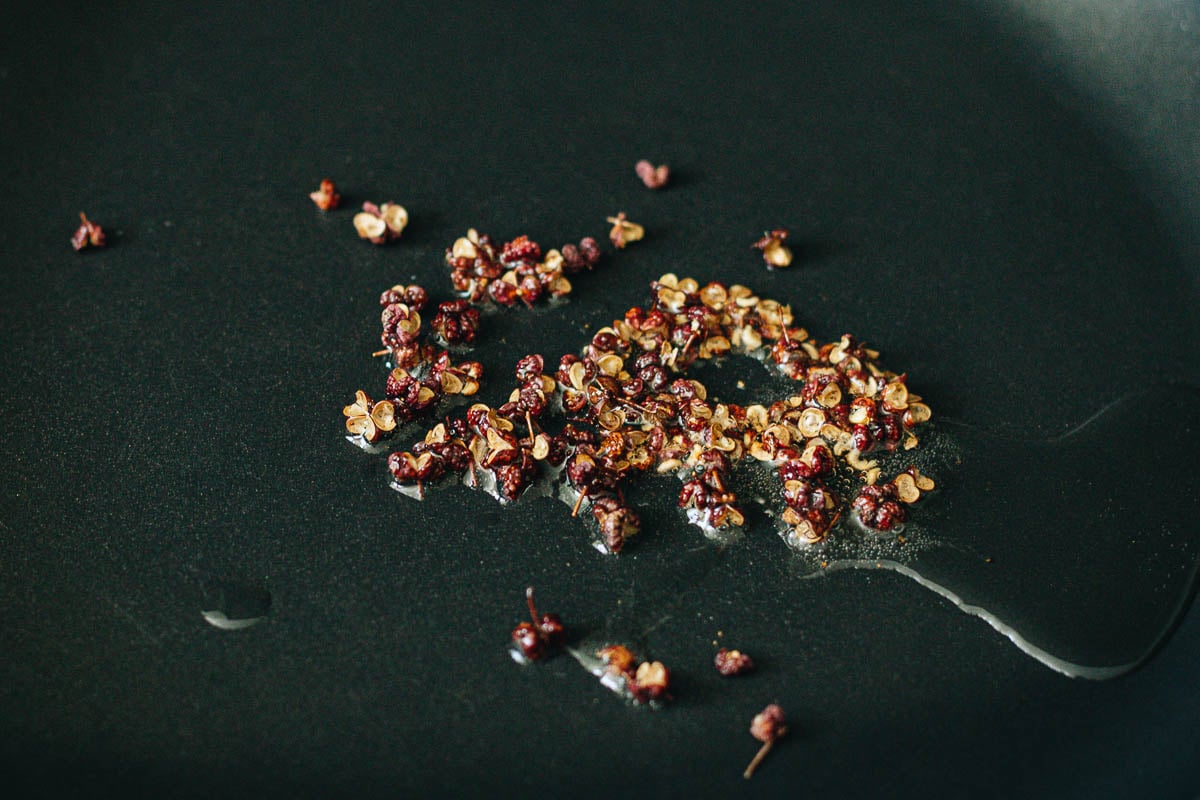
3. Fry the peppercorns: Heat the oil and Sichuan peppercorns in a large nonstick skillet over medium-high heat. When the peppercorns go dark brown and crispy, scoop them out and drain them on a paper-towel-lined bowl, saving them to grind for garnish if you like.
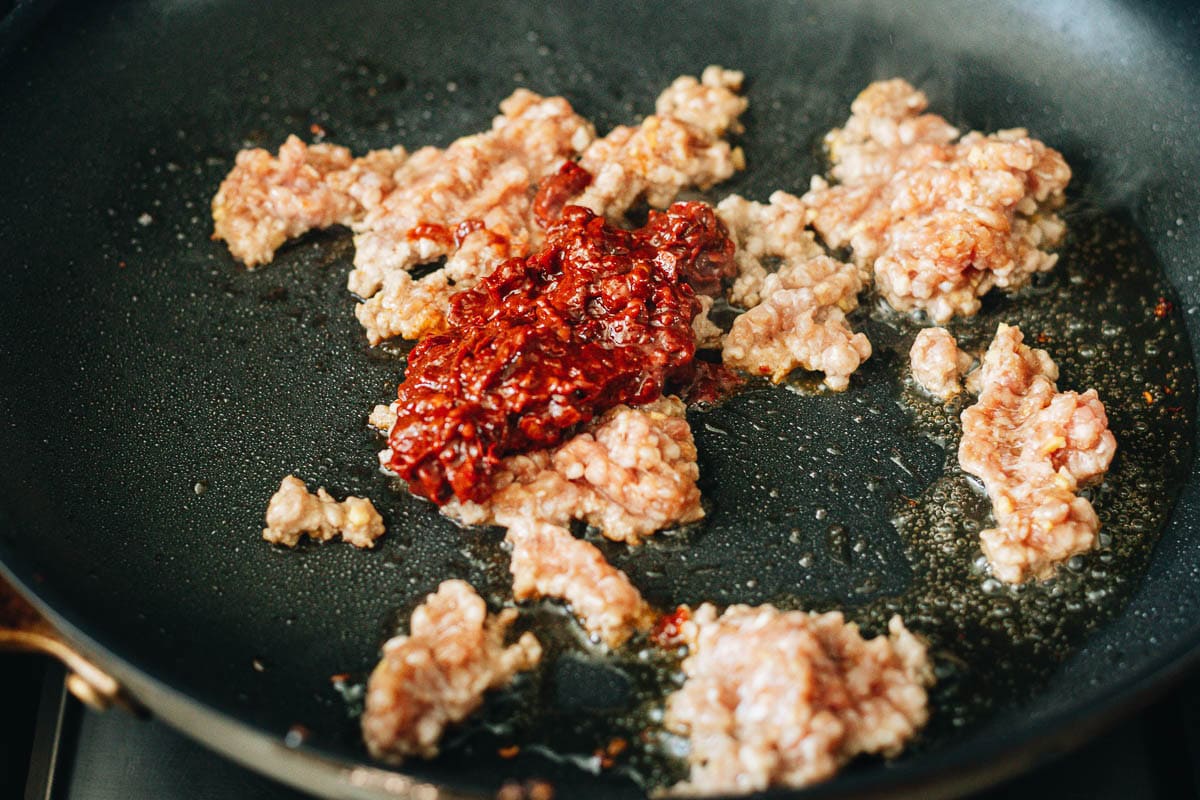
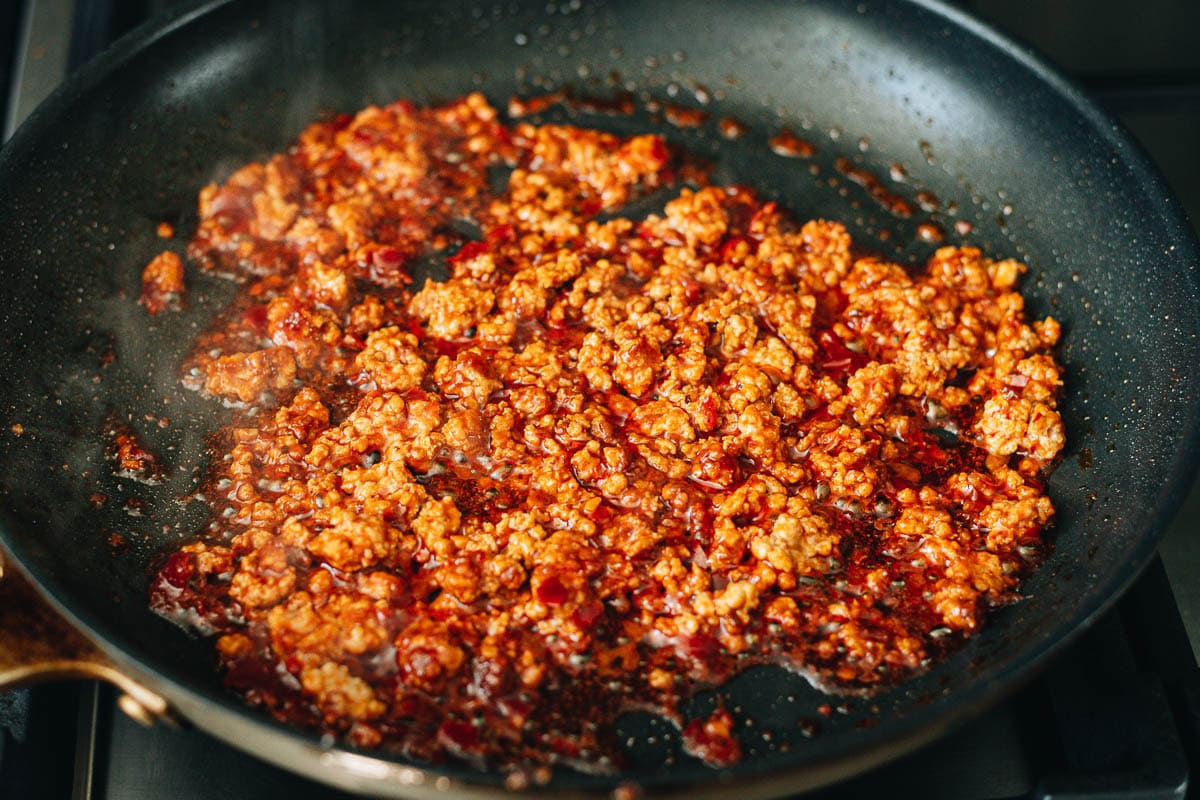
4. Cook the pork and paste: Add the ground meat and doubanjiang to the same oil. Cook over medium heat and chop the meat into small bits with a spatula until it is coated in the paste and cooked through.
5. Add the green onion: Stir in the chopped green onion and stir fry for another minute so it releases its fragrance into the pork.
6. Simmer the tofu: Lay the tofu over the pork in a single layer. Add the chili oil, five-spice powder, and sugar, then pour in the broth and bring it to a simmer.
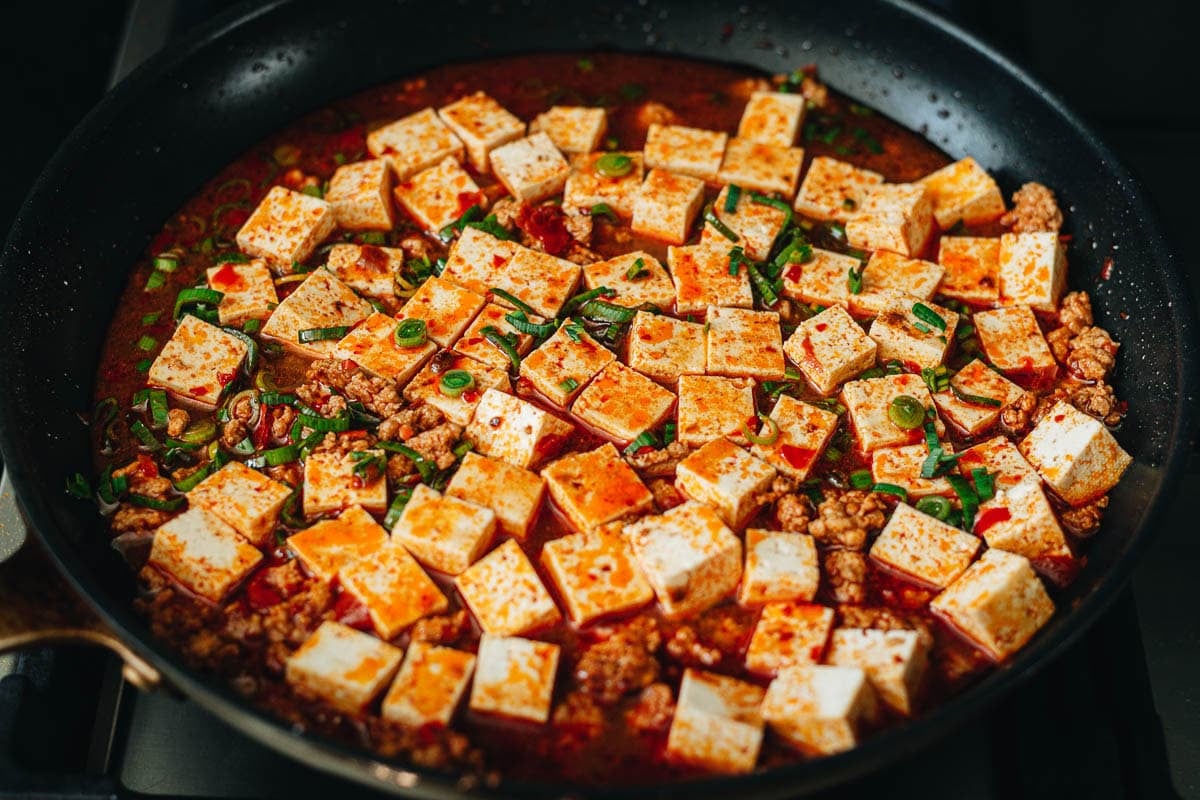
7. Reduce the sauce: Cover and simmer over medium-low heat for 8 to 10 minutes, until the sauce reduces to about half. Taste a little tofu with some broth, being careful because it will be very hot, and adjust with salt if needed or an extra teaspoon of sugar if it is too spicy.
8. Grind the peppercorns: While the tofu simmers, grind the fried Sichuan peppercorns in a coffee grinder or with a mortar and pestle if you want them for garnish.
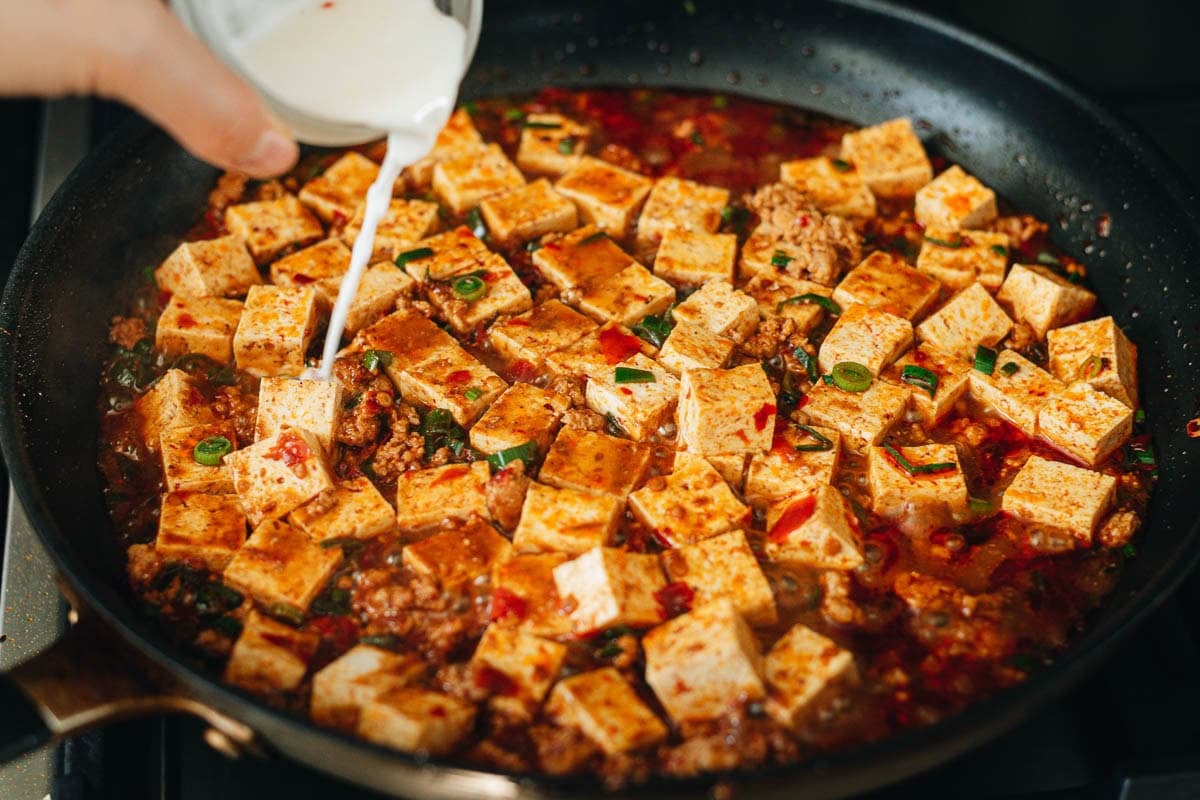
9. Thicken and finish: Stir the cornstarch slurry again until dissolved, then swirl it into the skillet. Stir a few times until the sauce thickens, kill the heat, and transfer everything to a bowl.
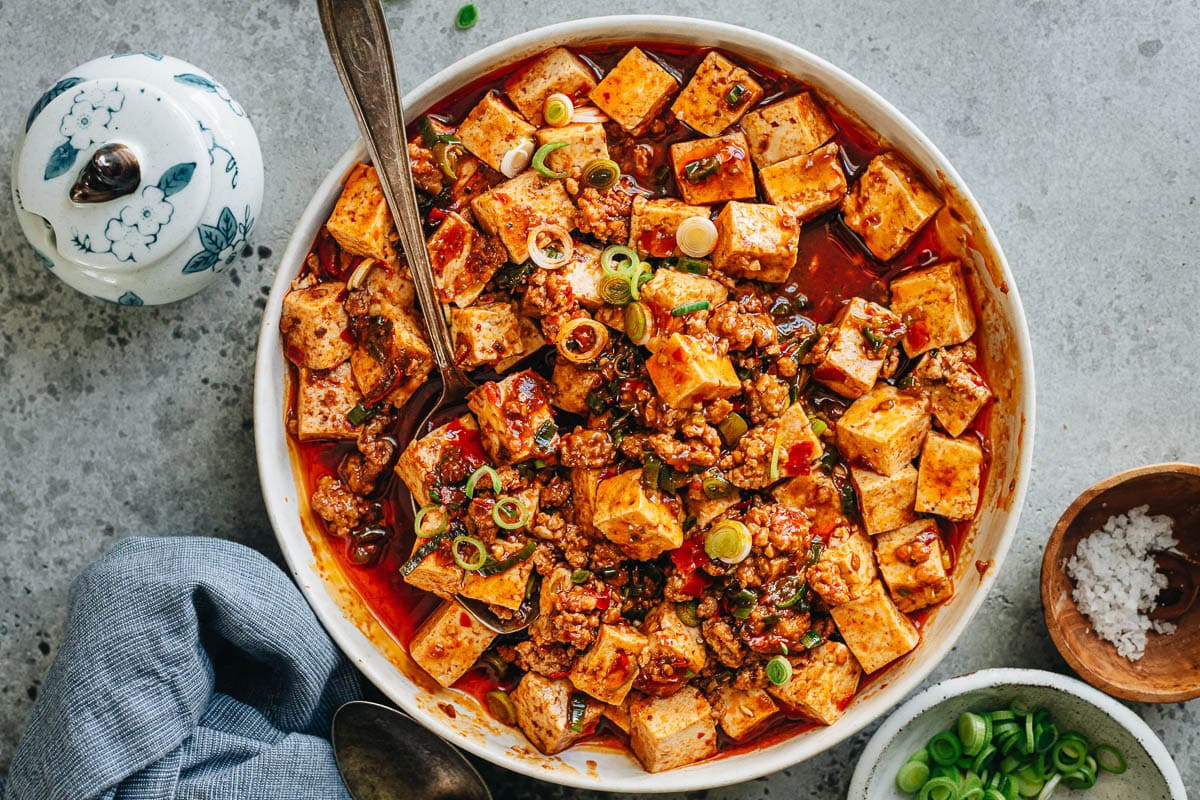
10. Garnish and serve: Top with extra green onion and a small pinch of the ground Sichuan peppercorns. Serve hot over steamed rice or on its own as a main.
My Tried and Tested Tips
Fry the doubanjiang to bring out its flavor: Don’t rush this step. Cooking the doubanjiang in hot oil releases its rich, fermented aroma and helps develop the signature red color of mapo tofu. Stir it frequently over medium heat so the paste doesn’t burn.
Simmer the tofu to absorb the flavor: Instead of simply tossing the tofu with the sauce, let it simmer gently in the broth. This allows the tofu to absorb the savory, spicy flavors. If you’re using soft tofu, shorten the simmering time and handle very gently without stirring much to prevent it from breaking apart.
Gently shake the pan instead of stirring: Once the tofu is added, avoid stirring too vigorously. I like to gently shake the pan or use a spatula to push the tofu around, which helps distribute the sauce while keeping the cubes intact.
Add the cornstarch slurry gradually: The sauce should be thick enough to lightly coat the tofu without becoming gummy. I prefer to add the slurry in batches, allowing the sauce to simmer briefly between additions. This gives me better control over the consistency, especially since the amount of liquid remaining can vary.
How to Enjoy This Dish
I love making mapo tofu for a quick lunch or dinner, especially when I can serve it over a big bowl of fluffy steamed rice. Sometimes I double the pork and sauce to make it a complete meal for two, although I have to admit, leftovers are never guaranteed in my house!
When I have friends over for a Sichuan-style dinner, mapo tofu always gets a special place on the table. And since I believe a little spice makes dinner more exciting, I usually serve it alongside my Sichuan boiled fish for anyone who wants to turn up the heat even more. Of course, I also make sure there are some vegetables to give everyone’s taste buds a little break.
My garlic green beans and easy stir-fried pea shoots are perfect for adding something fresh and crunchy to the meal. For a vegetarian adaption, try out my vegetarian mapo tofu.
Frequently Asked Questions
Why is my mapo tofu watery instead of saucy?
If your mapo tofu sauce is too thin, it probably needs a little more cornstarch slurry. Make sure the sauce is simmering when you add the slurry, and give it a moment to thicken. If it’s still too watery, mix a little more cornstarch with cold water and add it gradually until the sauce lightly coats the tofu. Keep in mind that the sauce should be saucy, not overly thick or sticky.
What type of tofu should I use for mapo tofu?
There is no correct answer; you should choose what works best for you. Some Chinese restaurants, including many in China, prefer soft or silken tofu for a melt-in-your-mouth texture. This method requires some experience handling tofu, so you won’t break apart the delicate silken tofu while cutting and cooking.
This dish can also use extra firm, firm, or medium tofu, which is much easier to handle. Plus, once you braise the tofu in the rich, spicy sauce, it absorbs a lot of flavor and tastes great.
How can I make mapo tofu less spicy?
My recipe uses 3 tablespoons of doubanjiang, which creates a pretty bold, spicy sauce. For a milder version, start by reducing the doubanjiang to 2 tablespoons. You can also replace some of the doubanjiang with fermented black beans or miso paste. Miso creates a much milder sauce with a hint of sweetness, while still adding plenty of umami. I actually started making mapo tofu with mostly miso and just a little doubanjiang for my toddler, then gradually increased the doubanjiang as he got used to the flavor. It’s a great way to introduce the dish to kids or anyone who prefers less spicy food.
Want to Save This Recipe?
Enter your email below & we’ll send it to your inbox. Plus get great new recipes from us every week!
Watch video

Authentic Mapo Tofu (麻婆豆腐)
Ingredients
Marinating
- 4 oz ground pork (or other ground meat like beef or chicken) (*Footnote 1)
- 2 teaspoons Shaoxing wine
- 1 teaspoon light soy sauce
- 1/2 teaspoon minced ginger
For braising
- 1 teaspoon cornstarch (*Footnote 2)
- 2 teaspoons Sichuan peppercorns , increase to 3 teaspoons if you like your dish extra numbing, or reduce to 1 teaspoon if your Sichuan peppercorns are extra fresh
- 1 tablespoon peanut oil (or vegetable oil)
- 3 tablespoons Doubanjiang , reduce to 2 tablespoons for a less saltier and less spicy taste
- 2 green onion , sliced
- 1 block firm or medium firm tofu , cut into 1.5cm (1/2 inch) squares
- 1 cup low-sodium chicken stock (or water)
- 2 teaspoons homemade chili oil (*Footnote 3)
- 1/4 teaspoon five-spice powder
- 1 teaspoon sugar (or to taste)
Instructions
- Combine ground meat, cooking wine, soy sauce, and ginger in a small bowl. Mix well.
- Combine cornstarch with 1 tablespoon of water in a small bowl. Mix well and set aside.
- Heat the oil and Sichuan peppercorns in a large nonstick skillet over medium-high heat. When the Sichuan peppercorns turn dark brown and crispy, scoop them out with a spatula and transfer into a bowl layered with paper towels to soak extra oil. Save to use for garnishing the dish.
- Add the ground meat and Doubanjiang. Cook over medium heat and chop the ground meat into small bits with a spatula, until pork is evenly coated with Doubanjiang and fully cooked through. Add green onion and stir fry for another minute.
- Spread tofu evenly on top of ground pork (*Footnote 4). Add chili oil, five-spice powder, and sugar. Pour in the broth and cook until brought to a simmer. Simmer, covered, over medium-low heat for 8 to 10 minutes, or until the sauce has reduced to half the original amount. Taste the tofu with some broth (be careful, it will be very hot!). Adjust seasoning by adding salt if needed. If the dish is too spicy, add another teaspoon of sugar to balance it out. Gently mix well with spatula.
- Meanwhile, grind the fried Sichuan peppercorns (you used when heating up the oil) in a coffee grinder or using mortar and pestle. (Footnote 5)
- Stir the cornstarch slurry again until fully dissolved, then swirl it into the skillet. Gently stir a few times with a spatula and simmer until the sauce thickens. If the sauce is still too thin, mix a little more cornstarch with cold water and gradually add it to the skillet until the sauce reaches your desired consistency. Turn off the heat and transfer everything to a serving bowl.
- Garnish with extra green onion and a small pinch of the ground Sichuan peppercorns(*Footnote 5). Serve hot over steamed rice or by itself as main.
Notes
- Ground pork is commonly used in China to add richness and flavor to mapo tofu, and you only need a small amount. You can also substitute other types of ground meat, which work just as well. Sometimes I increase the amount to 1/2 lb (225 g) when I want a heartier, meatier dish.
- If using soft tofu, you may need more cornstarch to make a little extra cornstarch slurry to thicken the sauce, especially if you shorten the simmering time. Add the slurry gradually until the sauce reaches your desired consistency.
- You can also pour on more chili oil for the restaurant look!
- Do not stir the tofu immediately after adding it into the skillet, in order to keep the pieces from breaking apart. The tofu will get firmer after braising and you can stir it once it’s cooked.
- I use fried Sichuan peppercorns that have been ground into a powder to finish my mapo tofu, which gives the dish a more rounded, mellow flavor. You can also use freshly ground, uncooked Sichuan peppercorns for a brighter, more pungent aroma and stronger numbing sensation. Start with a small amount and adjust to taste, especially if your peppercorns are very fresh.
Nutrition

Did you make this recipe?
I’d love to hear how it turned out for you! Please take a moment to leave a 5-star rating ⭐️ and share your thoughts in the comments further down the page. It really helps others discover the recipe too.
pongtable
This makes me remember my grandma, she used to cook this dish when I was a child, and I really liked this. Thanks for sharing.
Charles McKnight
Delicious! Thank you for such a wonderful and easy recipe!
Jeff
Your page is gonna change my life I can just tell. Thanks!!!
Tom Hill
Hi Maggie,
I just returned from two incredible weeks in Chengdu, and already miss the food. Thanks for this website. Since I live near San Francisco’s Chinatown, getting the ingredients will be easy. I brought home some red and green peppercorns just in case!
rook
Simple instruction but tasty with the adding of a lot spices. I always like tofu, I will definitely cook it. Thanks for all photos and nice post.
Lasesana
Great recipe. I have vegan dish made of tofu sometimes, so I’ll cook this without meat. Will have and enjoy it this week. Thanks for your post.
Lisa
Looks yummy, I eat tofu sometimes, Mapo tofu is easy but tasty. I saved your article and will try it soon. Thanks for the recipe.
Daniel
Awesome!
Jun Almodoval
There are so many different types and firmness of tofu, which one should be used?
Thank you.
Maggie
Hi Jun, you can use medium firm or firm tofu for this recipe. Sometimes I even use soft tofu when I want a heartier texture!
Ellrick
I really like your recipe and it’s prolly one of the most delicious Mapo Tofu I’ve ever eaten. Although there’s a problem when I made it, because my bro say it’s salty but when I tried it, it’s fine and I’m glad most people agreed it’s really delicious so I think maybe it’s prolly cultural difference that some people aren’t used to the numbness of sichuan pepper. But I’m not sure where I went wrong. I followed exactly your recipe except that I didn’t put salt on it(which is doesn’t make sense why he said it’s salty).
Olga
Maggie, it looks awesome! So much flavors packed on this recipe that makes this simply irresistible, definitely having this on my table!
Arnab Nayak
Loved your recipe. Made a few changes to my taste: but loved the way you have laid out all the steps and ingredient info.
JAY R ZABLAN
I found Sichuan / Pixian / Pi Xian Broad Bean Paste 16OZ (454g) on Amazon for $7.45. Hope this is the same sauce.
Maggie
I think so!
Celine
Question about making it vegetarian.
Hi Maggie, I love your blog so much. Thank you for being such a good cook and giving us good recipe.
I would love to make this tofu next week for Chinese New Year on Wednesday.
How do I add the dry shiitake mushroom? Is it better with dry shititake or fresh one okay too?
How long should I Stirfy the mushroom? I am cooking for 8, how many Tofu should I use? and how much shiitake ? 1 large dry package?
Thank you and looking forward to hear from you.
Lastly, do you know any brand for cooking sauce that doesn’t have MSG? My husband is allergic and a lot of guests cant eat with MSG some of them will have severe headache. I noticed the Lee Kum Kee has MSG. Thanks
Maggie
Hi Celine, I do have a vegetarian mapo tofu recipe here: https://omnivorescookbook.com/vegetarian-mapo-tofu/
It uses fresh mushrooms and the taste is great without using shiitake mushrooms.
Re serving size, it really depends on how many dishes you will be cooking. But I’d say doubling the recipe (2 blocks of tofu) will generate plenty, considering you’ll be also serving other dishes.
PS. Highly recommend the 3-year old doubanjiang from the Mala Market (https://themalamarket.com/collections/all/products/3-year-aged-pixian-chili-bean-paste-doubanjiang?aff=2). It’s so rich. I used it to make vegan mapo tofu the other day and it turned out so good. The shipment might not able to make it for your CNY party, but it’s something that’s really nice to have if you cook vegetarian dishes a lot.
For Asian cooking sauce, I’m not sure if you’re looking for a basic sauce like soy sauce, or a packaged premade sauce. I use soy sauce from Kikkoman and Pearl River Bridge and both of them do not contain MSG. Most packaged premade sauce contains MSG, but I think some of them at Wholefoods use natural ingredients.
Celine
Thank You! I just ordered the Pixian red package! I remembered I bought it last year, but the package smell bad un-opened so I threw it away 🙂 I wish I knew about the Mala Market 3 year old Doubanjiang. I am moving the dinner to Friday the 8th. I wonder if they can deliver it by Thursday. I went for dinner last week in Culver City Chinese restaurant Fifty one https://www.fiftyonekitchen.com/menu ( the Mapo tofu vegetarian one) I don’t know what type of mushroom , it was silky and its seems they minced it. Anyway, Thank you for responding. You helped me tremendously.
Dolores
Hi Maggie, thanks for the recipe! Have tried it twice and it is delicious. One thing I ‘ve found is that the final dish has quite a bit of oil floating on the top. Do you have any tips to make it less oily – using less Sunflower oil at the start perhaps, or replacing the chili oil with fresh chilies?
Maggie
Hi Dolores, you can totally start with less Sunflower oil at the beginning if you’re using a nonstick pan (1 teaspoon is probably enough). It’s also possible to replace the chili oil with chili flakes, but I really prefer the homemade chili oil because it’s more fragrant.
Nicki
Dear Maggie, Thankyou. This was he best Mapo Tofu We have ever tasted x
Shona Levingston
This is an excellent recipe. Very tasty. I usually find it difficult to get an authentic taste when I make Chinese food. I don’t seem to have the knack of balancing flavors. However, by following your recipe, I was able to achieve a delicious result. I did cut down on the chili bean paste to suit my taste.
pop@nfl hoodie
My mom love tofu. I don’t usually cook for her. I’ll surprise her by cooking this dish. Thanks for your sharing and all the photos.
Tiffany@shirts
Tofu!! I like tofu, I have cooked it with meat before, the recipe is not the same. I think I’ll try your recipe, it’s not too much complex. What’s kinds of rice in your photo? Thanks for sharing.
Maggie
Hi Tiffany, I used multi-grain rice in the photos. We usually blend it with brown rice, wild rice and quinoa 🙂
Nicholas Price
Tasty, but too hot for me, even putting 1 tbsp chilli paste, excluding chili sauce and peppercorns.