
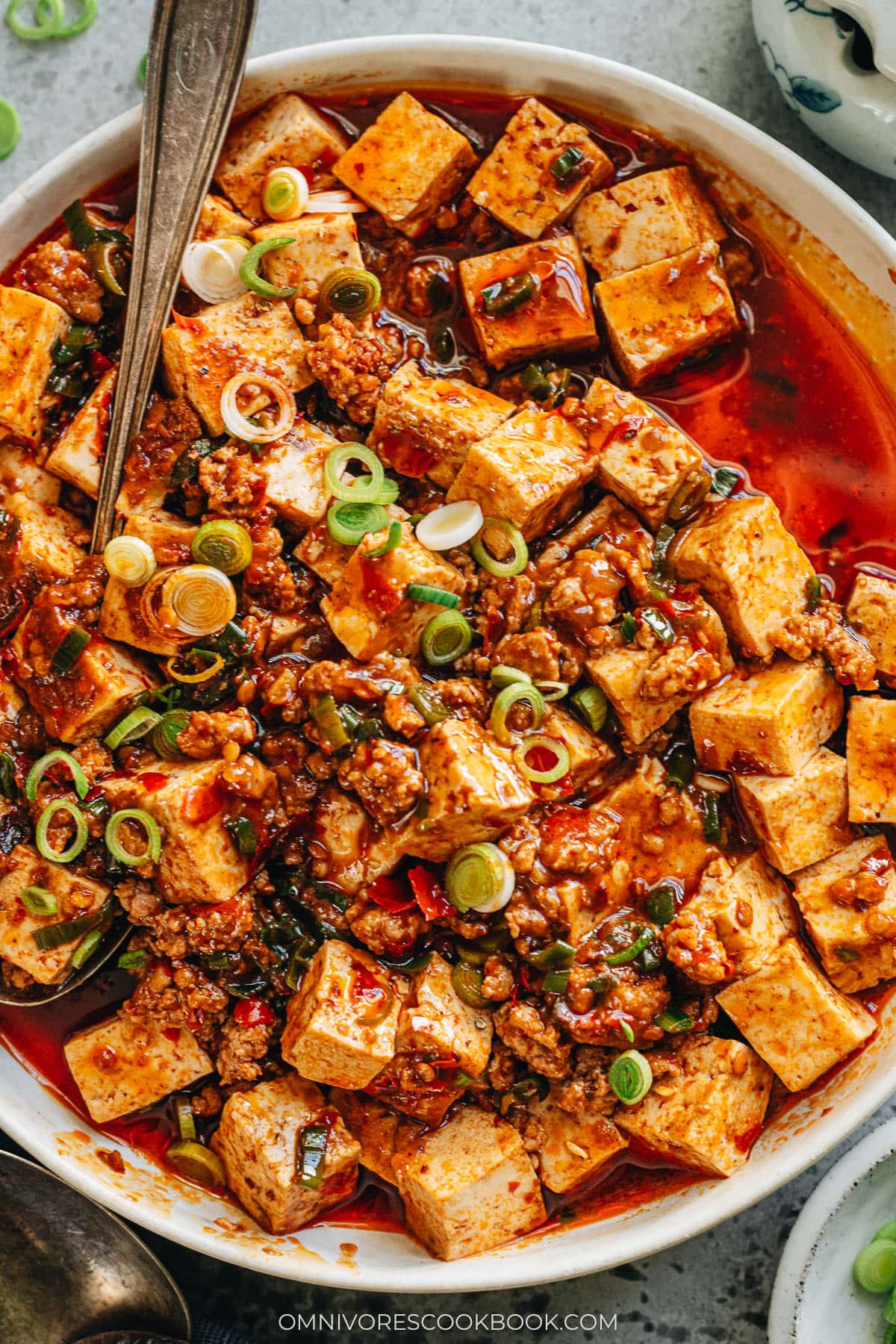
Mapo tofu (麻婆豆腐, ma po dou fu) is one of the most popular dishes from Sichuan cuisine. The tofu pieces are braised in a rich, spicy, savory sauce, along with fresh garlic and scallions. A small amount of ground pork enhances the flavor. The dish is so appetizing, and it goes perfectly with steamed rice.
Cooking mapo tofu is relatively easy, but you need a few special ingredients to get the authentic flavor. I’m sharing my favorite mapo tofu recipe below. It creates the very authentic taste that you’d get at a restaurant in China. However, you can easily tweak the dish according to your preferences.
Key ingredients for Mapo Tofu
Doubanjiang
Doubanjiang (豆瓣酱), also known as spicy fermented bean paste, chili bean paste, chili bean sauce, or broad bean sauce, is the most crucial ingredient in mapo tofu. It has a strong, fermented, savory, salty, and spicy taste. Try to find “Pixian Broad Bean Paste” at your Asian market.Pixian is a small county in the Sichuan province that produces the best chili bean paste. If you’re using this brand, you’re already halfway there. You can also purchase this brand on Amazon here.
NOTE: The salt and spice level can vary greatly depending on the Doubanjiang brand. This dish is designed to be served with rice, so it’s on the salty side. To make your dish less salty and spicy, reduce the amount of Doubanjiang to 2 tablespoons.

Sichuan peppercorns
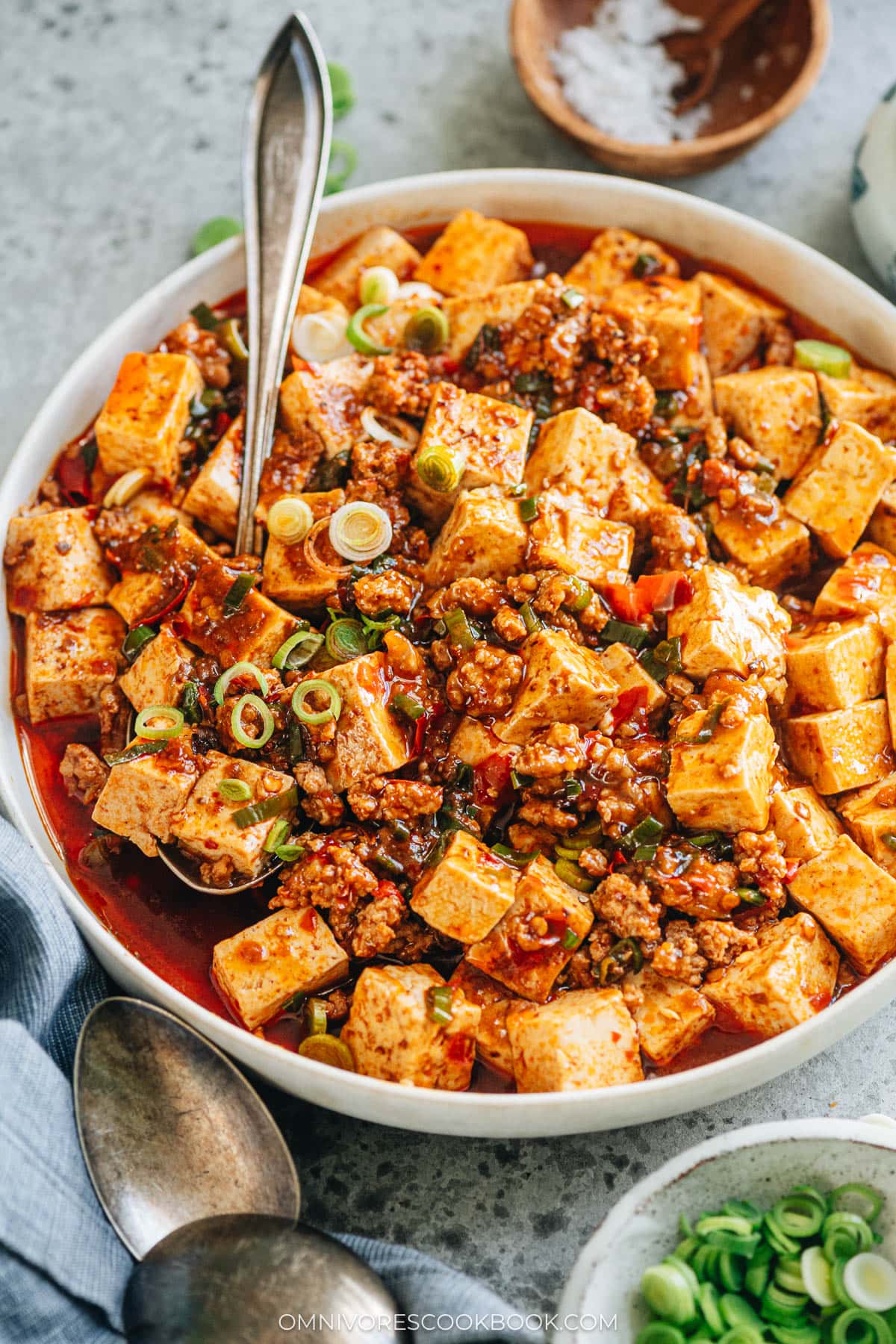
Sichuan peppercorn (花椒, hua jiao) is another main ingredient in any Sichuan dish. It has a citrusy taste with a numbing tingling sensation when you chew on it. It’s a crucial and irreplaceable flavor-enhancing ingredient.. You can purchase Sichuan peppercorns at Asian grocery stores, but I highly recommend these premium fresh ones from The Mala Market.
Sichuan peppercorn cooking tips
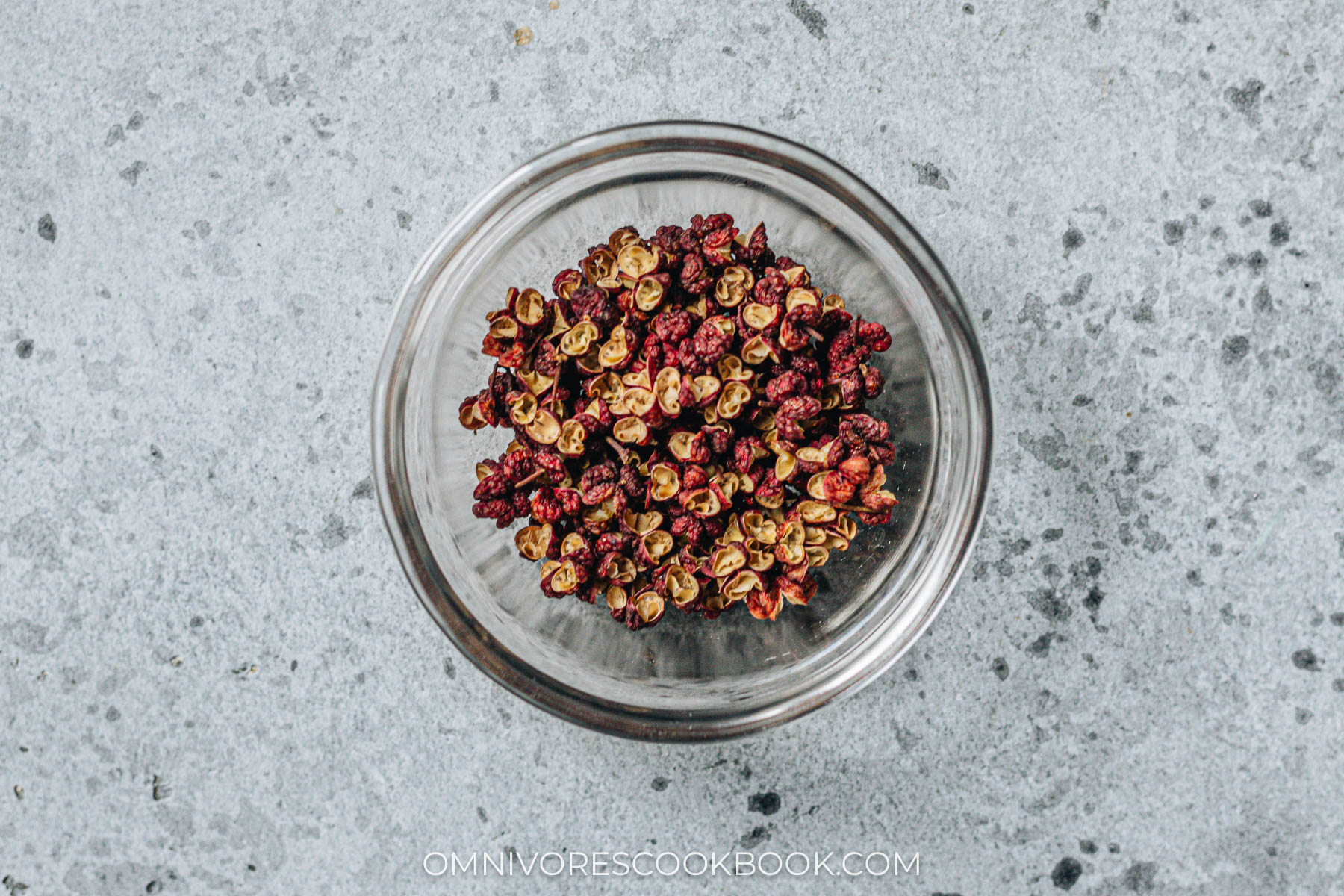
The most common way to cook Sichuan peppercorns is to fry them in hot oil. Doing so infuses the flavor and makes the dish milder. You can also grind the peppercorns and use them to garnish your dish later.
Alternatively, you can use ground-up fresh Sichuan pepper. I recently got a Sichuan peppercorn grinder from The Mala Market. I love that it’s fast and easy to use. Grind a small amount and add it when cooking or at the end to add flavor. If you have this product on hand, add 1/4 teaspoon ground Sichuan pepper when you add the ground pork.
When you use super fresh Sichuan pepper, the flavor is pungent. You may only need about half of the amount indicated in this recipe. The longer you store the peppercorns, the less fragrance they will have, and the more you need to use.
Homemade chili oil
The other essential ingredient is homemade chili oil (辣椒油). Freshly cooked chili oil tastes much better than store-bought and is free of additives. It only takes a few minutes to cook, and it’s really easy.
If you want to purchase chili oil, make sure to find a high quality one. And it should contains chili flakes and the oil, such as this one.
What to do with leftover chili oil?
You will usually cook more chili oil than you’ll use in one meal. You can store the extra oil in an airtight container in the fridge for 6 months to a year. Use it in various dishes, including Sichuan spicy wonton in red oil and Fu Qi Fei Pian (sliced beef in hot sauce). You can also add it to a dipping sauce for potstickers, to wonton soup to enhance the flavor, or even put it on oatmeal!
It might look like you need so many specialty ingredients for this one dish. But trust me, if you love Sichuan food, you’ll use them repeatedly.
How to cook mapo tofu
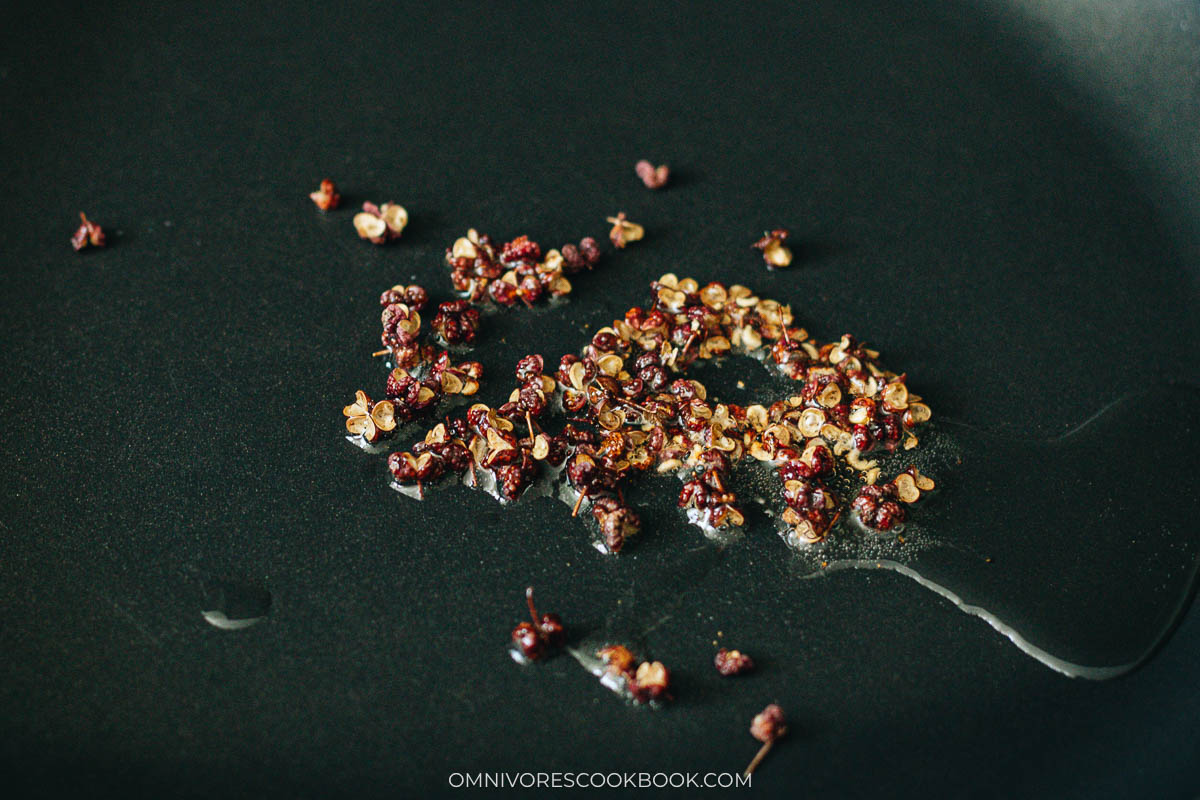
Fry the Sichuan peppercorns in the oil to infuse the aroma
- Fry the Sichuan peppercorns in the oil to infuse the aroma.
- Cook the ground pork with doubanjiang.
- Once the pork is cooked, add the green onions and stir a few times.
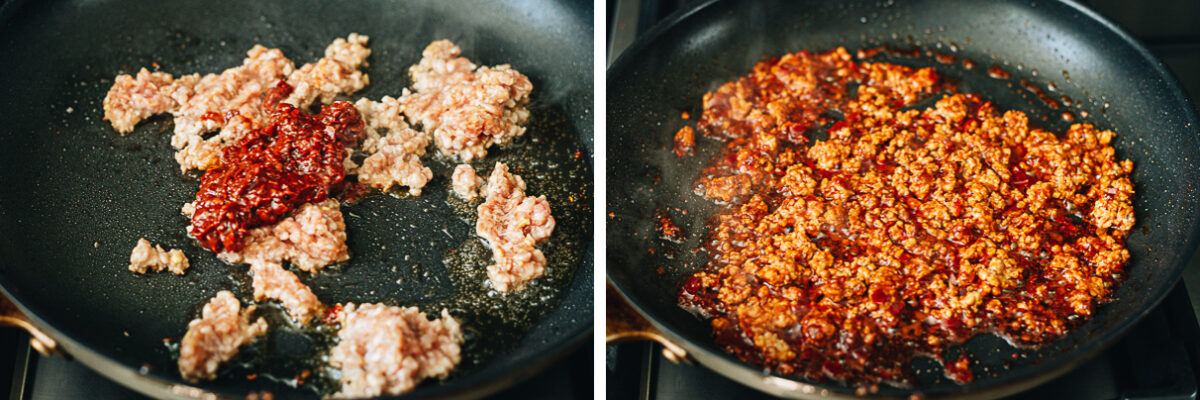
- Add the broth, tofu cubes, and braise with the cover on.
- Drizzle in the cornstarch mixture to thicken the sauce. Sprinkle with scallion greens for garnish.
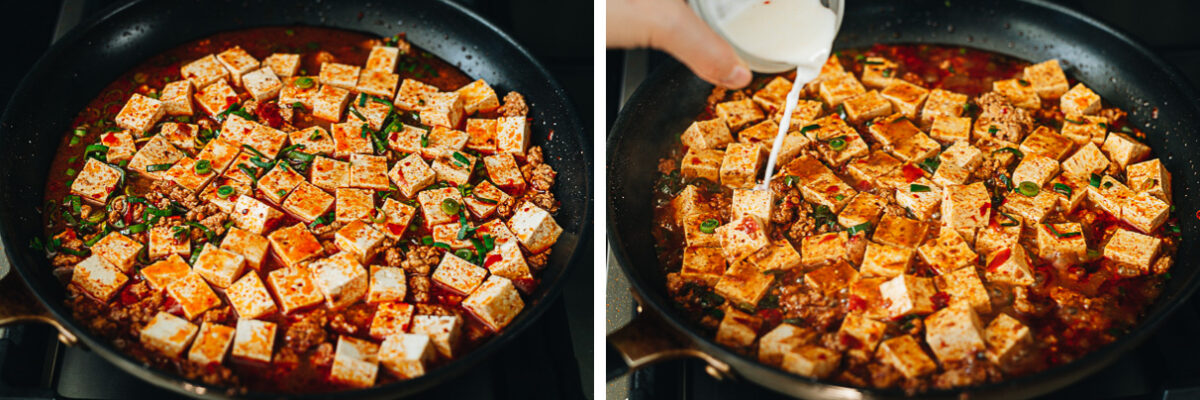
That’s it! I think this is one of the easiest Sichuan recipes, and the result is super rewarding 🙂
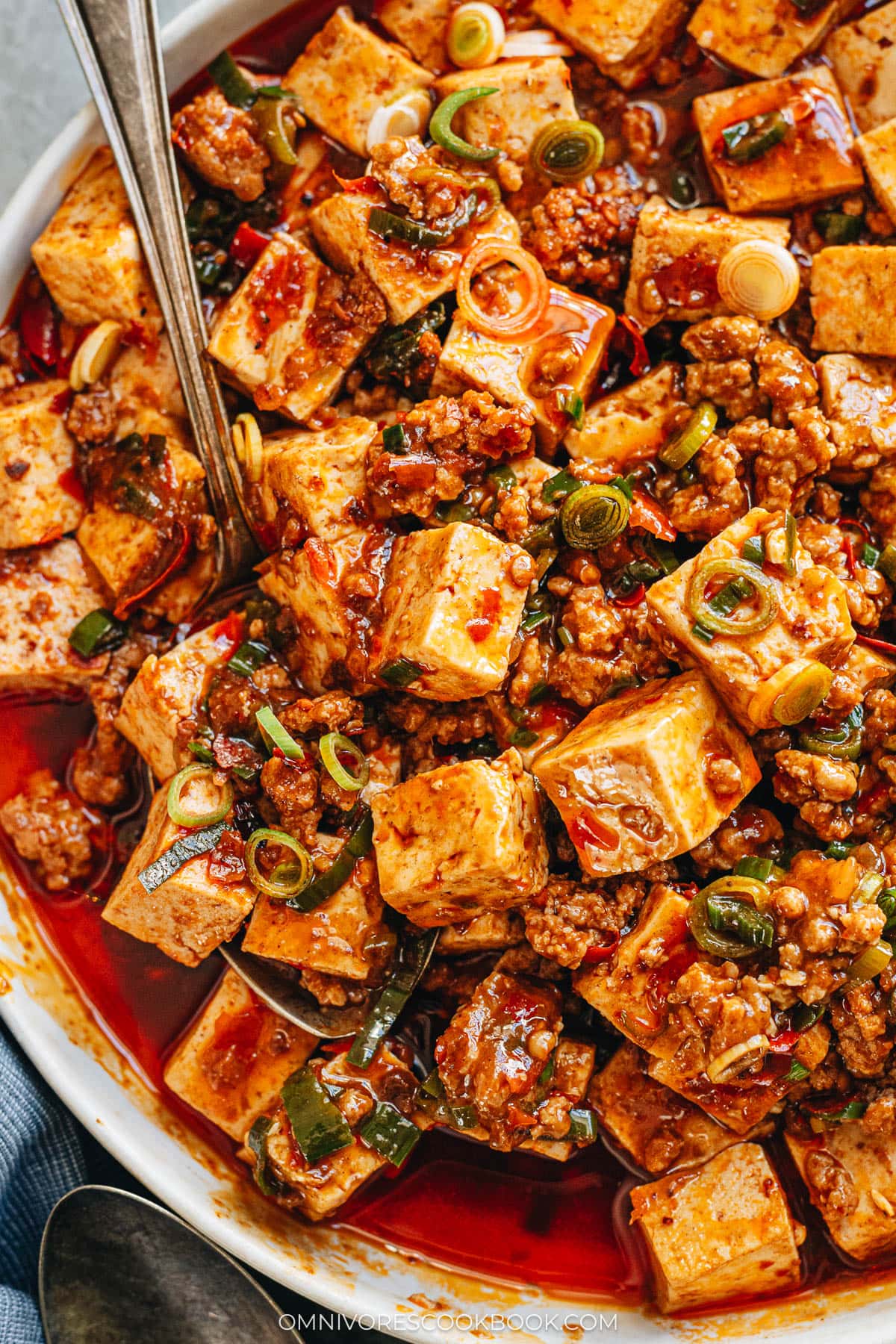
How to serve mapo tofu
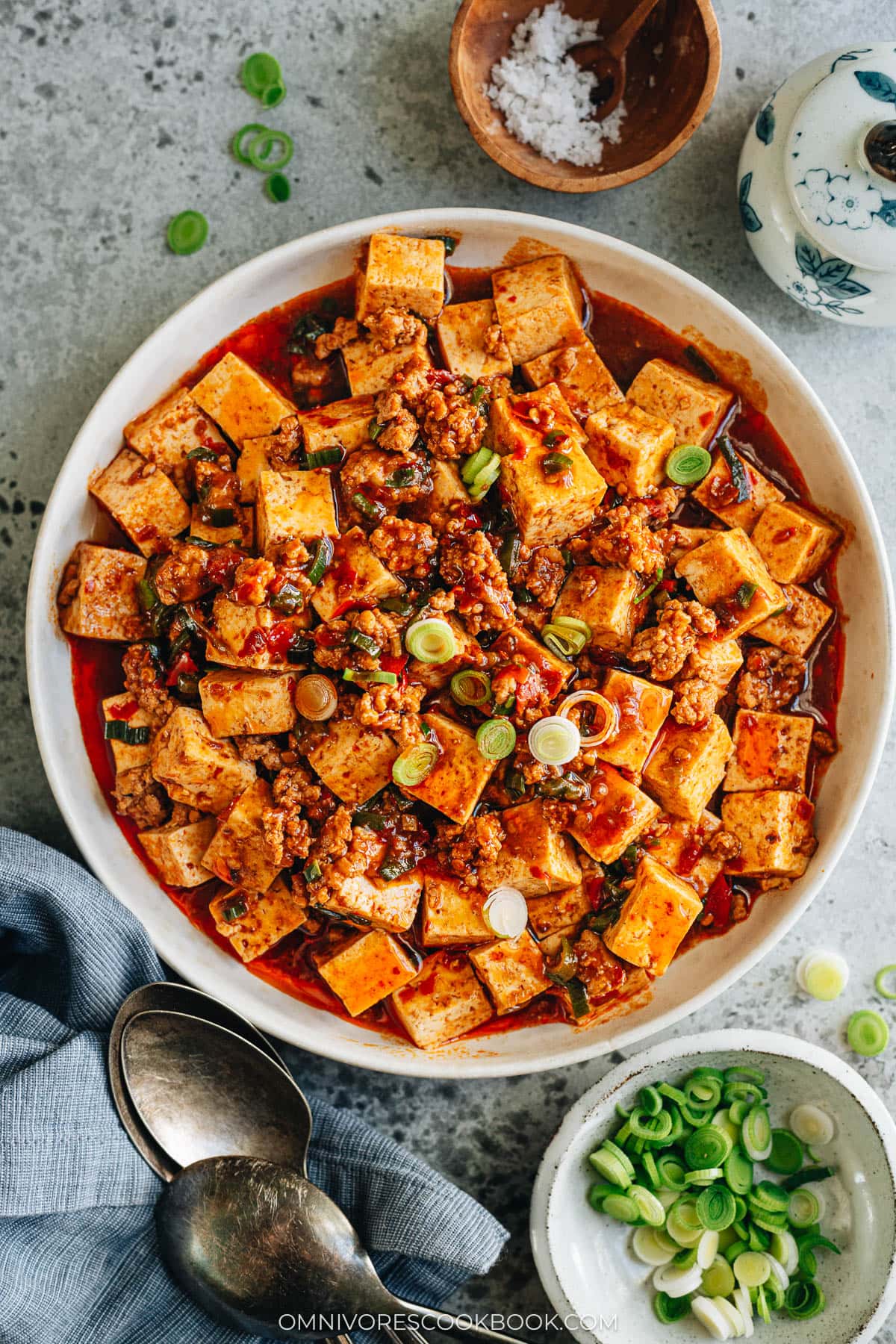
I love cooking mapo tofu for a quick lunch or dinner and serving it over steamed rice. Sometimes I double the meat and sauce, so it will be enough to serve two people as a one-dish meal.
I also like to add a handful of greens (spinach, garlic chives, or other tender greens such as chopped up baby bok choy) at the end of braising before adding the cornstarch, to create a more nutritious and balanced meal. Sometimes I also replace the ground pork (used in the authentic version) with ground beef, or ground chicken, depending on what I have in the fridge.
Frequently asked questions
What type of tofu should I use for mapo tofu?
There is no correct answer; you should choose what works best for you. Some Chinese restaurants, including many in China, prefer soft or silken tofu for a melt-in-your-mouth texture. This method requires some experience handling tofu, so you won’t break apart the delicate silken tofu while cutting and cooking.
This dish can also use extra firm, firm, or medium tofu, which is much easier to handle. Plus, once you braise the tofu in the rich, spicy sauce, it absorbs a lot of flavor and tastes great.
Do I need a wok to cook mapo tofu?
Not at all! I found it’s easiest to cook mapo tofu in a nonstick pan. The tofu will sit flat in the broth and absorb all the flavor. Plus, it won’t stick to the pan or fall apart when you stir it.
How do you make mapo tofu vegetarian or vegan?
I have a vegan mapo tofu recipe here that tastes super flavorful!
Want to Save This Recipe?
Enter your email below & we’ll send it to your inbox. Plus get great new recipes from us every week!
Watch video
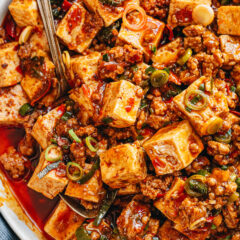
Authentic Mapo Tofu (麻婆豆腐)
Ingredients
Marinating
- 4 oz ground pork (or chicken, or turkey) (*Footnote 1)
- 2 teaspoons Shaoxing wine (or dry sherry)
- 1 teaspoon light soy sauce
- 1/2 teaspoon minced ginger
For braising
- 1 teaspoon cornstarch (optional) (*Footnote 2)
- 2 teaspoons Sichuan peppercorns , increase to 3 teaspoons if you like your dish extra numbing, or reduce to 1 teaspoon if your Sichuan peppercorns are extra fresh
- 1 tablespoon peanut oil (or vegetable oil)
- 3 tablespoons Doubanjiang , reduce to 2 tablespoons for a less saltier and less spicy taste
- 2 green onion , chopped
- 1 block firm or medium firm tofu , cut into 1.5cm (1/2 inch) squares
- 1 cup chicken stock (or water)
- 2 teaspoons homemade chili oil (*Footnote 3)
- 1/4 teaspoon five-spice powder
- 1 teaspoon sugar (or to taste)
Instructions
- Combine ground meat, cooking wine, soy sauce, and ginger in a small bowl. Mix well.
- Combine cornstarch with 1 tablespoon of water in a small bowl. Mix well and set aside.
- Heat the oil and Sichuan peppercorns in a large nonstick skillet over medium-high heat. When the Sichuan peppercorns turn dark brown and crispy, scoop them out with a spatula and transfer into a bowl layered with paper towels to soak extra oil. Save to use for garnishing the dish (Optional).
- Add the ground meat and Doubanjiang. Cook over medium heat and chop the ground meat into small bits with a spatula, until pork is evenly coated with Doubanjiang and fully cooked through. Add green onion and stir fry for another minute.
- Spread tofu evenly on top of ground pork (*Footnote 4). Add chili oil, five-spice powder, and sugar. Pour in the broth and cook until brought to a simmer. Simmer, covered, over medium-low heat for 8 to 10 minutes, or until the sauce has reduced to half the original amount. Taste the tofu with some broth (be careful, it will be very hot!). Adjust seasoning by adding salt if needed. If the dish is too spicy, add another teaspoon of sugar to balance it out. Gently mix well with spatula.
- (Optional) Meanwhile, grind the fried Sichuan peppercorns (you used when heating up the oil) in a coffee grinder or using mortar and pestle.
- Mix cornstarch water again until fully dissolved and swirl it into the skillet. Gently stir a few times with a spatula, until sauce thickens. Turn off heat and transfer everything to a bowl.
- Garnish with extra green onion and a small pinch of the ground Sichuan peppercorns, if using (*Footnote 5), if using. Serve hot over steamed rice or by itself as main.
Notes
- You can skip the meat and make this dish vegetarian. In this case, I highly recommend replacing the meat with mushrooms (such as rehydrated dried shiitake mushrooms) to enhance flavor.
- If you like the tofu with more broth, you can braise the tofu for a shorter time and use the cornstarch slurry to thicken the broth. Alternatively, you can uncover and braise until most of the liquid evaporates. The tofu will absorb more flavor this way.
- You can also pour on more chili oil for the restaurant look!
- Do not stir the tofu immediately after adding it into the skillet, in order to keep the pieces from breaking apart. The tofu will get firmer after braising and you can stir it once it’s cooked.
- The Sichuan peppercorns add a numbing nutty aroma to the dish. The fried Sichuan peppercorns have a more rounded body so it works great for garnishing the dish or in a salad. You only need a small amount in this recipe to finish up the dish. Store the rest in an airtight container, no longer than a month.
Nutrition

Did you make this recipe?
I’d love to hear how it turned out for you! Please take a moment to leave a 5-star rating ⭐️ and share your thoughts in the comments further down the page. It really helps others discover the recipe too.
Ro Malhotra
I have been looking for a good Mapo Tofu recipe and this was easy and outstanding, as are all of your recipes. Could I make this same recipe as a “Mapo Eggplant” recipe? Without the pork and tofu.