
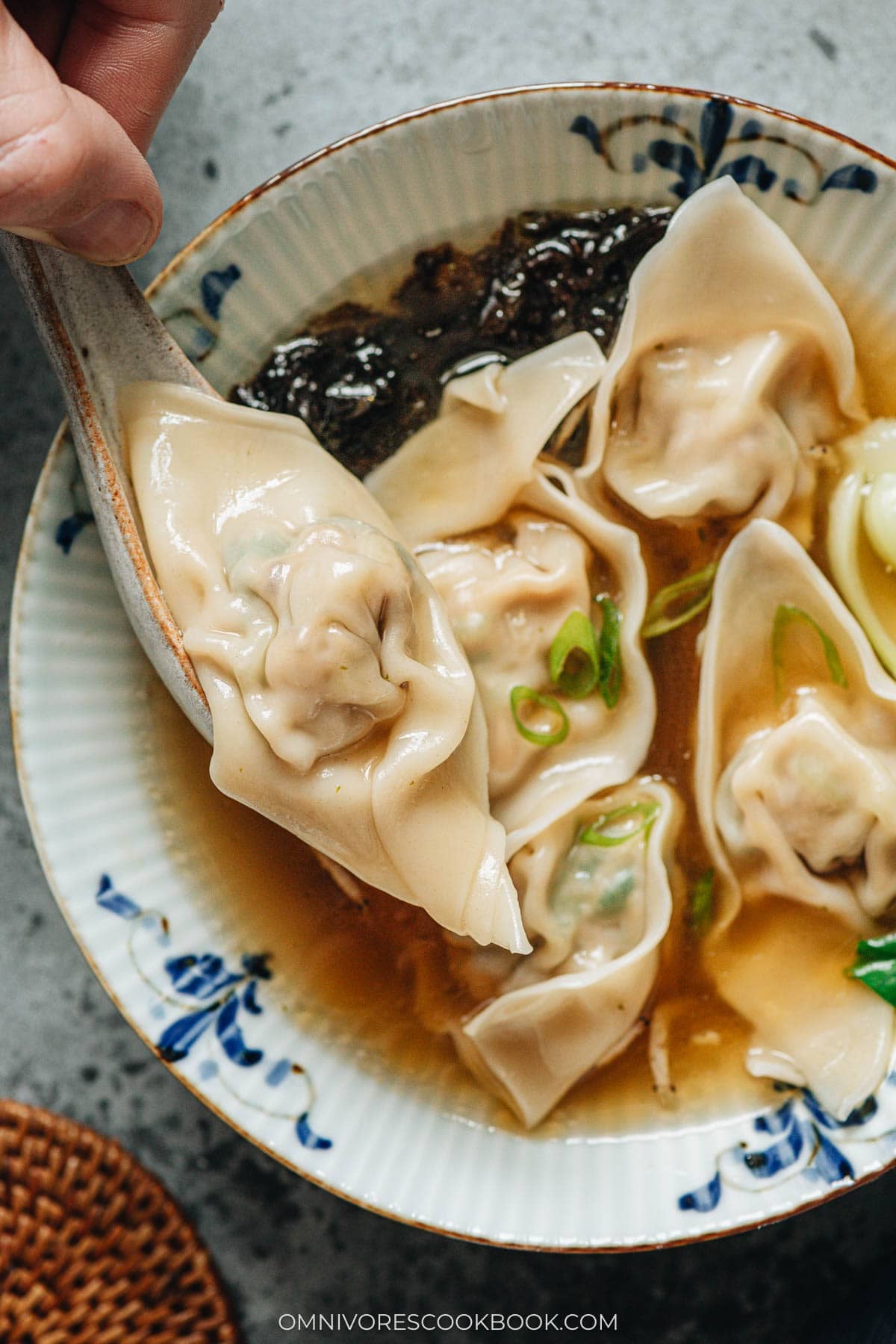
The name translates to Shanghai big wonton, and the size is the whole point. These wontons are larger than the Sichuan and Cantonese versions, with a hearty filling of pork and green vegetables folded into each wrapper. The soup itself stays intentionally light and clean so nothing competes with the juicy filling inside.
This is a soup my mom makes at home because it is easier than Cantonese wonton noodle soup, which asks for a homemade chicken stock and a lot more folding since those wontons are smaller. I like to wrap a big batch and freeze them, because a homemade wonton is the most effortless lunch or dinner I keep on hand, and I eat it all year round. The soup version suits colder months or the days when I am under the weather, and on a hot day I skip the broth and dress the wontons in the red oil sauce from my Sichuan wontons or spoon them over my chili crisp noodles for a heartier meal.
I make the filling by mixing the pork in one direction until it turns sticky, then folding in blanched and squeezed bok choy along with minced shiitake so the vegetables stay juicy instead of watery. From there I wrap the big triangles, boil them in plenty of water, and ladle that starchy cooking water straight over a bowl already seasoned with bouillon, dried shrimp, and seaweed. I encourage you to pull together a pot of this on a weekend and stock the freezer, and you have a savory Shanghai bowl waiting for the next busy night.
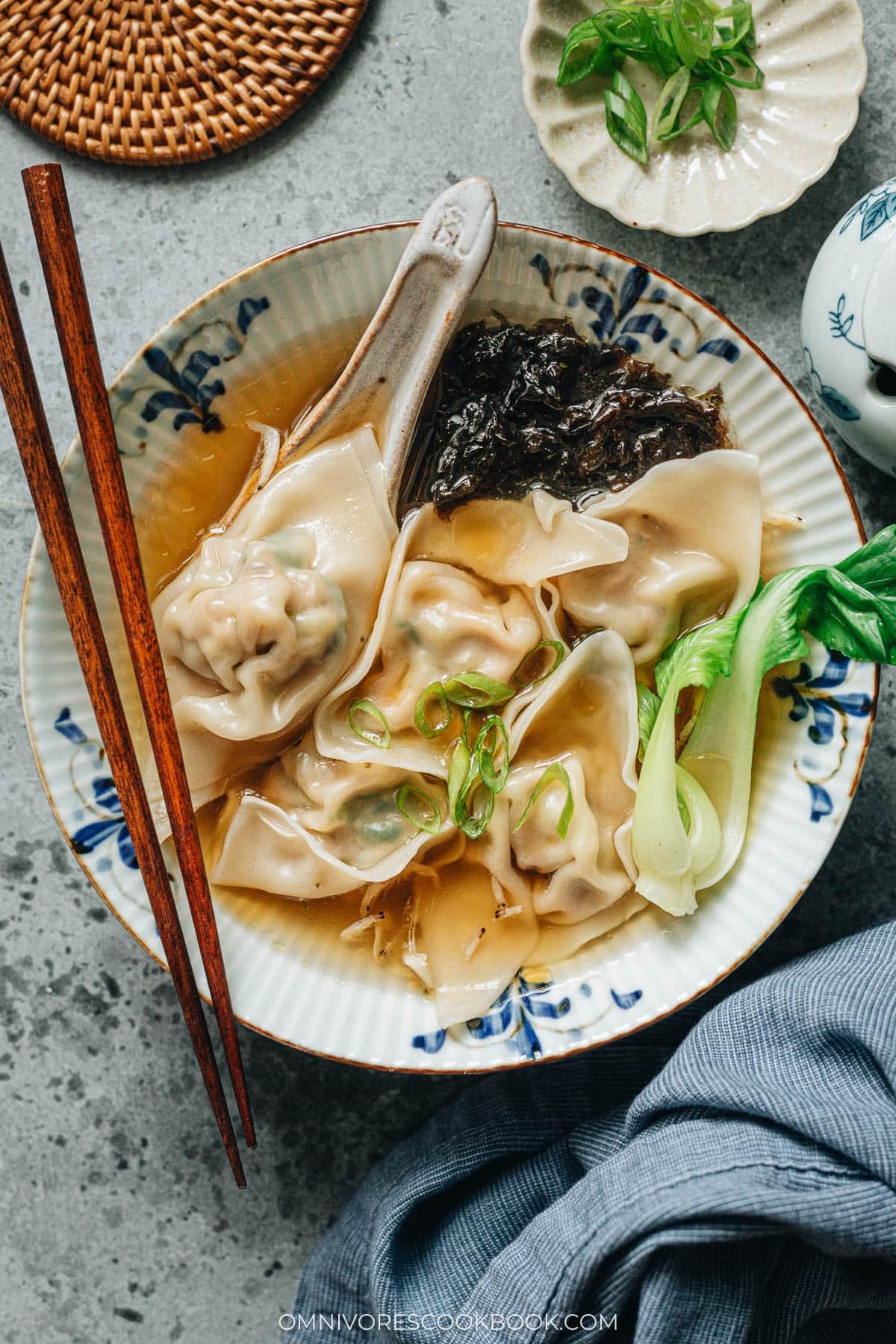
Ingredients
To make this Shanghai Wonton Soup recipe I use the ingredients listed below:
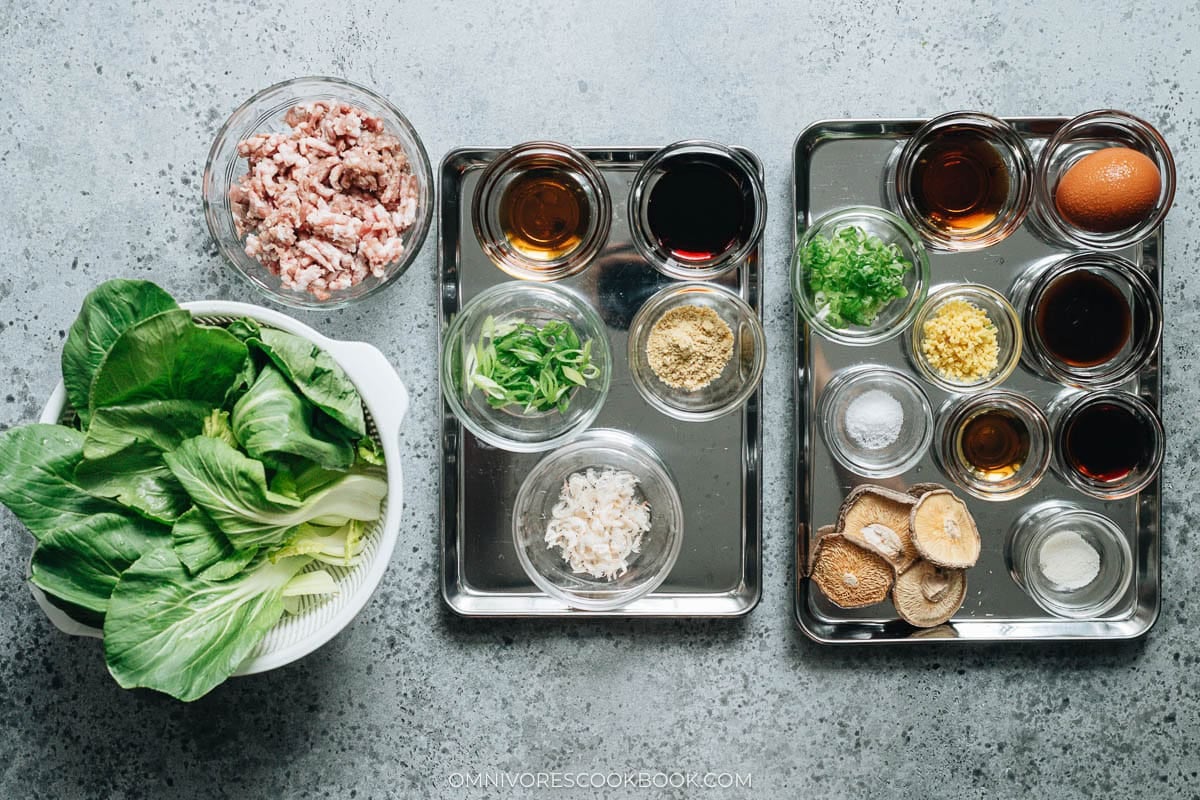
Wonton wrappers: I use large Shanghai-style wrappers, which are a little thicker and wider than standard ones. The extra size makes them easier to fold and lets me tuck a generous spoonful of filling inside.
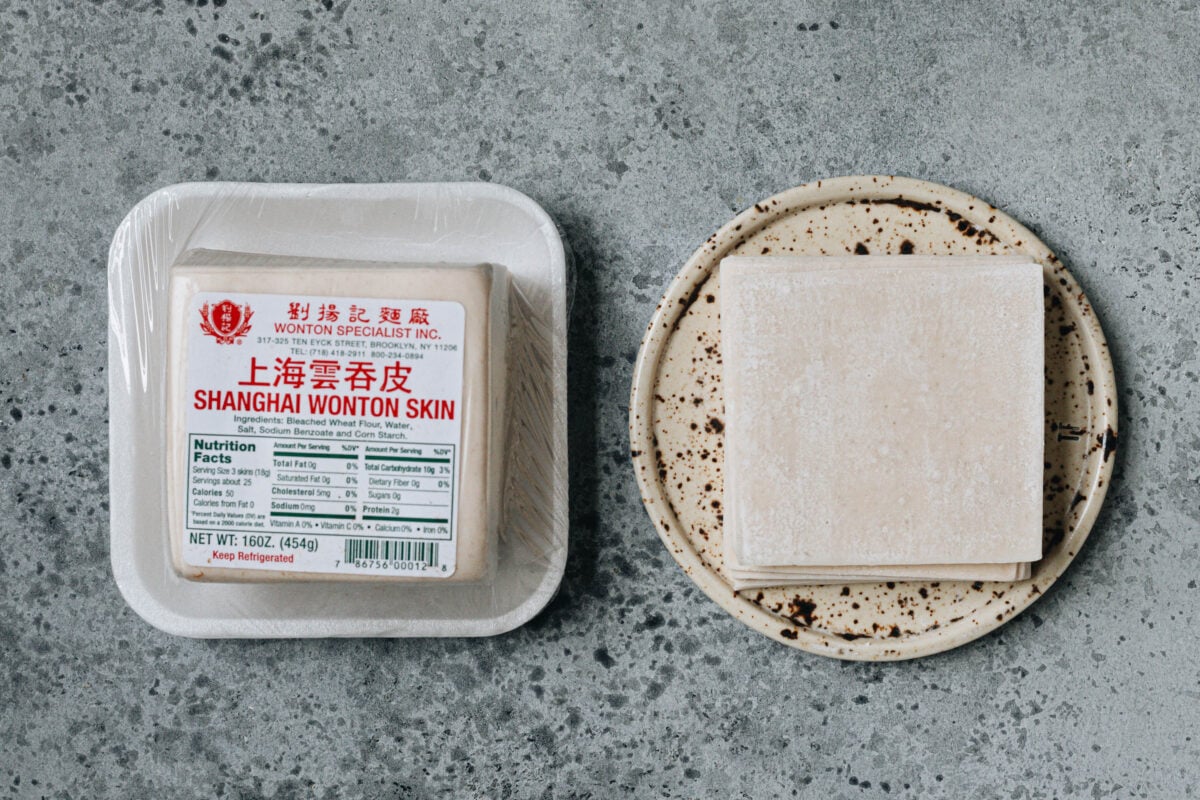
Ground pork: I use a coarsely ground pork with a higher fat content, because that fat is what keeps the filling juicy and tender. I mix it in one direction with egg, Shaoxing wine, oyster sauce, light soy sauce, sugar, salt, and minced ginger until it turns sticky and springy.
Baby bok choy: I blanch the bok choy, then squeeze out as much water as I can before chopping it fine and folding it into the pork.
Shiitake mushrooms and scallion: I soak dried shiitake until soft, mince the caps, and stir them into the filling with sliced scallion and a little sesame oil.
Soup base: I season each serving bowl with chicken bouillon powder and light soy sauce, then pour in the starchy wonton cooking water. I prefer bouillon over Western chicken broth here, because store broth is usually sweetened with vegetables, while bouillon keeps the soup clean. If I am short on the dried ingredients, I fall back on the chicken wonton broth base from my classic wonton soup instead.
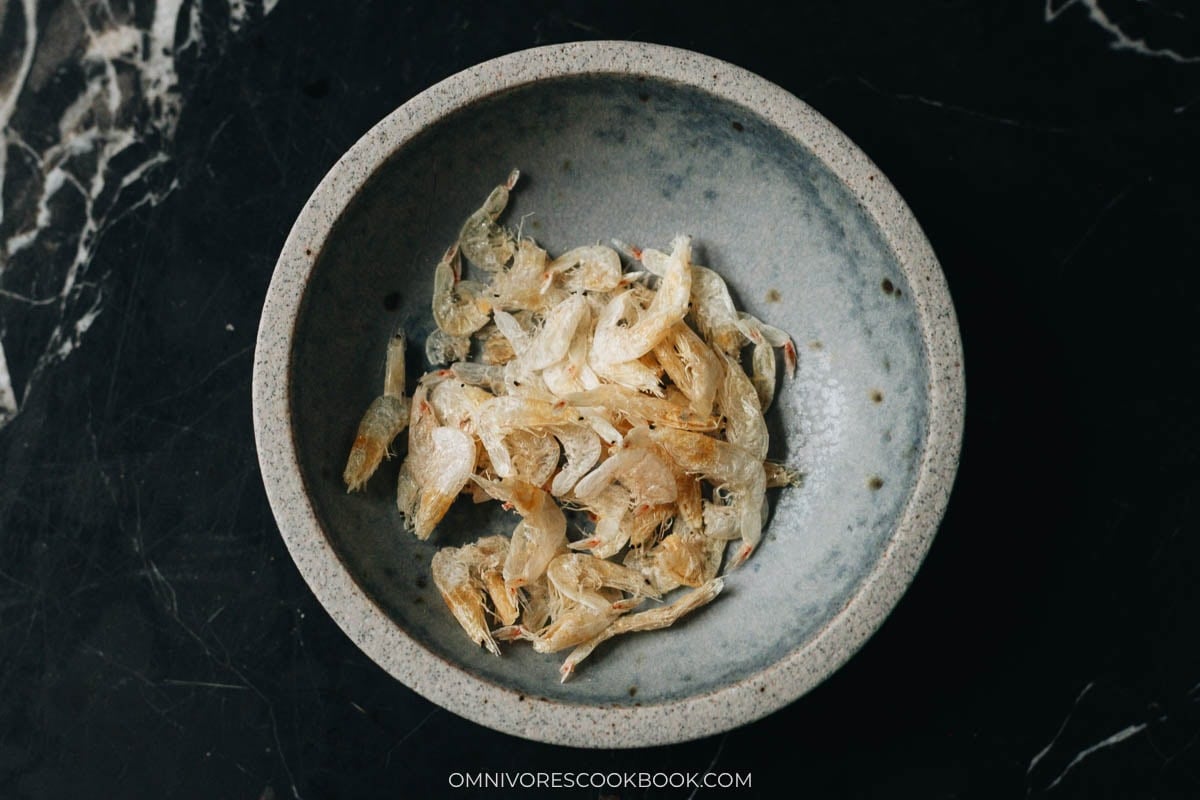
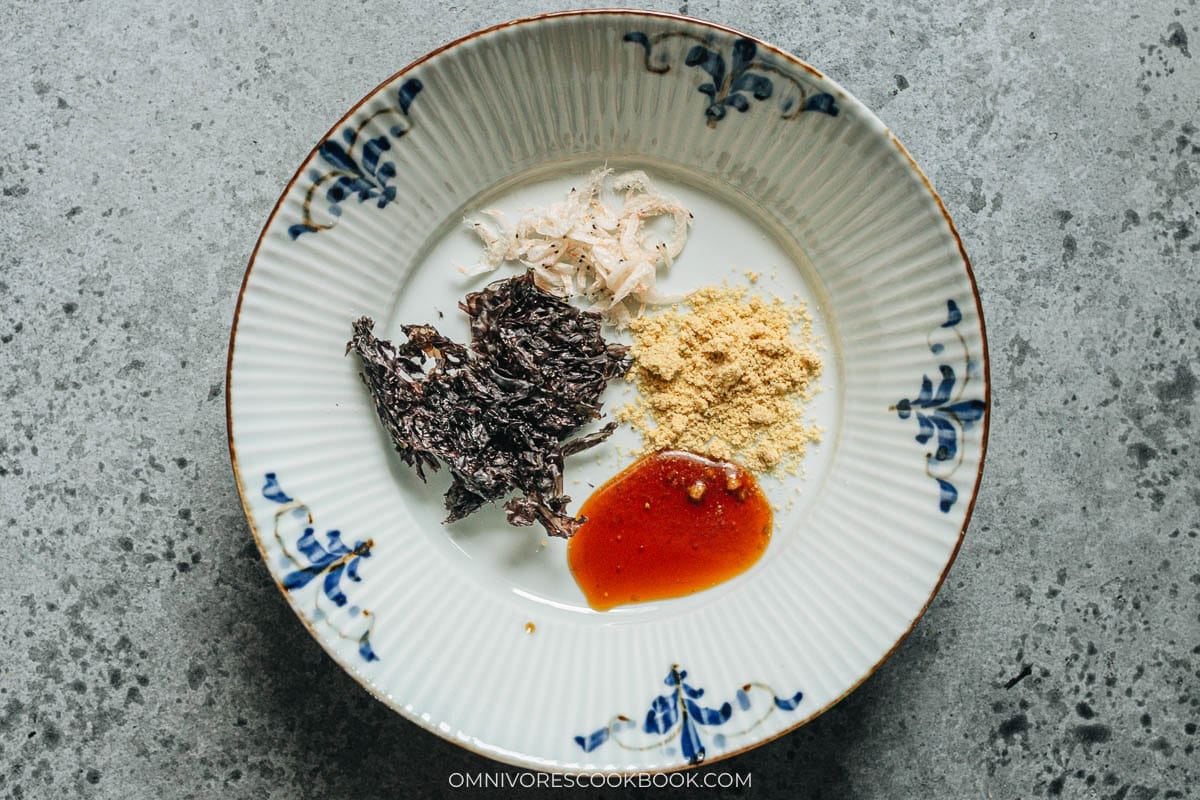
Dried papery shrimp (虾皮): I stir these tiny whole dried shrimp, shells and heads intact, into the broth for a briny sweetness and extra savor. When I cannot find them, I use a little oyster sauce instead, though the dish tastes a bit different.
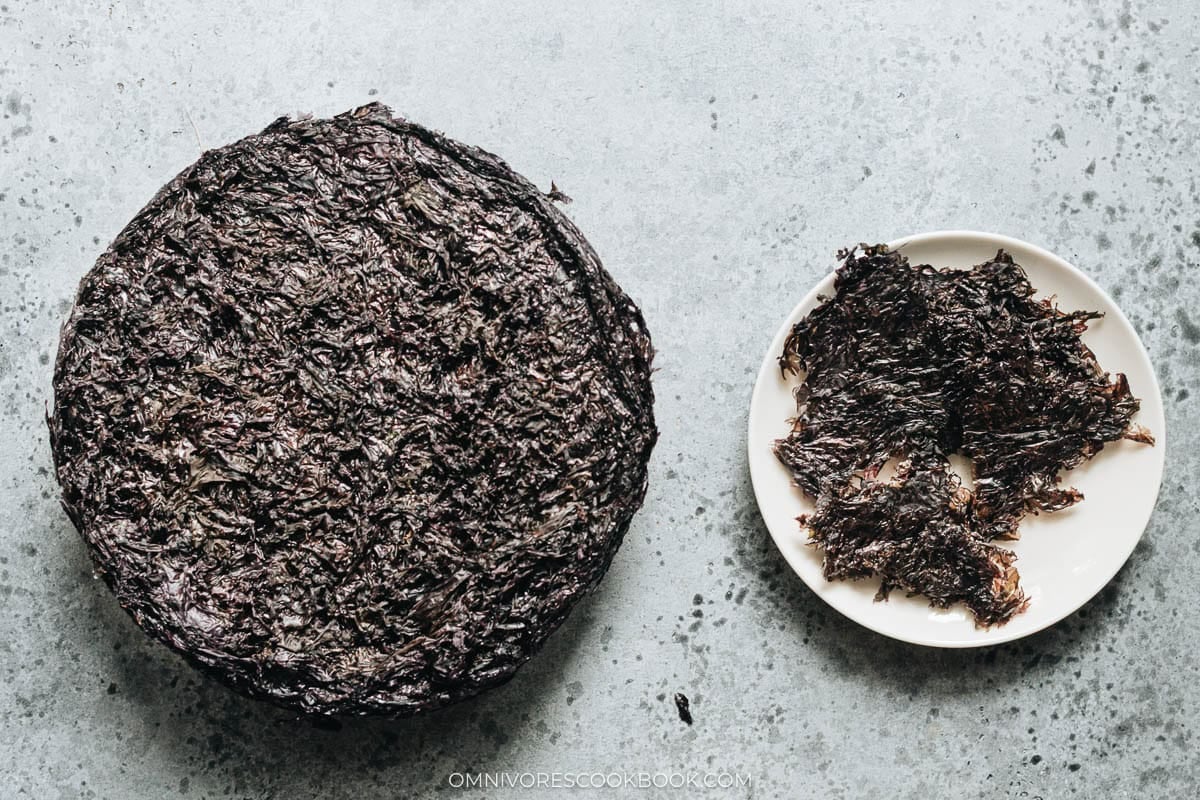
Chinese dried seaweed (海苔): I keep this traditional pantry ingredient on hand, sold in large round discs at Chinese grocery stores, and it rehydrates almost instantly in hot broth. I never confuse it with crispy roasted nori snacks, and I reach for wakame as a substitute when the Chinese variety is hard to find.
How to Make
Wonton Filling
1. Soak the shiitake: Soak the dried shiitake mushrooms in warm water until softened, 15 to 20 minutes. Squeeze out the excess water, remove and discard the stems, then finely mince the caps.

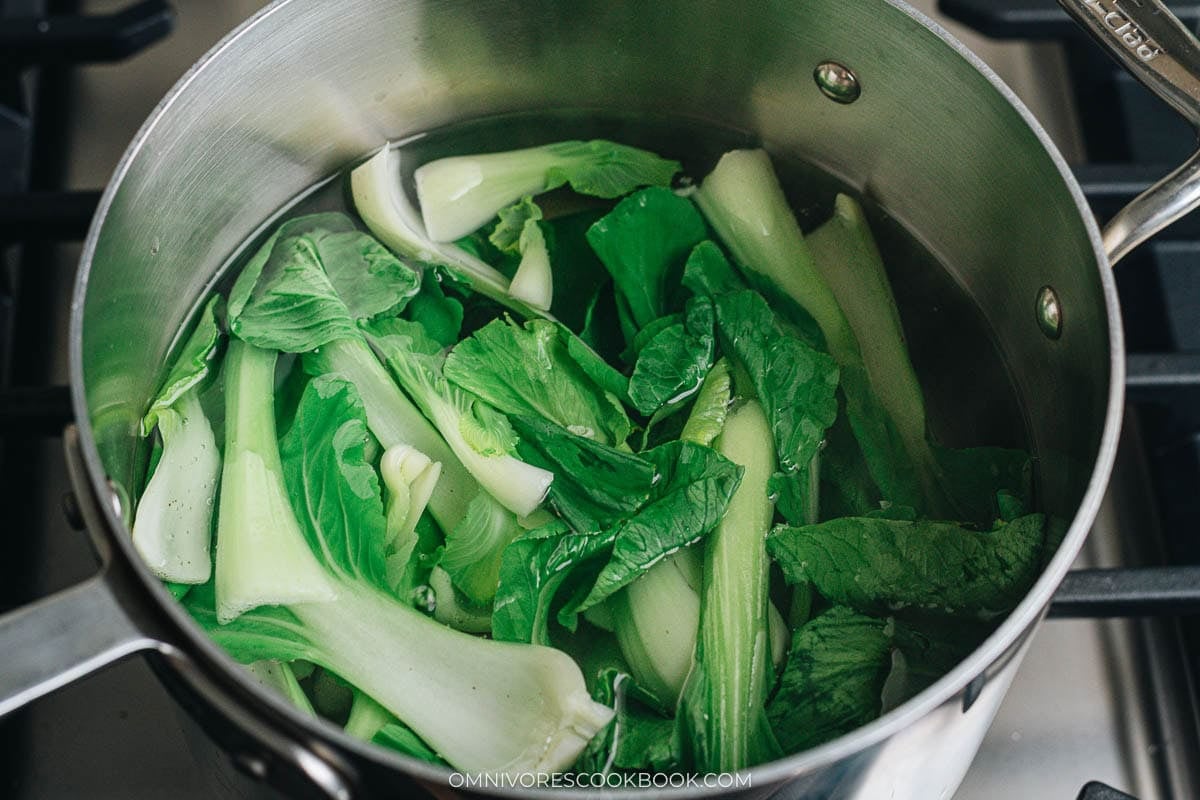
2. Blanch the bok choy: Cut off the root ends of the baby bok choy and separate the leaves. Soak them in cold water for 3 minutes, then rinse thoroughly under running water. Bok choy can sometimes be dusty, and soaking helps loosen and remove any dirt from the leaves.
3. Cook and chop the bok choy: Bring a large pot of water to a boil, add the bok choy, and blanch until tender but still slightly crisp, 30 seconds to 1 minute. Drain well, let cool, then squeeze out as much water as possible and finely chop into 1/4-inch (5 mm) pieces. Blanch a few extra leaves for garnish if you like and set them aside.
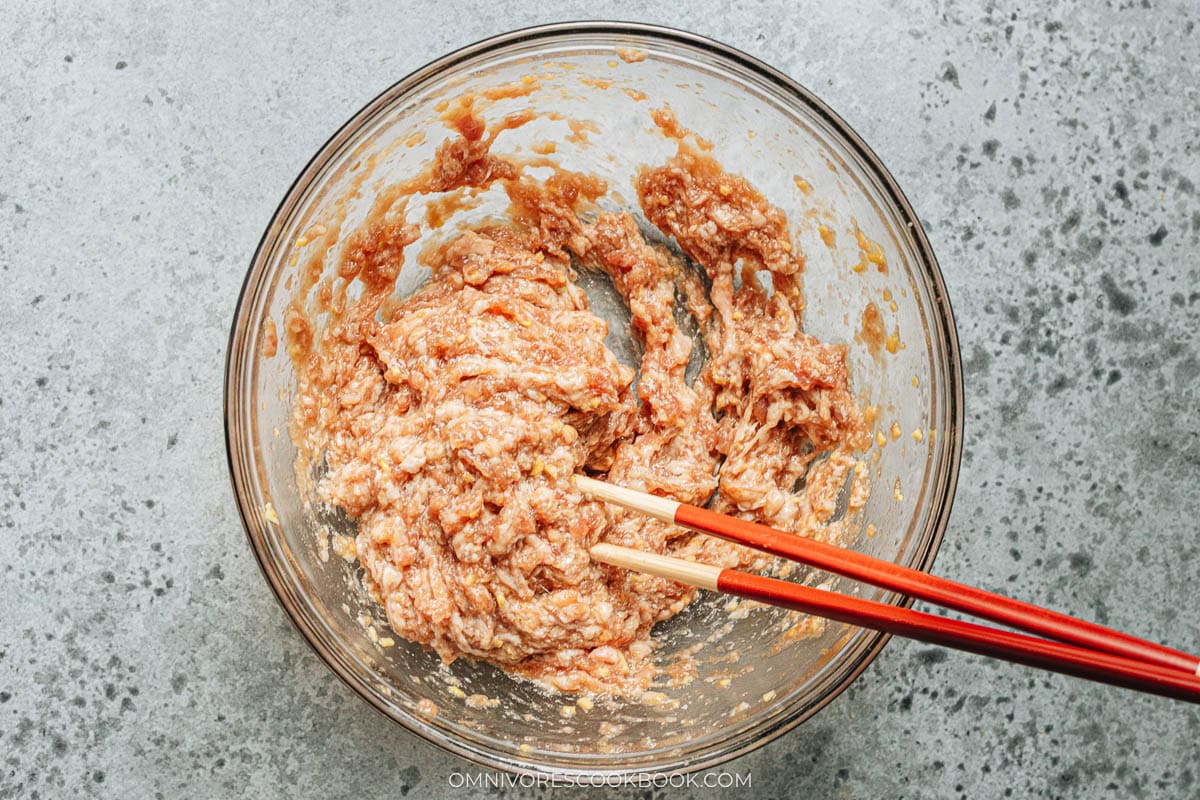
4. Mix the pork: Combine the ground pork, egg, Shaoxing wine, oyster sauce, light soy sauce, sugar, salt, and minced ginger in a large bowl.
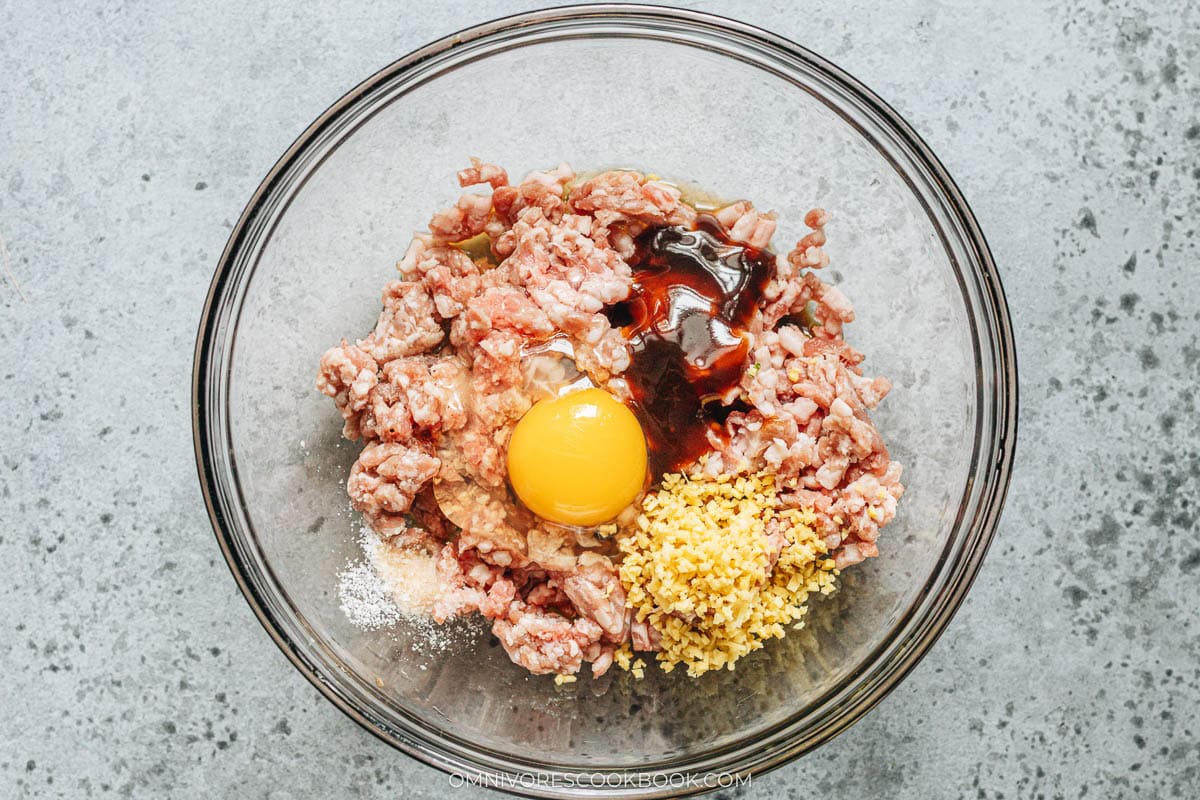
5. Mix in one direction for about 3 minutes, until all the liquid is absorbed and the mixture turns sticky.
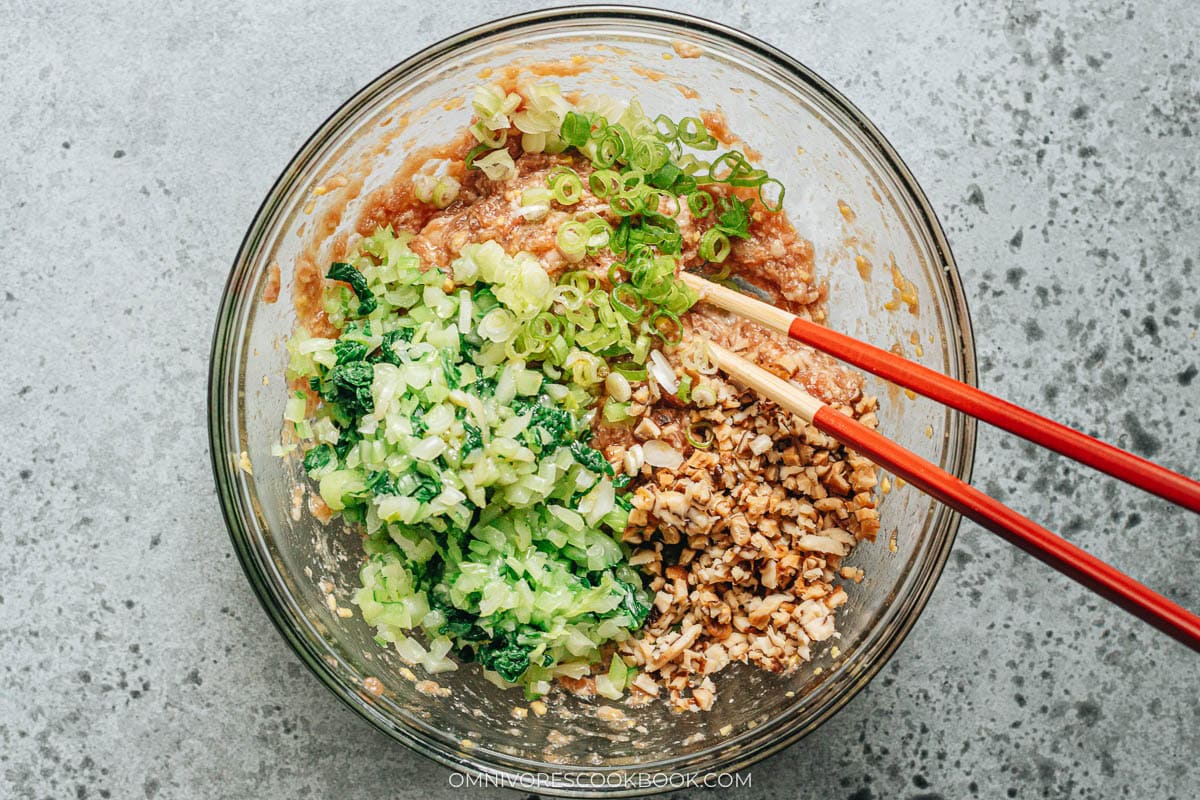
6. Finish the filling: Add the chopped bok choy, scallion, minced shiitake, and sesame oil. Mix until the vegetables are worked through the pork.
Wrap the wontons
1. Set up your station: Place the wonton wrappers on a plate and cover them with a damp paper towel so they do not dry out. Set a small bowl of water beside them for sealing.
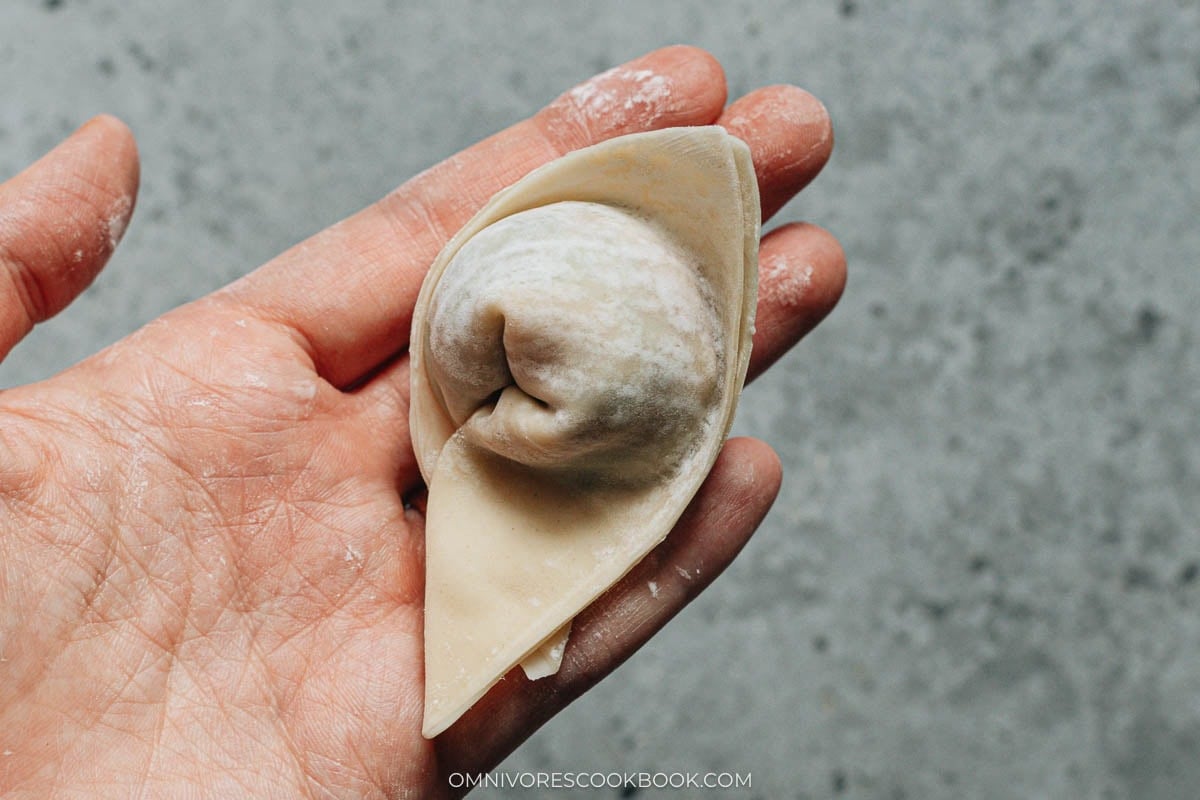
2. Fill each wrapper: Working one at a time, set a wrapper on your palm with one corner pointing toward you. Wet all four edges with a dampened finger, then place about 2 teaspoons of filling in the center.
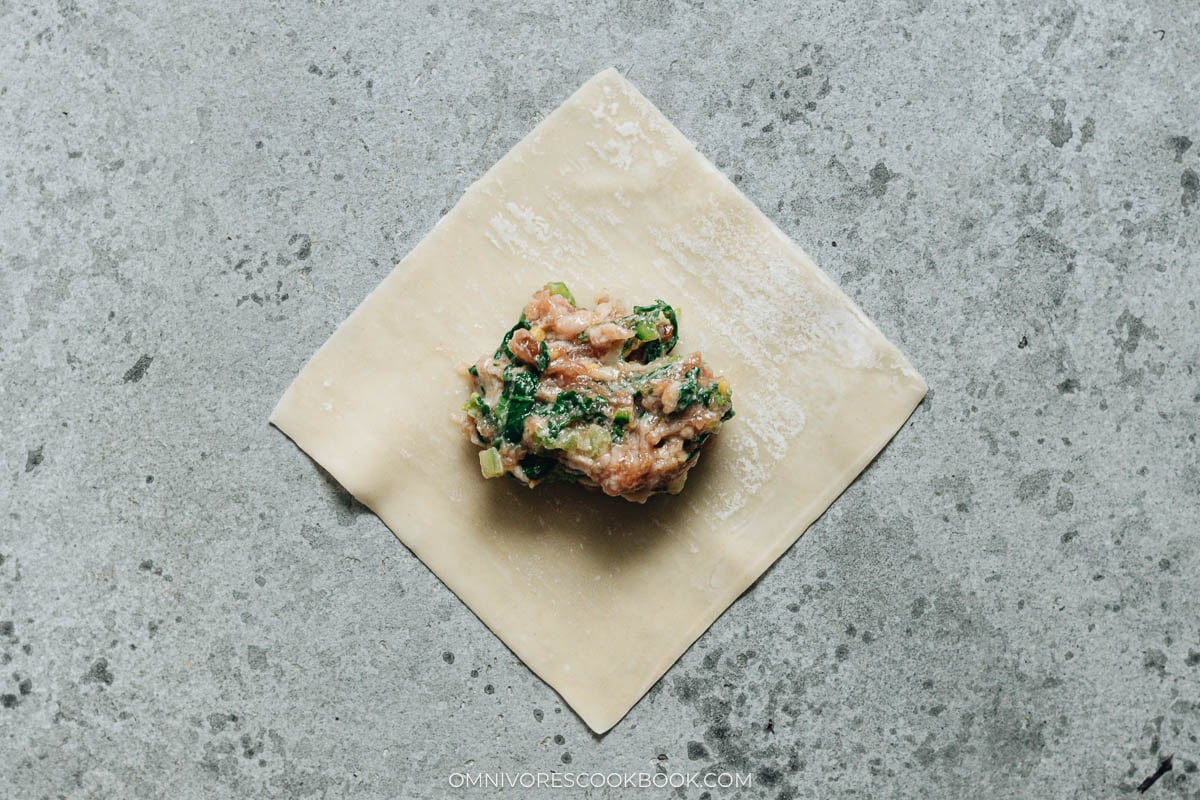
3. Fold and seal: Fold the bottom corner up to meet the top corner to form a triangle.

4. Press: Then press firmly around the filling to seal and push out the air.
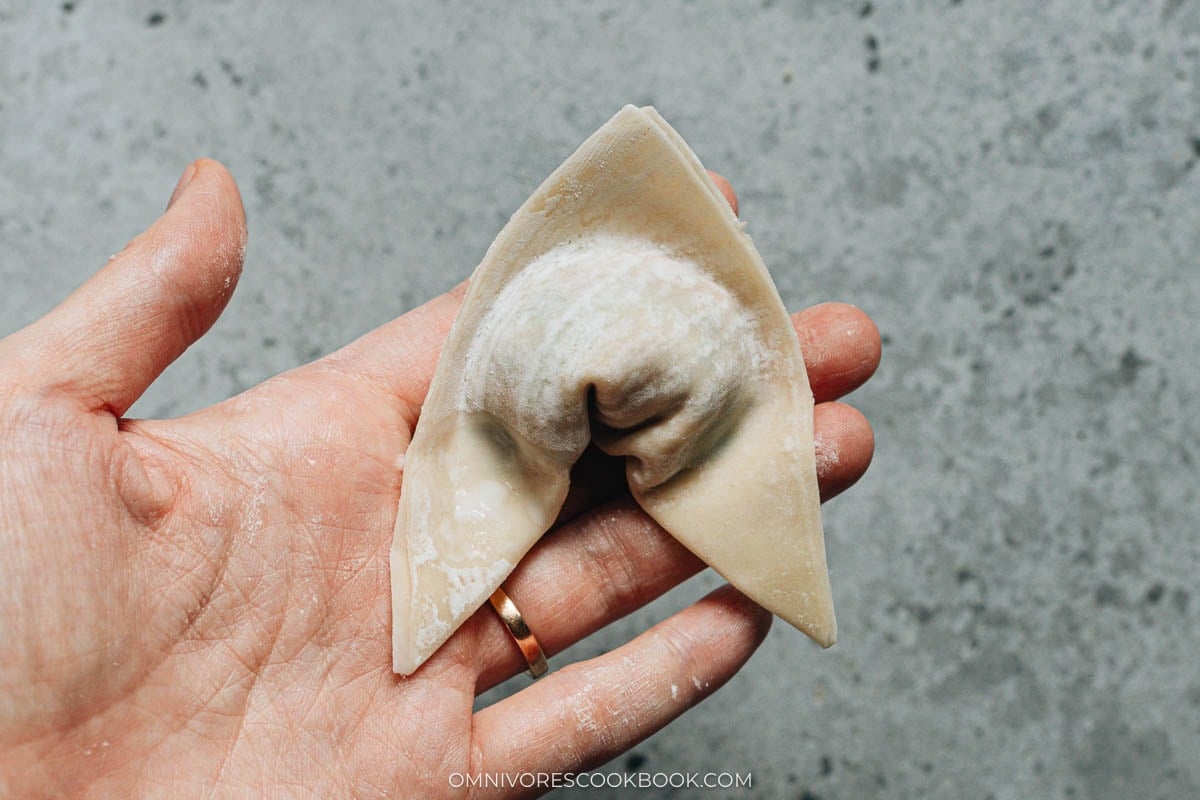
5. Rest the wrapped wontons: Wet the two corners beside the filling, overlap them, and press firmly to seal. Arrange the wontons on a tray and cover with plastic wrap or a damp paper towel while you finish the rest.
Cook the Wontons and Assemble
1. Season the bowls: For each serving bowl, add 1 teaspoon chicken bouillon powder, 1 teaspoon light soy sauce, 2 teaspoons dried papery shrimp (or 1 teaspoon oyster sauce), and 1 palm-sized piece of dried seaweed.
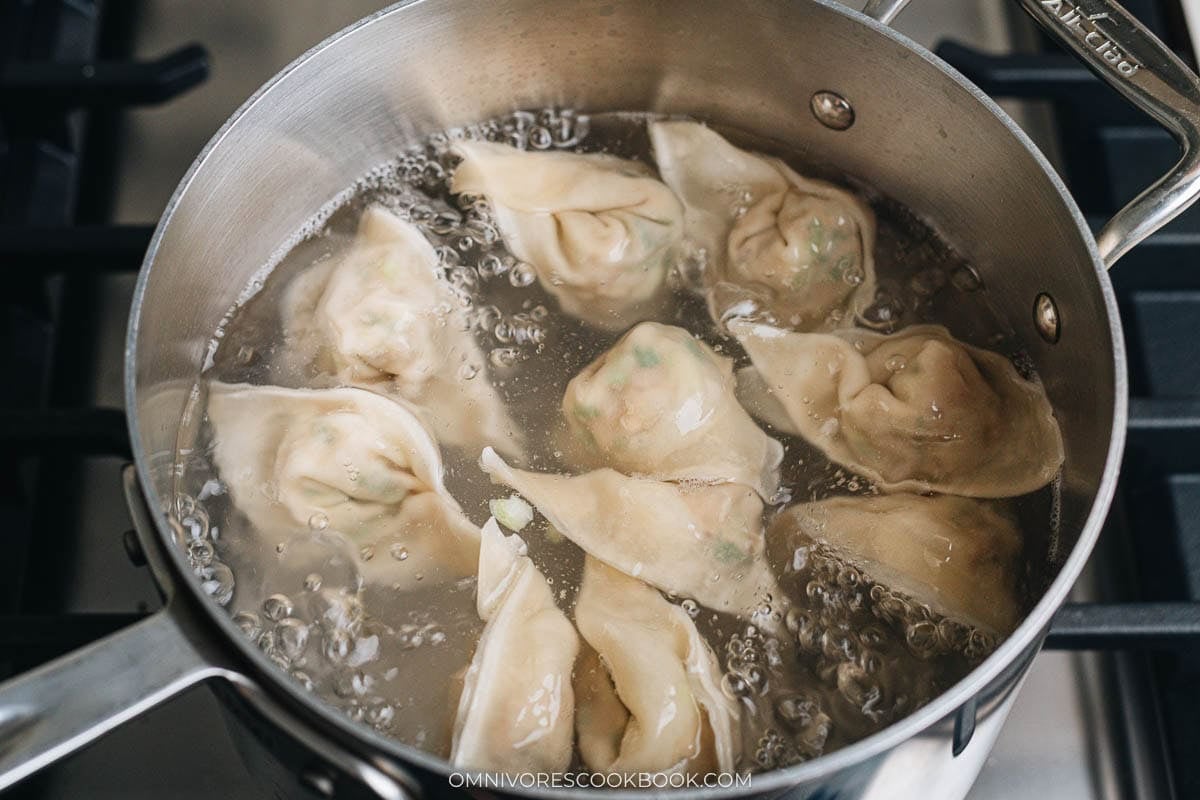
2. Boil the wontons: Bring a large pot of water to a boil. Add only as many wontons as fit in a single layer without crowding, then stir once or twice so they do not stick to the bottom. Cook until the wontons float, then keep the water at a soft boil for another 1 to 2 minutes, until the filling is just cooked through.
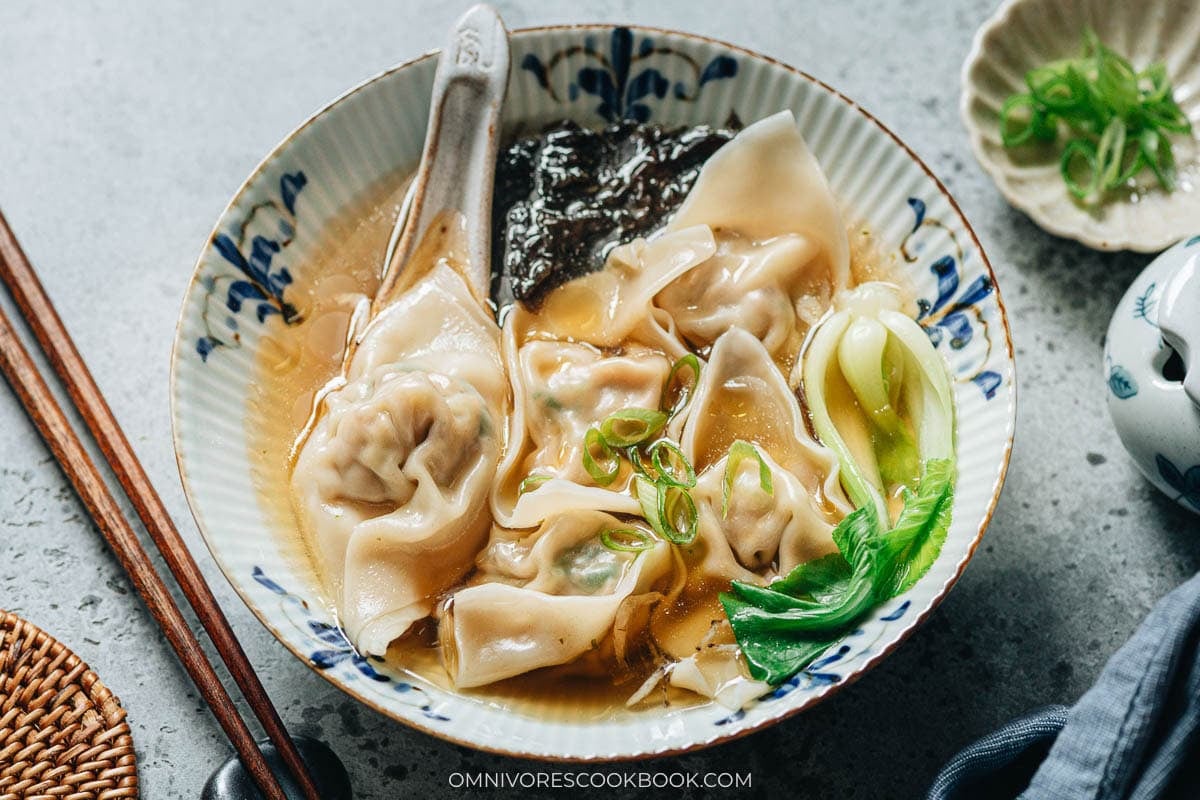
3. Assemble and serve: Transfer the wontons to the seasoned bowls, then ladle about 2 cups of the cooking water into each. Taste and adjust with more bouillon or soy sauce, garnish with scallion, extra blanched bok choy, and a drizzle of sesame oil, and serve right away.
My Cooking Tips
Mix the pork until it is sticky: I mix the meat in one direction until it feels tacky and springs back, which is what turns the filling tender instead of watery. Even if a wonton splits in the pot, a properly mixed filling holds together like a little meatball.
Squeeze the bok choy dry: After blanching, I press the bok choy hard to wring out every bit of water before it goes near the pork. Skip this and the filling weeps liquid as it cooks, loosening the whole bundle.
Save the cooking water for the broth: Shanghai wonton soup traditionally uses the starchy boiling water instead of stock, which gives the soup a silky body and helps move the seasoning through each bowl. It also saves me from tending a second pot of broth.
Do not crowd the pot: I boil only as many wontons as sit in a single layer, so they cook at the same pace and do not clump. A quick stir right after they go in keeps them off the bottom.
Season bowl by bowl: I put the bouillon, dried shrimp, and seaweed in each bowl before the wontons go in, then let the hot cooking water do the rest. I always cook only the amount of wontons I plan to serve and keep the rest frozen for another day, since uncooked wontons keep best in the freezer.
How I Like To Serve
Most nights this is a one-bowl dinner for me, a deep bowl of wontons with just enough of that milky cooking water to sip between bites. I prepare a small dish of black vinegar or chili oil on the side for anyone who wants to dress their own bowl, the way I do when I am serving the wontons cold in summer.
For a fuller Shanghai spread with friends, I keep the soup as the light dish and set a few of the city’s signature dishes around it. A plate of Shanghai fried noodles or a basket of sheng jian bao adds something hearty and satisfying. For the rest of the table, I like a bowl of glossy, deeply savory hong shao rou alongside soft and delicate crab roe tofu. Together with the soup, it makes a generous Shanghai-style meal with a nice variety of flavors and textures.
Frequently Ask Questions
Can I use regular wonton wrappers?
Yes, standard wrappers work if you cannot find the larger Shanghai-style ones. They are thinner and smaller, so reduce the filling to about 1 to 1 1/2 teaspoons per wrapper and take a little extra care sealing the edges.
Can I substitute napa cabbage for bok choy?
Yes, napa cabbage is a good swap and gives the filling a similar juicy, tender bite. Chop it fine and blanch it, then squeeze it very dry the same way you would the bok choy so the filling does not turn watery.
Can I use ground chicken or turkey instead of pork?
You can, though both are leaner than pork, so the filling comes out less juicy. I add an extra drizzle of sesame oil and make sure to mix in one direction until sticky, which helps hold the moisture in a lighter meat.
How long do the wontons keep in the fridge and freezer?
I freeze the uncooked wontons in a single layer on a tray, then transfer them to a freezer bag or airtight container once solid, where they hold for up to 2 months. Cook them straight from frozen using the same method with 1 to 2 extra minutes. When I cook wontons, I try to make only as many as I plan to serve, since they don’t keep well once cooked. The wrappers dry out if the wontons are stored separately from the soup, but become soggy if left in the soup.
Want to Save This Recipe?
Enter your email below & we’ll send it to your inbox. Plus get great new recipes from us every week!
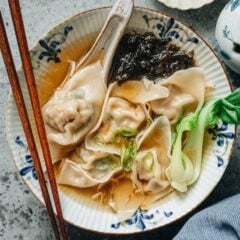
Shanghai Wonton Soup (上海大馄饨)
Ingredients
- 30 wonton wrappers (*Footnote 1)
Filling
- 4 dried shiitake mushrooms
- 1/2 pound baby bok choy , and extra for garnish if desired (*Footnote 2)
- 1/2 pound ground pork (*Footnote 3)
- 1 egg
- 1 tablespoon Shaoxing wine
- 1 tablespoon oyster sauce
- 2 teaspoons light soy sauce
- 1/4 teaspoon sugar
- 1/4 teaspoon kosher salt
- 1 scallion , thinly sliced
- 2 teaspoons minced ginger
- 1 teaspoon sesame oil
Soup
- 8 cups wonton cooking water , divided (*Footnote 4)
- 4 teaspoons chicken bouillon powder , divided
- 4 teaspoons light soy sauce , divided
- 8 teaspoons dried papery shrimp (or 4 teaspoons oyster sauce), divided
- Chinese dried seaweed (Optional but highly recommended)
- 2 teaspoons toasted sesame oi , divided
- 1 scallion , thinlu sliced and divided
Instructions
Make the wonton filling
- Soak the shiitake mushrooms in warm water until softened, 15 to 20 minutes. Squeeze out the excess water. Remove and discard the stems, then finely mince the caps.
- Cut off the root end of the baby bok choy and separate the leaves. Soak them in cold water for 3 minutes, then rinse thoroughly under running water. Bring a large pot of water to a boil. Add the bok choy and blanch until tender but still slightly crisp, 30 seconds to 1 minute. Drain thoroughly and let cool. Once cool enough to handle, squeeze out as much water as possible, then finely chop the bok choy into 1/4-inch (5 mm) pieces. You can blanch a few extra bok choy leaves for garnish if you wish, and set them aside.
- Combine the ground pork, egg, Shaoxing wine, oyster sauce, soy sauce, sugar, salt, and ginger in a large bowl. Mix in one direction for about 3 minutes, until all the liquid is fully absorbed and the mixture becomes sticky.
- Add the bok choy, scallion, shiitake mushrooms, and sesame oil. Mix until evenly combined.
Wrap the wontons
- Set up a wrapping station by placing the wonton wrappers on a plate and covering them with a damp paper towel to prevent them from drying out. Prepare a small bowl of water for sealing the wrappers.
- Working one wonton at a time, place a wrapper on your palm with one corner pointing toward you. Dip your finger into the water and lightly wet all four edges of the wrapper.
- Place about 2 teaspoons of filling (*Footnote 5) in the center. Fold the bottom corner up to meet the top corner, forming a triangle. Press firmly around the filling to seal, squeezing out as much air as possible. Wet the two corners beside the filling, bring them together so they overlap, and press firmly to seal.
- Arrange the wrapped wontons on a tray. Cover with plastic wrap or damp paper towels while you finish the remaining wontons.
Cook
- Prepare individual serving bowls (large enough to hold about 3 cups of soup). To each bowl, add: 1 teaspoon chicken bouillon powder, 1 teaspoon light soy sauce, 2 teaspoons dried papery shrimp (or 1 teaspoon oyster sauce), 1 palm-sized piece of dried seaweed.
- Bring a large pot of water to a boil. Add the number of wontons you plan to serve, making sure they are not crowded (they should fit in a single layer with minimal overlap). Gently stir once or twice to prevent them from sticking to the bottom.
- Cook until the wontons float to the surface. Continue gently boiling for another 1 to 2 minutes, until the filling is just cooked through.
- Transfer the wontons to the prepared serving bowls, then ladle about 2 cups of the cooking water into each bowl. Taste the broth and adjust with additional chicken bouillon or soy sauce if needed.
- Garnish with scallions, extra blanched baby bok choy if using, and drizzle with sesame oil. Serve immediately.
Freeze & storage
- Freeze the uncooked wontons on a tray in a single layer. Once frozen solid, transfer them to a freezer bag or airtight container. They can be stored in the freezer for up to 1 month.
- Cook frozen wontons directly from the freezer using the same method as fresh wontons. Add 1 to 2 extra minutes to the cooking time.
Notes
- I highly recommend using larger wonton wrappers, such as Shanghai-style wonton wrappers. They are slightly thicker and larger than standard wrappers, making them easier to wrap and able to hold a generous amount of filling.
- Blanch 1 to 2 extra heads of baby bok choy and reserve them for garnishing the soup, if desired.
- Coarsely ground pork with a higher fat content produces a juicier filling with a better texture.
- Shanghai wonton soup traditionally uses the starchy cooking water as the broth. It gives the soup more body and helps carry the seasonings.
- If you’re using smaller wonton wrappers, reduce the filling to about 1 to 1 1/2 teaspoons per wrapper.
Nutrition

Did you make this recipe?
I’d love to hear how it turned out for you! Please take a moment to leave a 5-star rating ⭐️ and share your thoughts in the comments further down the page. It really helps others discover the recipe too.
Lois Walsh
Can this soup be made Gluten Free?
Maggie Zhu
Unfortunately, gluten-free wonton wrappers are still very difficult to find commercially. You can make homemade gluten-free wrappers, but I don’t know any brands that currently carry a gluten-free wrapper that you can use directly.
Joseph edwards
Do you have a recipe for udon noodles fried
Maggie Zhu
Yes I do! Here is a fried udon recipe using ground beef: https://omnivorescookbook.com/easy-fried-udon/ I really like it because it’s quite simple to make and the ground meat seasons the noodles quite well.