
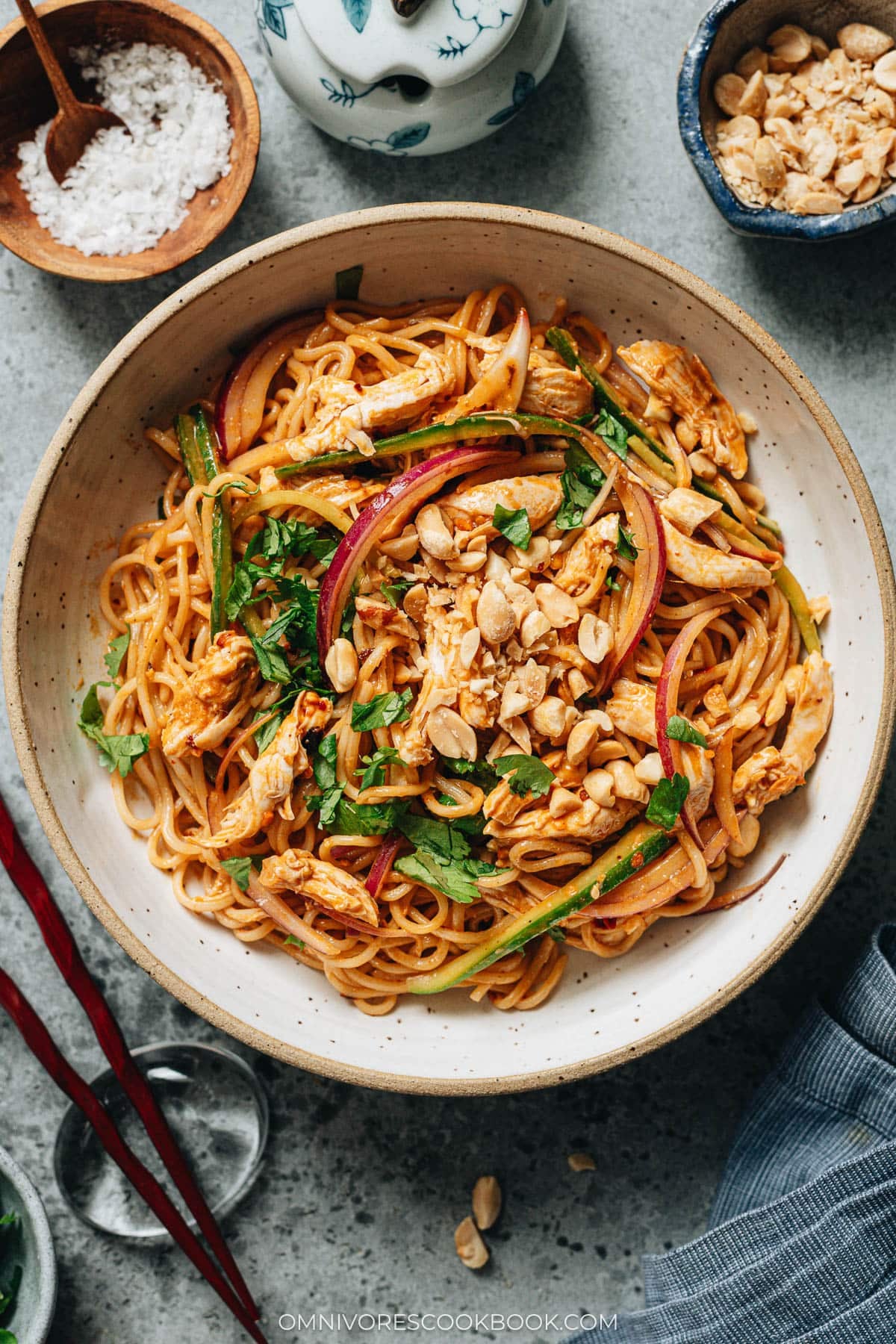
These chili crisp noodles are one of my favorite warm-weather meals because they come together quickly, require very little cooking, and are packed with bold flavor. Tender noodles are tossed with juicy shredded chicken, crisp vegetables, and a creamy, savory-spicy sauce. I can get everything done in under 30 minutes and it makes a balanced meal packed with flavor.
I use chicken tenders because they take just 5 minutes to cook, stay juicy, and their mild flavor works perfectly with the bold sauce. But this recipe is also a great way to use whatever protein you have on hand. Some of my favorites are Instant Pot shredded chicken breast, Chinese braised beef shank (which I often meal prep on weekends), leftover rotisserie chicken, and even deli meats like roast beef or turkey.
To start dinner, I bring a large pot of water to a boil and cook the noodles first, then use the same pot of hot water to blanch the chicken. While the noodles and chicken cook, I whisk together Lao Gan Ma chili crisp, sesame paste, soy sauce, Chinkiang vinegar, ginger, and a touch of honey. Then everything gets tossed together with crisp cucumber and red onion until every strand of noodle is coated in the rich, spicy sauce.
I do make a separate sauce for my 2.5-year-old son because this one is a little too spicy for him. I use the same ingredients without the chili crisp and add a spoonful of peanut butter to make it extra creamy and nutty. It’s become one of his favorite noodle dishes, too.
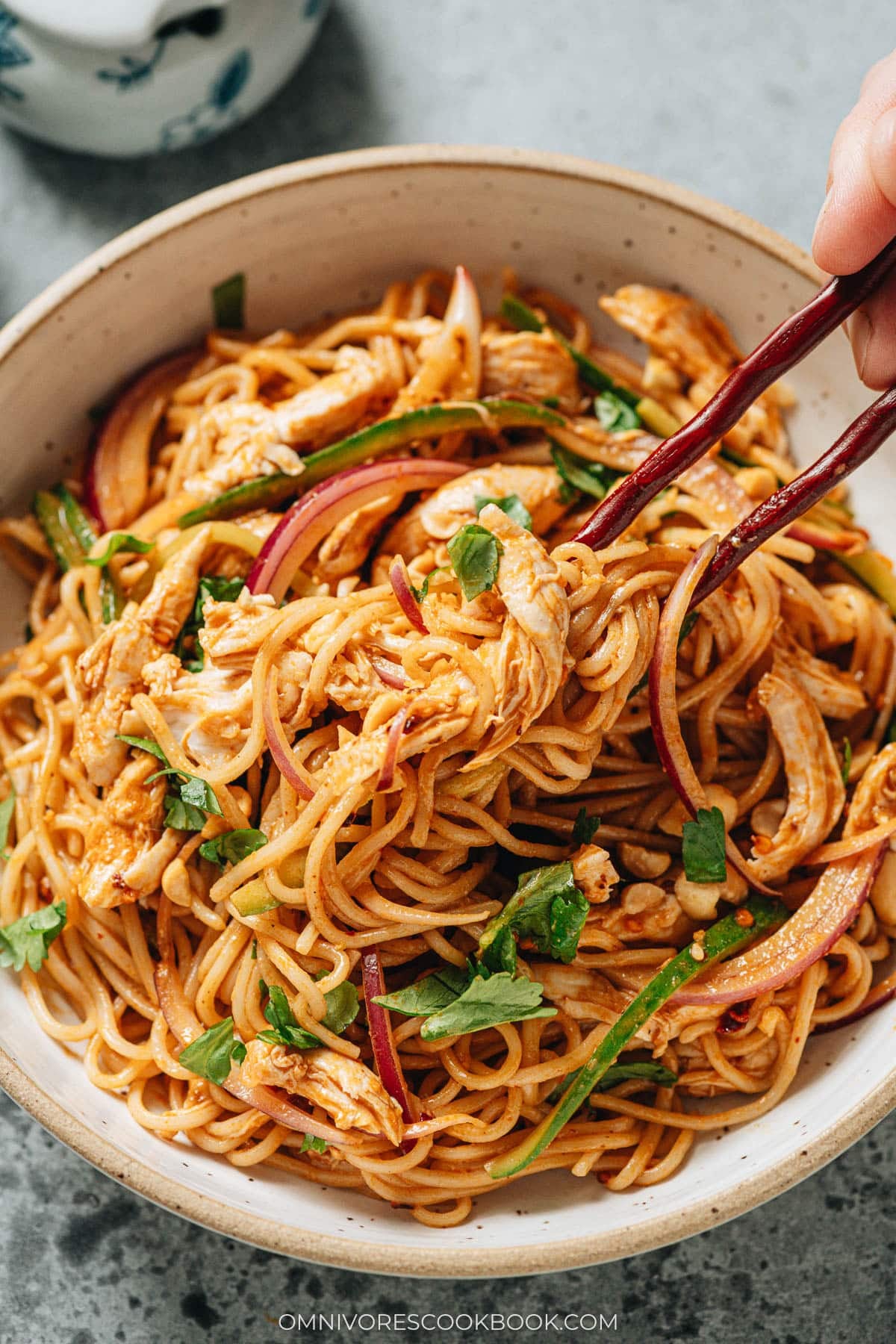
Ingredients
Most of the ingredients in chili crisp noodles are pantry staples for me. You probably have them already if you cook Chinese food frequently. I grouped the ingredients into three categories.
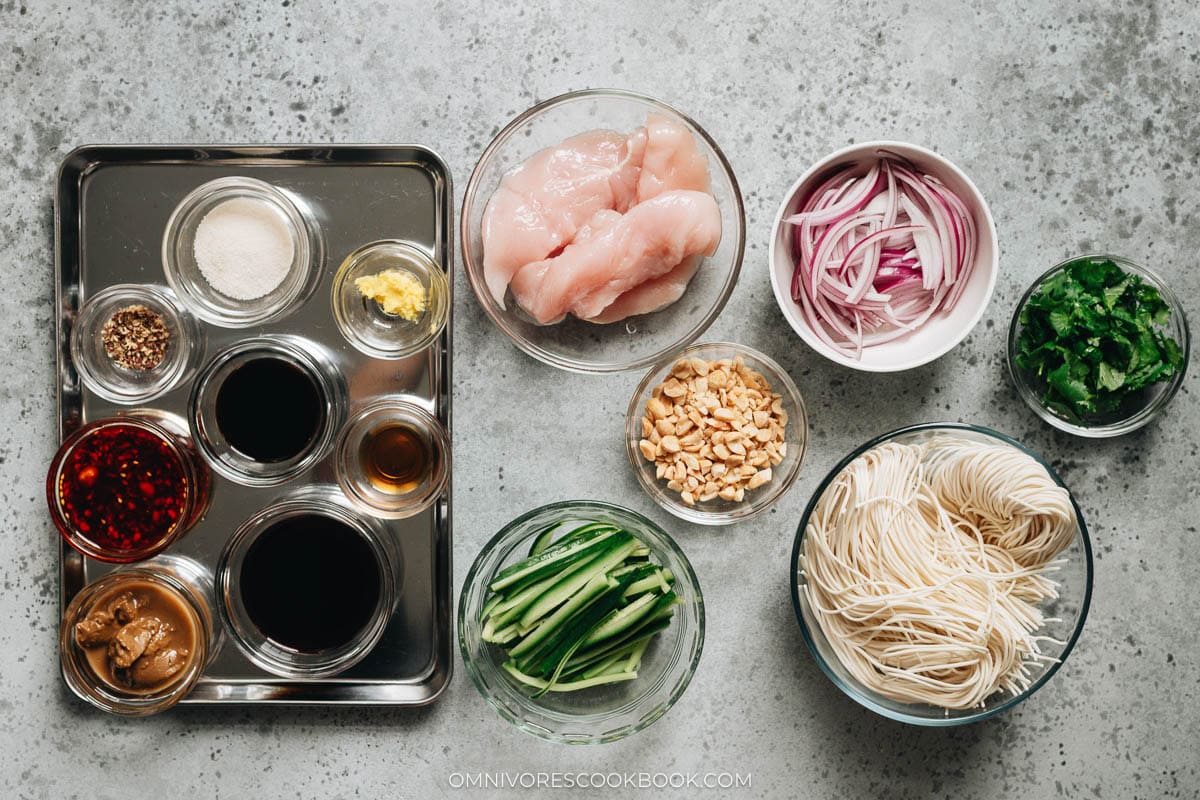
Noodle sauce
The secret to these noodles is the creamy, boldly flavored sauce. It’s inspired by the classic Chinese combination of sesame paste and chili oil, but using Lao Gan Ma chili crisp makes it incredibly easy to prepare. Chinese sesame paste gives the sauce a nutty taste and a silky consistency, while soy sauce adds savoriness and Chinkiang vinegar provides a bright tang that balances the richness. A touch of honey rounds out the flavors, and ground ginger and Sichuan peppercorn add extra fragrance and a gentle numbing finish.
Which chili crisp to use?
Lao Gan Ma, or the Godmother, is my go-to brand when it comes to chili crisp. However, you can use other brands if you prefer. Some of my other favorites are Guizhou Chili Crisp from the Mala Market and Mr. Bing Chili Crisp.
Noodles
I like using dried wheat noodles that are about the same size as spaghetti, because I always keep them in my pantry. Thicker noodles such as shaved noodles or hand pulled noodles work well too, but I would avoid using super thin noodles (e.g. somen noodles or any noodles similar to angel hair) because the sauce is too potent for them.
My favorite noodles for this dish are Habukabu No Salt Udon Noodles because they have a pleasant chewy texture. Plus, I like the fact that they don’t contain any added salt. Many dried wheat noodles contain over 1,000 mg of sodium per serving, so choosing unsalted noodles is an easy way to cut back on sodium without sacrificing texture.
Chicken
Chicken tenders are my favorite choice because they cook quickly and stay juicy. You can use almost any type of protein you prefer, such as leftover poached chicken, rotisserie chicken, deli meat, and grilled tofu.
Vegetables and toppings
A lot of other vegetables work in this dish as well. Some of my favorites are sliced red pepper, blanched choy sum, blanched spinach, julienned carrot, thinly sliced celery, and shredded cabbage.
Cucumber is my default choice when it comes to cold noodles, because it adds a refreshing texture and does not require cooking. I used red onion instead of scallion in this dish, to further add contrast and a slightly sweeter taste. Chopped peanuts add nuttiness and a crunchy texture, while cilantro balances out the rich taste of the sauce.
The best way to cut cucumber
To get the best texture, I cut the cucumber into 2” long sections, then quarter it lengthwise. I slice off and discard the seed section, which is soggy and makes the dish watery. Then I slice the cucumber thinly into long shreds.
How to make
1. Cook the noodles. Bring a large pot of water to a boil and cook the noodles according to the package directions until al dente. Rinse the noodles under cold tap water thoroughly to stop cooking and remove excess starch. This is a key step to yield the best texture. If you do not rinse the noodles, they will stick together when mixed with sauce and become unpleasantly sticky.
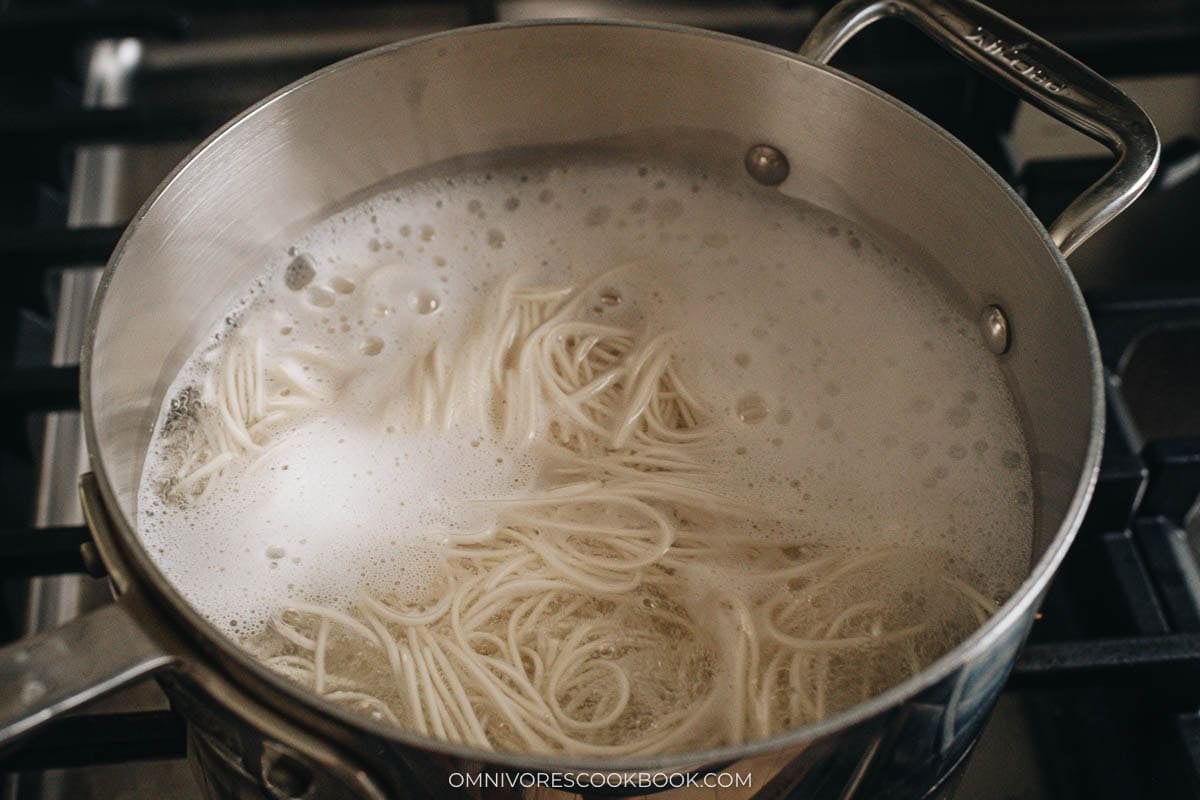
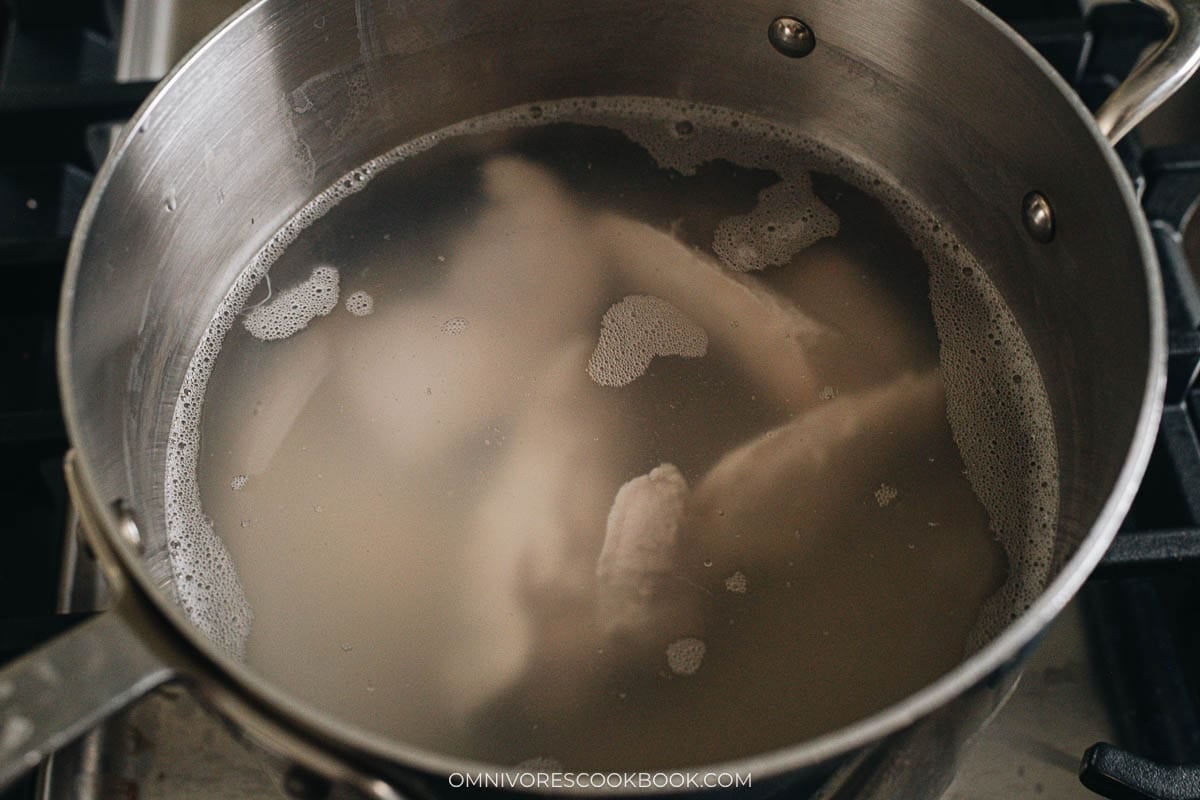
2. Prepare the chicken. Use the same pot of water to poach the chicken. I keep the heat very low so the water barely bubbles. It yields very tender and juicy chicken. Once done, move the chicken to a plate to cool and shred it.
3. Mix the sauce. I mix the sauce together while the noodles and chicken are cooking. For the ginger, I use a microplane zester to grate it directly into the sauce bowl. The sauce should taste quite bold on its own, but it mellows out once tossed with the noodles.
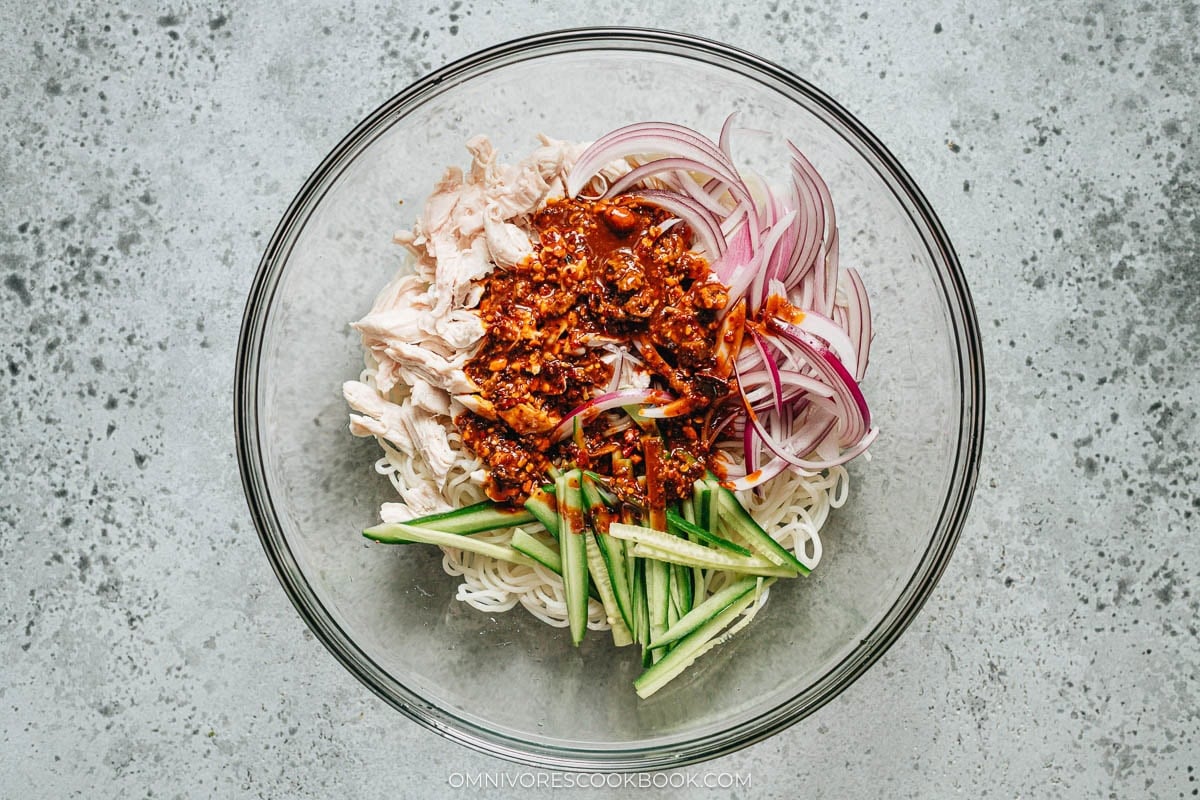
4. Assemble the noodles. I mix the noodles, chicken, veggies and most of the sauce in a big mixing bowl until evenly coated. It’s always a good idea to reserve some of the sauce and add more if needed, so you can taste the noodles and adjust the seasoning.
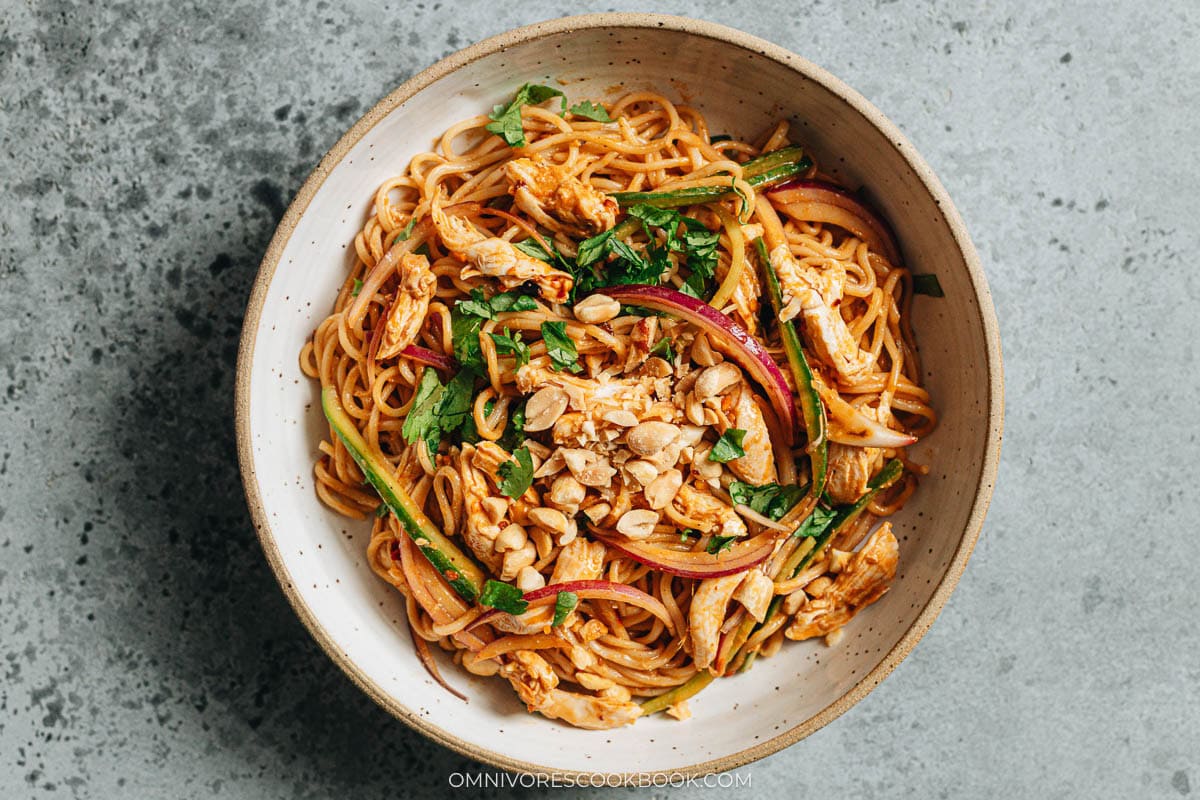
5. Serving the noodles. I serve the noodles in small bowls, and only then I add the peanuts and cilantro. Because chopped peanuts tend to fall to the bottom of the bowl and lose their crispness if you toss them in too early. Cilantro gets wilted if tossed in too early, because the sauce will draw moisture out of the cilantro.
Tips for success
Rinse the noodles well: After cooking, rinse the noodles under cold water until completely cool. This not only stops the cooking but also removes excess starch that can make the noodles gummy.
Loosen the noodles before mixing: Even after draining, the noodles naturally stick together as they sit. Right before tossing, fluff the noodles with your hands. If they’ve become sticky, rinse them briefly under cold running water again and drain thoroughly. The sauce will coat the noodles much more evenly.
Reserve some sauce: The sauce is intentionally bold and concentrated. I always reserve a little to adjust the seasoning after tossing. This gives you much better control over the final flavor.
How to serve
Chili crispy noodles is a great one-bowl meal that you can serve by itself, which I do personally for lunch. For dinner, I like to add a cold appetizer and a light soup to complete my meal. Chinese smashed cucumber, quick pickled cabbage, soy sauce eggs, and egg drop soup are my go-to options.
This recipe makes two generous main-course servings if served on its own. If you’re serving it as part of a larger meal with a few side dishes, it’s enough for four people.
Whether you’re looking for a quick weeknight dinner, a refreshing summer lunch, or an easy meal-prep recipe, these chili crisp noodles deliver big flavor with very little effort. Once you try this creamy, spicy Lao Gan Ma sauce, you’ll find yourself making it again and again.
Frequently asked questions
Can I make these noodles ahead of time?
Yes. They taste great after a few hours in the refrigerator and make an excellent lunch. If making ahead, store the peanuts separately and add them just before serving to keep them crunchy.
Can I make them vegetarian?
Absolutely. Simply omit the chicken or replace it with baked tofu, pan-fried tofu, edamame, or grilled mushrooms.
Can I make this dish gluten free?
Yes! You can use rice noodles instead of wheat noodles. Replace the soy sauce with tamari, and replace the Chinkiang vinegar with rice vinegar.
Can I use tahini instead of Chinese sesame paste?
Yes. Chinese sesame paste has a deeper roasted flavor, but tahini is an excellent substitute and creates a similarly creamy sauce. You can also use natural peanut butter as well.
Want to Save This Recipe?
Enter your email below & we’ll send it to your inbox. Plus get great new recipes from us every week!
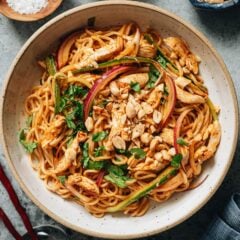
Chili Crisp Noodles (Cold Noodles with Lao Gan Ma Sauce)
Ingredients
- 5 oz dried wheat noodles (such as udon noodles) (or 8 oz fresh wheat noodles) (*Footnote 1)
- 1/2 lb chicken tenderloins
- 1/4 cup Lao Gan Ma chili crisp (or other chili crisp you prefer)
- 3 tablespoons light soy sauce
- 1 tablespoon Chinkiang vinegar
- 2 tablespoons Chinese sesame paste (or tahini)
- 2 teaspoons toasted sesame oil
- 1 tablespoon honey (or sugar)
- 1 teaspoon ground ginger
- 1/2 teaspoon ground Sichuan peppercorn
- 1/4 red onion , thinly sliced
- 1 persian cucumber , julienned
- 1/4 cup salted dry-roasted peanuts , chopped
- 1/4 cup cilantro , chopped
Instructions
- Bring a large pot of water to a boil. Cook noodles according to package directions. Once done, transfer the noodles to a colander to drain, then rinse with cold tap water to stop cooking. Drain and set aside.
- Bring the same pot of water back to a boil and add chicken tenderloins. Keep the water at a very low simmer that barely bubbles. Cook the chicken for 5 to 7 minutes, until just cooked through. Transfer to a plate to cool. Then shred the chicken using two forks.
- Mix the chili crisp, soy sauce, Chinkiang vinegar, sesame paste, sesame oil, sugar, ginger, and Sichuan peppercorn together in a medium bowl.
- In a large bowl, combine the cooked noodles (*Footnote 2), red onion, chicken, cucumber and most of the noodle sauce, reserving 1 to 2 tablespoons. Toss to coat well. Transfer to each individual serving bowl, top with peanuts and cilantro, if using. (*Footnote 3) Taste the noodles and mix in the remaining sauce if needed. Serve at room temperature with the remaining sauce.
Notes
- Different types of noodles cook differently, so take this as a guideline and make adjustments accordingly. I aim to have 1 lb of cooked noodles.
- Before mixing the noodles, fluff the noodles with your hand again. If the noodles are already stuck together, rinse with cold tap water again to loosen them up. So the sauce coats the noodles much better and yields a better texture.
- This sauce is quite strong and spicy, so I always recommend reserving a small amount at the end so you can adjust the taste.
Nutrition

Did you make this recipe?
I’d love to hear how it turned out for you! Please take a moment to leave a 5-star rating ⭐️ and share your thoughts in the comments further down the page. It really helps others discover the recipe too.
Bety
Thank you
Please send more vegan recipes, I have your book and really enjoy eating the plant based recy
Donald Loeffler
Like all your recipes, but dont cook any because takes too many special asian ingredients and only use them one time. Can you make recipes using common asian ingredients usually found in American fridge, e.g. light and dark soy sauce, oyster sauce, hosin sauce, fish sauce, thin wheat and rice noodles, garlic, green tea, green onions, etc.
Donald Loeffler
St. Louis, MO
CELL: 314 650 9360
Louise Samson
This looks absolutely delicious. I love ALL your recipes. Thank you for introducing me to Chili Crisp quite some time ago. I used Lao Gan Ma and got addicted, to say the least. I even ended up eating it straight out of the jar by the spoonful (with time, the heat mellows, as you know). My latest find is Momofuku’s Black Truffle Chili Crunch: to DIE for. Really. Especially with eggs or any dish with mushrooms, of course. Thank you for affordable, simple, great tasting dishes!