
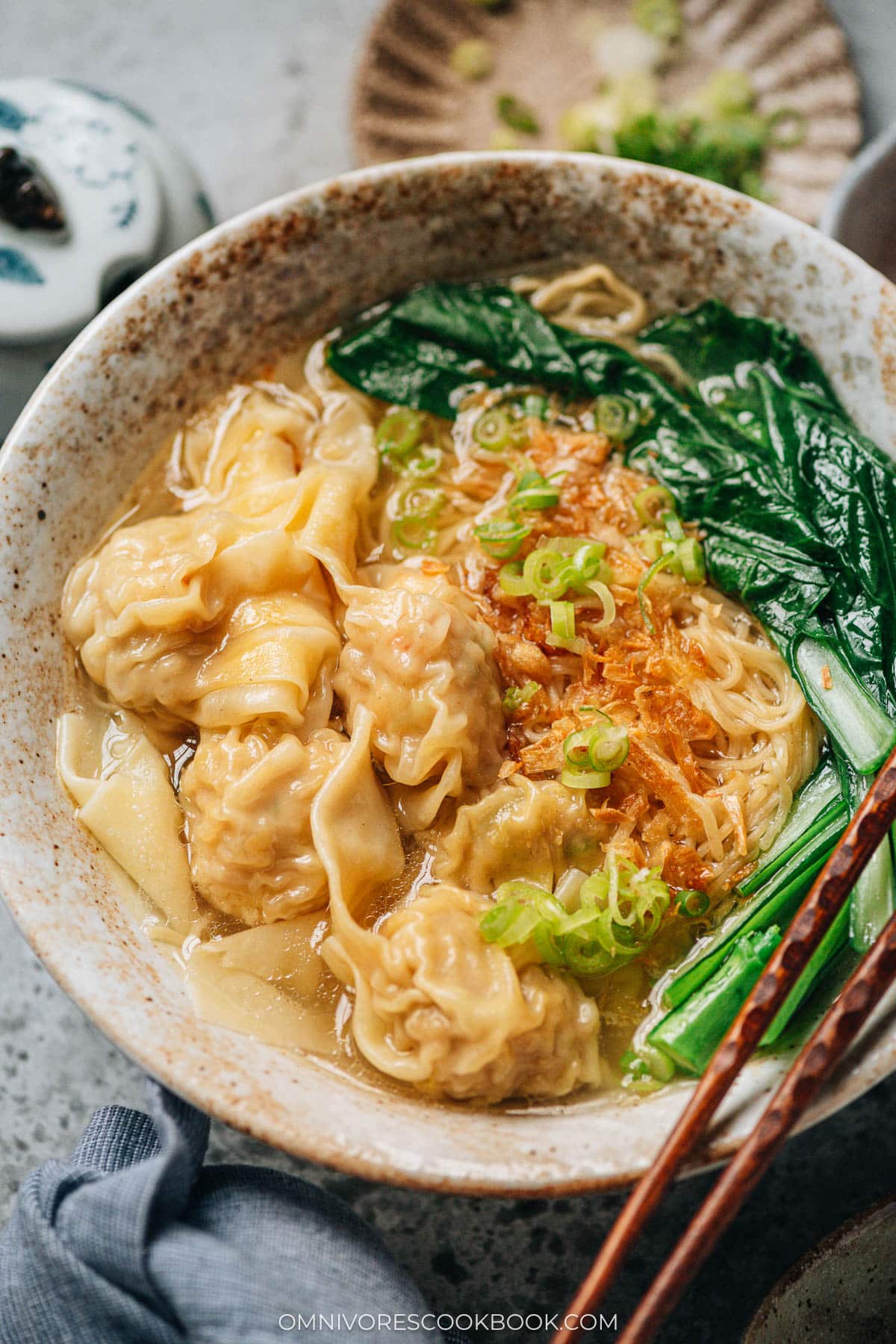
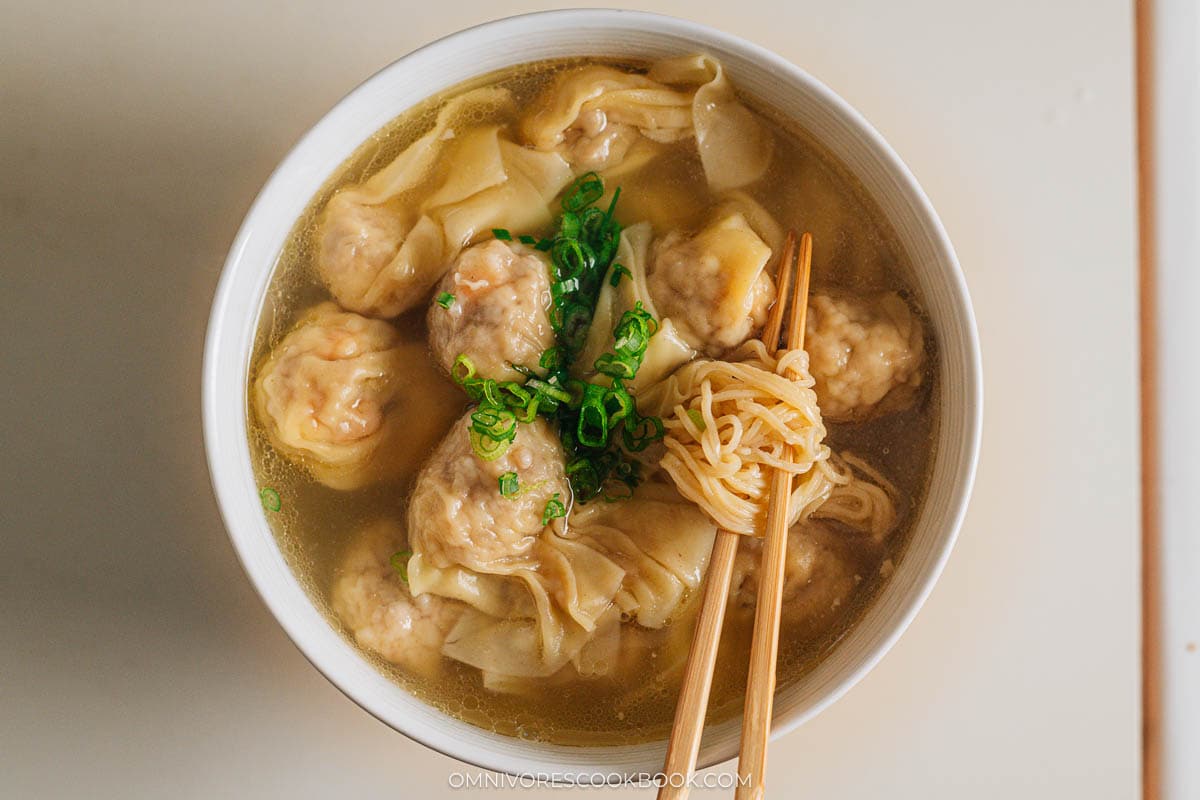
Wonton noodle soup is the luxury comfort food I have missed most since moving to the US. Walk down any street in central Hong Kong and you will find a small diner serving it on practically every block, a hot bowl of handmade wontons and noodles swimming in an aromatic broth that has been simmering for hours, all for a few dollars. This dish is more of a project than a weeknight stir fry, but the result is so rewarding that it earns its place next to the other recipes I treasure in my collection of authentic Chinese soup recipes.
I first published this recipe 9 years ago, and I have been refining it ever since. It was one of the dishes my Cantonese postpartum nanny made for me, and I learned a tremendous amount from her about how Cantonese cooks treat soup. She showed me that the broth is not a backdrop for the wontons, it is the star, and that everything else in the bowl, the wontons, the noodles, the greens, should support the broth instead of competing with it. The version I share here is the one I am finally proud of, after years of small adjustments.
To keep it simple, my recipe walks you through three stages, the wonton filling and wrapping, the stock and aromatics, and the final assembly in the bowl. The wonton filling uses just enough seasoning to bring out the pork and shrimp without covering them up, and an egg white gives it a silky texture once cooked. The stock is the real workhorse of the dish and I promise it is so worth the time it takes to make. I highly recommend giving this recipe a try.
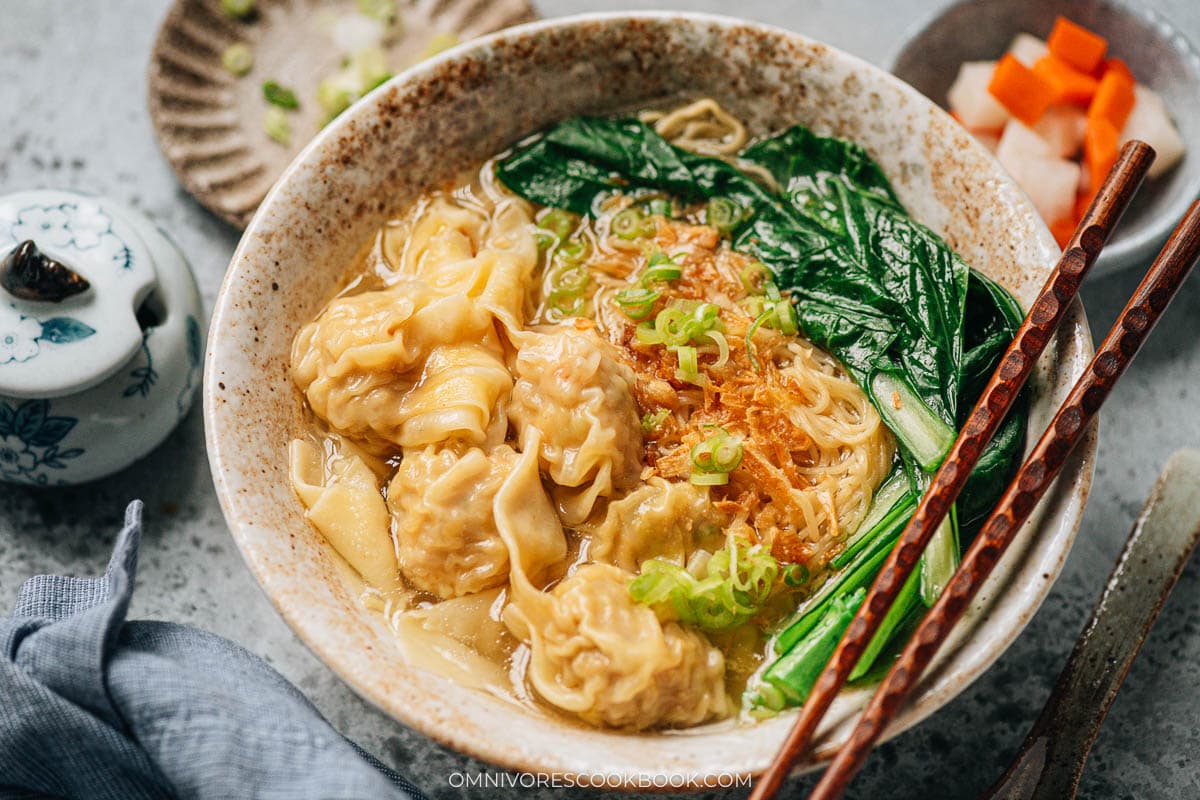
Ingredients
These are the ingredients I use to make this delicious Wonton Noodle Soup recipe at home:
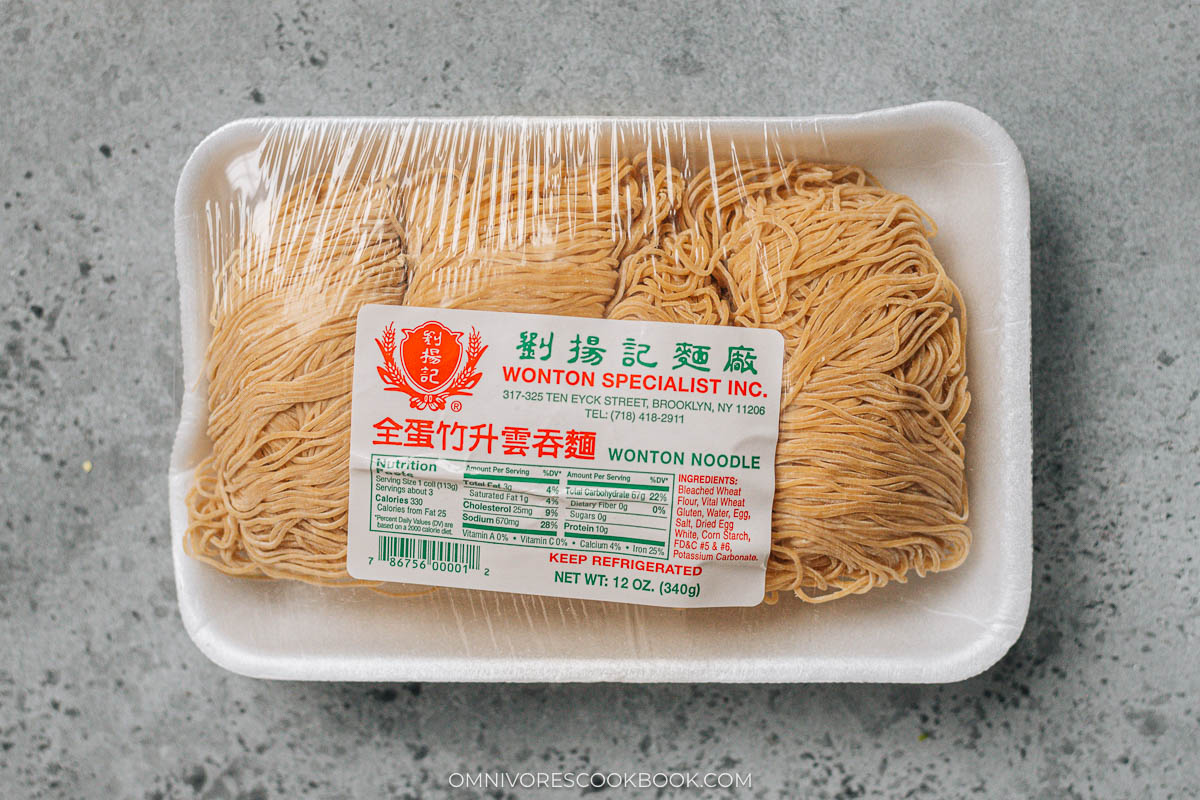
Noodles
Thin, wavy, yellow egg noodles, often sold in small bundles tied in a knot. The package is usually labeled wonton noodles or Hong Kong style noodles, and you will find them in the refrigerator or freezer section at an Asian market. They cook fast, in about 30 seconds in boiling water, and they have a chewy springy texture.
Wrappers
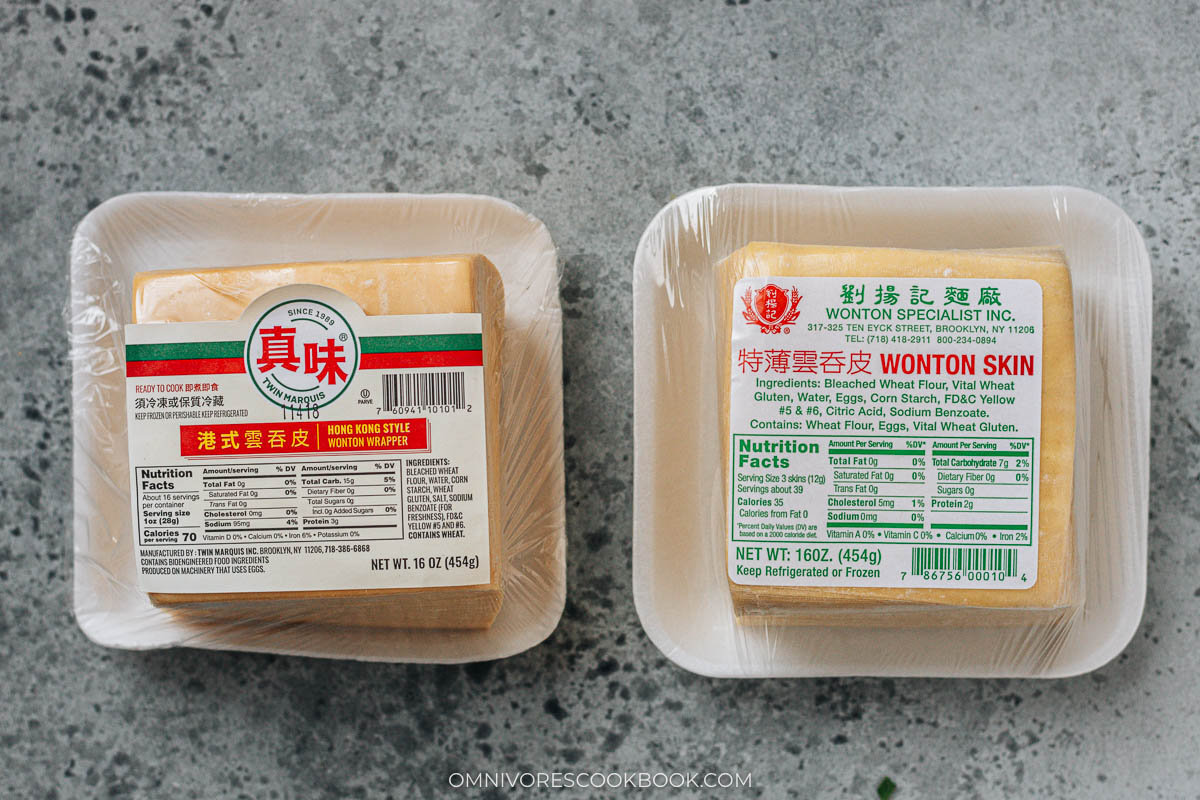
Look for yellow wonton wrappers, sometimes labeled Hong Kong style wonton wrappers and sometimes just wonton skins. The yellow color comes from egg in the dough and it gives the finished wonton the slightly chewy bite you want for noodle soup. White wonton wrappers work too, but the yellow ones are the authentic choice.
Chicken stock
There is no store-bought chicken stock that comes close to matching homemade chicken stock. Chinese chicken stock is made with chicken bones and meat to create a rich texture full of gelatin. It is thicker than store-bought stock and will coat the noodles, creating a much nicer mouthfeel. It is also made with simple aromatics without any vegetables to add a sweet taste, which is desirable in wonton noodle soup. Once you have the homemade stock, all you need is a pinch of salt with some ginger and scallion for the best wonton soup.
If you don’t want to make the stock from scratch, Better-Than-Bouillon Roasted Chicken Base is your next best bet. It tastes richer than regular chicken bouillon powder, and it has a neutral flavor unlike the chicken stock that comes in a carton. You can also use slightly more bouillon base than the package calls for, to create a richer soup.
Soup aromatics and seasoning
Sea salt to taste, a few slices of ginger, and the white parts of green onions go into the stock pot to lift the broth before serving. The aromatics are removed before the soup is poured into the bowls, so the broth stays clear.
Toppings
Choy sum or baby bok choy blanched in the same pot as the noodles, the green parts of the green onions sliced thin, and fried shallots for a crispy aromatic finish.
How to Make
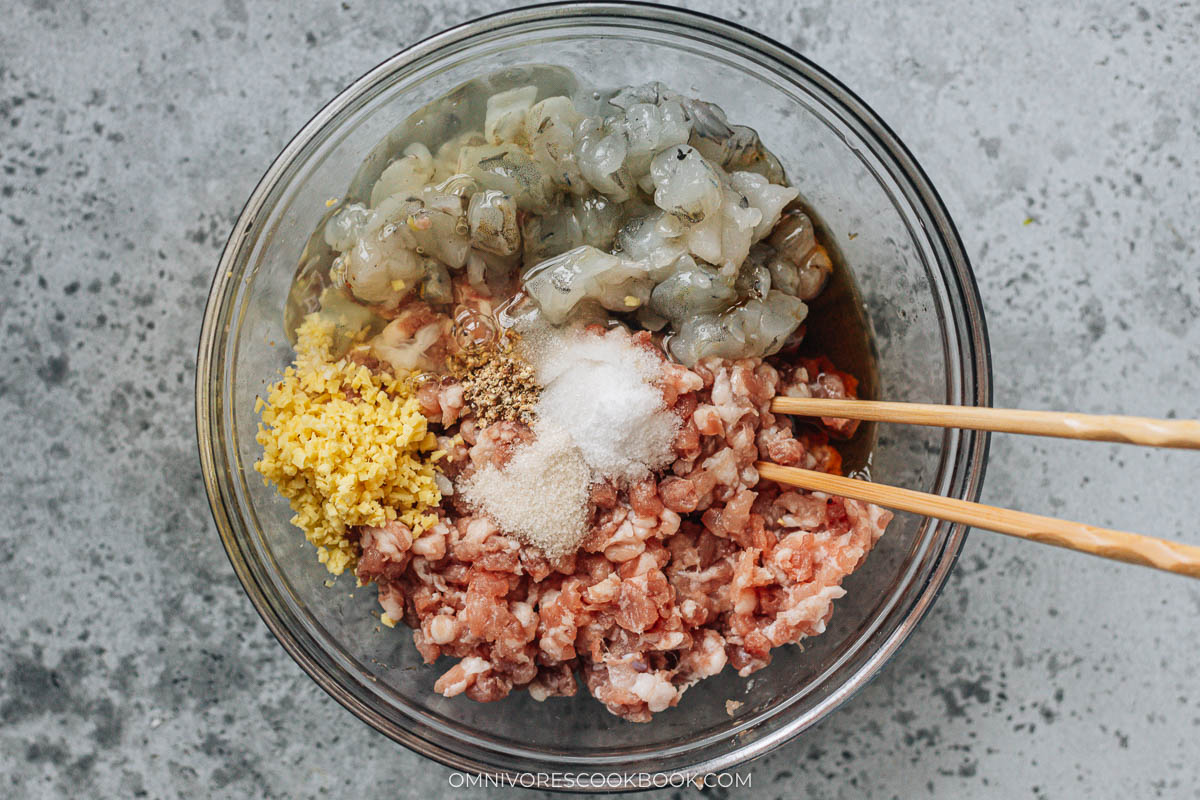
1. Mix the wonton filling: In a large bowl, combine the ground pork, chopped shrimp, light soy sauce, sesame oil, egg white, minced ginger, salt, sugar, and white pepper. Stir with a spatula in a circular motion until the filling forms a sticky paste.
2. Prep the wrapping station: Set a large tray on the counter and spray it with a thin layer of oil or sprinkle a little flour over it so the wontons do not stick. Cover the stack of wonton wrappers with a clean damp kitchen towel and have a second damp towel ready to cover the wrapped wontons as you go.
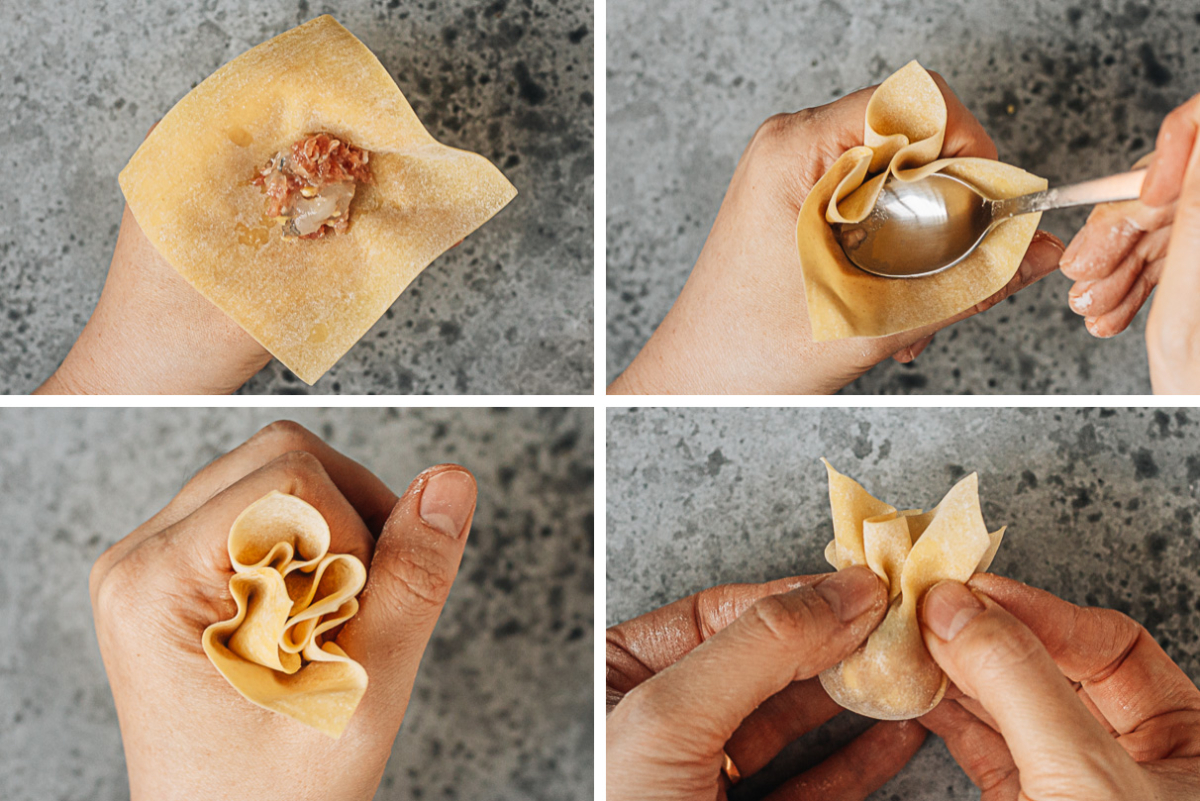
3. Wrap the wontons: Make a loose fist and lay a wonton wrapper across your thumb and index finger. Place a teaspoon of filling in the center. Slowly close your thumb and index finger so the wrapper gathers around the filling, using a small spoon to push the filling down. Pinch the wrapper right above the filling so it seals tightly into a little purse shape. Place the wonton on the prepared tray, leaving a finger width of space between each one, and cover the tray with the second damp towel as you go. Keep wrapping until all the filling is used up.
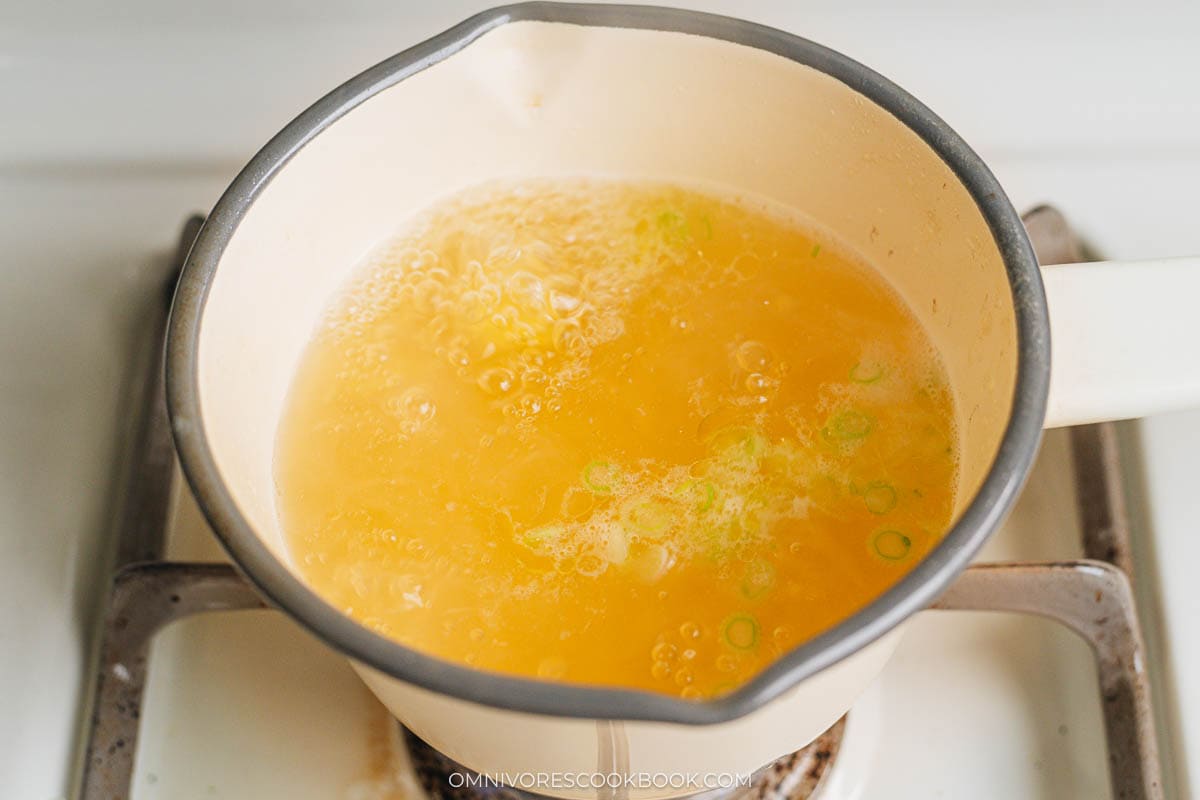
4. Bring two pots to a boil: Fill a large pot with about a gallon of water and bring it to a rolling boil for the noodles and wontons. In a separate medium pot, combine the chicken stock, salt, ginger slices, and the white parts of the green onions. Bring the stock to a low simmer, then cover and turn the heat to its lowest setting so the broth stays hot while you cook the rest.
5. Cook the noodles: Set out four large serving bowls. Drop the wonton noodles into the boiling water and cook them according to the package instructions, usually about 30 seconds for fresh and a minute for frozen. Lift the noodles out with a spider or tongs, divide them between the 4 bowls, and keep the pot boiling for the next step.
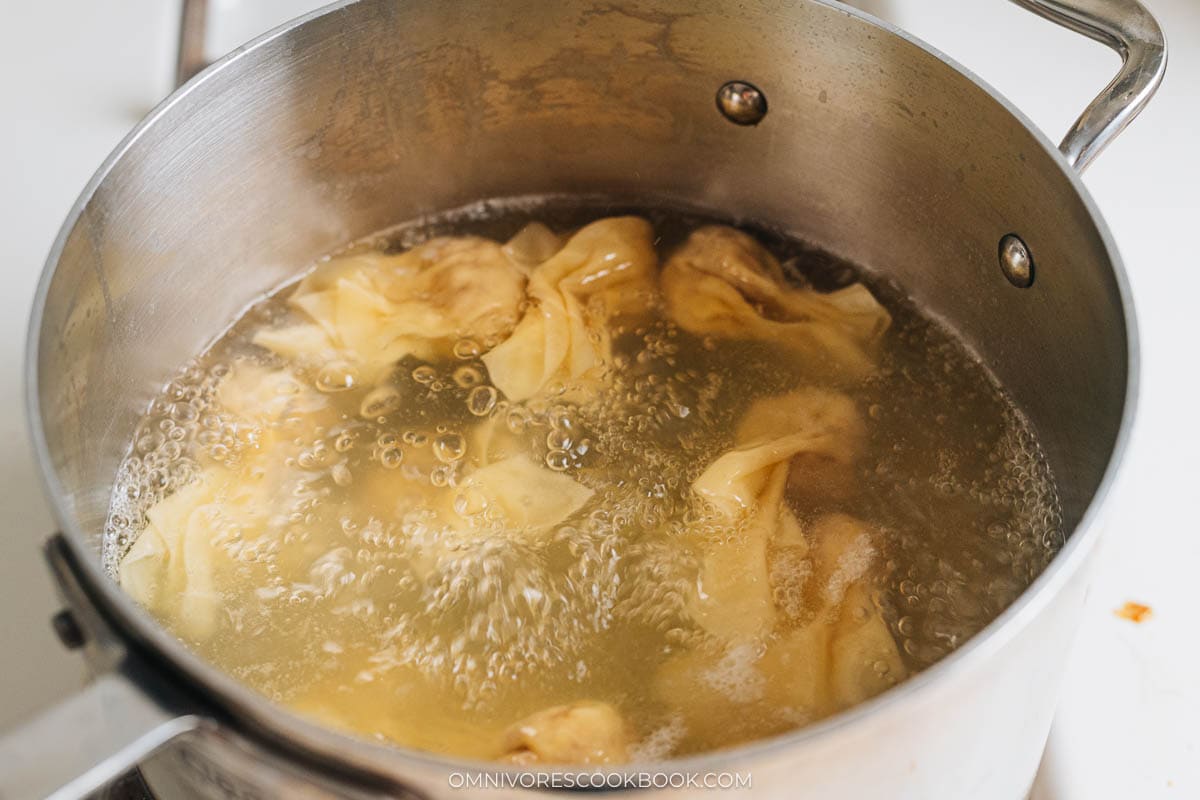
6. Cook the wontons in two batches: Once the water comes back to a boil, drop in half the wontons. Stir with a spatula in slow circles so they do not stick to the bottom. Cook until the wontons float, then keep cooking for another minute so the pork and shrimp inside are fully cooked. Lift them out and divide between the bowls on top of the noodles. Repeat with the second batch.
7. Blanch the greens: Drop the choy sum or baby bok choy into the same pot of water and blanch for about a minute, just until the stems turn bright green and the leaves are tender. Lift them out and arrange them on top of the wontons in each bowl.
8. Pour and finish: Lift out the ginger and green onion whites from the stock pot. Ladle 2 cups of hot chicken stock into each serving bowl. Sprinkle the green parts of the green onion and a spoonful of fried shallots
My Cooking Tips
Stir the filling in one direction until it is sticky: Mixing the pork and shrimp filling in one direction is what builds the protein structure that gives the wontons their bouncy juicy texture. Stop too early and the filling stays loose and falls apart in the broth. I keep stirring until the filling pulls away from the side of the bowl in one mass and looks tacky on the spatula.
Chop the shrimp, do not puree: The wonton filling should have visible pieces of shrimp inside, not a smooth pink paste. I chop the shrimp into rough pieces about the size of a pea so every wonton has a clear bite against the softer pork.
Keep wrappers and wontons covered as you work: Wonton wrappers dry out fast and a dry edge will not seal. I cover both the stack of unused wrappers and the tray of wrapped wontons with damp towels and take one wrapper out at a time. If a wrapper does crack at the edge, I dab a little water on the seam to seal it.
Freeze extra wontons on the tray before bagging: If I am making a bigger batch than I plan to serve, I freeze the extra uncooked wontons on the tray first, spaced apart so they do not touch, and once they are solid I transfer them to a ziplock bag. They will stick together in the bag otherwise. Frozen wontons cook the same way as fresh, just drop them straight from the freezer into boiling water.
Taste the broth before serving: The stock is the heart of this dish and a thin broth makes the whole bowl underwhelming. I always taste the simmering stock right before pouring it into the bowls and add a pinch more salt if needed.
Serving Suggestions
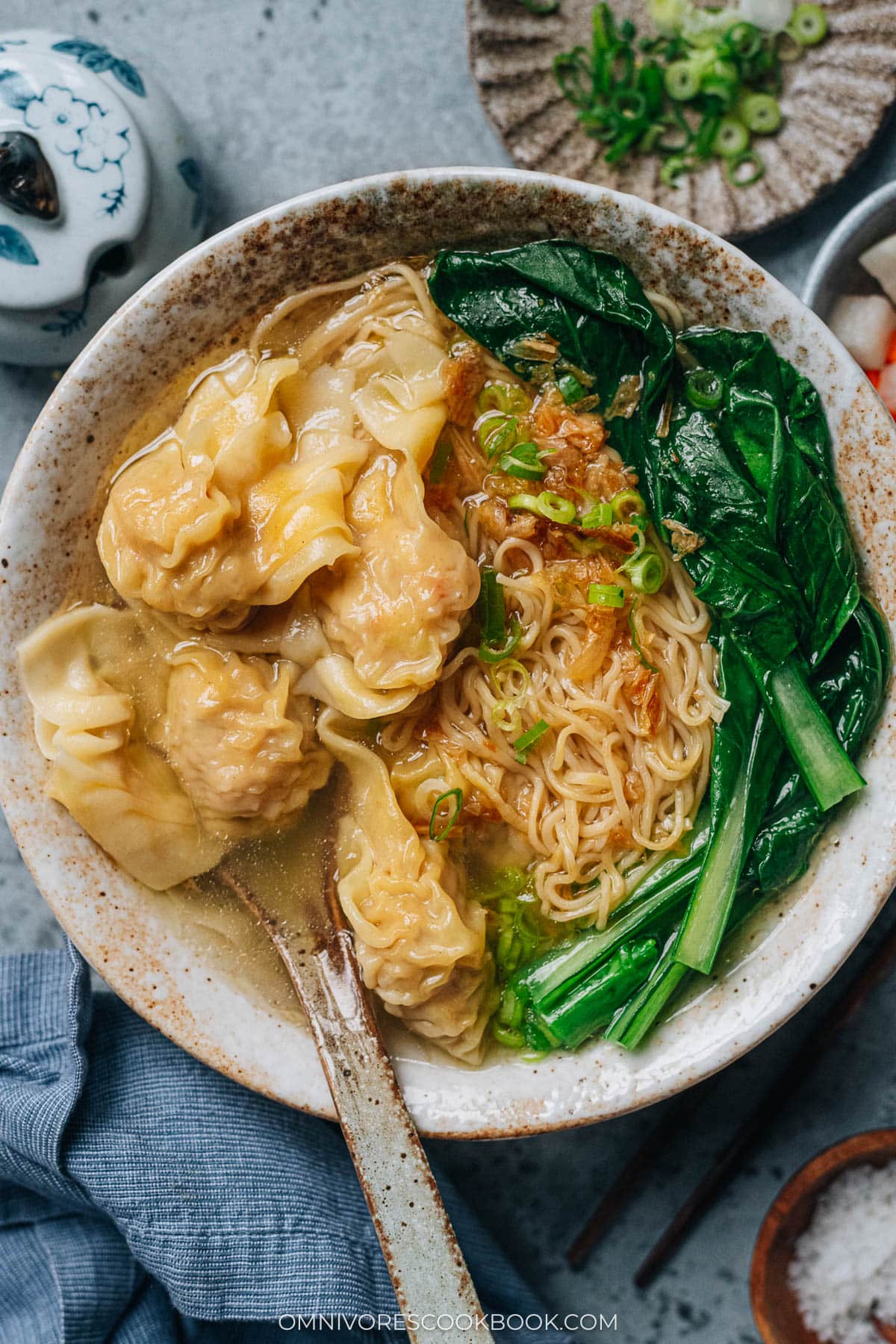
At home I treat this as a one bowl meal, the way it is served at the small diners in Hong Kong. The wontons, noodles, broth, and greens all go into the same deep bowl, with a small porcelain spoon for the soup and chopsticks for the noodles. I let the bowl rest in front of me for a minute before the first sip so the steam brings up the chicken stock fragrance, and I usually start with the broth before I touch the noodles or the wontons, the way my Cantonese nanny taught me to slow down with a bowl of noodle soup.
When friends come over for a Cantonese dinner I build the table around this bowl. I put the wonton noodle soup at the center, add a plate of Cantonese char siu or the easier air fryer char siu pork for a sweet roasted protein, Chinese broccoli with oyster sauce for a delicious green dish, choy sum with garlic sauce when I want a second green, and a basket of Cantonese shumai for a dim sum touch.
Frequently Ask Questions
Can I cook the wontons and noodles in the same pot as the broth?
No, and this is something I am strict about. The chicken stock is the centerpiece of the dish and it has to stay clear and clean. Cooking the noodles in the stock would release starch and cloud the broth, and cooking the wontons in the stock would release bits of filling and turn the broth muddy. I always cook the noodles and wontons in a separate pot of plain water and ladle the clear hot stock over them in the serving bowl at the very end.
My wontons keep splitting open in the broth, what am I doing wrong?
Three things usually cause this in my experience. The filling was not stirred long enough so it did not bind into a sticky paste, and a loose filling pushes the wrapper apart as it cooks. The wrapper edge was dry and did not seal, so the wonton opens at the seam. Or the boiling water was at too hard a boil and the rolling motion tore the wontons. The fix is a longer stir until the filling looks tacky, damp wrappers as you work, and a moderate boil with a spatula stir instead of a hard rolling boil.
How long do leftover wontons and broth keep?
The broth keeps in an airtight container in the fridge for up to 4 days, and it actually tastes better the next day. The assembled bowl does not hold well, because the noodles absorb the broth and turn soft and the wontons lose their silky texture as they sit. The best way to handle leftovers is to store everything separately, the broth in one container and the cooked wontons in another, and assemble a fresh bowl when you want to eat. Uncooked wontons freeze great up to 3 months, and I always make a bigger batch and freeze the extras because this is one of my favorite comfort foods to keep on hand.
Want to Save This Recipe?
Enter your email below & we’ll send it to your inbox. Plus get great new recipes from us every week!
Watch video
Wonton Noodle Soup (广式云吞面)
Ingredients
- 1 pack wonton wrappers , thawed if using frozen
Wonton Filling
- 1/2 lb ground pork
- 4 oz raw peeled and deveined shrimp , chopped into small pieces
- 1/2 tablespoon light soy sauce
- 1 tablespoon sesame oil
- 1 egg white
- 2 teaspoons ginger , finely minced
- 3/4 teaspoon sea salt
- 1/2 teaspoon sugar
- 1/4 teaspoon white pepper
Soup
- 1 pack Hong Kong style wonton noodles
- 8 cups homemade chicken stock (Footnote 1)
- 2 teaspoons sea salt (or to taste)
- 4 green onions white part, sliced
- 1 ” ginger , large sliced
Topping options
- green onion greens for garnish , sliced
- 8 heads choy sum (or baby bok choy)
- Fried shallots
Instructions
Prepare the wontons
- Prepare wonton filling: In a large bowl, combine all the ingredients for the wonton filling. Mix well with a spatula in a circular motion until it forms a sticky paste.
- Prepare a large tray or a plate. Spray a thin layer of oil or sprinkle some flour onto it to prevent sticking.
- Wrap the wontons: Work on the wontons one at a time. Make a loose fist with one hand and place a wonton wrapper over your thumb and index finger. Place about a teaspoon of filling in the center of the wrapper. Slowly close your thumb and index finger to gather the wrapper while using a small spoon to push down the filling, until the wrapper comes together. Pinch the wrapper right above the filling so it seals tightly. (See the blog post above for the detailed wrapping steps in the pictures). Place the wrapped wontons onto the prepared tray, a finger’s width apart. (Now you can store the wontons if not used immediately. See footnote 2 for storage tips)
- Make sure to use a wet paper towel or clean wet kitchen towel to cover the wonton wrappers and the wrapped wontons, to prevent them from drying out.
Assemble the wonton noodle soup (Footnote 3)
- Prepare a big pot for cooking the wontons and noodles. Add about 1 gallon (4 liters) of water and bring it to a boil.
- Add homemade chicken stock, salt, ginger and green onion (white part) to another medium-sized pot. Heat over medium heat until simmering. Then cover and turn to lowest heat to keep warm while cooking the wontons and noodles. Taste the soup. It should be slightly salty. You can always adjust the seasoning by adding more salt later.
- Prepare 4 large bowls. Add noodles into the large pot with the boiling water. Cook according to package instructions. Once done, divide noodles into 4 equal portions and transfer into each serving bowl.
- Cook the wontons in two batches if you plan to use them all. When the big pot of water comes to a boil again, add half of the wontons into the large pot. Stir gently with a spatula constantly to prevent them from sticking to the bottom. Cook until the wontons are floating on top, then continue cooking for another minute. Transfer the wontons into each of the serving bowls.
- Pour 2 cups of hot chicken soup into each serving bowl.
- (Optional) Blanch the greens in the large pot. Transfer onto the wonton bowls to garnish. Garnish with a spoonful of fried shallot and a pinch of green onions. Serve hot and enjoy!
Notes
- There is no real alternative for homemade chicken stock for this recipe, to create the most authentic tasting wonton noodle soup. If you do not want to make chicken stock, you can use 8 cups of water and add better-than-bouillon roasted chicken base. Add enough so the soup tastes good by itself. It’s not the same but it creates a nice enough soup.
- Store the uncooked wontons: If you are not going to cook and serve the wontons immediately, store them in the fridge for a day, or freeze them for up to three months. Seal the tray of wontons with plastic wrap and place it in the freezer. When the wontons are completely frozen, you can transfer them to an airtight ziplock bag to free up freezer space.
- You should only prepare the amount of wonton noodle soup you plan to serve. For each bowl, you will use 1 bundle of wonton noodles, 8 to 10 wontons (or less, depending on how hungry you are), and 2 cups of homemade chicken stock.
- Cook frozen wontons – The method is the same as if you were boiling fresh wontons.
- Serving size: This recipe yields 4 big servings of wonton noodle soup, with 8 to 10 wontons per bowl. You can also make 6 smaller servings.
Nutrition

Did you make this recipe?
I’d love to hear how it turned out for you! Please take a moment to leave a 5-star rating ⭐️ and share your thoughts in the comments further down the page. It really helps others discover the recipe too.
The recipe was published on Mar, 21 2016 and updated on June 09, 2026.
Liyana
Hi Maggie, I made your original recipe years ago and my husband loved it! Recently we were looking for it again and found this updated one. I tried it with the homemade chicken stock and it was very lovely!
We miss the taste of the original recipe too! Is there anywhere that we can reference it?
Carmel Stanley
Maggie,
Thank you so much! What an absolute delight, beats anything I’ve ever tried. Always make my own stock , from legs ,carcasses,etc, and always have several litres in my freezer, same with beef and seafood (but less of ), and this recipe was the best I have had. I think the extra ginger slices in the stock made the difference, anyway it was THE BEST EVER ! Love you recipes.
Carmel.
2/9/25
Maggie Zhu
Hi Carmel, thanks so much for leaving a comment. The wonton soup does take some time and effort to make, but the result is so worth it. I’m so happy to hear you enjoyed the dish!
Anrhony Grasso
I always find wonton skins locally to be too thick. Is there a particular brand that I can look for to get that “almost transparent” appearance.
Maggie Zhu
I listed two wonton wrapper packages in my blog post. Both are quite thin and they are wrappers for Cantonese style wontons. Another option is Myojo wonton wrappers, which is a common Japanese brand. It’s a very nice as well and it’s very thin.
Samantha
Made this soup over the chilly weekend. It turned out so delicious! Made the chicken stock one day and the wontons the next. I was nervous that the wonton would fall apart when cooked. But they held up incredibly well. Delicious!
Maggie Zhu
So happy to hear you enjoyed the dish! It’s a labor intensive one but I think it’s worth the effort. Thanks for leaving a positive review 🙂
Barb Bryant
Cannot wait to try this
Susan Chee
Hi Maggie many thanks for this easy-to-follow recipe which I have recently used with pleasing results. I varied the recipe a little by using 1 piece of chicken thigh fillet (about 350gm) which I cut into small pieces and marinated with a light seasoning of sesame oil, Lee Kum Kee chicken marinade and Shaoxing wine for about 30 minutes. I lightly fried the chicken with ginger slices and minced garlic before adding sufficient water to make the broth. After about 10 minutes of cooking time, I dropped the wontons into the broth and when they floated to the top, it was ready to serve together with the prepared noodles. It was a delicious bowl of chicken and wonton noodle soup.
Annie
For whatever reason I forget about using dried shrimp to add flavor to broth. In the past I’ve used the shrimp shells with the boxed chicken stock/broth to add flavor. I’ll definitely get some dried shrimp to quickly help with enhancing a broth.
And thanks for showing a picture of the noodles – I always feel like I can never find the right kind of noodles for this dish.
Christine Santos
Amazing recipe! The procedure is very easy. thank you for sharing this delicious comfort food.
Patty M
Love wontons with yummy fillings!! Beautiful recipes too. I can’t find the footnotes for the recipe though, am I missing them?
Thomas Jermyn
Amazing wonton recipe l will be making today
Julie
I used to love going to Chinatown for this soup when I lived in Manhattan and so wish I could eat it again. I’m sure a gluten-free version would just not be the same! Thanks for evoking such a happy memory. If I ever decide to go on a gluten binge I will definitely dig up this recipe! Yum!
Maggie
I think I saw gluten-free wonton wrapper online before, so it’s totally possible. For the rest of the part, just replace soy sauce with tamari. I’m sure it will still be a very delicious bowl of soup 🙂
Megan @ Meg is Well
I’ve always loved how fresh wonton soups taste and now I know why! The videos help so much with showing how to fold and wrap wontons, which is always so hard to describe in words. Thanks for sharing!
Maggie
Fresh wonton soup is the best! Wrapping wonton is a bit time consuming but it’s really easy once you try it. Glad to hear the video is helpful 🙂
Lucy @ Globe Scoffers
This looks delicious!
Nancy | Plus Ate Six
I think Wonton soup is the ultimate comfort food and it’s a non-negotiable order when it’s on the menu. Love your short cuts.
Maggie
It is! I really think making them on the weekend and freezing them is a great idea. I felt luxury when I was eating handmade wonton soup for a weekday lunch!
Karly Campbell
Finally, someone found the Easy Button for Wonton deliciousness at home! Love this!!
Maggie
Glad to hear you like it! These are so easy to make if you’re not in a hurry. I always make a huge batch and freeze them for later. Best comfort food 🙂
Barb
Where can I get these noodles in Alberta ?
Maggie Zhu
I’m afraid I’m not familiar with grocery stores there. Is there a Chinese market or Asian market nearby? These noodles are usually sold at refrigerated or freezer section at an Asian market. You can also find dried egg noodles that might be suitable for this dish as well.