
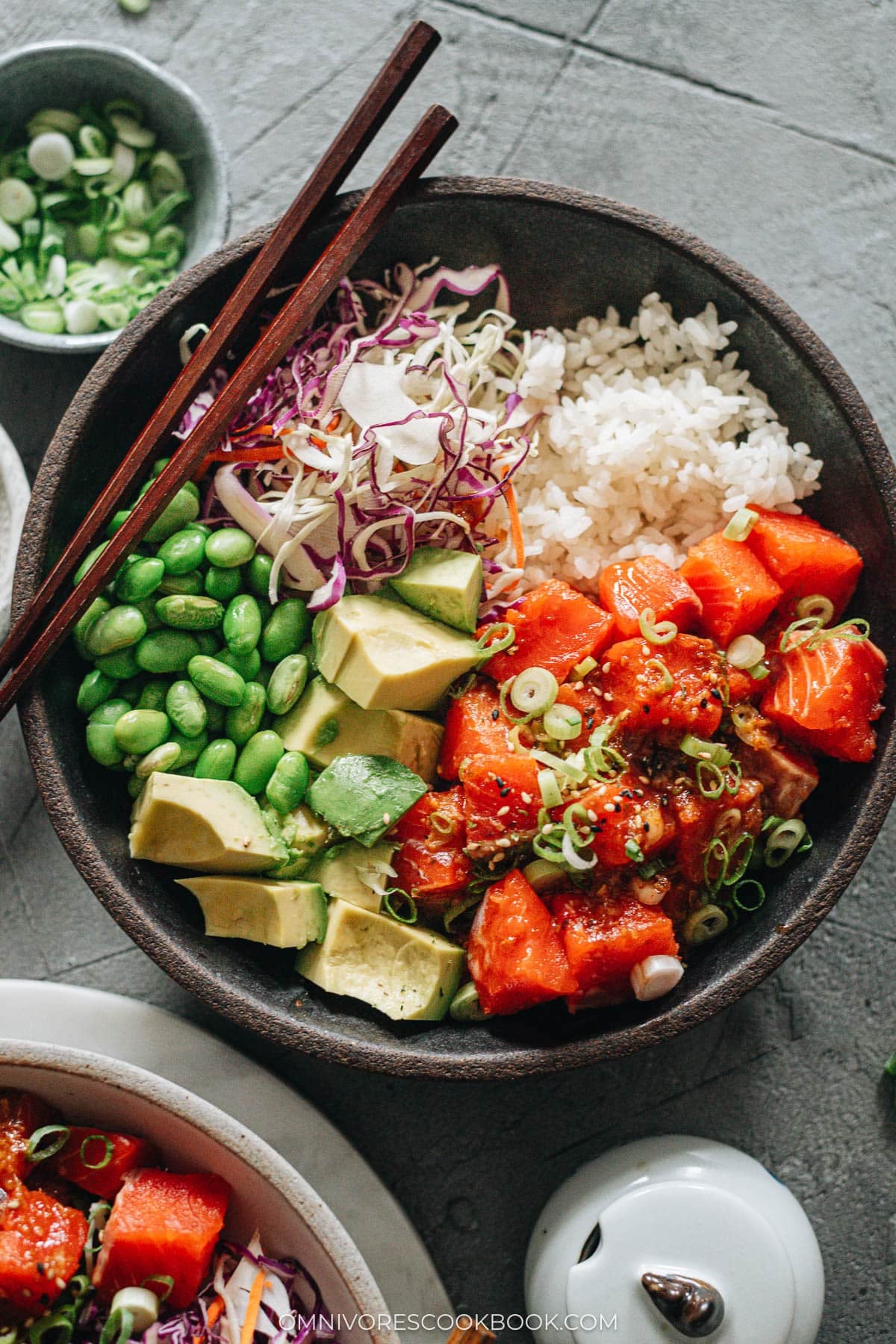
Poke is Hawaiian, not Chinese, but the seasoning leans on the same soy, sesame, ginger, garlic, and rice vinegar that I keep on the counter for the rest of our Asian dinners during the week. The sauce here is mine, built around a mild sriracha for warmth and maple syrup for depth, with the rest of the bowl staying simple so the salmon stays the star. It eats like a calmer cousin of my honey soy sauce glazed salmon, without ever turning the stove on.
I first put this bowl together for a summer dinner when the kitchen was already too warm to cook fish. A friend from Honolulu came over the next time I tested the recipe and asked for seconds, which is how I knew the sauce was tracking right with the version he grew up on. It is now a regular at our house on weeknights when nobody wants to stand at a wok.
To make it, I cube sashimi-grade salmon, whisk a sauce from soy sauce, rice vinegar, sesame oil, sriracha, maple syrup, finely grated garlic, and ginger, then dress half of it onto the fish and reserve the rest for the table. I scoop short-grain rice into bowls, stack the salmon, edamame, salad greens, and avocado on top, and finish with furikake for crunch and salt. The whole dish takes 20 minutes once the rice is cooked, which makes it the easiest summer dinner I know. And, I’m proud to say that this recipe is Hawaiian-approved!
Ingredients
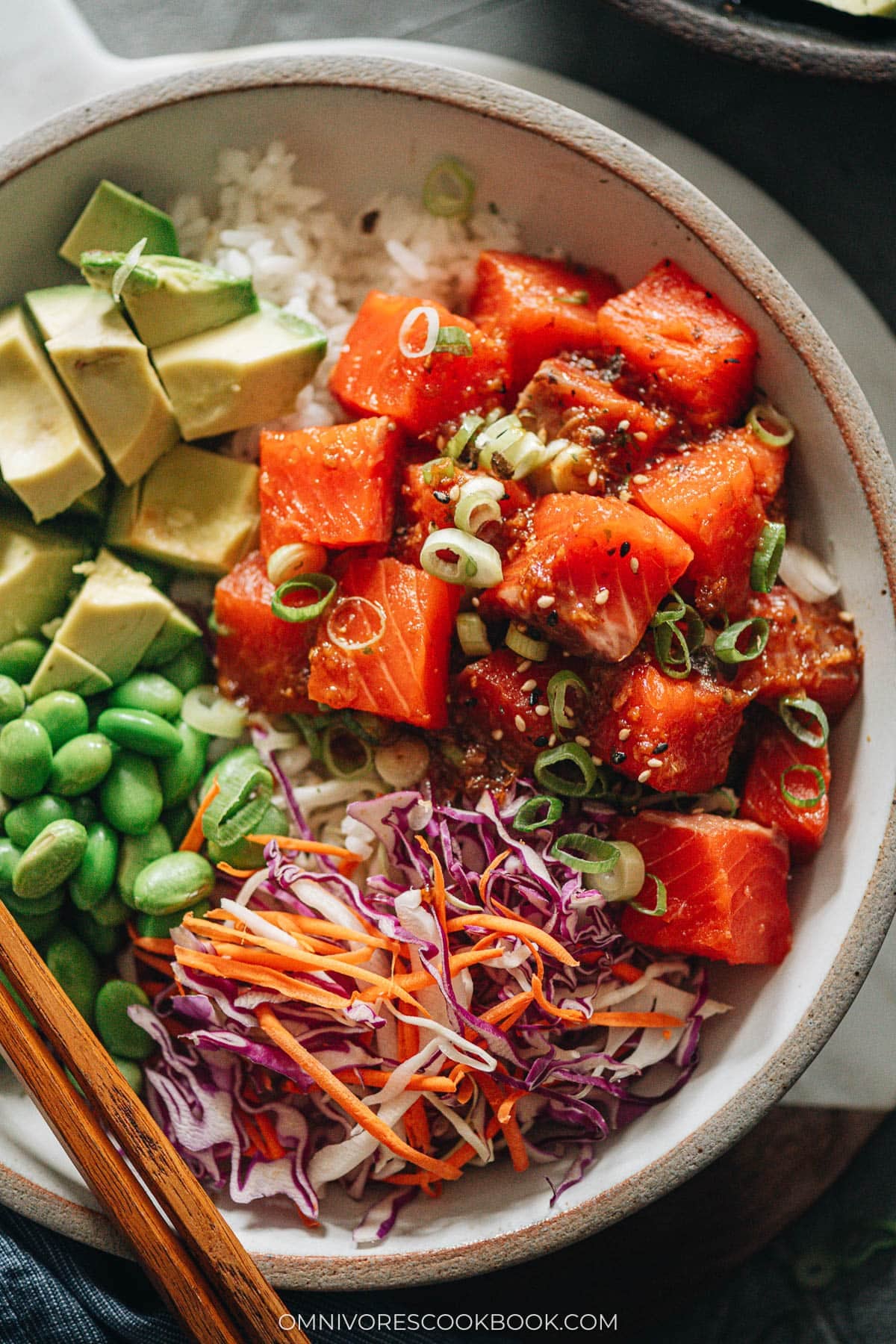
The salmon poke bowl ingredients split into 3 working groups so I can prep the sauce, the fish, and the rice and toppings in parallel. Here is what I use:
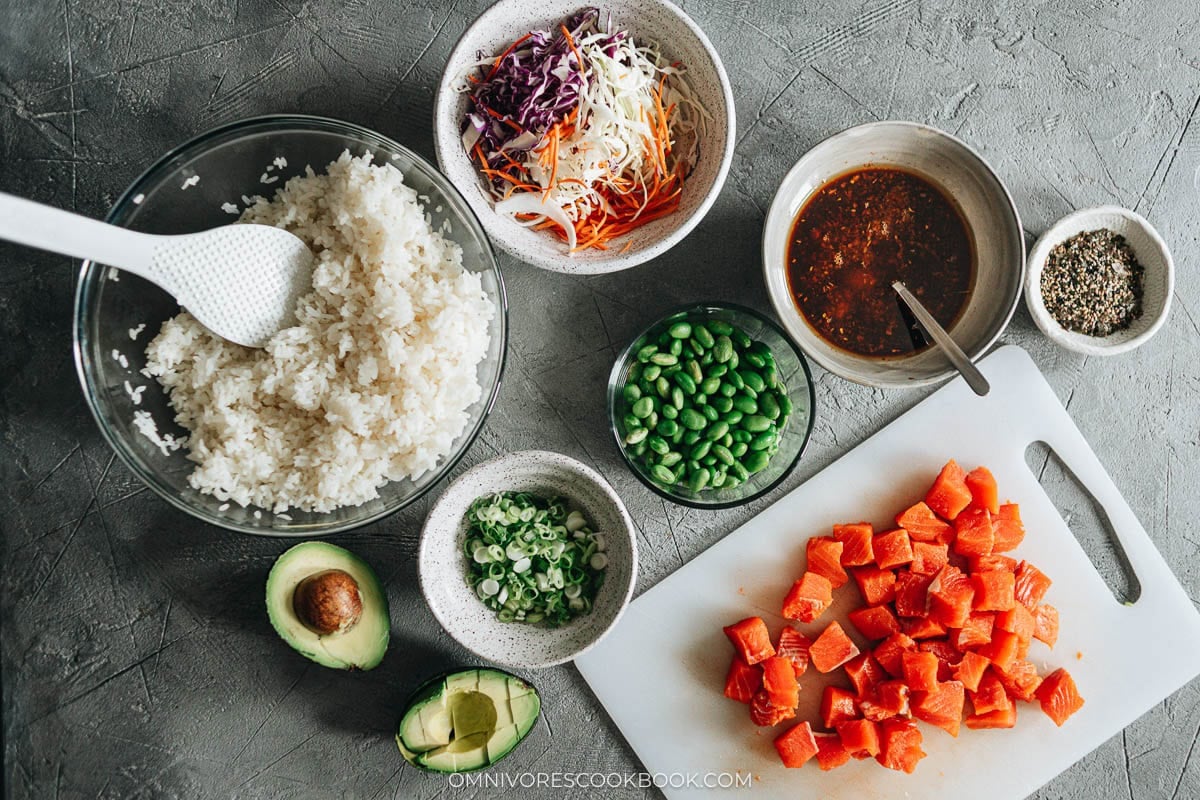
The salmon and aromatic prep: I look for sashimi-grade salmon that has been flash-frozen at the source, since the deep freeze is what makes the fish safe to eat raw. Skin and pin bones come off before I cube the salmon, and thinly sliced green onions go in to lift the dressing.
The sauce: Light soy sauce, rice vinegar, and sesame oil form the base, with maple syrup or honey for sweetness, sriracha, and finely grated garlic and ginger. A pinch of salt rounds the whole thing out.
The rice and toppings: Short-grain white rice or sushi rice gives the bowl the right texture, though brown rice works when I want a heartier dinner. For toppings I keep it simple with cubed avocado, blanched edamame, and salad greens or shredded purple cabbage, finished with furikake or toasted sesame seeds.
How to Make
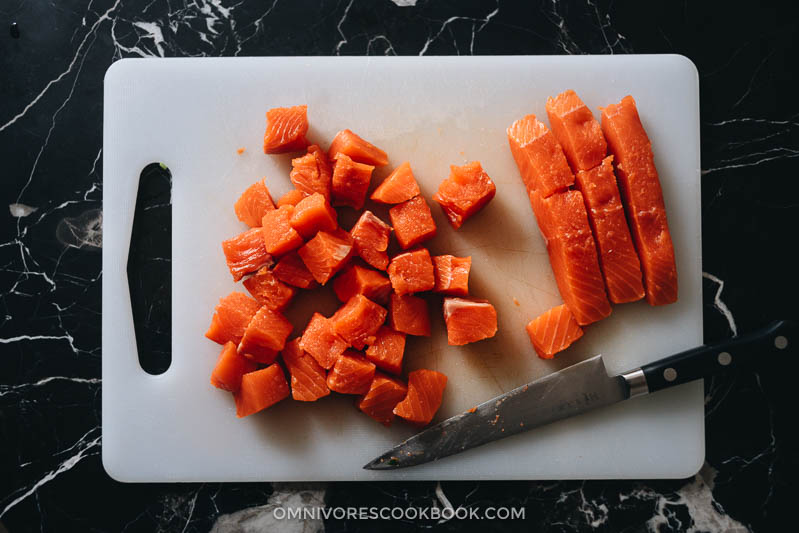
1. Prep the salmon: Remove the skin from the salmon and use fishbone tweezers to pull out any pin bones. Cube the salmon into bite-sized pieces and transfer them to a medium bowl.
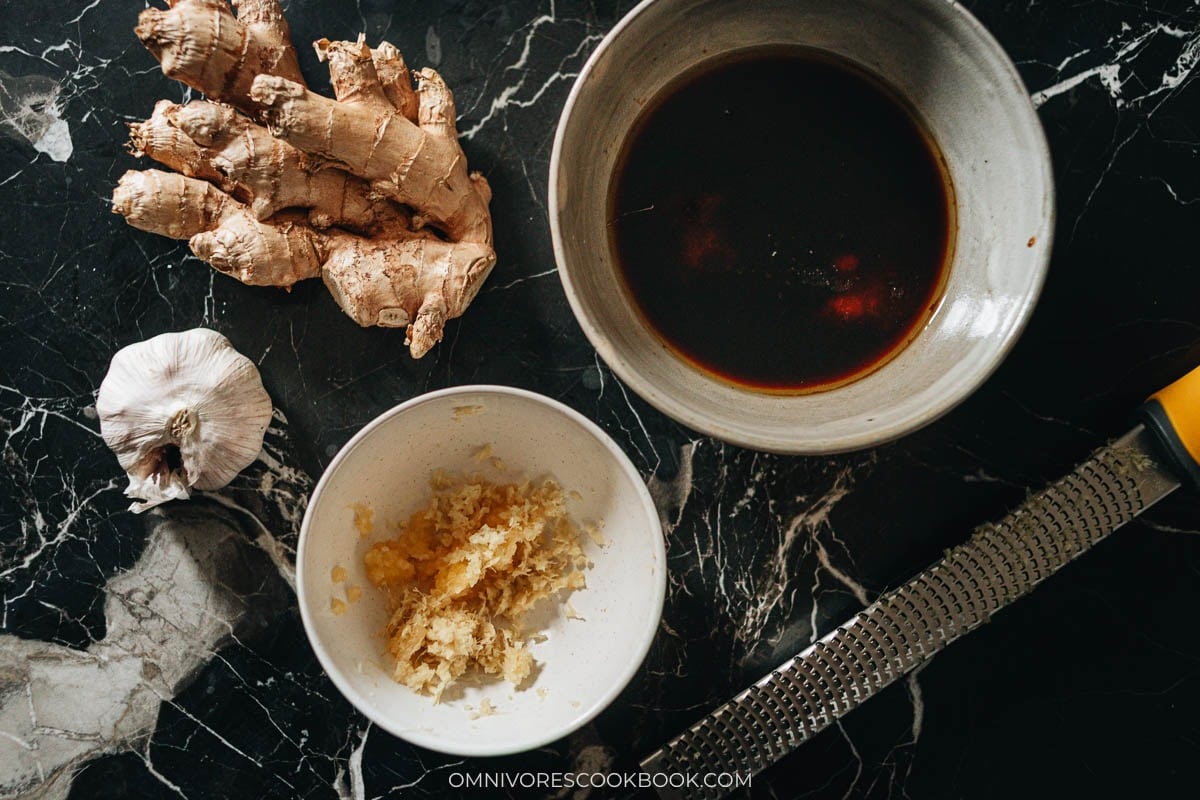
2. Whisk the sauce: Combine the soy sauce, rice vinegar, sriracha, maple syrup, sesame oil, finely grated garlic and ginger, and salt in a small bowl and whisk until smooth.
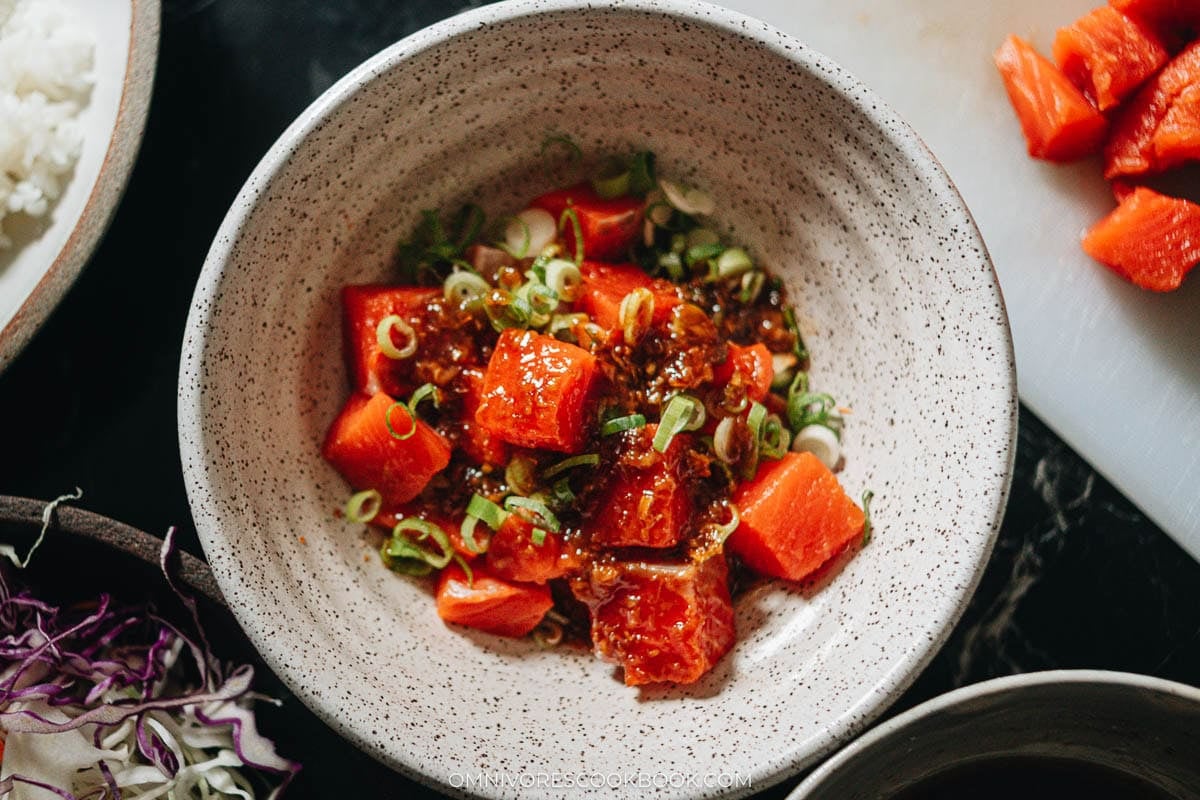
3. Dress the salmon: Add the green onion to the bowl with the salmon, pour in half of the sauce, and use a rubber spatula to fold the salmon until every cube is coated. Taste a piece and add a touch more sauce if you want a stronger seasoning.
4. Scoop the cooked rice into 4 serving bowls. Top each portion of rice with the dressed salmon, the edamame, the salad greens or shredded cabbage, and the cubed avocado.
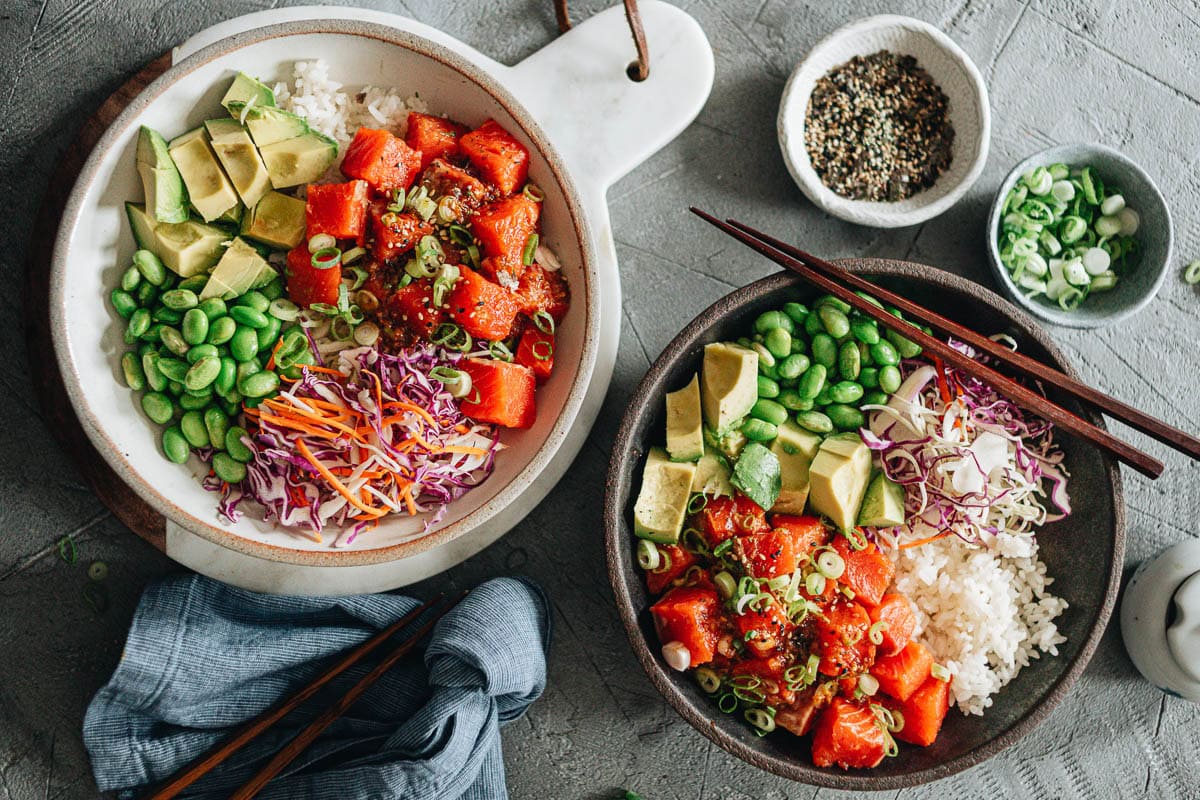
5. Garnish and serve: Sprinkle furikake or toasted sesame seeds across the top of each bowl, serve immediately, and pass the remaining sauce at the table.
Key Tips I Recommend
Buy the salmon frozen and thaw in the fridge: I always start with flash-frozen sashimi-grade salmon and thaw it in the fridge overnight, since the deep freeze is what kills parasites and keeps the fish safe to eat raw. Thawing on the counter warms the outside of the fish before the inside is fully thawed, which is why I never take that shortcut.
If you purchase sushi-grade fish at a Japanese market, the fish might be thawed already and store in the refrigerated section. In this case, use the fish the same day you purchase it.
Grate the garlic and ginger fine: I press the garlic through a garlic press and grate the ginger on a microplane so both melt into the sauce instead of biting back as raw chunks.
Dress only half the salmon at first: I pour half of the sauce onto the fish to start, fold it through, and taste before adding more. Salmon picks up sauce quickly, so a heavy hand at the start can mute the natural flavor of the fish.
Cube the avocado last: I save the avocado for the very end of assembly, since it browns within minutes of being cut. A squeeze of lemon over the cubes also slows browning if I am building bowls slightly ahead of dinner.
Reserve sauce for the table: I always set the leftover sauce out in a small bowl with a spoon, since some guests want a drizzle over their rice and others find the dressed salmon plenty seasoned on its own.
How to Serve
At my table, the salmon poke bowl shows up on the warmer half of the year, when standing at the stove for dinner is the last thing anyone wants to do. I serve it with sparkling water with a twist of lime, and I let my family build their own bowl from the small dishes of steamed rice, salmon, edamame, greens, avocado, and the jar of extra sauce I set in the middle of the table.
For the rest of our salmon and Asian-flavored bowl rotation, I lean on my crispy salmon with ginger soy sauce when I want a cooked counterpart to this raw bowl, and on my 30 minute salmon noodle bowl with coleslaw when I am working with leftover salmon from a different night.
Frequently Ask Questions
What does sashimi grade actually mean?
Sashimi grade or sushi grade is a label some retailers use to flag fish that has been flash-frozen to FDA-recommended temperatures, which kills any parasites the fish might carry. The label is not regulated, so I always ask the fishmonger directly whether the salmon was frozen for raw consumption before I buy it.
Can I use fresh salmon instead of flash-frozen?
I do not recommend it for raw poke unless you trust your fishmonger and the fish was caught in cold deep waters with low parasite risk. Wild-caught salmon from a reputable source is the next best option, and even then I freeze it at home for at least a week before cubing.
How long do leftovers keep in the fridge?
The dressed salmon will keep in an airtight container in the fridge for up to 1 day, though the texture turns slightly firmer as the vinegar slowly cures the fish. I do not store an assembled bowl, since the rice hardens and the avocado browns, so I keep the components separate when I expect leftovers.
Want to Save This Recipe?
Enter your email below & we’ll send it to your inbox. Plus get great new recipes from us every week!
Salmon Poke Bowl
Ingredients
- 1 lb sashimi-grade salmon
- 2 green onions , thinly sliced and separated
- 4 cups cooked white rice (or brown rice, or sushi rice) (*Footnote 1)
Sauce
- 4 tablespoons soy sauce
- 2 tablespoons rice vinegar
- 2 tablespoons Sriracha
- 2 tablespoons maple syrup (or honey)
- 2 tablespoons sesame oil
- 2 cloves garlic , finely grated
- 2 teaspoons finely grated ginger
- 1/2 teaspoon salt
Topping options
- 1 cup edamame , cooked (Optional)
- 2 cups salad greens (or coleslaw mix, or sliced purple cabbage)
- 1 large avocado , cubed (Highly recommended)
- Furikake (or toasted sesame seeds) (Optional)
Instructions
Prepare the poke
- Remove the salmon skin and discard it. Examine the salmon to see if there are any bones lodged in the meat and use a pair of fishbone tweezers remove them. Cut the salmon into 1/2-inch cubes. Add the salmon into a medium-sized bowl and set it aside.
- Add the sauce ingredients into a small bowl and mix well.
- Add the green onion to the bowl with the salmon. Pour in half of the sauce. Use a rubber spatula to gently mix the salmon until it’s evenly coated with the sauce. Taste the salmon and mix in a bit more sauce if needed.
Assemble the bowl
- Portion the rice and transfer it to each serving bowl. Add the salmon, edamame, vegetables (salad greens, coleslaw mix, or sliced purple cabbage), and avocado on top of the rice. Garnish with furikake or toasted sesame seeds. Serve the remaining sauce on the side.
- Serve immediately as a main dish.
Notes
- You can serve the poke bowl with the type of steamed rice you prefer (including brown rice, multi-grain rice, etc). Refer to the blog post above for more information on the rice. If you prefer to make sushi rice, use the recipe from Just One Cookbook.
- The nutrition facts are calculated based on 1 of the 4 servings of this recipe, including the rice and veggie toppings.
Nutrition

Did you make this recipe?
I’d love to hear how it turned out for you! Please take a moment to leave a 5-star rating ⭐️ and share your thoughts in the comments further down the page. It really helps others discover the recipe too.
Lisa Burchell
These poke bowls are so easy and an excellent way of healthy eating. These days healthy eating is essential for general wellbeing.
Ten out of Ten!!
Thank you Lisa
Angela Cheng
This tastes just like the restaurants! I’ve tried other poke marinades and this one is by far the best. I omitted the siraccha for a non spicy version. I think I will try it with tofu next time and see how it turns out!
Michele
On permanent rotation. Absolutely delicious!
People who think they are sushi connoisseurs and only eat cooked rolls really shouldn’t comment. Some the fish is flash frozen it’s perfectly safe to consume raw.
Annie Zhang
We love this recipe!! Delicious and easy 🙂
Michele
I haven’t found a poke sauce as good as yours. Perfect balance! I added some fresh mango which was delicious.
Rick Smale
Delicious recipe but ignore the terrible advice about salmon. Fresh salmon is nicest and has no parasites unless it’s wild caught (where there is a low risk). Freezing salmon destroys the cell structure which gives it a more greasy texture.
Cloched
I totally disagree with how flash-freezing affects the flavor. We have lots of great seafood stores here in the Low Country, which may be why we never have issues. Completely delicious eaten raw. And animals in the wild are typically riddled with parasites (not as much as farmed). It’s just part of their ecosystem.
Lyn
This was a family winner. We have done it over and again. I shared the recipe with both adult sons and now in-laws, its become a favourite. The sauce is the clincher. First up I was in a hurry and didnt read the recipe properly. I cooked the salmon cubes in the sauce.. it went a little sticky and was absolutely delicious . Can you tell me if the rice is meant to be served hot or cold?
Maggie Zhu
The rice is usually served slightly warm or at room temperature if you serve the salmon raw. I wouldn’t use cold rice because the texture is super tough and not very pleasant.
I don’t see why you can’t serve with cooked salmon! I think it sounds delicious 🙂 Glad to hear you like the recipe!
Ai-Vi
So yum. So glad I came across this recipe
Z Long
Fabulous!! We used tri-color quinoa instead of sushi rice and it was delicious. It’s the go-to meal for busy work lunches or weekend picnics. Thanks for a great recipe. Your blog is always a delight.
Jo
This was delicious
Jane Doe
Wild caught salmon is high risk for parasites. Farmed salmon is much lower risk for parasites. Proper freezing will kill parasites, but it is not always required for farmed salmon that were certified to be fed parasite-free food. Use a reputable source, because there is a bacterial risk from improper handling (freezing doesn’t kill bacteria).
Cloched
I disagree that farmed salmon does not have parasites. They are huddled together en masse, and share everything including diseases and parasites- hence they are given large amounts of antibiotics and antiparasitic preps. Not to mention given artificial food coloring so their flesh is pink. Not healthy, I wouldn’t touch farmed seafood.
Carolyn Blount Brodersen
This is my go-to poke sauce. I do reduce the soy sauce by one tablespoon and leave out the salt, but that’s just to accomodate hubby and teen daughter who don’t love salty as much as I do. Love this so much, I make it once every two weeks. I do cook the salmon–fried in a pan with no seasoning on high heat to make it crispy. Then I put out six or seven ingredients on a platter on a lazy susan and each person takes as much of they want of each thing on their bowl of rice, then douses with this lovely sauce. I also serve a sriracha mayo to drizzle on. So many options! But this sauce is the heart of it all. Thank you!
Grace M
The sauce was amazing!
Brittni
Super simple and delicious!
Jamie Herman
I have used this recipe for both Ahi and Salmon Poke and our family loved it!