
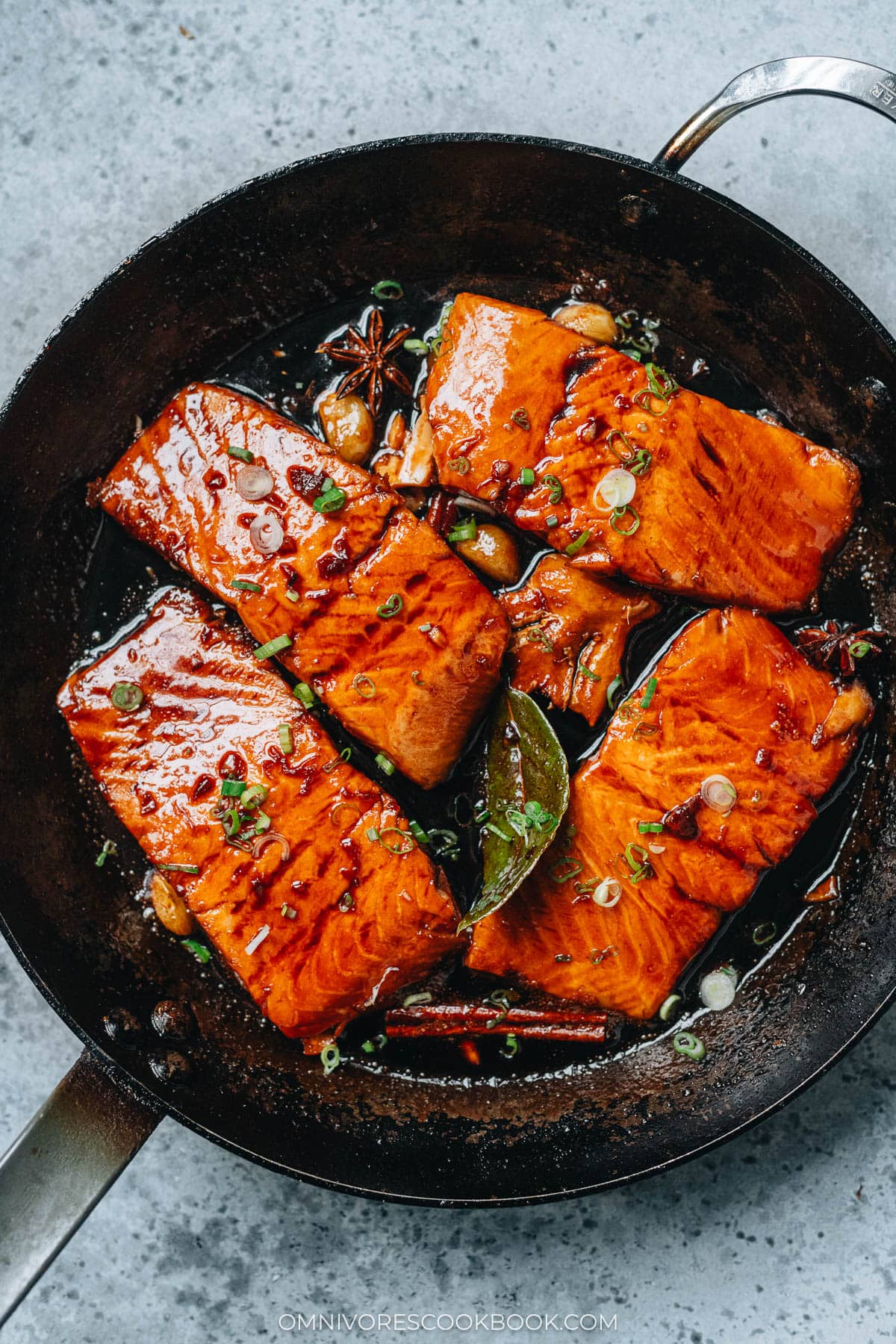
Honey glazed salmon is a home-cook favorite for a reason, and my version swaps the usual Western brown sugar and butter route for a glaze grounded in the Chinese pantry. Soy sauce and Shaoxing wine give the sauce a savory umami base I love, while ginger, garlic, cinnamon, star anise, and bay leaves simmer in the pan for a warm layered background.
Pan-fried salmon is one of my regular weeknight dinners because it is ready quickly and my husband will eat any version I put in front of him. Some nights I keep it plain with a spoon of ginger scallion sauce on top, some nights I flake it into salmon fried rice, and some nights I cut it into cubes for pan-fried salmon bites.
Here is how I make this recipe, I simply dry-cure the salmon in salt and sugar to firm up the flesh, sear the skin side hard in a hot skillet until it turns crispy, then flip the fish, pour in the sauce with all the aromatics, and baste until the glaze thickens around the salmon. That’s all! So I hope you give this Honey Soy Glazed Salmon recipe a try!
Ingredients
Making this honey soy glazed salmon recipe is one of my favorite weeknight cooking. The best part is that most of the sauce ingredients are pantry staples I already keep on the shelf for Chinese cooking.
Salmon filets: I use king salmon whenever I can find it because the flesh is rich, buttery, and forgiving if I slightly overcook it. Coho salmon works well too, and sockeye is fine as long as I shorten the cooking time and stop while the middle is still medium.
Cure salt and sugar: I use equal parts salt and sugar to lightly coat the flesh side of the salmon so the salt draws out moisture and firms up the texture. This dry-cure step is technically optional, but I do it whenever I have some time on my hands because it makes a real difference.
Honey: I use a mild, everyday honey because a strong, floral honey will fight with the aromatics. The honey does most of the glazing work, so I do not swap it for brown sugar or maple syrup.
Shaoxing wine: I add Shaoxing wine to the sauce for a savory depth that plain water or stock cannot deliver. Dry sherry is my go-to substitute when Shaoxing is not on hand.
Light soy sauce and dark soy sauce: I use light soy sauce as the main salt in the glaze and add a small amount of dark soy sauce for color.
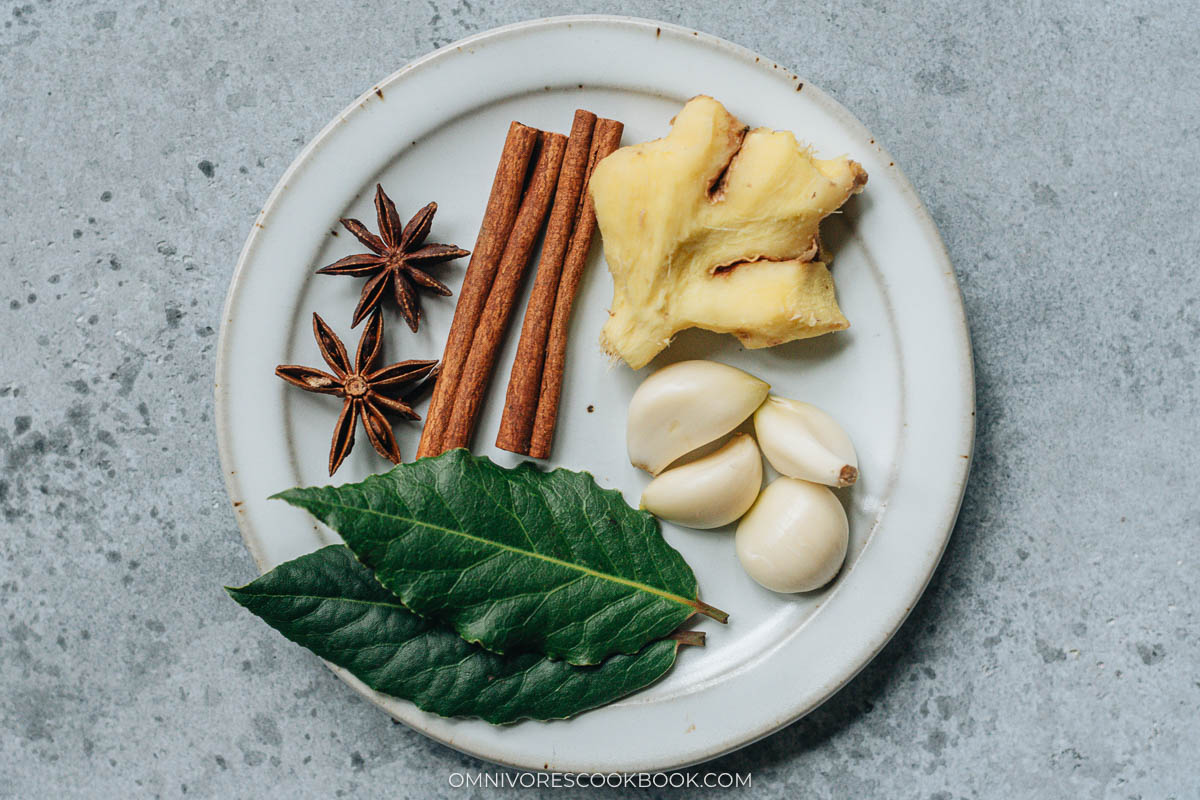
Aromatics: I use a piece of smashed ginger, whole garlic cloves, fresh or dried bay leaves, cinnamon sticks, and whole star anise pods.
Lemon: I squeeze fresh lemon juice into the sauce at the very end to cut the sweetness and brighten everything up.
Vegetable oil and green onion: I use vegetable oil to sear the salmon skin and finish with sliced green onion for a fresh sharp garnish on top.
Remove the scales from the salmon skin
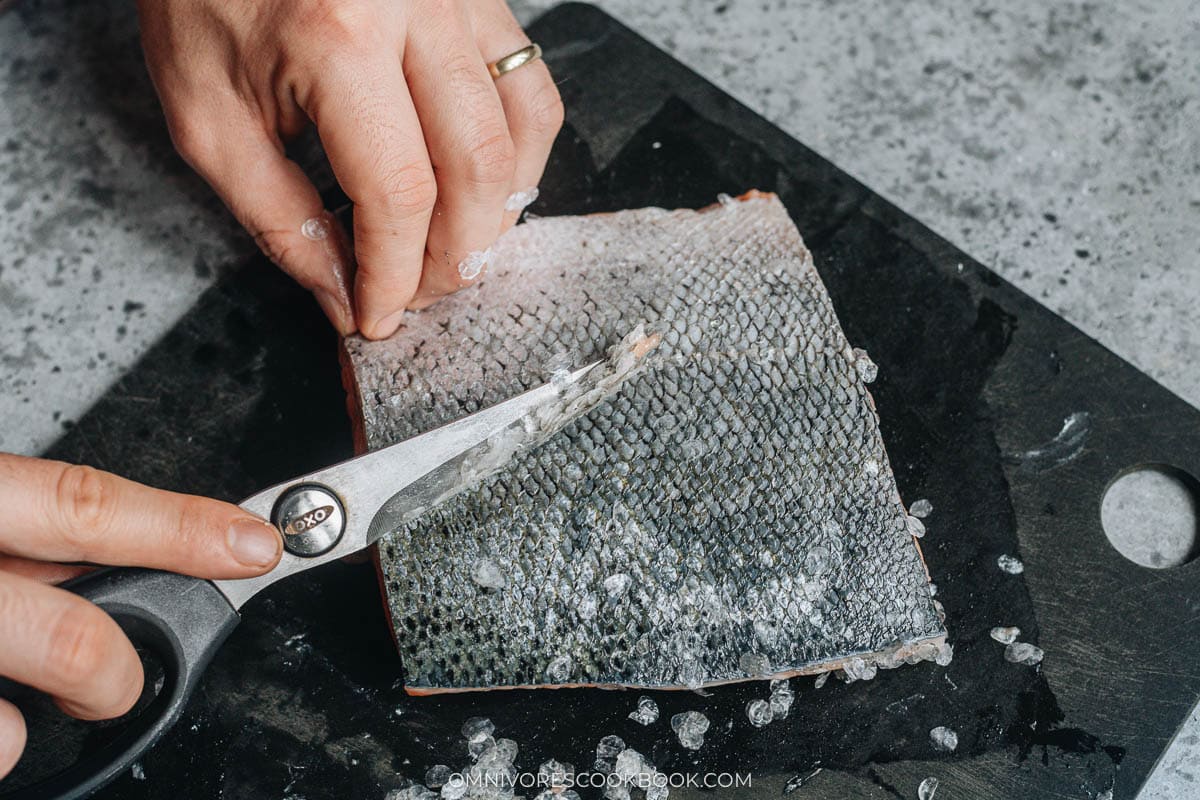
If you enjoy salmon skin as much as I do, make sure to check the skin and remove any remaining scales. Most grocery stores will remove the fish scales, but not very thoroughly. And it results in a very bad texture once the fish is cooked.
To remove the scales, place the salmon flesh side down on a cutting board. Hold the salmon in one hand. Use the back of a knife or one side of some poultry shears to gently scrape the skin against the direction of the scales. Once done, rinse the salmon filet to wash off the scales and pat dry.
How to cook
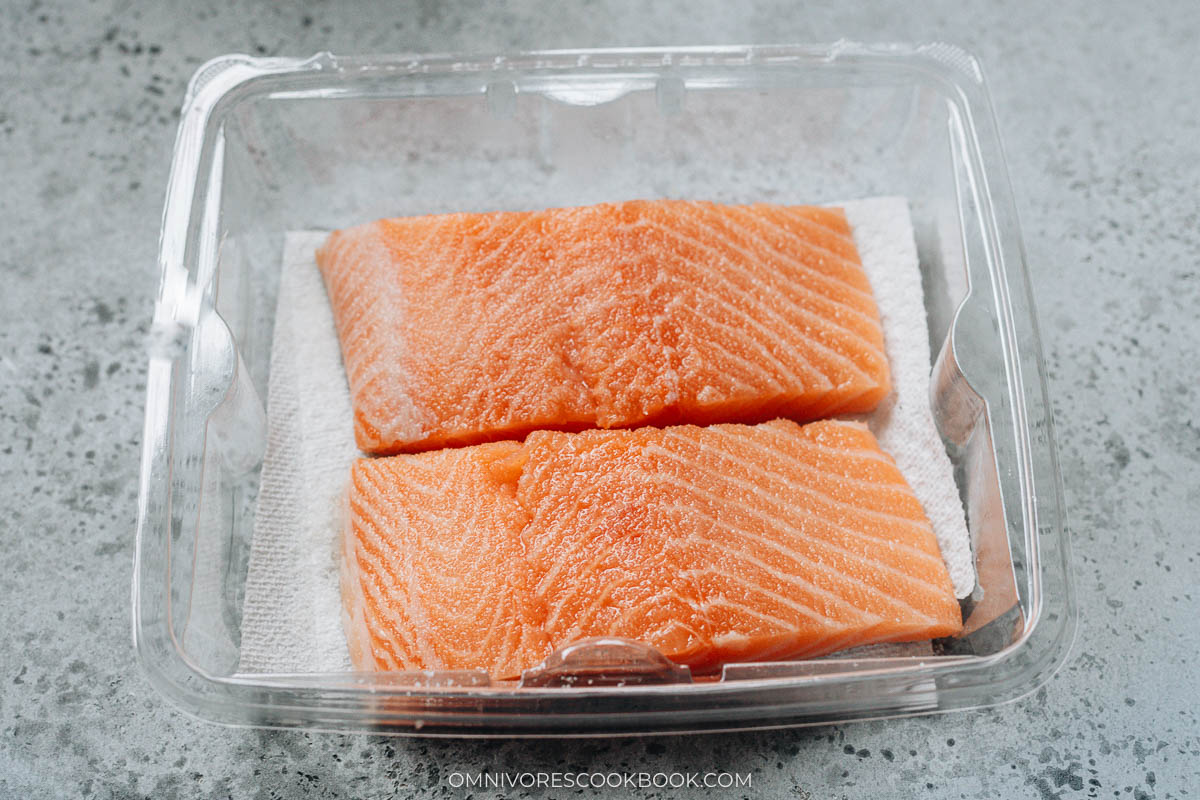
Dry-cure the salmon. Mix salt and sugar together and sprinkle over the flesh side of the salmon filets in a thin, even layer. Let the fish cure in the fridge for 30 minutes, no longer than an hour.
Mix the sauce. While the salmon cures, whisk the honey, Shaoxing wine, light soy sauce, and dark soy sauce together in a medium bowl until smooth.
Prep the aromatics. Set the smashed ginger, whole garlic cloves, bay leaves, cinnamon sticks, and star anise together on a small plate so everything is ready to add at once.
Rinse and dry the salmon. Once the cure is done, rinse the salt and sugar off the salmon under cold running water. Pat the filets thoroughly dry with paper towels on all sides.
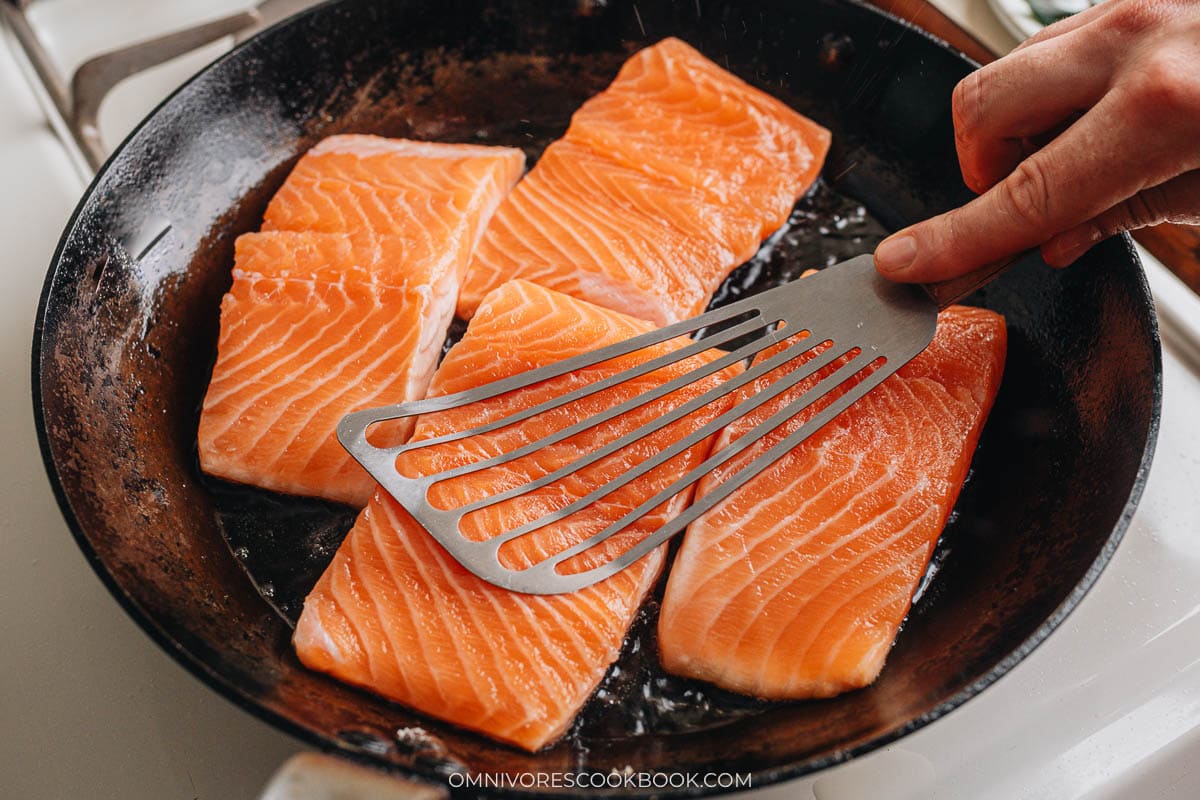
Sear the skin. Heat the oil in a large skillet over medium-high heat until hot. Carefully lay the salmon in the pan skin side down and press each filet with a fish spatula so the skin makes full contact with the pan. Cook for about 3 minutes, until the skin turns golden and crispy.
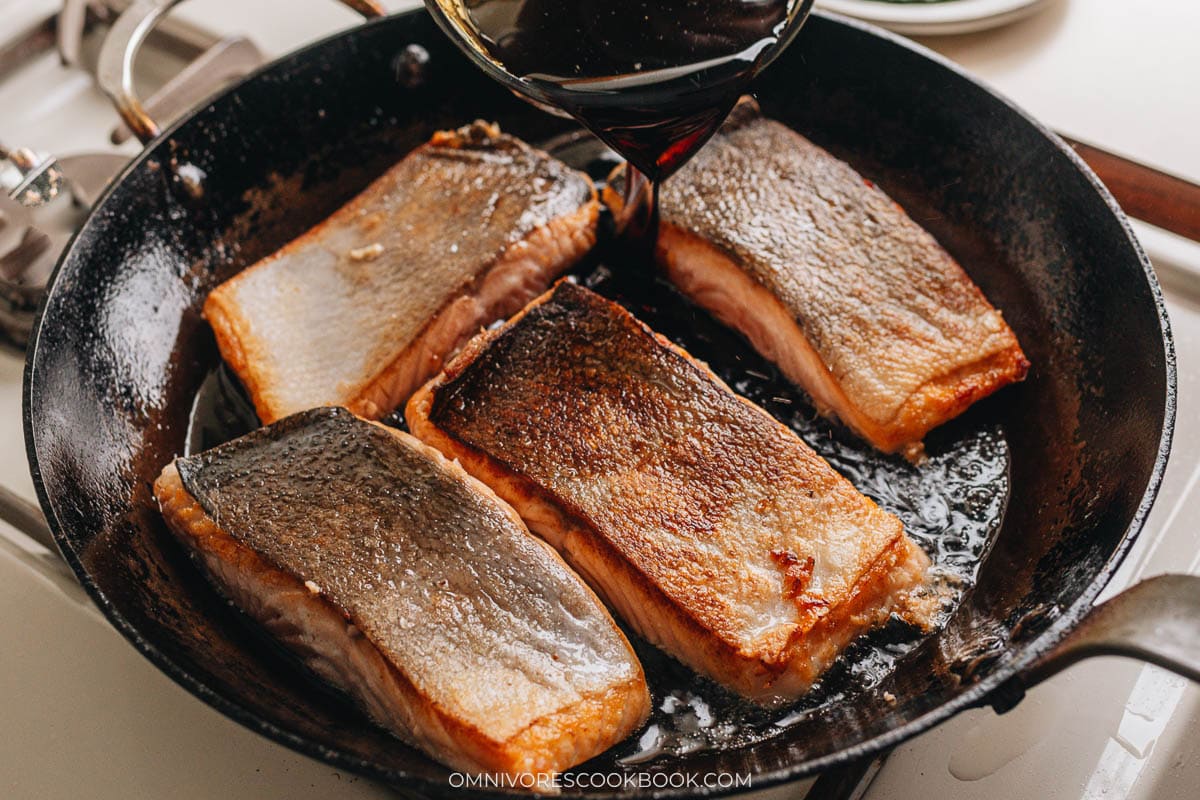
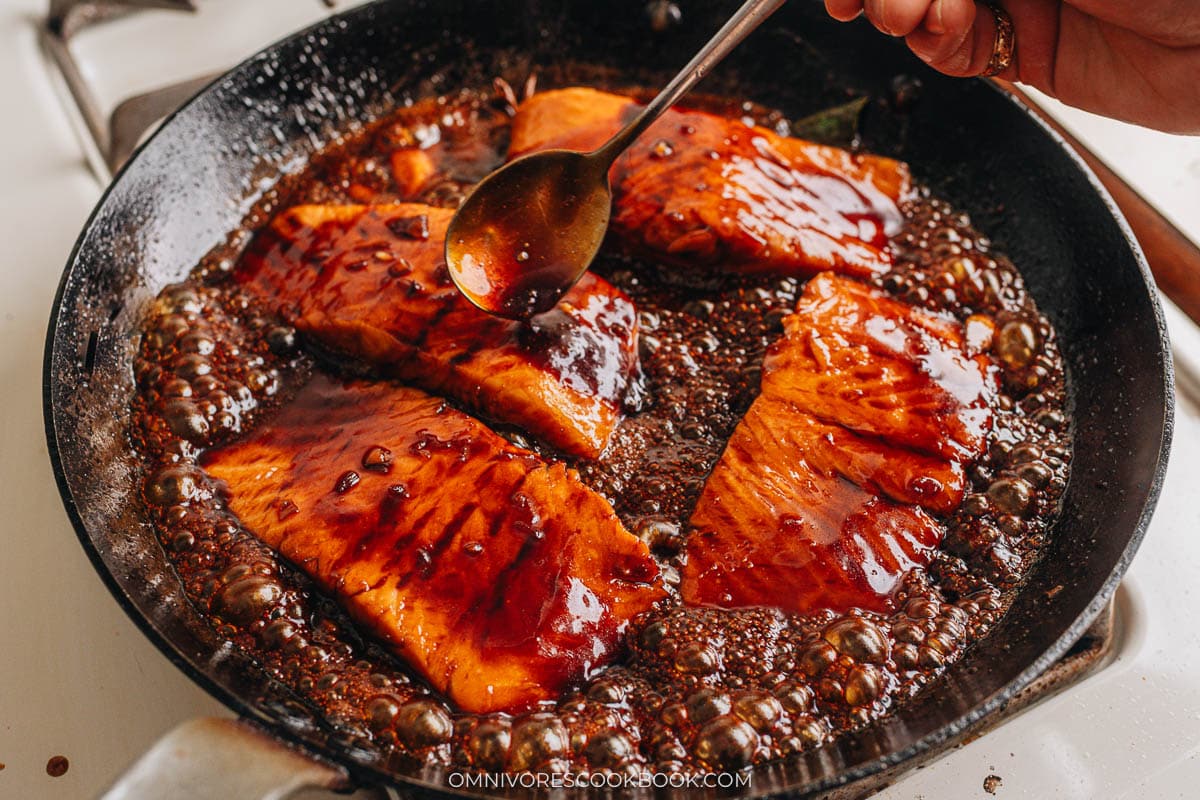
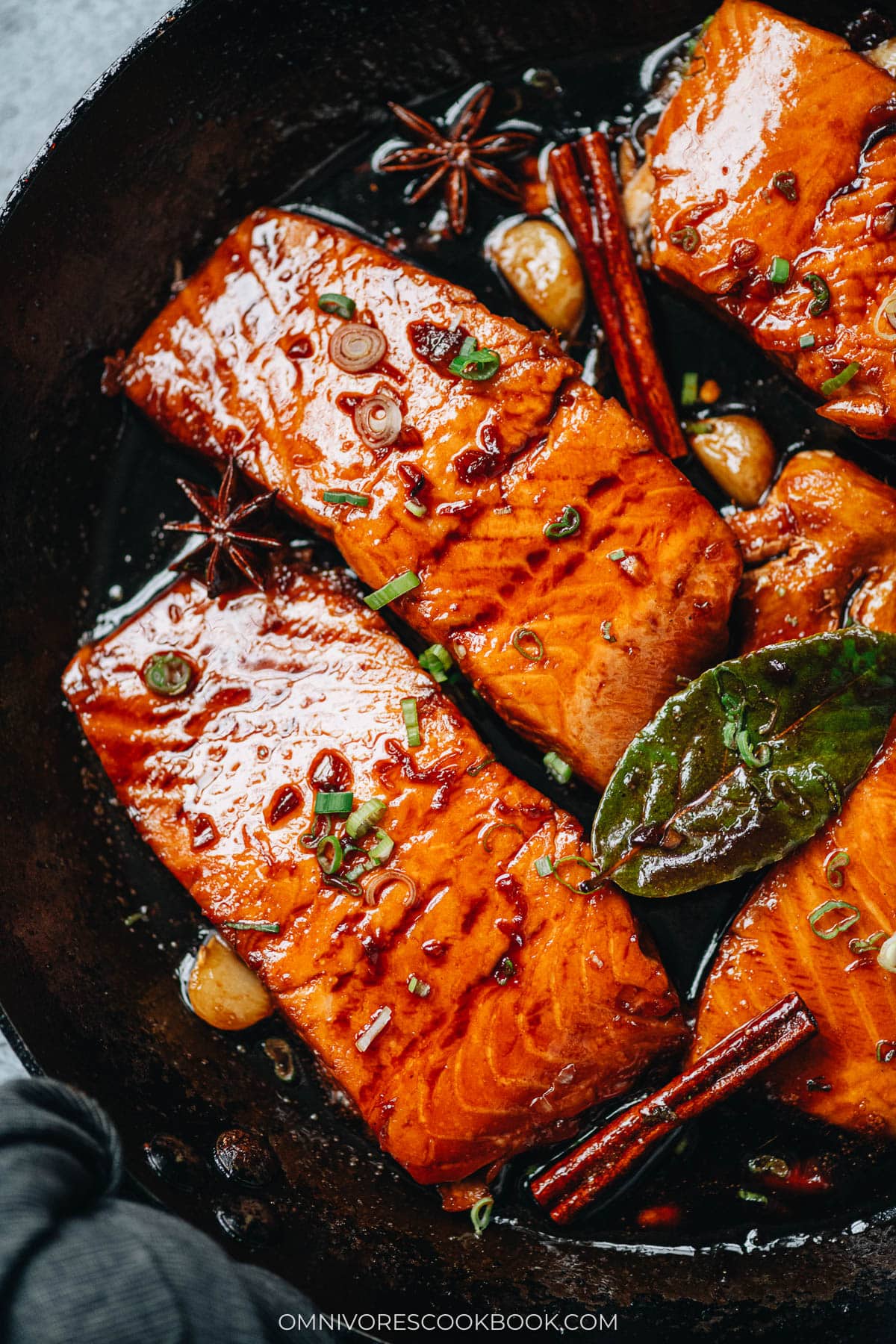
Add the sauce and baste. Flip the salmon, pour the sauce into the pan, and scatter the aromatics around the fish. Spoon the sauce over the salmon while it cooks, keeping the aromatics in the sauce to scent it. Cook until the sauce reduces into a glossy glaze and the thickest part of the salmon flakes easily with a fork.
Finish with lemon. Once the sauce has thickened, turn off the heat and stir in the lemon juice. Fish out the aromatics with a spoon, pour the glaze over the salmon, and garnish with sliced green onion. Serve immediately.
My Cooking Tips
Do not skip the dry-cure if you have time: The salt-and-sugar cure firms up the salmon flesh and seasons it all the way through, which gives me a better texture than a plain seasoned filet. It is the same trick restaurants use when they want their fish to stay firm and taste seasoned from the inside out.
Dry the salmon completely before it goes into the pan: Any moisture left on the skin will steam instead of sear, and I will not get a crispy skin. I press paper towels against both sides of the filet until the surface is completely dry.
Press the skin down when it first meets the pan: Salmon skin naturally curls under high heat, and a curled edge means uneven browning. I use a fish spatula to press each filet flat for the first 30 seconds so the skin gets full contact with the pan.
Keep the aromatics whole: I smash the ginger and garlic instead of slicing or mincing them so they scent the sauce without breaking apart. Whole aromatics are also much easier to remove at the end for a smooth glaze.
Check the fish before the sauce is fully reduced: Salmon cooks faster than most sauces reduce, so I flake the thickest part with a fork after about 3 minutes in the sauce. If it flakes easily, I pull the fish out onto a plate and keep reducing the sauce on its own.
How to serve
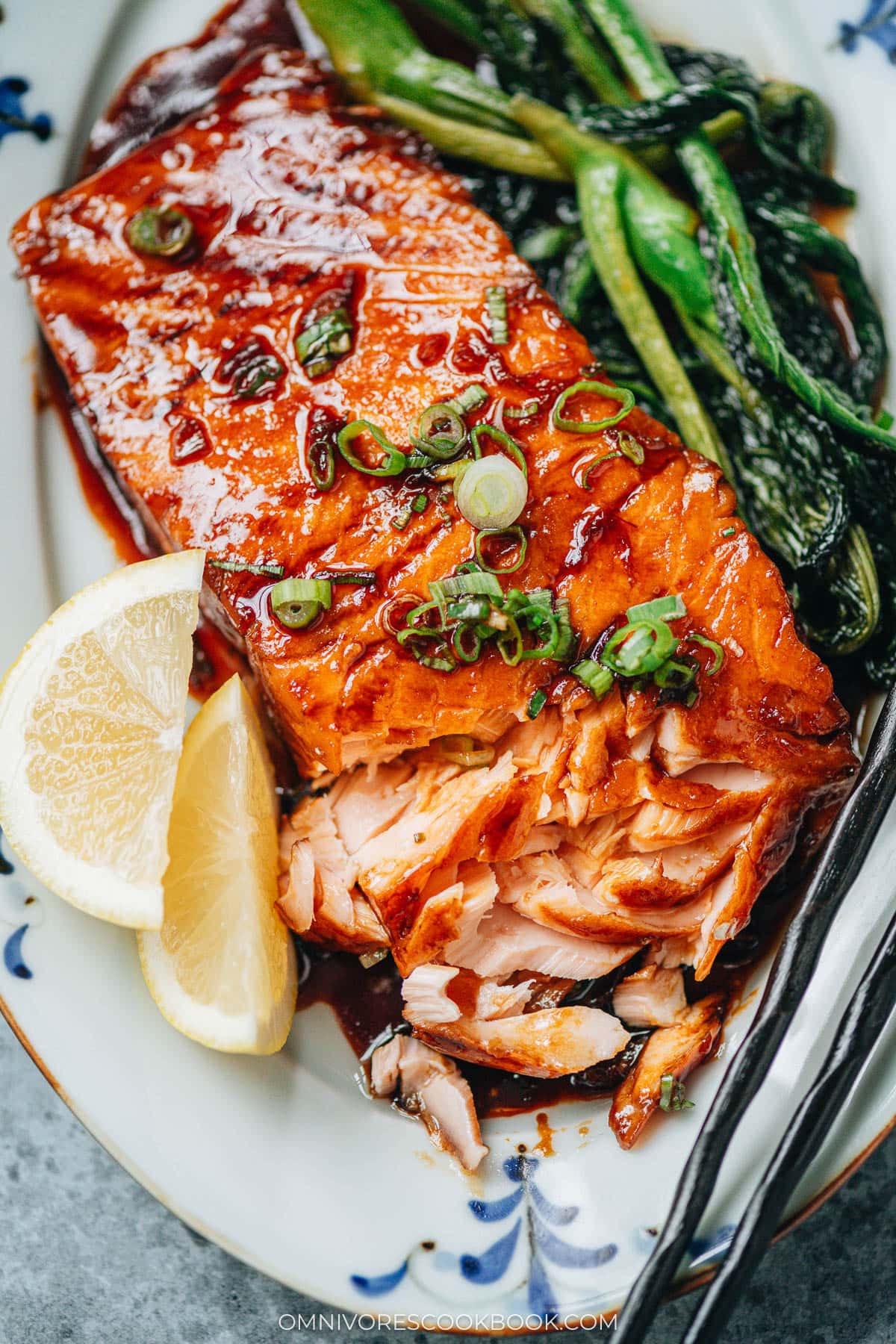
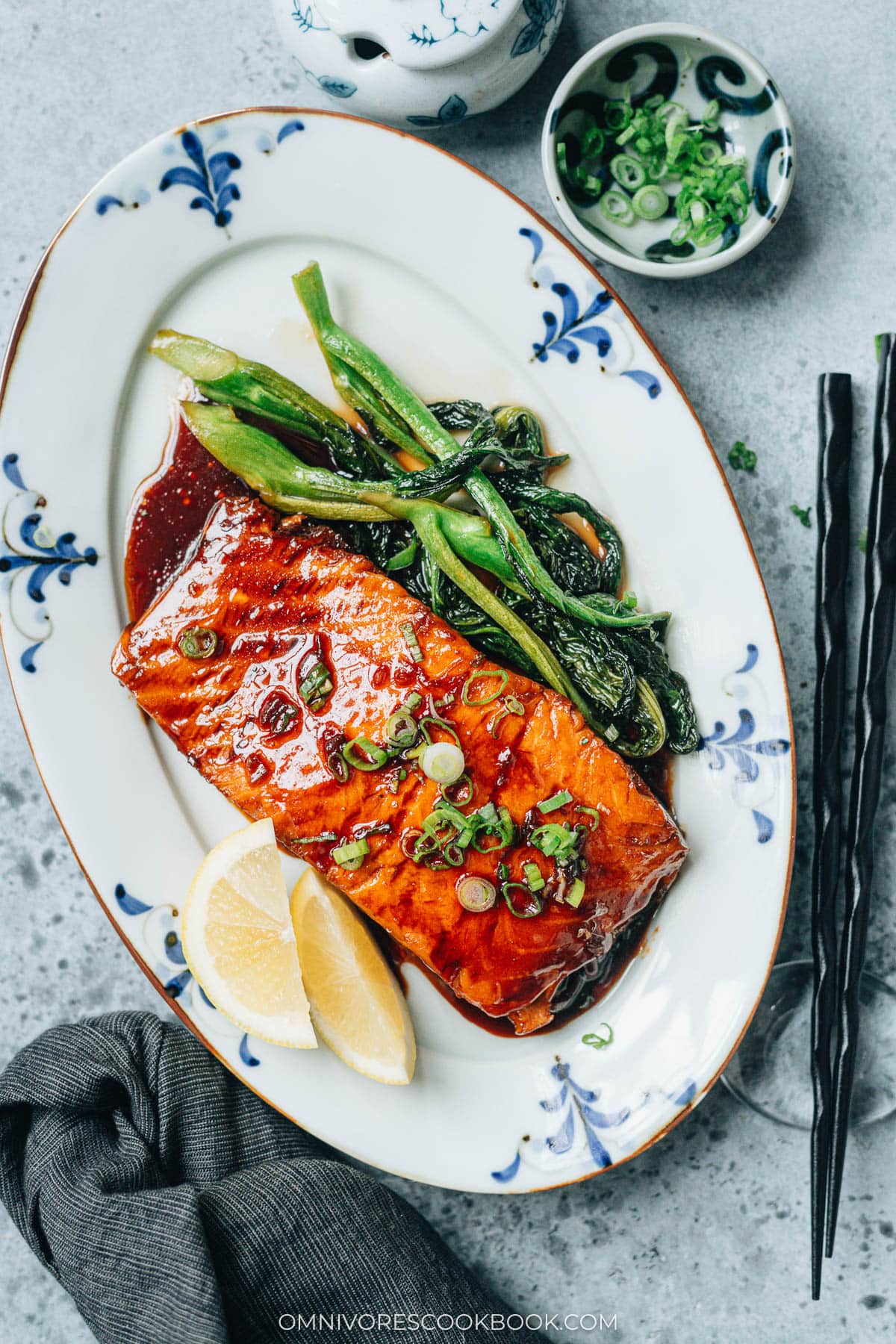
I plate the salmon skin side down with the reduced glaze spooned generously over the top so the sauce pools around the edges and pulls the aromatics from the pan onto the plate. Steamed rice is the easiest side because it soaks up whatever glaze runs off the fish, and I add a green vegetable like bok choy with oyster sauce for a fresh side.
When I want the meal to be a little more substantial, I swap plain steamed rice for garlic fried rice so the whole plate has more depth, or I serve warm milk bread rolls on the side to mop up the extra sauce. When I cook for friends I plate the salmon on a long platter with the aromatics still tucked around the edges as a garnish.
Frequently Asked Questions
Why is my salmon skin sticking to the pan?
The two most common causes are a pan that is not hot enough and salmon that was not fully dry. I let the oil heat until it just starts to shimmer before I lay the fish in, and I press the skin down with a spatula for the first 30 seconds so it locks in flat and releases without tearing once the crust forms.
Can I bake this instead of pan-frying?
I recommend pan-frying because searing is what gets the crispy skin and the deeply glazed surface. If baking is the only option, I bake the salmon at 400°F on a lined sheet pan, reduce the sauce separately on the stove until it thickens into a glaze, and spoon it over the baked fish before serving.
How long does the salmon keep in the fridge and freezer?
The salmon and sauce keep in an airtight container in the fridge for up to 3 days. I do not freeze cooked salmon because the texture turns dry and chalky after thawing, so I make only as much as I plan to eat within a few days. To reheat, I warm the salmon in the oven at 350°F just until it is warm through, or I eat the leftovers cold straight from the fridge, which is also very tasty.
Want to Save This Recipe?
Enter your email below & we’ll send it to your inbox. Plus get great new recipes from us every week!
Watch video
Honey Soy Glazed Salmon
Ingredients
- 4 salmon filets (6 to 8 oz / 170 to 225 g per filet)
Salmon curing ingredients (Optional)
- 1 tablespoon salt
- 1 tablespoon sugar
Sauce
- 1/2 cup honey
- 2 tablespoons Shaoxing wine
- 2 tablespoons light soy sauce
- 1/2 tablespoon dark soy sauce
Aromatics
- 1 ” ginger piece
- 4 cloves garlic
- 2 fresh bay leaves (or 4 dried bay leaves)
- 2 cinnamon sticks
- 2 whole star anise pods
Cooking
- 2 tablespoons vegetable oil
- 1 lemon , juiced
- green onion , sliced (for garnish)
Instructions
- To cure the salmon (Optional): Mix salt and sugar together, and sprinkle evenly over the flesh side of the salmon filets. Let it cure in the fridge for 30 minutes, and no longer than 1 hour. This will fully season the fish and give it a better texture.
- Mix the sauce: While the fish cures, mix the honey, Shaoxing wine, and the light and dark soy sauces together in a medium-sized bowl.
- Prepare the aromatics: place the ginger, garlic, bay leaves, cinnamon sticks and star anise in a small plate.
- Once the salmon is cured, rinse the cure from the fish with cold tap water, and thoroughly dry with paper towels.
- Cook the salmon: Heat the oil in a large skillet over medium-high heat until hot. Carefully place the fish into the skillet, skin side down. Use a fish spatula to press the fish down, one fillet at a time, so the skin gets full contact with the pan. Cook for 3 minutes, until the skin is golden crispy. Flip the fish and immediately pour in the sauce, and add the aromatics. Use a spoon to baste the fish with the sauce while cooking. Cook until the sauce thickens into a glaze. If the sauce is taking a long time to reduce, check the fish after cooking for 3 minutes. Use a fork to check the thickest part of the fish. If it flakes easily, immediately transfer the fish to a serving plate to prevent it from overcooking. And keep cooking the sauce until it thickens.
- Once the sauce is reduced, add the lemon juice and mix well. Remove the aromatics. Pour the sauce over the salmon. Garnish with green onion. Serve hot as a main dish.
Notes
- Gluten-Free Adaptation: to make the dish gluten-free, use dry sherry to replace Shaoxing wine, and use tamari to replace both light and dark soy sauce. Your dish will come out with a lighter color but still taste good.
Nutrition

Did you make this recipe?
I’d love to hear how it turned out for you! Please take a moment to leave a 5-star rating ⭐️ and share your thoughts in the comments further down the page. It really helps others discover the recipe too.
Gloria
Tasty! A total change from my usual zero fuss cooking. This was both sweet and savory. I made the obligatory substitutions based on what I had at home and it still turned out delicious.
rob stinson
garlic and ginger _ minced or sliced?
Maggie Zhu
I kept the garlic and ginger whole and slightly mashed them with my knife for a mild flavor. You can also do large slice for the ginger. For garlic, I would just smash them without cutting. Keeping the aromatics whole also make it easy to fish them out later, and directly serve the sauce without any solid pieces in it.
CM
This sounds delicious and I would love to make it. Are you able to still cook this recipe on the stove top? And my boyfriend doesn’t like am I able to omit that without ruining the flavor profile?
Maggie Zhu
I’m pretty sure you can cook this one on stove top. I actually think the bok choy will cook better this way (you can either steam them by cooking them in the pan with a bit of water and cover the pan, or blanch them).
For your second question, I think you forgot to type what you want to omit from the recipe.
Maegan
Ridiculously easy, tender as promised, and addicting to boot! This has been swiftly added to my rotational salmon recipes!
Gina
So good! Salmon was absolutely perfectly cooked. The marinade was exactly what I was looking for and I couldn’t wait to eat my left overs the next day.
Sophia
I love how simply yet delicious this dish is! I had it with cauliflower rice, it makes an excellent meal together!
I made this dish with a Costco size salmon filet, and the baking and broiling time works just as well.
Lynda
Hello,
I would like to use your recipe for both salmon and chicken thighs. Do you have any recommendations on adapting recipe to chicken?
Thank you
Maggie
Hi Lynda, you will need longer baking time for chicken thigh, 20 minutes for boneless thighs and 30 minutes for bone-in thighs.
Due to the longer baking time, the marinate will probably thicken better without turning on the broiler. Check on the chicken every 10 minutes. For the thigh, if the sauce gets too thick at the end and start burning, cover the pan with aluminum foil to prevent from burning.
Happy cooking and hope your dish turns out great!
Lynda
Maggie, the chicken was fantastic and your directions adapting from salmon to chicken were perfect. Thank you so much !
Dan
Fabulous. I made double the glaze so that there would be more to top it off at the end of cooking. Everyone loved it.
Sanjana
Thank you so much for making this website, I spent so long searching for a website with Asian recipes so well explained. You helped me so much with my GCSE coursework and cooking. Thanks for the great recipes,
Julie Young
Hello Maggie, I’m looking for some guidance. I’ve made several recipes from your website and love them all. I have some fresh wahoo and grouper fillets that my husband caught on Sunday. I’d like to bake them with an asian flavor profile and as I look on line I keep seeing salmon. This recipe looks good – do you think it would be good with a firm white fish like wahoo or grouper, or would you tweak it a little?
Maggie
Hi Julie, I’m pretty sure the same sauce works with those white fish too. When we cook white fish, we often rub it with cumin and chili powder, sometimes curry, and sometimes satay blend. And of course, a bit soy sauce and honey never hurt. If you want to tweak anything, probably make it less sweet.
It’s funny that you mentioned most online recipes are salmon. Because it’s such a popular fish. We cook with catfish a lot. But sometimes even when I found out a good white fish recipe, I’d manage to switch it to salmon when I share the post, so people tend to like it more lol
Immaculate
I love how detailed you are with your post Maggie . Always learn something new every time I visit which is quite often. Gorgeous Pics!!!!
Maggie
Thanks Imma! I’m trying to include as many information into my recipes. Glad to hear it worked!
Helen @ Scrummy Lane
I made something a bit similar to this last night, Maggie (a recipe from Nagi’s blog!), and it was absolutely delicious! Next time I’m going to try your version with honey and soy sauce instead of brown sugar, as you suggest.
It’s a great idea to make double, too. Do you heat it up the next day or eat it cold? 🙂
Maggie
I often use Nagi’s blog to make our weekday dinners too, because every single of her recipe is so solid!
Yes I heat up the salmon before serving. I bake it at 350F until the salmon is warm but not hot (don’t want to overcook it). Of course you can microwave it too. It is very tasty when serving cold too, but I always like serving my dinner warm 🙂
Kevin | Keviniscooking
Mmmm, I just had my shake and coffee, but somehow you managed to make me hungry again!
Omri
It’s my regular go-to recipe. Delicious, fast and easy.