
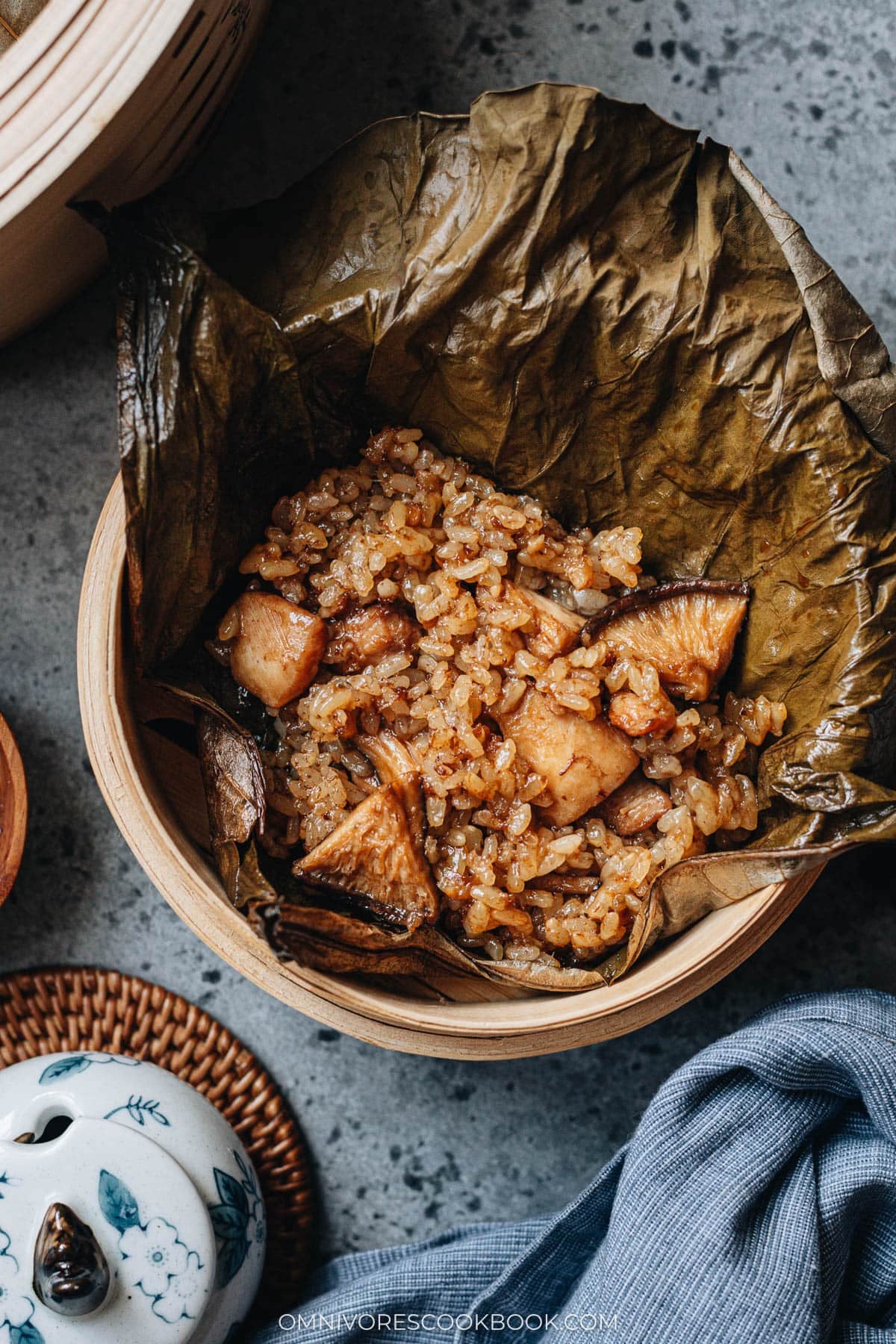
Lo Mai Gai (糯米鸡) translates to glutinous rice and chicken, and the name tells you exactly what is inside. It is a steamed dim sum parcel, and restaurant versions vary widely, with some adding Chinese sausage, salted egg yolk, or different cuts of pork. My recipe keeps the filling streamlined with chicken thighs, shiitake mushrooms, and dried shrimp, which create plenty of savory flavor without a long shopping list.
I started eating Lo Mai Gai more often after I moved to the US and found it on the dim sum carts at Cantonese restaurants. It became one of the dishes I most wanted to learn to make at home, right alongside shu mai and steamed ribs in black bean sauce. My son James absolutely loves it, too, so it’s become an especially satisfying dish to make for my family.
Making Lo Mai Gai from scratch takes some time, but I think it’s well worth the effort. I cook the filling first to bring out the fragrance of the dried shrimp and mushrooms, then combine everything with a savory sauce and soaked glutinous rice before wrapping the mixture in lotus leaves. Once the parcels are assembled, the steaming process is mostly hands-off. I especially love that they freeze beautifully, so I can make a big batch over the weekend and enjoy homemade dim sum whenever the craving strikes. If you enjoy a good cooking project, I hope you’ll give this one a try!
Ingredients
Here is how I think about this ingredient list: the rice and the lotus leaves both need a long soak, the filling is one quick stir-fry, and a short savory sauce ties the two together. Here are all the ingredients I use:
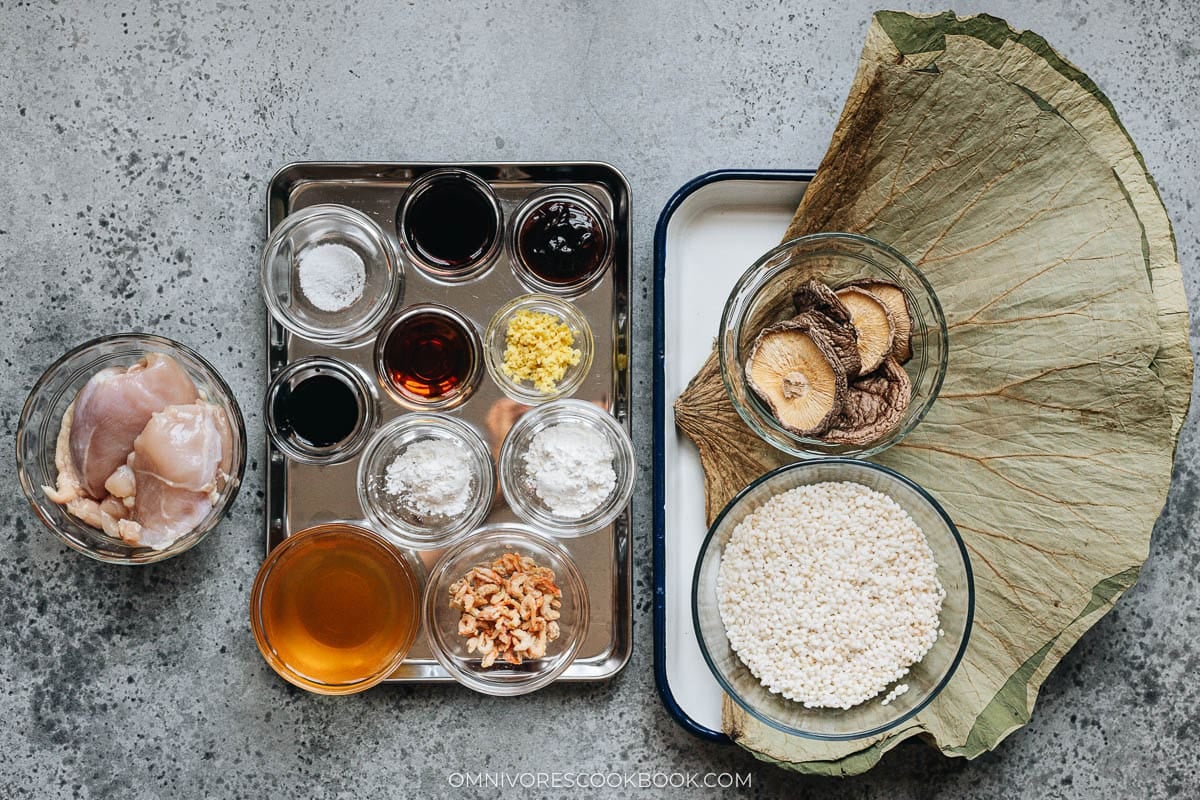
Glutinous rice: I use short-grain glutinous rice (also called sticky rice), which has a soft, chewy texture when cooked. Long-grain glutinous rice works just as well for this recipe.
Dried lotus leaves: I wrap each parcel in a dried lotus leaf, which perfumes the rice with an earthy, tea-like scent as it steams. I find them at Chinese markets or order them online, and I soak them until pliable before wrapping.
Chicken thighs: I use boneless, skinless chicken thighs cut into bite-size pieces for juicy, tender meat that holds up to steaming.
Dried shiitake mushrooms and dried shrimp: I rehydrate dried shiitake mushrooms and dried shrimp, then stir-fry them to round out the filling with a savory, slightly briny note. I always stir-fry them first to mellow their stronger side and draw out their fragrance.
The marinade and sauce: I season the chicken with light soy sauce, dark soy sauce, oyster sauce, Shaoxing wine, ginger, and salt, and use cornstarch to coat the chicken so it stays tender.
Chicken broth and cornstarch: I thicken chicken broth with cornstarch to make a generous sauce that the rice drinks up as it steams. I count on this sauce to keep the finished parcel moist and savory all the way through.
How to Make Lo Mai Gai
1. Rinse and soak the rice: Put the glutinous rice in a large bowl, cover it with tap water, and stir it in a circular motion to rinse. Drain and repeat twice more, then cover the rice with cold water by 1 inch and soak. Short-grain glutinous rice needs about 2 hours, while long-grain needs 4 to 5 hours.
2. Soak the lotus leaves: Submerge the dried lotus leaves in water and soak them for at least 2 hours, until they are soft and pliable.
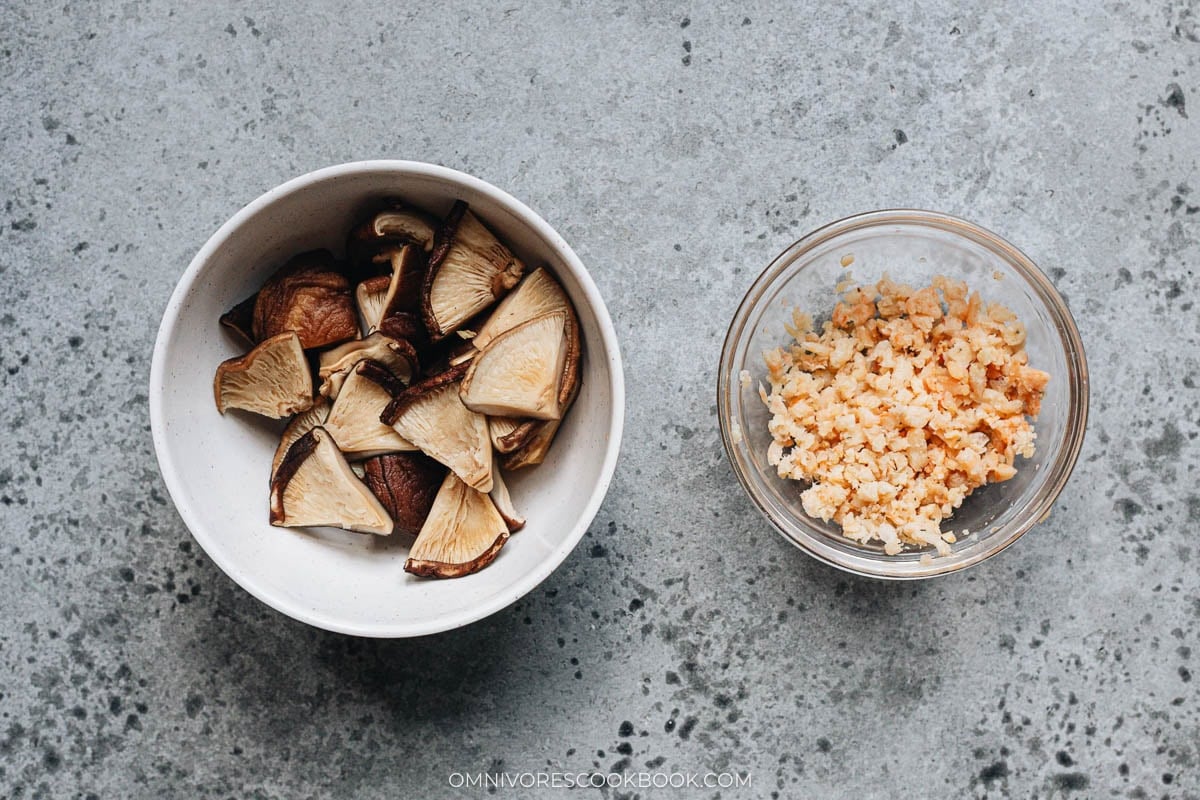
3. Soak the shiitake and dried shrimp: Place the shiitake mushrooms and the dried shrimp in two separate bowls and cover each with cold water. Soak until softened, about 2 hours. Squeeze the water from the mushrooms, cut off and discard the stems, and quarter the caps. Drain the shrimp and mince them.
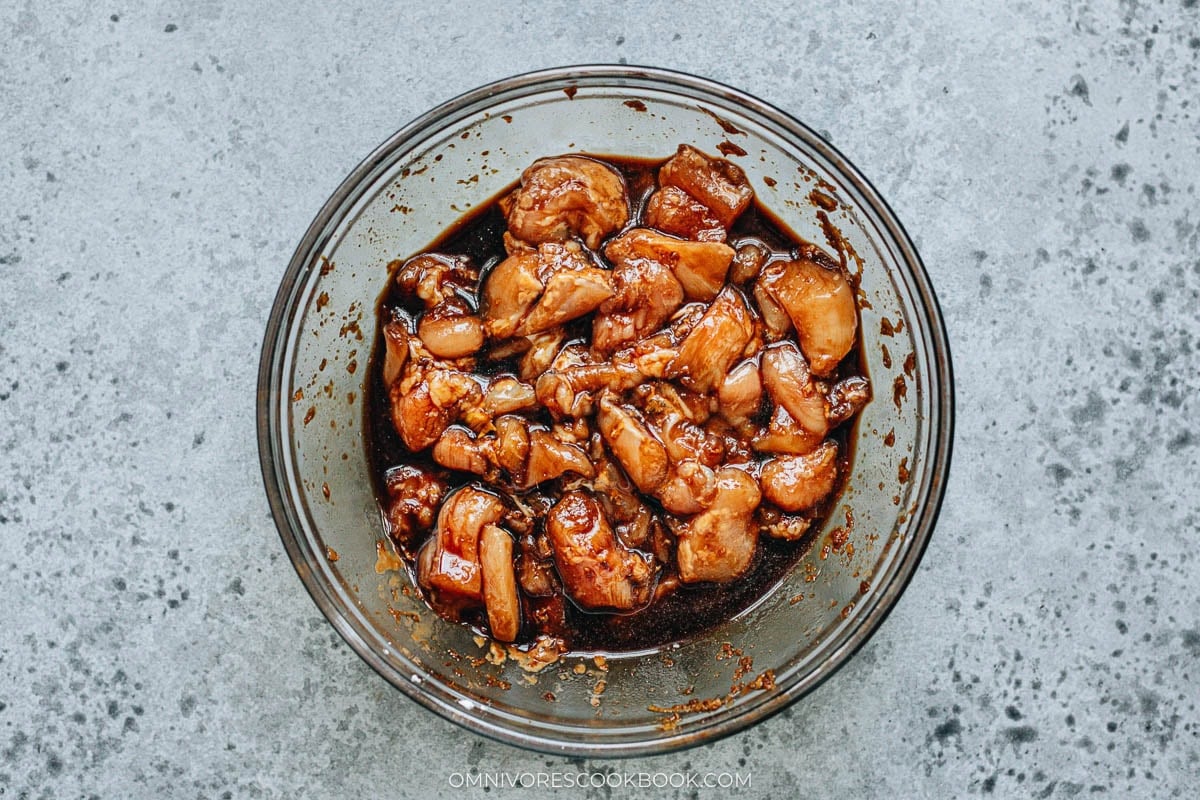
4. Marinate the chicken: Combine the chicken, light soy sauce, oyster sauce, dark soy sauce, Shaoxing wine, ginger, salt, and 1 teaspoon of the cornstarch in a medium bowl. Mix well and marinate in the refrigerator for at least 1 hour.
5. Mix the sauce: Combine the chicken broth with the remaining 2 teaspoons of cornstarch in a bowl. Stir until the cornstarch is fully dissolved.
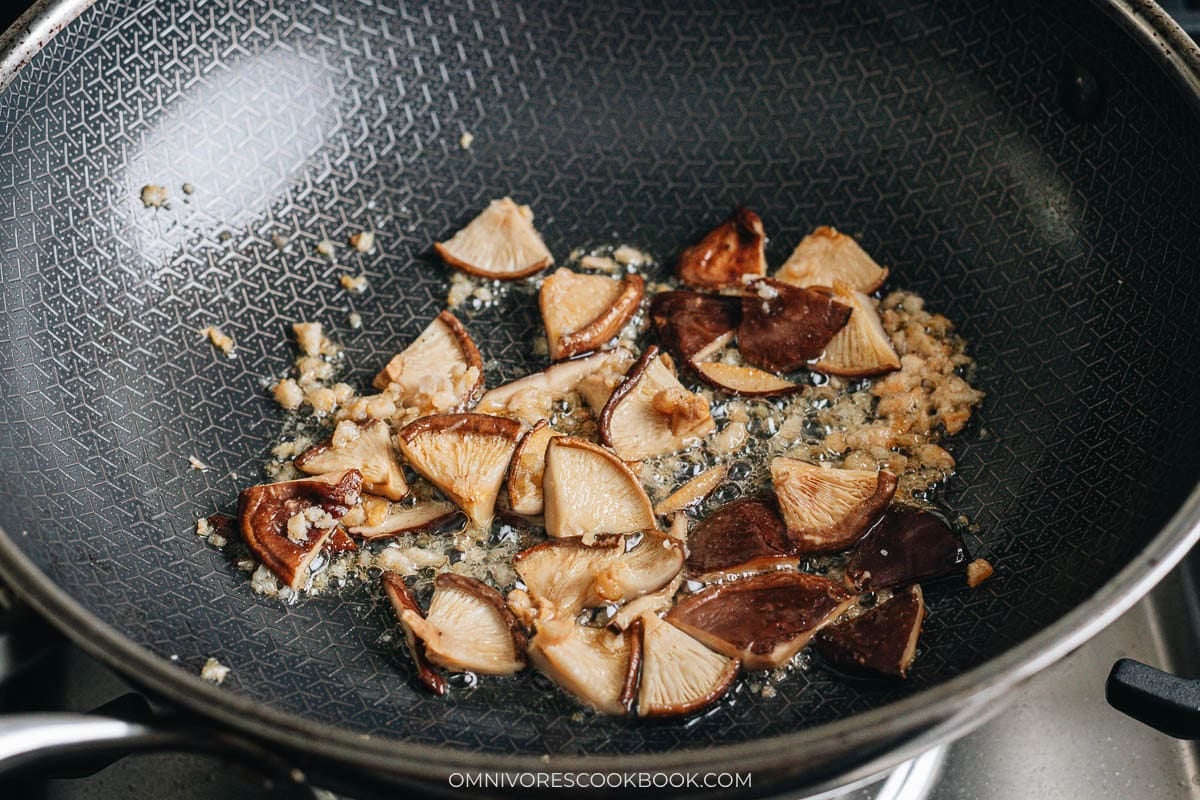
6. Cook the filling: Heat the oil in a wok over medium heat until shimmering. Add the mushrooms and dried shrimp and stir until lightly browned, about 2 minutes.
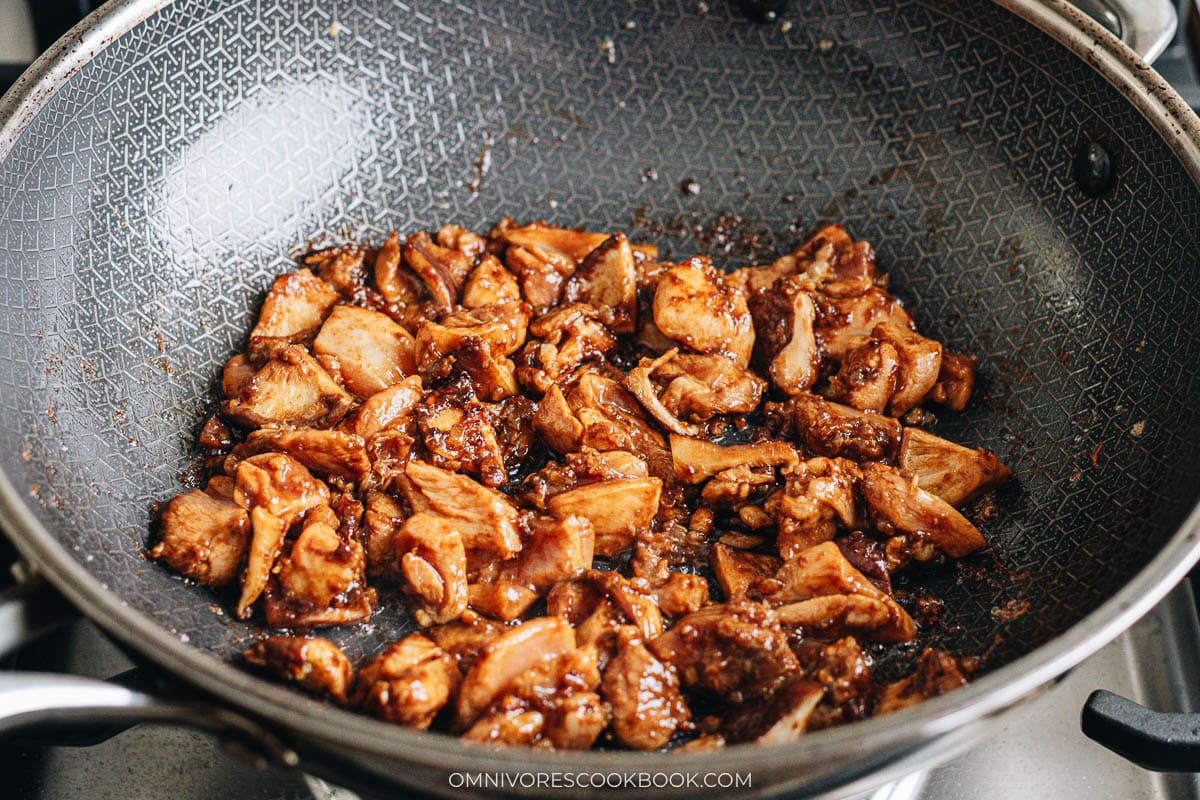
7. Add the chicken along with its marinade and stir until the surface of the chicken turns opaque.
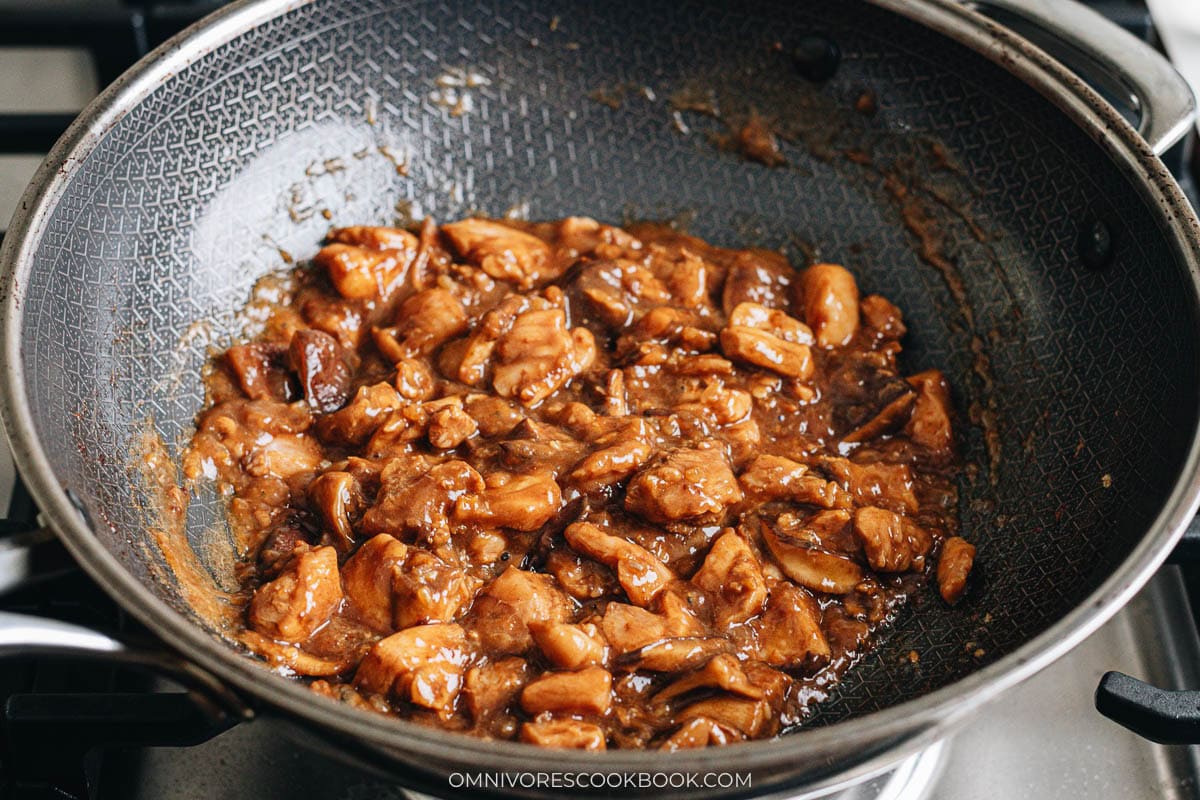
8. Add the broth: Stir the broth mixture again, pour it in, and cook until the sauce thickens. Transfer everything to a plate and let it cool.
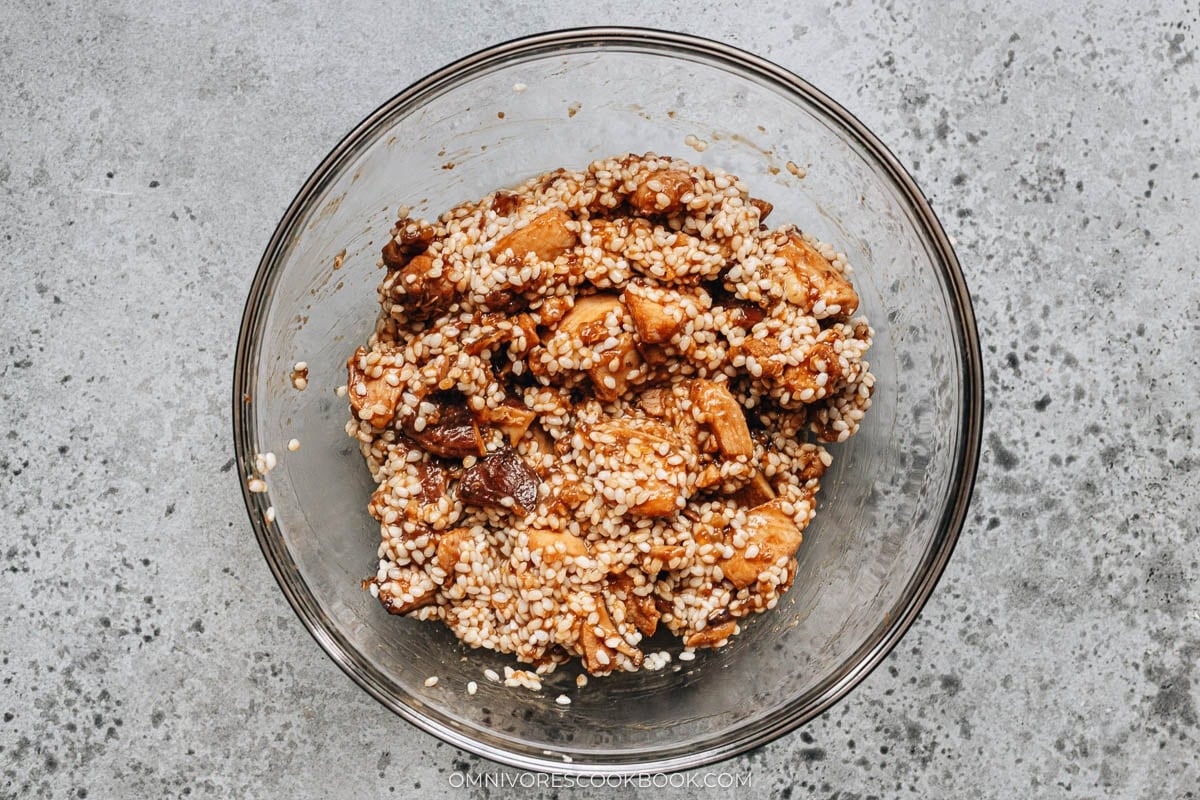
10. Mix the rice and filling: Drain the soaked glutinous rice very thoroughly and transfer it to a large bowl. Add the cooled chicken mixture along with all of its sauce and mix until every grain of rice is coated.
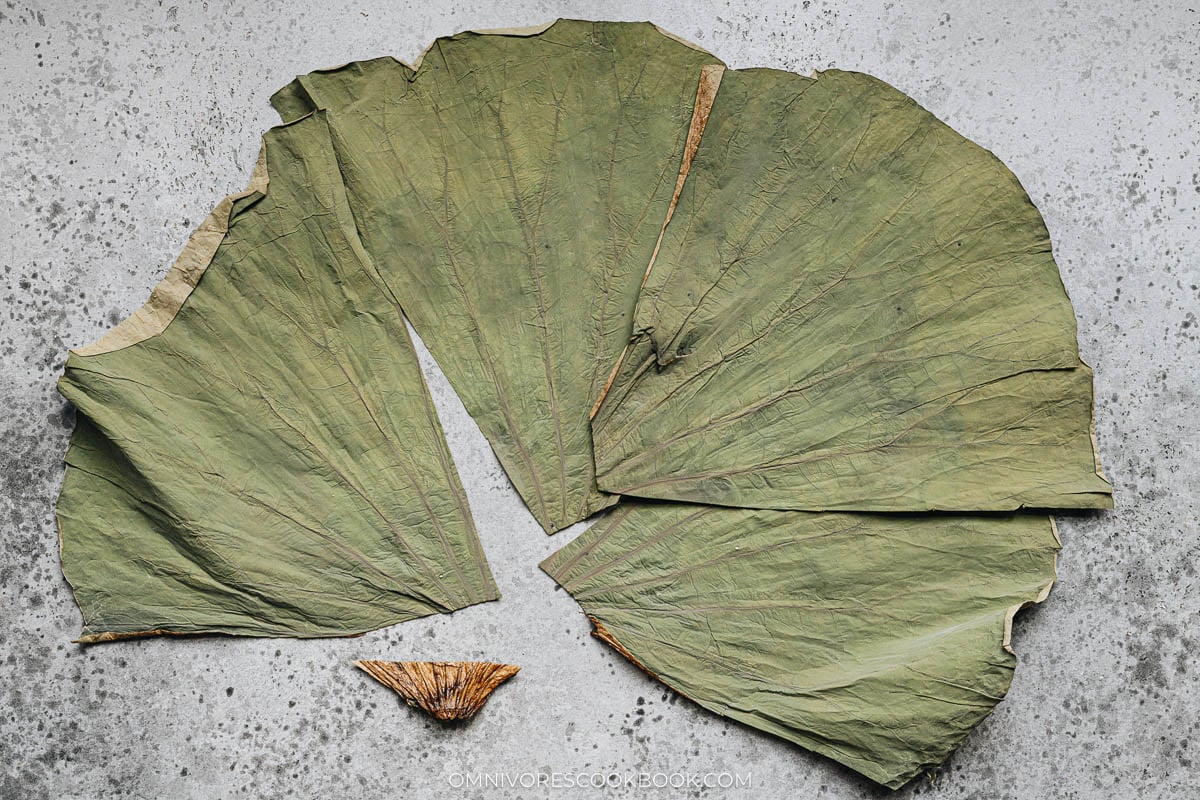
5. Cut the lotus leaves: Fold each soaked lotus leaf and cut off the tough stem. Cut each leaf into 4 fan-shaped pieces.
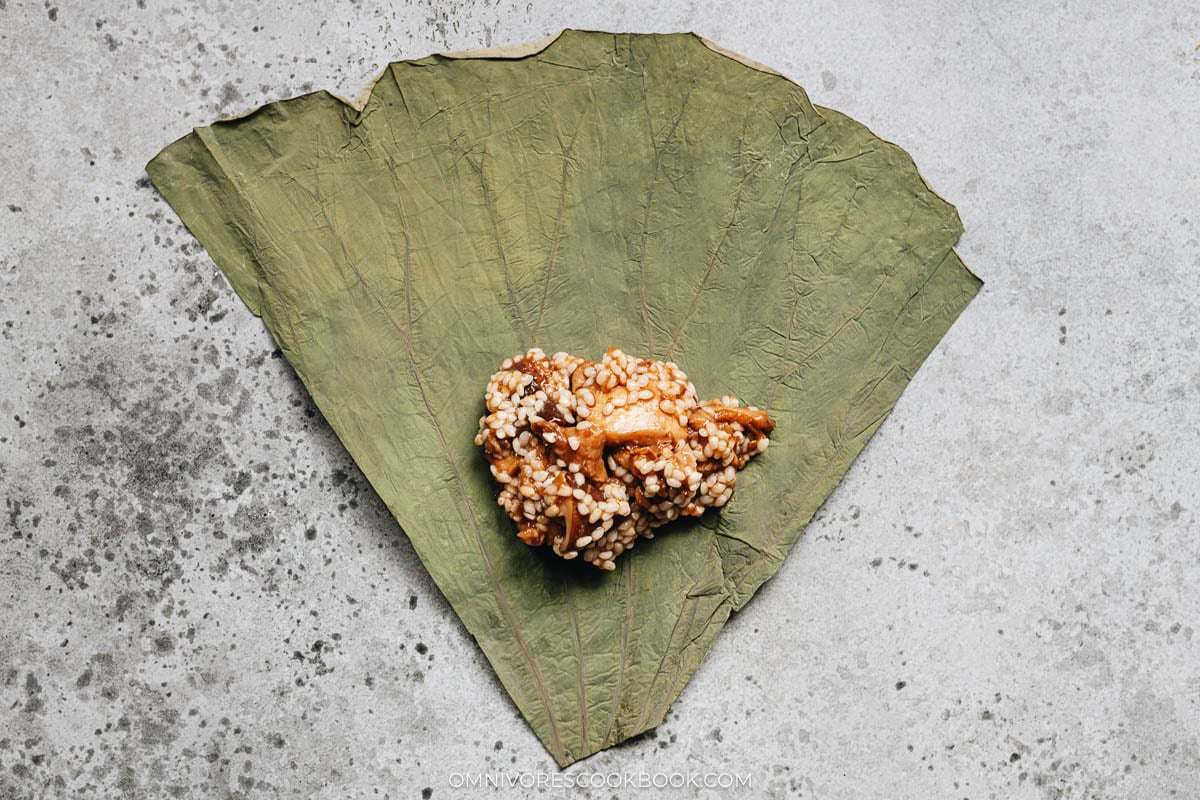
11. Wrap the parcels: Lay a piece of lotus leaf on a clean surface with the short side facing you. Roughly divide the chicken rice into 8 portions, and mound some of the rice and chicken mixture on the lower third of the leaf.
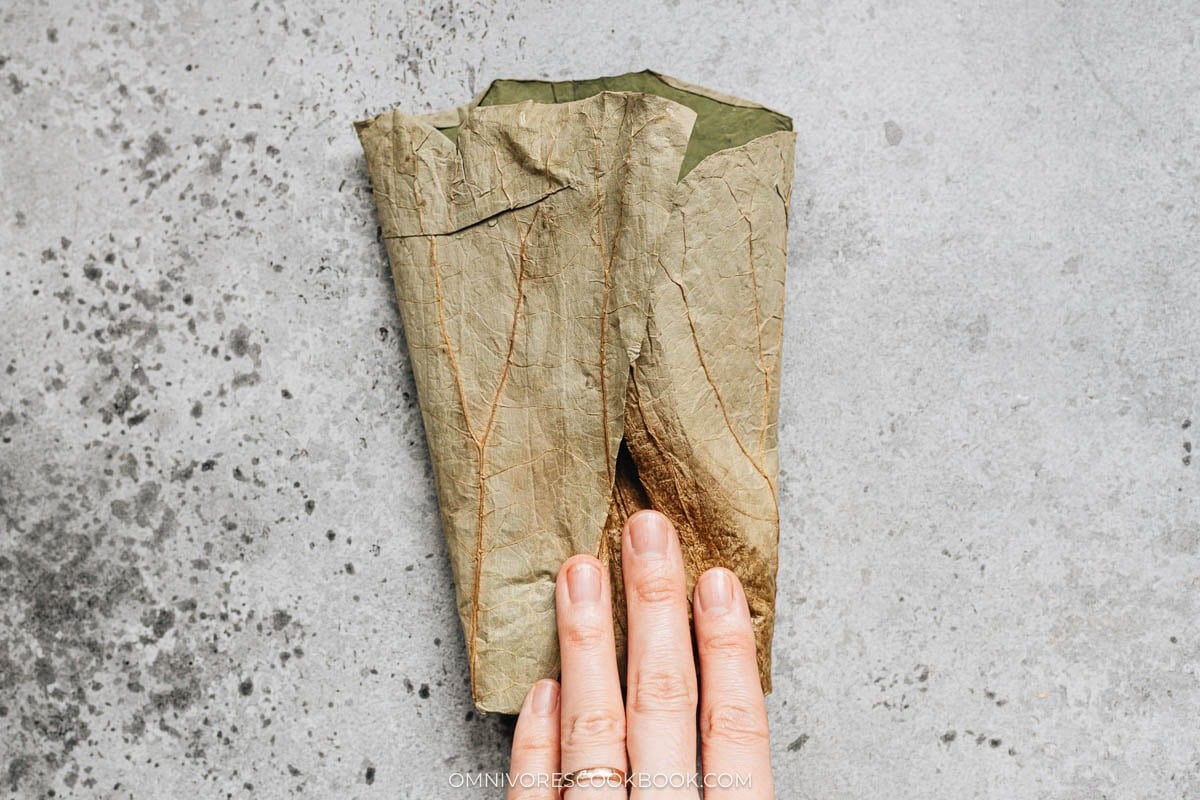
12. Fold the bottom over the filling, fold both sides inward, then roll it up from the bottom so the filling is sealed inside.
13. Repeat with the remaining filling and leaves.
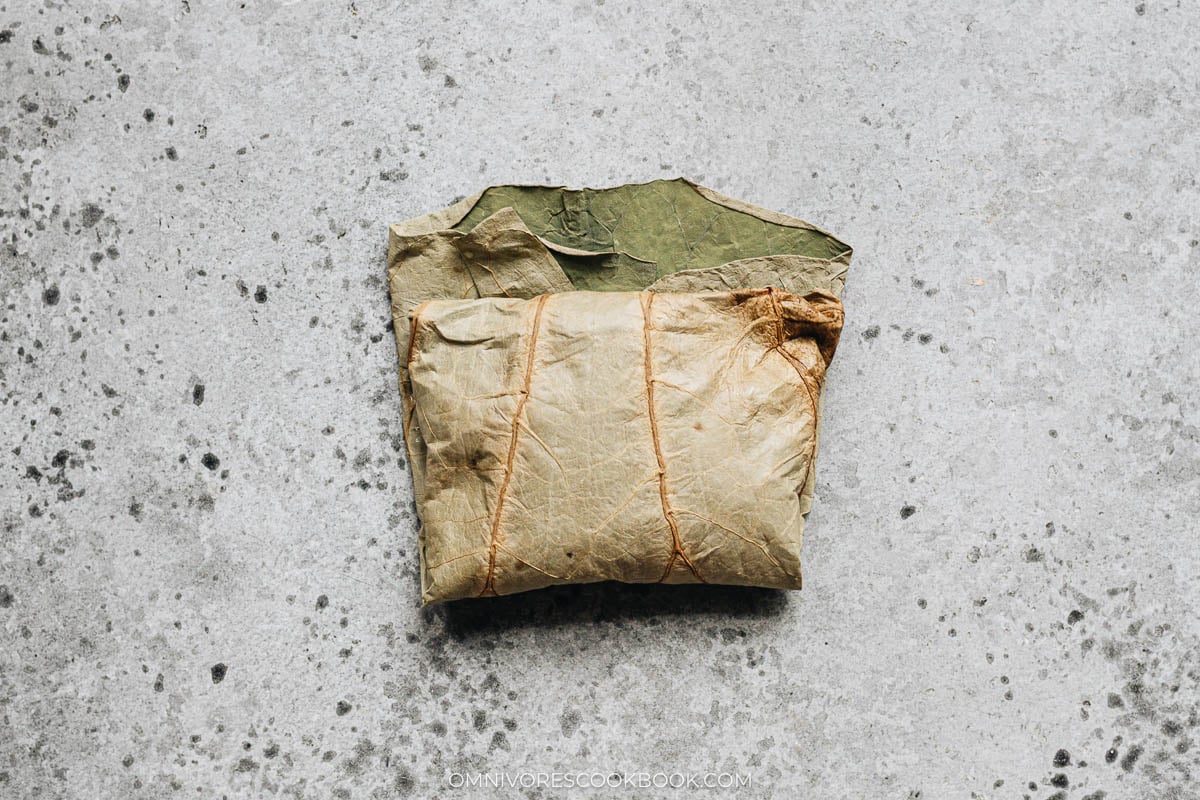
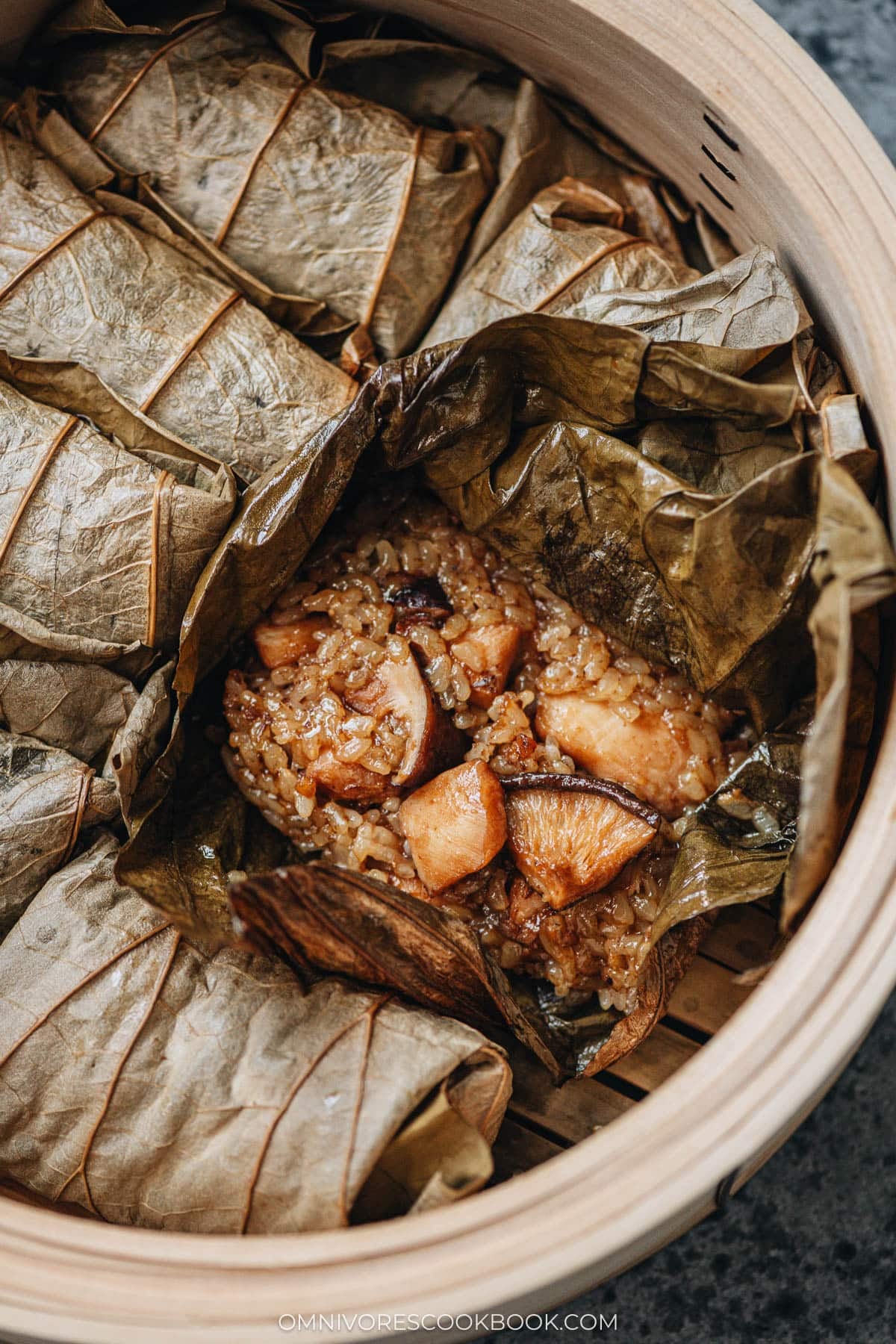
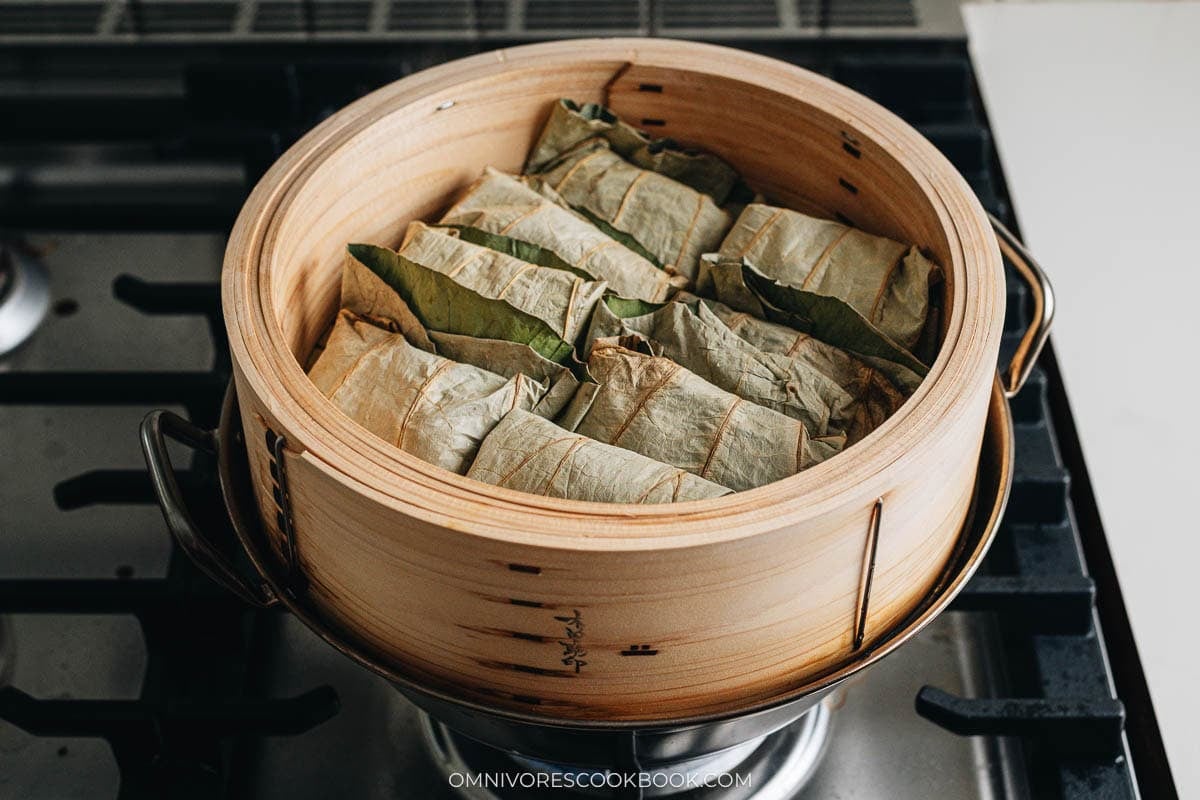
14. Steam: Arrange the parcels in a steamer, seam side down. Once the water is boiling, steam over medium heat for 1 hour, until the glutinous rice is tender and cooked through.
My Cooking Tips
Match the soaking time to your rice: Chinese and Thai brands of glutinous rice are usually long-grain and need 4 to 5 hours of soaking, while mochi rice and Japanese brands are short-grain and soften in about 2 hours. I check the grain shape before I start so the rice cooks all the way through in the steamer.
Weigh the filling for even parcels: When I want the parcels to match, I weigh the mixture and divide it into 8 portions. Mine come out to about 90 grams each, though it is fine if yours are not perfectly even.
Drain the rice hard before mixing: Any water clinging to the rice dilutes the sauce it is supposed to drink up, so I drain it thoroughly in a colander before it goes into the bowl. Well-drained rice takes on the savory sauce instead of turning watery in the steamer.
Keep the heat at medium for the full hour: The rice needs a steady, full hour of steam to turn tender all the way to the center, and a rolling boil over high heat can dry out the steamer before the rice is done. I keep the water at a gentle steady boil and check the pot once or twice so it does not go dry.
How I Serve this Dish
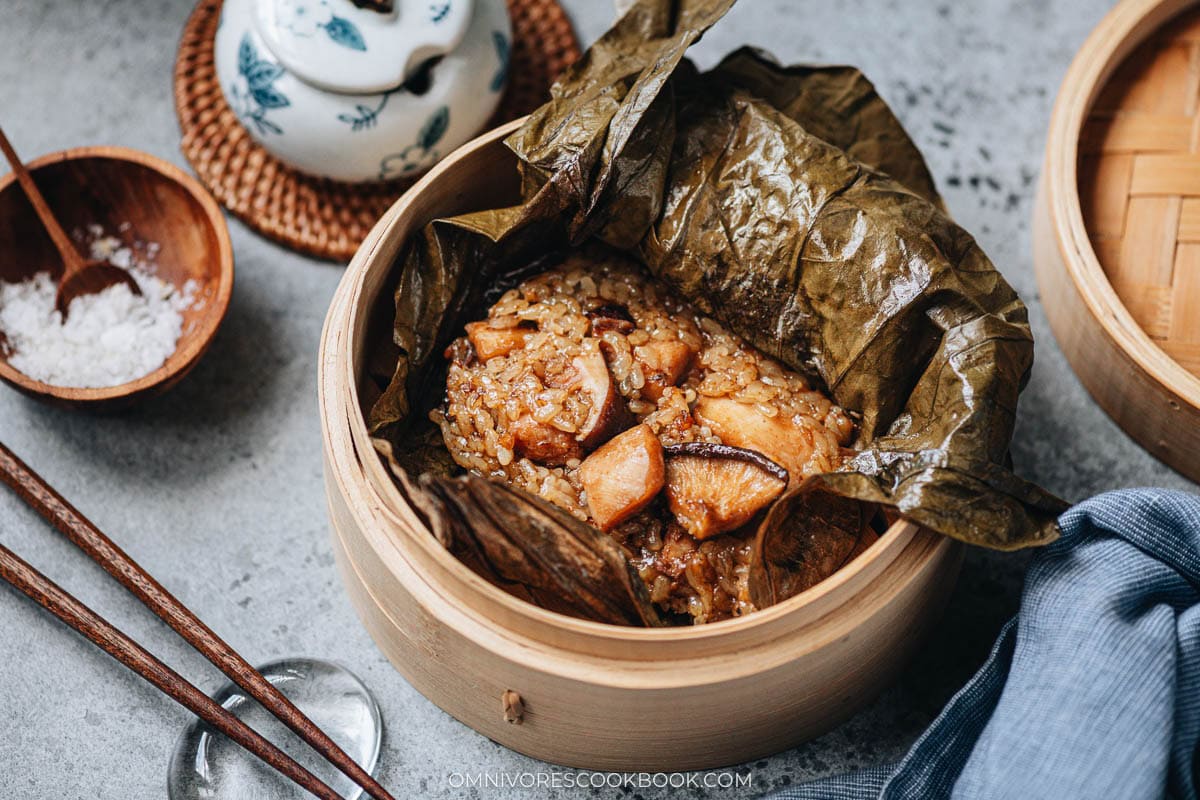
Lo Mai Gai is traditionally served as part of a dim sum meal, but I also love enjoying it as a simple lunch or dinner. Since my homemade parcels are on the smaller side, I usually serve a couple per person, along with a vegetable dish and a light soup to round out the meal. My Chinese broccoli with oyster sauce is a great choice for adding some greens, while pork and corn soup makes a comforting addition. It’s an especially convenient meal when I have a batch of Lo Mai Gai stored in the freezer.
If you want to put together a homemade dim sum spread, there are plenty of delicious dishes to serve alongside Lo Mai Gai. My shu mai are juicy and savory, while steamed ribs in black bean sauce bring bold, garlicky flavor. I also love adding Chinese turnip cake for its crispy edges and tender center. And if you’re feeling adventurous, try my braised chicken feet for a traditional dim sum experience. Serve everything with a pot of hot Chinese tea, and you’ve got a wonderful dim sum feast right at home.
Frequently Asked Questions
Can I make Lo Mai Gai without lotus leaves?
Yes, you can wrap the parcels in parchment paper instead, and the rice will still cook through properly. The one thing you lose is the earthy, tea-like scent the lotus leaf gives the rice, which is a signature part of the dish.
Can I use regular rice instead of glutinous rice?
No, regular rice will not give you the sticky, chewy texture that defines Lo Mai Gai. Glutinous rice is the one ingredient here that has no real substitute.
How long do the parcels keep in the fridge and freezer?
Cooked Lo Mai Gai parcels keep in the fridge for 3 to 4 days or in the freezer for up to 3 months. I usually place all the cooled, lotus leaf-wrapped parcels in a large zip-top freezer bag, so I can easily take out as many as I need. When ready to serve, thaw the parcels in the fridge overnight, then steam until the rice and filling are heated through. You can also microwave them, covered, until piping hot if you’re short on time.
Can I change the filling?
Yes, the filling takes well to additions, and Chinese sausage and salted egg yolk are the two most common. For sausage, I dice it small, cook it until lightly browned, drain the rendered fat, and stir it into the filling. For salted egg, I cut each yolk in half and tuck half a yolk into each parcel before wrapping.
Want to Save This Recipe?
Enter your email below & we’ll send it to your inbox. Plus get great new recipes from us every week!
Lo Mai Gai (荷叶糯米鸡)
Ingredients
- 1 cup glutinous rice
- 2 dried lotus leaves , soaked for 2 hours before using (or parchment paper)(*Footnote 1)
- 6 dried shiitake mushrooms
- 2 tablespoons dried shrimp
- 1 tablespoon oyster sauce
- 1 tablespoon light soy sauce
- 1 teaspoon dark soy sauce
- 1/4 teaspoon salt
- 2 boneless, skinless chicken thighs , cut into bite-size pieces
- 1 tablespoon Shaoxing wine
- 1 teaspoon grated ginger
- 3 teaspoons cornstarch , divided
- 1/2 cup chicken broth
- 2 tablespoons oil
Instructions
- Add the glutinous rice to a large bowl and add enough tap water to cover. Rinse the rice by stirring it in a circular motion, drain, and repeat 2 more times. Cover with cold tap water by 1 inch (2.5 cm) and soak for 2 hours if using short-grain glutinous rice, or 4 to 5 hours if using long-grain glutinous rice. (*Footnote 2)
- Soak the lotus leaves in water for at least 2 hours, until softened.
- Add the shiitake mushrooms and dried shrimp to two separate bowls and cover with cold water. Soak until softened, about 2 hours. Squeeze the excess water from the shiitake mushrooms. Cut off and discard the stems, then cut the caps into quarters. Drain and mince the dried shrimp.
- Combine the chicken, light soy sauce, oyster sauce, dark soy sauce, Shaoxing wine, ginger, salt, and 1 teaspoon cornstarch in a medium bowl. Mix well and marinate in the refrigerator for at least 1 hour.
- Fold each lotus leaf and cut off the tough stem. Cut each leaf into 4 fan-shaped pieces.
- Add the chicken broth and the remaining 2 teaspoons of cornstarch to a bowl. Stir until the cornstarch is dissolved.
- Heat the oil in a wok over medium heat until shimmering. Add the mushrooms and dried shrimp. Cook and stir until lightly browned, 2 minutes or so. Add the chicken along with the marinade. Cook and stir until the surface of the chicken has turned opaque. Stir the chicken broth mixture again to fully dissolve the cornstarch, then pour it into the wok. Cook and stir until the sauce thickens. Transfer everything to a plate and let cool.
- Drain the soaked glutinous rice very thoroughly and transfer it to a large bowl. Add the chicken mixture along with all the sauce and mix well.
- Assemble one parcel at a time. Lay a piece of lotus leaf on a clean work surface, with the short side facing you. Place some of the rice and chicken mixture (*Footnote 3) on the lower third of the leaf. Fold the bottom of the leaf over the filling, fold both sides inward, then roll it up from the bottom so the filling is completely enclosed. Repeat with the remaining filling and lotus leaves.
- Arrange the parcels in a steamer, seam side down. Once the water is boiling, steam over medium heat for 1 hour, or until the glutinous rice is tender and cooked through.
Notes
- Dried lotus leaves give Lo Mai Gai its signature earthy fragrance as the parcels steam. You can usually find them at Chinese markets or large Asian grocery stores, or purchase them online from Amazon. If they’re not available, you can use parchment paper instead. The dish will still cook properly, but it won’t have the distinctive aroma that lotus leaves provide.
- If you are using a Chinese or Thai brand of glutinous rice, it is often a long-grain variety. Mochi rice and Japanese brands are usually short-grain glutinous rice. Check the shape of the grains if you are unsure, and adjust the soaking time accordingly.
- If you want to make sure the filling is evenly distributed, you can weigh it and divide it into 8 equal portions. When I made the recipe, each of my parcels weighed about 90 grams. However, it’s totally fine if your parcels are not perfectly even.

Did you make this recipe?
I’d love to hear how it turned out for you! Please take a moment to leave a 5-star rating ⭐️ and share your thoughts in the comments further down the page. It really helps others discover the recipe too.