
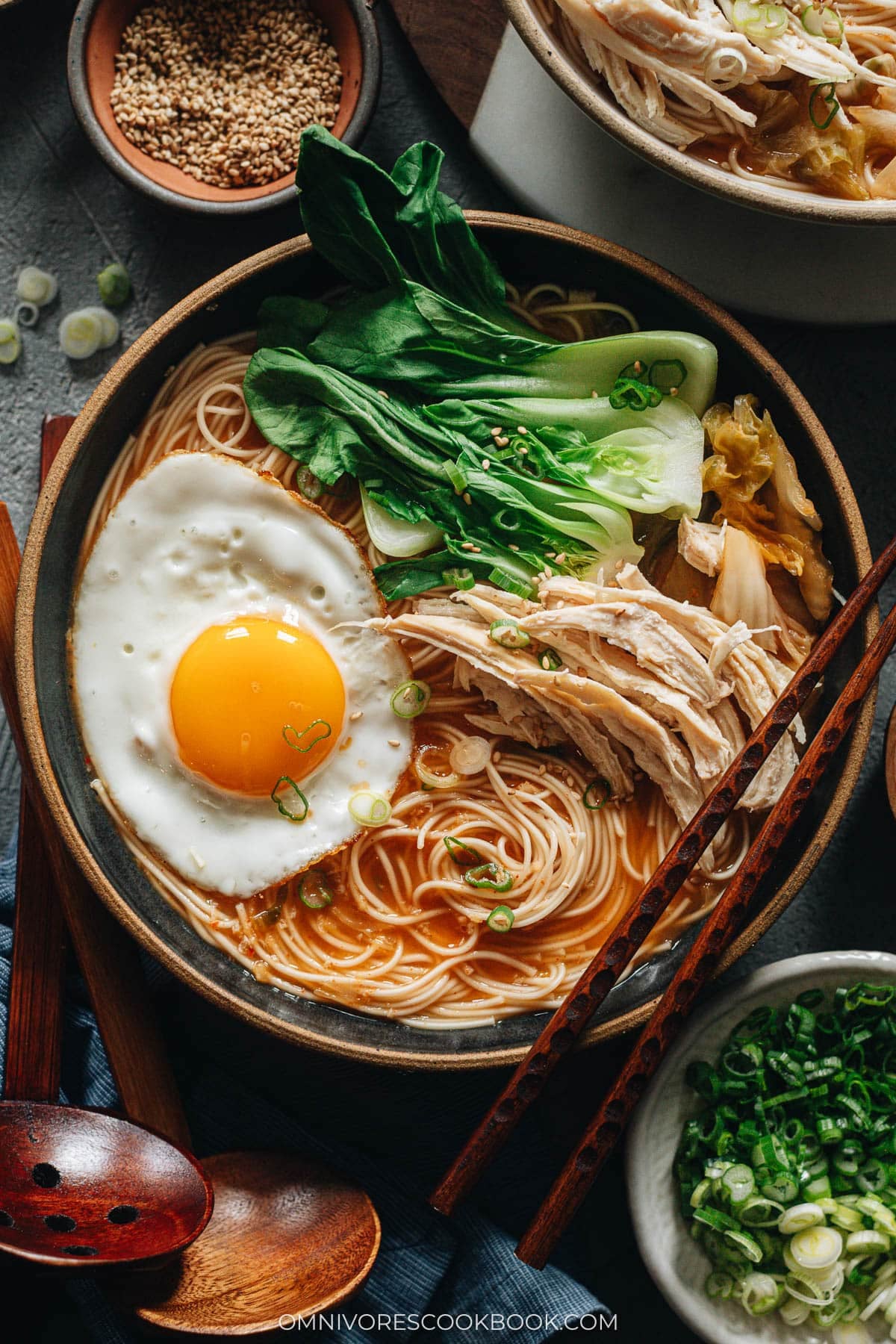
Korean noodle soup here is a Korean-inspired weeknight bowl, not a traditional guksu. I borrowed the paste-into-broth method from Korean noodle soups and reworked it into a quick one-pot version that skips the long stock and uses kimchi and gochujang for depth. If a lighter noodle soup is more your speed, my Chinese chicken noodle soup is savory instead of tangy and spicy.
I first put this recipe together during a stretch of long workdays when I wanted a soup that tasted like it had simmered all afternoon in 15 minutes flat. Once the fermented tang from a scoop of kimchi and gochujang filled out a plain chicken broth, this became the bowl I go for when my fridge is half empty and I still want a nutritious dinner at the table. My 15-minute curry ramen with leftover ham came out of the same instinct. Ha!
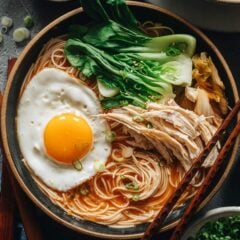
To make it easy for you guys I prepare the recipe in this order: I whisk the kimchi paste in a small bowl, bring the broth up to a boil, drop the somen and baby bok choy in for 2 minutes, then stir the paste into the pot at the end so the kimchi keeps its fresh tang. Toppings go on last, and any leftover shredded chicken or a soft-cooked egg from the fridge finishes the bowl. I highly recommend making this recipe for your family.
Ingredients
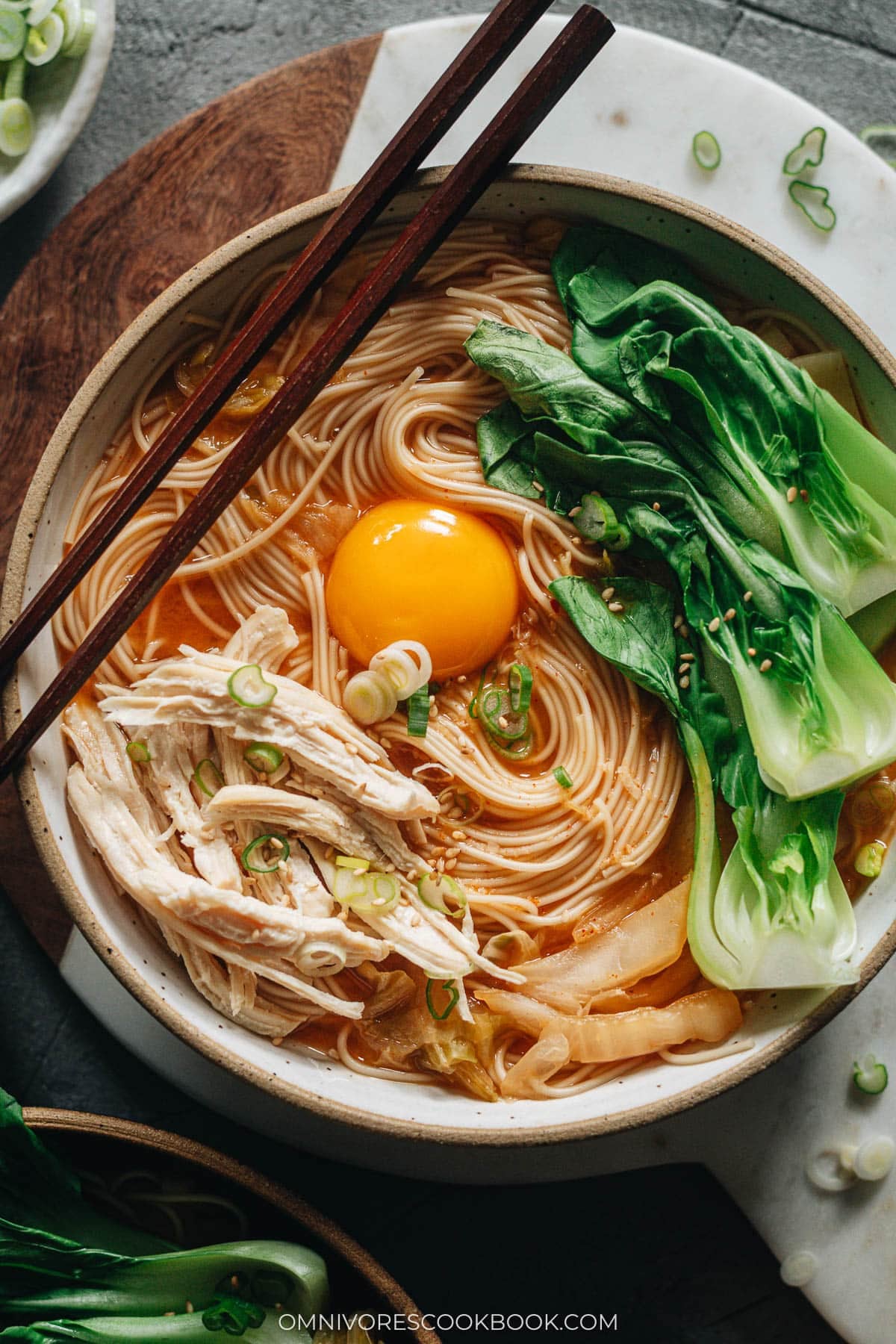
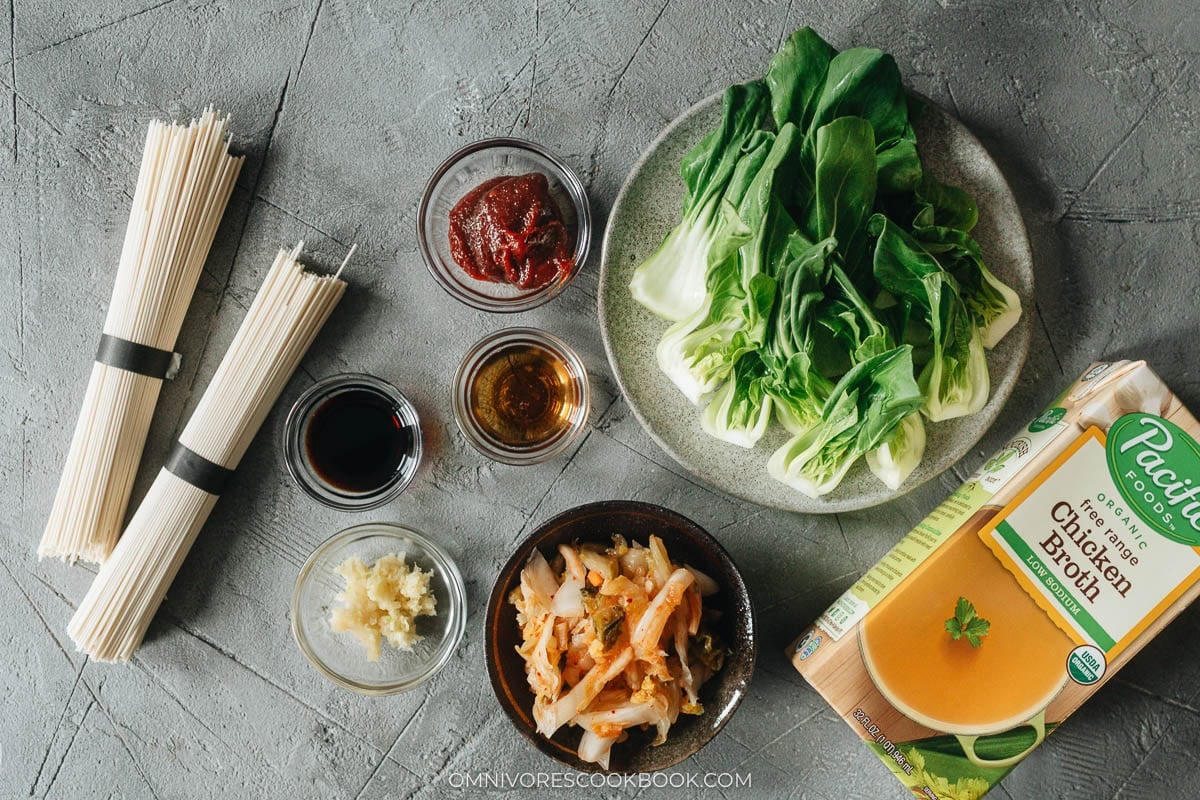
The paste is the heart of my Korean noodle soup recipe, so I read the list top-down as paste-first, pot-second, toppings-third. Here is what I use:
Kimchi paste
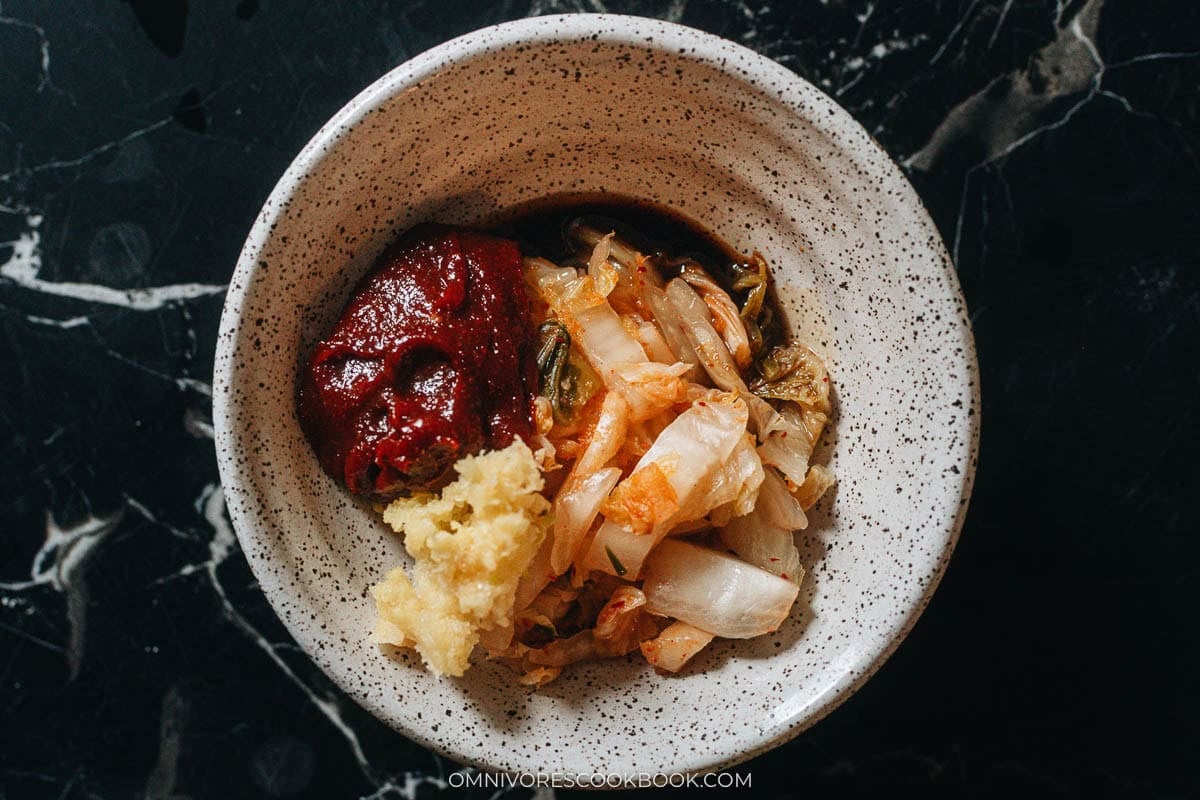
I chop kimchi roughly and scoop a little kimchi juice with it so the fermented tang moves into the pot, then stir in gochujang for heat, a spoonful of maple syrup to soften the edge, soy sauce for salt, and grated garlic. I mix the paste in a small bowl and stir it into the pot off the heat at the end so the flavors stay fresh and the kimchi probiotics stay alive.
Broth and noodles
I use a low-sodium chicken broth so the kimchi and soy sauce can season the pot without pushing the salt too high, and somen is my default noodle because it cooks in 2 minutes and picks up the broth well. Instant noodles without the seasoning pack work in the same window, and I add baby bok choy halved lengthwise so the stems and leaves cook together in the same pot.
Toppings
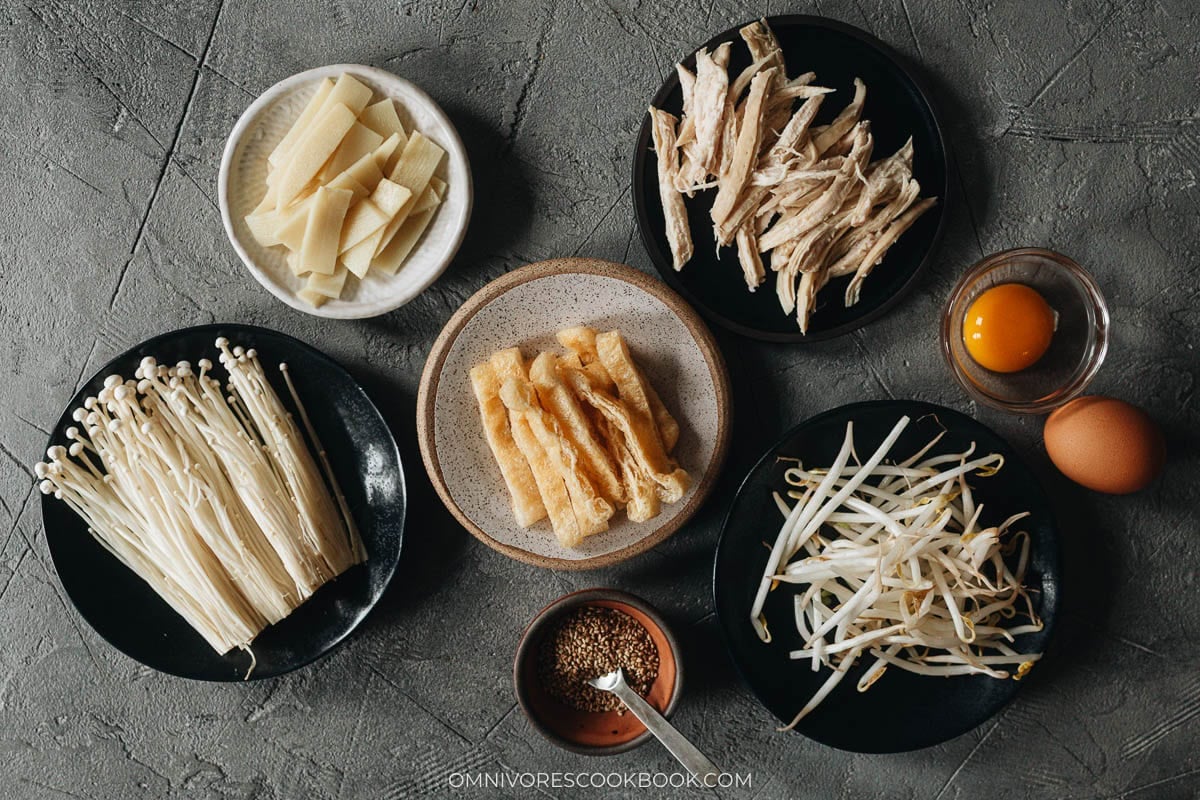
I finish the bowl with a runny egg (poached in the broth or fried separately) and any leftover cooked protein from the fridge, usually shredded rotisserie chicken but also leftover braised meat, pan-seared shrimp, or fried tofu. If I want more greens, I add spinach, napa cabbage, sliced mushrooms, or bean sprouts on top of the bok choy.
How to Make
1. Mix the paste: Combine the chopped kimchi with its juice, gochujang, maple syrup, soy sauce, and grated garlic in a small bowl. Set aside.
2. Boil the broth: Bring the chicken broth to a boil in a medium pot over high heat.
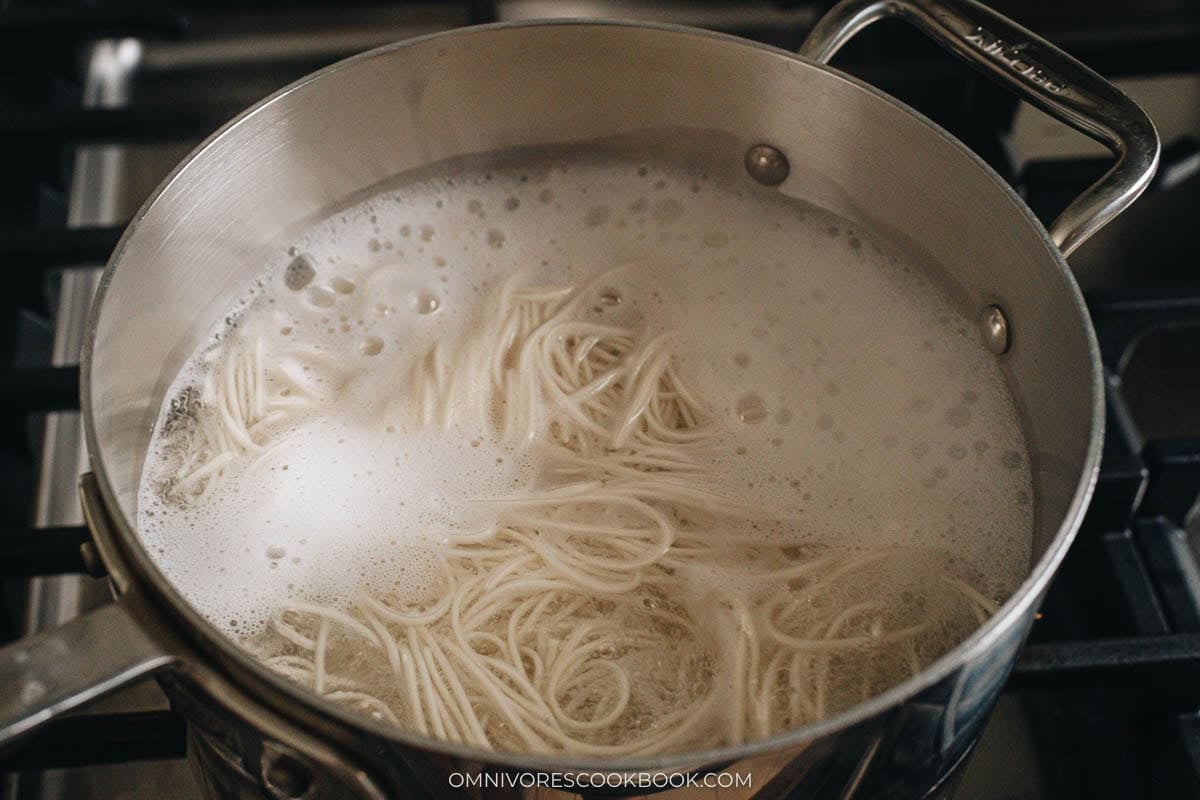
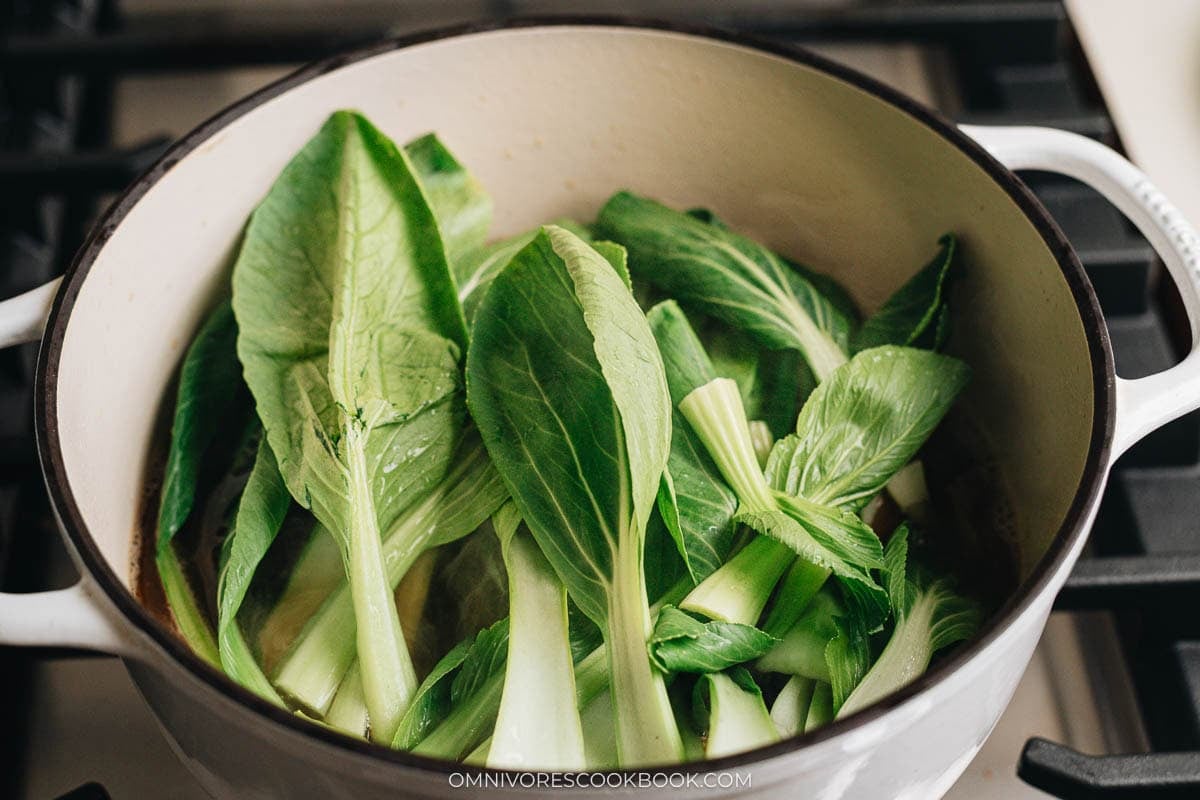
3. Cook the noodles and greens: Add the somen noodles and halved baby bok choy to the boiling broth. Cook for 2 minutes.
4. Add the egg if using in the pot: Crack the eggs into the pot along with the bok choy to poach them in the broth. Or top the finished noodles with raw egg yolks, or fry the eggs in a separate pan and slide them onto the bowl at the end.
5. Stir in the paste: Once the noodles and greens are cooked, turn the heat off and stir the kimchi paste into the broth until it dissolves. Do not boil the paste again.
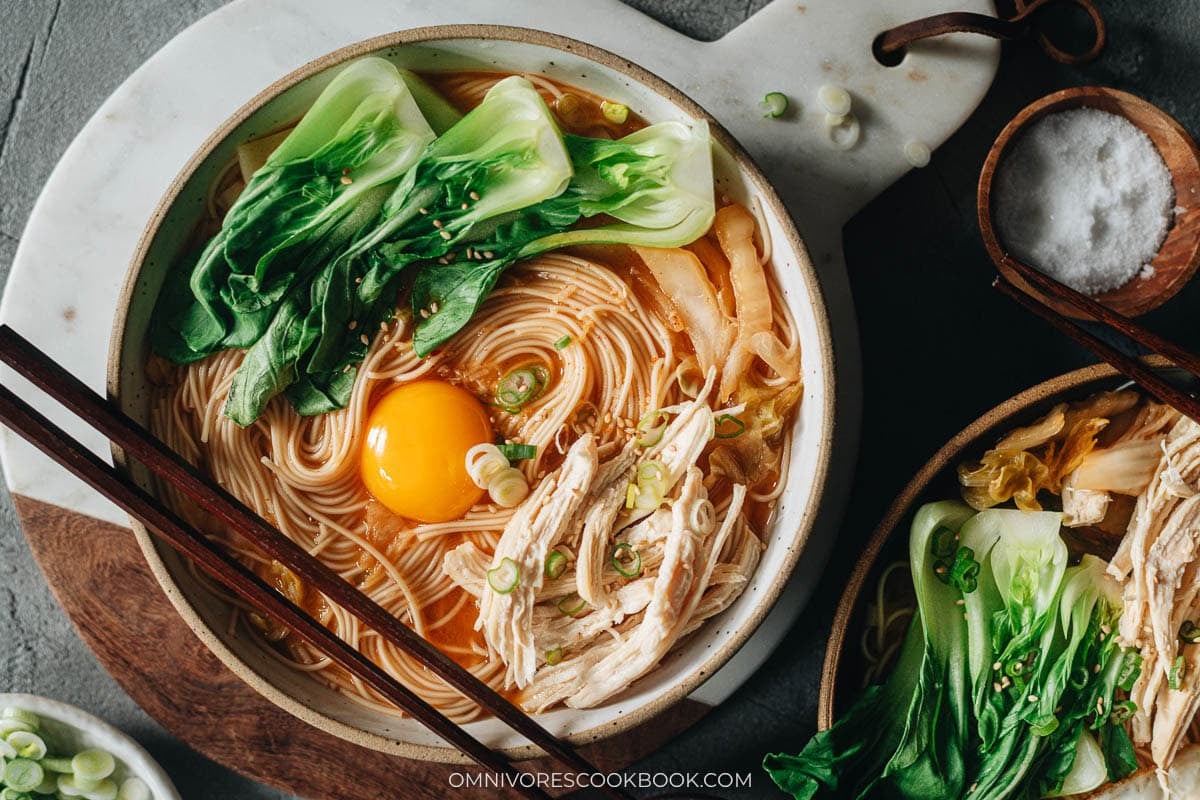
6. Assemble and serve: Divide the noodles and greens between two bowls, ladle the broth over, and top with shredded chicken or other leftover protein. Serve immediately.
My Cooking Tips
Use kimchi with real fermentation: Fresh barely-fermented kimchi tastes bright but does not season the broth much. I look for kimchi that has been in the fridge for at least 2 weeks.
Scoop some kimchi juice with the paste: The juice holds more of the fermented flavor than the leaves. I tip the jar and scoop a spoonful of juice into the paste bowl before I chop the kimchi. If the jar is running dry, I add a small splash of rice vinegar to compensate.
Stir the paste in off the heat: The kimchi probiotics and the fresh gochujang notes both hold up better when I add the paste after the broth stops boiling. Boiling the paste dulls the tang and flattens the heat.
Cook different vegetables to their own timing: Sliced mushrooms and napa cabbage need about 5 minutes in the broth. Bean sprouts and spinach need 1 to 2 minutes. I add slower vegetables with the noodles and drop the delicate greens in during the last minute so nothing overcooks.
Steam raw chicken in a hurry if I have no leftovers: I set a plate of raw chicken breast in a steamer basket over boiling water, salt it lightly, and cook it for about 15 minutes. Shredded and dropped into the bowl, it stands in for rotisserie chicken without dirtying a second pan.
Use maple or sugar, not honey: Maple syrup blends into the paste without leaving a floral flavor. Honey pushes the sauce sweeter and heavier. You can use sugar as well.
Serving Suggestions
I like to serve this dish on its own for lunch or a light dinner, topped with whatever leftover protein I have in the fridge. To keep things quick, I poach the egg until the whites are just set and the yolk is still runny. The rich yolk coats the thin noodles beautifully and helps mellow the heat of the gochujang, creating a silky, well-balanced sauce.
For a fuller Korean-inspired dinner with friends at the table, I set this soup down as the main and add a small spread of cold and cooked sides around it. A cold spicy cucumber salad, and a plate of japchae completes the table with a chewy sweet-potato noodle at a different temperature. If the group is bigger, I add my favorite Korean seafood pancake as a fun appetizer.
Frequently Asked Questions
Can I make this recipe without kimchi and gochujang?
Not really. The kimchi and gochujang are the 2 ingredients that season the broth, and without them the soup has almost no flavor to work with. If those 2 are hard to find where you live, look at a different noodle soup like soy sauce noodles or Chinese egg drop soup that uses Chinese pantry instead.
How do I make this vegetarian?
I swap the chicken broth for a mushroom or kelp-based broth, skip the meat topping, and lean on tofu, mushrooms, and bean sprouts for the toppings. The kimchi and gochujang still season the bowl.
Can I use instant ramen instead of somen noodles?
Yes. Discard the seasoning packet and cook the noodles according to the package directions. Instant ramen will have a slightly chewier texture than somen but works well in this recipe.
Can I make this soup less spicy?
Yes. Reduce the amount of gochujang to suit your taste, and replace it with an equal amount of miso to maintain the soup’s savory depth. For example, using 1 tablespoon of gochujang and 1 tablespoon of miso creates a well-balanced broth with plenty of umami and just a mild level of heat.
Want to Save This Recipe?
Enter your email below & we’ll send it to your inbox. Plus get great new recipes from us every week!
15-Minute Korean Noodle Soup
Ingredients
Sauce
Soup
- 4 cups low sodium chicken broth
- 6 oz somen noodles (2 bundles) , or 2 packs instant noodles (without the seasoning packs)
Topping options (see the blog post above for more options)
- 4 heads baby bok choy , trimmed & halved
- 2 eggs (Optional)
- Rotisserie chicken (or other leftover meat), shredded (Optional)
Instructions
- Combine all the sauce ingredients and set aside.
- Bring the broth to a boil and add the noodles and bok choy. Cook for 2 minutes.
- (Optional) You can add the egg to the broth along with the bok choy to make runny poached eggs. Alternatively, you can top the noodles with raw egg yolks. Or you can fry the eggs in a separate pan.
- Once the broth is done cooking, add the sauce mixture and stir to incorporate.
- Serve immediately as a main dish.
Nutrition

Did you make this recipe?
I’d love to hear how it turned out for you! Please take a moment to leave a 5-star rating ⭐️ and share your thoughts in the comments further down the page. It really helps others discover the recipe too.
Shaelyn Hellwig
This is yummy i love to cook and try new things
C
Hello!
Thank you Miss Zhu! (Sorry if I should have called you Maggie)
Thanks for telling me! I understand the seasoning means alot to a recipe and makes it tasty ofcourse!! Thank you for the help, next time I go to the Asian store I’ll definitely go looking for kimshi and gochujang aswell! Thanks for sharing the other recipes 😊 I’ll try making chinese noodles instead!
Thanks so much again 😁
C
Hi! I was wondering can you make this recipe without kinship since you can’t get that here and gochujang? Thanks !
C
Sorry my spelling mistake *kimshi
We can’t get any kimshi here since it’s too far to go to an Asian store so I was unsure if I could make it without kimshi ? Could we use rice vinager as a substitute?
Thanks, your recipes are very nice and my family enjoy trying it!
Maggie Zhu
It’s tricky because kimchi and gochujang are the main ingredients to season the broth. The broth is quite light, and without these two it barely has any other seasonings.
Maybe you could try out another easy noodle soup dish such as these ones?
https://omnivorescookbook.com/chinese-chicken-noodle-soup/
https://omnivorescookbook.com/curry-noodle-soup-popcorn-chicken/
https://omnivorescookbook.com/soy-sauce-noodles
Jisu
I’m Korean and I honestly don’t care whether this is ‘authentic’ or not– it’s delicious! The rest of you need to calm down. It’s just food.
Fuck off
Soup was good. Don’t listen to these asswipes and keep doing you. “OMG, it’s not Korean” shut the fuck up!
Candance
I agree
Helen
This was so easy to make and absolutely delicious 🤤 I lived in Tokyo and this dish reminded me of the type of Korean style dishes I’d eaten there! I added some sesame oil and scallions at the end and will maybe add some shrimp next time 🙂 thanks 🙏
Toby
Amazingly simple recipe! I substituted mushroom dashi in leu of chicken broth for my vegetarian family.
Serena Kim
I guess you can say this is Korean Inspired noodle.
Not Korean. Definitely the ingredient including maple syrup is for western people. I wonder how it tastes like with maple syrup and kimchi… as someone who is flavor expert says it should work.
– a person born and raised up in South Korea.
Terri
Maggie, I am already subscribed to your site and look forward to your recipes. I just made the 15 Minute Korean Noodle Soup and it was excellent! I will be making this soup often. I don’t care what it is called. I am curious whether your critics made this recipe before lashing out…….
Kelsey Park
This is not Korean in any which shape or form, lady…. you can’t just add kimchi to a recipe and call it Korean -a Korean person
Maggie
Hi Kelsey, I apologize if you feel the content is offensive. We borrowed the method from Korean Guksu to create the paste using Gochujang, kimchi and a few other things. We don’t have this cooking method in China and I think it’s such a great and easy way to add favor to a broth. I ended up naming it Korean noodle soup because the recipe is not really a Guksu dish. Would love to hear any suggestions if you have a better name for the dish! – Maggie
DK
Hi, I’m also Korean, and while I wasn’t offended necessarily, this definitely isn’t a Korean dish haha. It might misguide people who aren’t familiar with Korean food to believe that this is a traditional dish. A better name for this might be ‘Korean-inspired Chinese noodles’ or something.
Rachel
Kelsey, while I agree that this isn’t a Korean dish, I would like to add that Koreans also cook many Chinese-inspired dishes that aren’t traditional Chinese dishes at all or the flavor is totally different.
Jin
I’m korean and I’ve never seen this kind of noodle soup.