
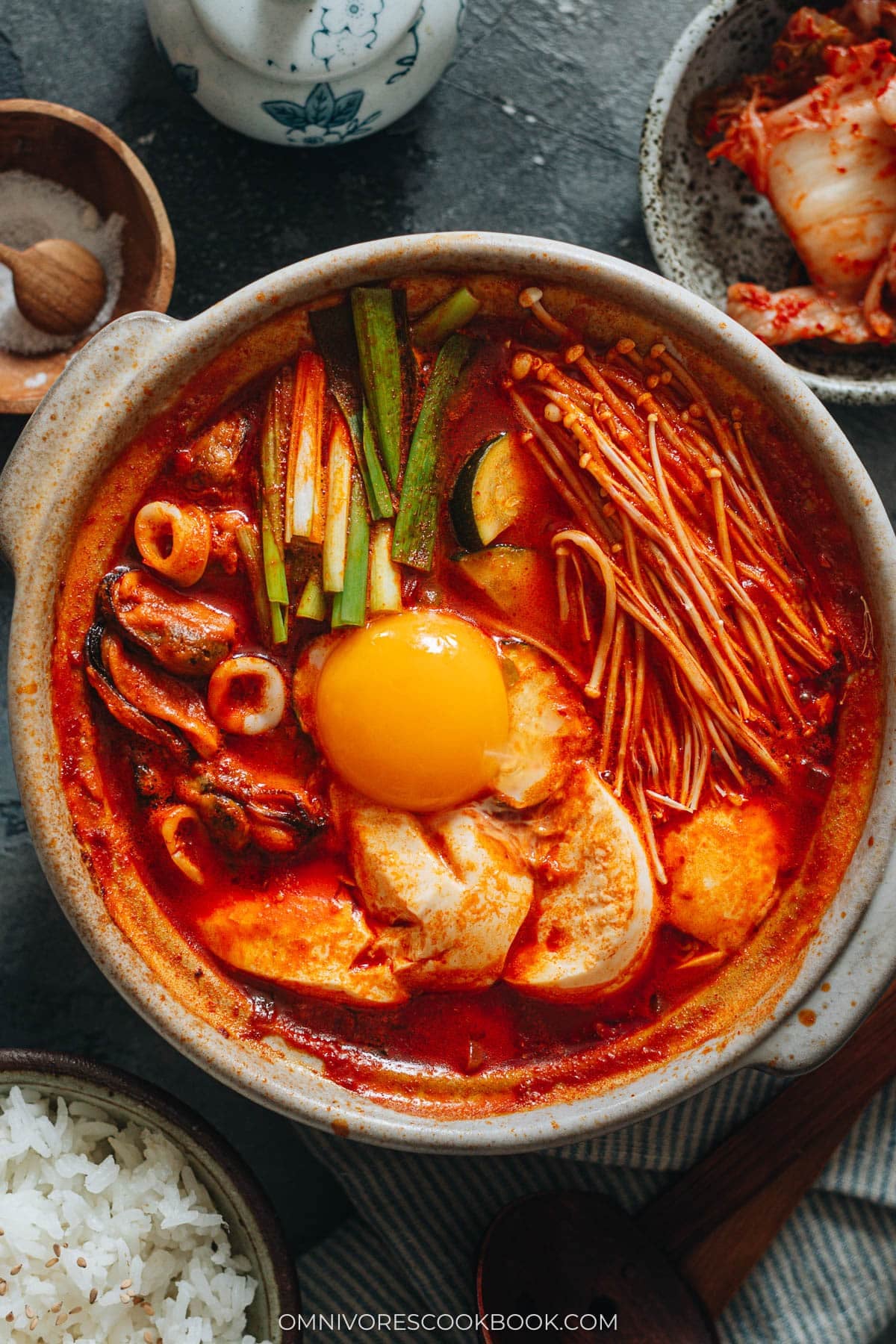
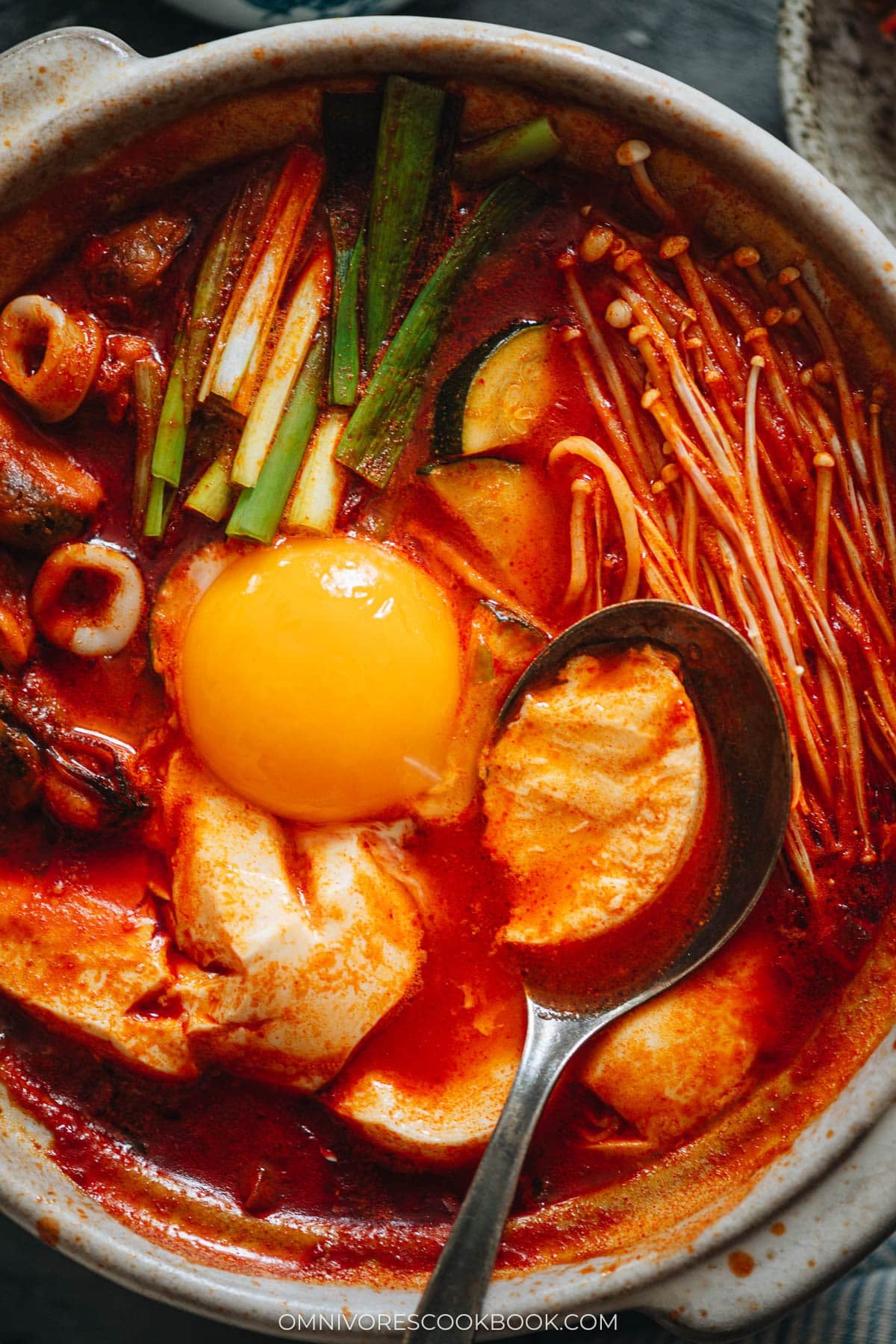
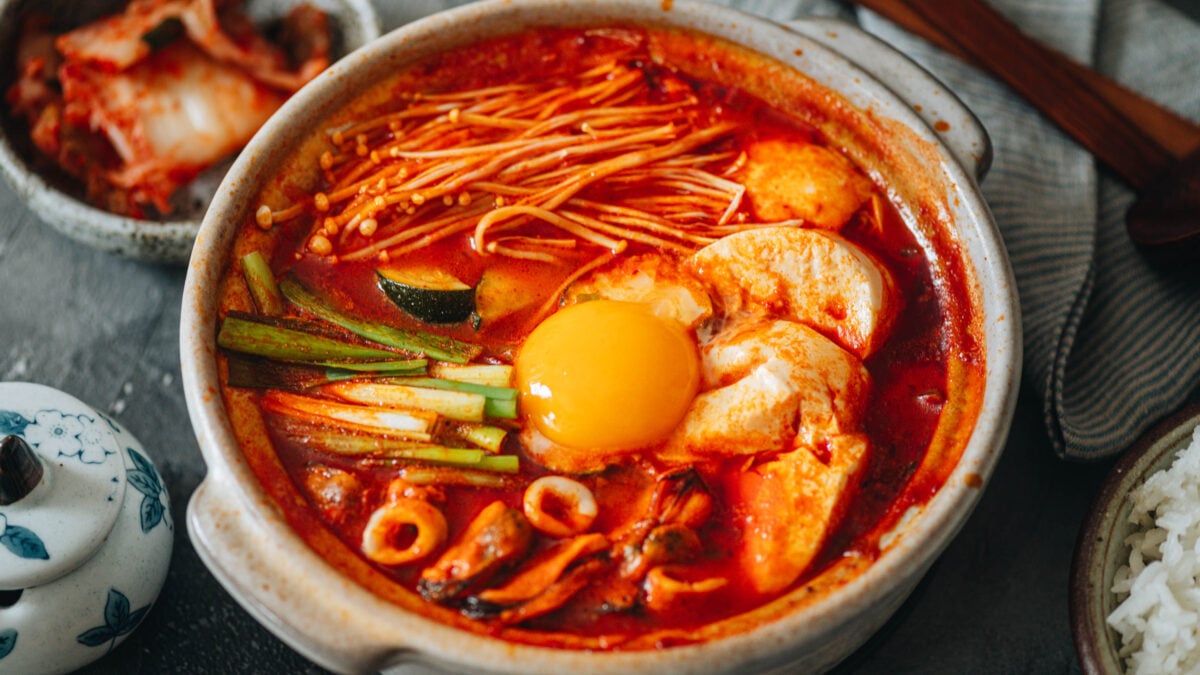
Sundubu jjigae (Korean soft tofu stew) is built around uncurdled tofu that is even softer than silken tofu. It has a texture that practically melts into the spicy, savory broth. The stew gets its deep red color from gochugaru (Korean chili powder) and layers flavor from pork, seafood, kimchi, and mushrooms. In Korean restaurants you usually pick your protein, but my version uses the most popular combination of pork and seafood together.
My husband and I are big fans of Korean cuisine, and sundubu jjigae is one of our favorite dishes. When we order it at a restaurant, the whole table goes quiet for a few minutes because everyone is just focused on their own bubbling hot pot. I started making it at home because I wanted bigger portions and the freedom to load it up with extra toppings. Now I make it at least twice a month, especially when the weather turns cold in New York.
My version skips the traditional anchovy stock and uses dried shiitake mushrooms soaked in boiling water instead. It is simpler to prepare and gives the broth a earthy backbone that pairs perfectly with the gochugaru and kimchi. I brown the pork in sesame oil first, bloom the chili powder, then build the stew in one pot. A cracked egg goes in right at the end, and the hot broth cooks it just enough to thicken everything up. Once you see how easy this is to make, you will never order it for takeout again.
Ingredients
You do not need a long shopping list for this one. A handful of Korean pantry staples, some pork and seafood, soft tofu, and an egg are all it takes.
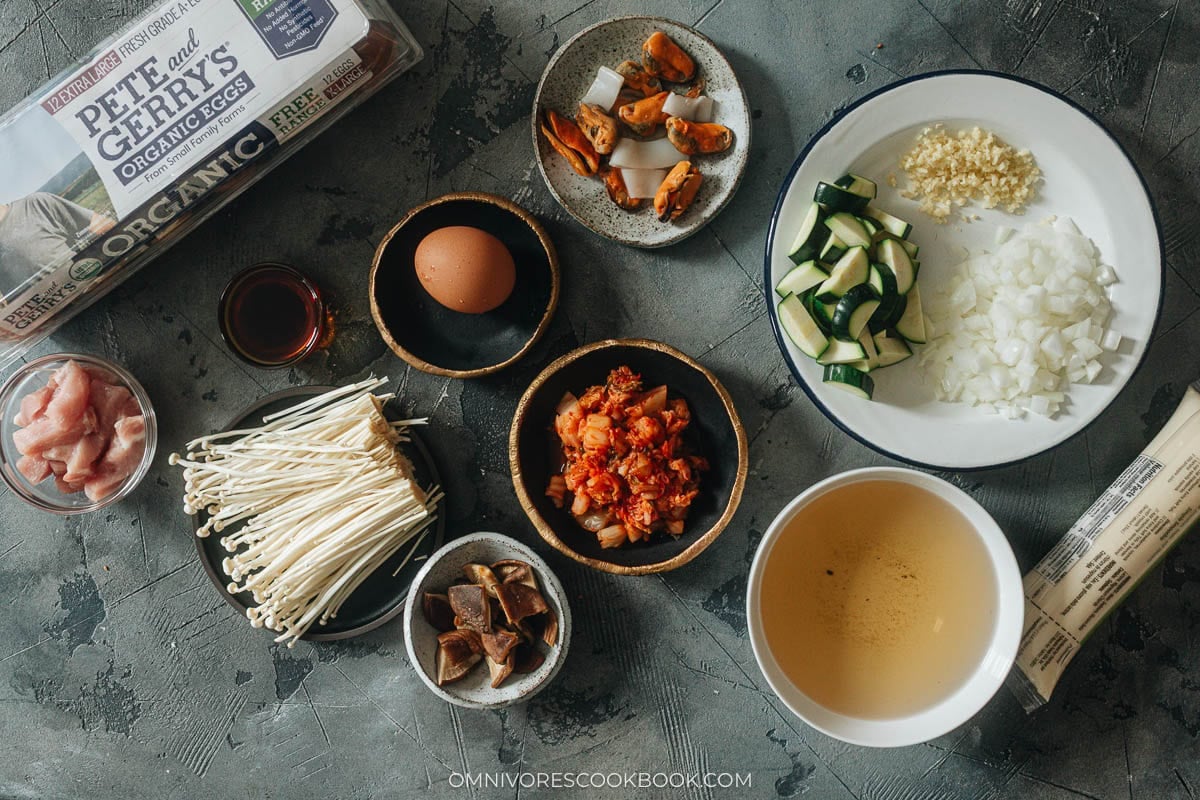
Dried shiitake mushrooms: I soak dried shiitake mushrooms in boiling water to create a rich broth that replaces traditional anchovy stock. I use both the mushrooms and the soaking liquid.
Pork and seafood: I use pork cut into strips and frozen mixed seafood. The pork browns in sesame oil first to build a flavorful base, and the seafood goes in near the end so it does not overcook.
Aromatics and seasoning: Gochugaru (Korean chili powder) gives the stew its signature red color and warmth. I combine it with garlic, onion, fish sauce, and kimchi for for a savory base.
Vegetables: I use zucchini cut into half moons and enoki mushrooms.
Soft tofu: This is the star. I use uncurdled Korean soft tofu, sometimes labeled “soon tofu,” which usually comes in tubes. It is even softer than silken tofu. If I cannot find it, silken tofu works but the texture will be different.
Egg and garnish: I crack an egg into the hot stew right at the end. The broth cooks it just enough so the yolk thickens the soup. Sliced green onions go on top.
How to Make
1. Soak the shiitake mushrooms: Place the dried shiitakes in a small bowl and pour boiling water over them. Let them soak for 20 minutes while you prepare the other ingredients. Once tender, squeeze out the excess moisture, cut each mushroom into half moons or quarters, and reserve the soaking liquid.
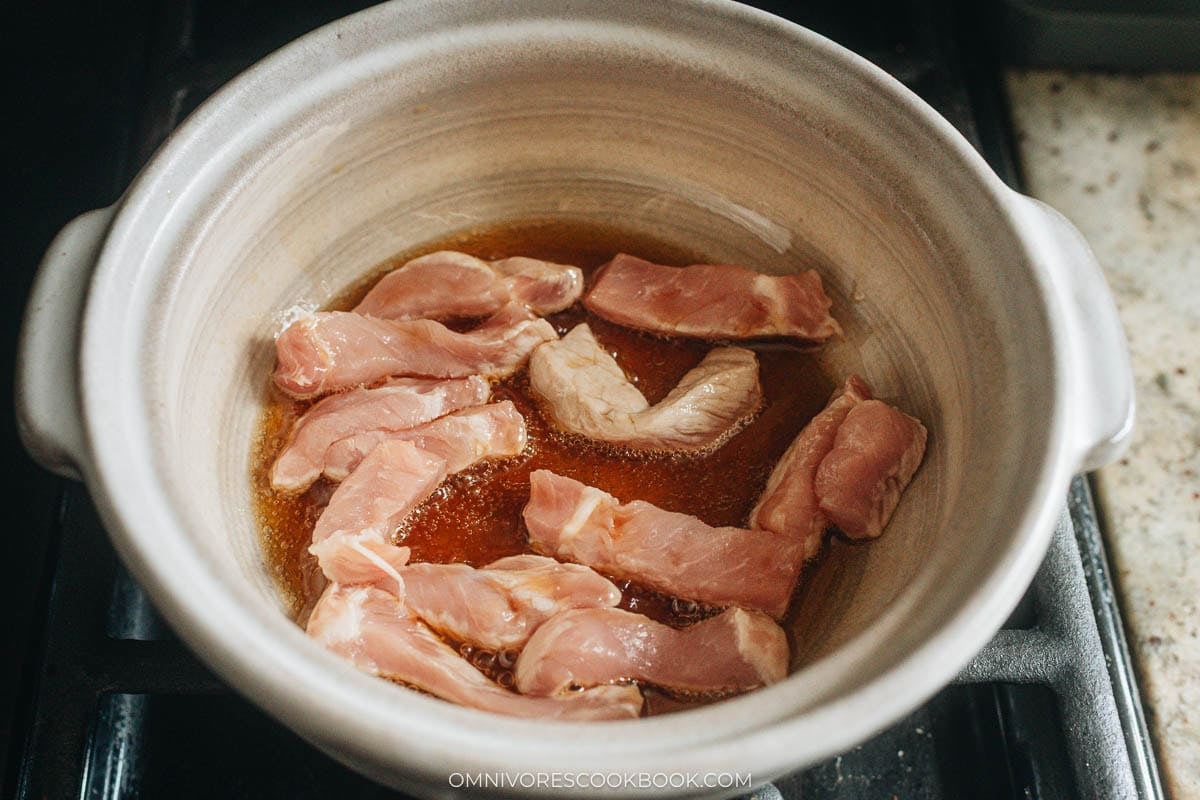
2. Brown the pork: Heat a small heavy bottomed pot or clay pot over medium low heat and add the sesame oil. Once the oil is hot but not smoking, add the pork and brown it on all sides.
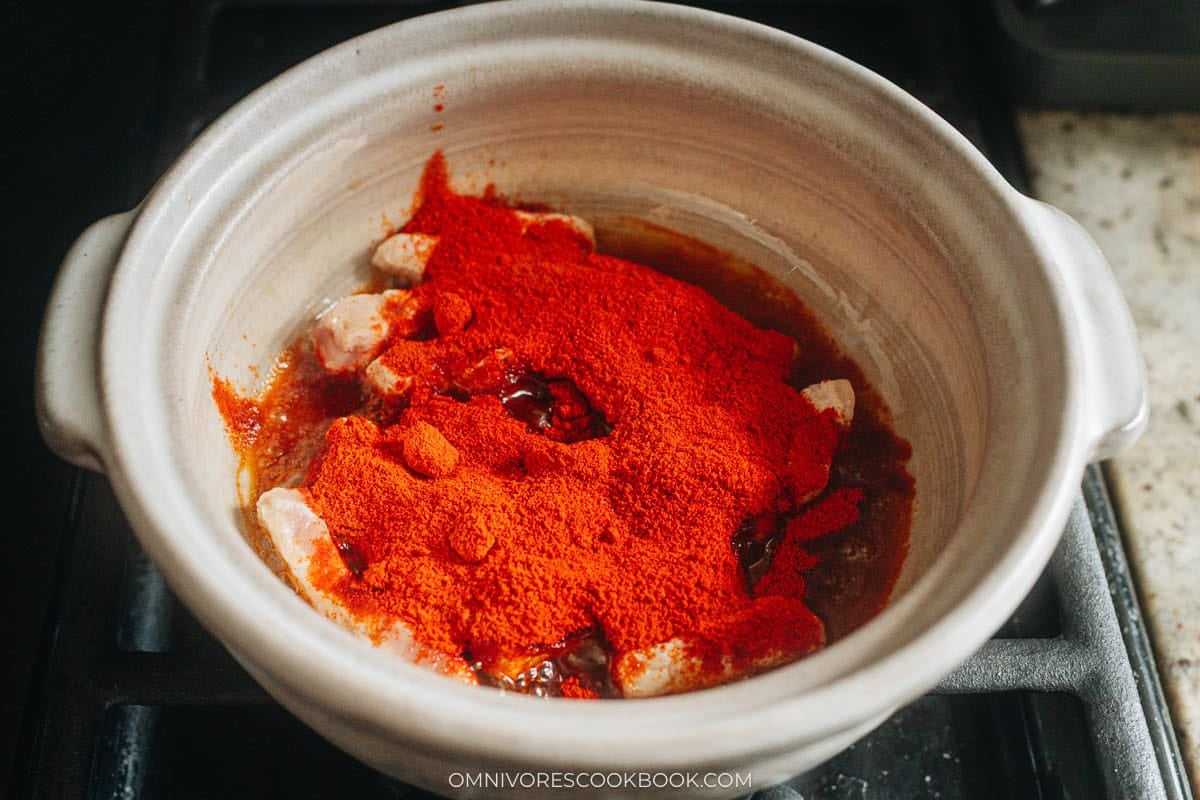
3. Bloom the gochugaru: Add the gochugaru and cook, stirring, for 30 seconds to release the fragrance.
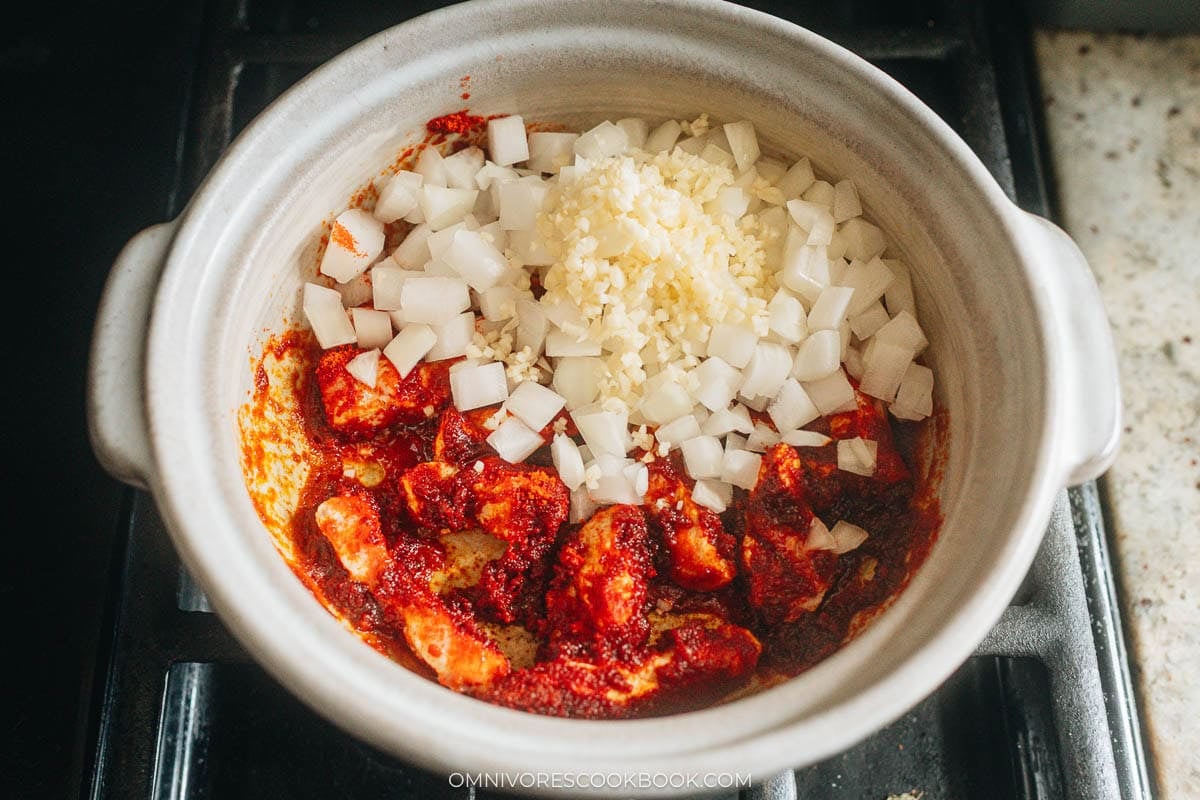
4. Cook the aromatics: Add the onion and garlic. Stir for another 30 seconds to a minute until fragrant.
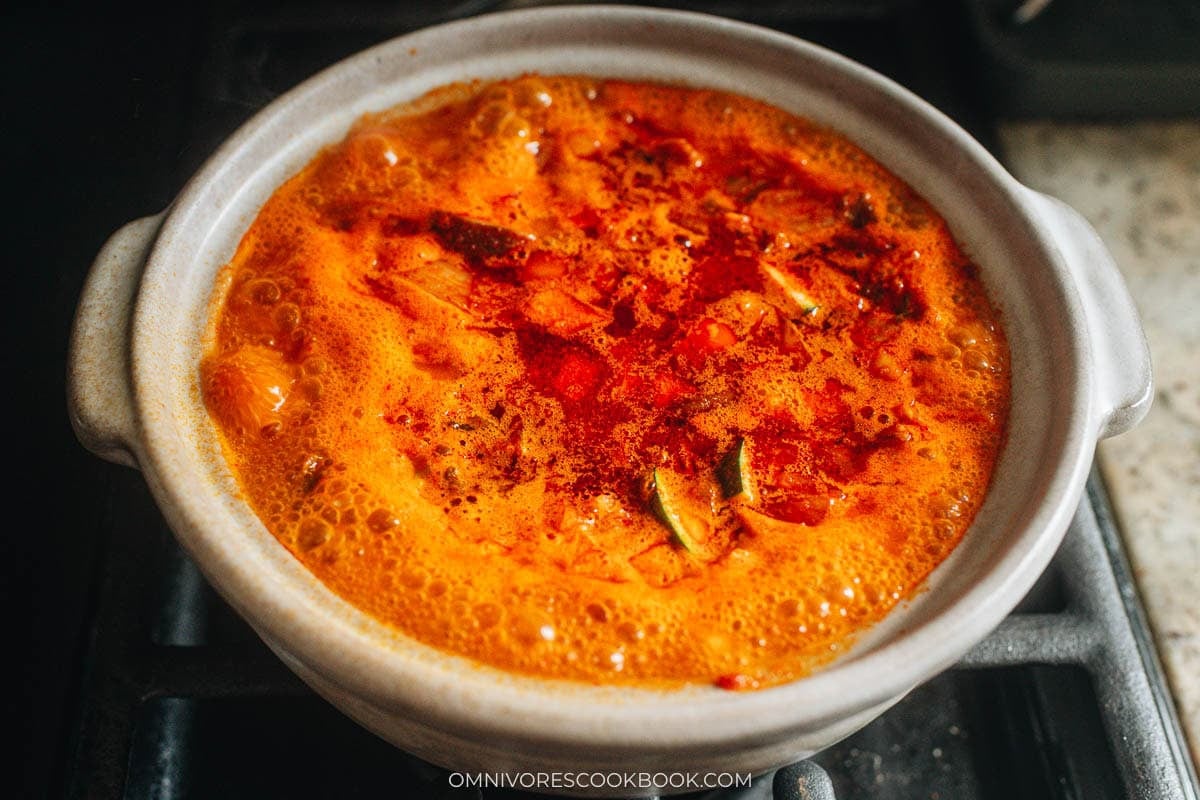
5. Build the broth: Pour in the fish sauce and scrape any brown bits from the bottom of the pot. Add the reserved shiitake soaking liquid, being careful not to pour in the sediment at the bottom. Bring to a boil, then reduce to a simmer.
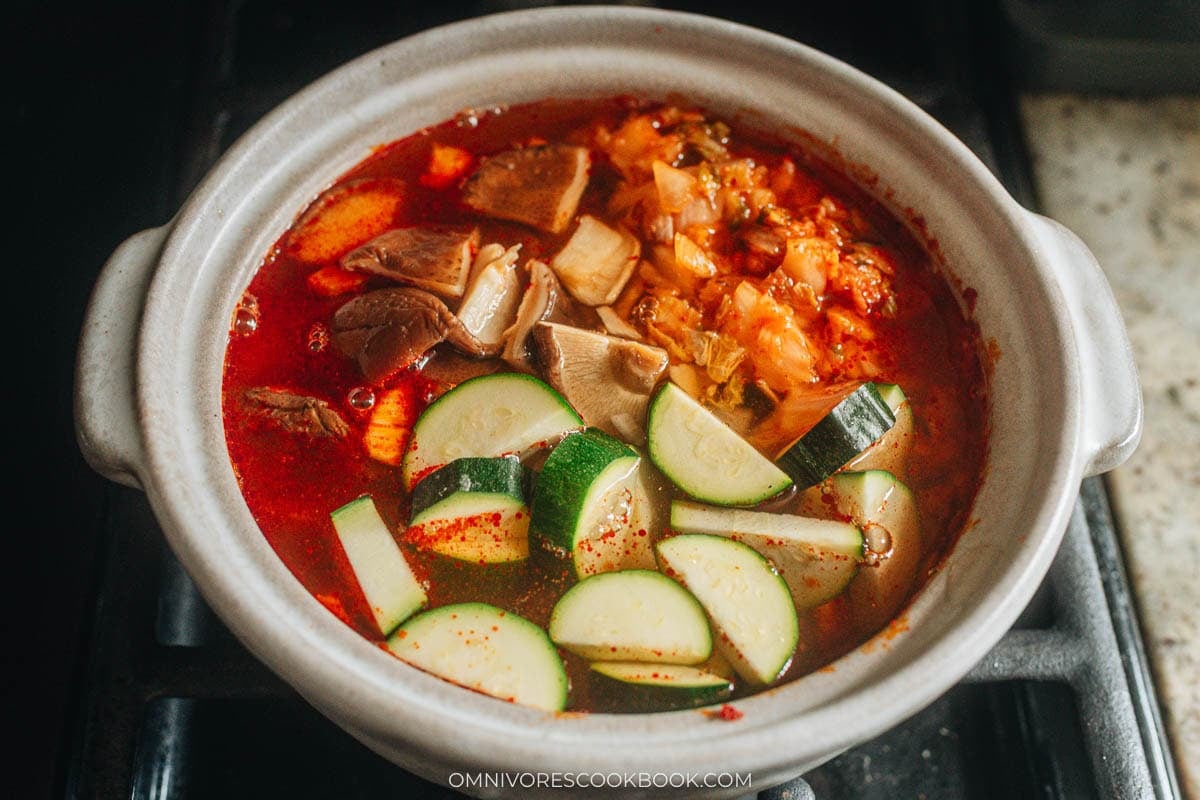
6. Add the vegetables and kimchi: Add the shiitakes, zucchini, and kimchi. Taste the broth and add salt to taste. The broth should be a bit salty so it stands up to the unsalted tofu. Cover and simmer for 10 minutes.
7. Add the tofu and seafood: Cut the tofu tube in the middle and squeeze the halves directly into the pot. Add the enoki mushrooms, seafood, and green onions. Give the soup a gentle stir, being careful not to break apart the tofu too much.
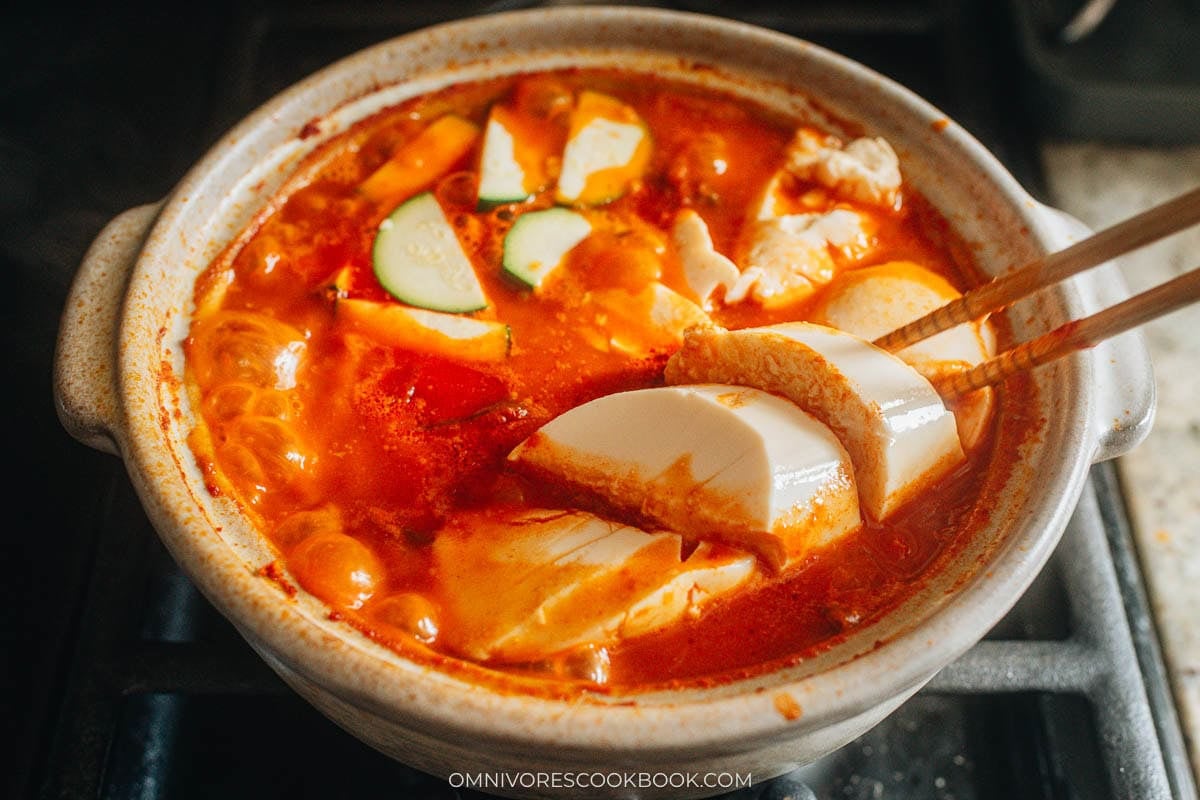
8. Finish with the egg: Bring the soup to a rolling boil. Crack the egg into the center and continue to boil until the egg is softly cooked. For a more authentic experience, add just the yolk and stir it into the hot broth before eating.
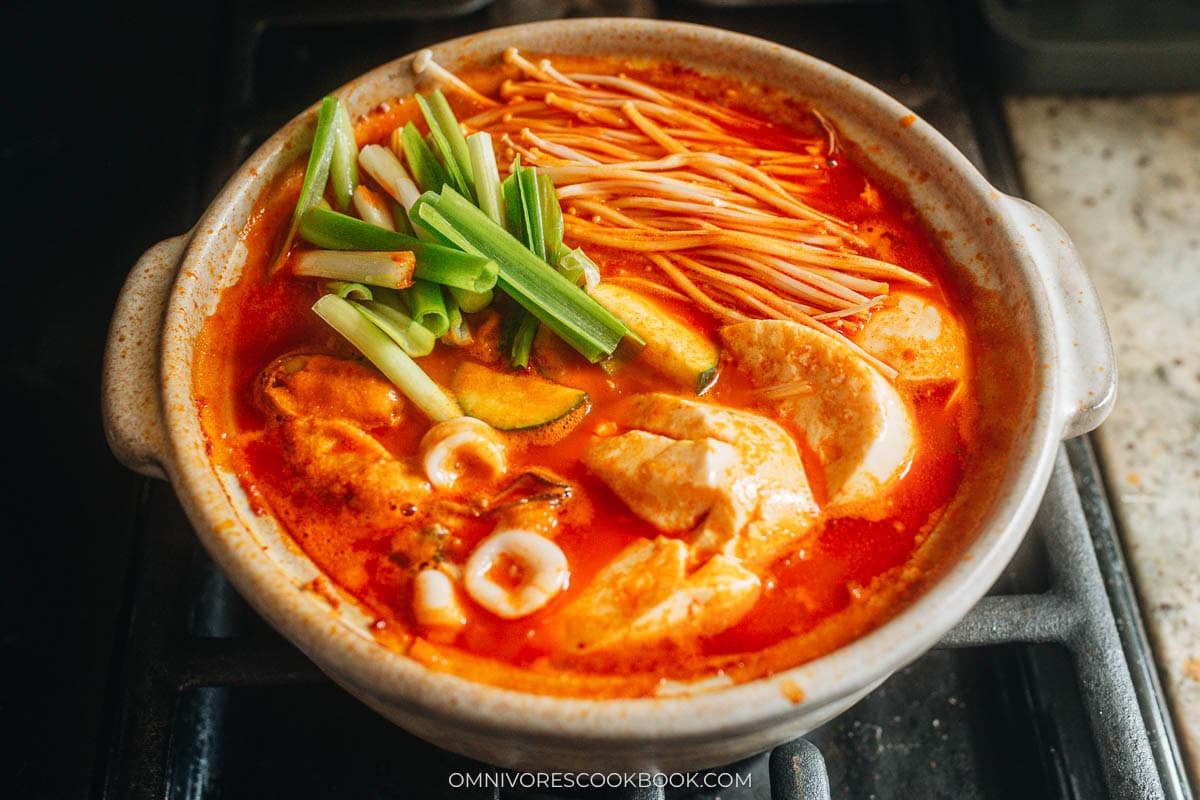
9. Serve: Serve hot with steamed rice as a main dish.
My Cooking Tips
Use the mushroom soaking liquid: Do not throw it away. This liquid is your broth base and carries all the umami from the shiitakes. Just be careful to leave the gritty sediment at the bottom of the bowl.
Taste the broth before adding tofu: The broth should taste a bit saltier than you think is right. The soft tofu has no seasoning and will absorb and dilute the broth as it breaks apart, so you need that extra punch of salt.
Control the spice level: 3 tablespoons of gochugaru sounds like a lot, but the finished stew is only moderately spicy. If you cannot handle heat, replace some or all of the gochugaru with paprika for color without the burn.
Do not break the tofu too much: The beauty of sundubu jjigae is the big, silky pieces of tofu floating in the broth. Give the pot one gentle stir after adding the tofu and then leave it alone.
Try the 2 egg method: I stir one egg into the broth to thicken it up, then crack a second one on top to enjoy with the stew. It makes the whole thing richer and to me it tastes better than restaurant style.
How I love Serving
I set the clay pot right on the table still bubbling, with a bowl of steamed rice and whatever side dishes I have on hand. My husband likes to break the egg yolk into his broth and stir it all together with the rice.
When we have friends over, I scale up the recipe in a large Dutch oven and serve it in individual bowls with an egg cracked into each one. It pairs perfectly with Korean seafood pancake, my delicious japchae, or a simple kimchi fried rice for a full Korean spread.
Frequently Asked Questions
Should I use fresh kimchi or aged kimchi in this stew?
Aged kimchi that has fermented for at least 2 weeks works best. It is more sour and funky, which gives the broth a deeper, more complex flavor. Fresh kimchi will still work, but the stew will taste milder. I always use whatever kimchi I have that has been sitting in the fridge the longest.
How do I store and reheat leftovers?
Store leftovers without the egg in an airtight container in the fridge for up to 2 days. Reheat on the stove over medium heat until bubbling, then crack a fresh egg into the hot stew before serving. The tofu will break apart more on reheating but the flavor stays great.
Do I need a clay pot to make this recipe?
No. A clay pot keeps the stew bubbling hot at the table, which is the traditional Korean restaurant experience, but any small heavy bottomed pot or Dutch oven works. If you want to invest in one, Korean stone pots (dolsot) are great because they go from stovetop to table and hold heat for the entire meal.
Want to Save This Recipe?
Enter your email below & we’ll send it to your inbox. Plus get great new recipes from us every week!
Sundubu Jjigae (Korean Soft Tofu Stew)
Ingredients
- 6 dried shiitake mushrooms
- 2 tablespoons toasted sesame oil
- 3 oz pork , cut into 1” (2.5 cm) strips (loin, tenderloin, or thin pork chop will work)
- 3 tablespoons gochugaru (Korean chili powder)
- 1/4 large yellow onion , diced
- 3 cloves garlic , minced
- 1 tablespoon fish sauce
- 1/2 zucchini , cut into 1/2” (1.3 cm) thick half moon shapes
- 1/2 cup kimchi , chopped (add any juices pressed out in the cutting process into the measuring cup)
- 1/2 teaspoon salt (or to taste)
- 1 tube unpressed soft tofu (12 oz/350 g) , or 3/4 block silken tofu, broken into large pieces
- 1/4 pack (1.8 oz/50 g) enoki mushrooms
- 1/3 cup mixed frozen seafood
- 2 green onions , chopped, for garnish
- 1 large egg
Instructions
- Add the dried shiitake mushrooms to a small bowl and pour 1 1/2 cups boiling water over them. Let soak for 20 minutes while preparing the other ingredients. After the mushrooms turn tender throughout, rub them between your fingers to remove any sediment and squeeze out the excess moisture. Cut each shiitake into half moons or quarters, depending on their size, and reserve the soaking liquid.
- Heat a small, heavy-bottomed pot or clay pot (*Footnote 1) over medium-low heat and add the sesame oil. Once the oil is hot but not smoking, add the pork and brown it on all sides.
- Add the gochugaru. Cook and stir for 30 seconds.
- Add the onion and garlic. Stir to release the fragrance, another 30 seconds to a minute.
- Pour in the fish sauce and scrape any brown bits from the bottom of the pot. Add the reserved shiitake liquid, being careful not to add the sediment on the bottom. Bring to a boil, then reduce to a simmer.
- Add the shiitakes, zucchini, and kimchi. Taste the broth. Add salt to taste and stir to mix well. The broth should be a bit salty so that it stands up to the unsalted tofu. Cover and simmer for 10 minutes.
- Add the tofu by cutting the tube in the middle and squeezing the halves directly into the pot. Add the enoki mushrooms, seafood, and green onion. Give the soup a gentle stir, being careful not to break apart the tofu too much.
- Bring the soup to a rolling boil. Crack the egg into the center and continue to boil until the egg is softly cooked, you can bury the egg in broth to cook it faster and more thoroughly if desired. For a more authentic experience, add just the egg yolk to the hot soup and stir it in before eating (*Footnote 2). Serve hot with steamed rice as a main dish.
Notes
- Make sure your pot can hold at least 4 cups of water for this recipe. If you scale up the recipe, you can use a large dutch oven and serve the stew in individual bowls with an egg once cooked.
- Do not throw away the egg white – use it to make egg drop soup! Using more egg whites instead of whole eggs in the soup will make beautiful egg ribbons just like at a Chinese restaurant.
Nutrition

Did you make this recipe?
I’d love to hear how it turned out for you! Please take a moment to leave a 5-star rating ⭐️ and share your thoughts in the comments further down the page. It really helps others discover the recipe too.
Stephanie
This looks so yummy! I’m pescatarian though. Any sub for the pork you suggest? Will it taste terrible if I just omit?
Maggie Zhu
Omitting it is totally fine. And if you have dried anchovy on hands, adding a few will further boost the taste.
Pennie G.
I just made this. It needed a tad more liquid so I added stock but otherwise it was pretty good. Not as pretty as yours, though!!
Michael G Lynch
Maggie
You need to add the Soft Tofu, and the amount of Tofu, to the ingredient list
Maggie
Sorry about that! Just added.