
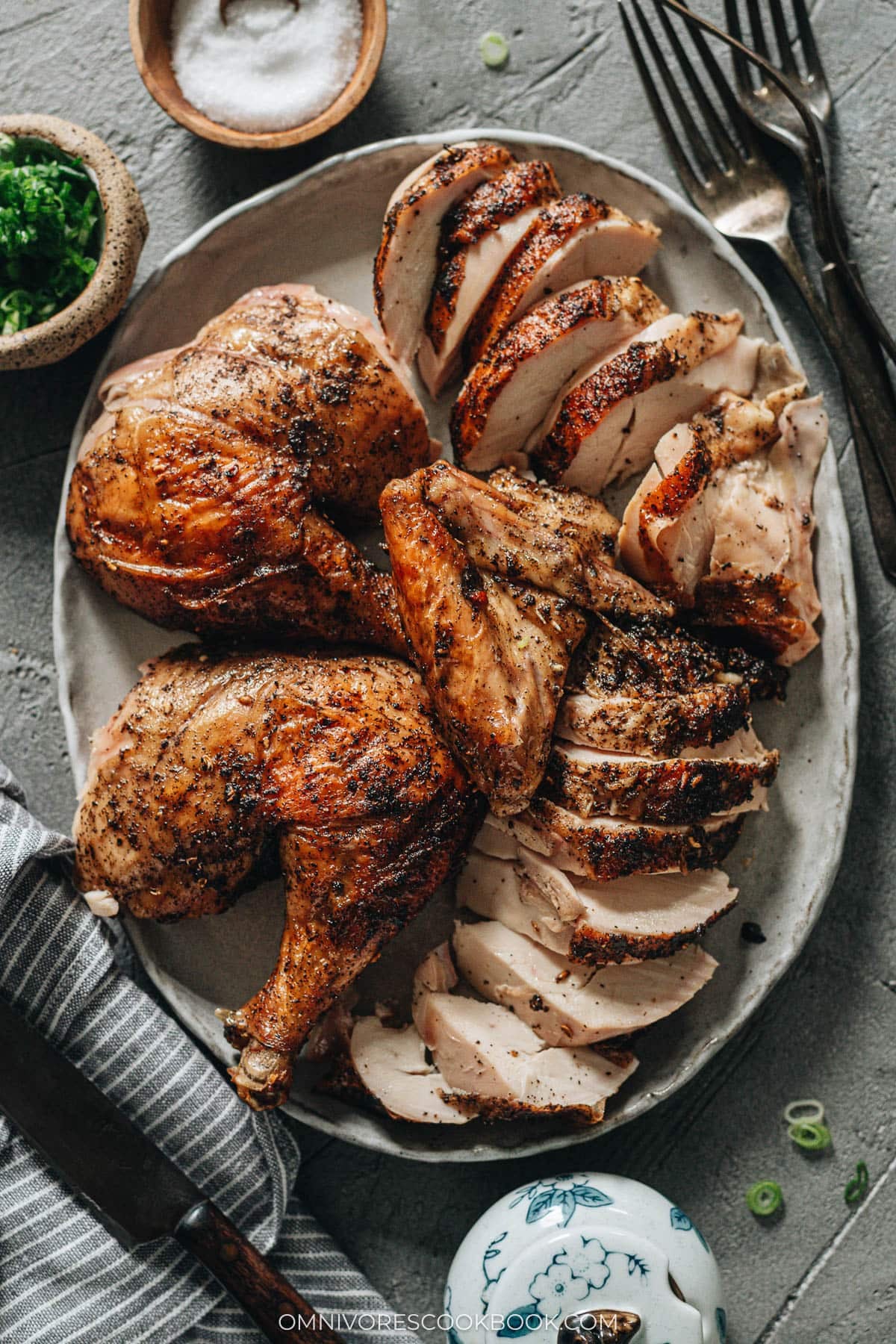
I created this recipe by combining the classic technique of Western-style roast chicken with the bold, aromatic flavors of Sichuan cuisine. The seasoning starts with toasting salt, black tea, and whole Sichuan peppercorns in a dry pan to release their fragrance and create a smoky, citrusy aroma. The mixture gives the chicken a distinctive Sichuan flavor with a subtle numbing sensation, while roasting creates beautifully crispy skin and juicy, tender meat.
I’ve always loved roast chicken, and I wanted to create a version that brings some of my favorite Chinese flavors to the holiday table. It’s a wonderful addition to my collection of Asian Thanksgiving recipes, but it’s just as perfect for a dinner party or a special family meal. I especially love that most of the preparation happens the night before, when I season the chicken and stuff it with aromatics. The next day, all that’s left is to roast it in the oven.
One of my favorite parts of this recipe is the delicious pan drippings that collect as the chicken roasts. They’re packed with flavor from the Sichuan peppercorns, ginger, and chicken juices, and I use them to make a fragrant ginger chicken rice, which I’ve included in the recipe below. Serve everything with a side of Chinese garlic green beans or green beans with spicy peanut sauce for a beautiful, satisfying meal that’s perfect for sharing.
Ingredients
One thing I love about this recipe is how a handful of simple ingredients can create such a flavorful roast chicken. Most of the seasonings are pantry staples, and the fresh aromatics go straight into the cavity to infuse the chicken with flavor as it roasts.
Whole chicken: I use a mid-size whole bird for this roast. A smaller chicken cooks faster and stays juicier, so I check it early if mine is on the light end.
Sichuan peppercorn salt rub: I toast salt, black tea, and whole Sichuan peppercorns together, then grind them with granulated garlic into a coarse spice mix. The tea adds a smoky depth and the peppercorns bring the numbing note that marks this as Sichuan.
The wet rub: I stir Shaoxing wine with sesame oil to coat the bird before the spice goes on. The wine seasons the meat and the sesame oil helps the skin brown.
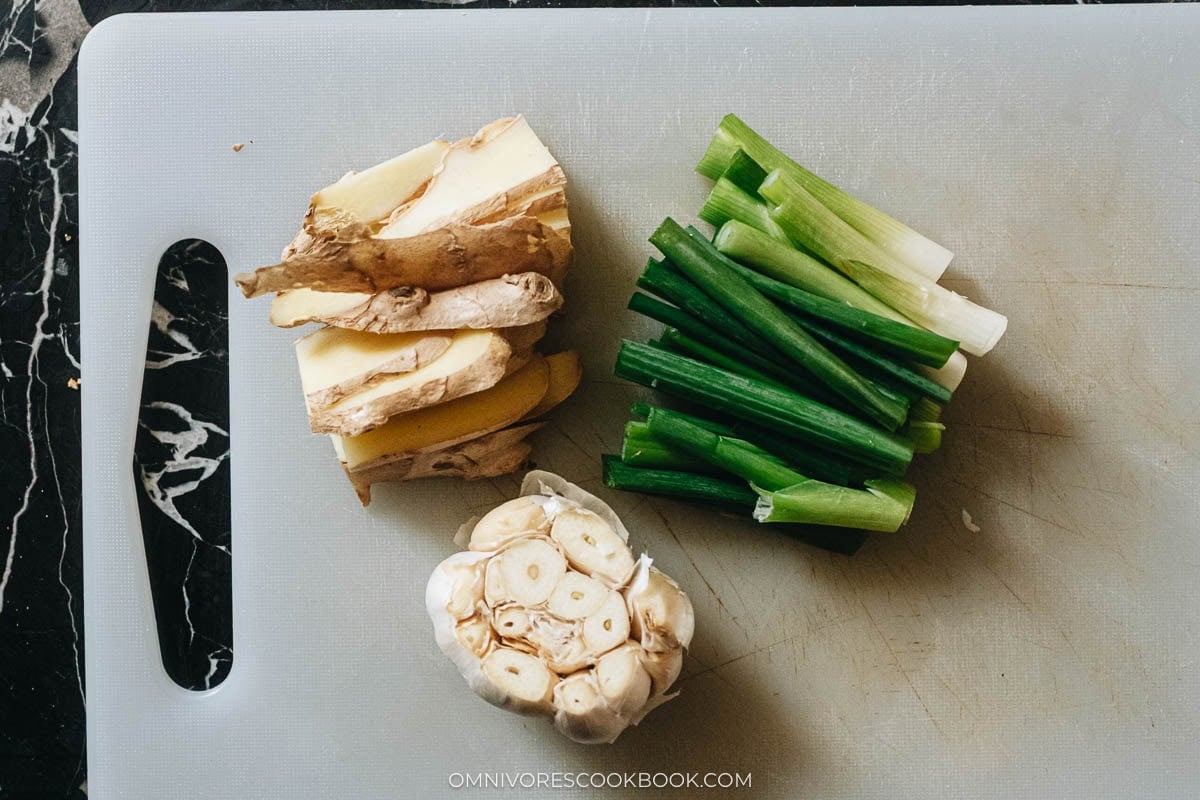
The cavity aromatics: I stuff the inside with green onion, sliced ginger, and a whole head of garlic with the top cut off. They steam from within as the bird roasts and season it from the inside out.
For the bonus chicken rice: I collect the pan drippings, top them with water, and cook rice with a few slices of ginger and a pinch of salt. It is the part of this recipe my family fights over.
How to Make
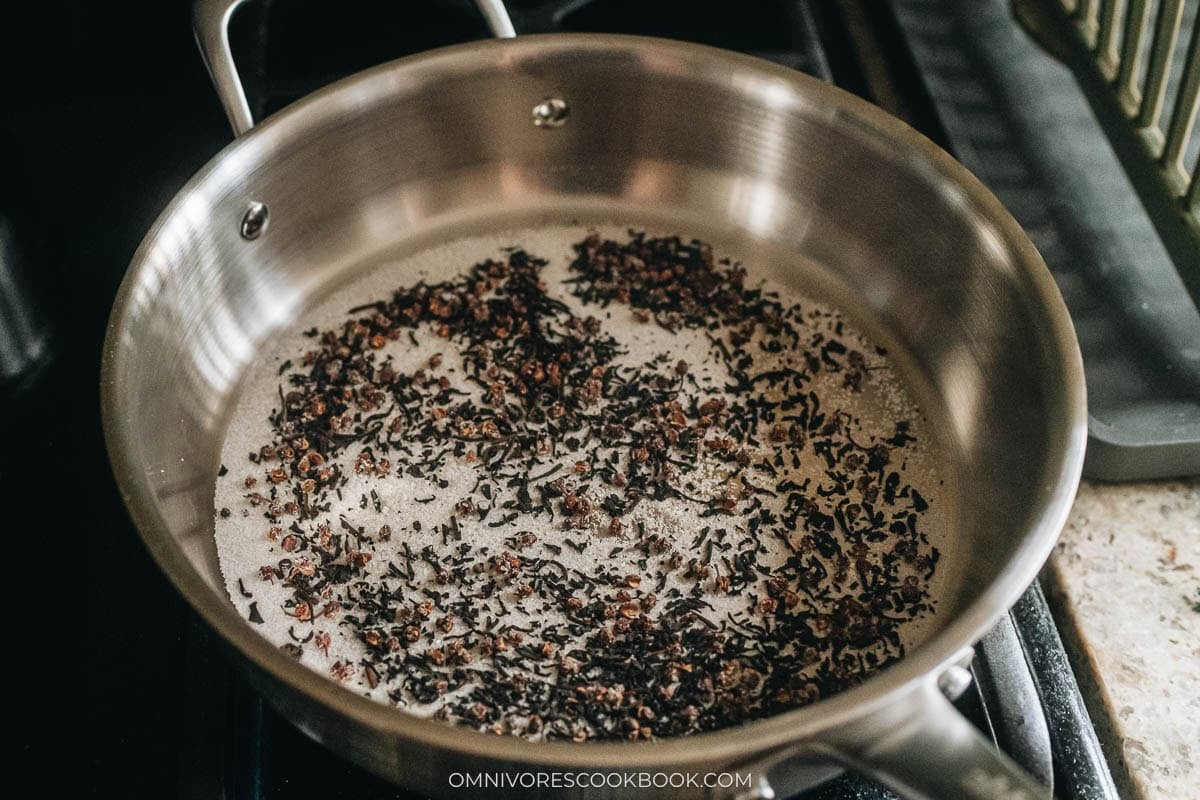
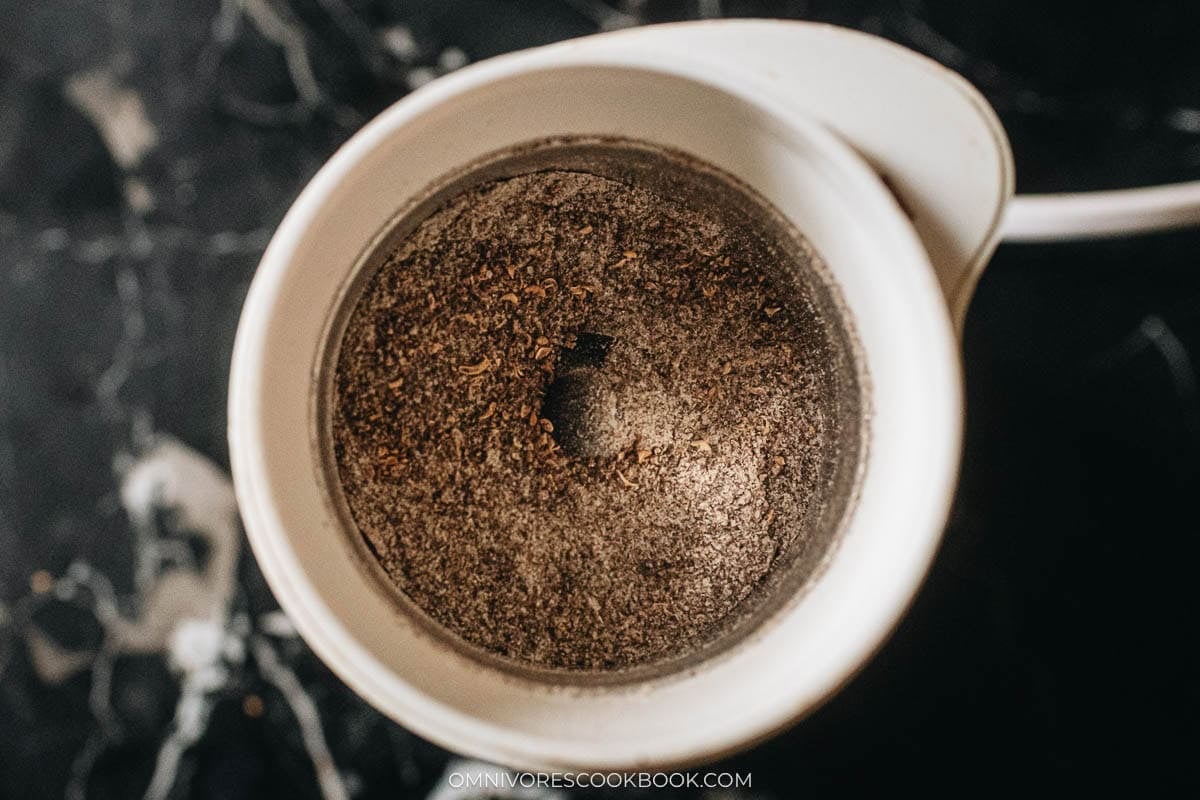
1. Toast the spice mix: Add the salt, black tea, and Sichuan peppercorns to a dry pan. Heat over medium-low, stirring regularly, until the mix smokes.
2. Grind the rub: Take the pan off the heat and stir in the granulated garlic. Transfer everything to a spice grinder or small food processor and grind to a coarse, granulated spice mix.
3. Mix the wet rub: Combine the Shaoxing wine and sesame oil in a small bowl and stir well.
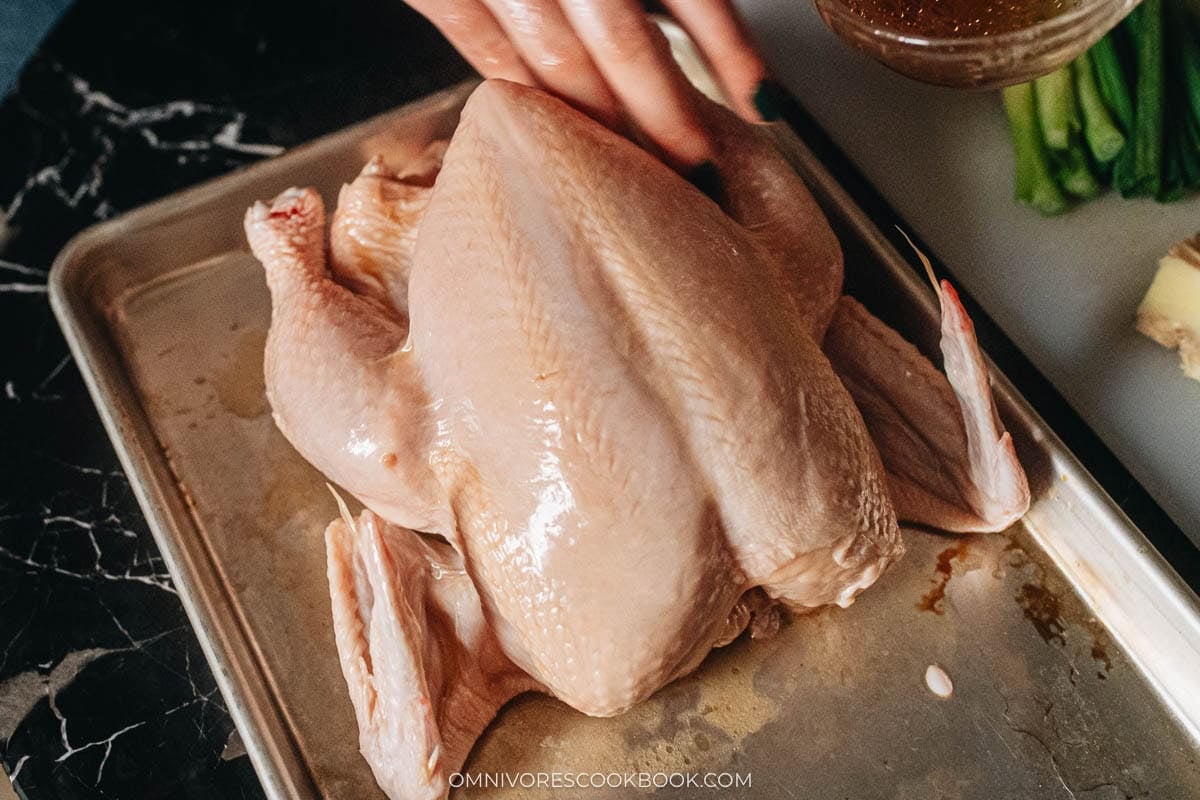
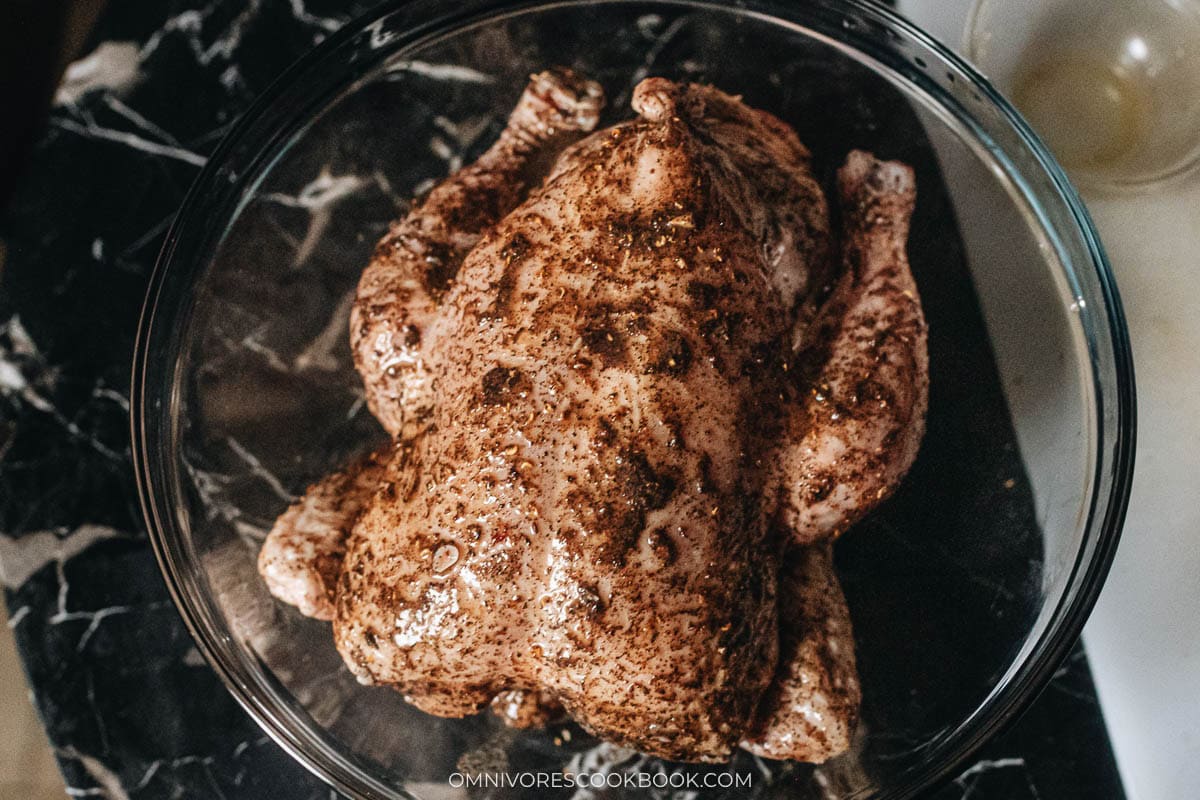
4. Coat the bird: Set the chicken in a large bowl. Rub it inside and out with the sesame oil mixture until well coated.
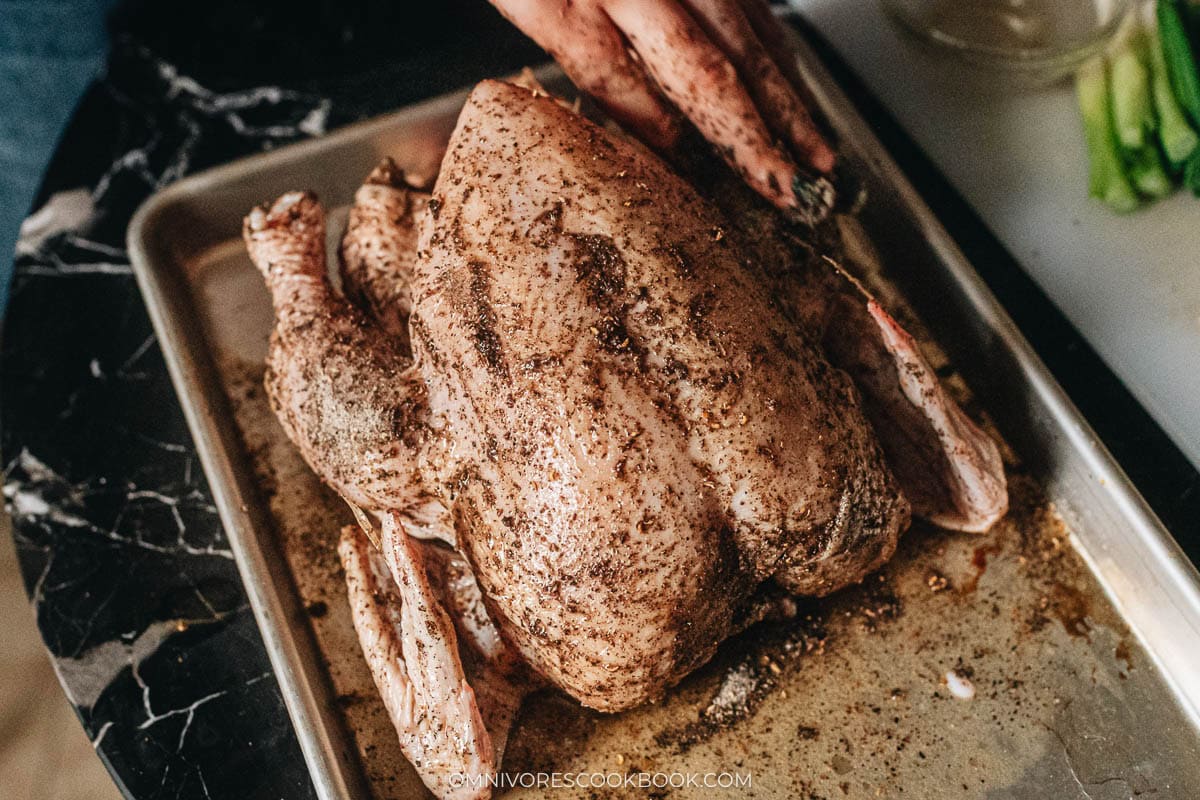
5. Apply the spice rub: Sprinkle the Sichuan peppercorn salt over the inside and outside of the chicken. Pat and rub it in with your hands until the surface is coated from end to end.
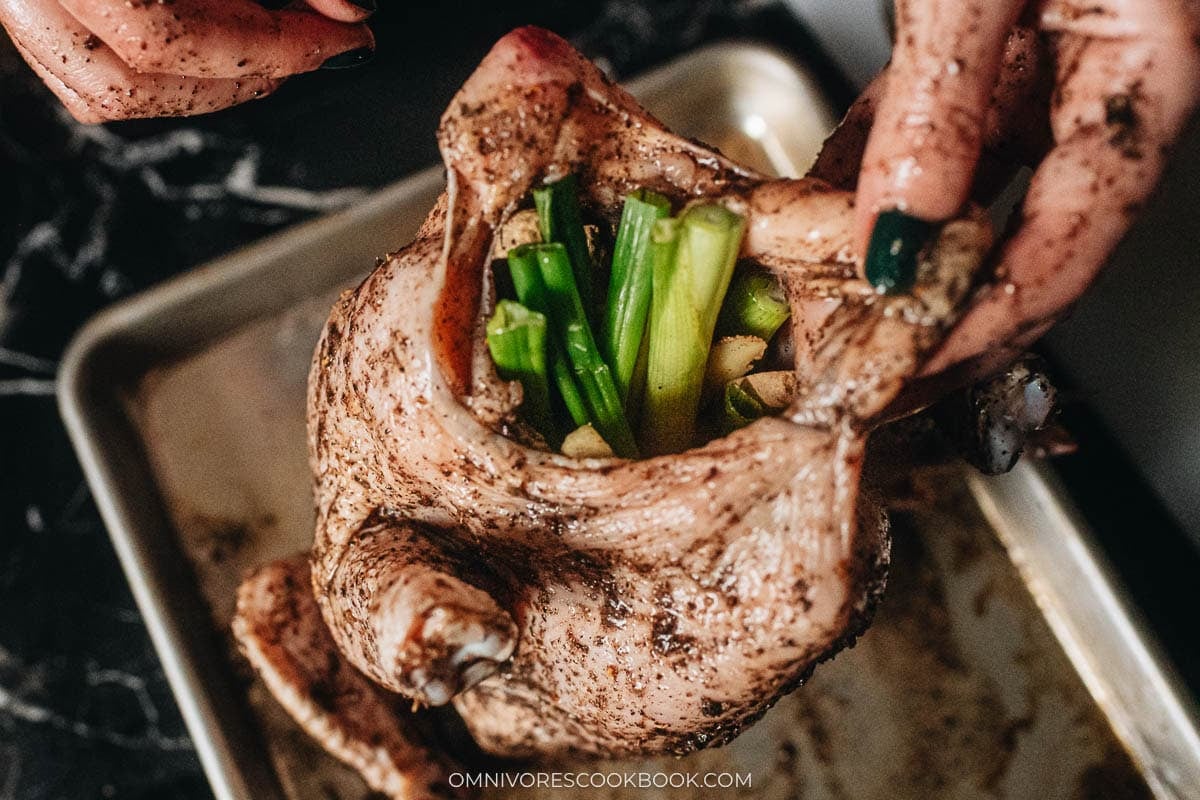
6. Stuff the cavity: Fill the cavity with green onion and ginger, then seal it with the head of garlic, cut side facing in. Stitch the opening closed with a toothpick if you have one, and tuck the wing tips under the breasts so they do not scorch.
7. Marinate overnight: Place the chicken breast-side-down in the same bowl, cover with plastic wrap, and refrigerate overnight. Rotate it once halfway through if you remember, though it is fine if you forget.
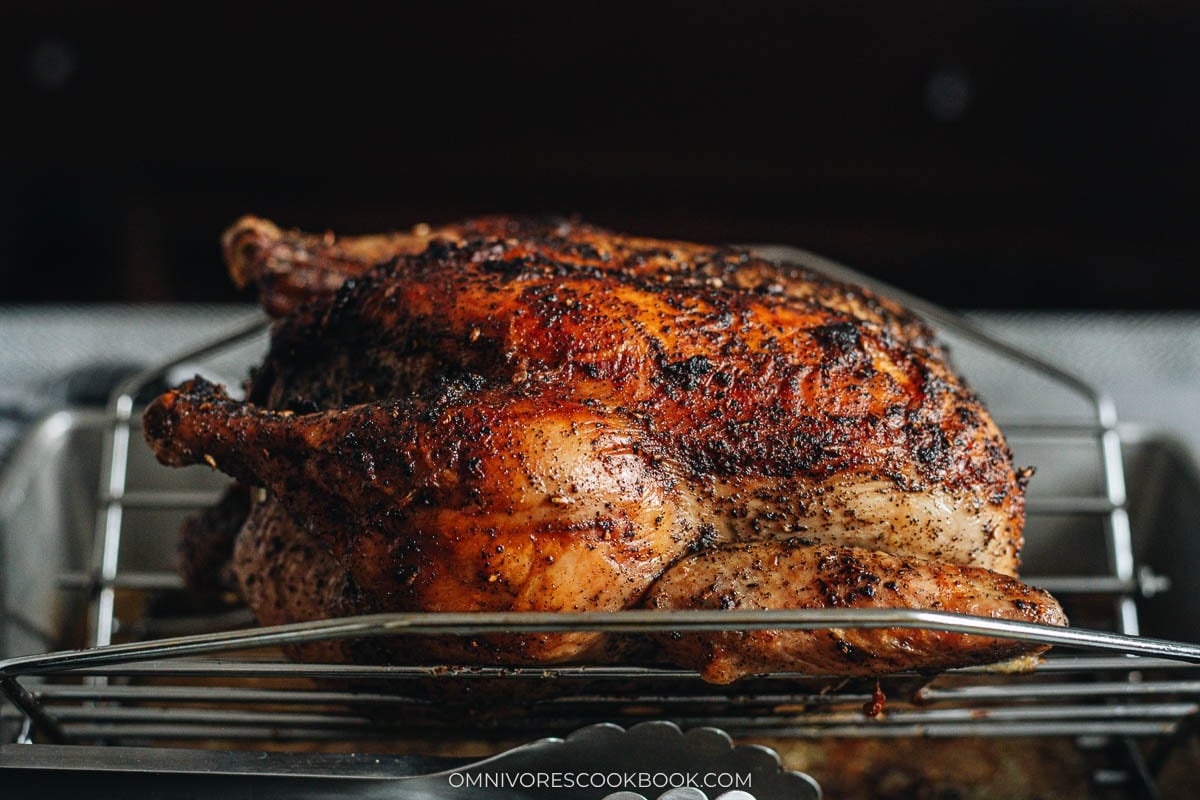
8. Heat the oven: Set an oven rack in the middle position and preheat to 450°F (232°C). Line a roasting pan with foil, pour in a cup of water to keep the drippings from burning, and set a rack in the pan.
I like to use an adjustable roasting rack to elevate the chicken and make it easier to flip during roasting, so the skin crisps up evenly on all sides. A regular roasting rack set inside a roasting pan works just as well.
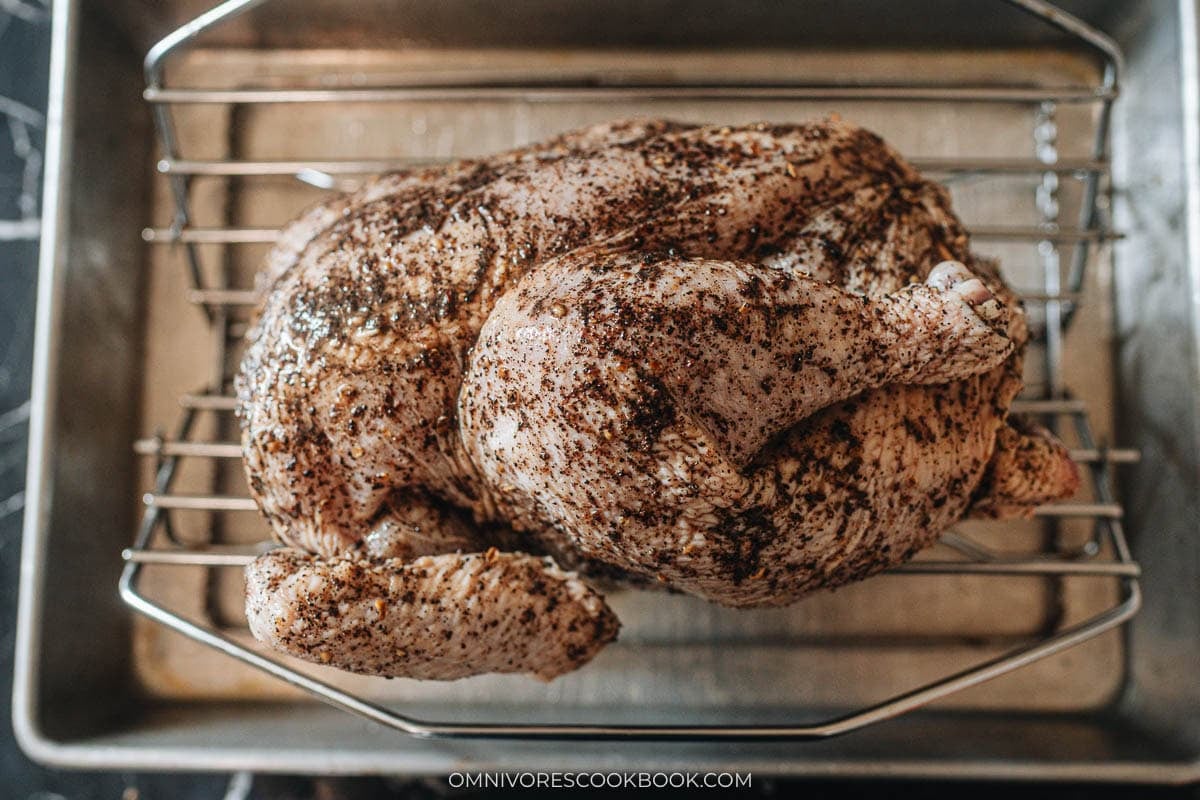
9. Roast hot: Drizzle the leftover marinating liquid over the bird and roast at 450°F (232°C) for 30 minutes.
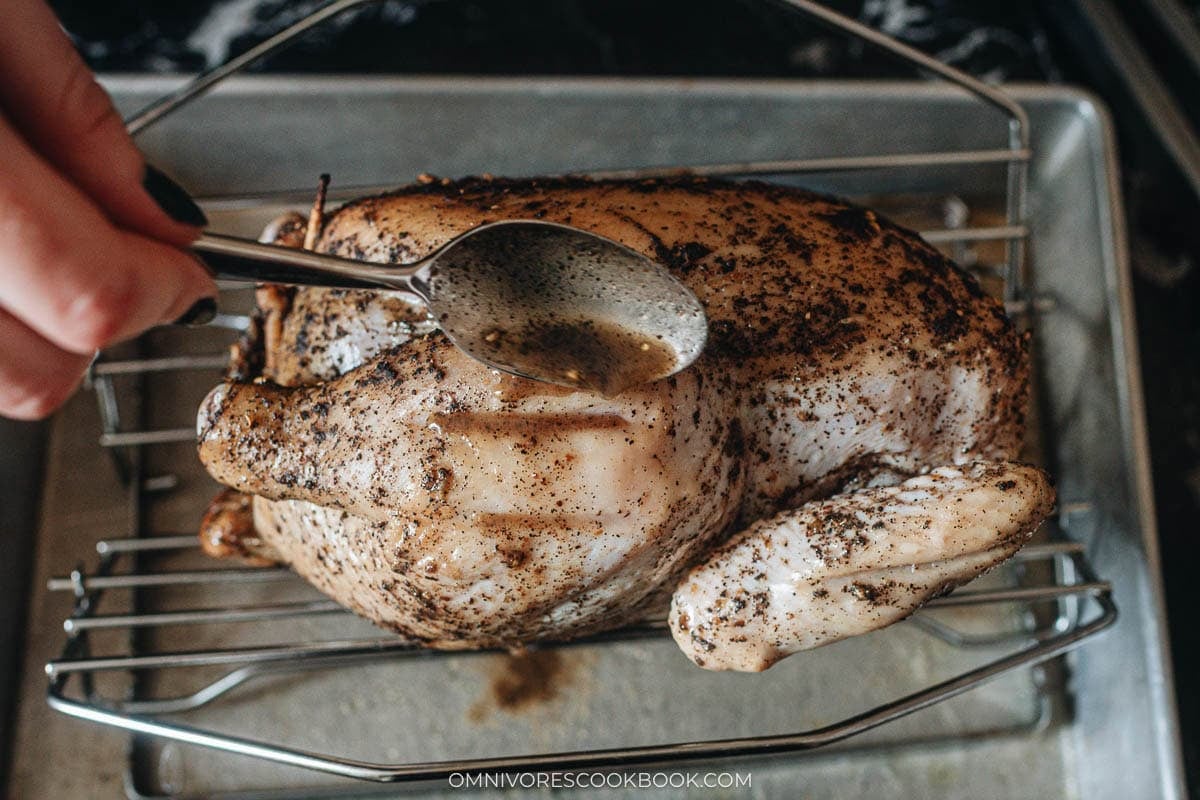
10. Drop the heat: Take the chicken out and lower the oven to 350°F (176°C). Drizzle a little more sesame oil over the top and add water to the pan if it looks dry.
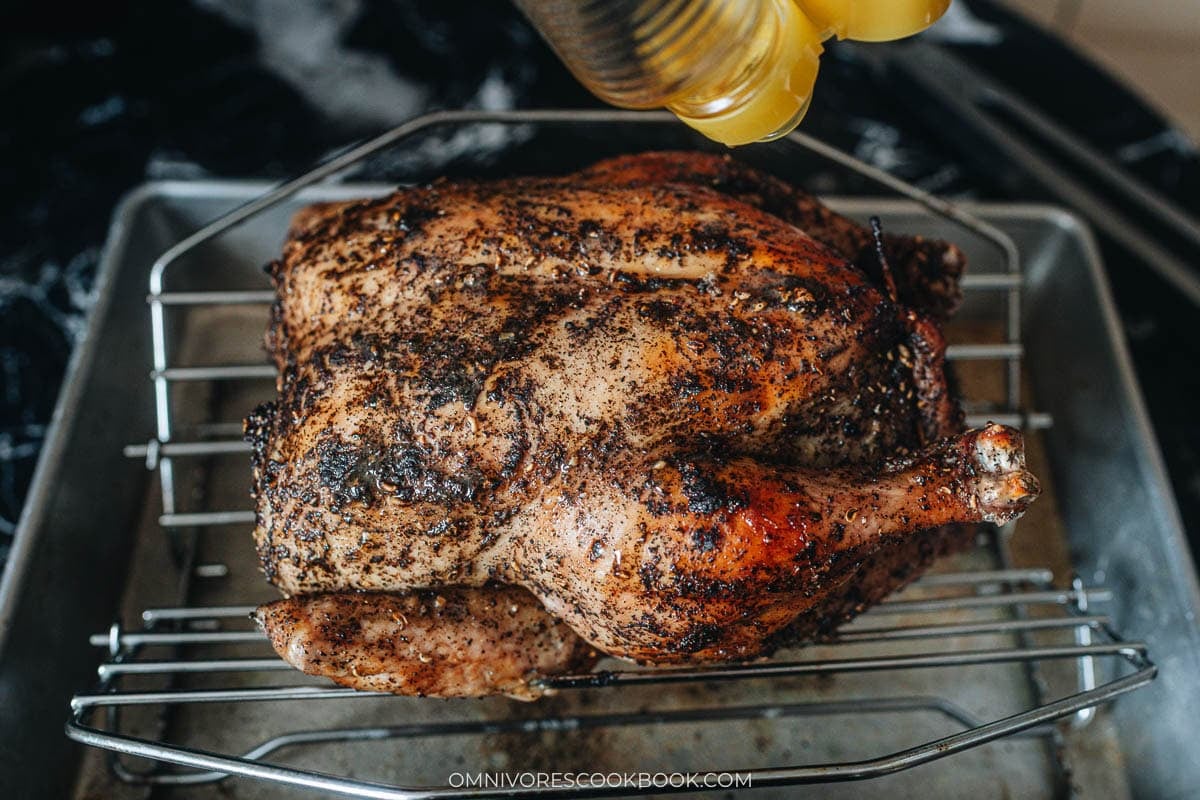
11. Finish roasting: Return the bird to the oven and roast at 350°F (176°C) for another 30 minutes, or until the juices run clear.
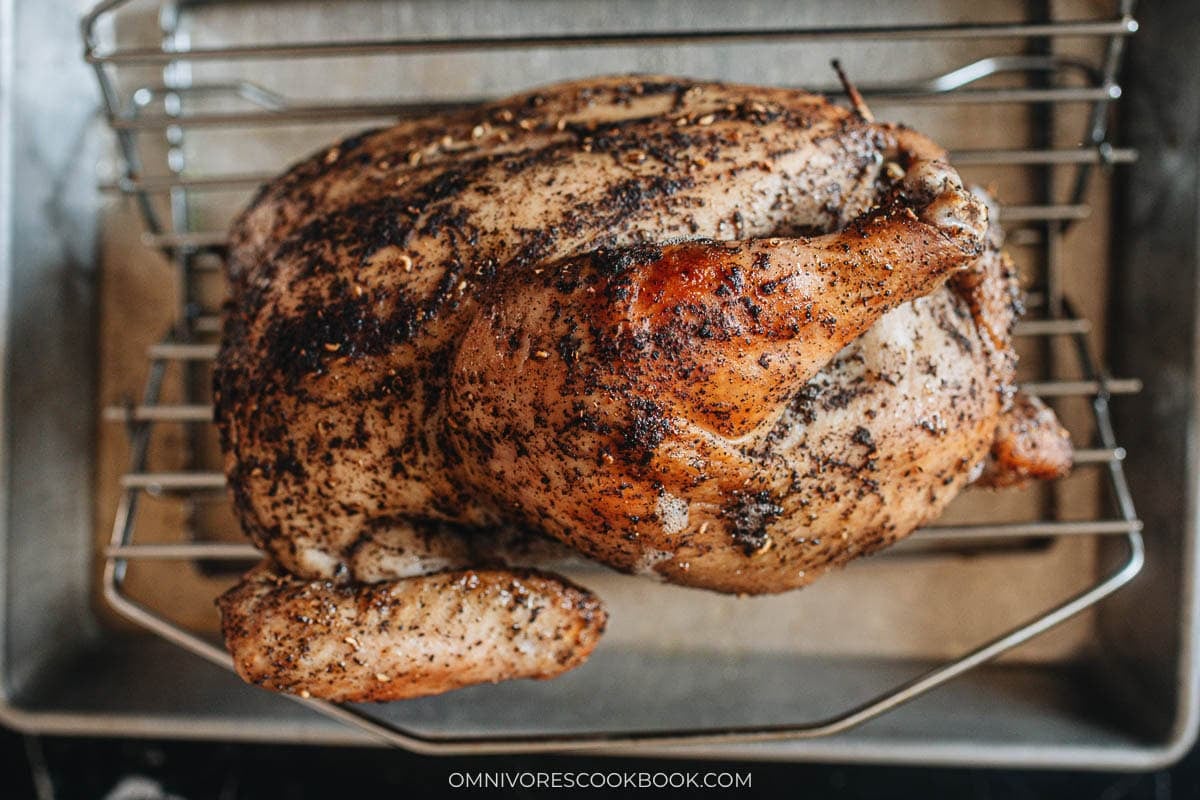
12. Check for doneness: For a smaller bird under 4 pounds, start checking around the 20-minute mark so it does not overcook. Use an instant-read thermometer in the thickest part of the thigh and breast: the thigh should read at least 160°F (71°C) and the breast at least 155°F (68°C), rising to a safe 165°F (74°C) as it rests.
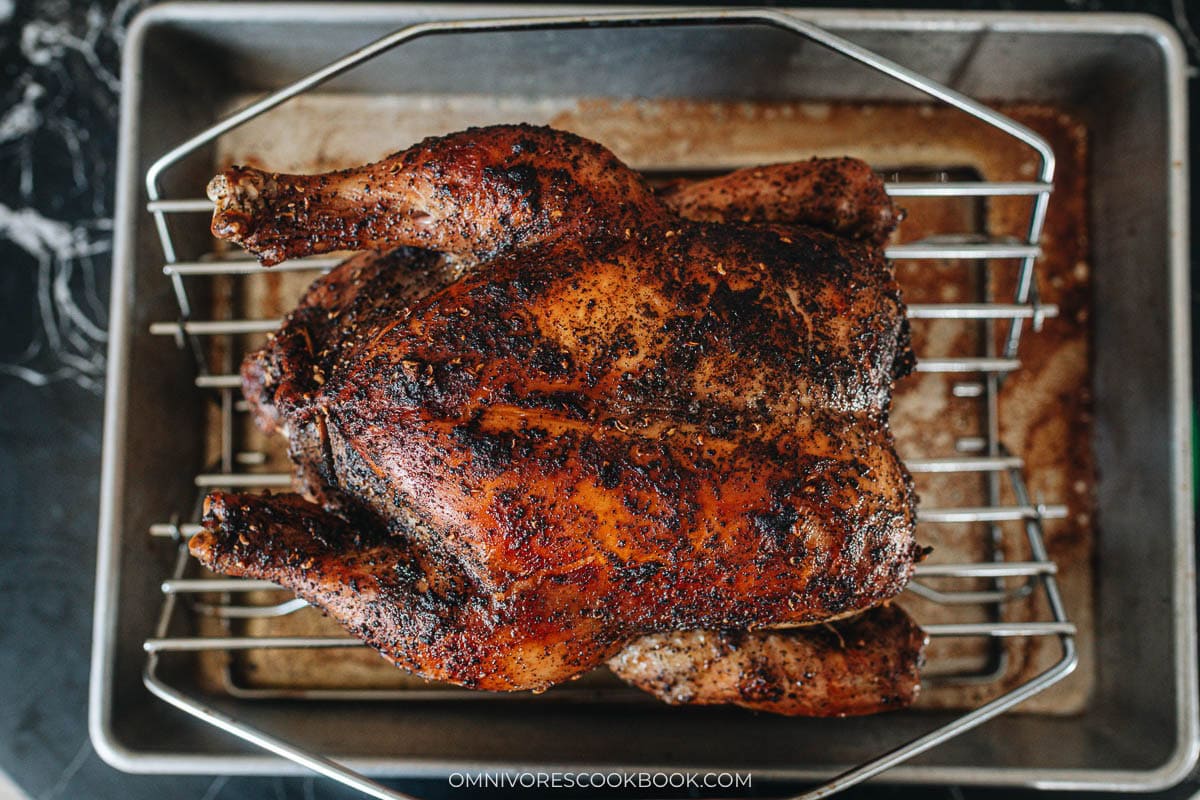
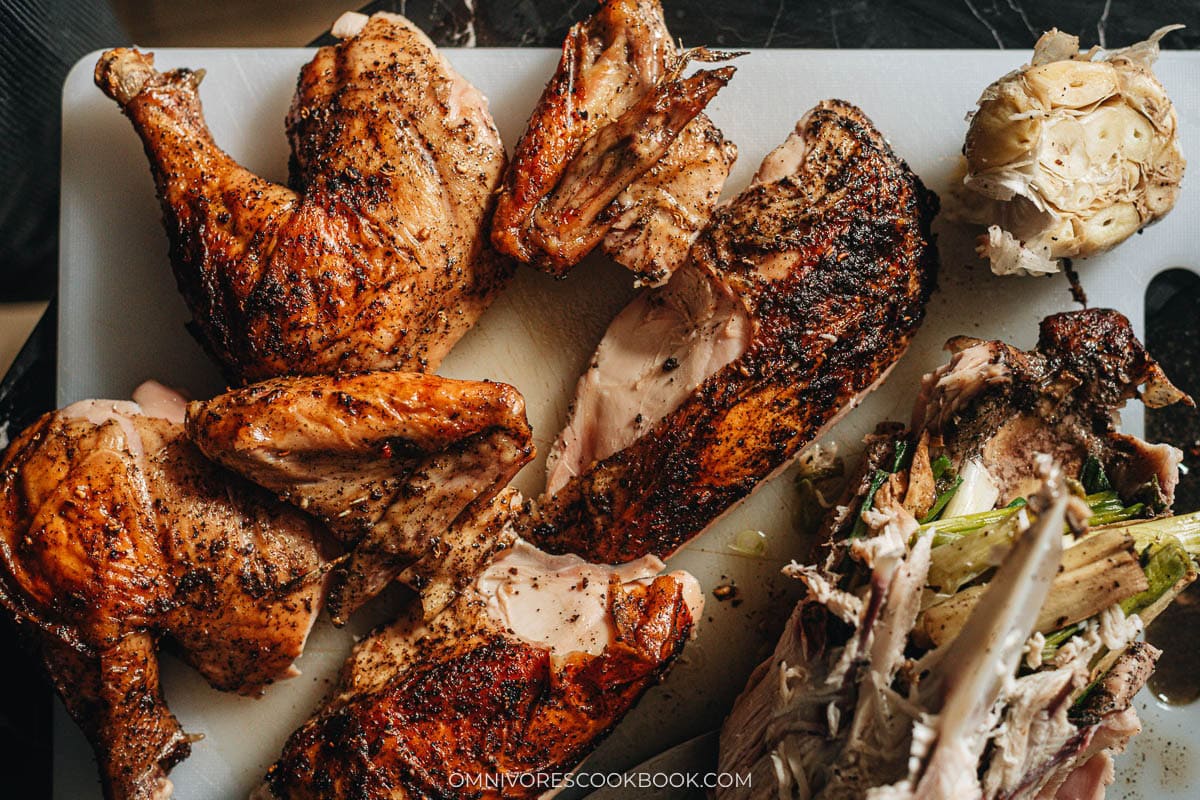
13. Rest the chicken and carve: Let it rest at least 10 minutes before carving. It holds its heat for about 30 minutes.
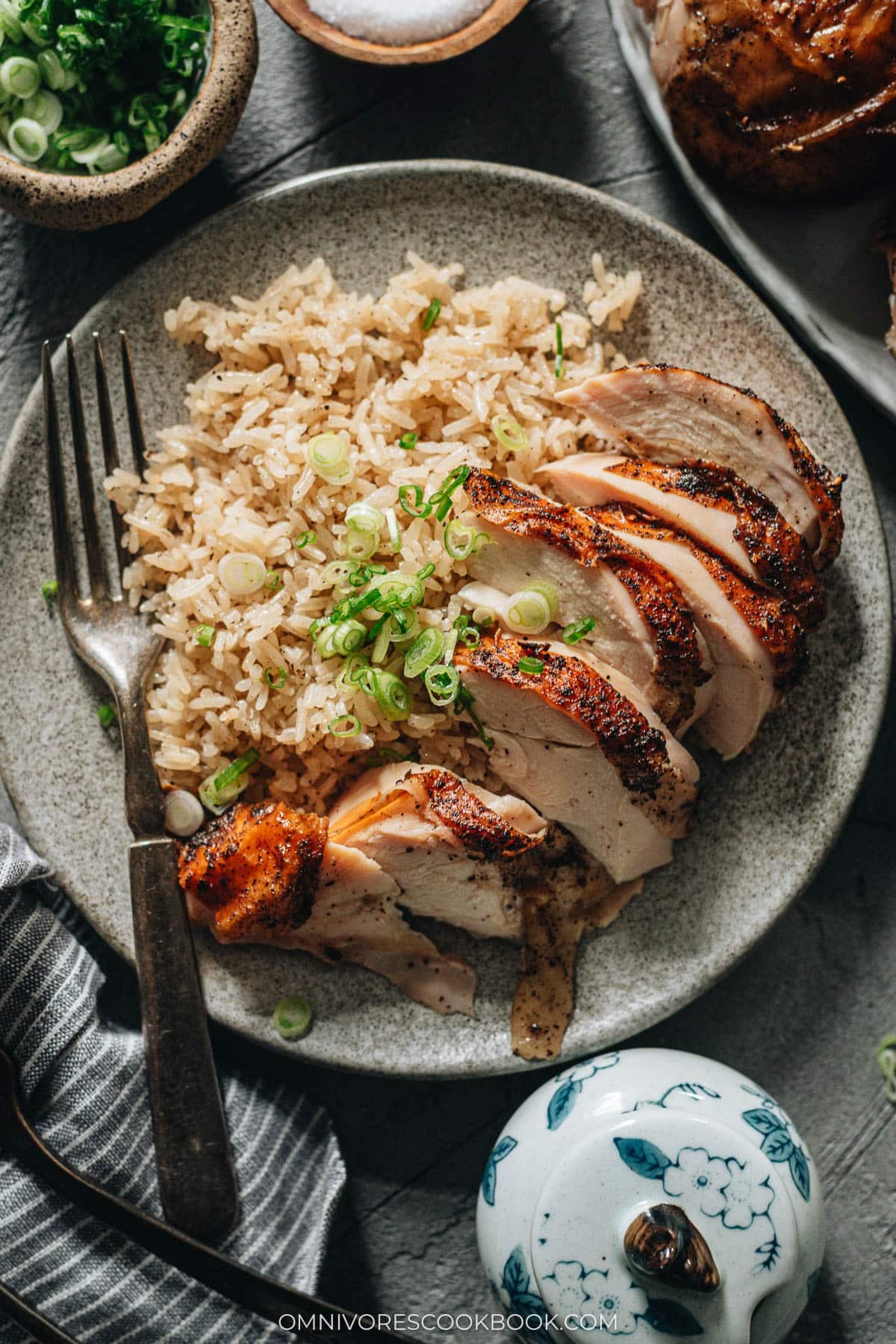
14. Cook the bonus rice: Pour the pan drippings into a measuring cup and top with water to reach the liquid your rice needs. Rinse the rice twice, drain well, then cook it with the dripping water, a few ginger slices, and a pinch of salt until done. Fluff, taste, and carve the chicken over the top.
Cooking Tips to Consider
Buy a smaller bird if you can: A 3.5 pound chicken roasts faster and comes out juicier than a 5 pound one, which is why I go for the smaller one when the market has it.
Marinate overnight: I highly recommend marinating the chicken overnight in the fridge. This gives the salt time to penetrate the meat, seasoning it throughout and helping it stay juicy and tender during roasting. If you’re short on time, a few hours of marinating in the fridge will still add flavor, but overnight gives the best results.
Try the V-rack method for crispier thighs: If you have an adjustable rack, shape it into a V and roast the bird on its side, flipping once, so both thighs color before the final lower-temperature stretch. It takes more attention but the thigh skin comes out crisper.
Do not skip the pan water: A cup of water under the rack keeps the drippings from scorching, which matters because those drippings become the rice. I add more mid-roast if the pan looks dry.
Pull the breast a touch early if you like it juicy: I cook the breast slightly under 165°F and let the rest bring it up, which keeps the white meat moist.
How I love Serving This
A whole roasted chicken is one of my favorite centerpieces to put on the table. I love carving it at the counter and piling the juicy pieces straight over the ginger-scented rice made with its own drippings. I can’t even tell you how delicious this combination is. You have to make it! On a typical weekend, I like to keep things simple and serve the chicken and rice with a green vegetable, like my bok choy with oyster sauce.
Last year, I hosted a holiday dinner for some friends, and I made this roasted chicken the centerpiece of the table. I started the meal with my hot and sour soup, then served the chicken alongside crispy fried pumpkin with salted egg yolk and a cold spicy cucumber salad. Everything paired so well together, but I have to say, the roasted chicken was definitely the star of the dinner.
Frequently Asked Questions
Why do I toast the salt and peppercorns before grinding?
Toasting the salt, tea, and peppercorns over low heat until they smoke wakes up the oils in the spices and gives the rub its smoky depth.
How do I get crispy skin on a roasted chicken?
In my experience two things matter most: coating the skin with the sesame oil rub so it browns, and starting the roast hot at 450°F before dropping to 350°F. The high heat sets the color early and the lower finish cooks the meat through without drying it. For extra-crisp thighs, the V-rack side-roasting method colors the skin more before the final stretch.
What temperature is a whole chicken safe to eat?
Use an instant-read thermometer in the thickest part of the thigh and breast. The thigh should reach at least 160°F and the breast at least 155°F out of the oven, and the dark meat climbs to a safe 165°F as the bird rests. Resting is not optional here, since it both finishes the cooking and keeps the juices in the meat.
Want to Save This Recipe?
Enter your email below & we’ll send it to your inbox. Plus get great new recipes from us every week!

Sichuan Roasted Whole Chicken
Ingredients
- 1 (3.5 to 5 lbs / 1.5 to 2 kg) whole chicken
Sichuan peppercorn salt
- 1 1/2 tablespoon salt
- 1 tablespoon black tea
- 2 teaspoons Sichuan peppercorns
- 1 teaspoon granulated garlic (or garlic powder)
Wet rub
- 2 tablespoons Shaoxing wine (or dry sherry)
- 1 tablespoon sesame oil more to drizzle
Stuffing
- 4 green onions , sliced into 2” (5 cm) pieces
- 15 slices ginger , 2 in
- 1 head garlic , top removed
Optional – chicken rice
- 1 cup rice
- 2 pieces ginger , minced
- Pan drippings + water needed for adequate rice cooking liquid
- 1 green onion , thinly sliced
- Pinch of salt
Instructions
Marinate the chicken
- Add the salt, tea, and peppercorns to a pan. Heat over medium-low heat, stirring regularly, until smoking.
- Remove the pan from the heat and add the granulated garlic. Transfer everything into a spice grinder or a small food processor. Grind until everything turns into a granulated spice mix.
- Combine the shaoxing wine and sesame oil in a small bowl. Stir well.
- Transfer the chicken into a large bowl. Rub the chicken with the sesame oil mixture on the inside and outside until well coated.
- Sprinkle the Sichuan peppercorn salt mixture onto the inside and outside of the chicken. Gently pat and rub with your hands until evenly coated.
- Stuff the cavity with green onions and ginger. Seal with the garlic, with the cut side facing the inside of the chicken. Secure the stuffing by stitching together the cavity with a toothpick (skip this if you don’t have a toothpick). Tuck the wing tips underneath the breasts to prevent burning.
- Place the chicken breast-side-down in the same large bowl. Cover with plastic wrap. Let it marinate overnight in the fridge. Rotate once halfway through marinating (it’s OK if you forget the rotating).
Roast the chicken
- Adjust the oven rack, so the chicken will be positioned in the middle of the oven. Preheat the oven to 450 °F (232 °C). Line a roasting pan with foil for easy cleaning. Pour in a cup of water to prevent the drippings from burning. Place a roasting rack into the pan.
Option 1 – Fussless roasting
- Drizzle the extra marinating liquid onto the chicken. Roast the chicken at 450 °F (232 °C) for 30 minutes.
- Take the chicken out of the oven. Turn the oven to 350 °F (176 °C). Drizzle additional sesame oil onto the chicken. Add more water to the pan if needed.
- Return the chicken back to the oven. Roast at 350 °F (176 °C) for another 30 minutes, or until the juices run clear.
Option 2 – Extra crispy thigh
- If you happen to have an adjustable roasting rack, you can use this method to get extra crispy thighs. Start the roasting by shaping the roasting rack into a “V” shape. Grease the rack with a thin layer of oil to prevent sticking. Place the chicken on its side, so the thigh and the wing are facing up. Drizzle a few teaspoons of the marinating liquid onto the chicken. Roast at 450 °F (232 °C) for 15 to 20 minutes, until the top of the thigh turns golden brown.
- Take the chicken out of the oven. Wearing a pair of oven mitts and holding both ends of the chicken, flip it so the other thigh and wing face up. Drizzle the rest of the marinating liquid onto the chicken. Continue to roast at 450 °F (232 °C) for 10 to 15 minutes, until the top of the thigh turns golden brown.
- Take the chicken out of the oven. Turn the oven to 350 °F (176 °C). Drizzle additional sesame oil onto the chicken. Add more water to the pan if needed.
- Return the chicken to the oven. Roast at 350 °F (176 °C) for another 30 minutes, or until the juices run clear.
Test doneness and rest
- For a smaller chicken (under 4 lbs / 1.8 kg), I would test the chicken at the 20-minute mark, just in case, to avoid overcooking. For a bigger chicken, you might need 10 minutes or more of additional roasting time at 350 °F (176 °C) to finish.
- For a more accurate reading, use an instant-read thermometer, inserted into the thickest part of the thigh and breast. The thigh should read at least 160 °F (71 °C) and the breast at least 155 °F (68 °C). While resting, the temperature of the dark meat will continue to go up and should reach 165 °F (74 °C), the safe temperature recommended by the FDA. Note, I prefer to cook chicken breast slightly under 165 °F (74 °C), which yields super juicy and tender results.
- Let the chicken rest for at least 10 minutes before serving. It will stay pretty hot for about 30 minutes.
(Optional) Bonus – chicken rice
- Collect the pan drippings in a measuring cup. Add water to the drippings to reach the needed amount of liquid, depending on the type of rice you’ll make. You will need 1 3/4 cup of liquid for jasmine rice, or 1 1/4 cup of rice for medium or long grain rice. Check out my rice cooking guide for more information.
- Add the rice into a small saucepan. Add water to cover. Rinse in a circular motion with your fingers a few times. Drain the water and repeat the process one more time. Drain the water thoroughly.
- Add the pan dripping water mixture, ginger, and a pinch of salt.
- Cook over medium heat until the water comes to a full boil. Cover the pan and turn to low heat immediately. Steam 15 minutes for jasmine and long grain rice, and 18 minutes for medium grain rice. Do not uncover the pot during steaming.
- Once the rice is done cooking, remove the pan from the stove. Let sit, covered, for another 10 minutes.
- After resting the rice, use a fork or spatula to fluff it. Taste the rice. Add more salt and mix again, if needed.
Serving
- Once rested, carve the chicken and top it onto the rice. Garnish with green onion. Serve hot as a main dish.
Notes
- The nutrition facts are calculated based on 1 serving of roasted chicken without the rice.
Nutrition

Did you make this recipe?
I’d love to hear how it turned out for you! Please take a moment to leave a 5-star rating ⭐️ and share your thoughts in the comments further down the page. It really helps others discover the recipe too.
Barbara
I used a cornish hen, and it came out great. My question is what kind of tea do you use? I use the black tea I had for regular Ice tea. It doesn’t say in the recipe What kind to use. Couldn’t really taste the tea, but it was very tasty Anyway. It was a small bird. I propped it up on its side with some aluminum foil. And it worked fine. Next time, I will put the garlic in there in individual. Not a whole head because they didn’t cook. They were still hard. too big for a small bird. Perfect size for 2 people. I served it with fry rice in broccoli. Husband even liked it
Maggie Zhu
I’m so glad you enjoyed the recipe! A Cornish hen sounds like a great option for two people, and I’m happy to hear it worked out so well. It’s been a long time since I developed this recipe, so I don’t remember the exact tea I used, but I’m pretty sure it was regular black tea. I remember being able to taste a subtle tea flavor from the spice rub, although it’s not meant to be a dominant flavor. And you’re right, using individual garlic cloves would work much better for a smaller bird. Thanks for sharing your experience!
Caroline
I’m low on green onions, can I use some red and white onions?
Maggie Zhu
No problem at all!
MM
When you say “tea,” do you mean powder or liquid tea?
Maggie Zhu
I used black tea leaves. After toasting with the salt mixture, I grind them into powder for the rub.
If you have powdered tea, you can use that as well.
TSky
Great collection!
Joe Fallon
This looks delicious and I wan to try out. Before I start I am confused about the “marinating liquid” that is referenced in this recipe. What exactly is used for the marinade?
Maggie Zhu
Sorry about the confusion! I was talking about the pan dripping – it contains the seasonings so I used “marinating liquid”.
Andrea Lin
Loved this! We love crispy skin so I used our vertical roaster which means I skipped the stuffing, but it was still flavorful and the skin was wonderfully crisp.
Philip
I think you mean one cup of rice, not ice 😁
Christine
My husband, who is from Hong Kong, and generally only tolerates chicken dishes said this was the best chicken he has ever had at home or at a restaurant. It definitely takes prep time but it was super delicious. Thank you.
Gabi
I made this for Christmas dinner with a chicken +shiitake zong zi recipe I have, your smashed cucumbers + garlic and garlic+ chili green beans and it was perfect!!! The chicken was so tender and the flavor just absolutely wonderful. I had never cooked a chicken high heat then low heat and I think that combined with the overnight marinade…perfection. I was also really surprised how much the spice blend smelled like black sesame (one of my favorite flavors!) – I’m very much looking forward to leftovers for lunch tomorrow. This will be a go-to recipe for sure, thank you so much!
Maggie
Wow that’s a very fancy Christmas dinner spread! So happy to hear you tried this dish for your gathering and liked the recipe 🙂
Merry Christmas and happy holidays!
Mo
I followed your instruction to the letter, and what a dish.!!! Is absolute joy. You are amazing thanks so much
Nina Contini Melis
This is basically the same ingredients as a Chinese smoked chicken, which I make often. It is just simpler since you don’t have to dedicate a pot for smoking (one never really gets all the smoke off afterwards). The smoked version uses just a rub of crushed Sichuan peppercorns and salt, toasted in a dry pan, rubbed over the bird (smallish chicken about 2 1/2 lbs) inside and out and left to marinate overnight in the fridge, then the chicken is boiled for 10 minutes in water with soy sauce, scallions and ginger, then heat turned off and chicken left in pot till water cools to room temp, which finishes the cooking. Then it is drained and smoked by strewing black tea leaves, sugar and flour – dry on the bottom of pot (line the pot with aluminium foil for easier cleanup), add chicken raised off the bottom so it doesn’t touch the smoking ingredients, pot is sealed with close fitting lid, put over medium heat which creates an aromatic smoke, and smoke for about 8 minutes then turn chicken to other side and smoke for about 5 minutes. Remove bird and brush with sesame oil. Done.