
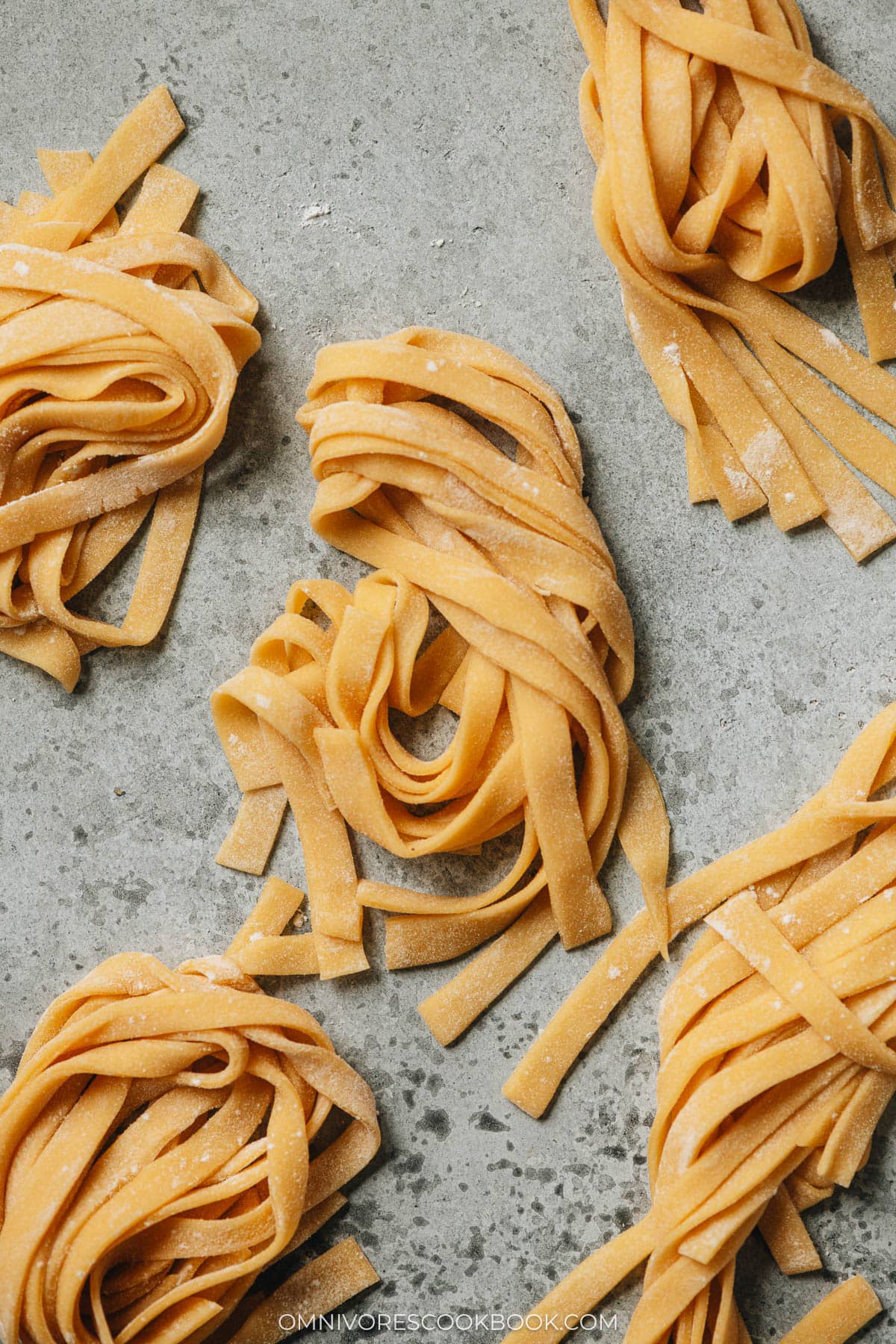
Chinese hand-cut egg noodles are the everyday cousin of hand-pulled noodles, rolled thin and sliced by hand instead of stretched. The dough is firmer than pasta dough because the extra eggs and low water pull the gluten tighter, which is what gives the finished noodle its signature bounce. Chinese home cooks still work this dough by hand instead of moving it through a pasta machine because the long knead is where the springiness comes from.
I first learned to make these noodles by watching my grandma work a mound of dough on the kitchen table in Beijing. She would roll a big sheet the size of a serving tray, fold it, and slice it in one steady motion, and the whole batch was ready before the soup on the stove finished simmering. My recipe version uses the same folded-sheet method she used, adapted for a home-kitchen counter and a regular rolling pin.
I break the work into three groups at the counter, mixing the flour, salt, eggs, and cold water into a rough dough, kneading it firm and springy, and letting it rest under plastic wrap. Then I roll each half of the dough into a large thin sheet, fold it along the long edge, slice it into noodles at the width I want, and give each strand a light stretch. I recommend you to pull together a fresh bowl of these at home using the directions below, they cook in a couple of minutes and give you the exact chew you cannot buy dried.
Ingredients
The list on this Homemade Egg Noodles recipe is genuinely four ingredients, and every one of them shows up in most home kitchens already. Here is what I use:
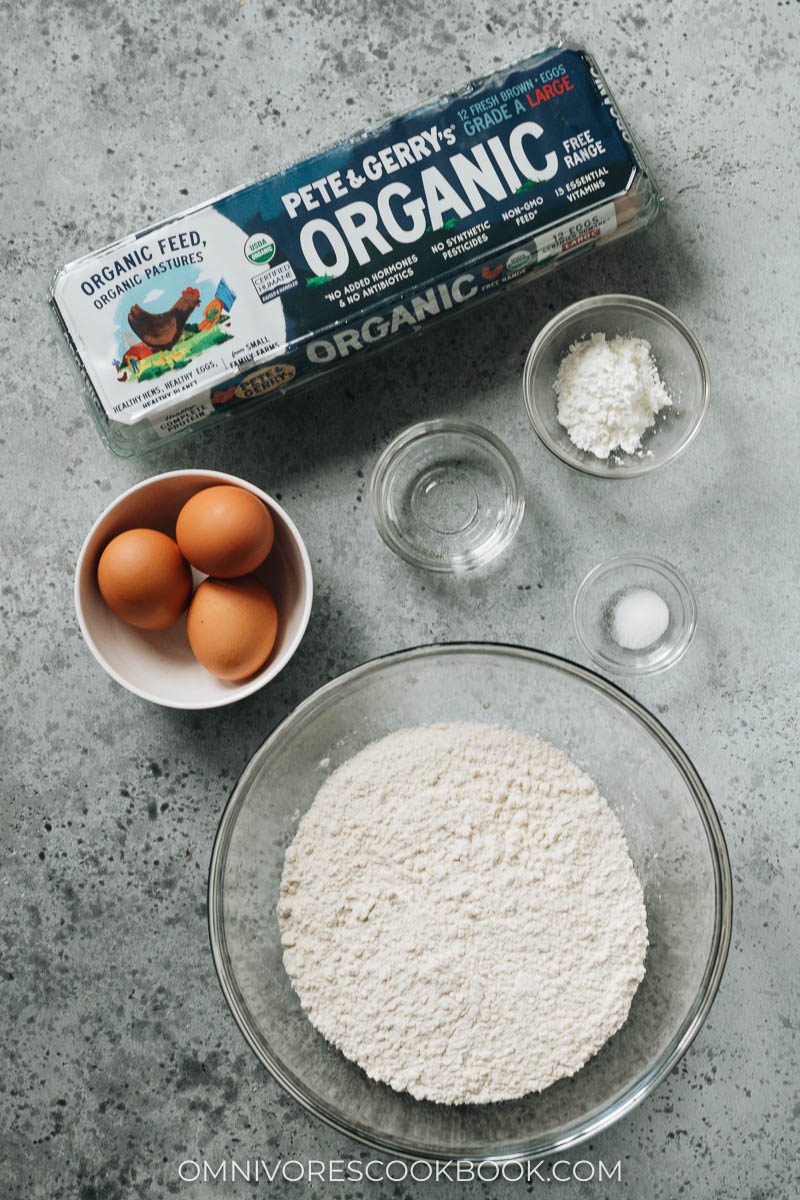
Flour: I reach for regular all-purpose flour for this dough. Bread flour makes the noodle too tough and cake flour makes it too soft, so I stay with all-purpose for a chew that stays springy without turning rubbery.
Eggs: I use whole large eggs and no water beyond a small splash. The eggs are what give the noodle its yellow color and its structure, so I do not swap in whites only or yolks only.
Cold water: I add cold tap water in a small amount and hold back extra until I see how the dough comes together. Egg size, flour brand, and kitchen humidity all move the ratio, so I judge by the look and touch of the dough rather than by a fixed spoonful.
Salt: I stir a small pinch of fine salt into the flour before the eggs go in. The salt seasons the dough and tightens the gluten, which helps the finished noodle hold its bite in a hot bowl of soup.
Cornstarch for coating: I keep a small bowl of cornstarch at the counter to dust the work surface, the rolled sheet, and the sliced noodles. The cornstarch stops the strands from sticking to each other in the pile and slides off in the boiling water without changing the taste.
How to Make
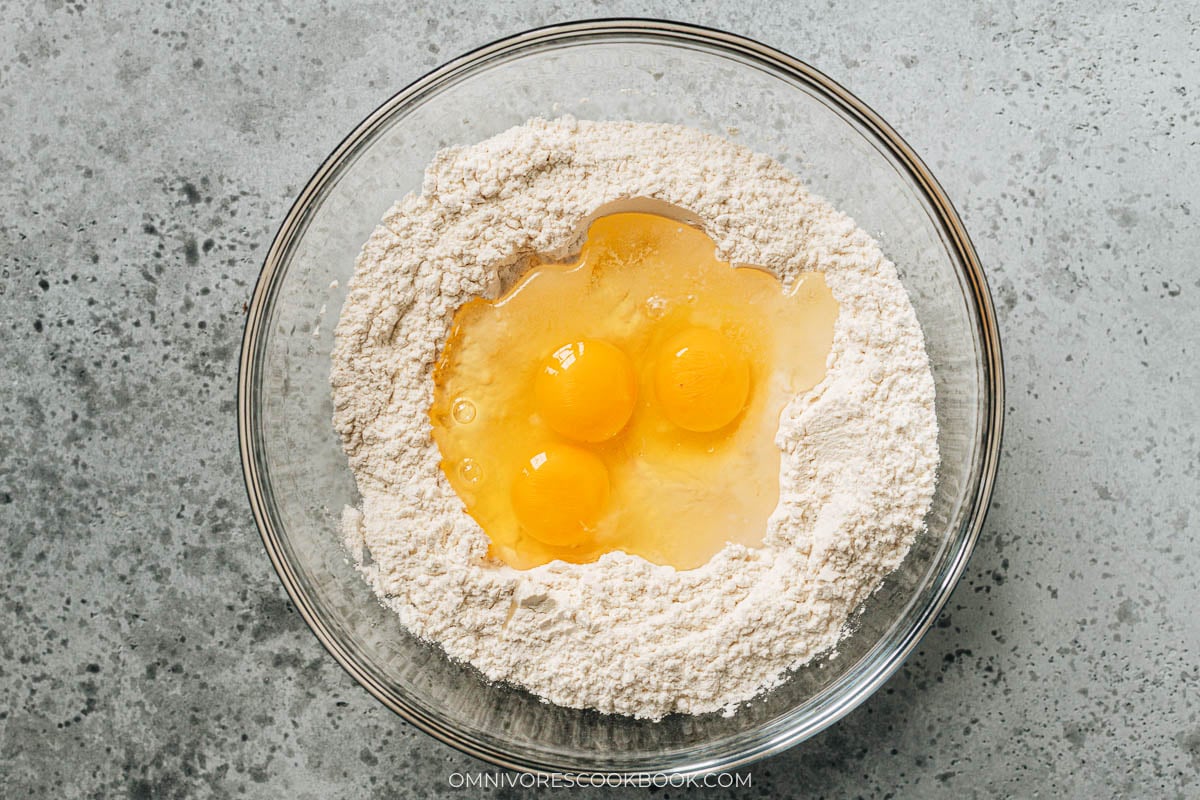
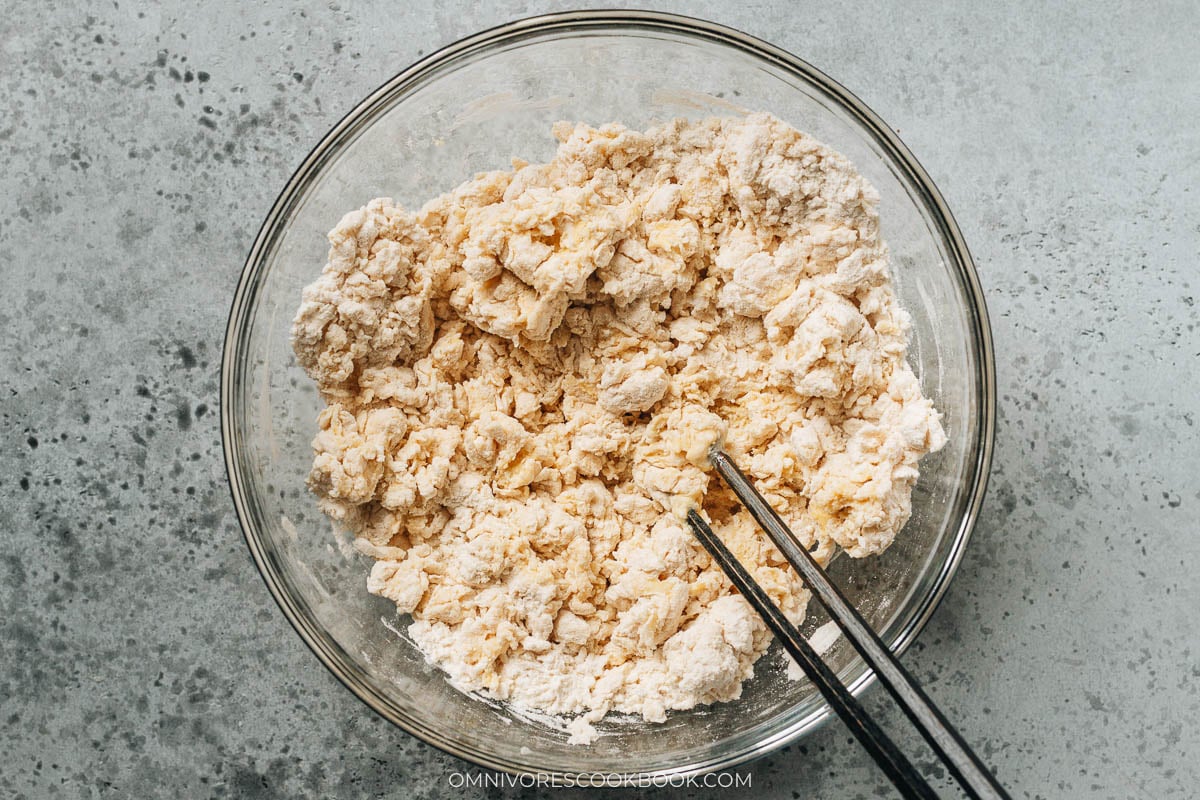
1. Mix the dough: Add 2 cups of all-purpose flour and 1/4 teaspoon of salt to a large mixing bowl and stir to combine. Make a well in the middle, add 3 large eggs and 2 tablespoons of cold water into the well, and stir until shaggy flakes form. If there is still dry flour in the bowl, add 1 more tablespoon of cold water and stir again.
2. Press it together: Use your hands to press the shaggy flakes into a rough mass. The dough should hold together and stay slightly tacky to the hands, not sticky and not dry.
3. Knead the dough springy: Turn the mass onto a clean work surface and knead for 10 to 15 minutes, until the dough is smooth and springs back when you press it. Dust the surface with a little flour if the dough sticks, or wet your hands and knead the water in if the dough is dry and cracks.
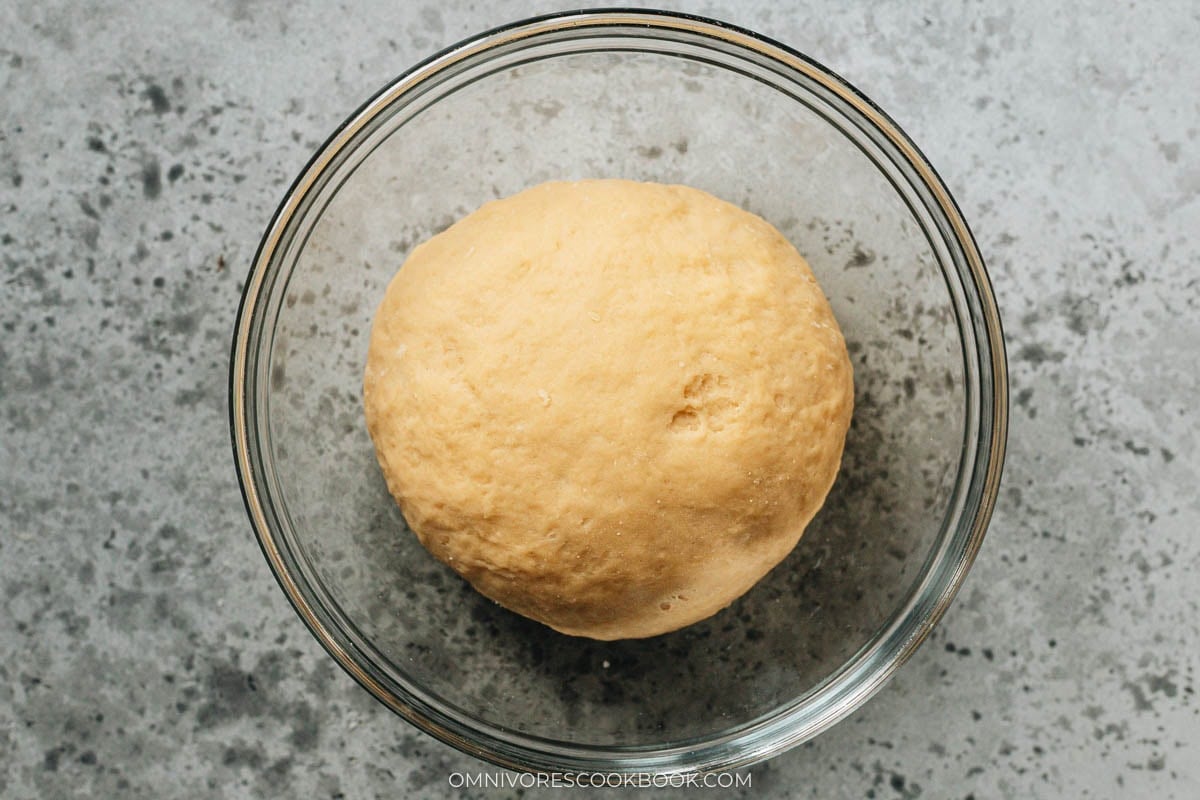
4. Rest 30 minutes: Return the dough to the mixing bowl, cover with plastic wrap, and let it rest for 30 minutes. The surface does not need to look smooth at this stage.
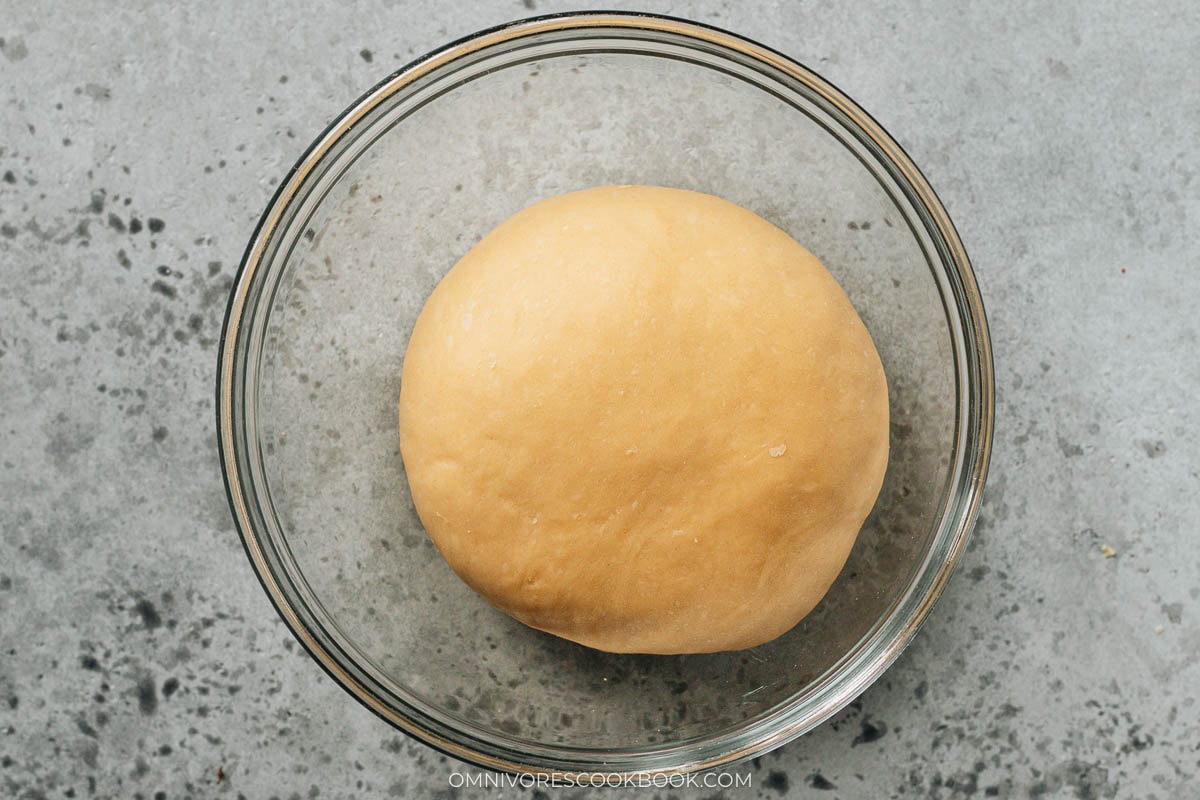
5. Knead and rest again: Uncover the dough and knead for 1 to 2 minutes, until the surface is very smooth. Cover it again and rest for another 10 to 20 minutes to relax the gluten.
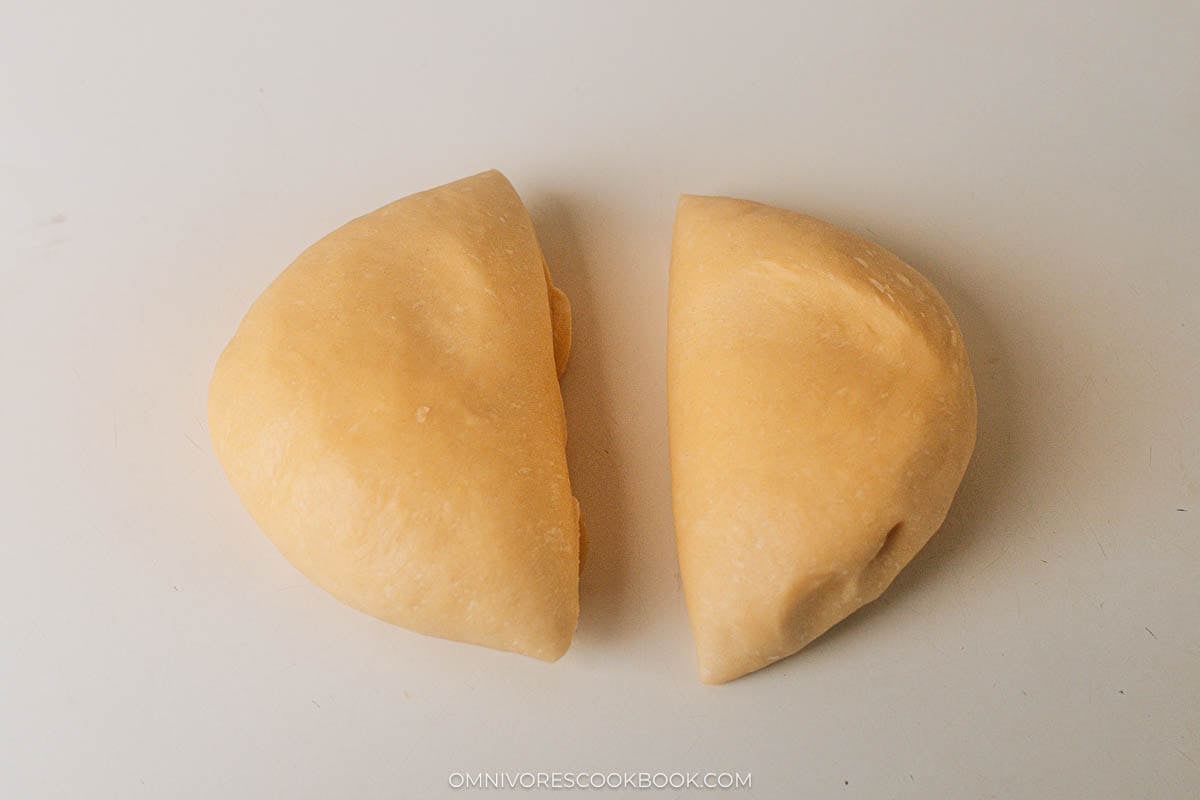
6. Divide and cover: Cut the dough into 2 equal pieces. Cover the half you are not working with so it does not dry out.
7. Press and roll into a rectangle: Dust the work surface with cornstarch and place 1 piece of dough on top. Press with your palms and roll with a rolling pin into a small rectangle. If the dough springs back and refuses to stretch, cover it and rest another 10 to 20 minutes before you continue.
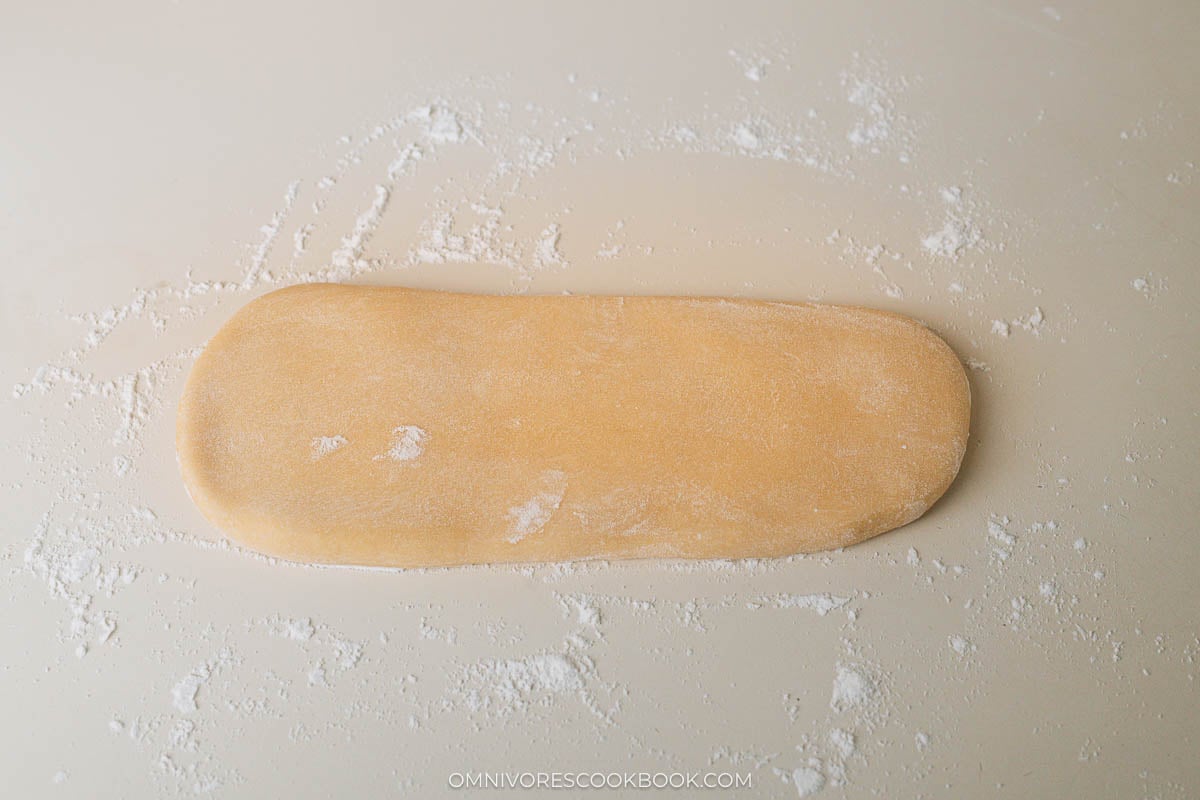
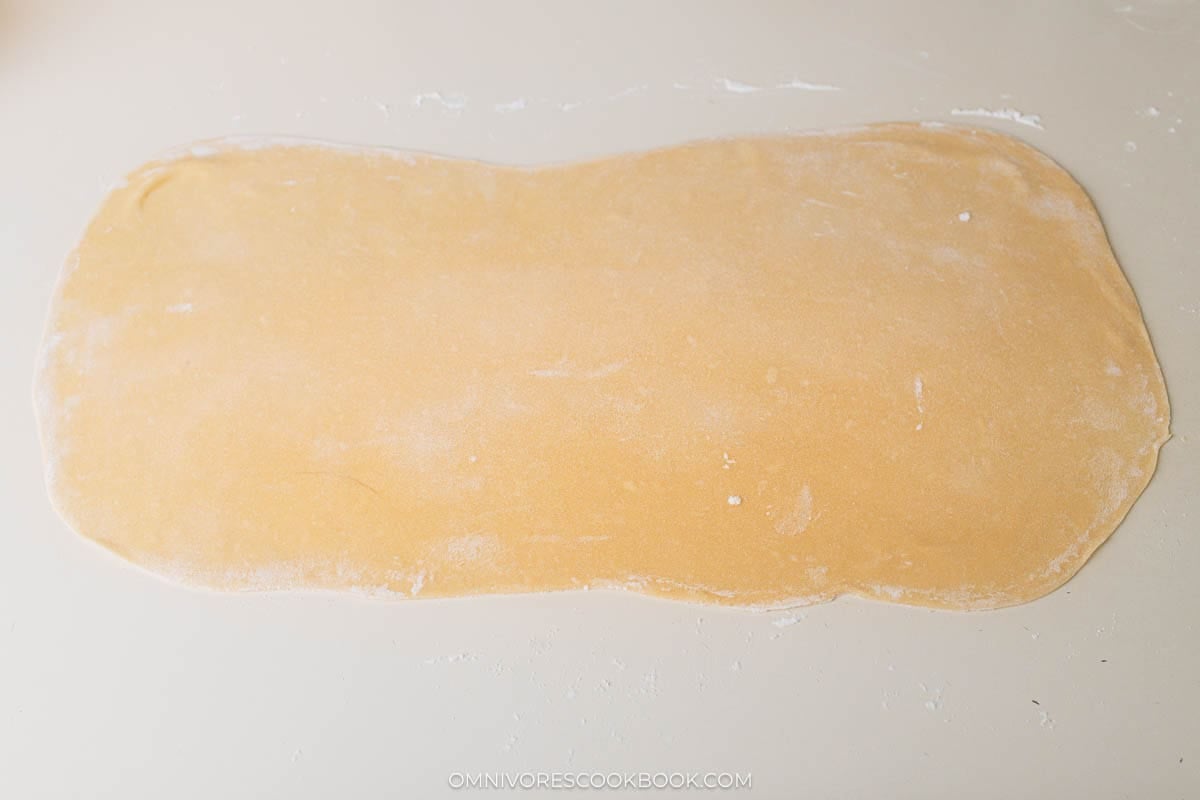
8. Roll into a thin sheet: Roll the rectangle out into a very large thin sheet, about 1/8 inch (3 mm) thick, 18 inches long, and 10 inches wide. Dust the top of the sheet with cornstarch.
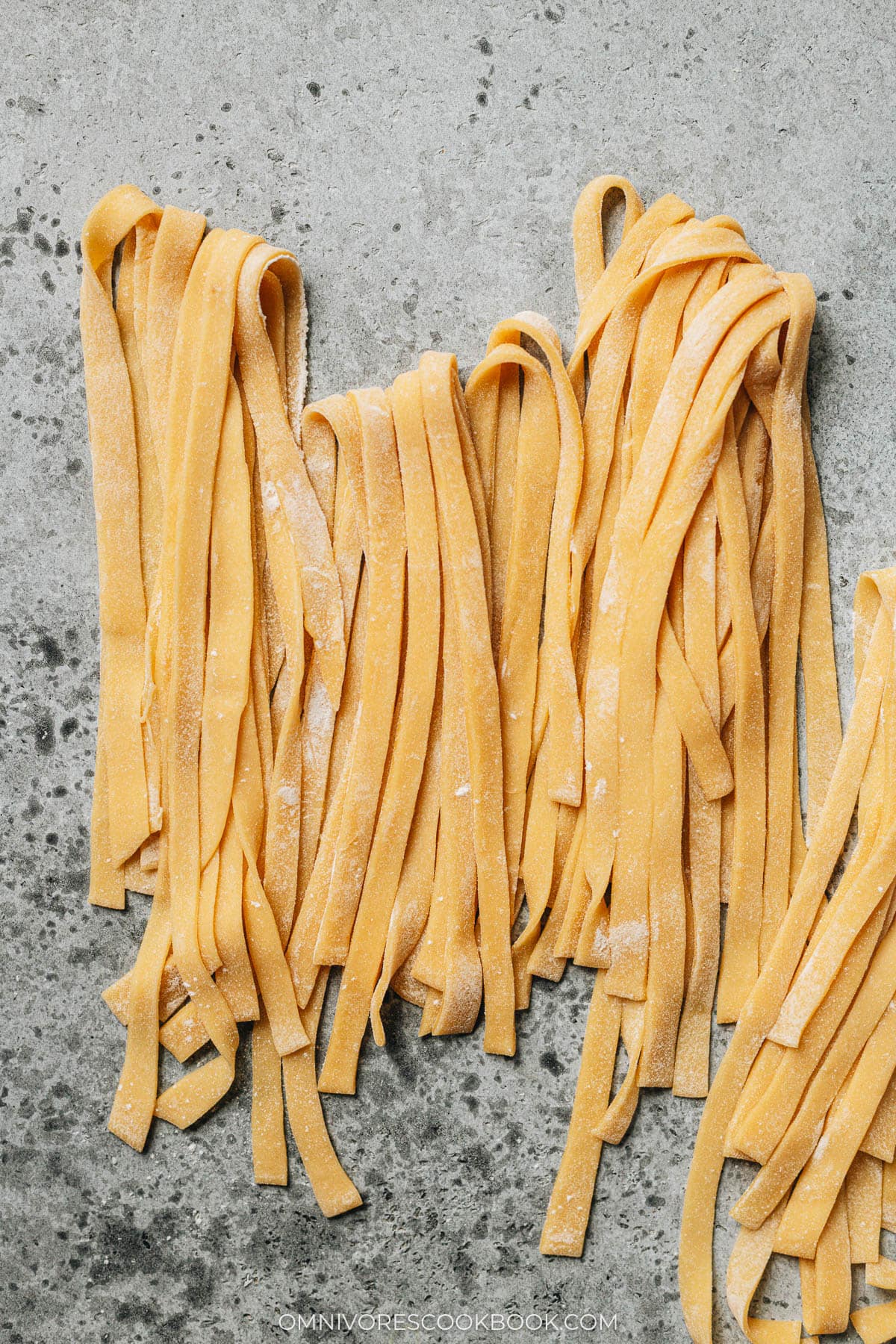
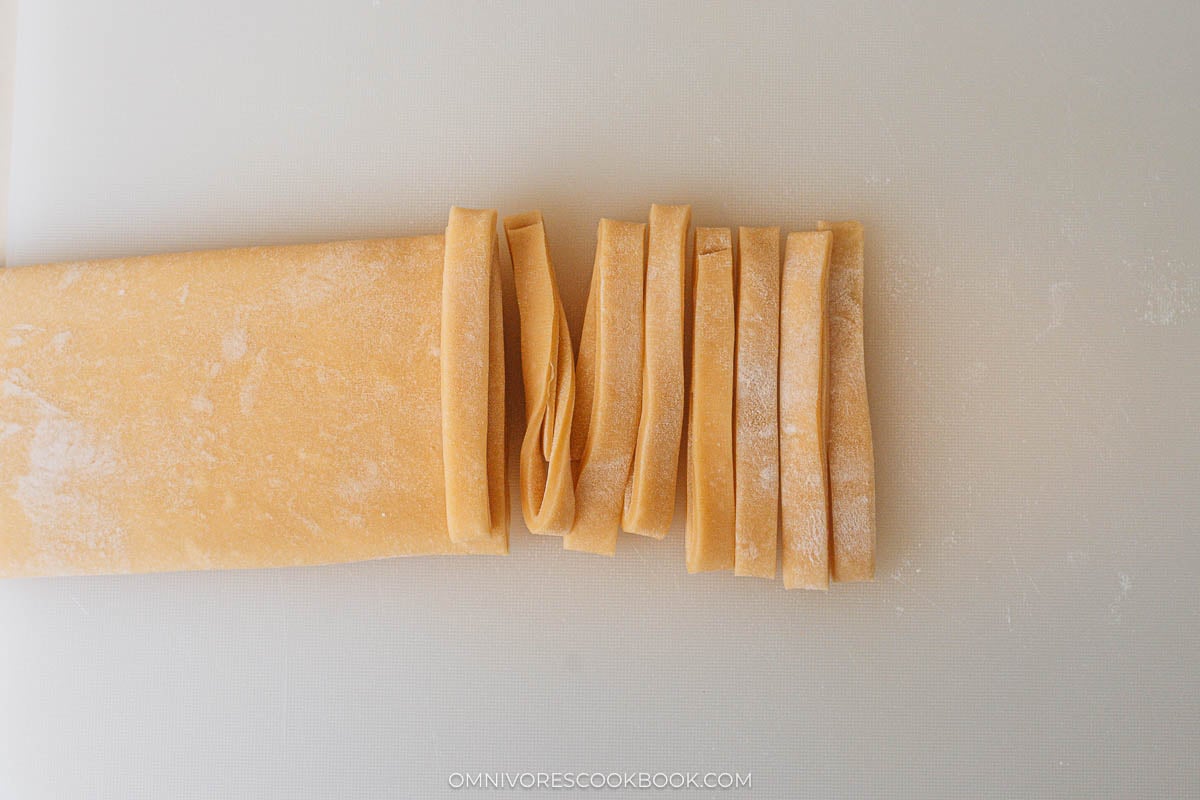
9. Fold and slice: Fold the sheet twice along the long edge into a long roll. Slice the roll into noodles at the width you want, 1/8 inch for thin, 1/4 inch for medium, or 3/4 inch for wide.
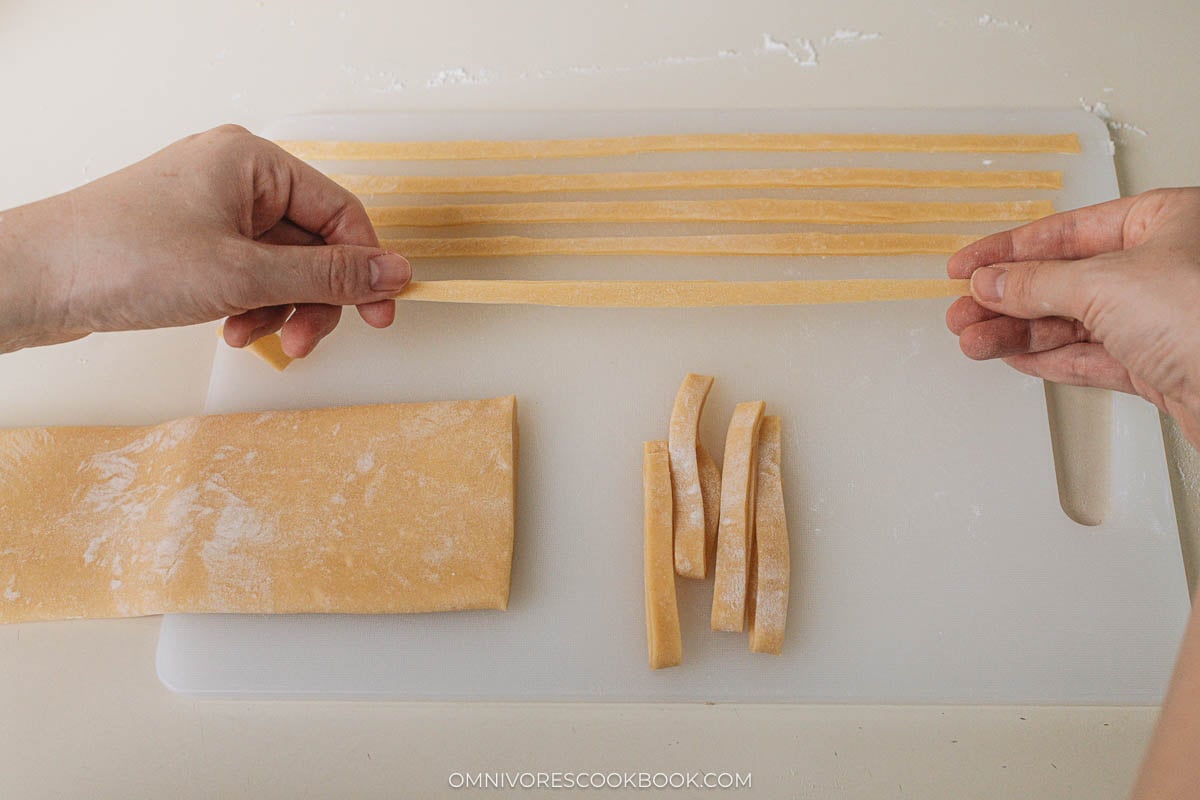
10. Stretch and coat: Pull each noodle by hand so the length increases by about 1/3. Dust the pile with more cornstarch and fluff the strands so every noodle is coated. Repeat with the second piece of dough.
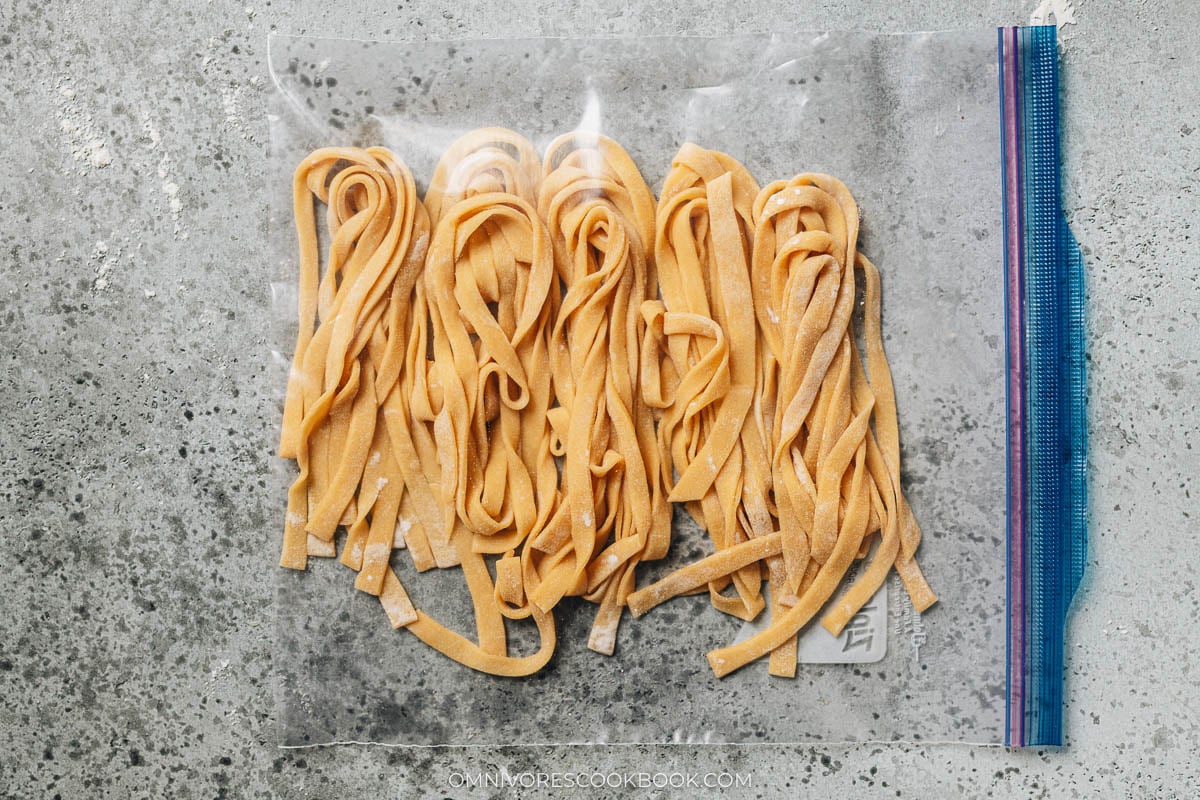
11. Cook or store: Boil the noodles in a large pot of water for 2 minutes or so, until fully cooked through. To store, seal the fresh noodles in a bag or container in the fridge for up to 1 day, or freeze them for up to 3 months and boil straight from frozen.
My Cooking Tips
Weigh the flour if you have a scale: I weigh out 300 grams of flour instead of scooping with a cup when I can. Cup measurements pack differently every time, and 20 grams of extra flour turns the dough tough and hard to roll.
Judge the dough by the look, not the recipe number: I hold back 1 tablespoon of the water at the start and add it only if the flour is still dusty in the bottom of the bowl. Egg size, flour absorption, and kitchen humidity all shift the ratio, so I trust the dough over the spoon.
Rest the dough twice, not once: The 30 minute rest relaxes the gluten enough to roll, and the second short rest is what makes the sheet stretch to 1/8 inch without tearing. If I skip the second rest the dough springs back the moment I set the rolling pin down.
Use cornstarch, not flour, to dust the sliced noodles: All-purpose flour on the strands turns gummy in the boiling water and clouds the broth. Cornstarch slides off cleaner and keeps the noodles separate in the pile until they go into the pot.
Cut wider than you think: The noodles almost double in thickness once they go into the boiling water. I slice at 1/8 inch when I want a thin springy strand for soup, and at 1/4 inch when I want the extra chew for a stir fry.
Boil in plenty of water: I cook the noodles in a large pot with lots of room to move, the same way I cook pasta. A small pot drops the water temperature the moment the noodles go in, and the starch has nowhere to disperse, so the strands clump together.
How I Love Serving
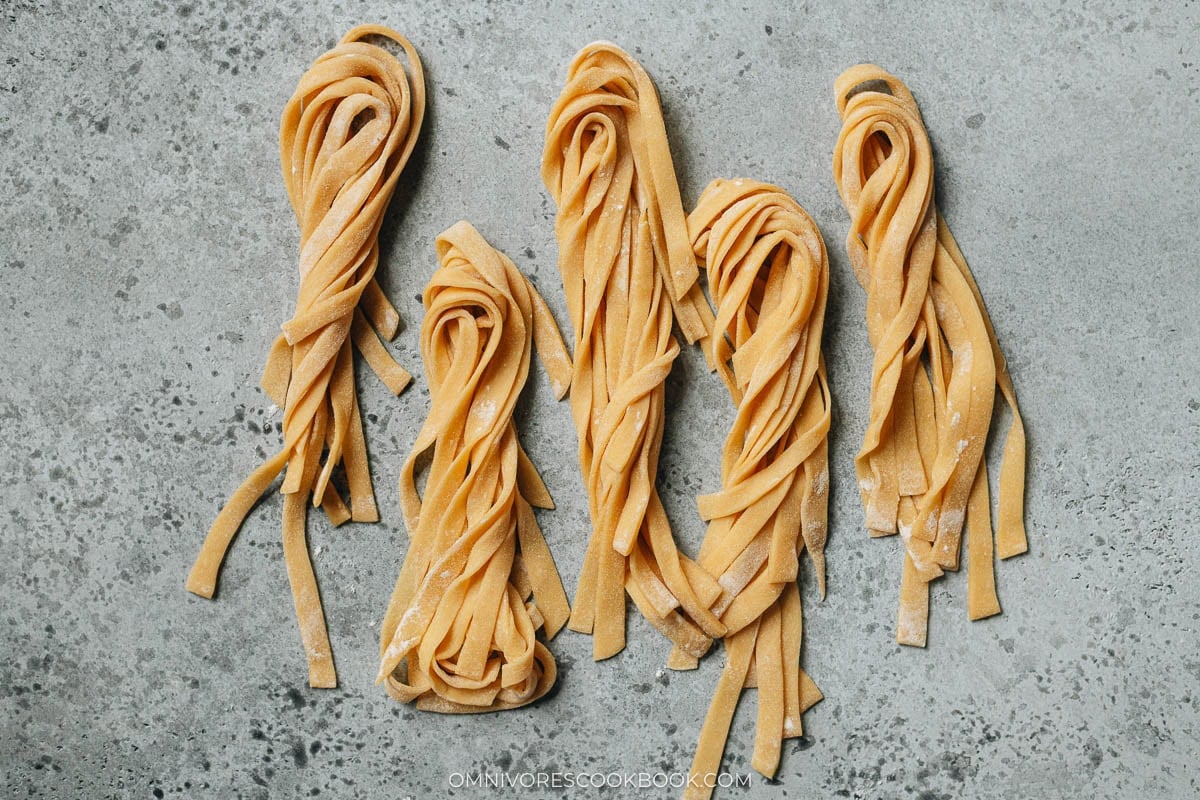
I serve homemade egg noodles as the centerpiece of a simple bowl, not as a side. The chew of a hand-cut noodle is the point of the whole exercise, so I plate them with a sauce that clings without covering the strand, or in a hot broth where the noodle stays springy right through the last spoonful. On a slow Saturday I toss a bowl of these with a nutty sesame paste and a spoonful of chili oil the way I do for my sesame noodles, or I ladle a light savory sauce over a warm pile the way I do for soy sauce noodles.
For a bigger weekend meal I turn the fresh noodles into a full stir fry or a bowl of noodle soup. I stir fry a batch with vegetables and thinly sliced meat for a Cantonese style chicken lo mein, or I dress a hot bowl with a Sichuan chili oil sauce for a real deal plate of dan dan noodles. Fresh long noodles are a symbol of longevity at the Chinese New Year table, so I make a batch ahead when I am cooking a full Chinese New Year dinner for family.
Frequently Ask Questions
Why is my dough so tough and hard to roll?
Egg noodle dough is meant to be firm because the low water and high egg ratio give the finished noodle its springy chew. If the dough refuses to stretch, I cover it and rest it for another 10 to 20 minutes before I go back to the rolling pin. The rest lets the gluten relax, and the dough that fought me a minute ago will roll out with much less pressure.
Can I use a pasta machine instead of a rolling pin?
A pasta machine works for this dough, and I know cooks who prefer it. In China, home cooks still work the dough by hand because the long knead is where the extra spring comes from, and a machine skips some of that gluten development. I use a rolling pin at home for the same reason my grandma did, but the choice is yours if you already have a pasta machine on the counter.
How to store egg noodles?
You can prepare these egg noodles ahead of time and serve them for your Chinese New Year dinner party. If you make these noodles the day you plan to serve them, you can seal them in a bag and store them in the fridge. If you are not going to cook the noodles immediately, it’s best to freeze the noodles right after you make them to preserve their texture. To boil the frozen noodles, the method is the same and you do not need to thaw them before boiling.
Want to Save This Recipe?
Enter your email below & we’ll send it to your inbox. Plus get great new recipes from us every week!
Homemade Egg Noodles (鸡蛋面)
Ingredients
- 300 g (2 cups) all-purpose flour (*Footnote 1)
- 3 Pete & Gerry’s large eggs
- 2 tablespoons (30 ml) cold tap water
- 1/4 teaspoon salt
- Cornstarch (for coating the noodles)
Instructions
- Add the flour and salt into a large mixing bowl. Mix well and make a well in the center. Add the eggs and the cold water into the well. Stir to mix everything together until shaggy dough flakes form. There should be little dry flour in the bowl and the dough flakes should be semi-soft without being sticky. If there is too much dry flour in the bowl, add 1 more tablespoon of cold water and stir to mix again.
- Press the dough flakes together with your hands until the dough is mostly formed. The dough can be slightly sticky to the hands, but still quite firm.
- Transfer the dough onto a clean work surface. Knead with hands until the water is evenly absorbed and a springy dough forms, 10 to 15 minutes. If the dough sticks to the work surface too much, dust the surface with all-purpose flour and keep kneading. If the dough is very dry and hard to work with, wet the surface of the dough with some water and knead until the water is fully mixed in.
- Place the dough into the mixing bowl and cover with plastic wrap. It’s OK if the surface of the dough is not super smooth. Let rest for 30 minutes.
- Once the dough is rested, gently knead the dough again for 1 to 2 minutes so it’s very smooth. Let the dough rest, covered, for another 10 to 20 minutes to relax it.
- Divide the dough into halves. Cover up the half you’re not working with.
- Dust the work surface with cornstarch and place one piece of dough on top. Press and roll the dough into a small rectangle shape. If the dough springs back and is very hard to knead, you can cover it up and let it rest another 10 to 20 minutes to relax it.
- Then roll the dough with a rolling pin into a very large thin sheet, about 1/8” (3 mm) thick, 18” long and 10” wide.Dust the top of the dough with cornstarch again. Fold the dough up along the long side, twice, into a long roll. Then slice the dough into noodles depending on the width you prefer, 1/8” for thin noodles, 1/4” wide for medium noodles, or 3/4” wide for wide noodles. Use your hands to gently pull each noodle so the length increases by 1/3. Set aside and work on the rest of the noodles in the same way.
- Lightly dust all the noodles with cornstarch and fluff the noodles to coat evenly.
- Now you can boil the noodles and serve them directly. If not used immediately, store the noodles in a sealed bag or container in the fridge for up to a day, or in the freezer for up to 3 months. You don’t need to thaw the noodles before boiling.
- To boil the noodles, bring a large pot of water to a boil. Boil the noodles for 2 minutes or so, or until fully cooked through (the cooking time depends on the thickness of the noodles you make).
Notes
- If you used cups instead of grams to measure the flour, it’s very likely that you will need more water. Because it’s easy to pack in more flour when using a measuring cup.
Nutrition

Did you make this recipe?
I’d love to hear how it turned out for you! Please take a moment to leave a 5-star rating ⭐️ and share your thoughts in the comments further down the page. It really helps others discover the recipe too.
Erin
It is really good sweetie..