
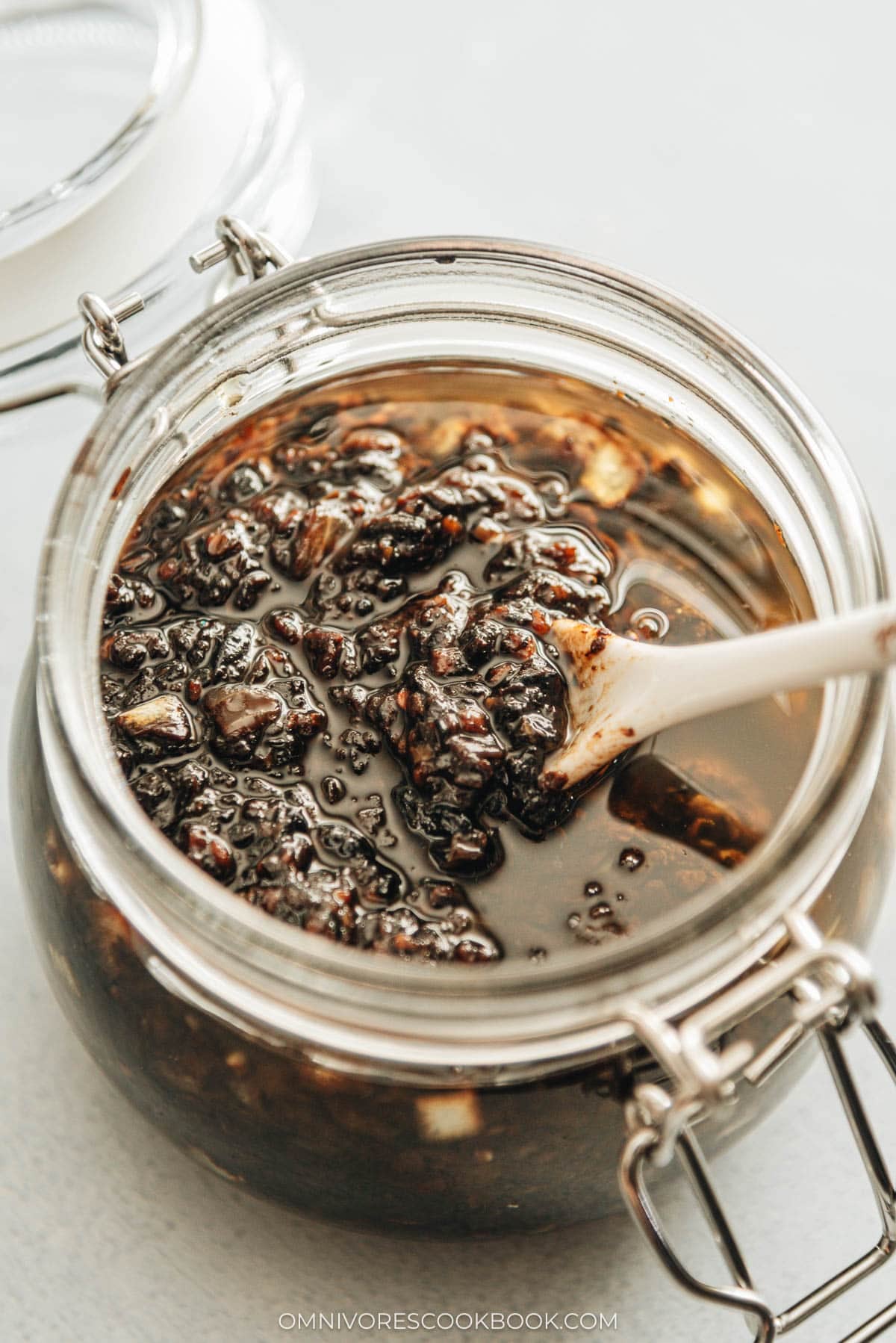
This is the slow-roasted homestyle Chinese black bean sauce, not the bottled version that sits on the international aisle of the supermarket. The bean starch and the cooked-down onion thicken the sauce on their own, so you can ladle it straight into a stir fry without reaching for a cornstarch slurry. I keep a jar in the fridge alongside my chicken with black bean sauce and rotate it through dinner all month.
I started keeping a jar of this around when I moved to the US and grew tired of buying bottled stir fry sauces with thickeners and additives I could not pronounce. My mother kept a similar jar on the kitchen counter in Beijing, scooped a spoon into eggplant or pork, and called it dinner 10 minutes later. The version I make today leans on her ratio of beans to oil, with a little extra garlic and ginger because that is how my husband likes it.
What I love the most is how easy it is to make, I simply rinse and roughly chop fermented black beans, then bloom dried chilies in oil before scooping them out and roasting the beans, onion, Shaoxing wine, soy sauce, and a little sugar. Garlic and ginger go in at the end so they stay fragrant. The whole batch takes me about 30 minutes and yields roughly 2 cups, which keeps the rotation going for a few months of weeknight cooking.
Ingredients
The ingredient list for this black bean sauce is short and pantry-friendly, with one star ingredient. I organized it into 3 working groups so I can prep the slow-roast aromatics first and the finishing aromatics last.
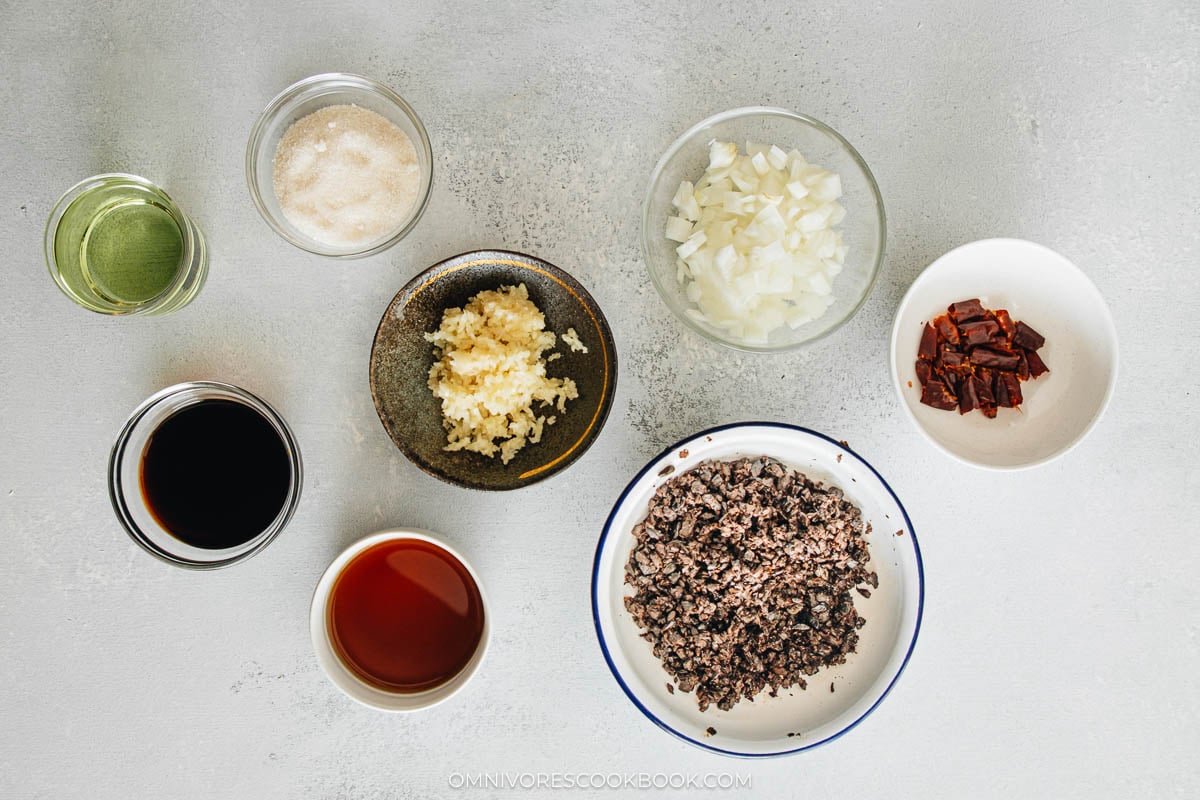
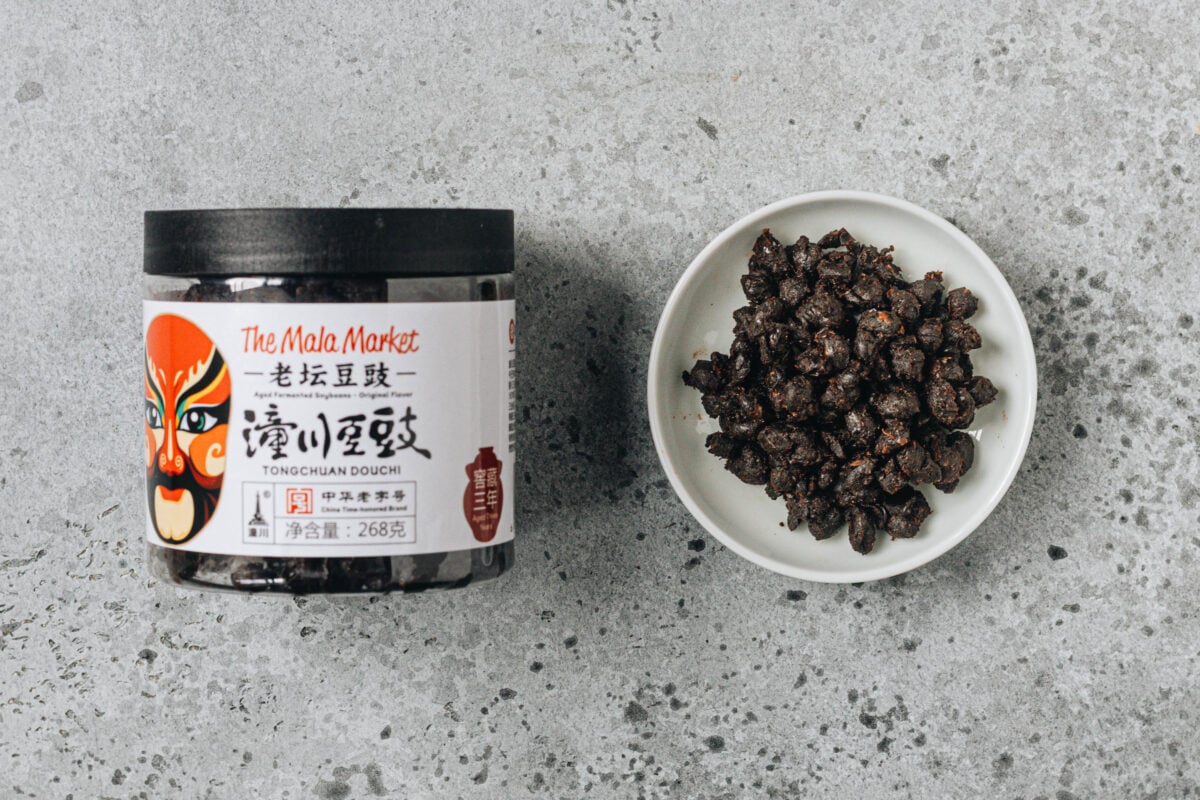
The bean and oil base: Fermented black beans are the soul of this sauce. You can find those salty, dry, vacuum-sealed kind from the Chinese grocery and rinse them once to take the salt down before chopping. I also recommend The Mala Market fermented black beans, which are premium, handcrafted douchi that is aged for 3 years. They have a rich and deep flavor and not as salty as some cheaper type. Vegetable oil carries the rest of the flavors and seals the finished sauce so it keeps in the fridge for weeks.
The slow-roast aromatics: Dried red chilies bloom in the oil first and come out before the rest of the ingredients go in, and minced white onion roasts in after the beans for the long, slow simmer. Shaoxing wine, light soy sauce, and a small amount of sugar round out the seasoning and balance the sharp salt of the beans.
The finishing aromatics: Minced garlic and a thumb of fresh ginger, both chopped fine and added at the very end. I use a full head of garlic if I want the sauce on the punchy side, since the long oil cook tames the raw heat by the time the jar reaches the fridge.
How to Make
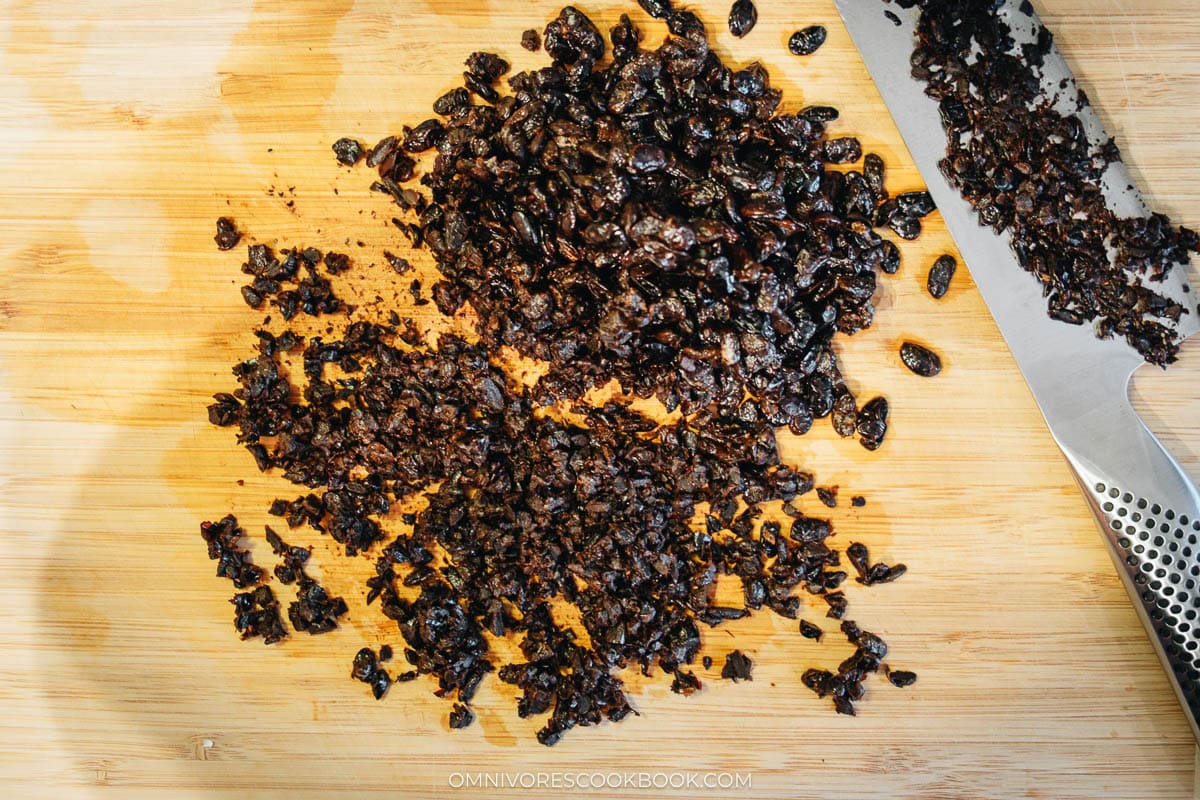
1. Prep the beans: Rinse the fermented black beans under cool tap water, drain, and coarsely chop them on a cutting board, leaving a few bigger pieces for texture. If you prefer a faster prep, pulse the beans, onion, and garlic together in a food processor until minced but not a smooth paste.
2. Bloom the chilies in oil: Heat the vegetable oil and the torn dried chilies in a small saucepan over medium heat until the oil is warm. Turn the heat to medium low and cook, stirring occasionally, until the chilies turn dark brown but not black, then scoop them out and discard.
This step adds a smoky taste to the sauce without too much heat. But if you’re concerned about the heat, remove the seeds from the peppers before adding to the pan.
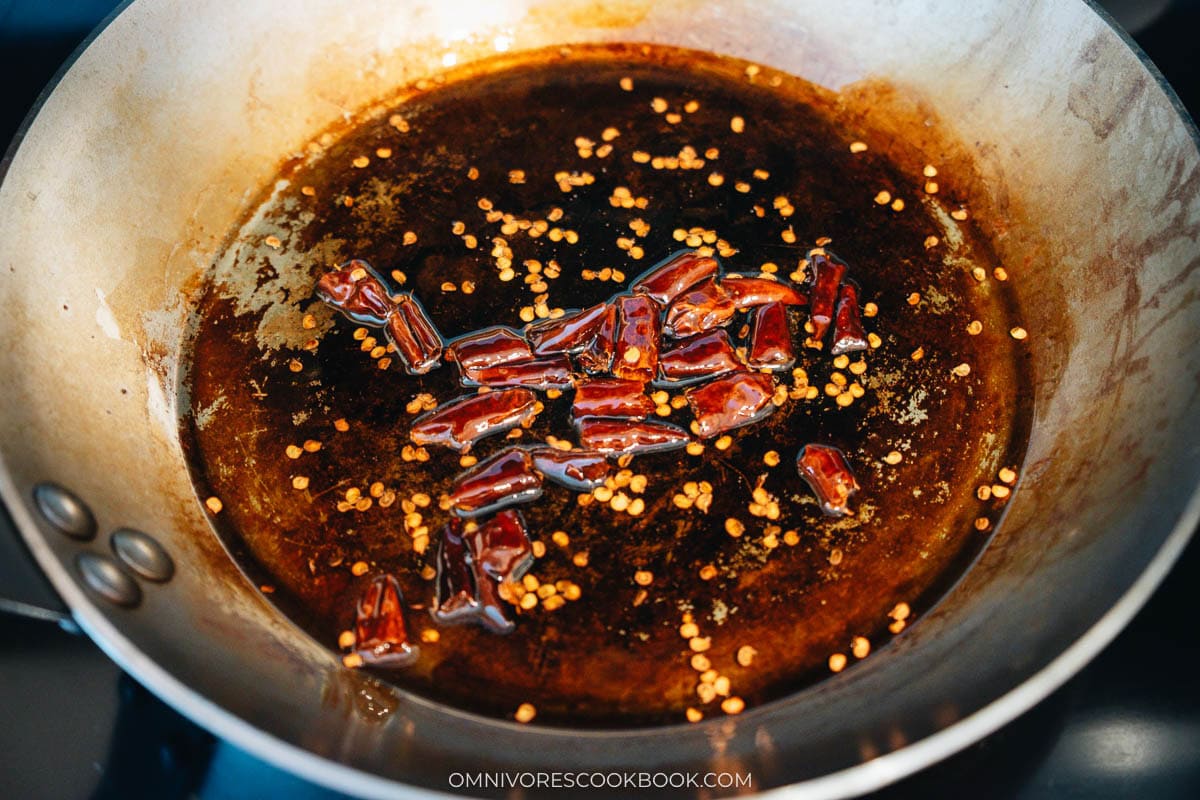
3. Roast the beans and onion: Add the chopped fermented black beans and minced onion to the infused oil. Cook and stir until the mixture looks a bit dry, since the beans first absorb the oil and then release it back once they are properly cooked.
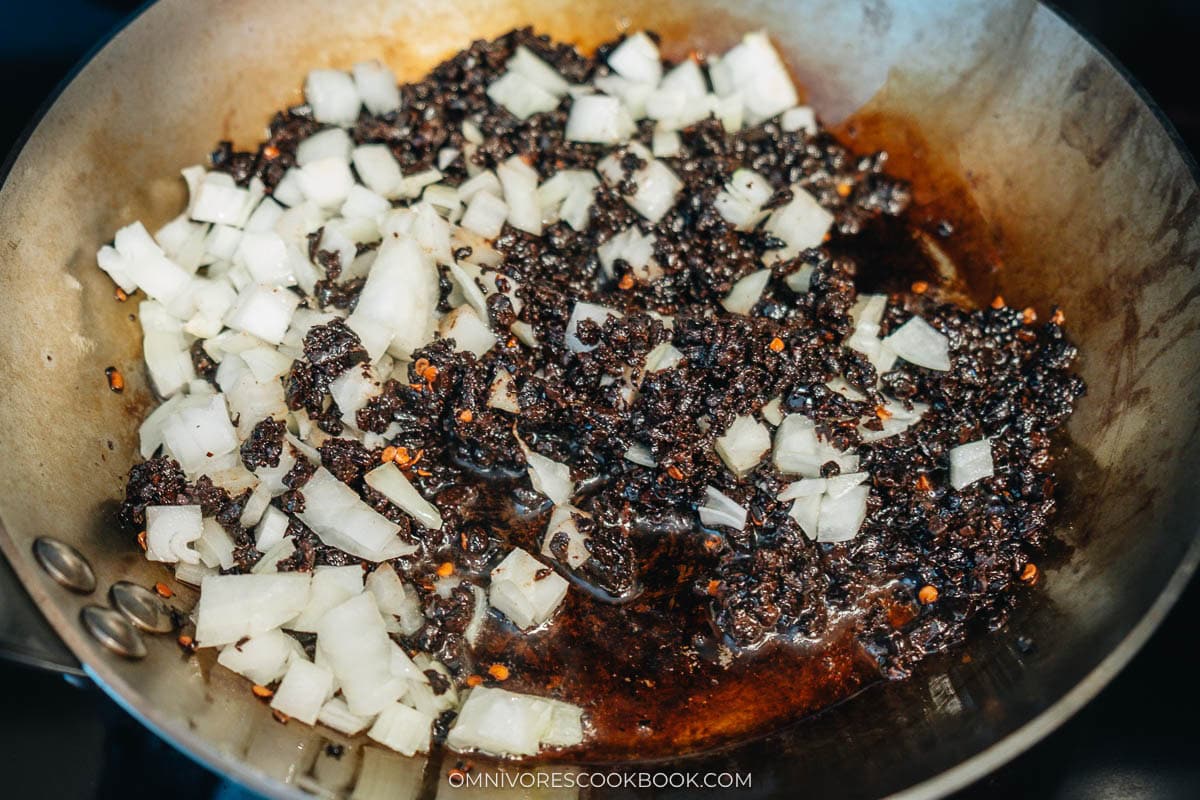
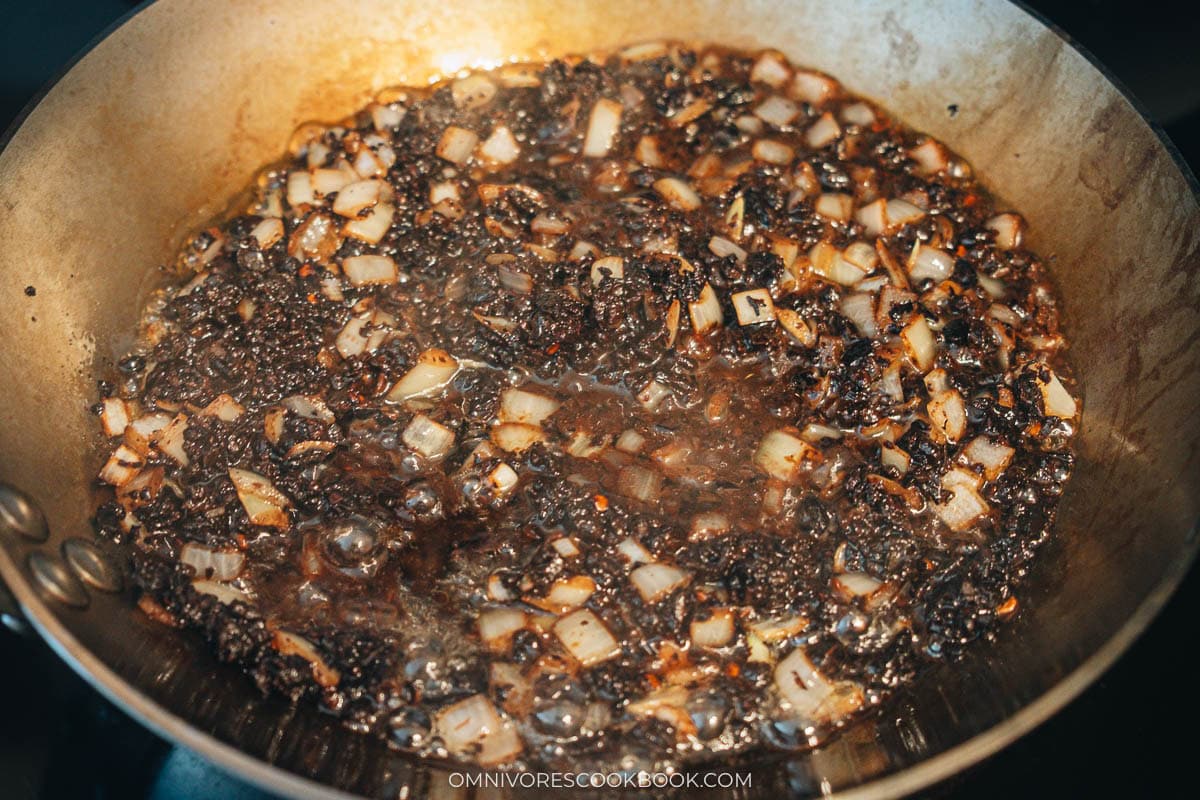
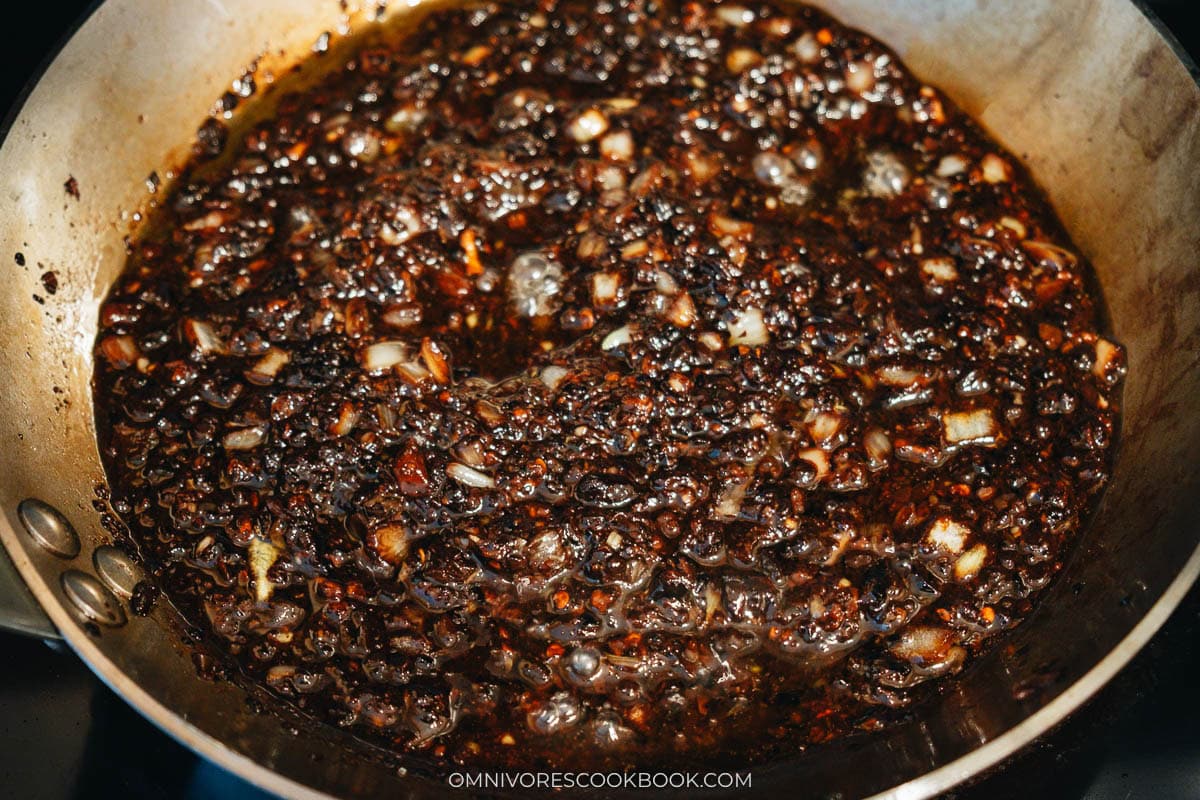
4. Simmer with the seasonings: Add the Shaoxing wine, light soy sauce, and sugar to the pan. Simmer and stir, watching the heat carefully, until the onion turns tender and the sauce darkens, about 10 minutes.
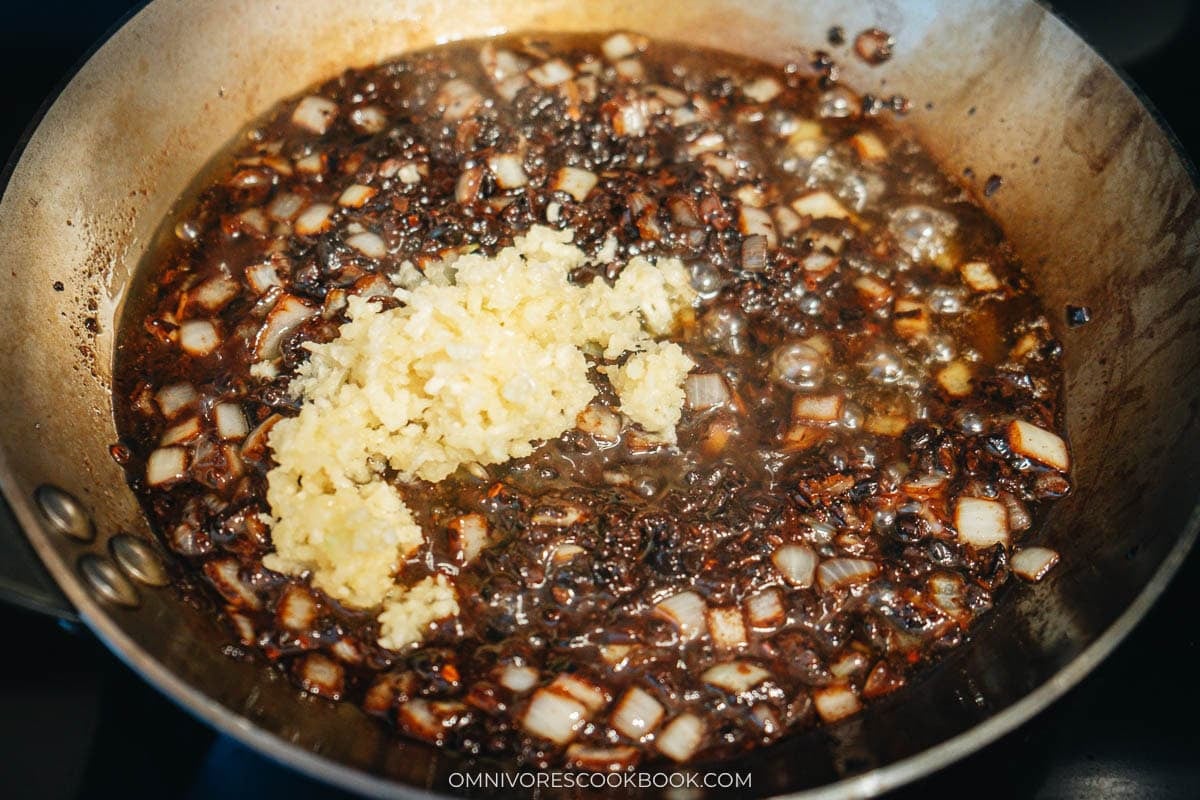
5. Add the finishing aromatics: Stir in the minced garlic and ginger. Continue to cook and stir until the onion is very tender and you see oil floating back to the top of the sauce.
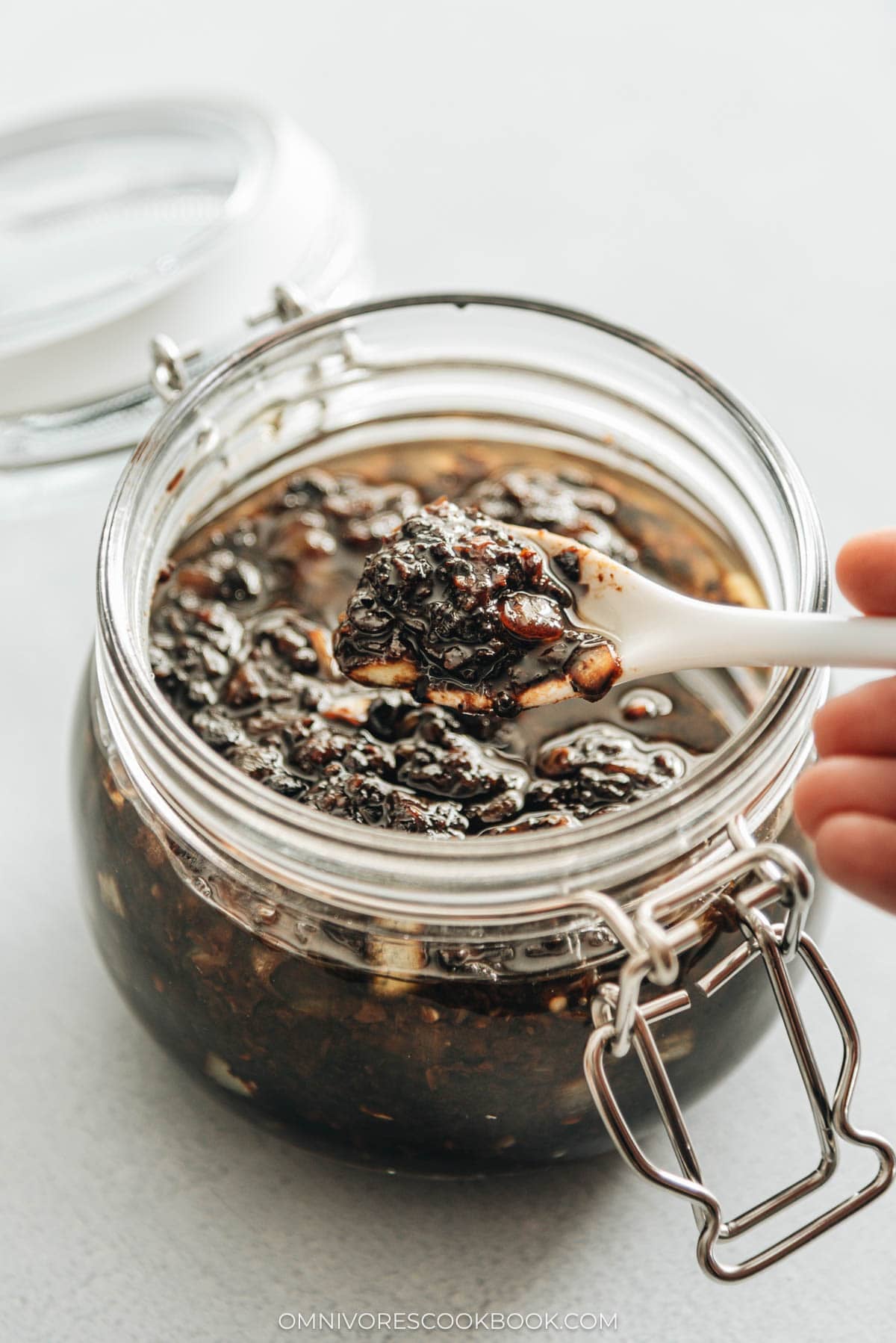
6. Cool and store: Transfer the sauce to a large heatproof bowl and let it cool completely. Move the cooled sauce to a clean airtight jar and refrigerate, where it will keep for 2 to 3 months.
My Cooking Tips
Rinse the beans before chopping: Fermented black beans come heavily salted and a bit hard, so I rinse them in a fine sieve and pat them dry before chopping. This step softens the beans for an easier knife cut and pulls back enough salt that the finished sauce stays balanced. If you are using a premium fermented black beans like those from The Mala Market, you can skip the rinsing step since those beans are tender and not as salty.
Keep the heat low after the chilies come out: Once I scoop the chilies out of the oil, I drop the heat to medium low for the entire bean and onion roast. The beans burn quickly at higher temperatures and turn bitter, which is the most common mistake when home cooks try this for the first time.
Add the garlic and ginger at the end: The garlic and ginger go in only after the onion is already soft, since both turn harsh and lose their fragrance when they cook for too long in hot oil. Adding them last gives the finished sauce a fresh top note over the deep roasted base.
Watch for the oil to surface: I know the sauce is done when a clear layer of oil pulls back to the top. That oil layer is also the seal that lets the sauce keep in the fridge for weeks, so I never strain it off.
Make it once, use it for a month: This recipe yields about 2 cups, which is enough for a dozen weeknight stir fries depending on how heavy a hand I have with it. I label the jar with the date and pull it out for chicken, fish, tofu, or a quick vegetable stir fry whenever I am short on dinner ideas.
How to Serve
At home I treat this jar as a shortcut to a proper Chinese stir fry on a weeknight. I scoop 3 to 4 tablespoons of the sauce and a touch of its surface oil into a hot wok, slide in marinated chicken, pork, or shrimp, and finish with whatever vegetable is in the crisper. The bean starch already in the jar means the sauce coats the protein in one toss without any cornstarch slurry on the side.
For a longer cook, I love using the sauce for steamed fish with black bean sauce on a Sunday with my son and husband, and for steamed ribs in black bean sauce when we have friends over for dim sum at home. It also pulls a small mountain of clams in black bean sauce together in the time it takes to set the table, and turns a humble zucchini stir fry into something nobody pushes around the plate.
Frequently Ask Questions
What is the difference between fermented black beans and the canned beans at the supermarket?
The fermented black beans I use here are dry, salty, and shrunken Chinese soybeans cured with salt and aromatics, sold in plastic bags or jars at Chinese grocers. They are nothing like the canned black beans in the chili aisle, which are softened plain beans with no fermentation, so I never substitute one for the other.
How long does the sauce keep in the fridge?
The sauce keeps for 2 to 3 months in a clean airtight jar in the fridge, since the surface oil acts as a natural seal over the cooked beans and aromatics. I use a clean dry spoon every time I scoop and keep the oil layer intact, since any introduced moisture will shorten the shelf life.
Can I freeze the black bean sauce?
Yes, I freeze it in small portions in ice cube trays and transfer the cubes to a zip-top bag for up to 6 months. The texture stays the same after thawing in the fridge overnight, which makes it a useful prep ahead for the freezer rotation.
Want to Save This Recipe?
Enter your email below & we’ll send it to your inbox. Plus get great new recipes from us every week!
Watch video

Homemade Black Bean Sauce
Ingredients
- 1 cup fermented black beans
- 1/3 cup vegetable oil
- 1/4 white onion , minced
- 4 to 6 dried chili peppers , torn to small pieces (*Footnote 1)
- 1/4 cup Shaoxing wine (or dry sherry, or Japanese sake) (*Footnote 2)
- 1/4 cup light soy sauce (or soy sauce, or tamari for gluten-free option)
- 1/4 cup sugar (or brown sugar)
- 1 head garlic (8 to 10 big cloves, minced (*Footnote 3)
- 1 thumb ginger , minced (*Footnote 4)
Instructions
- Rinse fermented black beans with tap water, drain, and coarsely chop them. I like to leave some bigger pieces of the beans, to give the sauce more texture.
- (Optional) You can use a food processor to mince all the ingredients. Add black beans, onion, and garlic into a food processor. Blend until both ingredients are minced, but not a fine paste.
- Heat oil and dried chili peppers in a saucepan over medium heat until warm. Turn to medium low heat. Cook until the chili peppers turn dark, but not black. Stir occasionally. Scoop out the chili peppers and discard them.
- Add the black beans and onion. Cook and stir, until the sauce looks a bit dry. (The beans will absorb oil at first, but release the oil once they’re cooked.)
- Add Shaoxing wine, light soy sauce, and sugar. Simmer and stir until the onion turns tender. It takes about 10 minutes or so. The sauce can be easily burned, so make sure to keep the heat low and stir the sauce constantly to ensure even cooking.
- Add garlic and ginger (if you’re using these ingredients). Continue to cook and stir the sauce until the onion turns very tender. You should see oil floating on top of the sauce. Transfer the sauce to a large bowl to cool off completely.
- Store the sauce in an airtight jar in the fridge for 2 to 3 months.
Notes
Nutrition

Did you make this recipe?
I’d love to hear how it turned out for you! Please take a moment to leave a 5-star rating ⭐️ and share your thoughts in the comments further down the page. It really helps others discover the recipe too.
Karen
This was super easy and tastes really good – like I get from the local Chinese takeaway except much better. I’ll definitely make this again.
Francine Hamilton
Absolutely delicious! I made this to put on your steamed salmon recipe. All was perfect. Thank you!
Jen
Does this freeze well?
Maggie Zhu
Yes it freezes very well!
Ricj
This sauce is amazing! I just made a tofu & veggie stir-fry with it that was awesome; also delicious with fish.
Thanks again, Maggie
Vonnie
Hi. Is it possible to replace the sugar to be healthier?
Maggie Zhu
The sugar adds a nice fragrance to the sauce and it mellows the salty taste of the sauce. That’s being said, you can skip the sugar or reduce it. The sauce will be more pungent but should still be tasty.
Lena
This is delicious! I love the flavor of fermented black beans, but takeout places usually oversaturate their proteins, and jar sauces are so salty. With your recipe I can control the amount and use the sauce for other dishes. I truly love the recipe. Posted photos (multiple, including just the resulting sauce) on Instagram, tagged and hashtagged. Thanks again!
M
WOW this recipe is so delicious. I followed the recipe exactly but cooked it a bit longer on low heat. I made a simple fried rice with slices of pork chashu and scrambled eggs. What I did with this sauce is pure magic… to a small sauce pan I added 1 cup of water and brought it to a simmer and added chicken stock powder than 3 tbsp of the black bean sauce, stirred it up then added cornstarch slurry to thicken it. Poured on top of rice. Amazingly delicious. It’s incredible thanks so much for this amazing recipe.
Quinn
Absolutely fantastic! Used it to top oil-poached flounder fillets along with sliced scallions. Huge hit!
Sunny
So so delicious! Since learning how to make my own five spice powder and seeing how massive the difference is between that and store-bought, I thought it’d be worth it to give making this black bean sauce a go. Equally as big a difference. Thanks so much for sharing this recipe!
Penny
Super delicious. Made for the mapo tofu recipe but my favorite use is just to add to suateed veggies and/or scrambled eggs
Dan
Inches ?
The rest of the world uses metric, they dumped imperial measures some 50 years ago (half a century !). Not only is America the only nation on the planet to refuse to drop the obsolete measures but, American Imperial Measures are also smaller than Imperial measures from other nations. A cup is not always a cup.
e.g.
1 US Gallon = 3.75 liter
1 UK Gallon = 4.54 liter
Gallons also change between other nations, hence the global conversion to scientific metric standard, metric is the same no matter what nation you are in, a liter is a liter, a millimeter is a milliliter. What is 1/8th of an inch ? (It is hard to find rulers or measure tapes with imperial in the rest of the world)
Renita
It tastes great! i have a question. After i made this, the amount of oil doesn’t look the same as in your picture. Should i top up with some shallots oil in the jar?
Maggie Zhu
Depending on the fermented black bean you use and your stove strength, the beans might have absorbed more oil. It’s not a problem for the taste of the sauce. But if you plan to preserve it for a longer time, a thin layer of oil on top of the sauce will help a lot!
Kathy
Wow. The SCRUMPTIOUS sauce is still on the stove for last cooking. I fermented the beans myself (very easy4- day process. Not being satisfied with my rough chop of the beans, I used a potato masher to break them up further as they cooked. Further I used the chili oil recipe from this site for the oil! so it is a bit hot…but also with a sweet tang. Thank you so much! The only thing I found a bit difficult was guessing as to the amount of time for each step…that information would be most helpful, as I am a complete newbie to this sauce….
J
Hi Maggie, love your site and your recipes. Due to a recent medical condition, I need to go low-sodium. Do you think I can substitute the soy and sugar combination for for coconut aminos instead?
Maggie Zhu
I’ve heard many people using coconut aminos to replace soy sauce and water, but I personally don’t like it.
The aminos tastes so sweet and does not have the depth of flavor that regular soy sauce does.
If you can find it, I like Yamasa’s less salt (reduced sodium) soy sauce. Its sodium content is about half of regular soy sauce (but still double the sodium content of coconut aminos). If it’s still too much sodium, I guess coconut aminos might be the only option.
2HotnAZ
Hi, Maggie! I made this sauce last weekend and it turned out pretty well. I used Arbol chilies. My only complaint is that it was a little too sweet for my palate; I prefer savory unami.
Also, can you suggest any Asian spices/sauces that don’t use MSG?
Mark
Great recipe, I will definitely make again. I served with a turkey breast stirfry and added some sesame seeds, but thinking some cashews would work really well with this. Next time.
Gregory Crawford
Fabulous! I made the sauce and then added it to a general vegetarian stir-fry and it was terrific. Thank you!
Ken Savage
Dear Maggie,
I’m learning to cook Chinese dishes at home and am enjoying your recipes. I’d like to make the black bean sauce but worry that the amount it makes won’t be used before the 2 weeks – month safe storage time elapses. I suppose I can cut the recipe in half but I wonder if the sauce can be frozen? Also, would Sichuan chile pepper work to give the sauce a little heat? Thank you for this terrific web site.
Ken
Maggie
The sauce can actually stay well in the fridge for pretty long time, but I usually give a period of time that’s rather conservative. Sometimes I store mine for 1 to 2 weeks without any problems. That being said, you can definitely freeze this sauce. It’s freezer friendly.
Yes, you can definitely add some chili pepper to add heat. It will taste delicious.
Ken Savage
Thank you so much. I’m amazed that you responded so quickly and appreciate it very much. I’ll give it a try.
Ken
Avishi
How to ferment the black beans? Or do we have to buy it.
Maggie
You can but them at Asian market or online stores:http://amzn.to/1PM90DG https://themalamarket.com/collections/all/products/fermented-black-beans-douchi?aff=2
Starr
I love the flavor of this sauce, but mine came out quite dry. Should I add more oil (in the storage jar) to make it look like your photo?
Thanks!
Maggie
Yeah, adding more oil definitely helps! Depending on the cooking time, the black beans might have absorbed more oil. You can add more after cooking as well. A thin layer on top will help preserve the sauce for a longer time.