
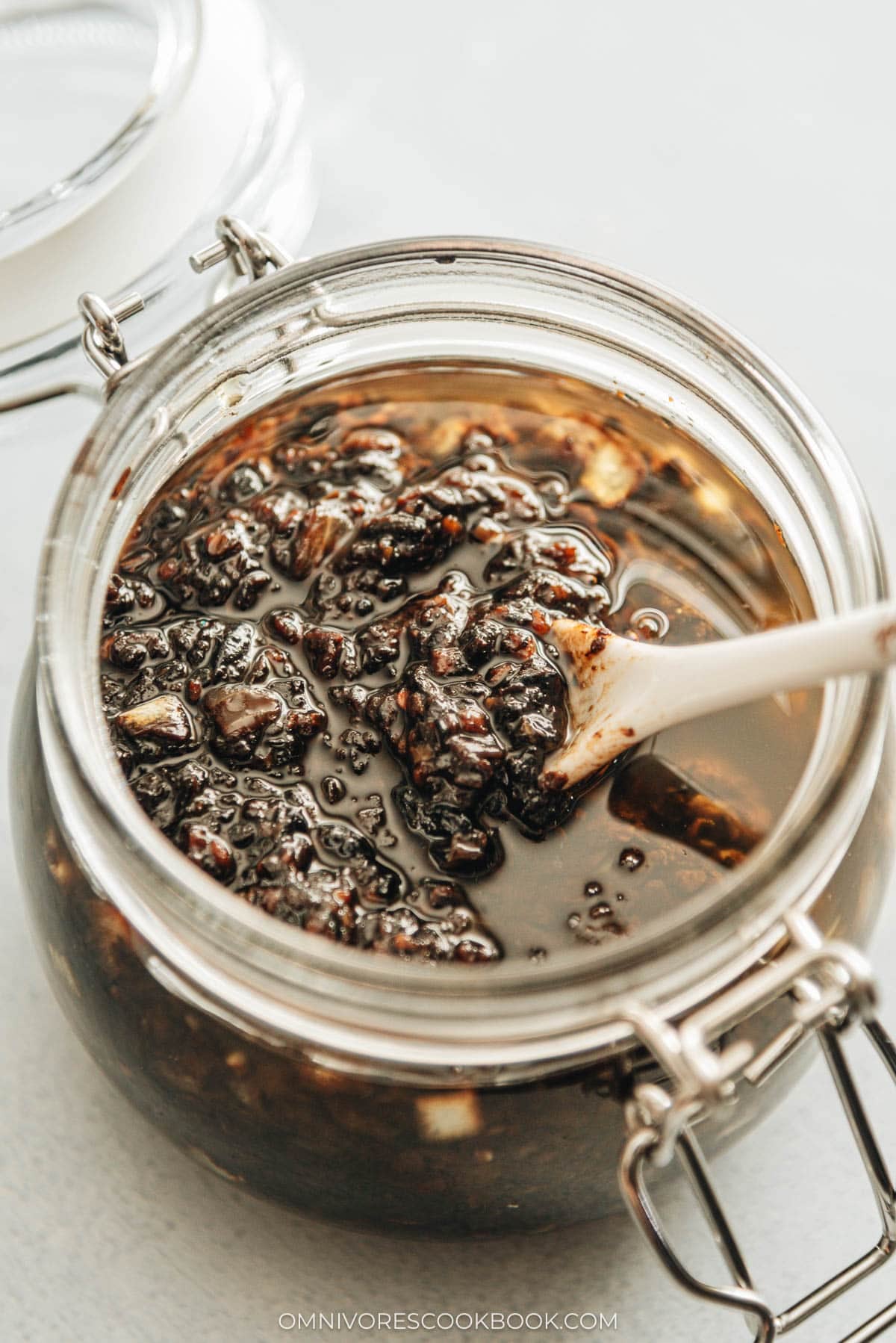
This is the slow-roasted homestyle Chinese black bean sauce, not the bottled version that sits on the international aisle of the supermarket. The bean starch and the cooked-down onion thicken the sauce on their own, so you can ladle it straight into a stir fry without reaching for a cornstarch slurry. I keep a jar in the fridge alongside my chicken with black bean sauce and rotate it through dinner all month.
I started keeping a jar of this around when I moved to the US and grew tired of buying bottled stir fry sauces with thickeners and additives I could not pronounce. My mother kept a similar jar on the kitchen counter in Beijing, scooped a spoon into eggplant or pork, and called it dinner 10 minutes later. The version I make today leans on her ratio of beans to oil, with a little extra garlic and ginger because that is how my husband likes it.
What I love the most is how easy it is to make, I simply rinse and roughly chop fermented black beans, then bloom dried chilies in oil before scooping them out and roasting the beans, onion, Shaoxing wine, soy sauce, and a little sugar. Garlic and ginger go in at the end so they stay fragrant. The whole batch takes me about 30 minutes and yields roughly 2 cups, which keeps the rotation going for a few months of weeknight cooking.
Ingredients
The ingredient list for this black bean sauce is short and pantry-friendly, with one star ingredient. I organized it into 3 working groups so I can prep the slow-roast aromatics first and the finishing aromatics last.
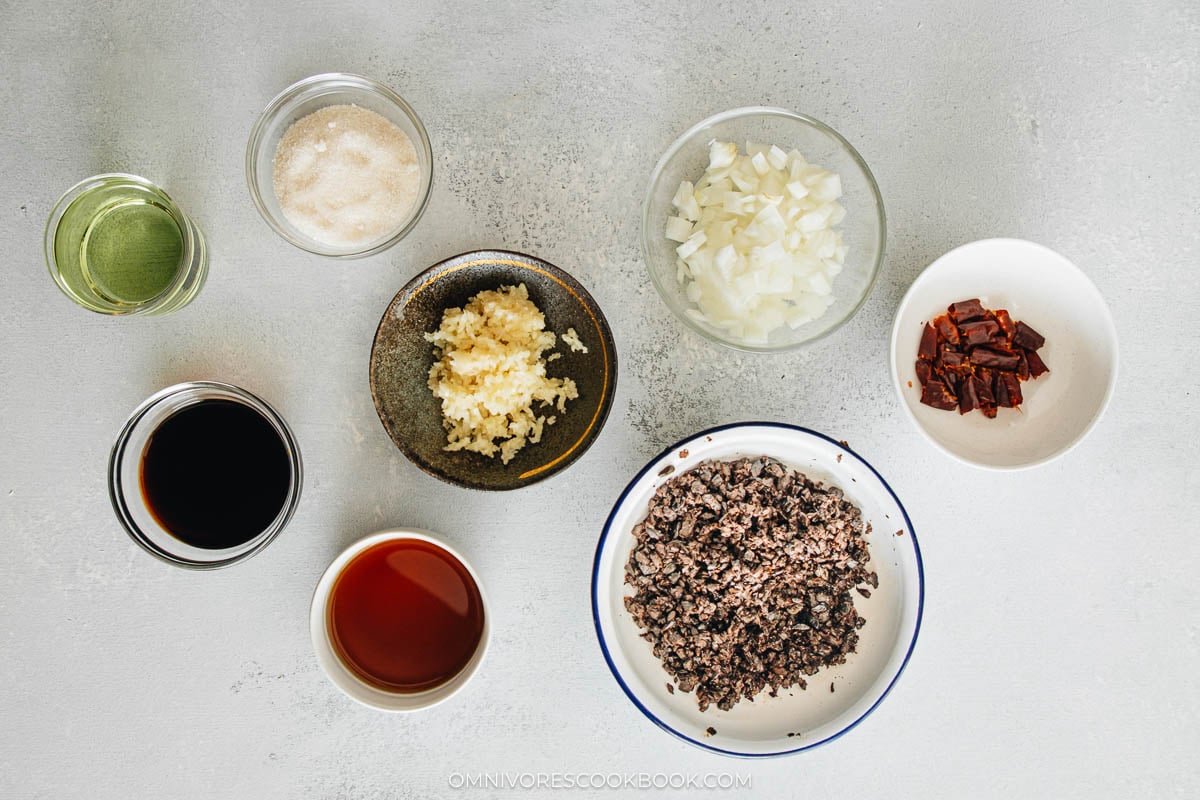
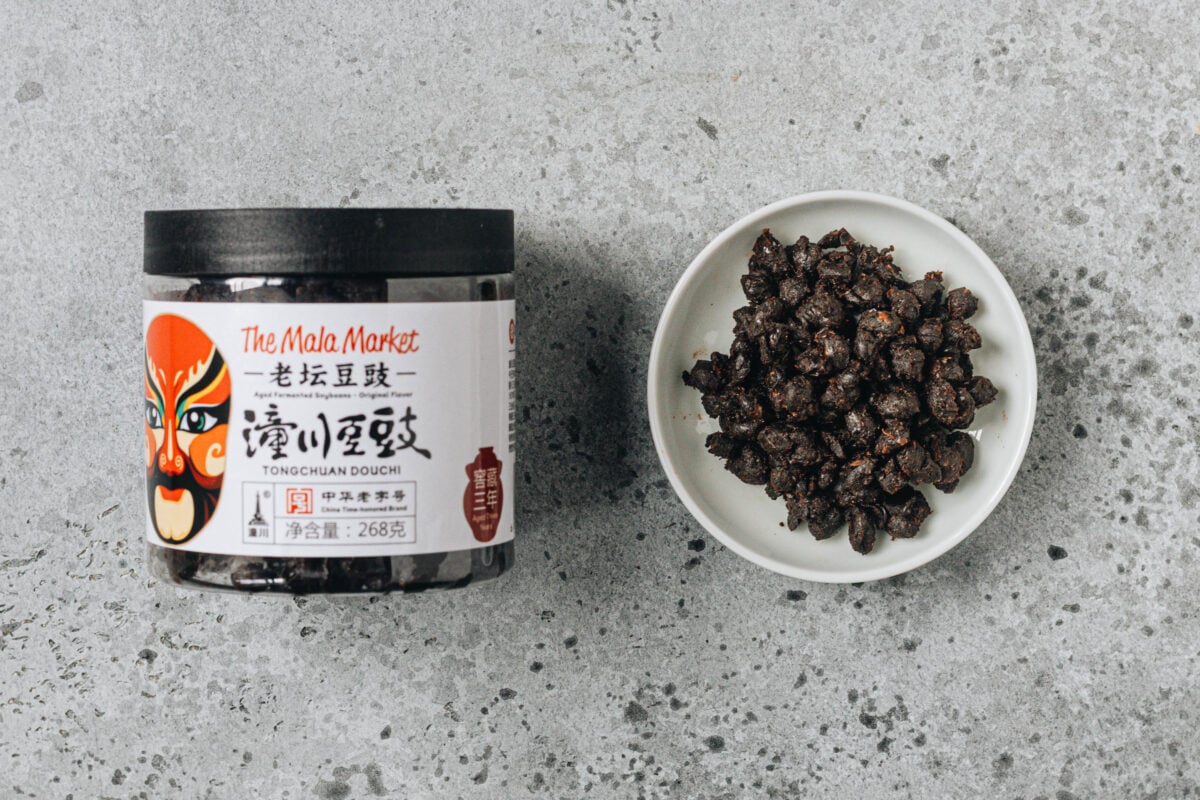
The bean and oil base: Fermented black beans are the soul of this sauce. You can find those salty, dry, vacuum-sealed kind from the Chinese grocery and rinse them once to take the salt down before chopping. I also recommend The Mala Market fermented black beans, which are premium, handcrafted douchi that is aged for 3 years. They have a rich and deep flavor and not as salty as some cheaper type. Vegetable oil carries the rest of the flavors and seals the finished sauce so it keeps in the fridge for weeks.
The slow-roast aromatics: Dried red chilies bloom in the oil first and come out before the rest of the ingredients go in, and minced white onion roasts in after the beans for the long, slow simmer. Shaoxing wine, light soy sauce, and a small amount of sugar round out the seasoning and balance the sharp salt of the beans.
The finishing aromatics: Minced garlic and a thumb of fresh ginger, both chopped fine and added at the very end. I use a full head of garlic if I want the sauce on the punchy side, since the long oil cook tames the raw heat by the time the jar reaches the fridge.
How to Make
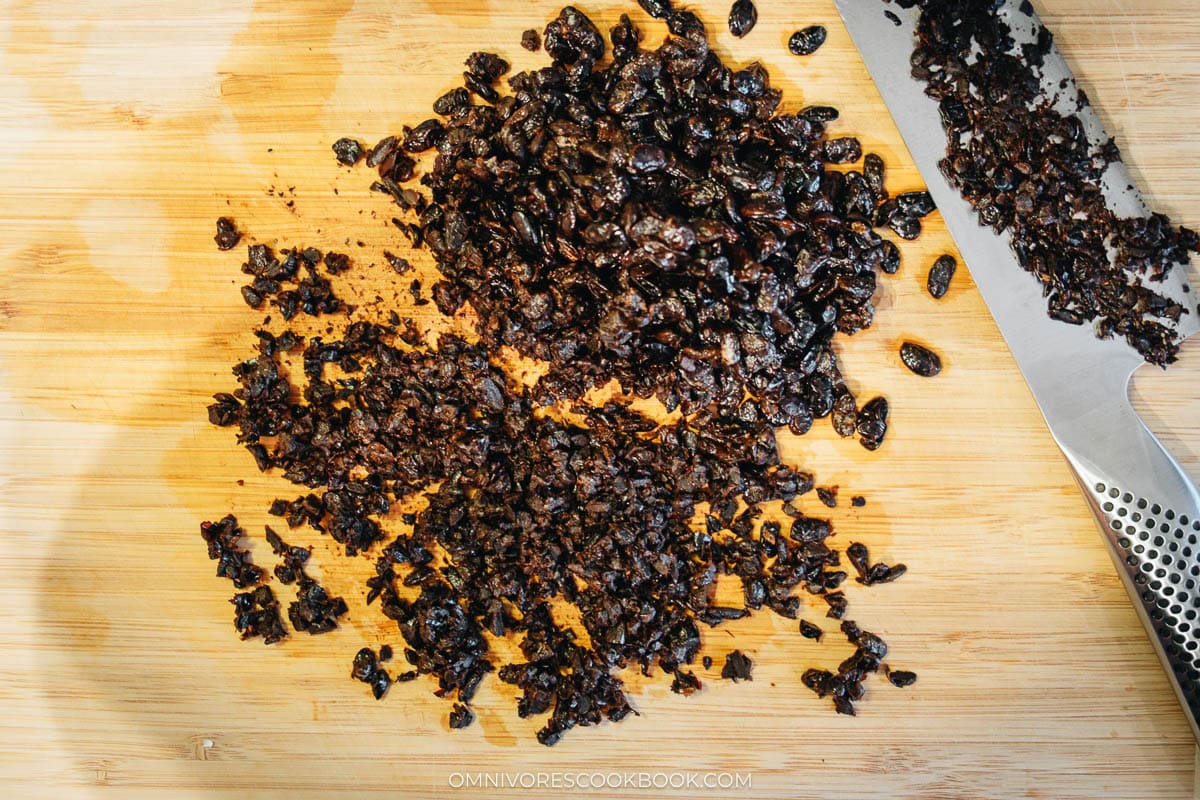
1. Prep the beans: Rinse the fermented black beans under cool tap water, drain, and coarsely chop them on a cutting board, leaving a few bigger pieces for texture. If you prefer a faster prep, pulse the beans, onion, and garlic together in a food processor until minced but not a smooth paste.
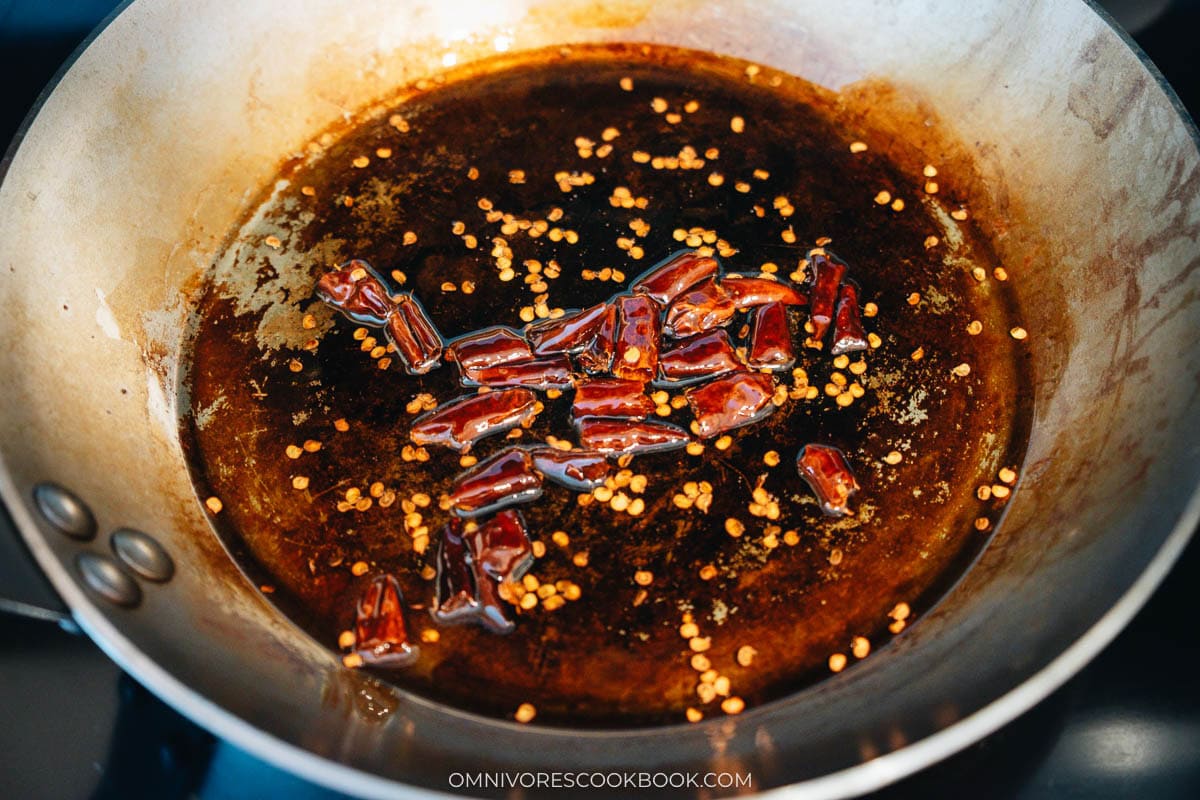
2. Bloom the chilies in oil: Heat the vegetable oil and the torn dried chilies in a small saucepan over medium heat until the oil is warm. Turn the heat to medium low and cook, stirring occasionally, until the chilies turn dark brown but not black, then scoop them out and discard.
This step adds a smoky taste to the sauce without too much heat. But if you’re concerned about the heat, remove the seeds from the peppers before adding to the pan.
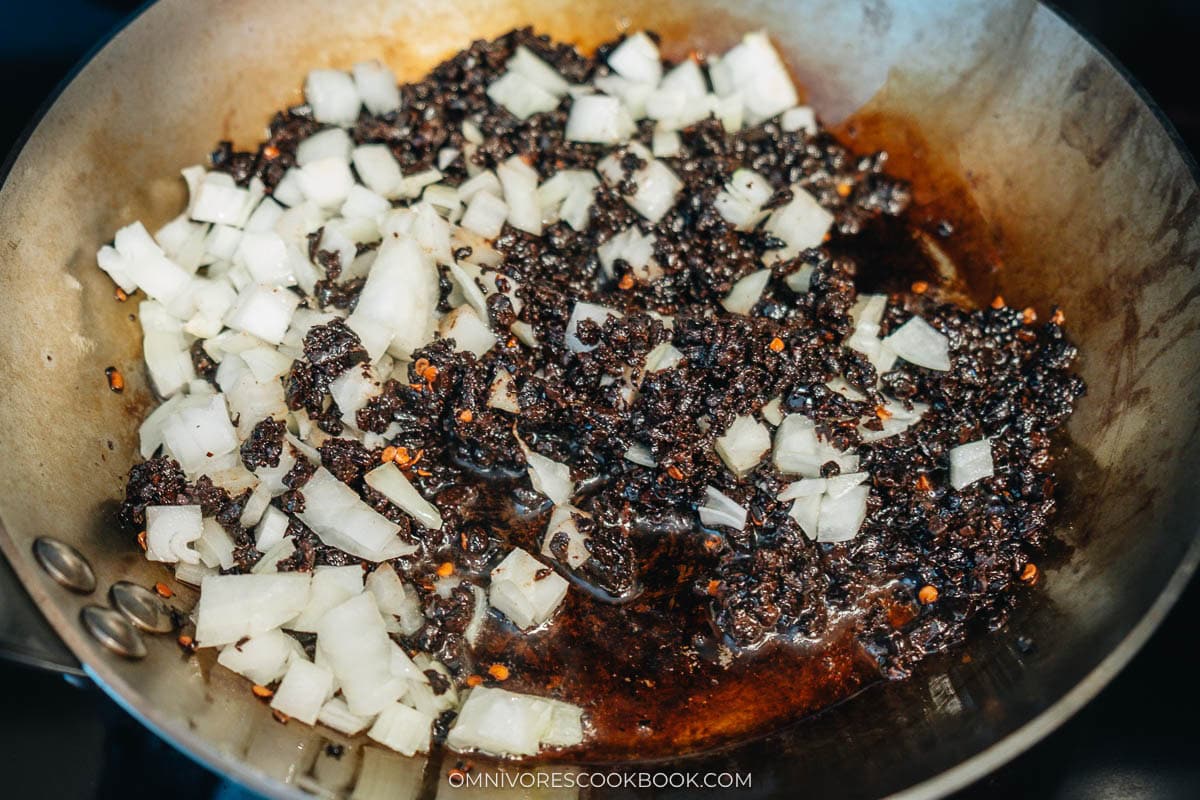
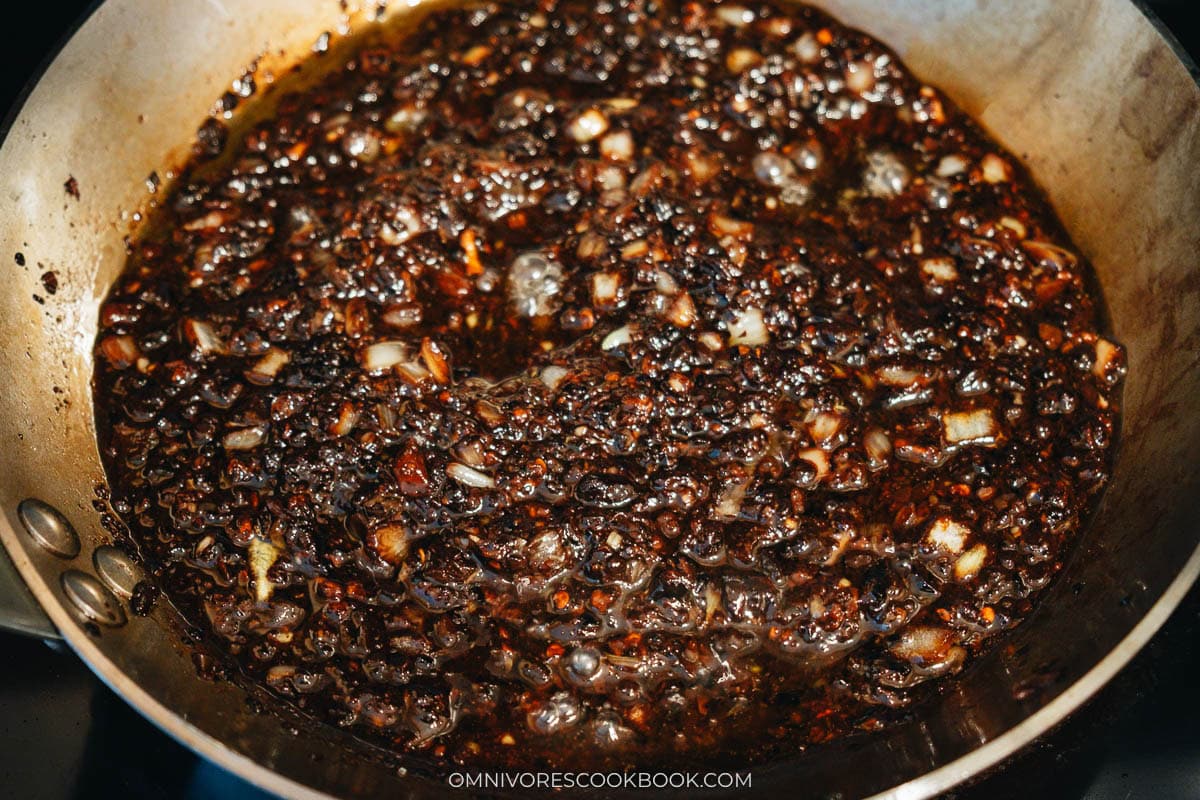
3. Roast the beans and onion: Add the chopped fermented black beans and minced onion to the infused oil. Cook and stir until the mixture looks a bit dry, since the beans first absorb the oil and then release it back once they are properly cooked.
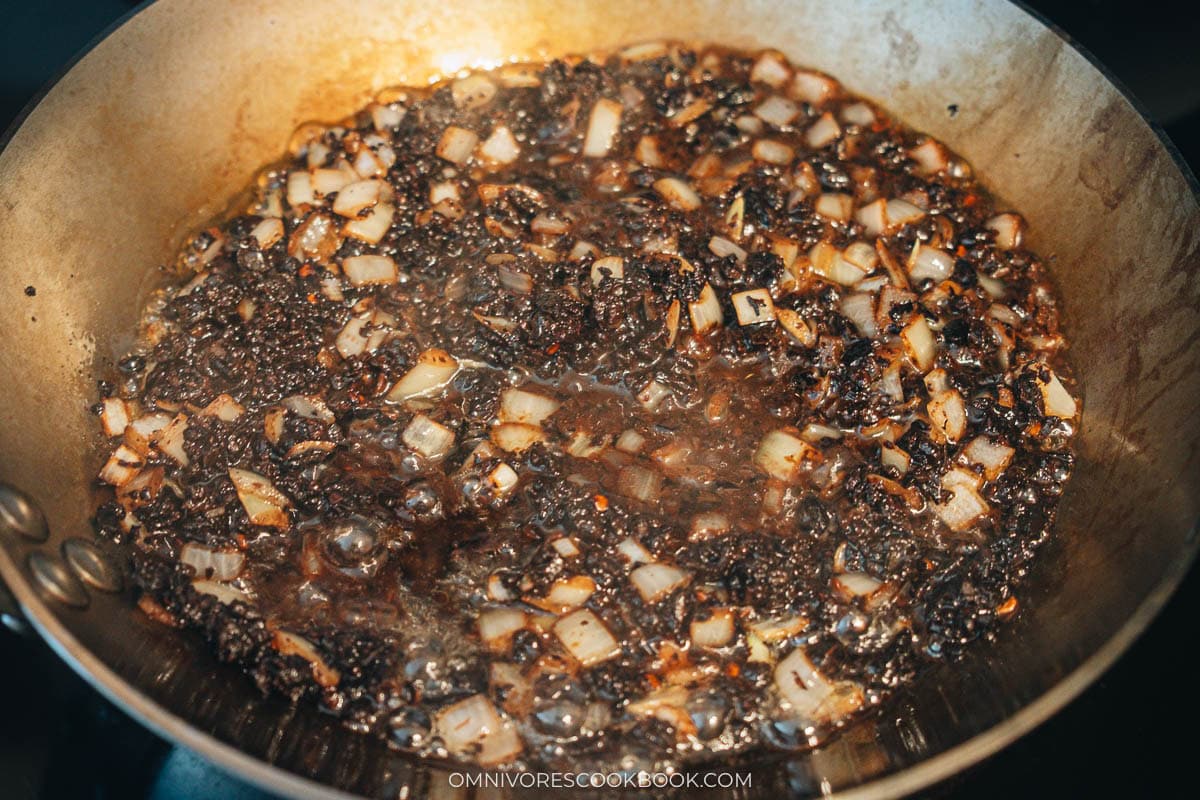
4. Simmer with the seasonings: Add the Shaoxing wine, light soy sauce, and sugar to the pan. Simmer and stir, watching the heat carefully, until the onion turns tender and the sauce darkens, about 10 minutes.
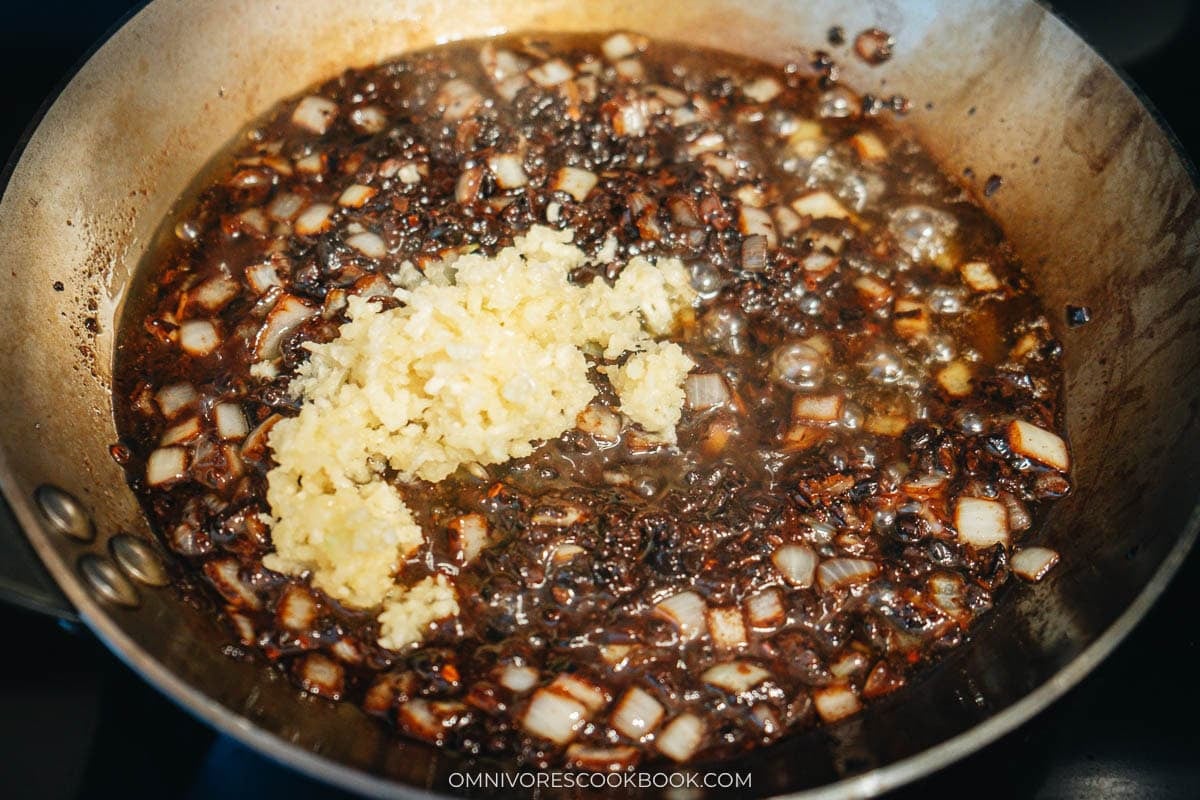
5. Add the finishing aromatics: Stir in the minced garlic and ginger. Continue to cook and stir until the onion is very tender and you see oil floating back to the top of the sauce.
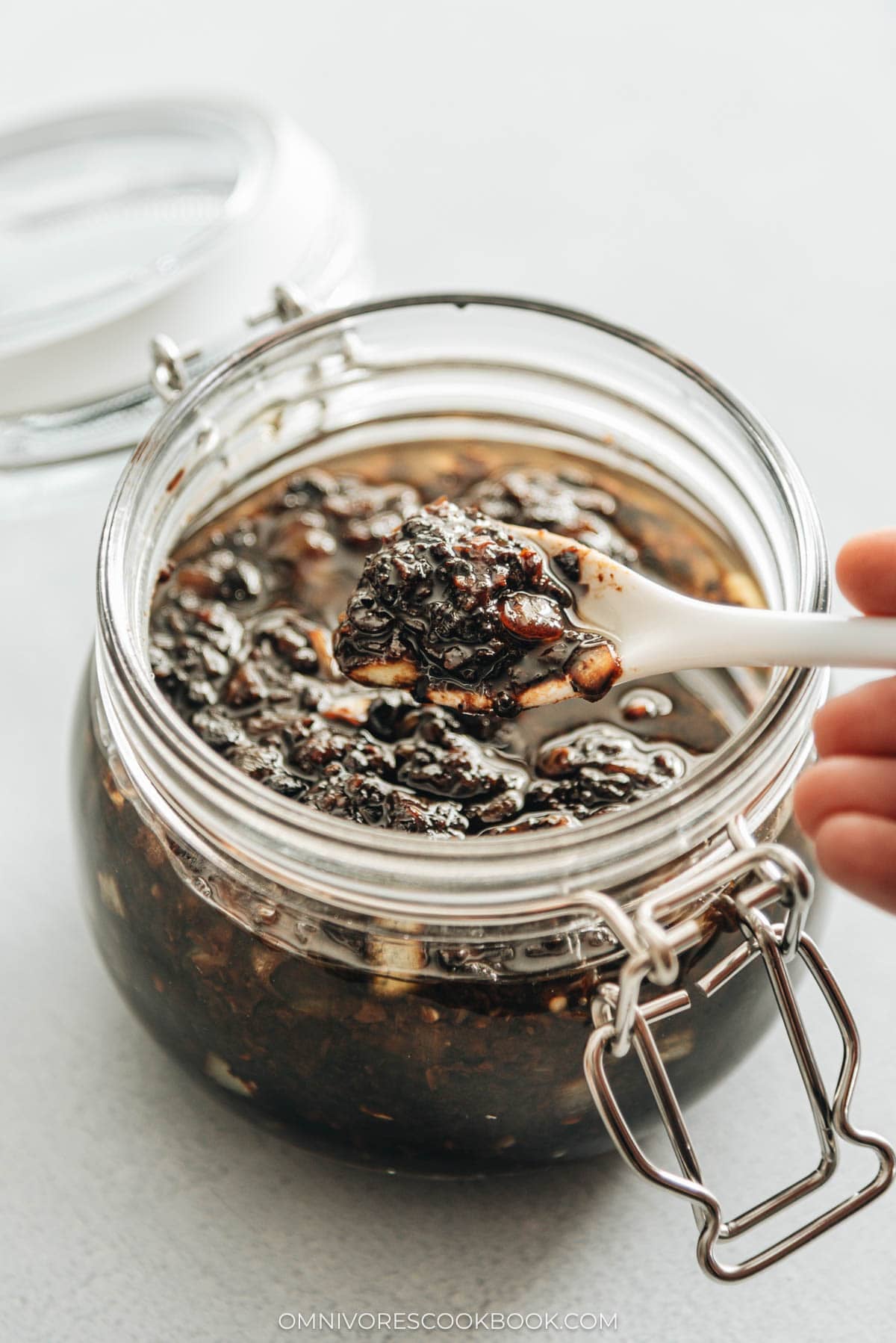
6. Cool and store: Transfer the sauce to a large heatproof bowl and let it cool completely. Move the cooled sauce to a clean airtight jar and refrigerate, where it will keep for 2 to 3 months.
My Cooking Tips
Rinse the beans before chopping: Fermented black beans come heavily salted and a bit hard, so I rinse them in a fine sieve and pat them dry before chopping. This step softens the beans for an easier knife cut and pulls back enough salt that the finished sauce stays balanced. If you are using a premium fermented black beans like those from The Mala Market, you can skip the rinsing step since those beans are tender and not as salty.
Keep the heat low after the chilies come out: Once I scoop the chilies out of the oil, I drop the heat to medium low for the entire bean and onion roast. The beans burn quickly at higher temperatures and turn bitter, which is the most common mistake when home cooks try this for the first time.
Add the garlic and ginger at the end: The garlic and ginger go in only after the onion is already soft, since both turn harsh and lose their fragrance when they cook for too long in hot oil. Adding them last gives the finished sauce a fresh top note over the deep roasted base.
Watch for the oil to surface: I know the sauce is done when a clear layer of oil pulls back to the top. That oil layer is also the seal that lets the sauce keep in the fridge for weeks, so I never strain it off.
Make it once, use it for a month: This recipe yields about 2 cups, which is enough for a dozen weeknight stir fries depending on how heavy a hand I have with it. I label the jar with the date and pull it out for chicken, fish, tofu, or a quick vegetable stir fry whenever I am short on dinner ideas.
How to Serve
At home I treat this jar as a shortcut to a proper Chinese stir fry on a weeknight. I scoop 3 to 4 tablespoons of the sauce and a touch of its surface oil into a hot wok, slide in marinated chicken, pork, or shrimp, and finish with whatever vegetable is in the crisper. The bean starch already in the jar means the sauce coats the protein in one toss without any cornstarch slurry on the side.
For a longer cook, I love using the sauce for steamed fish with black bean sauce on a Sunday with my son and husband, and for steamed ribs in black bean sauce when we have friends over for dim sum at home. It also pulls a small mountain of clams in black bean sauce together in the time it takes to set the table, and turns a humble zucchini stir fry into something nobody pushes around the plate.
Frequently Ask Questions
What is the difference between fermented black beans and the canned beans at the supermarket?
The fermented black beans I use here are dry, salty, and shrunken Chinese soybeans cured with salt and aromatics, sold in plastic bags or jars at Chinese grocers. They are nothing like the canned black beans in the chili aisle, which are softened plain beans with no fermentation, so I never substitute one for the other.
How long does the sauce keep in the fridge?
The sauce keeps for 2 to 3 months in a clean airtight jar in the fridge, since the surface oil acts as a natural seal over the cooked beans and aromatics. I use a clean dry spoon every time I scoop and keep the oil layer intact, since any introduced moisture will shorten the shelf life.
Can I freeze the black bean sauce?
Yes, I freeze it in small portions in ice cube trays and transfer the cubes to a zip-top bag for up to 6 months. The texture stays the same after thawing in the fridge overnight, which makes it a useful prep ahead for the freezer rotation.
Want to Save This Recipe?
Enter your email below & we’ll send it to your inbox. Plus get great new recipes from us every week!
Watch video
Homemade Black Bean Sauce
Ingredients
- 1 cup fermented black beans
- 1/3 cup vegetable oil
- 1/4 white onion , minced
- 4 to 6 dried chili peppers , torn to small pieces (*Footnote 1)
- 1/4 cup Shaoxing wine (or dry sherry, or Japanese sake) (*Footnote 2)
- 1/4 cup light soy sauce (or soy sauce, or tamari for gluten-free option)
- 1/4 cup sugar (or brown sugar)
- 1 head garlic (8 to 10 big cloves, minced (*Footnote 3)
- 1 thumb ginger , minced (*Footnote 4)
Instructions
- Rinse fermented black beans with tap water, drain, and coarsely chop them. I like to leave some bigger pieces of the beans, to give the sauce more texture.
- (Optional) You can use a food processor to mince all the ingredients. Add black beans, onion, and garlic into a food processor. Blend until both ingredients are minced, but not a fine paste.
- Heat oil and dried chili peppers in a saucepan over medium heat until warm. Turn to medium low heat. Cook until the chili peppers turn dark, but not black. Stir occasionally. Scoop out the chili peppers and discard them.
- Add the black beans and onion. Cook and stir, until the sauce looks a bit dry. (The beans will absorb oil at first, but release the oil once they’re cooked.)
- Add Shaoxing wine, light soy sauce, and sugar. Simmer and stir until the onion turns tender. It takes about 10 minutes or so. The sauce can be easily burned, so make sure to keep the heat low and stir the sauce constantly to ensure even cooking.
- Add garlic and ginger (if you’re using these ingredients). Continue to cook and stir the sauce until the onion turns very tender. You should see oil floating on top of the sauce. Transfer the sauce to a large bowl to cool off completely.
- Store the sauce in an airtight jar in the fridge for 2 to 3 months.
Notes
Nutrition

Did you make this recipe?
I’d love to hear how it turned out for you! Please take a moment to leave a 5-star rating ⭐️ and share your thoughts in the comments further down the page. It really helps others discover the recipe too.
Kate Shilling
Hi Maggie! Fermented black beans have been on my list for my next Chinatown shopping expedition. Do you have a favorite grocery store in Chinatown here in NYC that you recommend? I’ve been to a few and always love exploring the ingredients!
Maggie
Hi Kate, I would go to Hong Kong market if I want to grab something real quick. It’s very big and is usually well stocked, so you can get almost everything. It has a good size produce section too but the vegetables are not the freshest. I like to walk through Grant Street, where you can find many outdoor vendors who has much better vegetables. I think one of them is called Ken Hing Food Market that has fresh produce (I googled it although I’m not sure it’s the one because I usually just walk by and never remember the exact location). Btw I have an article of Chinese greens in case you want to try out a different produce: https://omnivorescookbook.com/chinese-greens/
Our favorite vegan dim sum spot is Buddha Bodai, and the Chinese spot is Deluxe Green Bo. Last week I walked by Chinatown, I saw many dim sum shops have opened outdoor seating. It can be fun to enjoy some dim sum there if you don’t mind the crowd.
Not Chinese but Tomiño Taberna Gallega is our favorite Spanish tapas spot (between Chinatown and Little Italy). The food is SO GOOD (best Spanish omelete, it has runny eggs inside). They have two outdoor tables so if you want some booze and small bites, it’s perfect.
NancyL
Thank you for this recipe!
fsg
I will be making it soon, ,
recipe and preamble has me itching to begin immediately
: – )
Matt
Just made this sauce and it’s amazing!! Great flavor and just the right amount of heat. I used all the ingredients and would likely go heavier on the ginger next time. Can’t wait to try it on some dishes soon.
Mine came out a bit on the salty side to the point that I am not sure how much I can use in each “serving”. Is there a way to reduce the saltiness of the beans? I rinsed them beforehand for a minute of so prior to chopping. Thoughts?
Didina Gnagnide Angorinie
Hi, I really appreciate your site. About this sauce I have two questions:
1)do you think it could be made (and still be flavorful) without any alliums (onion, garlic, scallions, etc)?
2)is there an alternative to fermented black soybeans that does not contain high amounts of phytoestrogens?
Both questions are due to my dietary requirements 😭
Maggie
I’m afraid it’s not gonna work for this recipe. One sauce is actually similar to this is Tian Mian Jiang (sweet wheat sauce): https://themalamarket.com/collections/all/products/sichuan-sweet-wheat-paste-tian-mian-jiang?aff=2 It’s mostly made with fermented wheat flour and salt.
It doesn’t contain alliums and phytoestrogens in it.
Queenie
Hi there, I have been looking for a way to make Korean jajangmyeon but live in an area without Asian stores. I LOVE black beans and grew up eating them in just about everything when growing up in NYC’s Chinatown. I have never heard of jajangmyeon until recently and it looks so good I want to make it. But I wonder if this sauce is the same as what would be considered jajang sauce? I have a massive jar of fermented black beans in my fridge.
Maggie
Hi Queenie, this sauce is different from the jajang sauce I’m familiar with but taste close. I think the Korean version uses different approach so if a recipe uses black bean sauce, you can definitely use this recipe.
I grew up eating Northern Chinese jajang noodles and I have a recipe for it: https://omnivorescookbook.com/homemade-zha-jiang-mian-fried-sauce-noodles/
I’d love to look into replacing the traditional tian mian jiang (fried sauce noodles) with this one but I’m afraid I don’t have a recipe now.
Shreena
Hi Maggie
I’ve just stumbled across this recipe and it sounds fantastic.
I’m vegetarian and would be interested in using it for a tofu in black bean sauce. I had a look at your stir fried chicken with black bean sauce recipe and noticed it uses oyster sauce and sake.
Is there an alcohol free and vegetarian alternative to making It so I can enjoy a delicious tofu black bean Sauce? Xxx
Christi
Hi Maggie!
I LOVE your site! It has become my go-to for Chinese recipes.
Do you have any recommendations for a sugar substitute? I have been able to successfully use substitutes like Stevia in some recipes but for this one I’m wondering if replacing the sugar it will ruin the consistency of the sauce.
Maggie
Hi Christi, I think it should be fine to replace the sugar. The fermented black beans are quite starchy, so the sauce will thicken eventually.
If you use stevia, be carefully of the amount. Maybe add less at the beginning and taste the sauce as you go. It is a salty sauce and the sugar should be on the background and add richness.
Kerrie
Thank you so much for sharing this recipe. I read on another blog that Fermented soybean sauce can be used as a substitute for doubanjiang in MaPo sauce in a pinch. The recommendation was to add chile. Do you think this would work?
Maggie
I Kerrie, I’m pretty sure it will work. Both has a fermented taste and should work great with tofu. If you have homemade chili oil, you can scoop a tablespoon of the chili flake from it, and add more chili oil to the mapo tofu along with the black bean sauce. It should be super delicious!
Here is the chili oil recipe: https://omnivorescookbook.com/how-to-make-chili-oil/
Gordon Szeto
I have fond memories of a restaurant that my family always went to since I was born. One of their best dishes and one that has always been on my mind is their black bean chicken dish. Sadly they are no longer in business and I have been wanting to make black bean chicken for so long! i finally decided to and while researching I came across your recipe for the sauce. It was delicious! I am not sure if my dish lived up to my memory (haha does anything?) but I think it was pretty close. Either way it was fantastic! Thank you!
Ethan Boatner
But I want to know how to ferment the dried beans themselves. These recipe look great, but say “add the fermented beans.” Did I miss that part, or, how can I find out how to ferment my sack of dried beans? Thanks!
Maggie
Hi Ethan, these Chinese fermented black beans are quite special – the soy beans are boiled and then fermented in a solution for a year to create the special taste. I don’t think it’s something you can make at home. You can easily purchase them on Amazon (http://amzn.to/1PM90DG) or in an Asian grocery store.
Kathi
I Love, love, love this recipe! I make a full recipe and have much left over. The next time I make a stir fry, I use some of this sauce. Its easy and delicious! It lasts a long time in an airtight container in the fridge too.
Casey
Brilliant recipe! Simple, but full of flavour.
Tristian
Thanks for this, this is exactly what I needed.. I have made a batch for my stir fry needs and now this is my go to base for any barbecues, weekly stir fry’s. I will never buy bottle sauce again!
Rhonda
Hi Maggie,
Made this yesterday to use as a dipping sause with your salt and pepper chicken, it is heavenly! When I saw this recipe, I couldnt order those fermented soy beans fast enough! We dont have a local store that carries this. Seems like the only restaurant around here that had this was P.F.Changs, and they were always stingy with the amount that you got! Now I have all I want, and its much better than what they serve. Cant wait to have some for lunch! Thinking up other uses for the next 30 days since hubby doesnt care for it, so its all mine, mine I tell you!!
Angela McCall
My husband is Celiac so I put in gf soy sauce this was the first time we have had black bean sauce in five years was brilliant wish I found this recipe sooner .
Wendy Allott
Hi. My sauce didn’t turn out as black as yours. But, I did leave out the chili. Is that why?
Maggie
I don’t think it’s the chili that’s causing the issue. The main ingredient in this recipe is fermented black beans, which are black. The color of the sauce should turn out black as the fermented beans.
Wendy Allott
I’ve just realised, I don’t think my black beans were fermented, I think they were just beans. It still tasted delicious. My kids even loved it and they’re fussy.
Bittu thapa
Vry vry nice
Lily
Can we use this in jajangmeon?
Maggie
Hi Lily, you can add some black bean sauce into a jajangmeon sauce, which adds a nice umami taste. But the main base of jajangmeon should still be sweet bean paste (made from wheat flour and sugar). I have a recipe here: https://omnivorescookbook.com/homemade-zha-jiang-mian-fried-sauce-noodles/
Brent
This looks wonderful! I see the recipe calls for heating chile peppers in oil, and in the Note you refer to Thai chiles, but how many? And are there alternatives? My grocer has lots of Mexican peppers — would Japones work?
Maggie
Hi Brent, you can totally use dried Mexican peppers (5 to 6). Sorry if the recipe wording is confusing. I actually called mild dried chili peppers (not Thai chili). I just slightly edited the recipes.