
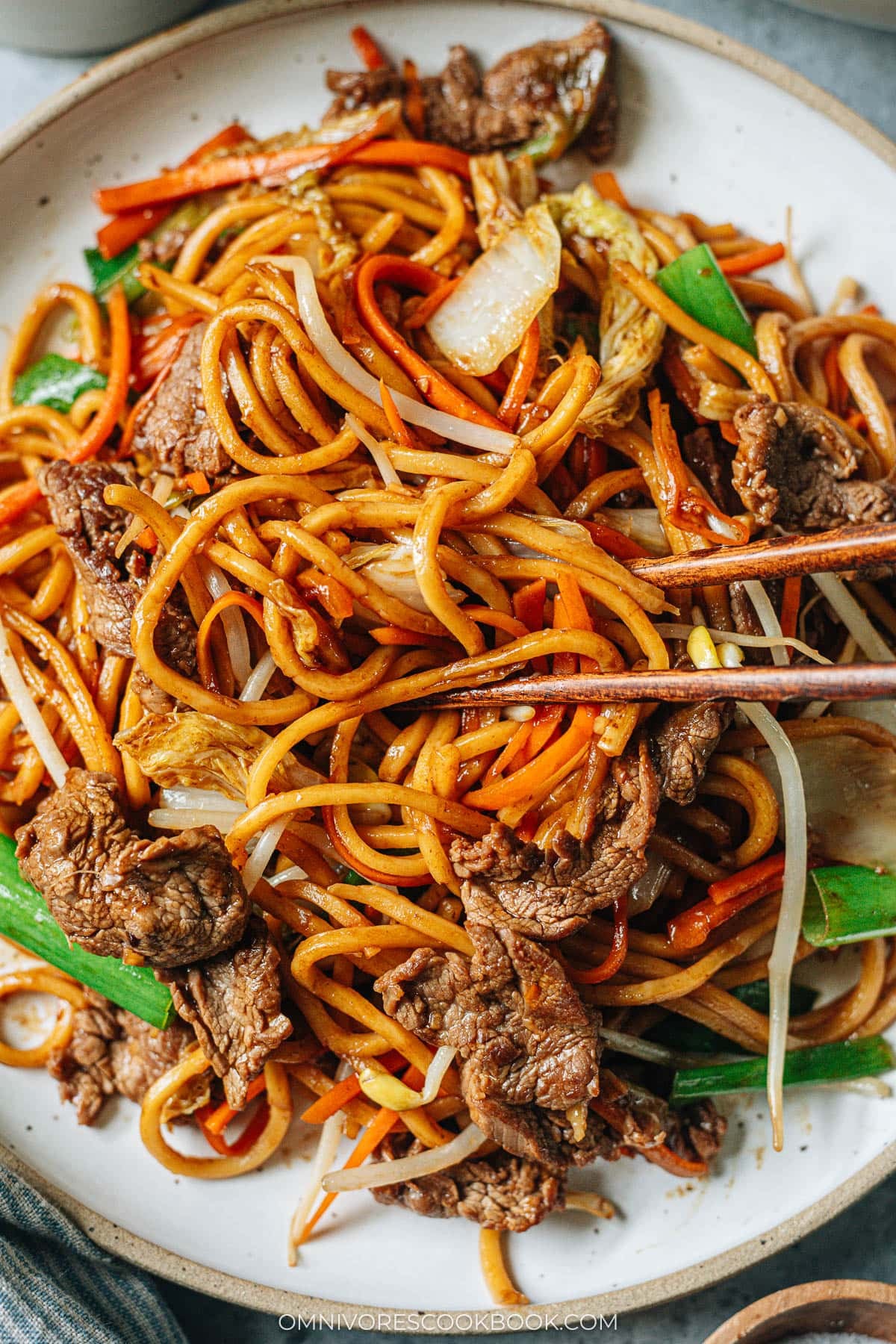
This beef lo mein is my homemade take on a Chinese takeout classic, made with tender beef, chewy noodles, and vegetables tossed in a savory sauce. It is more of a Chinese American restaurant style dish than a traditional homestyle noodle recipe, and what sets it apart from beef chow mein is the softer and thicker noodle with a chewy texture.
I created this recipe because some nights I want noodles on the table quick, and I am not in the mood to wait around for takeout. So, I just marinate the beef, mix the sauce, boil the noodles, then toss everything together in one pan, and in 30 minutes I have a dinner with juicy beef, crisp vegetables, and plenty of sauce wrapped around every strand. I mean, it cannot get easier than this, right?
What makes this version unique to me is how easy it is to count on. Even on a busy night, I can put it on the table and know my family will light up the second they see a big plate of noodles waiting for them. I hope you give it a try and share it, because once you make it at home, it has a very good chance of becoming part of your regular dinner plans.
Ingredients
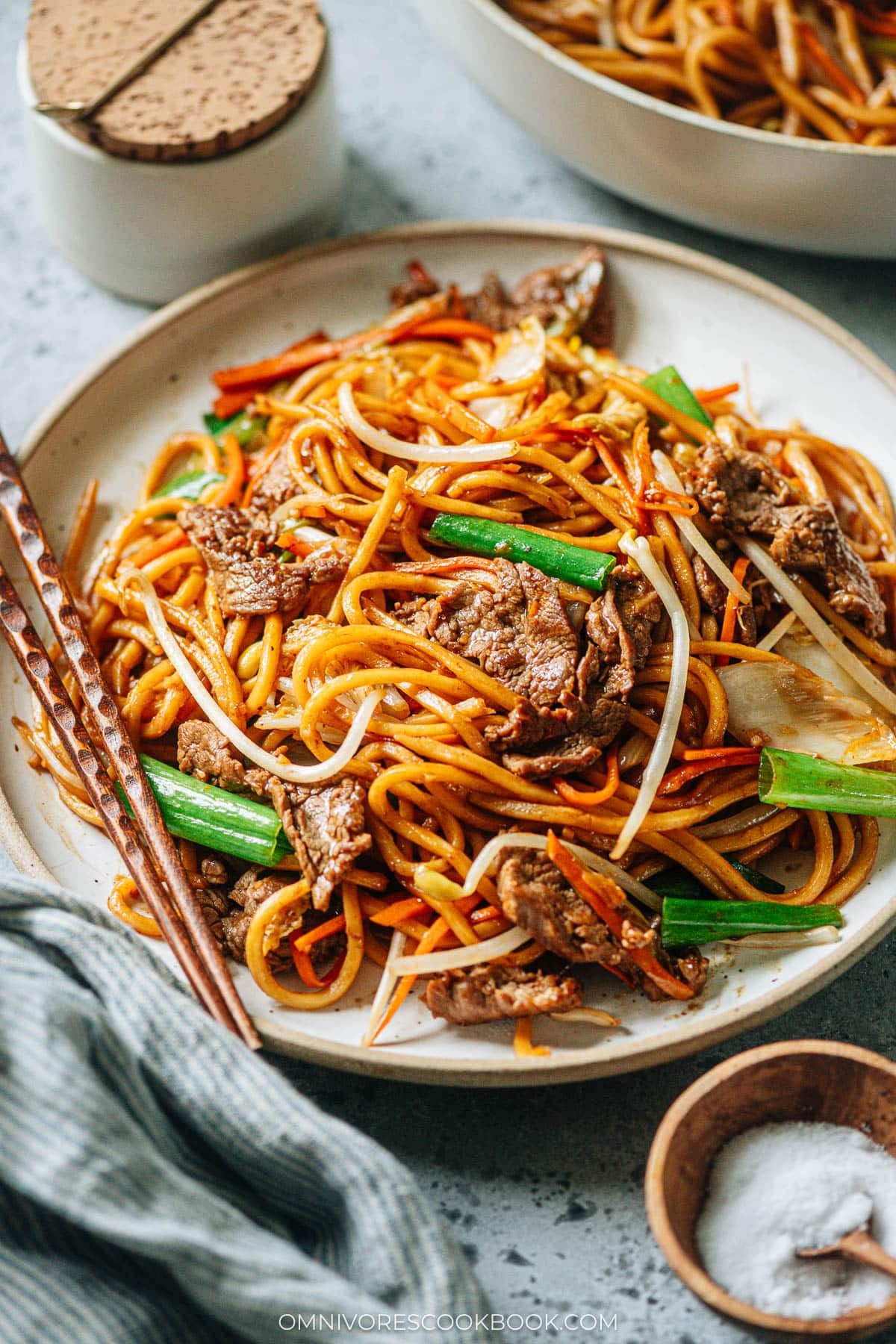
I like setting this recipe up in little groups before I start, because the cooking moves quickly once the pan is hot. I keep the beef, noodles, sauce, and vegetables ready in order so I can move straight through dinner without stopping.
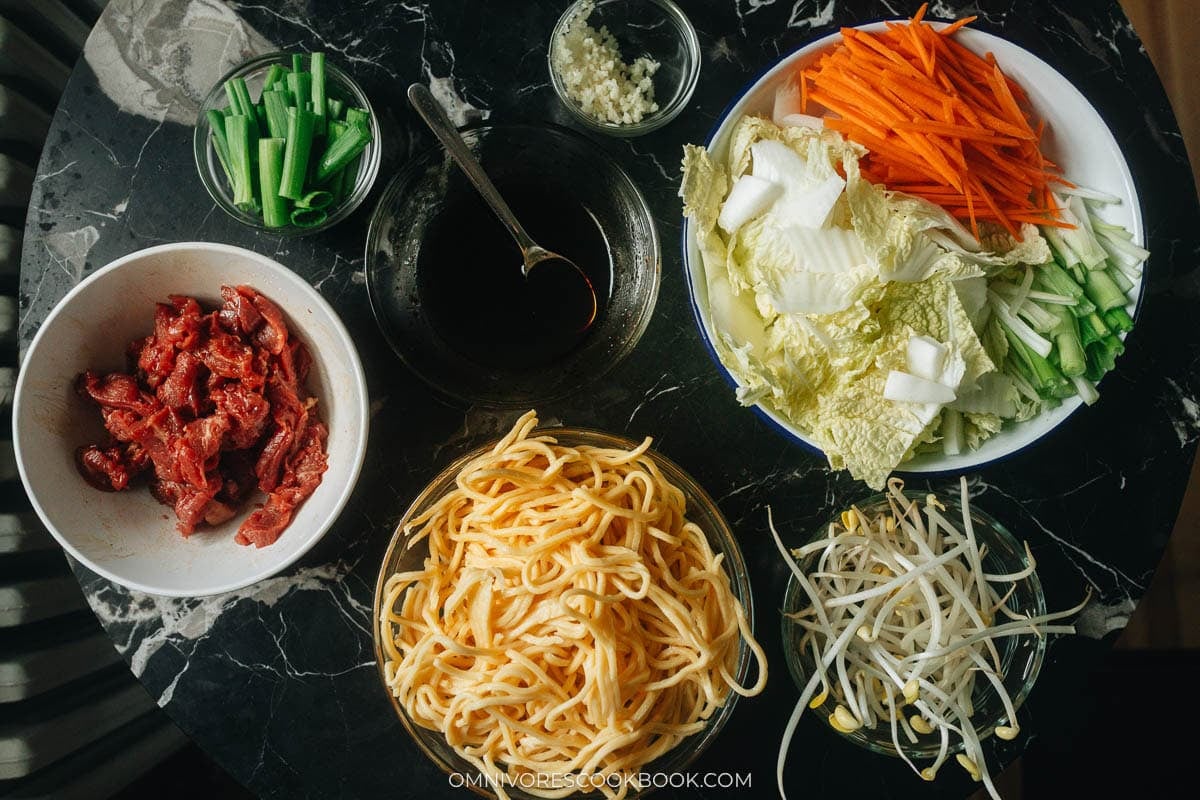
Beef and marinade: I use flank steak because it cooks fast and stays tender when I slice it. I marinate it with Shaoxing wine, dark soy sauce, and cornstarch so it gets extra flavor and a softer texture in the pan.
Noodles: My favorite noodles for this are fresh lo mein noodles. You can find them at Chinese markets or large Asian markets such as H Mart. They are usually stored in the refrigerated or freezer section. You can also find them at online Asian grocery stores such as Umamicart. If fresh noodles are not available, you can also use dried lo mein noodles or egg noodles.
Sauce: I mix light soy sauce, dark soy sauce, oyster sauce, sugar, and sesame oil.
Vegetables and aromatics: I use garlic, green onion, carrot, napa cabbage, and bean sprouts.
How to Make
1. Marinate the beef: Combine the sliced steak with the Shaoxing wine, dark soy sauce, and cornstarch. Mix until well coated and let it marinate for 15 minutes.
2. Mix the sauce: Stir together the light soy sauce, dark soy sauce, oyster sauce, sugar, and sesame oil until the sugar dissolves.
3. Cook the noodles: Boil the lo mein noodles according to the package instructions. Rinse them under cold water, drain well, and toss with a little sesame oil to prevent sticking.
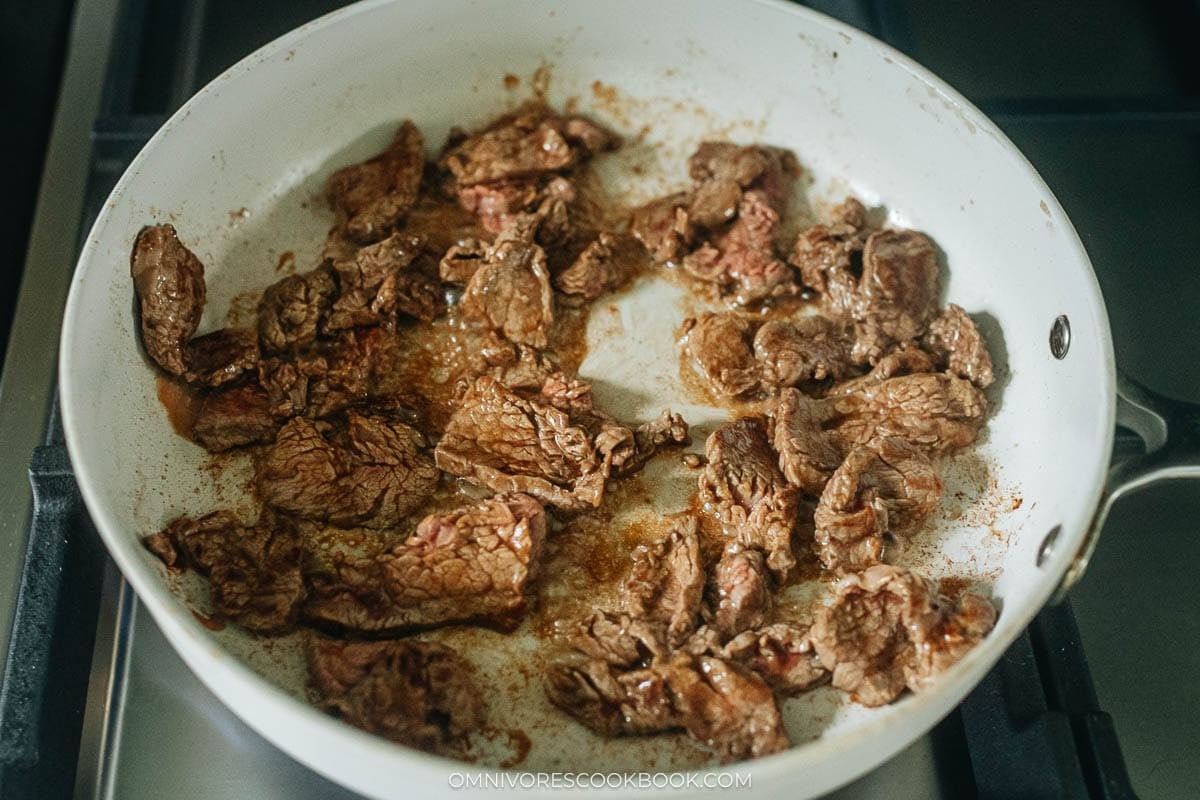
4. Sear the beef: Heat oil in a large skillet over high heat. Spread the beef out without overlapping and cook until the bottom turns golden. Flip and cook the other side until browned but still a little pink inside, then transfer it to a plate.
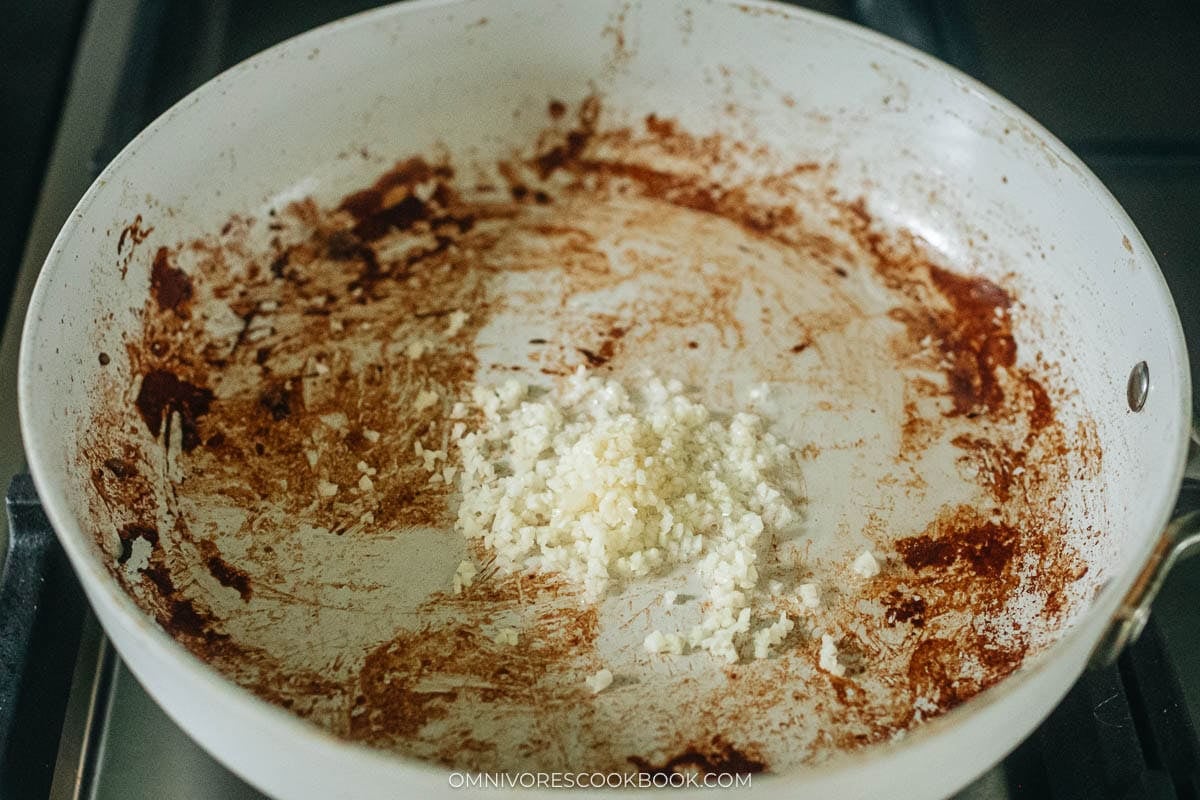
5. Cook the garlic: Reduce the heat to medium high and add more oil. Add the garlic and stir for about 30 seconds, until fragrant.
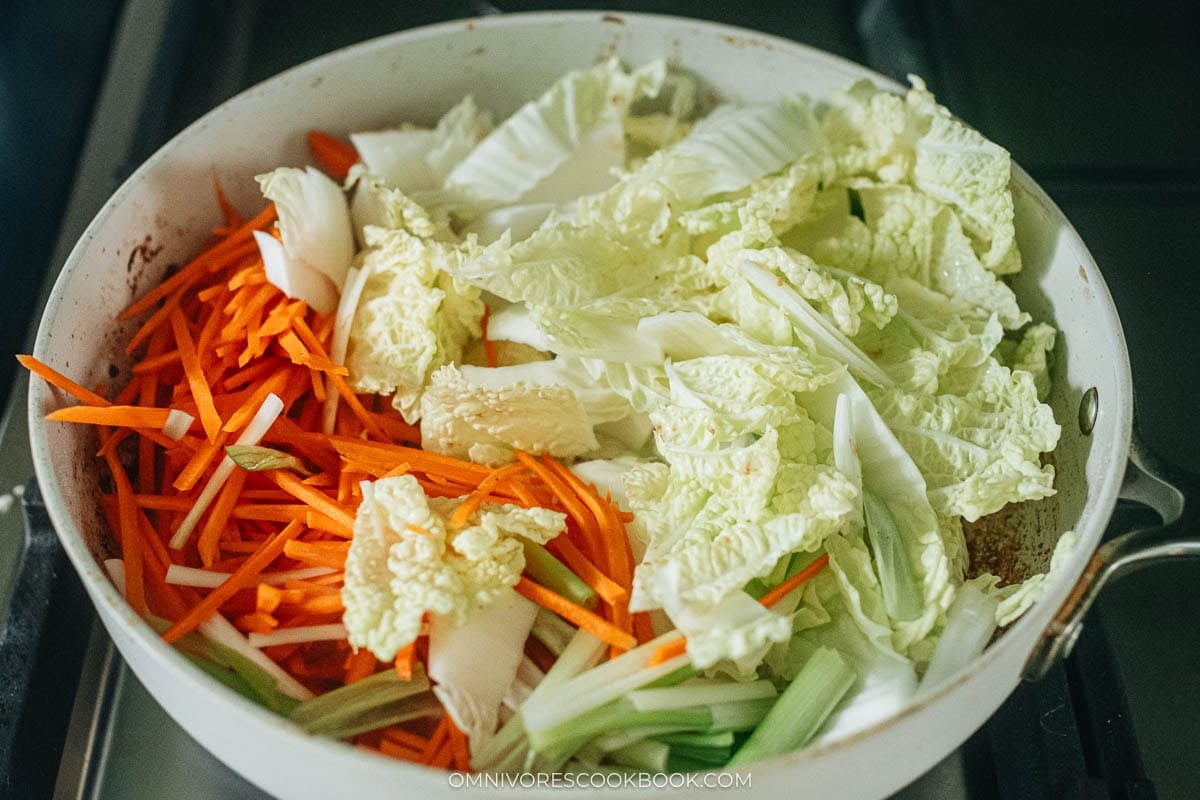
6. Cook the vegetables: Add the white part of the green onion, carrot, and napa cabbage. Stir fry until the cabbage starts to wilt.
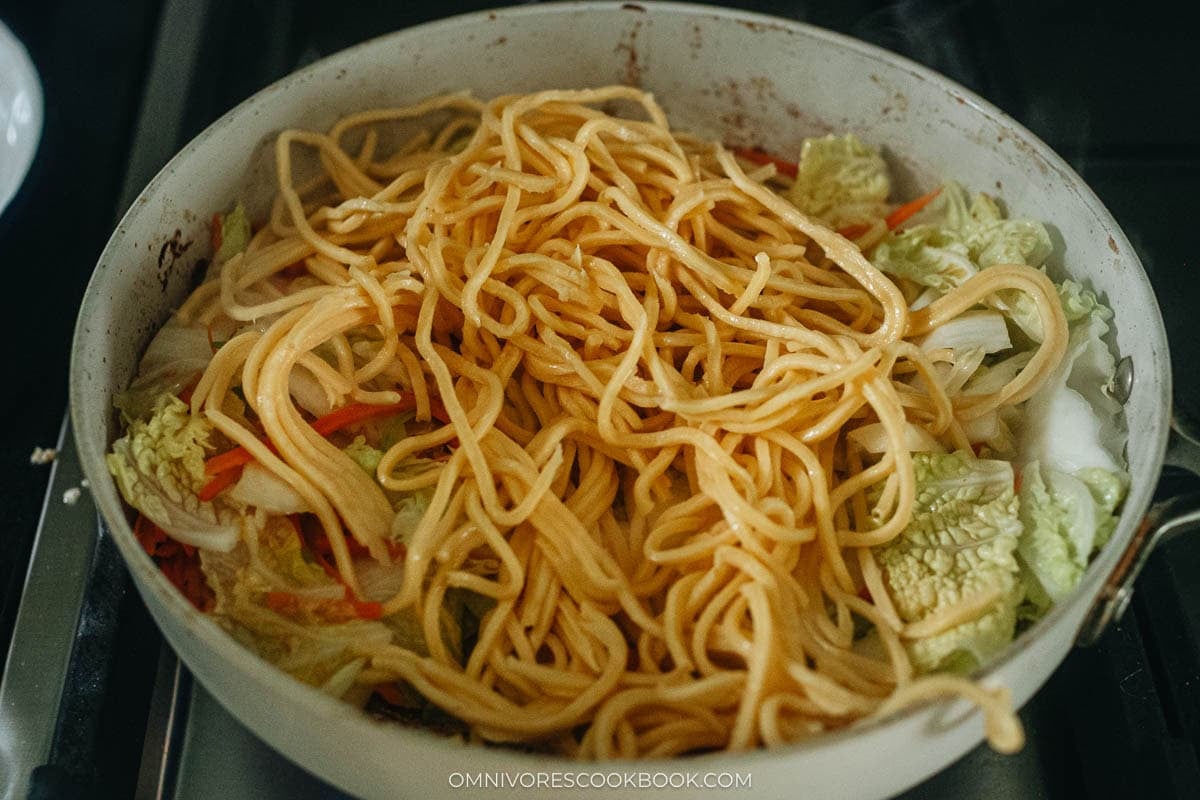
7. Add the noodles: Add the cooked noodles and drizzle the remaining oil over the top. Toss a few times so the noodles mix with the oil.
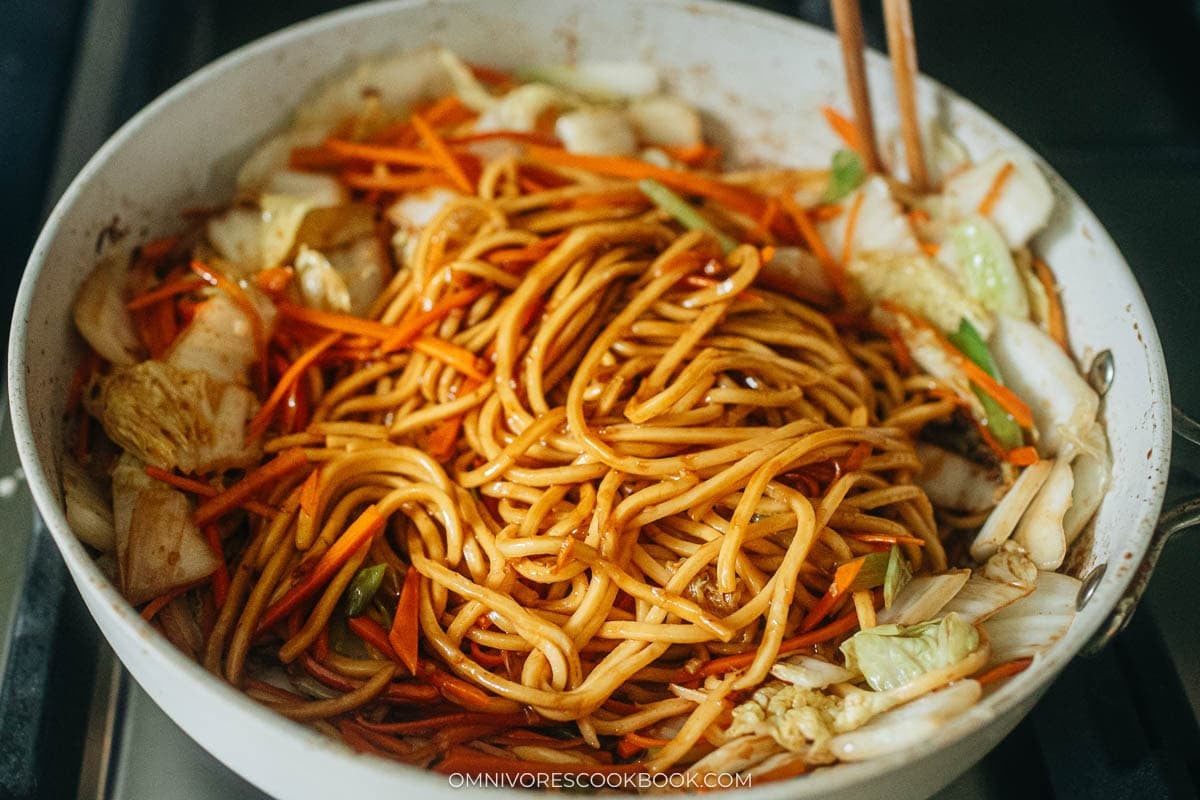
8. Add the sauce: Pour in the sauce and toss everything together until the noodles are evenly coated.
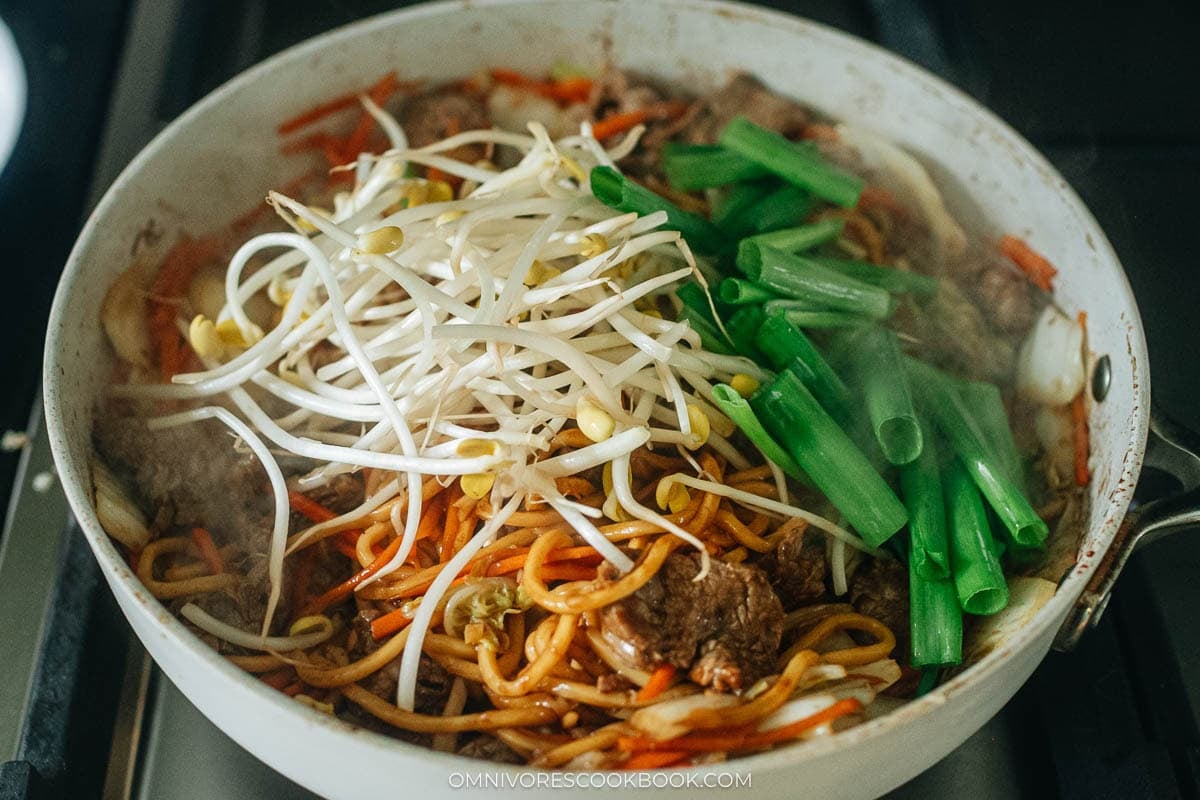
9. Finish the lo mein: Add the cooked beef back to the pan and toss until the sauce is absorbed. Add the bean sprouts and green onion greens, then stir a few times until the sprouts are just wilted but still crisp. Serve hot.
My Cooking Tips
Slice the beef against the grain: I always cut flank steak against the grain so it stays more tender after stir frying.
Use the right noodles if I can: I really prefer fresh lo mein noodles here because they give the dish the chewy texture I expect. If I use spaghetti or another substitute, dinner still works, but the texture changes.
Do not overcook the beef: I take the beef out while it is still a little pink inside. It goes back into the pan later, so this keeps it from turning tough.
Keep the noodles loose: I rinse the noodles after boiling and toss them with a little oil. This makes them much easier to stir fry without breaking or clumping.
Add the bean sprouts at the end: I like adding bean sprouts right before serving so they stay crisp. That little bit of crunch makes the whole plate better.
Serving Suggestions
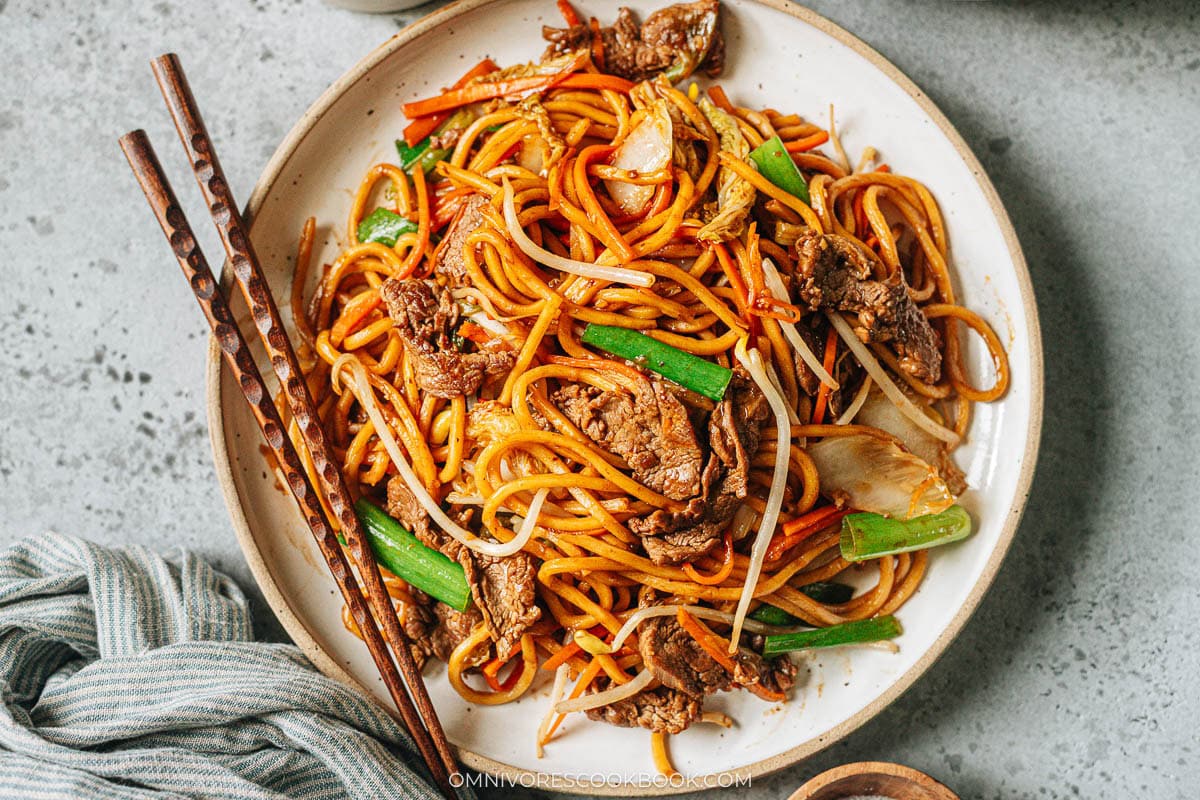
I serve beef lo mein as a full meal all the time, especially when I do not want anyone asking what else there is to eat. If I want to add a little more to the table, I usually pair it with my Chinese egg drop soup or my easy broccoli and mushroom stir fry, because both keep dinner easy and work really well with a big plate of noodles.
When I want dinner to lean a little more takeout style, I add something fun on the side like my sweet and sour chicken or some Chinese egg rolls, and if there is any left the next day, I am always happy because beef lo mein makes such a good lunch. Depending on how many people I share it with at dinner, I sometimes get lucky and end up with leftovers worth looking forward to.
Frequently Ask Questions
Why is my beef turning tough?
In my experience beef turns tough when it is sliced too thick or cooked too long. I always slice it thinly against the grain, and I take it out of the pan while it is still a little pink inside so it does not overcook. It goes back into the pan later with the noodles and sauce, so it still has time to finish cooking.
How do I keep the vegetables crisp in beef lo mein?
I cook the vegetables only until they start to soften, not until they are completely soft. I want the carrot, cabbage, and bean sprouts to keep some texture. I also make sure everything is prepped before I start stir frying. Once the pan is hot, the cooking goes fast, and having the vegetables ready helps me avoid overcooking them while I stop to look for the next ingredient.
How do I store leftovers?
I store leftovers in an airtight container in the refrigerator for up to 3 days. When I reheat them, I like using a pan with a small splash of water so the noodles loosen up and the beef does not dry out too much. If I want to freeze it, I let it cool completely first, then pack it into a freezer safe container and freeze it for up to 1 month.
Want to Save This Recipe?
Enter your email below & we’ll send it to your inbox. Plus get great new recipes from us every week!
Watch video
Beef Lo Mein
Ingredients
- 8 oz flank steak , cut against the grain into 1/4” (4 cm) thick slices
- 8 oz fresh lo mein noodles (or 6 oz / 170 g dried lo mein / chow mein noodles)
Marinade
- 1 teaspoon Shaoxing wine (or dry sherry)
- 1/2 teaspoon dark soy sauce
- 1 teaspoon cornstarch
Sauce
- 1 tablespoon light soy sauce (or soy sauce)
- 1/2 tablespoon dark soy sauce
- 1/2 tablespoon oyster sauce
- 2 teaspoons sugar
- 1/2 teaspoon sesame oil
Stir Fry
- 3 tablespoons peanut oil , divided
- 2 cloves garlic , minced
- 4 green onions , sliced into 1” (2 cm) pieces, greens and whites separated
- 1/2 large carrot , cut into matchsticks
- 5 pieces napa cabbage leaves , chopped
- 1/2 cup bean sprouts
Instructions
- Combine the steak with the marinade ingredients in a medium-sized bowl. Mix until well coated and marinate for 15 minutes.
- Mix the sauce ingredients in a small bowl until the sugar is dissolved.
- Cook the noodles according to package instructions. Rinse under running cold water to stop cooking. Drain and toss with a drizzle of sesame oil to prevent sticking.
- Add 1 tablespoon of oil to a large skillet and heat over high heat until hot. Spread the marinated steak without overlapping. Cook without disturbing until the bottom turns golden brown, 1 minute or so. Flip to cook the other side until browned but the inside is still a bit pink. Transfer the beef to a big plate and set aside.
- Reduce the heat to medium-high and add 1 tablespoon of oil. Add the garlic. Stir a few times to release the fragrance, about 30 seconds.
- Add the white part of the green onion, onions, carrots, and cabbage. Stir fry until the cabbage begins to wilt, 2 to 3 minutes.
- Add the noodles and drizzle the remaining 1 tablespoon oil on top. Toss the noodles a few times to mix with the oil.
- Pour in the sauce and toss everything together.
- Add back the cooked steak and toss again, until the sauce is fully absorbed.
- Add the bean sprouts and green onion greens. Stir a few times until the bean sprouts are just wilted but remain crispy. Transfer everything to serving plates and serve hot.
Nutrition

Did you make this recipe?
I’d love to hear how it turned out for you! Please take a moment to leave a 5-star rating ⭐️ and share your thoughts in the comments further down the page. It really helps others discover the recipe too.
Lilja Walter is a part of the Omnivore’s Cookbook team and worked closely with Maggie to develop and test this recipe.
Sarah
Great recipe! I doubled the ingredients for a family of 4, as many people said that the recipe fed 2 people only. And its a good thing I did, as there was nothing left!! I don’t really like bean sprouts so I added 1/2 an orange bell pepper along with the other vegetables in the beginning. Thank you Maggie, it is an outstanding dish!
Also I have tried your Honey Garlic Prawn and Hunan Chicken, and both were huge hits as home along with this one!
Nicholas Lake
Great recipe!!!
Derah
yr beef low mein dish > I found the beef too skimpy to serve 4 people and the sauce also was inadequate in the quantity – as a result i got a lot of grumpy guests – I am new to chinese cooking and this does not compare to take out. Wish you had thought to increase the sauce
MARY
NON FISHY TASTING OYSTER SAUCE? I PIN MOST OF YOUR RECIPES. THANK YOU.
Mark Paterson
Love the video with the music.. one of the most soothing 3 minutes I have ever seen.. as well as being great instruction! Just gazed at it twice in a row…
Patty Lin
Great recipe. I made it last night and was surprised by how much better it was than most takeout. Less greasy and heavy. Just wanted to note that the onions are missing from the ingredients list (it should be after green onions). Also, it says serves 4, but my husband and I polished off the entire dish in one sitting!
Paul
Delicious! But seemed more like 2 generous servings if served alone. To divide this 4 ways you’d definitely have to serve some other dishes along with it. Also I wanted a bit more color so added red b ell pepper slivers and green beans cut like matchsticks.
J-Mom
For some reason I thought I need an exotic sauce for lo mien. I’m finally glad I tried this. This will be made routinely. Thank you
Tom Arnold
My wife praised my dish to which I replied that I simply followed clear, simple instructions. The hard work is in coming up with a wonderful recipe. Thank you for making me look good by making it so easy.
Lil
This came out ah-mazing!
Misty
More Success! This recipe turned out perfect. No leftovers. Thank you so much for posting all your recipes and explaining how to do it.
Lo Mein Lover
I made this and it was excellent! Better than I can get in my local restaurants.
I used angel hair spaghetti and used shrimp instead of beef and doubled the size (because I love lo mein so much!). I also substituted cabbage for Napa because I couldn’t get Napa at the time.
This was super easy to make and is definitely going into my dinner rotation!
I’ve had great success with all your recipes I’ve tried. Thanks so much for sharing them and demystifying Chinese cooking!
Elisabeth
Simply delicious! I haven’t seen that on any Chinese restaurant menu here in Ireland nor in Germany.
Jen Terwilliger
I loved this recipe! Super easy, great flavor. I went to my local Asian Market for the fresh lo mein noodles, and they only had fresh egg noodles so I bought those and they were perfect. I recommend the fresh over dried noodles, but I can see how spaghetti would work almost as well.
mjskitchen
This does look A LOT better than takeout. About once a month we grill a flank steak and get three meals from it. I love this recipe for one of those meals. Pinned it for our next steak. Thanks!
Sheila Grover
Is there a recipe for chicken lo main, and can spaghetti be used for this recipe?