
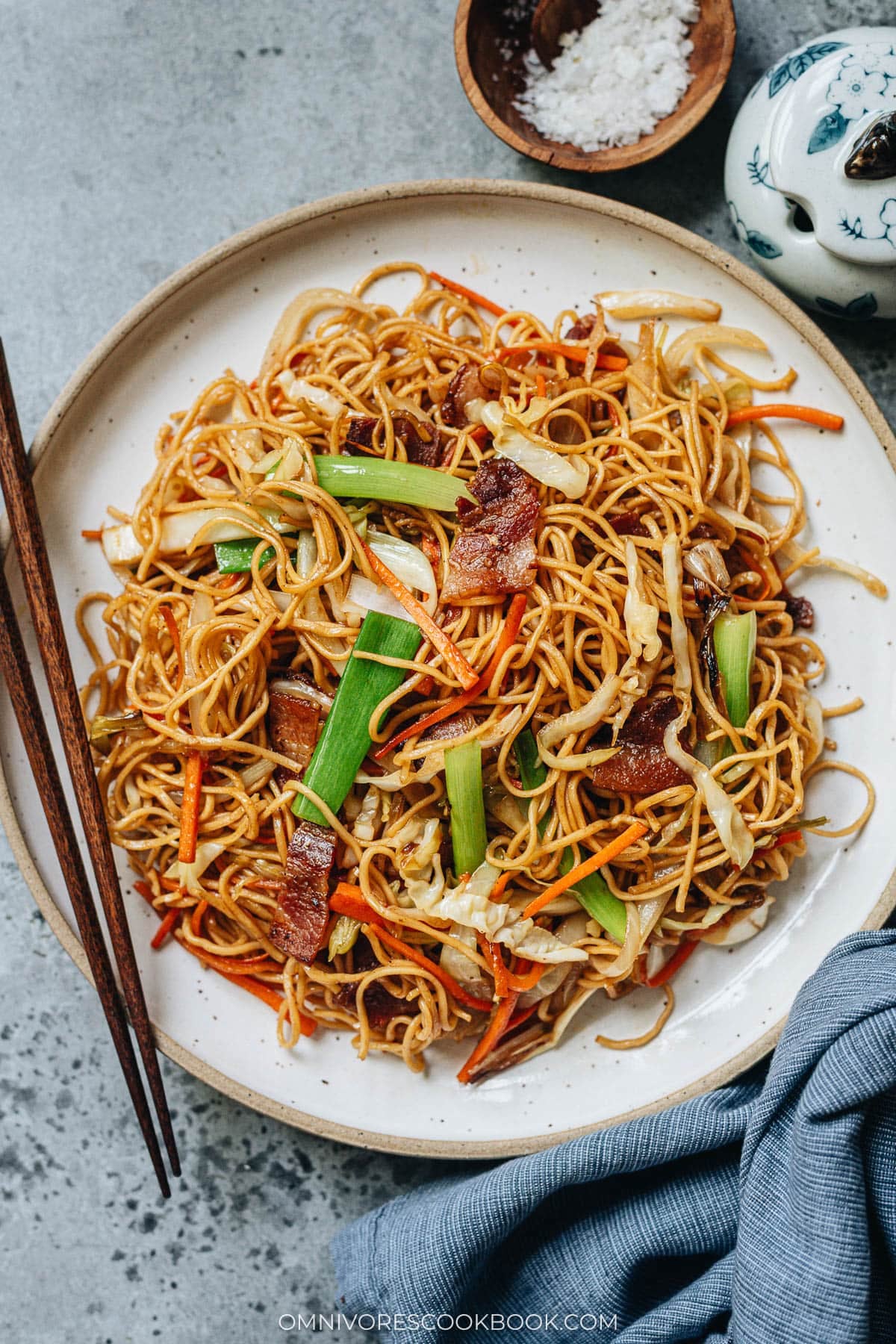
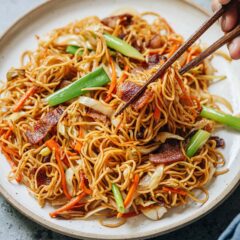
Pan fried noodles are a Cantonese noodle format where thin egg noodles are par boiled and then crisped in a hot wok with a savory brown sauce. Most restaurant versions of this dish use pork or shrimp or beef, and my home version today swaps the protein for thick slices of crispy bacon so the rendered fat infuses every strand with flavor.
This recipe came out of a habit of cooking bacon for weekend breakfast and finishing the pan with whatever noodles and vegetables I had in the fridge. My husband started asking for it as a proper dinner, and after a few rounds I locked in the aromatic and sauce ratios that hold up the way the bacon does. It is one of the few noodle dishes on my site where I actually look forward to the next-day lunch out of the container. So yummy!
In my recipe below, I walk you through every step, from crisping the bacon in a cold skillet and parboiling the noodles to stir-frying the cabbage, carrot, and onion. Then I fold the savory sauce into the noodles before adding the charred scallion whites, garlic, cooked vegetables, and crispy bacon back to the wok. I finish everything with the scallion greens and a small drizzle of toasted sesame oil off the heat for the perfect finishing touch.
If you’re a busy mom like me, I highly recommend making this delicious and satisfying one-pan noodle dish. In just 45 minutes, you’ll have a comforting dinner on the table that the whole family will love. Enjoy!
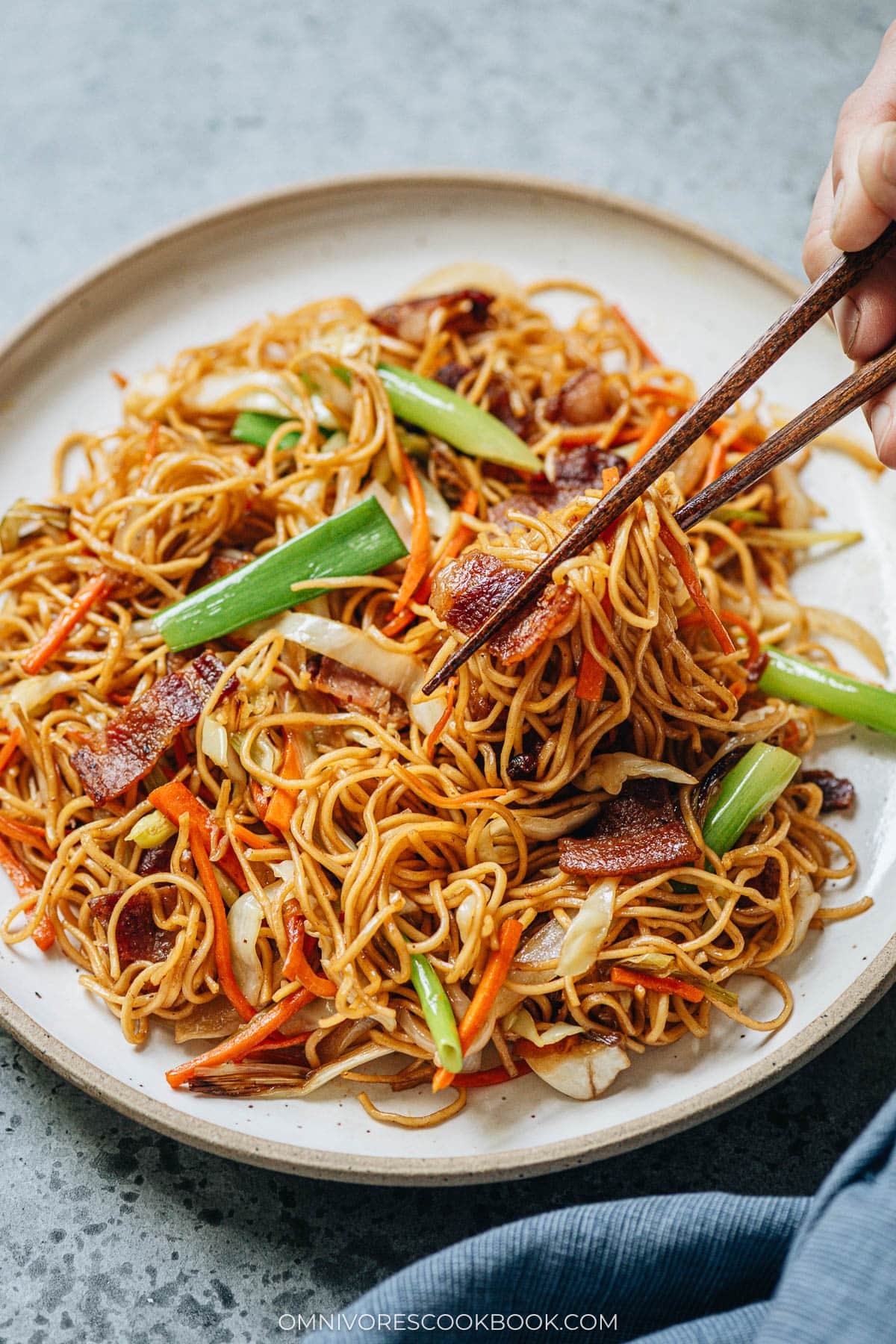
Ingredients
Most of the ingredients are Chinese pantry staples I already keep on hand for stir-fries, so the grocery list is budget-friendly and easy to shop for.
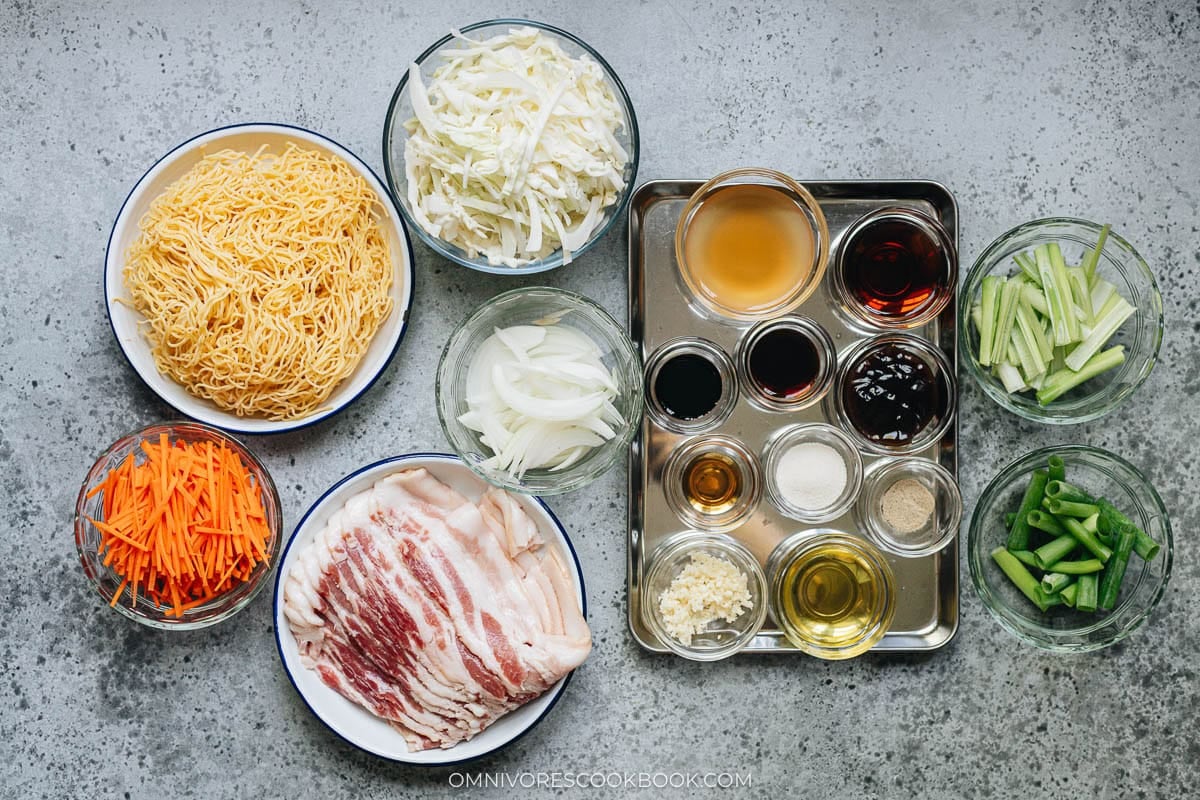
Bacon: I use regular thick cut bacon slices. Any smoked pork bacon works here, though a heavier smoke reads through the finished dish more than a mild one, which I like.
Noodles: I use fresh Hong Kong pan fried noodles the same ones I use in my chicken fried noodles recipe, for the springy chewy texture that holds up in a wok.
Sauce: I whisk together chicken broth, Shaoxing wine, oyster sauce, a splash of light soy sauce, a touch of dark soy sauce for color, sugar, and a pinch of white pepper. The sauce is balanced on the low side of salty so the bacon does not push it over.
Stir fry vegetables: I shred a quarter head of cabbage, julienne a carrot, and slice half a white onion. These 3 together give me the crunch, sweetness, and body I want.
Aromatics and finish: I use green onions cut into short pieces with the whites split lengthwise, chopped garlic, and toasted sesame oil at the very end. Peanut oil is my default cooking fat, and I keep a spoonful of reserved bacon fat if I want to push the noodles richer.
How to Make
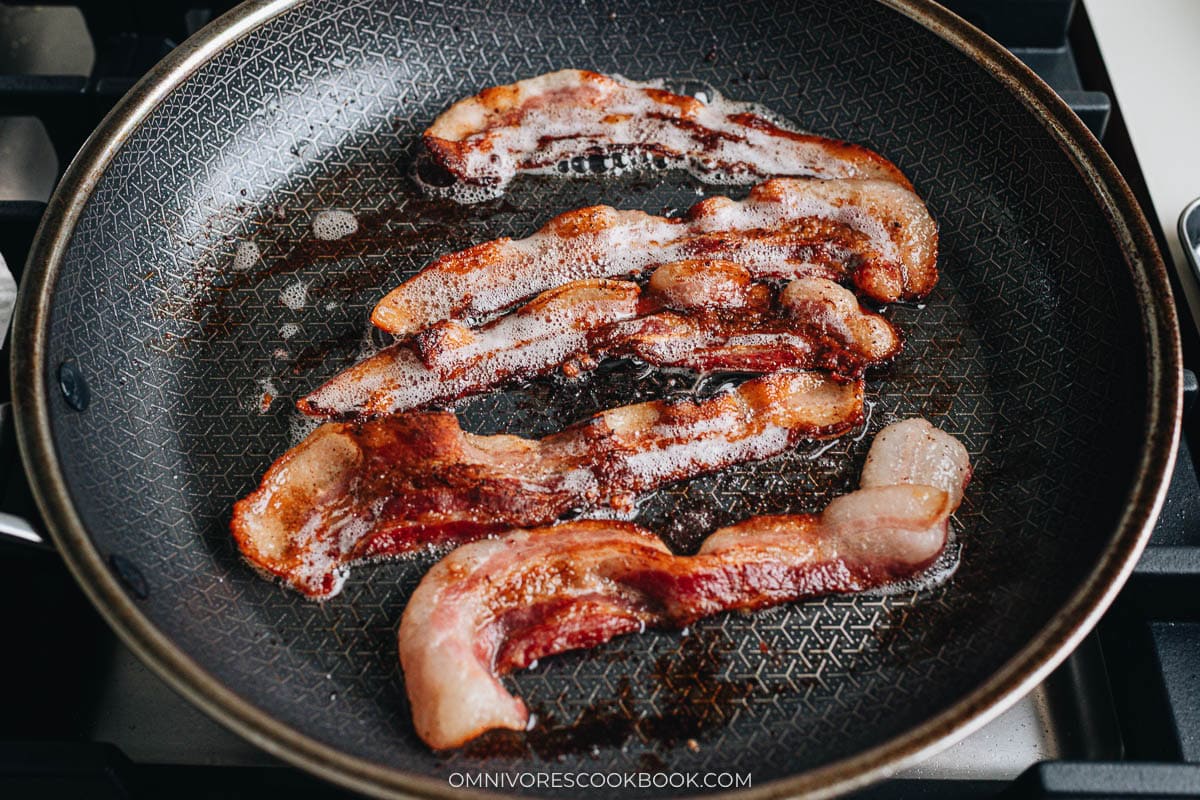
1. Crisp the bacon: Lay bacon slices in a cold 12 inch skillet without overlapping, working in two batches if needed. Set the heat to medium and let the bacon sizzle, then turn down to medium low and cook, flipping occasionally, until the slices turn crispy and golden, 8 minutes or so per batch. Transfer to a paper towel lined plate and let cool.
2. Cut the bacon: Once the bacon is cool enough to handle, snip the slices into bite sized pieces with kitchen scissors. Reserve 1 to 2 teaspoons of bacon fat from the pan if you want to boost the finished noodles.
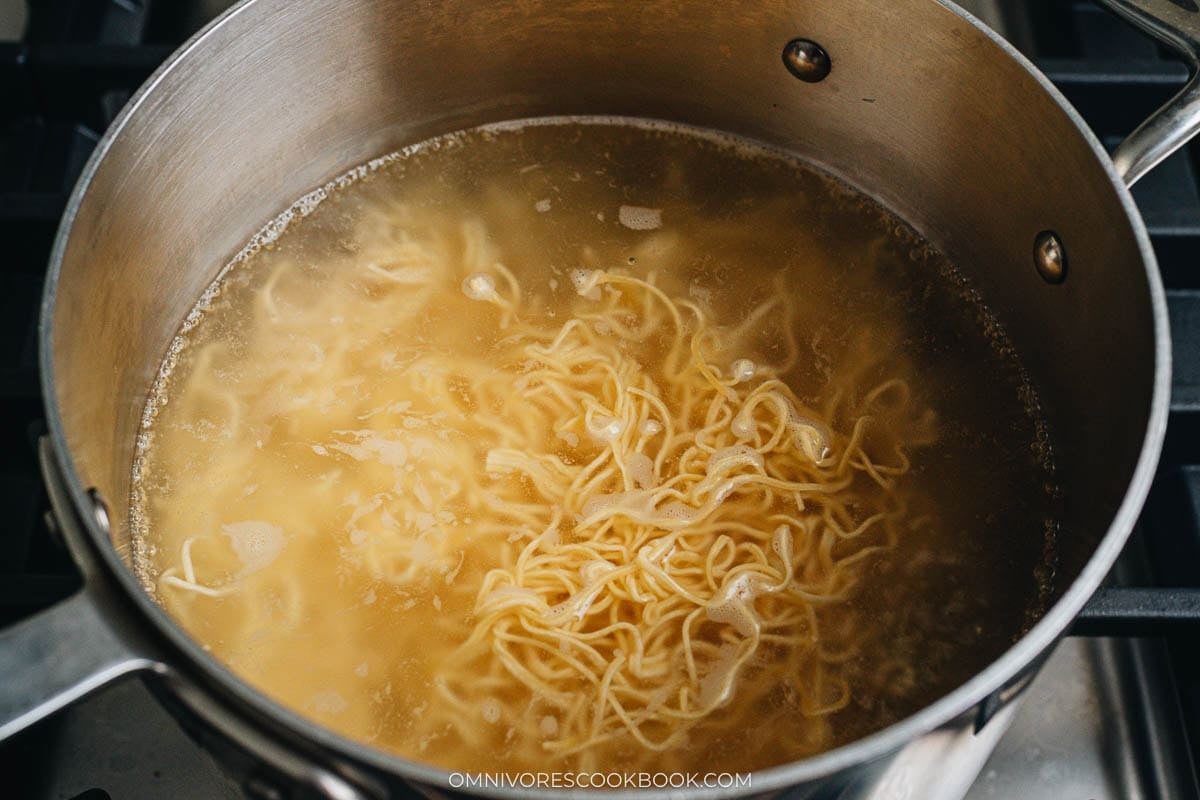
3. Par boil the noodles: Bring a pot of water to a boil. Drop in the Hong Kong pan fried noodles and cook for 1 minute, or follow the package instructions for other chow mein noodles until just al dente. Rinse under cool tap water to stop the cooking, drain well, and set aside.
4. Mix the sauce: Whisk the chicken broth, Shaoxing wine, oyster sauce, light soy sauce, dark soy sauce, sugar, and white pepper in a small bowl until smooth.
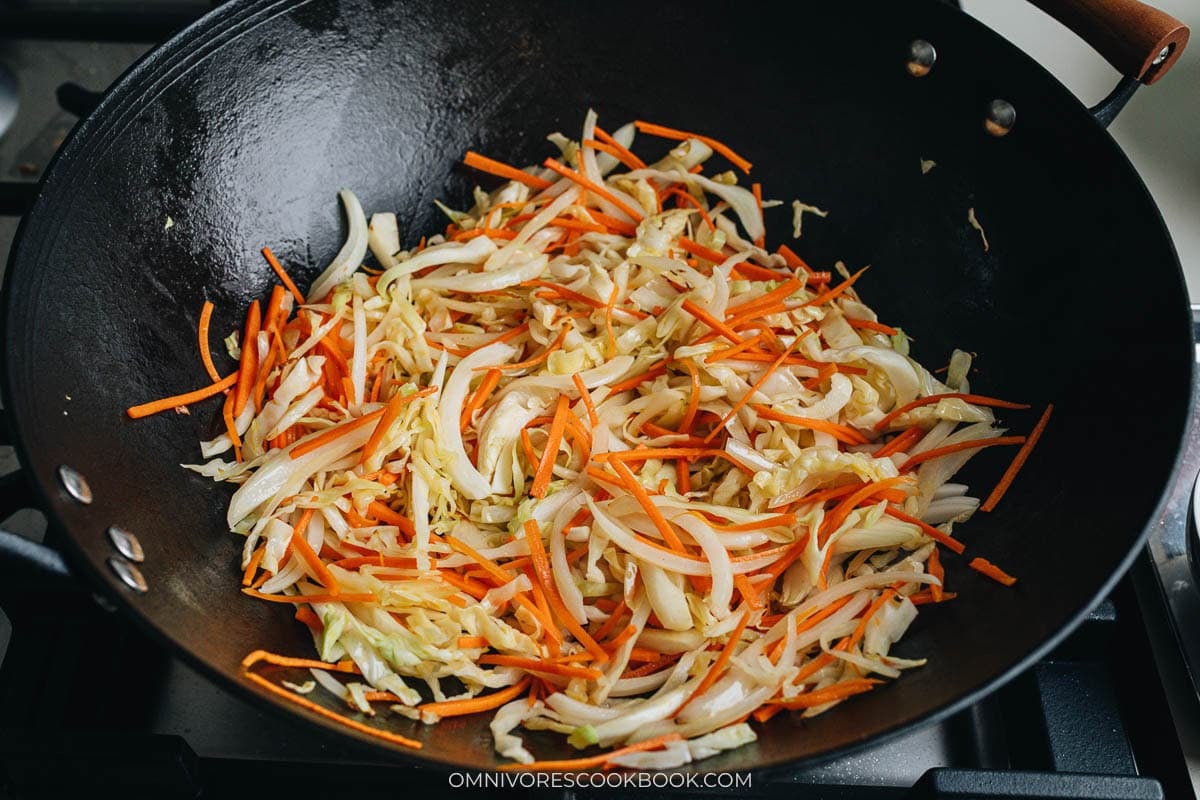
5. Stir fry the vegetables: Heat a wok or large skillet over medium high heat with a spoonful of oil until it just starts to smoke. Add the cabbage, carrot, and onion and sprinkle generously with kosher salt. Toss until the vegetables wilt but still hold some crunch, 2 to 3 minutes. Transfer to a plate.
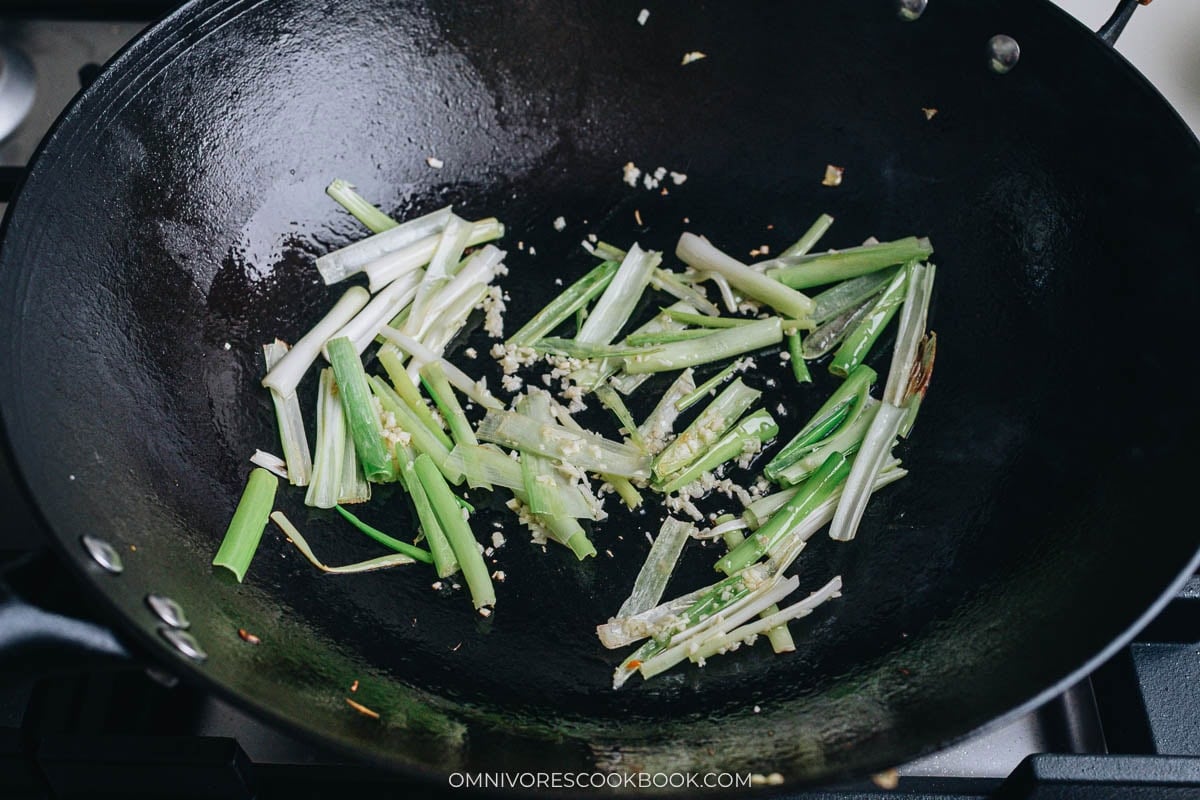
6. Char the scallion whites: Add another spoonful of oil to the wok. Drop in the scallion whites and toss until lightly charred, 30 to 40 seconds. Add the chopped garlic and stir until fragrant.
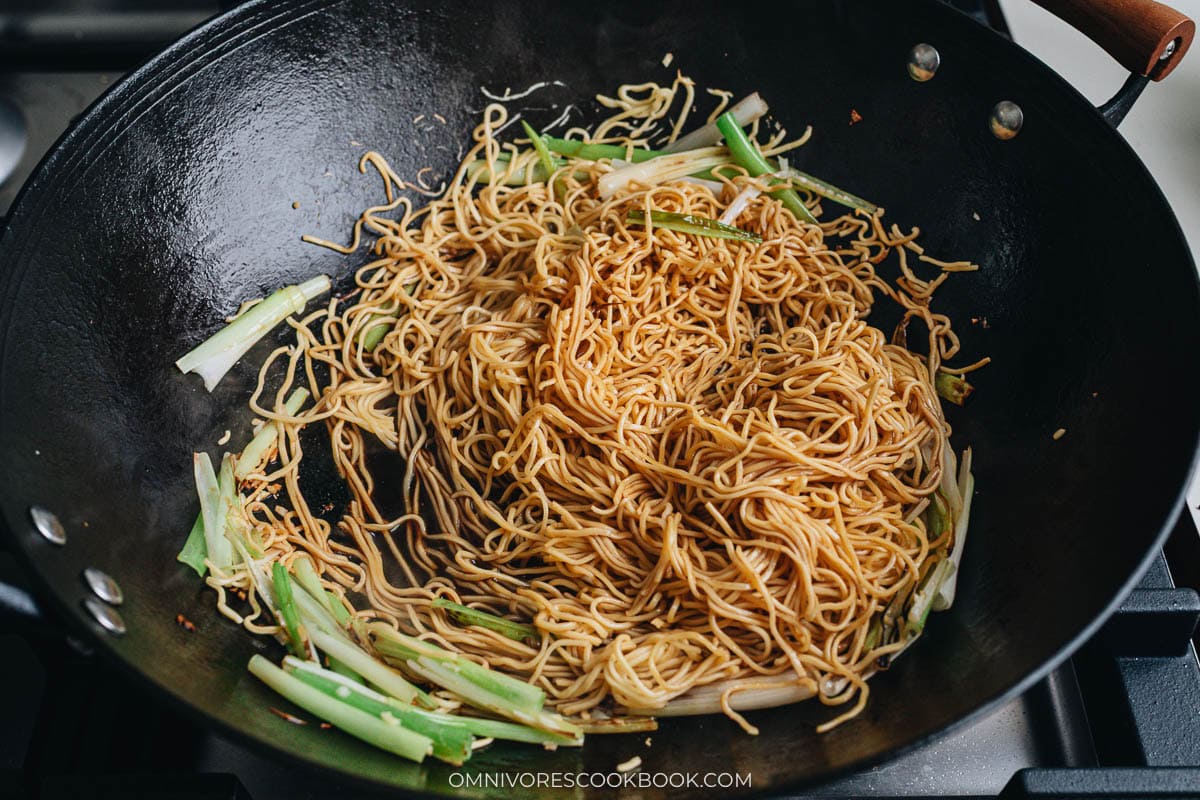
7. Toss the noodles: Spread the drained noodles in the wok and pour in the last spoonful of oil, or the reserved bacon fat if using. Toss them to coat, then pour in the sauce, then toss again until the noodles pick up the color of the sauce.
8. Bring it together: Add the cooked vegetables and toss until the sauce has been absorbed into the noodles. Add the bacon and toss another minute so the pieces heat through and their fat carries into the sauce.
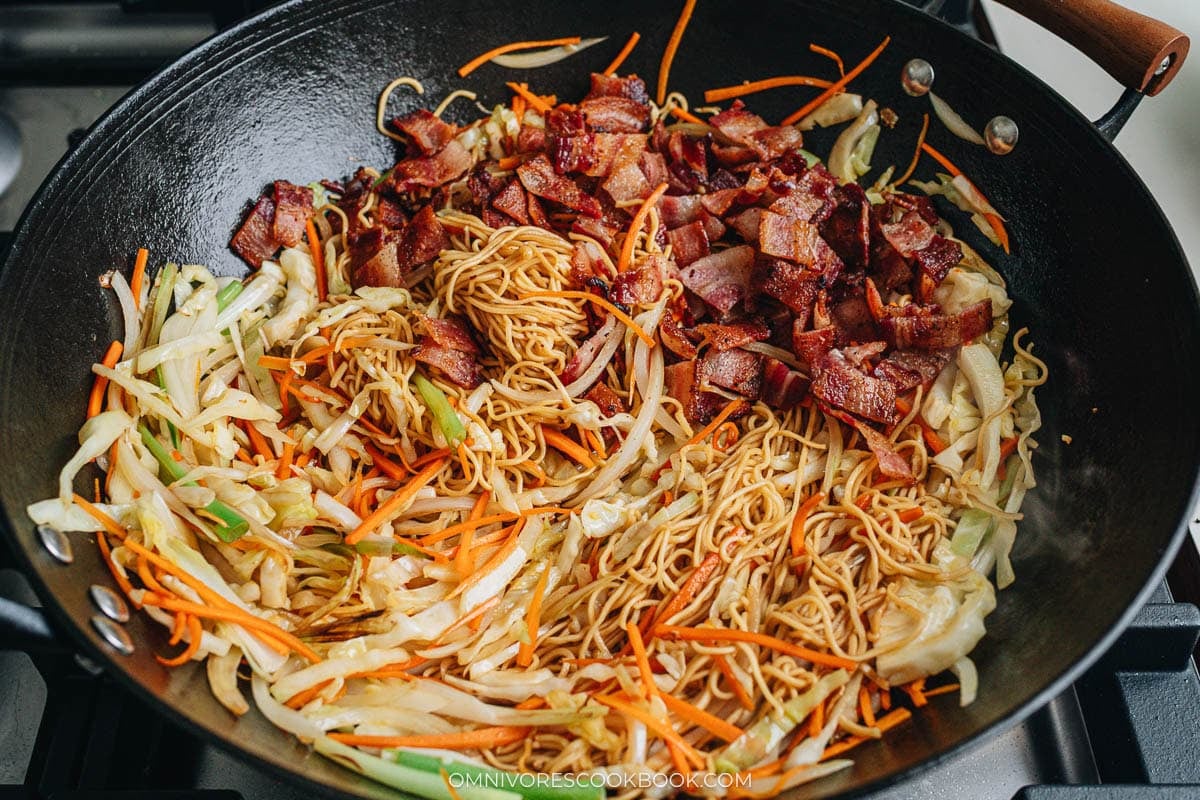
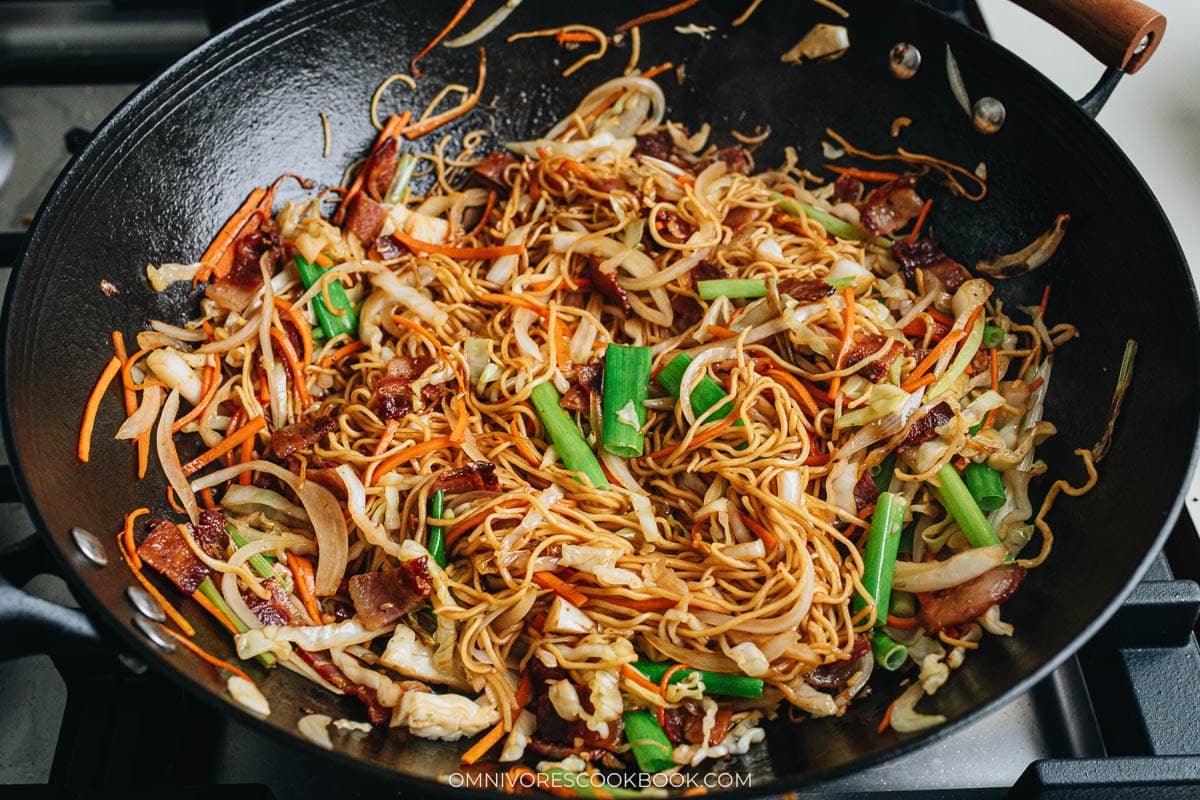
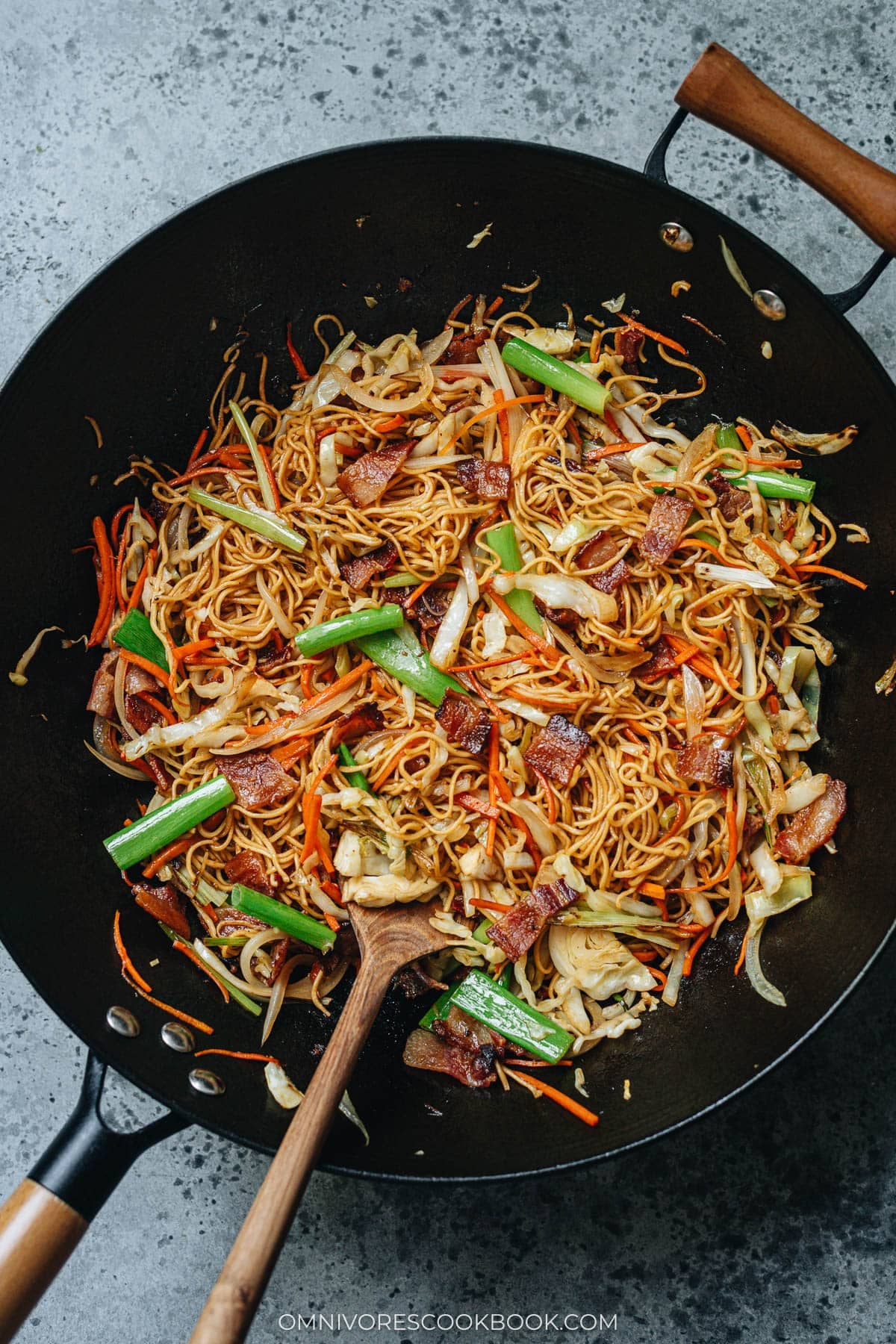
9. Finish off the heat: Add the scallion greens and toss until just wilted. Turn off the heat and drizzle in the toasted sesame oil. Toss one more time and serve.
My Cooking Tips
Start the bacon before you touch anything else: Two batches of bacon in a cold skillet takes close to 20 minutes on the stove. I get the first batch going before I cut a single vegetable so the rest of the mise en place lines up with the bacon finishing.
Oven bacon works if the stove is full: I bake bacon at 400°F on a sheet pan for 15 to 20 minutes when I need the burners for other dishes. Same crispness, less babysitting.
Watch the bacon at the end: Once most of the fat has rendered and the slices turn golden, the pan tips over into scorched fast. I keep a close eye on the bacon at that stage and pull the slices as soon as they are crispy.
Reserve a spoonful of bacon fat instead of the sesame oil finish: If I want a richer, more bacon-forward pan, I skip the toasted sesame oil at the end and drizzle 1 to 2 teaspoons of reserved bacon fat into the noodles when I add the last spoonful of oil. Sesame oil finish keeps the dish lighter and more restaurant style.
Cut the bacon with scissors after cooling: I let the crispy slices cool on the paper towel plate first, then snip them into bite sized pieces with a pair of kitchen scissors. Cooling first sets the crisp so the pieces stay intact when I cut them.
Serving Suggestions
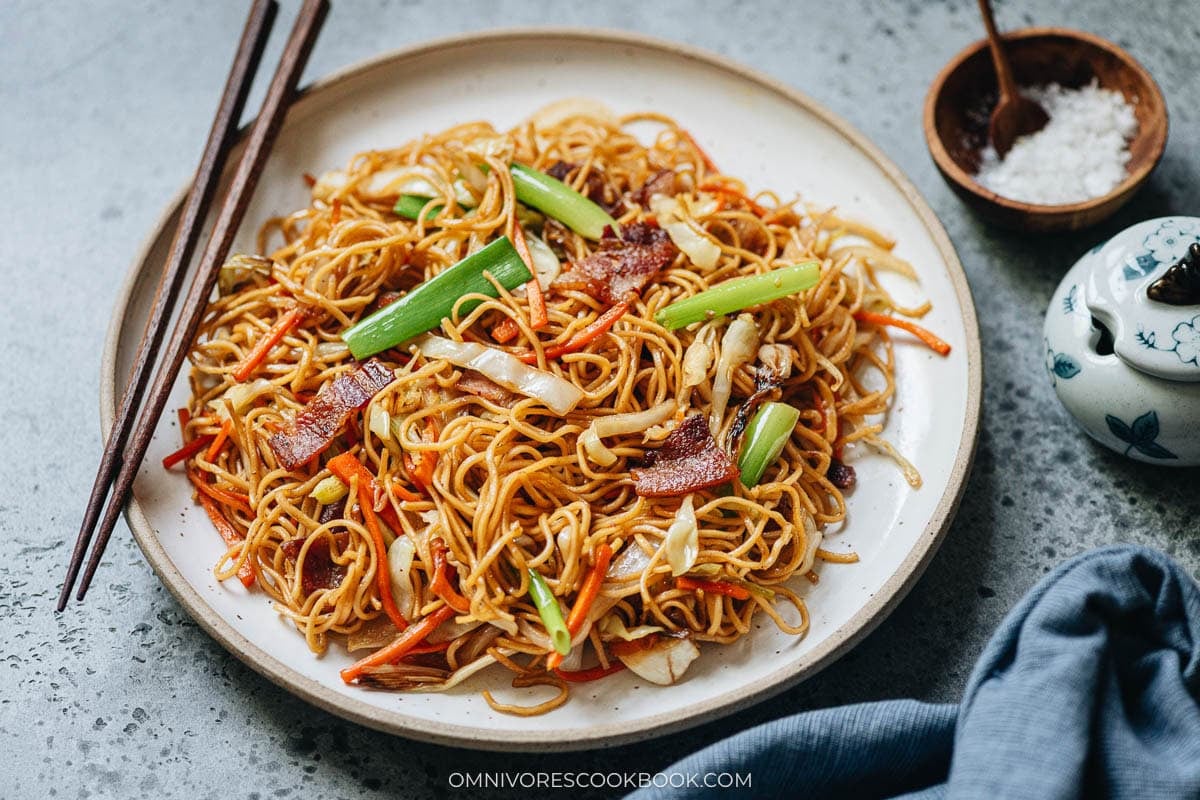
I serve this as a one-pan dinner on weeknights when I come home tired after a long day at the studio. The wok goes straight on a trivet in the middle of the table so my husband and I can spoon it into wide bowls with a side of egg drop soup or a bowl of hot and sour soup alongside. My 2.5 year old loves this one, and if I leave the finished plate on the table he grabs pieces and snacks on them all afternoon instead of asking for crackers.
For a bigger holiday party where these noodles play the side dish role, I rely on the make-ahead advantage and stage them in advance. On the table with the noodles I set a green vegetable like bok choy with oyster sauce, a light appetizer like spicy cucumber salad, and a protein main so the bacon-heavy noodles fit their side dish job. The next-day container in my fridge is genuinely the reheat I look forward to for lunch.
Frequently Ask Questions
Can I use a different noodle instead of Hong Kong pan fried noodles?
Yes. Any thin fresh or dried chow mein noodle works, just boil according to the package until al dente instead of the 1 minute I use for Hong Kong noodles. Thicker lo mein noodles hold sauce differently and shift the dish closer to a chicken lo mein style plate, which is fine but not the same crisp bite I personally like.
Why won’t my noodles get crispy?
I cook the noodles until they’re just al dente, then rinse them under cool running water immediately to stop the cooking. Drain them thoroughly before adding them to the wok, and wait until the vegetables have been removed and the aromatics are fragrant before adding the noodles.
If your noodles aren’t crisping up, it’s usually because they’re still too wet after boiling, the pan isn’t hot enough, the pan is overcrowded, or the noodles are being stirred too often instead of being left undisturbed to brown. Using a little extra oil also helps create a crisp, golden crust.
Can I use a nonstick pan?
Yes. A nonstick skillet works well and usually requires less oil. A carbon steel or cast iron pan will create slightly better browning and char, but all three work for this recipe.
Can I add more vegetables?
Yes. Bell peppers, mushrooms, carrots, snow peas, bok choy, bean sprouts, or Chinese broccoli all work well. Keep the total amount of vegetables moderate so the noodles stay crispy instead of becoming steamed.
Want to Save This Recipe?
Enter your email below & we’ll send it to your inbox. Plus get great new recipes from us every week!
Bacon Pan Fried Noodles
Ingredients
- 1 lb bacon slices
- 6 oz Hong Kong pan fried noodles (or other chow mein noodles)
Sauce
- 1/4 cup chicken broth
- 2 tablespoons Shaoxing wine
- 2 tablespoons oyster sauce
- 2 teaspoons light soy sauce
- 1 teaspoon dark soy sauce
- 2 teaspoons sugar
- 1/4 teaspoon white pepper (or ground black pepper)
Stir fry
- 3 tablespoons peanut oil (or vegetable oil)
- 1/4 cabbage , thinly sliced
- 1 carrot , julienned
- 1/2 white onion , sliced
- Kosher salt
- 2 green onions , cut into 2” (5 cm) pieces, white part halved lengthwise
- 2 cloves garlic , minced
- 1 teaspoon toasted sesame oil
Instructions
- Cook in batches, spread bacon slices in a cold 12” skillet without overlapping (*Footnote 1). Cook over medium heat until the bacon sizzles, and turn to medium low heat. Cook, flip occasionally, until the bacon turns crispy, 8 minutes or so. Transfer bacon onto a paper towel lined plate. Let cool before cutting into bite sized pieces using a pair of scissors. (*Footnote 2)
- Bring a pot of water to a boil. If using Hong Kong pan fried noodles, cook for 1 minute. For other types, cook the noodles according to the instructions, until al dente. Rinse with tap water to stop cooking. Drain and set aside.
- Mix all the sauce ingredients in a small bowl.
- Heat 1 tablespoon of oil in a wok (or large skillet) over medium high heat until smoking. Add the cabbage, carrot and onion, sprinkle with a generous amount of kosher salt. Cook and stir until wilted, 2 to 3 minutes. Transfer to a big plate.
- Add 1 tablespoon of oil and scallion white. Cook and stir until lightly charred, 30 to 40 seconds. Add the garlic and stir to release fragrance.
- Spread the noodles and pour in the remaining 1 tablespoon of oil (or reserved bacon fat, if using). Toss the noodles to coat with the oil, then pour in the sauce. Toss the noodles to coat with the sauce, until evenly coated but there’s still some sauce left. Add back the cooked vegetables, toss until the sauce has been absorbed. Then add back the cooked bacon. Toss another minute.
- Add the scallion greens. Toss until wilted. Turn off the heat and add the toasted sesame oil. Toss again to mix well.
Notes
- You can also cook the bacon in a 400ºF (200ºC) oven for 15 to 20 minutes, until golden crispy.
- You can reserve 1 to 2 teaspoons of bacon fat to add to the noodles to boost the flavor. If using bacon fat, skip the toasted sesame oil at the end.
Nutrition

Did you make this recipe?
I’d love to hear how it turned out for you! Please take a moment to leave a 5-star rating ⭐️ and share your thoughts in the comments further down the page. It really helps others discover the recipe too.
Christopher
We’ve made this for years at all our Chinese holiday gatherings. Everyone loves it!