
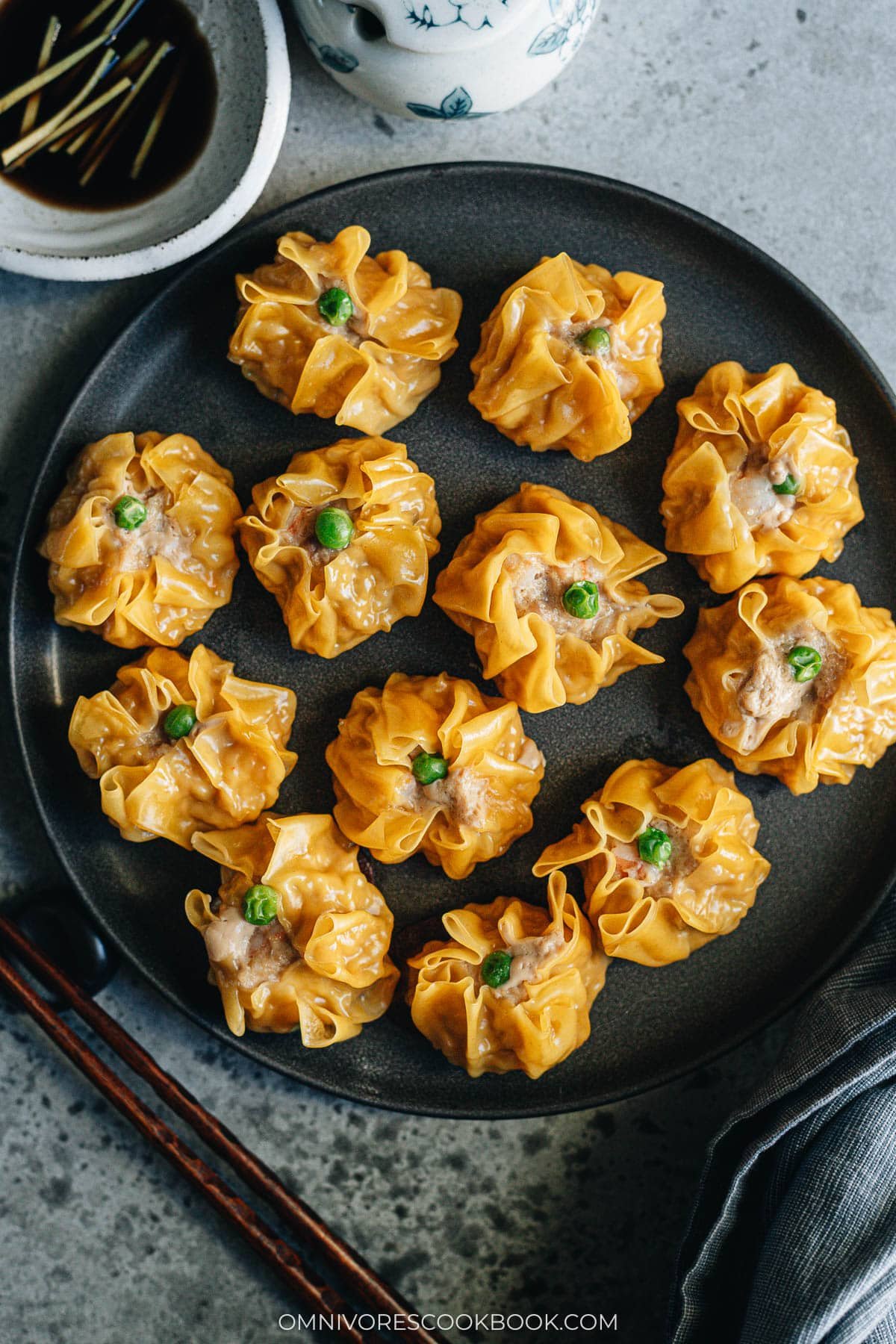
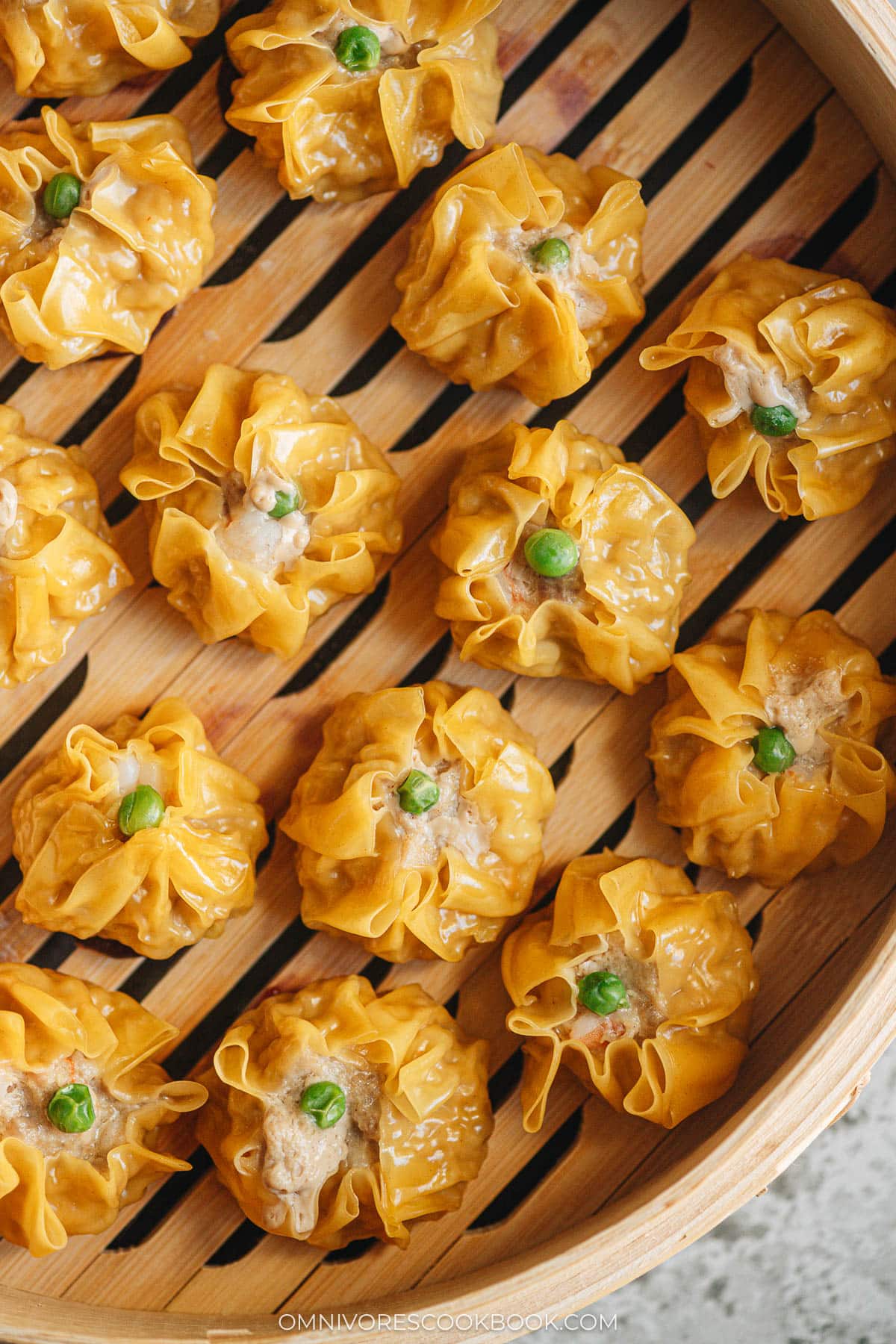
Shumai (烧麦) are open faced steamed dumplings from the Cantonese dim sum tradition, filled with seasoned ground pork and shrimp. They are one of the most popular items on any dim sum table, right next to har gow, and they freeze great for quick meals later.
Back in China, whenever we had Cantonese dim sum, pork and shrimp shumai were always the first dish we ordered. I wanted to recreate that experience at home, and I found that shumai are actually much easier to wrap than pork and sauerkraut dumplings because you do not need to seal the top. I beat the filling until sticky, wrap it in thin yellow wrappers, and steam the batch until juicy and just cooked through.
Shumai is seriously one of my favorite appetizers for dinner parties, they look cute, taste incredible, and I can wrap them days ahead and freeze them. My husband always asks me to make extra so he can steam a few for lunch during the week. I hope you give these a try at home by following my easy steps and cooking tips.
What Will You Need
Since my goal was to recreate authentic dim sum restaurant shumai at home, I use all the ingredients listed below:
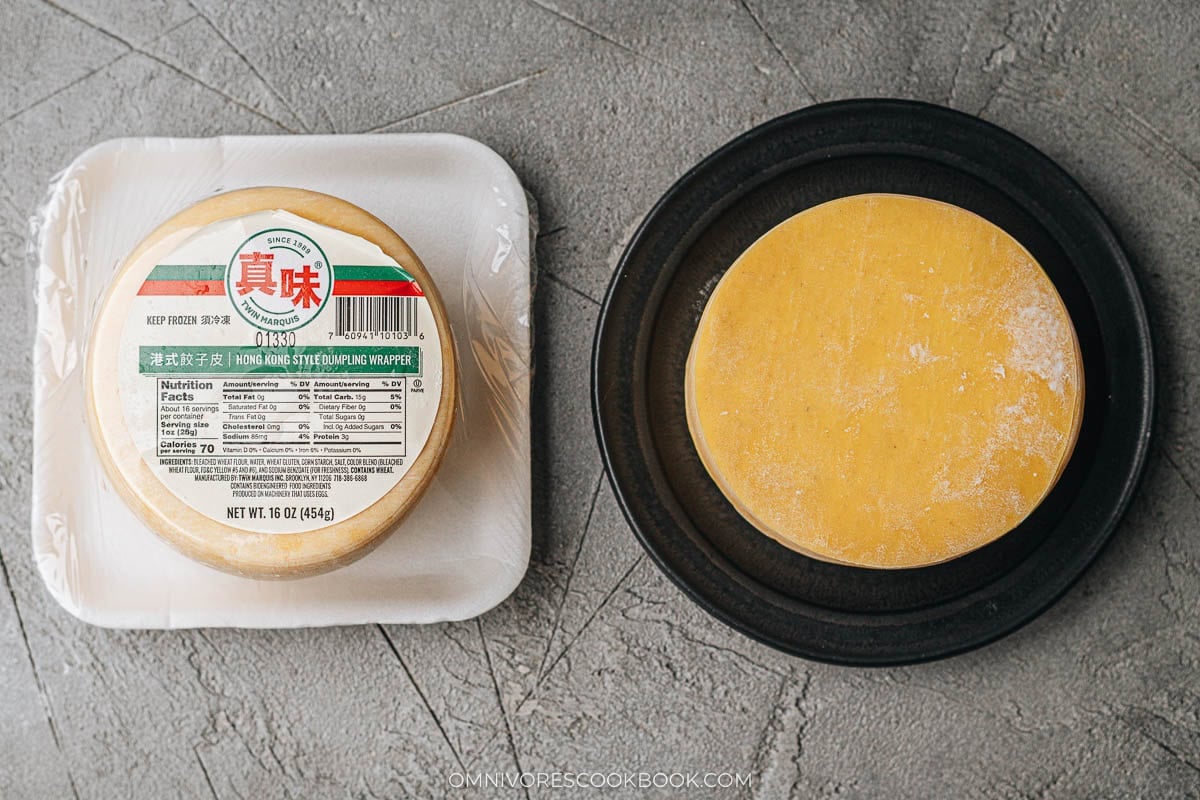
Wrappers
I use Hong Kong style dumpling wrappers, the thin round ones with a yellow color. You can find them at Chinese markets or H Mart in the refrigerated or freezer section. If you cannot find them, regular dumpling or gyoza wrappers with a white color work too.
Filling
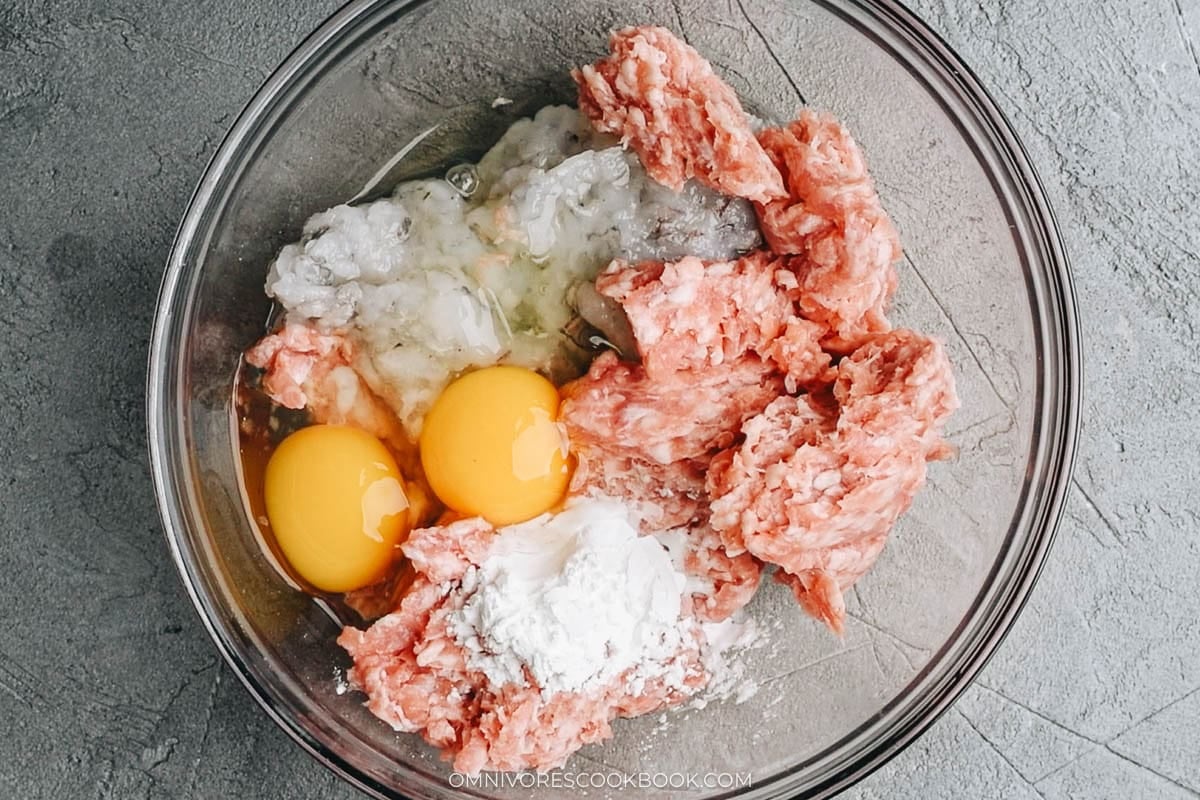
The classic Cantonese shumai filling uses a pork and shrimp combo for the best texture and taste. I use fattier ground pork (20% fat) so the filling stays juicy, and if possible, use a coarse ground instead of fine ground for the restaurant-style texture. I mince most of the shrimp while chopping a small portion into pieces for a distinctive bite.
Seasonings
Cantonese shumai seasoning is different from northern style steamed pork dumplings. It emphasizes a clean taste that lets the freshness of the pork and shrimp come through. I use Shaoxing wine, oyster sauce, light soy sauce, grated ginger, toasted sesame oil, sugar, salt, and white pepper. Common dumpling add ins like shiitake mushrooms and green onions are left out to keep the flavor clean like a dim sum restaurant.
Technique Explanation
The most important step in making shumai is beating the pork and shrimp mixture with cornstarch and eggs until it forms a sticky paste. In Chinese cooking this is called shang jin (上劲). This step helps the meat absorb liquid so it stays juicy without turning soggy, and it creates the chewy bouncy texture you get at dim sum restaurants.
How to Make
1. Prepare the shrimp: Reserve 3 to 4 shrimp and chop them into small pieces. Mince the rest of the shrimp as finely as possible.
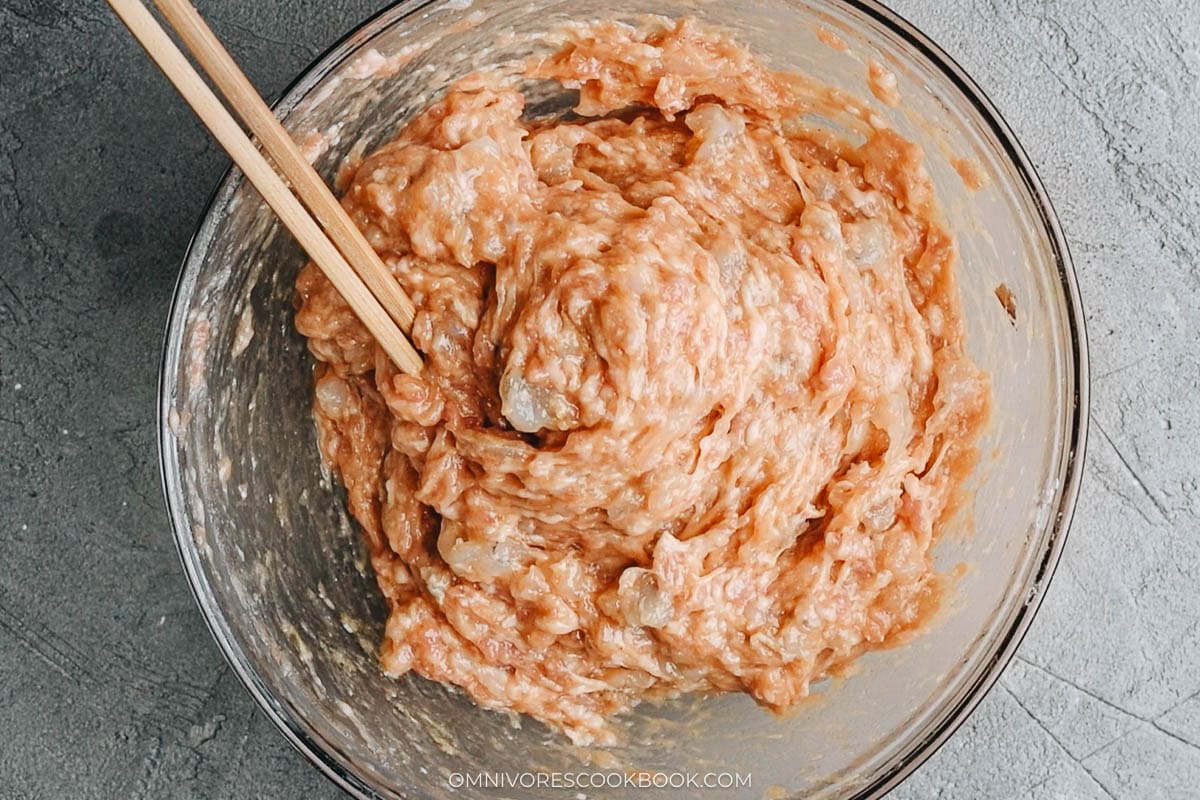
2. Make the filling: Combine the minced shrimp, ground pork, eggs, and cornstarch in a large bowl. Beat the mixture with chopsticks or a wooden spatula until it becomes very sticky.
3. Add rest of ingredients: Add the Shaoxing wine, oyster sauce, light soy sauce, grated ginger, toasted sesame oil, sugar, salt, and white pepper. Mix until smooth and sticky. Fold in the reserved shrimp pieces.
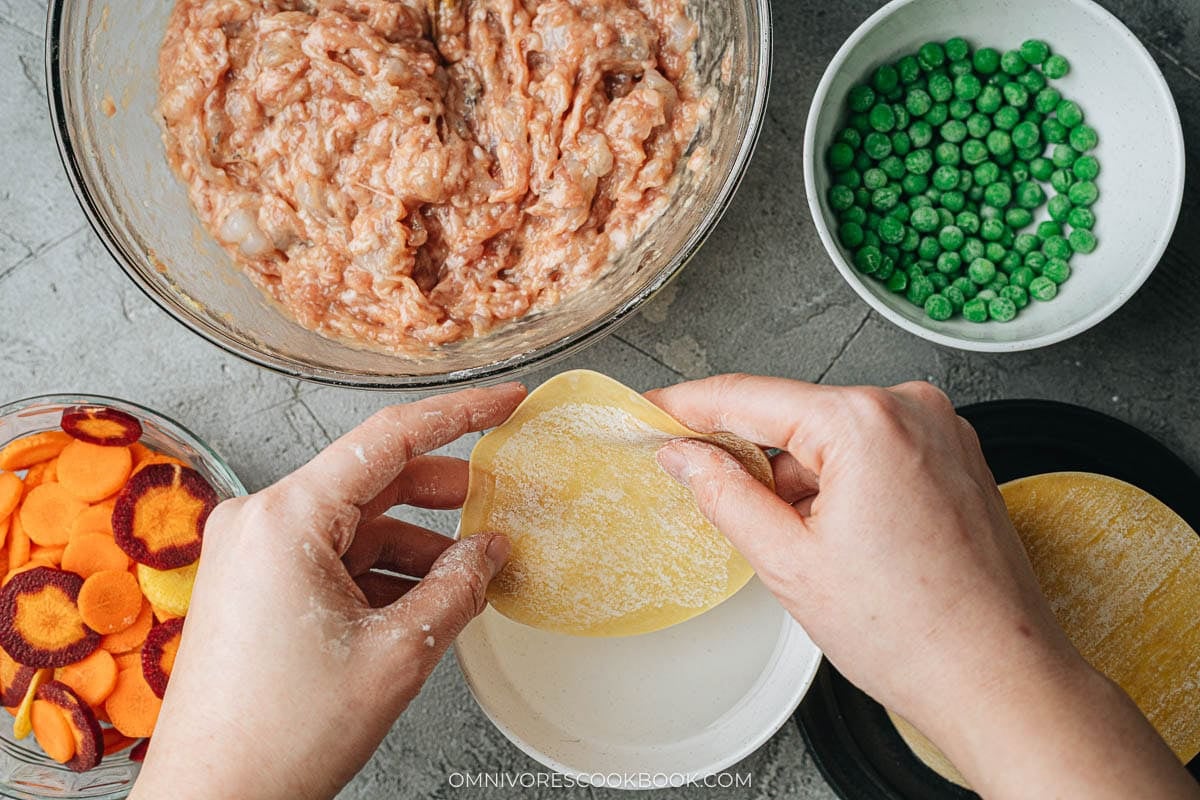
4. Wet the wrapper: Place a dumpling wrapper on a clean surface. Lightly wet the edge with water.
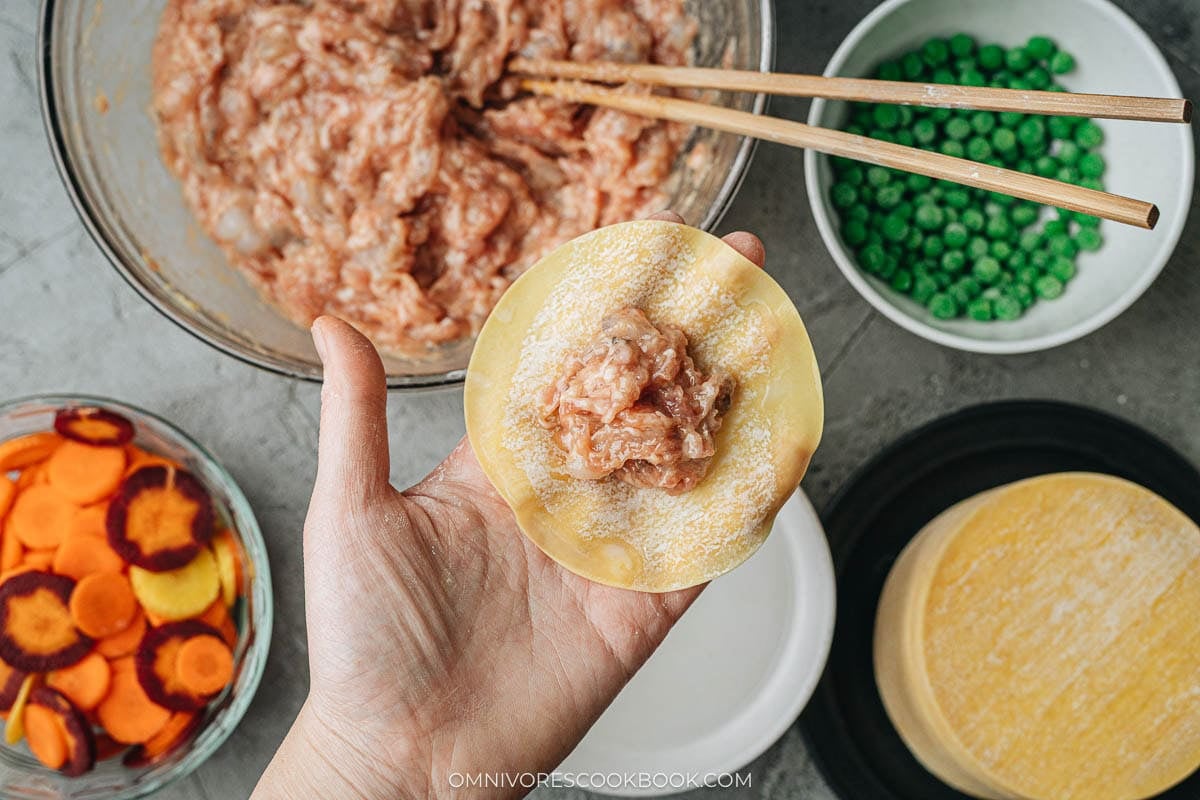
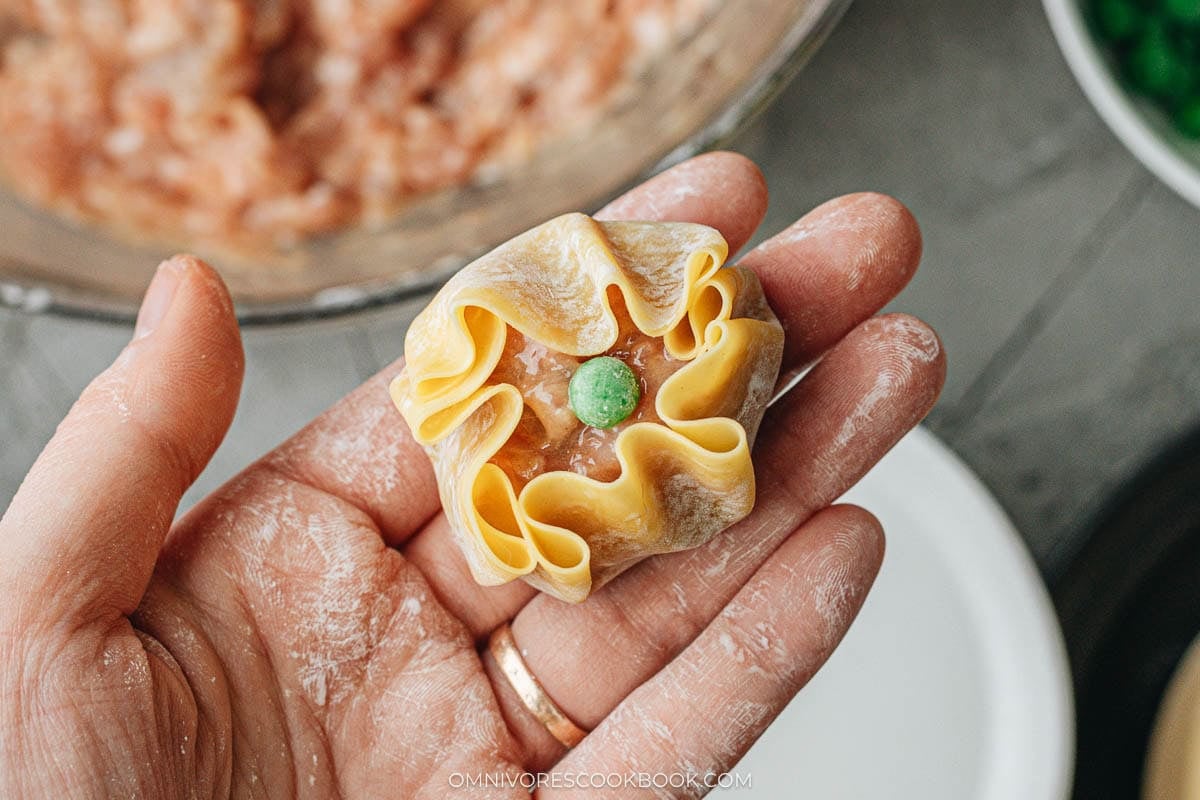
5. Fill the wrapper: Place about 1 tablespoon of filling in the center. Gather the wrapper up around the filling, pinching and pleating the sides while leaving the top open.
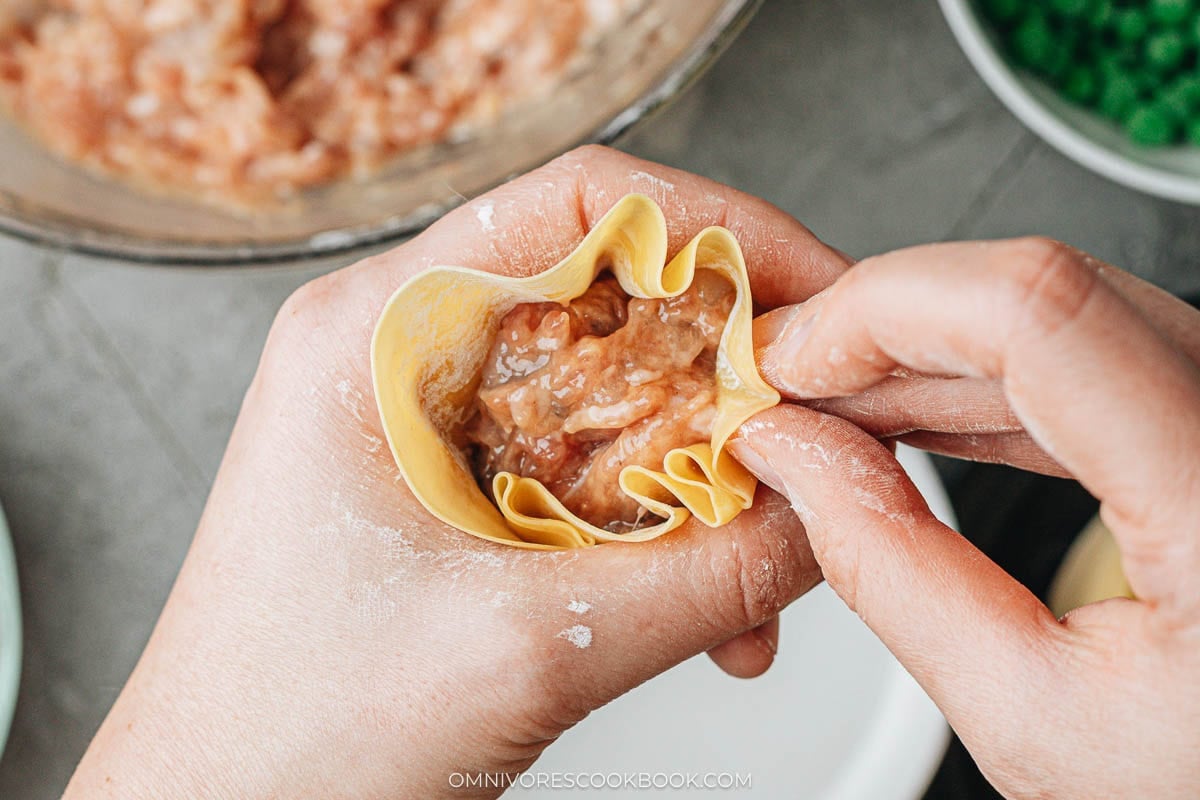
6. Shape the shumai: Use your thumb and index finger to press the top gently without closing it, while your other hand holds the bottom to pack the filling in.
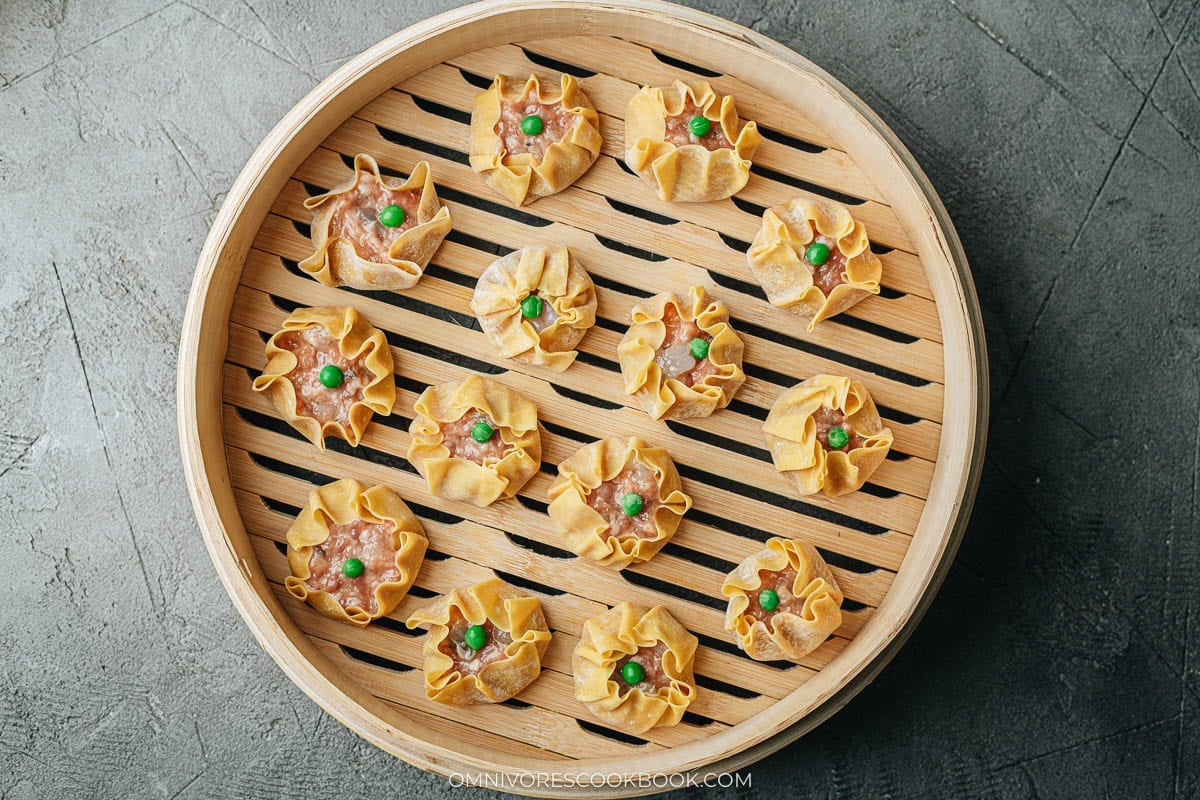
7. Garnish and prep for steaming: Garnish each one with a green pea. Place a thin carrot slice on the bottom to prevent sticking.
8. Steam and serve: Bring a large pot of water to a boil over medium high heat. Place the bamboo steamer basket over the pot, cover, and steam for 7 to 8 minutes until the filling is cooked through. Serve immediately on their own or with a Chinkiang vinegar and ginger dipping sauce.
Do not skip these cooking tips
Use fattier ground pork: I use ground pork with about 20% fat. Leaner pork dries out during steaming and the filling loses its juicy quality.
Keep some shrimp in pieces: I mince most of the shrimp but chop a few into small chunks. The chunks give you pops of shrimp texture, which is how the best dim sum restaurants do it.
Wet the wrapper edges if they are dry: Shumai wrappers do not need to be sealed, but if they have been sitting out and feel dry, a light dab of water on the edges makes them easier to gather and pleat.
Use carrot slices to prevent sticking: I learned this from my favorite dim sum restaurant in China. A thin carrot round under each shumai works better than parchment and adds a little sweetness.
Serving Suggestions
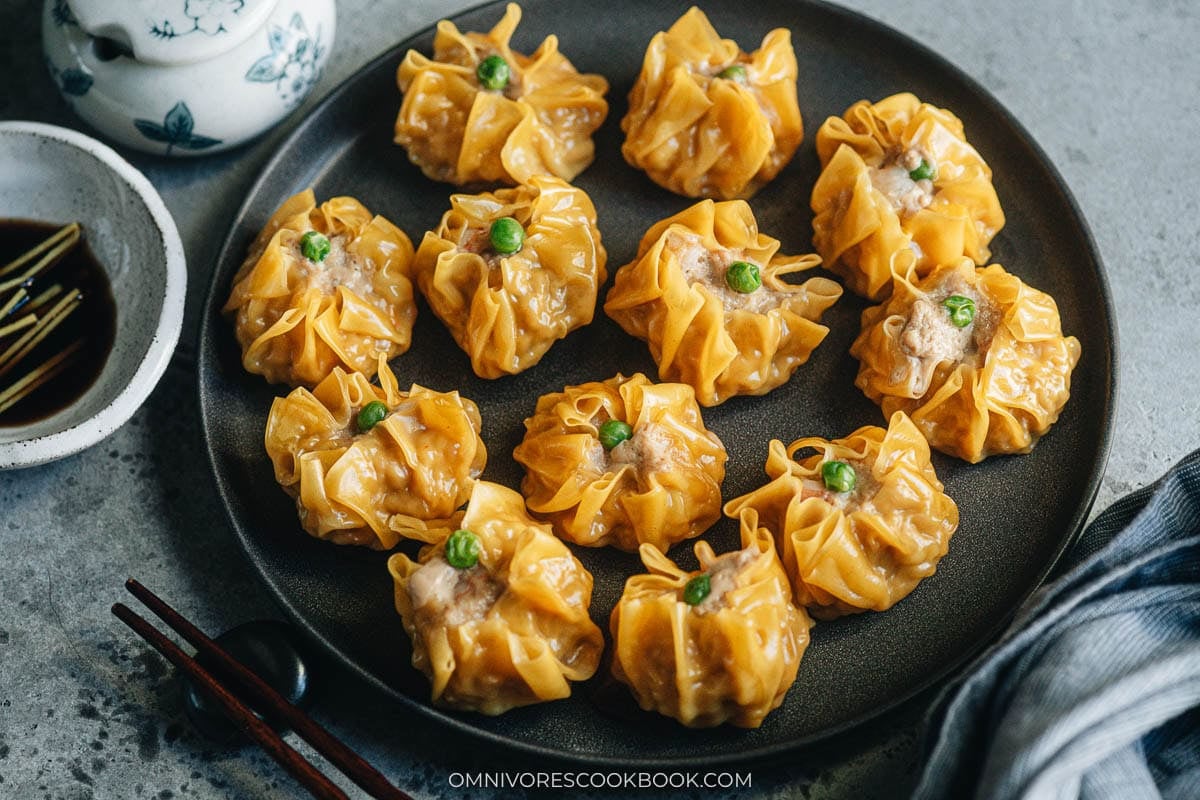
I serve shumai hot straight from the steamer, usually as the opening course before a bigger meal. Most nights I skip the dipping sauce entirely since the seasoning is enough on its own. When I do want a dip, I mix Chinkiang vinegar with thin slivers of ginger, which somehow makes the shumai taste a little like crab.
For a full dim sum spread at home, I love placing shumai alongside Chinese turnip cake, my delicious Cantonese wonton noodle soup, and some steamed ribs in black bean sauce. Yum! I only steam the portion we plan to eat right away and keep the rest frozen. That way every batch comes out fresh.
Frequently Ask Questions
Do I need a bamboo steamer?
A bamboo steamer works great but a stainless steel steamer does the job just as well. The key is lining the basket so the shumai do not stick, either with parchment, cheesecloth, or carrot slices.
How do I freeze shumai?
I place the uncooked shumai on a lightly greased baking sheet one finger width apart and freeze until solid. Then I transfer them to bags or containers to save space. They keep for up to 2 months.
How do I know when shumai are cooked through?
The wrappers turn slightly translucent and the filling firms up. I cut one open to check the first time I make a batch. After a few rounds you will know by sight.
Chinese Cooking Made Easy
Are you new to this website? This free email series is a great place to start. I’ll walk you through a few of my most popular recipes and show you how and why they work. You’ll quickly start to cook better Chinese food in your own kitchen.
Watch video
Cantonese Shumai with Pork and Shrimp (烧麦, Shao Mai)
Ingredients
Pork and Shrimp Shumai
- 30 Hong Kong Style dumpling wrappers , thawed if using frozen wrappers
- Frozen peas , for garnish (Optional)
- 1 large carrot , sliced thinly into rounds (Optional)
Filling
- 1/2 lb shelled and deveined raw shrimp
- 10 oz ground pork (20% fat)
- 2 eggs
- 2 teaspoons cornstarch
- 2 teaspoons Shaoxing wine (or dry sherry)
- 1 tablespoon oyster sauce
- 1 teaspoon light soy sauce (or regular soy sauce)
- 1 teaspoon grated ginger
- 1/2 teaspoon sugar
- 1/4 teaspoon salt
- 1/4 teaspoon white pepper powder
- 1 tablespoon toasted sesame oil
Dipping sauce
- 3 tablespoons Chinkiang vinegar
- 1/2 thumb ginger , thinly sliced
Instructions
Prepare the filling without a food processor
- Reserve 3 to 4 shrimp, and chop them into small pieces. Mince the rest of the shrimp as finely as possible.
- Combine the shrimp, pork, egg and cornstarch. Beat the mixture with a pair of chopsticks or a wooden spatula until the mixture is very sticky.
- Add the rest of the filling ingredients and the reserved shrimp pieces. Mix very well, until smooth and sticky.
Prepare the filling with a food processor
- Reserve 3 to 4 shrimp, and chop them into small pieces. Add the rest of the shrimp into the food processor. Pulse the food processor until the shrimp are coarsely chopped.
- Add the rest of the filling ingredients. Mix until everything is evenly chopped into a fine paste and becomes very sticky.
- Transfer the paste into a big bowl and add the reserved shrimp pieces. Stir to mix well.
Assemble the shumai
- Work on the shumai one by one. Place a dumpling wrapper on a clean work surface. Wet the edge lightly with water. Place 1 tablespoon of filling in the center of the wrapper. Bring the edges up around the filling, pinching and pleating, leaving the top open. Then use your thumb and index finger to lightly press the top without closing it, while using the other hand to hold the bottom to pack the filling in. Garnish with a green pea. Place a slice of carrot on the bottom, if using. Repeat with the remaining wrappers.
- Line your steamer with a clean, wet cheesecloth or steaming parchment (you can skip this if using the carrot liner). Transfer the shumai into the steamer basket, one finger’s width apart.
- Heat a large pot of water over medium-high heat until boiling. Cover the steamer basket and place it over the pot. Steam over boiling water for 7 to 8 minutes, until cooked through.
- Serve by itself or with a Chinkiang vinegar and ginger dipping sauce.
Store and cook frozen
- Place the uncooked shumai on a lightly greased baking sheet, one finger’s width apart. Cover the sheet with plastic wrap. Freeze the shumai until completely frozen. Then you can transfer them to bags or containers to save freezer space.
- Steam the frozen shumai without defrosting or thawing. After bringing the water to a boil, steam until completely cooked through, 15 minutes or so.
Nutrition

Did you make this recipe?
I’d love to hear how it turned out for you! Please take a moment to leave a 5-star rating ⭐️ and share your thoughts in the comments further down the page. It really helps others discover the recipe too.
dagan
I’m making this for the 2nd time – I find the mixture very watery, maybe the eggs are too large – also the cooking time I seem to double..either way, I love them & also realized wontons are same ingredients so it’s a win-win situation 🙂
Rick Green
I lost the recipe I used to use for these, but I do remember the ingredients (just not the quantities). This has all the ingredients except two. The pork fat (added as 10% weight of the pork used) to add extra juiciness to the dumplings and finely diced water chestnut. The texture from the water chestnut is amazing. Thank you very much for sharing your recipe. I will be using this from now on.
jojobe
These dumplings became favorites of mine while living in Hawaii. To make them myself would allow me to eat as many as I’d like! Also important is knowing exactly what’s in them. Frozen supermarket offerings are a bit suspect.
Laurie Tatlock
Where do I find the recipe for shumai wrapping? I think I would like to watch an assembly video.. Thanks!
Maggie
I don’t have a video now but I’ll add that to my to-do list 🙂
Jason Weisser
Katie Chin’s Everyday Chinese Cookbook
101 Recipes From My Mother’s Kitchen
by Chin, Katie
My local library has it, can’t wait to check it out.
Katrina Hennessy
Maggie, you make it easy to read and the instructions are easy to follow as well. Well done. I would love your friends cook book. It sounds great
Benitra
These look amazing. If you could make a video on the wrapping that would awesome!!!
Aracelis Lopez
Nice receip. Please, post the video to see how to wrap it!
Sara
I would like how to it folded mine no where looked nice
Angie
So easy and very tasty thank you for sharing
Sarah
Please post a video on how to wrap them!!!
JN
This is a fantastic recipe! This is the 4th or 5th recipe that I have tried from this website. They are all so clearly laid out, and the photos are stellar. The Dan Dan Noodles were outstanding, but now the Shumai might be my favourite. They tasted like I was at Dim Sum! I got only 30 pieces, I think because my wrappers were too big (long story). We ate half and I froze half, so we’ll be enjoying them again soon!
Kermit Johnson
I would love to see a video on wrapping Shumai. That would really be helpful for the totally inexperienced. Thanking you in advance.
Ben Myhre
Oh, these are some beautiful photos and I think these dumplings look spectacular.
Albert Bevia
These are a classic! such a great tutorial on making these beauties! thank you for the great recipe and post 🙂
Danielle
I got this great new bamboo steamer for christmas and haven’t had the chance to use it yet. And I love shumai, so perhaps this should be my first recipe! I’ve never made shumai before, so I can see this being a learning experience, but am determined to start making my own dim sum. Plus I love that you can make these ahead of time and freeze them. It’s perfect!