
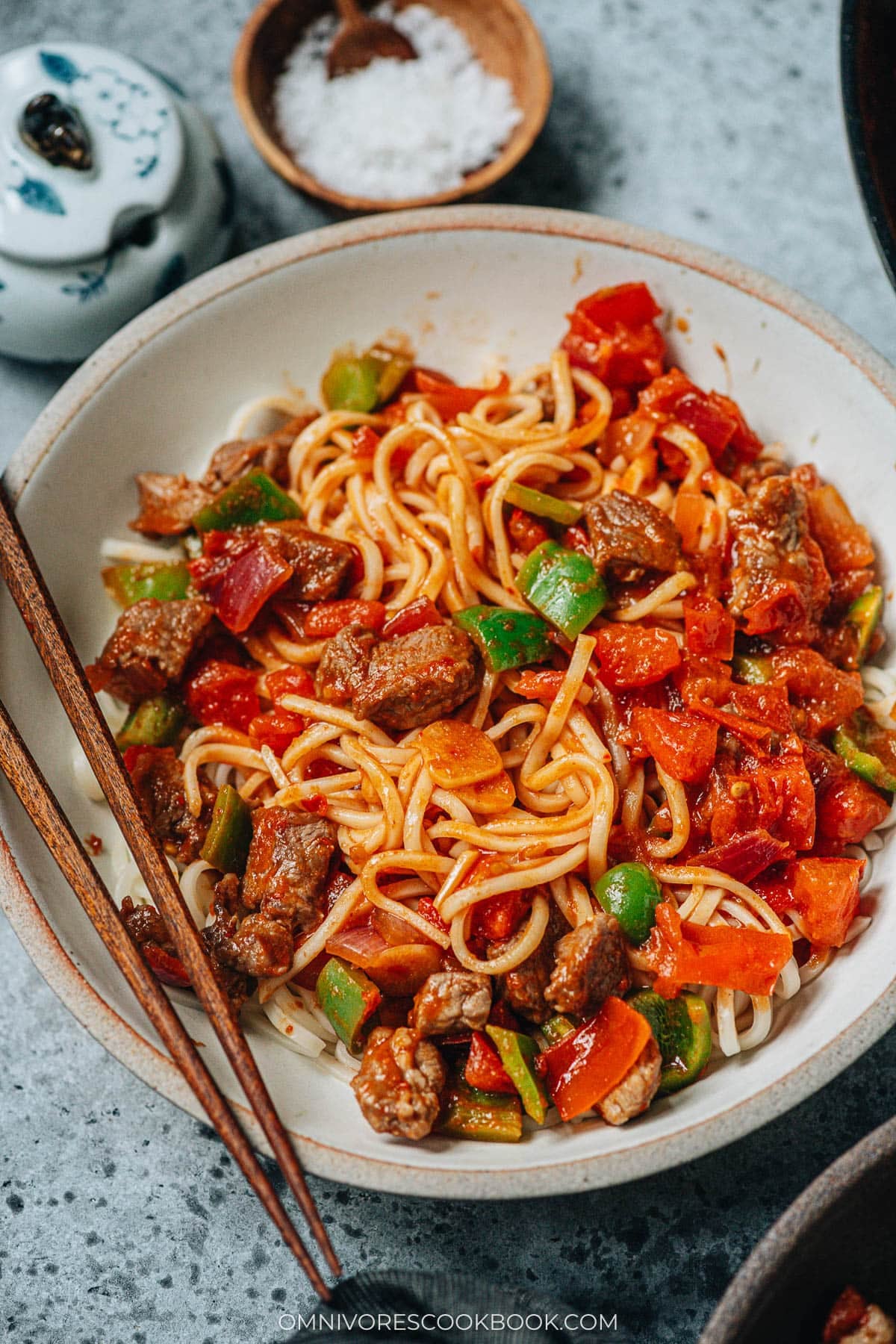
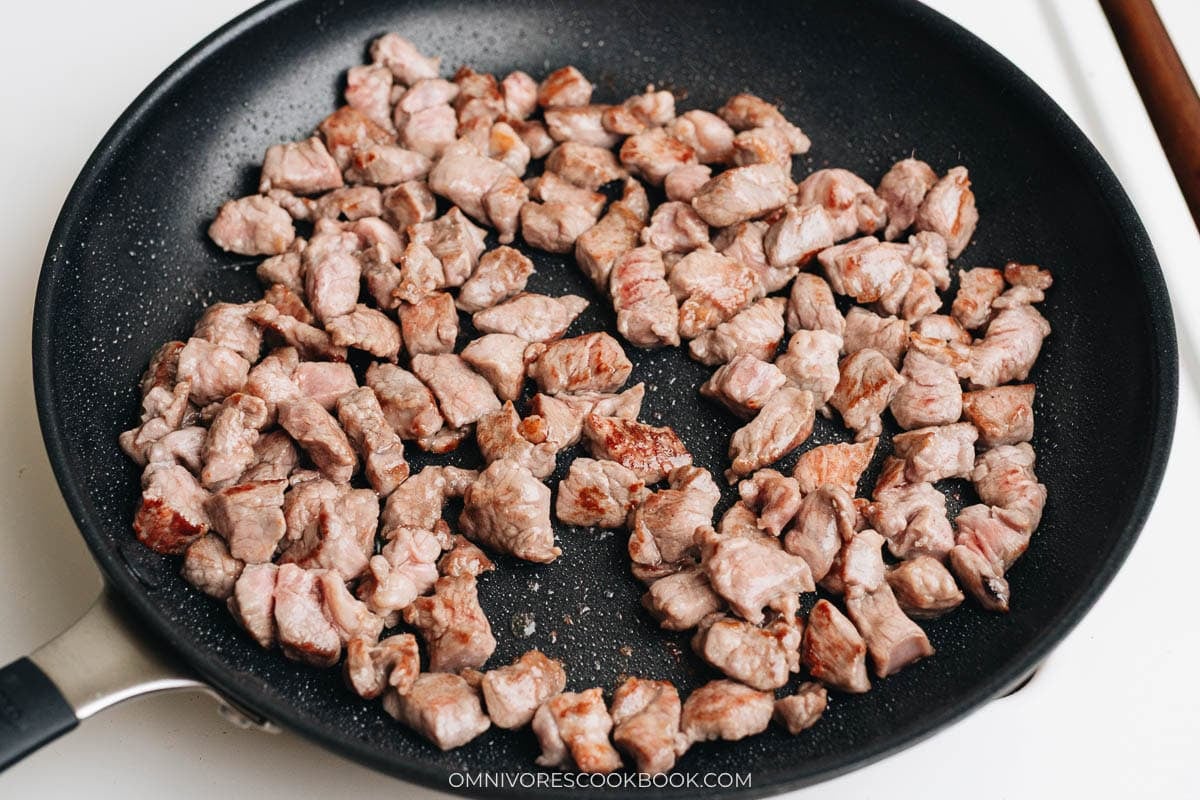
Laghman (新疆拌面) also written Xinjiang ban mian, comes from the Xinjiang region in China’s far northwest, home to a large Uyghur population. It is a plate of freshly made noodles topped with a stir fried sauce of lamb, onion, pepper, tomato, and garlic, and its flavor sits right at the meeting point of Central Asian and Chinese cooking. The dish is homestyle rather than banquet food, closer to a good lunch counter than a formal table.
The first time I ate laghman was at a small diner where they pulled the noodles to order behind the counter. In China this is the kind of quick lunch you grab from a hole in the wall spot, and the cook usually slides a little plate of pickles or a cucumber salad across the counter to go with it. I wanted a home version that keeps that lamb and cumin character without a noodle-pulling station, so I use good store-bought wheat noodles and put all the work into the sauce.
I marinate the lamb while I bring a pot of water up for the noodles, then brown the meat and pull it out so it stays juicy. In the same skillet I cook the onion, toast the garlic and chili flakes, break down the tomato into a sauce with soy sauce, tomato paste, cumin, and a little sugar, then fold in the pepper and return the lamb at the end. I hope you cook this the next time you want a hearty noodle bowl with real Xinjiang flavor, my recipe below takes you from raw lamb to a saucy plate in 35 minutes.
Ingredients
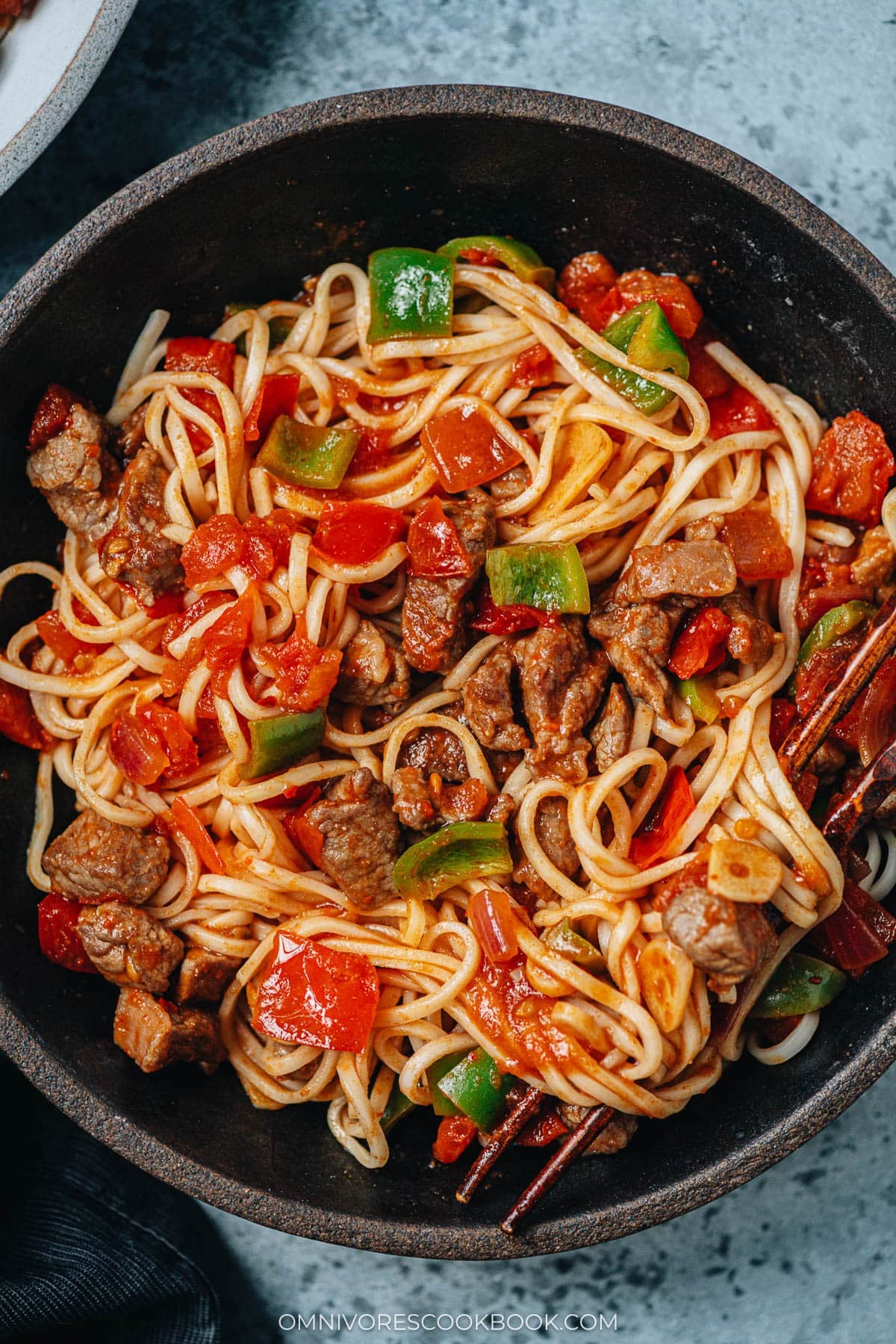
To make this Laghman (Noodles with Lamb Sauce), I use the ingredients listed in detail below:
Lamb and marinade: I use lamb leg cut into small cubes, or ground lamb when I want an easier night, and I season it with peanut oil, salt, white pepper, and cornstarch.
Aromatics and heat: I reach for purple onion, sliced garlic, and Chinese chili flakes to set the base.
Sauce builders: I cook fresh tomato down into the body of the sauce and round it out with light soy sauce, tomato paste, cumin powder, sugar, and salt. Canned diced tomato works when good fresh tomatoes are out of season.
Pepper: I finish with anaheim pepper for a mild green note, or a bell pepper when that is what I have.
Noodles: The best type of noodles to use in laghman are fresh homemade noodles. Either hand pulled noodles or rolled noodles work well. If you do not have time to make homemade noodles, don’t worry! A lot of store-bought wheat noodles work really well in this dish, as well. I used Havista brand “Wife’s Noodles”, which is a type of wheat noodle that has a similar shape to spaghetti.
How to Make
1. Marinate the lamb: Cube the lamb leg into 1/2 inch pieces, or use ground lamb, and add it to a bowl with the peanut oil, salt, white pepper, and cornstarch. Mix well and let it marinate at room temperature for about 15 minutes while you prep everything else.
2. Cook the noodles: Bring a large pot of water to a boil and cook the noodles according to the package. Drain in a colander, run cold tap water over them to stop the cooking, then drain again and set aside.
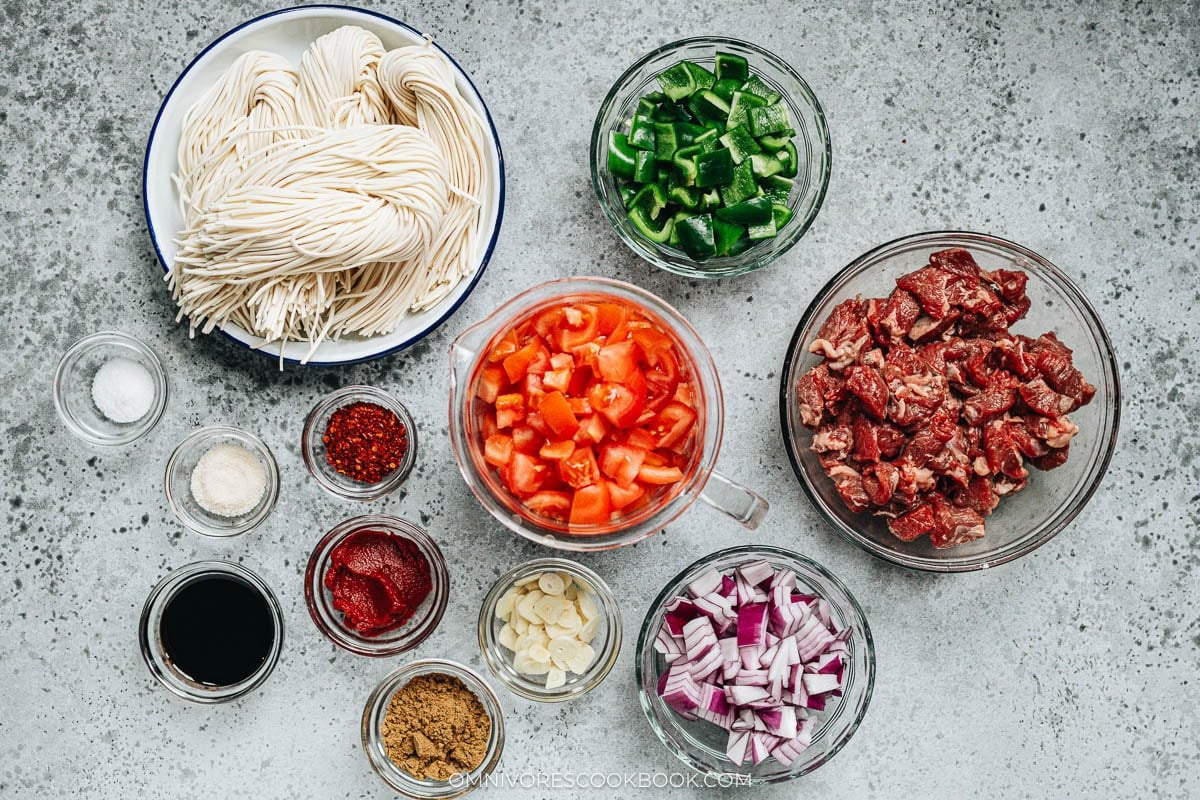
3. Brown the lamb: Heat 1 tablespoon of oil in a large skillet over medium-high heat until hot. Add the lamb and arrange it in a single layer with as little overlap as possible. Cook, stirring occasionally, until the surface is light brown but the inside is still slightly pink, about 2 minutes. Transfer the lamb to a plate and keep the oil in the skillet.
4. Soften the onion: Pour in the remaining 1 tablespoon of oil and add the onion. Cook, stirring, for 2 to 3 minutes, until the onion starts to soften.
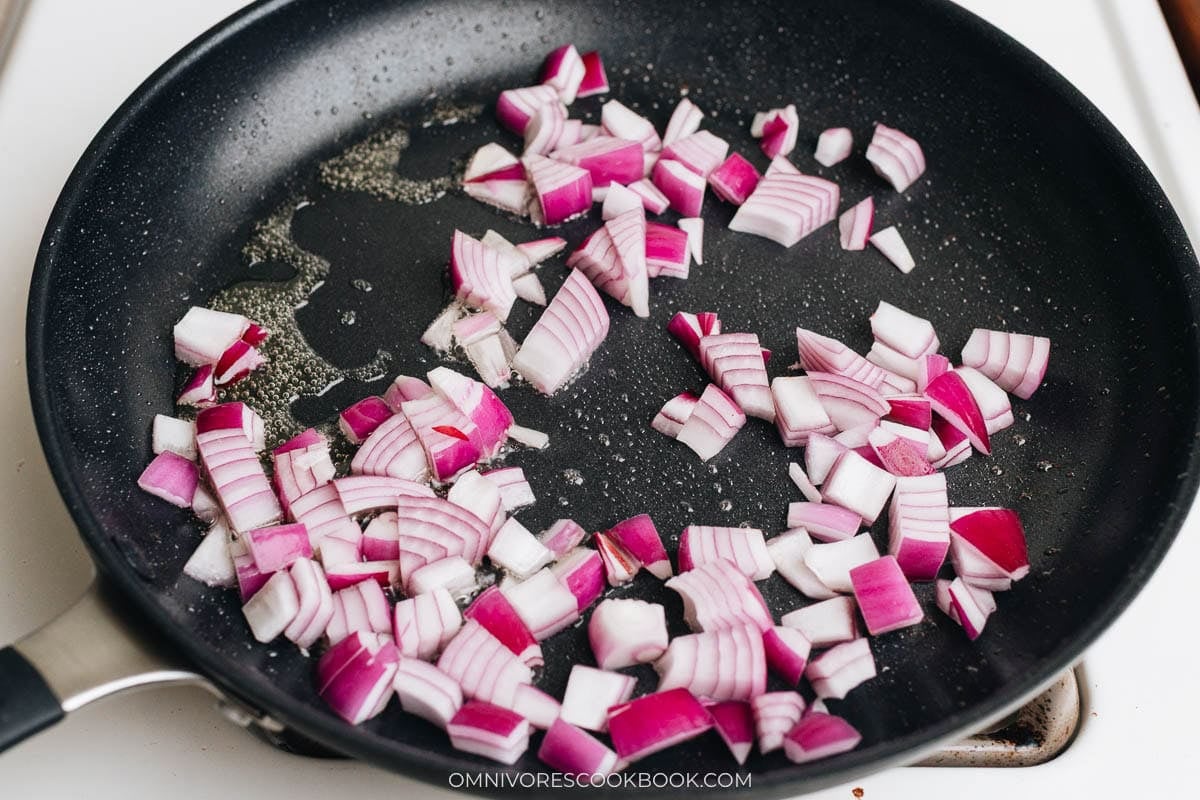
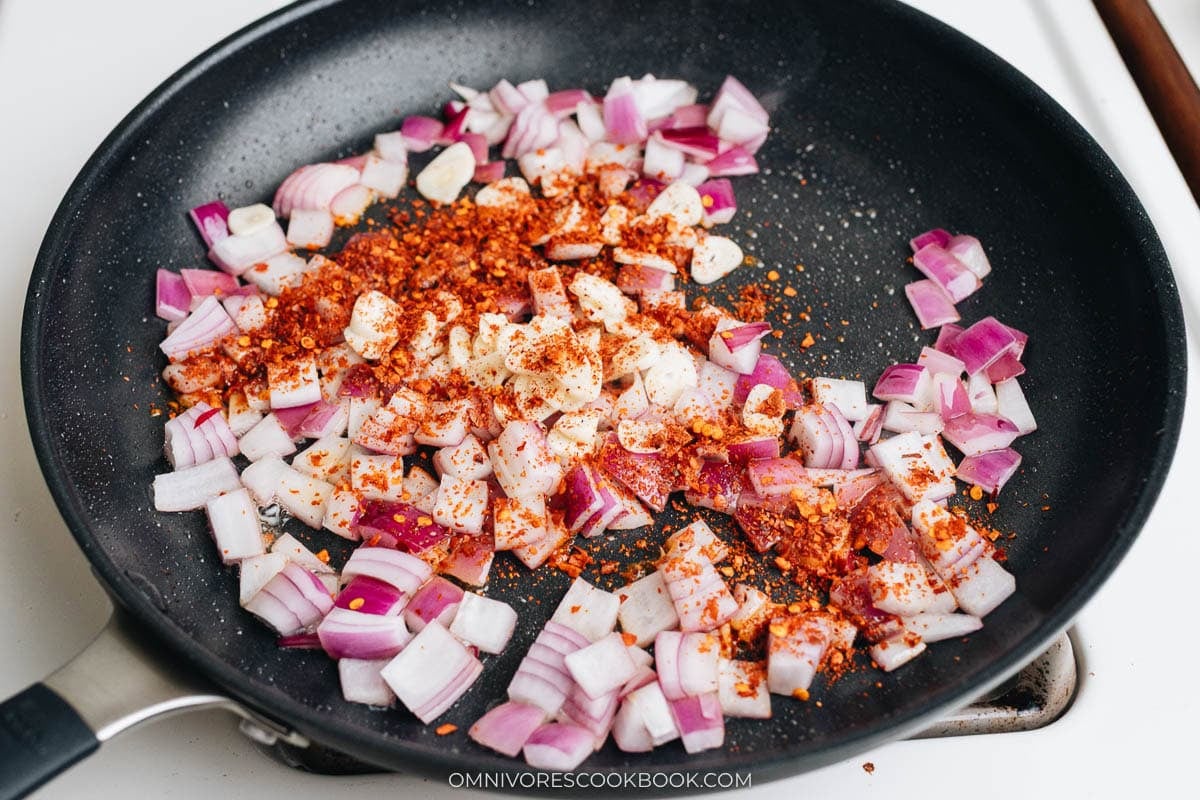
5. Toast the garlic and chili: Add the garlic and chili flakes. Stir and cook just until fragrant, so the chili opens up without scorching.
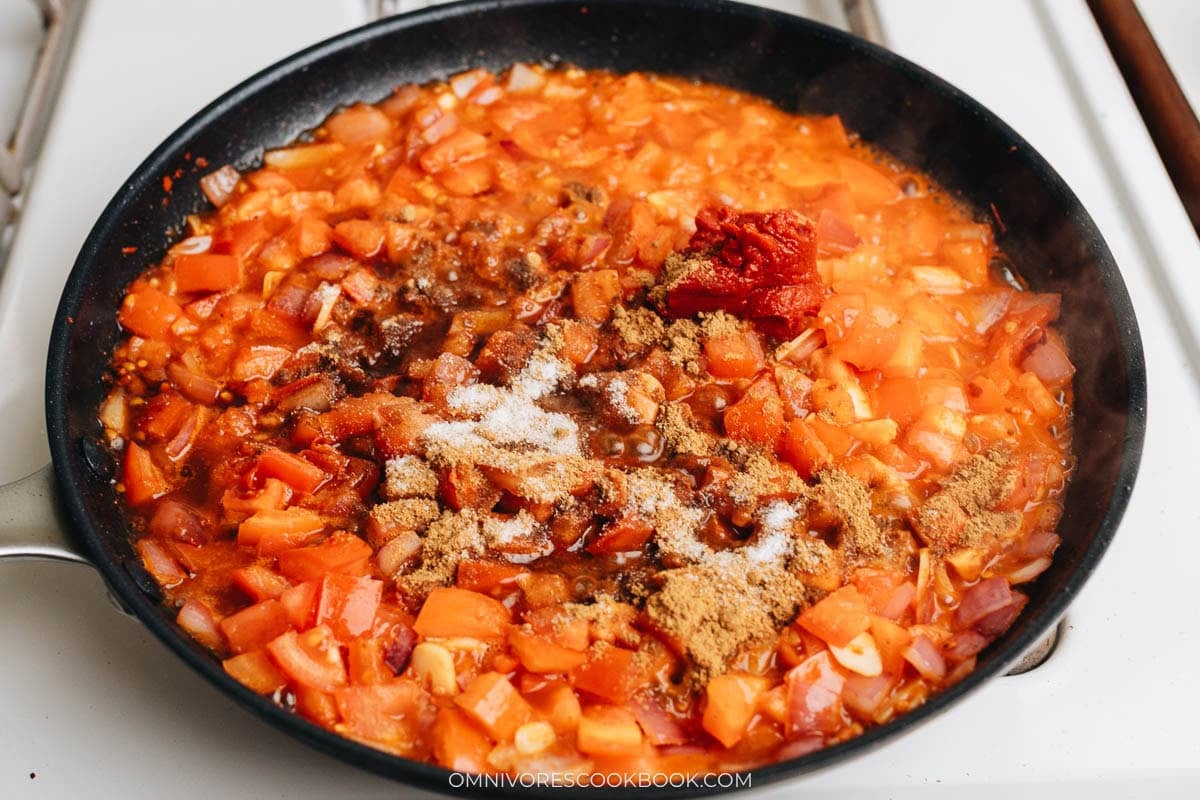
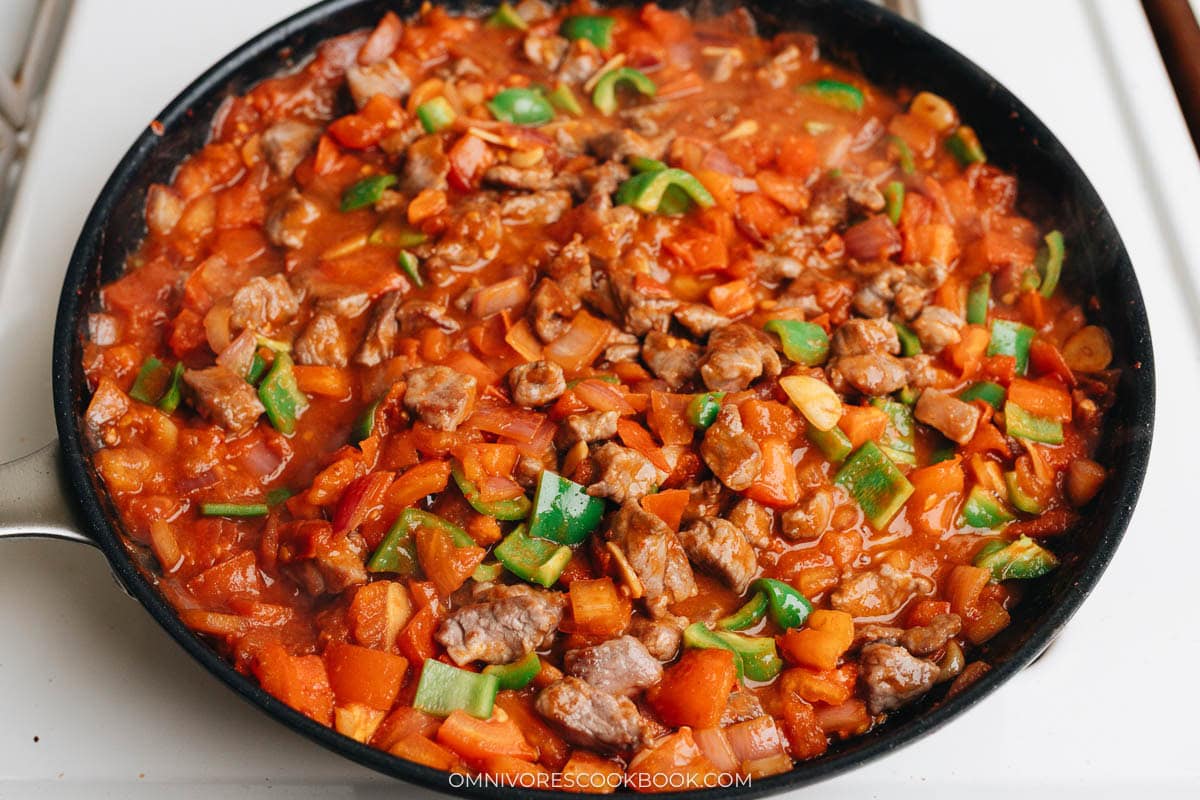
6. Break down the tomato: Add the tomato. Stir and cook for 2 to 3 minutes, until it starts to break down. Add the light soy sauce, tomato paste, cumin powder, sugar, and salt. Stir and cook until everything is mixed and the tomato has cooked into a sauce.
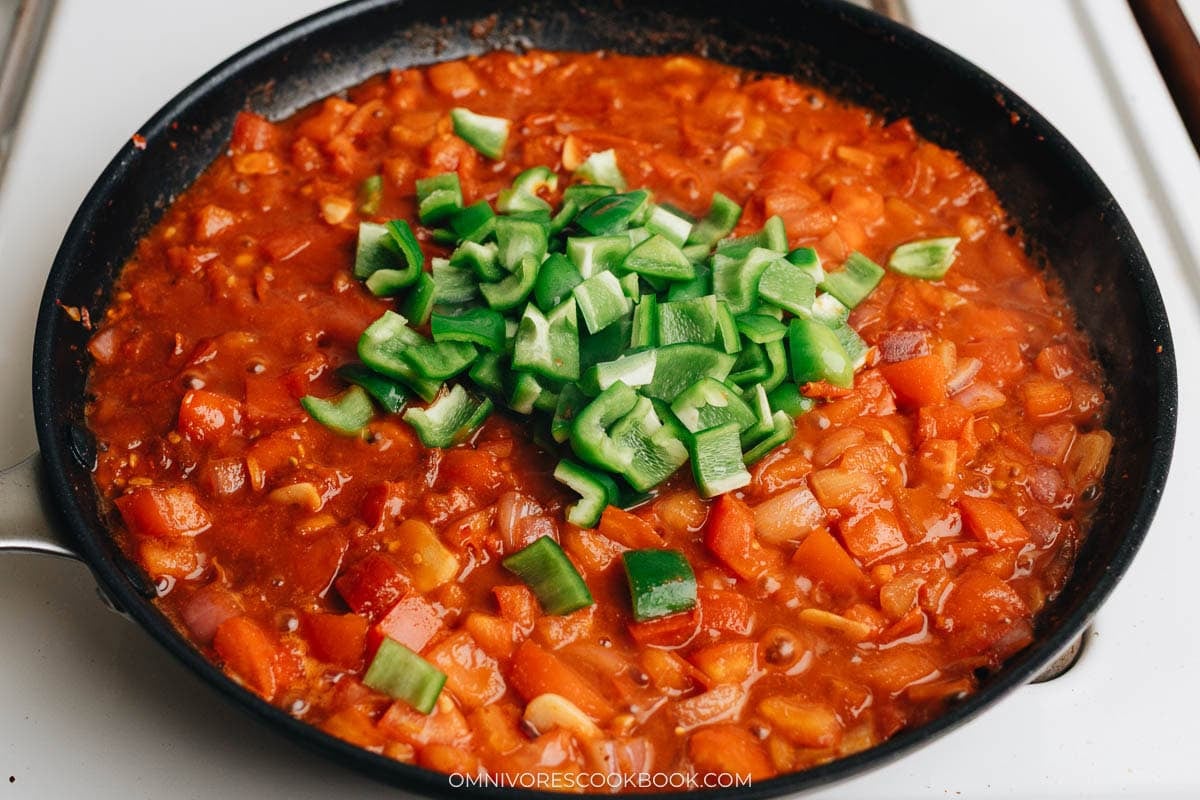
7. Add the pepper: Add the pepper. Stir and cook until just softened but still crisp, about 1 minute for anaheim pepper or 2 to 3 minutes for bell pepper.
8. Return the lamb: Return the lamb to the skillet and stir to combine. Cook just long enough to warm the meat through so it does not overcook. If you used ground lamb, you can cook it a bit longer to draw out more flavor.
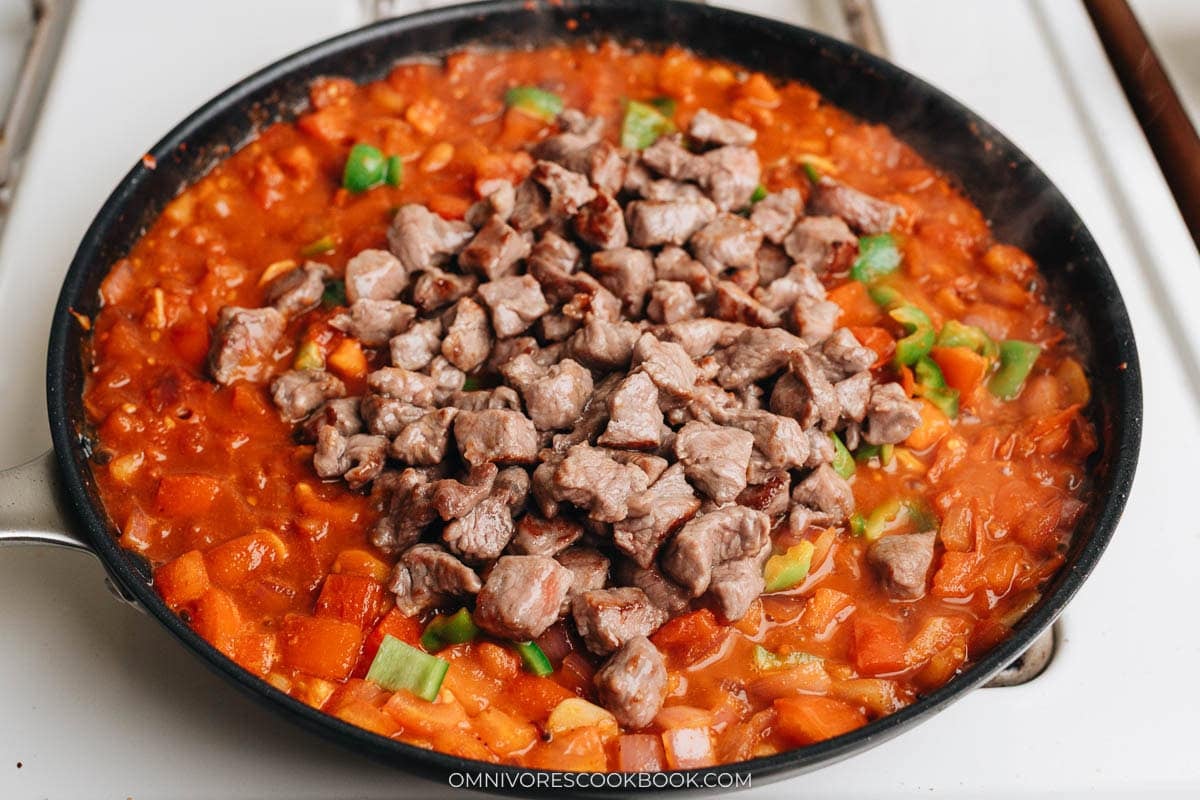
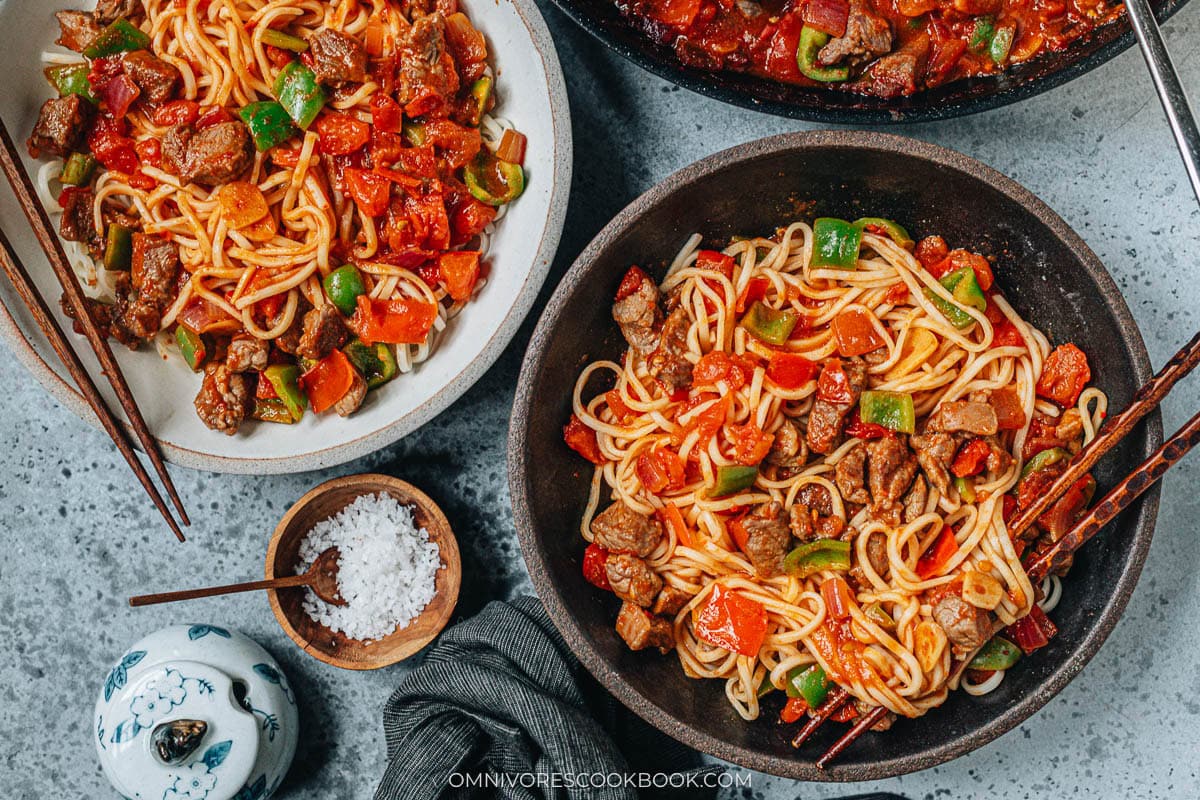
9. Serve: Fluff the noodles and divide them among serving plates. Spoon the lamb sauce over the top, stir to mix, and serve hot.
My Cooking Tips
Choose the right noodle: A wheat noodle shaped like thick spaghetti is my go-to here, chewy enough to stand up to the sauce and smooth enough to coat well. Look in the refrigerated or freezer case at a large Asian grocery, or use a dried udon-style wheat noodle at home.
Rinse the noodles cold: The cold-water rinse after boiling stops the noodles cooking and washes off surface starch, so they stay separate and springy instead of clumping while the sauce finishes.
Brown the lamb, then pull it: Taking the lamb out after a quick sear and adding it back at the very end is what keeps cubed leg tender. Left in the pan through the whole braise, it tightens up and turns dry.
Grind your own cumin when you can: Whole cumin toasted in a dry pan and ground fresh has a deeper warmer taste than a jar of pre-ground powder, and it is the spice that tells you this is a Xinjiang dish.
Time the noodles to the sauce: Start the noodles boiling while the sauce cooks so both finish together. Laghman is best tossed and eaten right away, while the noodles are hot and the sauce is glossy.
How to Serve
Laghman is a one-bowl meal at my table, noodles down first and a generous ladle of the lamb sauce spooned over the top. I stir it all together in the bowl so every strand picks up the tomato and cumin, and I keep a little dish of Chinese pickles. A cold cucumber salad on the side is the pairing I remember from the diners in China, and it still tastes right at home.
When I want a fuller Xinjiang table for friends, I set laghman next to a plate of Real-Deal Xinjiang Cumin Lamb and a batch of Hand-Pulled Noodles for anyone who wants to try the from-scratch route. If the group wants soup too, a bowl of Lanzhou Beef Noodle Soup completes the meal with a different broth and a different noodle. The sauce also reheats well, so I cook a double batch of it for lunches through the week.
Frequently Ask Questions
Can I use a different meat instead of lamb?
Lamb is the classic choice in Xinjiang cooking and it gives laghman its amazing flavor, but beef works well if you would rather skip it. Flank steak sliced thin or ground beef both cook up nicely in the same sauce.
Why did my lamb turn out tough?
Cubed lamb leg tightens up if it stays in the pan too long. Sear it just until the surface browns, pull it out, and return it only at the end to warm through, which keeps it juicy.
My sauce came out watery, what happened?
Fresh tomatoes release a lot of liquid, so give them the full 2 to 3 minutes to break down and keep cooking after the seasonings go in until the sauce looks glossy rather than soupy. If your tomatoes are especially juicy, let the sauce reduce a minute longer before you return the lamb.
How to store this?
Store the lamb sauce in an airtight container in the fridge for up to 4 days, and reheat it in a skillet with a splash of water to loosen it back up. The sauce freezes well for up to 2 months, so I portion it before freezing, but I always cook the noodles fresh since boiled noodles turn soft and mushy after thawing.
Want to Save This Recipe?
Enter your email below & we’ll send it to your inbox. Plus get great new recipes from us every week!
Noodles with Lamb Sauce (Laghman, 新疆拌面)
Ingredients
Marinating
- 1 lb (450 g) lamb leg or ground lamb
- 2 teaspoon peanut oil (or vegetable oil)
- 1 teaspoon salt
- 1/4 teaspoon white pepper powder
- 2 teaspoons cornstarch
Cooking
- 2 tablespoons peanut oil (or vegetable oil)
- 1 purple onion , diced
- 4 cloves garlic , sliced
- 2 teaspoons Chinese chili flakes
- 5 tomato , chopped (or 1 28-oz can diced tomatoes)
- 2 tablespoons light soy sauce (or soy sauce)
- 2 tablespoons tomato paste
- 2 tablespoons cumin powder
- 1 teaspoon sugar
- 1/2 teaspoon salt (or to taste)
- 2 anaheim pepper (or 1 bell pepper, diced)
- 1 to 1.3 lbs (450 to 600 g) fresh noodles (or 12 oz / 340 g) dried thin wheat noodles
Instructions
- Cube lamb leg into 1/2” (1-cm) cubes (or just use ground lamb) and add it to a medium-sized bowl. Add the rest of the marinating ingredients. Mix well and allow to marinate at room temperature for about 15 minutes while preparing the other ingredients.
- Add water to a large pot and bring to a boil. Cook the noodles according to instructions. Then transfer to a colander to drain. Run the noodles with cold tap water to stop cooking. Drain again and set aside.
- Heat 1 tablespoon of oil in a large skillet over medium-high heat until hot. Add the lamb and spread out with minimal overlap. Cook, stirring occasionally, until the surface turns light brown but the meat is still slightly pink inside, about 2 minutes. Transfer the lamb to a plate and set aside. Save the oil in the skillet.
- Pour in the remaining 1 tablespoon of oil. Add the onion. Stir and cook for 2 to 3 minutes, until the onion starts to soften.
- Add the garlic and chili flakes. Stir and cook to release fragrance. Add the tomato. Stir and cook for 2 to 3 minutes, until the tomato starts to break down. Add the light soy sauce, tomato paste, cumin powder, sugar, and salt. Stir and cook to mix everything well, until the tomato has broken down and becomes saucy.
- Add the pepper. Stir and cook until just softened but still crisp, 1 minute if using anaheim pepper, 2 to 3 minutes if using bell pepper.
- Return the lamb back to the skillet and stir to mix well. Cook just long enough so the lamb is warmed through and not overcooked. If you’re using ground meat, you can cook it a bit longer to release more flavor and it won’t overcook.
- To serve the noodles, fluff the noodles again and transfer to each serving plate. Add the noodle sauce. Stir to mix well and enjoy while hot!
Nutrition

Did you make this recipe?
I’d love to hear how it turned out for you! Please take a moment to leave a 5-star rating ⭐️ and share your thoughts in the comments further down the page. It really helps others discover the recipe too.
Eoin O’Sullivan
Thank you so much for this recipe. I lived in Shanghai for years and there was a Xinjiang restaurant by my office where I ate lunch almost every day for 2-3 years. I’ve been desperate to know how to replicate the sauces they used and I’ve finally done it with your recipe.
Small edit from my end to make it the same as that place in Shanghai is to add potatoes, use 1 tbsp of Cumin instead of 2 and of course add MSG. For anyone trying to do the same I highly recommend refrigerating it overnight, heat the whole thing up in a pan the next day and serve with fresh noodles (Kuan Miao noodles for me)
Thank you, thank you thank you! I really appreciate you and the Xinjiang chefs who brought this meal into existence. My taste buds are in happy land
Maggie Zhu
Thank you so much for your kind words! Comments like this truly make my day. I’m so happy this recipe brought back memories of your favorite Xinjiang restaurant.
I love your additions, especially the potatoes and the overnight rest. I also think the lamb sauces taste even better the next day after the flavors have had time to meld. And yes, MSG is always welcome in my kitchen.
Thank you for leaving a thoughtful review 😊
Tami
I added a little splash of black vinegar. Half the tomato paste to 1 tablespoon. Good recipe.
Luke
I may have made it a touch too spicy and overused a couple of spices, but this was very nice. I didn’t have specifically “Chinese chilli” and mine were pretty hot. I all used a different noodle. BUT I loved it. Thanks! The lamb was beautiful and I used red and green capsicums for peppers. Beautiful!
Maggie Zhu
So happy to hear you like the recipe! Chinese chili flakes are not very spicy and I use them to add flavor more than making the dish spicy. I’ve also tried making this dish without any chili flakes and it was also quite nice (maybe a bit lacking, but still delicious). You can definitely use less chili flakes or use some paprika to make it less spicy.
Luke
Mongolian lamb? I thought that was a staple in NSW Chinese! That’s where I am and we have that a lot. This one was very nice.
Imelda
I found your uygur noodle Recepy. It’s different from the restaurant I eat.well I will try n error then
Thank you
Darcy Sromek
I just found your blog and I am absolutely in love! My husband and I lived in XinJiang for a year and we sincerely miss XinJiang styled food. Thank you so much for sharing these creations, I can’t wait to recreate them in the States!
HL
Hi your photo shows that you’ve added celery but it’s not in your ingredients list?
Maggie
The green veggie in the pictures are peppers, not celery.
Jason
Maggie, this sounds really good! At first it seemed strange to me that there were no liquid components in the recipe, like soy sauce or vinegar or the like, but I’m assuming that this makes the vinegar and chili oil drizzle at the end a pretty crucial part of the dish, no? The combination of all of the ingredients in the main recipe sounds very delicious and intriguing to me, so I will likely be trying this soon…well, as soon as I can get my hands on some black vinegar! I just made a big batch of your chili oil to put in the fridge for when that day rolls around. Thanks for the inspiration, and the bit of history/culture in your description! I hope you have a great day! 🙂
Maggie
Hi Jason, the original recipe I learned from used a relatively dry sauce. The tomato will release some liquid after cooking though. Yes, the vinegar and chili oil is a crucial part, and I know some people will add a LOT. If you just want to try out the noodle sauce and do not have black vinegar at home, you can add a bit chicken stock at the end of cooking. And then serve it with chili oil, I bet it’ll be super delicious too.
Happy to hear you like my chili oil recipe and my blog 🙂 You too, have a great week ahead!
Kevin | keviniscooking
So loving this dish. Lamb is big in my house and your tip with the cornstarch is one I will start to implement. Thanks!
Maggie
Thanks for stopping by Kevin! Yep, the cornstarch thing is really helpful and I use it for all my stir fried meat dishes. Glad it’s helpful 🙂
Robyn @ Simply Fresh Dinners
Maggie, I could eat this dish for dinner every single day. A perfect, healthy comfort food that’s easy to prepare yet so full of flavour. I have been pondering buying some lamb for some time now and I will do it this weekend and cook this dish. It’s calling to me! I can get ground lamb at the organic farm, that would be ok, right?
I can hardly wait to taste this. Great recipe!
Maggie
Organic lamb sounds so fancy! Yep, the ground lamb will work perfect for this dish! Let me know how the dish turn out. Happy cooking! 🙂
Allie | Baking a Moment
What an incredibly flavorful dish and so satisfying! I love learning so much about authentic Chinese food from you, Maggie!
Kathleen | HapaNom
Oh my, this looks amazing! Give me a big bowl of noodles, and I’m a very happy woman. I love the all of the incredible flavors in this dish. It’s so interesting to see lamb – like Nagi said, I never really associated lamb with Chinese cuisine. Very interesting!
Helen @ Scrummy Lane
Wow, I’m not so keen on the garlic-chomping part either, Maggie, but I LOVE the sound of everything else! You are showing me how simple Chinese food can be and I LOVE that, too!
Lisa Kaufer-Smithey
YUM, I love lamb, but like Nagi I also do not associate lamb with China! They must have many lamb breeders? as you have quite a few lamb recipes. Your noodles look amazing, nothing a store bought noodle could replicate. HAPPY CHINESE NEW YEAR- enjoy time with all your loved ones!
Lisa Smithey
PS. Maggie, whenever I go to my favorite Asian market I see cleavers, as in MEAT cleavers. Are these a huge part of your daily use in cooking? They are not super expensive, I just don’t know if I need one, what do you think?
Maggie
Hi Lisa, Happy Chinese New Year to you and your family!
Lamb is not often seen in southern Chinese cooking, but in northern, middle and west parts of China, it’s a very popular meat. And it’s the main source of protein for the large Muslim population in these areas. I will post a few more lamb recipes soon (to celebrate the year of the sheep), hope you’ll like them 🙂
Yep, meat cleaver is a must have for almost every Chinese family. Even for cutting veggies, some people prefer to use it over chopping knife. Also because we really like cooking with bone-in meat, so a cleaver comes in handy when you need to chop raw or cooked bone-in chicken, or pork ribs. About whether to buy one or not, it’s really depend on how you like the food prepared. If you like authentic Asian flavor and would like to cook with bone-in meat, I suggest you to get one 🙂
Nagi@RecipeTin Eats
All these lamb Chinese dishes you share are fascinating to me. I so do not associate lamb with Chinese food – I have never seen it in Australia and I didn’t travel to the northern/western regions in China. The flavours are honestly like Middle Eastern – but with noodles! Adore adore adore!!
Marissa | Pinch and Swirl
You cook the best food Maggie! I’ve got to try this!
mira
Love these noodles, so delicious! And the sauce sounds amazing! Great post and step by step photos Maggie! pinned!
Kelly – Life Made Sweeter
These noodles look gorgeous! I love that you made them by hand, so impressive! I could eat noodles all the time, this looks mouthwatering!
Bam’s Kitchen
Gorgeous homemade noodle dish and love that sauce. There is something about homemade noodles that makes me want seconds…
Alice @ Hip Foodie Mom
Maggie, I still can’t believe you made these gorgeous noodles by hand!!! WOW!! I love this! I could eat Asian noodle dishes all week!