
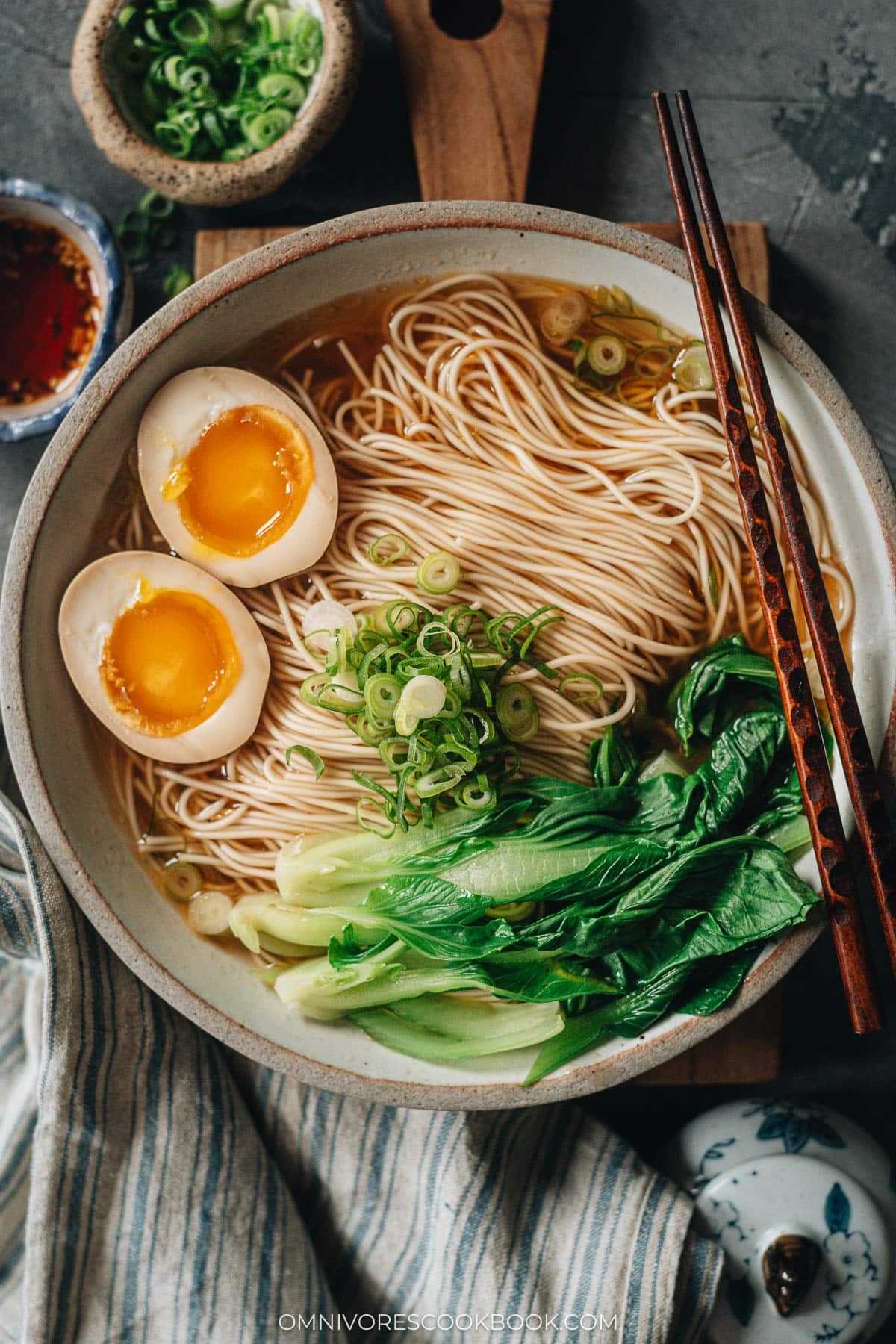
Yang chun mian (阳春面), which translates to “spring noodles,” is one of the most famous everyday noodle dishes in the Jiangnan region of China, especially Shanghai. It is a bowl of thin wheat noodles served in a clear, soy sauce flavored broth with nothing more than chopped green onions on top. The beauty of this dish is in its simplicity. There are no heavy sauces or piled up toppings. Every element has a purpose: the wheat noodles carry the broth, the soy sauce and sesame oil build the flavor, and the green onions add a fresh bite. You will also see it called guang mian (plain noodles) or qing tang mian (clear soup noodles) in different parts of China.
I grew up eating this for breakfast and late night snacks in Beijing. My mom could have a bowl ready in the time it took me to get dressed in the morning. Ha! It was the first thing I learned to cook for myself because there is almost nothing to it. When I moved to New York, this became my comfort meal on cold nights and my go to when I am too tired to cook anything else. It is the simplest recipe on my entire site, but it is also one of the most requested.
I build the seasoning directly in the bowl, which is the traditional way to make yang chun mian. Soy sauce, sesame oil, a pinch of sugar, and chicken bouillon go into the bowl first. Then I pour hot chicken stock over the seasonings, add the cooked noodles, and top with green onions. The traditional version uses lard for richness, but sesame oil is more accessible and still gives the broth a beautiful fragrance. I highly recommended!
Ingredients
This recipe uses barely any ingredients. The seasoning goes directly into the serving bowl and the noodles cook separately.
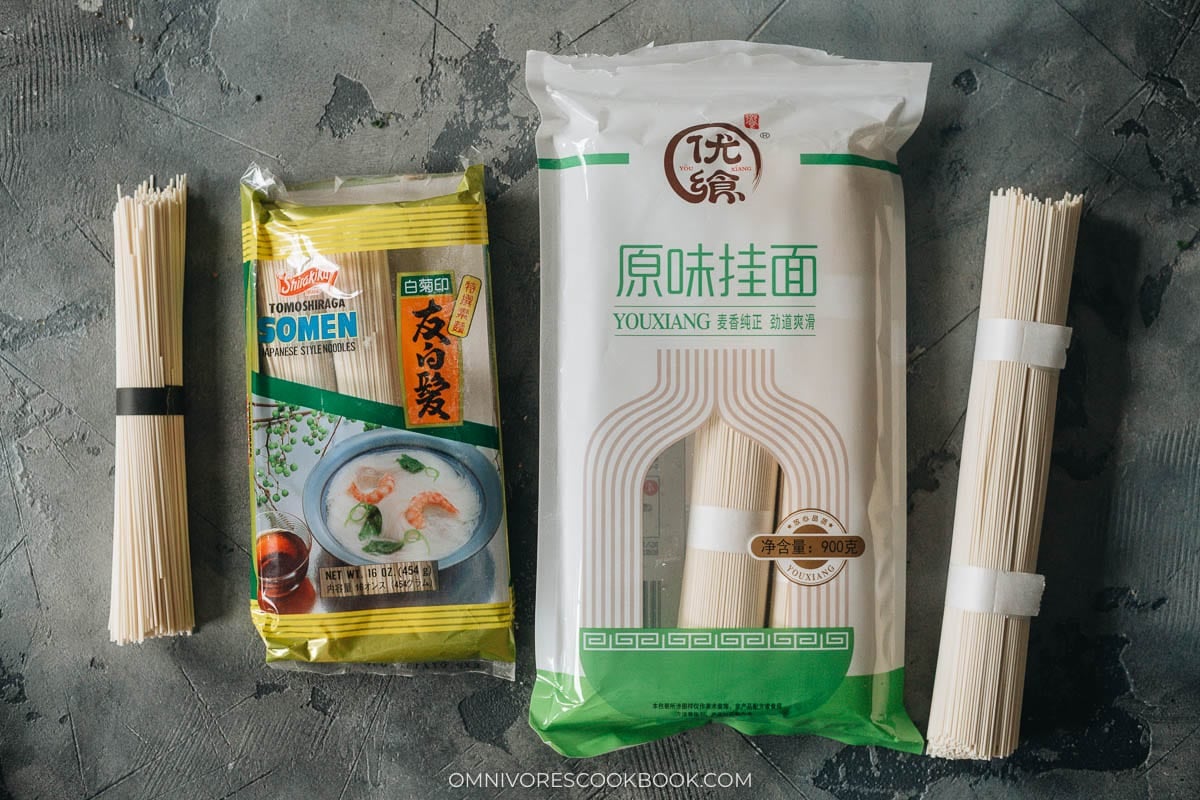
Noodles: I use dried thin wheat noodles, sometimes labeled gua mian or long xu mian (dragon whisker noodles) at Asian markets. Japanese somen noodles are the same type and work perfectly. Fresh thin noodles or homemade hand pulled noodles are even better if you have them.
Broth and seasoning: I use chicken stock as the base, with light soy sauce and sesame oil as the main flavor builders. A pinch of sugar and chicken bouillon powder round out the broth. If you have homemade Chinese chicken stock, the noodle soup will significantly taste better.
Toppings (optional): Green onions are the only traditional topping. Check my serving suggestions below.
How to Make
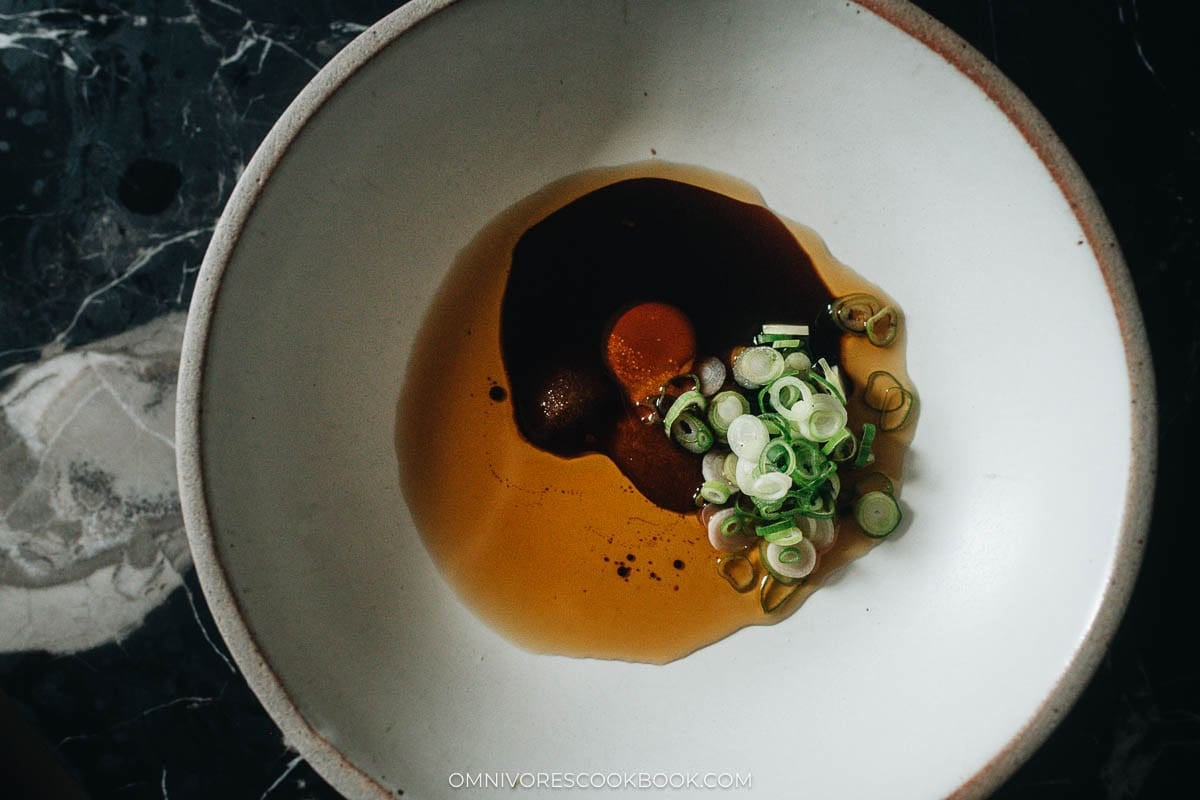
1. Season the bowls: Divide the green onions, sugar, chicken bouillon, sesame oil, and soy sauce between the serving bowls.
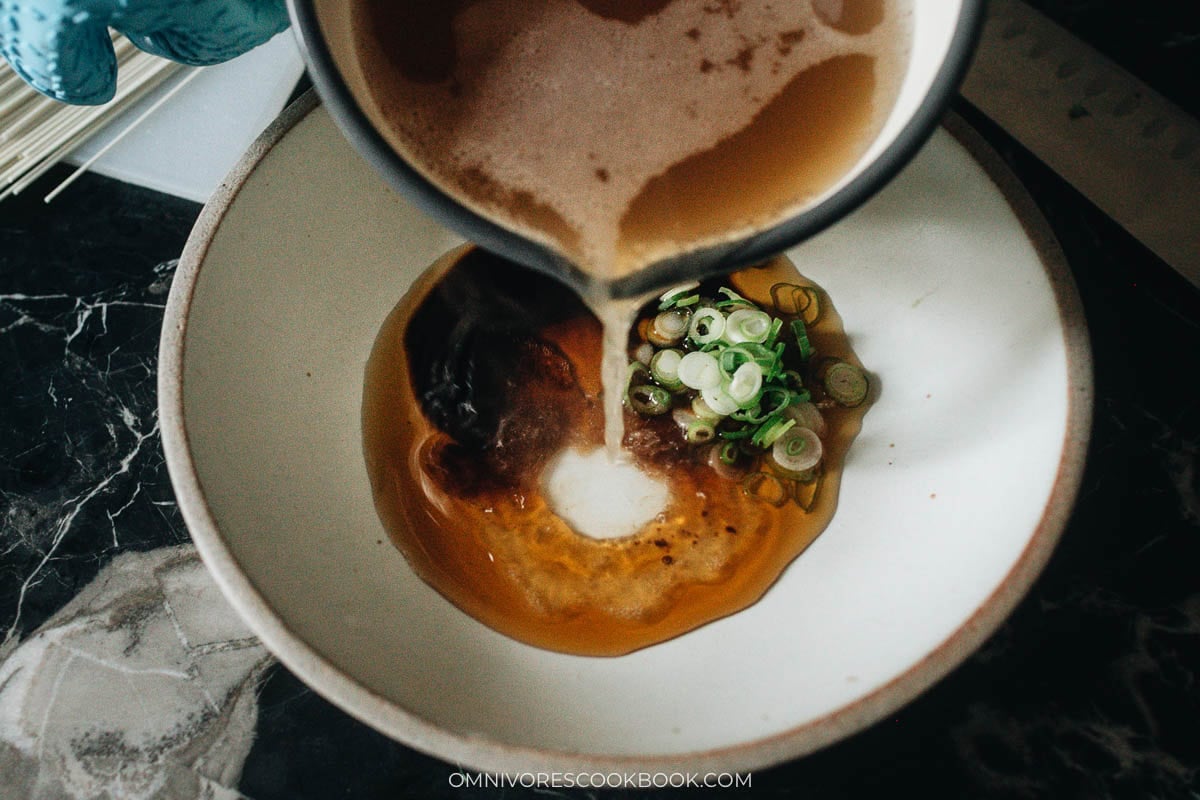
2. Heat the stock: Bring the chicken stock to a boil. Pour the hot stock into the prepared bowls and stir to dissolve the sugar and bouillon.
3. Cook the noodles: At the same time, bring a separate pot of water to a boil. Cook the noodles until just barely done, about 1 minute less than the package instructions.
4. Blanch the vegetables: If adding bok choy or other greens, blanch them in the noodle water for 30 seconds to 1 minute until just cooked through.
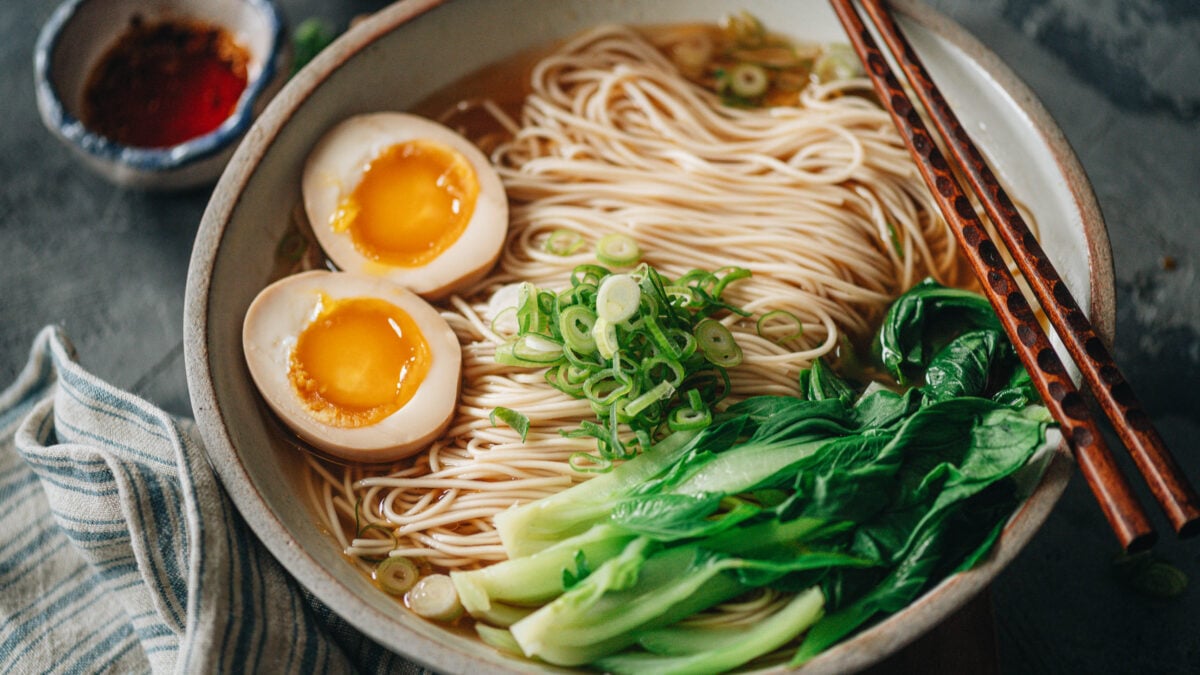
5. Assemble: Drain the noodles, rinse briefly under cold water to stop cooking, and divide between the bowls. Top with blanched vegetables, soy sauce eggs, or chili oil.
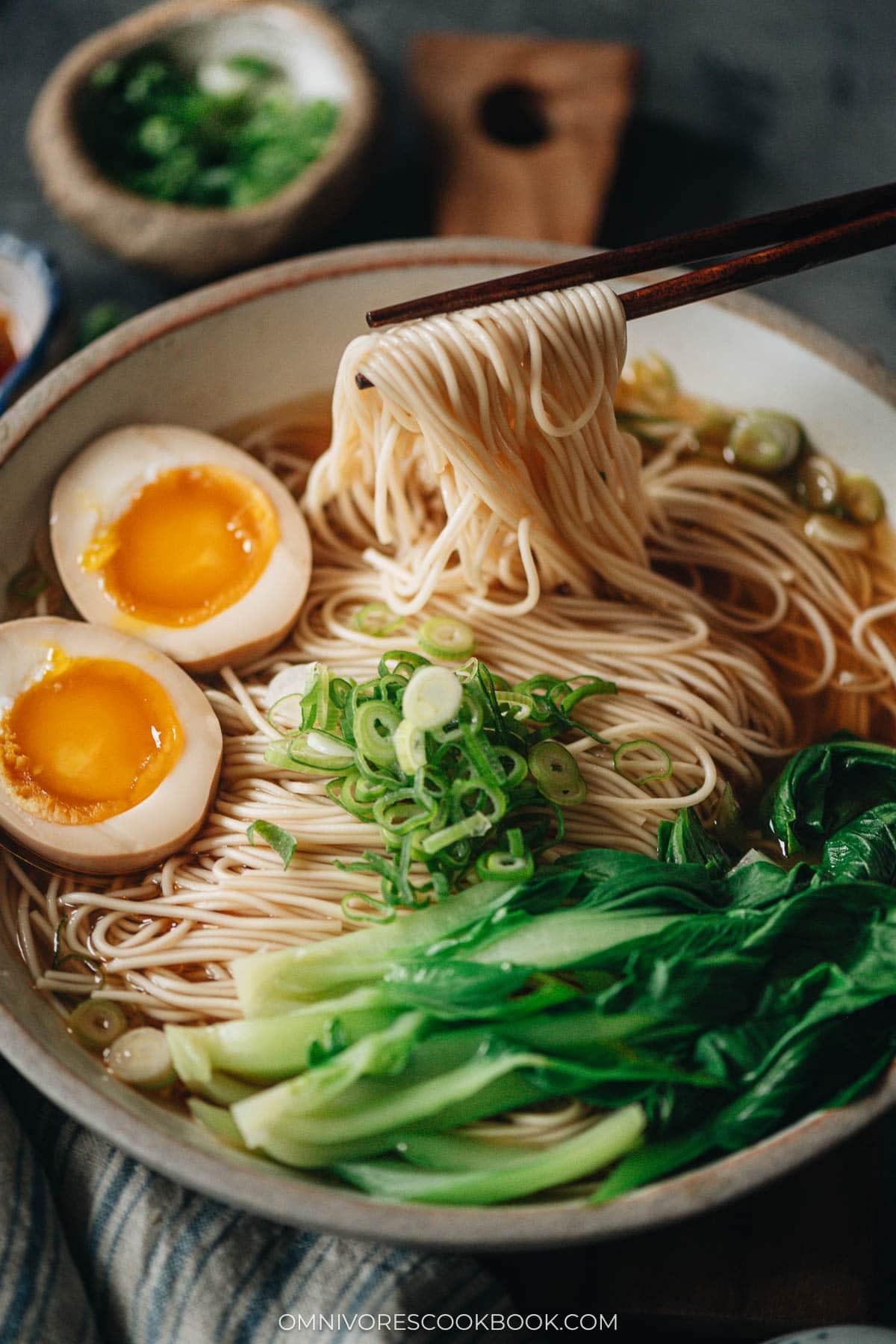
My Cooking Tips
Try lard for an authentic flavor: Traditional yang chun mian uses lard instead of sesame oil. If you have rendered pork fat, try replacing the sesame oil with it. The broth becomes noticeably richer and silkier. Rendered chicken fat works well too.
Use MSG for the most authentic version: MSG is a natural sodium salt from glutamic acid found in foods like cheese, meat, and seaweed. A small pinch replaces the chicken bouillon and adds pure umami. I keep it to a minimum in most recipes, but a simple dish like this is exactly where it shines.
Rinse the noodles briefly after draining: A quick rinse under cold water stops the cooking and removes surface starch so the noodles do not clump together in the broth.
Taste the broth before adding toppings: The broth should taste right on its own before you add anything else. Adjust with more soy sauce or sesame oil if needed. You might find you do not even need chili oil once you get the balance right.
Serving Suggestions
I eat this as a quick breakfast or a late night snack with just green onions on top, exactly the way it is traditionally served. On days when I want something more filling, I add a soy sauce egg, my homemade chili oil and some blanched bok choy. My husband likes his with shredded rotisserie chicken, and I like adding extra chili oil.
For a dinner spread, you can serve soy sauce noodles with other main dishes and vegetable side. I like to serve it with air fryer garlic ribs, cashew chicken, and green pea stir fry.
If you love noodles, also check out my hot dry noodles, dan dan noodles and beef pan fried noodles.
Frequently Asked Questions
Can I make this vegetarian?
Yes. Replace the chicken stock with vegetable stock and skip the chicken bouillon powder. Add a pinch of MSG or mushroom seasoning powder for umami instead. The soy sauce and sesame oil carry most of the flavor, so it still tastes great without the chicken base.
How do I keep the noodles from getting mushy in the broth?
Cook them about 1 minute less than the package says so they stay slightly firm when they hit the hot broth. I also give them a quick rinse under cold water after draining to stop the cooking immediately. If you are not eating right away, toss the drained noodles with a tiny bit of sesame oil so they do not stick together.
How should I store leftover soy sauce noodles?
I do not recommend storing assembled bowls because the noodles absorb the broth and turn soft. If you want to prep ahead, keep cooked noodles and broth separate in the fridge for up to 2 days. Reheat the broth, prep fresh seasoning in the bowl, and add the cold noodles. They warm up quickly in the hot stock.
Chinese Cooking Made Easy
Are you new to this website? This free email series is a great place to start. I’ll walk you through a few of my most popular recipes and show you how and why they work. You’ll quickly start to cook better Chinese food in your own kitchen.
Soy Sauce Noodles (阳春面)
Ingredients
- 1 green onion , sliced
- 1/2 teaspoon sugar
- 1/2 teaspoon chicken bouillon powder (or 1/4 teaspoon MSG)
- 2 teaspoons sesame oil
- 2 teaspoons light soy sauce , or to taste
- 2 cups chicken stock
- 4 oz dried thin wheat noodles or somen noodles , or 200 g (7 oz) fresh noodles or thin hand-pulled noodles
Topping options
- 2 baby bok choy , quartered (or vegetable of your choice)
- Homemade soy sauce egg
- Homemade chili oil (*Footnote 1)
Instructions
- If making two small bowls, divide the green onions evenly between two bowls and add 1/4 teaspoon sugar, 1/4 teaspoon chicken bouillon powder, 1 teaspoon sesame oil, and 1 or 2 teaspoons soy sauce to each bowl (depending on preference and the saltiness of the stock used). Add everything to a big bowl if making 1 serving.
- Bring a pot of water to a boil. At the same time bring the chicken stock to a boil and add 1 cup to each bowl. Stir to dissolve the sugar and chicken bouillon powder.
- If adding bok choy or another vegetable blanch them in the boiling water until just cooked through, between 30 seconds to 1 minute, until just cooked through. Distribute the bok choy evenly between the bowls (or if you would like to lay them on top for looks, set them aside and place them on after the noodles are added).
- Boil the noodles according to the instructions on the package, try to get them al dente so they don’t overcook in the broth, usually 1 minute less than indicated on the package.
- Drain the noodles and rinse briefly under cold water to stop the cooking. Add half to each bowl.
- Taste and add more sesame oil or soy sauce if needed. Top with other ingredients if using.
Notes
- Taste the soup first before spicing it up. You might find you don’t actually need the chili oil 🙂
Nutrition

Did you make this recipe?
I’d love to hear how it turned out for you! Please take a moment to leave a 5-star rating ⭐️ and share your thoughts in the comments further down the page. It really helps others discover the recipe too.
D. McKeel
Great recipe. I used some left over spaghetti noodles, added several slices of BBQ pork and a tbl, of Spicy Chili Crisp. Definitely a keeper recipe.
Camille
Made this recipe many times over now. It’s a perfect quick lunch and so versatile.
Angela
Ridiculously easy and ridiculously delicious. I’ve also made this an extremely lazy way with pre-cooked pasta + leftover veg and microwaving the broth — not really “cooking,” but still amazing in a pinch when I’m craving something savory and comforting.
Sashi Sehgal
Hey Maggie, we made this recipe with the salt and pepper pork chop recipe. Really enjoyed these noodles, such a delicious, moreish recipe. I now want to try this with eggs as pictured. We added back choi as suggested. What else would you suggest it could go with which maybe quite light? Thanks again, great recipe.
Maggie
Hi Sashi, I’m glad to hear you like the recipe! For other veggie alternatives, I really love napa cabbage. You can also use collard greens or bean sprouts. For other meat toppings, I would add leftover rotisserie chicken or leftover roast meat, but the runny eggs are always my favorite!
Jeff
Cilantro is a mainstay of Mexican cooking, too. I also like tu choy tips,and prefer the milder Shanghai bok choy to the dwarf variety. I also like yu choy tips abd Li Sun Taiwan cabbage better than the often bitter western green cabbage. I dont care what the FDA says. My wife is violently allergic to excess anounts of MSG. It raises the blood pressure of those that are sensitive. I have seen my wife turn beet red, become short of breath after ingesting it in a resteraunt that initiially denied using it but then conceded hat it was still used in the soup that she had consumed. The reaction s well documented in medical journals. It is common in western prepared foods but not in the quanities that some Chinese resteraunts used to use. I remenber seeing a giant barrel from Accent brand MSG being used as a garbage can by a Chinese resteraunt. In moderation few are affected
Christina
What kind of noodles are used please? Looks SO delicious and easy , I’m excited to make this for my grandson and me.
Maggie
The thin type of noodle will work great, for example, Chinese and Korean thin dried wheat noodles made without eggs and Japanese somen (very thin). Happy cooking!
Gauguin
I love noodles but I didn’t have any authentic oriental recipes, so I’m delighted to discover this website. It’s going straight into my bookmarked favourites.
Kerttu
Hi Maggie,
This recipe looks soooooo good! I bought Udon and Soba noodles from the store few days ago but now I have hard time finding a great recipe for them 🙁
Would using either one for this recipe be a good idea? Thanks! 🙂
Michaela
Hi there – can’t wait to make this for lunch tomorrow! Will definitely warm me up in the cold Dunedin weather. I was wondering whether you poached your egg in your stock, or boiled it? Would either be OK?
Cheers!
Maggie
Hi Michaela, I’m glad to hear you’d like to try out this recipe! I always poach the egg in the stock because it’s faster and easier. Either way will work! Happy cooking and let me know how the noodles turn out 🙂
Melody
Thank you for this recipe. I am a total dud when it comes to cooking – I hate it! – yet here I am enjoying a bowl of this soup complete with runny egg. Simple and delicious!
Cath
When you say 1.5 to 2 cups of stock is it diluted in water? If so how much?
Maggie
Hi Cath, the 1.5 to 2 cups stock is the total amount of broth for the noodles. If you use the supermarket stock, I won’t dilute it, since they are not as flavorful as homemade stock. For homemade stock, you need to dilute according to your taste. For example, I usually boil down my homemade stock for easy storage, so I usually use 1 cup stock and 1 cup water. If your stock wasn’t reduced at first place, then no need to dilute it. Hope my answer isn’t too confusing!
Happy cooking and let me know how the noodles turn out 🙂
Cindy Brooks
Somehow I stumbled across your recipe and it looks so yummy! We have a Chinese exchange student who eats noodles almost every day. He’ll be surprised when I make this for him, thanks!
Maggie
Hi Cindy, yep noodles is a big thing in China and some people eat it from breakfast to dinner. Hope the cooking went well and your student enjoyed it 🙂
Sílvia
Hey, that looks great, I must try them!!! 😉
stellamerteuil
What kind of noodles are you using? I need to know! This looks so good!
Maggie
Thanks! I used Japanese somen. I think ramen noodles or other thin types will work well too.
stellamerteuil
Thanks! This looks delicious!
Robyn @ Simply Fresh Dinners
Every time I see this pic I get hungry, Maggie. I love these flavors and this dish is so mouth-watering. I don’t eat eggs nearly as much as I should and this is an easy way to add them to my diet.
Your photos are simple perfection!
Lisa @ The Cooking Bride
Oh my word, that runny egg! I just want to turn up this whole bowl and slurp it down!