
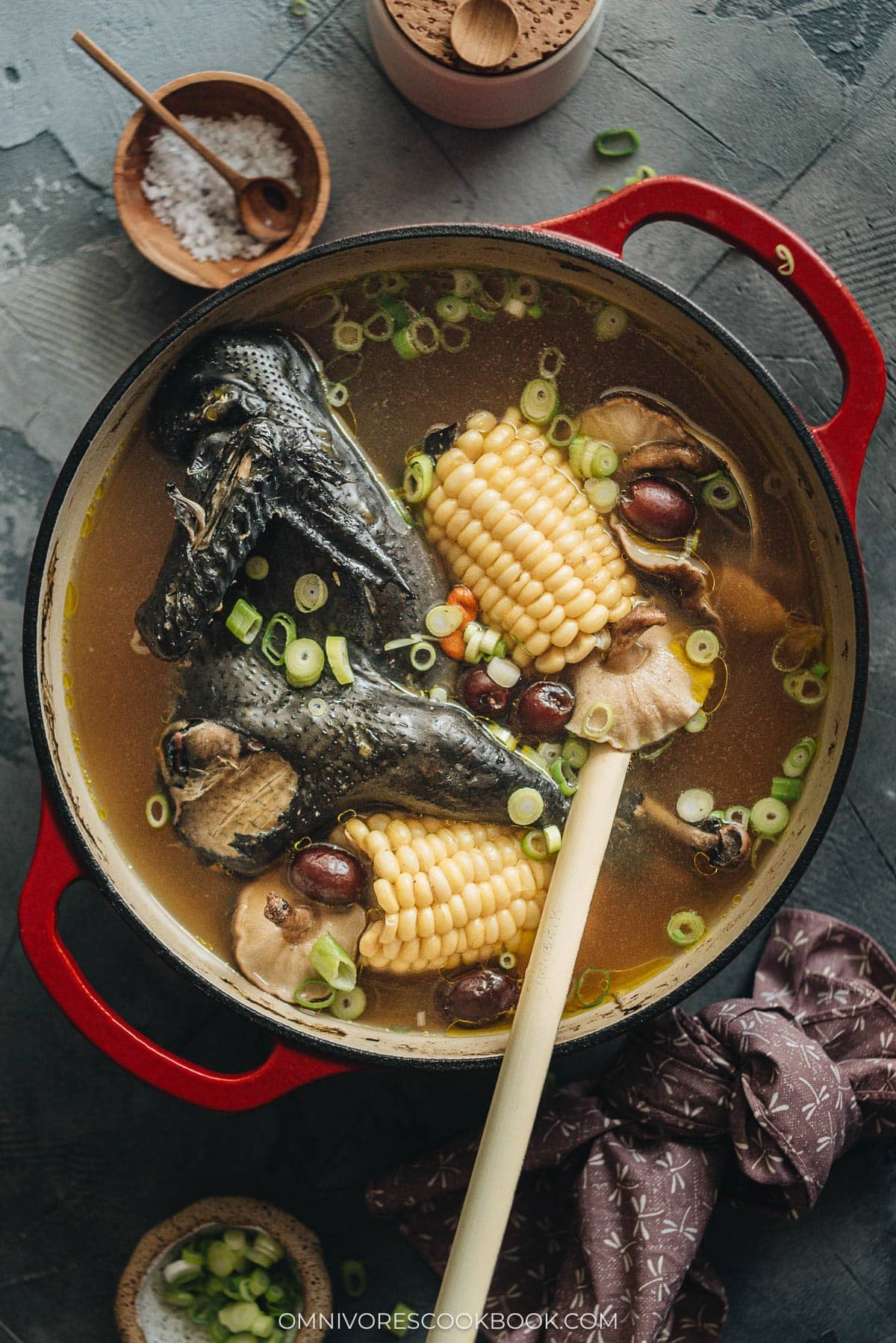
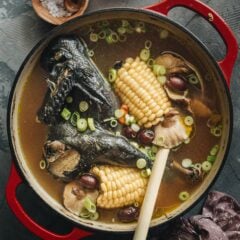
Silkie chicken (乌鸡, wū jī) is a Chinese breed with black skin and bones underneath fluffy white feathers, and it comes from Jiangxi province where home cooks have been simmering it into nourishing soups for thousands of years. The broth turns a clean dark amber from the dark meat, with a savory flavor than what you get from a regular yellow chicken. Across China, this soup belongs to a category called 煲汤 (bāo tāng), the slow simmered tonic soups that nourish more than they fill.
This is one of the first soups my mom taught me to make as a young adult in Beijing, and it has stayed in my kitchen ever since. I make it the way she did, with a small bird, a Dutch oven, and a long simmer that fills the apartment with the smell of ginger and shiitake. My husband knows when I have this on the stove that someone in the house is either getting sick or recovering, and he reaches for a small bowl of the broth before dinner whenever I make it.
My silkie chicken soup recipe is genuinely simple once you have the chicken. I drop everything into the pot at once, bring it to a boil, skim the brown foam off the top for the first 10 minutes, then drop the heat low and let the soup simmer covered for 2 hours until a leg pulls cleanly off the body. I can’t wait for you to try this the next time the weather turns or someone in the house needs comfort, the step by step recipe below will see you through.
Ingredients
The whole soup stands on 6 ingredients and water, so each one has a real job at the bottom of the pot. Here is how I think about the layers as I shop.
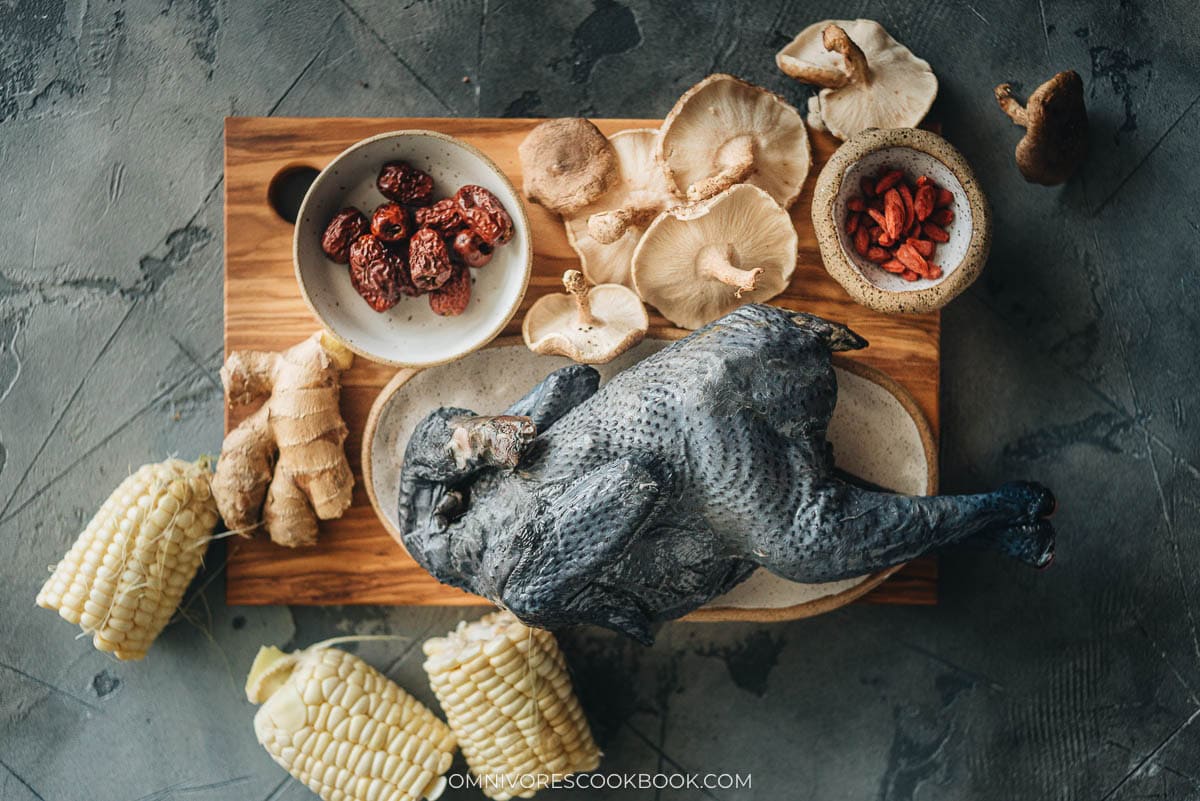
Silkie chicken: A small whole silkie chicken is the right size for a Dutch oven and serves 4. I buy mine fresh from a Chinese grocery store, but Asian markets and online butchers also stock them.
Ginger: A thumb-sized piece of fresh ginger, sliced into rounds, lifts the savory broth and keeps any gaminess in check. I leave the skin on if my ginger is fresh, since the long simmer pulls plenty out of the slices.
Dried jujubes and goji berries: Both are optional in the original recipe, but I keep them in because they round out the broth with a soft sweetness that balances the savory chicken. The jujubes are dried red dates that I rinse quickly before they go in, and the goji berries swell and turn a bright orange-red in the finished bowl. For more on the dried jujube as a Chinese pantry staple, my jujube tea post covers it in more detail.
Shiitake mushrooms: Fresh or dried shiitake mushrooms build the umami backbone of the soup. I usually go with dried because they pull a richer, smokier note from the broth, but fresh shiitakes work when that is what is in the fridge. Rinse dried ones quickly under cold water before they go in.
Corn on the cob: One small ear of corn, husked and cut into a few rounds, drops into the pot whole. It gives the broth a quiet sweetness in the background that I do not get from the jujubes alone, and the kernels also turn into a soft side serving once the soup is done.
Water: Plain cold water is the entire liquid, no broth, no stock.
How to Make
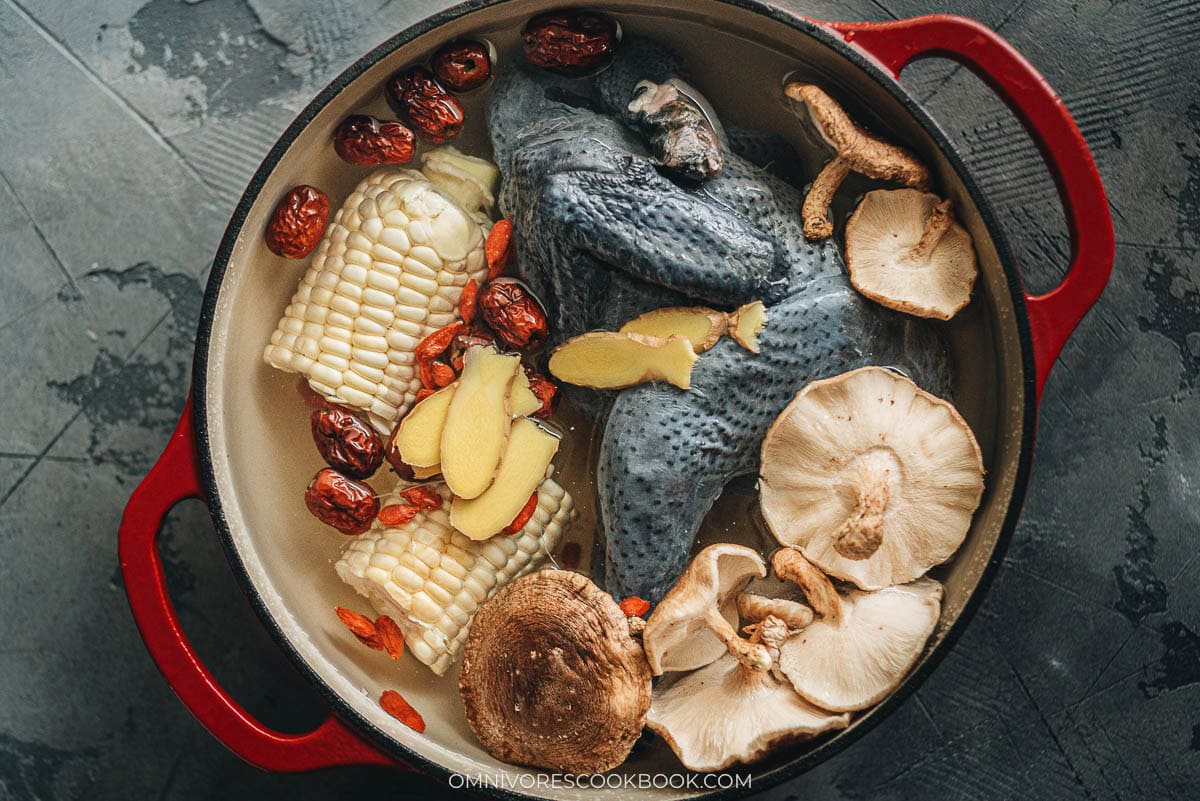
1. Drop everything in cold: Place the silkie chicken in a small Dutch oven or heavy pot just large enough to hold it, then add the jujubes, shiitake mushrooms, goji berries, corn, and ginger around the bird. Pour 6 cups of cold water over the top. It is fine if some of the chicken sits above the water line, the simmer takes care of it.
2. Bring to a boil: Set the pot over medium-high heat with the lid off and bring the water up to a full boil. As it heats, brown foam will rise to the surface, which is the protein from the chicken coagulating, not anything wrong with the bird.
3. Skim the foam: Drop the heat to medium-low so the soup is at a slow simmer, then skim the surface with a fine sieve to remove all the brown bits. Keep skimming for about 10 minutes, until the broth turns from cloudy to clear.
4. Cover and simmer low: Put the lid on and drop the heat to low, so the broth is on a low simmer. Simmer for at least 1 hour and 30 minutes, and up to 2 hours and 30 minutes for the most tender chicken. I usually go the full 2 hours.
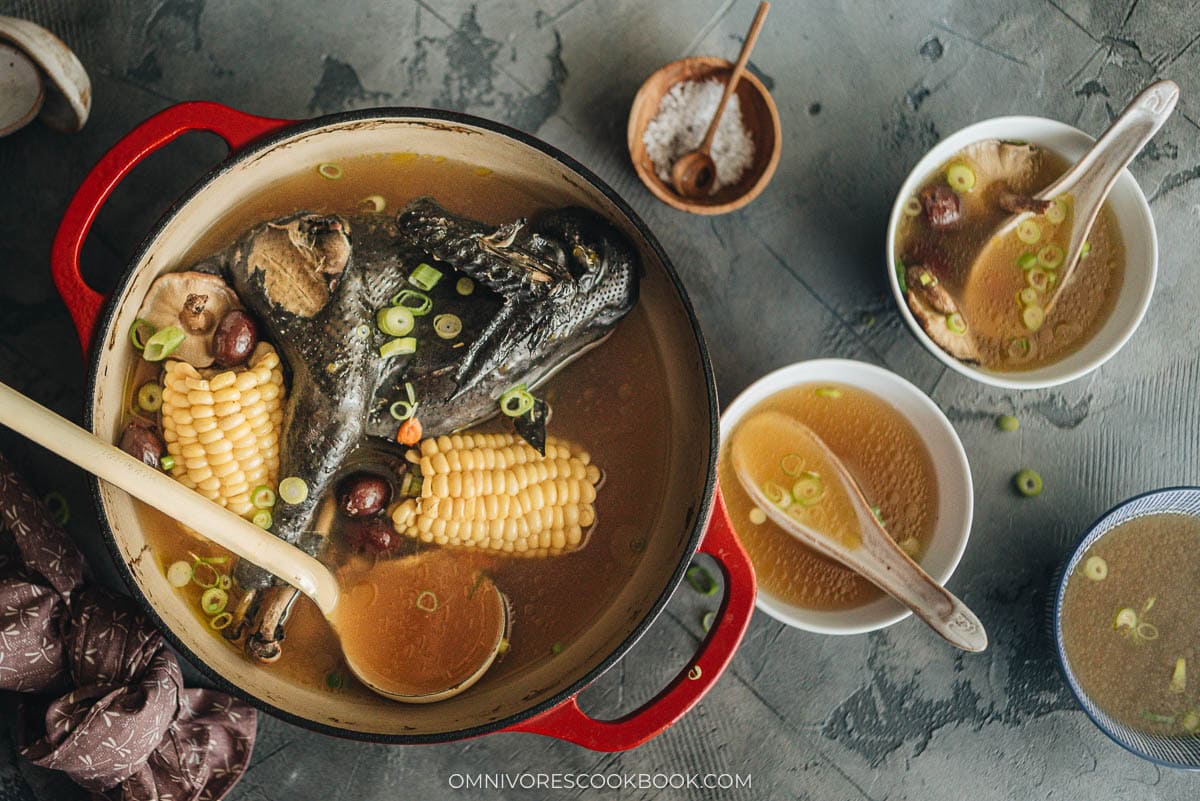
5. Check the chicken: The chicken is done when a leg pulls cleanly off the body with very little resistance. If the leg is still firmly attached, give the soup another 20 to 30 minutes and check again. This is the same test my mom uses, and it is how I know the meat will fall off the bone on the plate.
6. Serve two ways or one: Ladle the broth straight from the pot into small bowls for sipping, then lift the chicken onto a serving plate and break it into pieces with chopsticks or tongs. I serve the broth and the chicken side by side with a small bowl of dipping sauce for the meat, but you can also serve everything together in deep bowls if you prefer a one-bowl meal.
My Cooking Tips
Skim hard in the first 10 minutes: The brown foam that rises during the first boil is what makes the broth look muddy if you let it stay. I sit at the stove for those 10 minutes with a fine mesh sieve and pull off every bit of foam as it comes up. After that the soup is hands-off for the next two hours.
Use a Dutch oven if you have one: A heavy cast iron Dutch oven holds the low simmer steadier than a regular pot and gives me a deeper-tasting broth. A regular soup pot works too, just keep the heat a touch lower so the simmer does not turn into a boil under the lid.
Pull the chicken leg to test doneness: Do not chase a time, chase the texture. Lift a leg with chopsticks or tongs and give it a light pull, and if it comes away cleanly the chicken is done. If there is still resistance, give it more time.
Skip the salt at the stove: Silkie chicken soup is a clean tonic broth and salt belongs at the table, not in the pot. I let each person season their own bowl with a small pinch of salt at the table, which keeps the broth flexible for adults and lets me serve a plain bowl for my young son.
Save a jar of the broth for later: The broth keeps and freezes very well, and a jar of homemade silkie chicken broth in the freezer is the best thing to pull out when someone in the house gets a cold. I freeze it in 2-cup jars so I always have one easy portion ready to thaw.
How to Serve
This dish is great on cold days, when someone is recovering from an illness, and after the first week of postpartum care for friends and family. I serve the broth in small bowls first, with a steaming bowl of plain rice and a quick stir fried spinach on the side. The chicken comes out on a separate plate broken into pieces, with a small bowl of northern-style dipping sauce I make from soy sauce, black vinegar, sliced ginger, and a spoonful of sesame oil for dipping the meat.
For a family dinner that needs more on the table, I serve silkie chicken soup as the broth course at the start of the meal, then move into a few warm dishes around steamed rice. If you want to learn more about Chinese soups, check out this simple and quick Chinese egg drop soup, and this hearty Chinese winter melon soup with meatballs.
Frequently Ask Questions
Can I make this in an Instant Pot or pressure cooker?
Yes, and I have done it on busy weeks. I reduce the water to 4 cups, and pressure cook on high for 45 minutes with a natural release, which gives me almost the same tender meat and clean broth as the stovetop method. The only thing I lose is the slow build of flavor from the long open simmer, which I usually accept on a Tuesday.
What dipping sauce do you serve with the chicken?
My everyday dipping sauce is a northern-style mix of soy sauce, Chinese black vinegar, and a small drizzle of sesame oil whisked together in a small bowl. It is the same sauce I use for dumplings and it works just as well with the silkie meat. A drop of chili oil is a good optional addition for anyone who wants heat at the table.
How long does silkie chicken soup keep in the fridge?
I keep the soup with the chicken still in it in a sealed container and use it up within 4 days in the fridge. The broth freezes very well on its own, and I freeze it in 2-cup jars for up to 3 months so I always have a small batch ready when someone gets sick.
Want to Save This Recipe?
Enter your email below & we’ll send it to your inbox. Plus get great new recipes from us every week!
Silkie Chicken Soup (乌鸡汤)
Ingredients
- 1 (1.5 lbs / 680 g) silkie chicken
- 1/3 cup dried jujubes (Optional)
- 4 dried shiitake mushrooms
- 1 tablespoon Goji berries
- 1 small corn on the cob
- 1 thumb ginger
- 6 cups water
Instructions
- Combine everything in a small dutch oven that’s just large enough to hold the chicken. Add water to cover the chicken. It’s OK if some of the chicken is above the water.
- Cook over medium-high heat until bringing to a boil. Turn to medium low heat. Skim the surface with a fine sieve to remove the brown bits, for 10 minutes or so, until the chicken broth is clear. Simmer covered for at least 1.5 hours, up to 2 to 2.5 hours, until the chicken turns very tender and almost falls off the bones.
- All the ingredients in the soup are edible. But for a clear broth, you could remove the chicken and drain the soup before serving.
- The chicken meat will be quite tasty as well. I prefer to serve it with some homemade dipping sauce.
Nutrition

Did you make this recipe?
I’d love to hear how it turned out for you! Please take a moment to leave a 5-star rating ⭐️ and share your thoughts in the comments further down the page. It really helps others discover the recipe too.
Shauna Bremenkamp
My sister-in-law just survived stomach cancer a couple of months ago and still has a feeding tube. I’d like to make this soup for her as she slowly transitions to solid food. Would this be safe food for her, as in, it wouldn’t mess up her chi or something? She’s not allergic to any kinds of foods. She’s having a lot of trouble putting weight back on and she suffers from chronic nausea from the residual chemo. I’m hoping this nutrient-dense soup will help her. My Chinese dad suggested I make it in large batches and freeze it for her since she lives an hour away; it would be hard to give her a regular supply otherwise. Thank you!
Maggie Zhu
I think this should will be fine. Silkie chicken is one of the most nutritious foods and it is often used to help patient recovering.
Schan
My go to recipe for silkie chicken! Always a hit with the kids 🙂
Blue
This sounds really good I can’t wait to make it. my only question is do you remove the head in feet first?
Maggie Zhu
My chicken did not came with heat and feet but you can totally include both in the soup.
Dan
This looks like something I’ve had at a restaurant. Wilm try to make it today or tomorrow!
Wendy
HI Maggie,
What kind of dipping sauce do you use for the silkie chicken? Can you post a recipe?
Thanks,
Wendy
Maggie
Hi Wendy, I have a few dipping sauce recipes here: https://omnivorescookbook.com/dumpling-sauce/
I personally always use the northern style sauce (the 1st one) because it’s so easy to make, and I love the second one as well!
James Card
If you overdo the chicken and boil for about 3 hours? Please give me advice on how you determine that the chicken is ready. Thank!
Maggie
The chicken is ready when it turns tender and you can easily pull apart the chicken leg from the body.
Kailey
I love this soup so much! My first time making it and turned out amazing! Definitely tasted better the second day. I love all your recipes on here thank you!!
danielle
This is so simple and sounds like the perfect cooler weather comfort food. I’ve never cooked with a silkie chicken, but have seen them many times int he market. I need to take the plunge and buy one for this recipe!
Healthy Kitchen 101
So healthy!!! I’ve known the silkie chicken full of so many nutritious benefits for a long time but never really tried it. I think first I’m going to order one in a Chinese restaurant and see how it fits me xo
– Natalie
Lilian
Hi Maggie,
I love all your recipes! Do you have more recipes that are used for women postpartum? My due date is in two weeks and hope to see more Chinese soup/dishes recipes that are traditionally used for women right after giving birth. Thank you!!
Lilian