
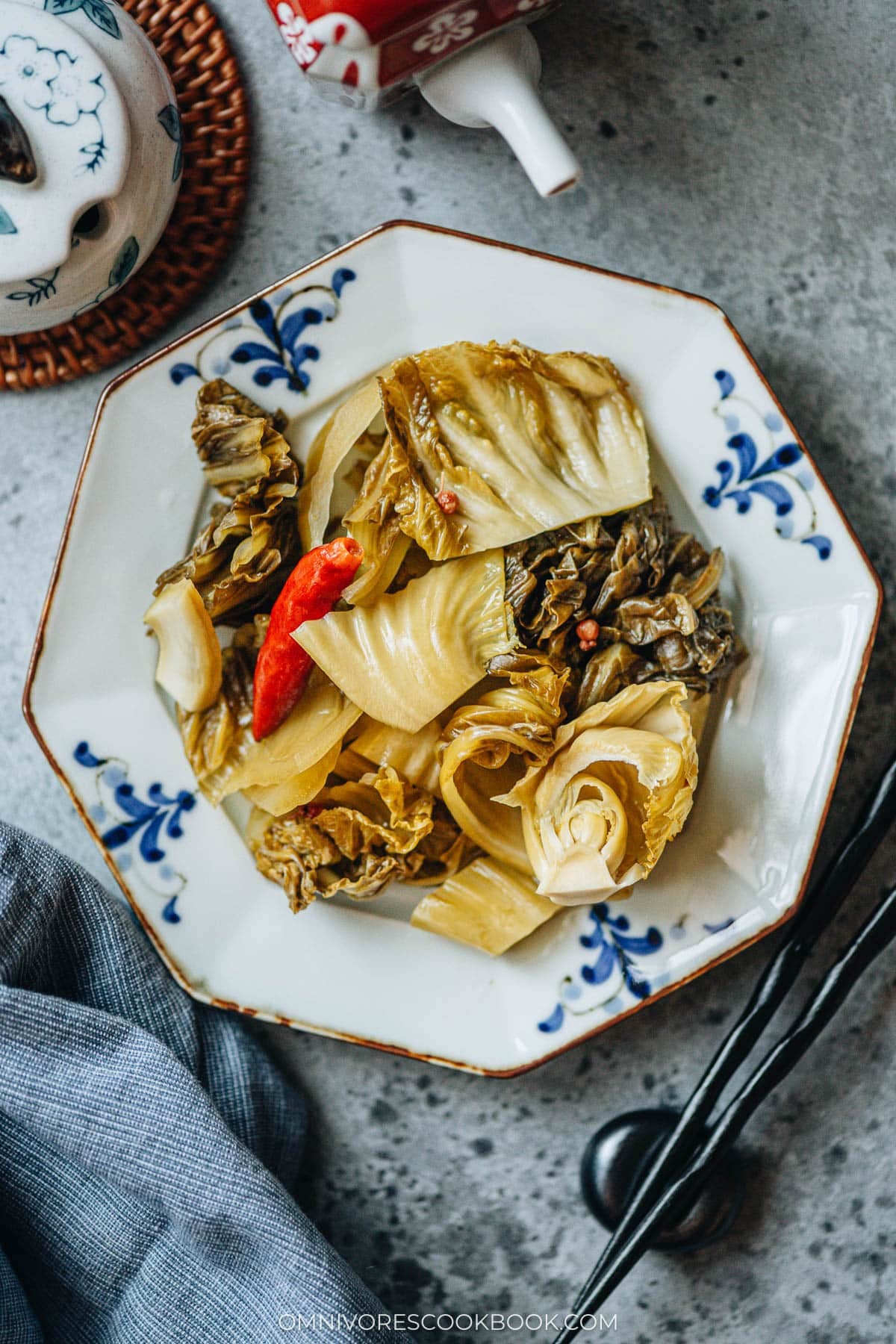
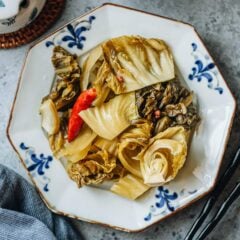
Sichuan pickled mustard greens are a staple in southern Chinese cooking, where they’re used to add a tangy, savory flavor to stir-fries, soups, and noodle dishes. Unlike quick pickles made with vinegar, these greens develop their signature sourness through natural fermentation, which creates a more complex flavor. The process is surprisingly simple and requires very little hands-on work. Once you’ve prepared the brine and packed the vegetables into a jar, all you need is a little patience while the fermentation works its magic.
I first started using pickled mustard greens when making Suan Cai Yu, a Sichuan fish dish featuring tender fish in a tangy, savory broth. I often found the store-bought pickles too salty and is full of preservatives, so I decided to make my own with a more balanced flavor that I could use generously in cooking. What surprised me most was how fragrant the homemade version turned out. The ginger, dried chilies, and Sichuan peppercorns infuse the brine with a wonderful aroma that I never experienced with store-bought pickles.
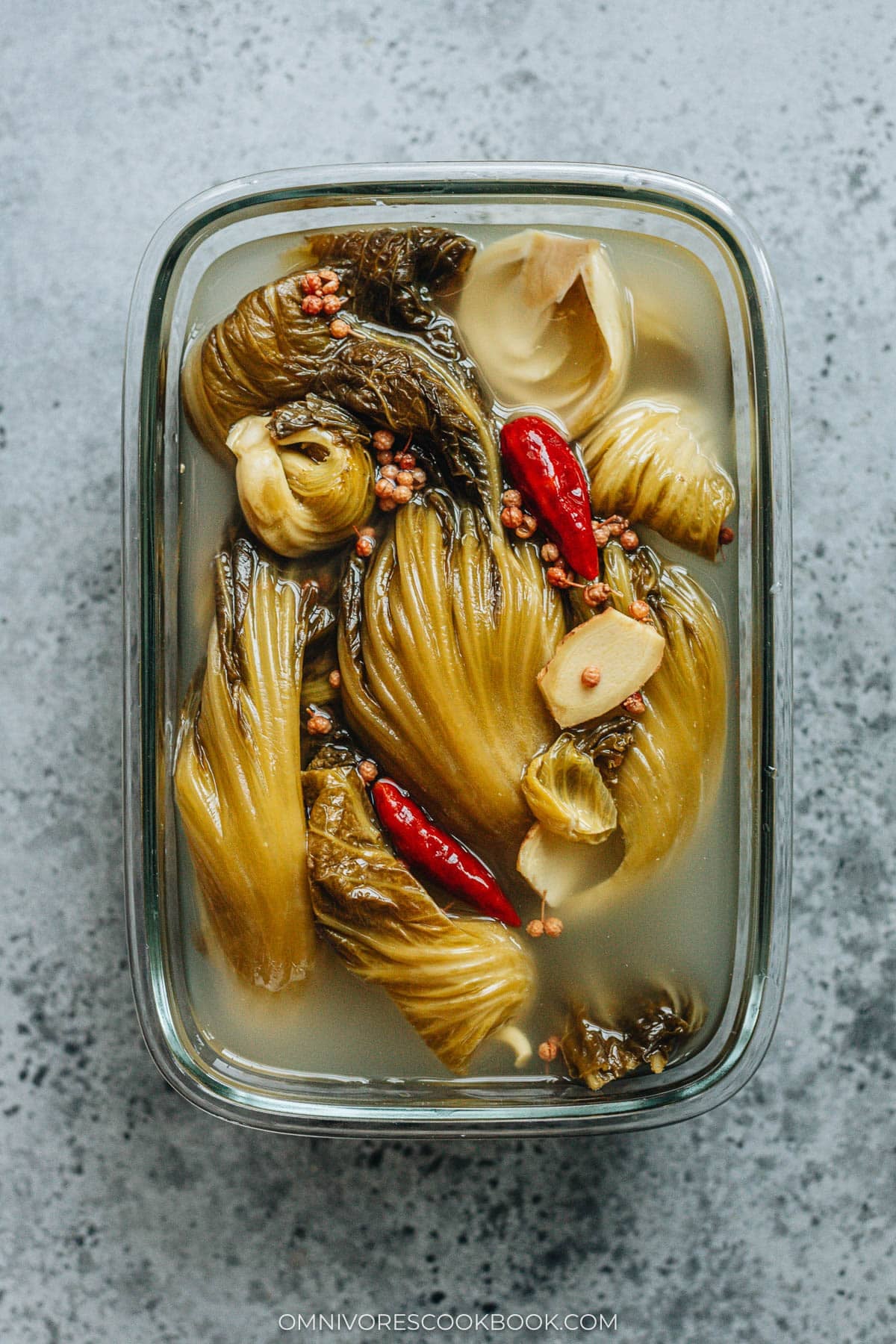
I pack the mustard greens into a jar, cover them with a salt brine, and let them ferment for about two weeks, until the brine turns yellow-green and develops a pleasant sourness. The greens become savory and tangy without the overpowering saltiness of the store-bought kind. They’re wonderful for cooking, but also delicious served as a simple pickle alongside rice or congee. I highly recommend following the recipe carefully and giving the greens enough time to ferment. You’ll be rewarded with a flavorful pickle that’s good enough to eat straight from the jar.
Ingredients
What goes into the jar is almost all pantry: fresh mustard greens are the one thing I shop for, and the rest is salt, water, and a few aromatics I keep on the shelf for Sichuan cooking.
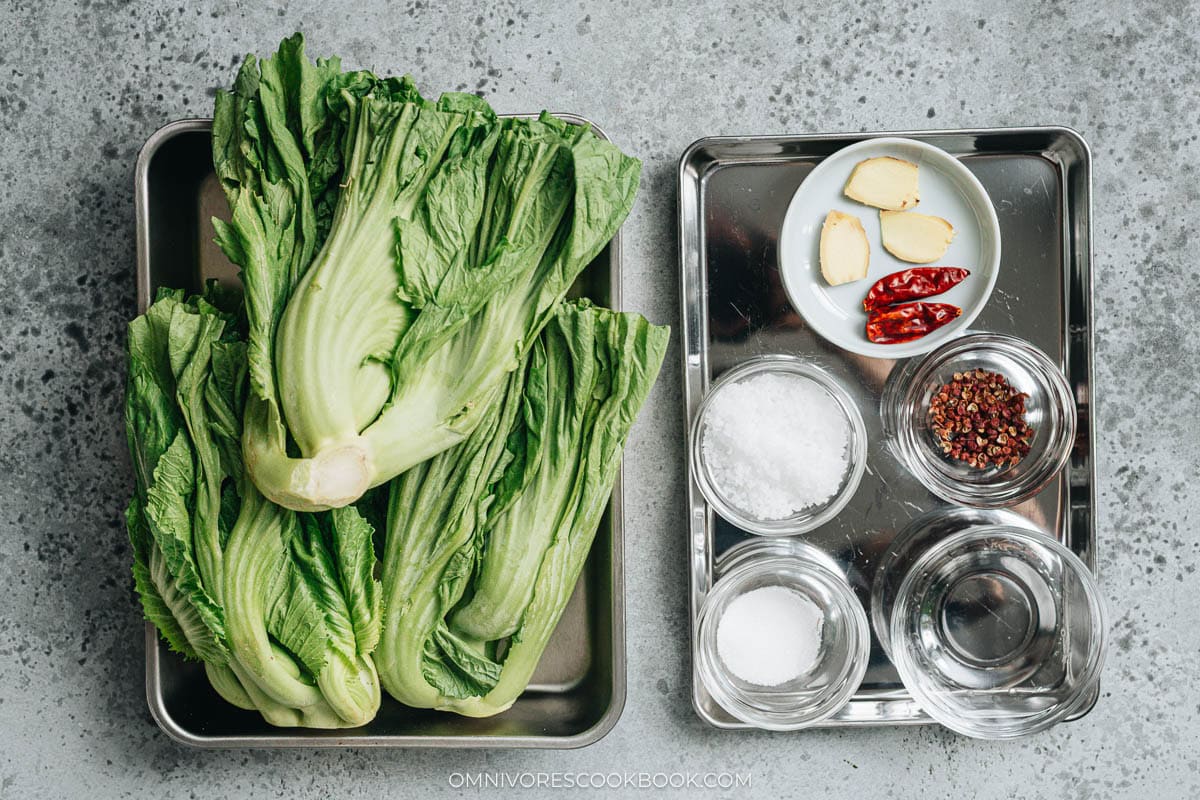
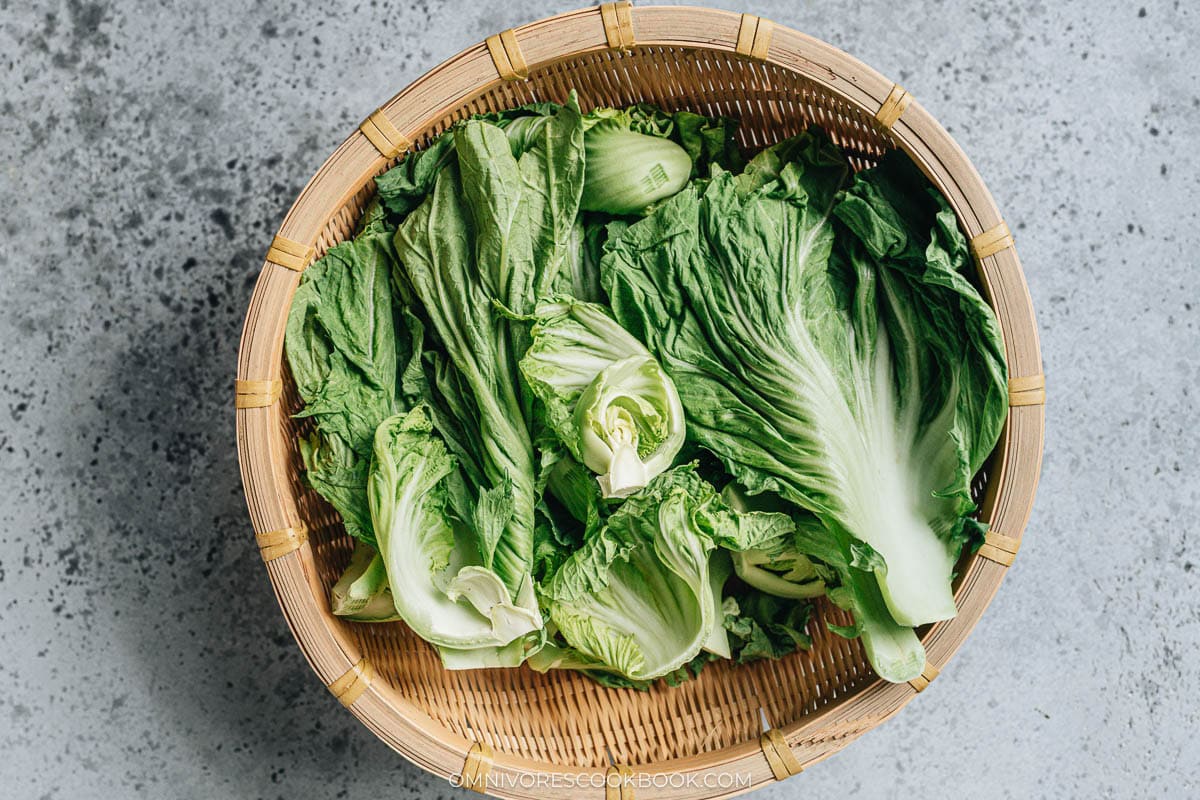
Mustard greens: I start with fresh mustard greens and cut away the tough ends. I split the outer leaves from the core and halve the core so the brine gets into every fold.
Salt and water: I use pickling salt, kosher salt, or any non iodized salt with filtered water or boiled and cooled water. The salt concentration is what keeps the ferment safe, so I weigh it instead of guessing.
Aromatics: I add ginger, dried Chinese chili peppers, and Sichuan peppercorns to scent the brine. A little sugar goes in too, to give the lactic acid bacteria something to feed on.
Baijiu: I stir in a spoonful of baijiu (a strong Chinese liquor), and gin or vodka both stand in if I am out. The small amount of alcohol discourages unwanted growth and adds its own fragrance, though the salt ratio and conditions still do the real protecting.
Naturally fermented pickles vs. quick pickles
Sichuan pickled mustard greens are naturally fermented through lactic acid fermentation, which is what sets them apart from a quick pickle. A quick pickle gets its sourness from vinegar poured over the vegetables, while here the beneficial lactic acid bacteria slowly convert the sugars in the greens into lactic acid over days. That gradual acidity is why a ferment tastes rounder and more savory than a vinegar pickle.
What type of jar should you use?
I use a 1.5-liter glass pickling jar for this recipe. You don’t need a special Chinese fermentation jar, although the traditional water-sealed type works particularly well because it allows fermentation gases to escape while keeping outside air out.
A large Mason jar is also a great option. I recommend using a fermentation lid with an airlock, which allows gas to escape naturally. If you’re using a regular screw-top lid, you’ll need to briefly loosen it as needed to release the pressure during fermentation.
Whichever jar you choose, make sure it’s thoroughly cleaned before use. It’s also important to keep the mustard greens completely submerged in the brine to prevent mold from developing. A glass fermentation weight works well for this purpose.
How to Make
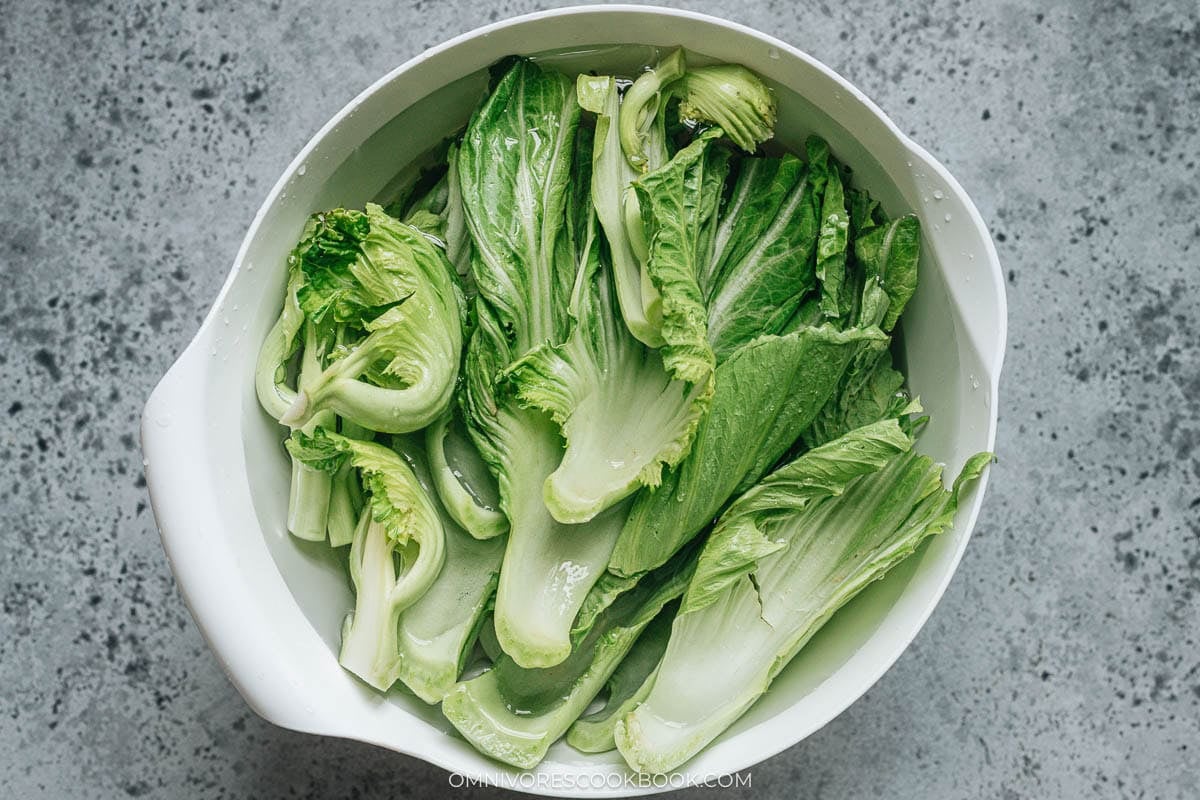
1. Prepare the mustard greens: Trim and discard the tough ends. Separate the outer leaves and cut the core in half. Soak everything in cold tap water for 3 to 5 minutes, then rinse thoroughly under cold running water to wash off any dirt.
I prefer to keep the mustard greens whole rather than slicing them before fermentation. The larger pieces retain their crisp texture better and stay crunchy for longer during storage. You can always chop the pickled greens into smaller pieces when you’re ready to use them.
2. Wilt the greens: Lay out the mustard greens in a single layer in a sunny spot and let them air dry for a few hours, until the leaves become slightly limp. If you don’t have a sunny spot, let them air dry overnight.
I like to use a hanging laundry drying rack with clips (the kind used for drying socks) to hang the greens individually, which allows air to circulate around them and helps them wilt evenly.
3. Prepare the jar: Wash the glass jar with soap and water, then rinse it carefully with boiling water. Set it aside to drain and cool.
4. Salt the greens: Transfer the greens to a large clean bowl. Sprinkle the salt over them and rub it in so it coats the leaves.
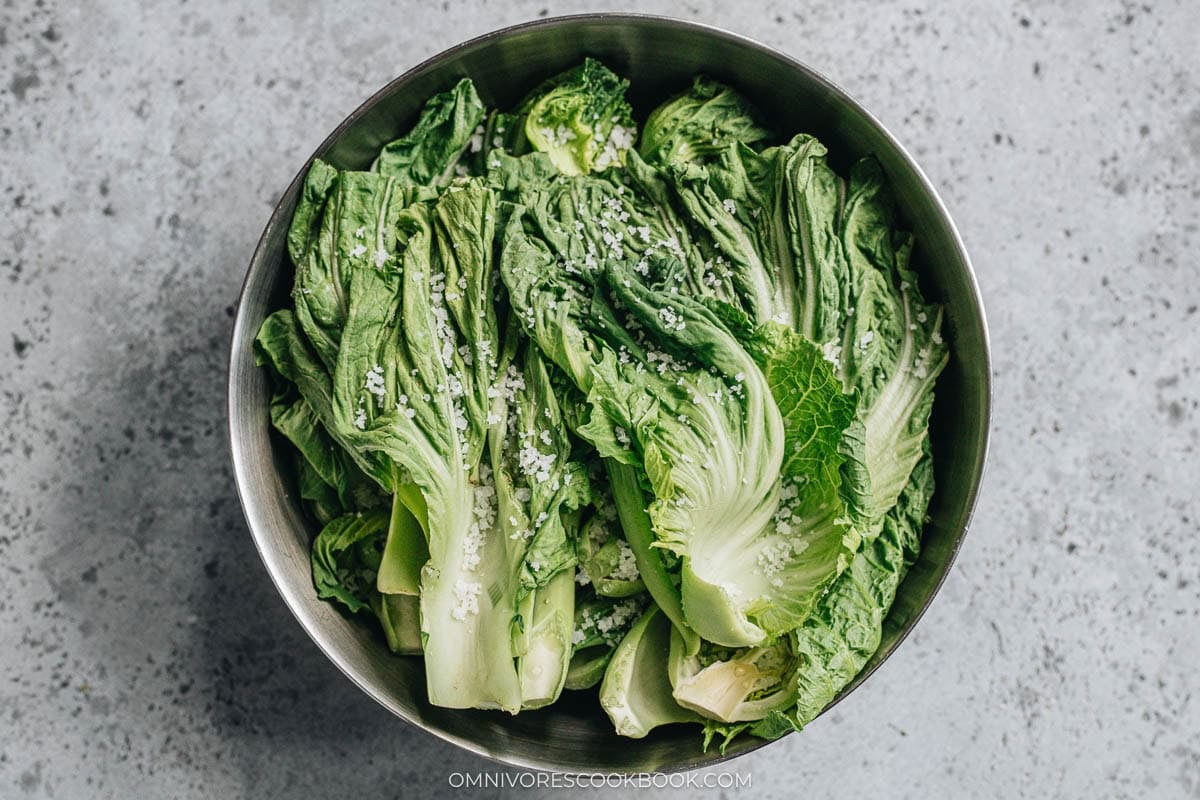
5. Pack the jar: Fold the leafy portions and pack them tightly into the jar, reserving one large leaf for the top. After a few leaves go in, add the ginger, dried chilies, Sichuan peppercorns, and sugar. Keep packing the rest of the greens, pour in any salt left in the bowl, and lay the reserved leaf on top to cover everything.
6. Add the brine: Pour in the filtered water until the greens are fully submerged. Add the baijiu. Use a fermentation weight if you need one to hold everything under the liquid.
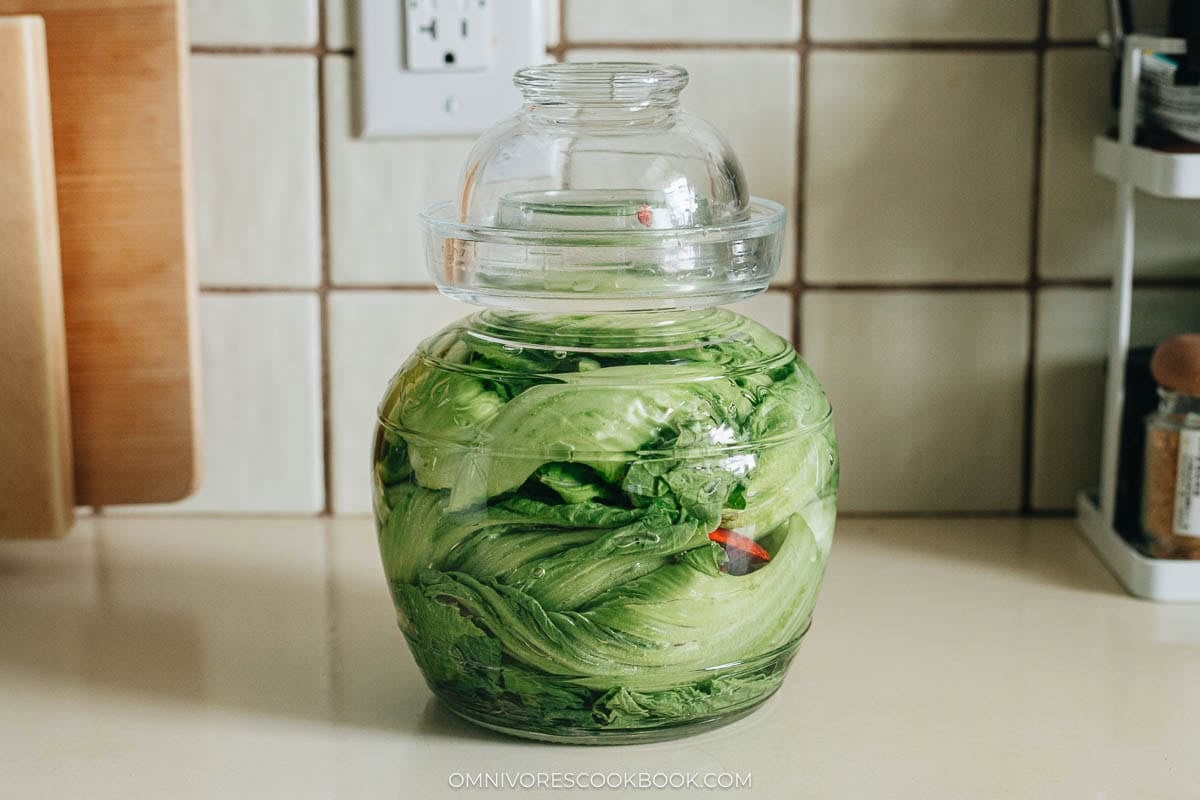
7. Seal the jar: Close the jar with an airlock lid if you have a fermentation jar, or use a fermentation safe mason jar lid that lets gas escape.
8. Ferment: Set the jar in a cool, shaded spot away from direct sunlight and let it ferment for about 2 weeks. The brine will go yellow green and take on a sour smell, and the greens will taste noticeably sour as it progresses.
9. Store: Once the ferment tastes the way you want, move the jar to the refrigerator to slow it down. The sourness keeps developing slowly in cold storage.
My Cooking Tips
Measure the salt into the water: I use 40 grams of salt per liter of water, which comes to about 4%. If the brine does not cover the greens, I mix more at the same ratio so the salt concentration stays consistent, because that number is what protects the whole jar.
Watch the thermometer, not the calendar: Fermentation speed rides on room temperature, so I taste instead of counting days. As a general guide, a warm kitchen at 75 to 82°F (24 to 28°C) gets me there in about 5 to 7 days, and a milder room at 68 to 72°F (20 to 22°C) takes about 7 to 12 days. Below 65°F (18°C) it can take 2 weeks or longer.
Keep the greens under the liquid: Any vegetables exposed above the brine are more likely to develop mold. I like to use a reserved large mustard green leaf to cover the vegetables, then place a glass fermentation weight on top to keep everything submerged if needed. This helps protect the greens from exposure to air during fermentation.
How to Use
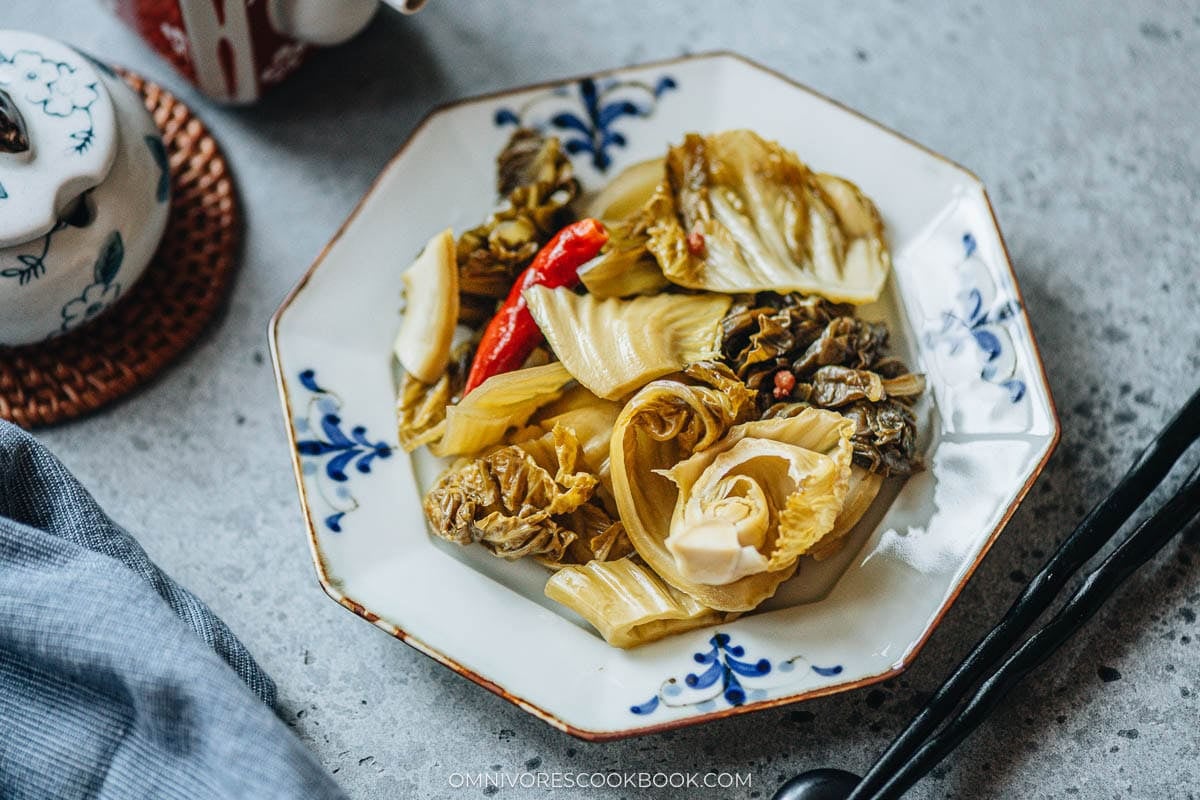
Most of the time I cook with these greens, but I also enjoy eating them plain as a pickle. I chop a small portion and set it beside a bowl of rice or homemade congee. Add some chopped pickled mustard greens to soups, such as my Bok Choy Soup, or use them as a topping for noodle dishes. They add a wonderful tangy, savory flavor that makes a simple dish more satisfying. Since the saltiness and sourness can vary between batches, taste as you cook and adjust the seasoning accordingly.
I love serving these pickled mustard greens as a small appetizer when hosting dinner, or as a simple side dish with rice or congee. Their tangy, savory flavor makes a refreshing contrast to richer dishes. If you enjoy homemade pickles but don’t want to wait for fermentation, try my pickled daikon with carrot, Chinese pickled cucumber, or Chinese pickled cabbage. These are all quick pickles that are easy to prepare and ready to enjoy in much less time.
Frequently Ask Questions
Do I need a dedicated fermentation jar?
A fermentation jar with an airlock makes the process more convenient, but it is not required. A glass jar with a fermentation safe lid, like a mason jar, works as long as you keep the greens submerged and let the fermentation gases escape safely.
Why are my mustard greens not sour after one week?
Fermentation speed depends heavily on temperature and the conditions in your kitchen. My batches usually take at least two weeks to get as sour as I like, so a jar that is still mild after a week is normal in a cool room and just needs more time.
Can I reuse the brine for my next batch?
Yes. The brine from a batch that fermented without any trouble can start your next one, which is the mother brine (老坛水) Chinese cooks rely on for more complex flavor over time. Only reuse brine from a batch with no mold or spoilage, and adjust the salt and water each round since the concentration changes. For beginners, I recommend starting with fresh brine because it’s easier to control the salt ratio and achieve consistent results.
Are these pickles good for gut health?
Naturally fermented vegetables like these Sichuan pickled mustard greens can contain beneficial live bacteria produced during fermentation. Eating fermented foods may help support a healthy gut microbiome, although the specific benefits vary depending on the fermentation process and the bacteria present. While they’re not a guaranteed source of probiotics, these homemade pickles can be a delicious addition to a varied, balanced diet.
Want to Save This Recipe?
Enter your email below & we’ll send it to your inbox. Plus get great new recipes from us every week!
Sichuan Pickled Mustard Greens (四川酸菜)
Ingredients
- 1.5 – 2 lb mustard greens
- 40 g pickling salt (or kosher salt, or non-iodized salt)
- 1 liter filtered water (or boiled and cooled water) (*Footnote 1)
- 2 slices ginger
- 2 dried Chinese chili peppers
- 1 teaspoon Sichuan peppercorns
- 1 teaspoon sugar
- 1 tablespoon baijiu, gin, or vodka
Equipment
- 1 1.5-liter pickling jar (or glass jar)
Instructions
- Trim and discard the tough ends of the mustard greens. Separate the outer leaves and cut the core in half. Soak in cold tap water for 3 to 5 minutes, then rinse thoroughly under cold running water to remove any dirt.
- Spread the mustard greens out in a sunny spot and let them air-dry for a few hours, until the leaves are slightly wilted. If a sunny spot is not available, let them air-dry overnight.
- Thoroughly wash the glass jar with soap and water, then carefully rinse it with boiling water. Set aside to drain and cool.
- Transfer the mustard greens to a large, clean bowl. Sprinkle the salt over the greens and rub gently to distribute it evenly.
- Fold the leafy portions of the mustard greens and pack them tightly into the jar, reserving one large leaf for the top. After packing a few leaves, add the ginger, dried chilies, Sichuan peppercorns, and sugar. Continue packing the remaining greens, then pour in any salt left in the bowl. Place the reserved large leaf on top to cover the greens.
- Pour in the filtered water until the mustard greens are completely submerged. (*Footnote 3) Add the baijiu. Use a fermentation weight if needed to keep everything below the surface of the liquid. Close the jar with an airlock lid if using a fermentation jar, or use a fermentation-compatible mason jar lid that allows gas to escape safely.
- Place the jar in a cool, shaded area, away from direct sunlight. Let the mustard greens ferment for about 2 weeks. The brine will gradually turn yellow-green and develop a pleasantly sour aroma. The greens should become noticeably sour as fermentation progresses. (*Footnote 2)
- Once fermentation is complete, transfer the pickles to the refrigerator to slow further fermentation. The sour flavor will continue to develop gradually during storage.
Notes
- I like to use bottled water for convenience.
- This recipe uses fresh brine rather than an established “mother brine,” so fermentation time depends heavily on room temperature. You can start checking the pickles after a week if your kitchen is warm. I find that mine usually take at least 2 weeks to develop the flavor I like, and sometimes I let them ferment a little longer.
- If the water doesn’t completely cover the mustard greens, prepare additional brine using the same ratio of 40 g salt per 1 liter of water (4%). For example, dissolve 10 g salt in 250 ml water. Add as much as needed to keep the greens fully submerged.
Nutrition

Did you make this recipe?
I’d love to hear how it turned out for you! Please take a moment to leave a 5-star rating ⭐️ and share your thoughts in the comments further down the page. It really helps others discover the recipe too.