
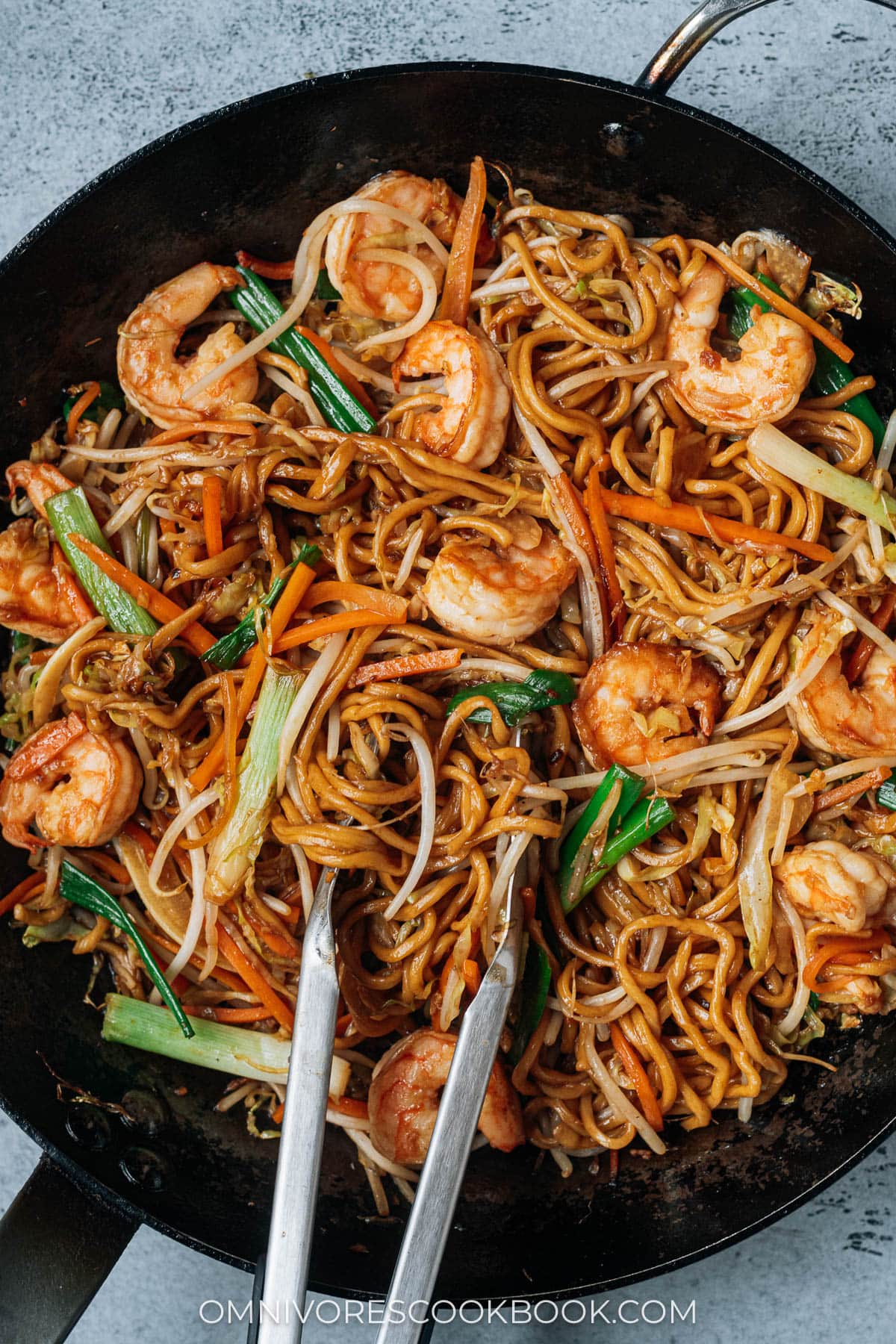
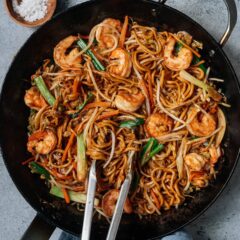
Shrimp lo mein is a Chinese-American classic of stir fried egg noodles tossed with shrimp, crisp vegetables, and a savory umami rich sauce. It sits right next to shrimp chow mein on most takeout menus, and the difference between the two comes down to the noodles. Chow mein uses crispy pan fried noodles, lo mein uses soft thick chewy noodles that absorb the sauce, and I reach for lo mein when I want a saucier bowl. You will find this recipe in good company with other authentic Chinese noodle recipes I love.
I started making this version at home because the takeout shrimp lo mein in my neighborhood is uneven on shrimp quality, and when I cook it myself I can use bigger shrimp and time them so they stay juicy. My husband is the lo mein eater in our house, he goes for the saucy noodle dishes over the dry ones, and a hot bowl of this on a weeknight makes him happy in a way the takeout box does not.
I have to admit that my recipe stays close to the restaurant order. Marinate the shrimp in cornstarch and Shaoxing wine while you mix the sauce, sear the shrimp in a hot pan and pull them out, stir fry the aromatics and vegetables, then toss the noodles back in with the sauce and the cooked shrimp at the end. It takes me only 30 minutes from cutting board to plate, and most of that is mise en place. This is such an easy and delicious homemade meal that I highly recommend sharing it with your loved ones.
Ingredients
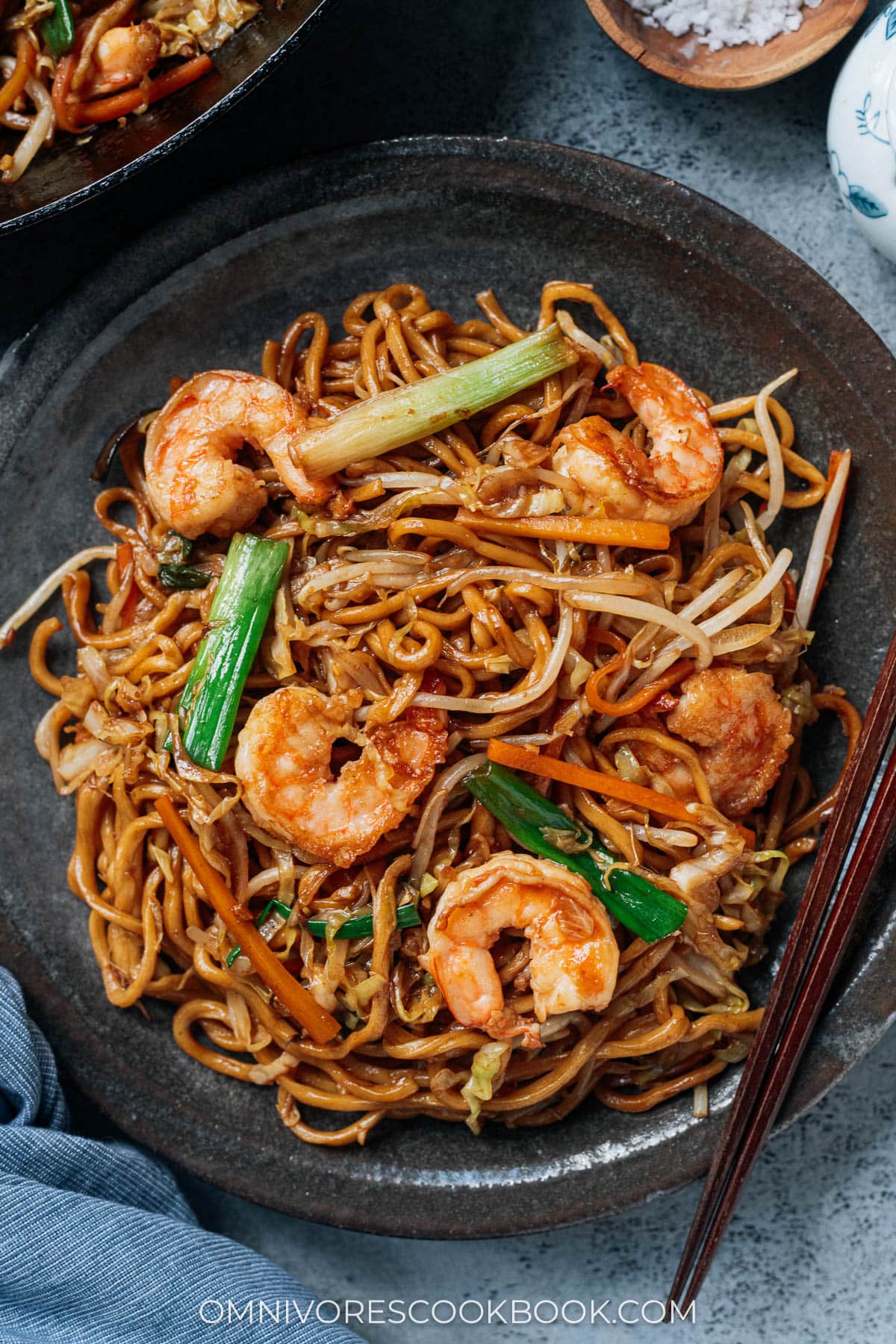
These are the ingredients I use to make this easy shrimp lo mein recipe:
Shrimp and marinade: Peeled and deveined shrimp combined with Shaoxing wine, cornstarch, and a pinch of salt. The cornstarch is the key piece here, it forms a thin coating on the shrimp that traps moisture and keeps the shrimp juicy through the high heat sear.
The sauce: Chicken broth, oyster sauce, Shaoxing wine, dark soy sauce, sesame oil, sugar, and salt whisked together in a bowl. The dark soy is what gives lo mein its restaurant style brown color, and the chicken broth thins the sauce just enough that it coats the noodles.
Aromatics and vegetables: Minced ginger and garlic, plus carrot julienned thin, cabbage thinly sliced (or coleslaw mix as a shortcut), green onions cut into 2 inch pieces with the whites and greens separated, and bean sprouts. The whites go in early with the aromatics, the greens go in at the very end so they stay crisp. I have used napa cabbage, baby bok choy, bell pepper, and snow peas in place of the cabbage and they all work.
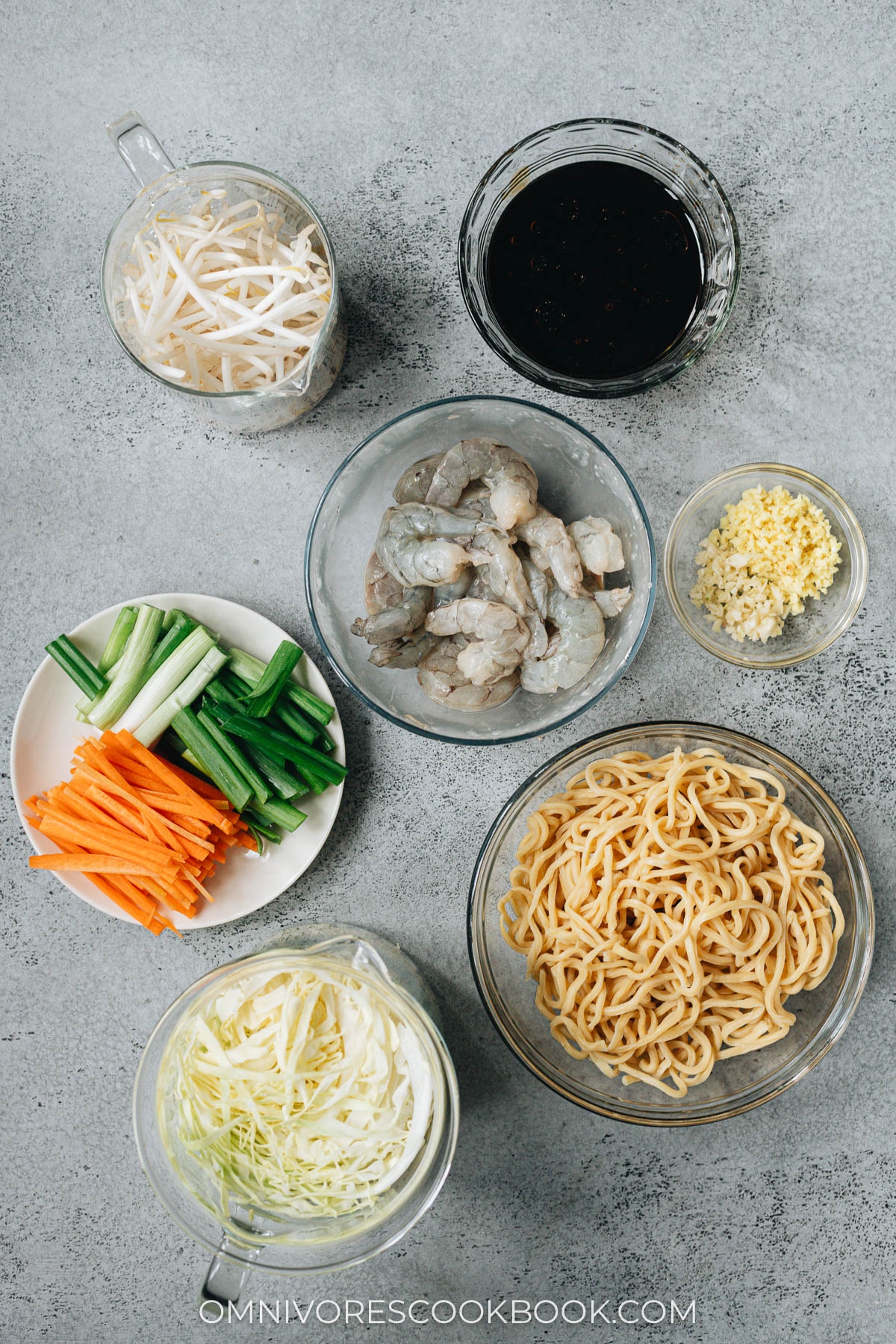
Noodles: My first choice is fresh lo mein noodles from a Chinese market or large Asian market like H Mart. They are sold refrigerated or frozen, they cook in about 1 minute, and they have the right thick chewy texture.
How to Make
1. Cook the noodles: Bring a large pot of water to a boil. If using fresh lo mein noodles, boil for 1 minute total until al dente. If using dried noodles, cook them according to the package instructions minus 1 minute. Drain, rinse with cold tap water to stop the cooking, drain again, and set aside.
2. Marinate the shrimp: Combine the shrimp with the Shaoxing wine, cornstarch, and salt in a medium bowl. Mix until each shrimp is coated in a thin layer and let the bowl sit for 10 minutes while you prep the rest.
3. Mix the sauce: Whisk the chicken broth, oyster sauce, Shaoxing wine, dark soy sauce, sesame oil, sugar, and salt together in a small bowl.
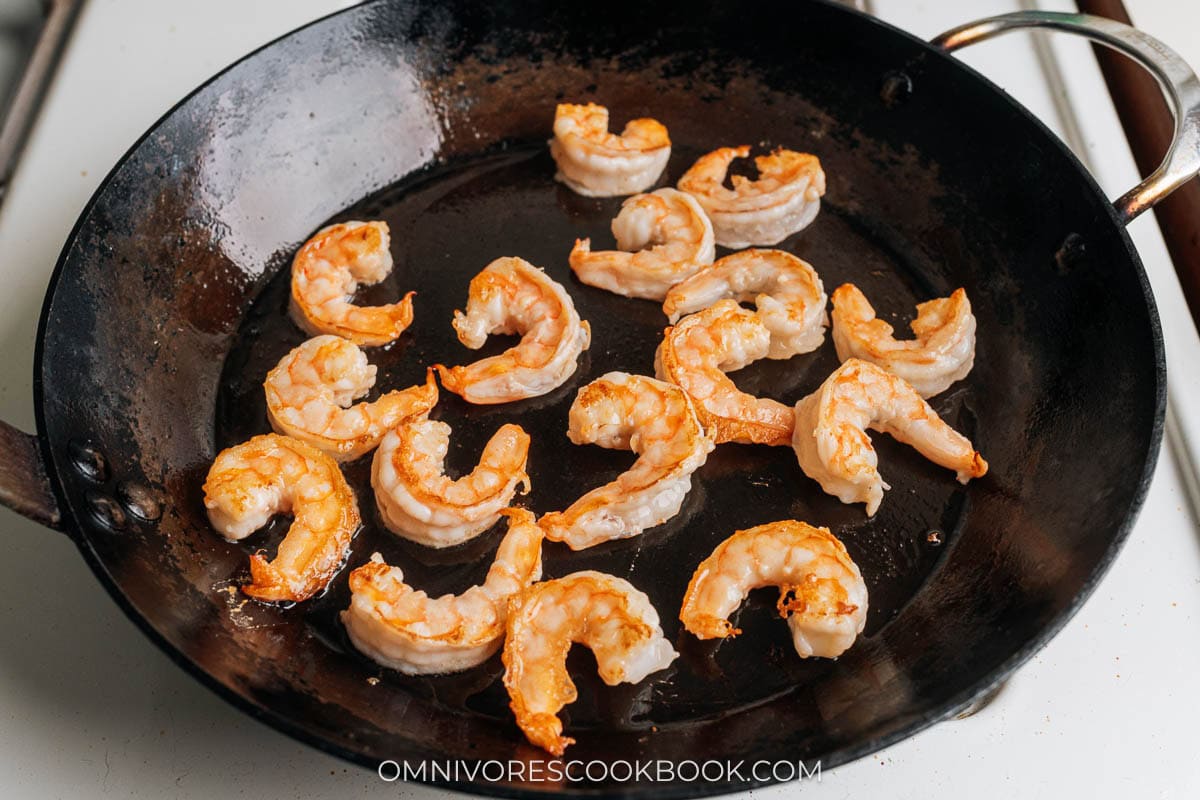
4. Sear the shrimp: Heat 1 tablespoon of peanut oil in a large nonstick skillet over medium high heat until the oil shimmers. Arrange the shrimp in a single layer in the pan and let them cook undisturbed for 30 to 45 seconds, until the bottom turns slightly golden. Flip and cook the other side for another 30 to 45 seconds, stirring occasionally, until the shrimp is just cooked through. Transfer the shrimp to a plate.
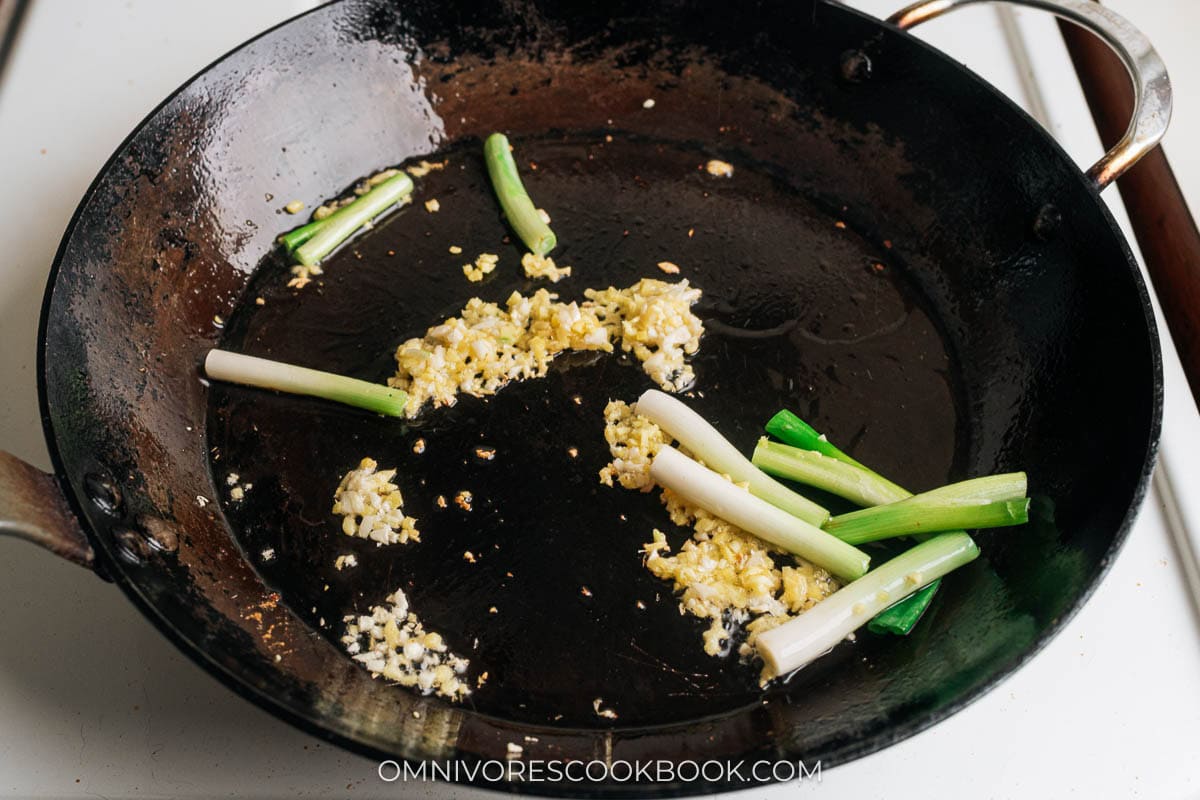
5. Cook the aromatics: Add the remaining 2 tablespoons of peanut oil to the same skillet, then add the ginger, garlic, and green onion whites.
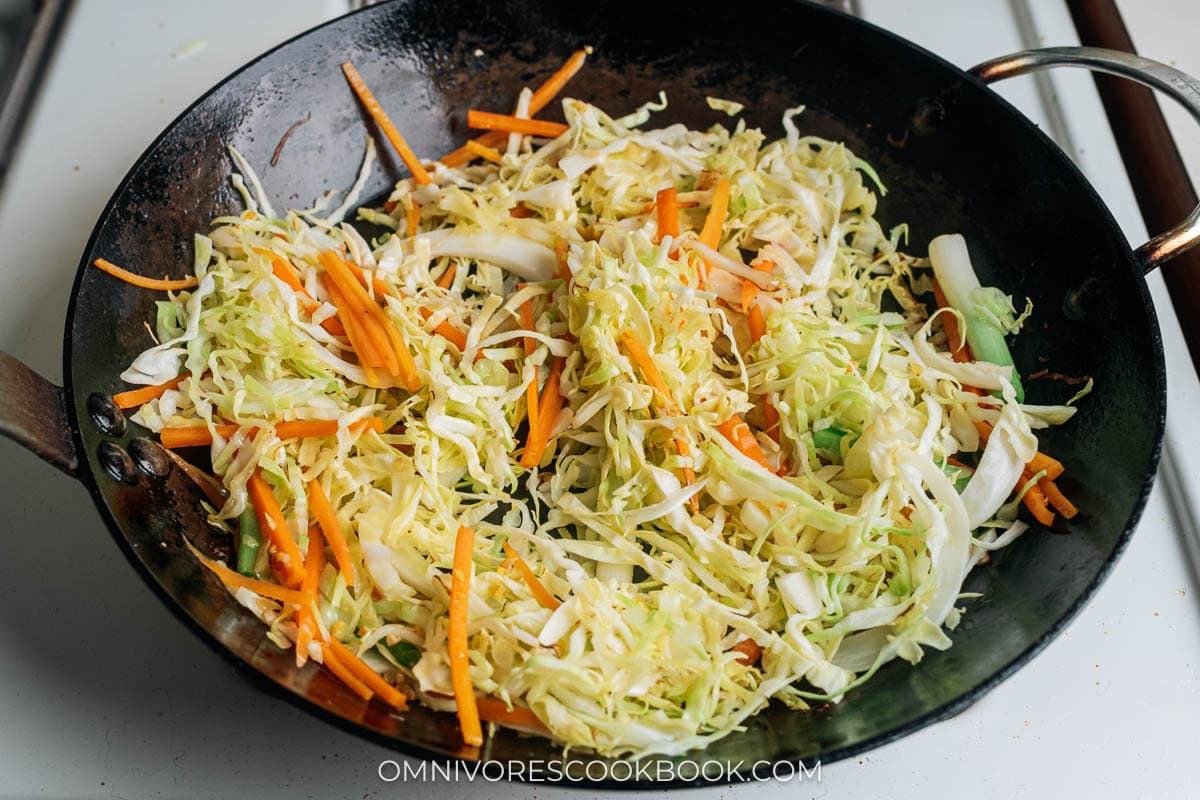
6. Add the veggies: Stir for 10 to 15 seconds until fragrant, then add the carrot and cabbage. Stir fry for about 1 minute, just until the vegetables start to soften at the edges. The vegetables should still have some bite at this point because they will keep cooking once the sauce goes in.
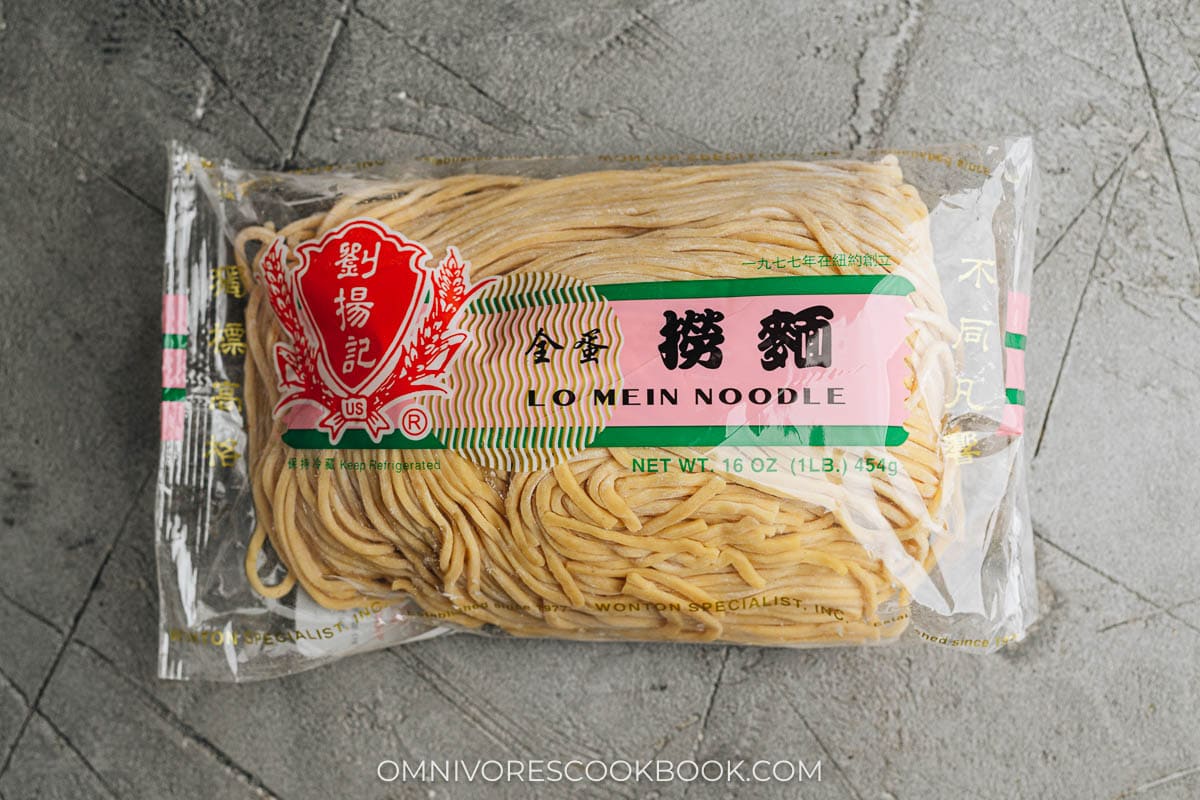
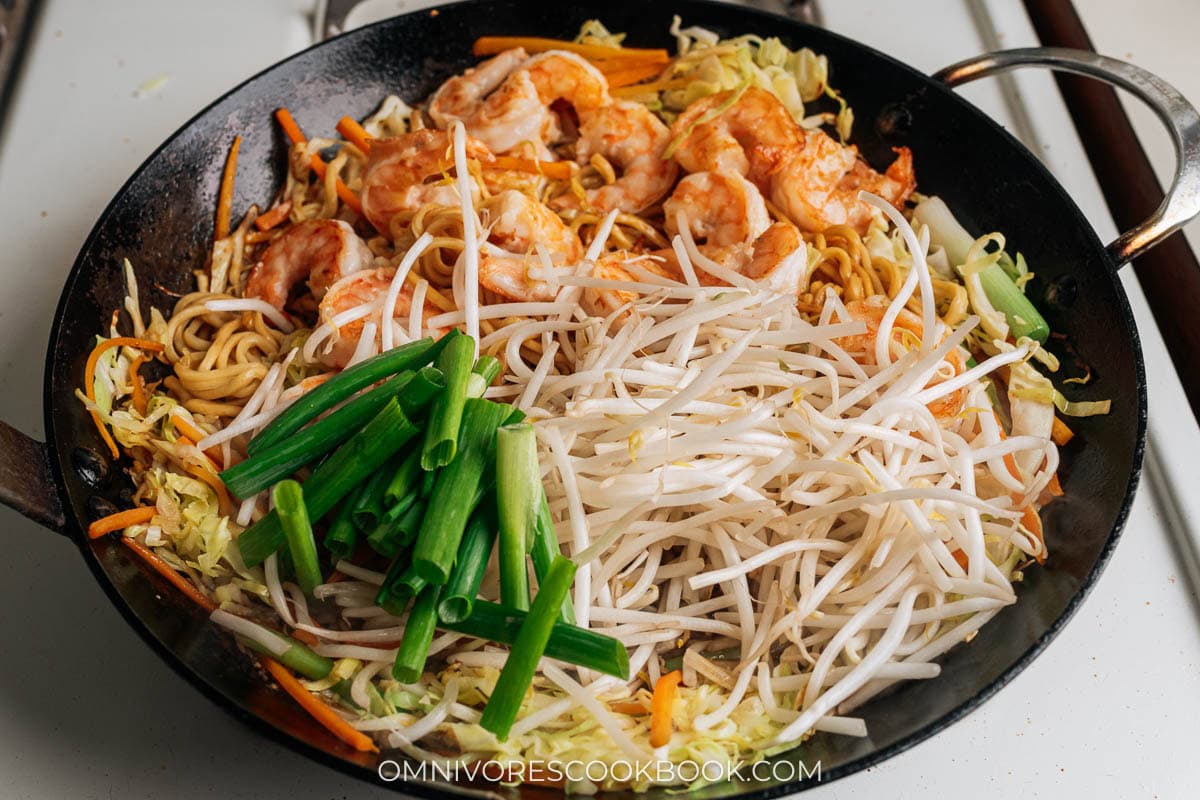
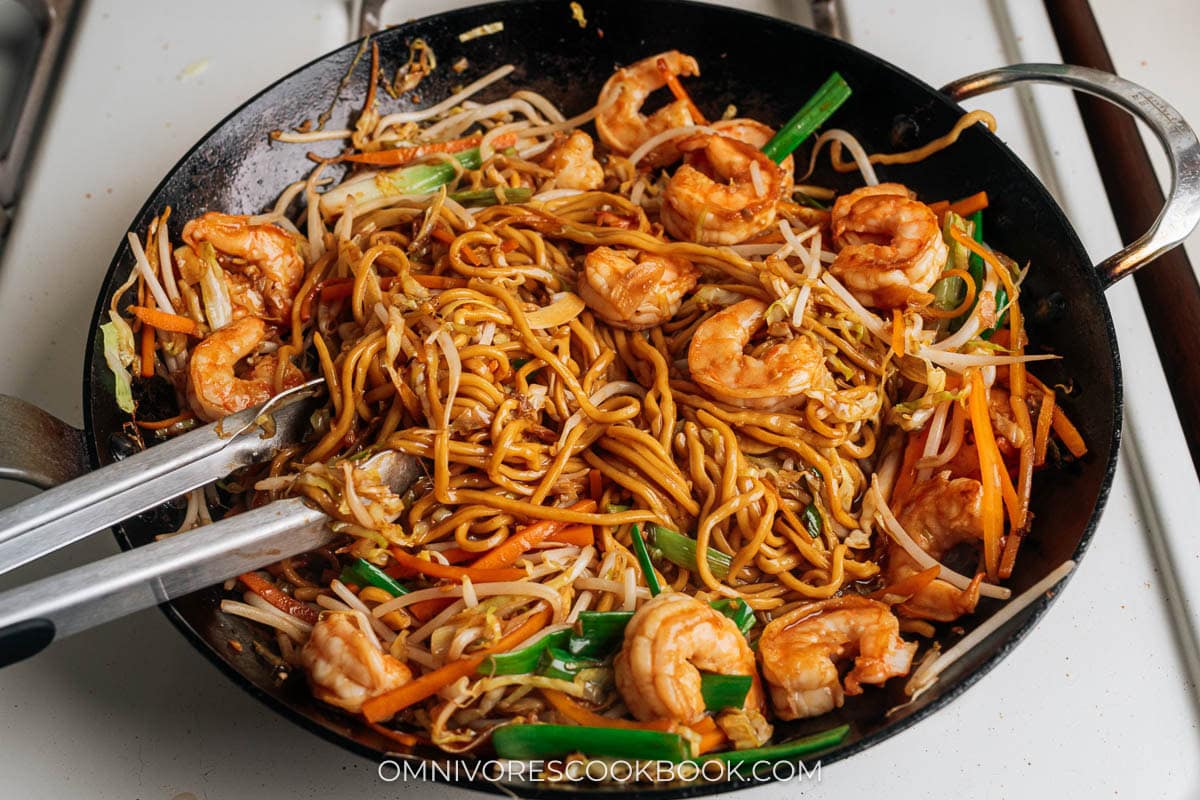
7. Add the noodles and sauce: Add the cooked noodles to the pan and pour the sauce over the top. Toss a few times with tongs or chopsticks to coat the noodles in the sauce and bring everything together. The dark soy color will start to color the noodles as you toss.
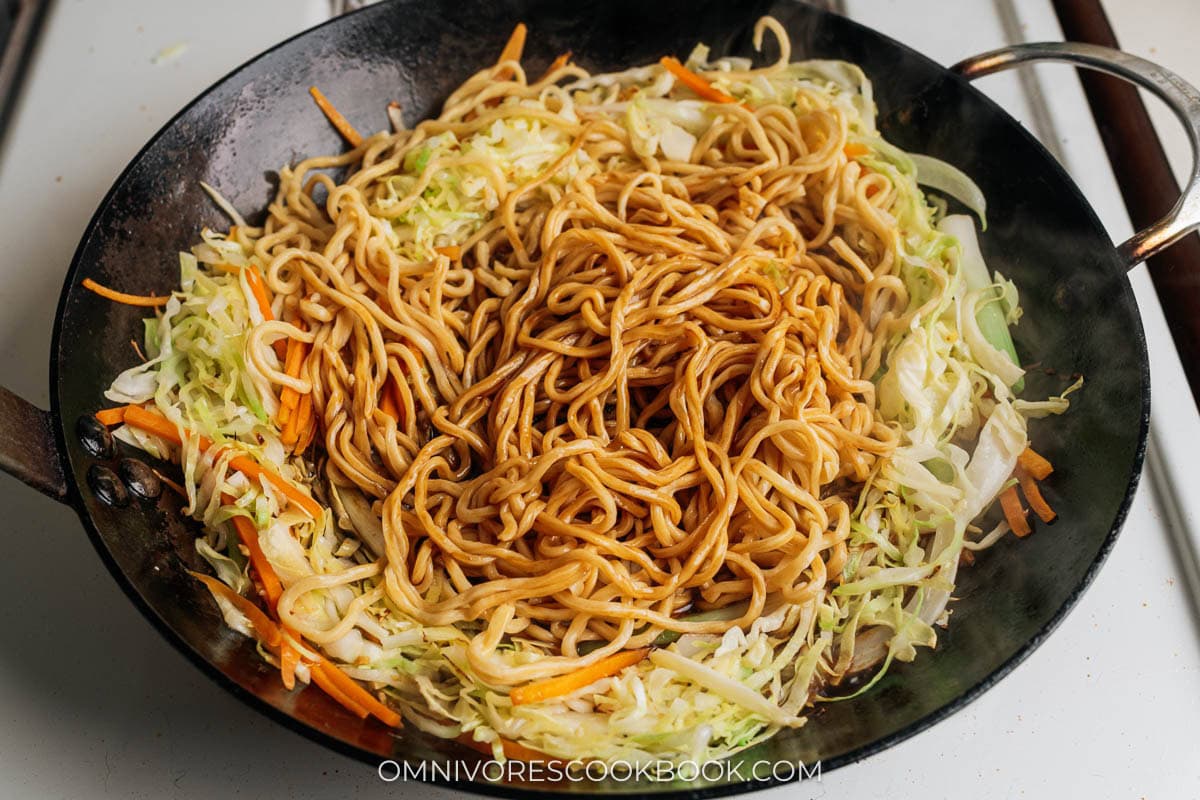
8. Finish with sprouts and shrimp: Add the bean sprouts and the green parts of the green onion and toss for 1 to 2 minutes, until the sauce is absorbed into the noodles and the sprouts are just tender but still crisp. Return the cooked shrimp to the pan and toss one more time to mix them through.
9. Serve: Now you have a pan of restaurant-style lo mein.
Key Cooking Tips To Consider
Use a generous amount of oil: Three tablespoons sounds like a lot for a home stir fry, but the oil is what holds the aromatic fragrance through the dish and lets the sauce coat every noodle. Cut back too far and the noodles come out dry and the dish tastes thin.
Marinate the shrimp in cornstarch: The cornstarch coating is the difference between juicy shrimp and rubbery shrimp in this recipe. It traps moisture inside the shrimp during the sear and protects them from the high heat. Ten minutes in the marinade is enough, do not skip this step even if you are tight on time.
Do not crowd the pan: A crowded pan drops in temperature and steams the ingredients instead of searing them. This is the most common mistake I see in home stir fries. I use about 1/2 package of fresh lo mein noodles in a 12 inch skillet, not the full bag, because a home stove cannot push enough heat for a full restaurant portion. Cook in two batches if you want to double the recipe.
Sear the shrimp first, then pull them out: Cooking the shrimp once and finishing them in the toss at the end is what keeps them juicy. If they sit in the pan through the whole stir fry, they overcook and turn rubbery. I move them to a plate as soon as the second side is just barely opaque and add them back only at the final toss.
Cook the vegetables in order: Add the longest cooking vegetables first and the quickest cooking ones last. Carrot and cabbage need a full minute in the pan, bean sprouts only need a quick toss at the end. If you swap in napa cabbage it takes a little longer than regular cabbage, and baby bok choy goes in closer to the end since it cooks fast.
Rinse the noodles after boiling: Cold water on the cooked noodles does two things, it stops them from overcooking on the way to the stir fry and it washes off surface starch so the noodles do not clump together when you toss them in the pan. I shake the colander a few times to get the water off before they go into the skillet.
How I love serving
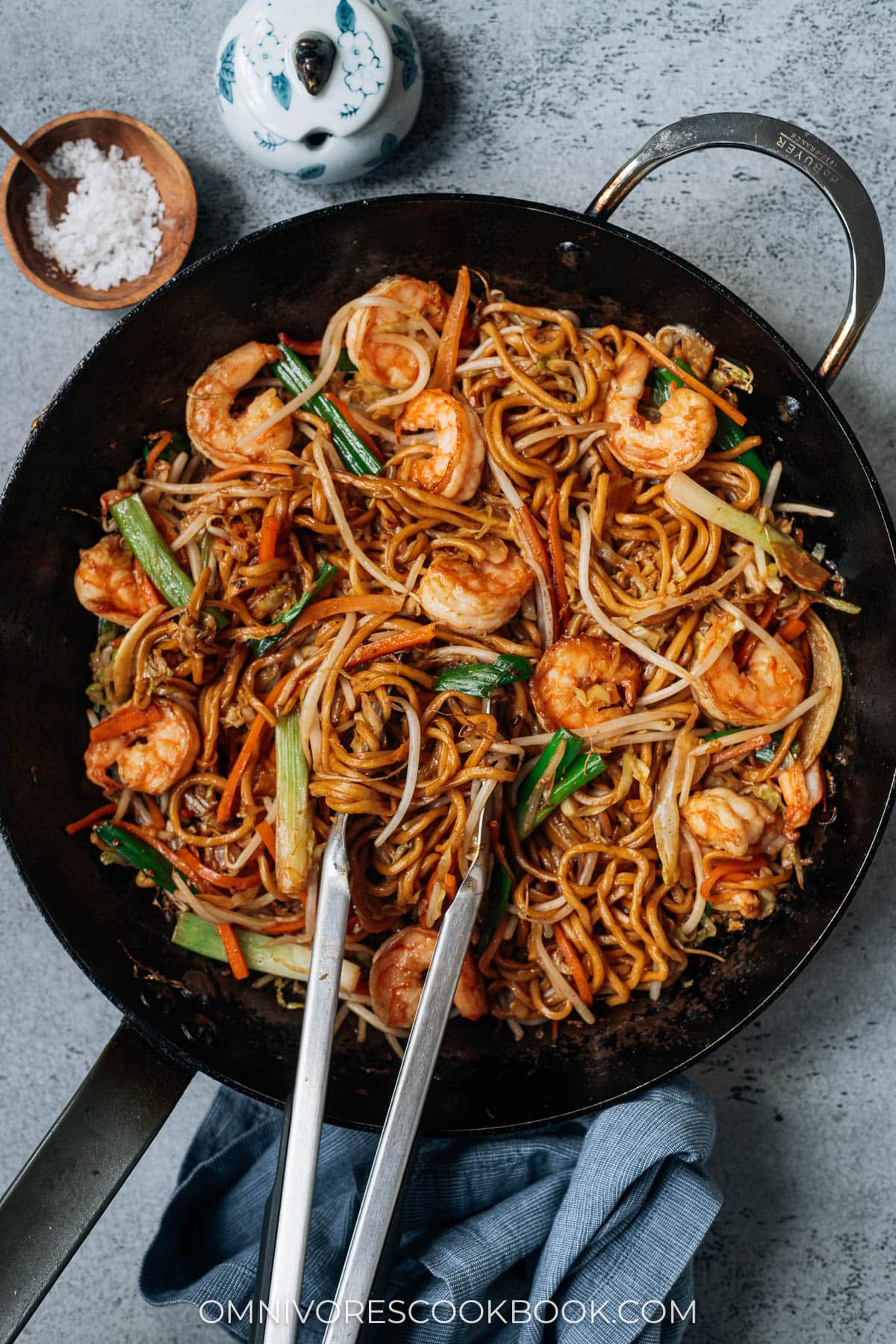
I cook the full Shrimp lo mein recipe for the three of us and there is usually a small amount left for my husband to take to work the next day. For a slightly bigger weeknight dinner, I add Chinese egg drop soup as a warm starter and a small plate of spicy cucumber salad.
When I want to set a full Chinese-American takeout style table for guests, I serve shrimp lo mein as one of several mains alongside air fryer char siu pork, Cantonese chicken egg rolls, and shrimp toast for the appetizer.
Frequently Ask Questions
Can I use different noodles?
Yes, the substitutes work well. Fresh lo mein noodles are my first choice for the chewy texture, but udon noodles are a close stand in with the same thick chewy bite, and thicker dried wheat noodles work too. I would skip thin rice noodles or thin egg noodles for this recipe, because they break down under the toss with the sauce.
Why is my lo mein dry instead of saucy?
Three common reasons. The pan was not hot enough at the start so the noodles steamed instead of searing and absorbed all the sauce before it could coat them. The noodles were overcooked at the boil stage and turned soft, so they pulled too much sauce out in the toss. Or the oil amount was cut back, and the sauce did not have enough fat to coat the noodles.
How do I store leftovers?
Leftover shrimp lo mein keeps in an airtight container in the fridge for up to 3 days. I reheat it in a skillet over medium heat with a small splash of water to loosen the sauce, tossing as it warms through so the noodles do not stick. The microwave works too but the noodles come out softer than the first night. I do not recommend freezing this dish.
Want to Save This Recipe?
Enter your email below & we’ll send it to your inbox. Plus get great new recipes from us every week!
Watch video
Shrimp Lo Mein
Ingredients
- 8 oz fresh lo mein noodles (or 6 oz / 170 g dried noodles)
Marinade
- 1/2 lb shrimp , peeled and deveined
- 1/2 tablespoon Shaoxing wine
- 1 teaspoon cornstarch
- 1/4 teaspoon salt
Sauce
- 1/4 cup chicken broth
- 2 tablespoons oyster sauce
- 2 tablespoons Shaoxing wine (or dry sherry)
- 1 tablespoon dark soy sauce (or soy sauce) (*Footnote 1)
- 1 teaspoon sesame oil
- 2 teaspoons sugar
- 1/4 teaspoon salt
Stir fry
- 3 tablespoons peanut oil (or vegetable oil)
- 1 tablespoon ginger , minced
- 2 cloves garlic , minced
- 1 small carrot , julienned (yields about 1/2 cup once cut)
- 1/4 cabbage , thinly sliced (or 4 cups coleslaw mix)
- 4 green onions , cut into 2” (5 cm) long pieces, white and green parts separated
- 2 cups bean sprouts (4 oz / 100 g)
Instructions
- If using dried noodles, boil the noodles according to package instructions minus 1 minute, until al dente. If using fresh lo mein noodles, boil for 1 minute total, until al dente. Rinse with tap water, drain, and set aside.
- Combine the shrimp and all the marinade ingredients in a medium-sized bowl. Mix well and let marinate for 10 minutes.
- Whisk all the sauce ingredients together in a medium-sized bowl.
- Heat 1 tablespoon of oil in a large nonstick skillet over medium-high heat until hot. Spread the shrimp in the pan. Cook for 30 to 45 seconds without touching, until the bottom turns slightly golden. Flip to cook the other side for 30 to 45 seconds, stirring occasionally, until the shrimp is just cooked through. Transfer the shrimp to a plate.
- Pour in the remaining 2 tablespoons of oil and the ginger, garlic and green onion whites. Add carrot and cabbage. Cook and stir until the veggies just start to turn soft, 1 minute or so.
- Add the noodles and pour in the sauce. Toss a few times to mix everything.
- Add the bean sprouts and green onion greens. Toss to mix everything together well, until the sauce is absorbed, 1 to 2 minutes. Return the cooked shrimp to the pan and toss again to mix well. Transfer everything to serving plates and serve hot as a main dish.
Notes
- Dark soy sauce adds a nice dark brown color to the dish. You can use regular soy sauce instead. Your dish will come out slightly lighter but still be tasty.
Nutrition

Did you make this recipe?
I’d love to hear how it turned out for you! Please take a moment to leave a 5-star rating ⭐️ and share your thoughts in the comments further down the page. It really helps others discover the recipe too.
Katie
We love this recipe! It uses shrimp so I can thaw that night under water instead of having to remember to thaw meat ahead.
I was out of cornstarch so I used garlic powder & onion powder. This was a neat technique I didn’t know before & the result was super juicy shrimp!
We always have the ingredients on hand or good substitutes, so it makes it a great last minute dinner! Thanks Maggie!
Valerie
I’m sure this will be delicious just as everything else I’ve made from your website. I have a question though. If I were to double the amount of noodles and shrimp would I double everything else or just make 2 batches? Some recipes don’t do well with double the amount of everything and not sure if this holds true for Asian dishes. Maybe a dumb question since I’ll end up combining the 2 batches. Dumb question? LoL
Maggie Zhu
I highly recommend just making 2 batches, because there’s no way I can fit more ingredients in a pan when I made the single batch. For Chinese recipes, recipes like braised or soup do pretty well with double batch, but stir fries usually don’t. You want to make sure that ingredients are properly seared without crowding the pan too much.
Valerie
Thank you Ms. Zhu for your prompt reply. You would be amazed how much I can fit in my wok as well as my belly! But you’re right. Probably why I can’t seem to get that elusive wok hay. Hope you’re doing well with your cookbook…it’s a great buy!
Jeannie O
This was a big winner in. my house!! My girls and husband both loved it – I also made extra marinade and cooked some chicken for the non-seafood people (me!) Will add it to the rotation for sure- thank you!
Keith Mattingly
I just finished my 1st bowl, and I have to say this video and recipe are definitely worth a 5-star rating. I made it using a Wok and it’s great!
It’s a Keeper!
Barbara
Easy and delicious. I will definitely make this again.
Bill Zigrang
Maggie,
Footnote 3 (and Footnote 2) appear to be missing from the recipe.
Maggie Zhu
I deleted those. No footnote 2 and 3 needed 😛
Peter Ross
Hi Maggie- You may want to proofread Step 4. Looks like chicken snuck in somehow!
Maggie Zhu
Oops! I have fixed it. Thanks for letting me know!