
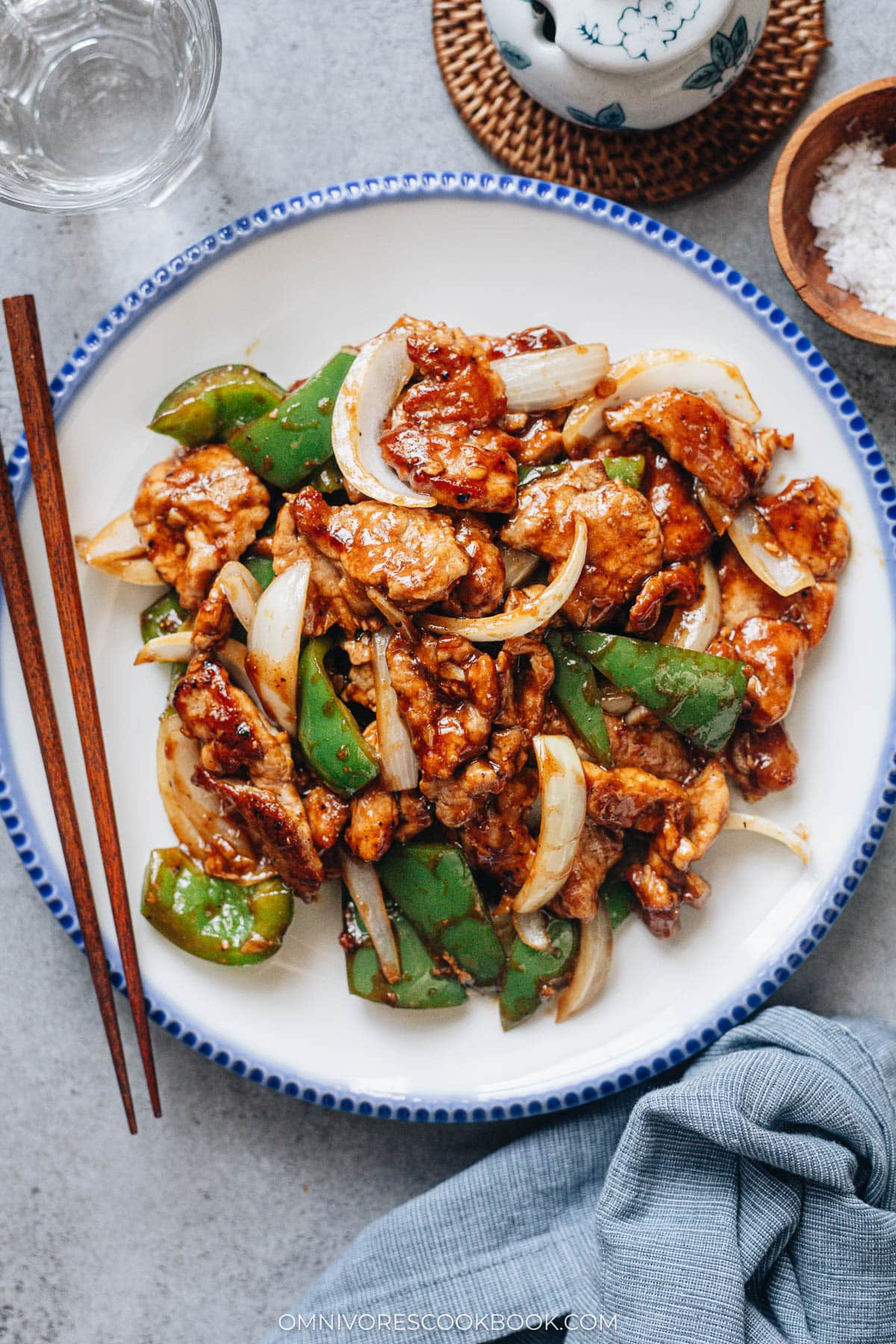
There’s something beautifully comforting about the way Chinese home kitchens transform simple ingredients into deeply satisfying meals. Pork and pepper stir fry is one of those everyday dishes that shows up on my family’s dinner tables far more often than in restaurants. I like to make the dish using tender slices of pork, crisp bell peppers, onion, aromatics, and a glossy savory sauce. It’s a simple dish – nothing fancy, nothing difficult, just honest ingredients prepared with good technique.
This is the kind of stir fry I make when I want something fast, nourishing, and flavorful. It’s balanced, lightly sweet, full of wok aroma, and made for spooning over hot steamed rice. Having grown up in China, this dish feels like weeknight comfort for me. Try it once and you’ll be surprised at how such simple ingredients can produce so much flavor.
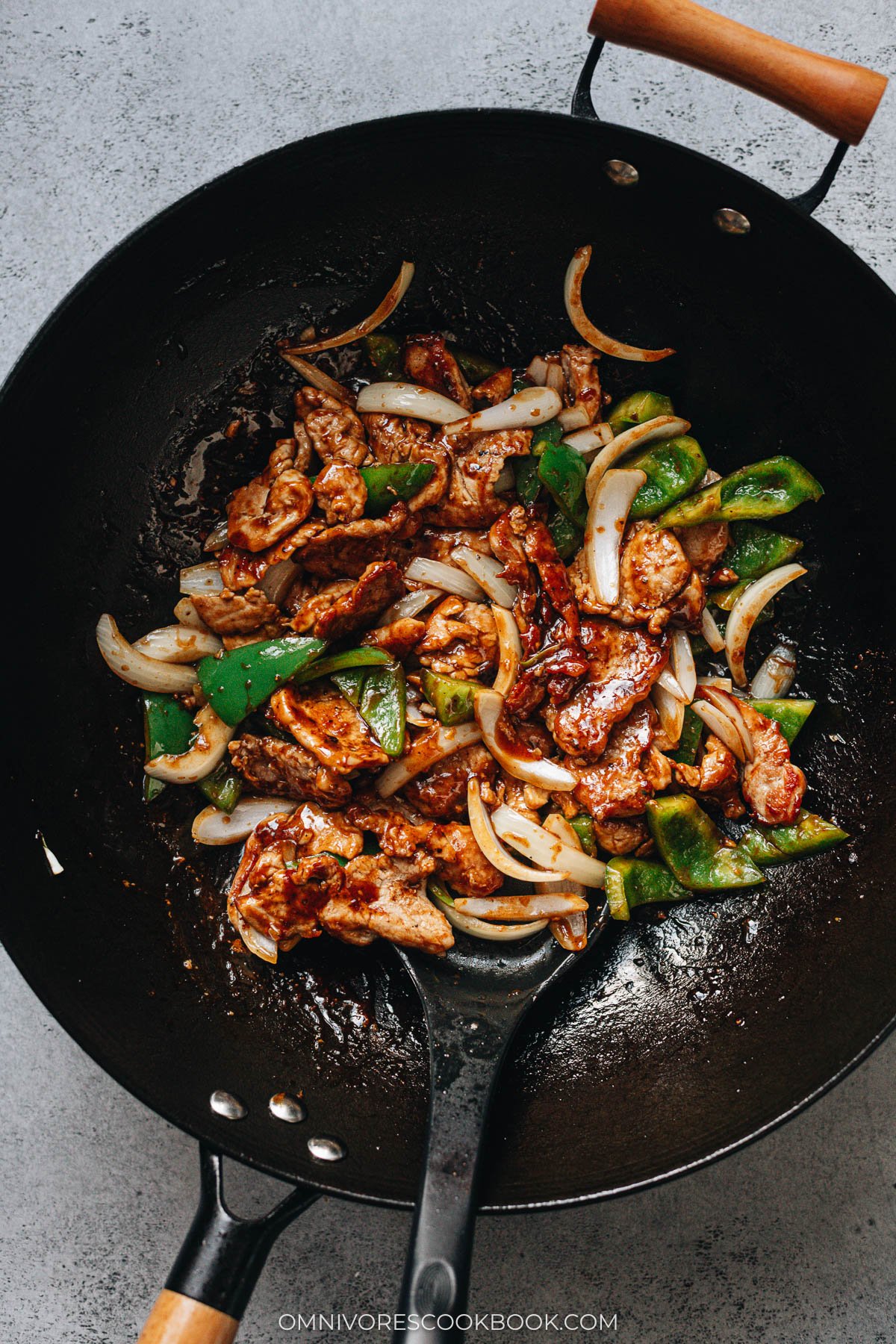
Ingredients
Pork and marinade
My favorite cut of pork for stir frying is tenderloin, which is quite lean yet super tender. Since I’m using a wok in this recipe, I prefer to slice the pork into 1/8” (4-mm) pieces. It’s a slightly thicker slice for pork in stir frying, which keeps the meat more intact when using a carbon steel or cast iron wok.
I marinate the pork in Shaoxing wine, salt and cornstarch. It’s the simplest combo that seasons the meat, adds a nice aroma, eliminates gamey taste from the pork, and keeps the pork tender despite the high heat cooking.
Sauce
I used a simple brown sauce that’s slightly peppery, to bring the pork and vegetables together. The soy sauce adds umami. Dark soy sauce adds a beautiful dark brown color. A small amount of sugar brings out the flavor of the ingredients and counterbalances the saltiness of the soy sauce.
I also used a touch of toasted sesame oil at the end of the cooking, to add nuttiness and aroma. It’s not mixed into the sauce because sesame oil loses its fragrance during high heat cooking. So I add it after turning off the heat.
Aromatics
I used garlic to infuse the oil, to add richness and aroma to the dish. It’s quite common to use the combo of scallion, garlic and ginger for Chinese stir fried dishes. But for this one, I only used one aromatic to minimize the chopping and still get a very good result.
Vegetables
I used onion and bell pepper in my stir fry. Both add a crisp texture, and onion adds a natural sweetness as well. Alternatively, scallion and red pepper make a great combo.
Feel free to toss in other vegetables, such as a handful of sliced carrot, bean sprouts, celery, or mushrooms.
How to make
I used a cast iron wok to make the pork and pepper stir fry. But you can easily use a large skillet (at least 12”) and the result will be great as well.
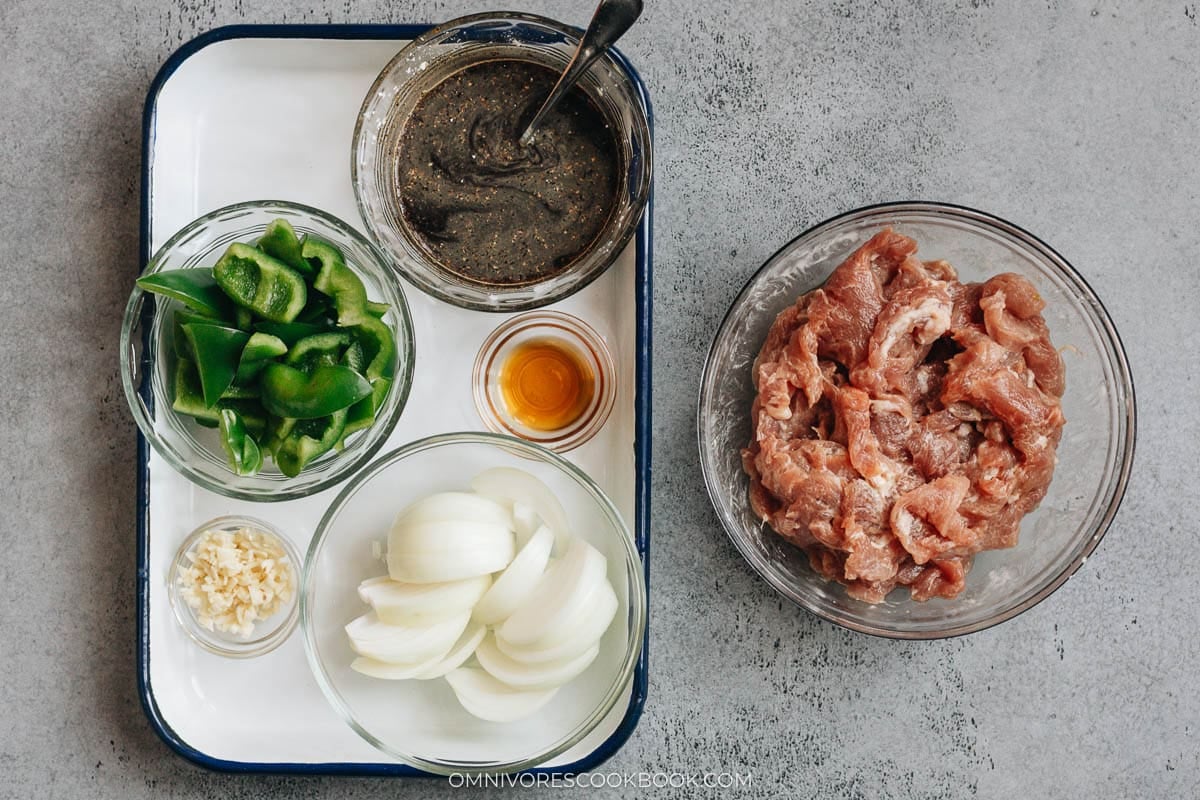
1. Sear the pork. Heat up the wok nice and hot, until smoking, then sear the pork briefly until the surface is lightly charred and the inside just cooked through. The key of this step is to spread the pork into a single layer and do not stir it frequently. Let the pork cook until the bottom is caramelized, so you can easily flip it without it sticking to the pan. You’ll probably need to cook it in two batches if using a wok, to get the best results.
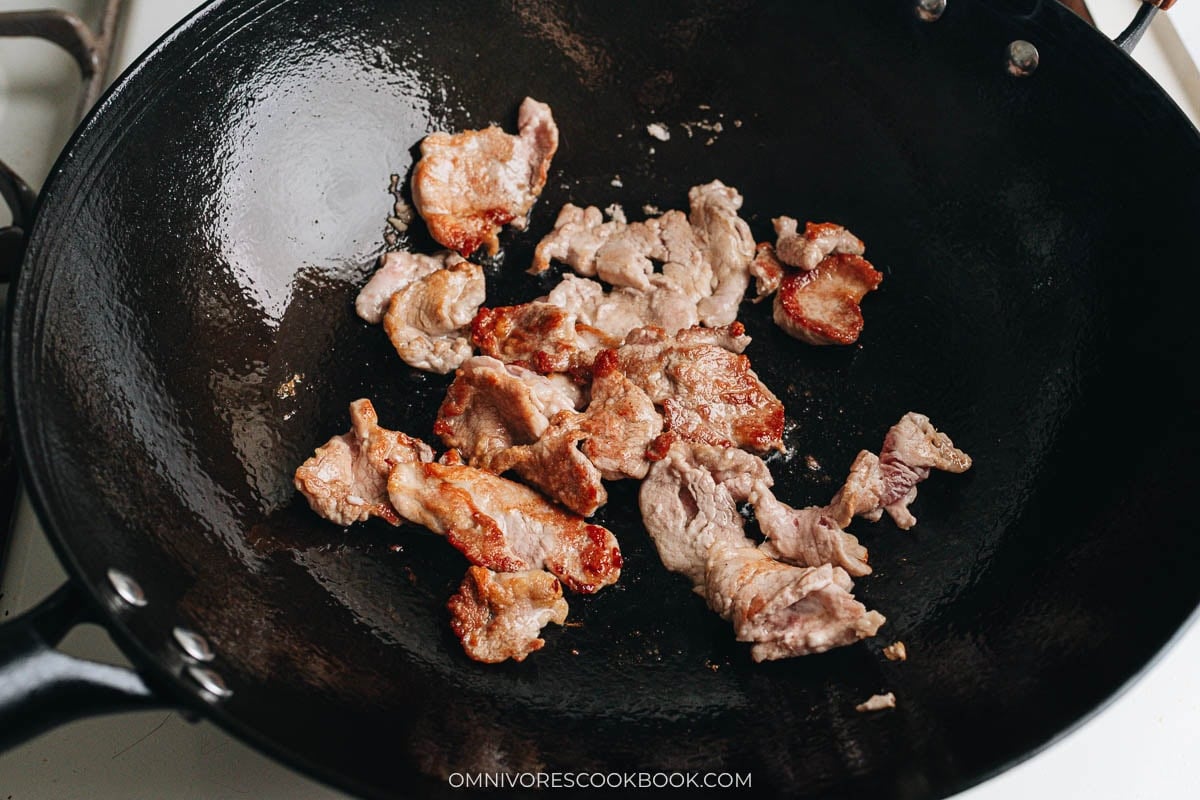
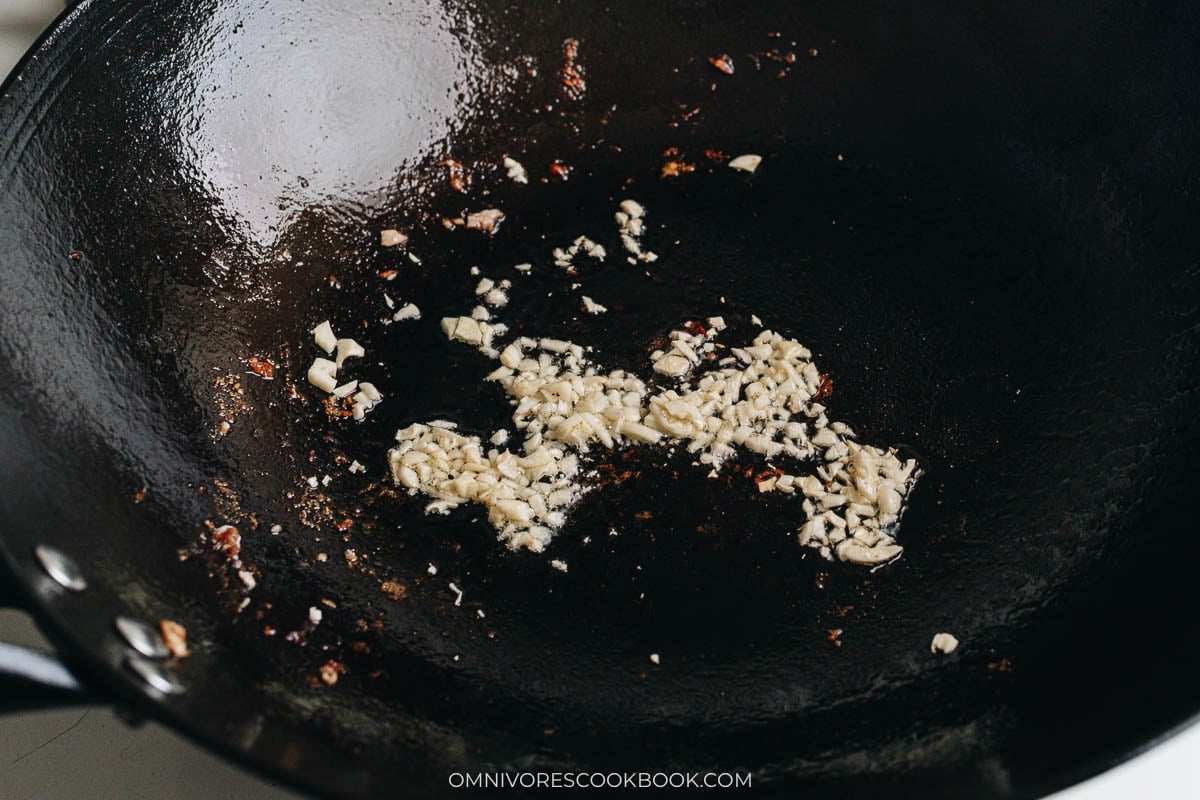
2. Cook the garlic to infuse the oil. The wok is still very hot, so only stir it briefly before adding other ingredients, so the garlic does not burn.
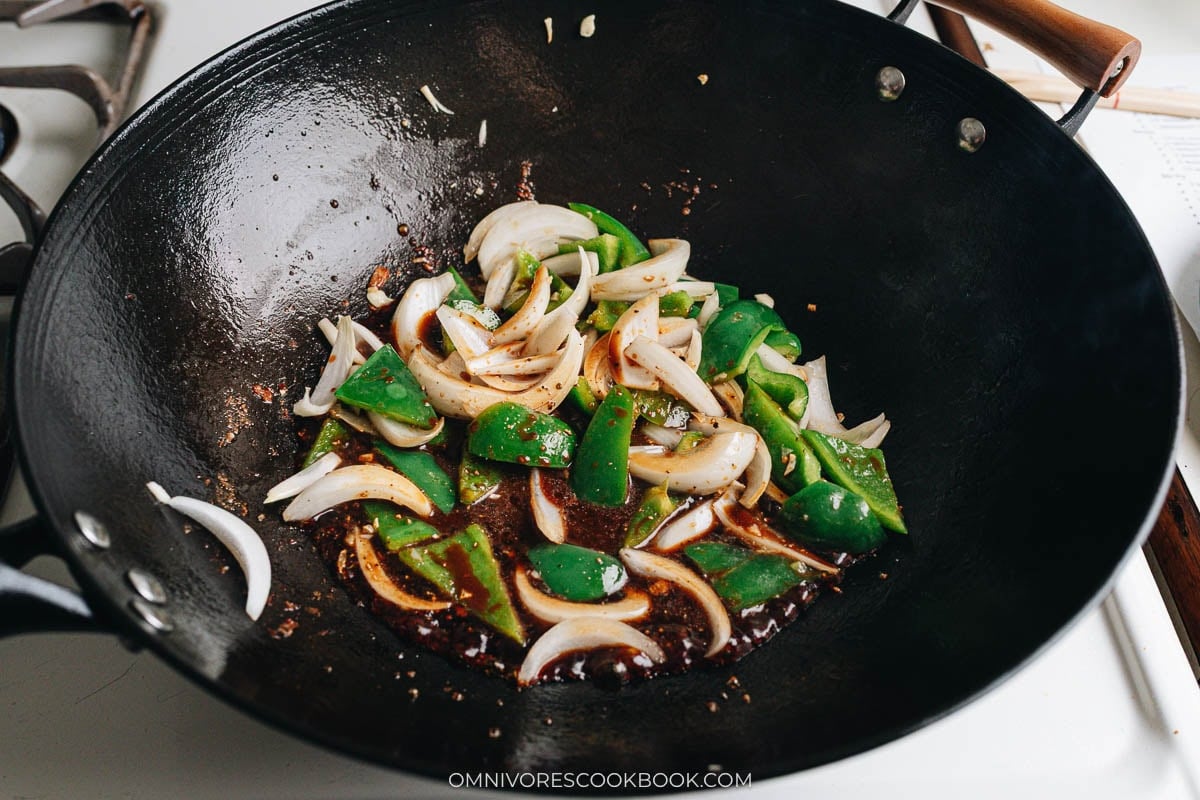
3. Cook the vegetables and add the sauce. I prefer to keep my onion and pepper quite crisp, so I cook them very briefly. But feel free to cook them longer so the texture turns a little tender. The sauce thickens quickly. Get ready to add back the pork as soon as you pour in the sauce.
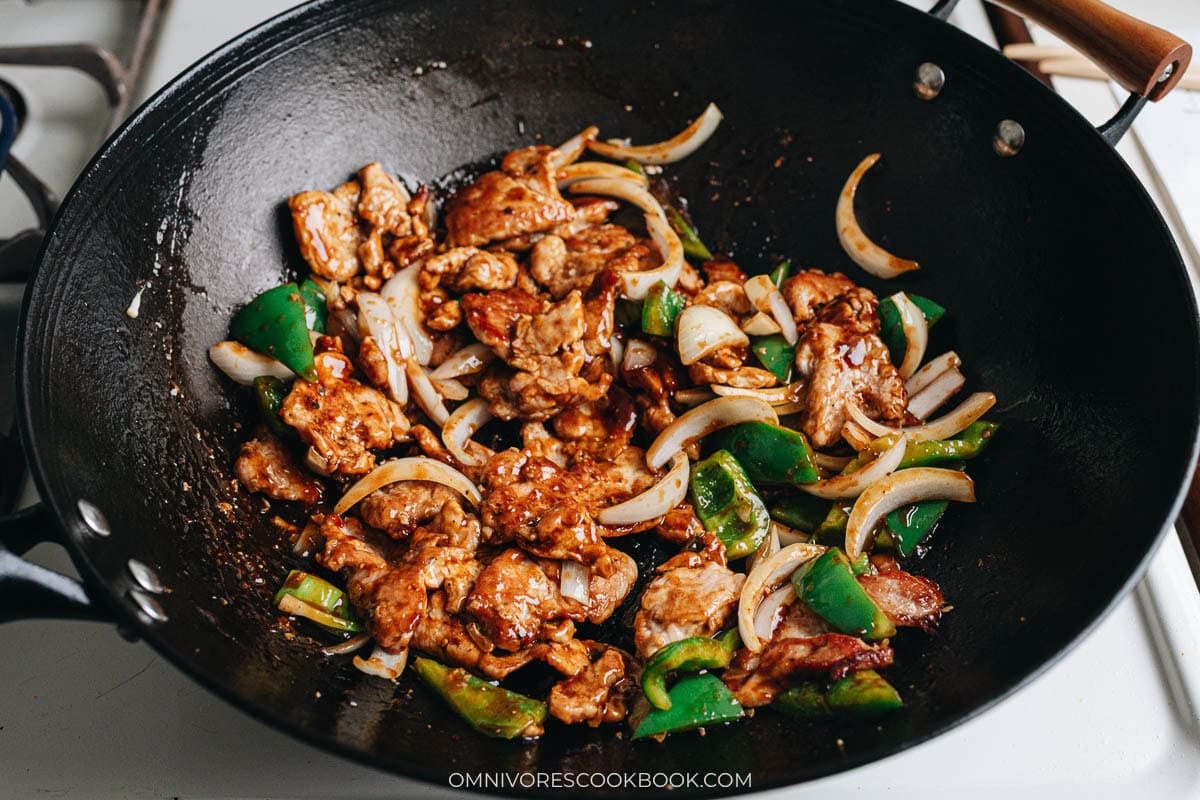
4. Add back the pork. Quickly stir everything together to coat with the sauce. Then turn off the heat, drizzle in the sesame oil, and stir again. Sesame oil loses its fragrance over high heat, so add it at the end to maximize the flavor.
Serving Suggestions
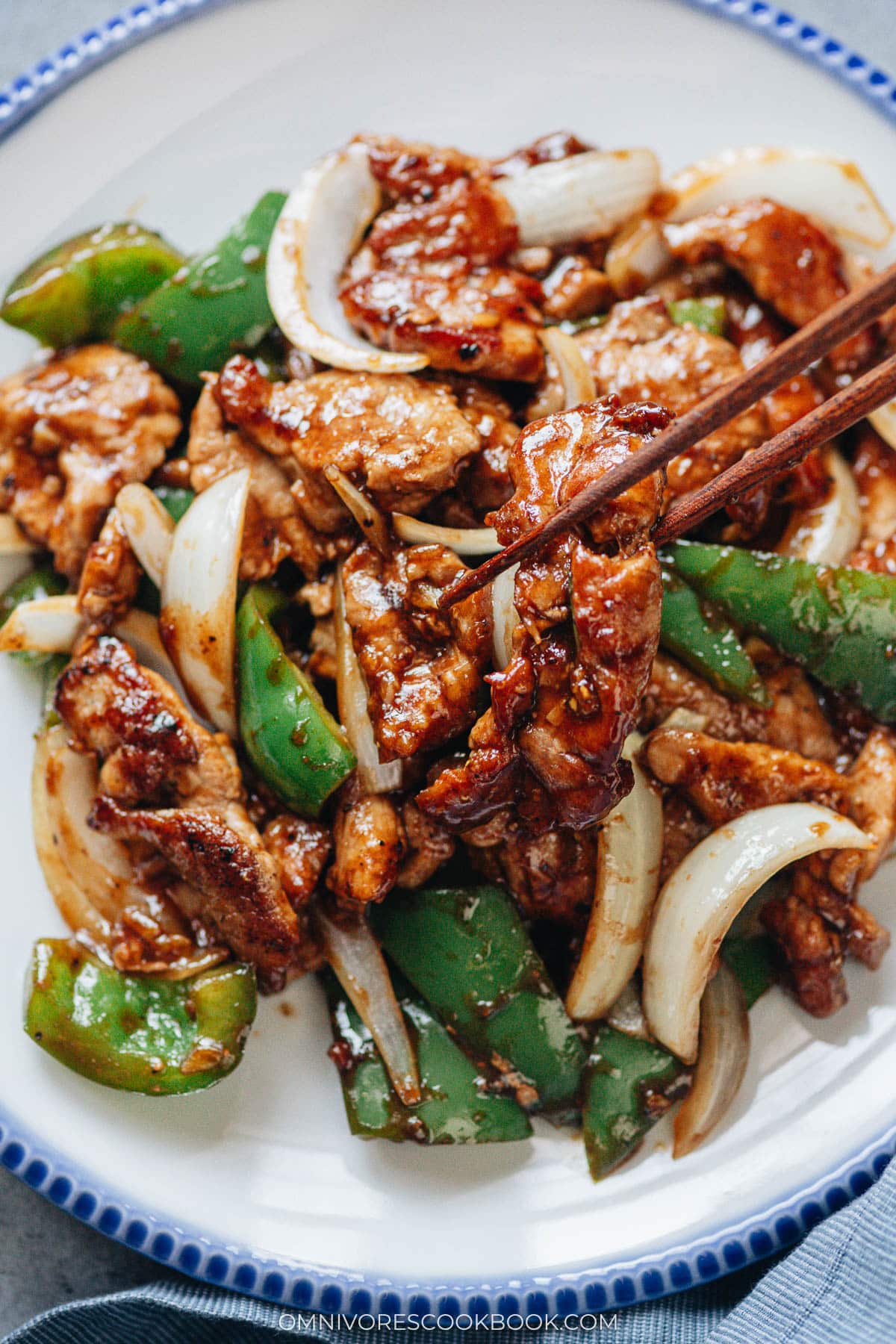
I always love to serve pork and pepper stir fry with freshly steamed rice. To make a weeknight dinner spread, consider adding a soup and / or cold appetizer. A simple egg drop soup and spinach salad work well. For a larger meal, you can also serve another main dish that is braised, such as lion’s head meatballs, braised chicken with mushrooms, or Instant Pot braised beef. These are dishes that I usually make on the weekend, portion into smaller serving sizes and freeze beforehand. So I only need to thaw and reheat them during the week.
Frequently asked questions
Can I use a different cut of pork?
Yes. Pork shoulder and pork loin also work well. Pork shoulder will be a little richer and pork loin will be slightly firmer than tenderloin.
Can I substitute chicken or beef?
Absolutely! This recipe works with thinly sliced chicken thigh, chicken breast, flank steak, and skirt steak. Just make sure to slice against the grain and marinate the same way.
Is Shaoxing wine necessary?
It adds depth and an earthy umami to the dish, but you can substitute with:
- Dry sherry
- Mirin (skip the sugar since mirin is much sweeter than Shaoxing wine)
- Chicken stock (if avoiding alcohol)
Want to Save This Recipe?
Enter your email below & we’ll send it to your inbox. Plus get great new recipes from us every week!
Watch video

Pork and Pepper Stir Fry
Ingredients
- 1 lb pork tenderloin , sliced against the grain into 1/8” pieces
Marinade
- 1 tablespoon Shaoxing wine
- 1/4 teaspoon salt
- 2 teaspoons cornstarch
Sauce
- 1/4 cup chicken stock
- 2 tablespoons soy sauce
- 2 teaspoons dark soy sauce
- 2 teaspoons sugar
- 2 teaspoons cornstarch
- 1/2 teaspoon ground black pepper
Stir fry
- 2 tablespoons peanut oil (or vegetable oil)
- 3 cloves garlic , minced
- 1/2 yellow onion , sliced
- 1 bell pepper , sliced
- 1 teaspoon toasted sesame oil
Instructions
- Combine the pork with all the marinade ingredients in a medium-sized bowl. Mix well. Marinate for 15 minutes while preparing the rest of the ingredients.
- Mix all the sauce ingredients together in a small bowl.
- Heat 1 tablespoon of oil in a wok or large non-stick skillet over high heat until smoking. Spread the pork with minimal overlap, cooking in two batches if needed. Let cook for 1 minute without moving, until the bottom turns golden. Flip to cook the other side for 30 seconds, until just cooked through. Transfer the pork to a large plate.
- Add the remaining 1 tablespoon oil and garlic. Stir fry until fragrant, 20 seconds or so. Add the onion and the bell pepper. Cook and stir until starting to turn tender, 1 to 2 minutes.
- Mix the sauce again to fully dissolve the cornstarch. Pour into the pan and add back the pork. Immediately stir to mix well. The sauce will thicken very quickly, in a couple of seconds. Turn off the heat and drizzle in the sesame oil. Toss again to mix. Transfer everything to a large plate. Serve hot as a main dish.
Notes
- To make the dish gluten-free: Use tamari to replace soy sauce and dark soy sauce. And use dry sherry instead of Shaoxing wine.
Nutrition

Did you make this recipe?
I’d love to hear how it turned out for you! Please take a moment to leave a 5-star rating ⭐️ and share your thoughts in the comments further down the page. It really helps others discover the recipe too.
Kathy
I used pork belly and it still turned out great! Quick and easy prep.
Ben
I was looking for chinese recipes friendly to meal prep, and stumbled upon this one. Blew my mind. It was my first time cooking with authentic ingredients (sourced them following the “essential ingredients” article here too), and I couldn’t believe the effect that just a tablespoon of Shaoxing Wine had.
Awesome recipe, I couldn’t stop eating it, despite making it for meal prep.
Linda
My husband and I ate the whole tenderloin delicious