
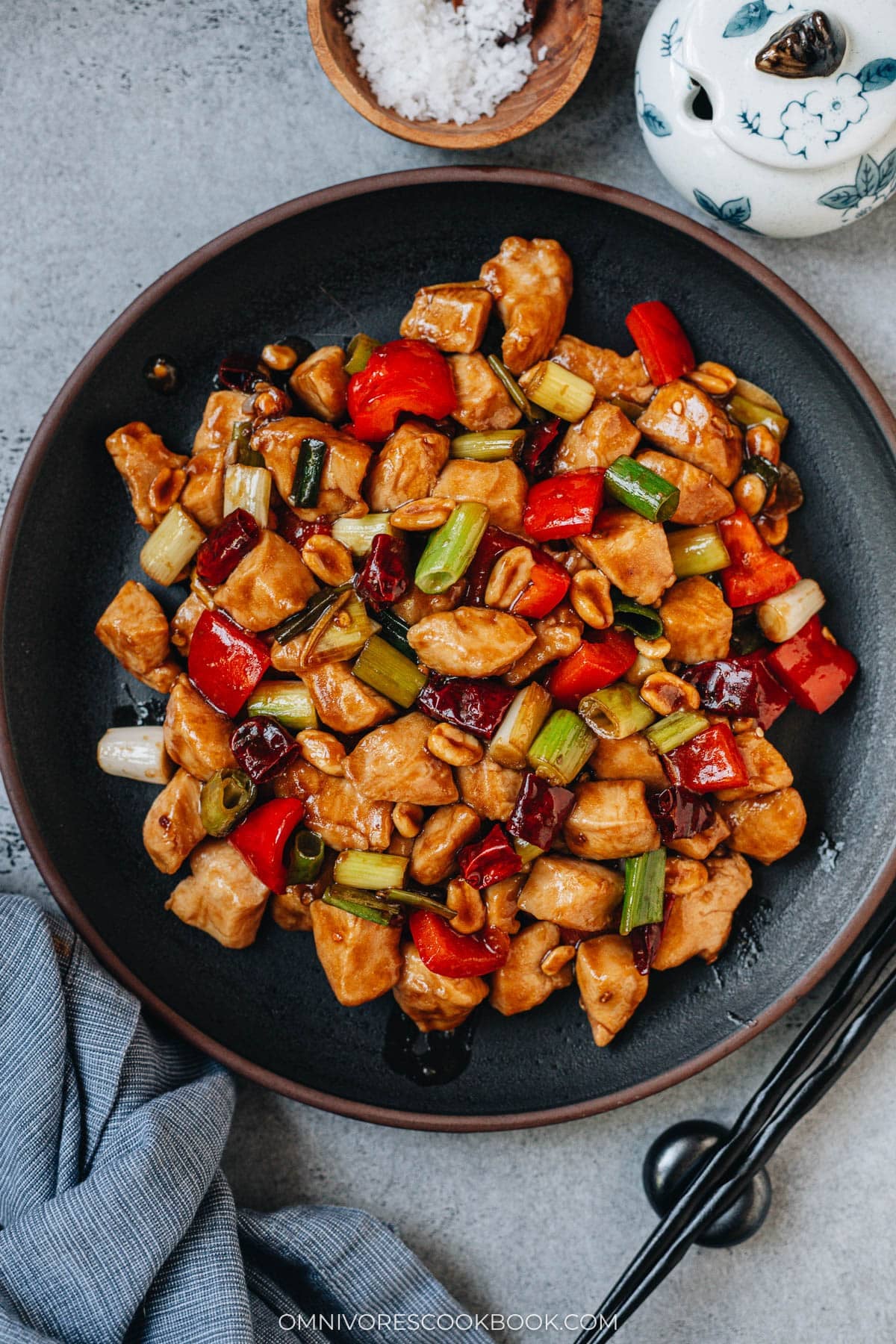
Kung pao chicken is one of the best known Sichuan stir fries, with a balance of savory, sour, sweet, spicy, and numbing flavors. I know that sounds like a lot, but I am confident you will love it if you have not tried it yet.
I do not always use a wok when I make this dish at home. In my kitchen, a large nonstick pan is more practical, especially because many home stoves do not get hot enough for true wok cooking, and the vinegar in the sauce can be tough on a newer carbon steel or cast iron pan. I like this approach because it keeps the recipe easy and still gives me the flavor I want for a weeknight dinner.
When I make it, I marinate the chicken first, mix the sauce, and keep all the aromatics close to the stove before I start cooking. Then I sear the chicken, stir fry the garlic, ginger, dried chili peppers, and vegetables, and finish the whole dish with the sauce and peanuts. If you want a fast stir fry with a little heat and plenty of flavor, this is one I love serving over rice.

Ingredients
This dish cooks fast, so I like to set up the ingredients in the same order I use them. I get the chicken marinating first, stir the sauce together next, and keep the rest of ingredients ready by the stove.
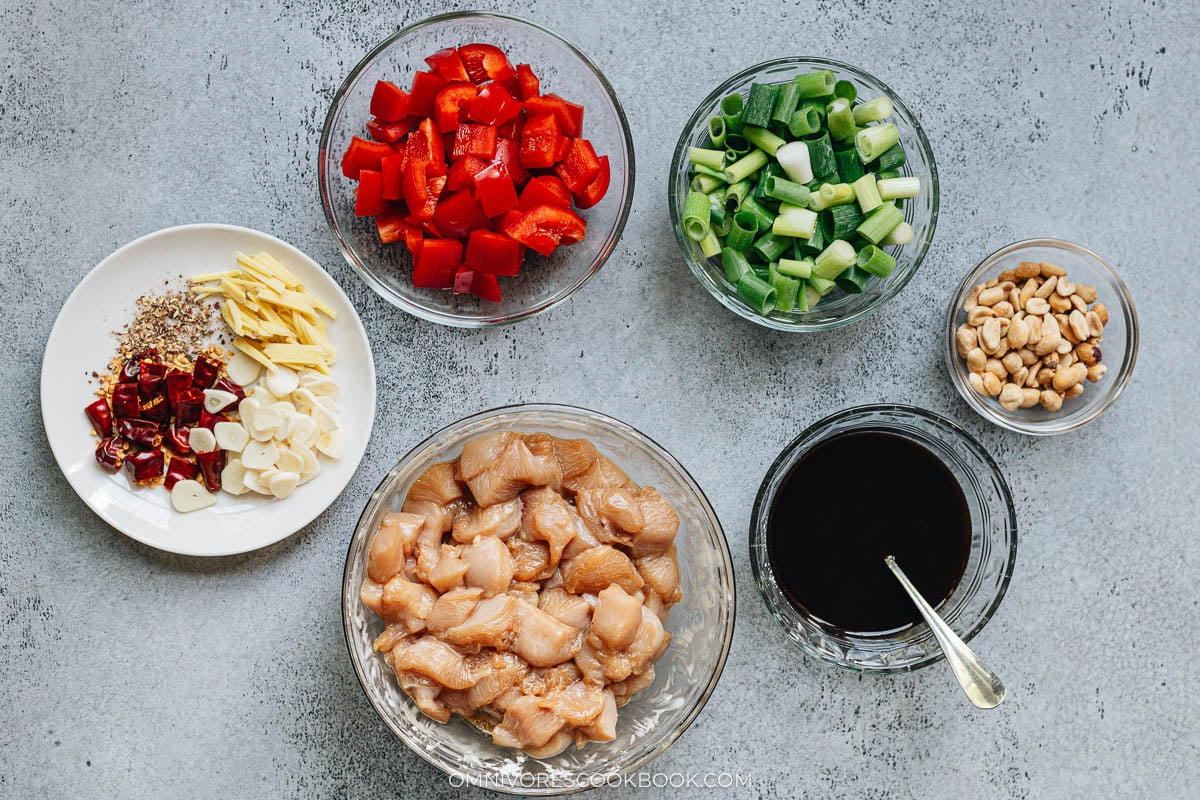
Chicken and marinade: I use diced chicken breast for the classic version, though thigh works too if I want a slightly richer result. I marinate it with light soy sauce, Shaoxing wine, and cornstarch so it stays tender in the pan.
Sauce: I mix chicken broth, Chinkiang vinegar, Shaoxing wine, light soy sauce, dark soy sauce, sugar, cornstarch, and salt.
Stir fry: I use garlic, ginger, dried Chinese chili peppers, Sichuan peppercorn, red pepper, green onion, roasted peanuts, and a little chili oil but this is optional.
How to Make
1. Marinate the chicken: Combine the chicken, light soy sauce, Shaoxing wine, and cornstarch in a bowl. Mix by hand and let it marinate while I prepare the other ingredients.
2. Mix the sauce: Combine the chicken broth, Chinkiang vinegar, Shaoxing wine, light soy sauce, dark soy sauce, sugar, cornstarch, and salt in a bowl. Stir until the mixture is smooth.
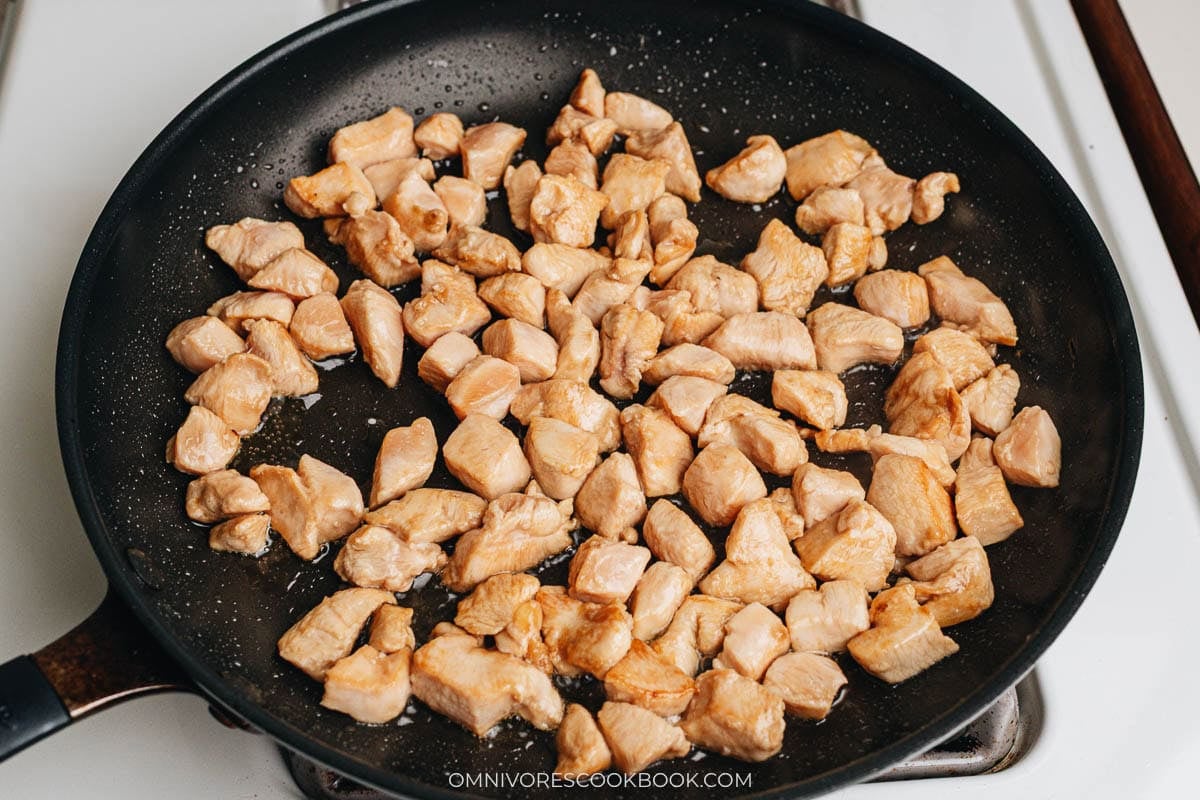
3. Sear the chicken: Heat oil in a large skillet over medium high heat until hot. Spread the chicken in a single layer and let it cook briefly without moving it. Stir until the surface turns white and the inside is still slightly raw, then transfer it to a plate right away.
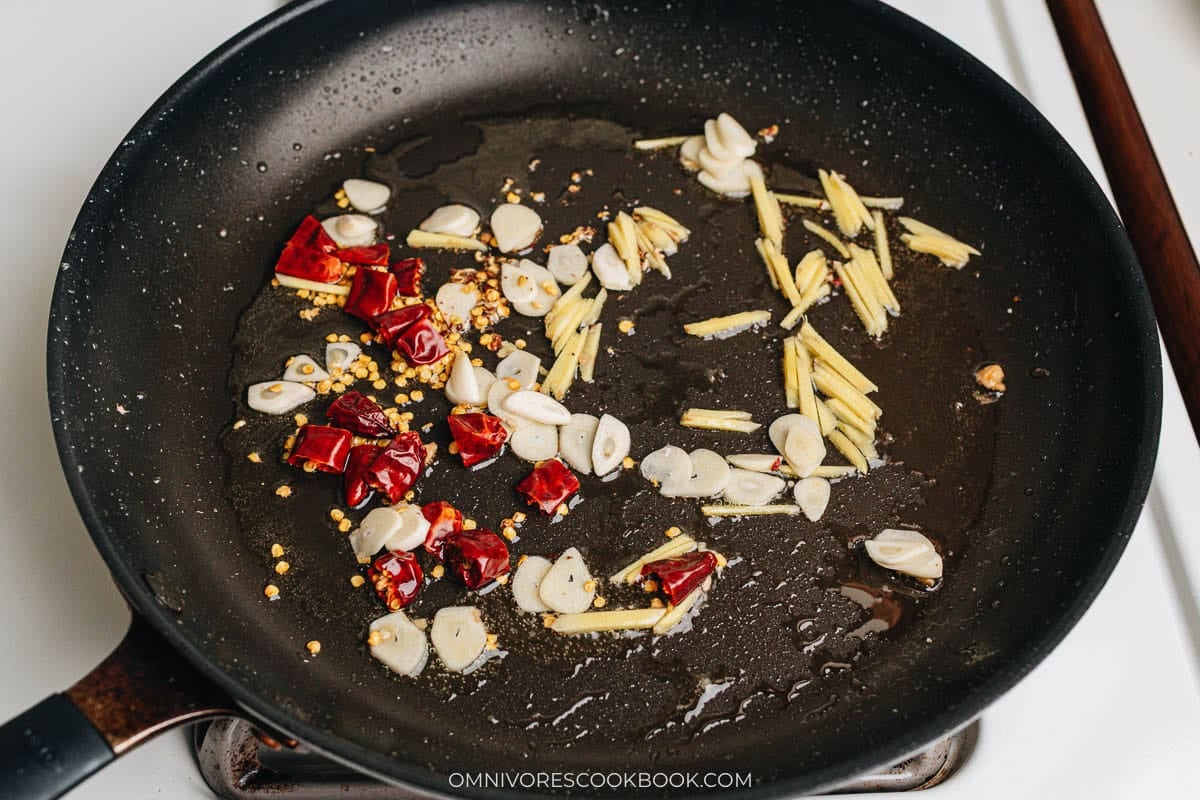
4. Cook the aromatics and spices: Add the remaining oil, garlic, ginger, dried chili peppers, and ground Sichuan peppercorn. Turn the heat to medium and stir until very fragrant.
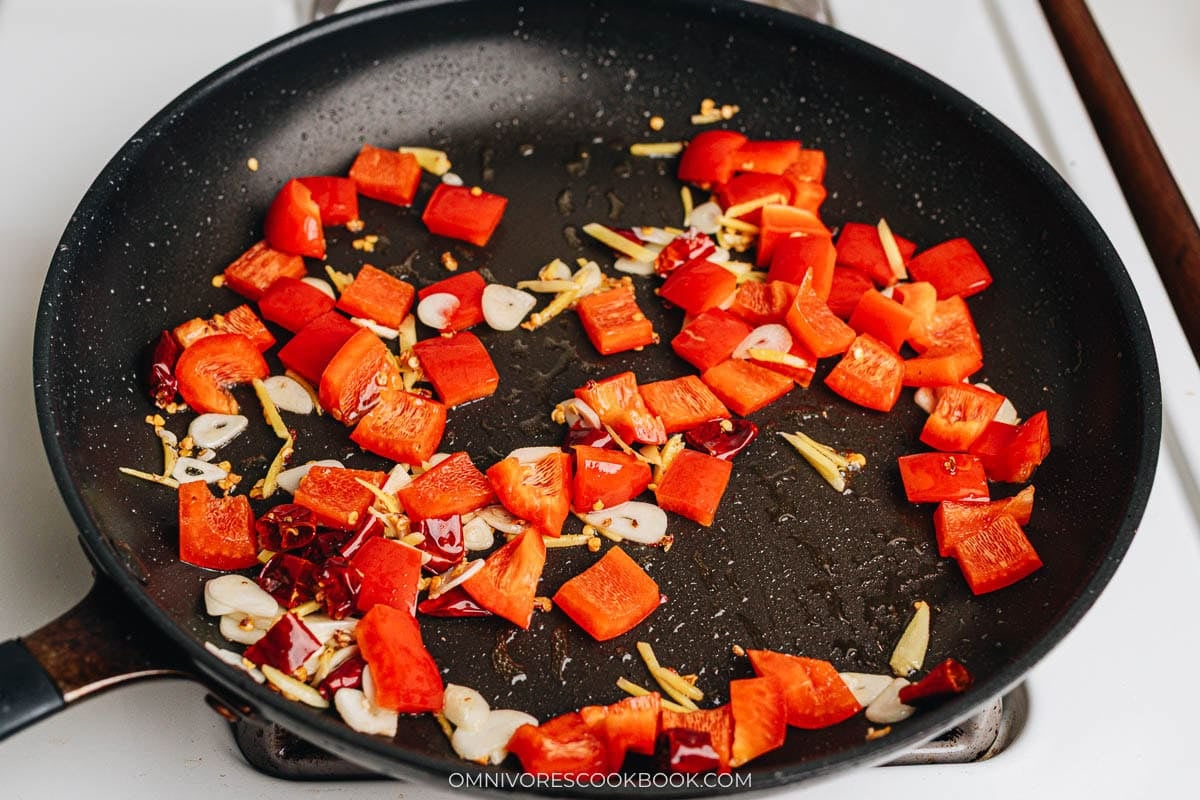
5. Cook the pepper: Turn the heat to medium high. Add the red pepper and stir fry for 1 minute.
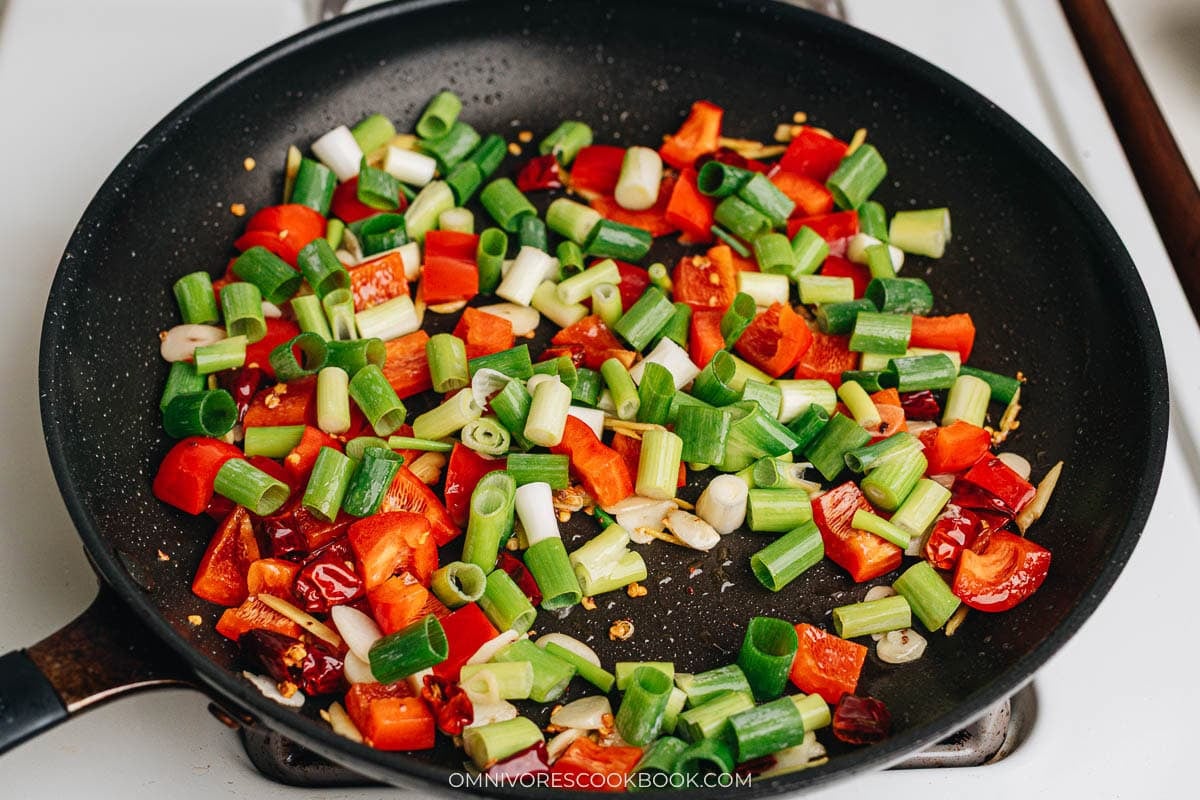
6. Add the green onion: Add the green onion and cook for another minute, until it just start to turn tender.
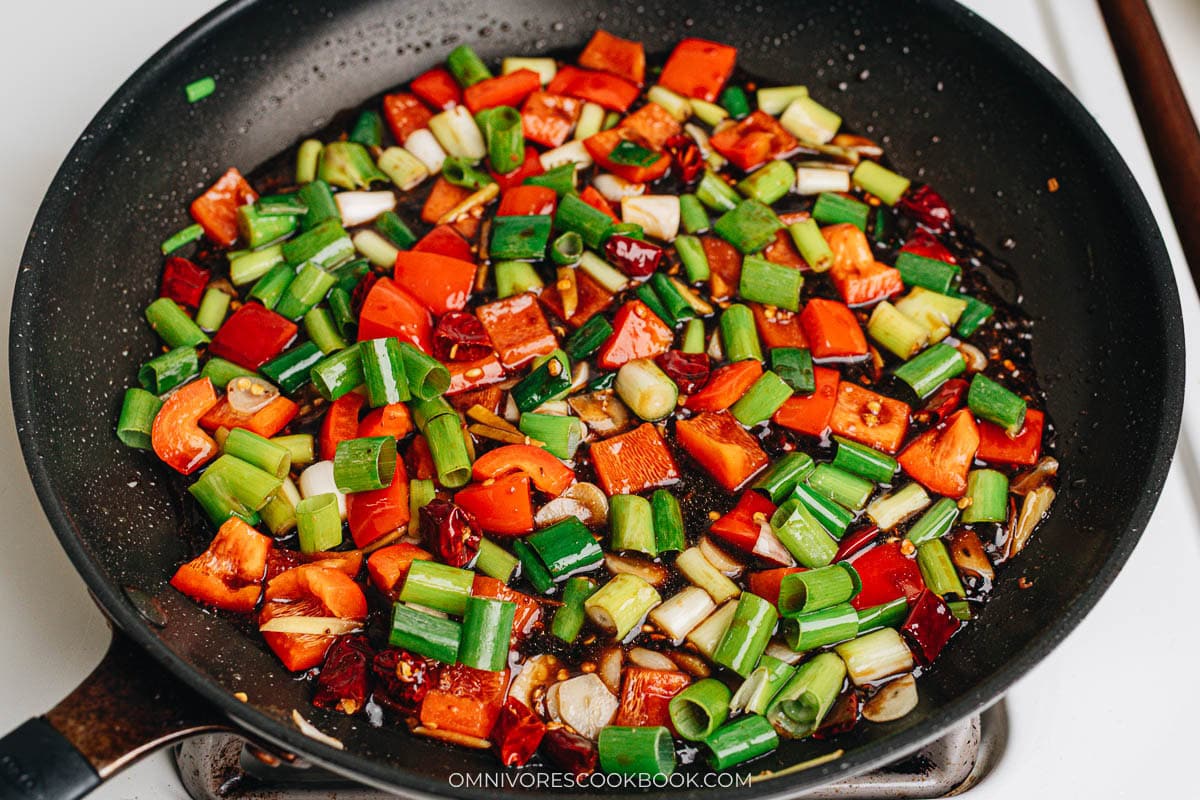
7. Add the sauce: Stir the sauce again so the cornstarch is fully dissolved. Pour it into the pan and stir a few times.
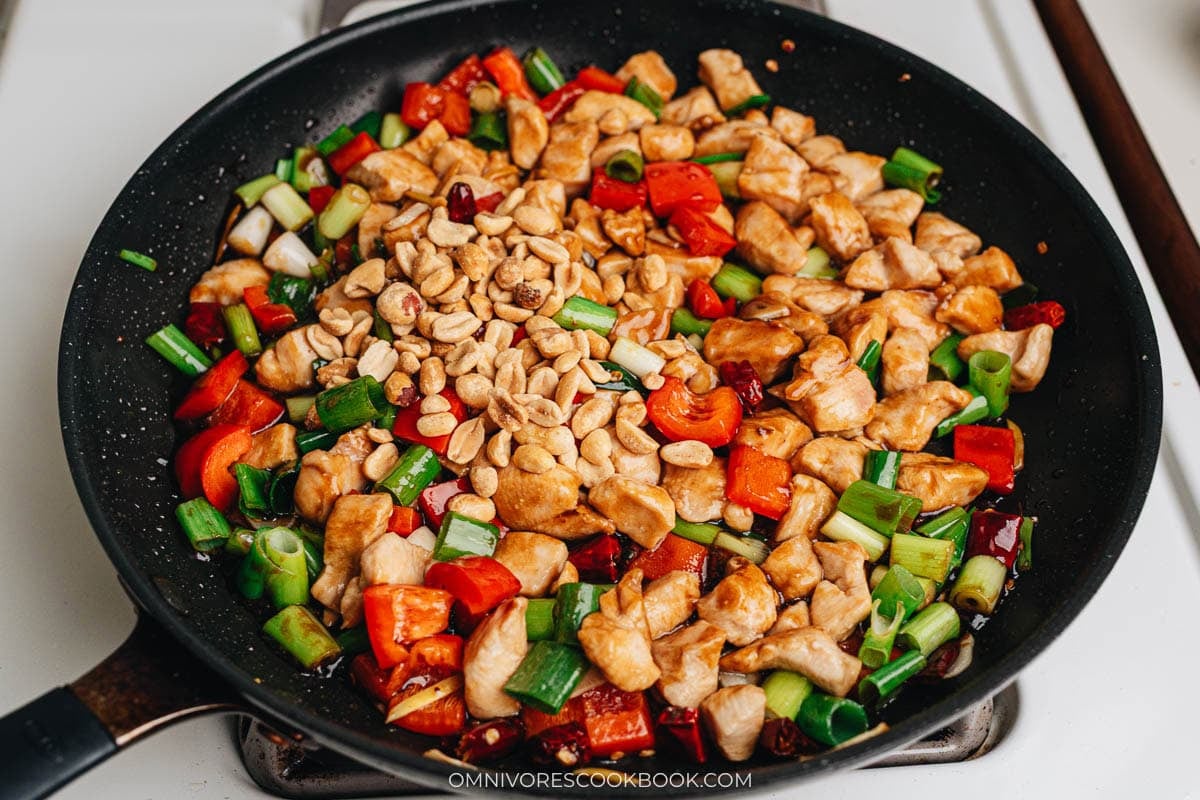
8. Finish the dish: Return the chicken to the pan and toss until the sauce thickens and coats everything. Add the peanuts and stir to mix well. If I want more color, I drizzle in a little chili oil at the end. Transfer everything to a plate and serve warm.
Cooking Tips
Keep everything near the stove: I always set up the chicken, sauce, aromatics, pepper, green onion, and peanuts before I start cooking. This dish moves too fast for me to stop halfway through.
Do not cook the chicken all the way at first: I pull the chicken from the pan while the inside is still a little underdone. It finishes later in the sauce, which helps me keep it juicy.
Use dried chili peppers for aroma: I like dried Chinese chili peppers here because they add fragrance and depth without making the dish too hot. If I want more heat, I cut them smaller and let more seeds go into the pan.
Add chili oil only if I want extra color: I use a little chili oil at the end when I want the dish to look redder and have another layer of flavor. I like this trick because I can control the heat more easily.
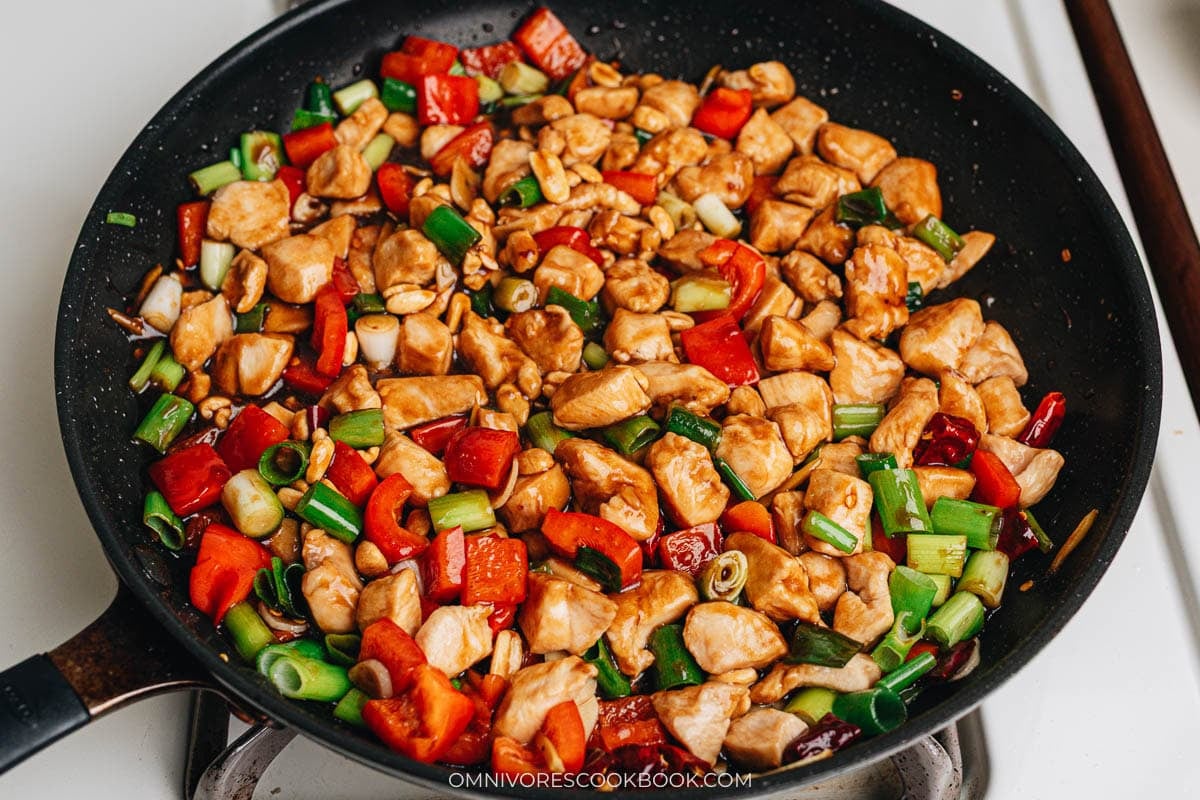
How I Serve
I usually serve kung pao chicken with steamed white rice, because the sauce is too good to leave behind on the plate. At home, I like keeping dinner simple and pairing it with a vegetable dish like my stir fried pea shoots with garlic or these Sichuan dry fried green beans, so the meal has something green next to the chicken.
When I have colleagues over, I like serving kung pao chicken as one dish in a Sichuan style dinner. I love adding mapo tofu and Yu Xiang eggplant if I want a fuller spread, but I also make sure at least one side is less spicy so dinner stays balanced.
Frequently Ask Questions
Why is my chicken turning dry?
Chicken usually turns dry when it stays in the pan too long. I always sear it first, then take it out while the inside is still a little underdone so it can finish later in the sauce. That second cooking at the end is enough to cook it through without pushing it too far. Once I started doing it this way, my kung pao chicken got much better.
How do I keep the vegetables crisp?
I do not cook the vegetables for too long, especially the pepper and green onion. I want them to stay bright and slightly crisp so they add contrast to the chicken and sauce. This dish cooks fast, so I keep everything ready before I turn on the stove. When the pan is hot and the ingredients are close by, it is much easier to control the texture instead of overcooking everything while I look for the next ingredient.
How do I store leftovers?
I store leftovers in an airtight container in the refrigerator for up to 3 days. When I want to reheat them, I use a pan if I can, because the chicken and vegetables keep a better texture than they do in the microwave. If I want to freeze it, I let it cool completely first, then transfer it to a freezer safe container and freeze it for up to 1 month.
Want to Save This Recipe?
Enter your email below & we’ll send it to your inbox. Plus get great new recipes from us every week!
Watch video
Kung Pao Chicken (宫保鸡丁)
Ingredients
- 1 lb boneless skinless chicken breast , diced into 3/4” (1.5 cm) pieces (or thigh)
Marinade
- 1 tablespoon light soy sauce (or soy sauce)
- 2 teaspoons Shaoxing wine
- 1 tablespoon cornstarch
Sauce
- 2 tablespoons chicken broth
- 2 tablespoons Chinkiang vinegar (or distilled vinegar)
- 1 tablespoon Shaoxing wine
- 1 tablespoon light soy sauce
- 1/2 tablespoon dark soy sauce
- 2 tablespoons sugar
- 2 teaspoons cornstarch
- 1/4 teaspoon salt
Stir-fry
- 3 tablespoons peanut oil (or vegetable oil)
- 4 cloves garlic , sliced
- 1 thumb ginger , julienned
- 6 red dried Chinese chili peppers , cut into 3 pieces
- 1/4 teaspoon ground Sichuan peppercorns
- 1 red pepper , diced
- 5 large green onions , cut into 1” (2.5 cm) pieces
- 1/3 cup roasted peanuts
- 2 teaspoons chili oil (Optional, to add color)
Instructions
- Combine the chicken and marinade ingredients in a small bowl. Mix well by hand and let marinate for at least 10 minutes, up to 30 minutes.
- Mix all the sauce ingredients together in a medium bowl.
- Heat 1 tablespoon of oil in a large skillet over medium-high heat until hot. Swirl the pan and let oil coat the bottom.
- When the oil is hot, spread chicken in a layer and cook for 20 to 30 seconds without moving it. Cook and stir until the chicken turns just white on the surface and the inside is still slightly raw. Turn to medium-low heat and immediately transfer chicken to a plate.
- Add the remaining 2 tablespoons of oil, garlic, ginger, dried chili peppers, and ground Sichuan peppercorn. Turn to medium heat. Stir and cook until very fragrant.
- Turn to medium-high heat. Add the pepper. Cook and stir for 1 minute. Then add the green onion, Stir and cook for another minute.
- Mix the sauce again so that cornstarch dissolves completely. Swirl in sauce and quickly stir a few times. Add back the cooked chicken. Stir and toss until the sauce thickens. Add the roasted peanuts. Stir again to mix well. Immediately transfer to a plate. Serve warm with steamed white rice.
Nutrition

Did you make this recipe?
I’d love to hear how it turned out for you! Please take a moment to leave a 5-star rating ⭐️ and share your thoughts in the comments further down the page. It really helps others discover the recipe too.
Megan Woodruff
I lived in China for 10 years and have not had a truly delicious Gong Bao Ji Ding since I left. I made this and was so so so happy with it! I used both red and green bell peppers and also cucumbers (because I’m used to cucumbers). It turned out amazing. THANK YOU for sharing this!!!!
Amy
We have tried a couple different recipes for Kung Pao, this recipe was a huge hit. So many flavors. I love the Sichuan peppercorns. Mid cooking, I couldn’t decide whether to leave them in or remove, so I took half of them out. Next time, I’ll leave them all in. Thank you for the amazing recipes.
Bo
Hi, Maggie. I recently found your cooking website and I really enjoy Chinese dishes now. I tried this recipe but it is too sour to me. I think chinking vinegar is the reason of the sour taste. However when I put the leftover this kungpao chicken in the refrigerator and ate the next day, the sour taste was gone and it was so good. So can I remove or reduce the sour taste of chinkiang vinegar from the start? Is it just reduce the amount of vinegar or is there any other method?
Priyal Chitale
Hi Maggie — I recently discovered your wonderful website, and I used your Di San Xian recipe last weekend, and it was a huge hit! I LOVE Kung Pao chicken, and I really want to make it this weekend, but Chinkiang vinegar isn’t available in Bombay, so I was wondering if there is anything else I could use in its place? You made it very clear that it’s quite differently from the pale Japanese rice vinegar (which is the only thing East Asian cuisine vinegar that’s available in Bombay). Would Balsamic vinegar, or a combination of other ingredients do?
Jennifer Tripp
Maggie, another recipe from you which was a complete success 🙂 I finally gathered all of the necessary pantry items and made your”Real Deal” Kung Pao Chicken. Your recipe was better than any version we have ever enjoyed in a restaurant. Thank you for another evening of fantastic homemade authentic Chinese food 🙂
Maggie
Thanks for taking time to leave a comment and I’m so happy to hear you like the recipe! It’s very impressive that you collected all the ingredients. I hope they open a door of more delicious homemade Chinese food for you 🙂
Lay
Hi Maggie,
I am a Malaysian and currently living in Beijing. Just came across your blog yesterday and I am already convinced with your cooking! Love how the way you explain each ingredient works. Everything make sense!
Will be trying this recipe this weekend.
~Lay
Danielle
I love King Pao chicken, but haven’t made it in years. I do like to add bell peppers to the dish. And the anato seeds are a great idea. I can’t tell you how many times I’ve burned the dried chilis!
Mely Martinez
You’ve inspired me to cook Chinese food at home. Thank you!
Maggie
Happy to see you here Mely! Cooking Chinese food can be daunting when you first try it, but it’s totally possible to achieve in your own kitchen and they definitely taste better than takeout 🙂
Belinda
Love all your recipes. When could I add the annatto seeds
Robyn @ Simply Fresh Dinners
I love it when I have the time to sit back and truly savour your recipes, Maggie. Reading your explanations and lessons in cooking is truly enjoyable and a real eye opener. You make Chinese food very exciting. talented friend!
Chris Scheuer
I’m so happy to learn from an expert authentic Kung Pao chicken. It looks wonderful and I can almost smell the delicious aroma with all those great ingredients!
Tricia @ Saving room for dessert
I agree with Sue – you make the best authentic Chinese recipes – and I can’t wait to try them all. This looks fantastic. Sharing and pining!
sue | theviewfromgreatisland
You are my go to source for authentic Chinese recipes Maggie, and Kung Pao chicken is a huge family favorite around here, thanks!
Brittany
Made this for dinner last night! So yummy! Doubled the recipe for leftovers for lunch but we eneded up going back for seconds lol! Thank you for the great recipe! 🙂
Chava at Almost Kosher
Your tips are so helpful. I never knew that about how Kung Pao gets its redness, nor did I know that I should have been using chicken breast! I’ll have to give this a try soon!
Jasline (Foodie Baker)
I absolutely love kung pao chicken but haven’t mastered it yet, thanks for sharing the recipe and so many tips!
Soe | limeandcilantro
I am absolutely in love with your step-by-step pictures 😀
Nami | Just One Cookbook
We love kung pao chicken and your homemade version looks wonderful! It’s quick, delicious, and perfect to go with rice… great weeknight meal! Thanks for sharing! 🙂
Maggie
Thank you for visiting my site! This one is really nice to go with rice. Have a lovely weekend and bon appetit! 🙂
Ash- foodfashionparty
Looks so yummy and definitely a healthier version from what we get in restaurants. YUMM.
Maggie
Yep, definitely healthier than eating out 🙂
More healthy recipes will keep coming!
julianaloh @bilbaobab
this looks delicious!! one of my favourite dishes I ate all the time when I lived in Beijing! looks like you’ve gone easy on the chillies with a red pepper replacement 🙂 stunning photos, bon appetit!
Maggie
Hey, thank you so much for the comment! I just found I made a big mistake about the pepper:S I supposed to mean chili peppe originally… I already corrected the post.
Well, this recipe won’t be tasted too spicy. And you could adjust it easily by using less chili peppers. Bon appetit! 🙂
Amy
Looks wonderful! I am allergic to peanuts and almonds (all other nuts are fine); can you suggest a good substitution? Thanks!
Maggie Zhu
I think roasted cashew is a lovely substitution 🙂 Make sure to add it at the very end so they stay crispy. Happy cooking!
Min
This looks amazing, Maggie! I am the same way…my “bite-sized” chicken pieces usually end up being bigger than it’s supposed to be. I love kung pao chicken so I’m sure this is going to be amazing! Oh and thank you for sharing the link on how to make curly green onions 🙂
Maggie
Glad you like this recipe Min 🙂
Bigger chicken/all meat picese are the BEST!