
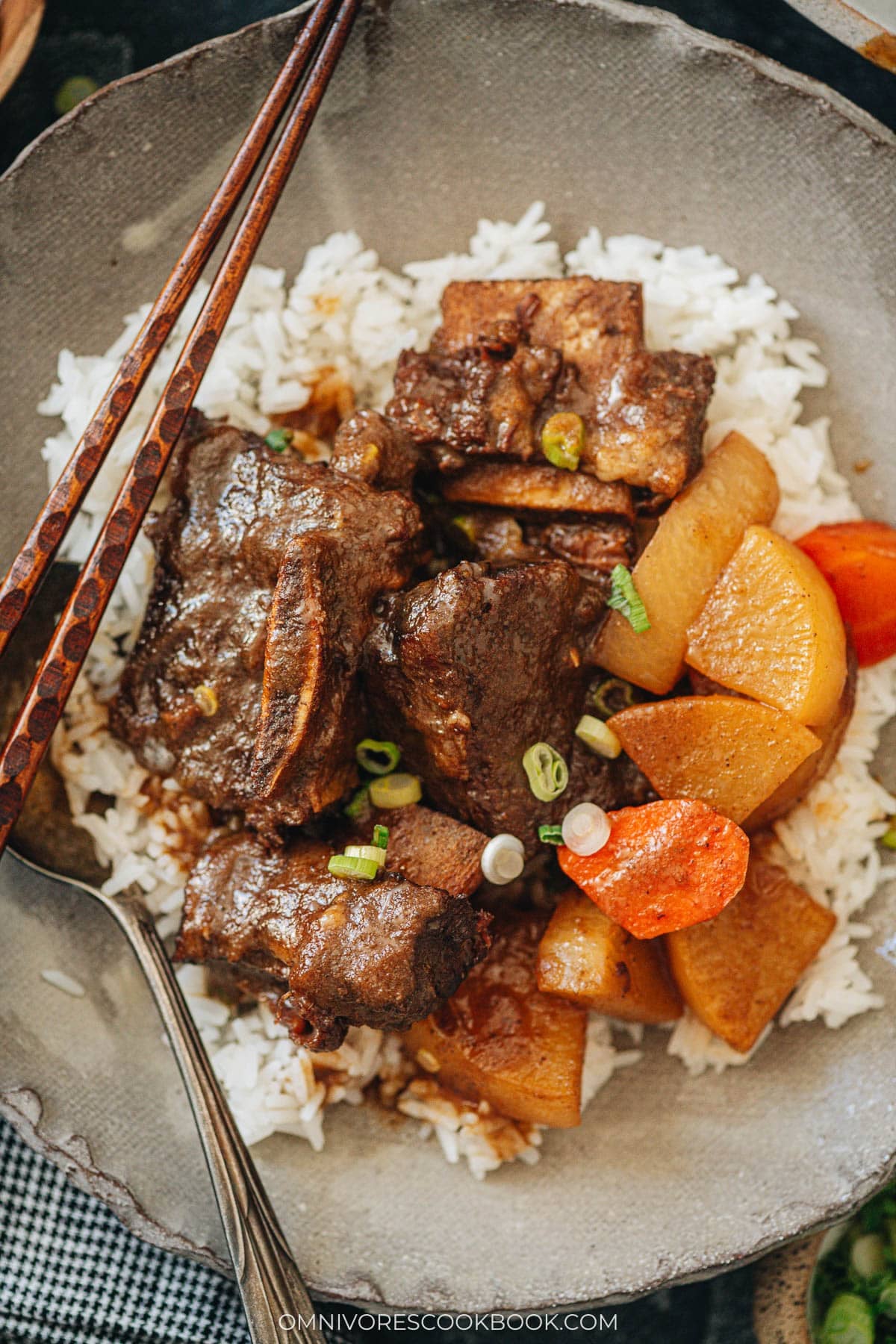
Galbi jjim is one of the most popular dishes in Korean cuisine. It is a braised short rib dish where the meat cooks low and slow until it practically falls off the bone, swimming in a rich sauce that balances savory, sweet, and fruity flavors. The traditional stovetop version takes 2 to 3 hours, but the Instant Pot cuts that down dramatically while producing the same melt in your mouth results.
I first tried galbi jjim at a Korean restaurant in New York and immediately wanted to recreate it at home. The combination of tender beef with that glossy, slightly sweet sauce reminded me of Chinese braised dishes I grew up eating, but with a distinctly Korean flavor profile. Once I figured out the Instant Pot method, it became a regular in our dinner rotation because the hands off cooking time makes it so easy for a busy weeknight.
The real trick to this recipe is blending the sauce ingredients (Asian pear, onion, garlic, ginger) into a smooth puree before pouring it over the ribs. The Asian pear adds natural sweetness and helps tenderize the meat. I soak and blanch the ribs first for a cleaner tasting broth, then pressure cook everything together. After the ribs are done, I saute carrots and daikon in the sauce to thicken it and add vegetables. I highly recommend giving this recipe a try and share it with your loved ones.
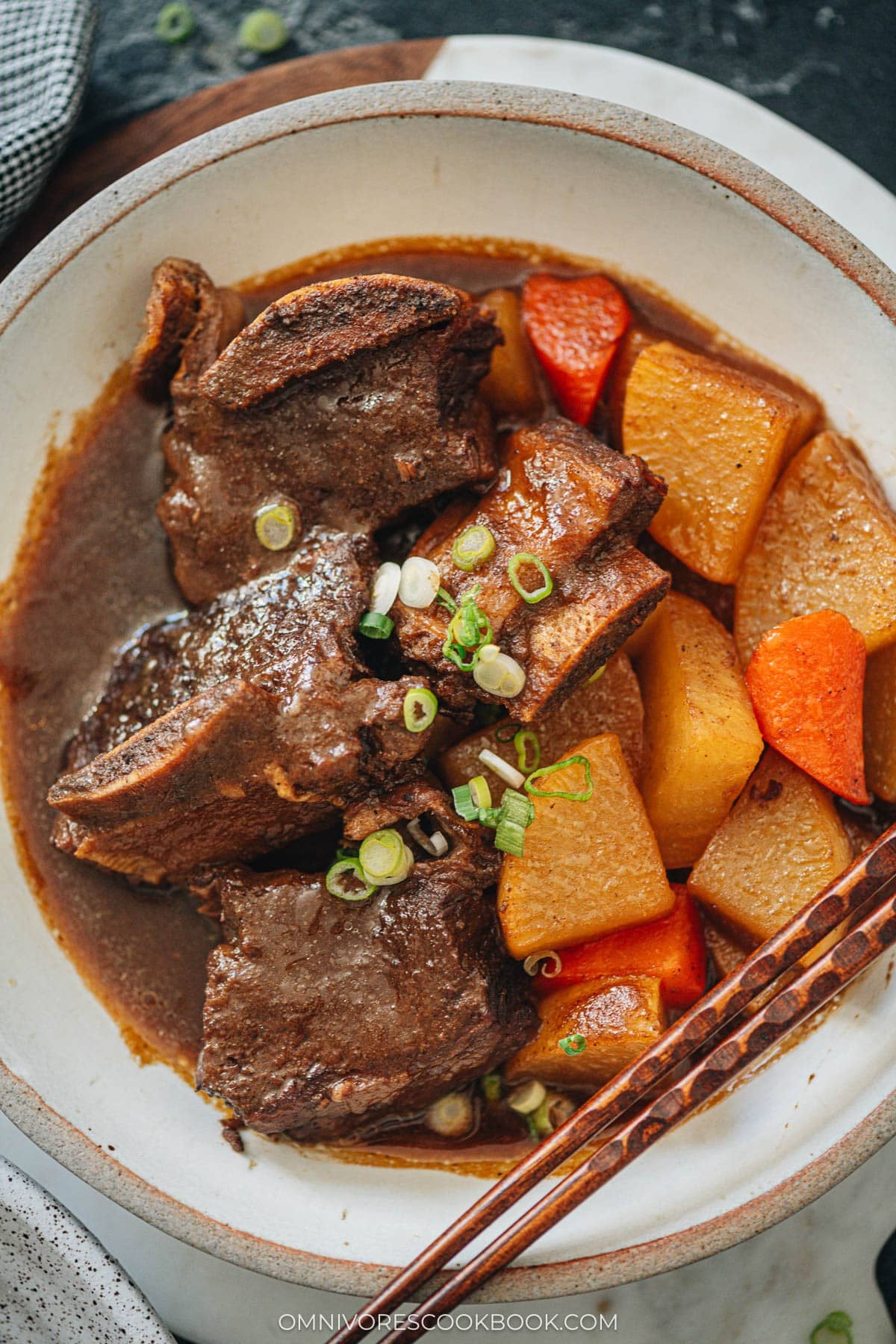
Ingredients
There are 3 parts to this recipe: the short ribs, the blended sauce, and optional vegetables that cook in the sauce at the end.
Short ribs: I use bone in beef short ribs. The bone adds flavor to the braising liquid and helps the meat stay tender during pressure cooking.
Blended sauce: I blend Asian pear, onion, garlic, ginger, soy sauce, sugar, soju, and black pepper into a smooth puree. The Asian pear is the key ingredient here because it adds natural sweetness and contains enzymes that help tenderize the beef. If you cannot find Asian pear, a red apple works as a substitute.
Vegetables (optional): I add carrots and daikon radish after the ribs are done.
How to Make
1. Soak the short ribs: Cover the ribs with cold water and let them soak for at least 20 minutes.
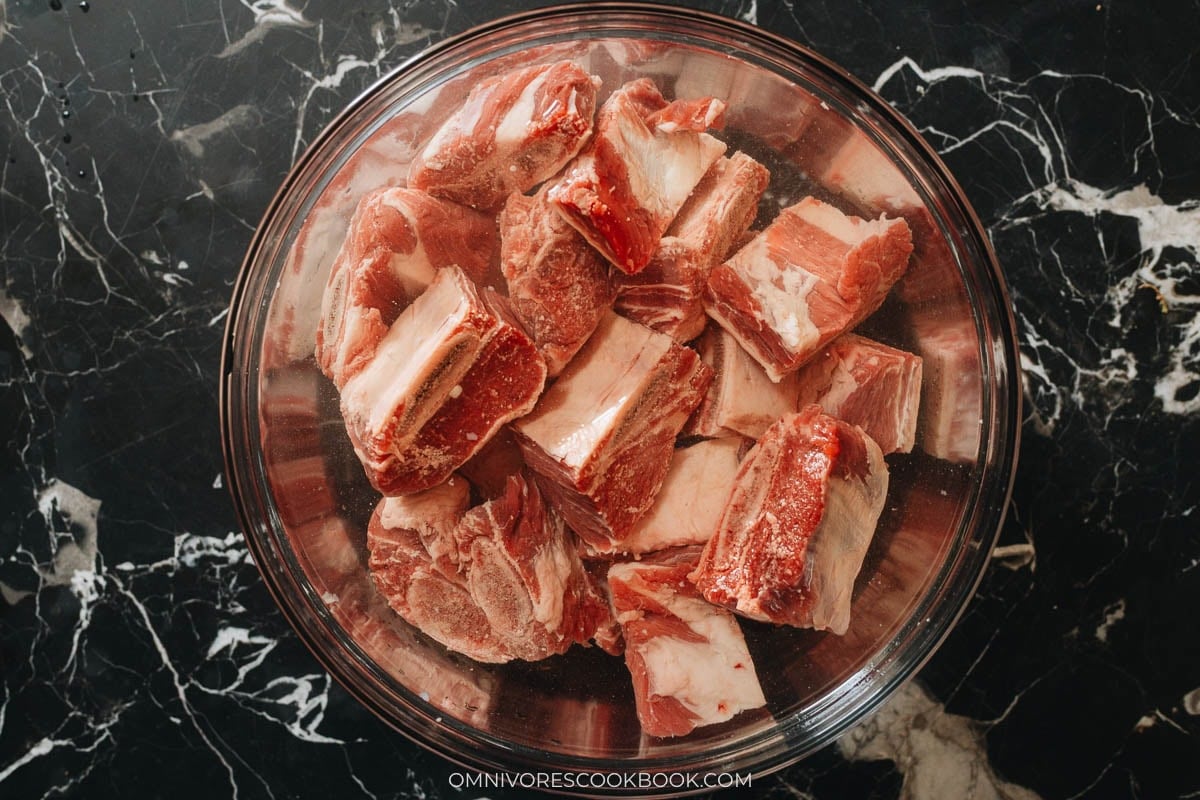
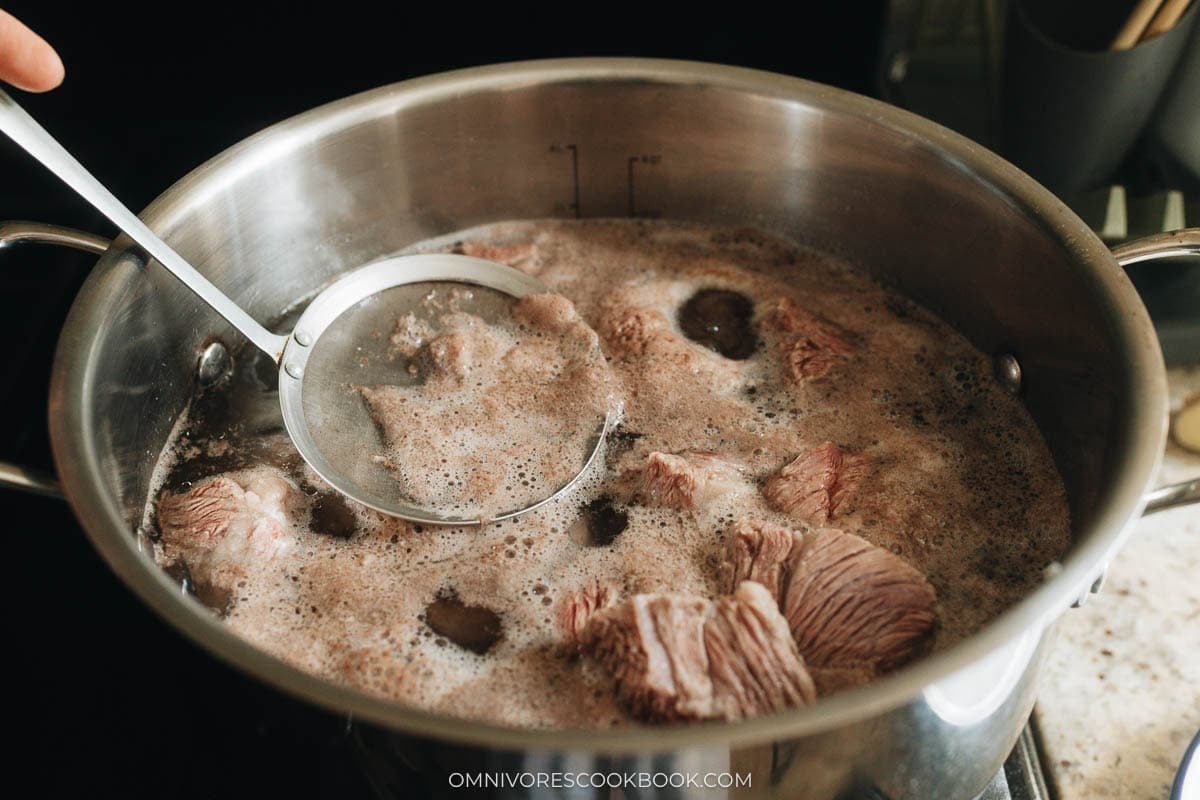
2. Blanch the ribs: Bring a pot of water to a boil, add the soaked ribs, and boil for 5 minutes. Drain, rinse under cold water to remove any residue, and trim off excess fat.
3. Blend the sauce: Combine the Asian pear, onion, garlic, ginger, soy sauce, sugar, soju, and black pepper in a blender. Blend until smooth.
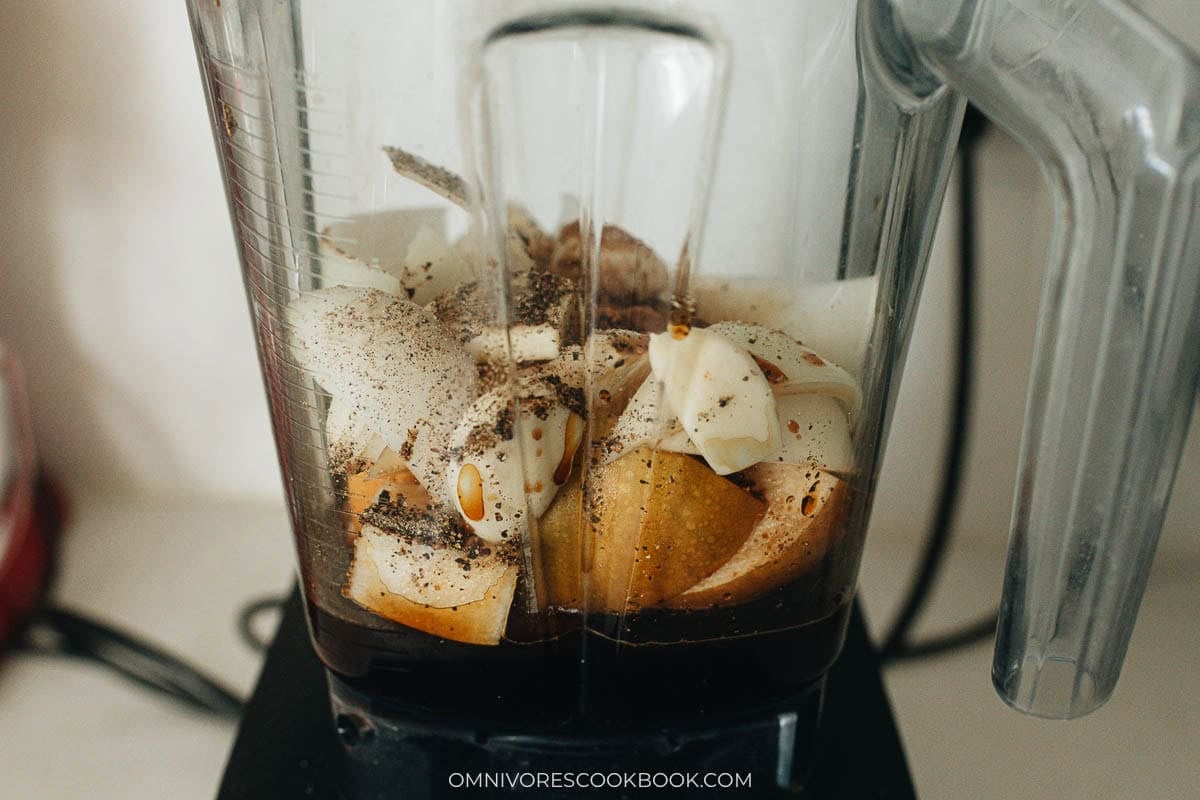
4. Pressure cook: Place the blanched ribs in the Instant Pot in an even layer. Pour the blended sauce over the ribs. Seal the lid and pressure cook on high for 45 minutes, then allow natural release for 15 minutes before opening.
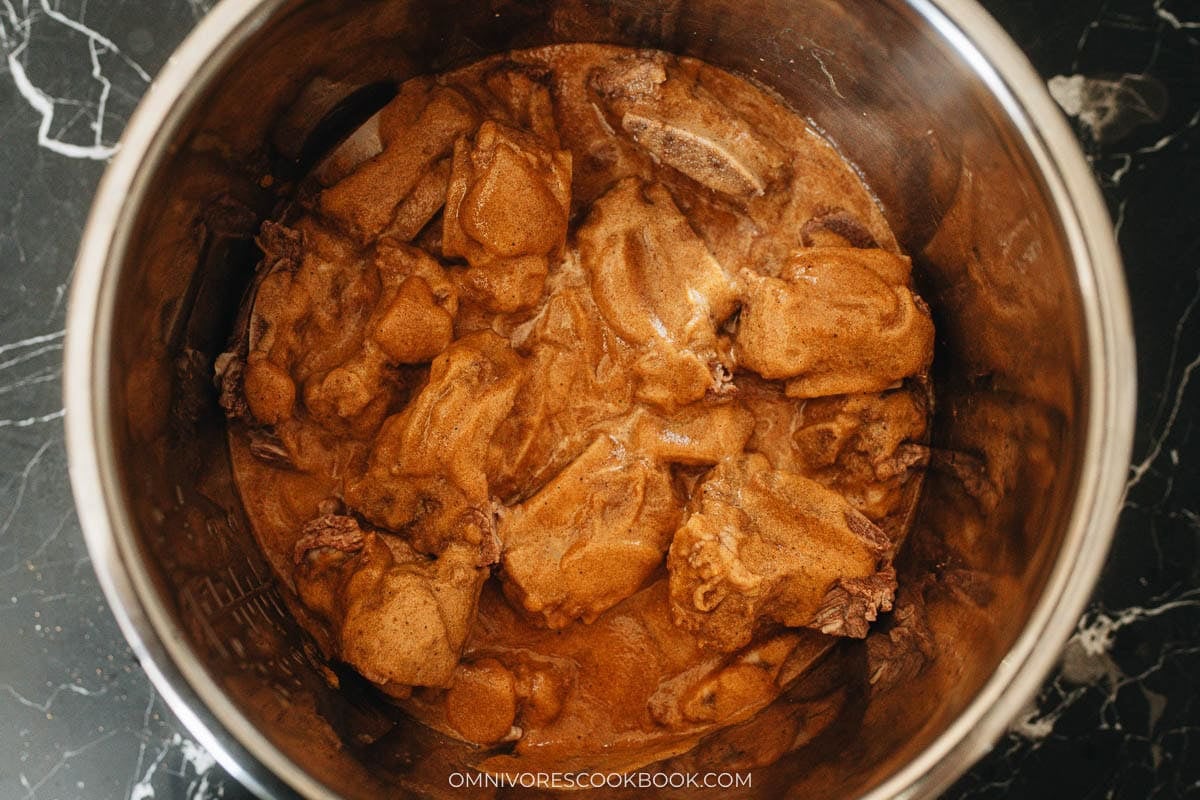
5. Saute the vegetables: Remove the ribs and set aside. Add carrots and daikon to the pot. Use the sauté function and cook for 10 to 12 minutes until the vegetables are tender and the sauce has thickened.
6. Combine and serve: Return the ribs to the pot and toss everything together in the sauce. Serve over steamed rice.
My Cooking Tips
Skim the fat after pressure cooking: Short ribs render a lot of fat during cooking. I use a ladle to skim the oil off the surface of the sauce before adding the vegetables. If you have time, you can also refrigerate the sauce so the fat solidifies on top for easy removal.
Do not quick release the pressure: Natural release for at least 15 minutes gives the ribs better texture. Quick releasing changes the pressure too suddenly and the meat will not be as tender.
Saute vegetables separately: It is tempting to add the carrots and daikon with the ribs and pressure cook everything together, but the vegetables will turn mushy.
Save the leftover sauce for noodle soup: The braising liquid makes an incredible base for a quick noodle soup. Cook thin wheat noodles, add broth, a few spoonfuls of the sauce, and leftover ribs for a 10 minute meal the next day.
Serving Suggestions
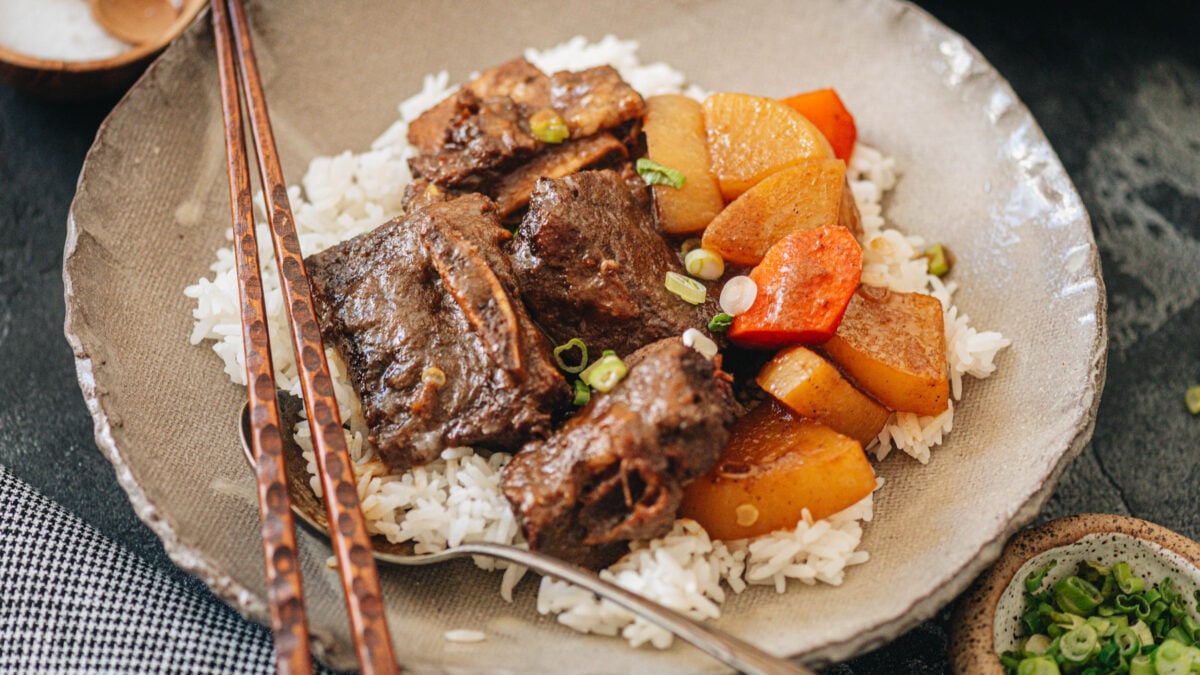
I serve galbi jjim over a big bowl of steamed rice with the sauce spooned generously on top. My family loves it with a side of kimchi and some quick pickled cucumbers to cut through the richness. On weeknights, I keep it simple and just serve the ribs and rice with whatever vegetables I already have.
When I make this for company, I plate the ribs on a large serving dish with the carrots and daikon arranged around them and the sauce drizzled on top. I place kimchi fried rice as a side, along with any Chinese stir fry vegetables. The leftovers are just as good the next day. I reheat them on the stove over low heat, or I turn them into a quick noodle soup using the soy sauce noodle recipe by building a broth base and adding noodles and protein at the end.
Frequently Asked Questions
What cut of beef short ribs works best for galbi jjim?
I use bone in beef short ribs, either English cut (single bone, thick piece of meat) or flanken cut (thin, across the bone). Both work in the Instant Pot. English cut gives you bigger, more dramatic pieces, while flanken cut cooks slightly faster and absorbs more sauce per bite.
Can I make galbi jjim without an Instant Pot?
Yes. After blanching the ribs, add them to a pot with the sauce and 2 cups of the blanching stock. Bring to a boil, then over medium heat while skim off and discard any brown bits from the top. Reduce to low and simmer covered for 3 hours, or until the ribs turn tender. Add the vegetables and continue simmering for 40 minutes to an hour until the meat is fall off the bone tender.
How should I store leftover galbi jjim?
I store leftovers in an airtight container in the fridge for up to 3 to 4 days. The sauce thickens as it cools, which is normal. Reheat on the stove over low heat with a splash of water to loosen it. You can also freeze galbi jjim for up to 2 months. The ribs and sauce actually taste even better the next day because the flavors continue to develop.
Want to Save This Recipe?
Enter your email below & we’ll send it to your inbox. Plus get great new recipes from us every week!
Korean Instant Pot Short Ribs (Galbi Jjim)
Ingredients
- 3 lbs beef short ribs
Sauce:
- 1/2 Asian pear , chopped (or 1 small red apple)
- 1/2 onion , chopped
- 8 cloves garlic
- 1 inch ginger , sliced
- 1/2 cup soy sauce
- 1/3 cup sugar
- 1/4 cup soju (or sake, or mirin)
- 1 teaspoon black pepper
Optional:
- 2 carrots , peeled & trimmed into 1-inch ovals
- 1/2 daikon , peeled & trimmed into 1-inch ovals
Instructions
- Cover the short ribs with cold water and allow them to soak, 20 minutes to a few hours. Bring a pot of water, enough to cover the short ribs, to a boil. Once the water begins to boil, rinse the soaked meat off and add it into the pot. Bring the pot back to a boil and then boil the meat for 5 minutes.
- Strain the short ribs off (reserving some of the resulting stock for later just in case) and rinse them to remove any residue and to cool them down. If any piece has a large amount of excess fat on it, you can trim that off now. Add them to the Instant Pot.
- Combine all the sauce ingredients in a blender and blend on high until the sauce is as smooth as possible. Pour the sauce over the short ribs and seal the Instant Pot. (*Footnote 1 – If you add the sauce and it doesn’t cover enough of the meat, you can add some of the blanching stock to increase the liquid level) Set to pressure cook for 45 minutes, and allow it to do the natural release for 15 minutes once done.
- At this point the short ribs are are ready to serve, but you can also take some additional steps to thicken the sauce and add vegetables:
- Remove the short ribs from the pot and cover them with foil.
- Add the vegetables (if desired) into the pot and turn on the saute function.
- Cook the sauce down, stirring occasionally, until your desired consistency is reached and the vegetables are fully cooked, 10 minutes for a crunchy texture or 12 minutes for a softer texture.
- Put the short ribs back into the pot and toss them until fully coated with the sauce.
Nutrition

Did you make this recipe?
I’d love to hear how it turned out for you! Please take a moment to leave a 5-star rating ⭐️ and share your thoughts in the comments further down the page. It really helps others discover the recipe too.
JJ
can i use kiwis instead of apples and pears? if so how many?
Maggie Zhu
I would use 2 kiwis. Asian pear is quite sweet, so your sauce might come out a little tangy by replacing with kiwis. After blending, you can taste the sauce and add more sugar if needed. I really like the flavor of kiwis and I think the dish should come out quite good. Happy cooking!
Steffie
Can i use Chinese Wine instead of vodka /sake?
Maggie Zhu
You can, but I would reduce to 2 tablespoons wine because Chinese wine is quite stronge.
Steffie
Can i use pork ribs instead?
Maggie Zhu
You definitely can. If using baby back, cook 25 minutes. If using spare ribs, cook 28 minutes.
Megan
Can an orange be used instead of an Asian pear or apple? If so, should it be a whole orange or half an orange? Thanks!
Maggie
I’m afraid an orange won’t work here because the recipe uses the pureed pear (or apple) to add thickness to the sauce.
Anna
Just made this for Thanksgiving dinner and it was so good! We absolutely loved and will definitely make this again. Thank you so much for making this easy to follow recipe!
Bambi Interligi
Made this as it’s written except I didn’t have the correct liquor so I used orange vodka.
Exceptional! Veggies were carrots and sweet potatoes.
Jane
Great flavour! Seared the ribs, then put them in the slow cooker since we don’t have an instant pot.
Leticia
Great recipe! Super easy too. I found most of the ingredients to cook your recipes at H MART. Once you have the main ones you are good to cook so many of your recipes! In this one I also added green onions 🙂
Alfred
Can I use pork short ribs instead since I don’t have beef ribs at this time? Thank you
Maggie
Yeah you can use pork ribs instead. You definitely need to use less cooking time, maybe 25 mins for babyback and 28 mins for spareribs. The cooking time might vary a bit depending on how you cut the ribs, but should be around 25 mins or so.