
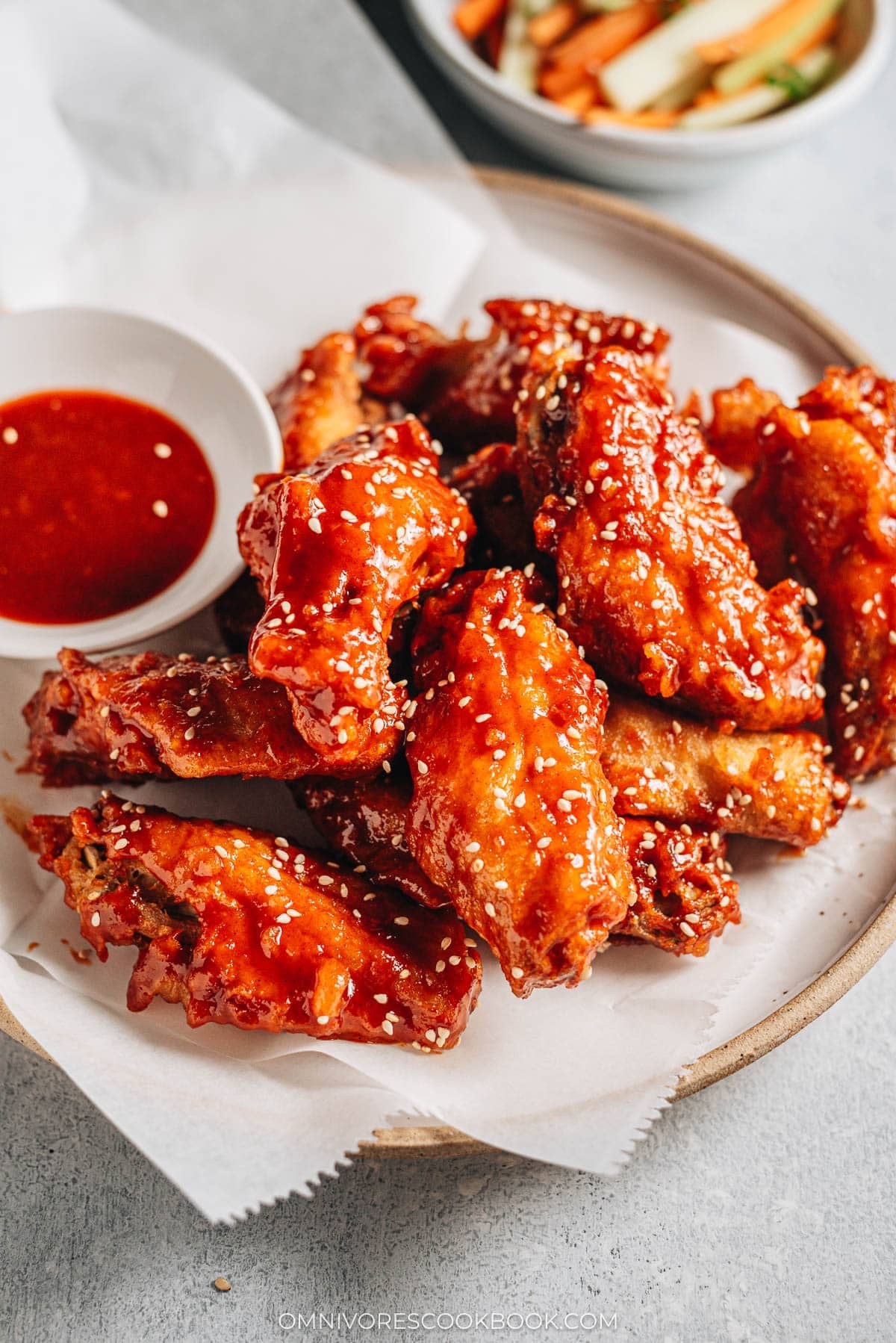
Korean fried wings are the Western home-cook version of Korean fried chicken, the double-fried, thin-batter style that took over Seoul chicken and beer shops in the 1980s and became one of the most exported Korean dishes in the world. The batter is thin and cornstarch heavy on purpose so it shatters instead of turning bready, and the sauce goes on after the second fry so the coating stays crisp under a glaze of gochujang, garlic, and sesame. Much like my Chinese fried chicken wings I absolutely love this alongside my Korean budae jjigae.
I first cooked this recipe after watching a Korean fried chicken lesson from America’s Test Kitchen Cooking School, and the 2 tricks that turned an at-home wing into a real Korean fried wing were the runny cornstarch batter and the two-stage fry. My husband and I finished a full 3 pounds of wings in one sitting the first time I made them, and I have been cooking this recipe on repeat ever since as our go-to Friday night wings.
The sequence at the stove is short even with the double fry because the batter comes together in one bowl and the sauce mixes in another while the oil heats. I microwave the sesame oil with garlic and ginger to bloom them, stir in gochujang, agave, soy sauce, and a little water for the sauce, then whisk the flour, cornstarch, and water into a thin batter, coat half the wings at a time, fry them until light golden, rest them on a rack, drop them back into oil for a second fry, and toss them in the sauce while they rest one more minute.
My recipe below includes the exact temperatures, batter ratio, and two-fry method that keep the coating perfectly crisp from the first bite to the last. Just follow my step-by-step directions and cooking tips, and I know you’ll love making this at home as much as I do!
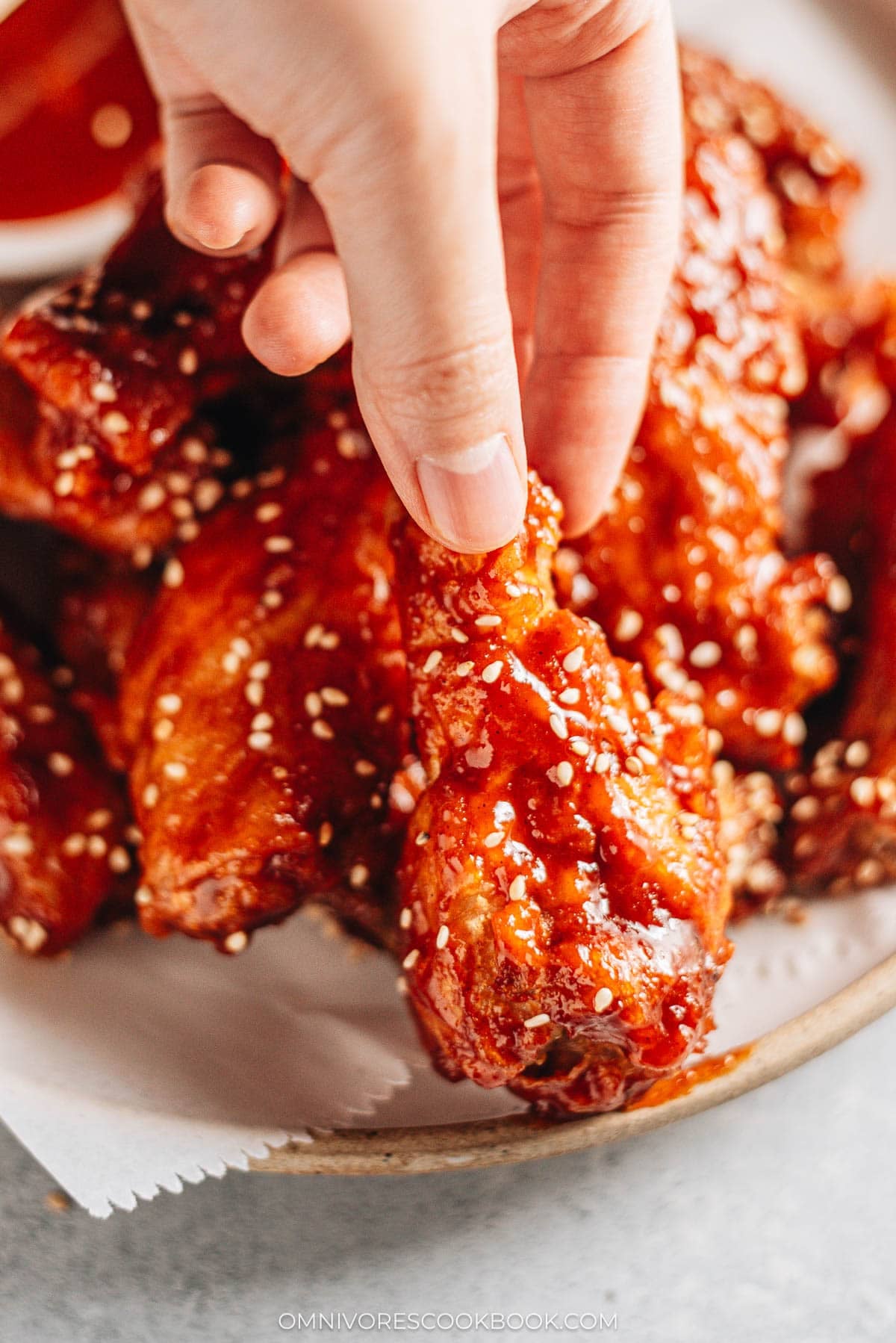
Ingredients
Making this Korean fried wings recipe is one of the most foolproof ways I know to pull takeout-shop chicken into my own kitchen because the batter and sauce come together with pantry ingredients I already keep on the shelf. Here is what I use:
Chicken wings: I use whole chicken wings cut into drums and flats because the smaller pieces submerge fully in the batter and fry through in the 7 minutes the recipe calls for.
Sauce base: I bloom toasted sesame oil with fresh garlic and grated ginger in the microwave because a 40 to 60 second bloom pulls the raw edge off the aromatics without browning them.
Gochujang and sweetener: Gochujang is the fermented Korean chili paste that gives the sauce its color, its slow heat, and its savory-fermented depth. I use agave syrup as the sweetener because it stays fluid and coats every wing in a glossy layer. Sriracha can replace gochujang, but the flavor turns brighter and less fermented, and the sauce is more Southeast Asian than Korean.
Soy sauce: I finish the sauce with regular soy sauce for the salt anchor and the savory backbone. Tamari swaps in one-for-one for a gluten-free version.
Batter: All-purpose flour and cornstarch are the two-part base of the batter, whisked with cold water into a thin runny mix that just coats the wings in a light layer. The cornstarch is the key player here because it fries into a crisp lace that holds up under the sauce, where flour alone turns bready and soaks up sauce like a sponge.
Frying oil: I use vegetable oil for the deep fry because its neutral flavor and high smoke point are what a two-stage fry needs. Refined peanut oil is my second choice when I have it on hand.
How to make
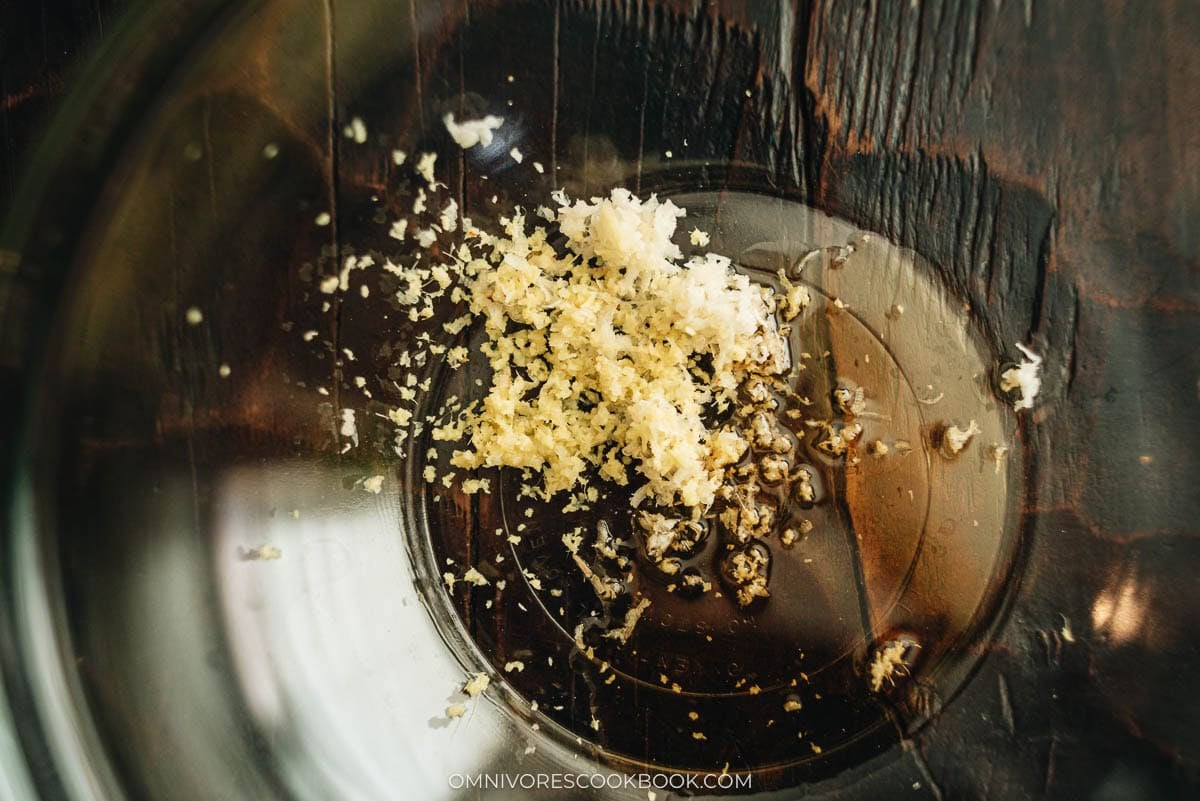
1. Bloom the aromatics: Add the sesame oil, minced garlic, and grated ginger to a large bowl. Microwave for 40 to 60 seconds until the mixture is bubbly and fragrant but not browned.
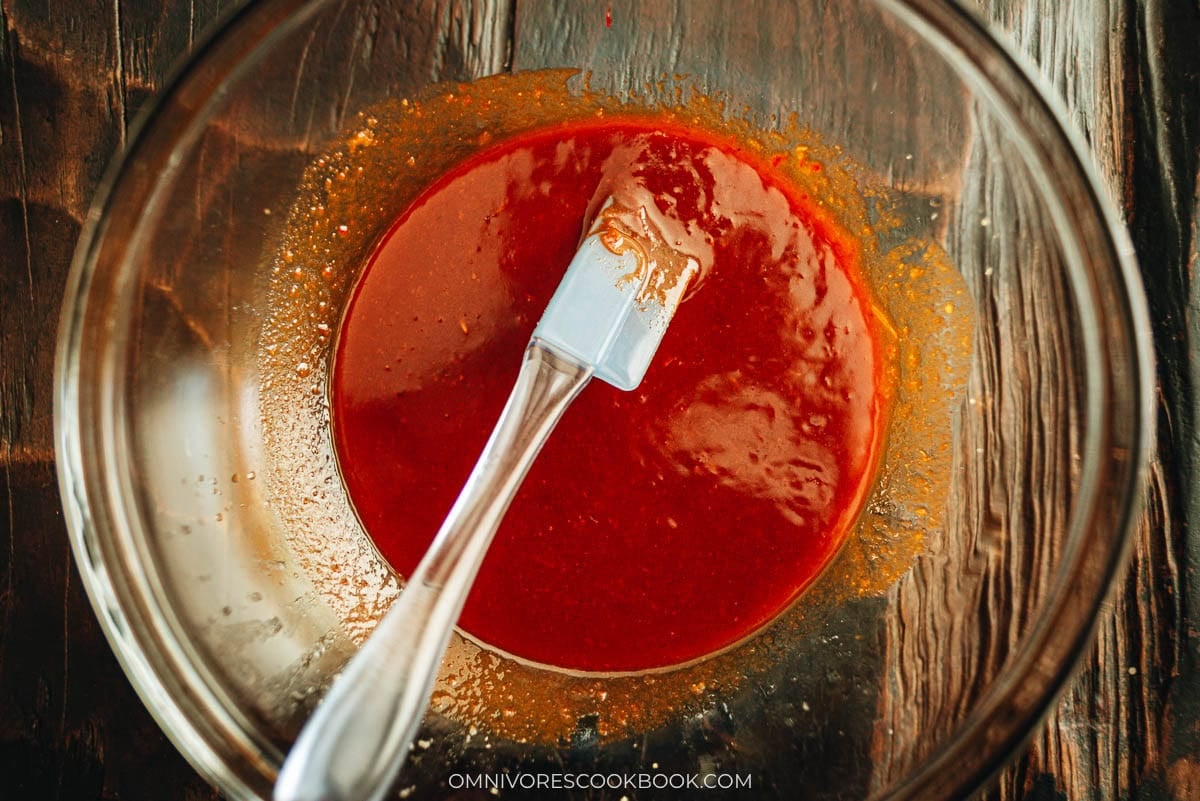
2. Mix the sauce: Whisk 3 tablespoons of water, honey, gochujang, and soy sauce into the aromatic oil until smooth. Set the bowl aside.
3. Heat the oil: Add 2 inches (5 cm) of oil to a medium pot. I like to use a high sided pot so to contain the splatter. Heat over medium heat until the oil reaches 350°F on a thermometer. Set a cooling rack over a large baking sheet.
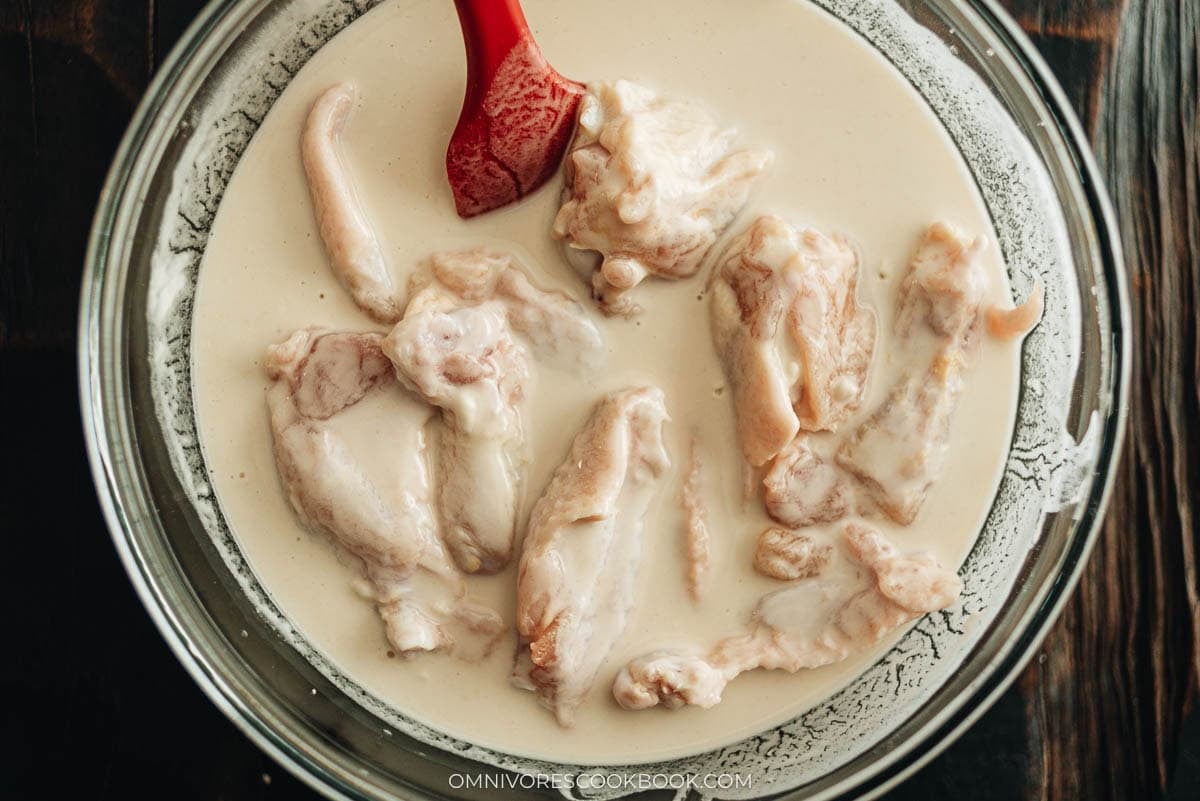
4. Mix the batter: Whisk the all-purpose flour, cornstarch, and 1 1/2 cups of water in a large bowl until the batter is smooth and thin enough to coat the back of a spoon in a light layer.
5. Coat the first batch: Add half of the wings to the batter and toss until every piece is coated completely.
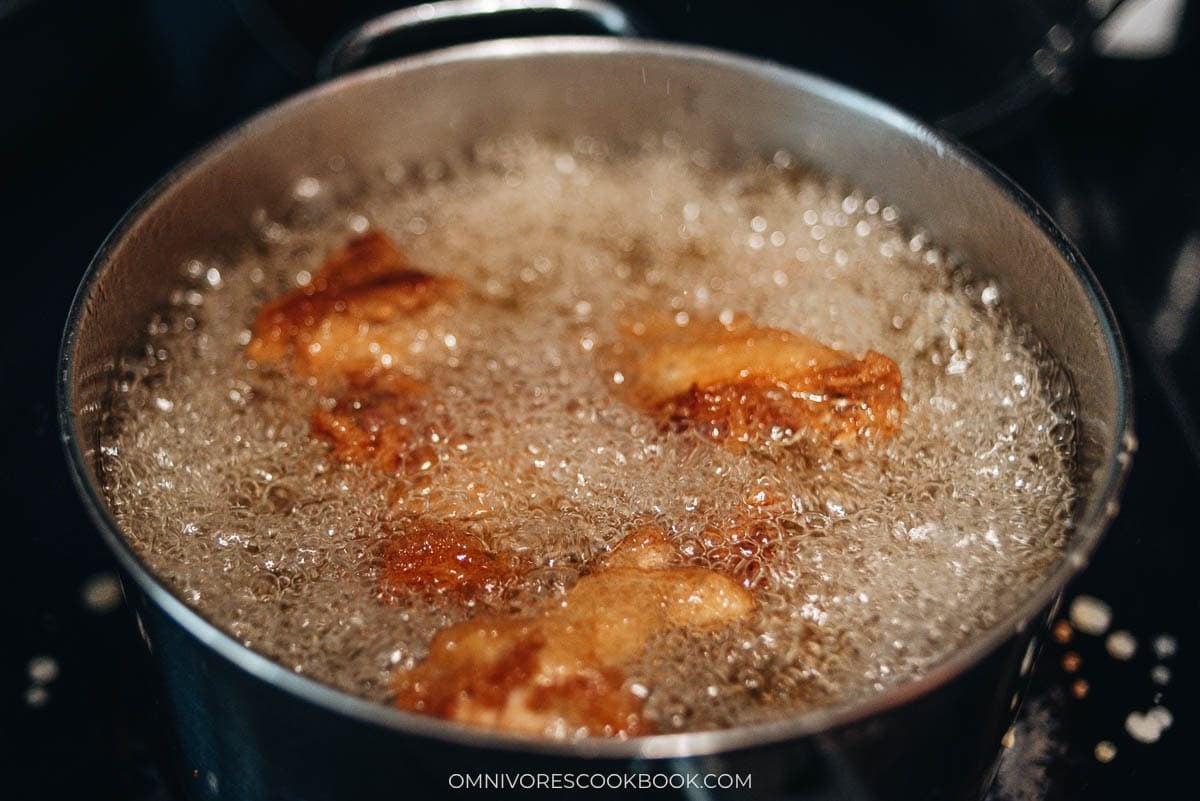
6. First fry: Carefully lower the coated wings into the oil with a pair of tongs. Turn the heat to medium-high. Cook for 1 minute without stirring so the batter sets, then stir occasionally to keep the wings from sticking. Fry for about 7 minutes until the coating is light golden.
Cool first batch: Transfer the wings to the cooling rack.
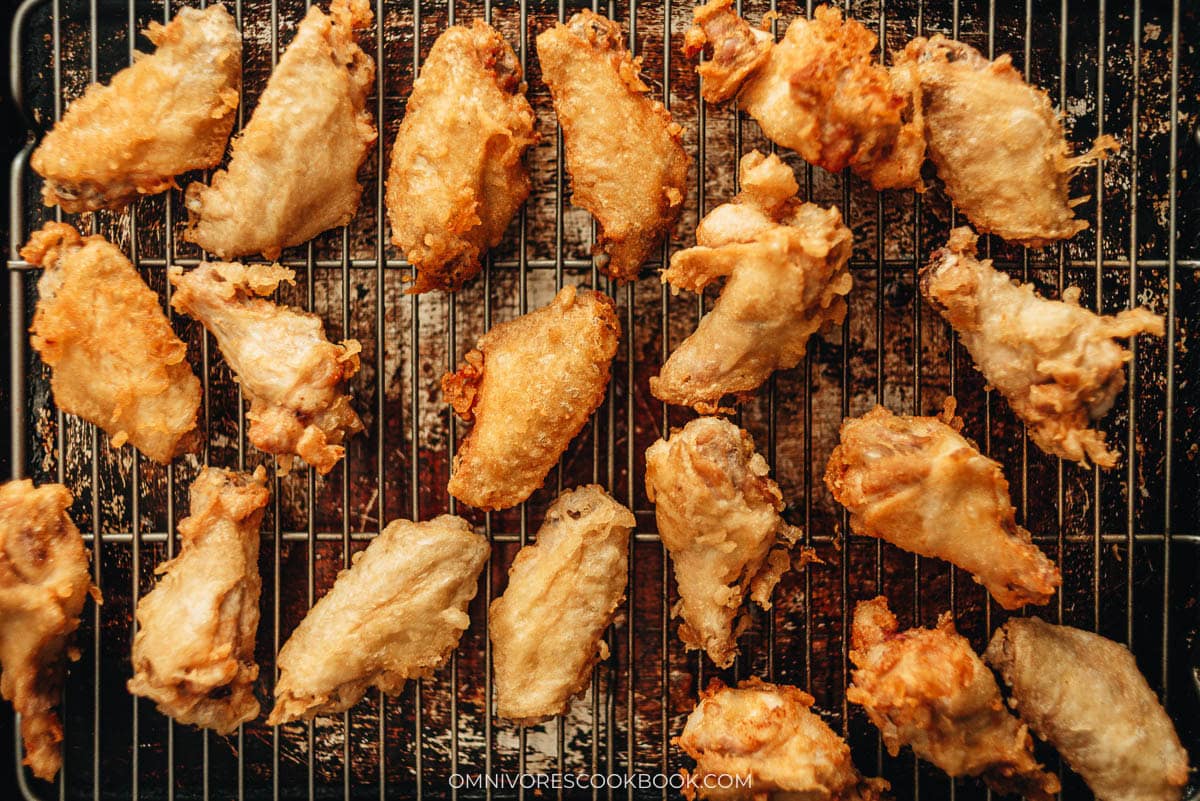
7. Fry the second batch: Wait until the oil returns to 350°F. Coat and fry the remaining wings the same way. Transfer them to the rack when the coating is light golden.
8. Heat the oil for the second fry: Reduce the heat to medium and bring the oil to 375°F.
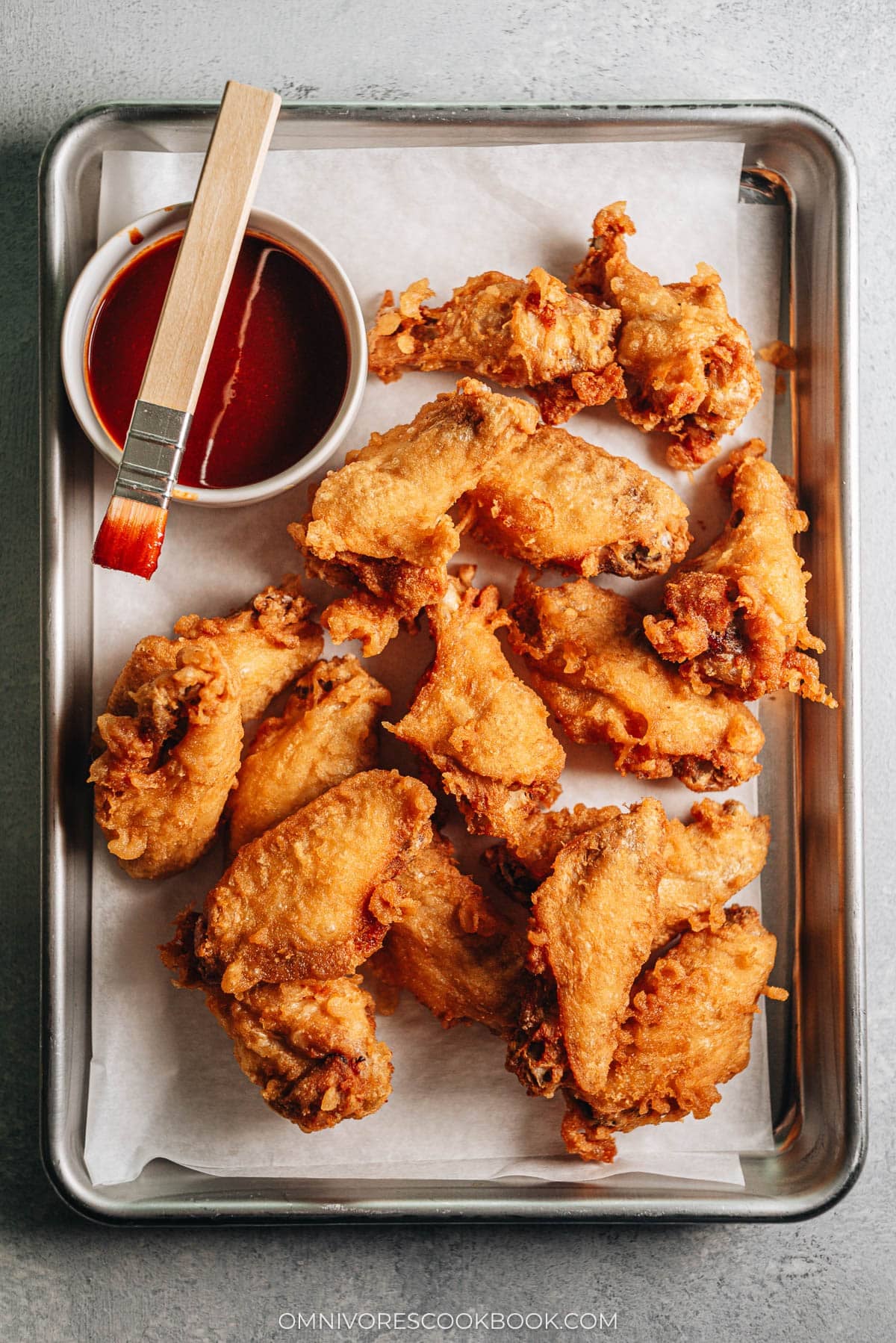
9. Second fry: Return all the wings to the oil at once. Arrange them so they are fully submerged, stir occasionally, and fry for about 7 minutes until the coating is golden brown and very crispy. Transfer the wings to the cooling rack and rest them for 2 minutes.
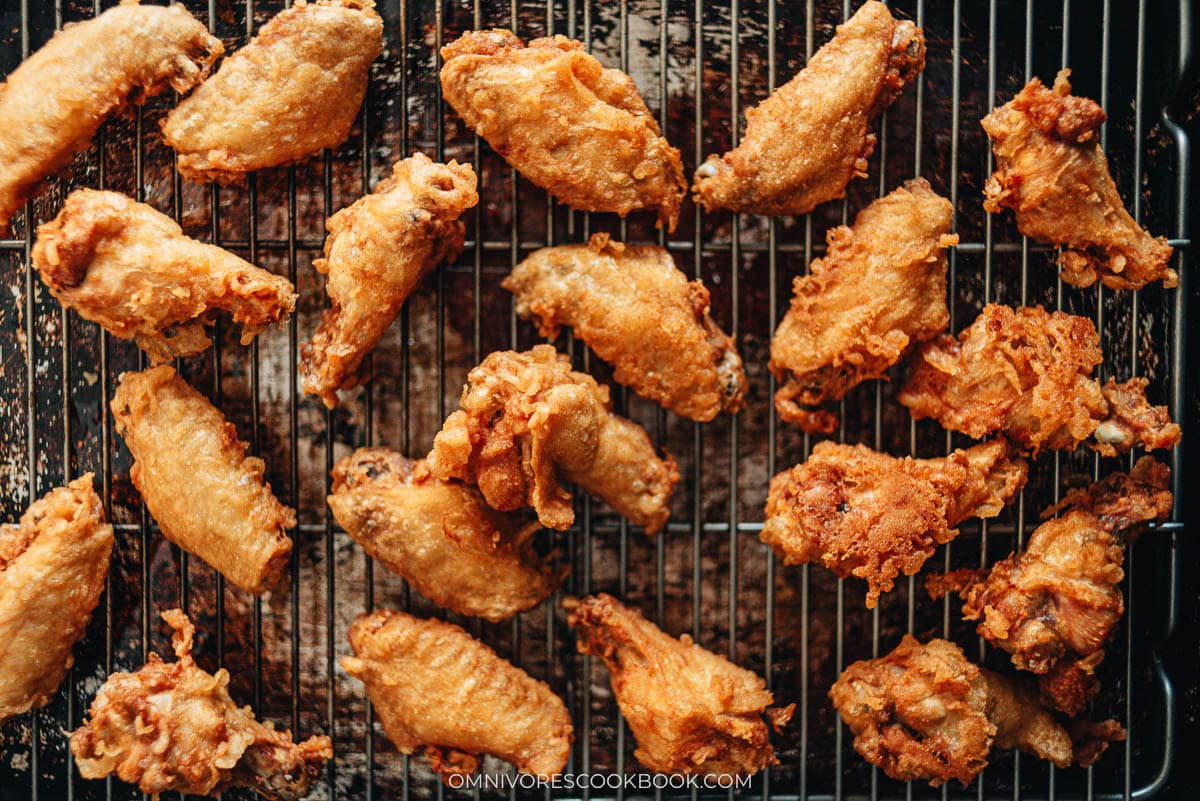
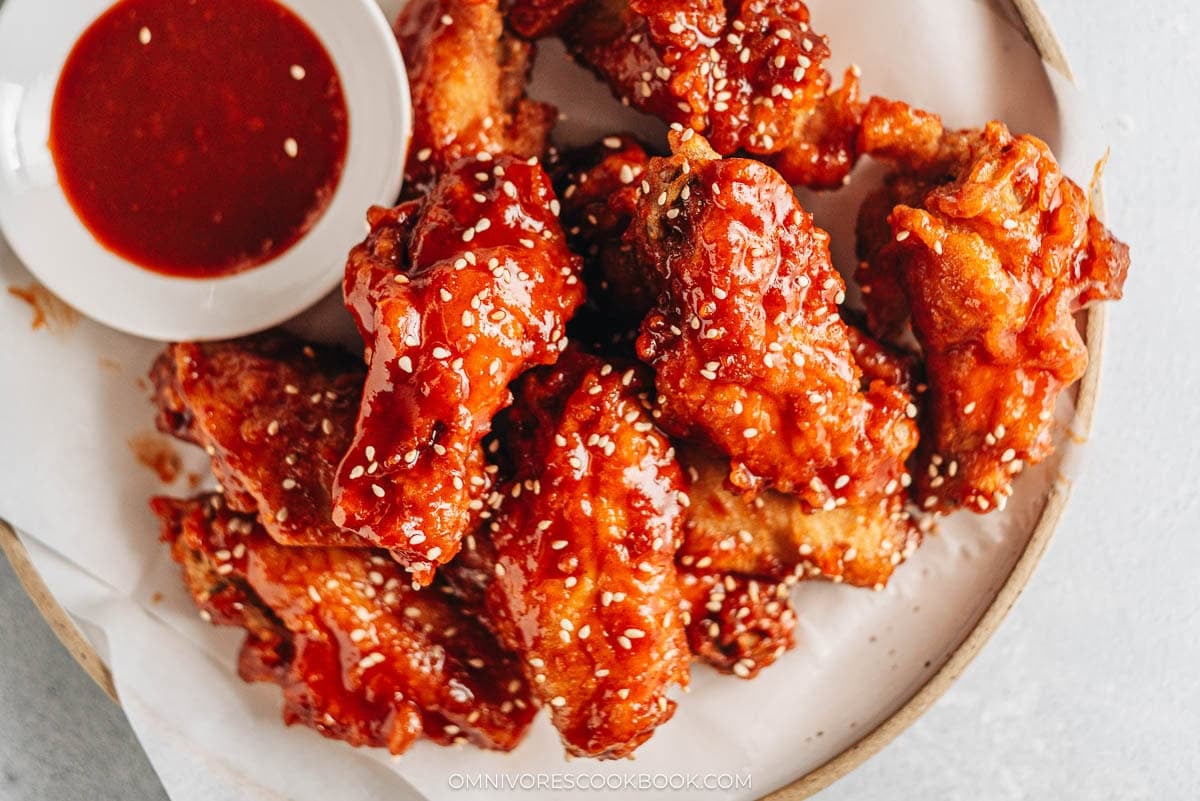
10. Toss with sauce: Transfer the wings to the bowl of sauce and turn them with a spoon until every piece is coated in a glossy red layer.
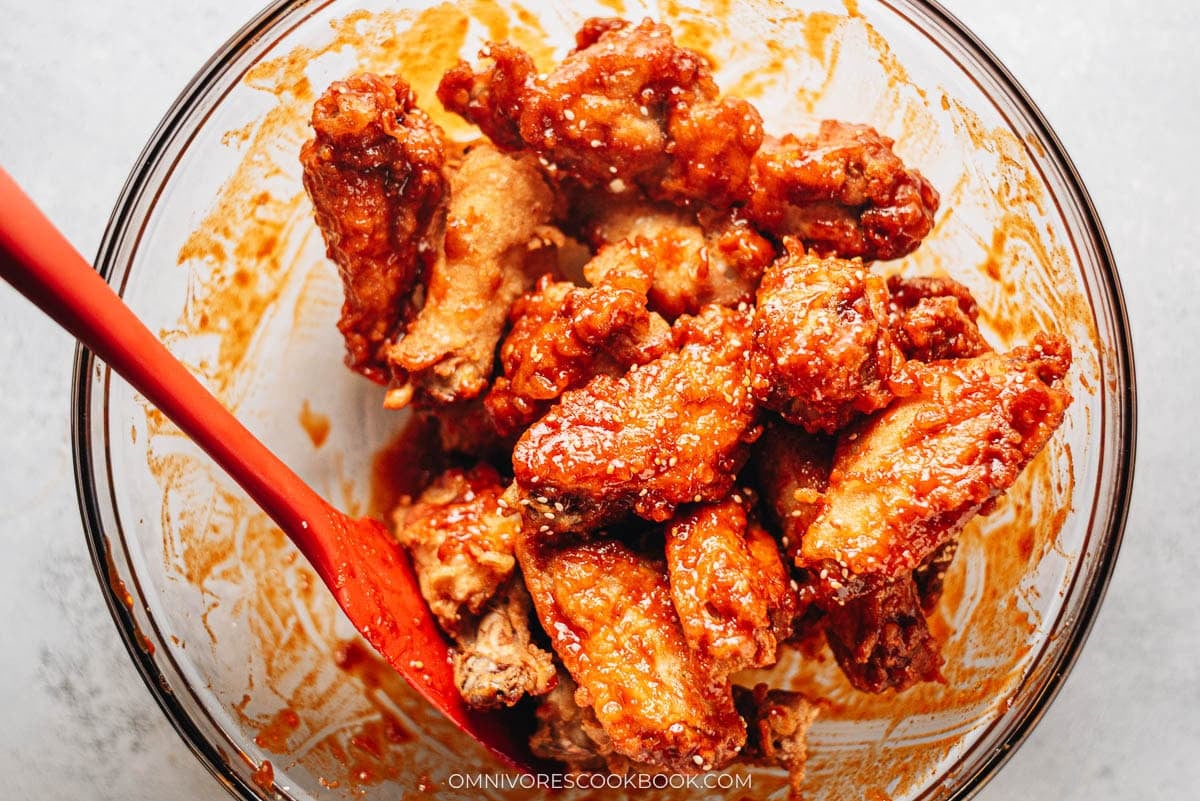
11. Set the coating: Return the wings to the rack and rest them for 2 more minutes so the sauce sets on the batter.
12. Serve: Pile the wings onto a platter as an appetizer, or serve them as a main over steamed rice with a slaw on the side.
My Cooking Tips
Pat the wings very dry before the batter goes on: Wet wings shed the batter into the oil in patches, and the bare spots stay pale and greasy through the second fry. I dry each piece with paper towels front and back, right before I dip them into the batter, so the coating grips the skin in one clean layer.
Keep the batter thin, not pancake-thick: A batter that looks like heavy cream is too thick and fries into a bready shell. The right batter should ribbon off the whisk in a thin stream and just coat the back of a spoon. I add a splash of cold water at a time if the batter thickens as it sits, and I do not chase a thicker coating by adding more flour.
Use a clip-on thermometer, not a guess: The two frying temperatures do different jobs. The 350ºF (176ºC) for the first fry sets the batter and cooks the chicken through, and 375ºF (190ºC) for the second fry crisps the shell without overcooking the meat. I clip the thermometer to the side of the pot and watch it between batches instead of eyeballing the oil.
Do not crowd the pot: Frying half the wings at a time is not a suggestion. When too many wings go in at once, the oil temperature drops, the batter goes limp, and the coating turns greasy. I fry in 2 batches, wait for the oil to climb back to 350 between them, and my second batch comes out as crisp as the first.
Sauce after the second fry, not before: The whole point of this recipe is a batter that stays crisp under the sauce. If the wings sit in the sauce longer than a quick toss, the coating starts to soften from the moisture in the gochujang. I toss the wings in and pull them back out to the rack fast, then let the sauce set for 2 minutes before serving.
Serving Suggestions
I serve these wings directly from the rack while the coating is still hot from the second fry because the crispness peaks in the first 10 minutes and the sauce is at its glossiest right after it sets. Oh.. my! On a party night I pile them onto a big platter with a stack of napkins and set them out as the main appetizer. On a weeknight I plate them over a bowl of steamed rice with a quick cabbage slaw on the side.
For a fuller Korean party I put these wings out with a Korean seafood pancake for the crispy-edge companion, along with bowls of steamed rice and kimchi. When my friends want a wing variation instead of a Korean-only spread, I make a second batch of air fryer honey sriracha wings or my homemade Chinese honey soy chicken wings so they can have a sweeter, less spicy option next to the gochujang tossed batch.
Frequently Asked Questions
Can I make these wings in an air fryer?
I would say not recommended for this particular recipe. The very thin, wet batter is designed for deep frying and won’t produce the same coating in an air fryer. Check out my air fryer chicken wings for crispy wings, and air fryer honey sriracha wings for saucy wings.
How long do the wings stay crispy after frying?
The coating stays crisp for a good half hour on the rack after the sauce sets, and the wings hold their crunch even when they cool to room temperature, which is what makes them the right pick for a party platter. Leftover wings keep their texture better than most fried chicken because of the cornstarch in the batter, and mine were still crunchy after they sat out for the whole photo shoot on the day I first tested this recipe.
Why did my fried chicken wings turn out greasy or soggy?
The most likely culprit is oil temperature dropping too much. Don’t overcrowd the pot, and let the oil return to the specified temperature between batches.
Can I reuse the frying oil?
Yes. Let it cool completely, strain out the solids, and store it in a sealed container for reuse.
Want to Save This Recipe?
Enter your email below & we’ll send it to your inbox. Plus get great new recipes from us every week!
Korean Fried Chicken Wings
Ingredients
- 3 lbs chicken wings
Sauce
- 1 tablespoon toasted sesame oil
- 2 large cloves garlic , minced ( yield approx. 1 teaspoon)
- 1 teaspoon grated ginger
- 3 tablespoons honey (or sugar) (*Footnote)
- 2 to 3 tablespoons Gochujang (or Sriracha sauce)
- 1 tablespoon soy sauce
Deep fry
- Vegetable oil , for deep frying
- 1 cup all-purpose flour
- 3 tablespoons cornstarch
Instructions
- Add sesame oil, garlic, and ginger in a large bowl. Microwave until the mixture is bubbly and the herbs are fragrant but not browned, 40 to 60 seconds.
- Add 2 to 3 tablespoons water (*Footnote 1), honey (or sugar), Gochujang (or Sriracha), and soy sauce until smooth. Set aside.
- Heat 2 inches (5 cm) of oil medium dutch oven (or heavy duty pot) over medium heat until it reaches 350 degrees F (176°C). Place a cooling rack over a large baking sheet.
- Whisk the all-purpose flour, cornstarch and 1 and 1/2 cup water in a large bowl until it forms a smooth, runny batter. Add half of the wings. Toss to coat evenly.
- When the oil is ready, carefully add the wings using a pair of tongs. Turn to medium-high heat. Let cook for a minute to allow the batter to set. Then stir occasionally to prevent the wings from sticking. Fry until the coating is light golden, about 7 minutes. Transfer wings to the cooling rack.
- Wait until the oil returns to 350°F (176°C). Cook the remaining wings using the same method.
- Reduce the heat to medium and heat oil to 375°F (190°C).
- Return all the wings back to the oil. Arrange them so they are submerged in the oil. Stir occasionally and fry until deep golden brown and very crispy, about 7 minutes. Transfer the wings to the cooling rack and leave to rest for 2 minutes.
- Transfer the wings to the big bowl with the sauce. Toss gently until evenly coated. Return the wings to the rack and leave to rest for 2 minutes, until the coating sets.
- Serve on a platter as an appetizer, or as a main dish over steamed rice and slaw.
Notes
- If you use Sriracha sauce instead of Gochujang, only add 2 tablespoons water.
Nutrition

Did you make this recipe?
I’d love to hear how it turned out for you! Please take a moment to leave a 5-star rating ⭐️ and share your thoughts in the comments further down the page. It really helps others discover the recipe too.
Joe
Sesame seeds are clearly shown in multiple photos yet never mentioned. A small point, though I sought a recipe for sesame seed wings. I will toast them and sprinkle on after the sauce.
Great site, excellent recipes… many thanks!
Julian
The water in step 2, is not listed in the ingredients ?
Maggie Zhu
Hi Julian, you’re right, the water was extra and was not listed in the ingredient list.
Daniela
These were probably the best wings I have ever had. They were amazing! I made them for a friend’s birthday and they were a huge hit. Looking forward to trying more of your recipes.
Hema
Thanks Guys, Your Recipe Was Too Fantastic. Me and My Family Loved it. I Will Share your Rrecipe with my friends. Hope they will love it too.
Karisa
These were truly delicious! Perfectly crunchy and the flavors were fantastic. We followed the recipe exactly with the exception of using garlic powder vs fresh. Wouldn’t change a thing!
Wei @ Red House Spice
Oh! This looks so yummy! Even if I’m not a fan of deep frying, your photos seem to have the power to convince me to have a try. Gochujang? Is it the type of chilli paste we use to prepare Bibimbap (石锅拌饭)?
Chris Waghorn
I love your recipes. This is yet another one I want to try. When I get together with the guys we usually end up eating Buffalo Wings, but I think next time I might have to introduce these.