
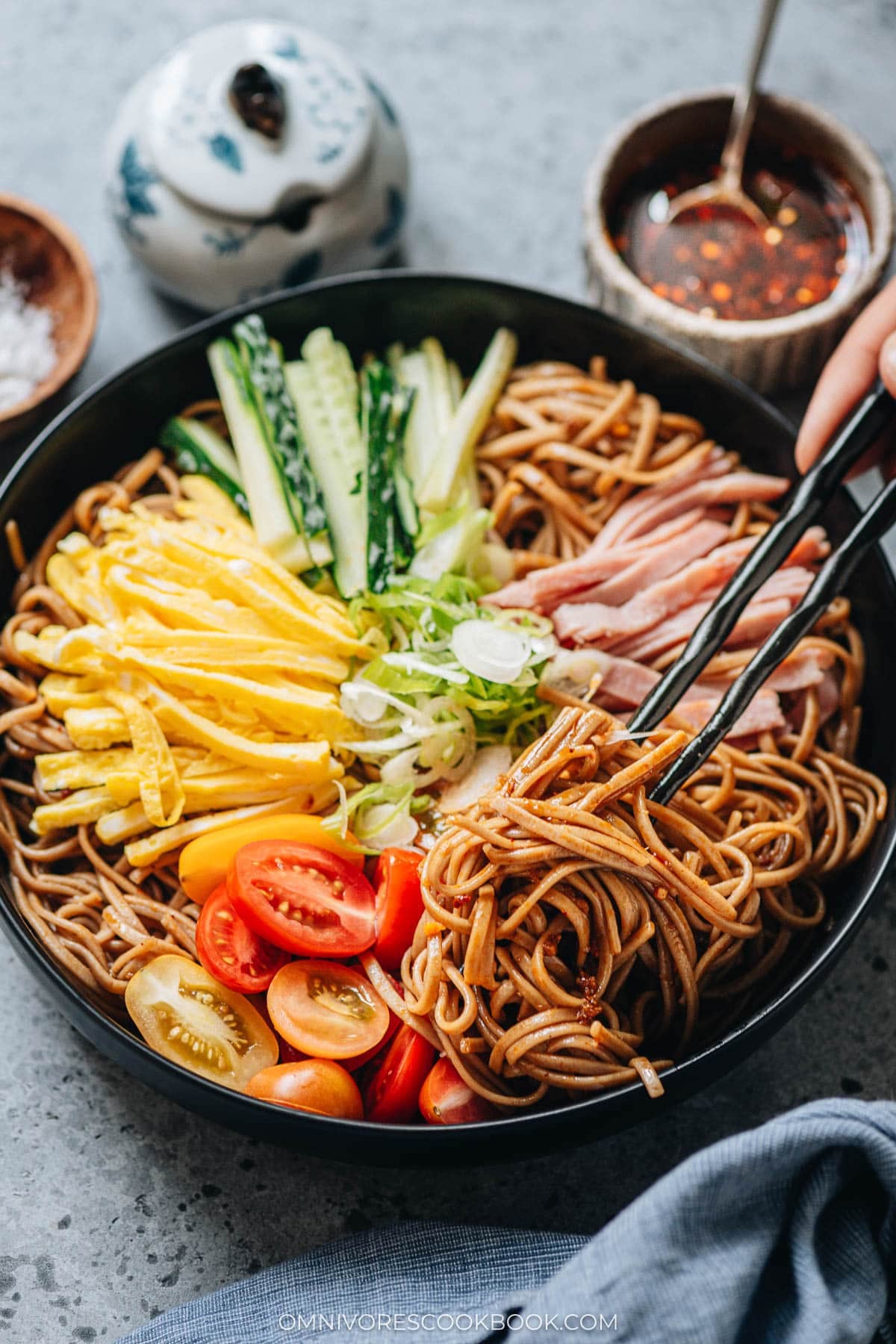
Buckwheat noodles have a long tradition across northern and northwestern China. In places such as Shaanxi, Shanxi, Gansu, and Inner Mongolia, cooks turn buckwheat flour into 荞面饸饹, or qiaomian hele, a softer dough pressed through a dedicated noodle press straight into boiling water so the strands come out thicker and a little irregular. Japanese soba is different, rolled and cut into thin even strands, but it shares that same earthy buckwheat character, which is why it slides so well into a cold dressed bowl like this or a plate of cold sesame noodles.
My grandparents came from Dongbei in northeastern China, where the cooking has long been shaped by the region large Korean community and the nearby Korean border. My grandma made her own kimchi at home, and through the summer she put out Korean style cold noodle soup, 朝鲜冷面, or cold buckwheat noodle salads, so buckwheat noodles were part of my childhood. Those summer bowls are still what I think of the moment the weather turns warm.
Because fresh Chinese buckwheat noodles like qiaomian hele are hard to find where I live in the US, I use dried Japanese soba instead, which is widely available and keeps that earthy buckwheat flavor in a cold salad dressed with soy sauce, vinegar, chili oil, and garlic. I boil and rinse the noodles, cook a quick thin egg crepe to slice into strips, whisk the dressing, then toss and pile on the toppings cold. When the kitchen is too warm to cook anything heavy, I recommend you to put this one together using the steps below for a cold noodle bowl that taste incredible.
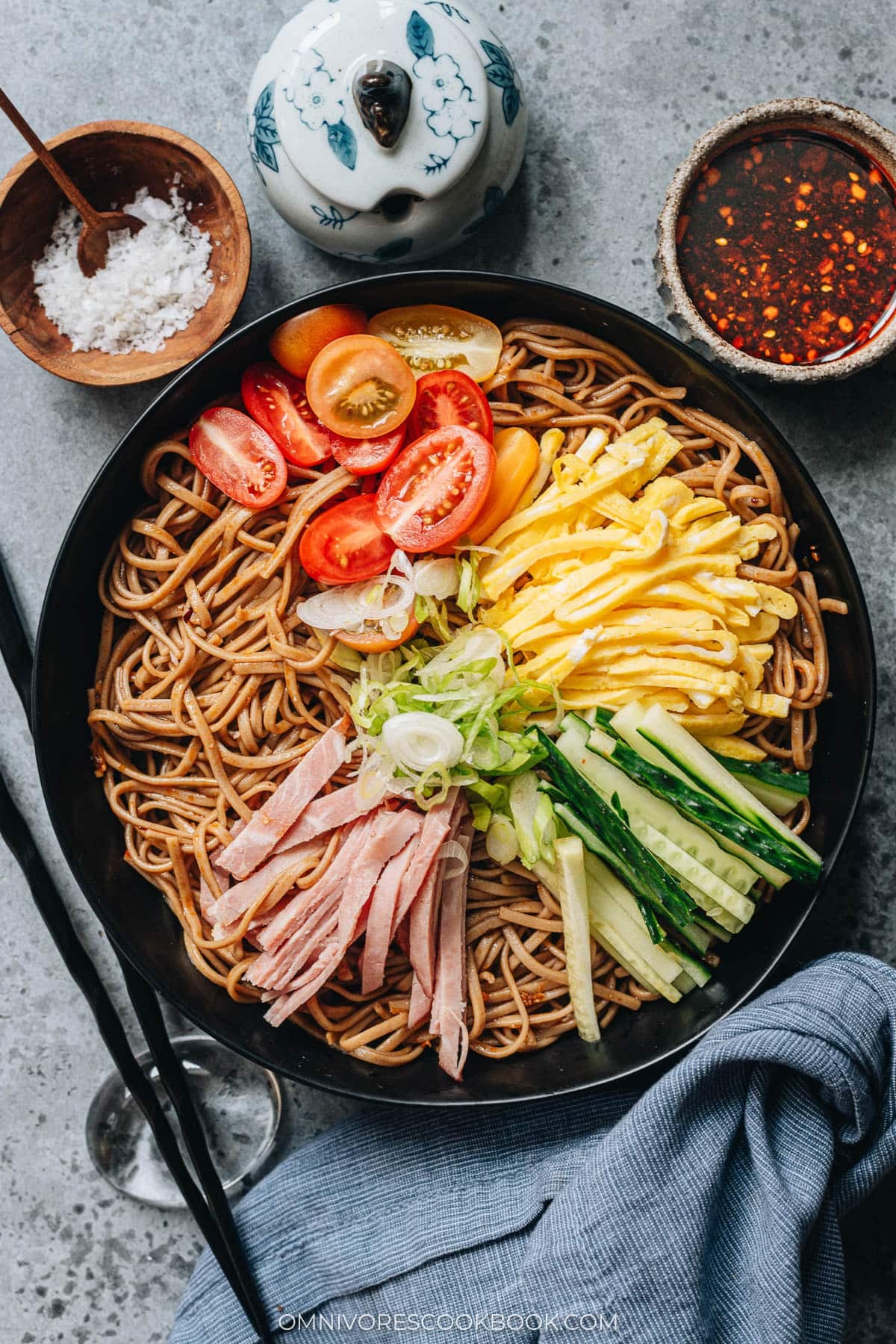
Ingredients
The list splits into a bowl of noodles, a quick egg crepe, a pantry dressing, and a handful of fresh toppings, so almost none of it needs real cooking. Here is what I use:
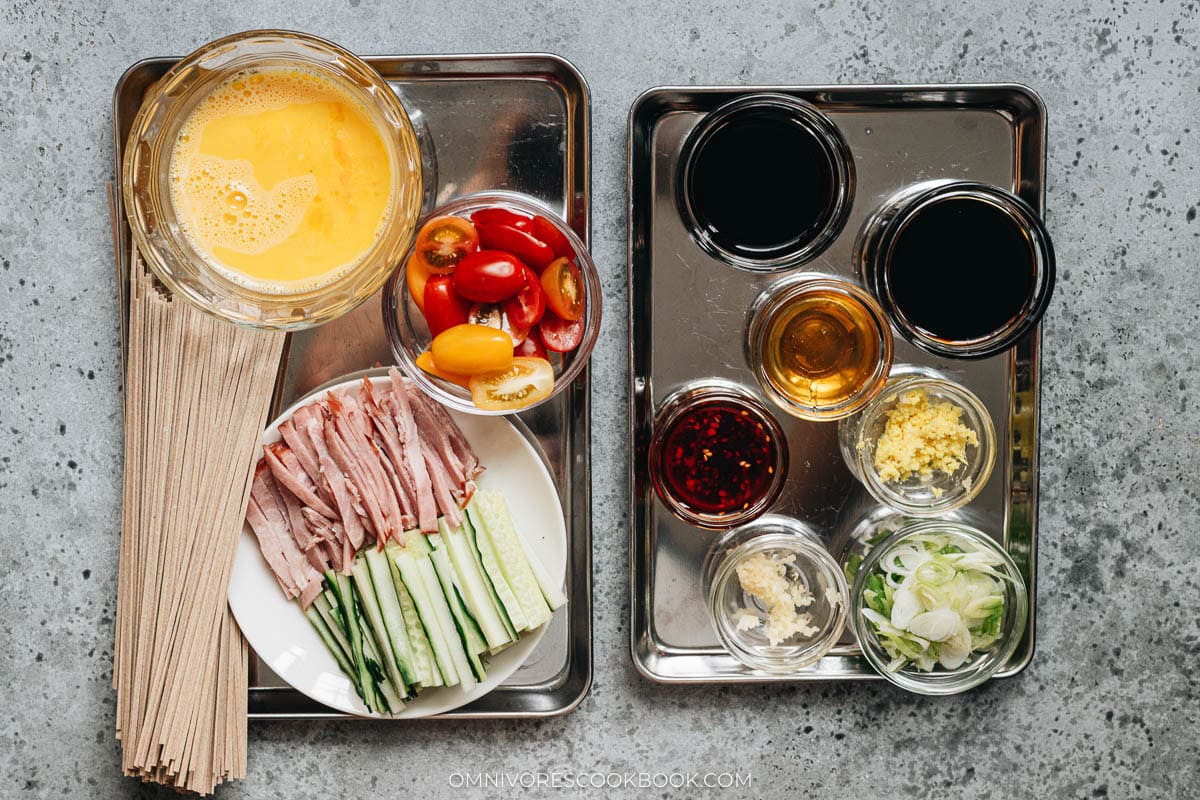
Buckwheat noodles: I use dried Japanese soba because fresh Chinese buckwheat noodles are hard to track down here. I look for a soba with a good share of buckwheat flour so the noodles taste earthy rather than plain. Some brands are all buckwheat while others cut it with wheat, and either works here as long as the buckwheat flavor comes through.
Dressing: I whisk together light soy sauce, Chinkiang vinegar, Chinese chili oil with some of its flakes, honey, grated garlic, and grated ginger.
Egg: I beat a couple of eggs with a pinch of salt and cook them into one thin sheet.
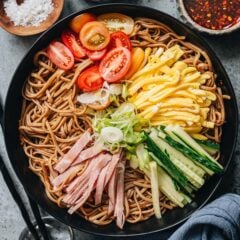
Toppings: I use thinly sliced uncured ham, scallion, julienned Persian cucumber, and halved cherry tomatoes. I count on the cucumber and tomato for a cool crunch and a little juice, the ham for a savory bite, and the scallion for a fresh sharp finish.
How to Make
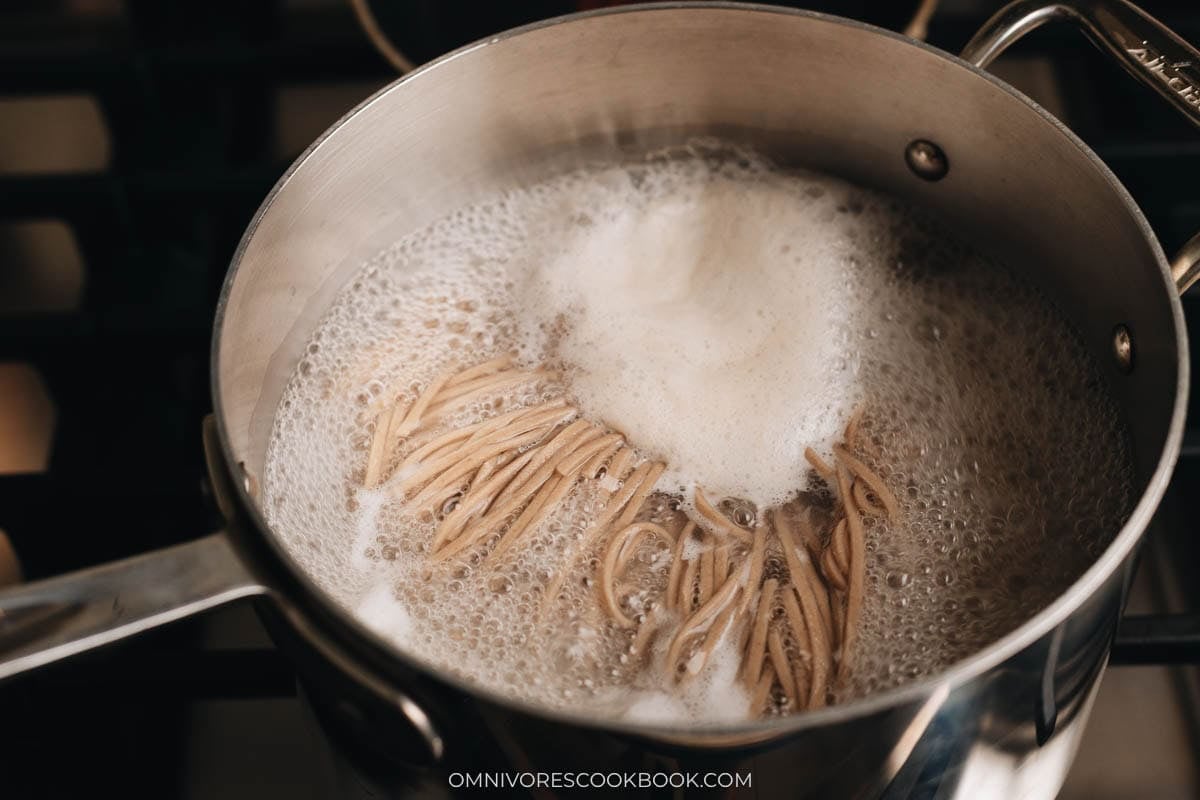
1. Cook the noodles: Bring a large pot of water to a boil. Cook the soba according to the package instructions until al dente. Drain and rinse under cold running water to stop the cooking, then drain thoroughly and transfer to a large bowl.
2. Cook the egg: Spray or drizzle a little oil onto a large nonstick skillet and wipe it with a paper towel so the pan is coated in a very thin film. Heat over medium heat until hot, about 20 seconds. Pour in the beaten eggs and swirl the skillet right away so they spread into a thin, even round.
3. Set and fold the egg: Cook until the eggs are mostly set, 1 to 2 minutes, then turn off the heat. Use a spatula to slowly loosen the egg and fold it over 2 to 3 times, then transfer it to a cutting board.
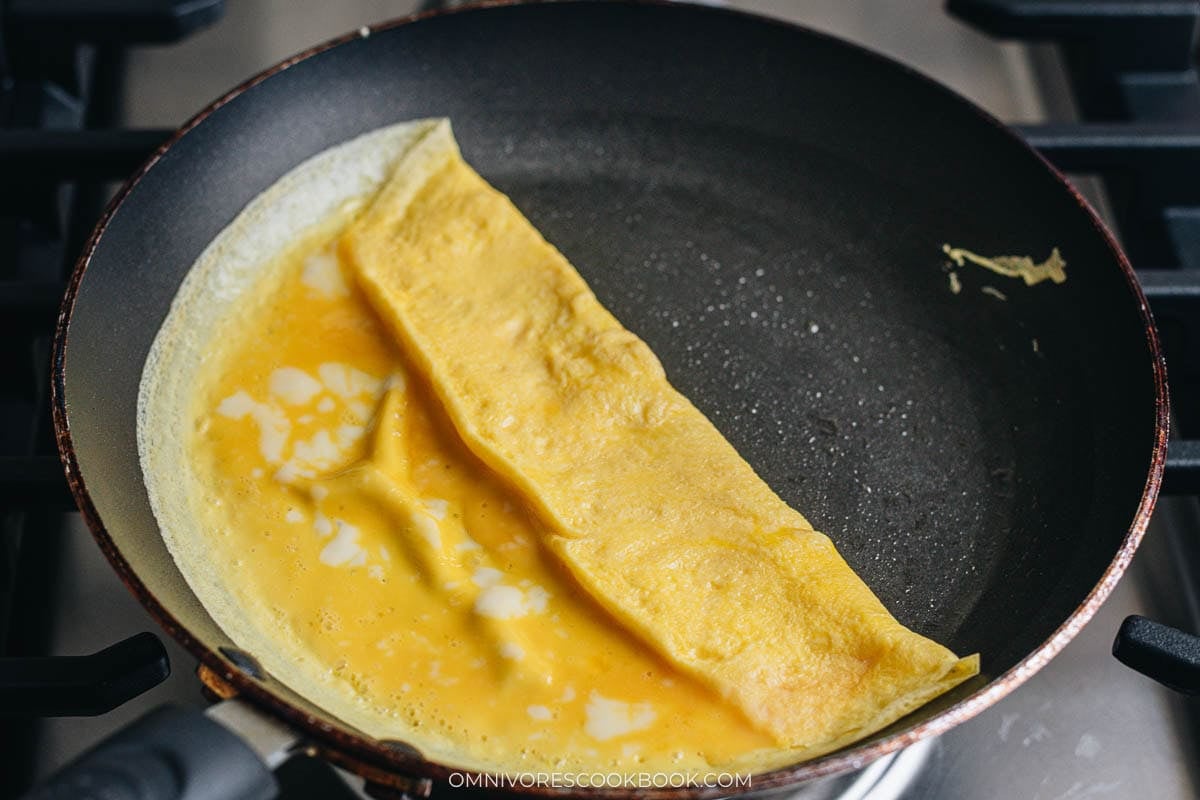
4. Slice the egg: Let the egg cool until it is easy to handle. Slice it into thin strips about 1/4 inch, or 1/2 cm, wide.
5. Make the dressing: Whisk the soy sauce, Chinkiang vinegar, chili oil with flakes, honey, ginger, and garlic together in a medium bowl.
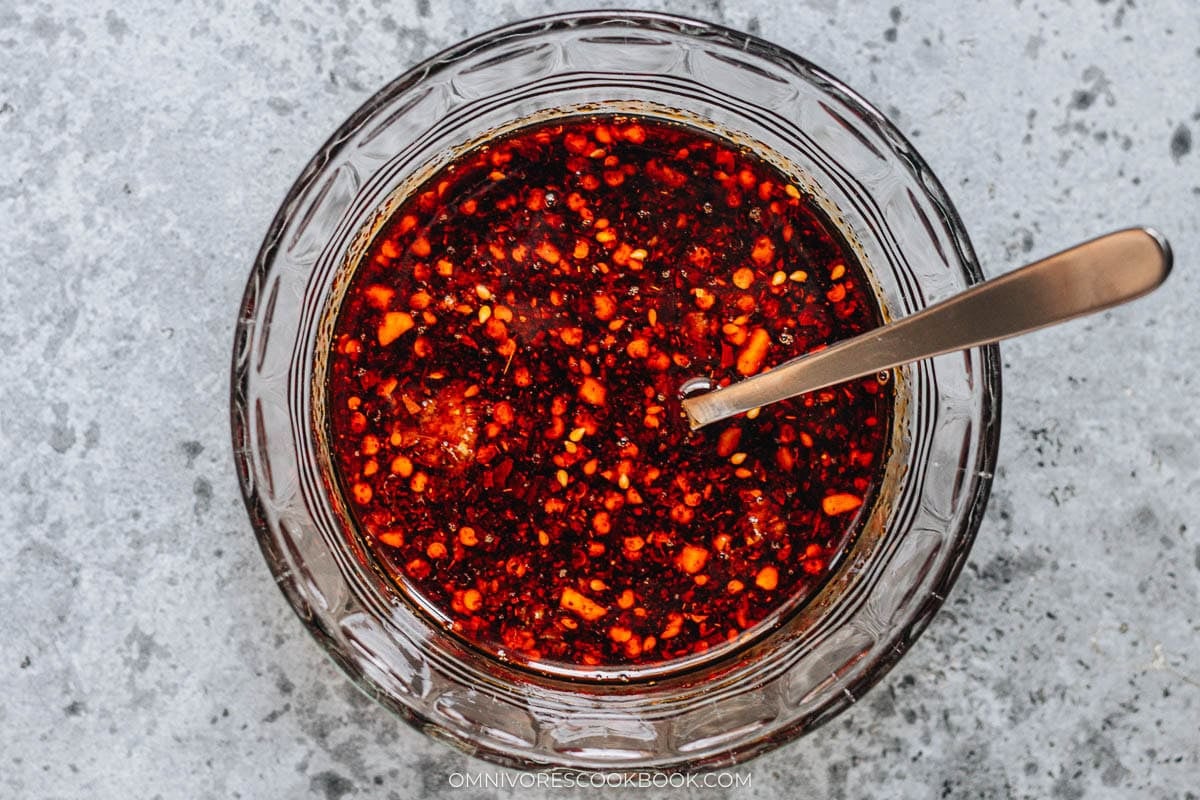
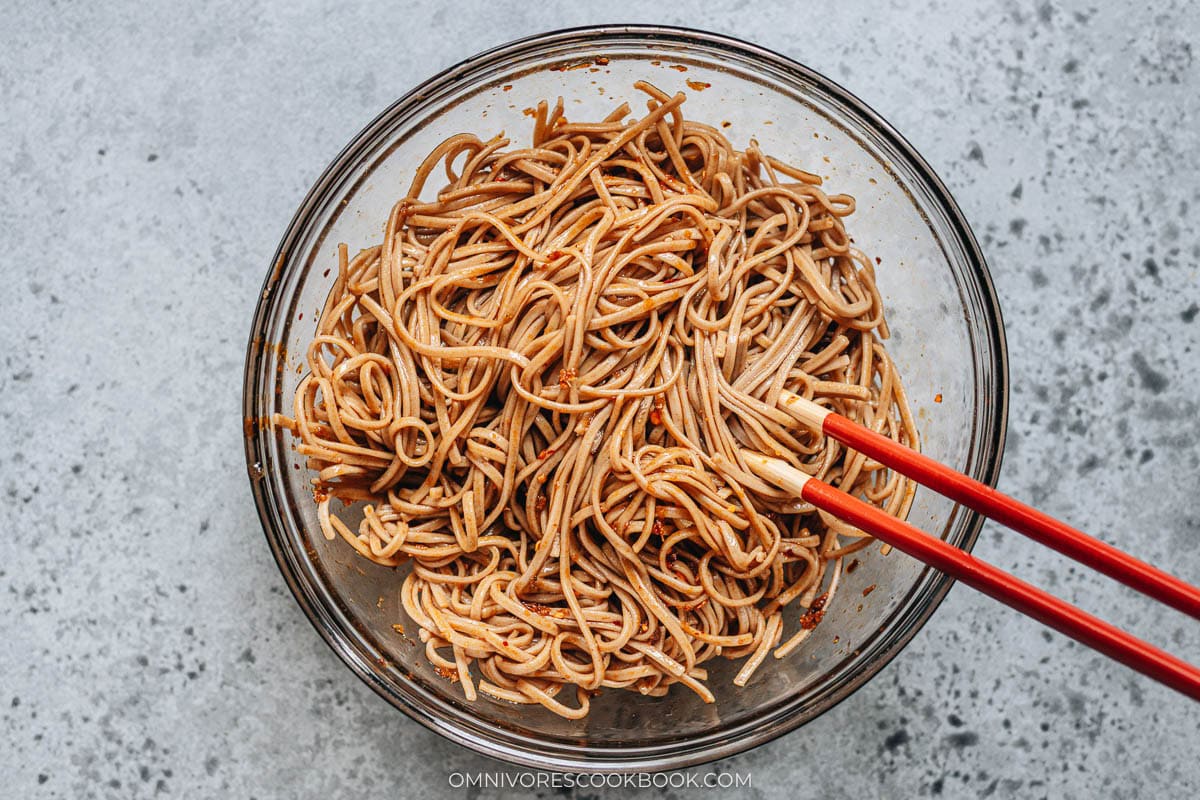
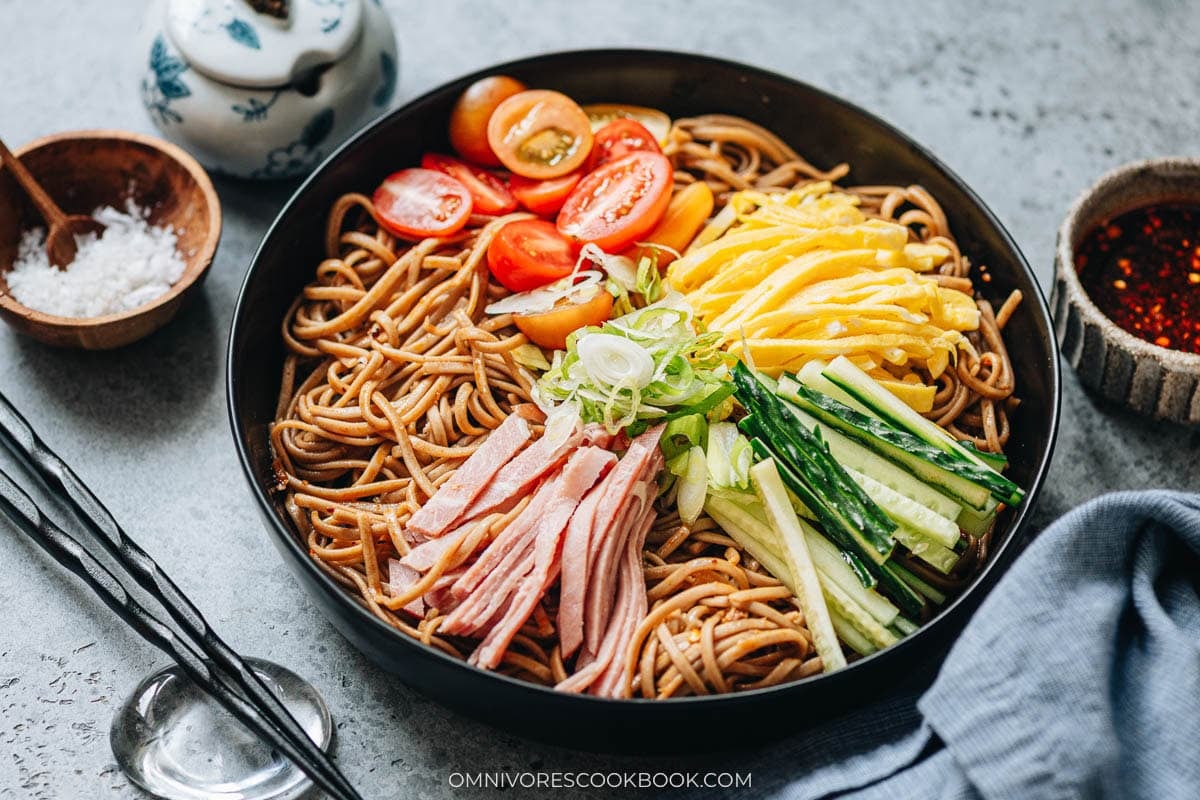
6. Assemble: Add two thirds of the dressing to the noodles and toss until they are coated. Divide the noodles among individual bowls and top with the ham, egg, cucumber, cherry tomatoes, and scallion.
7. Serve: Drizzle the rest of the dressing over the top as you like and serve as a main dish.
My Cooking Tips
Cook the soba just to al dente: Buckwheat noodles keep softening off the heat, so I pull them a touch early. Cold noodles that were boiled too long turn soft and lose the springy bite that makes this salad worth eating.
Wipe the skillet down to a bare film of oil: A greasy pan scrambles the eggs instead of setting them into a sheet. I spread a thin film with a paper towel so the egg cooks into one round I can roll and slice into clean ribbons.
Grate the garlic and ginger: The dressing is thin, so I grate rather than mince. Grated garlic and ginger melt into the soy and vinegar and season every strand instead of sinking to the bottom of the bowl in little clumps.
Taste the dressing before it goes in: Soy brands and vinegars vary, so I taste and adjust the soy, vinegar, and honey until the salty and sour balance is right for my table before I toss the noodles.
Cut the toppings small and thin: I julienne the cucumber and slice the ham and scallion into fine ribbons so every forkful picks up a bit of each topping. Chunky pieces slide off the noodles and leave the last few bites plain.
How to Serve
At home this is a full lunch or a light summer dinner on its own, so I bring the undressed noodles and the toppings to the table in separate bowls, toss everything cold at the last minute, and let each person drizzle on extra dressing. My son likes his noodles dressed with a bit more sauce with a little egg and cucumber and skips the chili oil altogether, while my husband spoons more chili oil over his. A cold wood ear mushroom salad on the side is all I usually add.
When friends come over in the summer I set this out as part of a spread of cool dishes so nothing has to come off a hot stove at the last minute. A plate of Sichuan wontons in chili oil to share and a bowl of Chinese eggplant with garlic sauce served at room temperature round it out, and between the springy noodles, the silky eggplant, and the crisp cucumber, every bowl on the table tastes a little different but delicious.
Frequently Ask Questions
Can I make this less spicy?
Reduce the chili oil, or swap some or all of it for toasted sesame oil. I keep enough oil in the dressing either way so it still coats the noodles and does not turn dry, since the oil is what makes the strands glossy and easy to toss.
Do I need to rinse the buckwheat noodles after cooking?
Yes. Rinsing under cold water stops the cooking and washes off the extra starch, which is what keeps the noodles springy and separate. Skip the rinse and the noodles clump into a sticky mess as they cool.
Can I make this vegetarian?
Omit the ham and the salad is vegetarian, with the egg still on top for a little protein. If you want something more filling in its place, a handful of pan seared firm tofu strips makes a good topping that stands up to the dressing.
How do I store leftovers and can I make this ahead?
I do not dress this ahead, because the thin dressing soaks into the noodles as it sits and the strands turn soft and soggy. To get ahead, I keep the cooked noodles, the toppings, and the dressing in separate containers in the fridge for a day, then rinse the noodles with warm water to loosen them and toss everything together right before serving. I would not freeze it, since cooked soba loses its springy texture and turns mushy once thawed.
Want to Save This Recipe?
Enter your email below & we’ll send it to your inbox. Plus get great new recipes from us every week!
Chinese Buckwheat Noodle Salad (凉拌荞麦面, Cold Soba)
Ingredients
- 2 bundles dried soba noodle
- Oil spray
- 2 eggs , beaten with a pinch of salt
- 3 tablespoons light soy sauce
- 2 tablespoons Chinkiang vinegar
- 1 tablespoon Chinese chili oil (including some chili flakes)
- 1 tablespoon honey
- 1 clove garlic , grated
- 1 teaspoon ginger , grated
- 4 sliced uncured ham , thinly sliced
- 1 scallion , thinly sliced
- 1 Persian cucumber , julienned
- 1/2 cup cherry tomatoes , halved
Instructions
- Bring a large pot of water to a boil. Cook the soba noodles according to the package instructions until al dente. Drain and rinse with cold running water to stop the cooking. Drain thoroughly, then transfer to a large bowl.
- Lightly spray (or drizzle) a large nonstick skillet with oil, then use a paper towel to wipe it into a very thin layer. Heat over medium heat until hot, about 20 seconds. Pour in the beaten eggs and immediately swirl the skillet to spread them into a thin, even layer. Cook until the eggs are mostly set, 1 to 2 minutes. Turn off the heat.
- Use a spatula to gently loosen the egg, then fold it over 2 to 3 times and transfer it to a cutting board. Let cool until easy to handle, then slice into strips about 1/4” (1/2 cm) wide.
- Whisk together the soy sauce, Chinkiang vinegar, chili oil, honey, ginger, and garlic in a medium bowl.
- Add 2/3 of the soy dressing to the noodle bowl. Toss to mix well. Transfer to individual bowls and garnish with sliced ham, egg, cucumber, cherry tomatoes and scallions. Serve as a main dish.
Nutrition

Did you make this recipe?
I’d love to hear how it turned out for you! Please take a moment to leave a 5-star rating ⭐️ and share your thoughts in the comments further down the page. It really helps others discover the recipe too.
Nick S.
Great salad. I love the dressing and noodles. Thank you for sharing.