
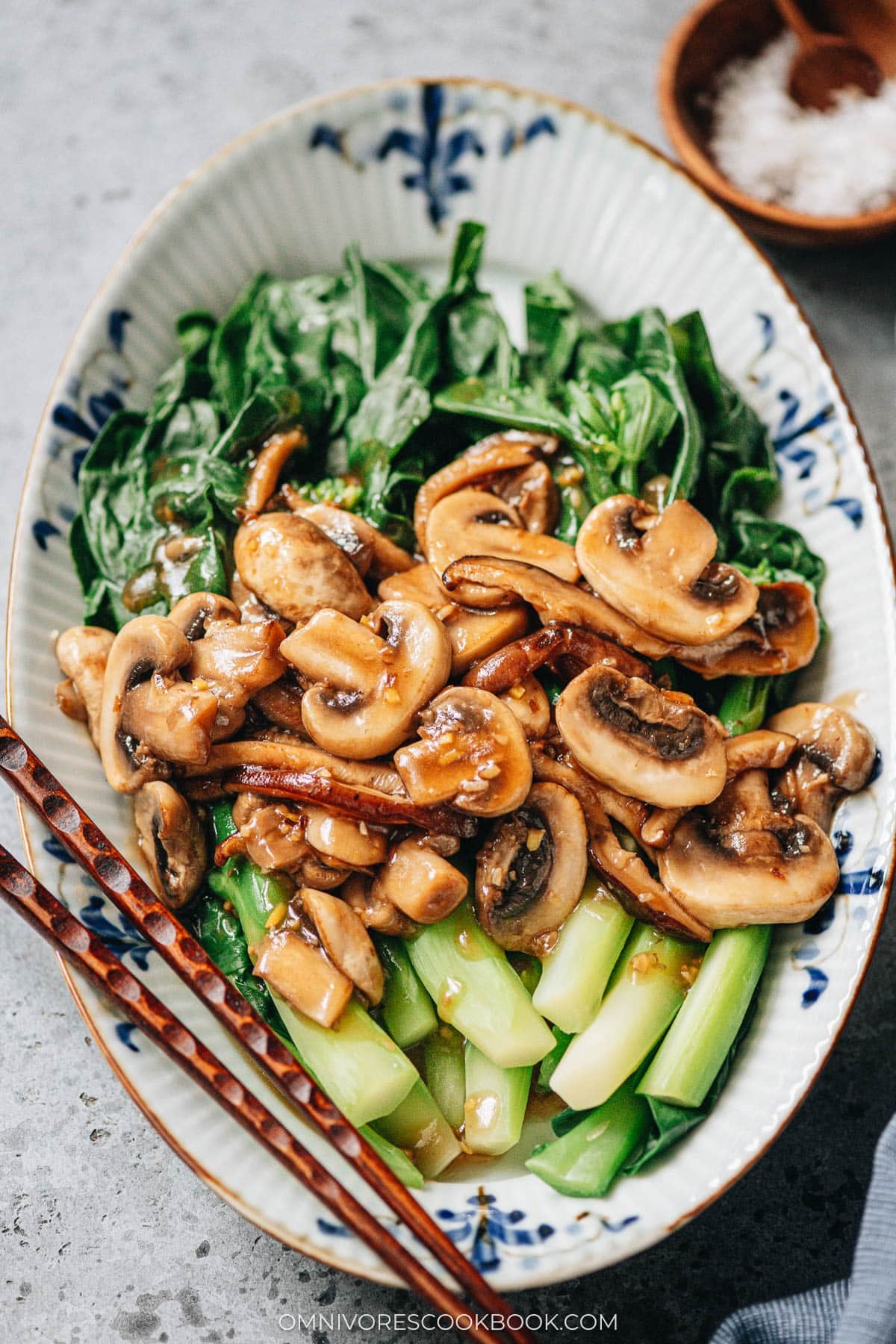
Chinese broccoli, or gai lan, is a leafy green with thick crunchy stems and dark blue-green leaves that shows up on Cantonese dim sum menus and family dinner tables across Southern China. The stalks are what set gai lan apart from other Chinese greens, and getting them right at home comes down to peeling off the tough outer skin and blanching in salted water before the sauce ever goes into the pan, the same technique I use in my Chinese broccoli with oyster sauce.
I love this meal so much that I had to improve an older Chinese broccoli recipe I published years ago for you guys, so the other day I added it to my recipe redevelop list, and seriously, I am so happy with the final flavor result. The old version used only white mushrooms and a thinner sauce, and I wanted a version with more depth. I added dried shiitake for the earthy Cantonese mushroom note, but shiitake alone can taste too intense against a delicate green, so I blended in fresh white mushrooms to soften the profile without losing the character.
My recipe is quite simply and I make it in this order: I soak the shiitake in warm water while I prep the gai lan, shave the tough skin off the stems, blanch the greens in salted water until the stalks just turn tender, then finish the sauce in a hot skillet with garlic, ginger, and the 2 mushrooms. I hope you enjoy this side dish with your family as much as I do.
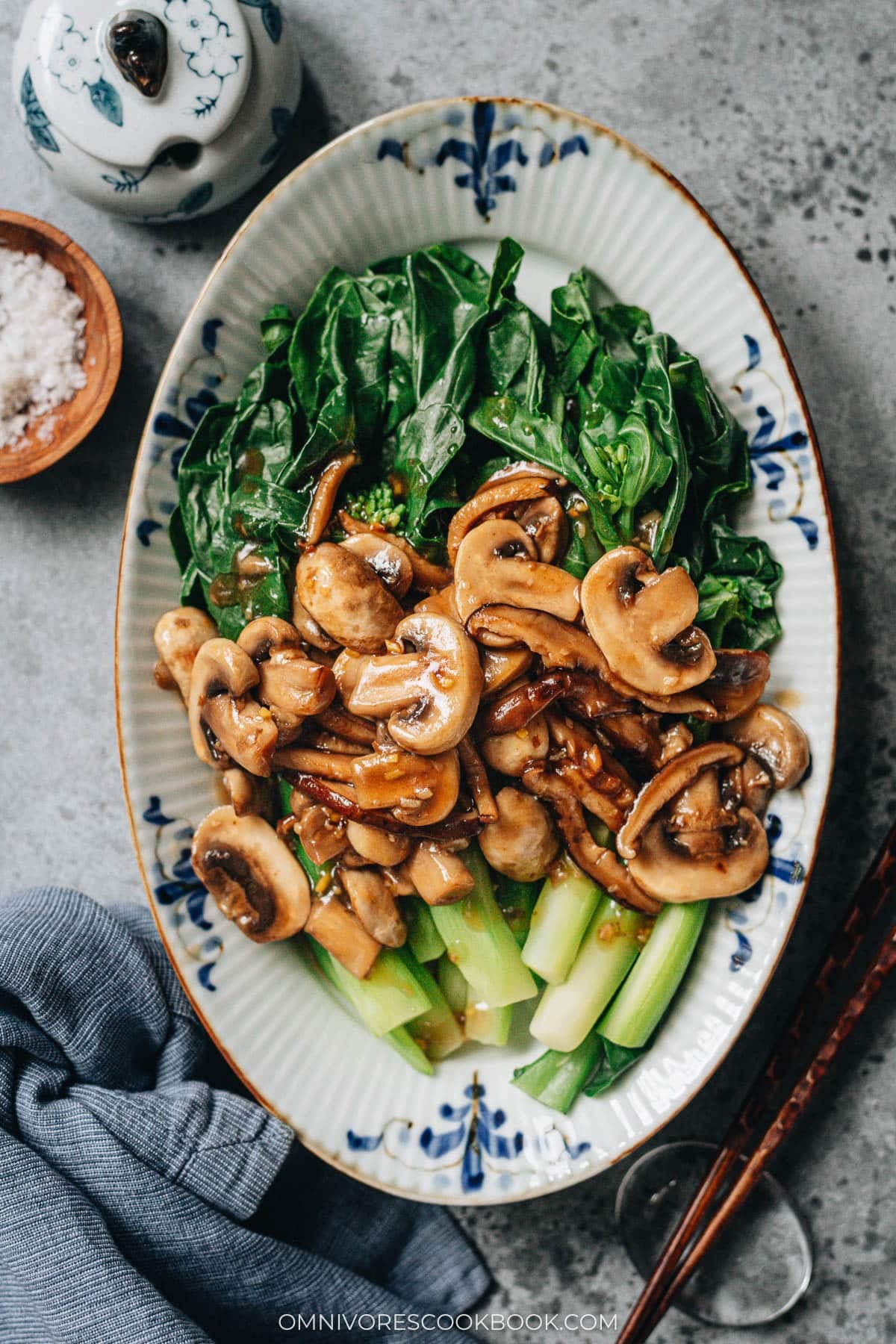
Ingredients
To make this super easy Chinese Broccoli with Mushrooms recipe I use basic ingredients:
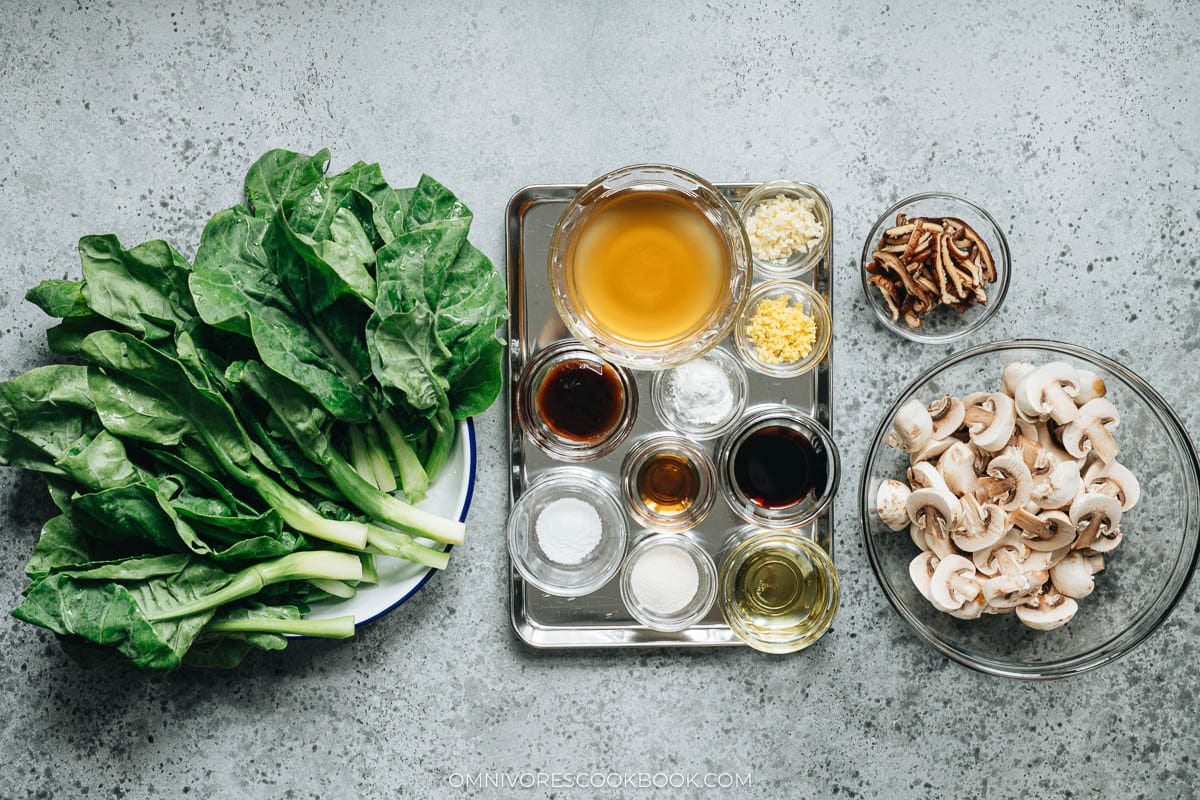
Dried and fresh mushrooms: I use a small handful of dried shiitake for the earthy Cantonese flavor. I mix in sliced fresh white mushrooms because shiitake alone can push too intense against the green, and the white mushrooms soften the profile without covering the shiitake flavor.
Gai lan: I buy a bunch of Chinese broccoli with firm stems and clean unbruised leaves. I look for thicker stalks when I can find them because you will have more tender core once you peel the stem, and it’s pleasantly crispy and sweet.
For the sauce: I whisk together chicken stock, light soy sauce, oyster sauce, sugar, and cornstarch in a small bowl before the pan gets hot.
Aromatics and oil: I mince garlic and ginger together and reach for a neutral vegetable oil for the wok. I finish the platter with a drizzle of toasted sesame oil at the end.
How to Make
Soak the shiitake: Cover the dried shiitake with warm water in a small bowl and soak until the caps turn tender, about 15 minutes. Squeeze off the excess water. Cut off and discard the tough stems. Slice the caps into thin strips.
Prep the gai lan: Soak the Chinese broccoli in cold tap water for 2 to 3 minutes, then rinse and drain thoroughly. I like to cut off the outer big leaves, leaving the stem easier to peel.
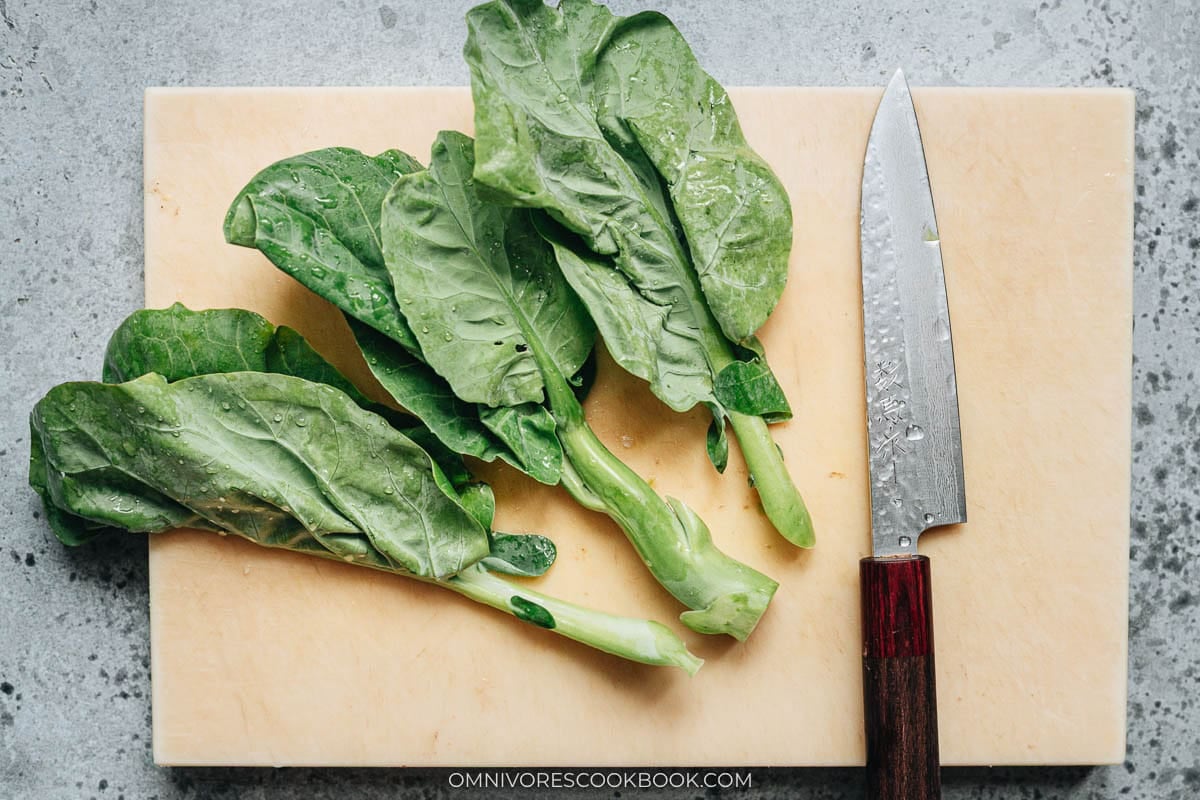
Remove the tough skin: Use a paring knife to remove the tough skin from the stem, at least 2 inches from the bottom.
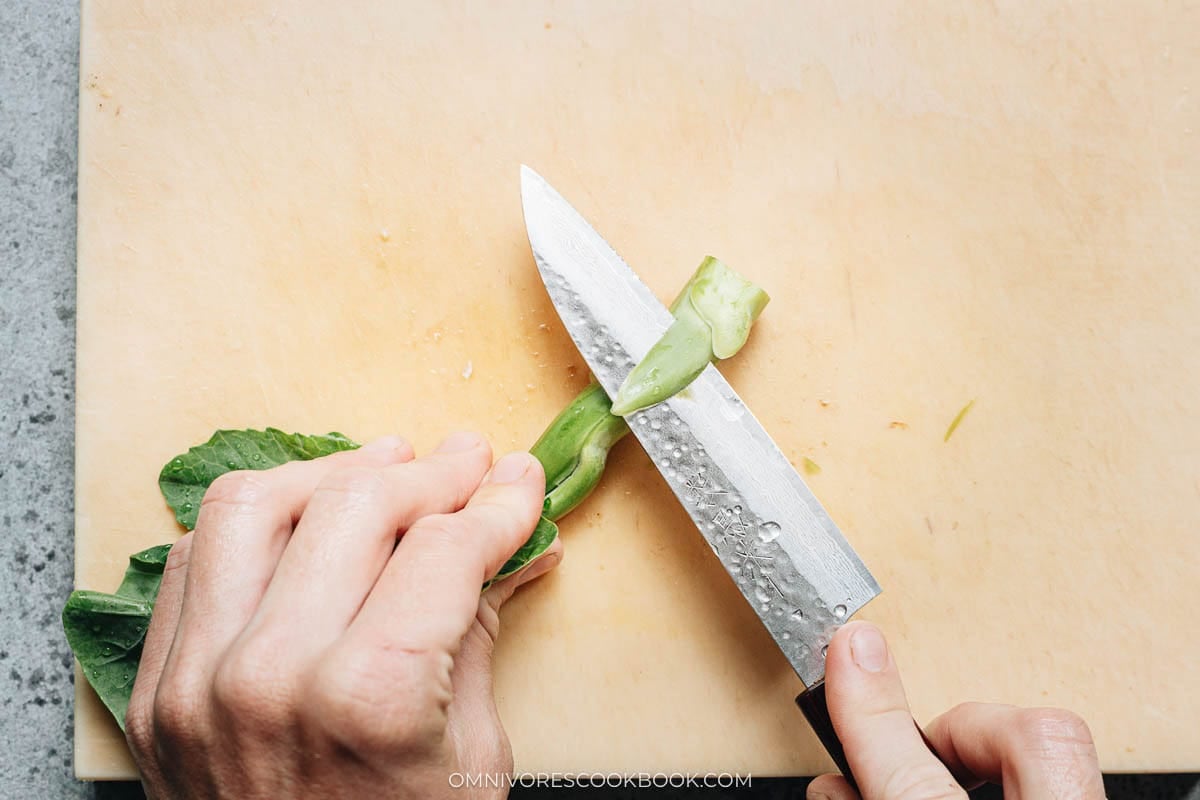
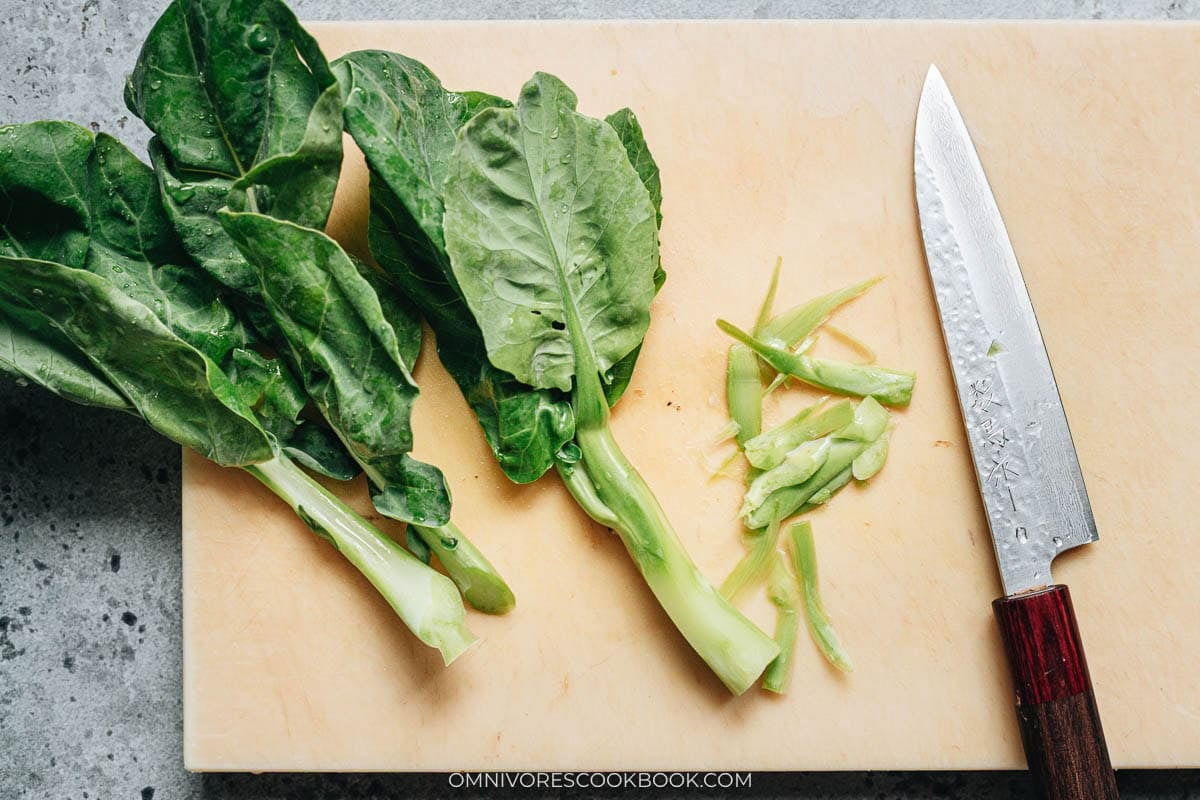
Note: If you use a peeler you may need 2 or 3 passes to strip all the fibrous outer layer off, because the tough skin sits deeper than one pull will catch. You can see that the white color of the core showing up when you start to peel it. If there’s anything green-ish part left, it will taste tough after blanching.
Mix the sauce: Whisk the chicken stock, light soy sauce, oyster sauce, sugar, and cornstarch in a small bowl. Set it near the stove so it is ready to pour in one motion.
Blanch the gai lan: Bring a large pot of water to a boil and add the salt. Add the Chinese broccoli and cook until the stems just turn tender but still crisp, 2 to 3 minutes depending on the thickness. Drain, dry slightly and plate the gai lan.
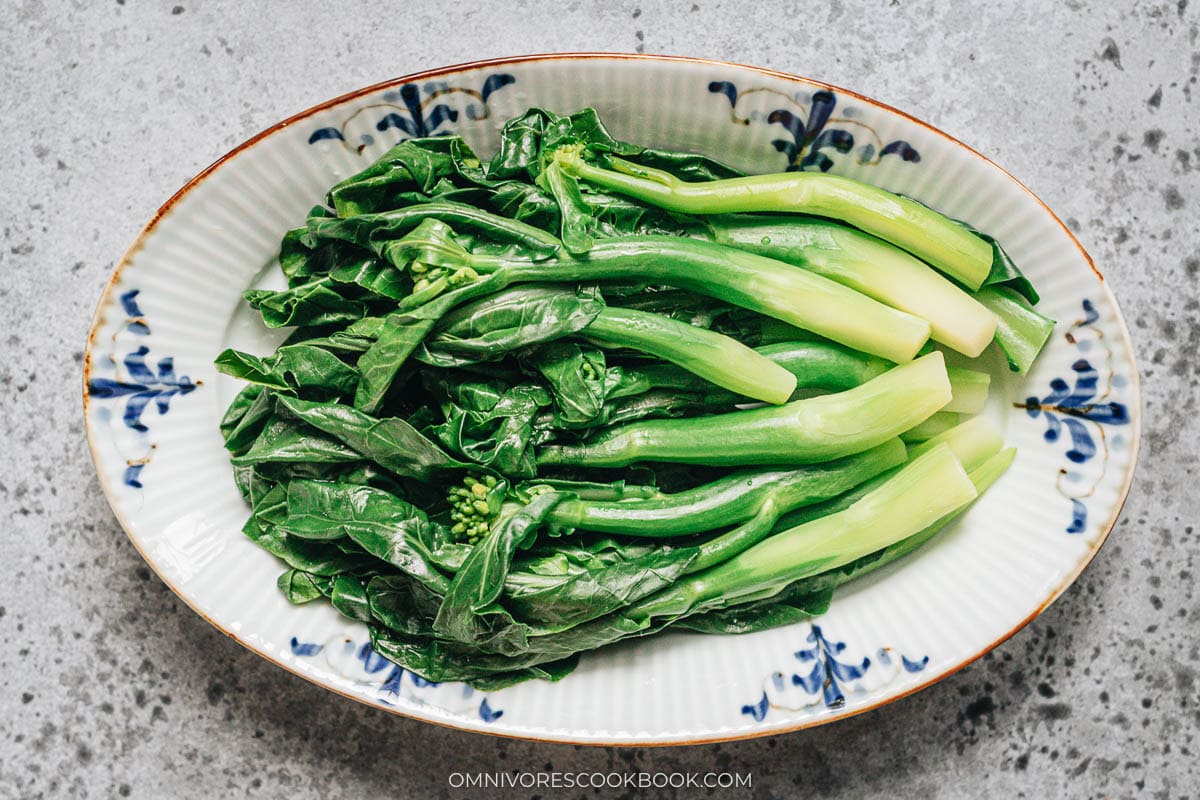
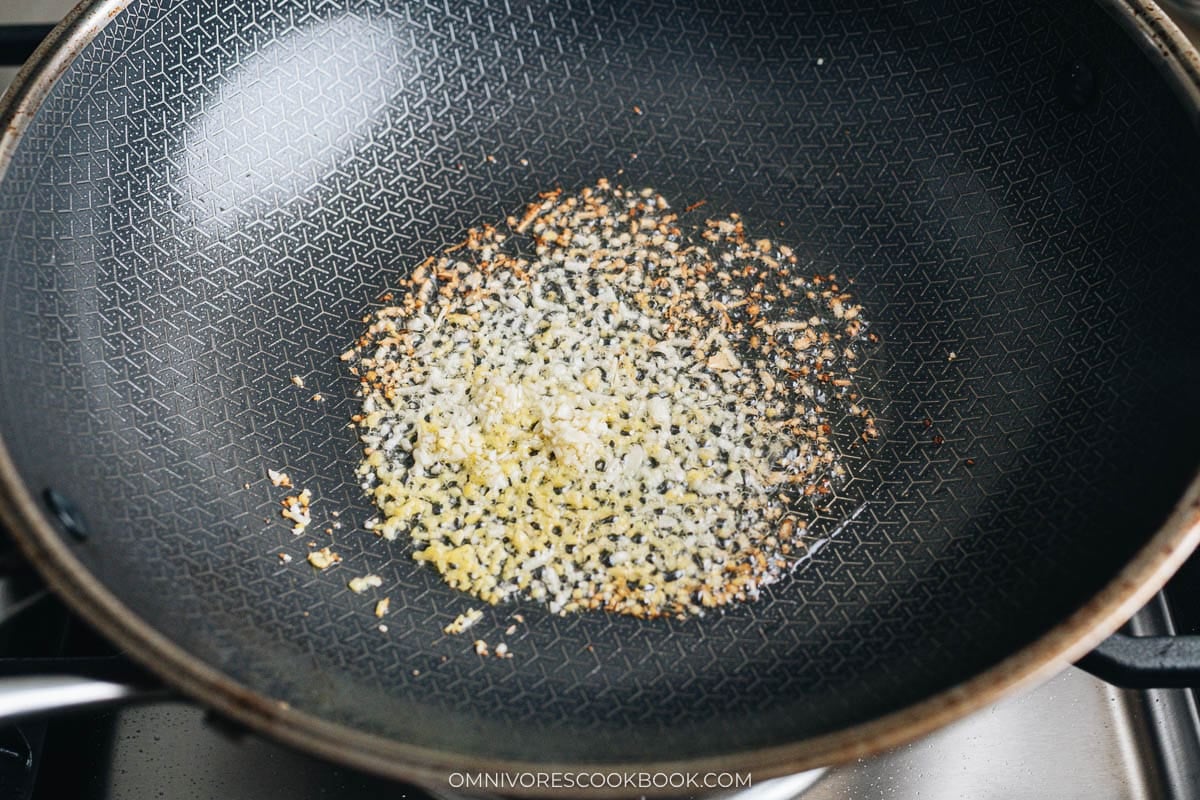
Aromatics in the wok: Heat the vegetable oil in a wok or large skillet over medium high heat until it shimmers. Add the garlic and ginger. Stir a few times to release the fragrance and stop before the garlic browns.
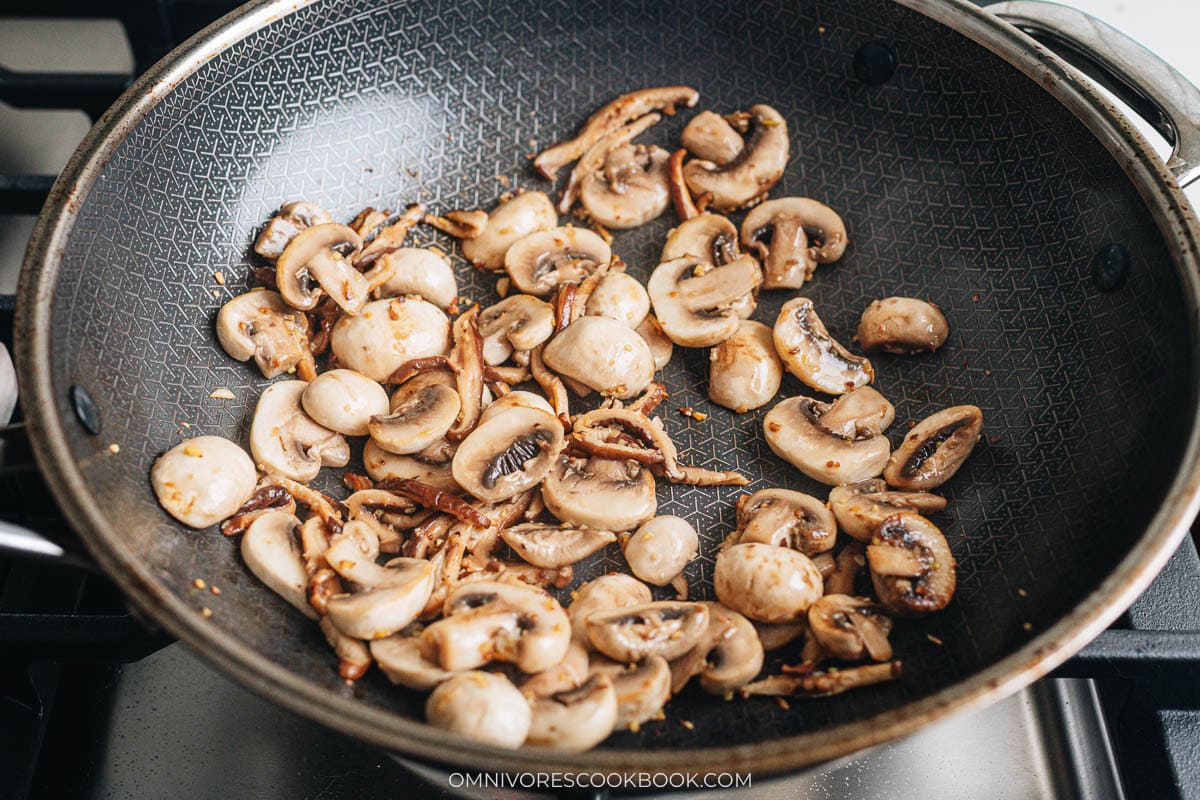
Cook the mushrooms: Add the shiitake strips and the sliced white mushrooms. Stir and cook until the edges turn golden and the pan smells nutty, about 2 minutes.
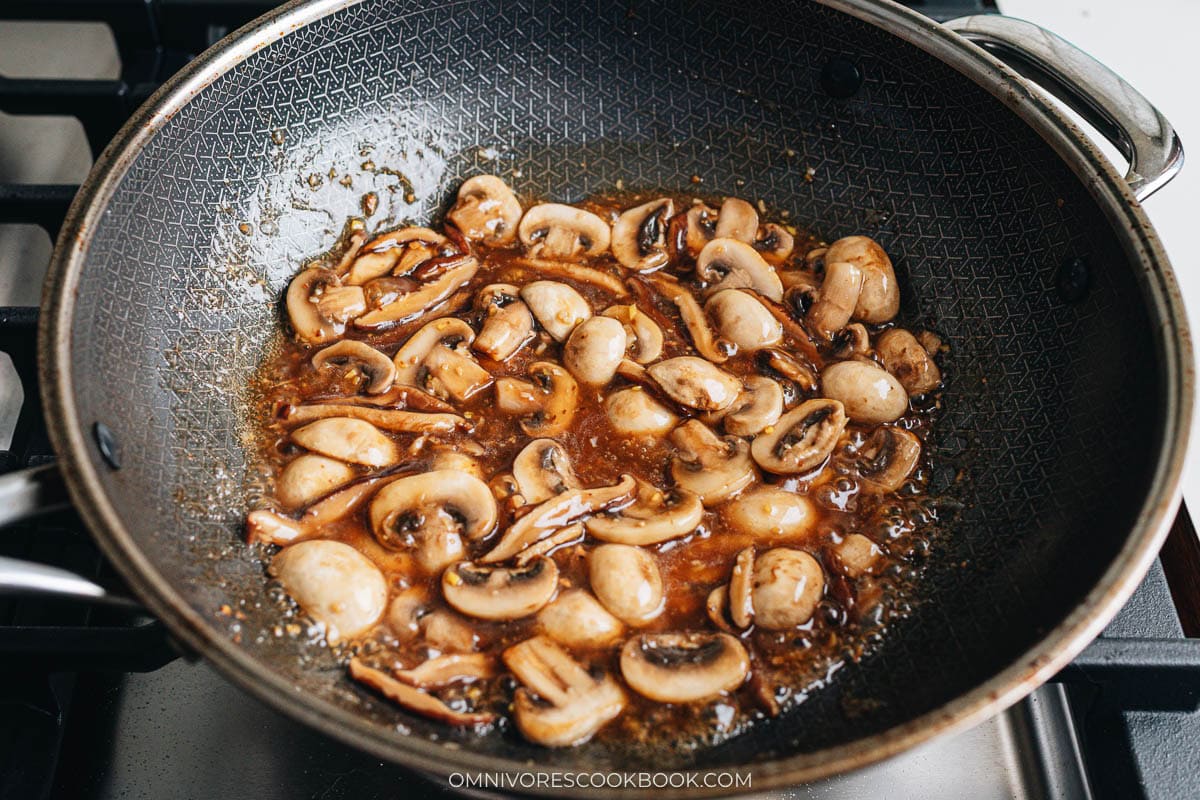
Sauce: Stir the sauce again to fully dissolve the cornstarch that has settled at the bottom. Pour the sauce into the skillet. Stir immediately until it thickens into a glossy glaze around the mushrooms.
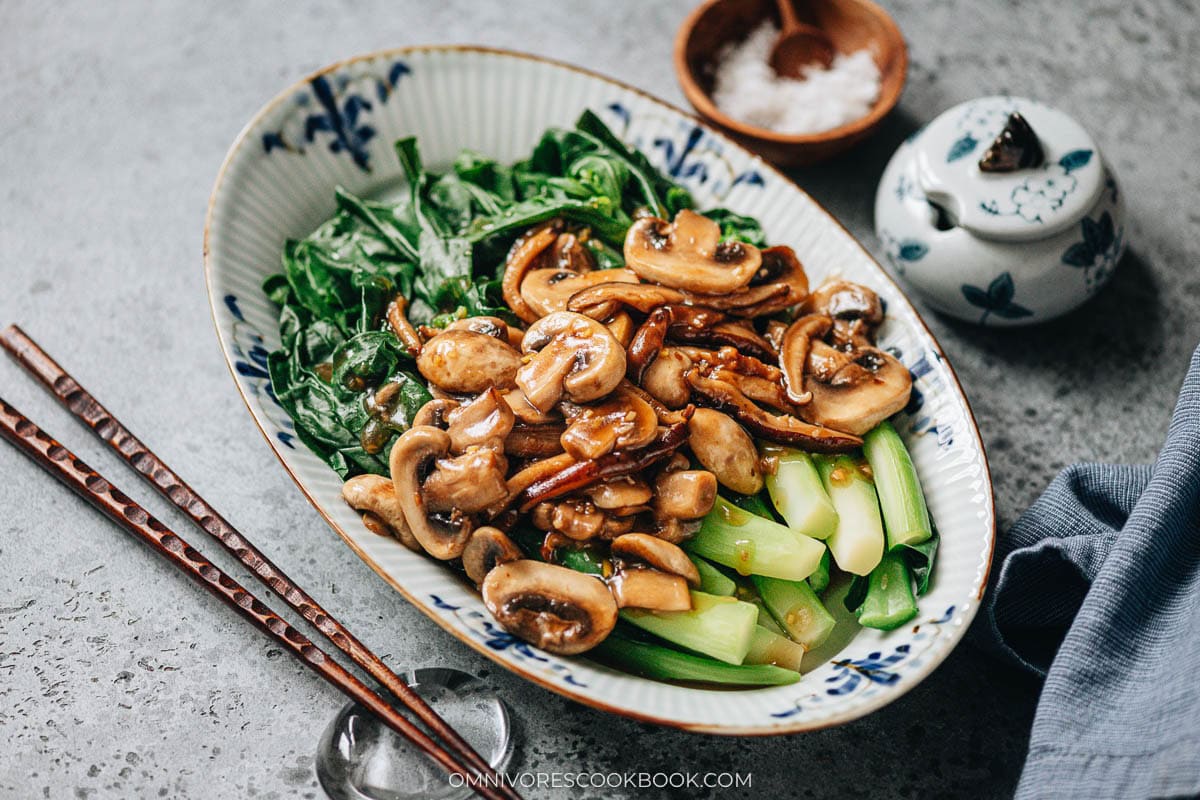
Serve: Arrange the blanched Chinese broccoli on a serving platter and pour the mushroom sauce over the greens. Finish with a drizzle of toasted sesame oil and serve hot as a side.
My Cooking Tips
Save the shiitake soaking water: I keep the strained soaking water in a jar in the fridge and use it in place of water in a Chinese soup or braise later in the week. It has a real mushroom base flavor that adds depth to almost anything.
Blanch in salted water, not plain: The teaspoon of salt in the blanching pot seasons the gai lan from the inside as it cooks. Blanched in plain water the greens taste boring next to the savory mushroom sauce, and no amount of sauce on top can rescue an unseasoned stalk.
Do not crowd the mushrooms: Fresh white mushrooms release a lot of water when they cook. If they are stacked on top of each other they steam and turn gray instead of browning. Spread them across the whole surface of the wok and let them sit for a minute before the first stir. Much like I do when I cook my mushroom and pepper stir fry.
Plate the greens dry: Blanched gai lan that sits in its own water on the platter waters down the sauce as soon as you pour it over. I let the greens sit in a colander for a minute and blot the platter with a paper towel before I arrange them, so the sauce stays thick where it pools.
Serving Suggestions
Chinese broccoli with mushrooms is a supporting dish on my family table, and I usually serve it next to a Cantonese main and a bowl of jasmine rice. On a weeknight prepare a plate alongside steamed fish with black bean sauce or a delicious claypot rice. The mushroom sauce doubles as a spoonful over the rice once the greens are gone.
For a fuller Cantonese dinner with friends at the table, I really like serving it with a slab of char siu and a bowl of Cantonese wonton noodle soup, and let the gai lan and mushrooms in the middle as an easy vegetable side. Feel free to browse my website for more dishes to serve with this meal.
Frequently Ask Questions
How do I know when the gai lan stems are cooked through?
I test the thickest stem with the tip of a paring knife. It should slide in with a small amount of resistance and pull out without a fight, which means the core is tender but the stalk still has a crisp bite. If the knife slides through without any resistance the stems have gone past crisp and will taste soft. And of course, you can always taste the stem to see if it’s done to your like.
Can I skip the blanching step and stir fry the gai lan straight?
I do not skip the blanch here because the stems are too dense to cook through in a fast stir fry. Blanching in salted water gets the stalks tender before they go into the wok, so the leaves do not overcook while the stems catch up. If I try to stir fry raw gai lan the stems come out fibrous and the leaves turn dark and limp.
Can I use broccolini instead of Chinese broccoli?
Yes. Broccolini is the closest substitute and can be cooked the same way. The flavor is milder and slightly sweeter than Chinese broccoli, but it works very well in this recipe. If using regular broccoli, blanch the florets until crisp-tender before adding the sauce.
Can I make this recipe vegetarian or vegan?
Yes. Substitute vegetarian oyster sauce (usually made from mushrooms) for the regular oyster sauce and use a vegetable stock instead of chicken stock. The flavor will be slightly different but still rich and savory.
Want to Save This Recipe?
Enter your email below & we’ll send it to your inbox. Plus get great new recipes from us every week!
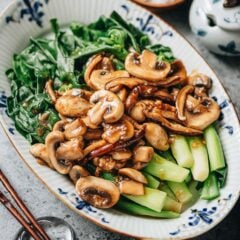
Chinese Broccoli with Mushrooms
Ingredients
- 4 dried shiitake mushrooms
- 1 lb Chinese broccoli (Gai Lan)
- 1 teaspoon salt
Sauce
- 1/2 cup chicken stock
- 1 tablespoon light soy sauce
- 1 tablespoon oyster sauce
- 2 teaspoons sugar
- 1/2 tablespoon cornstarch
Stir fry
- 1 tablespoon vegetable oil
- 2 garlic cloves , minced
- 1 teaspoon minced ginger
- 1/2 lb white mushrooms , sliced (*footnote 1)
- 1 teaspoon toasted sesame oil
Instructions
- Soak shiitake mushrooms in warm water until turning tender, 15 minutes or so. Squeeze off excess water. Cut off and discard the stem. Slice the mushroom cap.
- Soak Chinese broccoli in cold tap water for 2 to 3 minutes, then rinse and drain thoroughly. Use a peeler or a paring knife to remove the tough skin from the stem, at least 2 inches from the bottom. If using a peeler, you might need to remove 2 to 3 times to completely get rid of the tough skin. (*Footnote 2)
- Mix all the sauce ingredients in a small bowl and set aside.
- Bring a large pot of water to a boil and add 1 teaspoon salt. Add the Chinese broccoli
- and cook until the stem just turns tender but still crisp, 2 to 3 minutes, depending on the size. Drain thoroughly and set aside in a colander to keep drying.
- Heat oil in a wok or large skillet over medium high heat until shimmering. Add the garlic and ginger. Stir a few times to release fragrance.
- Add the shiitake and white mushrooms. Stir and cook until golden, about 2 minutes.
- Stir the sauce again to fully dissolve the cornstarch. Pour sauce into the skillet. Immediately stir until it thickens. Turn off the heat and stir in the sesame oil. Pour the sauce over the cooked Chinese broccoli. Serve hot as a side.
Notes
- Other types of mushrooms work, too.
- Removing the tough skin from the Gai Lan stem is a key step to get the best texture. Gai Lan skin is hard to cook through and tastes very fibrous. But the core is tender and sweet, requiring less cooking time.
Nutrition

Did you make this recipe?
I’d love to hear how it turned out for you! Please take a moment to leave a 5-star rating ⭐️ and share your thoughts in the comments further down the page. It really helps others discover the recipe too.
Bill Zigrang
“Step 2 … if using a peeler, you might need to remove 2 to 3 ??HOURS??”
Bill Zigrang (your proofreading nemesis)
Kate
This is great with so many leafy greens. The fresh mushrooms release a lot of liquid while frying. Am I supposed to wait until the liquid evaporates
Maggie Zhu
Yes, I cook until all the liquid evaporates. Otherwise, the mushrooms will keep releasing water after you add the sauce, and it will dilute the sauce.
Lee
I love your recipes, not to mention the pictures. Unfortunately, I cannot acquire the proper ingredients where I am now. Thank you for sharing.
Frank
Really good recipe. I used a tablespoon of oyster sauce and of sesame oil. Thanks again.
Roxane
I made this for dinner last night with frog legs. My husband loved the mushrooms with the broccoli easy to make and delicious. Did not think I could do it. Thanks for you step by step recipes. I feel like a chef, LOL
Bruce
excellent side dash, quick & easy
Bruce
just followed your recipe and all turned out great… thanks
Chris W.
Swapped soy sauce for tamari to make this gluten free. Was not a problem. It came out tasting like a restaurant quality dish and it was not hard to make at all.
Garlic Girl
Made tonight. I had leftover Hainanese chicken and needed veggies. This was perfect!! This will be in rotation. Thank you.
Amy K.
My husband (originally from Anhui, China) was planning to cook this veggie side dish for our Easter family potluck lunch today. However, he was not feeling very well and I needed to step in to cook it myself. Thank you for your clear directions for this basic dish! It was very tasty – even if my Grandma thought it was spinach 😉