
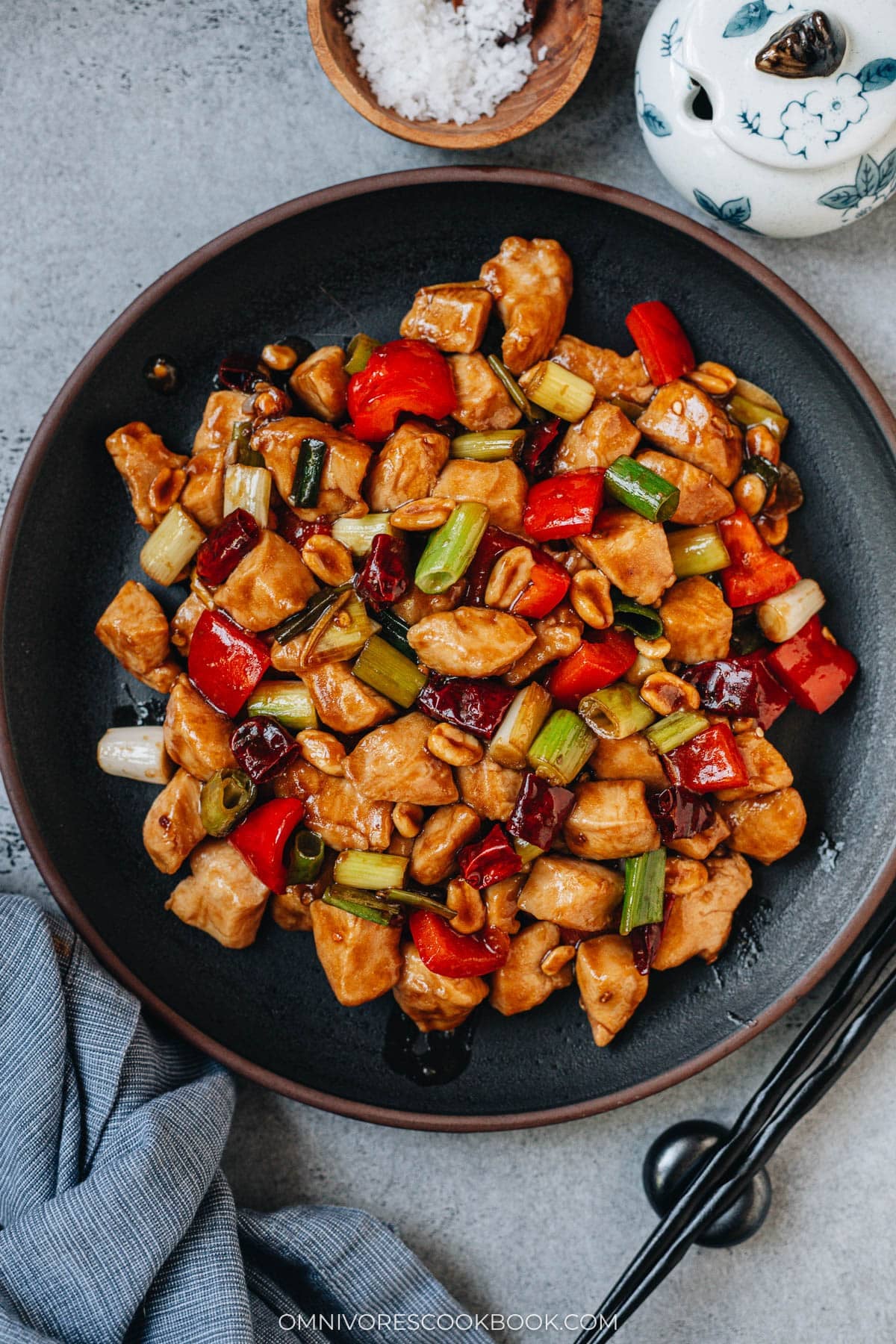
Kung pao chicken is one of the best known Sichuan stir fries, with a balance of savory, sour, sweet, spicy, and numbing flavors. I know that sounds like a lot, but I am confident you will love it if you have not tried it yet.
I do not always use a wok when I make this dish at home. In my kitchen, a large nonstick pan is more practical, especially because many home stoves do not get hot enough for true wok cooking, and the vinegar in the sauce can be tough on a newer carbon steel or cast iron pan. I like this approach because it keeps the recipe easy and still gives me the flavor I want for a weeknight dinner.
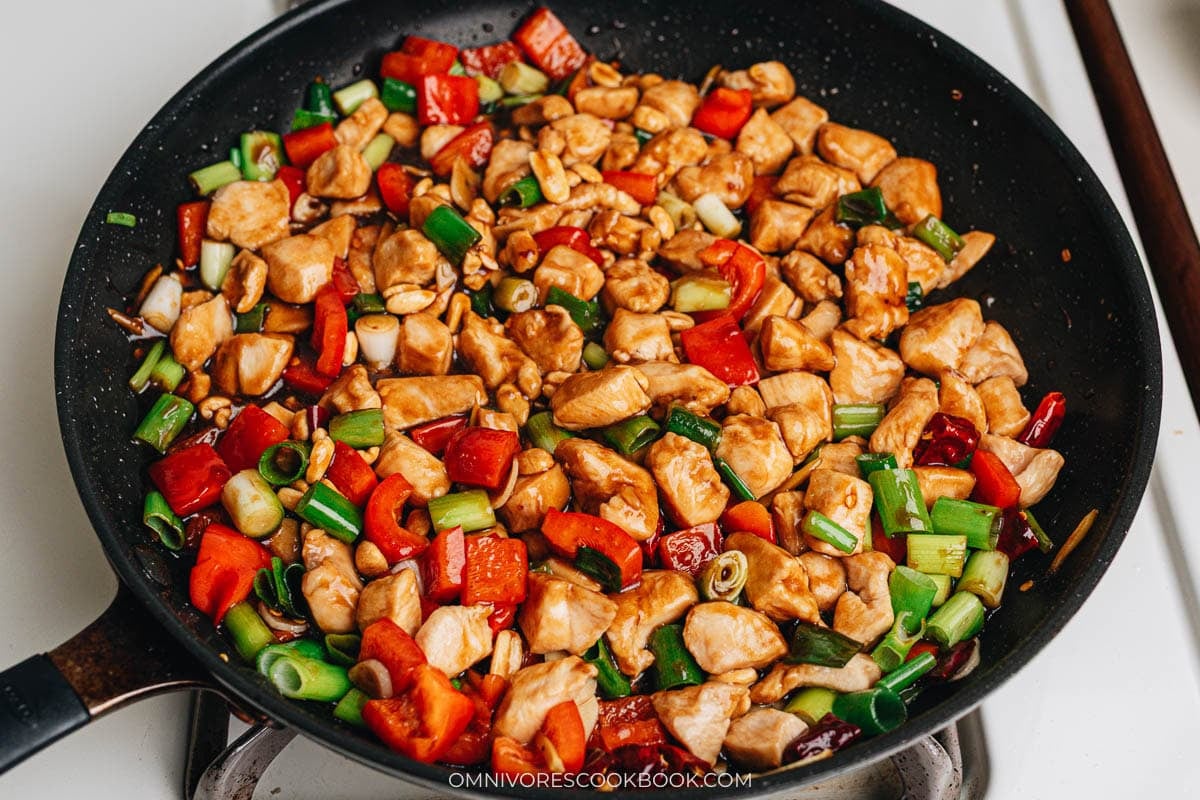
When I make it, I marinate the chicken first, mix the sauce, and keep all the aromatics close to the stove before I start cooking. Then I sear the chicken, stir fry the garlic, ginger, dried chili peppers, and vegetables, and finish the whole dish with the sauce and peanuts. If you want a fast stir fry with a little heat and plenty of flavor, this is one I love serving over rice.

Ingredients
This dish cooks fast, so I like to set up the ingredients in the same order I use them. I get the chicken marinating first, stir the sauce together next, and keep the rest of ingredients ready by the stove.
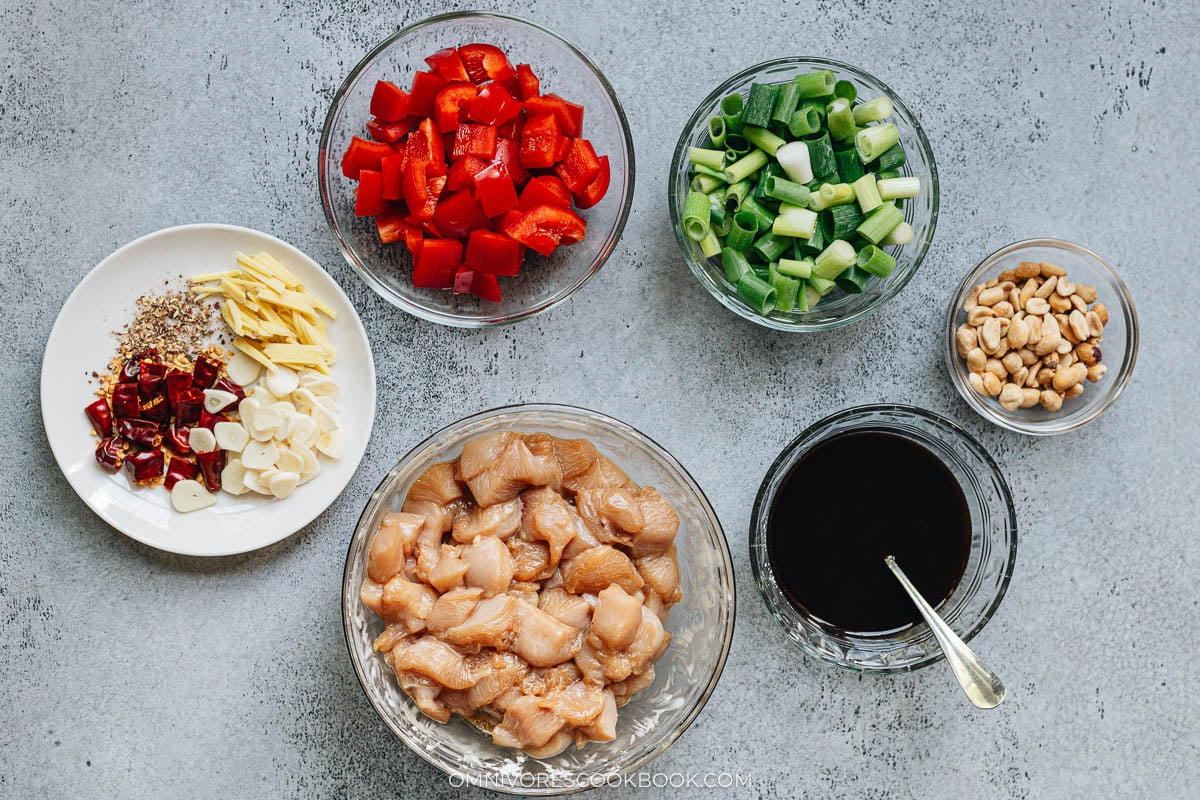
Chicken and marinade: I use diced chicken breast for the classic version, though thigh works too if I want a slightly richer result. I marinate it with light soy sauce, Shaoxing wine, and cornstarch so it stays tender in the pan.
Sauce: I mix chicken broth, Chinkiang vinegar, Shaoxing wine, light soy sauce, dark soy sauce, sugar, cornstarch, and salt.
Stir fry: I use garlic, ginger, dried Chinese chili peppers, Sichuan peppercorn, red pepper, green onion, roasted peanuts, and a little chili oil but this is optional.
How to Make
1. Marinate the chicken: Combine the chicken, light soy sauce, Shaoxing wine, and cornstarch in a bowl. Mix by hand and let it marinate while I prepare the other ingredients.
2. Mix the sauce: Combine the chicken broth, Chinkiang vinegar, Shaoxing wine, light soy sauce, dark soy sauce, sugar, cornstarch, and salt in a bowl. Stir until the mixture is smooth.
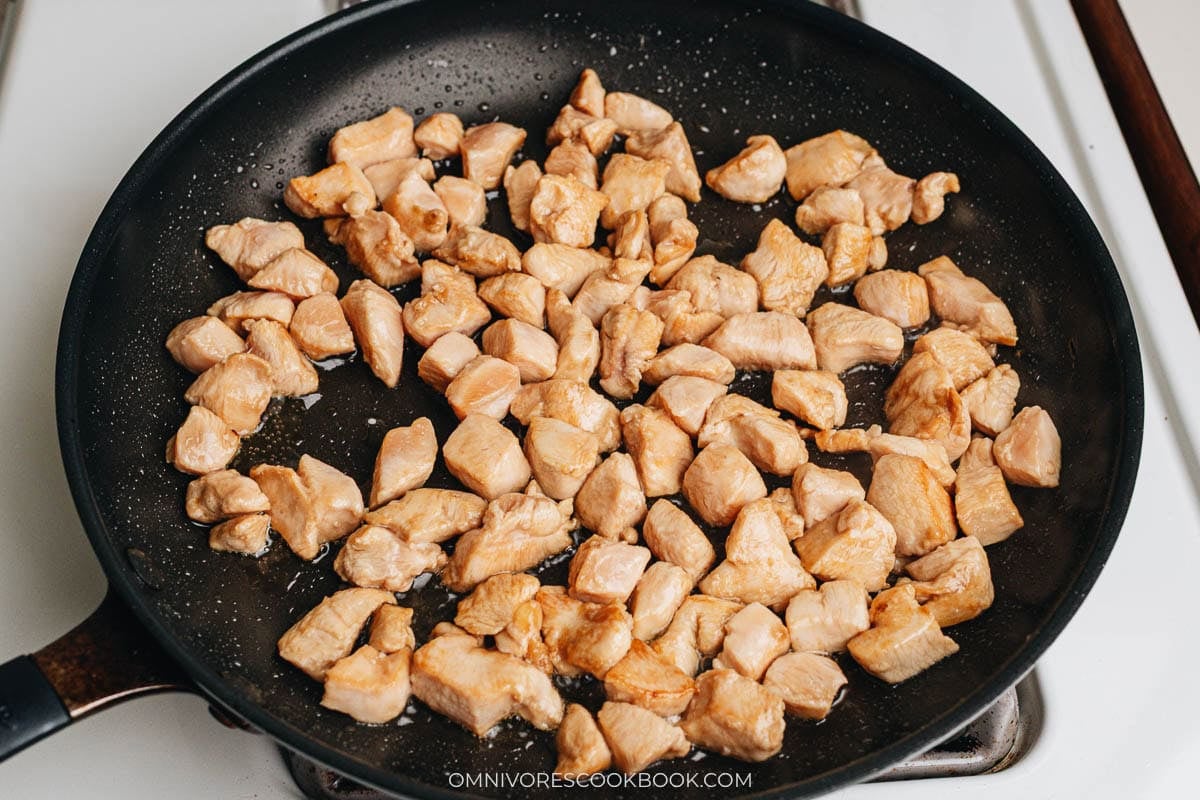
3. Sear the chicken: Heat oil in a large skillet over medium high heat until hot. Spread the chicken in a single layer and let it cook briefly without moving it. Stir until the surface turns white and the inside is still slightly raw, then transfer it to a plate right away.
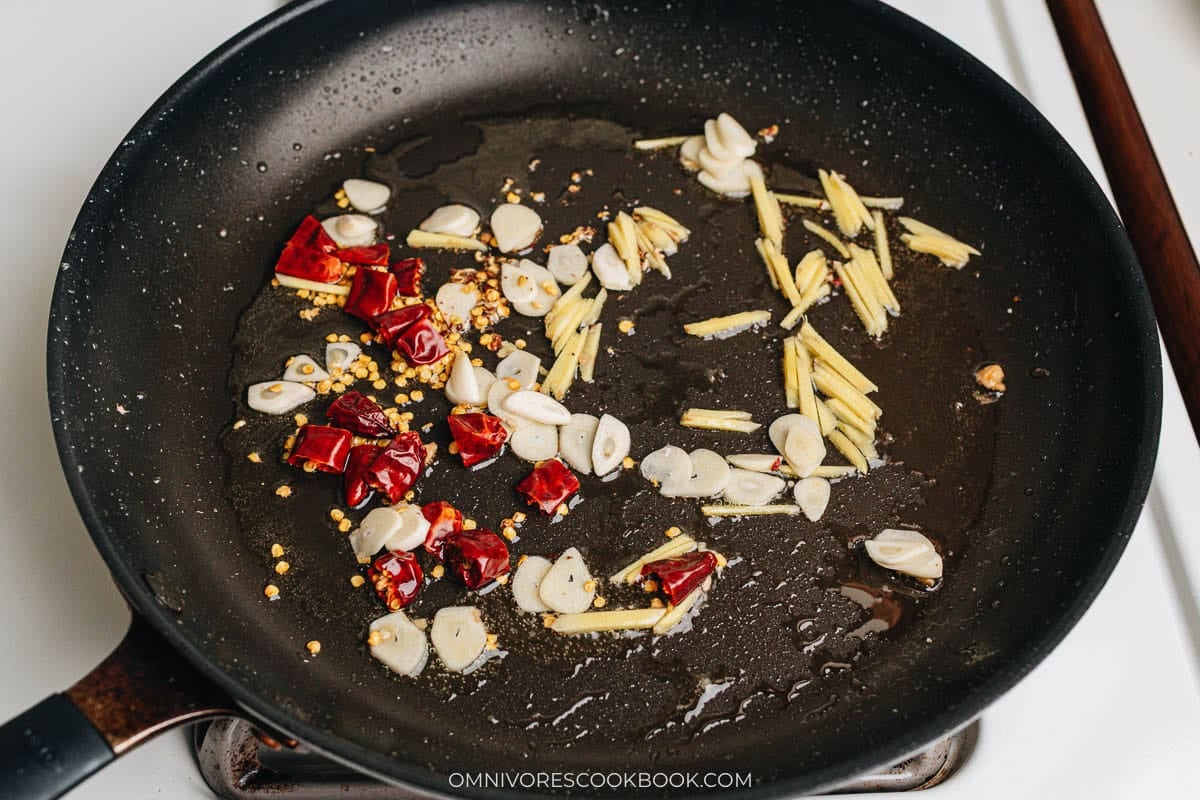
4. Cook the aromatics and spices: Add the remaining oil, garlic, ginger, dried chili peppers, and ground Sichuan peppercorn. Turn the heat to medium and stir until very fragrant.
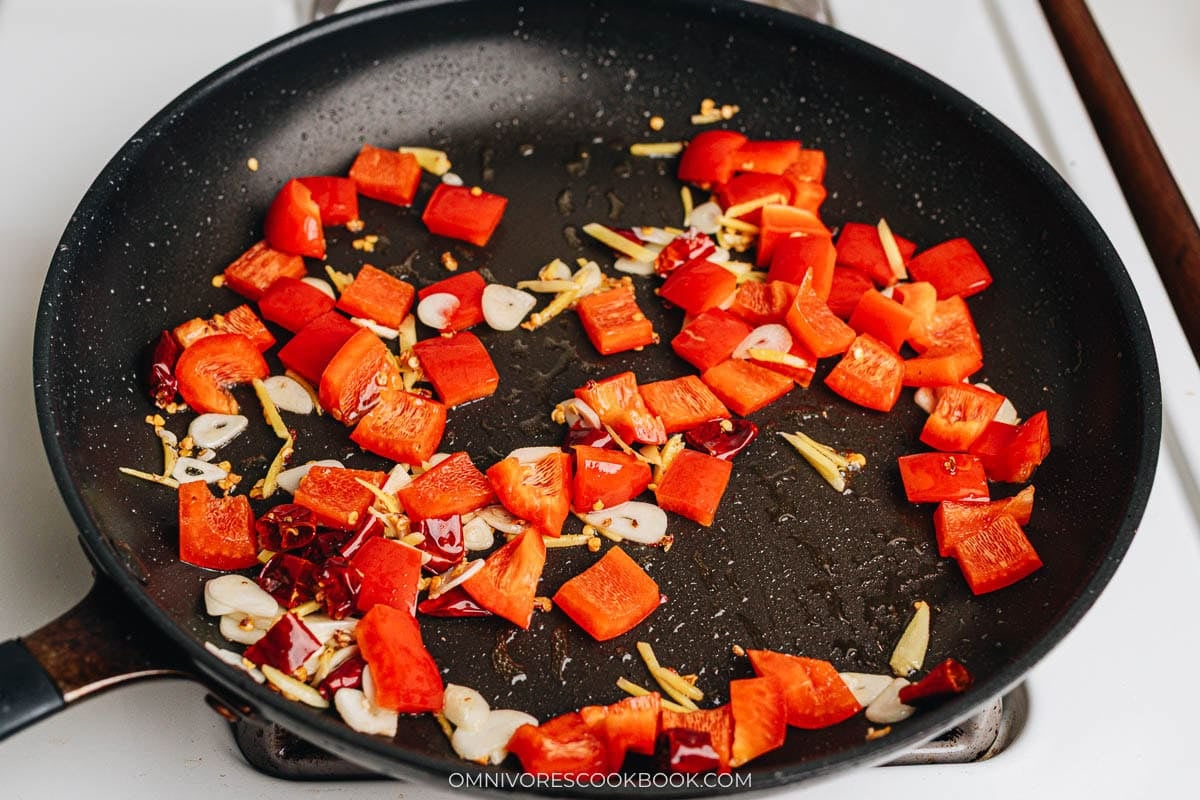
5. Cook the pepper: Turn the heat to medium high. Add the red pepper and stir fry for 1 minute.
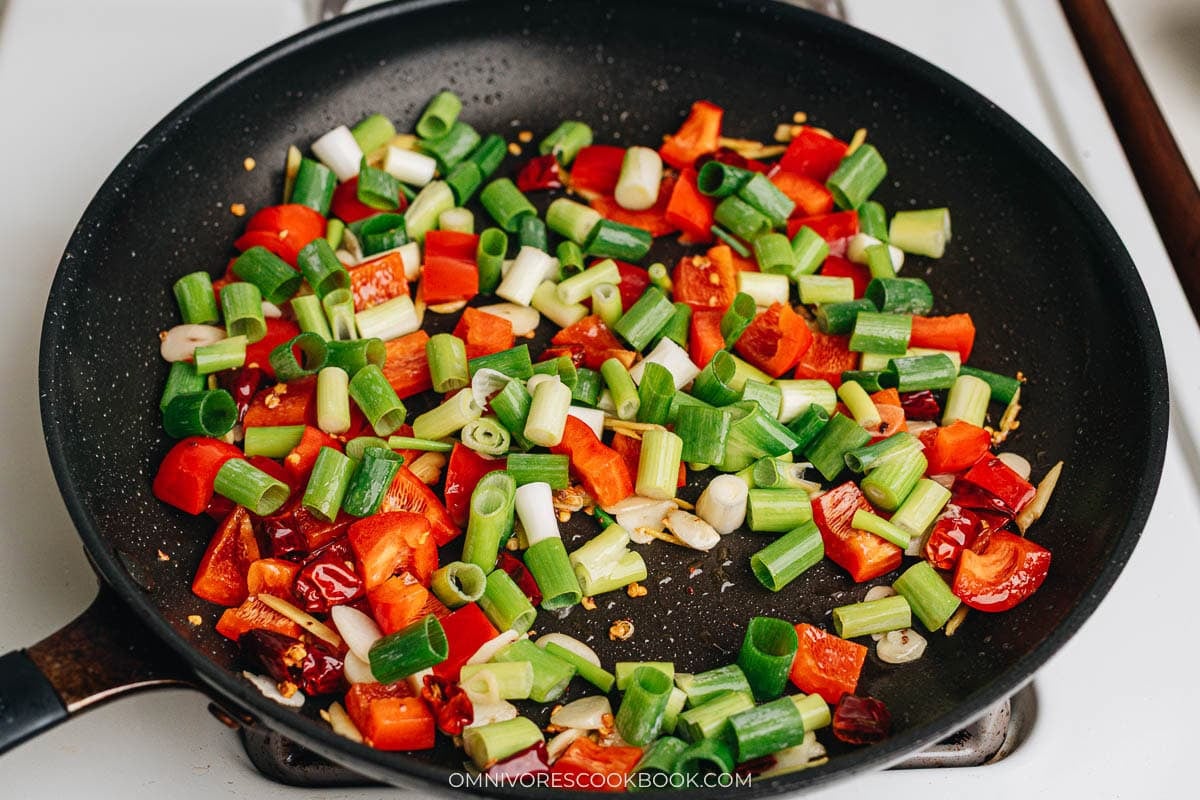
6. Add the green onion: Add the green onion and cook for another minute, until it just start to turn tender.
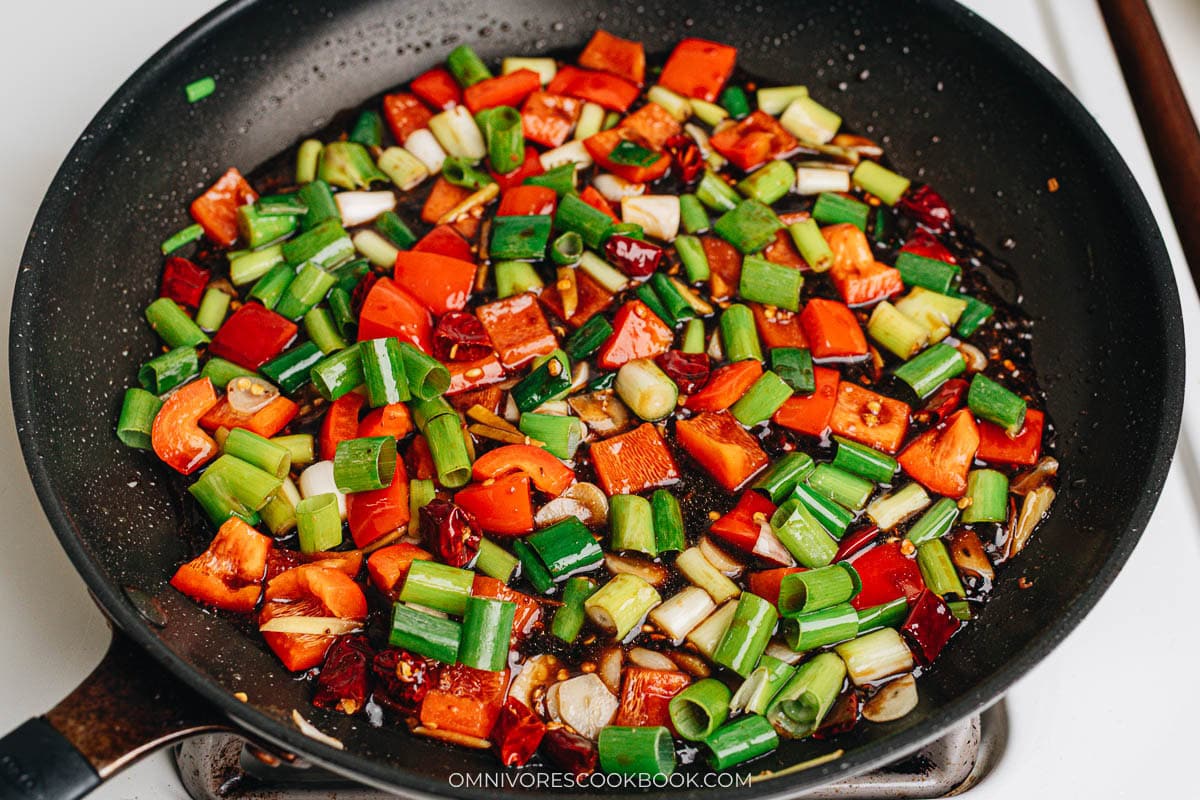
7. Add the sauce: Stir the sauce again so the cornstarch is fully dissolved. Pour it into the pan and stir a few times.
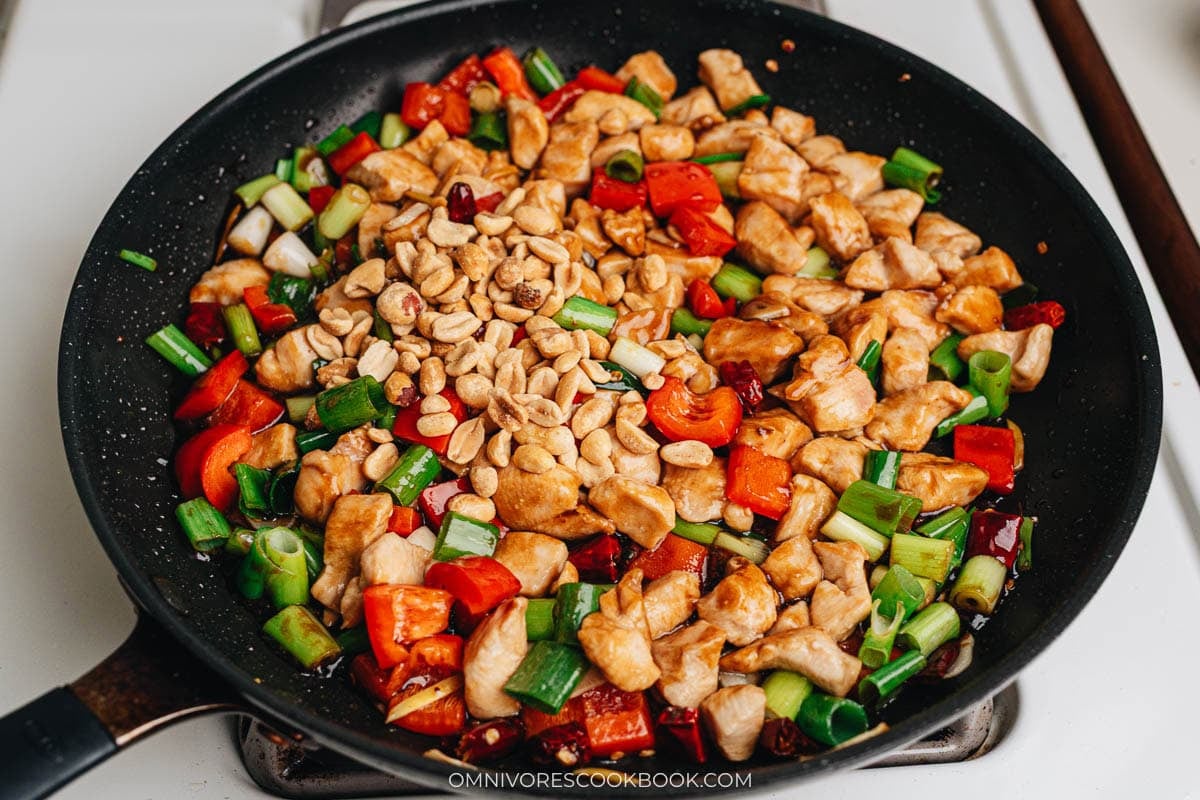
8. Finish the dish: Return the chicken to the pan and toss until the sauce thickens and coats everything. Add the peanuts and stir to mix well. If I want more color, I drizzle in a little chili oil at the end. Transfer everything to a plate and serve warm.
Cooking Tips
Keep everything near the stove: I always set up the chicken, sauce, aromatics, pepper, green onion, and peanuts before I start cooking. This dish moves too fast for me to stop halfway through.
Do not cook the chicken all the way at first: I pull the chicken from the pan while the inside is still a little underdone. It finishes later in the sauce, which helps me keep it juicy.
Use dried chili peppers for aroma: I like dried Chinese chili peppers here because they add fragrance and depth without making the dish too hot. If I want more heat, I cut them smaller and let more seeds go into the pan.
Add chili oil only if I want extra color: I use a little chili oil at the end when I want the dish to look redder and have another layer of flavor. I like this trick because I can control the heat more easily.
How I Serve
I usually serve kung pao chicken with steamed white rice, because the sauce is too good to leave behind on the plate. At home, I like keeping dinner simple and pairing it with a vegetable dish like my stir fried pea shoots with garlic or these Sichuan dry fried green beans, so the meal has something green next to the chicken.
When I have colleagues over, I like serving kung pao chicken as one dish in a Sichuan style dinner. I love adding mapo tofu and Yu Xiang eggplant if I want a fuller spread, but I also make sure at least one side is less spicy so dinner stays balanced.
Frequently Ask Questions
Why is my chicken turning dry?
Chicken usually turns dry when it stays in the pan too long. I always sear it first, then take it out while the inside is still a little underdone so it can finish later in the sauce. That second cooking at the end is enough to cook it through without pushing it too far. Once I started doing it this way, my kung pao chicken got much better.
How do I keep the vegetables crisp?
I do not cook the vegetables for too long, especially the pepper and green onion. I want them to stay bright and slightly crisp so they add contrast to the chicken and sauce. This dish cooks fast, so I keep everything ready before I turn on the stove. When the pan is hot and the ingredients are close by, it is much easier to control the texture instead of overcooking everything while I look for the next ingredient.
How do I store leftovers?
I store leftovers in an airtight container in the refrigerator for up to 3 days. When I want to reheat them, I use a pan if I can, because the chicken and vegetables keep a better texture than they do in the microwave. If I want to freeze it, I let it cool completely first, then transfer it to a freezer safe container and freeze it for up to 1 month.
Want to Save This Recipe?
Enter your email below & we’ll send it to your inbox. Plus get great new recipes from us every week!
Watch video
Kung Pao Chicken (宫保鸡丁)
Ingredients
- 1 lb boneless skinless chicken breast , diced into 3/4” (1.5 cm) pieces (or thigh)
Marinade
- 1 tablespoon light soy sauce (or soy sauce)
- 2 teaspoons Shaoxing wine
- 1 tablespoon cornstarch
Sauce
- 2 tablespoons chicken broth
- 2 tablespoons Chinkiang vinegar (or distilled vinegar)
- 1 tablespoon Shaoxing wine
- 1 tablespoon light soy sauce
- 1/2 tablespoon dark soy sauce
- 2 tablespoons sugar
- 2 teaspoons cornstarch
- 1/4 teaspoon salt
Stir-fry
- 3 tablespoons peanut oil (or vegetable oil)
- 4 cloves garlic , sliced
- 1 thumb ginger , julienned
- 6 red dried Chinese chili peppers , cut into 3 pieces
- 1/4 teaspoon ground Sichuan peppercorns
- 1 red pepper , diced
- 5 large green onions , cut into 1” (2.5 cm) pieces
- 1/3 cup roasted peanuts
- 2 teaspoons chili oil (Optional, to add color)
Instructions
- Combine the chicken and marinade ingredients in a small bowl. Mix well by hand and let marinate for at least 10 minutes, up to 30 minutes.
- Mix all the sauce ingredients together in a medium bowl.
- Heat 1 tablespoon of oil in a large skillet over medium-high heat until hot. Swirl the pan and let oil coat the bottom.
- When the oil is hot, spread chicken in a layer and cook for 20 to 30 seconds without moving it. Cook and stir until the chicken turns just white on the surface and the inside is still slightly raw. Turn to medium-low heat and immediately transfer chicken to a plate.
- Add the remaining 2 tablespoons of oil, garlic, ginger, dried chili peppers, and ground Sichuan peppercorn. Turn to medium heat. Stir and cook until very fragrant.
- Turn to medium-high heat. Add the pepper. Cook and stir for 1 minute. Then add the green onion, Stir and cook for another minute.
- Mix the sauce again so that cornstarch dissolves completely. Swirl in sauce and quickly stir a few times. Add back the cooked chicken. Stir and toss until the sauce thickens. Add the roasted peanuts. Stir again to mix well. Immediately transfer to a plate. Serve warm with steamed white rice.
Nutrition

Did you make this recipe?
I’d love to hear how it turned out for you! Please take a moment to leave a 5-star rating ⭐️ and share your thoughts in the comments further down the page. It really helps others discover the recipe too.
George
Very good, this dish is my favorite!
Pete G
You’re incredible, your dishes are absolutely delicious, and I wouldn’t attempt to bother looking elsewhere for inspiration! You’re a godsend to my tummy Maggie!
Audrey Williams
I recently attended a cooking class where we made Chinese takeout food. My son thought it was pretty good. Rather than say anything I made you Kung Poa Chicken. He was shocked it was the same dish we had made earlier in the week. “Way more flavor!” he exclaimed.
He wants to know how to make it now.
TJH
I love all your recipes, but this was sooooo delicious. I love Kung Pao but haven’t had it years because way too spicy for me these days. So, I thought, let me give this a try since I can control that. I made the chili oil, but since didn’t have vegetable, used Peanut oil. I cut all the dried Szechuan chilis in half and removed most seeds. (I wiped my eye afterwards, and that’s another story. LOL. Baking soda paste is your best friend!) I made my own crushed pepper and only put half in the chili oil recipe. I also didn’t add the 6 chilis because even though the package said mild, was a bit scared since I had baking soda paste on my face for a couple of hours. Everyone loved it. It was perfect and the Szechuan peppercorns did exactly what you said! I can’t handle big black peppercorn, but these were fabulous! A whole new world. THANK YOU!!
Maggie Zhu
I’m so happy to hear you enjoyed the dish! Re removing the chili pepper seeds – if you cut the top end, you should be able to dump the seeds out without touching them. And it’s also totally possible to use the whole dried chili pepper. The dish will be milder if the seeds are not exposed.
Thanks so much for sharing your experience and leaving a positive review 🙂
Patrick
I made this two days ago and it turned out great. Just enough heat with the recommended amount of chilis. The only thing I did that wasn’t specified in the recipe was grind up the Sichuan peppers. I could feel the tingle on my lips and tongue while eating.
Judy Der
Delicious! My Chinese daughter in law loved it too!
Diane
I made this recipe this week and we absolutely loved it. Much better than our local takeaway. I had everything in the house (Spain) except the Chinese dried chillies so I used dried cayenne chillies and cut them in two or three pieces and left the seeds in. The dish had a bit of a kick but not over the top and we will definitely be making this again and again. Thank you for sharing your wonderful recipes. Everything we have tried has turned out to be amazing!
Joanne Scheel
I enjoy every one of your recipes thank you.
Lonnell Branch
This is a magic recipe. The pepper dances around the mouth. Thanks for this low sodium gem of a meal.
Meagan
Delicious! I used ~3/4 lb. boneless, skinless chicken thigh and added more vegetables. The sauce was perfect.
Sandra G.
I made this for my son because he loves Kung Pao Chicken. It was delicious and he was amazed that I could cook this. Thank you so much for the recipe. I love your recipes.
v
Thank you for posting such good and authentic chinese recipes on the internet. I have tried a number of them with great success and I find your website an invaluable resource for someone looking to dive into chinese cooking. This recipe in particular is the one that I cook over and over again. I’ve cooked it so many times that I don’t even need to look at the recipe anymore. The birds of a feather kung pao is my favorite, but I haven’t ordered it since cooking this recipe.
Kernan
Your recipes were one of the bright spots about living through the pandemic. I’m finally confident cooking Chinese food. Now I can make variations that work. Zucchini is a great addition to this recipe with the green pepper. Thanks again for making it all so easy to follow and introducing me to techniques that make all the difference.
Hendrik
A full pound of meat for just 2 servings, really?
Maggie Zhu
Sorry for the confusion. The recipe yields 2 to 4 servings. I updated the website recently and some information didn’t get transferred properly.
Suzanne
We have now made this three times. We absolutely love this dish and have worked it into our regular meal rotation. We make it exactly as described except we add a bit of ground up Szechuan peppercorns (prepped as you described in Dan Dan noodle recipe- fried and ground up) ). We made this addition because loved the flavour of the missed whole peppercorns in the stir fry but not their grittiness. The fried peppercorns removed from the oil in the first part of the recipe are ground up in our spice grinder and added to refrigerated jar for the next batch or for addition to Dan Dan noodles.