
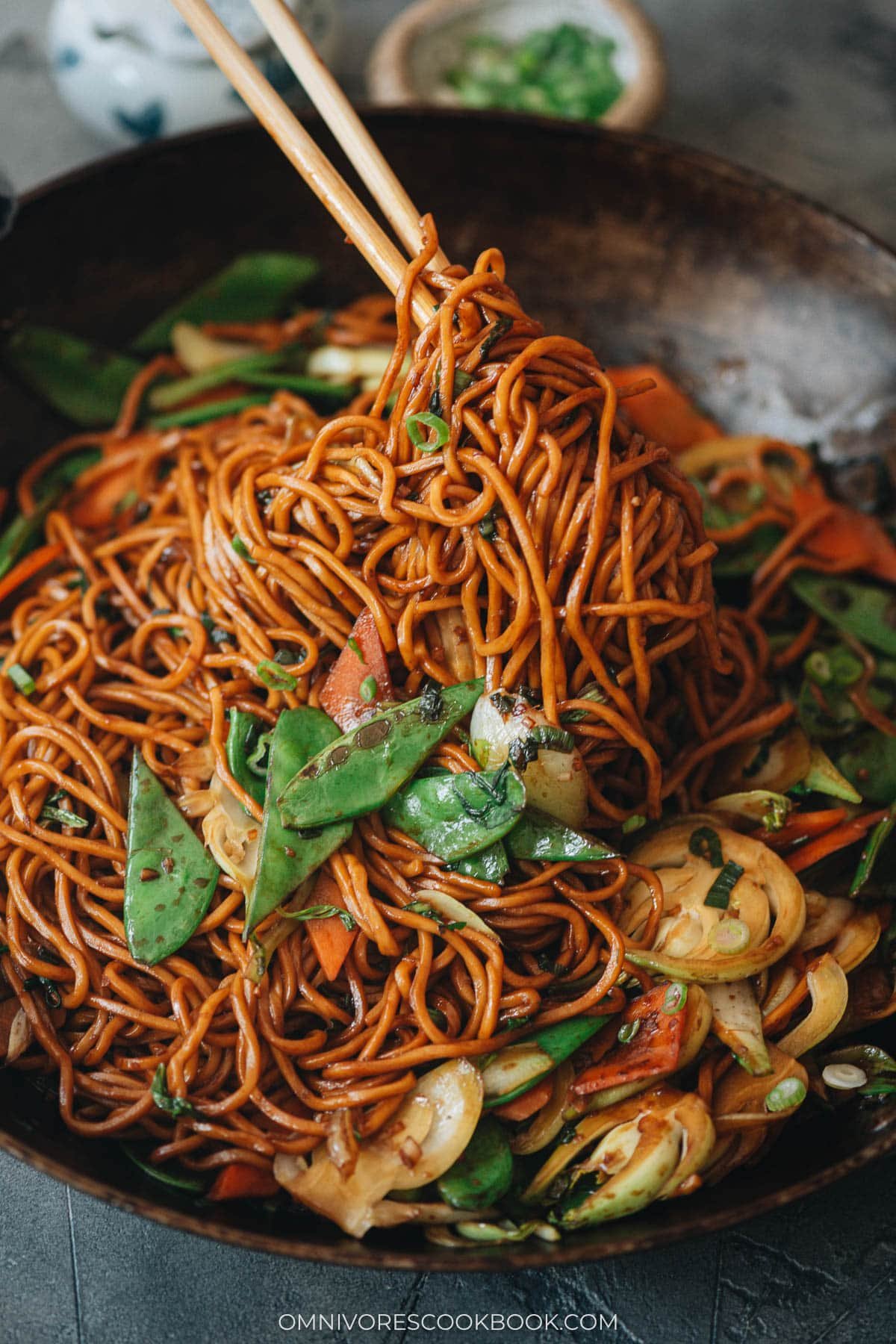
Lo mein is one of the most popular Chinese takeout dishes, where boiled noodles are tossed with vegetables and a savory brown sauce. My version is vegetarian, loaded with more vegetables than you would get at a restaurant, and uses minimal oil while keeping the same satisfying flavor.
Restaurants make big batches of lo mein with barely any vegetables and too much oil. When I started making it at home, I realized the dish is so much better with fresh, properly cut vegetables and a lighter hand on the oil. I boil the noodles, sauté the aromatics and vegetables for just 1 to 2 minutes, then toss everything together with a four ingredient sauce.
This is one of the fastest dinners I make and it works as a main or a side. The noodles taste fresher with less oil and more vegetables than any takeout version I have tried. Once you get the hang of it, you will stop ordering lo mein out.
Ingredients
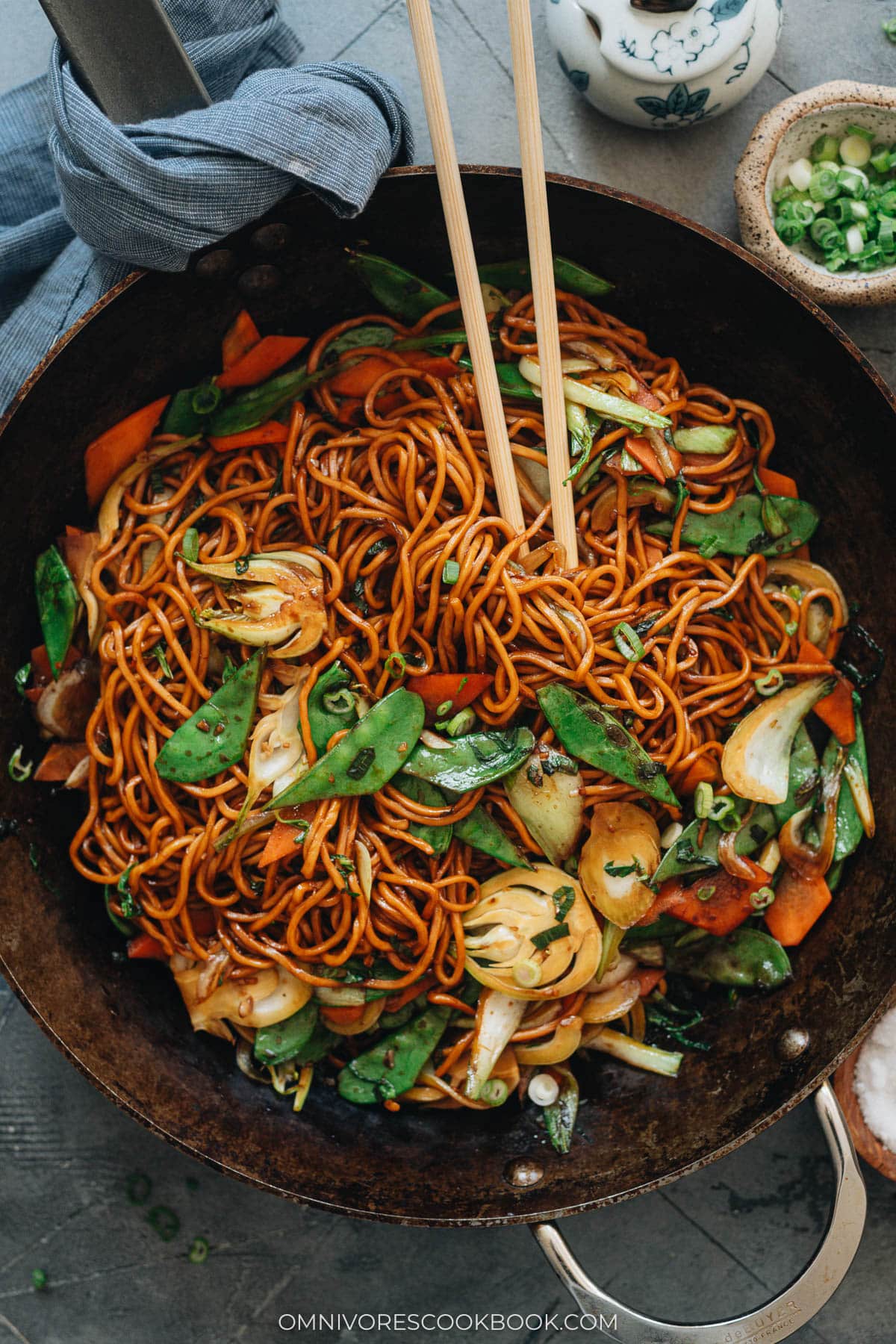
The key to this recipe is the noodles and the sauce. Everything else is fresh vegetables and aromatics that cook in minutes. When you are ready to cook, your table should have:
Noodles
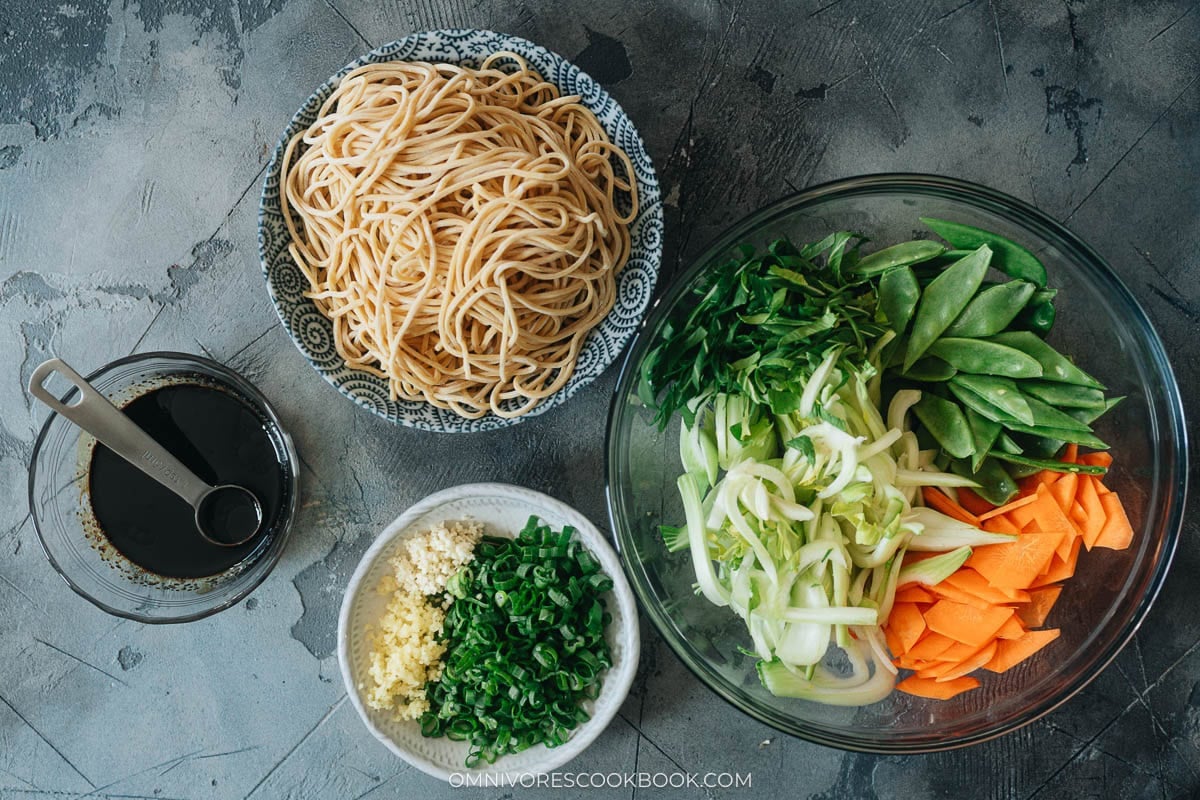
Lo mein noodles: I use semi fresh lo mein noodles from the refrigerated or freezer section at an Asian market. They have the best texture because they are chewier than dried noodles. If using dried lo mein noodles, cook them 1 minute less than the package says so they do not get too soft when tossed with the sauce. In a pinch, dried spaghetti cooked al dente works as a substitute, though the texture will not be the same.
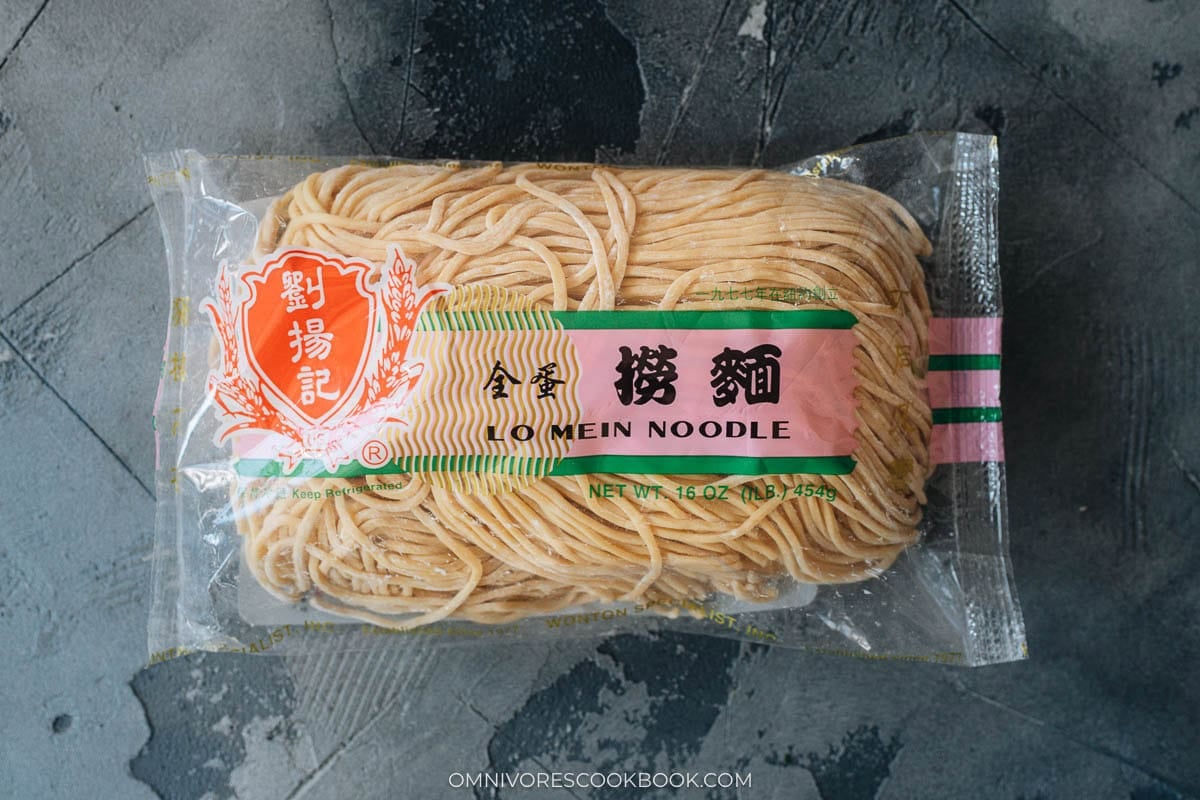
Note: Most lo mein noodles contain eggs. For a vegan version, look for an eggless wheat noodle with a similar round shape.
Sauce
Light soy sauce, dark soy sauce: The dark soy sauce is what gives lo mein its signature brown color and a hint of caramel flavor. Regular soy sauce alone will not achieve that rich color. If you do not have dark soy sauce, substitute 1 tablespoon oyster sauce.
Sugar, sesame oil: A small amount of sugar balances the salt, and sesame oil adds a nutty finish.
Vegetables
Baby bok choy: The greens wither into the noodles while the white stems stay crunchy, giving you two textures from one ingredient.
Snow peas, carrot: Snow peas add freshness and carrots bring a touch of sweetness and color.
Aromatics
Garlic, ginger, green onions: These go into the hot pan first to build the flavor base. I mince the garlic and ginger and chop the green onions. Always use fresh garlic, not garlic powder.
How to cut vegetables for lo mein
The key to the best vegetable lo mein is cutting everything so it cooks evenly and creates a good mouthfeel.
Snow peas: Cut in half so the pieces are bite sized.
Carrots: Slice into small diamond shapes or thin rounds so they match the size of the snow peas.
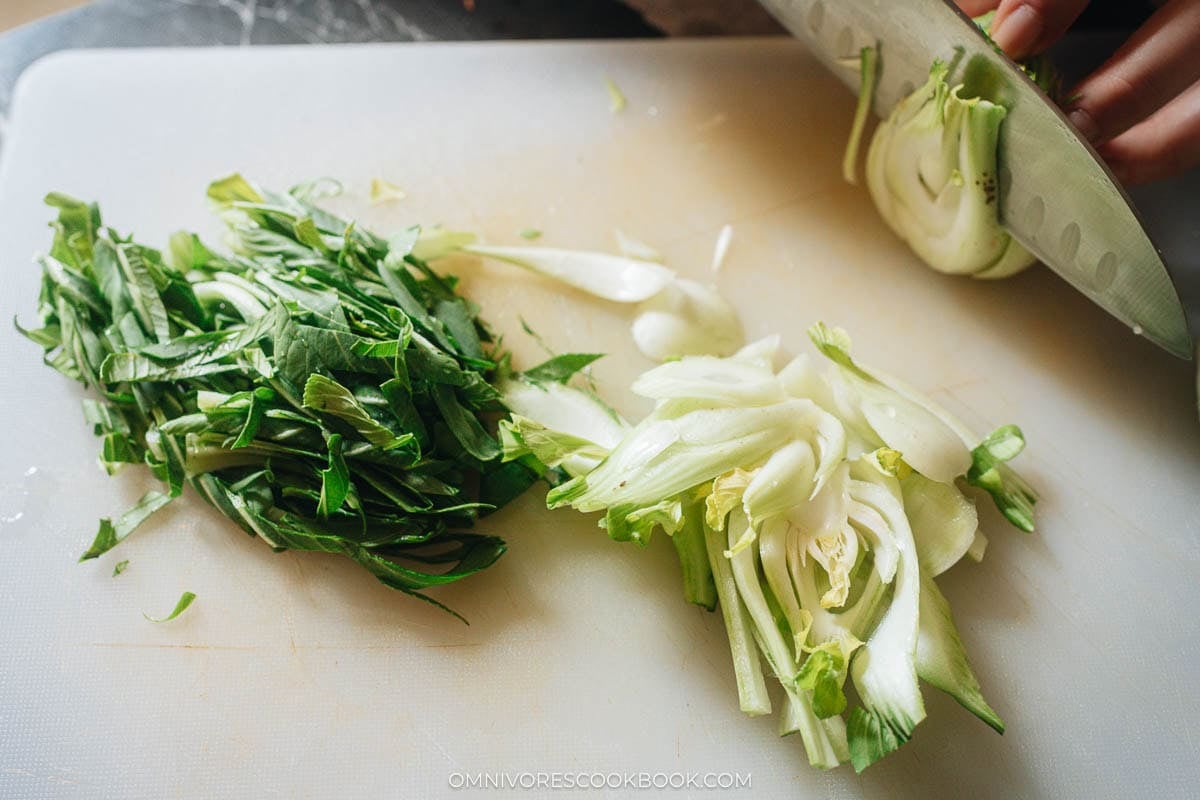
Baby bok choy: Cut off the leafy part and slice the greens into thin strips. Stand the white part upright and slice into 1/4 inch pieces lengthwise. The greens will wither into the noodles and the white part stays crunchy with a nice shape.
How to make
1. Mix the sauce: Combine light soy sauce, dark soy sauce, sugar, and sesame oil in a small bowl. Stir well and set aside.
2. Cook the noodles: Bring a pot of water to a boil. Cook the lo mein noodles according to the package instructions. Rinse with cool water to stop the cooking and set aside. Make sure the noodles are loose and not clumped together before adding them to the pan.
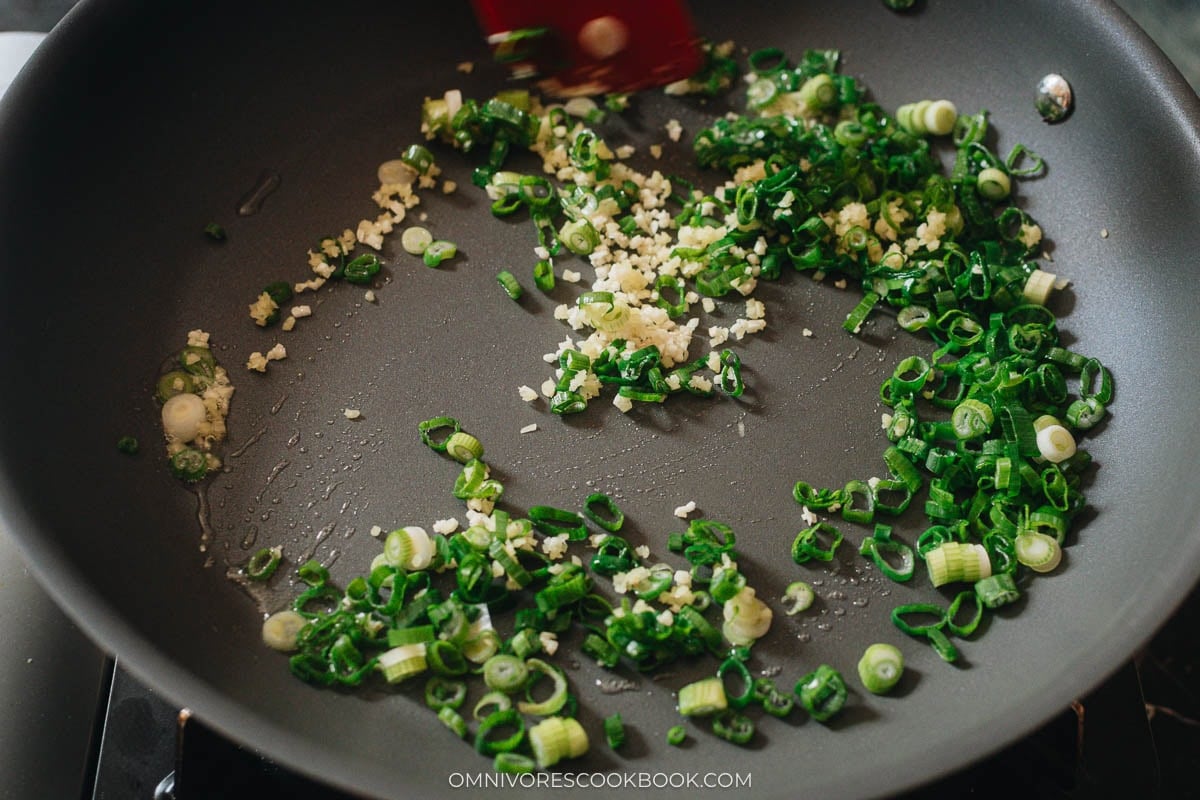
3. Saute the aromatics: Heat 1 tablespoon oil in a large nonstick skillet over medium high heat until hot. Add garlic, ginger, and green onion. Sauté until fragrant, about 1 minute.
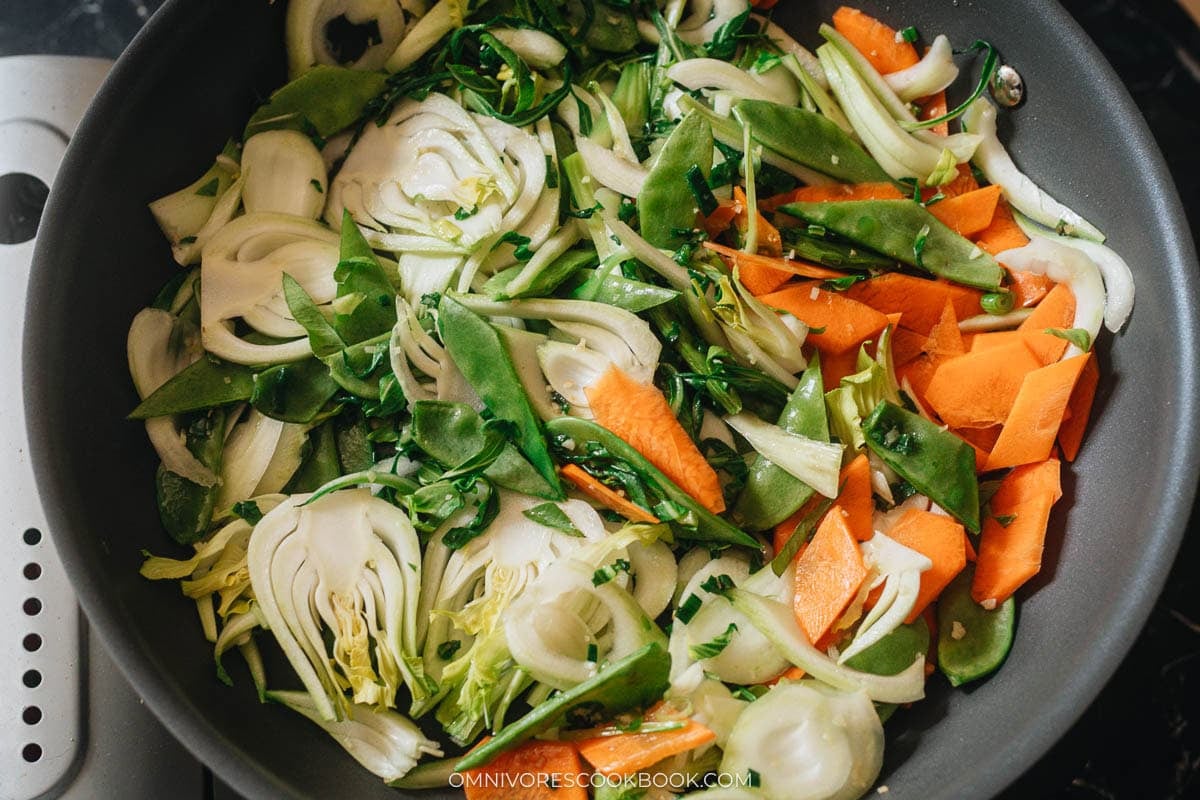
4. Cook the vegetables: Turn the heat to high. Add carrots, snow peas, and baby bok choy. Stir fry until the vegetables begin to soften, 1 to 2 minutes. The vegetables should still have crunch.
5. Toss the noodles: Add the cooked lo mein noodles and toss with tongs to distribute the vegetables. Pour the sauce over the noodles. Cook, tossing continuously, until the sauce is fully absorbed and the noodles are evenly coated.
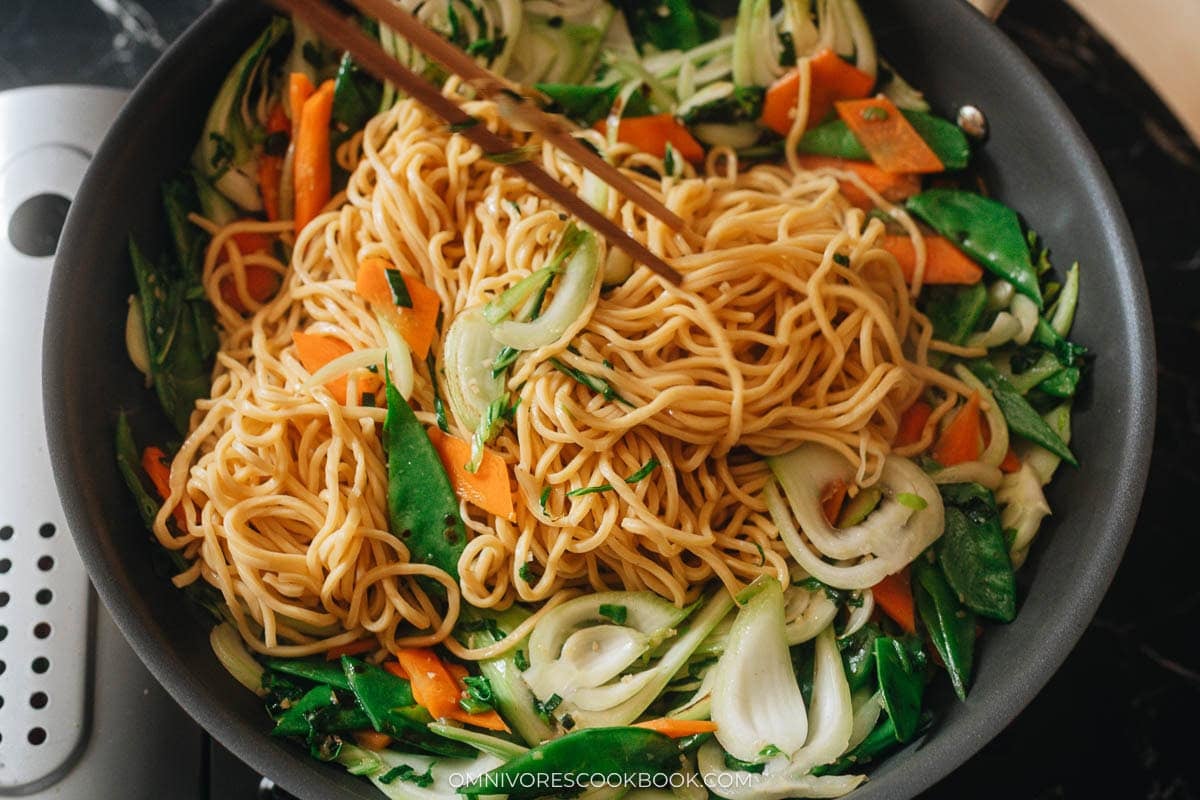
6. Serve: Serve hot as a main dish or side dish.
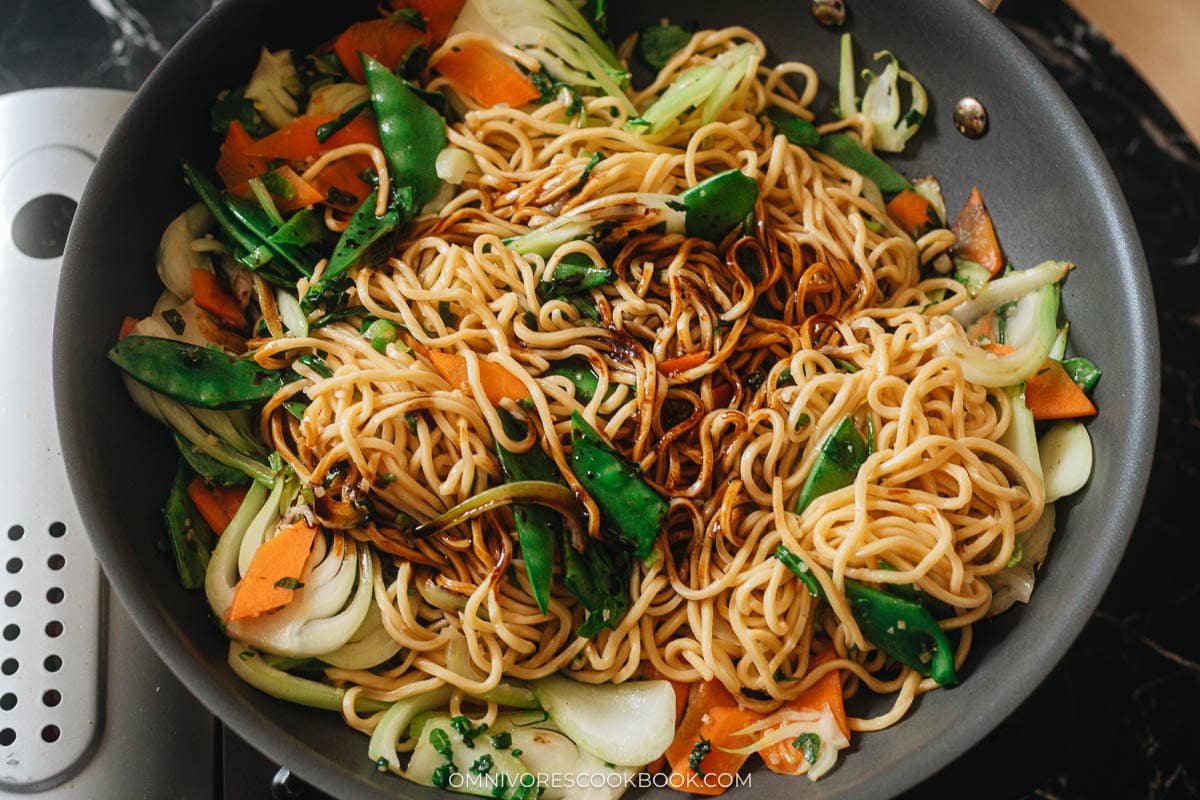
Cooking tips to consider
- Cut vegetables to match the noodles: I cut snow peas in half and carrots into small pieces so every bite has an even mix of noodles and vegetables. Big uncut vegetables create awkward bites.
- Do not overcook the vegetables: I stir fry for just 1 to 2 minutes on high heat. The vegetables should still have crunch when they hit the plate.
- Use dark soy sauce for color: Regular soy sauce will not give you that rich brown color. Dark soy sauce is thicker and slightly sweet. It is what makes lo mein look like lo mein.
- Toss, do not stir: I use tongs and keep tossing so the sauce coats every strand without spilling the ingredients all over the stove.
How I love serving
I serve vegetable lo mein on its own as a quick weeknight main. When I want a bigger meal, I add a bowl of egg drop soup on the side and put out homemade chili oil so everyone can add their own heat.
If you want to add protein, toss in sliced chicken or shrimp that you seared separately. You can also swap the baby bok choy for broccoli or cabbage depending on what you have. For a full takeout spread, pair it with my ginger chicken stir fry or General Tso’s tofu to make it your own.
Frequently ask questions
Why are my noodles sticky?
This usually happens when the noodles are overcooked or not rinsed after boiling. I always rinse them with cool water right after draining to remove the extra starch and stop the cooking. If they still clump together, run them under warm water and loosen them with your hands before adding them to the pan.
How do I make this gluten free?
I use tamari instead of soy sauce and dry sherry in place of any Shaoxing wine. You will also want to make sure the noodles you pick are gluten free, since most lo mein noodles are made with wheat flour.
How do I store and reheat leftovers?
I keep leftovers in an airtight container in the fridge for up to 3 days. When I reheat them, I use a hot skillet with a splash of water to loosen the noodles and bring back some moisture. This method works much better than the microwave, which tends to make everything soft. You can also divide portions into containers for easy meal prep throughout the week.
Chinese Cooking Made Easy
Are you new to this website? This free email series is a great place to start. I’ll walk you through a few of my most popular recipes and show you how and why they work. You’ll quickly start to cook better Chinese food in your own kitchen.
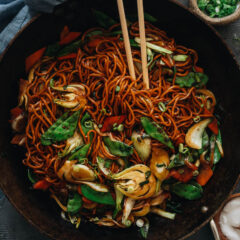
Vegetable Lo Mein
Ingredients
- 1/2 lb lo mein noodles
- 1 tablespoon peanut oil
- 2 cloves garlic , minced
- 1 ” ginger , minced
- 3 green onions , chopped
- 1 cup snow peas , removed the tough ends
- 3/4 cup sliced carrot
- 4 heads baby bok choy , sliced
Sauce
- 1 tablespoon light soy sauce (or soy sauce)
- 4 teaspoons dark soy sauce
- 2 teaspoons sugar
- 1/2 teaspoon sesame oil
Instructions
- Combine all the sauce ingredients in a small bowl. Stir well and set aside.
- Bring a pot of water to a boil. Cook the lo mein noodles according to the instructions on the packaging. Rinse with cool water to stop the cooking and set them aside.
- Heat the oil in a large nonstick skillet over medium-high heat until hot. Add the garlic, ginger, and green onion and saute until fragrant, about 1 minute.
- Turn the heat to high and add the carrots, snow peas, and baby bok choy. Stir fry until the vegetables begin to soften, 1 to 2 minutes.
- Add the cooked lo mein and toss with a pair of tongs to distribute the vegetables. Pour the sauce onto the noodles. Cook, tossing continuously, until the liquid is fully absorbed and the noodles are fully coated.
- Serve hot as a main dish or side dish.
Nutrition

Did you make this recipe?
I’d love to hear how it turned out for you! Please take a moment to leave a 5-star rating ⭐️ and share your thoughts in the comments further down the page. It really helps others discover the recipe too.
If you give this recipe a try, let us know! Leave a comment, rate it (once you’ve tried it), and take a picture and tag it @omnivorescookbook on Instagram! I’d love to see what you come up with.
Maia
I absolutely love this recipe. It is so easy to make and I always receive compliments on this whenever I make it for others.
Val
Easy and delicious, the perfect weeknight meal.
KM
Turned out great! I added Asian pork meatballs for some extra protein.
Laura Clayson
Incredible recipe. So delicious. Have tired various stir fry noodle recipes in my time + this was honestly the best one I’ve had, in terms of instructions to make + the noodles not getting sticky… also the best I’ve eaten! 😋🍜
Laura Clayson
Thanks so much Maggie!! 😋😋
Annika
I love your recipes. And I have a question concerning this recipe. My noodles don’t get this dark color even despite I’m using all the right ingredients. Do I have the wrong noodles or do I just have to use more sauce? Thanks in advance for your help!
Maggie Zhu
Thanks for leaving a good review!
The dark color is from the dark soy sauce. And depending on the brand, sometimes the dark soy sauce has a slightly different consistency.
If you want your dish to be darker, simply drizzle in a bit more dark soy sauce will do.
James Rice
Love your recipes 😋 to death you’re the bomb 💣 keep up the good job
Paul R Miller
So delicious! I added marinated shrimp (shaoxing wine, cornstarch, pepper) to make a heartier meal. We gobbled it up! Seasoning was perfectly balanced.
Claire
I loved it. Easy, taste great and very forgiving (I did not have bok choy but I had some brussels sprouts that needed to be eaten and it was great).
Anya
I love this recipe! It’s so easy to make, great for a weeknight when you’re demotivated to cook but still feeling something homemade. Thanks!
Tracy
By far the best Lo mein recipe. I added cooked shrimp and I didn’t have bok choy so I used shredded cabbage and I julienned my carrots. Thank you
Rebecca camacho
I couldn’t find peanut oil, what’s the best substitute if there is any?
Maggie
Hi Rebecca, you can use any neutral oil (vegetable, grapeseed etc). To boost the taste, you can add 1/2 teaspoon sesame oil in the sauce if you have it. And it’s totally OK without the sesame oil as well.
Melissa
Love your recipes! I have màde several and this is one. Thank you!
Barry
Absolutely delicious! Made this for dinner tonight and we all agree this recipe is a keeper! Easy and quick to make.
Peta
Absolutely delicious. My husband made this dish tonight for Mother’s Day. Thank you for sharing your recipe 😋
Ted
I will try this recipe out. thanks
Looks like some online shopping since there are no asian markets in this locale.
”
– Pepper Lewis: Oh, just knock its horns off, wipe its nasty ass, and chunk it right here on this plate.”
Time for some shopping.
Valerie
This look so delicious. Baby bok choy, garlic, noodles–mmm. What’s not to like? Once I can get out to the Asian market and get supplies–this will be the first thing I make. I love your General Tso’s chicken and have made it numerous times. Great recipes Maggie. Stay as safe as you can be down there. These are definitely some weird and scary times we’re going through. Okay, there’s a video here that’s distracting me…LoL OMG what did you just make??!!