
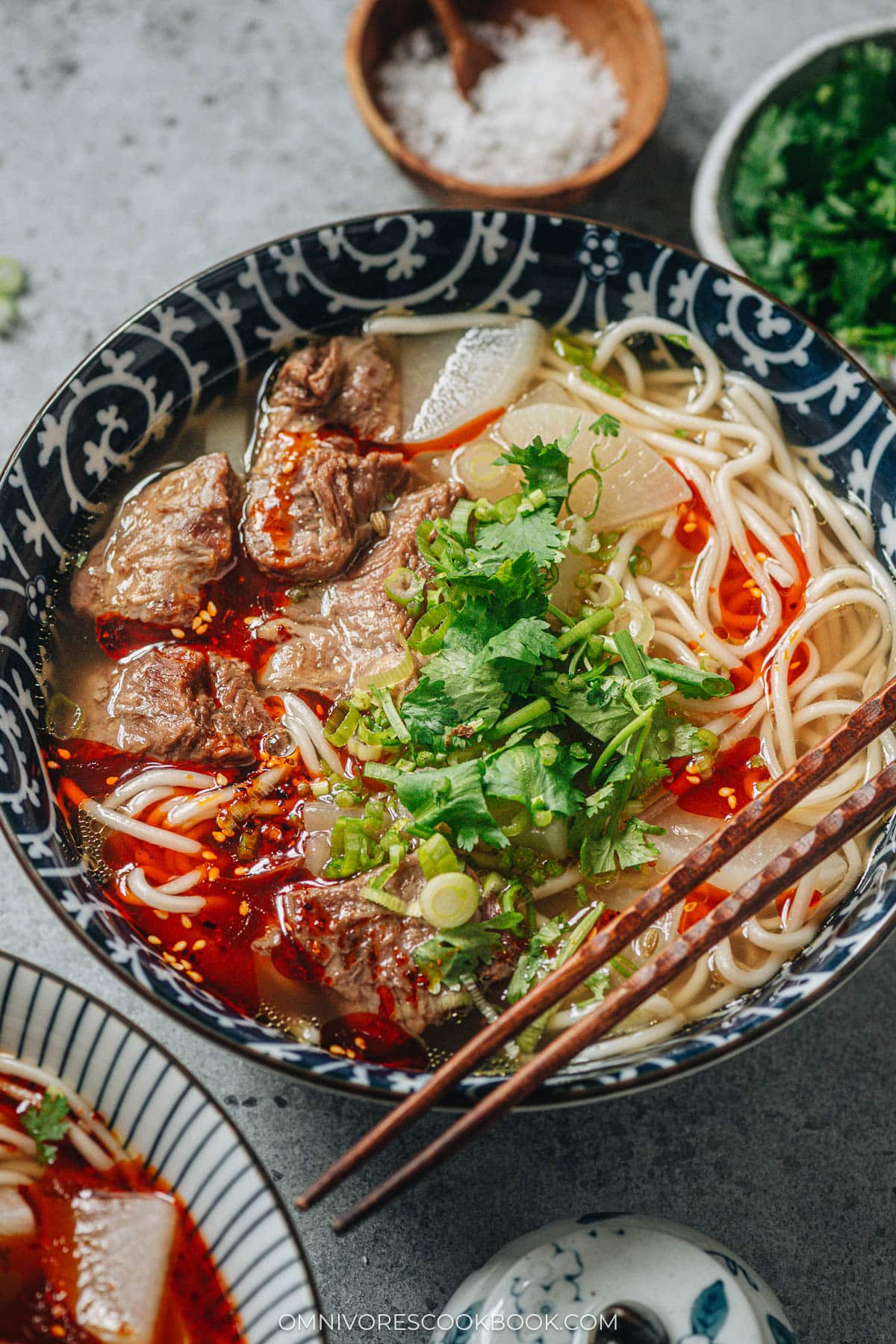
First things first, for anyone who is not familiar with the recipe, Lanzhou beef noodle soup or Lanzhou La Mian (兰州拉面), is a popular Chinese noodle dish that originated in Lanzhou, the capital city of Gansu province in northwestern China. This soup is known for its simplicity, but I would say it relies on simmering and careful seasoning to highlight its natural flavor.
I want to point out that one of the defining features of Lanzhou beef noodle soup is the hand pulled noodles. They are usually made fresh by a chef, who stretches and folds the dough until it becomes long, thin, and even strands. Watching this in a Lanzhou style shop is an experience worth seeking out when you travel in China. Or you can simply learn to make my easy hand-pulled noodles from scratch, and I always recommend it for this soup.
Now let us talk about the broth. My homemade broth uses beef and beef bones simmered with spices and aromatics for hours until it becomes deeply savory and hearty. Then comes the fun part, the assembly, which is surprisingly simple. I serve the noodles in the clear broth and add tender pieces of beef, radish, cilantro, and a spoon of my homemade chili oil. My recipe makes about 8 servings, yet if you have a small family like mine, it stores well and is great to enjoy later.
Unlocking Lanzhou beef noodles at home
In China, the true Lanzhou beef noodle recipe is closely guarded. Each noodle shop protects its own version, which makes the authentic flavor challenging to recreate at home. But I have good news, when you choose the right ingredients, you can create a bowl that comes very close to the traditional version in your own kitchen. That is exactly what I share in my step by step directions for making the most delicious Lanzhou beef noodle soup, which has become one of my favorite Chinese soup recipes.
Ingredients
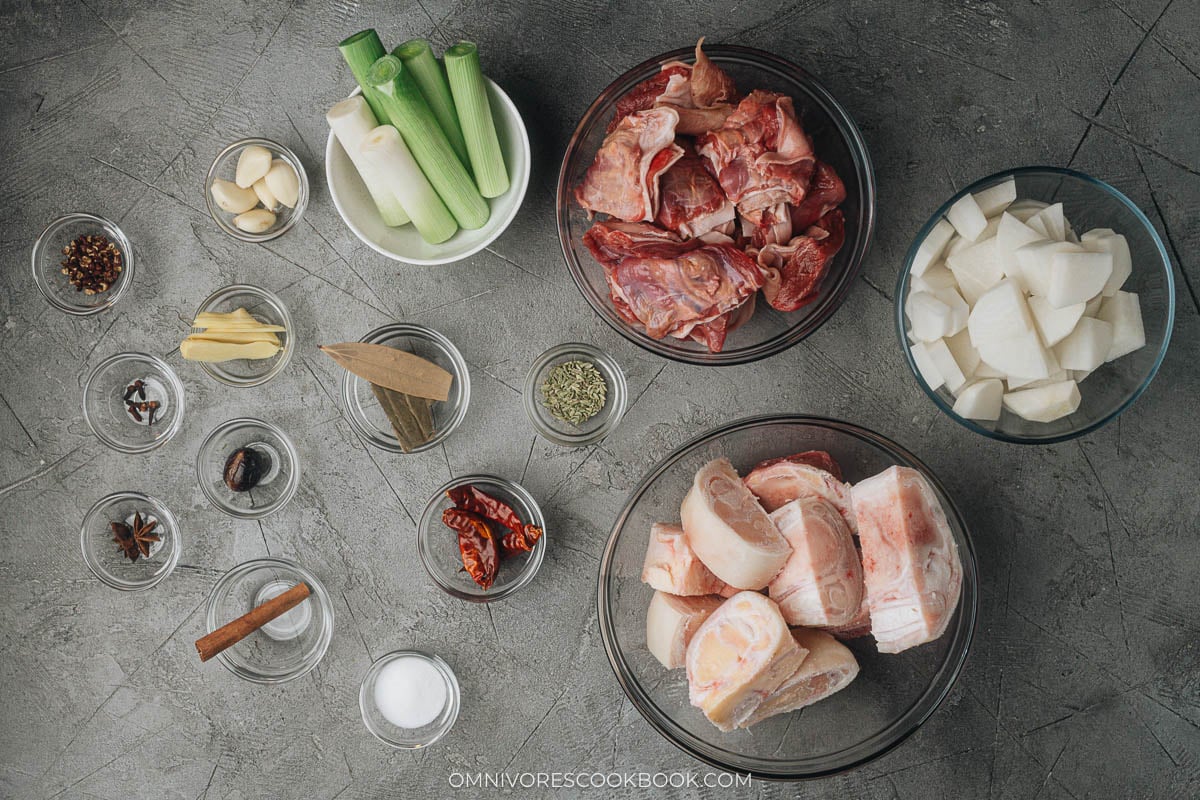
These are the ingredients I use to make this Lanzhou beef noodle soup. I also share a few substitutions I have tested that work well for this recipe.
Beef and bones for the broth
For the beef, my first choice is untrimmed flank steak. In Chinese it is called Niu Nan (牛腩) and the cut is quite different from what you usually see in regular grocery stores in the United States, so I usually pick it up at a Chinese market. It has more fat and membranes, and I love how they melt during cooking and keep the beef tender and juicy. If you cannot find this cut, brisket, round roast, or chuck also work very well.
When it comes to the bones, I usually choose beef shin ones for this soup. Neck bones are a good alternative if that is what you can get.
Aromatic Spice Soup Base
Aromatics: I use ginger, garlic, and scallion to build the foundation of the broth.
Spices: I add chili pepper, bay leaves, fennel seeds, nutmeg, cinnamon, star anise, whole cloves, and Sichuan peppercorns. This mix gives the broth its depth and the warm fragrance that Lanzhou noodles are known for.
Salt and daikon radish: I season the broth with salt and simmer daikon radish until it turns tender. The radish adds a mild sweetness that balances the beef and spices.
Key ingredient: hand-pulled noodles
As I mentioned earlier, the closest way to enjoy an authentic bowl is to make your own hand pulled noodles. I have a hand pulled noodle recipe that you can follow at home. It takes some time and patience, but it is very doable when you follow my steps, and the results are always worth it.
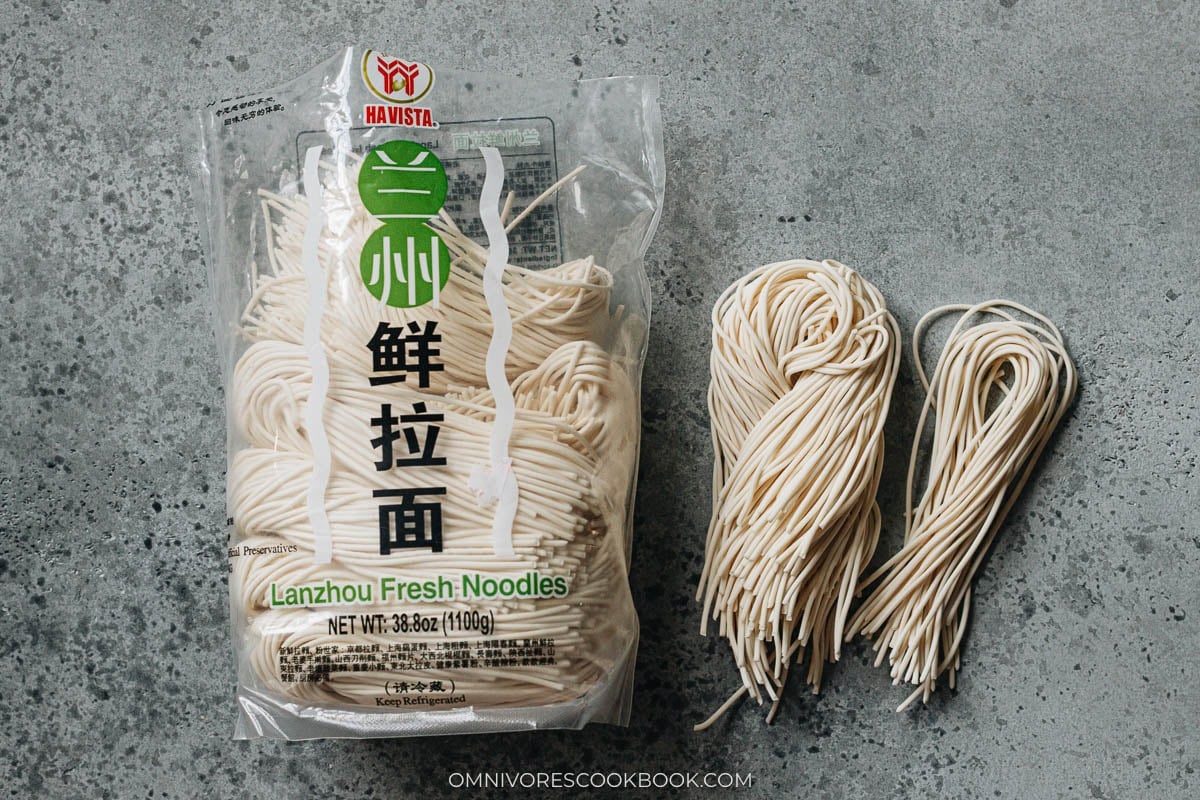
When I am not making noodles from scratch, I look for Lanzhou fresh noodles by Havista at my local Asian market. These semi dried noodles turn nicely chewy once boiled, and they work great in this soup. If you can’t find them, dried wheat noodles are a great option, and a spaghetti style shape comes closest to the traditional look.
How to make
1. Start the broth: Add the beef bones and meat to a large pot and cover them with 8 cups of cold water. Heat the pot over medium high until it comes to a boil, stirring a few times to keep the meat from sticking. Once the water reaches a boil, reduce the heat to medium.
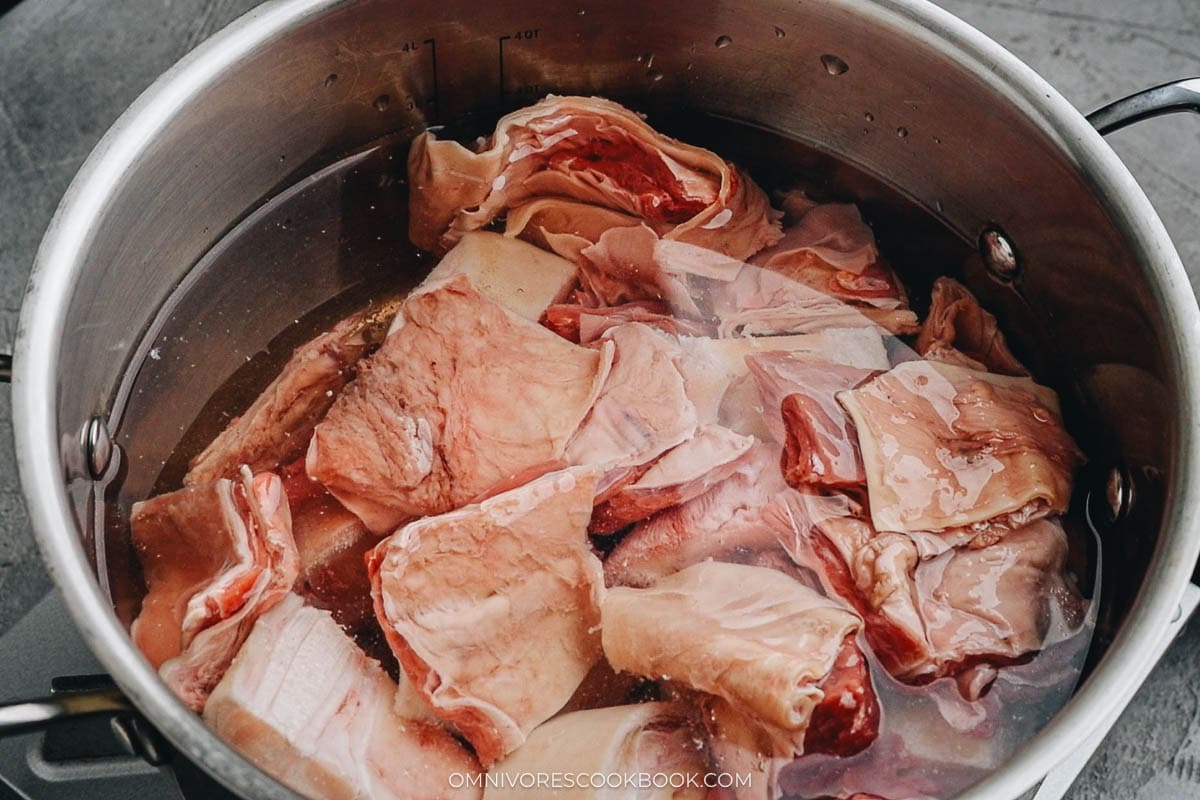
2. Skim the broth: Skim off the brown foam from the surface and discard it. Continue skimming until the broth looks almost clear, which usually takes me about 10 minutes.

3. Add spices and aromatics: Transfer the beef, bones, and broth into an Instant Pot, then add the spices and aromatics.
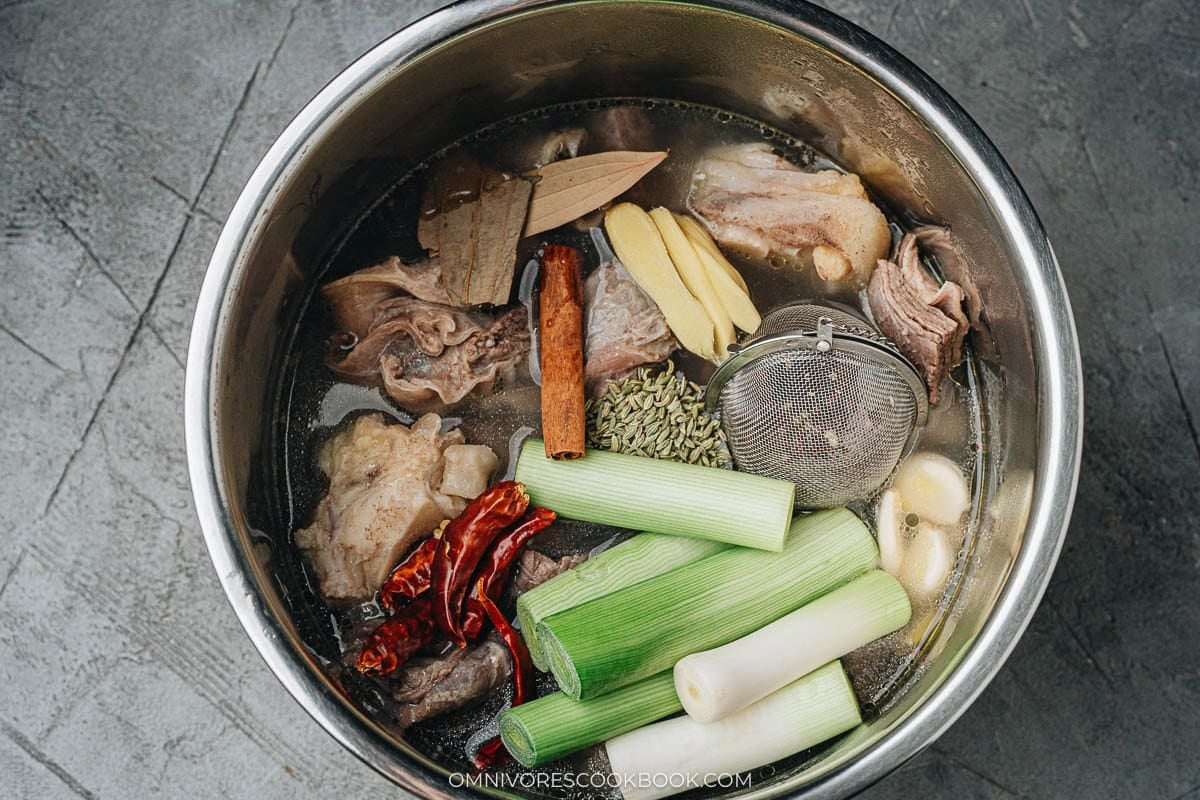
4. Pressure cook the broth: Cook on high pressure for 1 hour, until the beef turns tender and the broth becomes rich.
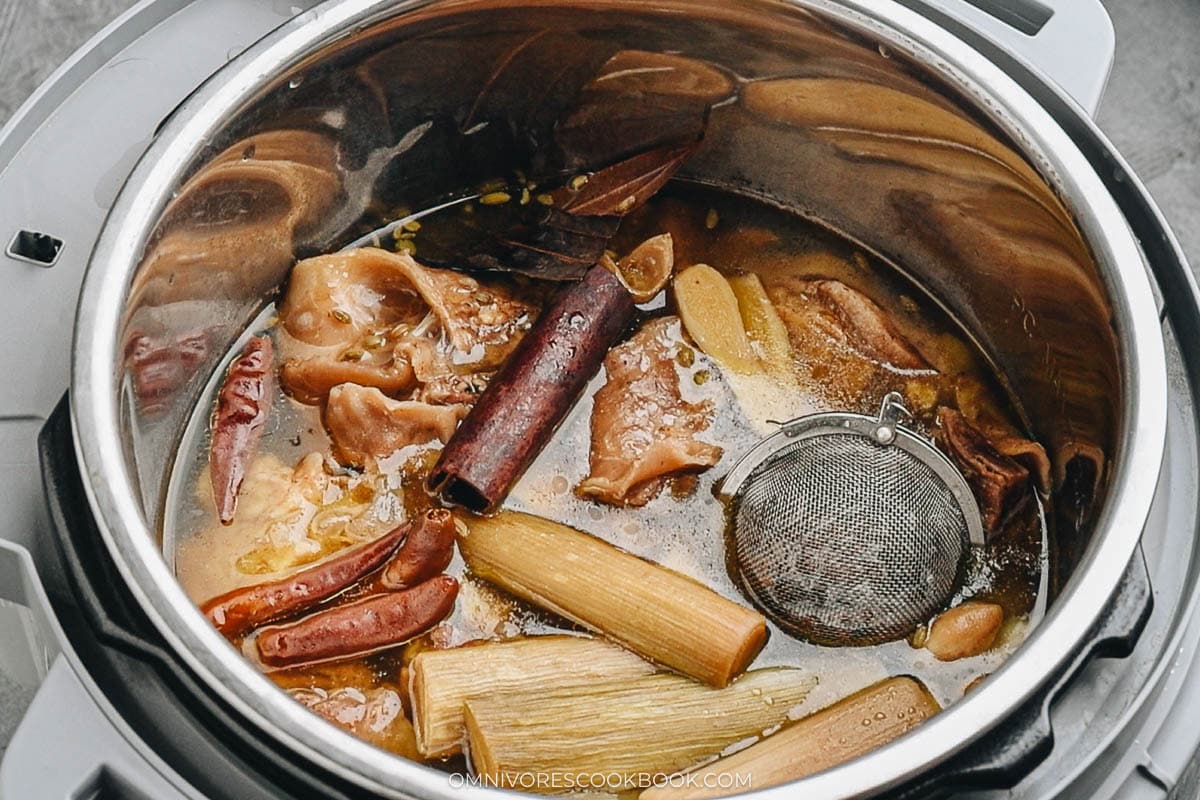
5. Remove the solids: Transfer the beef pieces onto a plate, then discard the bones and the spices.
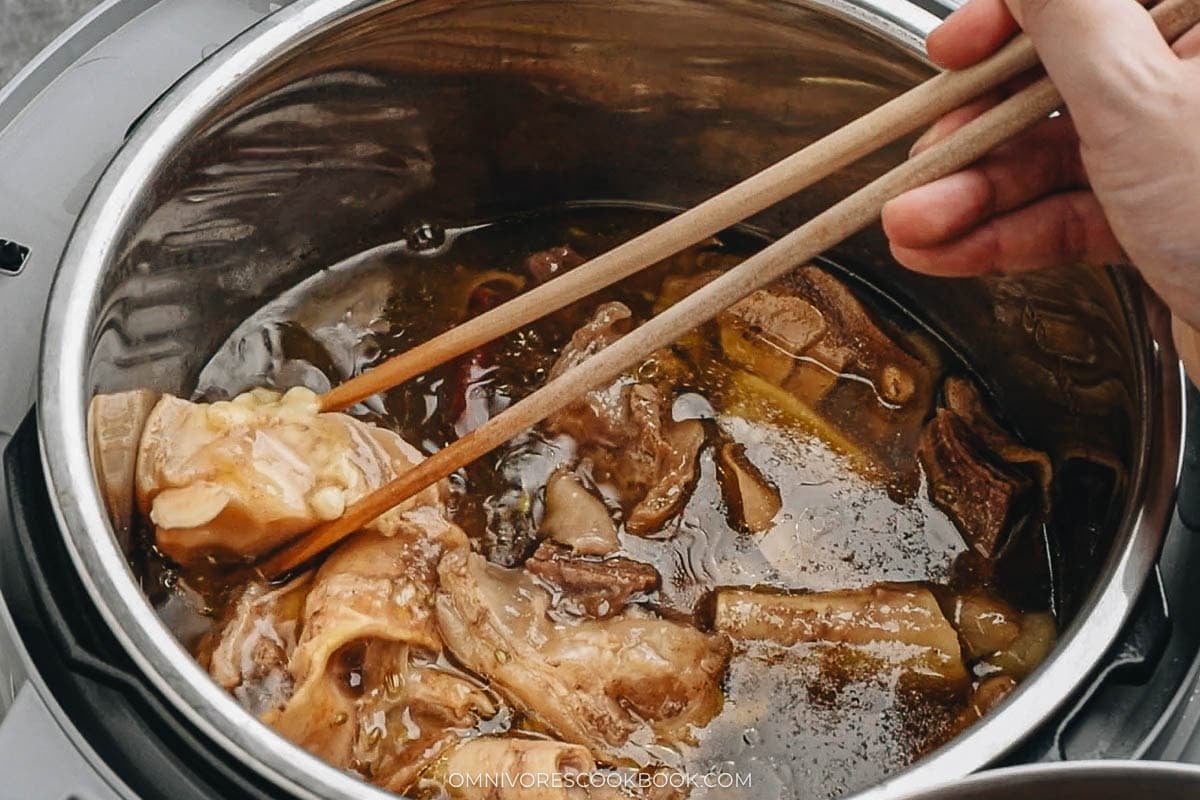
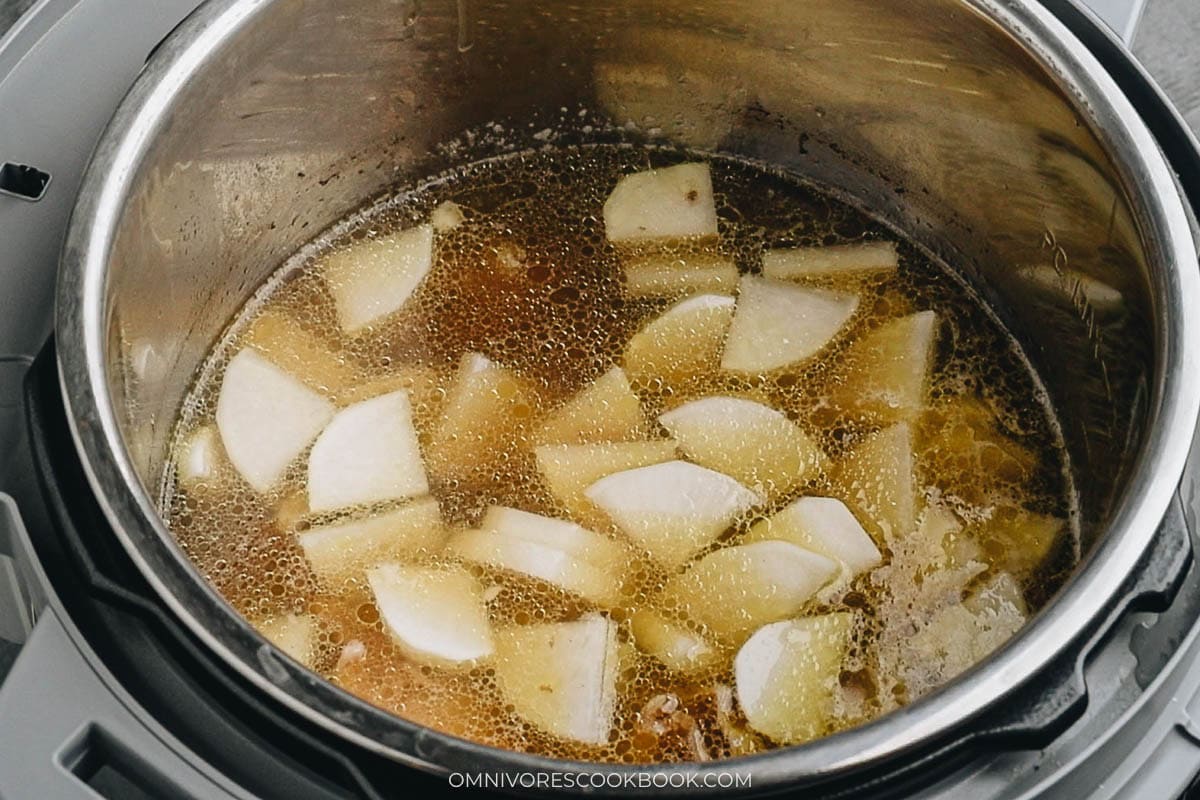
6. Cook the radishes: Add the radishes to the broth and simmer for around 10 minutes until they turn tender.
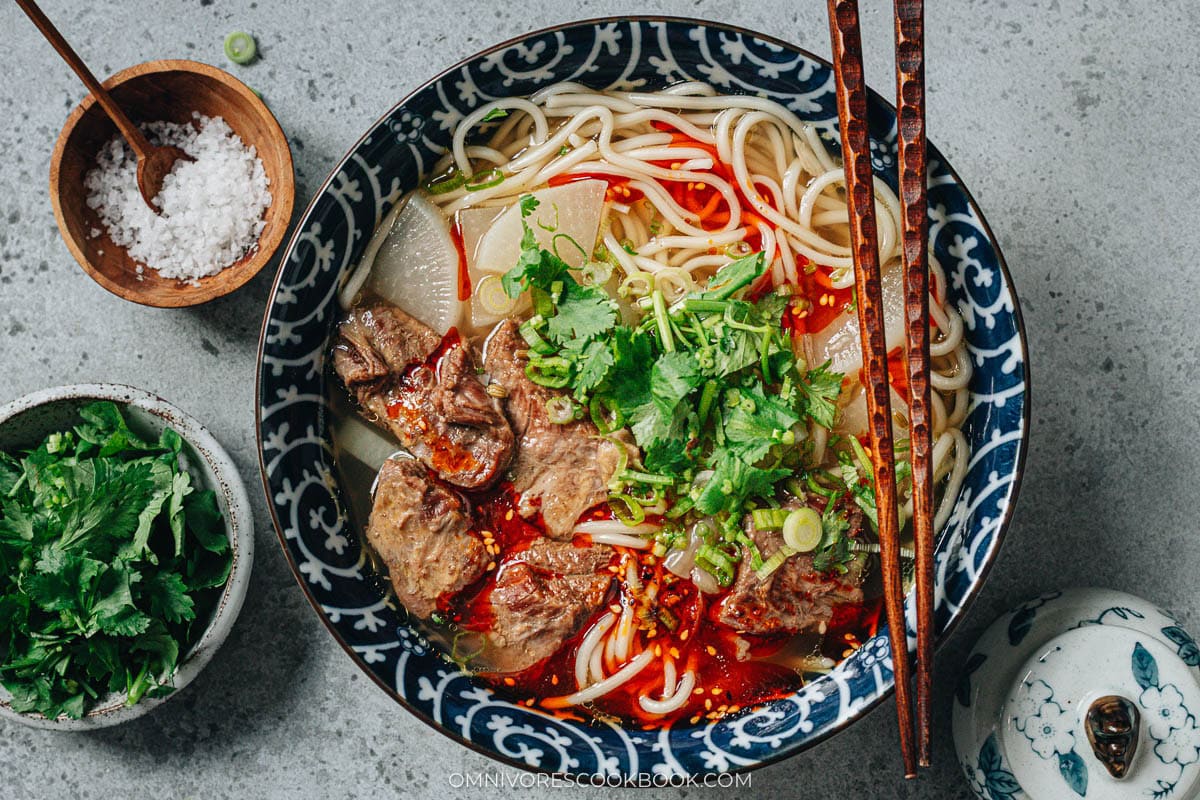
7. Cook and assemble the noodles: Boil the noodles according to the package instructions, then divide them among the bowls. Pour the hot broth over the noodles and add a few pieces of beef, daikon radish, cilantro, and green onion. Serve with chili oil and salt on the side for a warm and satisfying meal my family really enjoys.
Cook without an Instant Pot
If you do not have an Instant Pot, you can still make this soup with great results on the stovetop, and I often do this when my mom visits since she prefers the stovetop version.
After the initial blanching, I keep everything in the same pot, add 2 cups of water, and bring it to a gentle simmer. The broth needs about 3 to 4 hours on very low heat to develop the depth and aroma I look for, and the beef becomes tender during this time. Of course this method takes longer, but the slow simmer creates a great rounded broth that we love.
Serve and customize
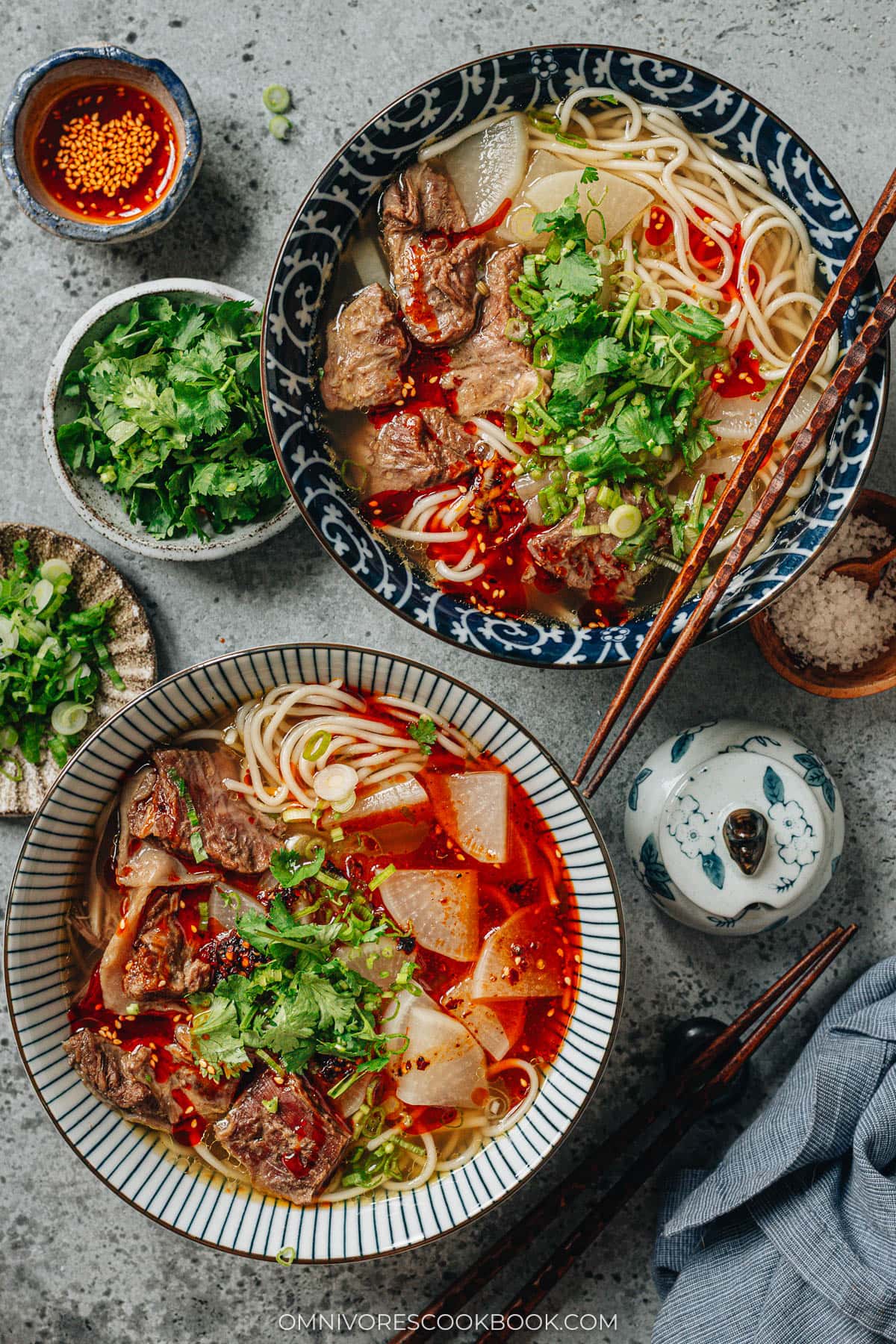
I usually serve Lanzhou beef noodle soup the same way I enjoyed it in China, as a simple stand alone main dish. The clear broth, tender beef, and hand pulled noodles make a complete and comforting meal on their own, and I often pair it with a light cucumber salad or a small wood ear mushroom salad on the side.
If you want to make the meal your own, there are plenty of easy ways to customize it. You can adjust the spices, add more chili oil, or top with vegetables you love, such as yu choy or bok choy. And if you want to keep things simple, I recommend adding a few small classic plates like Chinese chicken dumplings, or a batch of homemade egg rolls. They are easy warm ups for guests or family members who are just being introduced to this soup and help ease everyone into the meal.
Frequently asked questions
Why do my noodles turn soft too quickly?
I cook the noodles right before serving and keep them separate from the broth until the last moment. When noodles sit in hot broth for too long, they soften quickly, so I always assemble the bowls just as I sit down to eat.
How do I know when the beef is ready?
I lift a piece from the pot and check if it is tender enough to cut with chopsticks. When the beef reaches that point, the broth usually carries a richer aroma, and everything harmonizes. It is a signal that the pot has done its work.
What is the best way to store this soup?
I usually place the broth and beef in airtight containers once they cool to room temperature, and they keep well in the fridge for about 4 days. When I freeze the broth, I leave a little space at the top of the container and it stays in good shape for up to three months. I freeze the cooked beef separately so it’s easier to portion out, and I always cook fresh noodles right before serving because they do not store well once mixed with the broth.
Want to Save This Recipe?
Enter your email below & we’ll send it to your inbox. Plus get great new recipes from us every week!
Watch video
Lanzhou Beef Noodle Soup (兰州拉面)
Ingredients
- 2 to 3 lb beef shin bones (*see footnote 1)
- 2 lb untrimmed beef flank , or brisket, or round roast (*see footnote 2), cut into 3” (7 cm) pieces
- 2 Chinese scallions or 4 green onions, white part, cut to 4” (10 cm) pieces
- 1 thumb ginger , sliced
- 5 cloves garlic
- 5 Chinese dried chili peppers
- 5 whole cloves
- 2 bay leaves
- 1 teaspoon whole Sichuan peppercorn
- 1 teaspoon fennel seed
- 1 whole nutmeg
- 1 star anise
- 1 cinnamon stick
- 2 teaspoons salt (or to taste)
- 1 small daikon radish , peeled and sliced to 1/2” (5 mm) quarters
- 1.3 to 2 lbs fresh Lanzhou noodles (or 1 to 1.3 lb / 400 to 600 g dried wheat noodles)
Serving
- Homemade Chinese chili oil (for serving)
- Extra salt (for serving)
- Cilantro , chopped (for garnish)
- Green onion , sliced (for garnish)
Instructions
To cook the broth
- Add the beef bones and meat into a large pot. Add 8 cups of cold water. Heat over medium-high heat until brought to a boil. Stir occasionally to prevent the bottom from sticking. When it starts to boil, turn to medium heat. Skim the brown foam from the top and discard it. Boil and skim until the broth turns almost clear, 10 minutes or so.
- Transfer the meat and bones into the Instant Pot, and pour in all the broth. You can keep cooking on the stovetop if not using an Instant Pot. (*Footnote 3)
- (Optional) Add the cloves, Sichuan peppercorn and star anise into a tea infuser. Submerge the tea infuser in the broth.
- Add the scallion, ginger, garlic, dried chili pepper, bay leaves, fennel seed, nutmeg, cinnamon stick into the Instant Pot. Set the pressure on high, timer for 1 hour. Once done, let pressure release naturally. If you want to use fast release, do a natural release for at least 20 minutes first, to prevent it from spilling.
- Once done, remove and discard the spices, aromatics, and beef bones using a pair of tongs. You can also strain the broth if that is easier. But you need to pick out the meat separately.
- You might find a thick layer of oil floating on top of the soup (depending on the fattiness of the beef). Use a ladle to skim the oil off according to your preference (*footnote 4).
- Add salt and mix well. Taste the broth and adjust seasoning if needed. The broth should taste a bit salty by itself, so it will be perfect after adding the noodles. You can also adjust the seasoning later, after assembling the bowls.
- Turn on the saute function if using Instant Pot. Add the daikon radish and cook until tender, 10 minutes or so.
- Boil the noodles according to package instructions.
To assemble noodles
- Add noodles to each serving bowl, then pour in the broth. Top noodles with beef, a few pieces of daikon radish, and some cilantro. Serve immediately with chili oil and soy sauce on the side. Enjoy hot as a main dish.
Notes
- If the bones are not cut, ask the butcher to cut the beef bones lengthwise into short pieces when purchasing.
- Using untrimmed cuts will generate a very tender and moist lean part after simmering. You can trim off and discard the fat before serving. Other beef cuts such as brisket, shank, or round roast are also suitable for this recipe.
- Add 2 cups of water into the pot if you keep cooking on the stovetop. Cover and simmer over low heat for 3 hours, or until the beef turns very tender.
- I usually skim off as much oil as I can and save it. Some people like to serve the broth with oil on top, but I found it delicious enough without the oil. You can use the oil for stir-frying later and it will help you create very delicious dishes. To store beef fat, allow the oil to cool in a small bowl at room temperature, then transfer it to an air-tight container. It can be stored in the fridge for up to 2 weeks.
Nutrition

Did you make this recipe?
I’d love to hear how it turned out for you! Please take a moment to leave a 5-star rating ⭐️ and share your thoughts in the comments further down the page. It really helps others discover the recipe too.
Ameed
In your ingredients you have written 5 cloves which can be seen in the picture. But you haven’t said anything about 5 garlic cloves which are there in your pictures. Kindly explain if they are needed or not.
Maggie
Hi Ameed, great catch! Yes my recipe uses garlic and I just added the information into the recipe. When I wrote 5 cloves, it actually indicate the spice – clove. Now both spices are on the ingredient list now. Thanks for letting me know about this.
Happy cooking and hope the dish turns out great!
Robyn @ Simply Fresh Dinners
How did I miss this masterpiece, Maggie? I love that you have made a complicated, expensive dish into something accessible to everyone! Beautiful photos and delectable food. You’ve got me drooling at my desk this morning!
Nagi@RecipeTin Eats
god I love the story behind these! It is like real chili, real yakitori, real anything that is authentic to a particular region!! That broth looks GOLD. I absolutely cannot wait to try this – it is going on my list of things to make!
Vicky | Vicksquisite
Ahhhhh I am so glad I found your site! Going through all the food you cook makes me feel so nostalgic – your site will definitely be a source of much inspiration for my personal Chinese cooking endeavors 🙂
Maggie
Hi Vicky, thanks for stopping by and leaving such kind words! Hopping over to check out your site 🙂
Thao @ In Good Flavor
Wow! When I crave soup, this is the kind of yearn for. Thanks for sharing your recipe. Pinning.
Helen @ Scrummy Lane
Maggie, this post has got me swooning, not just because of the recipe but because of your absolutely stunning photos! I could stare at them for ages!
… but mostly because of the recipe. What a wonderful national treasure. I love that you shared the story about the the recipe in the cave with the giants, too!
Jennifer Whitney
Oh My God! This is so stunning to look! I feel like that I can taste the smell of the noodles over the screen! I should try this at home as early as possible!
Nguyet @ Taming of the Spoon
Having grown up on pho, I always love a good a recipe for beef and noodle soup. This recipe looks amazing and your photos are gorgeous!
mira
Beautiful pictures maggie! (for some reason my previous log comment did not go through). Enjoyed the story behind the recipe! Great tips and combination of flavors! Pinned!
Janette@culinaryginger
Wow, what a spectacular dish. I would love the challenge to try this one day.
Angie
I know what I’m doing this weekend now…. oh my. This soup looks amazing, and something I’d love to spend the day shopping for (I’m so lucky that I have several stores in my area where I can pick up all of the ingredients), making… this sounds fantastic! get in my belly!
Maggie
Hi Angie, I’m so glad to hear you like this one and are planning to cook it! Me too, I like spending time and shopping in the market for the new recipes I’d like to try out. Hope you enjoy the noodle soup and let me how it goes 🙂 Happy cooking!
K / Pure & Complex
Oh my, oh my, oh my… this dish looks incredible. I don’t know if I can pull this off, but I must try.
Sarah
This looks amazing! I actually have family in Lanzhou, so will be excited to try this dish! Thanks for the tips on the broth ~ good broth always makes for excellent noodles!
Bam’s Kitchen
Beautiful dish and lots of creativity on your part makes this dish look and I am sure taste amazing. You know how you can just tell what a dish is going to taste like when you read the ingredient list… and I am loving your ingredient list. Your homemade noodles are a piece of art and so are your photos. Sharing of course!
Bonnie Eng
Yum Maggie!! Beautiful photos, totally my kind of meal! 🙂
Annie @ The Garlic Diaries
Oh my goodness. I love Asian noodle bowls. This looks absolutely perfect!
Thalia @ butter and brioche
I have to agree with you here that simplicity is such a hard thing to achieve. I definitely do know that despite being simple, these beef noodles will taste incredibly flavoursome and complex. Beautiful Maggie!
Marissa | Pinch and Swirl
This looks wonderful, as usual Maggie! Thank you so much for the tips on making rich beef broth.
Kathleen | HapaNom
Oh my gawd….this sounds absolutely incredible! And gorgeous photos! I love the story of immense detail behind this dish – it reminds me of a some of the food my friend from Korea makes. She went to school to learn Royal Korean Cuisine, and all of the vegetables have to be sliced just so and everything has an exact purpose. Really very interesting!
I’m going to be traveling overseas soon, so I’m running around trying to get everything together. But as soon as I get home, I’m so making this! And… I already have potassium carbonate in my cupboard! (I get a little crazy when it comes to homemade noodles) 😉
Alice @ Hip Foodie Mom
oh my gawd, Maggie!!! this looks SOOOO good!!! Asian noodle bowls are my fave!!! and this is very similar to pork ramen for example, where it’s all about the broth and the noodles. . and the broth takes HOURS and you need pig trotters and other things you don’t want to touch!!! oh my gawd, you made those noodles by hand?!!!! BEAUTIFUL. I am so in awe of you right now! wow!!!!