
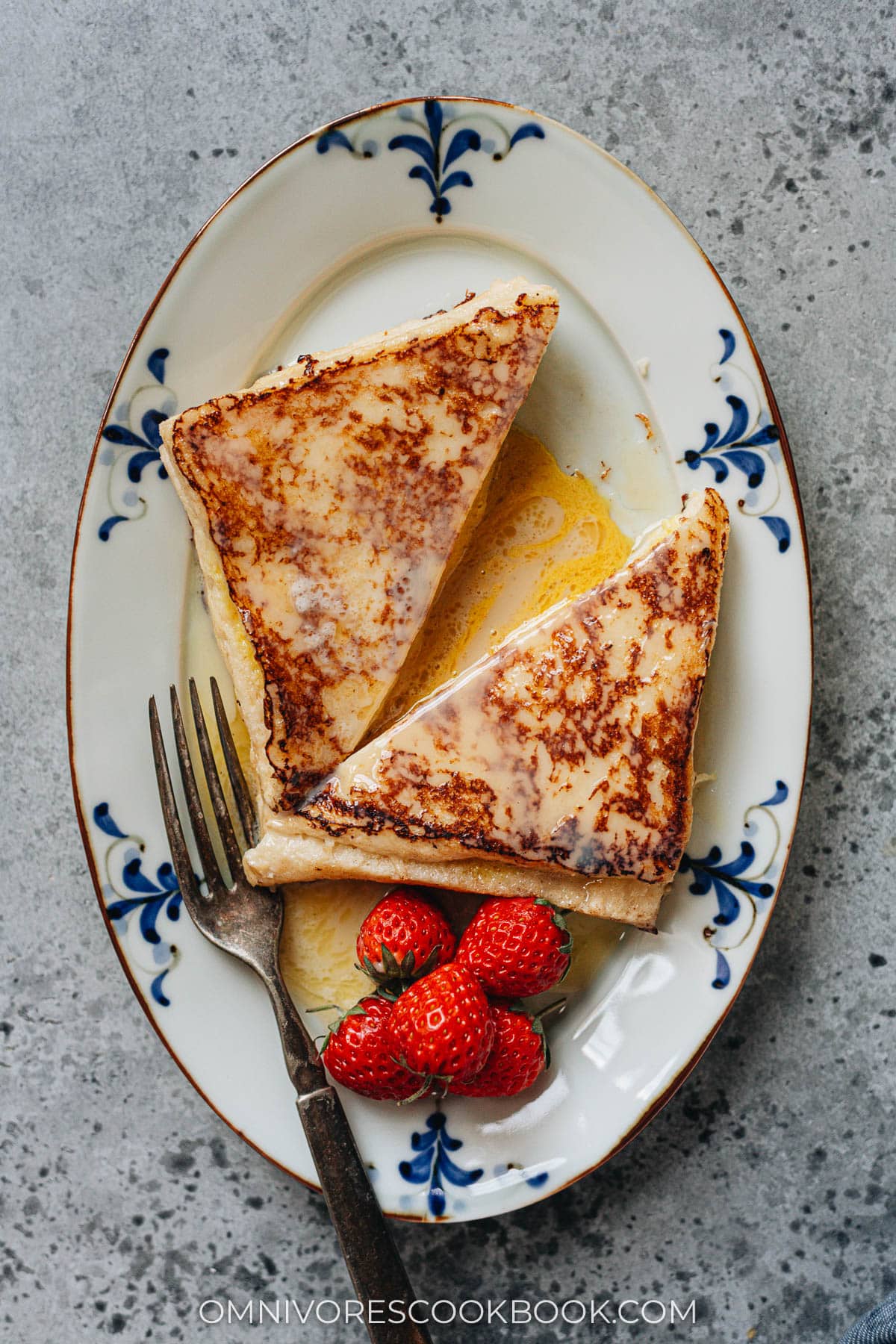
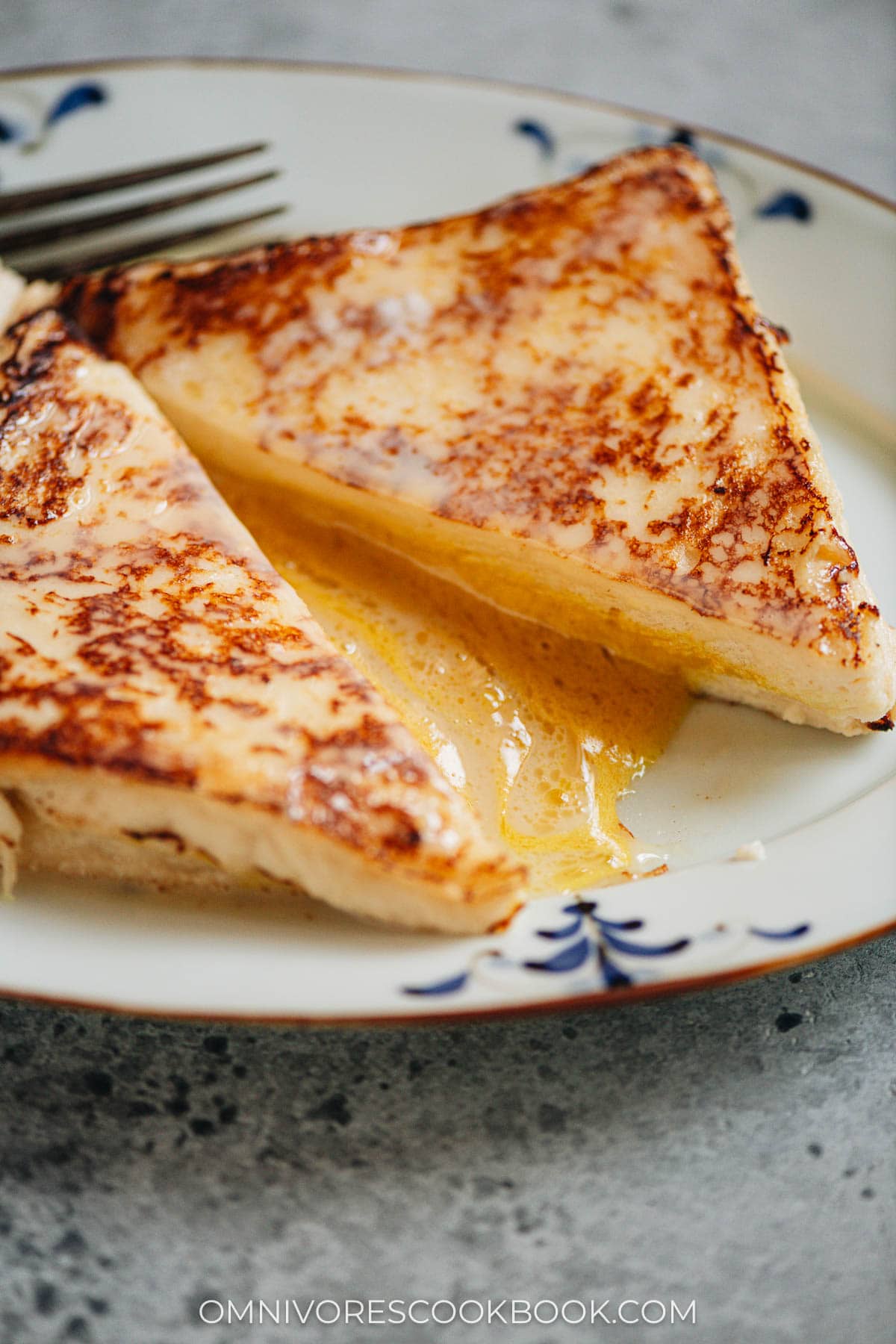
This is the modern cha chaan teng version of the dish, where the custard filling replaces the traditional peanut butter that most home and restaurant versions still use. I first ate it this way at a modern Chinese restaurant in New York and asked the server what was inside the toast, because the runny golden center looked nothing like the dense peanut butter stuffing I was familiar with. The custard takes the toast in a different direction, savory from the salted duck egg yolk and lightly sweet from the powdered sugar, with the same gooey center that classic cha chaan teng cooking is known for.
The Hong Kong style cafes I love are rooted on this East-meets-West fusion, where Cantonese cooks rebuilt Western dishes with their own ingredients and ended up with their own canon. My husband and my son are both fans of this version, and the toast is one of the few brunch dishes that pulls all three of us to the table at the same time on a Sunday morning.
I make the custard filling first by mashing the cooked salted duck egg yolks with powdered milk, cornstarch, butter, and powdered sugar until I have a thick paste that holds together but melts under heat. Then I cut a pocket into the milk bread, glue the edges with a thin layer of condensed milk, stuff the custard in, soak the assembled toast in an egg and milk batter, and pan fry it in butter until each side is golden. You have to bring this toast to your next Sunday brunch table, my recipe pulls a stack of toasts onto the plate in under an hour with the custard still runny in the middle. Yum!
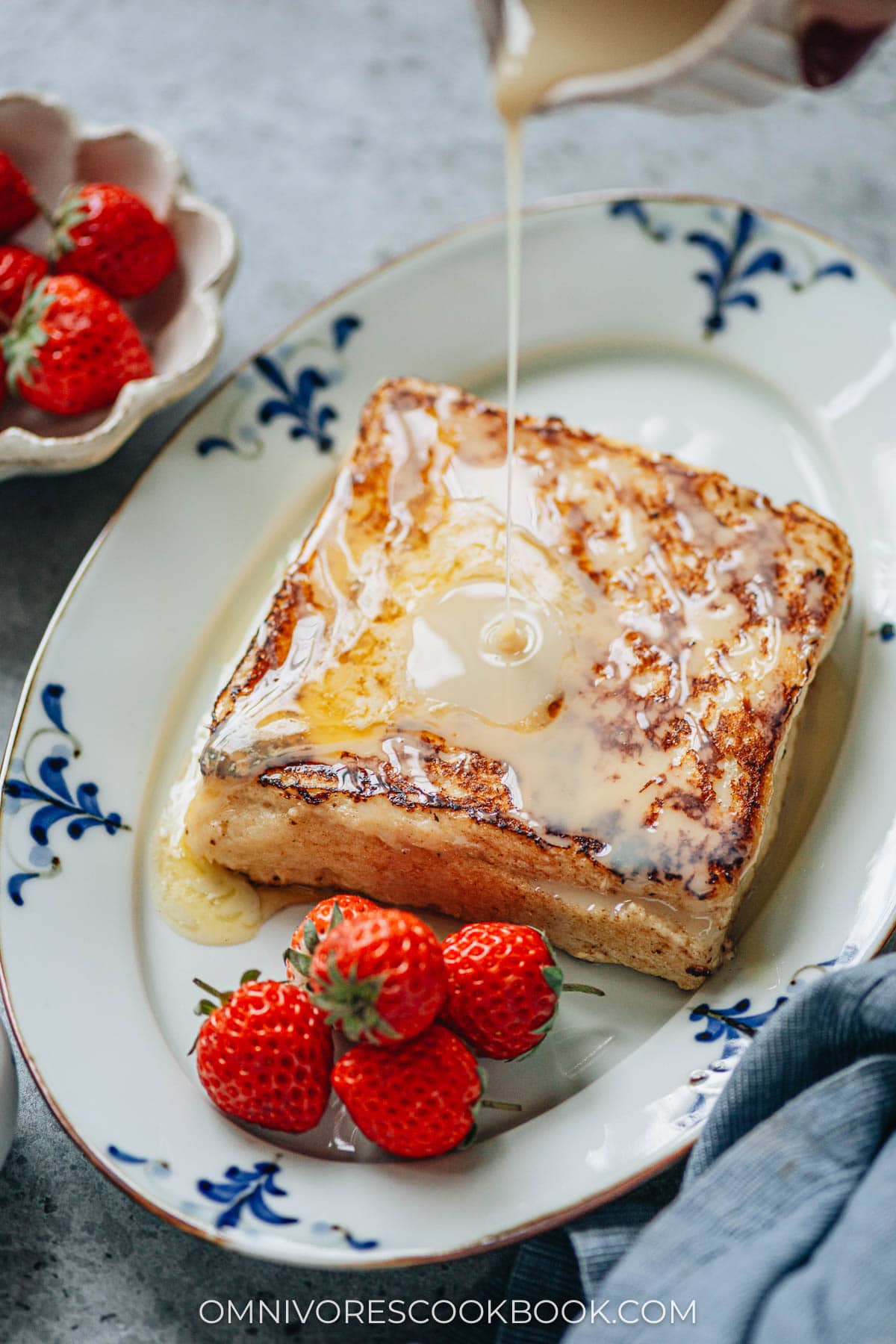
Ingredients
These are the ingredients I use to make this Hong Kong French Toast with Custard Filling recipe. The salted duck egg yolks and the milk bread are the two things I plan ahead to buy at my Asian market.
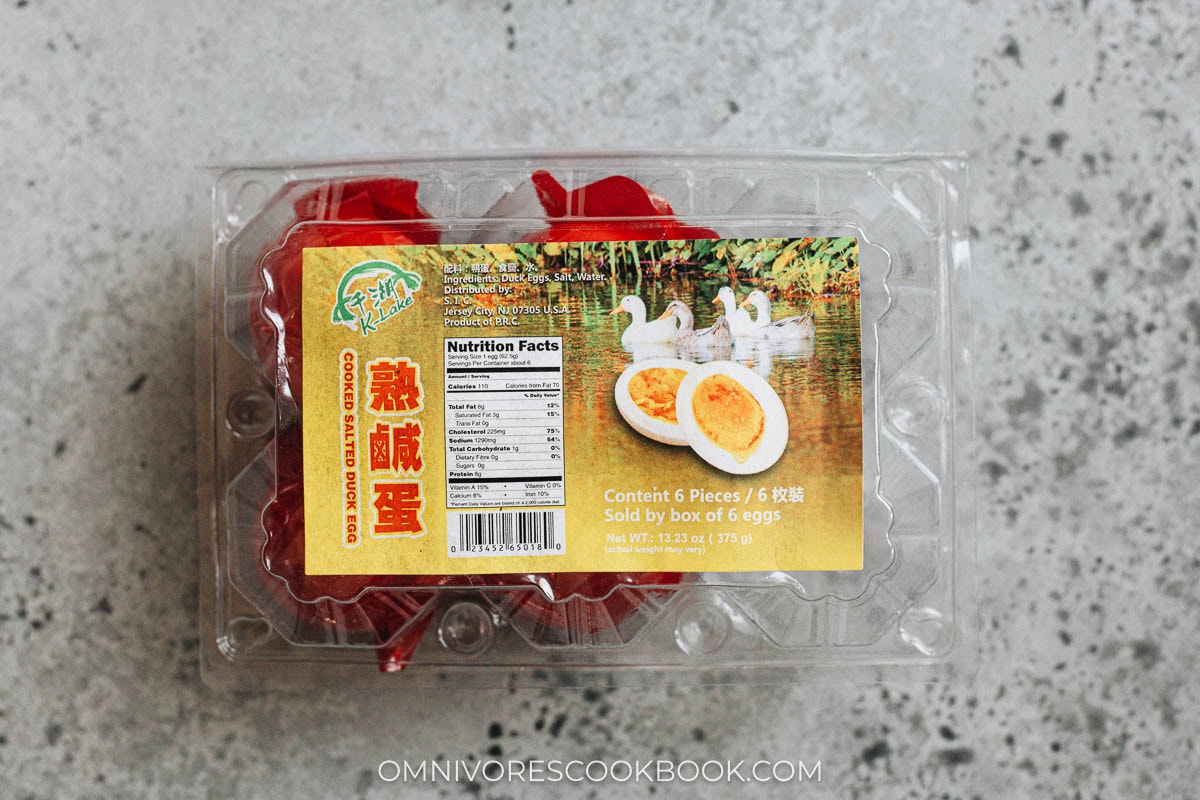
Salted duck egg yolks: I use cooked salted duck egg yolks for the custard, scooping them out of whole boiled salted duck eggs from my Asian market.
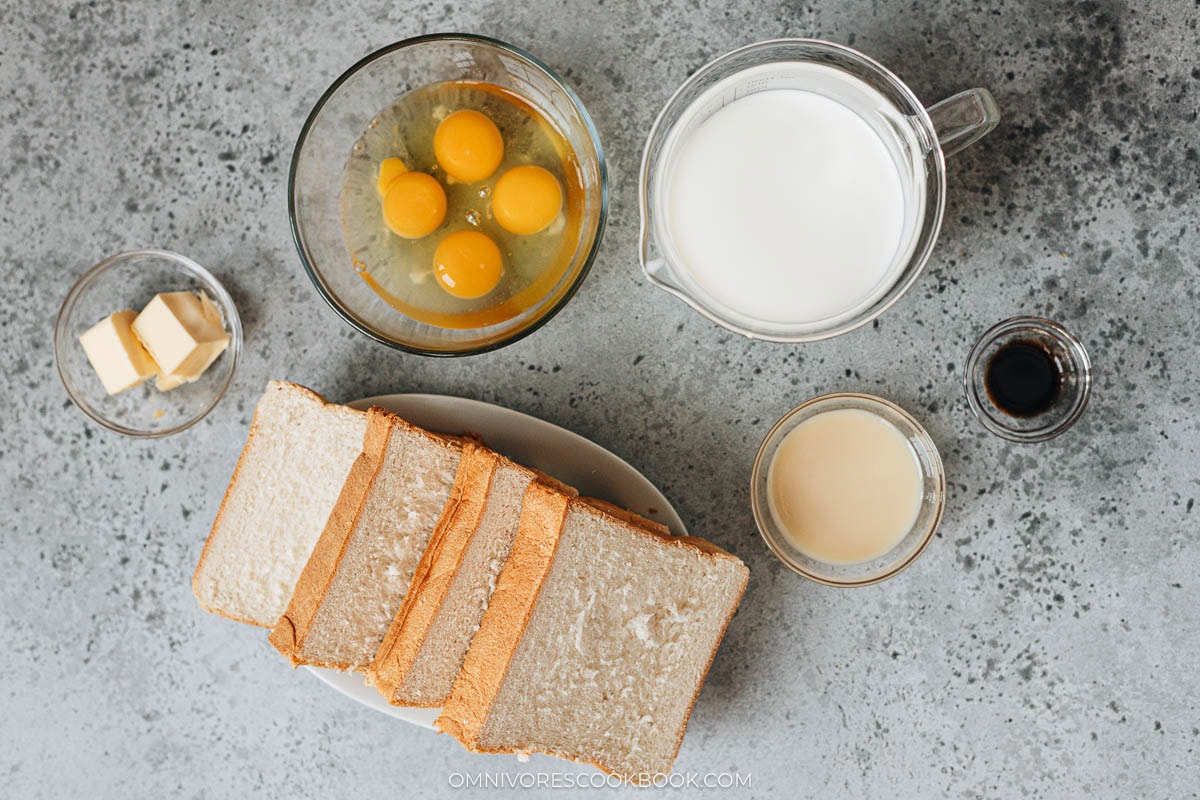
Custard binder: I mash the yolks with milk powder and cornstarch first, which gives me a smooth thick paste that holds together as I keep mixing.
Custard finish: I cream in softened salted butter, powdered confectioners sugar, and vanilla extract to round out the flavor, and a small pinch of turmeric for color if I want the yellow to come through brighter.
Milk bread: I use thick slices of milk bread cut about an inch thick, ideally slightly stale so the bread holds together when I cut the pocket and soak it in batter. If I am only buying fresh, I toast the slices lightly first to dry them out.
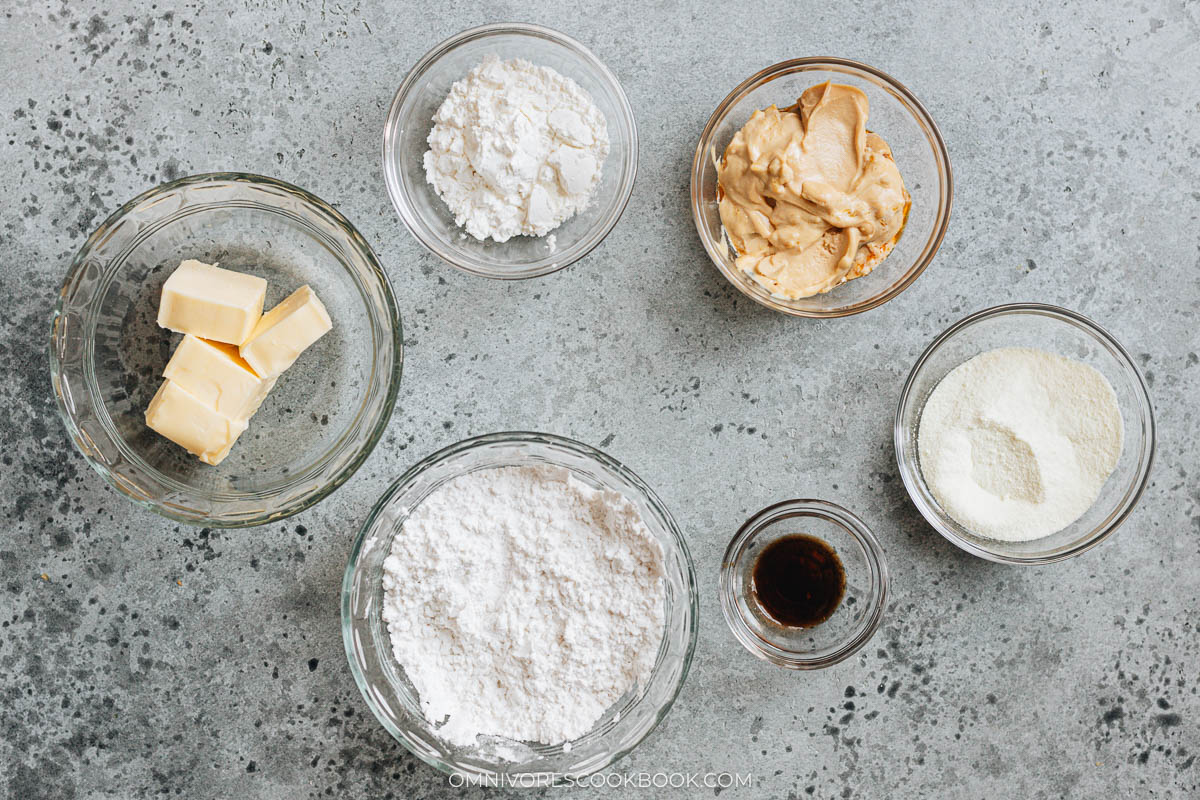
Egg batter: I whisk whole eggs with whole milk, a little salt, and vanilla extract to make the soaking batter.
Finish: Butter for pan frying gives me the golden crust, and sweetened condensed milk does double duty as the glue that seals the toast edges and the drizzle on top of the finished plate. I keep both close to the stove because the toast goes from the pan to the plate fast.
How to Make
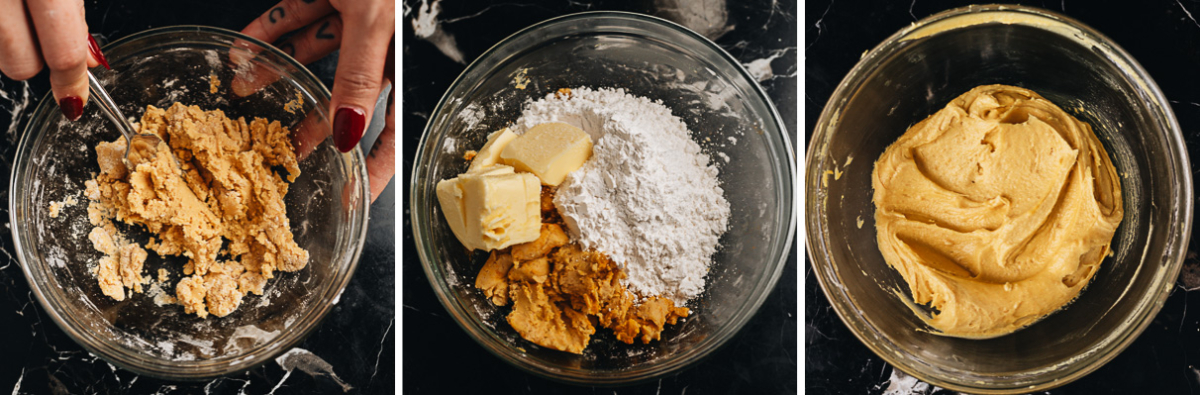
1. Mash the salted duck egg yolks: Place the salted duck egg yolks into a small bowl and mash with a fork until smooth. Add the milk powder and cornstarch and keep mashing until the mixture forms a thick paste.
2. Finish the custard filling: Add the softened butter, powdered sugar, vanilla extract, salt if using unsalted butter, and turmeric if you want a brighter yellow. Mix and mash until the filling is smooth and spreadable, then set the bowl aside.
3. Make the batter: Whisk the eggs thoroughly in a large bowl until the yolks and whites are fully combined. Add the milk, salt, and vanilla extract and whisk until the batter is uniform.
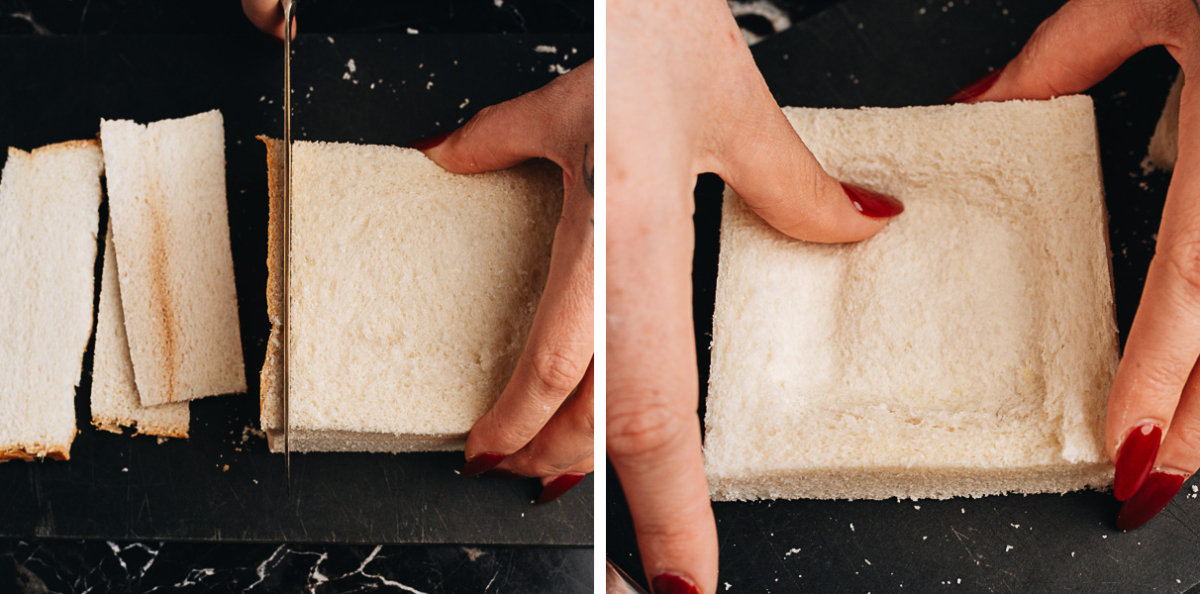
4. Cut the bread pockets: Slice each piece of bread almost all the way through horizontally, leaving one edge attached like a hinge. Press down on the inside of the bottom slice to create a pocket in the center.
5. Seal the edges: Brush a thin layer of sweetened condensed milk around the cut edges of the bread, which acts as a glue to keep the toast sealed during the pan fry. Work fast so the bread does not soak through.
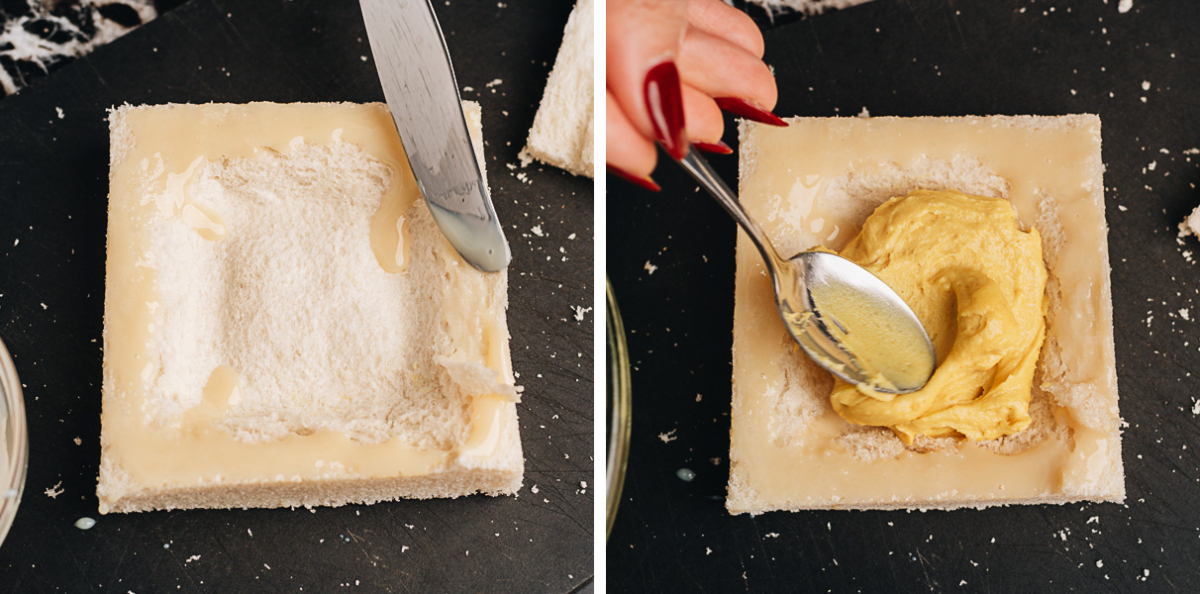
6. Stuff and close: Scoop about 2 to 3 tablespoons of the custard filling into the pocket of each toast and press the top slice down to seal the edges. Set the assembled toasts aside while you heat the pan.
7. Heat the pan: Heat 1 tablespoon of butter in a nonstick pan over medium heat until it is hot and bubbling. The butter should sizzle when the toast goes in, not foam quietly.
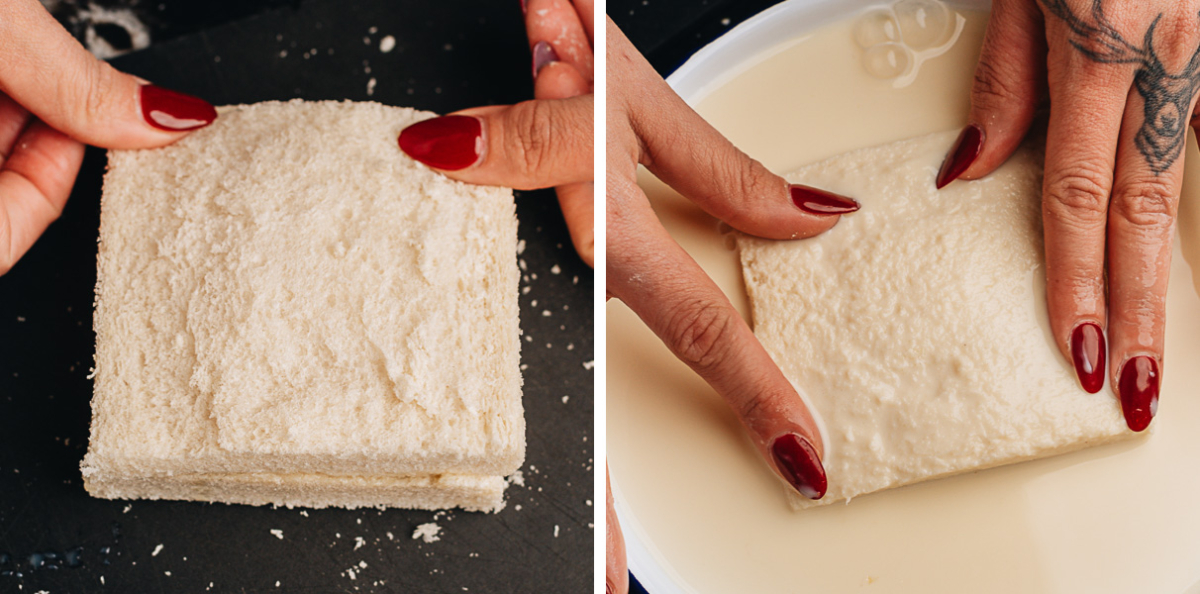
8. Soak and pan fry: Dip one assembled toast in the batter, submerging both sides for about 20 seconds each so the bread soaks up the custardy liquid without falling apart. Let the excess batter drip off and add the toast to the hot pan, cooking about 2 minutes per side until both sides are golden brown.
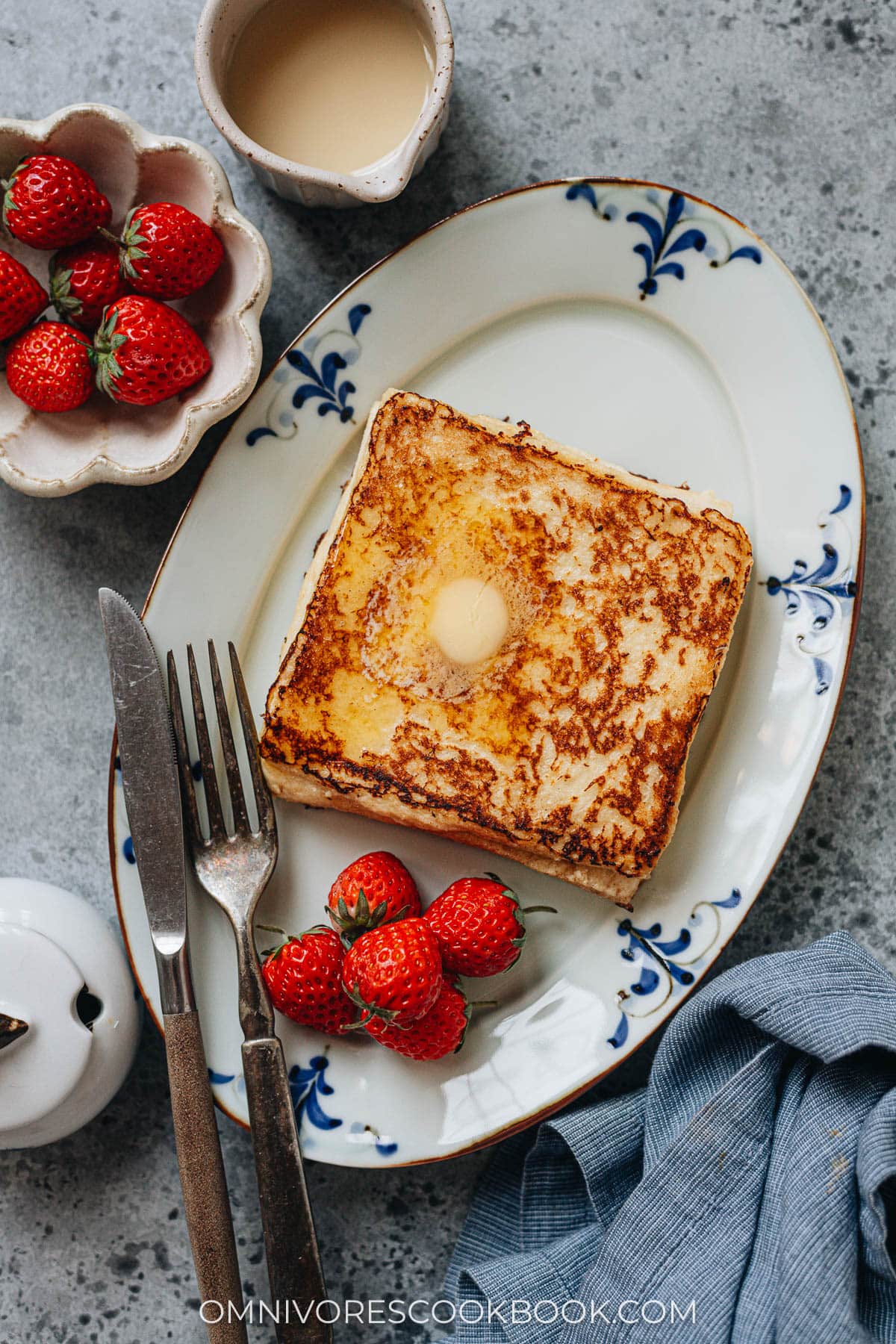
9. Repeat and serve: Transfer the cooked toast to a serving plate and cook the rest one at a time, adding more butter between batches. Serve hot immediately with an extra pat of butter on top of each toast and a generous drizzle of sweetened condensed milk.
My Cooking Tips
Use cooked salted duck egg yolks, not raw: If I am working with packaged raw salted duck egg yolks instead of whole boiled eggs, I bake them at 350°F for 10 minutes first so they are cooked and easy to mash. Raw yolks are harder to break down with a fork and end up with chunks in the filling instead of a smooth paste.
Adjust the duck yolk count for taste: Two yolks give me a mild sweet custard with a savory hint, while 3 yolks push the filling into a stronger salted-egg flavor that is closer to the version at a modern Chinese restaurant. I default to 2 for guests trying salted duck egg for the first time and 3 when my husband is asking.
Sift the powdered sugar into the custard: Powdered sugar straight out of the box clumps on contact with the butter and leaves chalky pockets in the filling that show up as gritty bites in the finished toast. I recommend shaking the sugar through a fine-mesh strainer over the bowl before I cream it in.
Use a serrated knife for the bread pocket: A straight chef knife crushes the soft milk bread on the way through and tears the pocket open instead of slicing cleanly. I use a long serrated bread knife with a gentle sawing motion, which keeps the hinge intact and gives me a clean pocket that holds the custard without leaking at the cut.
How to serve
I serve these toasts hot off the pan with a small pat of butter melting on top and a generous drizzle of sweetened condensed milk poured at the table, alongside a tall glass of classic bubble tea made with boba. The milk tea cuts the richness of the toast and completes the cha chaan teng experience the way the cafes back home serve it.
When I have my friends over on a Sunday morning, I love adding to the table my Hong Kong pan fried pork chops for a savory main and a plate of Hong Kong egg tarts for the dessert finisher. The 3 together is exactly how a cha chaan teng menu should be, with the sweet toast, the savory chop, and the buttery custard tart sharing one table.
Frequently Ask Questions
Why is my toast falling apart in the pan?
The most likely cause is the custard leaking out because the edges did not seal, the bread was too fresh and soaked too much batter, or the pan was crowded with more than one toast at a time. I press the bread edges firmly after gluing them with condensed milk, use slightly stale or lightly toasted milk bread, and cook one toast at a time so the heat stays high.
What is the best way to reheat the French toast?
The pan keeps the crust crisp and the custard runny, so a quick reheat in butter over medium heat is my first choice. I add a small piece of butter to a nonstick pan, place the toast in and cook for about 1 minute per side until heated through, and the toaster oven works too at 350°F for about 5 minutes.
How long do leftovers keep in the fridge and freezer?
Cooked Hong Kong French toast keeps covered in the fridge for 2 days and does not freeze well, because the soaked bread releases water as it thaws and the crisp crust turns soggy.
Want to Save This Recipe?
Enter your email below & we’ll send it to your inbox. Plus get great new recipes from us every week!
Watch video
Hong Kong French Toast (Custard Filling)
Ingredients
Filling
- 2 to 3 salted duck egg yolks (*Footnote 1)
- 1/2 tablespoon milk powder
- 2 tablespoons cornstarch
- 4 tablespoons softened salted butter (if using unsalted, add 1/4 tsp salt)
- 1/2 cup powdered confectioners sugar
- 1 teaspoon vanilla extract
- 1/4 teaspoon turmeric for color (optional)
French toast
- 5 to 6 1” thick slices milk bread (or 8–12 standard slices of bread, with crusts removed, ideally slightly stale) (*Footnote 3)
- 2 cups whole milk
- 6 eggs
- 1/4 teaspoon salt
- 1 teaspoon vanilla extract
- Butter , for cooking
- 1/4 cup sweetened condensed milk , for sealing toasts and drizzling
Instructions
To prepare the filling
- Add the salted duck egg yolks into a small bowl, mash up with a fork until smooth (*Footnote 1), and add the powdered milk and cornstarch. Mash to combine.
- Then add the butter, powdered sugar, vanilla, salt (if using), and turmeric (if using). Continue mixing and mashing until smooth.
To make the French toast
- Make a batter: Whisk the eggs thoroughly in a large bowl. Add the milk, salt, and vanilla extract. Whisk to combine.
- To assemble the toasts: Cut the thick slices of bread almost all the way in half horizontally, leaving one edge attached (*Footnote 2). Press down on the inside of the bottom piece of bread, creating a pocket in the center. Spread a thin layer of sweetened condensed milk around edges, acting as a glue to seal toast. Place 2 to 3 tablespoons of the egg custard filling in the center of the bread. Place the top piece of the bread over it. Press the edges gently to seal. Set aside and assemble the remaining pieces in the same way.
- Cook the toast: Cook one toast at a time. Heat 1 tablespoon of butter in a nonstick pan over medium heat until hot and bubbling. When the pan is hot and almost ready to use, dip an assembled toast in the batter mixture, submerging and soaking both sides for about 20 seconds each. Remove from batter, allowing excess batter to drip off, and quickly add it to the hot pan. Cook about 2 minutes per side, adjusting heat as needed and flipping carefully. Once done, transfer to a serving plate. Cook the rest of the toasts using the same method, adding more butter between batches as needed.
- Serve hot immediately with extra butter and sweetened condensed milk. Add a piece of butter onto the hot toast, if desired. Drizzle condensed milk over the toast before eating.
Notes
- If you use whole cooked salted duck eggs, you can use the yolks directly by slicing the eggs in half and scooping out the yolks. If using packaged raw duck egg yolks, bake them at 350°F (176°C) for 10 minutes. The packaged duck yolks are harder to mash, so you can use a small blender to help break them apart evenly.
Use 2 egg yolks for a very mild taste and a filling that tastes more like sweet custard. Use 3 yolks if you prefer a stronger and more savory taste. - This helps the stuffed French toast stay together better during cooking, but you might find it harder to keep the toast attached if using very stale bread. It’s OK to slice it all the way through as well.
- If using fresh bread, toast the bread first so your French toast will come out with a better texture.
- Recipe update note: This recipe is updated by April 11, 2025 with a different milk and egg ratio. When we originally tested the recipe, we used very thick cut and stale milk bread. The bread slices soaked up a lot of liquid, so we made a batter with 3 cups milk and 4 eggs to acquire enough batter. After reader’s feedback, we realized that the thick milk bread is less common, and a regular toast will come out with a nicer texture using a ratio of 2 cups milk and 6 eggs.
Nutrition

Did you make this recipe?
I’d love to hear how it turned out for you! Please take a moment to leave a 5-star rating ⭐️ and share your thoughts in the comments further down the page. It really helps others discover the recipe too.
Vivian
I made this with half as much milk in the batter and it still came out too soggy, and poured most of the batter down the drain. How is this meant to use 3 cups of milk???