
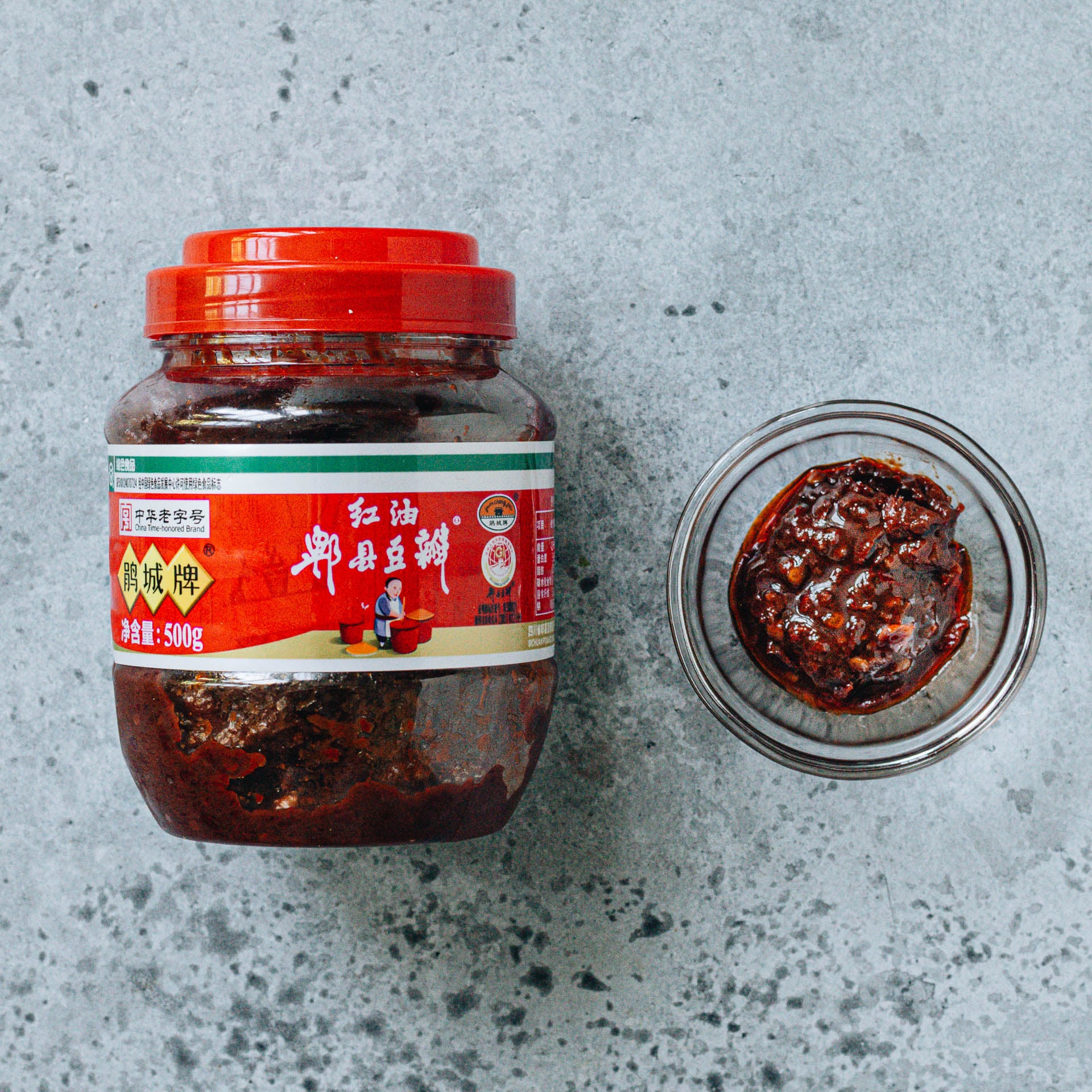
I keep a jar in my fridge at all times because nothing else gives a Sichuan dish the same depth. A spoonful stirred into hot oil is what makes a stir fry taste like the real thing instead of a soy sauce imitation. Below I walk through what it is, how it is made, how to shop for a good jar, how to store it, and what to cook with it.
Meet Doubanjiang, the Soul of Sichuan Cooking
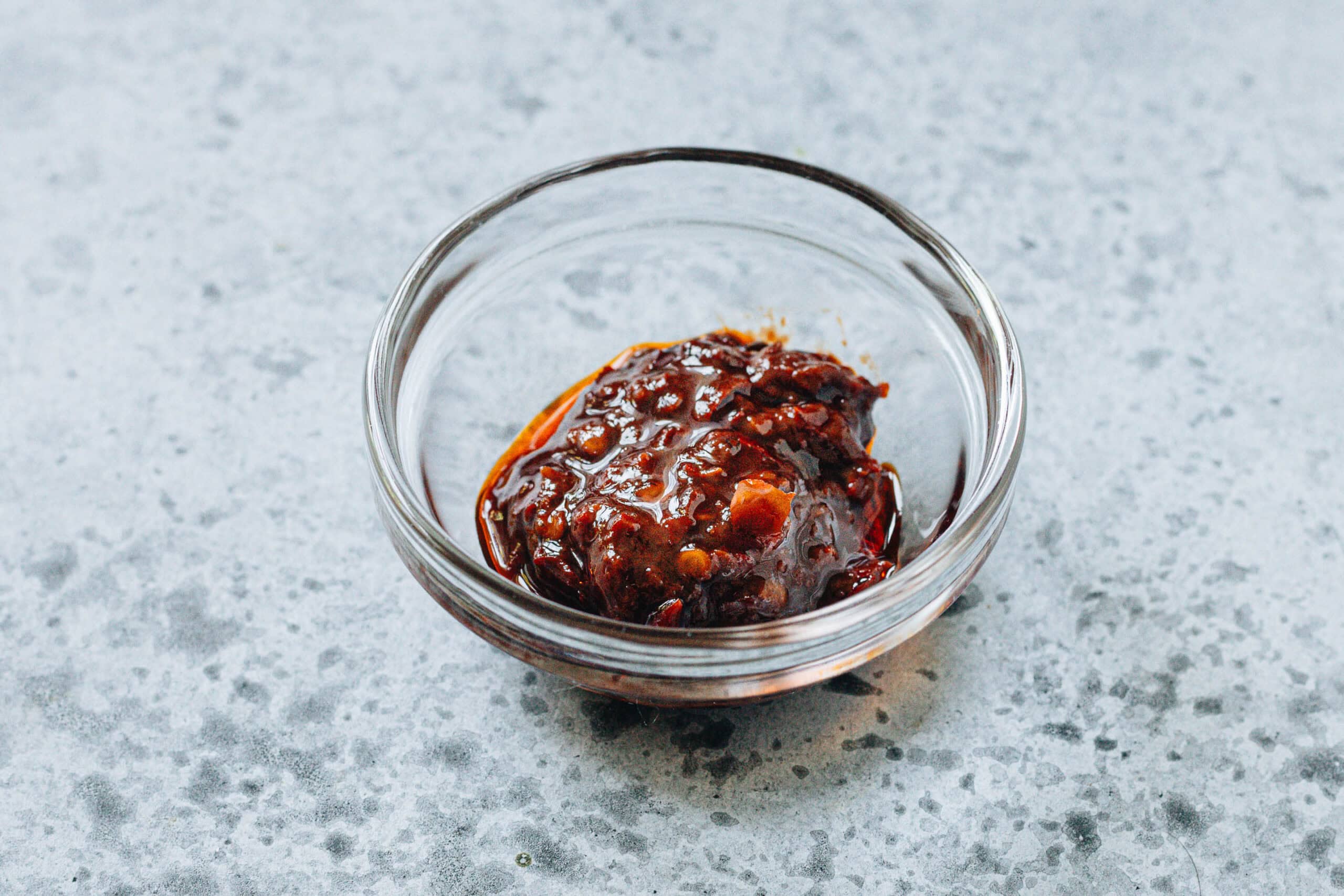
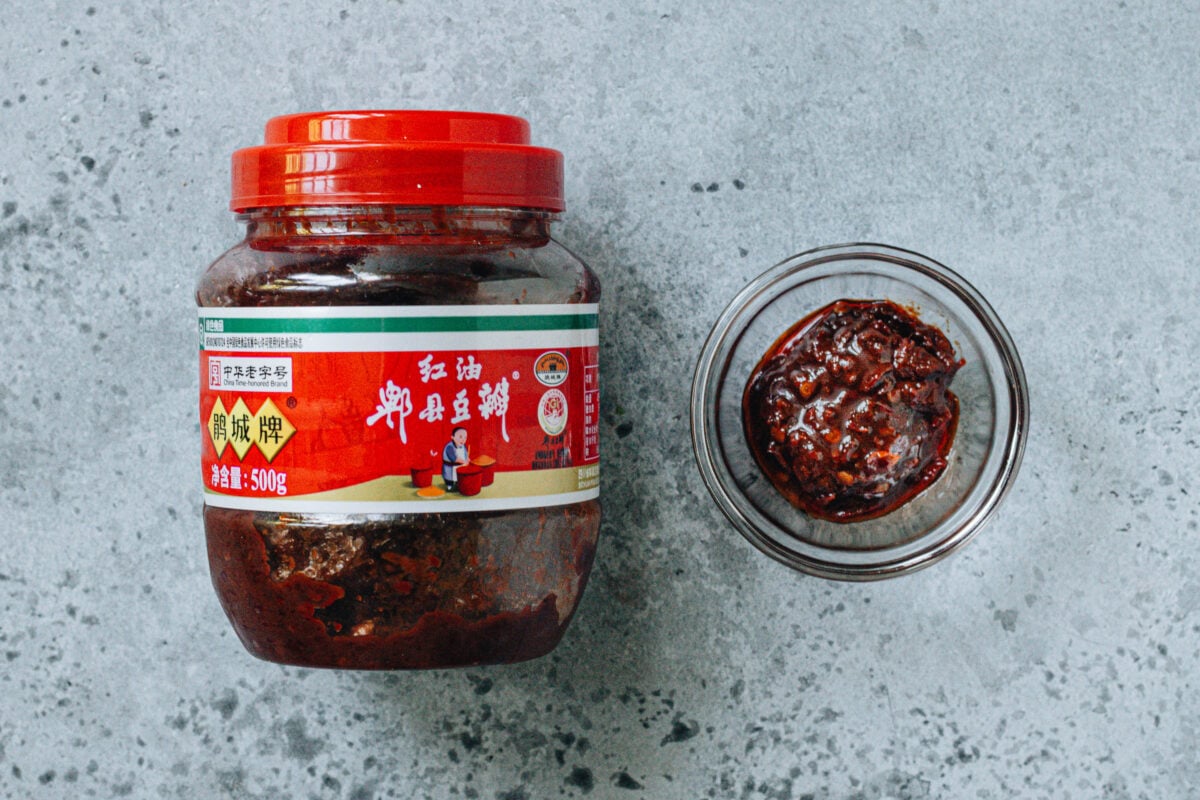
Doubanjiang is a fermented paste of broad beans, also called fava beans, mixed with Sichuan chili peppers, salt, and wheat flour. Some styles add oil and spices too. The finished paste is thick and reddish brown, flecked with pieces of bean and chili.
I think of it as one of the defining Sichuan pantry ingredients. It gives a dish savory depth, moderate heat, and a fermented fragrance that is both funky and fruity. Without it, a lot of the classic Sichuan dishes lose the flavor that makes them recognizable.
How This Fermented Chili Paste Comes to Life
The method goes back hundreds of years, though it has changed over time. Here is the short version of how a traditional jar comes together.
- Fava beans are steamed until tender, then allowed to cool until still warm.
- They are mixed with wheat flour and inoculated with a yeast starter to begin the fermentation process. After some initial fermentation the beans are allowed to dry in the sun and then rinsed.
- Separately, fresh chili peppers are salted, crushed, and allowed to ferment.
- The beans may be allowed to ferment further with the addition of alcohol, before being mashed and mixed with the fermented chili peppers.
- Spices and salt are added to the mixture before it goes into a clay urn, where it is aged in direct sunlight for a few months up to several years.
A particular type of chili pepper from Sichuan, called erjingtiao, is used in doubanjiang. Erjingtiao chilis have a medium heat level and a fruity aroma, both of which are important parts of doubanjiang’s flavor.
What Doubanjiang Tastes Like
Doubanjiang tastes intensely salty and savory, with moderate chili heat and a fermented funk that ranges from fruity to earthy. On its own it is far too concentrated to eat straight. Diluted in oil and combined with other ingredients, it becomes the savory chili base that defines so many Sichuan dishes.
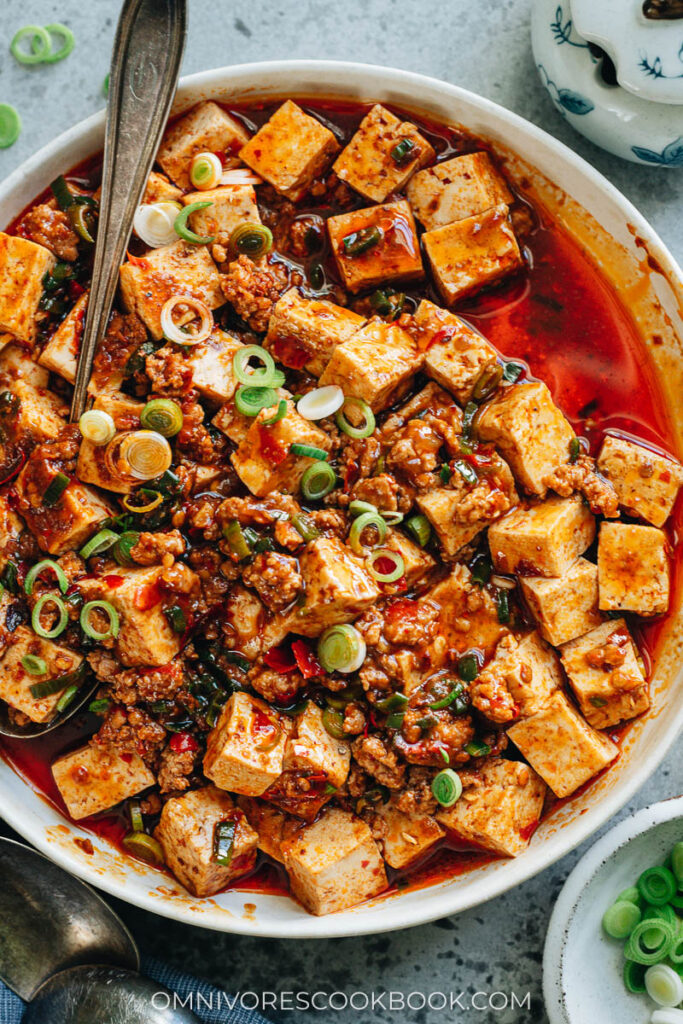
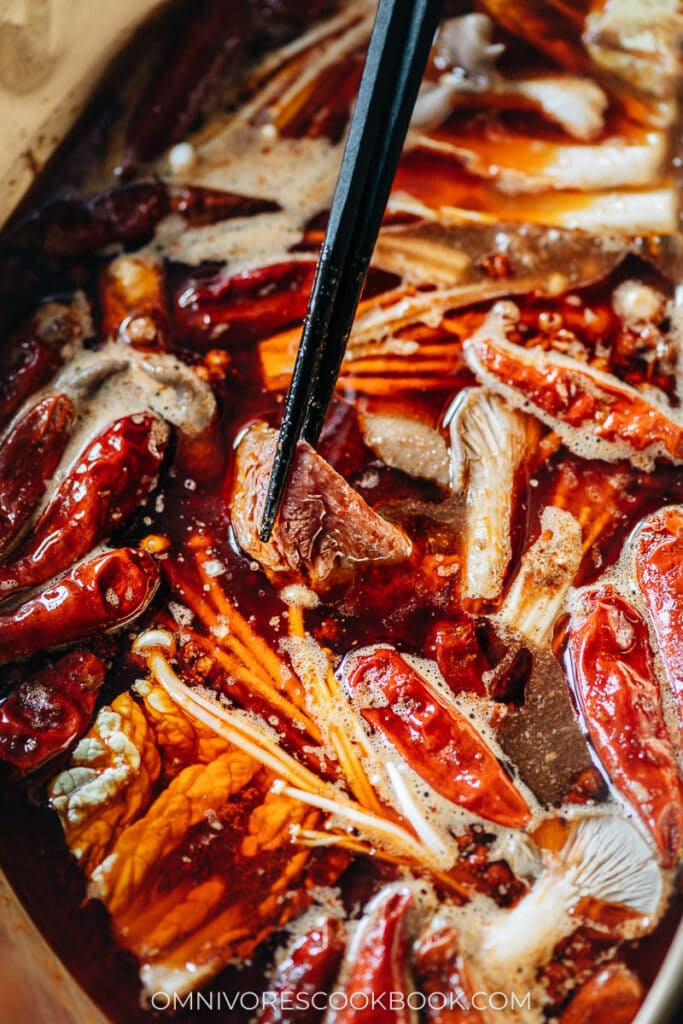
The closest reference point is a bowl of mapo tofu or a pot of Sichuan hot pot. That savory, spicy, slightly funky flavor running through both comes from doubanjiang.
Putting Doubanjiang to Work in the Kitchen
Doubanjiang works in a few different cooking methods, and I almost always pair it with ginger, garlic, chili, and Sichuan peppercorn for the full Sichuan profile. The paste is thick, so the one rule I follow every time is to stir it well into the oil or liquid. That disperses its concentrated flavor through the whole dish instead of leaving salty pockets.
Here are the ways I use it most:
- Stir fry base: I fry a spoonful in hot oil until the oil goes red and fragrant, then add my other ingredients. My Sichuan Beef uses this method.
- Braising liquid: I stir it into the braising liquid for slow-cooked meat and vegetables, and it is the ingredient that makes Mapo Tofu taste the way it should.
- Hot pot broth: I use it as the savory chili backbone of a broth, the way I do in my Classic Sichuan Hot Pot and my Sichuan Fish with Pickled Greens.
How to Shop for the Right Jar
You can find doubanjiang at most Chinese markets or online. My go-to source is the Mala Market, which imports high quality ingredients directly from Sichuan.
For doubanjiang brands and types, you can’t go wrong with any variety of Pixian Doubanjiang. Pixian is a region rather than a brand, but it is a good indicator of quality. The company behind Juancheng Pixian Doubanjiang has been producing the ingredient in Sichuan since 1688. It is fermented for one year and is the most common and the best for everyday cooking.
For a special upgrade, the same company makes a premium 3-year fermented doubanjiang that is made with traditional methods and no preservatives or pesticides. It is both more mellow and more complex than the 1-year, and I love the huge, rounded flavor it gives my dishes.
There may be other types of doubanjiang, some of which may not be good for Sichuan cooking. If you see the words Pixian (郫县) or Sichuan (四川) you should have the right product. Also, chili pepper should be the first ingredient on the label.
I advise you to AVOID these types of doubanjiang:
- Youki brand – just tastes salty and has no fermented complexity
- Lee Kum Kee brand (“Toban Djan”) – not close to authentic Sichuan flavor
Keeping Your Doubanjiang Fresh
Once opened, I store doubanjiang in the fridge, either in its own jar or an airtight container. Because it is fermented and heavily salted, it keeps for about a year after opening. I always use a clean, dry spoon to scoop it out so I do not introduce moisture or bacteria.
Unopened, a jar keeps for a couple of years in a cool, dark cupboard.
What to Use When You Are Out
I will be honest with you here. There is no true substitute for doubanjiang, because nothing else has the same combination of fermented bean depth and Sichuan chili.
If you are stuck, Korean doenjang has some of the same earthy savory quality, though none of the chili heat or fragrance. Mix it with Chinese chili flakes or chili oil and you get a rough imitation that works in a pinch. It will not taste the same, but it gets you closer than the alternatives.
Korean gochujang is another alternative, but it is quite sweet and lacks the savory depth. Korean ssamjang has the same problem since it contains gochujang. I also skip Japanese miso, which has a different character and is not meant to be used the same way.
Frequently Asked Questions
Is bean sauce the same as doubanjiang?
No, and neither is sweet bean paste. Doubanjiang is a fermented chili bean paste made with broad beans and Sichuan chili, while plain bean sauce and sweet bean paste are different products with different flavors. Check the label for Pixian or Sichuan and confirm chili pepper is the first ingredient.
Can I use doubanjiang in non Chinese cooking?
Yes, as long as you use a small amount so it does not take over the dish. I have added a spoonful to American style chili for a savory boost that blends right in with the other spices. It also gives braised pork or beef some depth and a touch of heat
Can I use doubanjiang as a dipping sauce?
I would not. On its own it is too thick and too salty to be practical, and it is not used that way in Chinese cooking. For a spicy, savory dip I reach for chili oil and soy sauce instead.
My Favorite Dishes to Cook With Doubanjiang
Once a jar is open in my fridge, it goes into a dish almost every week. My twice cooked pork uses it for the savory chili sheen that coats the pork and leeks, and my Yu Xiang eggplant uses it as the base of that sweet, sour, and savory sauce the eggplant drinks up. When I want the same depth without meat, I cook a pot of vegetarian Mapo tofu, where the paste does the work that ground pork usually would.
For nights when I want more heat and Sichuan peppercorn in the mix, I use it in my Ma La Xiang Guo, a dry pot where doubanjiang seasons everything I toss in. A bowl of Chongqing Noodles is my go-to when I want it fast, since the paste stirs into the sauce in minutes. Any one of these is a good place to start if you have never cooked with doubanjiang before.
Final Thoughts
Doubanjiang absolutely belongs in my fridge, and I can tell you that once you have a jar open you will reach for it more than you expect. Grab a good Pixian paste, store it in the fridge with a clean dry spoon, and remember that a little goes a long way. Start with one of the dishes above, and you will understand fast why this jar sits at the center of Sichuan cooking.