
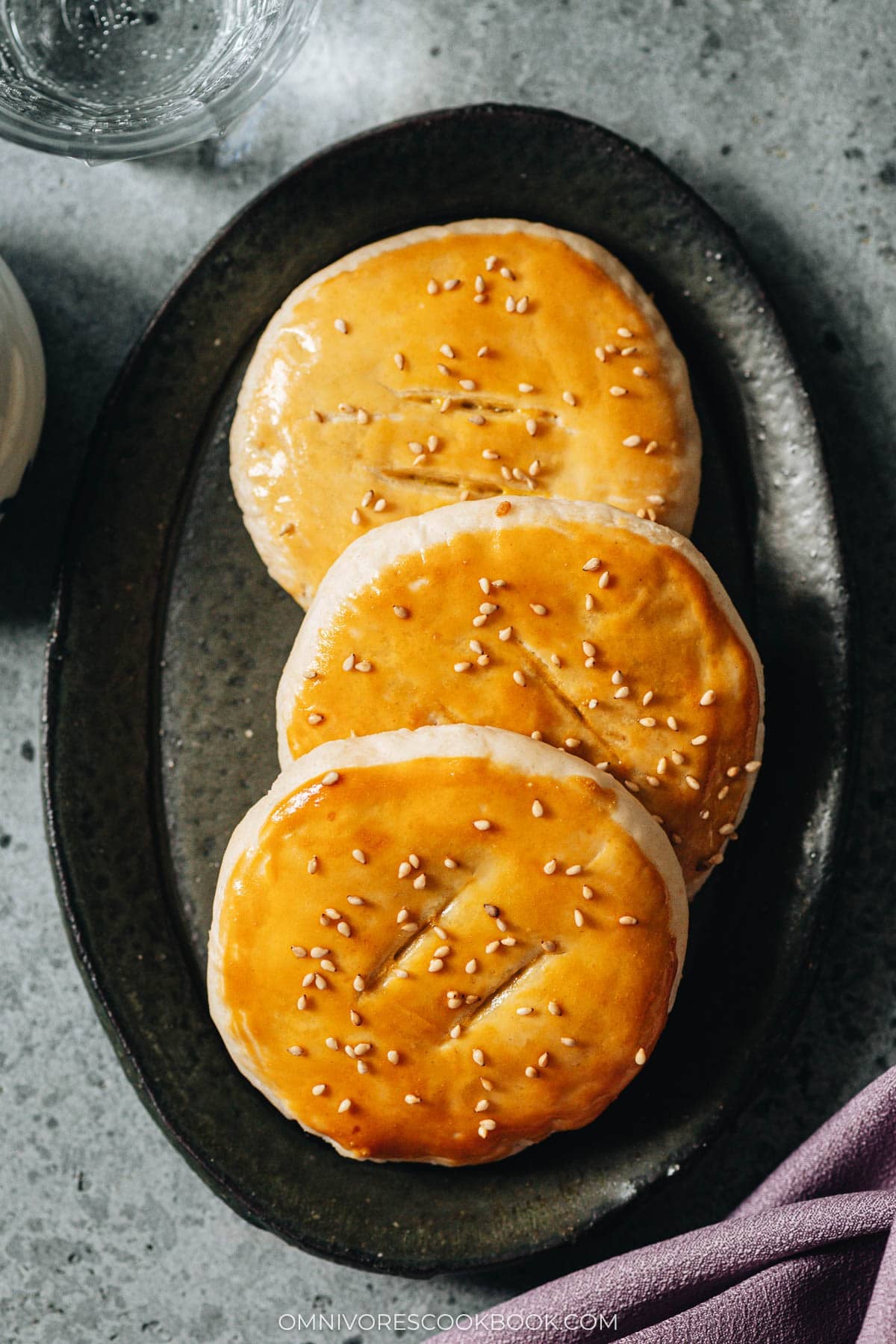
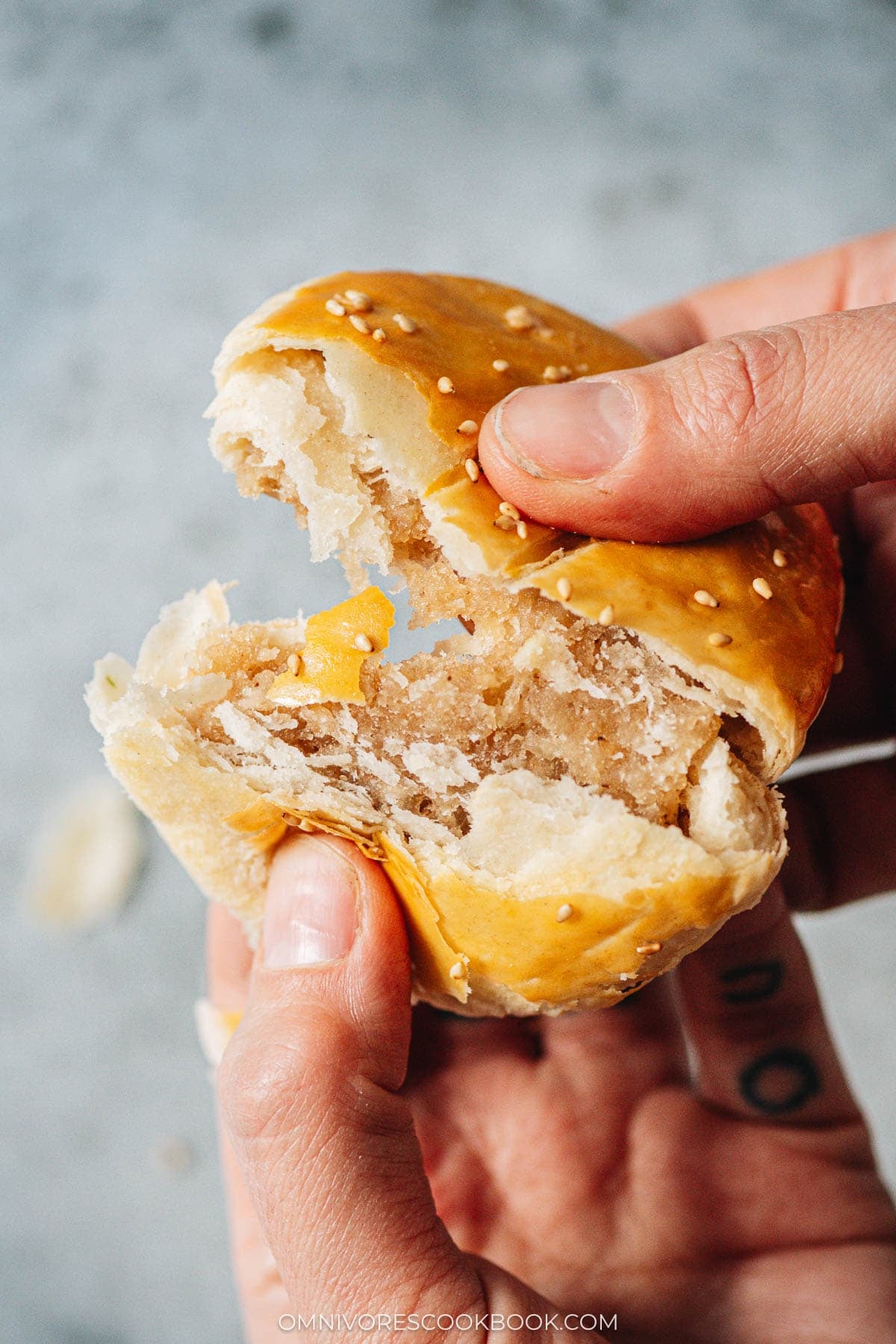
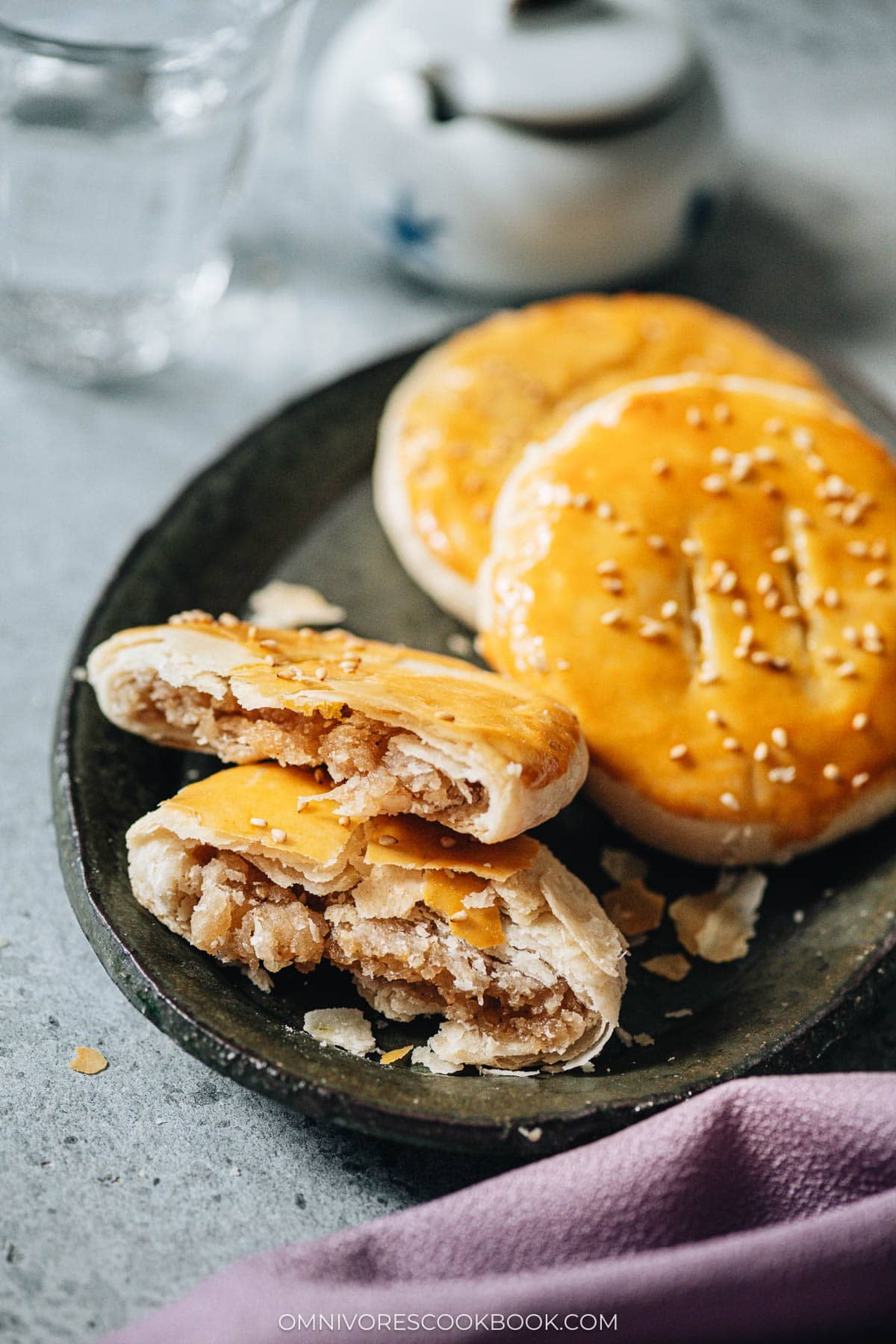
Wife’s cake is one of the signature pastries of a Chinese bakery, and it was one of my favorite snacks growing up in Beijing. A little similar to Dan Huang Su, wife’s cake is a layered pastry that’s filled with a sweet filling that is gooey and chewy, a little similar to the texture of mochi. The best ones have delicate, shattering layers and a filling that’s not too sweet and quite fragrant.
Wife’s cake might not taste as decadent as a sweet Western pastry, but it holds a special place in my heart. To me, the biggest appeal is the chewy filling, which is typically made from winter melon, glutinous rice flour, sugar, and aromatics like sesame and coconut. You might be surprised that a sweet pastry uses a winter squash as filling. If you’re not familiar with winter melon, it is a very mild squash with a high moisture content. It is commonly used in Chinese pastries for its texture. Glutinous rice flour, or sticky rice, is another key ingredient. It creates a bouncy and chewy texture that is similar to Japanese mochi. Once cooked with winter melon, it creates a very fun texture that pairs well with the flaky pastry.
When I moved to the US, I really missed my favorite childhood sweets. And that’s why I developed this recipe, so I could recreate it at home.
Why this recipe
When I developed this recipe, I referred to many existing recipes for wife’s cake, and made a few changes that make this recipe stand out.
- Using winter melon instead of candied winter melon in the filling. Most online recipes use candied winter melon or a mix of both. I avoided using candied winter melon because it’s a specialty ingredient that’s hard to find, and it’s too sweet for my taste. My recipe takes a little longer to cook the winter melon puree, but it results in a much better flavor and texture that’s similar to Chinese bakery goods.
- Replaced low-gluten flour with all-purpose flour. Low-gluten flour (it contains less gluten than cake flour) is often used in Chinese pastry dough. When I was developing the recipe, I found a formula that works with all-purpose flour and yields a flaky dough.
- A much more fragrant filling. There are many ways to make the wife’s cake filling. I used coconut oil, shredded coconut and sesame seeds to create a filling that’s mild yet very fragrant, which I think is superior even to some of the Chinese bakery pastries.
Making a wife’s cake is definitely not a small project you can tackle on a weeknight, and it requires some patience. But rest assured, Chinese layered pastry dough is much easier to work with than croissant dough, because it does not require constant refrigeration and is quite forgiving.
Ingredients
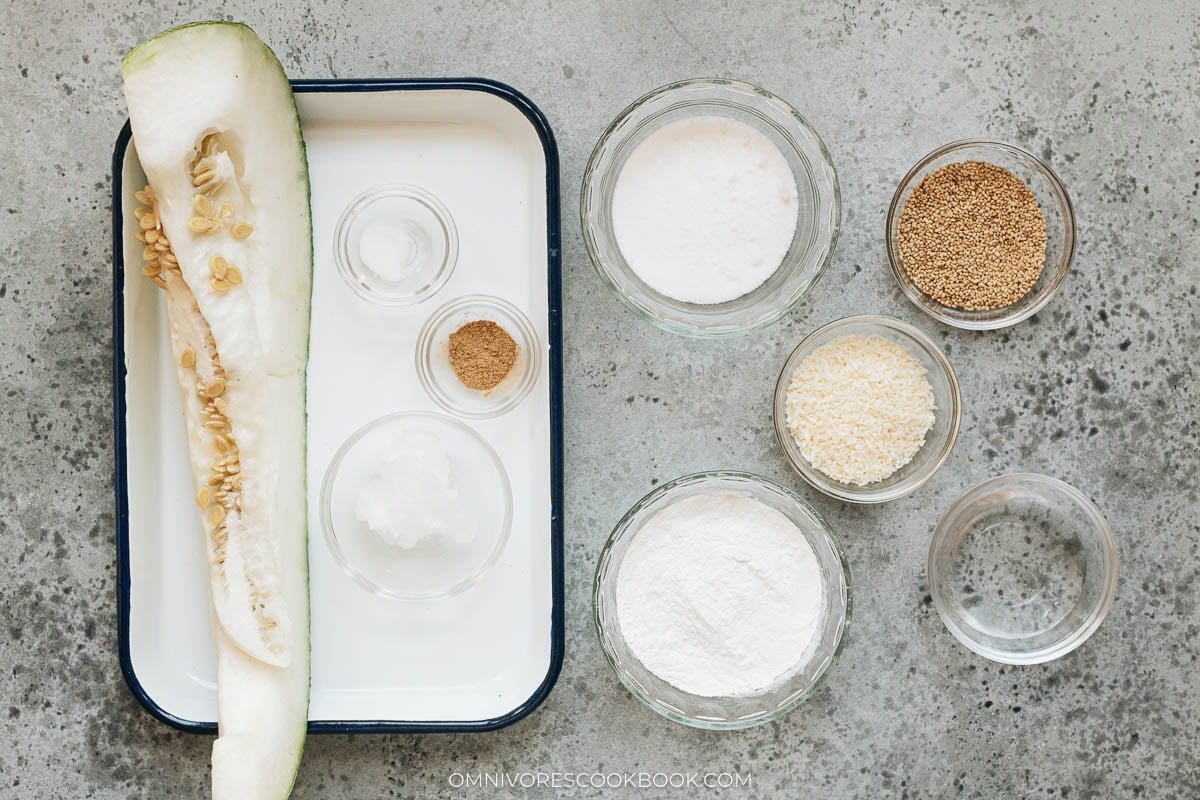
I grouped the ingredients for my wife’s cake into four groups.
Filling
The main ingredients in the filling are glutinous rice flour (or called sticky rice flour) and winter melon. Both provide structure and create the bouncy, chewy texture. Shredded coconut, sesame seeds, coconut oil, sugar, salt and ground ginger create the main flavor profile, which is lightly sweet and nutty, with a mild coconut fragrance.
For the glutinous rice flour, I used Erawan brand, which is a Thai brand that you can easily find at an Asian grocery store. If using a different brand, for example, a Japanese brand or American brand, your result might come out differently. Because they might use another type of glutinous rice and mill the grain differently, which results in a flour that absorbs water at a higher or lower rate.
I highly recommend using unrefined coconut oil, which has a stronger aroma than the refined type.
Water dough & oil dough
The pastry is made with two types of dough: a water dough and an oil dough. The water dough creates the flaky crust, and the oil dough forms the layers in between.
The main ingredients in the water dough are all-purpose flour, butter and ice water, which provide the texture. Powdered sugar and salt lightly season the dough.
The oil dough is made with cake flour and lard. You can use shortening to replace the lard, but I found lard creates a much better texture and flavor. Compared to a croissant dough, the oil dough acts like butter, but it’s much more stabilized and does not require refrigeration.
How to make
Making wife’s cake might look like a very long process, because it is! But rest assured, if you follow along, each step is not as complicated as you think. I also tried to use as many photos as possible to demonstrate how to work the water dough and oil dough into the pastry, which might sound super confusing when you read through the recipe.
Make the filling
Make the filling first, because it requires time to cool off completely.
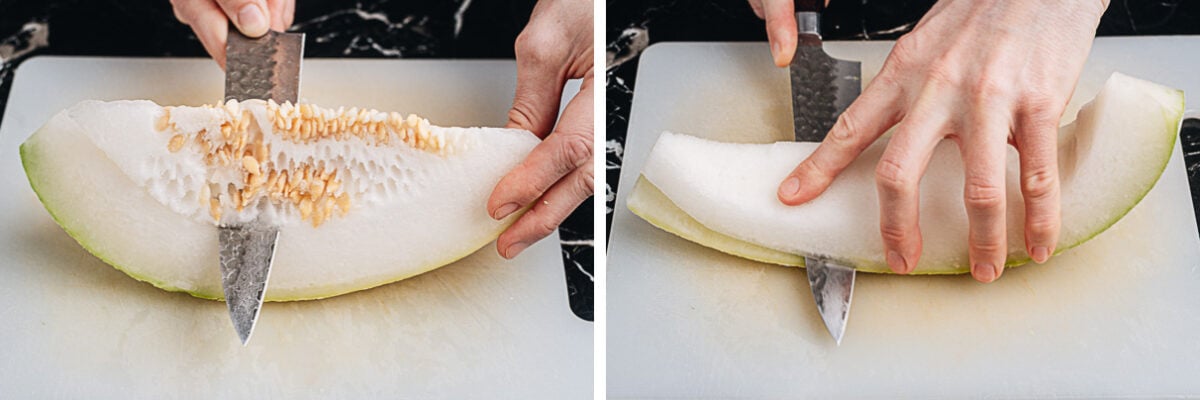
1. Cut the winter melon. I like to use a big knife to remove the winter melon skin and seeds. For the skin, you should slice off the tough part, until no obvious green color is attached. For the seed section, slice off the part that is attached to the seeds that is very soft. That part has a spongy texture that you’ll want to get rid of.
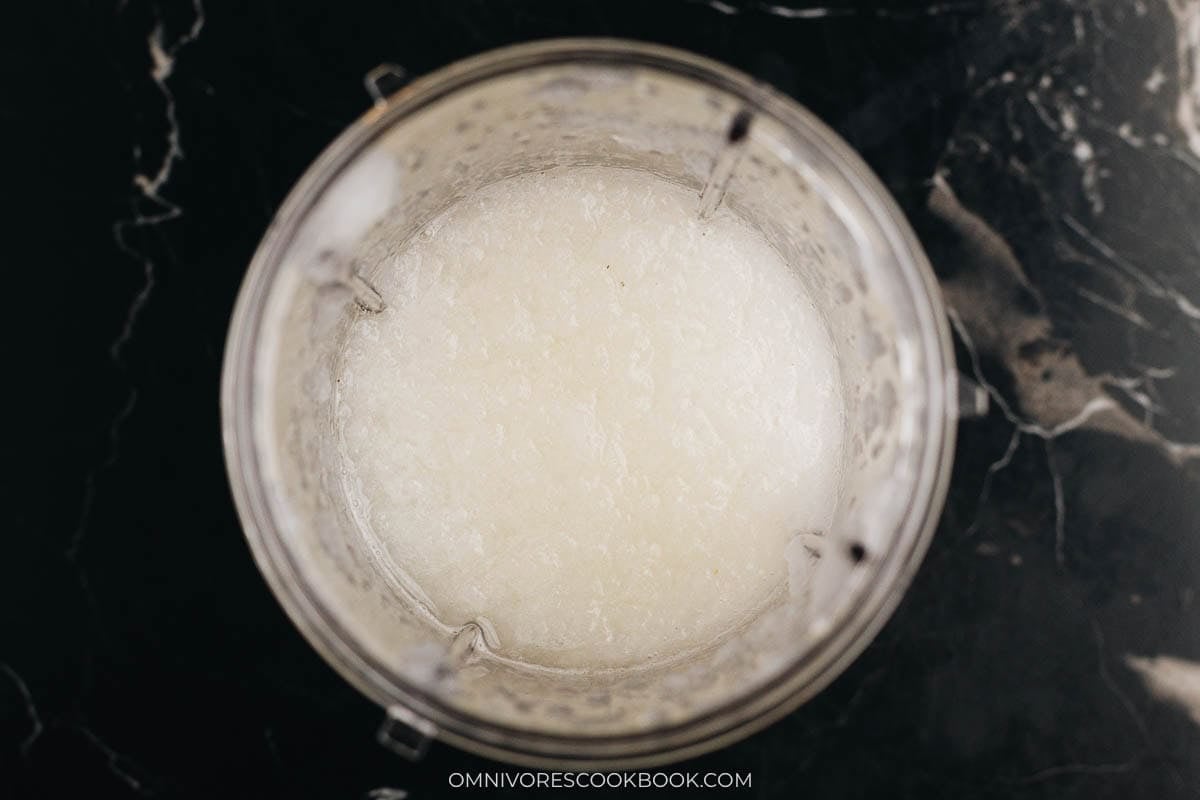
2. Puree the winter melon. I used my Magic Bullet blender to puree the winter melon because it’s such a small quantity. Winter melon contains a lot of moisture, so you should be able to blend it without adding any liquid. Measure out 150 grams of puree.
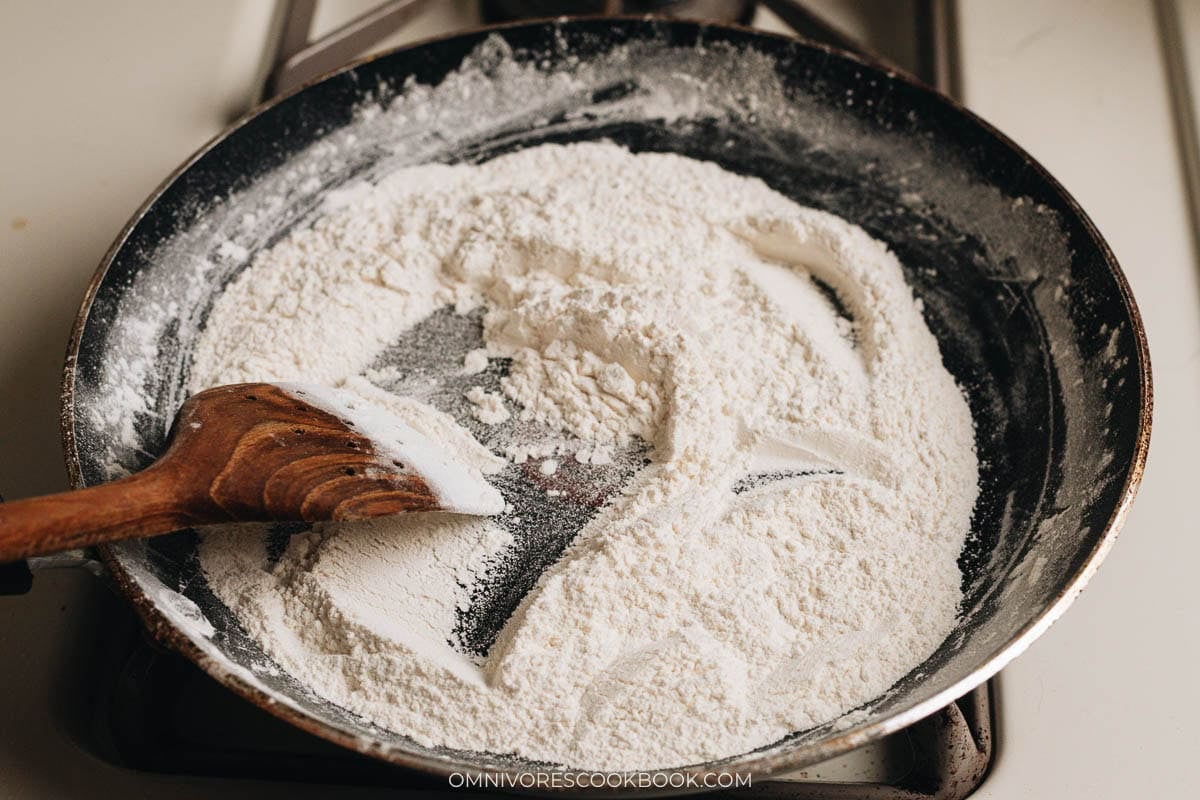
3. Toast the glutinous rice flour. Start with a cold pan and toast the flour until it just turns off-white. This step is crucial, so the glutinous rice flour does not have a raw taste when mixed into the filling.
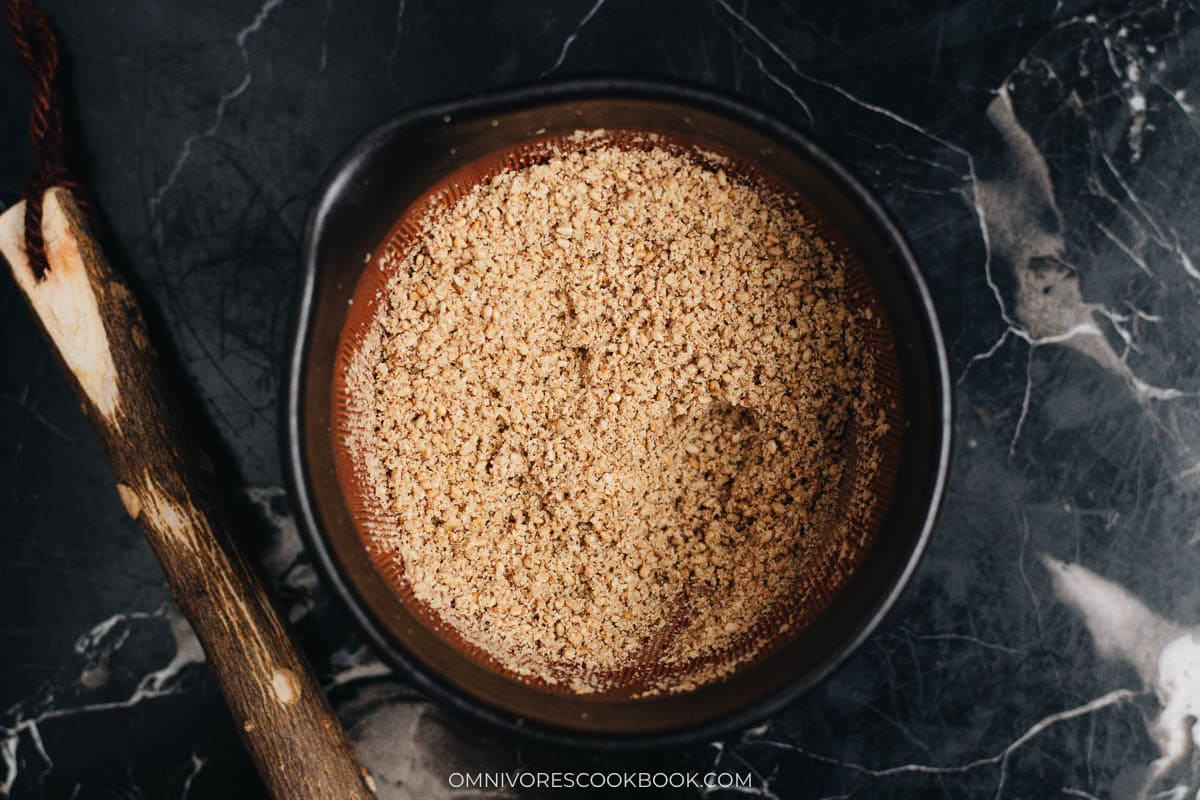
4. Grind the sesame seeds and shredded coconut. I like to grind both in my mortar and pestle, so they still have some texture. You can also use a spice grinder.
5. Cook the winter melon puree. Add coconut oil, water, sugar and salt, then cook until slightly thickened. Then add the shredded coconut and sesame seed mixture and ground ginger. Cook until most of the water has evaporated.
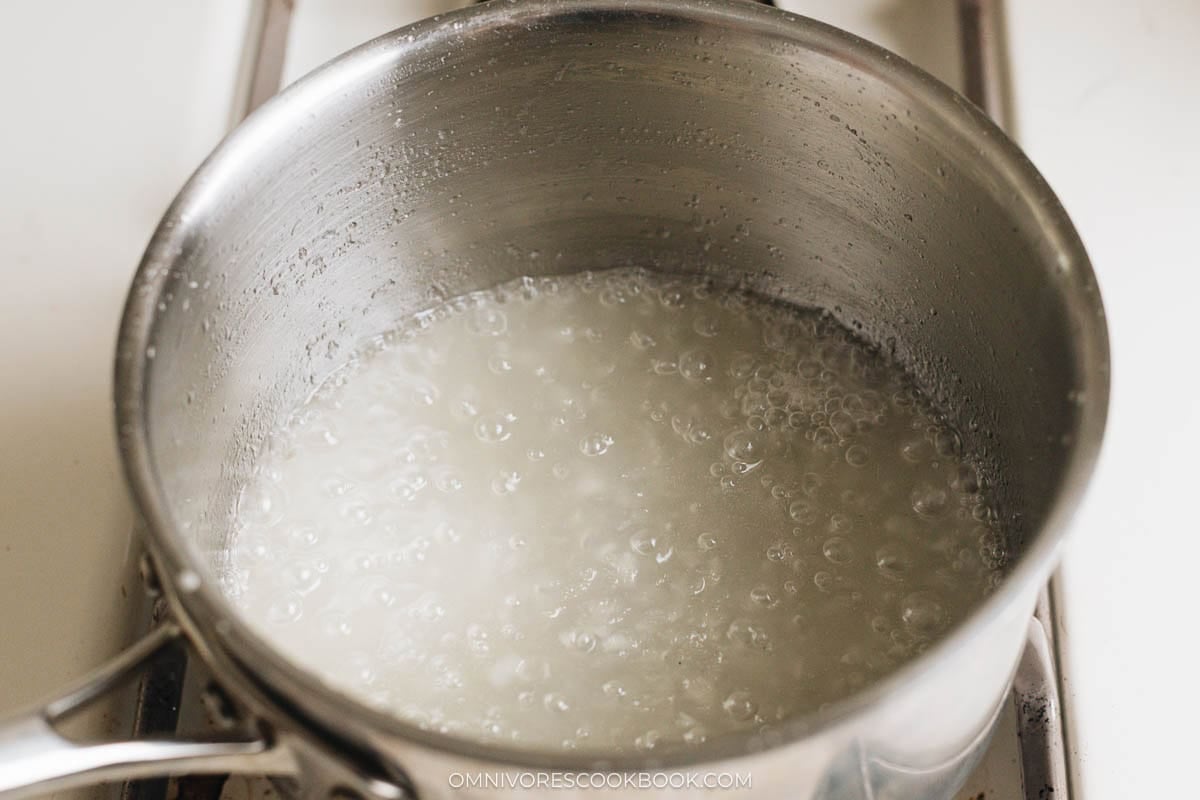
6. Add toasted glutinous flour. Turn to low heat and add the glutinous flour a few times, and stir with a spatula constantly until the flour is mixed in evenly. Cook for another 1 to 2 minutes until the mixture is very thick and translucent.
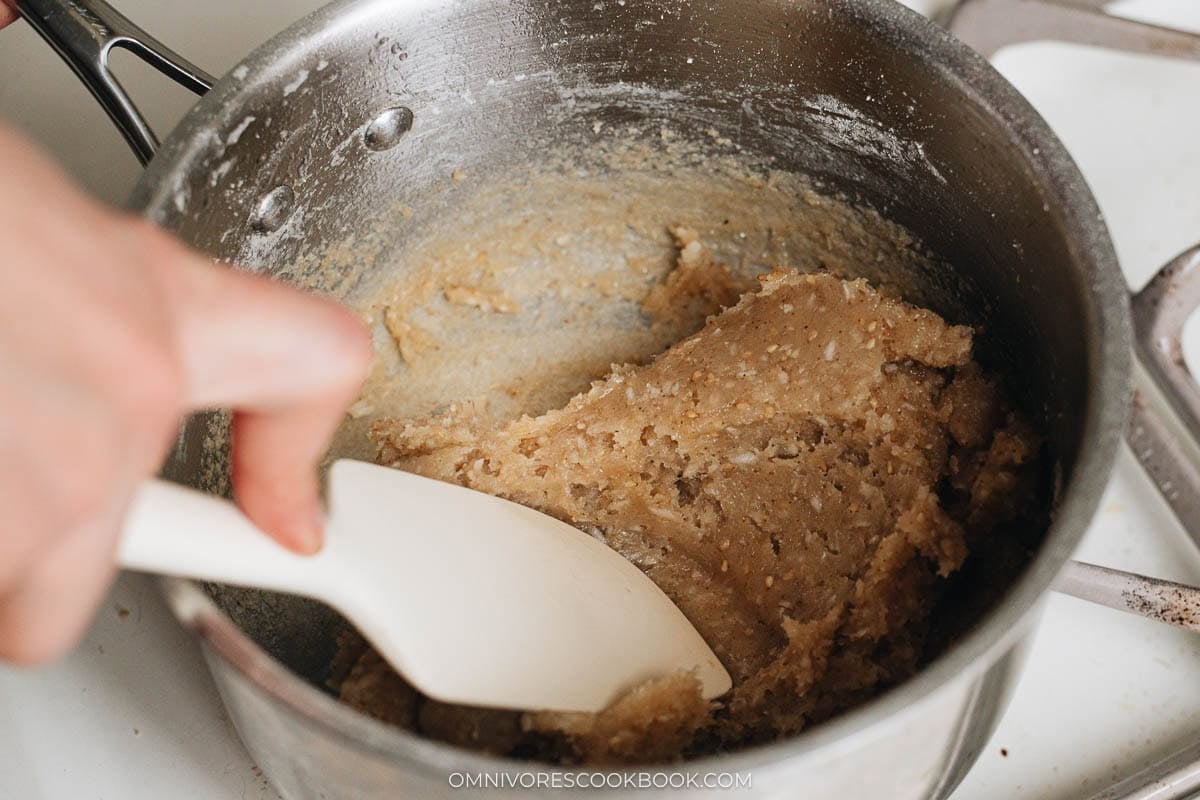
7. Divide the filling. Transfer the cooked filling into a bowl and cover with plastic wrap pressed directly onto the surface to prevent skin from forming. Once cooled, divide into 8 even portions and shape into balls. Cover and set aside.
Make the pastry dough
1. Mix and knead the water dough. Sift the all-purpose flour, powdered sugar, and salt, then add butter and water. Mix until the liquid is absorbed, then knead the dough until smooth and elastic. I prefer using a stand mixer for this step because it yields a smoother dough, but I do admit that it’s a very small dough and you will need to stop and scrape the mixer a few times in between. You can totally hand knead the dough also. Cover and let it rest for 10 minutes.
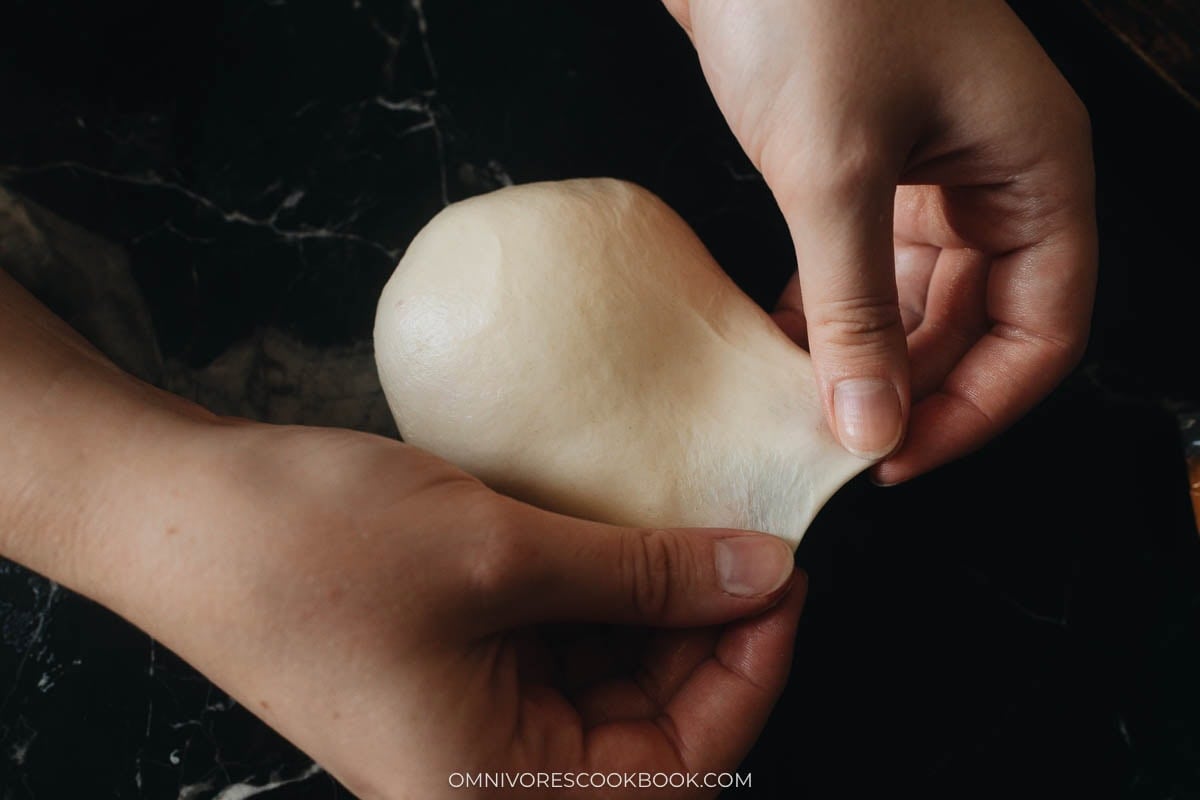
2. Make the oil dough. Work the lard into the cake flour using your hands until a dough forms, then knead until it’s smooth. Cover and rest for 5 minutes.
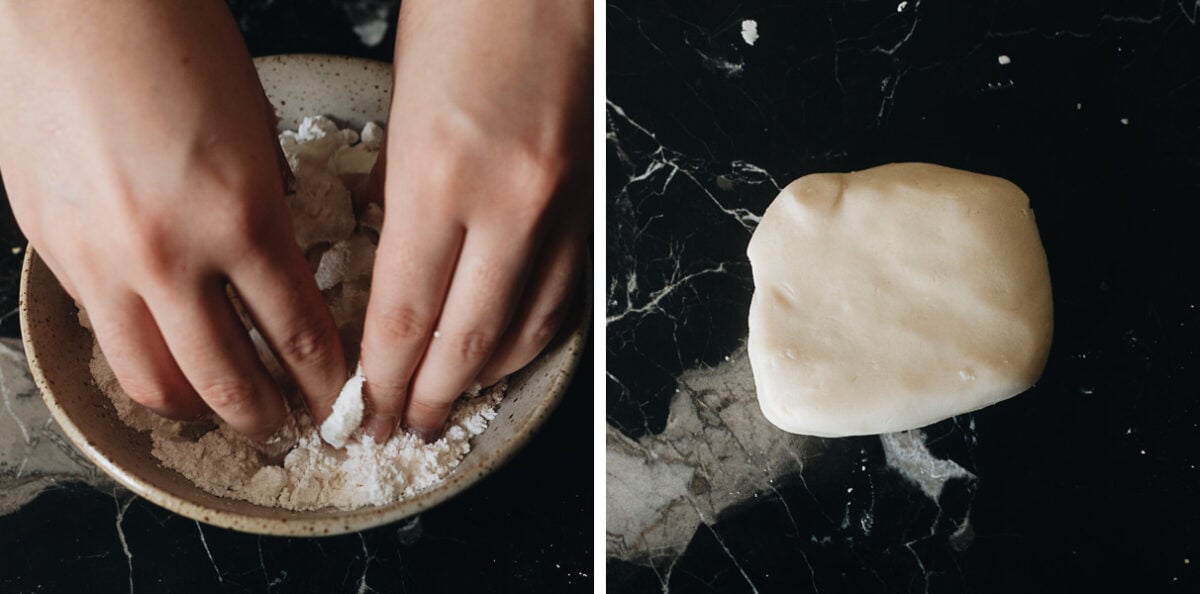
3. Divide the water and oil dough. Once rested, divide the water dough into 8 even pieces, then shape them into balls. Then divide the oil dough into 8 even pieces and shape them into balls. Always keep them covered when not working on them.
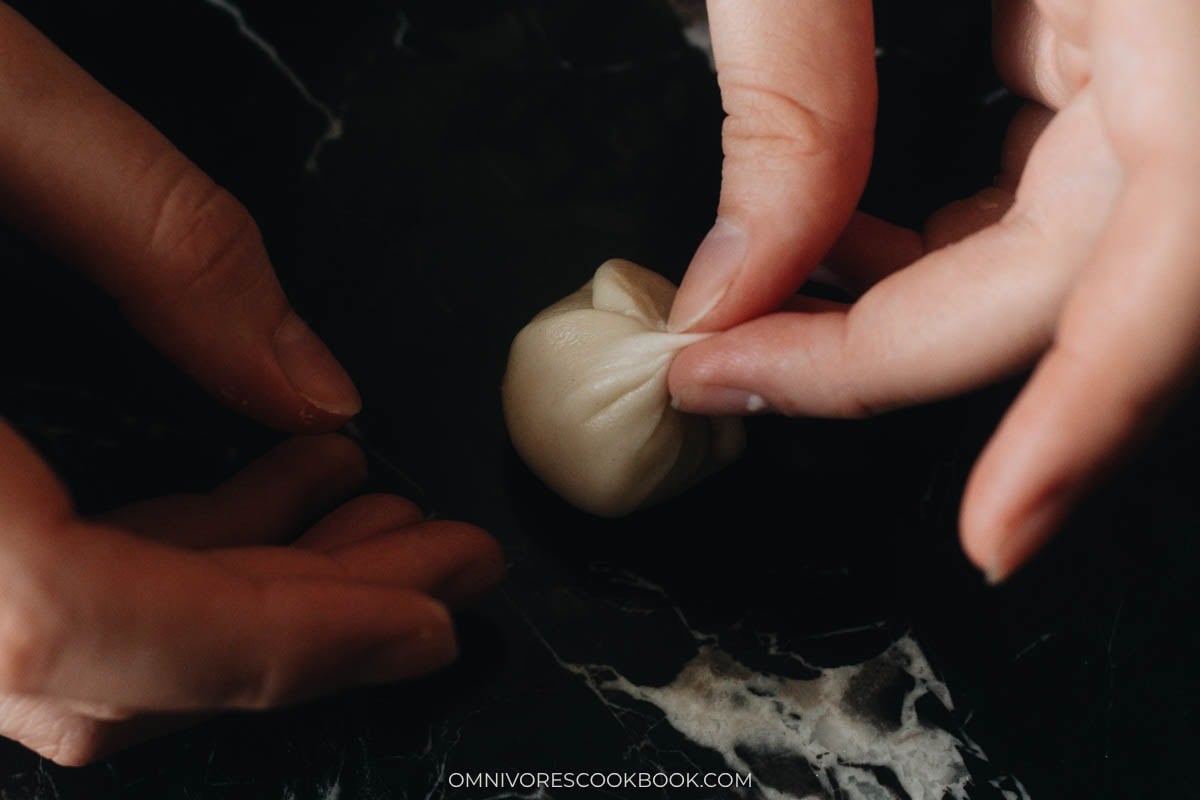
4. Assemble the pastry dough. Flatten a ball of water dough with your palm and spread it with your fingers so that the center is thicker than the edges, about 3 1/4” (8 cm) wide. Place a ball of oil dough in the center. Wrap the water dough around the oil ball and pinch at the top to seal it.
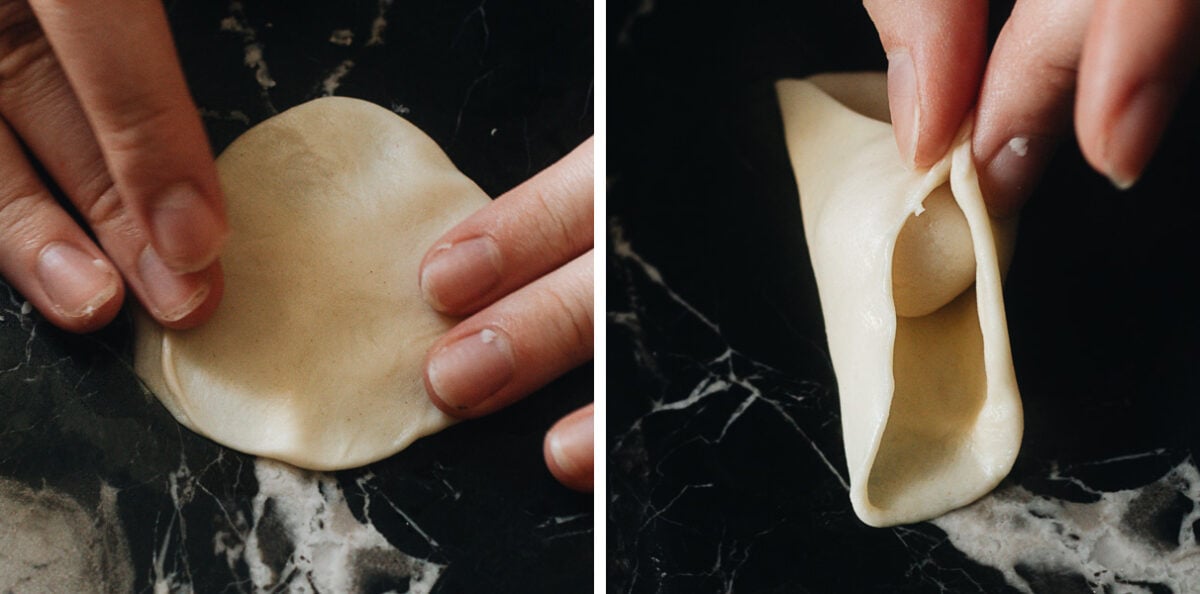
Shape the ball to smooth it out. Set it aside and cover it.
Assemble wife’s cake
This is the most confusing part, because the way to fold the pastry dough is quite unique here and it’s a little hard to describe with words. That’s why I included many step-by-step pictures to clearly show you how to roll out and form the pastry dough, so you can assemble your wife’s cakes with confidence.
1. Roll pastry dough the 1st time. Take a formed ball, sealed-side down, and flatten it with your palm. Gently roll it into a 5” (12.5 cm) long strip.
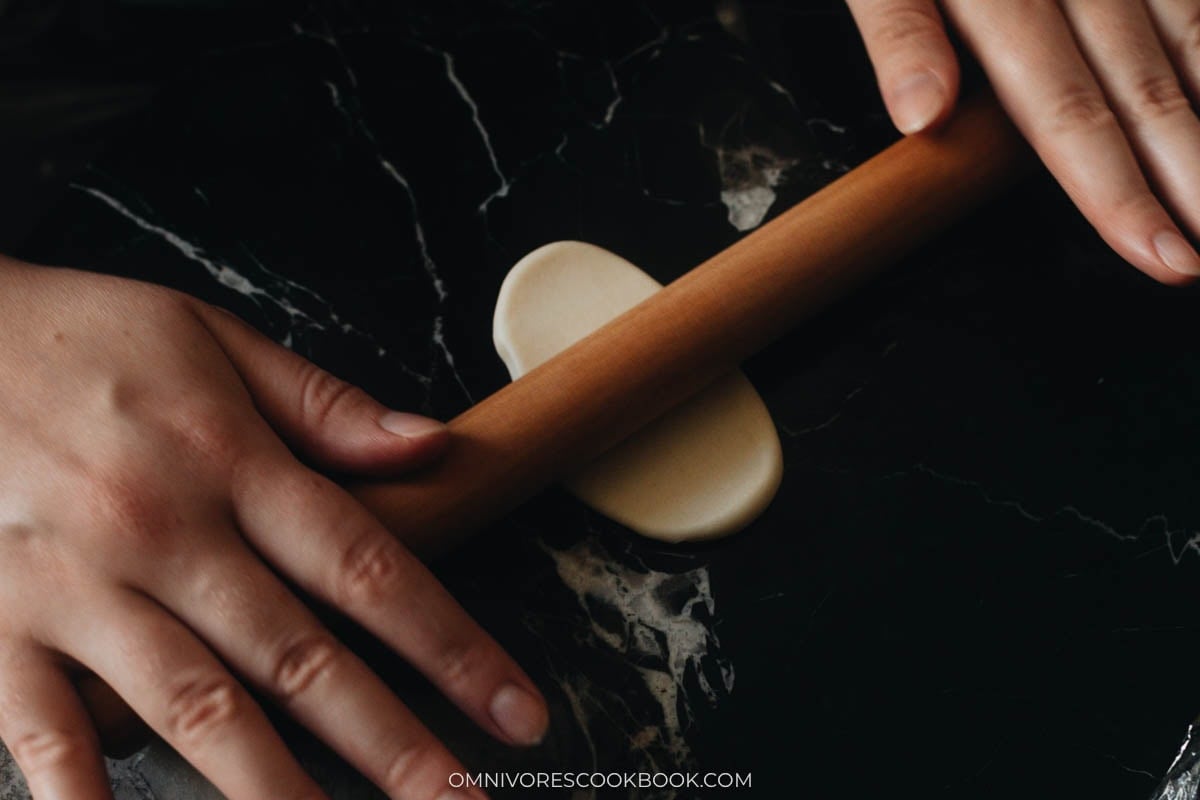
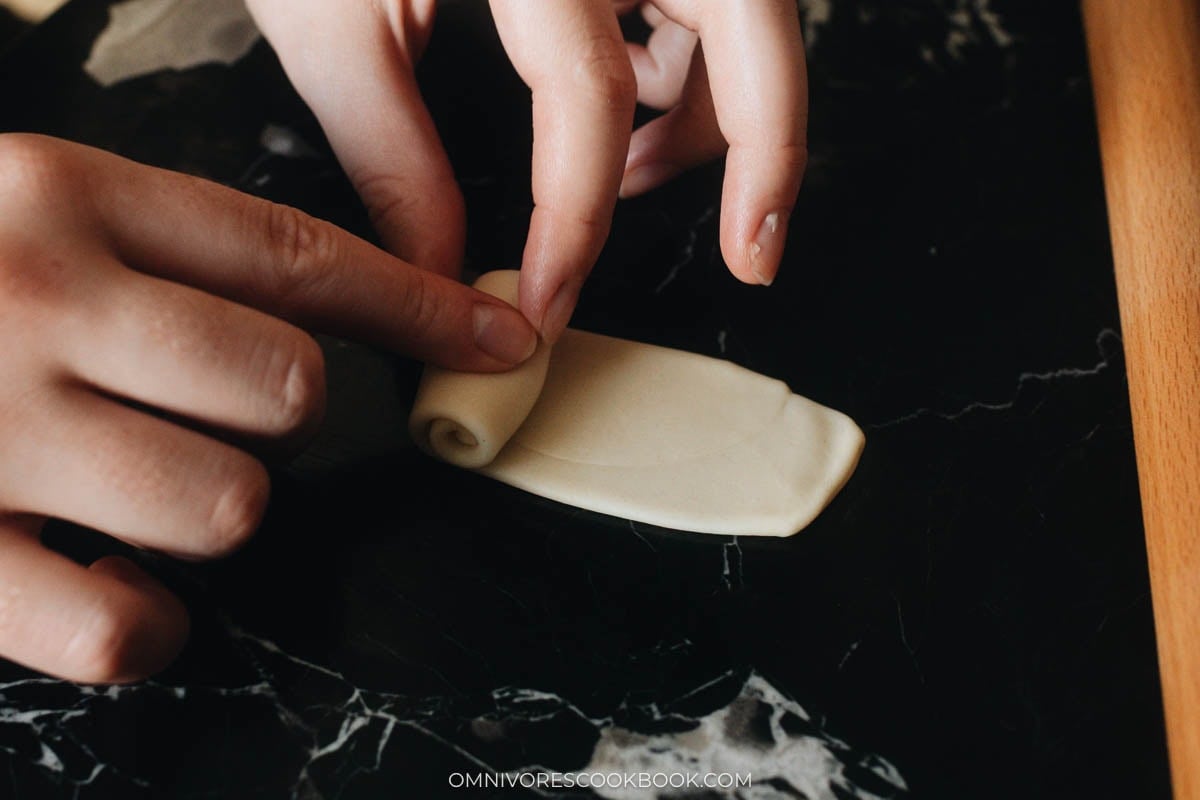
2. Roll up. Flip it over so it’s seam-side up. Starting from the short side, roll it into a thick jelly roll.
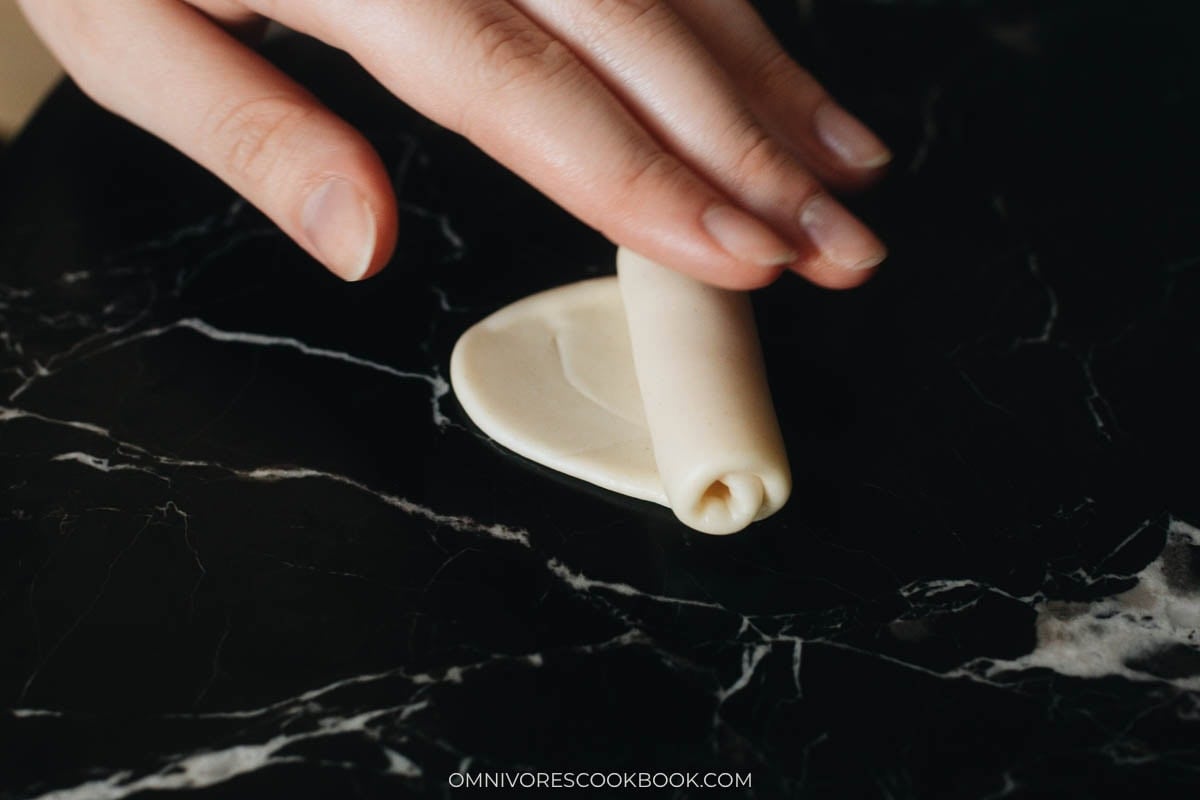
3. Second roll. Turn the roll 90° and flatten it with your hand. Again roll it into a 5”(12.5 cm) strip.
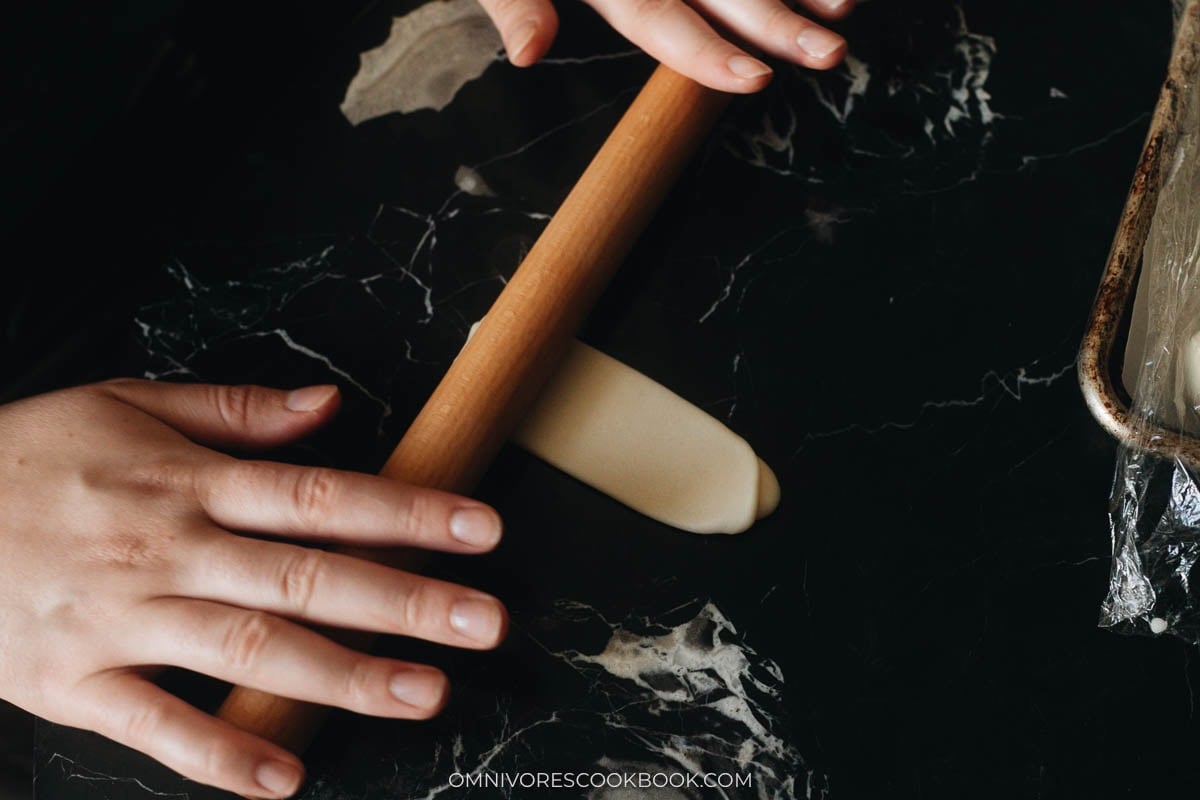
4. Second roll up. Roll the oval into a jelly roll again.
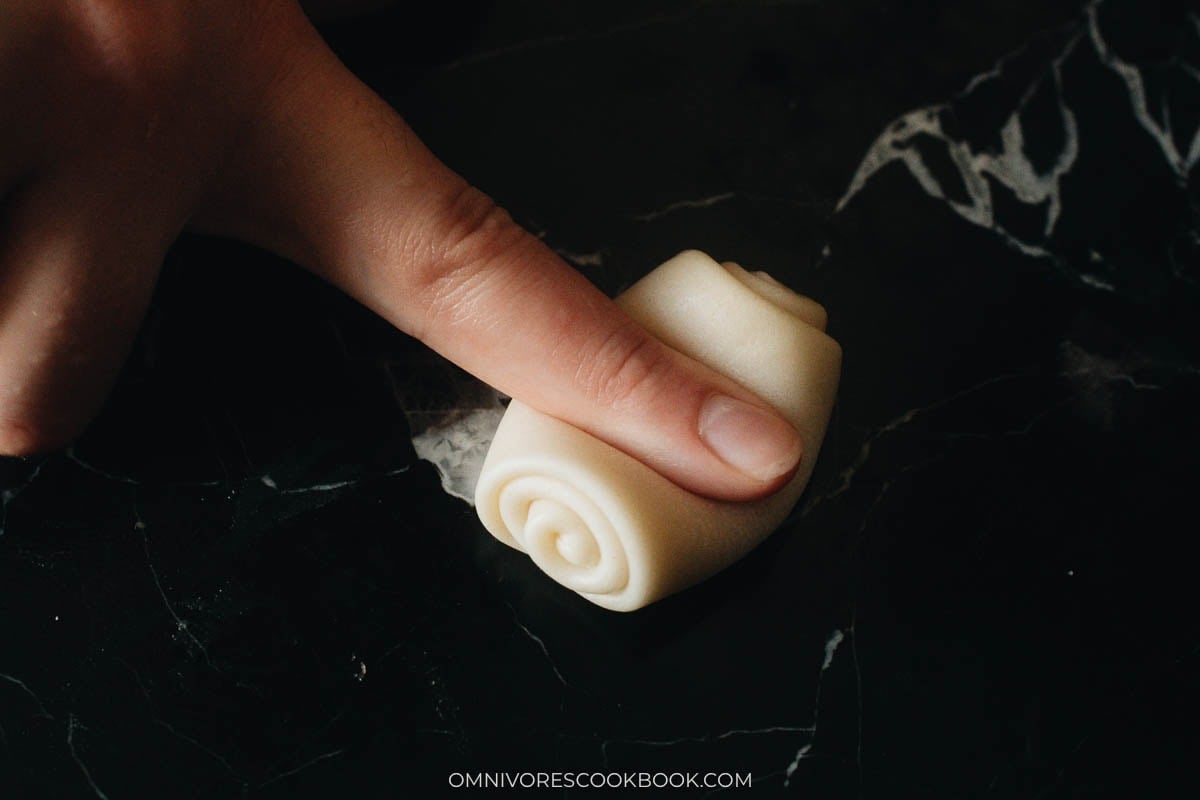
5. Press the roll. Take a roll and press into the middle so the swirled ends are pressed out.
6. Form the round. Fold the swirled ends into the center and press them down so that a flat disc is formed.
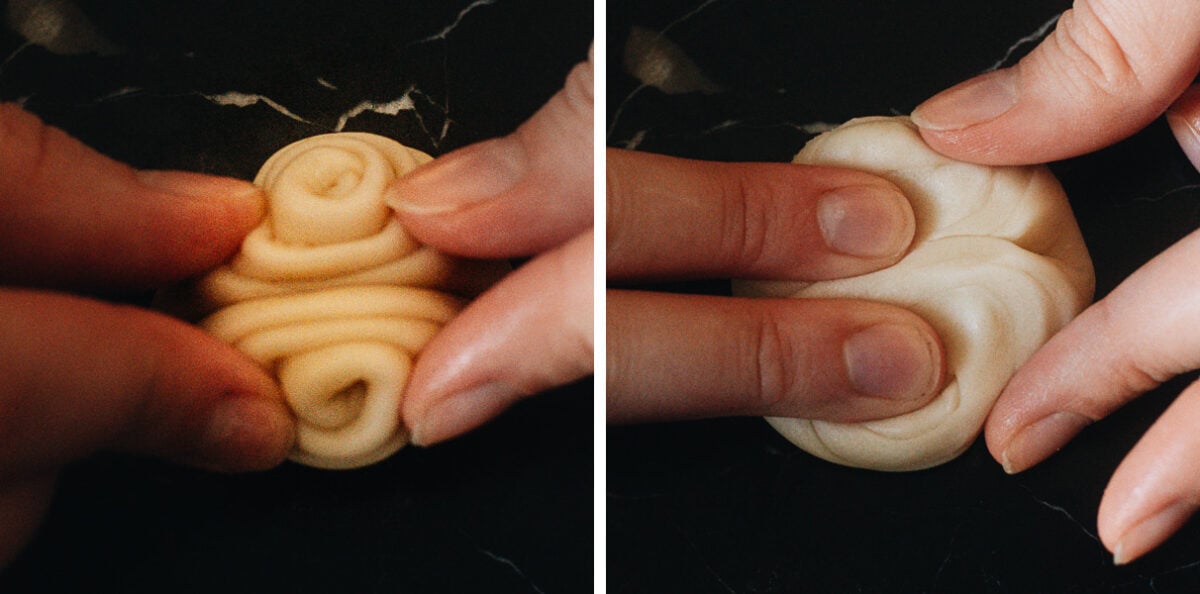
7. Roll out the dough. Roll the disc out so that it is 4” (10 cm) in diameter.
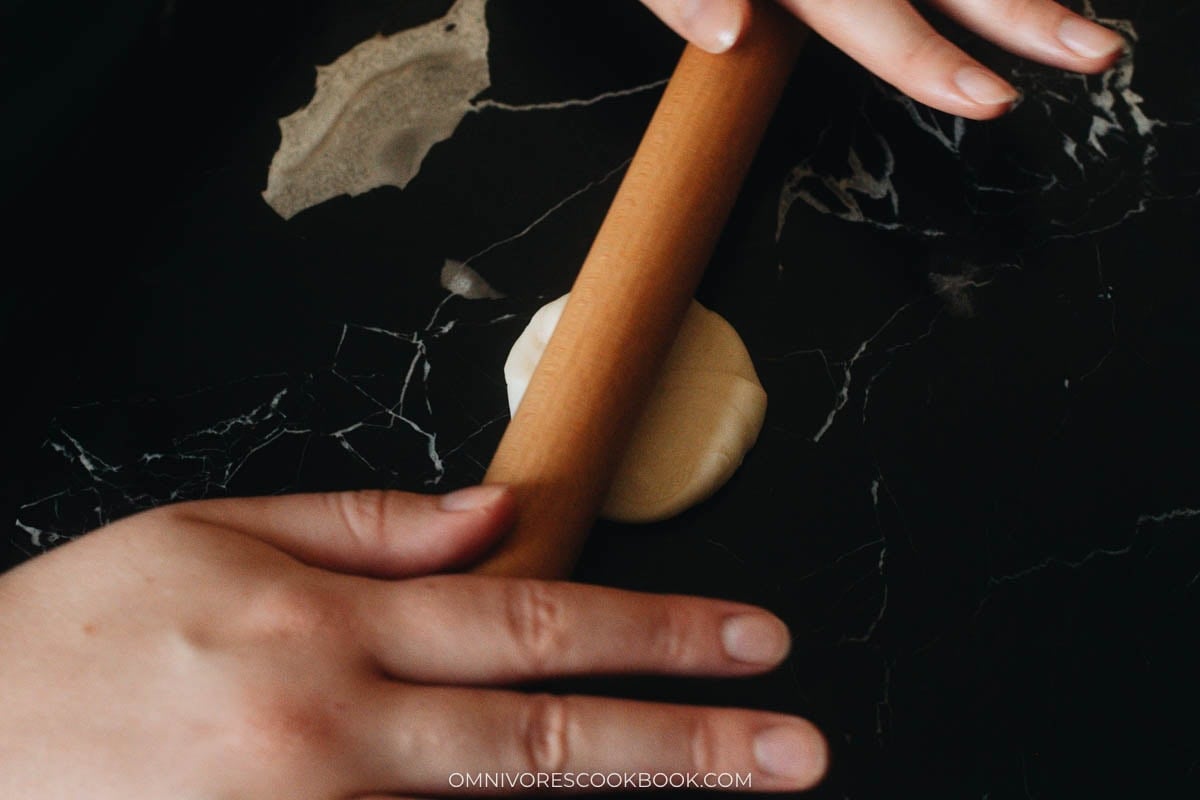
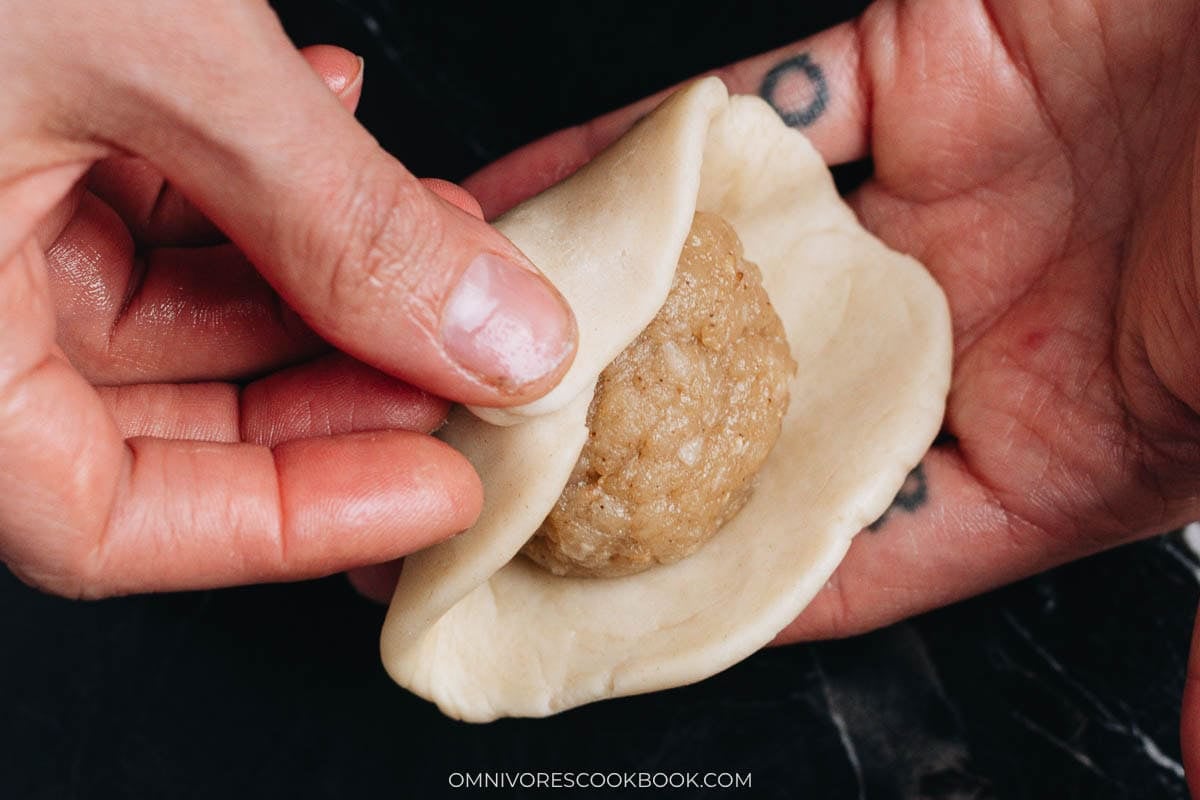
8. Wrap the filling. Place the filling in the center. Lift and stretch the dough over the paste ball to cover completely, and pinch to seal. Roll between your palms to smooth it out.
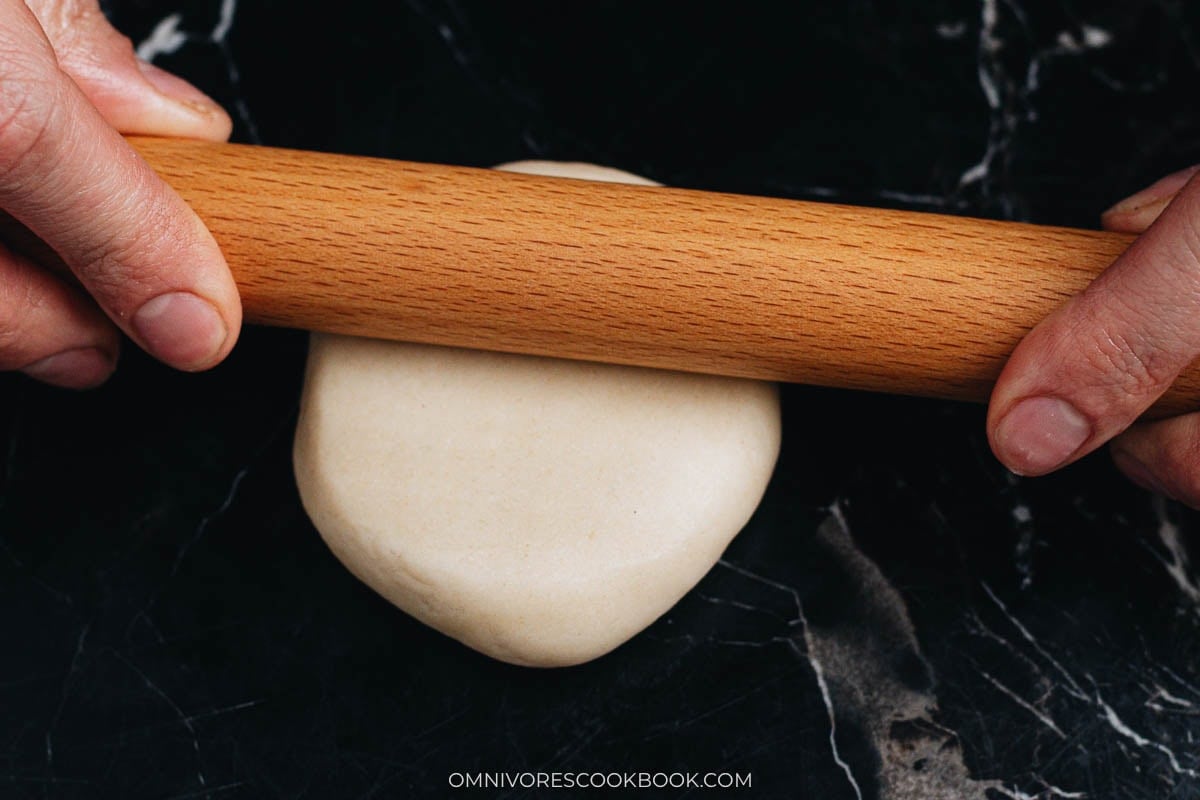
9. Roll out the filled dough. Flatten the ball gently with your palm. Then roll into a flat disk that is about 3 1/4” (8 cm) in diameter.
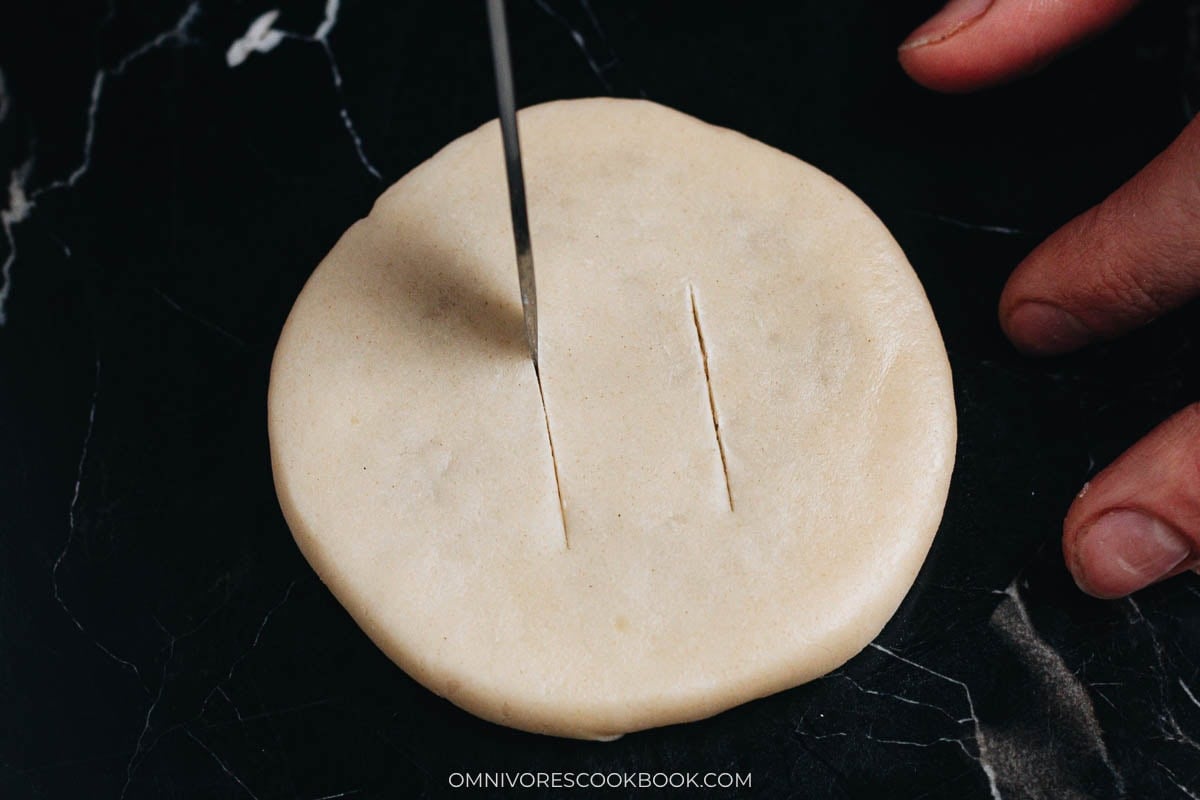
10. Slice the wife’s cake. Gently slice two sleets on the top of the assembled cake.
11. Garnish the top. I like to use egg yolks to brush the wife’s cake, so it has a bright yellow color once baked. Then wet your fingertip with water and dip it into the sesame seeds so the seeds stick to your finger. Tap the top of each pastry to decorate.
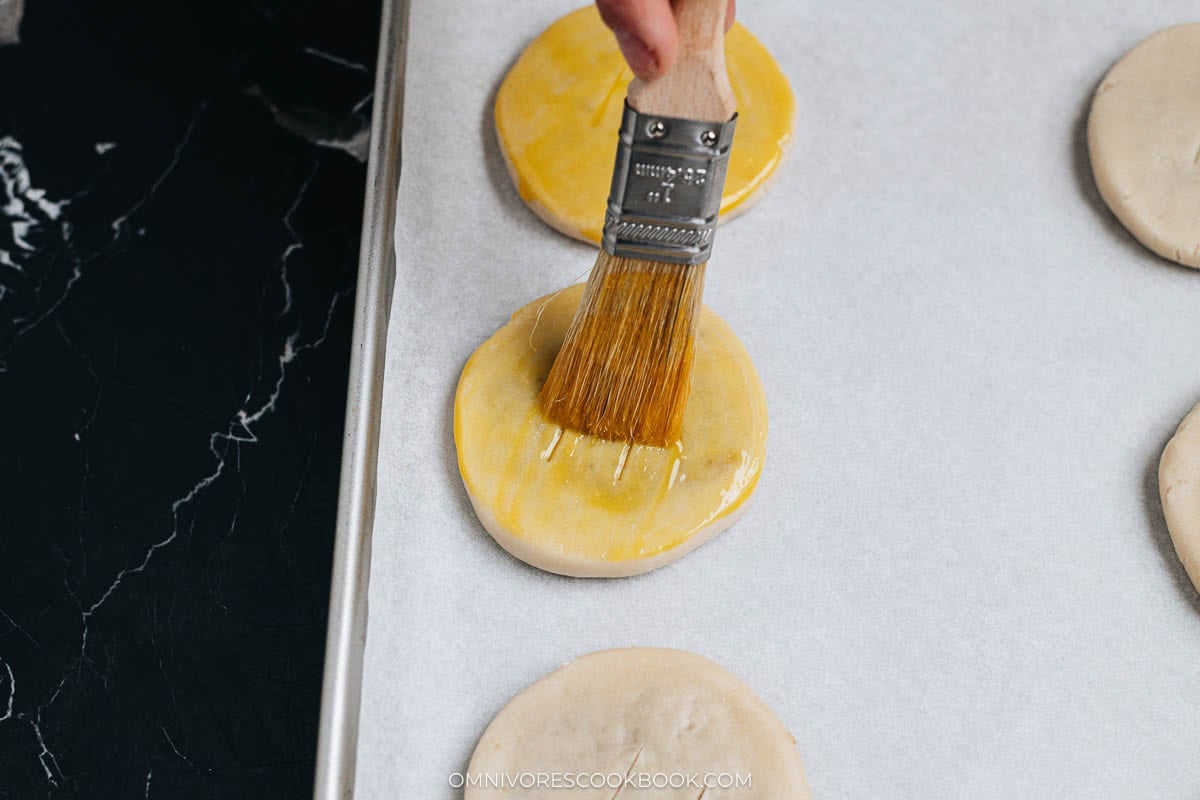
12. Bake the wife’s cake. Bake at 350°F (176°C) for 15 to 20 minutes, until the egg wash turns golden and the pastries are cooked through and flaky. Once done, remove from the baking sheet from the oven and let cool for 15 minutes before serving.
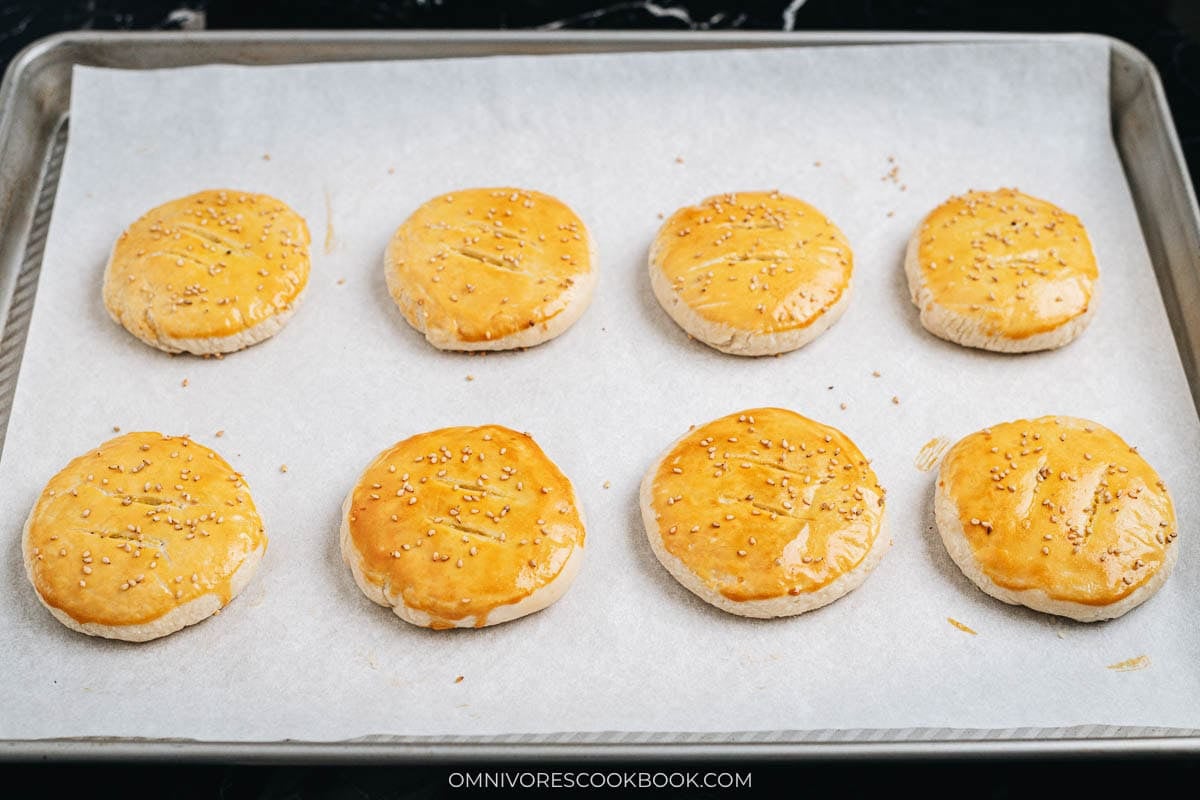
That’s it! Phew. I know this is a super long process. Once the wife’s cakes are baked, let them cool off a bit before digging in. They are flaky and nutty, with a fragrant chewy filling. I hope you enjoy!
How to serve and store
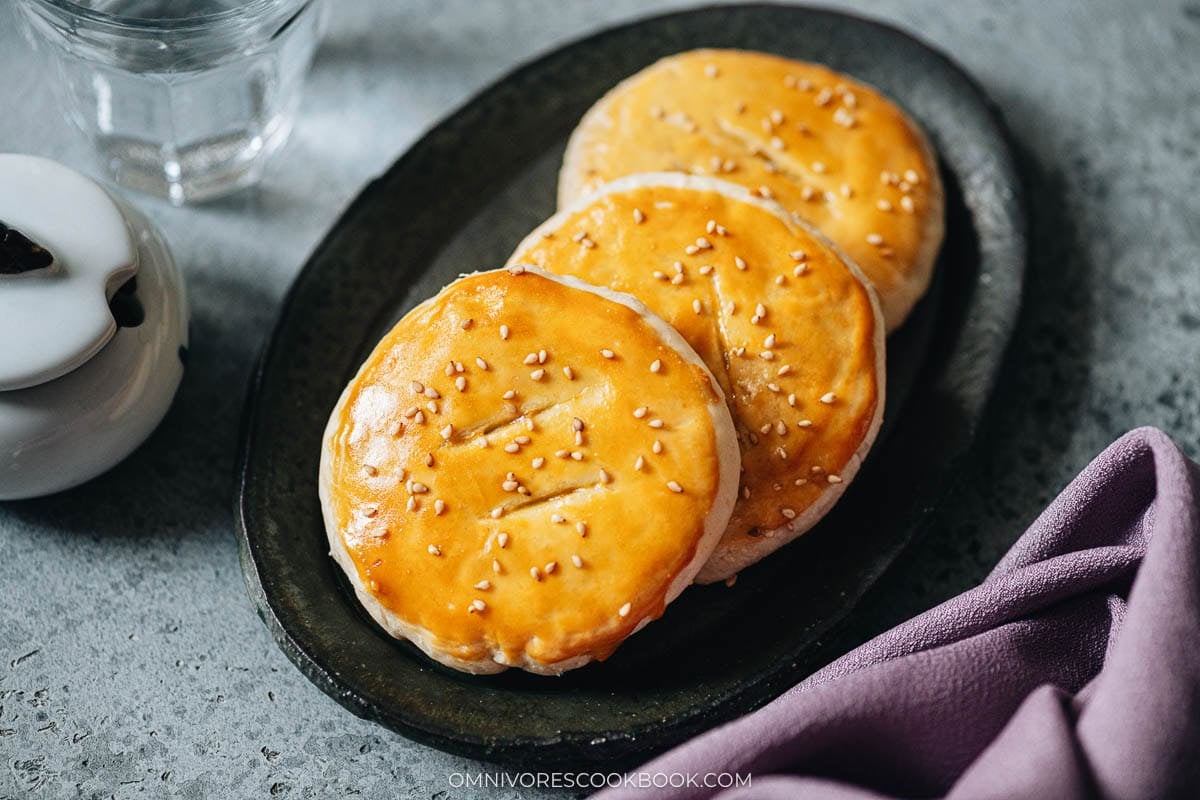
I prefer to serve my wife’s cake slightly warm or at room temperature with a cup of hot tea. The crust will be crispy and flaky, while the filling stays soft and chewy.
Wife’s cake can be stored at room temperature for two days or so, but for longer storage, I recommend storing them in the fridge or freezer. Once stored in the fridge or freezer, I prefer to warm up the cake in the oven to bring back its texture and serve it slightly warm. Note, the longer you store them, the filling will gradually dry out, so you should enjoy them soon or store them in the freezer for longer storage.
Frequently asked questions
What does winter melon taste like?
Winter melon has a very mild flavor. In this recipe, it mainly provides texture and moisture, allowing the coconut, sesame, and sugar to shine.
Can I substitute anything for winter melon?
Some of the wife’s cake recipes use winter melon candy, but I prefer using fresh winter melon because it gives a cleaner, less sugary taste. If you do not want to use winter melon, you will need to find a different recipe for wife’s cake because there is no good substitute for winter melon in this recipe.
Why toast the glutinous rice flour?
Toasting removes the raw flour taste and helps the filling develop a nutty aroma and better texture.
Can I use butter instead of lard?
You can use shortening instead of lard. I do not recommend using butter because it liquifies at room temperature and will not form the layered dough properly.
Want to Save This Recipe?
Enter your email below & we’ll send it to your inbox. Plus get great new recipes from us every week!
Wife’s Cake (老婆饼)
Ingredients
Filling
- 75 g glutinous rice flour
- 25 g unsweetened shredded coconut (or desiccated coconut)
- 25 g toasted sesame seeds
- 1 wedge winter melon (yields 150 g puree)
- 36 g water
- 30 g unrefined coconut oil
- 75 g sugar
- 1/4 teaspoon sea salt
- 1/2 teaspoon ground ginger
Water Dough
- 90 g all-purpose flour
- 1 tablespoon powdered sugar
- 1/4 teaspoon salt
- 35 g unsalted butter , softened
- 40 ml ice water
Oil Dough
- 110 g cake flour
- 55 g lard (or shortening)
Topping
- 2 egg yolks
- Toasted sesame seeds (for garnish)
Instructions
Make the filling
- Add the glutinous rice flour into a cold pan and heat over medium heat. Stir and cook the flour until the color turns off-white and you can smell some nuttiness coming from the flour, 5 minutes or so.
- Add the shredded coconut and sesame seeds into a grinder or using a mortar and pestle, coarsely grind both.
- Peel the winter melon by removing the tough skin by 1/4” (4mm) using a knife, until no green skin is visible on the flesh. Remove the seeds using a knife by cutting off the soft part between the seeds and the flesh. Chop the melon into 1” (2.5 cm) pieces to yield slightly over 150g, then puree in a blender until smooth.
- Weigh 150g of the purée into a medium saucepan and add the 36 g water, 30 g coconut oil, 75 g sugar, and 1/4 teaspoon salt. Bring to a simmer over medium heat, stirring frequently, about 5 minutes, or until slightly thickened.
- Add the shredded coconut and sesame seed mixture and ground ginger, and continue to cook until most of the liquid has evaporated.
- Turn to low heat. Add in toasted glutinous rice flour in several rounds, stirring very thoroughly by scraping the pan between additions. Cook and stir for another 1 to 2 minutes until the mixture is very thick and translucent. Transfer to a bowl, cover with plastic wrap pressed directly on the surface to prevent skin from forming, let cool completely.
- Once cool, divide filling into 8 equal portions, rolling paste into balls. Cover and set aside.
Make water dough
- Sift the 90 g all-purpose flour, powdered sugar, and salt into the bowl of a stand mixer. Add the butter and ice water. Mix with a spatula until a rough dough forms. Place the bowl in the mixer with the dough hook attachment. Drape a piece of the dough over the hook. Turn the mixer to setting 4 and knead until smooth and elastic, about 10 minutes. Depending on the size of your mixer, it may be necessary to stop the kneading occasionally and lift the dough over the hook (*Footnote 1). You can also hand knead the dough. To test the dough, stretch it into a thin semi transparent sheet and it should hold well. Knead a bit longer, if needed. Once done, cover the dough and rest for 10 minutes.
Make the oil dough
- Combine the 110 g cake flour and shortening in a medium-sized bowl. Mix and press it together using your hands, until the dough forms. Further shape and knead it on a working surface until uniform and smooth. Cover and rest for 5 minutes.
Prepare the pastry dough (*Footnote 4)
- Divide the water dough into 8 even pieces. Work on one dough at a time, use your hands to pull the dough towards the center, until it forms a ball. Pinch to seal the end and set aside. Always cover the dough with plastic wrap.
- Divide the oil dough into 8 even pieces. Form each piece into a dough ball using your hands, covering them as you go.
- Flatten a ball of water dough with your palm and spread it with your fingers so that the center is thicker than the edges, about 3 1/4” (8 cm) wide. Place a ball of oil dough in the center. Lift the edges of the water dough over the oil dough to wrap it and pinch at the top to seal it. Shape the ball to smooth it out. Set it aside and cover it. Repeat with all pieces of dough.
Assemble
- Preheat the oven to 350°F (176°C).
- Take a formed ball, sealed-side down, and flatten it with your palm. Gently roll it into a 5” (12.5 cm) long strip. Flip it over so it’s seam-side up. Starting from the short side, roll it into a thick jelly roll. Turn the roll 90° and flatten it with your hand. Again roll it into a 5”(12.5 cm) strip and then into a jelly roll. Cover and set aside. Repeat with the remaining balls.
- Beginning with the first roll you made, take a roll and press into the middle so the swirled ends are pressed out. Then fold the swirled ends into the center and press them down so that a flat disc is formed. Roll this disc out so that it is 4” (10 cm) in diameter. Place the filling in the center. Lift and stretch the dough over the paste ball to cover completely, and pinch to seal. Roll between your palms to smooth it out. Flatten gently with your palm. Then roll into a flat disk that is about 3 1/4” (8 cm) in diameter. Repeat with all the dough and cover all the dough pieces with plastic wrap as you do so. (*Footnote 5)
- Line a baking tray with parchment paper. Place the pastries on it, at least 1” (2.5) apart. Gently slice two slits on the top.
- Lightly beat the yolk. Brush a thin layer of the egg wash onto the tops of the pastries. Wait 5 minutes and brush with a second layer of yolk.
- Wet your fingertip with water and dip it into the sesame seeds so the seeds stick to your finger. Tap the top of each pastry to decorate.
- Bake at 350°F (176°C) for 15 to 20 minutes, until the egg wash turns golden and the pastries are cooked through and flaky. Once done, remove the baking sheet from the oven and let cool for 15 minutes before serving.
Storage
- After completely cooling, you can store the baked cakes in an airtight container at room temperature for up to 2 days, in the fridge for up to 2 weeks, or in the freezer for 3 months.
Notes
- If your stand mixer is too big for the dough, the dough may flatten on the bottom after kneading for a while. You’ll need to lift the dough onto the hook and restart the mixer.
Nutrition

Did you make this recipe?
I’d love to hear how it turned out for you! Please take a moment to leave a 5-star rating ⭐️ and share your thoughts in the comments further down the page. It really helps others discover the recipe too.
Steven
Hi Maggie
Can you also show the imperial measurements as well
Maggie Zhu
Hi Steven, for this recipe, I highly recommend using the gram measurements because the pastry dough requires fairly precise ratios, and measuring flour by cups can vary quite a bit. I’ll look into adding approximate imperial measurements for convenience, but for the best results, I recommend using a kitchen scale.
Sam
Hi Maggie, is there a version of this that’s sweet meets salty? Where you have the sweet filling and salty ground pork in the centre? I’m going to give this a try but thought sweet and salty might be worth experimenting with.
Maggie Zhu
This pastry is mildly sweet but it does not contain a salty filling. The winter melon is only sweetened by sugar, with a touch of salt to balance it out.
I think you’re talking about a different pastry, it is a mooncake that uses nuts and salty pork in the filling, wrapped with layered pastries.