
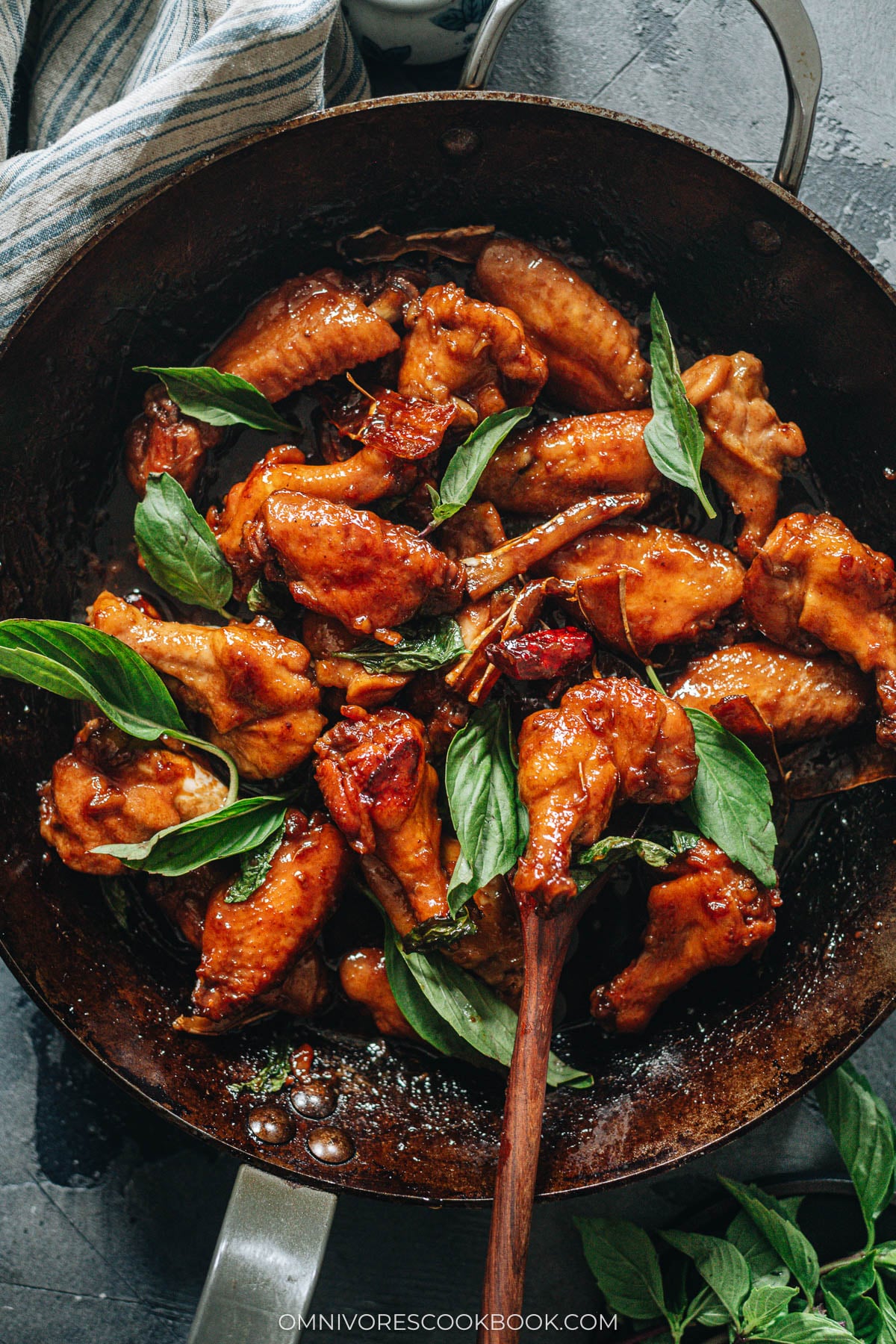
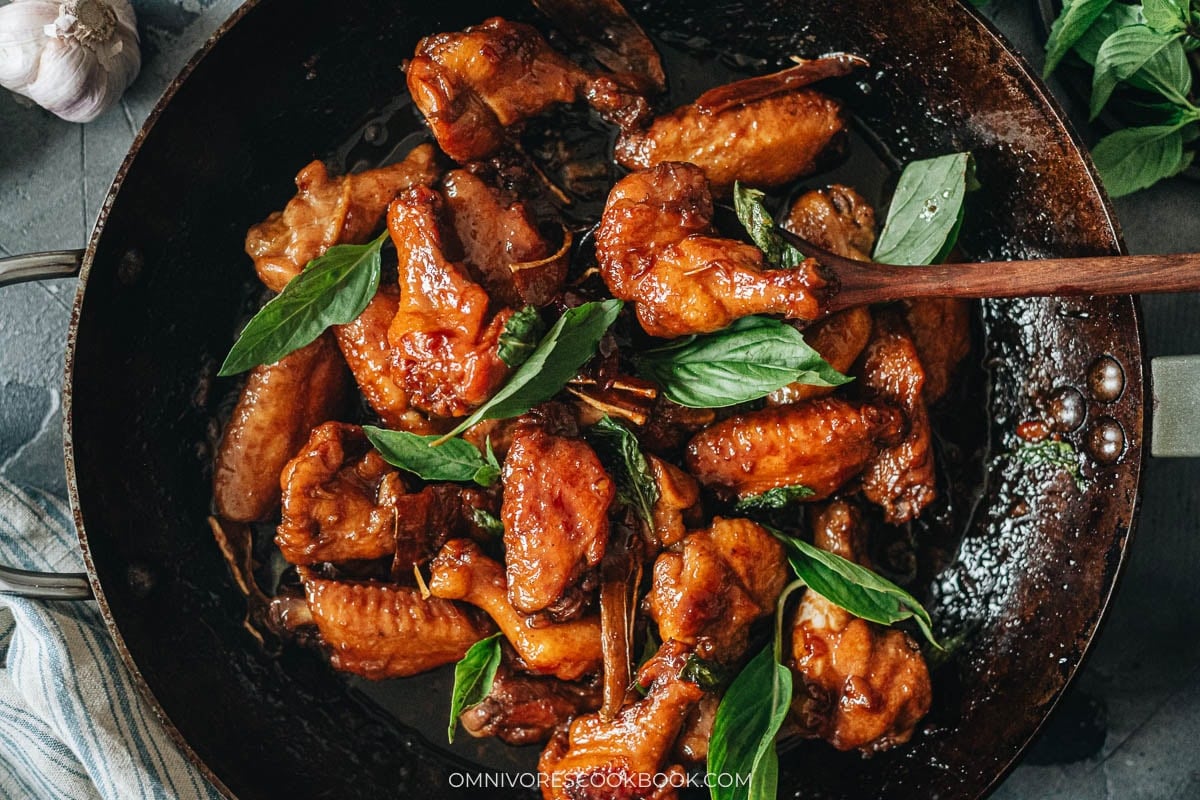
This is one of the most famous Taiwanese braised chicken dishes, known as san bei ji (三杯鸡). The name comes from the traditional ratio of 1 cup each of sesame oil, soy sauce, and rice wine, though no one actually uses that much anymore. The dish is believed to have originated in Jiangxi province over 700 years ago before becoming a staple of Taiwanese home cooking.
What makes it so good is the combination of caramelized ginger, whole garlic cloves, and that thick, glossy sauce that clings to every piece. If you enjoy bold braised dishes like my soy sauce chicken, this one belongs in your menu.
I started making three cup chicken after eating it at Taiwanese restaurants, where every place had their own version bubbling away in clay pots. I came home and tested it over and over until I got a version that works with what I can find at my local grocery store, and my husband now requests it at least twice a month.
I start by slowly caramelizing ginger slices in sesame oil, then adding smashed garlic and dried chilies to build the aromatic base. The chicken gets seared in the same pan, then braised in Shaoxing wine and soy sauce until the liquid reduces into a thick sticky glaze. A handful of fresh Thai basil goes in right at the end. I really hope you give this recipe a try.
Ingredients
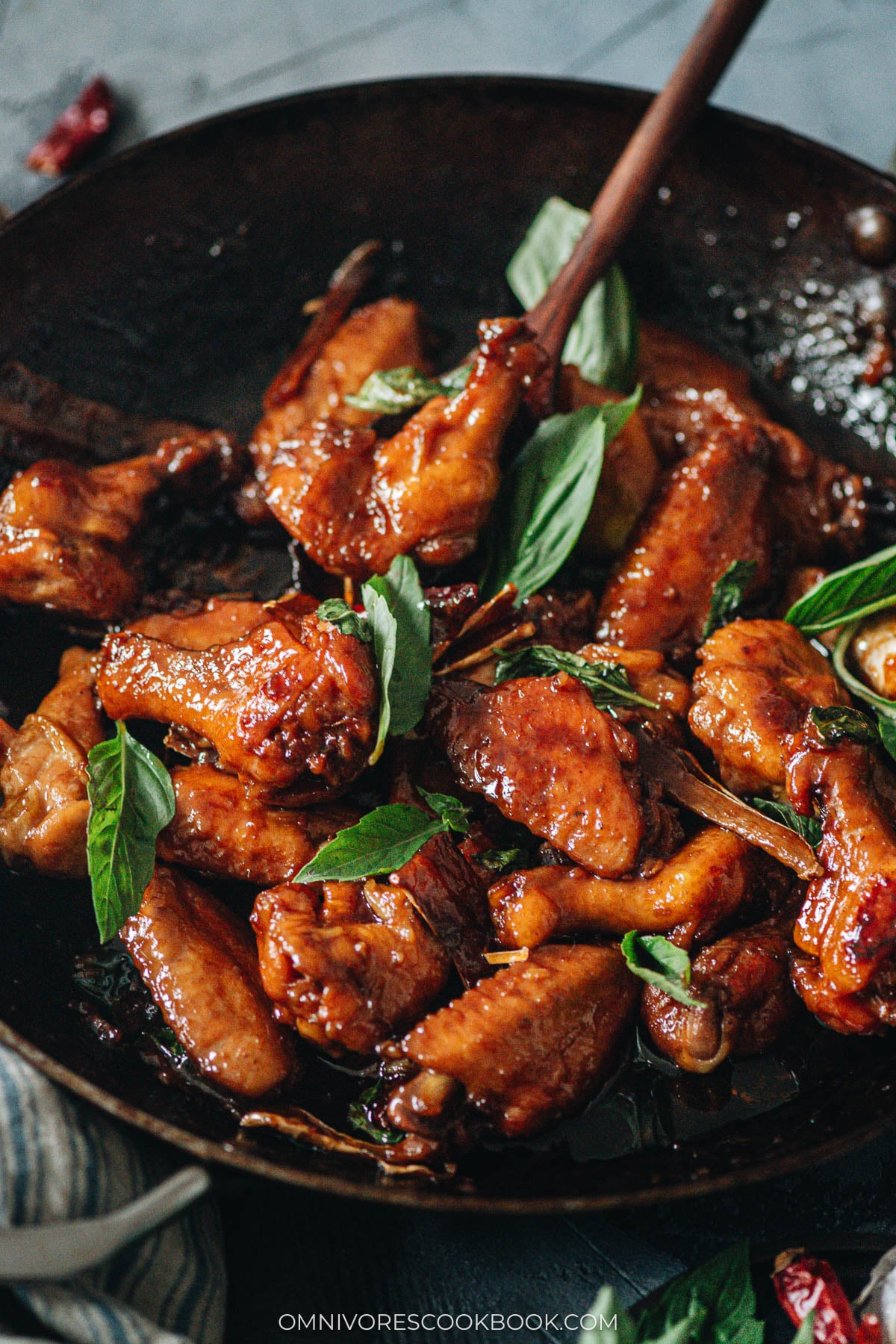
Believe it or not, three cup chicken uses less than ten ingredients, most of which you should have in your pantry already. Your table should look like the picture below when you’re ready to cook. I divide the ingredients into 2 groups so the aromatics and braising liquid are ready to go.
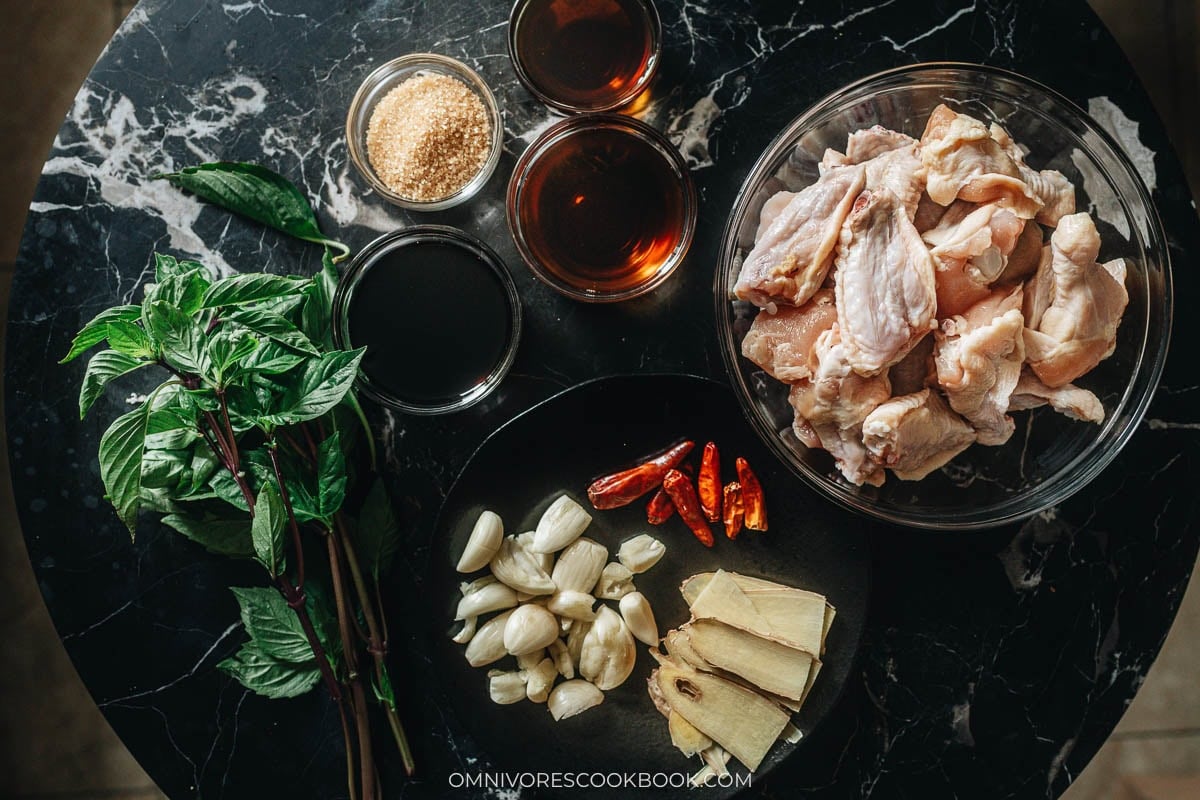
Aromatics and chicken: I use chicken wings, sliced ginger, whole smashed garlic cloves, dried chili peppers, and sesame oil. The ginger needs to be sliced thin so it caramelizes evenly, and the garlic should be smashed but left whole so it softens into the sauce as it braises.
In China, three cup chicken is always made with bone-in chopped up chicken pieces. Living in the US, I opt to use chicken wings because it’s the closest cuts to find here. Alternatively, you can also use boneless skinless chicken chopped into large bite-size pieces to cook this dish.
Braising sauce and finish: I combine Shaoxing wine, soy sauce, and brown sugar. The wine acts as the main braising liquid instead of water, which gives the chicken a deeper, more complex flavor. Fresh Thai basil goes in at the very end so it stays bright and fragrant. Italian basil (sweet basil) is the closest substitute.
Technique Explanation
The key technique in three cup chicken is building flavor in stages using sesame oil as the cooking fat.
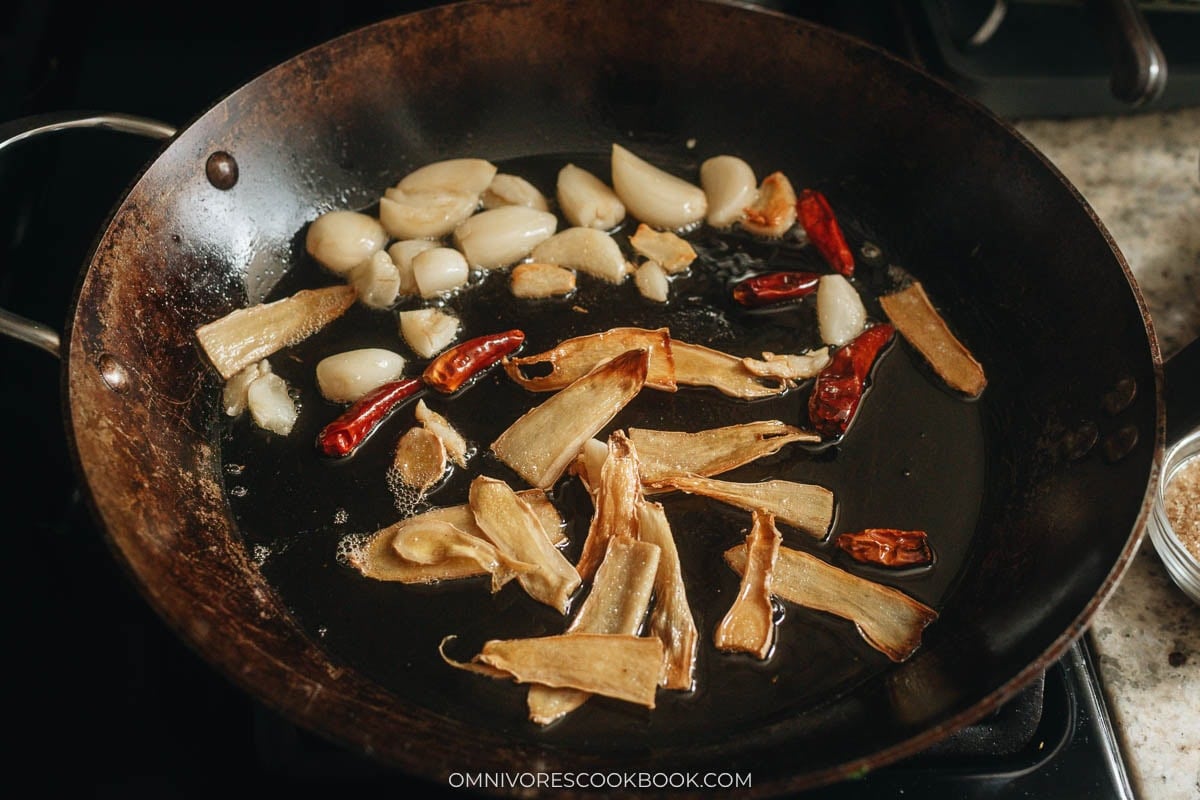
Why low heat matters for sesame oil: Chinese sesame oil is made from toasted sesame seeds, which gives it that rich, nutty flavor. But it has a low smoke point, so if you heat it too high or too fast, it burns and turns bitter. I keep the heat on low for the first 10 minutes while the ginger slowly caramelizes. This infuses the oil with ginger flavor without ruining the sesame taste.
Caramelizing the aromatics: The ginger, garlic, and dried chilies all cook at different rates. The ginger goes in first and cooks until the edges curl and turn golden. Then the garlic and chilies go in for another 5 minutes. This layered approach means each aromatic gets the right amount of heat. Rushing this step is the most common mistake people make with this recipe.
Braising and reducing: Unlike a quick stir fry, three cup chicken is a braise. The chicken simmers covered in the wine and soy sauce mixture until tender, then the lid comes off so the liquid reduces into that signature thick, glossy glaze. The key is patience during the covered phase and attention during the uncovered phase, stirring frequently so the sugar does not burn on the bottom.
How to Make
1. Caramelize the ginger: Heat sesame oil in a heavy bottomed skillet over low heat. Add the ginger slices and cook slowly until they begin to brown and curl at the edges.
2. Cook the garlic and chilies: Add the smashed garlic cloves and dried chili peppers to the pan. Continue cooking on low heat until the garlic turns light golden.
3. Sear the chicken: Turn the heat up to medium low. Move the aromatics to the side and add the chicken in a single layer. Cook undisturbed until the bottom is lightly browned, then flip and brown the other side. If the pan is crowded, move the aromatics on top of the chicken to prevent them from burning.
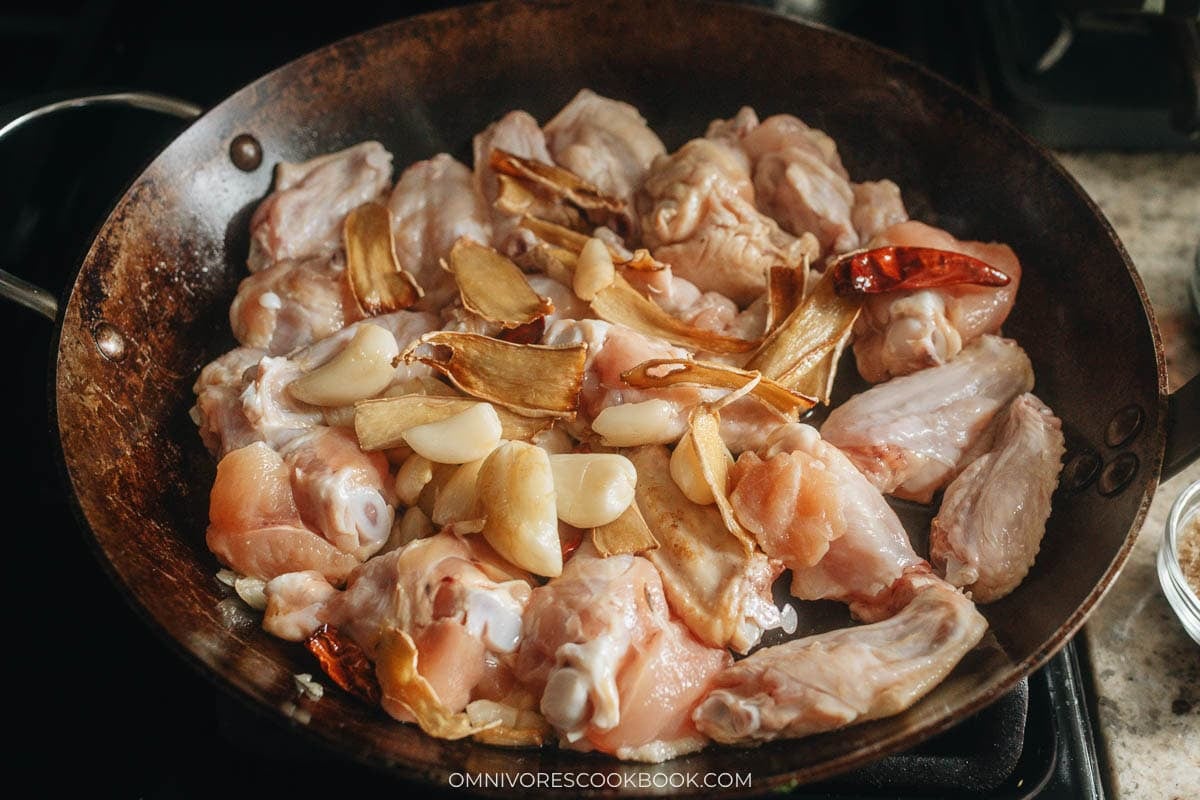
4. Add the braising liquid: Pour in the Shaoxing wine and scrape any brown bits off the bottom of the pan with a wooden spatula. Add the soy sauce and brown sugar and stir to coat all the chicken pieces.
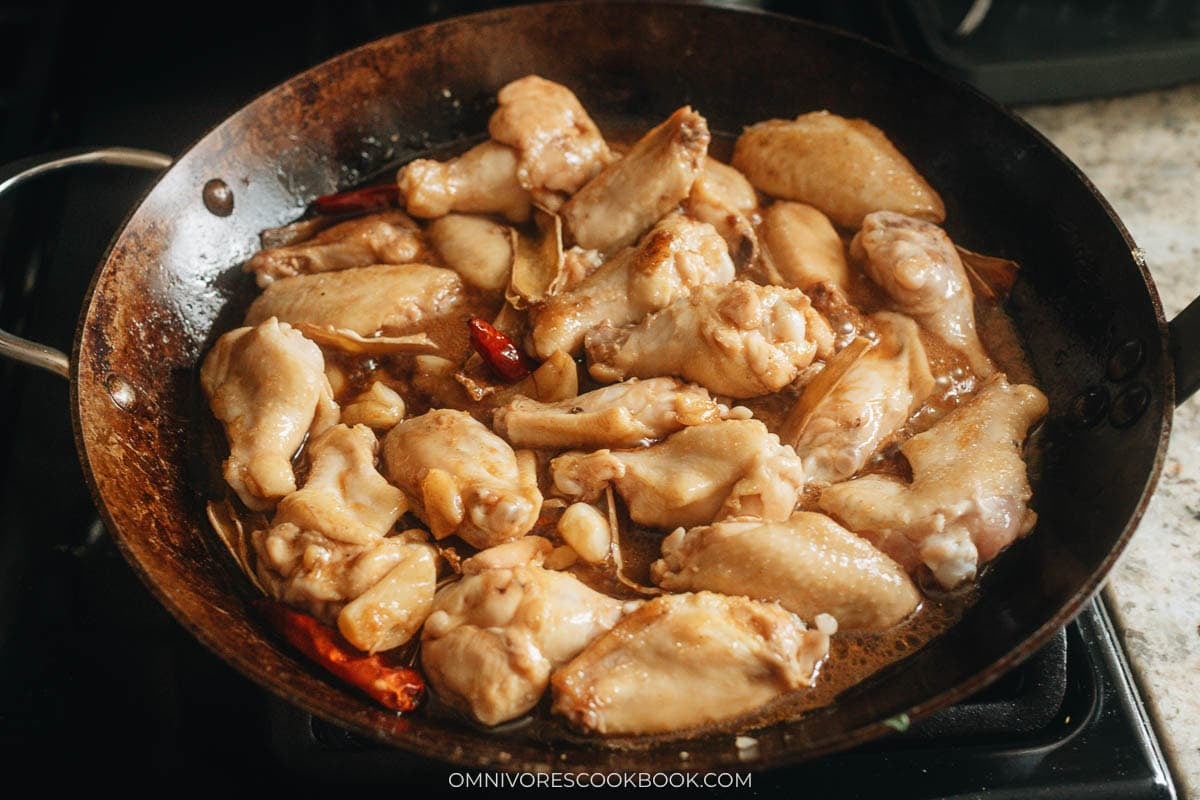
5. Braise the chicken: Bring the liquid to a boil, then reduce the heat to low. Cover and simmer, turning the chicken occasionally so it cooks evenly in the sauce.
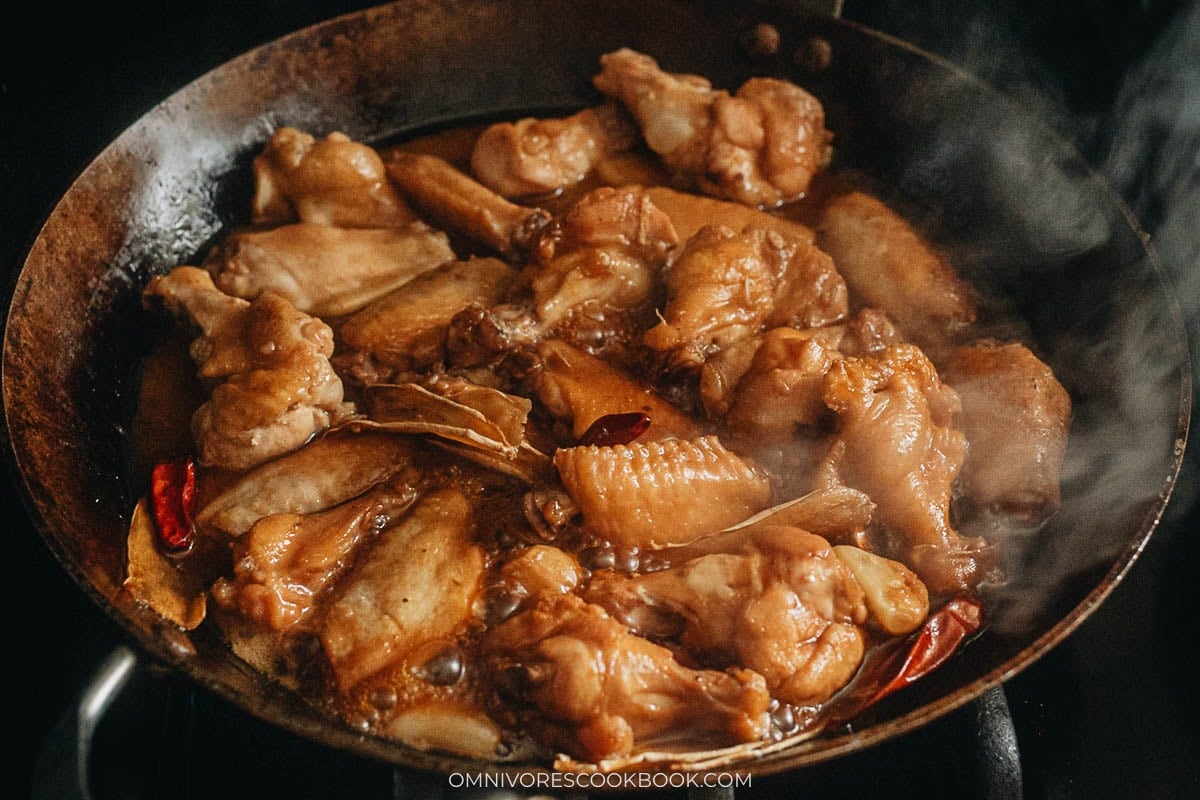
6. Reduce the sauce: Remove the lid. The sauce should have thickened and started to coat the chicken. If it is still watery, continue cooking uncovered on medium heat, stirring frequently to prevent sticking.
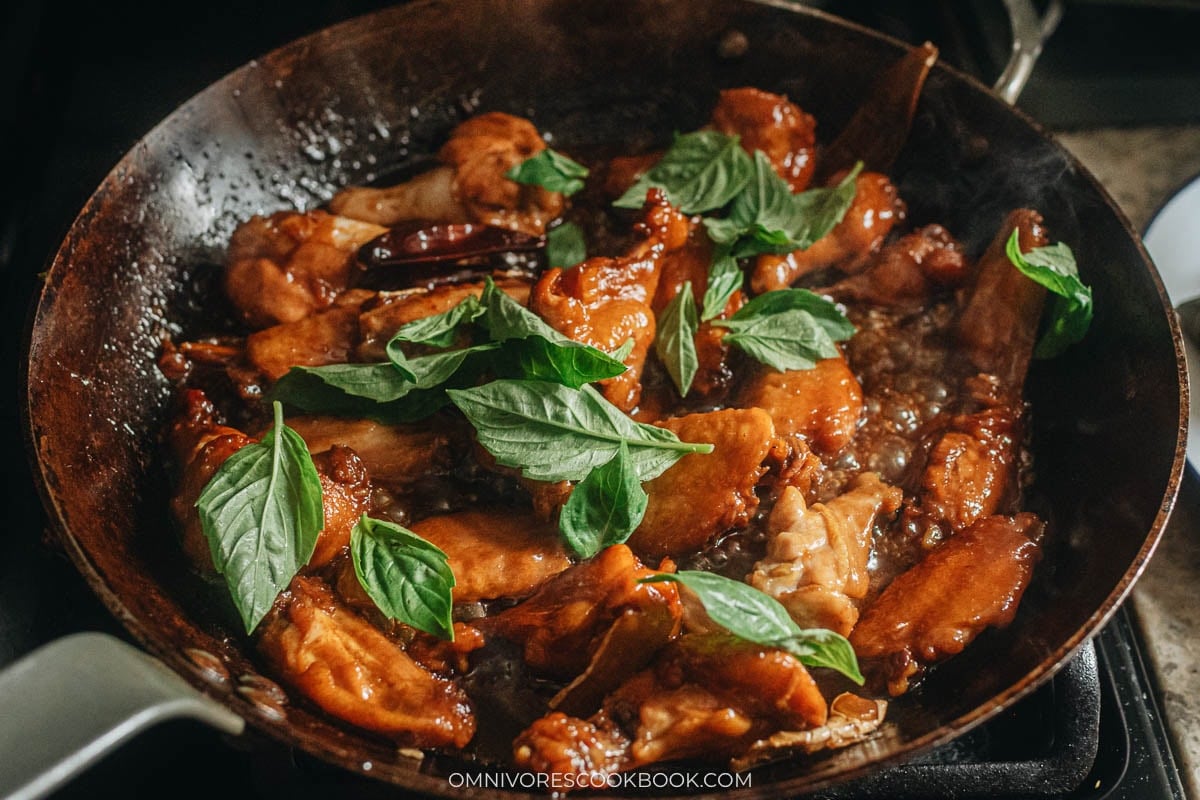
7. Add the basil and serve: Turn off the heat and stir in the fresh Thai basil. Let it wilt for a minute, then transfer everything to a serving plate.
Cooking Tips
Try chicken thighs for a meatier version: I love using wings because the skin gets sticky, but boneless skinless thighs are another great alternative. They are tender and juicy, and braise just as well. I also like to use drumsticks as well.
Use both light and dark soy sauce: I use a combination of both for the best result. Light soy sauce gives me the main salty, savory flavor, and dark soy sauce adds sweetness and that deep, appetizing brown color. If I only have regular soy sauce, it still works.
Do not add the basil too early: I always add Thai basil at the very end, off the heat. It wilts and loses its fragrance quickly, so the residual warmth is all I need. When I make this ahead, I leave the basil out entirely and add it fresh when I reheat.
Scrape the bottom of the pan after adding wine: I always deglaze with the Shaoxing wine right after searing. The brown bits stuck to the pan are full of flavor, and the wine lifts them right into the sauce.
Use a wide, heavy skillet: I prefer a 12 ” skillet or wok so the chicken has enough room to sear in a single layer. A dutch oven works too, but I find the sauce takes longer to reduce because of the narrower opening.
Serving Suggestions
I serve three cup chicken straight from the skillet over a big bowl of steamed rice, because the sauce is too good to waste. On weeknights it is the whole meal, just rice and chicken. On weekends I add a vegetable like my choy sum with garlic sauce on the side. My son is not a big fan of the basil yet, so I set a few pieces aside for him before adding it.
When I make this for friends, I like to serve it family style alongside 2 or 3 other dishes. It pairs well with something lighter like my spicy rice noodle salad or a delicious fire roasted eggplant. I set the skillet right on the table so people can spoon the sauce over their rice. If you want a restaurant style presentation, transfer everything to a preheated clay pot before serving.
Frequently Asked Questions
How do I know when the sauce is reduced enough?
I look for the sauce to coat the back of a spoon and cling to the chicken without pooling at the bottom of the pan. The consistency thickens more as it cools, so I pull it off the heat when it still looks slightly loose. If I over reduce it, the sugar burns and the sauce turns bitter.
How do I store and reheat leftovers?
Store leftovers in an airtight container in the fridge for up to 4 days. When reheating, warm the chicken in a skillet over medium heat until the sauce is bubbling. Add fresh basil after reheating, not before storing, because cooked basil turns dark and loses its flavor. The sauce thickens as it cools, so it will loosen back up once heated.
What makes three cup chicken different from other braised chicken dishes?
The combination of sesame oil, Shaoxing wine, and soy sauce as the braising base is what sets it apart. I do not add water at all. The wine is the only liquid, and as it reduces, it creates that signature sticky, glossy glaze that you do not get with other braises.
Want to Save This Recipe?
Enter your email below & we’ll send it to your inbox. Plus get great new recipes from us every week!
Watch video
Three Cup Chicken (三杯鸡)
Ingredients
- 2 lbs chicken wings (or boneless thigh, cut into large bite-size pieces, or chicken drumsticks)
- 1/4 cup sesame oil
- 3 ” ginger , thinly sliced
- 16 cloves garlic , lightly smashed
- 6 dried chili peppers
- 1/3 cup Shaoxing wine (or dry sherry)
- 1/3 cup soy sauce
- 3 tablespoons brown sugar (or regular sugar)
- 1 bunch basil , stems removed (*Footnote 1)
Instructions
- In a 12” heavy-bottomed wide skillet (*Footnote 2) heat the sesame oil over low heat and add the ginger. Slowly fry the ginger until it begins to brown and curl on the edges, about 10 minutes.
- Add the garlic and dried chili peppers. Cook until the garlic turns light golden, another 5 minutes.
- Turn the heat up to a medium-low (be careful not to turn the heat too high or the sesame oil will burn and become bitter). Move all the aromatics to the side of the pan and add the chicken in a single layer. Rearrange the aromatics on top of the chicken to prevent from burning, if needed. If you have trouble fitting all the chicken, you can remove the aromatics and add them back later.
- Cook the chicken, undisturbed, until lightly browned, 5 to 7 minutes. Flip the chicken and cook until browned on the other side, another 5 to 7 minutes.
- Add the Shaoxing wine and use a wooden spatula to scrape any brown bits off the bottom of the pan. Add back the aromatics if you removed them previously. Gently stir everything together.
- Add the soy sauce and sugar and stir again to coat all the chicken pieces.
- Bring the liquid to a boil, then reduce the heat to low or medium-low. Simmer covered for 40 minutes. Stir and toss occasionally to coat the chicken and check on the consistency of the sauce.
- After 40 minutes, remove the lid. The sauce should have thickened and coated the chicken very well. If the sauce is still watery, cook uncovered for a few more minutes. Stir frequently to prevent sticking.
- Add the basil. Stir and cook for another 2 minutes or so. Once the sauce is thick and glossy, transfer the chicken to a big serving plate. Serve hot over steamed rice as a main dish.
Notes
- Thai basil if possible, other basil will work fine.
- You can use a wok or dutch oven to cook this recipe, as well. I prefer to use a large skillet or wok over a dutch oven because it reduces the sauce faster and creates the perfect caramelized result. If you use a dutch oven, you might need to leave the pot uncovered longer at the end of the cooking to reduce the sauce.
Nutrition

Did you make this recipe?
I’d love to hear how it turned out for you! Please take a moment to leave a 5-star rating ⭐️ and share your thoughts in the comments further down the page. It really helps others discover the recipe too.
Megan Nguyen
Delicious! Thank you!